‘The Best Man Holiday’ Interview with Taye Diggs and Sanaa Lathan

WRITER’S NOTE: This article was originally written in 2013.

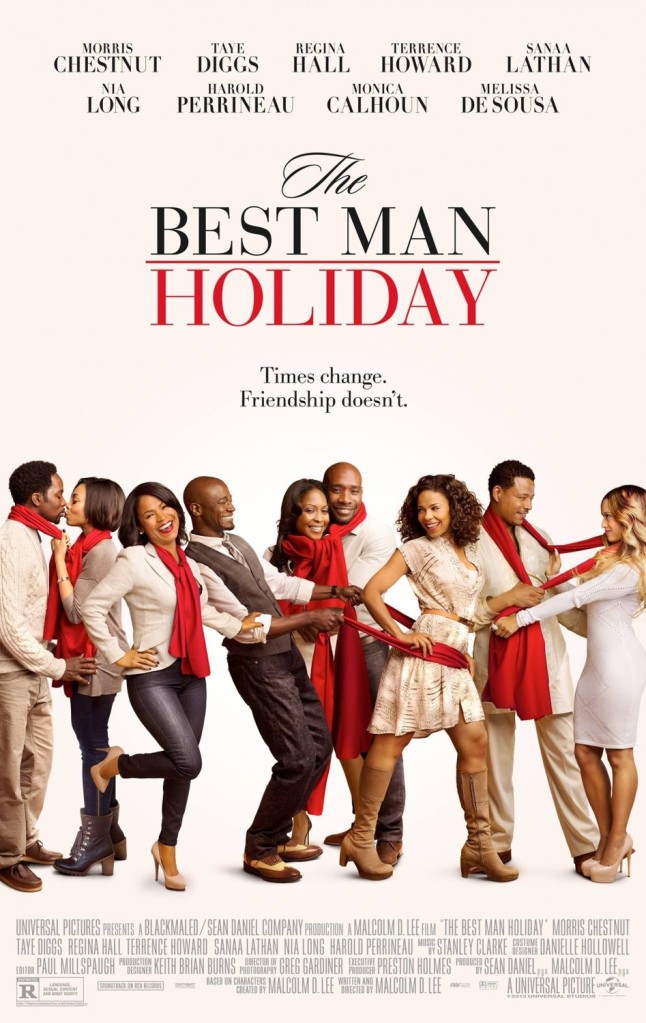
Taye Diggs and Sanaa Lathan return to reprise their roles of Harper and Robin from 1999’s “The Best Man” in writer/director Malcolm D. Lee’s long-awaited sequel, “The Best Man Holiday.” When we last saw these two, Harper proposed marriage to a very shocked Robin. Now its 14 years later and they are happily married and expecting their first child. But while Harper’s previous book “Unfinished Business” proved to be a bestseller, his latest book gets rejected by his publisher. To make matters even worse, he is laid off from his teaching job at New York University, and he doesn’t have the nerve to break the bad news to Robin.

All those concerns get put on hold, however, when Harper and Robin travel to Lance (Morris Chestnut) and Mia’s mansion to celebrate the holidays, and it reunites them with the other characters from the original film. But old rivalries and passions are quickly reignited as Lance has not forgotten about the affair Harper had with Mia all those years ago. Can these two men find it within themselves to forgive one another and move on from their past?

We got to catch up with Diggs and Lathan when they appeared at “The Best Man Holiday” press junket which was held at the Four Seasons Hotel in Los Angeles, California. Together they talked about what made them decide to do this sequel, how everyone has evolved since the first movie, and what it was like returning to play these characters 14 years later.

Question: For this movie to work, essentially everybody in the original cast had to sign on to do it. At what point did you to decide to do the sequel?

Sanaa Lathan: A couple of years ago, Malcolm actually got us all together and we went to Boa (Steakhouse), and he hadn’t written a script yet and at a loud restaurant with lots of drinks flowing, he literally pitched moment by moment and beat by beat the story. In that environment which is very challenging for a pitch, we were on the edge of our seats and we all at that moment said, “If you write it, we’re gonna do it.” So, for me it was that, and then the script came much later…

Taye Diggs: And then it just became about fine-tuning.

Sanaa Lathan: Exactly.

Taye Diggs: We all obviously had a great time doing the first one. Great friendships and bonds were made and we’ve kept all those friendships, so at this dinner it was so great to see each other just on general principle. It’s great to see old friends that we haven’t seen in a while. I think a couple of us knew possibly what Malcolm was going to come with, and then to actually hear him say it and then to hear the story and then to kind of get together as a group and do what we all needed to do to get this project done and made, it has been a great experience.

Question: How do you think Malcolm has evolved since directing the first movie?

Sanaa Lathan: He actually regressed… No, I’m kidding.

Taye Diggs: I was there every day on set, and good is good. I think we all evolved. We’re all older, we’re all more mature, and we have all had more experience. For me what I noticed this time around, when it pertains to Malcolm, was the outside pressures. I could tell this time around that he had a lot more on his shoulders, so I would say he has evolved in the sense that he was able to deal with a lot more pressure.

Sanaa Lathan: Yeah, and there’s the pressure of the first movie and of living up to it too. That’s a huge pressure.

Taye Diggs: Right and he did it again with a lot more on his shoulders. He had a cast that had experience…

Sanaa Lathan: (We were) very vocal. We tested him a lot and we were having a lot of fun, but we were always like, why? Why are you doing that? I know that we tested his patience but he dealt with it well, right?

Taye Diggs: Yeah. We were all new (at least I was) for the first one, so we weren’t nearly as vocal. But now we have matured as actors and we look at a script differently and challenged him on character and through lines and story structure, so he handled it well.

Question: Taye, have you seen “The Best Man” with your real-life wife?

Taye Diggs: Oh, of course. My wife was at the premiere and was a huge supporter, and hopefully she will enjoy the second one as much or even more than the first.

Question: You all look like you had an absolute blast on this movie. How much fun would you say you had on set?

Sanaa Lathan: They (the men) turned into like seven-year-olds (for the dance sequence). They had dance rehearsal because it wasn’t that simple and Tate has a dance background and Morris has no background. So literally in between takes for weeks they would be like okay, and 5, 6, 7, 8 (laughs). All the girls were so excited. This was like their debut at Alvin Ailey (laughs).

Taye Diggs: I have a stage background. I don’t know if you all know that. For me, stage is a lot more nerve-racking than film acting because no matter what you’re in front of people. With film acting you have control. If we’re shooting an emotional scene and its private you can say I don’t want anybody in the room except for the cinematographer and the director. It’s less nerve-racking doing film, but with this dance sequence Malcolm said, “Be on your stuff because the girls are gonna be watching.”

Sanaa Lathan: The first time we saw it was real-time reactions (laughs).

Taye Diggs: Yes, and there was a level of performance that we had to take into account because we wanted them to think we were good. So, we were nervous, at least I was, and I wanted to make sure that we had the counts and whatnots and it worked. It helped and when we filmed it, seeing them and getting that live, real energy…

Sanaa Lathan: And those reactions that you see in the movie are real.

Taye Diggs: That was great.

Question: Some of the themes in this movie are about unity and brotherhood and sisterhood amongst friends and family. Why do you feel it is so important that we see these images so often for minorities?

Taye Diggs: We don’t see them enough.

Sanaa Lathan: I think it’s important for us to see ourselves reflected in all that we are instead of one type of genre like the over-the-top comedy. It’s really important for the art form of film to reflect the world that we live in and who we are, and I think that it hasn’t really done that for people of color at this time in history.

Taye Diggs: We’ve come a long way but we are still struggling.

Sanaa Lathan: We still have a ways to go, but I think that’s why a movie like “The Best Man” resonates so much because people are hungry for stories that are layered, and they can recognize themselves and their family and friends in the things that they’re going through.

Question: What are the holidays like at your houses?

Taye Diggs: It’s crazy, fun and there’s always a little tension with those couple of family members who always bring something surprising. But growing up I’ve always looked forward to the holidays. Now I got my own little boy so there’s that level of enjoyment and excitement that comes with having a baby, and this Halloween was the first Halloween where he understood what was going on.

Sanaa Lathan: What was he?

Taye Diggs: He was, and he chose this, a zombie Michael Jackson from “Thriller” and he was into it. I had a different take on Halloween this time. I was just loving being able to live through him.

Sanaa Lathan: What were you?

Taye Diggs: I wasn’t anybody because I was so focused on him which is something different. Usually I’m worried about what I’m going to be and dressing up and leaving him with the sitter and partying myself, but this time it was all about Halloween for him. It’s fun. The holidays are fun, and they are way more fun with a four-year-old.

Question: Sanaa, how did playing a pregnant character throughout the entire film affect your craft, and how do you think your character handled being under the same roof with two women who have a romantic history with your movie husband?

Taye Diggs: Usually they ask how it affected me (laughs).

Sanaa Lathan: When Malcolm pitched the idea that I was nine months pregnant, I was (coming from a female vain perspective) like, well damn (laughs). I’m like, the whole movie? And it’s not like three or four months where it’s cute, it’s nine months. But I think that energy and “well damn” is what women feel in their ninth month, so it worked. I had to put on this huge belly that they actually… I did “Blade” where I played a vampire years ago, and the same people that did the prosthetics for “Blade” did my belly, so it was like a real belly. It was heavy, it made me hot and you have to waddle. It was a drag, but it worked for the character. And I realized how sick and sadistic people are. Literally every day, I would get about three punches in the belly out of the blue (laughs). They were just laughing. Malcolm would do it and it was crazy! Something about knowing that it wasn’t real (laughs).

Taye Diggs: We were awful.

Question: How has your real lives paralleled what your characters go through, and how was it coming back after 14 years?

Sanaa Lathan: In terms of the parallel, I tried to be a glass half-full person and I think Robin has always been that especially for Harper. He’s kind of the glass half empty and she’s the glass half-full, and a lot of my friends call me a hippie. I cultivate that mindset to see the bright side of things, and I come from a family of artists and Bohemians in the 70’s so there’s that aspect. But other than that, the reunion was great. It was fun and it didn’t feel like work. We had so much fun in between takes.

Taye Diggs: It helps. I think it shows in the chemistry. You can choose to act it or you can just be real, and obviously it always helps when it’s real. Just being able to hang out socially and look forward to the time when the cameras aren’t rolling as well as the time when the cameras are rolling, it makes the entire experience truly enjoyable. It just worked out. I think we were so blessed, lucky, fortunate or however you want to term it. The fact that we even got everybody together in the first place I think was miraculous, and then to have that type of script and then to have everybody mature the way that they did. We all brought our life experiences to these roles. We’ve all been through our ups and downs, and that has affected us as people and as actors. We were lucky in that we could apply that to these characters.

Question: Sanaa, having grown up with a parent who is a director, has that affected how you approach filming and have you ever worked with your dad?

Sanaa Lathan: You know I’m about to work with my dad. I’m going to do kind of like a cameo thing on “Real Husbands of Hollywood.” I think that’s his show.

Taye Diggs: Oh, I want to do that. You tell him I want to be on it.

Sanaa Lathan: I will. You’d be perfect because you are a real husband of Hollywood. It’s a fake reality show, but Regina (Hill) is going to do it too. I wasn’t really around on set with my dad coming up. He and my mother broke up when I was five so I didn’t see him. He was always in my life but he was always so busy. The sets that I remember going to were “Sesame Street” when I was very young… I don’t know, I just didn’t go to a lot of sets and I have never worked with him. The great thing that I think I have in having parents that have been in the business is that they understand, and I think that’s a very special thing. I realize with a lot of my peers that they don’t have parents who really get what they are going through, and it’s great to have parents that you can lean on when you are going through some stuff.

Taye Diggs: You probably were blessed that you weren’t raised on set. A lot of times kids that have that early exposure end up going down the wrong avenues and you’re fairly sane.

Sanaa Lathan: Thanks!

Question: So, when it comes to your mentors, who would you say have been some of the people you go to for guidance in this industry?

Taye Diggs: For me, it was a very emotional shoot and Sanaa has always been in my life someone who I can bounce stuff off of and she always has really, really great and positive things to say. I have a best friend who is not an actor and we’ve been close since junior high school. No one knows me better than him and he has a good perspective. A lot of times you don’t want to go to someone that knows the business. You want a more accurate kind of view that doesn’t give you a lot of excuses like people in the business do. So yeah, I’ve leaned on him as well.

Sanaa Lathan: You know I get it from everybody, from my parents and I have great girlfriends. I feel like having some really close black actress friends is actually great because it’s such a unique road that we travel. There are so many blessings and so many challenges, but it’s great to have that community because there are days where you don’t want to do it anymore, and it’s great to have that person who is kind of in the trenches who would say to you, get up. So, I get it from everywhere. I don’t really have any one mentor.

The Best Man Holiday” is available to own and rent on DVD and Blu-ray, and you can also stream it on various digital platforms.
Malcolm D. Lee on ‘The Best Man Holiday’

WRITER’S NOTE: This interview was from a press day which took place in 2013.

In Hollywood, most sequels usually come out one to two years after the original because the studios want the money to keep rolling in while the property is still fresh in audiences’ collective minds. But when it came to making a sequel to “The Best Man,” writer and director Malcolm D. Lee was not about to rush it. “The Best Man Holiday” is being released 14 years after its predecessor, and it reunites Lee with Terrence Howard, Taye Diggs, Morris Chestnut, Harold Perrineau, Nia Long, Sanaa Lathan, Monica Calhoun and Melissa De Sousa who reprise their roles. This time the college friends reunite for the holidays at Lance and Mia’s mansion, and it soon reignites old rivalries and romances from the past.

Since “The Best Man,” Lee has gone on to direct the comedy “Undercover Brother,” the roller-skating comedy-drama “Roll Bounce,” “Welcome Home Roscoe Jenkins,” the musical comedy “Soul Men” and the horror spoof “Scary Movie 5.” We got to catch up with him when he appeared at “The Best Man Holiday” press junket held at the Four Seasons Hotel in Los Angeles, California. While there, Lee discussed why it took so long to make this sequel, what he thinks about the success that African American films have had in 2013, and of the possibility of there being a third “Best Man” movie.

Question: In a world where people are making sequels a year to three years later, what took you so long?

Malcolm D. Lee: Honestly, there was talk of doing a sequel very early on when the first movie came out, but I wasn’t interested in doing the sequel right away. I didn’t want to get pigeonholed as a director. It was my first movie and I didn’t want to just do the same thing. My idea was if I was going to revisit these characters, and I thought I would want to, it would be like 10 years later after they’ve lived some life and had kids. Around late 2005 or so I just started percolating the idea and I would see the cast over the years and say hey I’m thinking about doing the sequel, and they were like, oh okay. It just got to the point where I was like, okay I’m ready to do this now, and I had taken enough notes and put enough of a structure together where I said well, let me get the cast together and let’s see what can happen. I basically got them together in early 2011 and said okay, let’s all get in the same room and at least we will have all caught up. I have an idea for a sequel, and if we all think at the end of this meal that it’s worth doing then I’ll pursue it. So, I pitched them the idea and they were all into it and they liked it, and I said well, let’s go. Then a couple months later I went to Universal and pitched them the idea and we got it going. It took a while to get it going because I wrote the script pretty quickly because I had been thinking about it for so long, and it wasn’t easy. It was, as you’ve seen from the film, very different tonally speaking than the first one, and I think that was part of their hesitation of wanting to make it. I didn’t want to do the same thing again. I didn’t want to tell the same story. The things you think about when you are in your mid to late 20’s is very different than what you think about when you are in your late 30’s and early 40’s and married and have children and have bills to pay and do grown up stuff and dealing with grown up things. So, I said to them it’s not about wanting to do a destination wedding or anything like that. People loved this movie because they loved the characters. They loved the people. They don’t just love that it was a wedding. It took us bringing the cast together and doing a read through, and once they did the read through they were like okay, we get it.

Question: Could you talk a little bit about the process of getting into the minds of these characters after so long?

Malcolm D. Lee: I know these characters very well. I’ve lived with them in my head for a long time so when you evolve as a person you have to have your characters evolve too. Not only that, but my actors were great actors in the first movie, and they are even better now. I have grown as an artist, as a writer and as a director. I’m better, so I wanted to make something that was more sophisticated, something that spoke to these characters that would be similar to where they were but which also showed their growth and evolution. I don’t think it was that difficult. It was just a matter of really knowing the characters and making them evolve.

Question: Did you seriously entertain other alternatives to the storyline for each character at any point?

Malcolm D. Lee: What I had come up with I pretty much stuck to. There wasn’t a whole lot of deviation. There were a lot of suggestions by the studio about making it a wedding movie and blah, blah, blah, and I was just like no I don’t want to do that. So, it was pretty much what I wanted to do, and the actors had some input about what they felt about their characters and where they could be strengthened and layered. Some of the suggestions from the studio were like, well this person is out of the picture already, this person is that already, and this person is divorced, and I was like I brought the cast back together and we are going to do this collectively, period. At least you’ve got to give this a fair shot. So that’s why we did the reading, and that’s what made them say oh okay, we get it.

Question: Futuristically speaking, do you foresee a production of a series or a spinoff from this kind of film like “Soul Food” or something similar to that?

Malcolm D. Lee: It’s possible. People love these characters and they want to live with these characters, so it’s a rich enough world and a world that’s rarely seen on network or cable television. The only danger would be like, could you get all the actors to do a series and where do you start it? Do you cast different people? So, I don’t know. I had the idea of, were this movie to be successful, to do a series that would take place from the end of the first movie until the second movie. That 14-year span might make for an interesting television show, but how do you cast that too? It’s possible. We’ll see.

Question: Have you thought about doing a third movie?

Malcolm D. Lee: Well we have to see how this one’s going to perform first. That will dictate whether a third one gets made or even talked about. There have been some whispers. I have an idea, let’s put it like that.

Question: What’s the idea?

Malcolm D. Lee: I’m not going to say.

Question: Are you going to wait another 15 years to make it?

Malcolm D. Lee: I will not wait another 15 years. If it happens at all, it’ll happen quickly.

Question: “The Best Man Holiday” actually feels like a stand-alone movie in that you don’t have to go back to the first movie to catch up with or relate to the characters. Was it important to you to make it a stand-alone film so that you can capture new audiences as well as retain the fans of the first?

Malcolm D. Lee: I don’t know if that was a conscious decision. When I set out to make the first film, I set out to make a classic movie, one that will stand the test of time. Fortunately, that has been the case. People really love “The Best Man,” and with this one I knew I had to, in my mind, make a movie that was better than the first. Or at least, in my mind, more sophisticated and more layered and have some deeper things to explore. So as a result, yes I guess the movie stands on its own but that’s what the whole opening credits are about which is trying to fill in people who may not know, and then also the fans of the first one get kind of tickled about remembering them then and this is what they’ve been doing and this is where they’re at now. I certainly wanted the movie to stand on its own and I think that there are people who really loved the first one will be more deeply connected. I think people that have not seen the first one was still enjoy this, but I think the fans of the first one will really enjoy this because they’ve had the experience of 14 years of viewing it.

Question: 2013 has been a great year for critically acclaimed black films. What do you think that means for the future of black filmmaking?

Malcolm D. Lee: We’ve seen these bursts before, and what happens is that studios and filmmakers start to churn out carbon copies of these movies. When Spike (Lee) first came out with “She’s Gotta Have It” and “School Daze,” it was like this Spike Lee phenomenon. There were a couple of movies that came out like “House Party” and “New Jack City,” and they were all different. John Singleton started with “Boyz n the Hood,” and that was like the whole hood genre and pushing that. Then “Menace II Society” and “Juice” came out and we got saturated with that and we were like, okay, what’s next? On their tail came “Love Jones,” “The Best Man” and “Soul Food” which gave us a different side of African-American life. Then in 2008, nobody wanted to make any black movies. They weren’t profitable, nobody was going to support them, people got tired of them and they petered out which is why I had to wait until “Jumping the Broom” came out before I went ahead and pitched the movie to Universal to see what the appetite of the studios and the audience was going to be. I hope that the diversity of African American fare this year will continue. It has been a very refreshing year to see sports movies, comedies, musicals, romantic comedies, historical drama and indie movies that are made by black filmmakers. So, I hope that it continues and that the quality of the work keeps getting better because I feel like that’s great. But if there’s like, oh, we can make money because they’re going to come out for Kevin Hart or this person or that person, then it’s going to be a money grab. It’s got to be about having choices at the movie theater that African-American audiences can enjoy and general audiences can enjoy, and just let it be a regular thing. Let’s see great movies.

Question: Can you tell us about more about the movie’s soundtrack and what role you played in it?

Malcolm D. Lee: One of the things that I was doing back in 2005 was listening to Christmas music and thinking about where it could fit into the movie. I love music. I think music and songs are such an integral part of filmmaking so I was playing a lot of Stevie Wonder’s Christmas music and Nat King Cole and Marvin Gaye. So, a lot of those songs were written into the movie, and then we get updates of many of them. It was very, very integral in the soundtrack and making sure that the sound that was created was going to be integral to the movie. I don’t like soundtracks that just are “inspired by.”

Question: How did you decide which artists to include in the soundtrack?

Malcolm D. Lee: You work with a label and they say well we got this person and we’ve got that person and it’s kind of like casting. I thought Fantasia would do a good job on this song, I think Jordan Sparks would do a good job on that song. Someone like Ne-Yo who came out of the blue, the song that he sings is a Marvin Gaye song called “I Want to Come Home for Christmas.” I thought that nobody was going to be able to replace that, but Ne-Yo came in and I showed him the scene and where it fit, and I showed them how important was for the movie and how the emotion was going to play. He said listen, I’m not going to sound like Martin, but I’m going to do it in a way that is me and it will be faithful, and he killed it. First time out and I was like, wow! That doesn’t always happen. Sometimes you’re just no, that’s not quite it. Let’s try that again. Also, the one song that’s featured, the Stevie Wonder song that Marsha Ambrosius and Anthony Hamilton sing on camera (“As”), that had to be in the movie where it was because it was very integral to the first film. I always felt that it was one of the greatest love songs ever made and it would be great to do it as a ballad or as a duet, so Marsha and Anthony were a great choice for that. It’s funny because people, when I’ve been watching the movie with audiences, love seeing Anthony, and then they recognize the song. And if that’s not enough, then they see Marsha and they are like, oh my god! It’s really a beautiful combination. We struck gold with that, I think.

Question: Which of the characters do you relate the most to and why, and did that change from the first movie to the second movie?

Malcolm D. Lee: There’s a little bit of me in all the characters. They’re all within me. I lived with them in my mind. Of course, there are female characters and there are certain things that I don’t know because I’m a man, and I observe and talk to people about how they feel about fidelity. Murch (played by Harold Perrineau) finding out those kinds of things about his wife and they have a great open relationship, but it’s like whoa, that’s something I didn’t expect. How do I deal with that? Should I be mad about that? I don’t think they’ve changed over the years. They’re pretty much the same to me.

Question: Can you walk us through what it’s like with your writing process when it comes to creating these characters? Where does it start and how does it develop?

Malcolm D. Lee: When it came to these characters, I want to see where they left off. From the get-go I just started saying that I wanted to set this movie at Christmas time because it’s a cinematic time of year, and it makes it a reason for being together. If you are going to bring these characters back together, it’s got to be for a reason. Harper (Taye Diggs) was kind of on top of the world when we left off. He had learned some things and had been beaten down a little bit, literally and figuratively, but he was on his ascension. So now I want to say okay, what if he has a couple of failed things? Lance (Morris Chestnut) has this seemingly charmed life and he does; he’s about to break a record, he’s got four beautiful children, he’s got this ginormous house and this wonderful, beautiful, supportive, loving wife, but there’s something that’s going to test his faith even more than in the first movie. And then you have the other characters and you just try to give them conflicts and obstacles that they have to get around. I’ve learned over the years to be a better writer and what characters are used for. Quentin (Terrence Howard) is going to be that button pusher still and he’s going to give us the comic relief and so is Shelby (Melissa De Sousa) and they’re going to be my comic fastballs, but at the same time they are more than they were in the first movie. I tried to write something sophisticated, challenging for myself and challenging for the actors because why come back together because it wasn’t for the money. This wasn’t a money grab at all. We did this for price and it was about displaying their acumen as actors, mine as a director and writer, and kind of re-introducing ourselves to the world and the time was right. We also knew that there was a large fan base for this movie that really wanted to see these characters again, so let’s give the people what they want.

“The Best Man Holiday” is available to own and rent on DVD and Blu-ray, and it is available to stream on various digital platforms.

Heather Langenkamp Reflects on Acting and ‘The Butterfly Room’

The Butterfly Room poster

WRITER’S NOTE: This article is based on a screening and Q&A which took place back in 2014.

The Butterfly Room” is one of those movies which is being released under the radar. It just debuted at the Laemmle NoHo 7 without much in the way of publicity, and this a shame because this thriller directed by Jonathan Zarantonello proves to be a real treat for horror fans as it features several actors we affectionately remember from various horror and cult classics. Among them are Barbara Steele who is best known for her work in a number of Italian gothic horror films like “Black Sunday,” Ray Wise who left an indelible impression on us with his performances in “Robocop” and “Twin Peaks,” Erica Leerhsen who survived a few ill-fated horror movies like “Book of Shadows: Blair Witch 2” and the remake of “The Texas Chainsaw Massacre,” Camille Keaton who suffered such unforgivable brutality in “I Spit on Your Grave,” Adrienne King who memorably decapitated Jason Voorhees’ mother in “Friday the 13th,” and P.J. Soles who showed us things we really liked in John Carpenter’s “Halloween.” Looking at this cast, you might think this was another version of “The Expendables” but with horror icons.

Another big horror favorite in “The Butterfly Room” is Heather Langenkamp who is still best remembered for her role as Nancy Thompson in “A Nightmare on Elm Street.” Here she plays Dorothy, a single mother who has her own reasons for keeping her son away from butterfly collector Ann (Barbara Steele). As the movie goes on, you find out exactly why Dorothy has such a bone to pick with her, and it is not worth spoiling here.

Langenkamp dropped by the Laemmle NoHo 7 for “The Butterfly Room’s” opening night to participate in a Q&A with the movie’s second assistant director Brian McQuery. When asked how she became involved with this production, Langenkamp explained it all started with a journalist friend of Zarantonello’s who introduced the director to her while at a horror convention.

Heather Langenkamp: This journalist friend was my introduction, and I noticed that Jonathan was lurking in the background (laughs) for several hours. Finally, we struck up a conversation and he gave me the script later. I have to say that when I read it, I felt that the part of Dorothy was one of the better parts that I’ve read in many, many years. I think, from what you see on the screen, she’s a very strong woman and she’s a very fierce mother and I really enjoyed playing such a part. I remember we got together at this restaurant in Santa Monica, and I think I shocked Jonathan a great deal by telling them how much I liked it and how I really loved this idea that this horror movie focuses on an elderly woman which is something that is really rare.

In addition to all the horror icons, there are also several child actors here who play kids that become way too friendly with Ann. Now there is a saying, the things to avoid while making a movie are working with animals and children, but Langenkamp found working with child actors like Ellery Sprayberry and Julia Putnam very informative and fascinating.

Heather Langenkamp: It’s kind of a lesson every day in how to be so natural and so in the moment, and I always get a lot of inspiration from children like Miko Hughes (who appeared opposite Langenkamp in “Wes Craven’s New Nightmare”) who was like that for me. You just zone in with them as they really experience the movie in a different way I think, and it is really refreshing. Ellery was really fun to work with, and I remember this one day when she had to go too long here to short hair too long hair and everybody was panicked. But Ellery was just smiling and taking it all in stride, and we had a lot of fun on the set as I remember.

Ever since her days battling Freddy Krueger, we have not seen much of Langenkamp. Acting for her has since become a part time job as she spends most of her days running AFX Studio, a Special F/X Make-Up studio in Los Angeles, with her husband David LeRoy Anderson. One of her more recent acting roles was as a character named Moto in “Star Trek into Darkness,” but her role as Dorothy in “The Butterfly Room” is the biggest one she has had in some time. This led one audience member to ask her if coming back to acting was like getting back on a bicycle to where everything comes back to you quickly.

Heather Langenkamp: I would have to say not at all like riding a bike. I think that you’re much more self-conscious about how you’re doing as you get older especially if you’ve taken time off. I was really worried a lot of the time about whether I was going to be able to get my chops back up to speed, and I’m happy with the way the movie looks on the screen. I’m much happier than I actually thought I was at about 6:45 tonight (the movie started at 7:40 pm) because I get a lot more critical of myself too as I get older. Both of those things combine actually, making for a very uncomfortable day today, but now I can relax. I don’t think it’s like riding a bike. I wish it was more like that.

But even after being away from acting, Langenkamp still has a great love for it. She explained why and also talked about what it was like working with Steele who is probably the biggest horror icon in this cast.

Heather Langenkamp: It’s probably my favorite thing to do. I think one the most creative things that a person can do is bring a script to life and think of the character and think of how you’re going to interact with someone like Erica. Those scenes were a lot of fun and especially all the scenes with Barbara Steele. She is one of my personal heroes and someone that I greatly admire, so I often watched her. She’s a very elegant woman and she’s very powerful, so sometimes I would just watch her and try to learn from her in the thing she did to be kind of a majestic creature in the film. I learn a lot from the people that I work with and I always and see what their techniques are and how they get prepared, and I take whatever I can from people like that.

Like many horror movies coming out today, “The Butterfly Room” was shot on a very low budget and had a tight shooting schedule. Moreover, Zarantonello started filming this movie back in 2010, and it is finally making its premiere four years later. With little time to make this movie, actors do not have the same luxuries available to them on big budget studio productions. Langenkamp described the pressures she faced and how she learned to deal with them.

Heather Langenkamp: It’s always difficult especially with wardrobe and hair when there’s really not enough time to get all that is necessary, and maybe there’s not enough personnel to take care of everybody. There are four or five ladies sometimes who all need to be ready within an hour of each other, and so we had very quick moments in the makeup chair sometimes (laughs) and you just have to put your vanity aside. That’s the hardest thing for an actor to do, but you realize you’re not going to get the hour in the chair that may be would make you feel more comfortable. In the end I really do feel like naturalism is the rule of the day, and looking as natural as possible as much as an actor. Maybe you don’t love it, but I do think that it adds to the reality of filmmaking. So, every time I didn’t get enough time in the chair, I would say in the end that it’ll be better for the film.

It is really great to see Heather Langenkamp back on the big screen after being absent from it for what feels like years. She may not be interested in stardom and is not looking to make a big comeback in movies, but she is still very much interested in giving the best she can as an actress. While she may forever be linked to “A Nightmare on Elm Street” to where many cannot see her as anyone other than Nancy Thompson, she can still hold our attention whenever she appears in a movie. Clearly, she is more comfortable these days running a special effects studio, but I do hope we get to see more of her on the silver screen sooner than later.

Exclusive Video Interview with ‘Corpus Christi’s’ Jan Komasa and Bartosz Bielenia

In a year filled with many great foreign films like “Parasite,” “Corpus Christi” is another one to keep an eye out for. Directed by Jan Komasa (“Suicide Room” and “Warsaw 44”), it stars Bartosz Bielienia as Daniel, a 20-year-old man on the verge of finishing his sentence at a youth detention center for second degree murder. While there, he experiences a spiritual awakening which inspires him to enter the priesthood, but because of his felony conviction, no seminary will ever be able to accept him. Upon his release, he is sent to a small village to do manual labor. However, Daniel quickly discovers the local church there and ends up lying his way into becoming the town’s new priest. His passion and unconventional methods come to inspire its residents in a way they have not been in a while, and in the process he comes to discover a terrible tragedy which has engulfed the town in endless sorrow. As he digs deeper into the tragedy and the town’s deepest secrets, some of the townspeople become increasingly suspicious of his methods, and it is only a matter of time before the past catches up with him.

Now the above plot description might make “Corpus Christi” sound like a remake of “Sister Act,” but it really proves to be a thoughtful and compelling motion picture as it ponders what it means to be a person of faith, of the possibility of finding forgiveness in a realm where sadness and anger seem infinite and irrevocable, and of finding redemption even when society will not easily permit its criminally convicted to do so. What results is an enthralling film which is now Poland’s selection for the Best International Film category at the 92nd Academy Awards.

I was lucky enough to speak with Komasa and Bielienia while they were in Los Angeles to do press for “Corpus Christi.” Komasa recently won the Best Director award at the Gdynia Film Festival for his work here, and Bielienia has picked up Best Actor awards at the El Gouna Film Festival, the Chicago International Film and the Stockholm International Film Festival.

Be sure to check out “Corpus Christi” when Film Movement releases in American theaters in 2020. My full interview is up above, and you can also watch the movie’s trailer down below.

Chadwick Boseman on Playing Baseball Great Jackie Robinson in ’42’

42-fp-0292

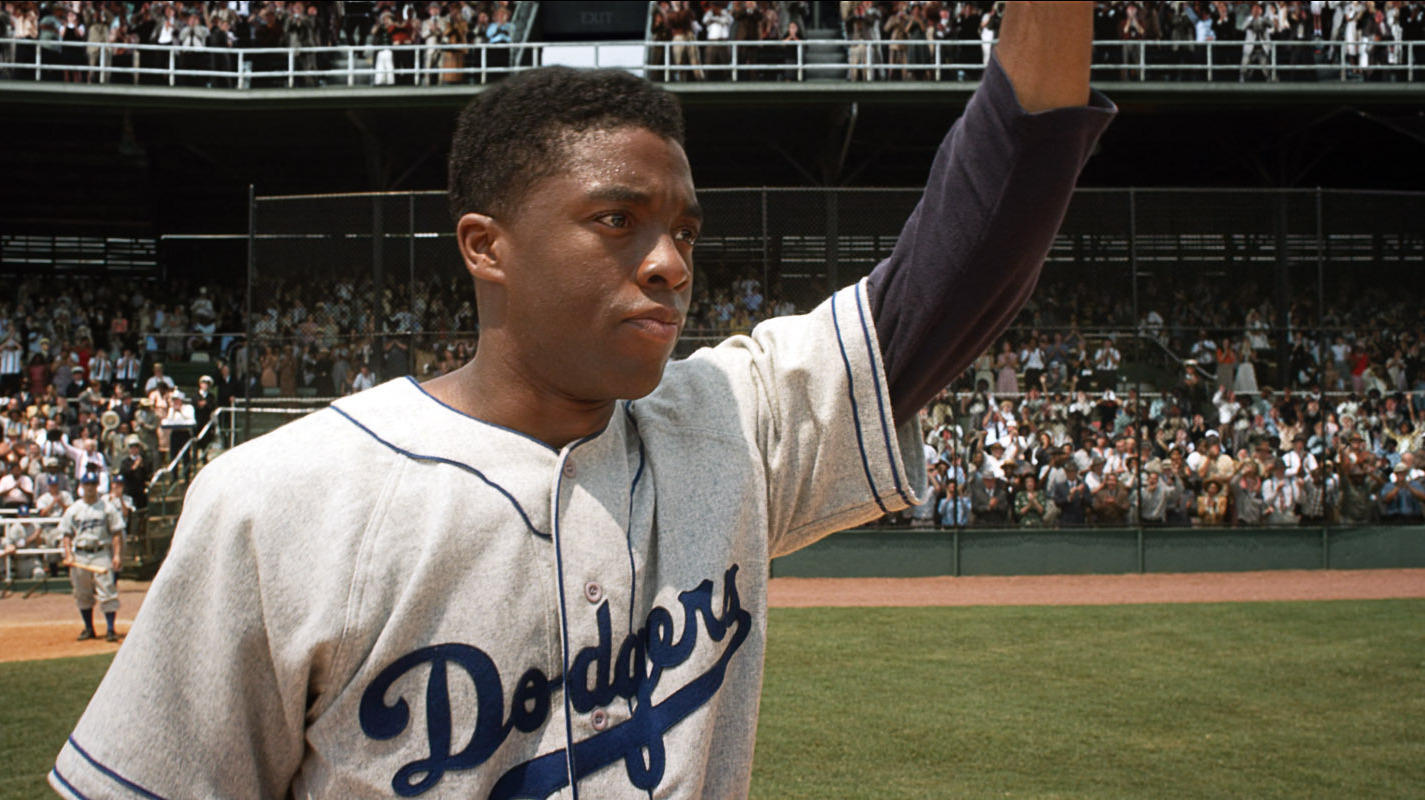
Before he took on the title role in “Black Panther,” Chadwick Boseman had the honor of portraying baseball great Jackie Robinson in “42.” With Hollywood being the way it is, you would expect to see studio executives insisting on a getting a big time movie star to portray the famous baseball legend, but writer/director Brian Helgeland got away with casting Boseman back when he was relatively unknown to audiences at large. An actor and playwright by training, Boseman started to burn into our collective consciousness with this performance.

Filmmakers and actors over the years like Spike Lee and Denzel Washington have tried and tried to bring the story of Robinson to the big screen but with no success. It took Helgeland, who won an Oscar for co-writing the screenplay to “L.A. Confidential,” to finally succeed in making such a film a reality. The burning question is how did Boseman get the role of Robinson over so many others? There must have been thousands upon thousands of actors desperate to play the legendary ballplayer, and there is something very inspiring about a lesser known actor beating out a bunch of big-name stars for this opportunity. Boseman, during an interview with Julie Miller of Vanity Fair, explained how he got cast.

“I had left L.A. for a few months, and I was directing a play Off Broadway in the East Village,” Boseman told Miller. “I came back to Los Angeles for a visit and was supposed to go back to New York on a Friday, and my agent said, ‘No, they want to see you for 42. For the Jackie Robinson film.’ I met with 42 director Brian Helgeland, and I knew that I would love to work with him. He’s an Oscar winner and a great writer but also, the way that he works, you know sometimes that you can vibe with a person and that you will work well together.”

“The additional meeting was great. A lot of it was just talking about the role and project and why he wanted to do it,” Boseman continued. “I left thinking that it was a great audition but didn’t necessarily know if I would get it. The next week, they called me back in again, and I could tell that he was trying to show me to somebody else. They were taping it and saying stuff like ‘What else might they want to see?’ I realized at that point that I was Brian’s choice, so I was just trying to prove it.”

Before “42” came along, Boseman had been working a lot in television and appeared on shows like “ER,” “Law & Order” and “CSI: NY.” Eventually, he started starring in movies such as “The Express” among others. Surprisingly though, Boseman did not originally set out to be an actor. A graduate of Howard University and the British American Dramatic Academy at Oxford, he saw his career heading in a different direction.

“When I started in theater and film, I thought I would be a director,” Boseman said. “The only reason that I started acting was because I felt like I needed to understand what the actors were doing and their process so that I could better guide them. During the course of that, I caught the acting bug. But once I finished my acting training, I still was thinking I would be a writer/director. I don’t really think I focused on acting until I came to L.A. in 2008. That’s when it got serious for me.”

As a kid, Boseman played Little League baseball for a time, but he was more serious about playing basketball after a while. When it comes to sports movies, most directors prefer actors to have some sort of experience in baseball or whatever sport their film is about. It looks like Boseman had just about enough experience to show he could play Robinson, but he still had to go through a lot of baseball training in order to prepare for the role before the cameras started rolling. He related his training regimen to Eric Alt of Athlon Sports as well as the challenges he faced during pre-production.

“All the coaches I worked with concentrated on the way he did things,” Boseman told Alt. “They studied his swing, and I studied his swing on my own. We would tape batting practice and they would film me base running, and then every two or three weeks they would take his footage and split-screen it with mine and give it to me and let me compare. We did that for almost five months.”

“The fielding was much more difficult than the batting,” Boseman continued. “I’m a natural athlete, so I have the hand-eye coordination to hit the ball. But the fielding? The footwork? Understanding where to throw the ball from, depending on where you receive it? I just wish there was more of it in the movie because I worked so hard on it! (laughs) When I saw the movie I was like, ‘Man, that’s all? That’s it?'”

The cast and crew of “42” also had a great asset in having the participation of Jackie’s widow, Rachel Robinson. It turns out Rachel was very much involved in looking over different drafts of the screenplay, and it gave the film a genuine legitimacy it might otherwise not have had. Boseman told Miller he began his preparation for the role by talking to Rachel.

“When you’re trying to tackle a hurricane, or something larger than life, I knew that the first thing I had to do was talk to her,” Boseman said. “She gave me some books. She sat me down on the couch and told me about their relationship and the rules that they set for themselves to get through the experience. That was a great start, because you are meeting someone who is still connected to him and you get a sense of him when you meet her. You see what kind of a man could actually stand by her. Who is this guy that she would fall for?”

“In some sense, you got the sense of the edges of him, like the two of them were a puzzle. She is one piece and his piece is not here, but I can feel the edges from her,” Boseman continued. “She started the journey, definitely. She showed up on set. And she challenged me by asking me why I should play him. That’s a good place to start because you have to start with yourself.”

While Chadwick Boseman must have felt a great deal of pressure in bringing the legendary Jackie Robinson to life in “42,” he did deliver a terrific performance which had audiences applauding loudly when the credits come up. Acting may not have been Boseman’s first choice as a profession, but it is certainly working out for him in a great way.

SOURCES:

Julie Miller, “42 Star Chadwick Boseman on Playing Jackie Robinson, Copying His Baseball Moves, and Being Stood Up by the President,” Vanity Fair, April 12, 2013.

Eric Alt, “A Chat with Chadwick Boseman, Star of Jackie Robinson Biopic ’42,’” Athlon Sports, April 19, 2013.

Martin McDonagh on the Making of ‘Seven Psychopaths’

Martin McDonagh on the set of Seven Psychopaths

WRITER’S NOTE: This article was written back in 2012 when this screening took place.

Playwright and filmmaker Martin McDonagh dropped by Arclight Cinemas in Hollywood for a Q&A about his movie “Seven Psychopaths.” It features a terrific ensemble cast which includes Colin Farrell, Sam Rockwell, Christopher Walken, Woody Harrelson, Abbie Cornish, Tom Waits and Olga Kurylenko, and it follows the exploits of a writer who is desperate to finish his screenplay even as his friends inadvertently get him involved in the kidnapping of a gangster’s beloved dog.

“Seven Psychopaths” is McDonagh’s follow up to his brilliant movie “In Bruges,” but it turns out he wrote the script for it after he finished writing “In Bruges.” He explained he made “In Bruges” first because the script for “Seven Psychopaths” had a “canvas that was way too big for a first-time filmmaker.” This movie certainly has a lot of layers as it deals with multiple characters and storylines, and many of the characters have more to reveal about themselves than we realize at first glance.

The evening’s moderator said she once heard how McDonagh had admired Christopher Walken as a child, and McDonagh said he felt we all did as much as we respected Harry Dean Stanton (who has a cameo in the movie) or Tom Waits. It also turns out this was not the first time McDonagh had worked with Walken on a project.

Martin McDonagh: I did a play in New York with Christopher and Sam Rockwell about three years ago (“A Behanding in Spokane”), so I had that in. It was a dream come true to have Chris on set and doing his stuff.

McDonagh recalled the atmosphere on the set of “Seven Psychopaths” as being “strangely a lot of fun,” and the audience at Arclight Hollywood could certainly sense all the fun this cast of actors had. When asked if there was any improvisation, he said everyone pretty much stuck to the screenplay despite some exceptions.

MD: There were some little bits at the end of the shootout sequence in the graveyard, but everything else was on the page. The actors were so good that they made every line seem like they had come up with it on the spot. I think that’s the secret of truthful acting; to make it seem like it’s all improvised.

The dog playing Bonny was a Shih Tzu who is also named Bonny in real life, and McDonagh was great in describing how this one got cast.

MD: There were four or five Shih Tzus that came in to the casting couch. Bonny seemed more kind of edgy and the others were all ribbons and shampooed. Bonny felt like early De Niro.

McDonagh also made it clear if he knew the possibility of all those puns which made it into the movie’s advertisements like “they won’t take any Shih Tzu,” he would have gone with a German Shepherd instead. But it came down to deciding what would be the most incongruous dog for Harrelson’s gangster character to have, and Shih Tzus are so irresistibly cute. Bonny was apparently very sweet to work with, and the cast, especially Walken, spoiled the dog like crazy.

The main character played by Farrell is a writer named Marty Faranan, and Faranan is McDonagh’s middle name. However, aside from the middle name and the alcoholism, McDonagh claimed there are no connections between him and this character. McDonagh did however say what Marty wanted to accomplish with his script is the same thing he wanted to accomplish with this movie.

MD: The speech that Marty has at the start about wanting to make a film called “Seven Psychopaths” but still wanting it to be about love and peace is kind of where I was coming from. It’s really about friendship and for searching for something beyond movies about guys with guns. At the same time, it was a crazy guys with guns violent movie.

One of the best things about “Seven Psychopaths” is how it satirizes action movies and the clichés which continue to overrun them. The moderator talked of how there are certain conventions in them which seem to imply how you cannot kill a dog but that you can kill a woman, and McDonagh freely admitted he is constantly rankled by them as much he is from the notes he gets from studio executives.

MD: When you have a character putting a gun to a dog’s head you get a thousand notes about that, but not one about shooting someone in the stomach. Not one.

In terms of his cinematic influences, McDonagh cited the films of Sam Peckinpah and Terence Malick as being major ones on his cinematic work. When it comes to “Seven Psychopaths” however, he admitted Peckinpah was definitely the bigger influence. Other filmmakers whom he looks up to include Akira Kurosawa who made the classic “Seven Samurai,” Martin Scorsese whose film “Mean Streets” was a big influence on this film, Preston Sturges who made screwball comedies like “The Lady Eve,” and Billy Wilder whose darkly comic and satirical films he admires. Clearly, McDonagh is more influenced by old school filmmaking than he is by current mainstream entertainment

Martin McDonagh has more than earned his place among the greatest and most inspired playwrights working today, and his work as a filmmaker keeps getting better and better. “Seven Psychopaths” is a very clever movie which deserves a big audience, and it was great to see him take the time to come down to Arclight Hollywood to talk about its making.

Mary Elizabeth Winstead on Playing a Recovering Alcoholic in ‘Smashed’

Mary Elizabeth Winstead in Smashed

WRITER’S NOTE: This article was originally written back in 2012.

She charmed us in “Death Proof,” “Live Free or Die Hard” and “Scott Pilgrim vs. The World,” but now Mary Elizabeth Winstead gets the most complex role of her character to date in “Smashed.” In the movie she plays Kate Hannah, an elementary school teacher who is also a raging alcoholic. After one night where she even goes as far as to smoke crack, Kate finds she needs to turn her life around really quick. Her path to sobriety is not an easy one as it makes her question the relationships in her life, especially the one she has with her husband Charlie (“Breaking Bad’s” Aaron Paul) which appears to revolve around their mutual love of getting drunk.

Winstead did a lot to prepare for this role as she visited many Alcoholic Anonymous group meetings and talked to the people there. She was also aided by one of the movie’s writers and a co-producer who were in recovery themselves, and they made her feel like she was not coming into this project dishonestly. Hearing Winstead talk about her research ends up illustrating the diversity of one particular city in California.

“L.A. is a great place to do it, because it’s such a big city, and every neighborhood is very specific as far as the different types of people who live there,” Winstead said. “So, every meeting I went to was completely different. I went to one that was like six people, and they were all men in their 60’s, totally working class, totally not L.A. Then I went to one in West Hollywood that was a lot of industry people, and I went to a huge women’s meeting where everyone was hugging and laughing. And it was great just seeing people share and talk about themselves and talking about their darkest moments in front of bunch of people and having it be totally accepted. It was an honor for me to be a part of that and to see that and it was a big first step for me into realizing how much I related to their struggle, and how much of a universal struggle it is.”

Among the most challenging scenes for Winstead comes when her character is drunk. Now playing drunk may look easy for an actor to do, but it is actually quite the opposite. The trick is to make the act of drunkenness believable to the audience you are presenting it to, but it can be easily overdone to where you can look utterly foolish. Winstead admitted she had never played drunk onscreen before, and she was terrified that she would look terrible doing it. She and James Ponsoldt (the director of “Smashed”) ended up consulting an acting coach in order to get it down right.

“Together we found this coach named Ivana Chubbuck who has this book called ‘The Power of the Actor’ and she has a chapter specifically dedicated to playing drunk,” Winstead said. “We sat in a couple of classes, and we did one of the scenes in her class as well, so we used her method a lot for that. And that was really helpful because we just didn’t want it to feel like acting. How do you not act drunk, but not really be drunk? That’s a difficult thing to pull off.”

One thing which makes “Smashed” really unique in the annals of addiction movies is how Kate is not the usual face of onscreen addiction. Winstead described Kate as being a full character and one she could really relate to despite her ongoing problems.

“What was great about it was that this was one of the only roles that I have ever read in a script where the female lead character is such a full person. You get to see so many sides of her personality,” Winstead said. “For me, I can be all of those types of people. I have a lot of different traits to my personality, depending on who I’m around, and what the dynamic in the situation is. So, to get to play a character where you get to see every single shade of who she is, is very rare. That was really exciting to me. So, I always felt as though I was her, just different sides of her.”

What also aided Winstead in this role was how Ponsoldt made the actors feel very free on set to where it almost seems like they are not even working with a script. Winstead made clear how much of what we see in “Smashed” is in fact scripted, but there were some unscripted moments which did make it into the final cut.

“I think part of the reason it feels so real is that it felt like the camera was always rolling,” Winstead said. “We were always in character and we were always going off script and back on and off and back on. So, it never felt like: ‘Cut! We’re ourselves now.’ It didn’t have that break: ‘We’re going to go back to our trailer, see you later.’ It was never like that. We were always on set, we were always in character, and we were always working toward making it authentic.”

Mary Elizabeth Winstead admits she has struggled long and hard to find roles which are as good as the one she plays in “Smashed.” Coming out of it, she wonders if she will ever find a role like this ever again, and this is very understandable considering what a highly competitive arena show business is. Her performance as Kate Hannah, however, earned her serious Oscar buzz ever since the movie was shown at the Sundance Film Festival, and it is highly unlikely people will forget Winstead’s revelatory turn once they have left the theater.

SOURCES:

Kevin Jagernauth, “‘Smashed’ Star Mary Elizabeth Winstead On How She Learned To Play Drunk, The Emotional Rollercoaster Of The Role & More,” Indiewire, October 11, 2012.

Karen Benardello, “Interview with Mary Elizabeth Winstead on ‘Smashed,’” We Got This Covered, October 9, 2012.

Christopher Rosen, “Mary Elizabeth Winstead, ‘Smashed’ Star, On The Lack Of Female Roles In Hollywood & ‘Die Hard 5,’” Huffington Post, October 10, 2012.

The Grindhouse Film Festival Pays Tribute to Russ Meyer and Tura Satana

Faster Pussycat Kill Kill movie poster

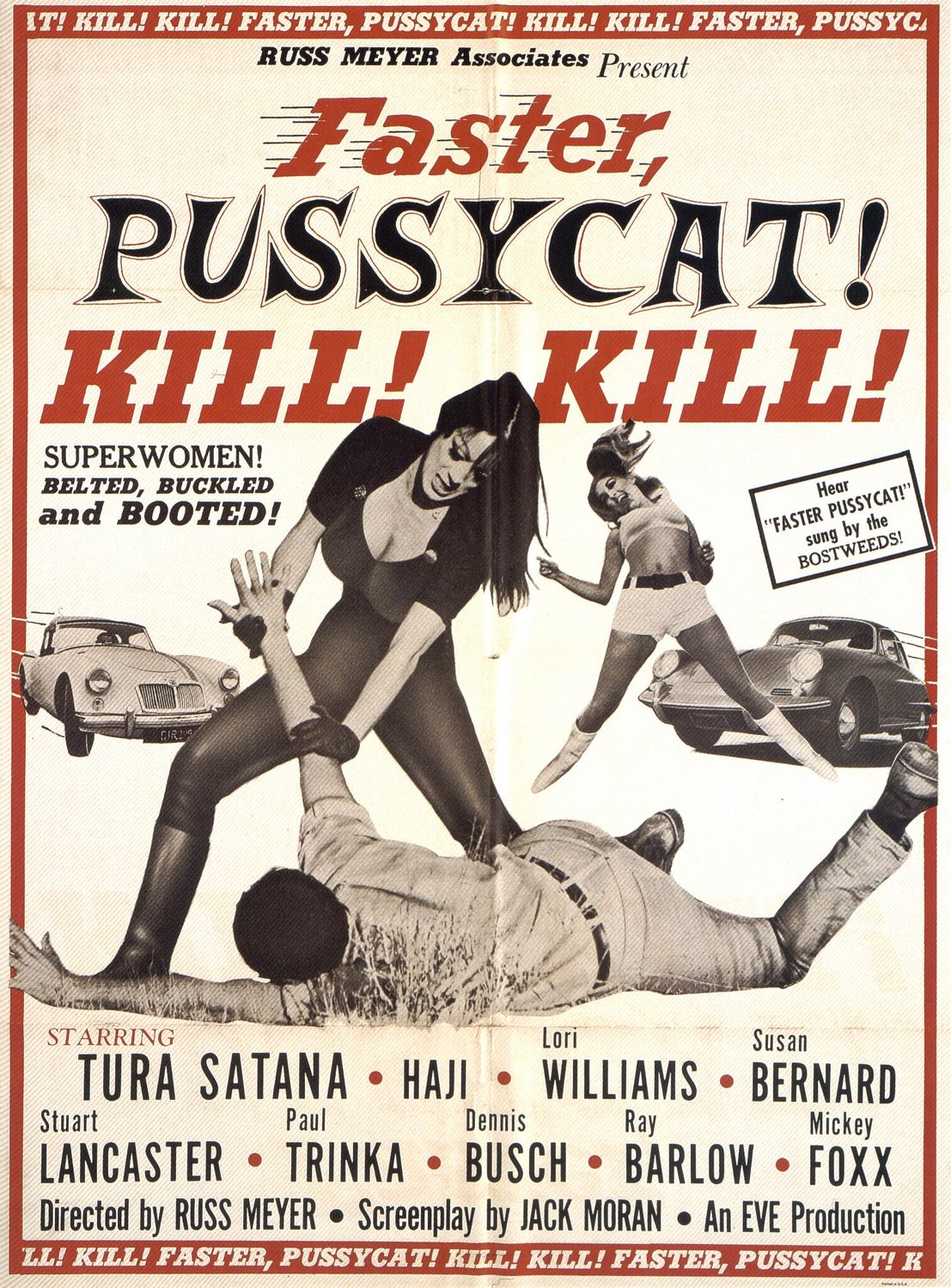
Back in May of 2011, the Grindhouse Film Festival paid tribute to director Russ Meyer and the late actress Tura Satana, both of whom are best known for having worked together on the exploitation classic “Faster, Pussycat! Kill! Kill!.” This film screened at New Beverly Cinema along with “The Doll Squad” which Tura co-starred in, and in attendance were two actresses from the 1965 cult film: Haji and Susan Bernard. Both said if Satana were still with us, she would have been very pleased by the large turnout.

Satana starred as Varla, the leader of a trio of thrill-seeking go-go dancers. Her contribution to the 1965 movie was she added karate scenes and even choreographed them with the stunt director. Satana died in February of 2011 from heart failure, and Haji burst into tears confessing just how much she misses her and her pot roast. Bernard said Satana had a very big heart. She was 72 when she passed away, but we came out of this screening feeling like she left us way too soon.

In talking about Meyer, both ladies described him as a “good hearted man” who always visited his mother on Christmas Day. They described his editing and photography on his movies as being consistently top notch, and he always worked with the same five men crew which became a “tight knit” family. Bernard also remarked how he had a natural instinct about actors in what they could do without direction. It got to where he went up to the cast and said, “Here’s your scripts, do your thing.”

Bernard recalled her big driving scene where she got into the truck and of how she told Russ she had never drove a stick shift before. To this, Meyer replied, “You’ll figure it out.”

Both actresses made it very clear Meyer always took care of the girls and made sure they were well rested and that he ensured they did not have sex during filming as he always wanted them to look horny onscreen. Working with Meyer also made them both understand what he stood for: freedom of expression, anti-prejudice, equal rights for everyone and, along with the late Hugh Hefner anti-censorship.

Haji further remarked if you went into Meyer’s movies a complete wimp, you came out a toughened and changed person. He had the cast sleeping in tents out in the desert with scorpions, snakes and tarantulas threatening them when they least expected it. After doing one film with Meyer, Haji said she came out if it “rugged,” but they remained very good friends all the way up to his death.

“Faster, Pussycat! Kill! Kill!” is considered the cinematic origin of girl power and female empowerment. Unlike the endless number of films which came afterwards, it had no cursing and no nudity. Haji even said you could take your kids to see it. Whether or not taking kids to this movie is a good idea, there is no doubt of how much influence it has had on movies and popular culture. This cult classic still draws quite the crowd for good reason: women have the upper hand against those against them, and they are never ever weak. When you think about it, this was not always the case with movies back in the 1960’s.

Elisabeth Shue on Arriving at the ‘House at the End of the Street’

House at the End of the Street Shue Lawrence

WRITER’S NOTE: This article was originally written back in 2012.

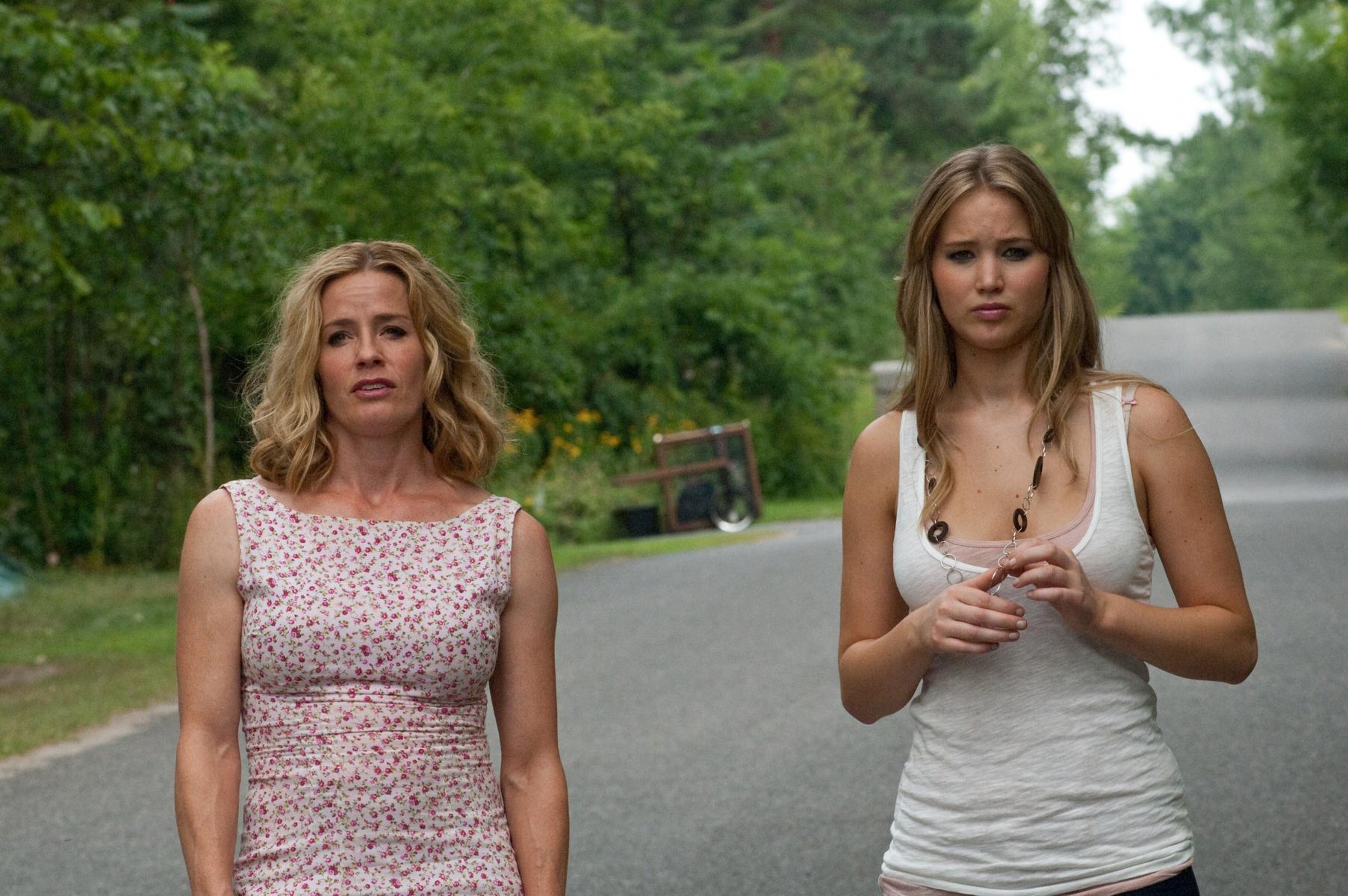
Do not worry about actress Elisabeth Shue because she is doing just fine. To say she has been making a comeback would not be altogether fair as she has never really stopped working. While it has been some time since her heyday in the original “Karate Kid” and her brilliant Oscar-nominated turn in “Leaving Las Vegas,” she has been keeping busy with “CSI” and movies like “Piranha 3D” and “Hamlet 2” among others. But now she gets the opportunity to act opposite one of the hottest movie stars at this moment, Jennifer Lawrence, in Mark Tonderai’s horror movie “House at the End of the Street.

Shue stars as Sarah, a recent divorcee who has just moved with her daughter Elissa (Lawrence) into a new home which they later find has a ghastly history. What makes the dynamic between Shue’s and Lawrence’s characters especially interesting is how they keep trying to figure out who the mother is in this relationship. Shue described Sarah as being a “rock-and-roll groupie type” who is more of a child than Elissa.

“Mark was really wonderful. We worked on the script to create a mother who’s a little more complicated than what was originally on the page,” Shue said.

Having already acted in horror movies, Shue is no novice to this endlessly popular genre. The actress also makes it clear she “definitely likes to be scared” and counts “The Silence of the Lambs” as one of her all-time favorite movies. She also likes how her role in “House at the End of the Street” contrasts to the horror films she previously appeared in.

“Hopefully, this is a bit more real,” says Shue. “I really like the tension in the film, and the way the characters are allowed to live and breathe, so things aren’t jumping out at you all the time.”

Working with Lawrence proved to be a great experience for Shue as she found the “Hunger Games” star to be “incredibly grown up for her age.” This was certainly made clear to the world when Lawrence made a tremendous breakthrough in “Winter’s Bone” in which her character has to take care of her siblings when her parents prove to have more serious problems of their own. Shue has gone on to describe Lawrence as being “much more mature” than she was at her age.

“We didn’t get too much time together before we started filming, but we had some dinners and hung out,” Shue said. “I think we both share those long years of just being a normal person before getting into this business and I think that’s helpful. She never seemed insecure or needy or someone who wasn’t just very, very confident in herself. At that age, I wasn’t that way.”

It is always great to hear when Elisabeth Shue is doing another movie or television show. Those memories we have of her from “Adventures in Babysitting” and “The Karate Kid” have never gone away, and she continues to entertain us today in whatever she does. I think it is safe to say we can be sure will be seeing plenty more of her in the near future.

SOURCES:

Olivia Allin, “Elisabeth Shue on working with Jennifer Lawrence in ‘HATES,’” On The Red Carpet, September 22, 2012.

Nisha Gopalan, “Elisabeth Shue on ‘House at the End of the Street,’ Jennifer Lawrence, and ‘Savvy’ Starlets,” Vulture, September 20, 2012.

Mark Worgan, “Elizabeth Shue Interview: Jennifer Lawrence Was Always Headed To The Top,” Entertainment Wise, September 27, 2012.

Bob Thompson, “Elisabeth Shue is the comeback kid,” Dose, September 20, 2012.

So Bad It’s Good: Ed Adlum Looks Back at ‘Invasion of the Blood Farmers’

Invasion of the Blood Farmers movie poster

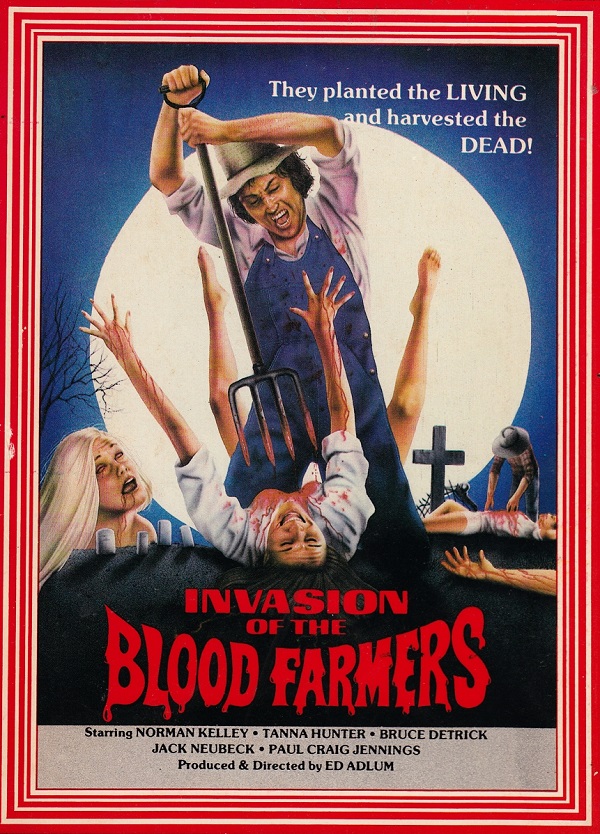
Ed Adlum was the Grindhouse Film Festival’s guest of honor at New Beverly Cinema on September 25, 2012. Among the movies of Adlum’s were showing there on this evening was his 1972 cult horror movie “Invasion of the Blood Farmers.” Many have described this film as being delightfully dreadful, and Adlum is not blind to its lack of quality. Watching it with an audience, however, and hearing Adlum talk about what got him to make movies made this a highly entertaining evening.

Adlum was actually involved in the music business before he decided to make movies, and he was a writer for Cashbox Magazine back in the 1960’s. This determination which led him to do the things he wanted to do came about in his youth.

“When I was a kid, I was one of these ambitious fellas who was gonna show everybody in the East Bronx that I was special,” Adlum said. “Now how that happened is up to the psychiatric profession, but it happened anyhow. I was short, I was not especially good looking and frightened of girls. I was number one in school and you know how that can happen, and I was the kind of person who often said in his own head I’m gonna be something special. So, when you have a motivation like that, all you need is the occasion, and the occasion came along.”

From there, Adlum talked about how he met Jimmy Walker whose band Castle Kings he ended up joining as a guitarist. He went on to say Walker and him made “several really bad” albums after being signed by Atlantic Records and that they eventually split up to do their own things. Adlum then went on to join the army as everyone was in the army back then thanks to General Dwight Eisenhower. Following this, he started Replay Magazine which covered the jukebox and coin-up industries.

When he moved to California, Adlum decided he wanted to fulfill his heart’s desire to make a movie. He came up with the story for his directorial debut while talking with a friend of his named Jackie.

“Why don’t we do something about a planet that’s dying from lack of food and call it Hianus and they all come to the earth in search of a food supply for their planet back home, but they find it in human blood,” Adlum said. “And I stop right in the middle of the floor and I say ‘Jackie I got it, Invasion of the Blood Farmers!’ From that point I went to my friends in the jukebox business and I raised the money. One of the guys that worked with me at Cashbox Magazine named Ed Kelleher and I wrote the script. We made that movie for $24,000 dollars.”

Adlum went on to describe “Invasion of the Blood Farmers” as being “bad good” and that “it is just a hoot which is like saying I don’t believe this picture.” Doing the movie also got him to meet Mike Findlay who ended up directing a film Adlum wrote and produced called “Shriek of the Mutilated,” and they became “fierce friends” as a result.

“Invasion of the Blood Farmers” cannot be mistaken for classic cinema as it has a number of things wrong with it: bad acting, erratic editing and serious continuity problems. Still, none of us could come out of it saying we were not entertained. When all is said and done, Ed Adlum did achieve his dream of making a movie, and in a way this was more than enough. The only thing even funnier than the unintentional laughs in the movie itself is, despite all the blood and gore, how it ended up getting a PG rating from the MPAA. Even in the 1970’s this group proved to be a hypocritical bunch! Some things never change.

Here are some other tidbits of trivia about this movie:

Most of the cast members worked for a six-pack of beer as payment.

It was shot over three weekends and never made its money back.

Cast members Richard Erickson and Richard Kennedy were so bad at memorizing dialogue that they ended up having to read off cue cards.

The production went through eight and a half bottles of stage blood.