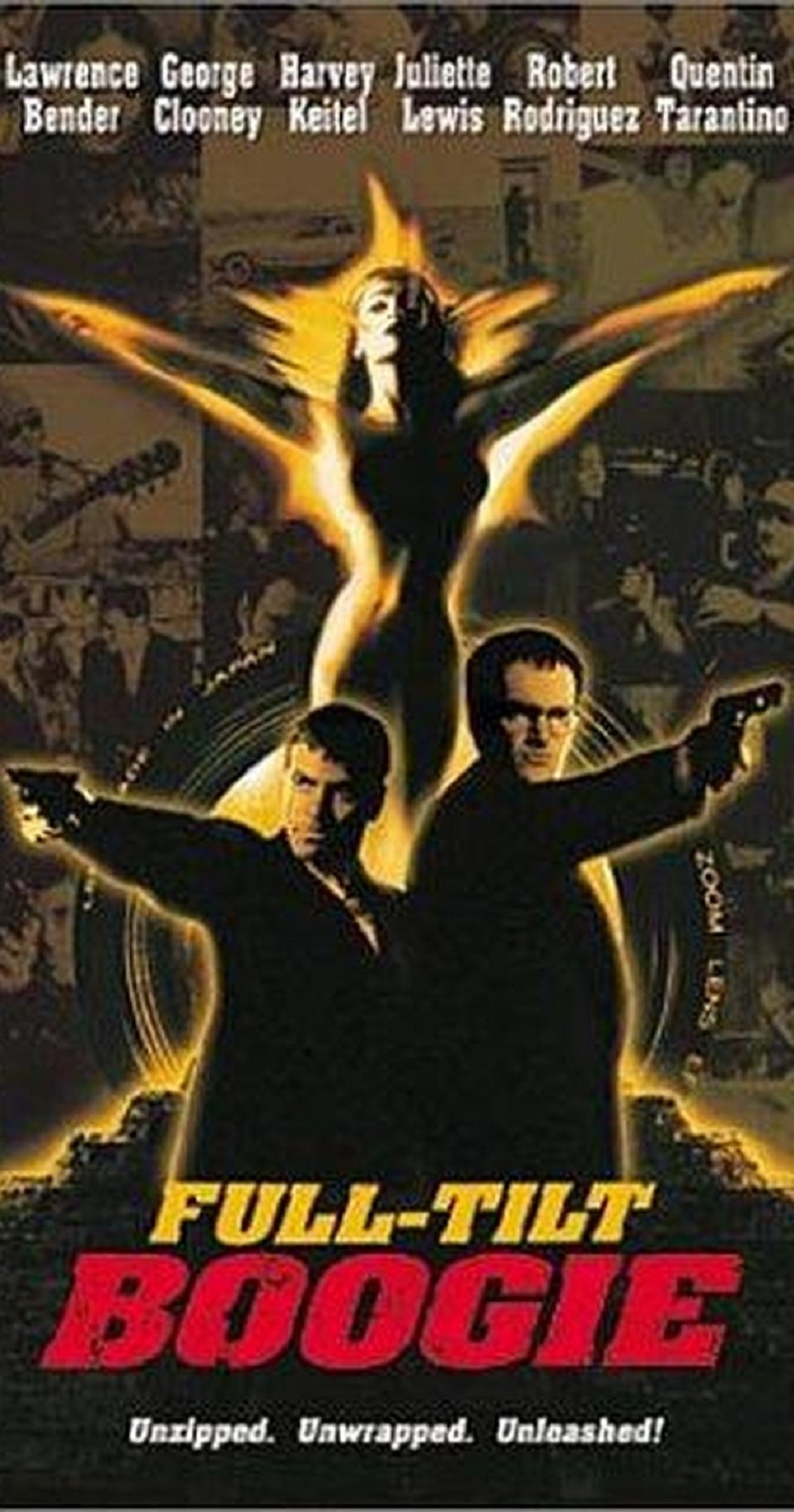
After a double feature of William Friedkin’s “To Live and Die in L.A.” and “Rampage,” which is not currently available on DVD, the audience members at New Beverly Cinema were in for a special midnight treat as the theater held a screening for the 20-year-old documentary “Full Tilt Boogie.” Directed by Sarah Kelly, it chronicles the making of Robert Rodriguez’s action horror cult classic “From Dusk till Dawn” which starred George Clooney and Quentin Tarantino as outlaw brothers who, along with a vacationing family, end up at a rowdy Mexican bar which turns out to be infested with vampires. The documentary introduces us to those people who worked behind the scenes on the movie, of why they want to be a part of show business, the fun they have when the cameras are not rolling, and of the complicated relationship between movie studios and unions.
Introducing this screening of “Full Tilt Boogie” was Kelly, and she was joined by her producer and friend Rana Joy Glickman. The emcee who welcomed them remarked about how cool it was this documentary was playing at the New Beverly and that it was sharing a marquee with Friedkin’s “Cruising.” To this, the emcee said about Kelly, “Whoa! She scored good!”
Kelly welcomed all the “insomniacs” who came out to see her documentary and explained how it became a reality.
“The reason this movie came about was that Robert Rodriguez and Quentin were about to start shooting ‘From Dusk till Dawn,’ and it was an $18-million-dollar independent movie and the unions were pissed,” Kelly said. “They were like, ‘What do you mean? No, you have to go union.’ And so, there was a big threat of a strike, and Quentin thought it would be cool to document it.”
“I had worked for him on a little movie called ‘Pulp Fiction’ and a couple of other movies he was involved with,” Kelly continued, “and he knew that I was studying to be a director so he gave me a shot. At the time, I was taking a break from production and I was working part-time in a law firm and I was like, ‘So is this for real? Should I quit my job?’ And he said, ‘Uh, quit your job yesterday.’ So, I did. We wrangled our little, tiny, hardcore crew and we started shooting, by the way, on 16mm film. Nobody shoots documentaries on 16mm film anymore, but we did. The union threat kind of turned into a cold war and I asked Quentin if we could keep shooting and just do a love letter to the crew. I pitched it as kind of like ‘Hearts of Darkness’ (Eleanor Coppola’s documentary on ‘Apocalypse Now’), but not that dark. Quentin said, ‘Yeah, that’s really fucking cool!’”
As for Glickman, she claimed to have hundreds of stories to tell about the documentary and “From Dusk till Dawn,” but she chose to tell only this one.
“When we finished ‘Full Tilt Boogie’ we were just so pleased that we finished and we got to make the posters for the film, not the one that Harvey Weinstein had selected,” Glickman said. “Our favorite poster is Sarah’s design, and it was Ken (Bondy), the craft service guy on ‘From Dusk till Dawn,’ standing there with a tray of lattes and it said, ‘From the maker of coffee on Pulp Fiction, we bring you Full Tilt Boogie.’”
Kelly responded, “That’s a great poster, right?”
“Full Tilt Boogie” may not be the masterpiece “Hearts of Darkness: A Filmmaker’s Apocalypse” is, but it’s still a very entertaining documentary which takes you behind the scenes of a movie’s production in a way few others do. We get to see the challenges crew members constantly face on a movie set, and we also get to take in the fun they have outside of it as well. For these people, this is a job done out of love and far more preferable than working a 9 to 5 job which has them sitting at a desk all day. Kelly certainly did create a love letter to these crew members, and we revel in the festivities they have from one day to the next.
Thanks to Sarah Kelly and Rana Joy Glickman for taking the time to come out, and at such a late hour, to talk about “Full Tilt Boogie” at New Beverly Cinema.
When it comes to drone warfare, it seems like such an easier way to fight an enemy without having to put “boots on the ground.” But like Snake Plissken said over and over in “Escape from L.A.,” the more things change, the more they stay the same. Just as in previous wars, there will always be much destruction and an inevitable number of civilian casualties. The question comes to this: is war worth it? Is it worth having all these civilian casualties while trying to take out the enemy? Now some might think these are easy questions to answer, but this is not the case at all, especially to those at the front line.
This is made clear in Gavin Hood’s intense thriller “Eye in the Sky.” It stars Helen Mirren as Colonel Katherine Powell who has been tracking a British citizen-turned-terrorist for six years and finally has her tracked down in Kenya. Thanks to local operative Jama Farah (“Captain Phillips’” Barkhad Abdi) and his nifty high-tech surveillance, she discovers this spy is quickly preparing along with others to carry out suicide attacks. As a result, what started as a mission of capture becomes a mission to kill terrorists, and Colonel Powell has drone pilot Steve Watts (Aaron Paul of “Breaking Bad”) target the safe house the terrorists are in and is prepared to take them out, but then a 9-year-old girl enters the kill zone to sell some loaves of bread, and she won’t leave until she sells them all. This quickly triggers an international dispute as the United States and British governments debate over whether or not to take action.
While most war movies enthrall viewers with bullets and bombs exploding constantly, “Eye in the Sky” leaves us in sweat-inducing suspense as we wonder if and when an explosion will go off at all. What’s great about Guy Hibbert’s screenplay is it never condescends to its characters or give us annoying ones who are out to make bone-headed decisions for their own benefit. Every reason each character gives for firing or not firing at the target makes perfect sense, and it adds to how difficult the question of attacking these terrorists with this little girl nearby is to answer. On one hand, stopping these terrorists will prevent the loss of many lives, but if the little girl is killed it will come back to aid the propaganda wars being fought against governments. Everyone is looking for a way to keep the blood off their hands, but no one gets off easy.
Watching this situation play out reminded me of a scene from “Blue Thunder.” This classic 1980’s movie is about a high-tech helicopter, and the characters see it do a demonstration of a strafing run where red dummies are terrorists and the white ones are civilians. In the course of shooting at the targets, all the red dummies are blown away as well as a few white ones. This leads the government official Fletcher to tell helicopter pilot Frank Murphy, “There’s one civilian dead for every ten terrorists. That’s an acceptable ratio.” To this Murphy replies, “Unless you’re one of the civilians.”
You almost want to laugh at the government officials who keep trying to contact their higher ups to get permission to obliterate the terrorists as it comes across as passing the buck. But whether or not there is an advantage to attacking or not attacking, there’s also how the rest of the population will interpret how their governments act. This is something governments can never fully control, and they are fully aware of the consequences of doing something and of doing nothing.
Gavin Hood has had a tough time in Hollywood ever since he won the Best Foreign Film Oscar for “Tsotsi.” His abduction thriller “Rendition” received a mixed reception, “X-Men Origins: Wolverine” proved to be a mess as it was undone by too much studio interference, and “Ender’s Game’s” chances of becoming a franchise of movies crashed as soon as it opened. But with “Eye in the Sky,” Hood is really in his element as he was once a soldier and has a clear understanding of the military’s responsibilities and the conflicts they endure. He’s also smart to not answer any of the questions the movie poses as he is not about to offer easy answers. Aside from the terrorists, there are no good or bad guys here, but instead, professionals trying to win a war against terrorism as well as the minds of the people.
Hood also shows how the drone pilots actually have it even harder than troops who see the action up close. They may be many miles away from their targets, but they can still see their targets up close and still have their finger on the trigger. At the movie’s press conference, Hood told reporters drone pilots have a higher rate of post-traumatic disorder than those troops who experienced armed combat up close. Having an actor like Aaron Paul playing the drone pilot gets this point across very well as we watch him suffer just as much as he did as Jesse Pinkman on “Breaking Bad.”
Mirren remains an impeccable actress, and she follows up her nasty turn as columnist Hedda Hopper in “Trumbo” with a much different character. Eager to stop another terrorist attack from happening, she undergoes tremendous stress while waiting for an answer from her commander. Mirren makes you feel her stress two-fold, and yet she never seems to break a sweat.
It’s also great to see Abdi here as he proves his Oscar-nominated performance in “Captain Phillips” was no fluke. His character is closest to the line of fire, and we watch as he does his best to do his work while under the prying eyes of fearsome soldiers. Abdi perfectly captures Jama’s desperation as he does what he can to save the little girl from a tragic fate, and he is riveting throughout.
The movie also contains the last onscreen performance from the late Alan Rickman who portrays Colonel Powell’s commanding officer, Lieutenant General Frank Benson. Rickman is as impeccable here as he has been in any other role he has played, and he will be deeply missed. He also has one of the movie’s most definitive lines which comes up towards the end, and he delivers it in a truly unforgettable way.
“Eye in the Sky” is one of those rare thrillers which thrills you just as much as it makes you think. The reality of drone warfare is hard to escape, and this is especially the case after watching this movie. As much as many of us want to leave life and death decisions up to others, Hood forces you to question what you would do in the same situation. You may not like the answers you come up with, but you can’t turn a blind eye to it forever.
By the way, in the case you were wondering, the Alan Parsons Project song of the same name is not featured in this movie. Bummer.
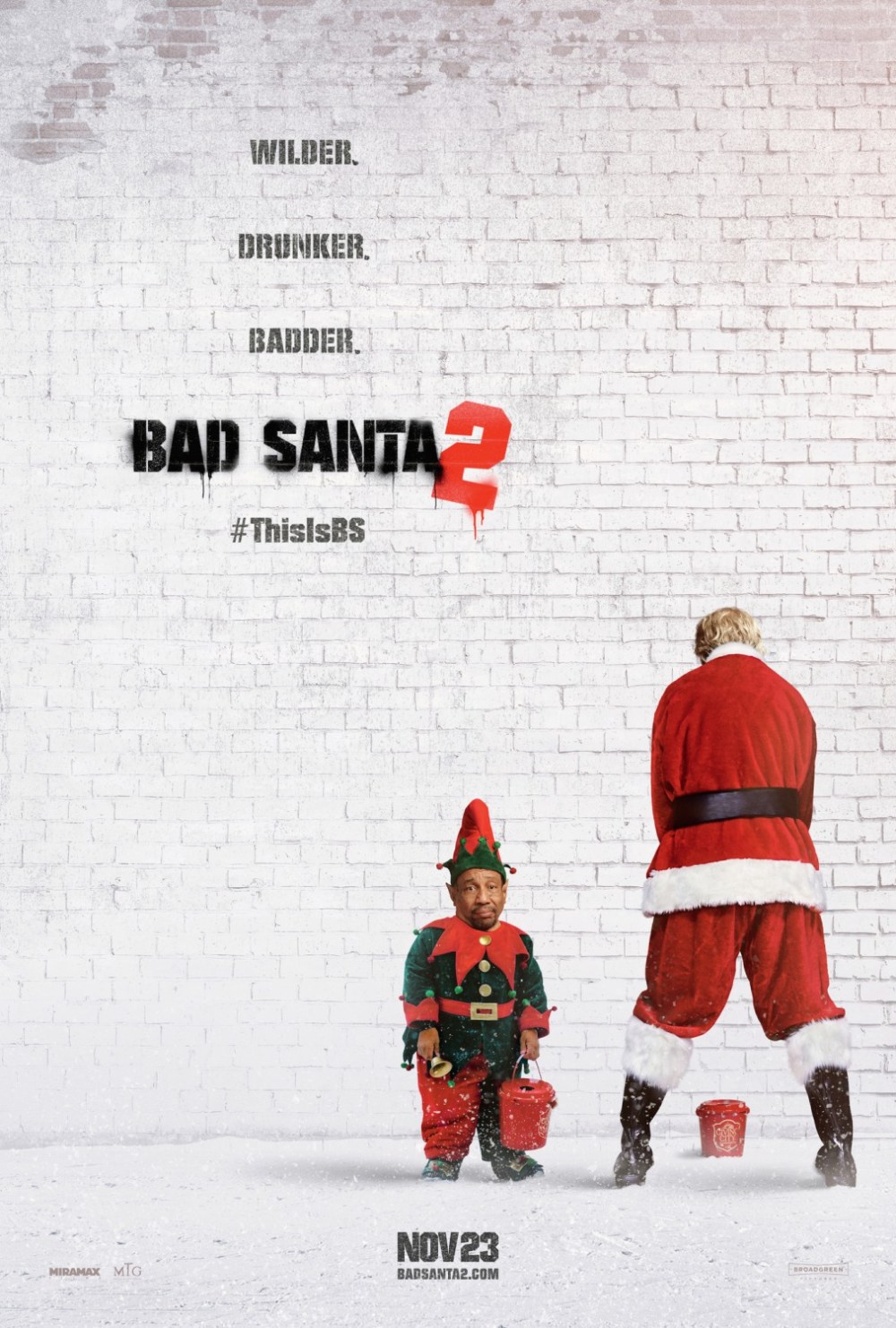
“Bad Santa 2” is the kind of sequel I thought it would be; one which repeats the story of the original. Granted, many sequels are like this, and some get away with it like “Beverly Hills Cop II,” “The Hangover Part II” and John Carpenter’s “Escape from L.A.” Clearly, this is a movie made for fans of 2003 original which has long since become a holiday and cult classic, and this sequel does contain a number of gut-busting laughs as the world’s worst mall Santa Claus ever, Willie Soke, gets himself involved in another heist. But in its second half, “Bad Santa 2” loses much of the energy it built up and begins to run on fumes as scenes quickly remind us of the original and how great it was.
It’s been 13 years since “Bad Santa” was unleashed in theaters everywhere, and the holdup was the result of Miramax being sold among other things. Billy Bob Thornton was eager to get a sequel off the ground, but because of various rights issues, it seemed impossible to start production on one for years. While it is a relief to see this sequel finally arrive at your local cinema, it’s being released at a time where a major Presidential candidate bragged on audio about grabbing women by “the pussy.” As a result, it’s hard to watch “Bad Santa 2” without thinking about that, so the bad timing of its release is unfortunate.
So, what has Willie been up to for 13 years? Well, he’s still the same old cynical lout whose heart is smaller than the Grinch’s, and he still drinks himself silly at any given opportunity. Sue (Lauren Graham from the original) has long since left him as Willie is incapable of hanging onto any nurturing relationships, but he still gets regular visits from Thurman “the kid” Merman (Brett Kelly) who still acts like an 8-year-old even at the age of 21. Willie is prepared to put himself out of his misery, but he is much better at cracking safes than at attempting suicide. One thing’s for sure, he’s got one hell of a liver.
Despite having tried to kill Willie previously, Marcus Skidmore (Tony Cox) still manages to convince him to pull off another heist which will be their biggest yet. Marcus wants to rip off a Chicago charity which is said to have $2 million dollars, but Willie is against robbing a charity because, you know, they never have that much money. But Willie’s in for a big surprise as he discovers Marcus has brought on another partner for this caper, his mother Sunny (Kathy Bates). The fact Willie is quick to punch her right in the face as soon as he recognizes her should give you a good idea of just how dysfunctional the mother/son relationship is between these two.
Thornton hasn’t lost a step since first playing Willie back in 2003, and he still knows how to give a deplorable character like this one a complexity other actors couldn’t. The actor can still land a joke like the best can, and just when you think Willie can’t reach an even deeper bottom than he already has, he does. But as irredeemable as Willie seems, Thornton still gives us a reason to root for him even as he is about to sin again.
“Bad Santa 2,” however, scores a real casting coup with the addition of Kathy Bates who shows no fear in making Sunny every bit as cynical as Willie. She relishes playing an unrepentant biker chick who throws caution to the wind just as one would flick away a cigarette to the ground, and she’s the kind of actress who’s game for just about anything and everything.
It’s also great to see Tony Cox back as Marcus, and that’s even though the logistics of Marcus working again with Willie are beyond belief. Then again, you don’t bring logic into a sequel like this. While Lauren Graham is missed, it’s crazy fun to watch “Mad Men’s” Christina Hendricks let it loose as a reformed alcoholic who still feels the need to be bad when the opportunity presents itself. As for Brett Kelly, he still gives this sequel the heart it needs as man-child Thurman Merman. You would think Thurman would have long since outgrown his attachment to Santa, but again, this is not the kind of sequel you bring logic to.
But as “Bad Santa 2” heads into its second act, the laughs begin to die down as our familiarity with original sinks in to where what was once fresh now feels sadly stale. We are introduced to Regent Hastings (Ryan Hansen) who heads the charity and is Christina’s husband who cheats on her and indulges in a foot fetish which is best left to the imagination, and there’s also the security officer who is on the verge of uncovering Willie’s true identity. They eventually bring to mind the characters John Ritter and Bernie Mac played in “Bad Santa,” but these characters are nothing more than mere caricatures supplied for the audience to despise right from the start. The characters Ritter and Mac portrayed were not clichéd ones, and each actor inhabited them with a comic brilliance not easily duplicated. The both of them are very much missed this time around.
Directing “Bad Santa 2” is Mark Waters who gave us “The House of Yes,” the “Freaky Friday” remake and the infinitely enjoyable “Mean Girls” which made a star out of Lindsay Lohan and gave Tina Fey a life outside of SNL. With this sequel, he feels obligated to stay within the original’s formula as straying from it wouldn’t have worked. Waters succeeds in keeping the comic pace of the movie up, and he generates some big laughs which left me in hysterics. However, he can’t keep it from losing steam as we become more aware of where things are heading as this sequel heads to its inevitable climax which is not as inspired as it wants to be.
For me, “Bad Santa 2” is a near miss. Some sequels are mere replications of the original, and this drives most critics up the wall. I can be a bit forgiving as I’m willing to accept this to a certain extent if the sequel proves to be entertaining, but even I have my limits. “Bad Santa 2” succeeds in its first half, but its second half shows its filmmakers running out of steam long before they crossed the finish line. It’s a shame because the original is one of my favorite movies to watch during the holidays, but this one comes up short. It definitely has its devilishly inspired moments, but it could have used more of them.
Billy Bob Thornton is back in the Santa suit as Willie Soke in “Bad Santa 2” which once again involves Willie teaming up with his partner-turned-nemesis Marcus (Tony Cox) to rob a charity in Chicago on Christmas Eve. But this time they have an additional partner in crime, and one Willie didn’t expect to deal with, his mother Sunny (played by Kathy Bates). It’s no surprise to see Willie and Sunny don’t have the best mother and son relationship, and both seem intent on outdoing each other when it comes to insults and political incorrectness. But can these two get past their differences to pull off a heist and maybe try some love and tenderness in the process? Well, you’ll have to see the movie for yourself to figure this out.
It’s great to see Thornton back in one of his most famous roles. “Bad Santa” has long since become a cult hit, and the fans were eager to see Willie back in action even as we wondered if his liver could take much more damage. Thornton was joined by Bates at the Four Seasons Hotel in Los Angeles, California for the “Bad Santa 2” press day, and I was eager to find out how they prepared to play their loathsome and yet strangely appealing characters. The two of them are Oscar winners, Thornton for “Sling Blade” and Bates for “Misery,” and they have since been nominated several more times. Their attention to developing a character is impeccable, and I was fascinated to learn how they worked on the ones they played in this sequel.
Their answers to my question led to a hilarious story involving Thornton and his mother, and Bates reflected on one of the first movies she ever appeared in.
Ben Kenber: First, I just want to say Willie has one hell of a liver. Also, Billy and Kathy, I read the two of you worked on your characters’ backstories a lot for this movie. What specifically did you come up with that you really agreed on and which really helped to inform your performances?
Kathy Bates: I remember one day we were talking that maybe they were carnies together and con artists and had lived in that atmosphere. Nothing against carnies, but we figured that that’s probably where they were from. What else Billy?
Billy Bob Thornton: Yeah and the idea that I was sort of like the artful dodger and she was faking. That sort of idea that I grew up, and it even says in there, where she used to sell me out to do stuff for her all the time, and so we’re sort of grifters in a way. So, it’s not like Willie doesn’t have an understanding of what she does and why she’s that way and why I’m the way I am. We grew up rough in a weird business, so that was mainly it. And also, you can see the mother-son relationship because you know how if you’re watching a movie with your parents… My mom’s 83, and if I’m watching a movie and somebody starts making out, I get so embarrassed. I’ll never forget when my mom called me once and she said she had been to see my movie, and I was like, what movie? I never even thought she would know this existed, and she just gone to see “Monster’s Ball” with her best friend and I was like, why did you do that? How could you do that to me? But I’m still that way. I have never said the F-word around my mother to this day, and she’s 83. So, there is the scene where Kathy has the dildo, and you can see the kid and the mother in that scene and it’s kind of like, golly! Don’t do that! So, I think we had that part too. You can see a mother and son in there. I think we felt it. We did talk about it to a degree, but a lot of it just came naturally.
Kathy Bates: Can I just say one last thing? I remember doing a movie years and years ago with Dustin Hoffman, and it was my first talking part in a movie. Gary Busey was in it and his son, Jake Busey, was in it too, and he was five. Jake got the part, but Gary said, “Do you want to take the night to think about it?” So, Jake came back the next day and he said, “Well, yeah, I’ll do the movie because I think acting is pretending and making believe like you’re not pretending.” And I thought, okay, that’s it. Lee Strasberg, you can go home, and that says it all.
I want to thank Billy Bob Thornton and Kathy Bates for taking the time to answer my question. “Bad Santa 2” opens in theaters on November 23, 2016.
I don’t know about you, but I am SICK TO DEATH of holiday movies with families getting together and chaos ensuing. After a while, they all blend into one another and look no different from what we saw the year before. These are movies which shamelessly manipulate audiences into feeling joyful during the Christmas season, but this only works for so many people. Then there are other movies which preach against the commerciality and consumer frenzy which has come to overwhelm the Christmas season for years and years. But ironically, these same movies are released by studios infinitely eager to make a huge profit and potentially start a new franchise.
Yes, it is great to see films which really get to the true meaning of Christmas providing you have a couple extra dollars for them as well as for popcorn and drinks, let alone for the date you are lucky to bring along with you. So, like romantic comedies, I tend to avoid these “festive” cinematic experiences whenever they arrive at a theater near you.
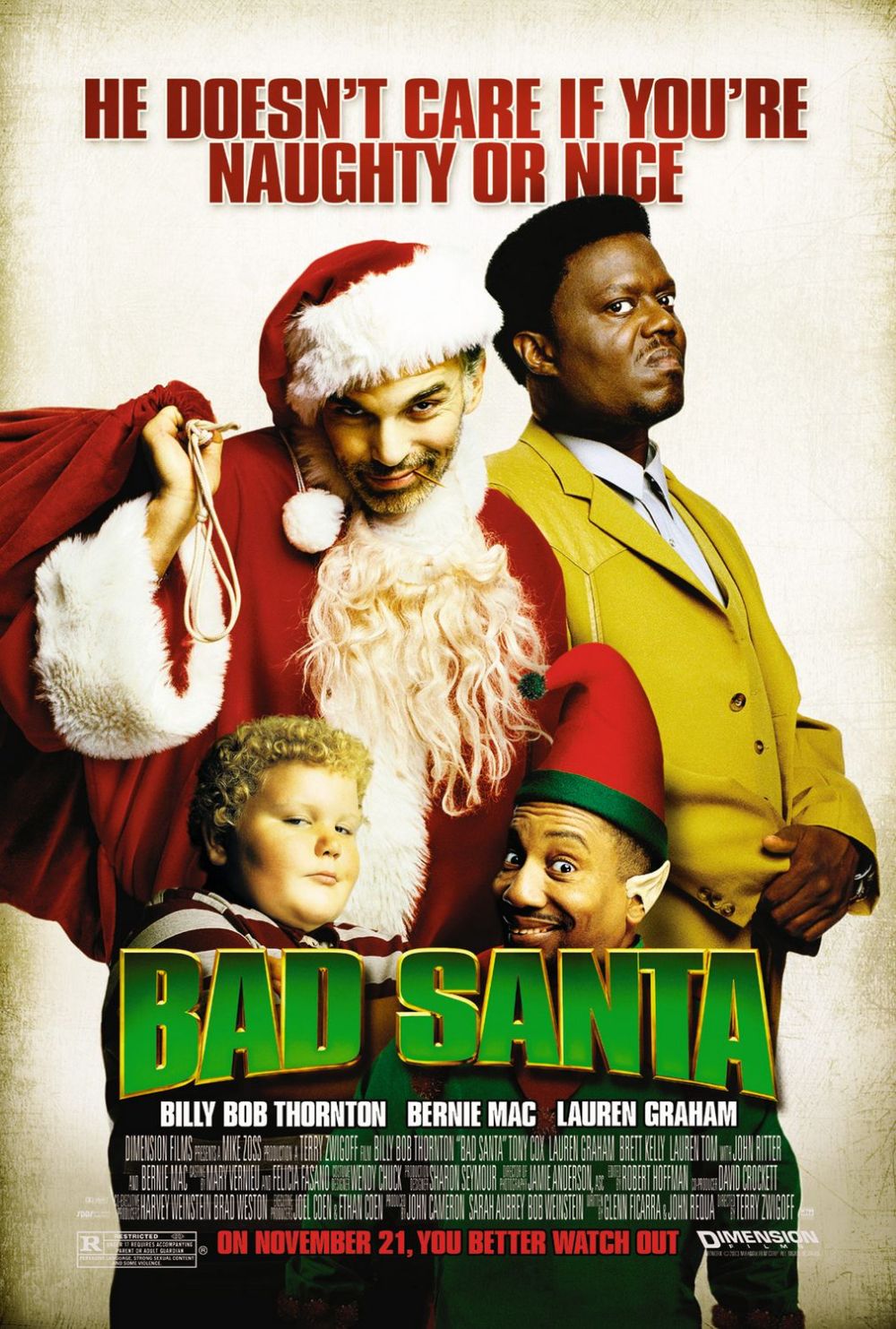
This is why I love “Bad Santa.” It is free of the sentimentality and sugar coated characters which all but mar your typical holiday movie, and this is regardless of whether or not they are intended for the whole family. It is a crude and politically incorrect film, and it has a gleeful amount of fun at Mr. Claus’ expense. But don’t worry; Santa is too busy giving presents to all the children to have any time left to sit through it.
Billy Bob Thornton, one of the best character actors working, plays Willie Stokes, a department store Santa Claus who is anything but fat and jolly. You are more likely to see him drinking backstage, making out like the womanizer he is, and doing other things completely lacking in sensitivity. Seeing him talk with the kids makes you wonder how the hell he manages to keep a job anywhere. Willie cusses at them when they sneeze in his face, and he never lets them ask about the presents they want. I kept waiting for one kid to pee on him as this happens with every department store Santa, but it turns out he is the one doing the pissing. But as cruel and Scrooge-like as Willie is, there is one person he clearly despises more than the kids and their snooty parents, himself.
Eventually, the truth comes out. Along with his partner in crime, Marcus (Tony Cox), Willie robs each mall he works at. They wait until everyone has left, then they disable the security system and go on a shopping spree where they steal all the things they want but can’t afford. Willie’s specialty is opening safes which contain the majority of the store’s loot, and he is clearly a professional safe cracker when we first observe him at work. In addition, Marcus’ wife Lois (Lauren Tom, whose face is contorted into a permanent frown) is there to drive them away when their work is finished. Following this, they take the rest of the year off and live off of the money and valuables they have taken. Marcus goes back to living with his wife while Willie goes off to Miami to get endlessly drunk, and Willie somehow gets lucky with the ladies regardless of his infinitely inebriated state.
Then we catch up with these characters a year later when they are employed at another mall where they plan their next big heist. But of course, things do not go as planned.
Thornton is a hoot as Willie Stokes. While his character does many things which would get him fired from any and every other job available, he gives this endlessly crude character a heart covered with a big slab of cynicism. And amazingly enough, he also makes Willie somewhat empathetic. This comes about when he meets a young pudgy kid who you’d think would teach him the meaning of Christmas, but he is really just stalking Willie out of loneliness. It allows Willie to warm up a little, and seeing him make any sort of effort with this kid is remarkable considering how far from sobriety he is.
The kid’s name is Thurman Merman (Willie basically calls him “The Kid”), he is played by Brett Kelly. Kelly is not anything like those clean-cut kids in Disney movies, and I found this to be very refreshing. Thurman is a short, pudgy little unpopular guy who doesn’t have any friends and is an easy target for bullies in and out of the classroom. What I really dug about Kelly is how dryly comic he is. He never seems to be the least bit fazed by anything Willie does. Willie gives Thurman a ride home and then proceeds to steal from his dad’s safe and steals his car, and Thurman responds by waving at him and saying, “Bye Santa!”
Thurman lives alone in this big house with his senile grandmother who herself is barely dealing with reality as it is. With Willie, Thurman sees him as someone who could be the friend he doesn’t have. Once Willie catches a cop sniffing around his motel room, he ends up moving in with Thurman to stay out of law enforcement’s sight, and this also allows him to play with Thurman and make out with a local bartender in the hot tub while the grandmother watches television listlessly.
“Bad Santa” was directed by Terry Zwigoff whose previous films include “Ghost World,” “American Splendor” and one of the best documentaries of the 1990’s, “Crumb.” Zwigoff is interested in personalities who are far from normal and have been damaged by life. With “Crumb,” he took a close look at a man who dealt with abuse through his creation of comic books which kept him from going completely insane. With “Ghost World,” he followed a couple of girls who prided themselves on being outsiders at their high school. But in the process of becoming adults, their world is shattered by the onslaught of the corporate world which robs what was once original and special to them. Now with “Bad Santa,” Zwigoff deals with his most damaged character yet with Willie, and you wonder if he is worthy of any kind of redemption. As a result, he is more than well-suited to take on this story which was originally written by the Coen Brothers.
Zwigoff also has a blast digging away at the banal culture of American malls. While they were havens for us as teenagers, they eventually became tiresome places to visit as adults because all the stores and food courts became indistinguishable from one mall to the next. From the anal-retentive managers to the overconfident mall security officers to those annoying boy bands, the movie cuts down the sugar coating of the holidays which will be a relief to those who find it fake or something they don’t care much for anymore.
Tony Cox is hilarious as Marcus. You quickly realize Marcus works with Willie out of necessity, not friendship. Truth is, as great a safe man as Willie is, Marcus cannot stand the way he degrades himself and those around him. Lauren Tom plays Marcus’ wife, and I love how she maintains the same snarky expression as she constantly blows off mall employees who want to sell her stuff she plans to steal anyway. I also got a big kick out of Lauren Graham who plays Sue, a local bartender who starts up a relationship with Willie. Sue is not with Willie out of pity, but in large part because of a sexual fetish she has had for Santa Claus ever since she was young.
But the two actors who deserve special recognition for their great work in “Bad Santa,” and who are sadly no longer with us, are John Ritter and Bernie Mac. This actually turned out to be Ritter’s last live action role before his sudden death. As mall manager Bob Chipeska, Ritter reminds us of what a great comic talent he was as he becomes incensed with what Willie gets away with, and yet he is too much of a wimp to do anything to stop him. Instead, he turns to Gin Slagel, mall security chief, who is played by Mac. Even when he doesn’t say a word while eating an orange, Mac still has us laughing hysterically throughout. The diner scene Mac has with our main characters is brilliant in how he maintains a strong air of confidence, and I loved how he kept finding different ways of repeating the same number over and over again.
“Bad Santa” is the perfect holiday film for those who love infinitely black comedies like “The War of the Roses” or “Observe and Report.” It is a much-needed antidote to the manipulative schmaltz many get suckered into seeing, and it makes us root for a character you would never root for in real life. This is definitely one of Thornton’s best movies, and I consider a new holiday classic for those who have seen “A Christmas Carol” and “The Polar Express” one too many times.
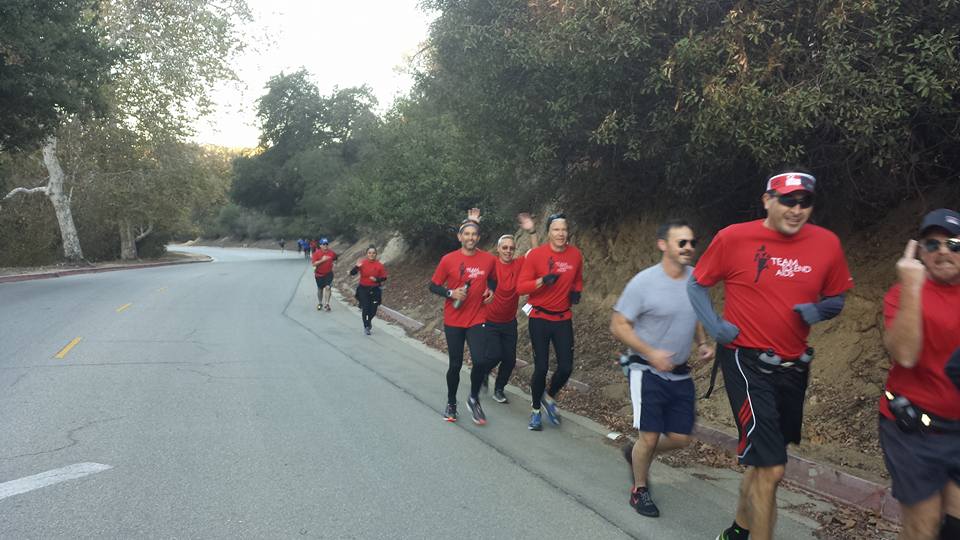
For some bizarre reason, it slipped my mind that Metallica’s latest album, “Hardwired… To Self-Destruct” came out this week. As soon as I saw it on display at the Barnes & Noble store located at The Grove in Los Angeles, I immediately purchased it along with the Criterion Collection Blu-ray of “Boyhood.” Could I have bought Metallica’s newest album at a cheaper price elsewhere? Perhaps, but I’ve been a big fan of this heavy metal band ever since the “Black Album.” I have been playing “Hardwired… To Self-Destruct” on my car’s CD player endlessly since I bought it, and the first track was playing loudly as I drove out to Griffith Park for another run with Team to End AIDS.
” In the name of desperation
In the name of wretched pain
In the name of all creation
Gone insane
We’re so fucked
Shit outta luck
Hardwired to self-destruct”
It’s interesting to listen to those lyrics in the wake of Donald Trump’s surprising, and infuriating, victory of Hillary Clinton in the 2016 Presidential election. Also, I have endured my share of wretched pain I have ran the LA Marathon, and yet I still find a reason to run it yet again.
Today had us running 12 miles as well as traversing over the punishing hill on Crystal Springs Drive. And let’s not forget the other hill we had to ascend on Grandview Avenue. We can complain about running up these hills all we want, but when it comes to the LA Marathon, and we were reminded of this during the recent AIDS Walk, there will be hills. As much as we want to avoid them, they are inevitable and not worth avoiding.
Due to circumstances beyond my control, and I will plead the fifth as to what those circumstances were, I arrived at Griffith Park later than I should have. When I got there, everyone had already started and I was cursing at myself for being left behind. I passed by JC who was quick to remark how I arrived just in the nick of time, and I couldn’t disagree with him on that even if I wanted to. I was peeved I had somehow ended up in this position which I promised I wouldn’t this training season, but Coach Jennifer assured me it was okay as everyone has those moments. She even attempted to drive me out to where my pace group was at so I could join them, but I’m still in the process of learning everyone’s names and faces. She ended up dropping me off at the foot of the hill on Crystal Springs Drive, and in the end, that’s exactly where I needed to start.
You would think after all these years I would have mastered running up the Crystal Springs hill, but I had to keep reminding myself to run a slower pace as I seemed determined to run up this hill so I could get it over with. But with all the running and puffing I was doing, I kept remembering the whole point of this training was to run at a conversational pace, so I had to keep slowing down to make sure I was doing just that. When I finally got to the top, it kind of felt like I was on a wooden roller coaster which was clicking along endlessly until gravity started taking over. Having said that, I did watch myself as I ran downhill. While as kids we loved to let ourselves run wild at any given opportunity, running downhill at warp speed was never going to be to my benefit. This is how nasty injuries occur.
As I headed on through the depths of Griffith Park, I kept hoping to come across Robin Russell who loves to play his drums in this region of it. The rhythm he loves to play at always help on an especially challenging run like this, but he was probably busy on this particular Saturday morning because he was nowhere to be found. Not to worry though, we are all bound to run into Robin at some point during this training season.
Because I didn’t arrive at the same time as my fellow runners, I ended up running these 12 miles mostly by myself. It’s a good thing I had a map on me, otherwise I could have run in the wrong direction despite my best efforts to avoid such a spectacularly stupid fate. Throughout the run, I kept wondering if a 3:1 pace was really working for me. Some of my fellow pace group runners felt more comfortable going at a 3:2 pace, and I started to wonder if I should do the same. It’s always my intention, when it comes to training with T2EA for the LA Marathon, to run faster than I have in the past. But with my advancing age, something I am safe to say I don’t resemble on a physical level, I owe it to myself to take it easy to where I don’t criticize myself as much. If this means slowing down, then that’s not something worth complaining about.
This particular morning was a cold one, and I found myself wearing a jacket in months, maybe even a year. When I got out of the car, it was still quite frigid, but with the sun already rising in the distance, I figured things would heat up very quickly as Southern California loves to stay unseasonably warm. Indeed, it soon turned into a ridiculously warm November day to where I wondered if California had suddenly moved closer to the Equator alongside Hawaii. Still, it felt like a risk not to leave my jacket on. Out here, we are so used to it never being this cold, ever.
Coach James was on hand at the Boliver water stop to dispense good advice, and he encouraged me to look into getting Gatorade Endurance Formula. This formula is different from the regular Gatorade which is so easy to find at your local Ralphs Supermarket, and you have to order it online to get it. Considering this is the same formula given to runners on the marathon route, it is something I really should look into getting. Still, why is it only available online? Geez, this is like Indiana Jones trying to track down the Ark of the Covenant.
So, Thanksgiving is coming up next week, and I will be out of town. My plan is to keep up with my cardio exercises as well as my maintenance runs. Where I am going, you can bet I will be doing A LOT of walking at the very least. Plus, with all the delicious food I will end up eating (my dad and my brother are fantastic cooks), I will have more than enough calories to burn off and Alka Seltzer to keep the massive heartburn at bay.
Ben Younger made his directorial debut with “Boiler Room” in 2000, but “Bleed for This” marks his first directorial effort since “Prime,” and that film was released over a decade ago. After failing to get his Isle of Man racing movie off the ground, he withdrew for a time to Costa Rica where he became a pilot, cooked in a restaurant, and even raced professionally on motorcycles for a year. When it came to making “Bleed for This,” he originally approached it as a writing assignment and had no intention of directing it.
“Bleed for This” tells the true-life story of champion boxer Vinny Paz (played by Miles Teller) who, after winning a fight, is involved in a nasty car crash which leaves him with a broken neck. Many tell him his boxing career is over as a result, but Vinny is determined to repair the damage and get back in the ring. That he succeeded in doing so makes his comeback one of the greatest ever in sports history.
While at the Four Seasons Hotel in Los Angeles, California, Younger explained what finally made him want to tell this story.
Ben Younger: Simply because of the comeback. Vinny won 50 fights, I don’t know if you guys knew that. I’m sure to real boxing aficionados that would be an exciting thing. I’m not one of them. For me, it was all about the crash and the comeback. I started this as a writing assignment. I wasn’t supposed to direct this. I didn’t think I wanted to direct it. But once I realized there was a parallel between his story and mine… You guys know I took a long time off. I didn’t make a movie for 12 years which is kind of like having a broken neck.
So yes, “Bleed for This,” like every other movie released these days, is “based on a true story.” This term has long since lost its meaning as filmmakers tend to embellish the real-life events they are portraying to where they resemble something which feels canned and artificial. Younger, however, sought to pull back from this, and his explanation led to my question regarding certain things I figured filmmakers do their best to avoid.
BY: In every other way, we had to reverse embellishment. For example, that scene with Vinny lifting the bar? That happened five days after the Halo went on in real life. I couldn’t present that because no one would believe it. Same for Ciarán Hinds’ performance of Angelo (Vinny’s father). Angelo was such a colorful character that he bordered on a caricature of an Italian-American in New England. If I showed him as he was, you would say I was racist or we would’ve made a comedy.
Ben Kenber: It’s interesting because when it comes to East Coast people, I think a lot of us have a sort of a specific view which might seem clichéd in the way they are portrayed on-screen. How did you manage to keep it to where it felt like the actors and the accents felt natural and not clichéd?
BY: That was a fear. Boxing wise, there are so many clichés. Those I was like, we are going to avoid those, those are easier to avoid. But this is tougher because the actual accents can in themselves sound caricature like. So, we had a great dialect coach, Tom Jones (not the singer), a really talented guy, and we prayed and we were just careful and we really listened. I wasn’t looking at the monitors. I just stood next to the camera and just stared. You know when someone’s full of shit and when they’re someone they’re not, and you just can tell when they are getting it. Even if you don’t know the world, there’s just something if you really pay attention.
One thing which astonished me about “Bleed for This” was how several of the actors were unrecognizable in their roles. This is especially the case with Aaron Eckhart who plays Vinny’s coach Kevin Rooney, Ted Levine who plays boxing promoter Lou Duva, and Katey Sagal who portrays Vinny’s mother, Louise. One person even told me he didn’t realize it was Sagal in the role until her name came up during the end credits. I brought this up to Younger, and he responded with the following.
BY: That’s the nicest compliment you can pay an actor. They really want to disappear (into their roles). That’s more them than me, but thank you.
Another highlight of this interview was when Younger was asked which movie inspired him to become a filmmaker. His answer was not at all what anyone could have expected.
BY: No one’s ever asked me this question strangely, and I’ve been avoiding it for 16 years because I have to tell the truth. It is Steven Seagal’s “Above the Law.” It was his first movie, I was 16 years old, I cut school. I was going to a Yeshiva, like a Jewish seminary school, and I cut and I went and saw it. It was the first time I realized that someone made movies and that there were people behind it and some thought had gone into it. It was mostly that opening. There’s archival footage in the first 30 seconds. It’s footage of Seagal as a 19 or 20-year-old studying martial arts in the Far East cut together with the narrative they were doing which was about him being a CIA operative. The movie holds up. I see it probably once a year and it’s completely watchable.
Truth be told, Younger is correct. “Above the Law” featured Seagal in his prime, and it does still hold up. Some might see the movie as a guilty pleasure, but it really is not. It was also directed by Andrew Davis who would later direct Seagal in his biggest hit, “Under Siege,” and gave us the excellent cinematic adaptation of “The Fugitive” with Harrison Ford and Tommy Lee Jones. Everything Seagal did following “Under Siege” has proven to be pretty much abysmal.
It’s great to see Younger directing again, and he ended his time by saying he finally got the financing for his Isle of Man movie which is now heading into pre-production. Odds are we will not have to wait 15 years for it to reach the silver screen.
“Bleed for This” is now playing in theaters. Whether you are a boxing fan or not, it is definitely worth checking out.
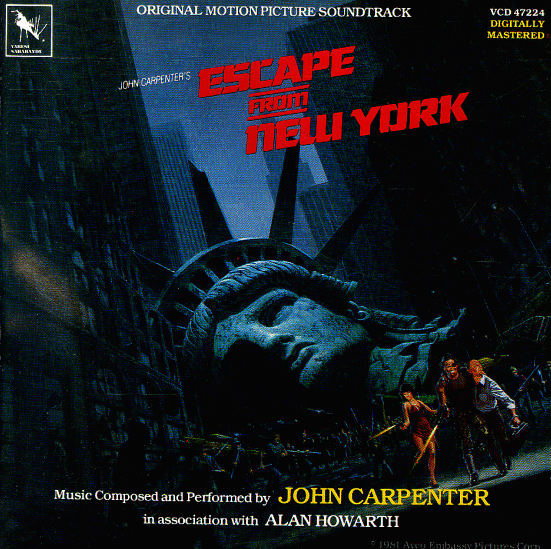
A screening of John Carpenter’s “Assault on Precinct 13” at the Egyptian Theatre in Hollywood brought out a number of guests such as Austin Stoker who played Lieutenant Ethan Bishop and Douglas Knapp who was the film’s director of photography. But the one guest I was really interested to hear from was Alan Howarth, the composer and sound designer who collaborated with Carpenter on a number of his film scores from “Escape From New York” to “They Live.” Howarth even took the time to do a live performance of his and Carpenter’s music, something I never thought I would ever see in my lifetime.
During the Q&A, Howarth talked about how he came to work with Carpenter, their process for scoring his films and his favorite film scores of the ones they worked on together. Howarth wasn’t actually on board for the original “Assault on Precinct 13” though he did work on a remastered version of the soundtrack for it and “Dark Star” for BuySoundtrax.com. It wasn’t until he worked on his first big film when he became inadvertently acquainted with Carpenter.
“I came on board at ‘Escape from New York,’ and that was kind of happenstance because my very first movie, less than a year earlier, was ‘Star Trek: The Motion Picture,’” Howarth said. “I had come on as the sound designer and created the sounds of the Enterprise like the warp drive and the transporters and stuff like that. The picture editor from that movie, Todd Ramsay, his next assignment was ‘Escape from New York,’ so I had slipped him some cassettes and he knew I was a musician. John had worked with another fellow on ‘Halloween,’ Dan Wyman, and there was some change up there, and so literally the guy comes over to my little, rented house in Glendale and set up in my dining room. It was nothing formal. I sat down and I played him a few things and he goes, ‘okay, let’s do it.’ That was it.”
“John always wanted somebody who knew about the technology,” Howarth continued. “In fact, a couple of times I tried to explain to him how it worked and he was all, ‘I don’t want to know that. It’s your job to make it work, make it in tune, and when I push down the note the red light is on.’ So that’s where I started, but he’s a collaborative person. I love working with people. I’m from the bands and rock & roll. I was one of those people. So, it was really great and my first film score was ‘Escape from New York.’”
From there, the two of them worked on several projects all the way to “They Live.” As he continued discussing the work he did with Carpenter, we came to discover he played a larger part in Carpenter’s film scores than we ever realized.
“Next, he went off to do ‘The Thing’ and they wanted to make ‘Halloween II,’ so again John said, ‘I’m going to be busy. You’re going to have to do Halloween.’ Same thing, so I did ‘Halloween II’ and I used his original ‘Halloween’ music, overdubbed it and created new stuff.”
After “They Live,” they seemed to part ways for reasons Howarth never explained, but it gave him the confidence to start scoring films on his own. Of course, he was still eager to get Carpenter’s blessing when it came to a franchise the director never planned to start.
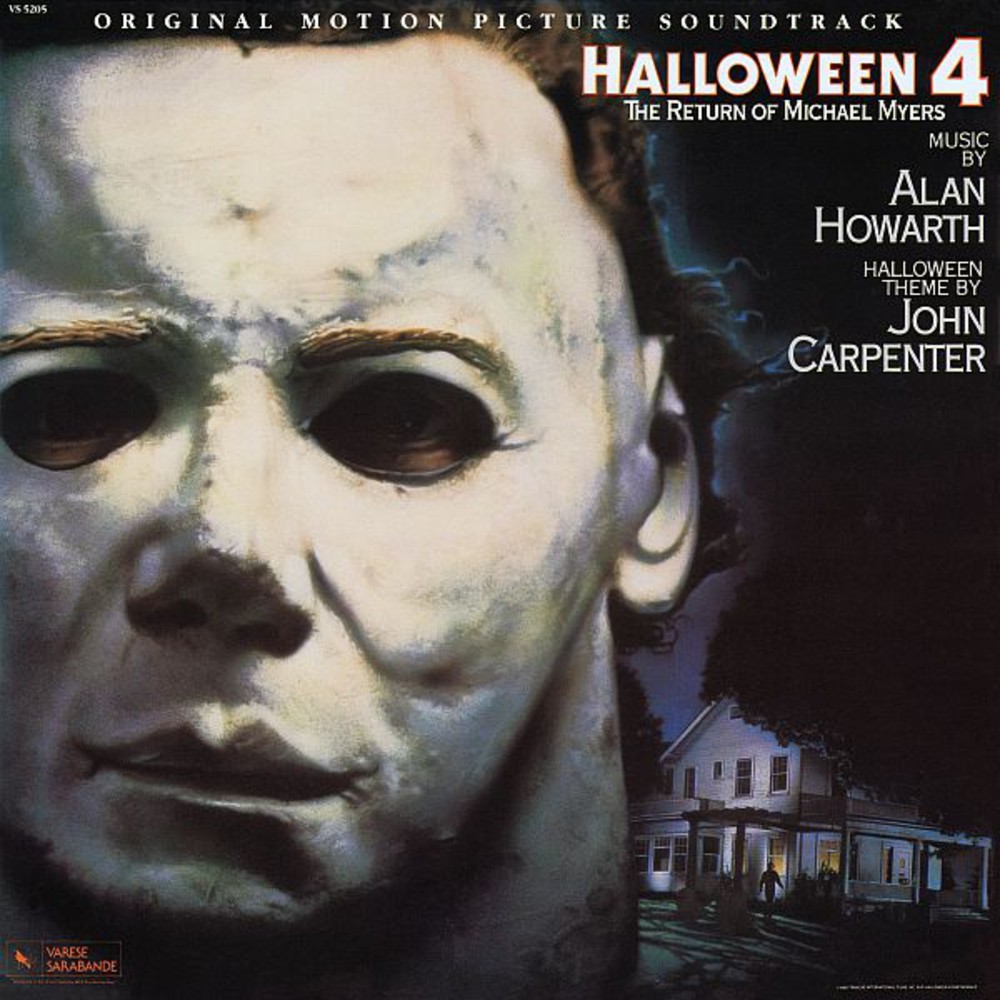
“I found out they were going to do ‘Halloween 4’ and I said to John, ‘they asked me to do this and you’re my buddy and I want to do something with this.’ He said sure, so I wound up doing ‘Halloween 4, 5 and 6’ and that really launched me as a composer which is what I love to do the most, and as we are in a world of economic stasis, I had to do it all by myself. As you see, this is my studio right here. It’s all down to a laptop and a guitar and some recorders when it used to be a million dollars’ worth of stuff. Not that that stuff isn’t valuable, but you can do without it now,” Howarth said.
One audience member asked which of the scores he did with Carpenter is his favorite, and the answer was a little bit of a surprise.
“I think ‘Halloween III’ because it was really an artistic departure for both of us, and ‘Big Trouble in Little China’ is the most produced and has the widest range,” said Howarth. “We had rock and roll and scary things and chases and this whole Asian influence, so it was really a broad scope of things. That’s one of my favorites.”
Like many in the audience, I was eager to hear how Howarth and Carpenter would go about working on a score. Did they start working on it before shooting began? Did they work on it after shooting was finished? Did they think about the music while making the film? We hear how composers spend so much time preparing the perfect score for a movie, but Howarth made his process with Carpenter sound quite simple.
“It’s all one big jam. It’s improvised,” Howarth said. “Sometimes he would come in with a theme in mind. I’d set up the piano before he came over and started something. A lot of it we just made up on the spot. In fact, I introduced him, because I’m a technical person, to the synchronization between a videotape and a tape recorder. It almost seems like we were the first to do it. Before that, everything was done with a stopwatch. So, you would make a cue that was three minutes long and kind of set a tempo, and then you would go back and literally copy it on a Moviola and fool around with the scene.”
“This was the first time you could watch the movie and play at the same time, so he referred to that as the electronic coloring book which made it even easier to improvise,” Howarth continued. “Through that whole period we also benefited from the evolution of electronic music instruments, so from analog synthesizers and a 24-track machine to midi and digital sequencers, these scores had a new installation in the progress of musical instruments, so it’s almost a chronology or a music lesson in the gear.”
Another audience member asked Howarth how long he and Carpenter would jam until they found something they really liked. His answer illustrates how fast these two worked on their music.
“We did a cue a day,” Howarth said. “One quote I always get from John, and it’s just really true, he said, ‘Alan if you want to be a director you only need two important words, yes and no. Just be very decisive. Even if you say no today or yes today and tomorrow, you change your mind. You got twenty or thirty people that are taking direction, and you don’t want to leave them in a lurch, so it’s better to just be decisive.’ So, it was a couple of times we did something and came back and said that wasn’t working, but it wasn’t very often.”
Having worked in movies and music all these years, Howarth clearly has a wide knowledge of musical instruments and electronics. When asked what he would consider as the go to synthesizer, Howarth’s answer shed some light on how far musical technology has come over the years.
“I chose all the gear and I arrived at being a fan of the Prophet 5,” Howarth said. “It sounded good, but the other reason was that it was the first programmable synthesizer. Prior to that, you had to literally make little diagrams of where all the knobs and switches were to get back to the same sound, so this was the first time you could do something and save it. That really moved things forward a lot, and I brought in the programmables and the sequencers.”
One big question many had about the music Carpenter and Howarth worked on was the score to Carpenter’s remake of “The Thing.” This was Carpenter’s first big studio movie, and it allowed him to work with his all-time favorite composer Ennio Morricone. However, when you listen to the score, some it sounds like it was done by Carpenter and Howarth, and this is especially the case with the movie’s main theme. Howarth went into detail about who really composed the score to “The Thing.”
“They (Carpenter and Morricone) took a meeting, and he (Morricone) saw a little bit of the footage and he scored his score,” Howarth said. “He comes back and, of course, how does John talk to his hero about what just went down and where he wants to go? And there’s a translation issue between English and Italian and all this other stuff. So John played the stuff we did for ‘Escape from New York’ and he says, ‘Can you do something like this?’ Ennio goes back for a second pass now with keyboards, and that’s where ‘The Thing’s’ theme came from. So it’s Ennio Morricone doing John Carpenter really. At the very end after all that, there was one more pass on about four or five cues where John came over for just an afternoon and we did some cues that kind of sound like ‘Christine’ that you can tell is basically our synth stuff. So basically, it took three scoring passes on the show to get it.”
It was a real treat to have Alan Howarth talk about his musical collaboration with John Carpenter. The film scores they worked on are among my favorites of all time, and I never get sick of listening to them. Howarth continues to work as a film composer, and his more recent credits include scores for “Backstabbed,” “The Dentist” and “House at the End of the Drive.” Here’s hoping we get to hear more scores from him in the near future.
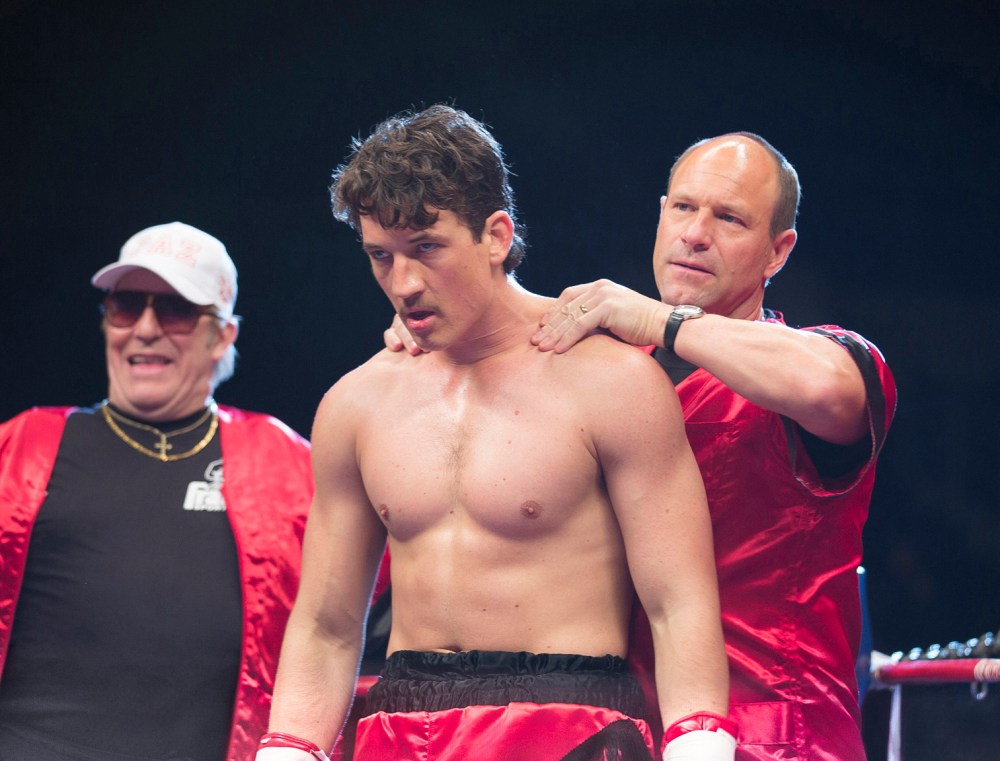
Jake Gyllenhaal played one in “Southpaw,” Michael B. Jordan portrayed another in “Creed,” and now Miles Teller gets to put on his own set of gloves to play a boxer in “Bleed for This.” The biographical drama, directed by Ben Younger, focuses on Vinny Paz, a champion boxer from Rhode Island who became Super Middleweight champion of the world after defeating Gilbert Dele in the ring. Paz’s victory, however, is short-lived when he gets seriously injured in a nasty car accident. With his neck broken, his boxing career is assumed to be over by everyone, but he became determined to regain his title through a brutal rehabilitation regimen, and this led to one of the greatest comebacks in sports history.
Teller recently sat down for an interview and talked at length about how he trained and prepared to play Paz in “Bleed for This.” He also discussed what it was like to wear the halo Paz opted to wear in an effort to repair his neck. The boxer’s doctors initially encouraged him to undergo spinal fusion which would have ensured his ability to walk again but also would have erased any chance of him getting back into the ring. Paz chose the halo instead, and it involved having a number of screws drilled into his head in order to ensure this apparatus would keep it in one place for months.
Question: Did growing up in South Jersey help you with your accent?
Miles Teller: The Jersey accent is different. It’s just impossible to sound intelligent honestly, especially in South Jersey. The Northwest is just a specific kind of energy and people, and even though Rhode Island is totally different from New Jersey… I’ve just been around those guys, so I think it probably added something to the kind of relation that I found to Vinny.
Q: What was the most difficult thing that Vinny had as a person for you to get for the movie?
MT: The physicality was very tough. To get that look for me to just be able to have the conditioning to be able to shoot a boxing fight for a 16-hour day. The last two fights were back-to-back days. Each fight took one day which is unheard of. We shot the movie in 24 days. To even just look like a boxer… I had to shoot two movies in between, but that was eight months of just a very strict diet and working out. I lost 20 pounds and got down to 6% body fat for the first fight, but Vinny also moved up in weight and won the title of Lightweight and Super Middleweight, and we showed that. That’s also something very unique and special to Vinny’s legacy. He and Roberto Durán were the only two guys to win titles in those two weight classes specifically. So, I started at 160 and then I had to gain 15 pounds to get to 183 in like 2 ½ weeks. But once I had to gain weight, that was fun. It was just like Dunkin Donuts in Federal Hill. I don’t know if you’ve ever been to Providence, but Federal Hill has amazing Italian food.
Q: But while you were eating a lot, you still had to be boxing.
MT: I got cast two and a half years ago. We filmed it two years ago. This was pre- “Whiplash.” I had never done anything like this where I just got to play like a man or a world champion boxer. Even when I was on set, if I had any time in between I was always doing something like push-ups or sit-ups because I knew I didn’t walk into this movie with this God-given talent of being in shape. They tell you just get a workout and diet, but I think I went anti that early in my career because I was just like, I don’t want to be that guy with the six pack and a tan who’s worried about his makeup and stuff.
Q: Did doing this movie help you to appreciate the nuances of boxing, or is that something you already had as a sports fan?
MT: I was a big MMA fan and I still am, but I started watching it when it was the WCE when I was in high school; I was 16 years old. And then with boxing, I always played the video games and I always watch certain guys like Tyson and Holyfield and Lennox Lewis; the heavyweights back then were the big draws. But once you start training in it, you realize it is very highly nuanced. I don’t see it as two guys in a blood sport. I see it as technique.
Q: The mind is very important to being a champion boxer? Strategy?
MT: Yeah, for sure, but that’s what they say: you have a game plan until you get hit in the face, and then it all goes away. We didn’t have a ton of time. I only had about five weeks in Los Angeles with my boxing trainer, and he was Sugar Ray Leonard’s trainer for 18 years. He was just a very high-level guy. The first fight in the movie against Roger Mayweather, I had five days to work with that boxer. The second boxer, we had a day and a half. And the third boxer, this dude Edmund Rodriguez, got in a fight, professionally, that he wasn’t supposed to. He told Ben (Younger, the director) he wasn’t going to fight, got in a fight, luckily knocked the dude out, didn’t get messed up, flew down, and I honestly only had maybe like a day with him.
Q: You also had to wear the halo in this movie. What was it like reading about that in the script and then wearing it for however long?
MT: For the beginning physical transformation, it was eight months of all that stuff that you hear. You can’t eat any bread or drink for that time. You’re just eating like a rabbit and hoping it all pays off. This guy dedicated like everything in his life to this, so it would’ve been very immature of me to slack off and mess with that. As far as the halo goes, that was highly uncomfortable. Again, you don’t like to complain because, for Vinny, it was screwed in his head. But for me, it wasn’t actually screwed in my head so we really had to make it as tight as possible because if the thing moves at all, then it doesn’t matter what you just did in that take. You only get so many takes, but it’s not usable because when it moves, people understand it’s not real. If this was like a big-budget studio film, I would have had a ton of fittings with it. I just did a firefighter movie and I had more fittings with my boots than I did for this thing. The girl just went to a hospital in Providence and got one from them, and then we put little rubber pieces on the end and just put it so far up my head that I could tell when it was in the right spot because I just had indentations on my head.
“Bleed for This” opens in theaters on Friday, November 18th.
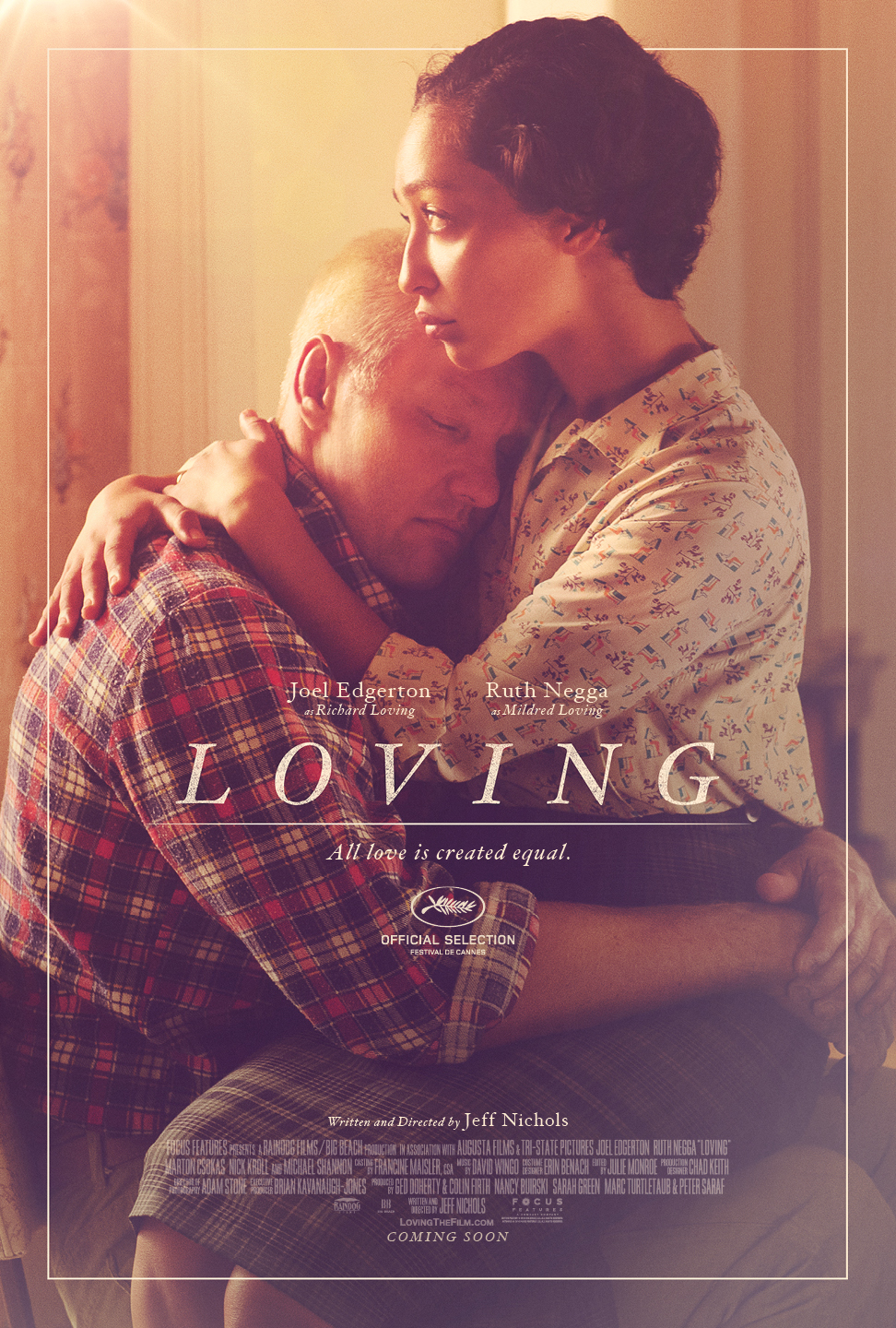
I got to speak with Costume Designer Erin Benach about her work on Jeff Nichols’ historical drama “Loving.” The movie takes us back to the late 1950’s and early 1960’s where we are introduced to Richard and Mildred Loving, an interracial couple whose marriage quickly had them banished from Virginia as it violated the state’s anti-miscegenation laws. They later sued Virginia, and their civil rights case, “Loving vs. Virginia,” eventually made it all the way to the Supreme Court which affirmed the very foundation of marriage ways and ended state laws that prohibited interracial marriage.
Benach also worked with Nichols on his other 2016 movie, “Midnight Special.” She earned a 2012 Costume Designers Guild Award nomination for her work on Nicolas Winding Refn’s “Drive,” and she reteamed with him on “The Neon Demon.” She has also worked with filmmaker Derek Cianfrance on his movies “Blue Valentine,” “The Place Beyond the Pines,” and “The Light Between Oceans.” Her other credits include Brad Furman’s “The Lincoln Lawyer,” Andrew Niccol’s “The Host,” Anna Boden and Ryan Fleck’s “Sugar,” and Ryan Gosling’s directorial debut “Lost River.” You can visit her website at www.erinbenach.com.
In my conversation with Benach, she talked about having the costumes fit into the story without overwhelming it, why the costumes could not stand out too much, and of the challenges she faced in capturing the look and feel of the years “Loving” takes place in. She also talked about the differences of working with Nichols and Refn whose films are so very different from one another.
Please check out the interview above. “Loving” is now playing in Los Angeles and New York.