WRITER’S NOTE: This article was originally written in 2013.
Ever since she first found recognition for her character of Sookie St. James on “Gilmore Girls,” Melissa McCarthy has left an indelible impression on us all. After watching her breakthrough role as the abrasive and shamelessly raunchy Megan in “Bridesmaids,” a role which earned her a deserved Oscar nomination for Best Supporting Actress, there was no forgetting who she was. McCarthy wasn’t just funny in the role, she also made Megan a complex character with wants and needs we could easily relate to, and this made her performance all the more wonderfully memorable.
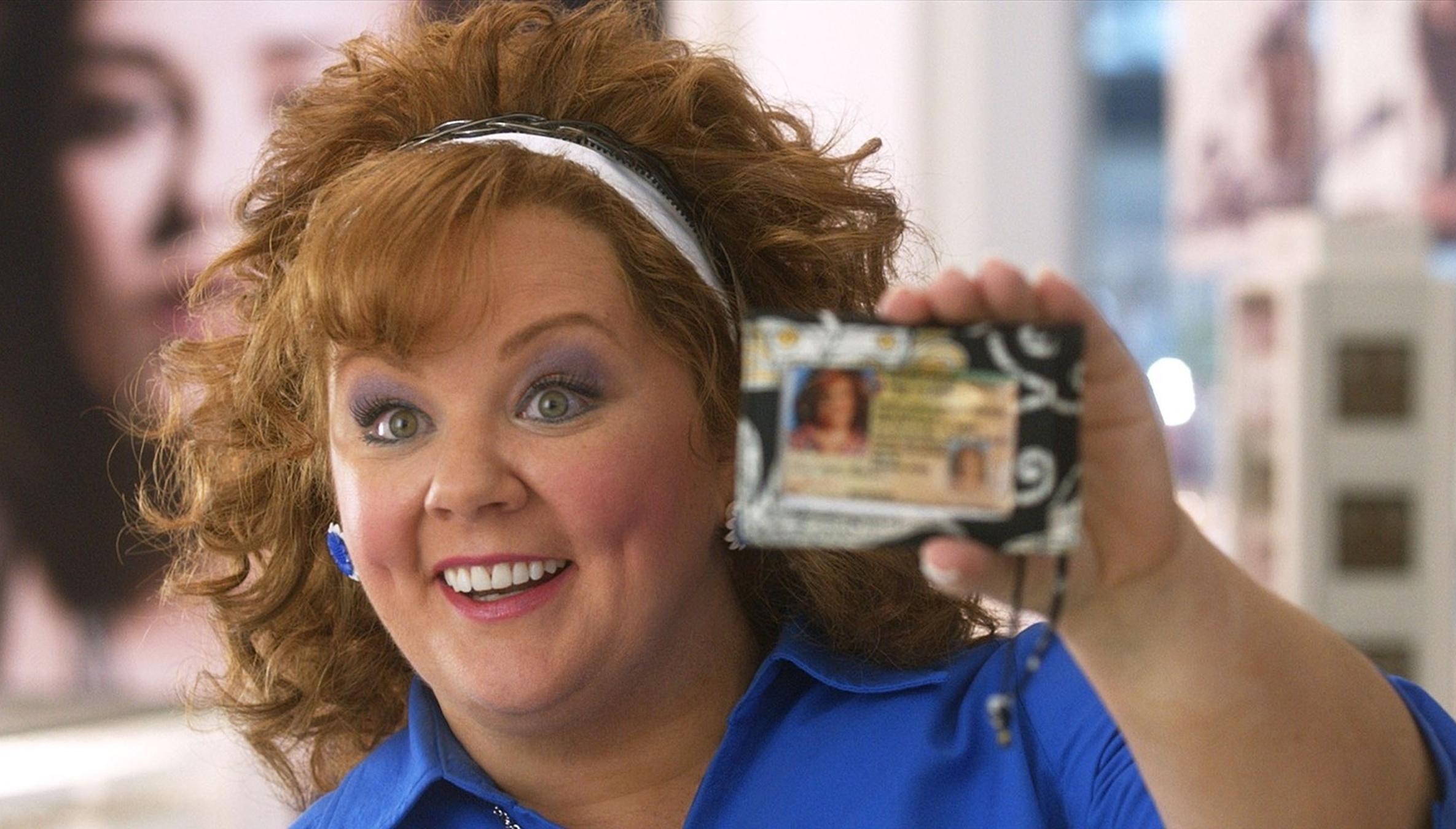
Now she gets the opportunity to put her comedic skills to solid use again in “Identity Thief” as Diana, a con artist who steals the identity of Sandy Bigelow Patterson (played by Jason Bateman) for her own benefit. This actually marks McCarthy’s first lead role in a motion picture, and it came as the result of Bateman loving her performance in “Bridesmaids.” The role of Diana was originally written as a man, but Bateman had the character’s gender changed to a woman just so he could get her cast in the movie.
Now the role of a con artist is a challenging one to make the least bit sympathetic, but McCarthy proved to be up to the challenge. She got her start at The Groundlings which is an improvisational and sketch comedy troupe located in Los Angeles, but while this character would have made for a hilarious five-minute sketch, McCarthy realized she had to do things differently in a feature length motion picture. She made this clear in her interview with Amy Longsdorf of Delaware Online.
“I wanted to make sure Diana wasn’t just a one-dimensional, mustache-twirling villain because I thought that while that’s kind of interesting for a scene, I don’t know how to play that for a whole movie,” McCarthy told Longsdorf. “I love the thought of someone doing criminal acts but not doing them to be menacing. She does them because she’s lonely and doesn’t have anyone. She kind of steals identities so she can go out to a store and pretend to have these lives. She can pretend to have a husband and a family, pretend to be engaged.”
Whether it is film or television she is doing, McCarthy is a comic force of nature and she appears fearless in what she will do to get a laugh. This was especially the case when she hosted an episode of “Saturday Night Live” and came close to swallowing a whole bottle of ranch salad dressing. I was lucky enough to attend the “Identity Thief” press conference which I covered for the website We Got This Covered, and I asked her if there ever is a limit to how far she will go for a laugh, or if she is willing to do anything to get one.
“For me, I think as long as it makes sense for the character,” McCarthy said. “I like to see if you can, on the worst day or the most extreme circumstance, I like to see how far you can push it. But to me it’s not funny anymore if it doesn’t make sense. And I don’t like to do anything that’s mean-spirited just because I don’t find it funny. I’d rather be the jackass than make fun of somebody else because that just seems too cheap and easy. So those are my only limits.”
The one thing, however, that McCarthy was more fearless about than getting laughs was doing her own stunts. It turns out that she tried to do as many of them as possible on the set of “Identity Thief,” and Bateman was stunned at just how far she was willing to go. She even volunteered to do the stunt where Diana gets hit by a car, and it does look very painful when you watch it onscreen. McCarthy ended up admitting to Kevin P. Sullivan of MTV News that she and Bateman did a lot of hand-to-hand combat in order to make their fight scenes look more believable.
“We hurt each other the most, for real, and the most exhausting,” McCarthy said. “You’re just covered in bruises and muscles are ripped.”
Many also wonder where McCarthy comes up with the inspirations for each character she portrays. It is said most actors base their characters on people they grew up with or whom they remember from their hometowns. McCarthy herself was raised on a farm in Plainfield, Illinois, and during the press conference she realized that her upbringing still plays a big part in the roles she chooses.
“In terms of the characters I think are really fun to play, a lot of times it’s someone in my head saying I know that woman,” McCarthy said. “There are women like that in my hometown and there’s one like that the Midwest. I guess I do kind of always go back to that them and draw from there because I really love them. I find them great and interesting and quirky and eccentric. I think everything that any actor does, I would assume, is shaped by how and where they grew up. I steal a lot from a lot of Midwestern women that I weirdly watch, that’s what I should say.”
We are going to be seeing a lot more of Melissa McCarthy in the near future as her star continues to rise in Hollywood. In addition to her television show, “Mike & Molly,” she has a number of starring roles in movies coming up like “The Heat” with Sandra Bullock. No matter what that thoughtless snob Rex Reed may think of her, McCarthy is a superb comedic actress who has many unforgettably hilarious performances left to give the world.
SOURCES:
Amy Longsdorf, “Melissa McCarthy morphs into ‘Identity Thief,'” Delaware Online, February 9, 2013.
WRITER’S NOTE: This article was written back in 2012.
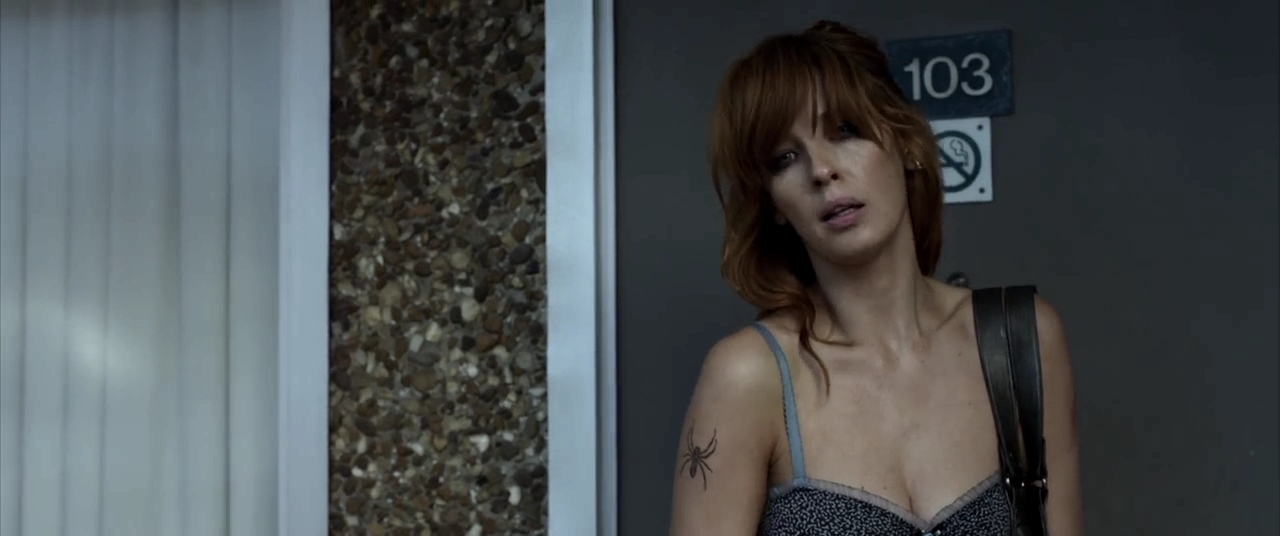
Robert Zemeckis’ “Flight” ended up surprising us all by being a riveting character driven film as opposed to your average Hollywood action movie. It is filled with a number of great performances from very talented actors, and one of the most notable is Kelly Reilly’s as former photographer Nicole Maggen. When we first meet Nicole, she is in the throes of a nasty heroin addiction that almost claims her life. While in the hospital, she meets airline pilot William “Whip” Whitaker (Denzel Washington) who is going through his own substance abuse issues and becomes a kindred spirit of sorts as they both look for ways to escape their demons.
For Reilly, “Flight” marks the first American movie she has appeared in. Before this, she was best known for playing Mary Watson in the “Sherlock Holmes” movies, and she starred opposite Michael Fassbender in the unnerving horror film “Eden Lake.” When it came to playing Nicole in “Flight,” she explained to Christopher Rosen of the Huffington Post how she goes about preparing for a role.
“If it’s there in the script it makes your life a lot easier,” Reilly said. “You’re not searching for something. You’re not trying to figure out how to make this character believable or real. You’re not trying to skirt around bad writing. This character, to me, just jumped out. I already felt a kinship to her; I wanted to play her. I knew that this sort of addiction that got hold of her so tightly was a symptom of this woman’s heartbreak. I knew there was somebody underneath worth fighting for. There are all these stereotypes of heroin addicts being junkies or dropouts or people who we shouldn’t care about. I just thought that can’t be true. They’re somebody’s son or daughter; they’re human beings. They’re just lost. That is something John Gatins got in his script. I really wanted to play that rather than the stereotype of the heroin addict.”
When it came to playing a heroin addict, Reilly explained to Rosen the amount of research she did to better understand her character. She spent a lot of time on Google learning about those addicted to this particular drug, but that only gave her so much information. But while I was at “Flight’s” press conference at the Montage Hotel in Beverly Hills, Reilly went more into depth about who gave her the answers she needed to know the most.
“I did consult a wonderful guy called Mitch in Atlanta who helped me understand the inner life of a heroin addict as much as one can without experiencing it, and he really did open up his story to me,” Reilly said. “There was a technical side of it as well as he taught me how to inject heroin without really injecting heroin. I wanted to honor the truth of somebody in that situation, and I think that was the most difficult part without ever having experienced that.”
But despite “Flight” gaining strong critical praise for its direction and performances, Reilly doesn’t see herself being nominated for an Academy Award. When it comes to the Oscars, they tend to honor the showiest performances above all others. Reilly’s performance as Nicole is powerful largely because it is an understated one which does not draw too much attention to itself. She explained this in more detail to Rosen.
“I know there is a lot of buzz around Denzel and the film. A few people have kind of suggested that it could be a possibility for me. I don’t see it myself,” Reilly said. “That’s just not me being humble or anything. I genuinely don’t imagine that to be the case. Mine is more of a quiet performance and I don’t think it’s an award winner. I still feel incredibly flattered to have people even suggest that. As much as it was never a dream of mine — a dream of mine would be to be on stage in New York — it would still be a mind-blowing thing to happen especially for something you feel proud of.”
Michael Caine once said that in the theater you play a character, but in television and film you are the character. Some of the greatest performances I see from actors in movies come from those who inhabit their characters more than play them, and Kelly Reilly’s performance in “Flight” is no exception. While we all love the showiest of performances, it is those subtle ones which deserve the most credit. My hope is that the Oscars will prove Reilly wrong and give her the credit she deserves for her work here. It’s one of the best portrayals of an addict I have seen ever since Michael Keaton played one in “Clean and Sober.”
WRITER’S NOTE: This article was written back in 2012.
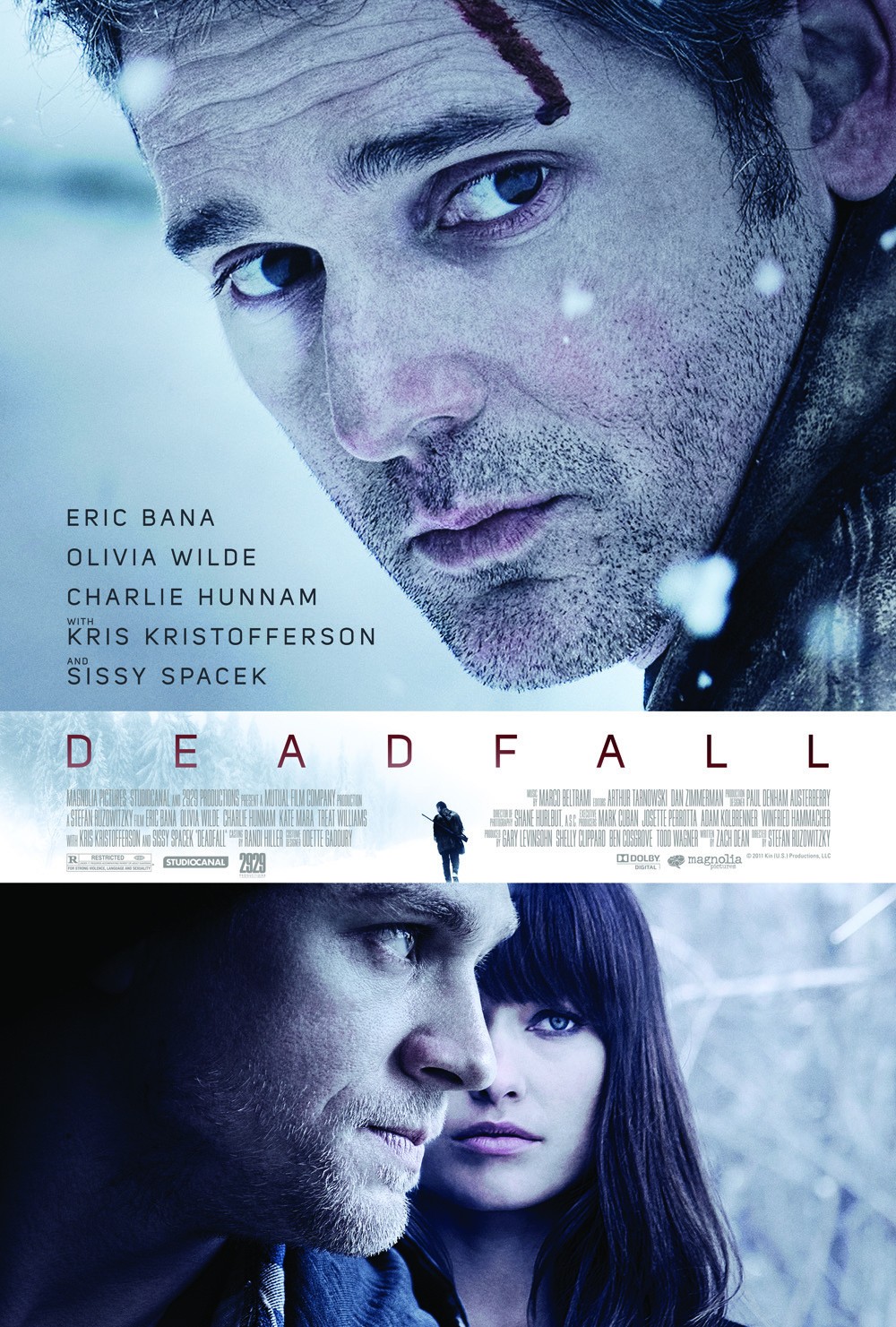
Best known for his roles in the film “Green Street Hooligans” and on the television series “Sons of Anarchy,” actor Charlie Hunnam gets to do a variation on his tough guy image in “Deadfall.” Directed by Stefan Ruzowitzky, he portrays Jay, an ex-boxer who has just been released from prison. He is contemplating going back home to have Thanksgiving dinner with his parents, but things go awry for him after he seriously injures, albeit accidentally, his former coach who had betrayed him. Fearing he will be sent back to jail, Jay flees the scene and goes on the run.
While talking with Christina Radish of Collider, Hunnam said there was “real poetry” to Zach Dean’s script when he first read it and that he related to Jay’s frustration and anger over how his life felt completely out of his control. When actors study and prepare to play a role, they are always expected to go over the similarities they share with their characters as well as how they are different from them. Hunnam found that his life as an actor was similar to Jay’s career as a boxer.
“I thought that was really interesting and I could relate to it, in a way, living in Hollywood,” Hunnam told Radish. “I’m very disciplined and I have a very clear idea of how I want to be spending my time, but I’m at the mercy of everybody else who decides how I get to spend my time and whether I get to work or not. In classic storytelling terms, with the classic hero’s journey and contemporary male narrative, a man being released from prison is a dynamic that I was predisposed to be interested in and like.”
The other interesting thing Hunnam brought up in his interview with Radish was how Jay was a successful athlete. Now in crime dramas like “Deadfall,” we typically expect boxers like Jay to have failed in their profession in one way or another, be it through drugs or some sort of gambling controversy. But here, Jay proves to be a victim of circumstance which has rendered his past achievements non-existent.
“This guy seemed like a guy who had dedicated his entire life to this goal of becoming a world class athlete and actually achieved it,” Hunnam said of Jay. “We just all inherently understand the dedication and sacrifice that is needed to achieve that because we’ve all grown up watching professional athletes on TV, so I understood that. He seemed like a guy where it was day one of the rest of his life. He had ruined the prior 30 years and he was coming out completely with nothing, at all.”
One of the best things about “Deadfall” is how beautiful the snowy landscapes look and how brutally cold they appear. I got to attend the movie’s press conference at the Four Seasons Hotel in Beverly Hills, and it was surprising to hear Hunnam say how he looked forward to working in the freezing cold. Many actors would give anything not to work in such frigid temperatures, but for Hunnam it offered a change of pace. Still, he did find the snow to be a challenging environment to work in.
“I had actually been really excited about a period in the cold weather because we shoot ‘Sons of Anarchy’ in LA through the course of the summer, and I’m a skinny guy who wants to look as big as possible so I wear several layers of clothing; it gets really old being that hot,” Hunnam said. “But I must say that a couple of days in, I was craving the sunshine. You know when you’re really hot you get miserable and a little bit grumpy, but the cold is really debilitating.”
Hunnam did take the time to train as a boxer which helped him better understand his character. It also turned out he had a unique way of getting into Jay’s psyche which he accomplished by working out a lot and then suddenly stopping. Anyone who has exercised a lot at the gym and then stopped for a period can clearly understand how difficult it is to start all over again.
“I’ve also always been interested in boxing so I put myself through an intense boxing academy where I got up and ran five miles every morning and then went and had breakfast and boxed a couple of hours and then came home and watched fights all day long and then went and swam, and I did this seven days a week for five weeks before filming this movie. Then when I got to Montreal (where the film was shot) I wanted to stop completely and feel the absence, and I knew that was going to have a very negative effect on my psychology. It’s kind of a shortcut, rather than intellectually empathizing, to actually feeling the emotion. I got into a very dark and happy place during shooting because of that preparation,” Hunnam said.
Charlie Hunnam still has “Sons of Anarchy” to work on, and many are excited at what the show’s upcoming season finale has to offer. Up next for him is Guillermo Del Toro’s “Pacific Rim” in which he will be playing Raleigh Antrobus, a washed-up former pilot who has to defend the world by piloting a giant robot and fighting monsters who are rising out of the depths of the ocean. Thar one looks to be Hunnam’s biggest movie yet.
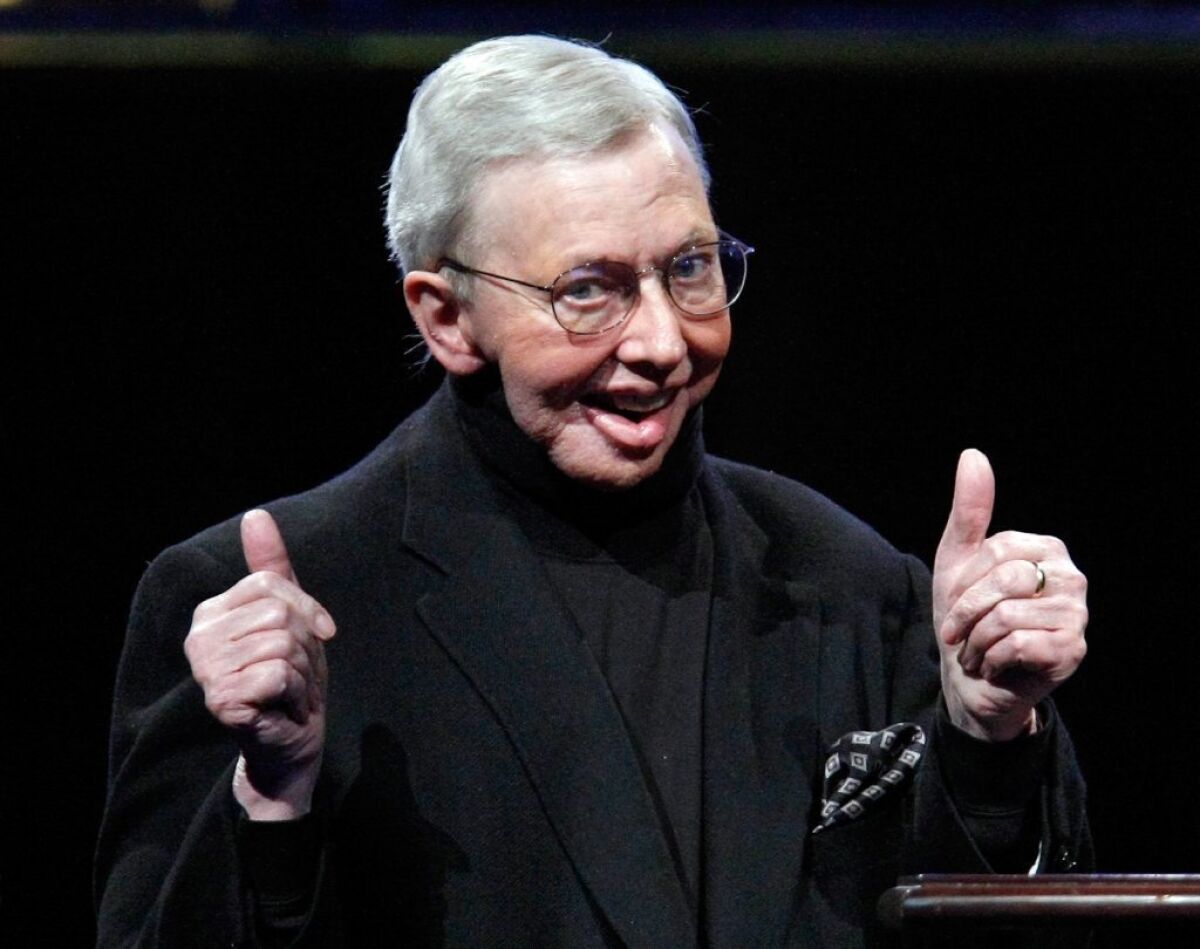
I think we all knew the end was near for Chicago Sun Times film critic Roger Ebert when he announced to the world that his cancer had returned. In his blog entitled “A Leave of Presence,” which was published just a couple of days before his death on April 4, 2013, Ebert announced he would be cutting back his workload to conquer this dreaded disease which had wreaked havoc on his body for the last decade or so. He really did fight the good fight against this indiscriminate and infuriating disease, and you had to admire how he refused to hide from the world after it robbed him of his speaking voice and made him look a little less handsome. But after all the battles, his body could only take so much. His wife Chaz described his passing as a “dignified transition,” and I am just glad it was a peaceful passing and that he was not in much pain.
Like you, I have been a big fan of Ebert’s ever since he started sharing the balcony with Gene Siskel on “At the Movies” all those years ago. Before I made going to the movies a regular event in my life, I had to settle with watching this movie review show as it was my gateway to the world of movies back when going to the local theater happened as often an eclipse of the sun. Even if they did give thumbs down to movies I loved like “Better Off Dead,” nothing could stop me from watching their show.
Eventually, I became exposed to Ebert the writer through his various “Movie Home Companion” books which later became known as his “Video Companion” and then eventually his annual “Movie Yearbook,” and I quickly purchased them year after year once they became available at my local bookstore. Sometimes I was bummed when he gave a so-so review to favorite films of mine like “Caddyshack” (he gave it * * ½ out of * * * *), but in the end he had understandably strong reasons for why he felt the way he did, and it was hard to disagree with his reasons when you thought about them.
In many ways, you did not read an Ebert review as much as you experienced one. This was the case when I read his review of the infamous “I Spit on Your Grave” which he gave one of his rare zero-star ratings to. He described it as “a vile piece of garbage” and how attending it was one of the most depressing experiences of his life. It was a review filled with spoilers as Ebert described everything which happened, and while we hate it these days when people spoil a movie for us (we have Wikipedia for that), it felt like he was doing us all a huge favor when it came to this particular film which has since become a cult classic. He even went out of his way to describe the reactions of other patrons in the theater which were very disturbing as they seemed to shamelessly cheer on the rapists, and this made his experience of seeing this dreaded movie all the more unsettling. Now while his review may have drawn more attention to this movie than he would have liked, you cannot say you were not the least bit warned as to how difficult it would be to sit through it.
As for myself, I loved how Ebert always wrote in the first person, and I am quite confident I do not need to prove to you of the effect his writing had on my own. Many websites and print publications these days do not like it in the slightest when you write in the first person, and while I understand why, it still drives me nuts. Anyone can write a movie review, but no one could write one the way Ebert did. When I first started writing my own movie reviews on the internet, I found myself writing them in the same way he did. Truth be told, it is a lot more fun to write them in the first person as there is only one of you in this universe and, the way I see it, people tend to find more enjoyment in reading those kinds of reviews anyway.
Back when I was in high school, many of my friends came to hate Ebert because, the way they saw it, he just hated movies. Now granted this made me a closeted fan of his for a while because I did not want to appear too different from everyone around me, but I was still annoyed at the summary judgment they made against him. I wanted to yell at them, “DO YOU REALLY THINK HE WOULD SPEND ALL THIS REVIEWING AND TALKING ABOUT MOVIES IF HE REALLY HATED THEM?! WHAT WORLD ARE YOU FROM ANYWAY??!!” While Ebert at times seemed to dislike more movies than he liked, it became easy to see why; many of the movies we loved as kids were no different from the ones he saw as a kid himself, and what we saw as new seemed like the same old thing to him. As we continue to get older, we have come to feel the same away about movies in general because the more things change, the more they stay the same.
Furthermore, Ebert was never a snob to me. While you may be annoyed how he gave thumbs down to “Full Metal Jacket” and yet give a thumbs up to “Cop and a Half,” he was fully aware of how not every movie could be on the same level as “Citizen Kane” or “Vertigo.” Some film critics like Rex Reed are uber snobs who revel in the power they think they have to destroy a movie, but Ebert was able to judge a movie for what it was trying to be as opposed to what he wanted it to be. “Days of Thunder” clearly earned its unofficial nickname of “’Top Gun’ on wheels,” but Ebert gave it a thumbs up because, on that level, it was effective entertainment. Sure, you could compare it to “Lawrence of Arabia,” but why?
In retrospect, if it were not for Ebert, or even Siskel, would audiences have taken the time to discover movies such as “Roger & Me” or “Hoop Dreams?” The one gift Ebert gave us was his power to give a voice to and support films which Hollywood studios were not quick to shower their attention to as they did with summer blockbusters. He made us realize it is up to us to give smaller independent movies the attention they deserve. Otherwise, they just might fall through the cracks to where they become completely obscure.
I also admired Ebert for cutting through the hyperbole which could completely engulf a film. One great example was Spike Lee’s “Do The Right Thing” which many mistakenly saw as a call to violence. Ebert, who would later declare the film to be one of the best of the 1980’s, instead saw it as a story of where race relations were at in America, and that it was a reality call we needed to wake up to. He made you see Lee was not endorsing one course of action over the other, but that he was instead showing us what happens when people do not do the right thing. A few years later, Los Angeles was besieged by riots which came about after the Rodney King verdicts, and this made “Do The Right Thing” seem like an eerily prophetic film as a result.
Now how come other film critics could not see Lee’s film in the same way Ebert did? Maybe it was because he was a much more opened minded person than others. What a critic can say about a movie often says more about them than anything else, and even if you do not agree with Ebert on a particular film, you cannot say he was a man consumed with hate or any deep-seated bias. He was never blinded by any particular ideology or thought process, and he forever remained gifted at explaining what Lee or other filmmakers were truly getting at with their work.
Ebert’s fight with cancer made me admire him even more. Once it robbed him of his voice and a good portion of his jaw, you would have expected him to hide in a cave somewhere. But he refused to do that, and his work as a film critic and a writer never suffered as a result. In fact, he wrote even more than ever before as he expanded beyond his usual movie reviews to cover current events everyone in the world were constantly caught up in discussing. You could argue with Ebert on certain points, but he was always ready to back up what he said with the facts. Your best bet, instead of trying to prove him wrong, was to outguess him at the Oscars.
Thank you, Roger, for being a hero of mine. Thanks for all your great reviews even if you badmouthed some of my favorites. Thanks for continuing to write and not hiding from the world after cancer robbed you of your voice, and thank you for sharing the balcony with Gene Siskel and Richard Roeper for all those years. But most importantly, thank you for showing me the power of the written word. Like many others, I will miss your presence in life and on the web, but you still left us with so many great articles I still have yet to read.
WRITER’S NOTE: Down below, I am including the exclusive interview I did with director Steve James and Roger’s wife, Chaz Ebert, while they were doing press for the documentary they made entitled “Life Itself.” Based on Roger’s memoir of the same name, it was an enthralling documentary I was ever so happy to sit through.
WRITER’S NOTE: This article was originally written in 2012.
Watching Eric Bana as Addison in Stefan Ruzowitzky’s “Deadfall” will remind many of his breakthrough performance as Chopper Read in “Chopper.” Both films have him playing characters who are charming yet fearsome, and his unpredictability as an actor had us on the edge of our seats throughout. But hearing Bana talk about how he prepared to play Addison is a reminder to all actors on how to approach a role like this; the character may be a bad guy, but he’s still a human being with wants and needs like anybody else. It’s not just about acting evil all the time.
I was lucky enough to attend the “Deadfall” press conference at the Four Seasons Hotel in Beverly Hills, and Bana said he really liked Zach Dean’s screenplay and was “immediately compelled” by Addison. Bana described the character as being “quite hilarious actually,” and this was one of the main reasons he wanted to play him. It was interesting to hear him say that because funny is not an easy adjective to give to a character like Addison who can react violently without little or any notice. Bana, however, started out as a stand-up comedian and saw the opportunity to bring some darkly comedic touches to this role.
“I don’t think there was anything deliberately funny in Addison, but I think the situations that all the characters find themselves in and some of the things he does are inadvertently very funny,” Bana said. “It wasn’t like playing for laughs but I knew the audience probably would laugh at some of the ridiculous nature of what we’re all forced to do.”
Bana also went on to say he thought Addison was “morally straight” and that he really did not see the character as being a bad guy. Now while the crimes he commits in “Deadfall” certainly tell us otherwise, I really liked Bana’s approach to this role. It reminded me of a behind the scenes special on “Die Hard” where Alan Rickman talked about how he saw his character of Hans Gruber:
“As far as I’m concerned, I am not playing ‘the villain.’ I’m just playing somebody who wants certain things in life, has made certain choices and goes after them.”
The same can be said about Bana in the way he portrayed Addison.
“He had a strong sense of purpose in what he was doing and that is what makes those characters so scary, knowing you can’t really negotiate with him,” Bana said of Addison. “In his mind everything he’s doing is completely and morally correct and there’s a real reason for it. It’s not the actor’s place to judge, but I’m more than happy to be morally corrupt for a few months for the benefit of my career.”
This thought process was even more on display when Bana was interviewed by James Rocchi of MSN Entertainment. Rocchi talked about “Deadfall’s” first scene in which Addison’s car crashes and ends up shooting a state trooper in the process, and he described Addison as being spontaneous in his actions as this guy is thinking on his feet and improvising constantly. Bana explained that when the actor commits fully to their character’s actions, they should all come out naturally.
“I don’t like to think too much about what my physicality’s going to be here. I’d rather immerse myself in the character’s brain and allow my body to react accordingly,” Bana told Rocchi. “But that instance in the beginning of the film kind of sets in motion the rest of the stakes really for Liza (Addison’s sister who is played by Olivia Wilde) and Addison from that point on in that it just keeps getting worse and worse and worse. But you’re right. I mean he had no intention of shooting anybody. They got away from the casino, they got the cash, and all was going really well until that freaking deer popped out into the middle of the road and it all changed.”
Throughout “Deadfall,” Addison ends up engaging a couple of nasty fights, some of which are with Jay who is played by Charlie Hunnam (“Sons of Anarchy”). We keep hearing actors say how they did their own stunts in this or that movie, but we can never be too sure as the insurance people are usually dead set against that ever happening. But I believed Bana when he said that he did his own stunts in “Deadfall” because even he couldn’t hide the toll it took on his body.
“My neck was ruined,” Bana told Ariel Kashanchi of Screen Picks. “Charlie Hunnam beat the shit out of me. I don’t think I landed a punch. It was just like bang, bang. I remember after about five takes I was stiff all over and thinking ‘how much more can my neck take.’ I’m used to throwing punches and now I just have to just sort of take it. But it was kind of fun.”
“Deadfall” has received mixed reviews, but there is no denying Bana gives a riveting performance as Addison. Playing a charming bad guy is nothing new for this Australian actor, and he is still great at it. In a year of movies filled with truly intimidating antagonists, Bana’s performance deserves to be held up alongside the best of the bunch.
WRITER’S NOTE: The following article was written in 2014.
Arnold Schwarzenegger has had a hard time regaining his status as an action movie star as “The Last Stand” and “Escape Plan” both disappointed at the box office, but this looks to change with “Sabotage,” the latest film from writer/director David Ayer who is best known for his realistic action films “End of Watch” and “Harsh Times,” and for writing the screenplay to “Training Day.” While we have come to expect Schwarzenegger to play the hero, this film has him playing a different kind of role than any he has played previously.
In “Sabotage,” Schwarzenegger plays John “Breacher” Wharton, the commander of an elite squad of DEA operatives, and the movie starts with them infiltrating a drug cartel safe house to steal $10 million dollars for themselves. But when they try to recover this money, they discover someone has gotten to it before them and soon find themselves being killed off one by one. From there it’s a race to figure out who the assassin is before they all end up dead.
I was in attendance at the “Sabotage” press conference at the Four Seasons Hotel in Beverly Hills where Schwarzenegger was the biggest star of the day, and he talked at length about how different his role of John “Breacher” Wharton is from the ones he is famous for. Wharton is a morally grey character as he fights crime, but he could easily be a criminal as he has been investigated by his superiors for illegal activities.
Arnold Schwarzenegger: I think that from an acting point of view it was the most challenging because I’ve never played a character like this. The characters I usually play are black and white. I’m the good guy that wipes out the bad guys, and then there’s a little bit of humor throughout the movie and that’s it. But this script and the character were written quite differently, and I think that’s what was appealing to me. And of course, I knew of David Ayer’s writing and his directing, and I thought it would really be great for me to be challenged like that.
For those familiar with Ayer’s “End of Watch,” you know he put Jake Gyllenhaal and Michael Pena through some seriously rigorous training so they could get fully into the mindset of being LAPD officers. With “Sabotage,” he put Schwarzenegger and his co-stars through SWAT training which was very intense and designed to have them get into the mindset of their characters in a similar way. Schwarzenegger described the kind of training he endured before the cameras started rolling.
AS: When we got together, David had a whole list of things that he wanted me to do. I loved that he pushed me because sometimes directors get intimidated when they meet someone like me and they say that I’m looking forward to working with you and let’s just figure out how we are going to get ready for the movie and those kinds of things. But David came in and was very clear with the set of things that needed to be done like the weapons training and I said, “Why do I need weapons training? I’ve shot more guns than anyone in movie history and I’ve killed more people than anyone, so I mean why do we have to go through weapons training?” And then he said we have to go down to the SWAT team and we have to figure this out. But the thing was that all of this built the character and made me perform the way I did. It was the rehearsals that we did and the talking about the character, learning how they think because that was one of things David wanted me to do; to hang out with those guys, learn how they think, why they are the kind of guys that they are that are willing to risk their own lives to save others. What kind of a mentality does this take and the conflicts in the training and the dedication and all of those things? It’s a very complex world.
Schwarzenegger also compared the SWAT training to his early days of bodybuilding, some of which were featured in the documentary “Pumping Iron.”
AS: I come from a world of reps. The more reps you do, the better you get so I believed in what he (Ayer) said. The more you go down there and do this training with the SWAT team, the better you will be on the set and that’s exactly what happened. What we have learned was that they don’t hold the gun the same way as many in the military or when you just play an action hero, and the authenticity of this was really important. How did you hold the gun? How do you shoot? How do you aim? Do you have your head down or do you bring the gun up to your eye? They are all the time making adjustments. This is what made the movie look good because of those kinds of suggestions.
Of course, we all know Schwarzenegger took a number of years off from acting when he was elected the Governor of California. When he returned to making movies, he was not blind to how things have changed. This had us wondering how he dealt with those changes and how he sees filmmaking today.
AS: Today it’s not like in the ’80s and ’90s when a studio throws $100 million dollars to get a great action movie. That was the old days, now we have half of the money and you have to be very frugal and you have to really rehearse and be prepared, so to have all this stuff be second nature I think is very important. I think that the style of shooting is different, the kind of directors that are out there is much more the younger crowd that is being hired, and there are new visions and new ideas and all that. Movies are made a lot of times by committee and go through the studio route. There’s a bunch of young guys now making decisions whereas in the old days there was one guy sitting there making the decisions, so there’s a lot of changes like that. Budgets are half of what they used to be, the rest of the money is being used for the franchise movies and the big sequels and stuff like that, so it’s a different world that you have to adjust that.
In the past few years, the action genre has taken a bit of a hit as the superhero and comic book movies have dominated Hollywood. But for Schwarzenegger, he doesn’t see the genre disappearing anytime soon. From his point of view, action movies have always done very well, especially those with great stories.
AS: There are action movies that are multilayered and have really interesting characters, and they always will be popular. The key thing is to entertain people, and I think that people are fascinated about this world that we are dealing with in this movie. So, we hope that this movie is going to be successful and is going to be seen by a lot of people. But I think that what this movie has to offer, unlike most action movies, is realism. It is so realistic in the way it was researched and that is why we had so many experts on the set. We had a director that was insisting on being as real as possible and he was basically a fanatic about that. It all paid off and I think people will really, really enjoy this film.
Other action stars like Sylvester Stallone and Bruce Willis have seen their careers go up and down on a regular basis while Jean Claude Van Damme and Steven Seagal seem to be forever trapped in straight to video hell. Schwarzenegger, however, still has a strong presence in movies even if his most recent efforts were not well received. Now that he has been in show business for a few decades, we wonder what direction he would like to see his acting career go from here.
AS: Well, I think I’d like to challenge myself. You think about would this movie be appealing in the United States and also all over the world because sometimes you read a script and you say, well, I think this will play really well in America, but it’s not going to play well overseas. I don’t think I have much interest in that. I like to entertain the world and that was my mission. That was what bodybuilding was all about for me and what acting was all about. So, it’s always about what is the most entertaining project and what is the most challenging project for me, or it could be doing a sequel to” Twins” called “Triplets” with Eddie Murphy. That’s the same type of story, but to me, it’s just a fun project. There is a comedic side just to me that I can play in that role really well. Or we could do a sequel to “Conan (The Barbarian),” “King Conan” or something like that. “Maggie” was the last movie I did which is a very little movie where I just play a farmer whose daughter has this zombie virus. It’s all about having a good time but challenging yourself and always stretching and entertaining the world.
Now it’s no secret Schwarzenegger is not the young action star he used to be. When movie stars reach the age of 40, everyone expects they will not have many of the same opportunities they once had. At one point, the emcee asked Schwarzenegger if it is great to be over 40. He responded he thinks it’s great to be over 60, and his outlook on aging proved to be quite healthy.
AS: I don’t think about when I go to the gym, oh I’m now older or something like that. I just think about how I want to get in shape, and it’s the same when I do a movie. I don’t think about what age I’m in. I just do the movie and I do it as well as I can and go all out. I’m very fortunate that I exercise every day so that I start out already in good shape so that when someone like David Ayer comes along and says, “I want you now to do the martial arts training and I’m going to send over some guys that are cage fighters and then this and then that,” I can also deal with that. To me, I never even think about what is my age.
Schwarzenegger’s performance in “Sabotage” is one of the best he has given so far. Many still see him as not much of an actor even after such memorable turns in “The Terminator” movies and “Total Recall” (the original, not the remake), but he’s always been a better film actor than we give him credit for. Here we get to see him play one of his most complex roles to date, showing just how much range he has. Now he looks more than ready to graduate to the next level of being a grizzled action hero.
PLEASE CHECK OUT THE EXCLUSIVE INTERVIEW I DID FOR WE GOT THIS COVERED WITH ARNOLD SCHWARZENEGGER AND OTHERS ON “SABOTAGE” DOWN BELOW.
This image released by Sony Pictures Classics shows Tilda Swinton in a scene from “Only Lovers Left Alive.” (AP Photo/Sony Pictures Classics, Sandro Kopp)
WRITER’S NOTE: This article is in regards to a press day which took place back in 2014.
Scottish actress Tilda Swinton is not just an excellent actress but a unique one as well. She doesn’t invite easy comparisons amongst her peers because she stands out in a way few other actresses do. She is lovely in the way she portrays a character, lovely in the way she moves onscreen, and, as we learned when she appeared at the Four Seasons Hotel for the press conference on “Only Lovers Left Alive,” she speaks lovely about her work and of the vampire she portrays in this film.
Written and directed by acclaimed independent filmmaker Jim Jarmusch, “Only Lovers Left Alive” tells the tale of two vampires who have lived through countless centuries and, as the movie starts, have reunited after being apart on different continents. Swinton plays Eve who remains optimistic about the world’s future even after all she has seen, and her lover Adam is played by Tom Hiddleston (Loki of “Thor” fame) who is more pessimistic about where things are heading. You might mistakenly dismiss Jarmusch’s film as just another vampire film, but it proves to be much more than that as it deals with love and death in equal measure.
Everyone was understandably interested in what attracted Swinton to the role of Eve, and she went out of her to explain what her favorite characteristic of Eve was.
Tilda Swinton: She has this perspective, that she doesn’t sweat the small, the medium or the big stuff, and that she’s full of wonder. She’s always looking up which feels to me pretty much the prerogative of people who have lived that length of time.
This film also marks the third time collaboration between Swinton and Jarmusch. She previously appeared in “Broken Flowers” and “The Limits of Control,” and off-screen she is really good friends with the filmmaker as well. We all wondered what kind of direction Jarmusch gave Swinton on this particular movie. This led Swinton to discuss the number of years it took to get “Only Lovers Left Alive” made, and how this length of time benefited both her and Jarmusch.
TS: We talk all the time. Whether we talk about anything that’s pertinent to the making of the movie, I don’t know. We’re friends now and part of the reason that I love to work with him is it means that I get to hang out with my pal for longer than if I wasn’t shooting with him. This one was another long gestation. It was seven or eight years since now when he first rang me up and said, Hey there, let’s make a vampire film. So that means a lot of conjuring, many breakfasts when I was flying through New York saying so where are we, many moments on the phone and many conversations in dark corners about where we were going to go next over the years. When we came to shoot, the lovely thing about those long developments is that when you come to shoot, it’s just grace. You’re so relieved to finally be putting it down and you’ve also had that length of time to talk about it. You really don’t need to talk about that much.
One truly unforgettable thing about Swinton in this role, or in any other role she has played thus far, is how beautifully she moves. The physicality she shows off from moment to moment is incredible, and we all wanted to know how she came up with it. The fact she’s playing a vampire here makes her performance all the more fascinating as a result.
TS: We talked a lot about what it would be if you were that unsocialized because they’ve kind of been lifted out of human society, and very quickly we started to talk about them as lone wolves so we talked about them as animals. When we were putting together the look, we ended up filling those wigs with yaks’ hair and wolves’ hair, and there’s a heartbeat in the film that comes up and down in the soundtrack which is actually a wolf’s heart. So, I thought a lot about wolves when we were thinking about how Eve would walk about. If you’re not in the pack, if you’re alone at night, you can take your time. You can pick your rhythm. The music is very important life blood, but also the camera, the move and the feeling of the movement is always very important to Jim, and this one particularly because of this passage through these two different wildernesses.
After watching “Only Lovers Left Alive,” many wondered about the relationship between Adam and Eve and how they have lasted so long as a couple. At the start, they reside on different continents before they reunite. We asked Swinton what she did to create the really comfortable long-term bond between Eve and Adam. In the process, she brought up one of Jarmusch’s main inspirations.
TS: One of the first bits of sand in the oyster for Jim, which he immediately told me about on that telephone call eight years ago, was this book by Mark Twain, “The Diaries of Adam and Eve,” which is so delightful and playful. It’s sort of fictional or maybe not diaries of the original Adam and Eve which spells out very clearly that this is an enormous love affair between two opposites. That was a foundation in stone for us that they would be in it for the long haul, but completely different. That I find really enticing, to show two people really loving each other, but not being like each other at all. So, we talked a lot about that and that was fun because that feels really human, playing with that. Also, as you notice, we wanted it to be about a marriage in which they talk as long relationships do. There’s a sort of tradition of showing people coming together and then the end, and you never really see them actually living it out and living the ups and the downs and talking it through. We really spent a lot of time wanting to get that tone of two people who were family. It’s a long, long marriage. They are family, and that’s why they still dig each other even though they are so different and he is so tricky to live with and she is such a space cadet. They have this communication thing going and they really like talking about stuff. We really wanted to show that it felt like it was something we haven’t necessarily seen before.
Another big relationship Eve has is with playwright Christopher Marlowe, played here by John Hurt. In the universe this film takes place in, Marlowe has been proven to be the real writer of William Shakespeare’s plays, and he at one point ends up calling Shakespeare an illiterate at best. When Swinton asked about how she and Hurt established the rhythm of their characters’ relationship, she pointed how this relationship differed between the one Eve has with Adam.
TS: The relationship with Marlowe is a very precious part of the film for me. Honestly, partly because it felt very close to my own experience having a very close relationship with, in particular, Derek Jarman whose disappearance from the building I had to witness. But him being a partner, a different kind of partner for her, he’s her neighbor and he’s her companion in a way that Adam isn’t. It just felt completely alive and fresh. I just know that relationship inside out, and John does too and he was the perfect dance partner to play that out with. Our references are kind of similar. He feels like family and we just put that into the film.
One of the great joys of watching “Only Lovers Left Alive” is realizing it is not a “Twilight” wannabe. Then again, we should know Jarmusch is the last kind of filmmaker to follow current trends. The characters of Adam and Eve are unlike any vampires we have seen, and their love affair is proof of how opposites attract. While Eve is more optimistic and lives to celebrate each and every period of Earth’s history, Adam is far more cynical about the present day. We all wondered how Eve could stay so upbeat even when in Adam’s company, and her explanation of why was both fascinating and amusing.
TS: Well, he’s very young. He has yet to learn. He’s only 500 years old. She’s 3,000 years old. She seen it all and she knows that survival is possible if one keeps one’s eyes open and takes it all in. It’s not like she’s recommending a journey one space away. She talks about witnessing the Inquisition and the Middle Ages. She’s witnessed all the holocausts there have been, and yet she’s still seen humanity and spirit and nature survive those things. So, she knows that as long as one keeps looking up and as long as one keeps breathing and keeps one’s perspective, survival is possible. She’s got her priorities right. I love the fact that what Jim’s looking at here is how one goes on living, how one goes on loving, how one goes on renewing and, as they say, rebooting one’s sense of wonder and engagement. It feels strangely radical and unfashionable; the very fact that they are trying not to be young, but instead they are trying to survive youth.
Another thing that stood out to me is how the fact Adam and Eve were vampires really became secondary to the story. After a while, you don’t see them as vampires but more as a loving couple dealing with the trials and tribulations of life. Also, Adam has a heartbeat which is something we usually don’t expect vampires to have. Swinton explained this was done intentionally.
TS: We were slightly messing with the form. We’ve all seen a lot of vampire films and we like the idea of disconnecting some of the myths, some of the tropes and then also inventing some new ones. So, we’re hoping that all the vampire films from now on would involve these gloves that we actually put out there in the first place. I think we all felt the same that being vampires, very evolved vampires, very humane, virtually vegetarian vampires is secondary I would say to the idea of them being immortal and being lovers in a way that only lovers can really be immortal because they live on in each other’s spirits.
Another big question was why Detroit and Tangier were chosen as the main locations. Both prove to be major characters as they come to inform Adam’s and Eve’s individual worldviews. Detroit, which is better known these days for its problems more than anything else, suits Adam’s sensibilities perfectly while Tangier appeals to Eve in a whole other way.
TS: Detroit was always going to be a very important character in the film. My sense is that Detroit was like the Emerald City for Jim, so for him it’s really a love story to make a film there. Tangier was a kind of newer idea. There was a moment where we were going to make it Rome, and for all sorts of reasons Rome sort of detached. And then we wanted very much to making a home on the African continent, and then it became Tangier. Tangier seems to be such a natural home for her. It’s a different kind of wilderness. It’s packed full of people from all corners of this particular planet and probably others and from all particular centuries. It’s got that sense of all corners of time and space, end and start in Tangier, and you can also walk around Tangier at night and cause absolutely no ripples at all even with a massive, great wolf’s hair wig on and fantastic pants. It’s just a sort of hot spot of spirit, and it felt like a very nice partner to this relatively unpopulated Detroit where people are rare and relative to empty windows and grass and wolves. Once we settled on Tangier that really felt like the right place for her.
Tilda Swinton remains one of the best and most fascinating actresses working today, and she will continue to be as long as filmmakers are smart enough to give her free reign. She has been able to go from making independent films to studio movies with relative ease, and she still has an endless number of great performances to give. Some actors might get stifled when going from the indies to a film with an enormous budget, but this doesn’t look like it will happen to Swinton anytime soon.
TS: It’s all endlessly fascinating. It’s just a different caliber. It’s like getting a finer tooth to it. It’s only relatively rare because I come from a kind of cinema that grew out of the art world. Working with a sort of naturalistic grain is something I’ve rarely done, but when I have done it, I’ve really enjoyed it and found it just a special atmosphere. For example, in something like “Michael Clayton” or even “We Need to Talk about Kevin,” that sort of realism, just trying to spin the realism, has been really interesting. Maybe I’d always want to spin it, but to spin it with that kind of naturalistic grain like deep cover. It has been very interesting although I’ve done it very seldomly. It’s all fun to me. It’s all dressing up and playing whether it’s dressing up as a corporate lawyer or dressing up as someone of 96.
More power to you Tilda!
PLEASE CHECK OUT THE EXCLUSIVE VIDEO INTERVIEW I DID WITH TILDA SWINTON FOR WE GOT THIS COVERED DOWN BELOW:
WHILE WE ARE AT IT, CHECK OUT TILDA’S REACTION TO ME COMPLETING THE 2014 LOS ANGELES MARATHON THE DAY BEFORE THIS INTERVIEW:
WRITER’S NOTE: This article was written back in 2012.
After playing an escapee from an abusive cult in “Martha Marcy May Marlene” and a young woman terrorized at her vacation home in “Silent House,” actress Elizabeth Olsen finally gets to lighten up a bit in the comedy drama “Liberal Arts.” In the movie, she plays Zibby, a 19-year-old college student who ends up falling for 35-year-old college admissions officer Jesse Fisher (Josh Radnor, who also wrote and directed it) over their love of literature. Critics have called Olsen’s performance in “Liberal Arts” enchanting, radiant and luminous.
Having seen Radnor’s last directorial effort “Happythankyoumoreplease” which she really enjoyed; Olsen was very interested in working with him on “Liberal Arts.” Her audition for him consisted of reading through every single scene their characters had together in the movie. She recalled it being a lot of fun to “just sit on the floor and read through the scenes with him,” and she really liked the way he wrote Zibby’s dialogue.
For Olsen, the role of Zibby offered a nice change of pace as she had just finished her third psychological thriller. In this movie, she got to play a character who is wise beyond her years and excited about being alive. It also gave her the opportunity to play someone whom she felt was closer to who she was.
“I just always wanted to rush things, grow up sooner, couldn’t understand why someone older couldn’t make a change,” said Olsen. “There’s something really honest and great about her. Also, I wanted to say those words really badly. The words on the page were so much fun to say out loud. That’s a really simple thing to say about wanting to do a script, but I feel like that rarely happens.”
Olsen herself is still a college student at New York University, and she still has a couple of more classes to go before she graduates. Like Zibby she shares a love of learning, and this love came to inform her character deeply. To hear her talk, Olsen has always enjoyed reading literature like Zibby does.
“I went to a really great high school and I took a few AP classes in literature and language and things like that,” Olsen said. “The only type of writing I like to do or enjoy doing is academic writing, so I’m already inherently that type of person. I’ll still remember that my senior year of high school I wrote an essay on Joseph Conrad’s ‘Heart of Darkness’ that I’m still proud of to this day, so I’m already kind of a nerd when it comes to literature and theory. I wish I could have more of that in life, but I don’t because I’m always reading scripts or things to prepare for movies when I’m reading.”
Elizabeth Olsen not only has college graduation to look forward to in the near future, but she also has some exciting movies in store for her including Spike Lee’s remake of “Oldboy.” She has given us a number of wonderful performances so far and, after watching “Liberal Arts,” it is clear she still has many more to give.
WRITER’S NOTE: This interview took place back in 2014.
“Pawn Sacrifice,” the movie about Bobby Fischer’s quest to beat the Russians in the game of chess, proves to be another cinematic triumph for both Edward Zwick and Tobey Maguire. Another person who deserves credit for this movie’s critical success is Steven Knight who wrote the screenplay. Knight’s previous writing credits include David Cronenberg’s “Eastern Promises,” Stephen Frears’ “Dirty Pretty Things” and John Crowley’s “Closed Circuit,” and he wrote and directed “Hummingbird” which starred Jason Statham. He also wrote and directed “Locke” which featured Tom Hardy in what proved to be one of the most underrated movies of 2014.
I got to sit in on an interview with Knight while he was in Los Angeles, California at the Four Seasons Hotel to promote “Pawn Sacrifice,” and it was really nice to talk with him again after having interviewed him about “Locke” for the website We Got This Covered. His screenplay showed how well researched he was in Bobby Fischer and the world championship games he ended up playing against the Soviet chess grandmaster Boris Spassky.
Ben Kenber:I read that when you found out Tobey Maguire was going to be playing Bobby Fischer in this movie that it made it easier for you to write the script.
Steven Knight:Yeah, well it was Tobey who came to me with the idea, so from the outset it was always going to be Tobey playing Bobby. That really helped because this is about a battle being fought with the face if you like. It’s the intensity of the movement, and Tobey has got that intensity so much.
BK:Boris Spassky (played by Liev Schreiber) is an interesting character as presented in this movie. This could have easily become a good guy/bad guy story, but the movie avoids that thank goodness.
SK:Yeah because that wasn’t the case. If anything, Bobby was the bad guy. He was the one with the unreasonable demands. He was the one everyone chased around for reasons that we know. But Boris was a decent person, and when he applauds at the end of game six you realize that this is a man who knows how to lose and have the dignity. If there’s any message about this Cold War, it’s that when two human beings can overcome that conflict.
BK:It’s almost scary to think about how Bobby would’ve handled fame if he were to become famous in this day and age because there would have been nowhere for him to hide.
SK:No, definitely not. If he came along today, he would get the best agent and he would get the best lawyers. They would come to him. He wouldn’t choose. They would get him than make a fortune.
BK:The last image of the movie, when Bobby Fischer wins and gets what he wants, has haunted me ever since because it’s all downhill for him from there. It’s sad to see that he’s not able to enjoy the success he earned.
SK:Yeah, and the image that’s always in my mind was he’s been running away and he’s hit a brick wall, and now they are gonna get him.
BK:It’s interesting that the movie ends there instead of following Bobby and observing what happened to him afterwards. It could almost make for a good sequel.
SK:It would make for an odd sequel (laughs).
Thanks to Steven Knight for taking the time to talk about what went into his screenplay for “Pawn Sacrifice,” and I look forward to what he has in store for us next. The movie is now available to own and rent on DVD, Blu-ray and Digital.
WRITER’S NOTE: This interview took place back in 2014. This is worth noting especially when the director mentions a particular individual who has become far too famous for his or anyone else’s good.
Edward Zwick has remained one of Hollywood’s best and perhaps most underappreciated directors as he has given us such great motion pictures like “Glory,” “The Last Samurai,” “Blood Diamond” and “Legends of the Fall.” With “Pawn Sacrifice,” he takes us back to the Cold War when American chess prodigy Bobby Fischer (Tobey Maguire) took on the Soviet Empire and its chess grandmaster Boris Spassky (Liev Schreiber) in a 21-game competition in an effort to end the Soviet’s domination of the game. But as Bobby contemplates which moves he could make on the chess board, he also has to deal with his mental illness and paranoia which may descend him into a realm of madness he won’t be able to escape from.
Zwick sat down for an interview at the Four Seasons Hotel in Los Angeles, California to talk about “Pawn Sacrifice,” working with Maguire and the genius of Bobby Fischer. As the interview went on, it focused more on the subject of fame and how crushing it can be. Bobby was really one of the first people who had to endure a type of fame which followed him all around the world, and we eventually saw what this attention did to him.
What’s up Hollywood reporter Izumi Hasegawa brought up the fact that, while this movie takes place back in 1972, it deals with celebrity in a way which feels very relevant to what’s going on today. We see artists like Miley Cyrus gaining notoriety for doing things which Hannah Montana would never do, and Zwick really made clear why we remain so deeply interested in famous people and the effect fame has on them.
Edward Zwick: We’re fascinated by the darker sides. We are fascinated when they reveal themselves in a way that is vulnerable or fragile or they have some sort of failures. I think we seize on that, and this was the very beginning of that. The person to ask about that too would be Tobey (Maguire) because he has had to deal with a share of it as an iconic superhero. I think that people of extraordinary ambition and single-mindedness reach a place that, at the same time, makes them more vulnerable to that glare. And as they try to retire from that glare and they turn inward, there is often this weird reaction and I’ve seen it with a lot of people I have worked with and it’s hard to describe. Most people who become artists to begin with, or who aspire to greatness, there’s often some vulnerability at the base that gets exposed, I think.
“Pawn Sacrifice” was released in a year which has seen documentaries made on the lives of Amy Winehouse, Kurt Cobain and Nina Simone; three brilliant artists whose lives were tragically destroyed because they couldn’t handle the pressures of fame which was thrust upon them. Since Bobby never had to deal with his likeness being plastered all over the internet, it’s tempting to say he got off easy, but this was not the case. Like those three, Bobby didn’t and couldn’t deal very well with fame as it isolated him more and more from the rest of humanity, and I remarked to Zwick how watching Maguire portray the chess prodigy here made me wonder how he would have dealt with fame in this day and age.
Edward Zwick: I think it would have been insufferable. Even the reason he disappeared even then was in some sense a reaction to that kind of scrutiny. It’s become so barbaric. I look at Donald Trump right now and I see someone who is now being considered in the political arena as legitimate who is famous for being famous. Not for his policies, good or bad, but because it is so important now in the culture to be famous or to be known, and he is now transitioning into this most serious realm. We’ve almost reached that height of absurdity.
What Zwick said rings absolutely true as our obsession with celebrities keeps getting bigger and bigger to where we are more likely to know who won the latest season of “American Idol” than the name of our current governor. This makes “Pawn Sacrifice” all the more important to watch, and it is now available to own and rent on DVD, Blu-ray and Digital.
BE SURE TO ALSO CHECK OUT THE EXCLUSIVE INTERVIEW I HAD WITH EDWARD ZWICK WHICH I DID FOR THE WEBSITE WE GOT THIS COVERED DOWN BELOW





 The Ultimate Rabbit