‘Ready Player One’ Revels More in the Virtual World Than in Reality

Ready Pkayer One movie poster

Ernest Cline’s “Ready Player One” is a novel I could see a lot of directors being ever so eager to turn into a motion picture. Edgar Wright, Guillermo Del Toro, Robert Zemeckis and even (gasp) Michael Bay would have had a blast bringing to life the virtual world Cline wrote about to where the possibilities of what they could bring to the silver screen seem infinite. In the end, it makes perfect sense Steven Spielberg was the one to adapt it as no other filmmaker has captured our collective imaginations as much as he has.

The year is 2045, and Earth has long since become consumed by pollution, corruption and climate change (which is real folks, don’t let anyone tell you different), and its inhabitants, those situated in the middle or lower classes, are consigned to mobile trailers which are stacked on top of one another. While this cannot be mistaken for a glamorous lifestyle, many clueless politicians and wives of U.S. Presidents would be quick to describe them as FEMA luxury suites. Looking at how barren their existence has become, it’s no wonder these characters prefer a virtual reality as opposed to the one they are forced to live in and endure on a daily basis.

Everyone, and I mean everyone, manages to escape their depressing reality in the OASIS (Ontologically Anthropocentric Sensory Immersive Simulation), a VR world which allows its users to engage in activities of either an educational, entertaining, or a profitable kind. You can be any avatar you want to be whether it’s Freddy Krueger or Godzilla, and you go into it believing it will allow you to be a somebody instead of a nobody. But eventually, even its most devoted users need to find a way to better deal with the real world as a line between the two needs to be drawn.

One of the OASIS’ most devoted users is Wade Watts (Tye Sheridan), an 18-year-old who lives in the slums of Columbus, Ohio with his aunt. It’s no surprise how quick he is to dive into this virtual world, but his reasons for doing so run much deeper than we initially realize. We learn the OASIS was created by James Halliday (Mark Rylance), an eccentric computer genius with an incredible love for 80’s pop culture. Halliday has since passed away, but he has left behind a trail of bread crumbs in the form of Easter eggs for his fans to discover. The first to find all these eggs is promised full ownership of the OASIS among other desirable gifts. Of course, there is a corporation, or a video game conglomerate if you will, named Innovative Online Industries (IOI) which is determined to gain ownership of the OASIS before anyone else. Will the rebellious users beat the greedy corporation to the finish line? Well, the answer might have seen obvious in the past, but these days it looks like the bad guys get away with far too much in the real world.

“Ready Player One” is essentially a combination of “Willy Wonka and the Chocolate Factory” and “Tron” as our protagonists are on the search for something which will fulfill their wildest dreams, but they have to find it in a world where the laws of nature do not necessarily apply. And when it comes down to it, the winner will not be someone who is the best at gaming, but someone with a good heart who wants to do the right thing, and who has a strong spirit. Finding someone like that in this day and age, let alone in the future, is an ambitious task as everyone appears susceptible to greed and corruption, but the filmmakers went into this project with the full belief such a person still exists, and a world without hope is not one we should be quick to live in.

The challenge Spielberg has with “Ready Player One” is balancing out the real world with the wondrous virtual world the characters are ever so eager to inhabit. But with all the tools he and his fellow filmmakers had at their disposal, it is easy to see how lopsided the balance is here. Spielberg clearly revels in amazing visual effects he can put onscreen. Watching this movie just once is not enough as there are an infinite number of Easter eggs to discover and acknowledge. While you may easily recognize such pop culture artifacts like Freddy Kruger and the DeLorean time machine from “Back to the Future,” there are so many others to acknowledge here to where you will be very surprised at what Spielberg and company were able to fit into a PG-13 movie.

When it comes to the real world, I feel Spielberg could have done more to distinguish it from the OASIS. This man did give us “Jaws,” “Close Encounters of the Third Kind,” “Raiders of the Lost Ark” and “E.T.,” movies which exceeded anything our imaginations could conjure up. Years later, however, he gave us “Schindler’s List,” “Saving Private Ryan” and “Munich,” films which did not shy away from the horrifying reality people are forced to endure. Surely Spielberg would be able to balance out the real world from the imaginary one to where we can see the difference between them or at least determine which one is more important to live in, right?

Well, “Ready Player One” functions a lot like the original “Jurassic Park” in that the spectacle gets the majority of attention while the human element suffers in comparison. But like “Jurassic Park,” Spielberg still has us captivated with incredible visual effects which leave us in complete awe. As the movie goes on, the avatars of the main characters start to look and feel more real than I expected, and this makes up for the limited character development they receive throughout. Cline co-wrote the screenplay with Zak Penn, but it feels like everyone could have gone a bit deeper with the material.

On a personal note, I loved how Spielberg digs deep into 1980’s nostalgia. Being a child of this decade, I still very much enjoy the music and movies which came out of it. To his credit, Spielberg doesn’t reference his own movies here, regardless of the fact they play a big part in Cline’s book. It’s also great to hear the music of Alan Silvestri here as his themes from the 80’s, particularly those from “Back to the Future,” never grow old. Silvestri’s score here references a number of pop culture classics, and I’m sure you will recognize many of them.

Tye Sheridan has turned in terrific performances in “The Tree of Life,” “Mud” and “Joe,” and he fits comfortably into the role of the typical young Spielberg hero who is wise beyond his years and smarter than the average adult. Olivia Cooke is a wonderful and strong presence as Samantha Cook, a fellow OASIS player whose avatar goes by the name of Art3mis. Ben Mendelsohn also shows up as Nolan Sorrento, the infinitely greedy CEO of IOI who is determined to gain full control over the OASIS. It’s a lot like the character Mendelsohn played in “The Dark Knight Rises,” but this time he is playing someone who believes they are in charge and actually is.

But if there is one performance worth singling out here, it is Mark Rylance’s as James Halliday, the main creator of the OASIS. Rylance makes Halliday into a wonderfully eccentric character whose social skills could use a bit of work, but whose heart shines through in everything he has created and accomplished. Not once does this Oscar-winning actor make Halliday into a caricature of Steve Jobs and instead presents us with a human being desperate to find someone in this world who has not been completely corrupted by the powers that be.

“Ready Player One” will not go down as one of Spielberg’s best movies, but it is far from being one of his worst. The visuals alone are worth the price of admission and watching it once will not be enough as there are so many Easter eggs to identify. Heck, if you close enough, you can even spot a poster with Wil Wheaton on it. While its message of how important it is to spend more time in the real world than the virtual one might seem a bit hypocritical, this movie was directed by a man who knows the difference between the two to where he doesn’t have to prove to us that he knows this. Still, on a story and character level, this could have dug deeper beneath the surface.

* * * out of * * * *
 

Veronica Cartwright Talks About ‘The Right Stuff’ at New Beverly Cinema

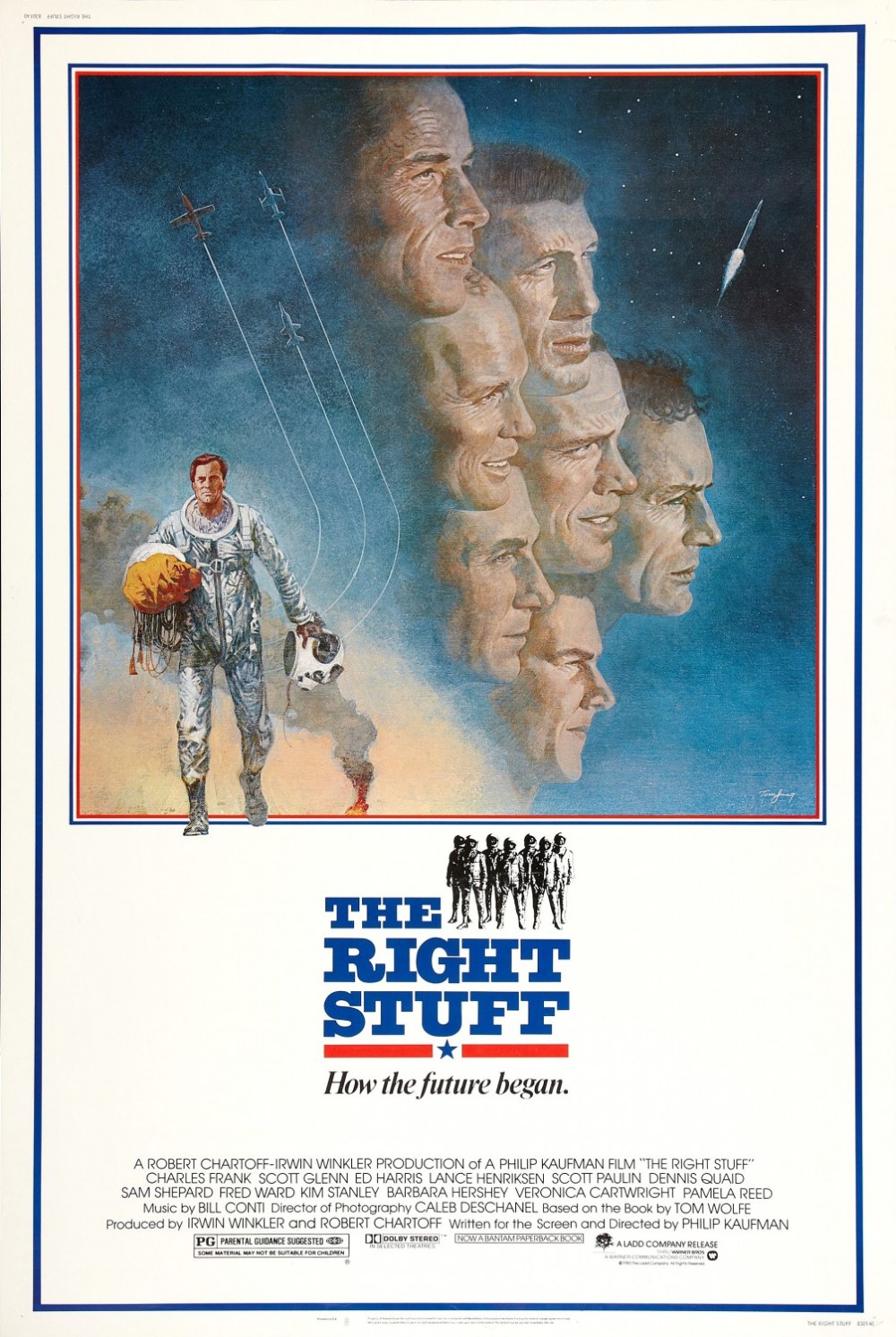
The Right Stuff movie poster

Filmmaker Brian McQuery asked New Beverly Cinema to program it, and his wish came true on July 4, 2013 when the revival theater screened “The Right Stuff” in honor of its thirtieth anniversary. Philip Kaufman’s adaptation of Tom Wolfe’s non-fiction book on the Mercury Seven astronaut program and Chuck Yeager was not a box office success when it first came out, but it did find its audience on video, cable and Digital. Seeing it again on the big screen was a real treat, and the audience got an even bigger one when McQuery welcomed actress Veronica Cartwright to the stage.

Cartwright played Betty Grissom, wife to Gus Grissom who was the second American to fly into outer space. Gus’ flight, however, ended on a controversial note after he landed in the ocean and the hatch on his spacecraft suddenly exploded and came off. This caused the spacecraft to sink, and the whole incident left NASA feeling embarrassed. Gus was later found to be not at fault for what happened.

Cartwright had previously worked with Kaufman on his remake of “Invasion of the Body Snatchers,” and he told her he had written the part of Betty Grissom with her in mind. Still, Cartwright had to convince to the movie’s producers she was the right person for the role, but there was one thing which threatened to derail her interview with them.

Veronica Cartwright: I had been in a car accident in 1981 where I broke my leg in 35 places. Then this interview came up and I was six months in a cast, and I had nine screws and an 8-inch plate in my ankle. I had just gotten out of my cast and my mother had to drive me to the interview, and I dressed in red, white and blue. I thought this was the appropriate thing to do. As I got up the stairs and I walked, Phil came out. Well I had a bit of a limp at this point so I thought, oh my god if he sees me limping… So, I went, “Hey Phil! What’s happening?” And I danced the whole length of the hallway.

Despite the shape her leg was in, Cartwright still got the part. In fact, she didn’t even tell Kaufman or any of the producers her leg was broken until after shooting wrapped. However, she did have to wear high heels for a scene three months after her leg came out of the cast which was anything but comfortable.

Cartwright’s character is of course based on a real person, but she admitted she never got to meet Betty Grissom before, during or after making the movie. This was due to a big lawsuit going on after Gus died aboard Apollo 1 which caught fire before it took off, and Betty was not in a good state of mind to assist with the production of “The Right Stuff.” As a result, Cartwright had to rely on other ways to get into character, and she talked about how she prepared to play Betty.

VC: We looked at the archival footage and we were all given backgrounds of where the characters were born and how they met their husbands and how they got involved in the whole space program. When you’re doing a real character, I think it’s a little scarier because you want to do that person justice. It’s not coming off of your own imagination. It’s coming off of reality so you have to be careful. I hope I justified her. I always write myself a biography so I know where I came from and stuff like that. Of course, a lot of that was supplied because of her being an actual person. If I know who the person is, just from however I created them, then the lines come like that because I have become that person. I believe you need to have enough background and stuff so that, say something improvisational comes up, you would act according to what your character would do. It’s become ingrained as part of your character. I do a lot of homework before I do something, and I always found that it works for me.

During filming, Cartwright said the actors hung out with the actors while the actresses hung out with the actresses. She remarked how they were “separate entities” as a result which in a weird way was what the movie was about. Everyone in the cast, however, became a close-knit group by the end of filming, and Cartwright pointed out how this showed in the big barbecue scene where their characters are given a huge banquet in Texas courtesy of Vice President Lyndon B. Johnson. The scene was actually shot at the Cow Palace in San Francisco with hundreds of extras, and she remembered the shooting of it quite vividly as the meat being barbecued was not as tasty as it looked.

VC: We were in the Cow Palace for five days and those sides of beef weren’t very pretty after five days. We kept hearing, “DO NOT EAT THE MEAT! DO NOT EAT THE MEAT!” Oh my gosh! They would bring in thousands of McDonald’s burgers. Bags of McDonald’s were handed out because they kept saying, “DO NOT EAT THE MEAT!” They would be over there with that blowtorch and putting that glaze all over the beef and it was disgusting. But it was a wonderful experience (filming that scene), it was really great.

In talking about Kaufman, Cartwright described him as a great, lovely person. Since “The Right Stuff” is such a big ensemble piece, everyone had major rehearsals to get the blocking right, but Kaufman did allow for improvisation. Cartwright also admitted the scene in the hotel where Betty gets upset with Gus because they were not invited to the White House after his space mission took a whole day to shoot.

The screenplay for “The Right Stuff” was to be written by William Goldman, but Goldman wanted to leave out the Chuck Yeager story and focus solely on the astronauts. Kaufman disagreed with this decision as he felt Yeager’s story was a very important part of the film because, even though he didn’t go into space, the future of space travel really began with him. Goldman ended up withdrawing from the film and Kaufman wrote the screenplay himself. Cartwright lauded his work.

VC: I thought the script was brilliant because the book is sort of like a train of thought and things that are said but not spoken out loud. What Phil did was he took that book and made all those thoughts reality. I think very rarely can books translate into the movies and the movies be as good as the books were, and in this case, he was right on.

The cinematographer for “The Right Stuff” was Caleb Deschanel who received an Oscar nomination for his work. He was also nominated for his work on the films “The Natural,” “Fly Away Home,” “The Patriot” and “The Passion of the Christ.” Of course, these days he is known as the father of Emily and Zooey Deschanel who have become successful actresses in their own right.

VC: He’s very meticulous. The lighting was amazing. He didn’t have standard lights. Everything had these big shrouds of silks over the top of them. The whole Cow Palace was lit and it would be on gimbles where they could just move the lighting, but it took hours to set up. It was pretty intense. And it’s so funny to see Zooey now because she was three-years old during the making of the movie, and Emily had just been born. Thirty years is a long time!

Actually, the most fascinating story Cartwright told that evening involved how Kaufman and his crew filmed the flying sequences. Until “Top Gun” came along, “The Right Stuff” had some of the best and most convincing aerial footage of any movie I had ever seen. So it was a big surprise when Cartwright revealed to us what kinds of planes and special effects were used to create those moments.

VC: When you see the planes going up and down, those were all Japanese models and they (the filmmakers) stood on the top of a very tall building and chucked them off (laughs). That was the CGI! They just sort of painted them and Phil said “oh my God it was incredible! We just go up on the top of the building and throw the plane off and see what happens!” So when you’re watching the movie tonight, you can figure out that it’s a little Japanese air model. It was hysterical!

Veronica Cartwright ended her Q&A with Brian McQuery by saying “The Right Stuff” was a wonderful movie and that she loved the sense of drama and comedy and how it was a wonderful blend of the two. Thirty years after its release, we couldn’t have agreed more. “The Right Stuff” remains one of the greatest movies to come out of the 1980s, and it has lost none of its power to excite and entertain those who watch it. Some movies don’t age well, but this one has.

An Especially Frigid 18 Mile Pablove Run

Griffith Park welcome sign

After recovering both physically and, to a certain extent, emotionally last Saturday with the 12-mile run, we Pablove Foundation runners were now tasked with running a full 18 miles inside and outside of Griffith Park in Burbank. This run took place on the one-year anniversary of a historical event. That’s right, the Women’s March of 2017, a worldwide protest done to advocate legislation and policies regarding human rights. This march was celebrated with another today which brought out thousands of people to Downtown Los Angeles alone, and hopefully this same number of people will show up to the polls this year to make much needed changes in government.

Oh yeah, Donald Trump has now been inhabiting the White House for a full year, and that’s even though it feels like he has been there for much longer. To celebrate, he and the Republican controlled congress and senate shut down the government. Trump is certainly running the United States like he does his businesses, straight into the ground.

Anyway, this morning at Griffith Park proved to be super chilly to where my teeth were chattering like never before. Seriously, I started to feel like I was back in Denver, Colorado during an infinitely frigid Thanksgiving weekend, and the temperature there dropped far below zero. I couldn’t wait to start running as a result. As thankful as I was for the temperature being lower, let alone the fact winter-like weather actually making itself known in Southern California, this felt like an especially frigid Saturday morning designed to fuck with us more than usual.

EXC FORREST LAWN MEMORIAL PARK IN CALIFORNIA.  HERE WE SEE A NEWLY DUG GRAV

This run had us running on Forest Lawn Drive, a very treacherous stretch of road which forces us to run in single file at times due to a blind curve which is just daring us to run past it. I again have to point out how Forest Lawn Drive goes right past the cemetery and mortuary of the same name. If this doesn’t put the fear of God into you, what will?

The 15 17 To Paris movie poster

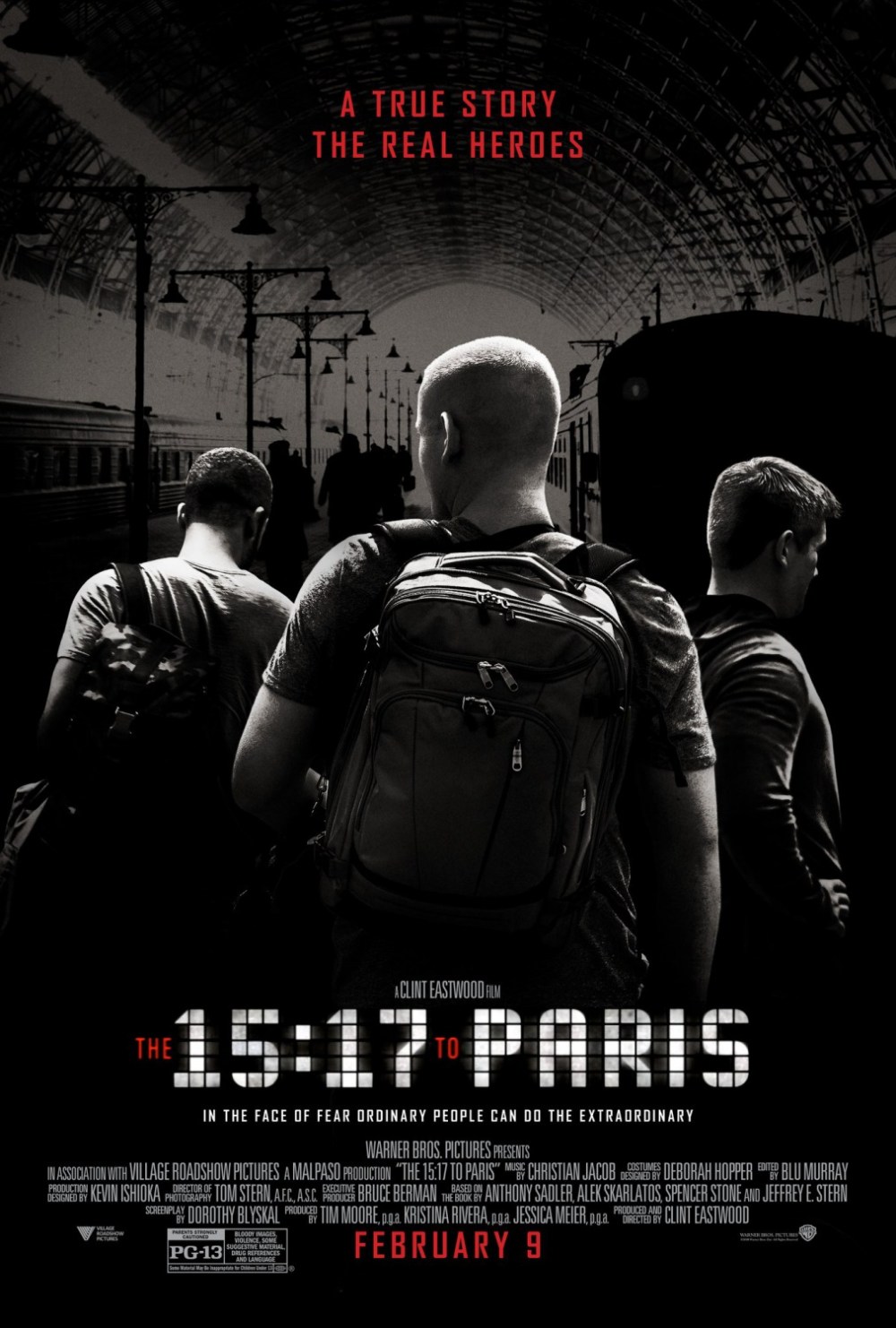
If you are reading this, then you know I wasn’t hit by a car and my body is not in a terribly mangled state, and I made the turn onto Olive and ran past Warner Brothers Studios where posters of Clint Eastwood’s next movie as a director, “The 15:17 to Paris” were plastered on the buildings for all to see. And this being awards season, there were posters for “Dunkirk” and “Wonder Woman” on display as well to remind Oscar voters of how many critics called them the best movies of 2017. Here’s hoping both motion pictures garner a plethora of nominations.

At four and a half miles, we were to make a turnaround at the intersection of Verdugo and Sparks and go back the same way we came. Coach Kerry, who was driving along the route to make sure we were going in the correct direction, informed me the turnaround point was right across from the McDonald’s on Olive, but, of course, I ran right past it to where this run threatened to be much longer than it needed to be. Well, this had largely to do with me finding a safe and legal way to cross the street without getting hit by a car eager to run a red light. Running straight from the McDonald’s to the other side also had me running the risk of making a mandatory donation to the Burbank Police Department, and they already hate it when we run on the asphalt instead of the concrete sidewalks.

Pablove 18 mile volunteers

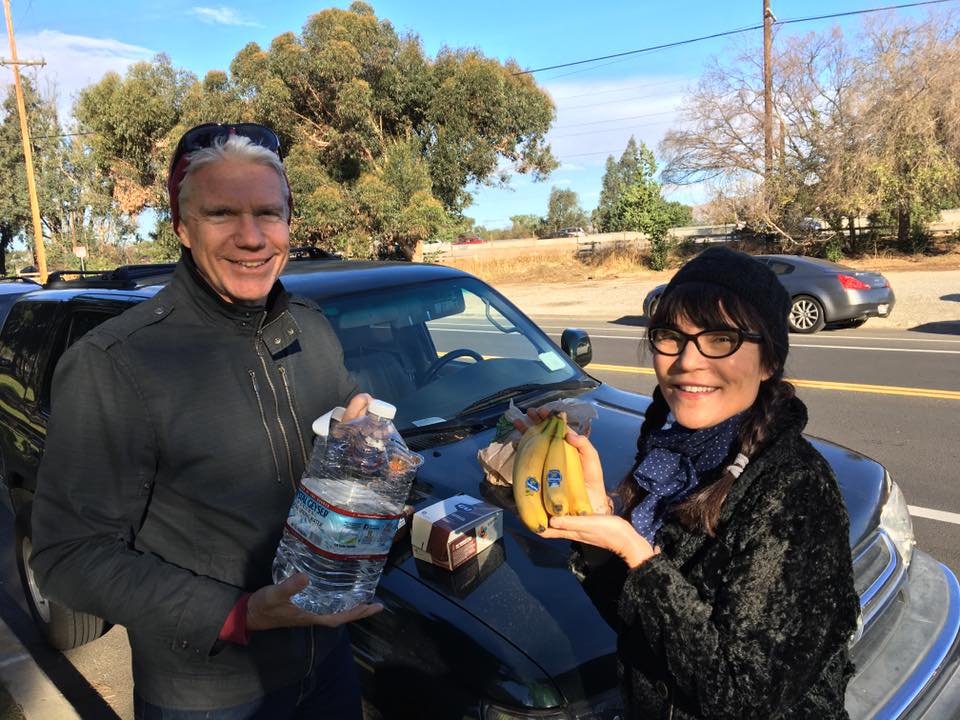
I would like to take the time to acknowledge two wonderful volunteers, Jasmine Kostraba and Dennis Herzig, fellow Pablove runners who took the time to make sure we had all the energy gels, bananas, electrolyte pills and orange slices we needed to cross the finish line. The both of them asked me why I ran past the turnaround point, and I responded, “You can’t say I’m not putting extra effort into this run!”

I have to say; those orange slices are quite heavenly on a run like this. I bite into one, and all of a sudden, I am reenergized to an astonishing extent. Give me that or a banana, and it’s almost like Popeye eating his spinach.

When it came to running back on Forest Lawn, I ran on the side which went with traffic instead of it against it as we are constantly advised to do. Coach Kerry, who drove up to me at one point, asked me why I was running on the other street, and I explained it was because advancing on the other had me fearing for my life as a particular blind corner made me feel like a moving target for someone eager to cling to the corner in order to stay at optimum speed.

Upon arriving back at Griffith Park, we ran from there to Los Feliz Boulevard where we ran uphill to another turnaround point. As much as I complain about the hills in Griffith Park, the one on Los Feliz is even harder to go up. I didn’t even make it to the turnaround sign when Dennis saw me and was quick to come up to me and say, “This hill is impossible, huh?” Yes, it is.

From there, I went down Los Feliz and back the same way I came. Dennis remarked at how I didn’t look tired at all, and this was quite the compliment. However, I found my energy dissipating rather quickly, and I started to cough a lot which didn’t help matters. I finally came to a stop as the voice inside my head kept telling me it was time to call it a day. This voice is one I constantly fight against as I am determined to complete each and every Pablove run, but this time I found myself surrendering to the inescapable fatigue consuming me.

Eventually, Coach Kerry drove by to see if I needed any water, food or energy gels to complete the run. But upon seeing my rather sullen state, he asked if I instead wanted to stop and take a ride back with him to the starting point, and I said yes. I apologized to him for not finishing, but he told me it’s okay, saying sometimes it’s best not to push it. What marathon training constantly reminds of is to listen to my body and what it is telling me. As defeated as I felt for not finishing all 18 miles (I completed 15 to 16 in the end), I think my decision to cut this run short was the right move.

Whether or not I get my maintenance runs done during the week, I do need to more cardio exercises. Being a marathon veteran, it’s far too easy to get confident about my training. Regardless of how many marathons I have completed, I still need to keep up exercising during the week as I can see what happens when I don’t get my maintenance runs done.

Coach Kerry also asked if I might consider doing the half-marathon instead. With the LA Marathon, participants do have the option of doing this as opposed to running the full thing. This option is now very tempting as I constantly finish these training runs behind everyone else. Kerry told me to think it over and assured me I have done terrific work this training season. I would still like to do the full, but I really have to give the half some consideration. Speaking of which, if I do the half, do I still get a medal?

Moons Over My Hammy

My legs were incredibly sore, but I managed to my haul my tired body over to Denny’s for the Moons Over My Hammy sandwich. Despite the high number of calories, I think I earned this meal. The rest of the day had me resting as my body ached all over. Once again, staying in bed can feel irresistible even when you have work to do.

My goal before next week’s recovery run, which should be 10 or 12 miles, is to get my maintenance runs done, and to do more cardio exercises throughout the week. We are still a few weeks away from the big day, but I cannot and will not leave anything to chance.

FUNDRAISING UPDATE: We still have a way to go to reach our fundraising goal of $1,500 for The Pablove Foundation. To date, I have raised $639. There’s still plenty of time to make a tax-deductible donation, but sooner you make one, the better.

CLICK HERE TO DONATE ON MY PABLOVE PAGE.

CLICK HERE TO DONATE ON MY FACEBOOK PAGE.

‘Man of Steel’ is Not Just a Bird or a Plane

Man of Steel movie poster

I grew up watching reruns of “The Adventures of Superman” with George Reeves playing the iconic character, and I loved how he stood still and never blinked an eye when the bad guys shot bullets at him. Then came the movies with Christopher Reeve playing the sole survivor of Krypton, and I reveled in watching him give us the definitive version of this heroic character. Since then, Superman has not been the same for me as his goody two shoes image makes him seem a little dull compared to Batman, and the character has gone through various interpretations on television and in comic books to where I’m not sure what to make of him, or his alter ego Clark Kent, anymore.

I liked “Superman Returns” more than most people because it reminded me of the effect this iconic character had on me when I was young, and Bryan Singer made it clear we needed a hero like Superman now more than ever. However, the more Singer paid homage to the first two “Superman” movies, the more it paled in comparison to them. The character is now more than 75 years old and in desperate need of a reboot to stay relevant to today’s increasingly cynical society.

Now we have “Man of Steel” which takes Superman back to his beginnings to where we have to go through all the origin stuff yet again. This threatens to make the movie a bit tedious as we all know Superman was born as Kal-El on the planet Krypton and how his parents sent him to Earth before Krypton exploded. But what’s interesting is how director Zack Snyder tells Superman’s story in a non-linear fashion to where we’re never quite sure which direction the movie is going to take. Snyder also shows us how, while it may seem cool to be Superman, being him can also be quite lonely and painful.

For the filmmakers, the real challenge was making Superman more down to earth than he has been in the past and, for the most part, they succeeded. We all have experienced loneliness and alienation in our childhood and the changes our bodies go through, be it puberty or something else, which can drive us to the brink of insanity. But what’s worse for Kal-El, who is now named Clark Kent by his human parents, is he can’t really ask anyone for advice on how to deal with x-ray vision or super hearing abilities. While this kid is capable of doing great things, you can understand why he yearns for the normal life constantly denied to him.

I liked the scenes dealing with Superman’s childhood because they rang true emotionally, and the wisdom his human father Jonathan (Kevin Costner) passes on to him makes sense. Yes, this young man has super powers, but he’s got to keep them under wraps until he can learn the truth about where he came from. It’s frustrating, but it helps to keep Superman from being subjected to crazy medical experiments by the government and from growing an oversized ego which will definitely get the best of him.

Since the first half of “Man of Steel” is told in a non-linear fashion, it doesn’t take long for us to meet Henry Cavill, the latest actor to play Superman. It also doesn’t take long for him to remove his shirt and show us how much time he has spent at the gym. Cavill’s road to playing this iconic character has been a tough one as he came so close to getting cast in “Superman Returns,” and for a while he was known as the unluckiest man in Hollywood as he barely missed out on playing Cedric Diggory in “Harry Potter and the Goblet of Fire” and Edward Cullen in “Twilight.” How nice it is to see Cavill finally get his moment in the spotlight.

Cavill does solid work here as Superman, and he also gives us a Clark Kent who is unlike the four-eyed wimp we all remember him being. This is a Kent who wanders from job to job, haunted by an upbringing he has yet to learn more about, and it is a journey which has toughened him up quite a bit. Cavill also benefits from getting to play a more complex Superman in “Man of Steel” whereas the one we saw in “Superman Returns” was kind of neutered (no offense Brandon Routh). While he doesn’t quite have the same charisma Reeve brought to Superman, Cavill is a terrific choice for the role and he has more than earned the right to play him in this and future movies (and you know there will be more).

But as with “Superman: The Movie,” Warner Brothers put their nerves at ease by surrounding Cavill with a cast filled with stars and Oscar winners. I very much enjoyed Kevin Costner as Jonathan Kent, and he gives a wonderfully understated performance as Kal-El’s human father. However (SPOILER ALERT), I’m pretty certain I have not seen another actor other than him who looked so ridiculously serene as an enormous hurricane came barreling down on him (SPOLIERS END).

Diane Lane is also well cast as Kal-El’s human mother, Martha, and it’s a treat to see this actress in anything and everything she does. Plus, even as Martha heads into old age, Lane still looks irresistibly sexy as she refuses to betray her son’s whereabouts to General Zod. Some credit should go to Snyder for this as he doesn’t plaster Lane with the same hideous old-age makeup he used on Carla Gugino in “Watchmen.” I am so very glad he learned his lesson.

Speaking of General Zod, the great character actor Michael Shannon plays him in “Man of Steel.” Shannon does make him a compelling nemesis to Superman, and I liked how the actor portrays Zod as a man led by a corrupted sense of loyalty rather than just a power hungry villain. His work in “Man of Steel,” however, pales a bit in comparison to his galvanizing turn as serial killer Richard Kuklinski in “The Iceman.” Perhaps I was expecting a bit too much from Shannon this time around as I was hoping he would give us a villain for the ages. But even though he doesn’t, he is still very good here.

In addition, Amy Adams gives us a strong Lois Lane who doesn’t falter in the face of supernatural discoveries, Laurence Fishburne makes for a good Perry White, Antje Traue makes Faora into a tremendously lethal villainess, and it’s hard to think of anyone other than Russell Crowe to play Superman’s biological father, Jor-El. Crowe gives the role a gravitas not easily earned, and you will be pleased to know that he doesn’t sing in this film. I am, however, willing to defend his performance and singing in “Les Misérables.”

The one major complaint I had with “Man of Steel” was the spectacle at times overwhelmed the story and characters. This is not to say the characters are neglected, but I’m not sure I have seen as many high-rise buildings come crashing down in one movie. Just when I think I have seen the loudest action movie ever made, another one comes along to remind me of the necessity of ear plugs. In the process of giving us one tremendous action scene after another, Snyder ends up topping himself a bit too much to where I was desperate for him to tone things down. Still, he respects Superman enough to keep the character’s ideals intact even while taking some liberties.

Part of me still yearns for the “Superman” of yesterday when Christopher Reeve made us believe a man can fly, and of how the first two movies lifted my spirits up high. I think part of how you enjoy “Man of Steel” depends on how willing you are to separate it from all the “Superman” films which preceded it, and for me this is tough. But in the end, there’s no way things can stay the same, and this iconic character was in need of a refresher. With “Man of Steel,” Snyder has given us an exciting piece of entertainment which holds our attention for over two hours, and I am eager to see where Superman will go from here.

* * * out of * * * *

‘Justice League’ Doesn’t Leap Tall Buildings in a Single Bound

Justice League movie poster

You know how the Daytona 500 is the Super Bowl of NASCAR racing, but it’s also the first big race of the season instead of the last? That’s what “Justice League” is. It’s the penultimate motion picture of the DC Extended Universe, and yet it’s coming to us before Aquaman, Flash and Cyborg get their own solo films. With the Marvel Cinematic Universe, every character was in their own movie before “The Avengers” finally arrived on the silver screen. Granted, Hawkeye and Black Widow have yet to get their own movies, but enough groundwork was laid to where the time had come for “The Avengers” to become a reality. With “Justice League,” its long-awaited appearance feels a little premature.

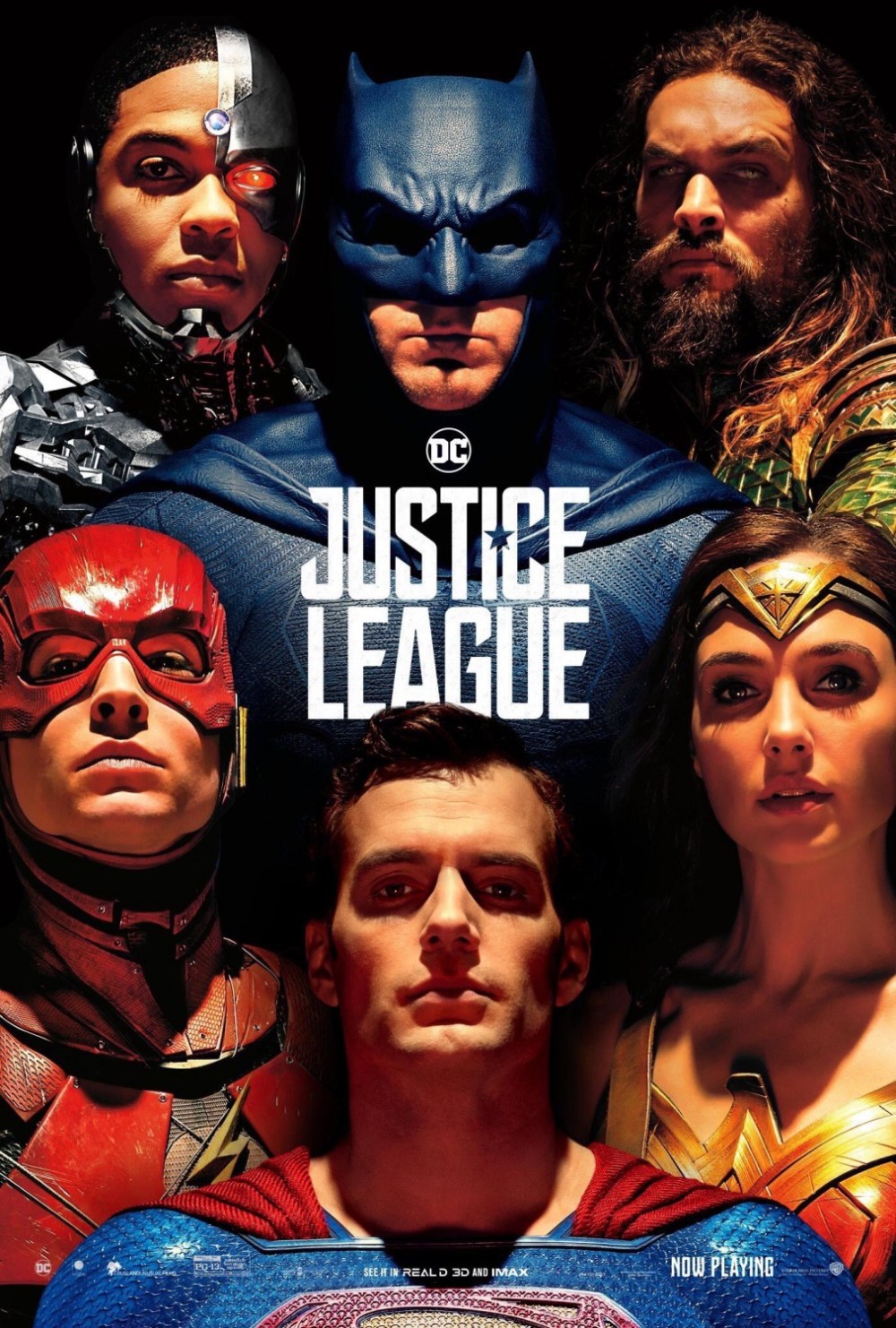
Following the events of “Batman vs Superman: Dawn of Justice,” the world is still mourning the death of Superman (Henry Cavill), and all the other superheroes are trying to move on despite the large void the Man of Steel has left in his passing. Batman/Bruce Wayne (Ben Affleck) remains as dour as ever, but his faithful butler Alfred (Jeremy Irons) threatens to be even more dour to where they seem to be having a contest in that department. Wonder Woman/Diana Prince (Gal Gadot) leads a quiet life working in a museum, Victor Stone/Cyborg (Ray Fisher) spends the days hiding in his apartment because everyone thinks he is dead and he hates his father for saving him through the use of cybernetics, Arthur Curry/Aquaman (Jason Momoa) is busy drinking his life away when he’s not swimming in the ocean, and Barry Allen/Flash (Ezra Miller) spends his days trying to fit in with kids his age while moving at supersonic speed. These superheroes couldn’t be more mismatched, but they of course find themselves working together to stop a fearsome enemy bent on world domination.

This enemy is Steppenwolf (voiced by Ciaran Hinds), a supervillain determined to find three boxes of power known as the Mother Boxes and, in the process, escape the role of servitude he has been consigned to for far too long. Steppenwolf is, you know, the kind of villain bent on gaining the most power of anyone in the world, and we all know what happens to people like them; they are either defeated as we expect them to be, or they become President of the United States.

The movie gets off to a terrific start with Batman battling a common criminal on the streets of Gotham, but it turns out to be a ploy for the Caped Crusader to discover the identity of another evil foe who thrives on the fear of humans. Following this, “Justice League” becomes a labored adventure as Batman and Wonder Woman take their precious time finding all the other superheroes, some of which are hesitant to join the party even though they realize their planet is at great risk of being annihilated. Knowing those holdouts will eventually become a part of the league, this proves to be the film’s most agonizing point as too much time is spent gathering everyone together.

Ben Affleck still makes for a good Bruce Wayne/Batman, but I sense he is already tiring of the role. Gal Gadot left a powerful mark on movies this year as Wonder Woman, and she is every bit as thrilling a presence here. Of the new additions, Jason Momoa proves to be a solid choice as Aquaman, and watching him here makes me look forward to the character’s solo movie coming out next year. Ezra Miller steals every scene he is in as the Flash, and he brings a wonderful edginess to the role while also bringing the character down to earth in an especially unique way. While Miller’s character is thrilled to have these superpowers, he still yearns to fit in with everybody else, and he portrays this inner conflict very effectively.

The same can’t be said, however, for Ray Stone/Cyborg as the character has little more to do in “Justice League” other than brood, argue with his father, and try to tell everyone in hearing range of how his powers can in no way be mistaken as a gift. This is with all due respect to Ray Fisher who does what he can with an underwritten role, but I grew tiresome of his complaining, especially when we all know he’s going to be in this league eventually.

But honestly, the real heart and soul of “Justice League” belongs to Henry Cavill who returns as Clark Kent/Superman. Even I refused to believe the Man of Steel was all but finished off for good at the end of “Batman v Superman” as you can’t keep a good superhero down, and Superman remains one of the very best. Even better is the realization of how Cavill no longer has the shadow of Christopher Reeve hanging over him as he manages to bring the same dedication to this iconic character Reeve did years before, and seeing Superman fight for justice this time around brought a big smile to my face.

Indeed, “Justice League” gets better and better as it enters the third act in which our superheroes band together to defeat Steppenwolf. While I found myself not caring enough about these characters in the first half, I really rooted for their success as the movie went on because the actors looked excited to inhabit these unforgettable characters. There are times when the filmmakers succeed in arousing our childhood love for these superheroes, and this is when the movie works at its best.

Of course, I have to wonder which filmmaker deserves the most credit for “Justice League.” Zack Snyder is credited as director, but Joss Whedon came in during post-production, and it is tempting to believe Whedon, who struck gold with cinematic comic book gold with “The Avengers,” managed to tap into our childhood innocence in a way Snyder could not. With “Man of Steel” and “Batman v Superman,” Snyder focused more on the characters’ darkness which has enveloped their lives, and you can’t blame him for going in this direction as DC Comics tended to veer into darker territory. But they got so dark to where there wasn’t much in the way to be found, and it was said Snyder was going to go in a slighter lighter direction with “Justice League,” but we probably won’t know how much lighter he made it until we get his director’s cut, and the fans are already clamoring for one like crazy.

I also have to give credit to Danny Elfman for composing an excellent score here. Even he is eager to spark our childhood innocence as his score contains themes he created for Tim Burton’s “Batman” as well as John Williams’ theme for “Superman” which remains one of the best superhero movie scores ever composed. Those subtle little touches make a huge difference as they help to reawaken the past in a most welcome way.

Looking back, “Justice League” is enjoyable for the most part as it builds to a strong climax, but it still feels like this all-star superhero movie was brought to us earlier than it should have. The parts which were lacking keep me from giving this movie a solid recommendation. I still look forward to the solo movies like “Aquaman,” but in the end the filmmakers crammed too many characters into a story already overwhelmed by them, and what results is not completely satisfying in a way a film like this should be.

What I am left with is the wonderment over how the visual effects team managed to remove Cavill’s mustache digitally. Because of his commitment to starring in “Mission Impossible 6,” he couldn’t shave it off when “Justice League” went into reshoots. Then again, it would have been interesting to see this Superman with a mustache as it would have allowed Cavill to do something a little bit different with this iconic character. Of course, he would have to explain the unexpected presence of facial hair. How would he go about doing so?

“Well, something happened on the way to heaven…”

* * ½ out of * * * *

Savage Steve Holland Revisits ‘Better Off Dead’ and ‘One Crazy Summer’ at the Aero Theatre

Better Off Dead poster

The Aero Theatre in Santa Monica was sold out yet again when director Savage Steve Holland was there to talk about his two 1980’s comedies “Better Off Dead” and “One Crazy Summer” back in June 2008. But the big attraction of the evening was “Better Off Dead” as it still has a huge cult following 30 years after its release. Like many movies from our youth, it was a box office flop and got eviscerated by critics. Siskel and Ebert gave it two thumbs down, and Peter Travers tore it apart limb from limb, but it eventually found its audience on video, cable, DVD and Blu-ray. These days, you would be hard pressed to find anyone who hasn’t watched “Better Off Dead,” and everyone who has seen it loves it.

“Better Off Dead” follows Lane Meyer (John Cusack), a teenager with an obsession for skiing and an even bigger obsession for his girlfriend Beth (Amanda Wyss). But soon after the movie begins, Beth dumps Lane for the captain of the ski team, and this leaves him utterly devastated to where he tries to kill himself in order to get her attention. Throughout, he is forced to deal with a crazed paperboy who wants his two dollars, his mother’s bizarre ways of cooking food, his dad’s insistence on doing something about his Camaro which remains immobile on the front lawn, his kid brother who reads books on how to pick up “trashy woman,” and a lovely foreign exchange student who has the misfortune of staying with the dork heads, ahem, the Smiths next door.

After “Better Off Dead” ended, Holland came to the stage and was greeted with thunderous applause. Dressed in jeans, a white buttoned-down shirt and wearing a green baseball cap, he was so happy to see all these people who came out to see this movie which he made long ago. Along with Holland was Diane Franklin who played the French exchange student Monique, and Curtis Armstrong who plays Lane’s best friend Charles de Mar.

Holland said “Better Off Dead” was inspired by his own life experiences, particularly the one where a girlfriend dumped him for somebody else. One scene has Lane tying an extension cord around his neck in the garage, and Holland said he did the same thing and had attached the cord to a pole while standing on a plastic garbage can. Holland said he became terrified and couldn’t go through with it, and then the lid of the garbage can suddenly broke and he fell right into it. Then the pipe above him broke, water came out and he almost drowned as a result. His mother came into the garage to see what was going on, and she ended up yelling at him for breaking the pipe.

“Better Off Dead” did so well in test screenings to where Warner Brothers gave Holland even more money to make “One Crazy Summer.” The studio executives were so convinced they had a big hit on their hands, and they wanted to work with him again on his next movie. Unfortunately, “Better Off Dead” failed at the box office and, while he did get the opportunity to make “One Crazy Summer,” Holland said he was quickly consigned to what he called “movie hell.” This is the place you go to when your movie doesn’t have a big opening weekend, and all those friends you thought you had in Hollywood stop calling you as a result.

one_crazy_summer_xlg

One fan asked Holland what the difference was between making “Better Off Dead” and “One Crazy Summer.” With “Better Off Dead,” Holland said he had total creative freedom to where no one was looking over his shoulder, and this made it the best filmmaking experience he has ever had. With “One Crazy Summer,” it was very different because there was more money involved, and studio executives were on set watching his every move. A lot of this was due to their initial response following the first “Better Off Dead” screening as they came out of it horrified, thinking it was a sequel to John Water’s “Pink Flamingos.”

Franklin, as it turns out, is not French. She said her father is in fact German, so this may account for her looking like she is from another country. As for her French accent, Franklin said she took French classes in high school and became very good at speaking the language, and the accent came to her easily as a result. When she came in to read for “Better Off Dead,” Franklin was actually up for the roles of Beth and Monique. Franklin said making this movie remains the best experience she has had as an actress, and she remarked how Holland created a fun and comfortable atmosphere for everyone to work in. She also confirmed it was indeed a woman who did her skiing sequences in the movie and not a man as many assumed. Holland did say, however, that her stunt double looked almost exactly like her, and the only thing separating them was the stunt double’s tan.

Also up for the role of Monique was Elizabeth Daily who sang the movie’s title track at the school dance. But in the end, it was determined Daily was just “too hot” for the role.

Armstrong came up with some of the most memorable aspects of Charles de Mar. The scene where the ski captain asks Beth what her name is and Charles replies, mistakenly thinking he the one being talked to, was Armstrong’s idea. He also came up with the top hat Charles wears throughout the movie, saying it was inspired by his love for The Beatles and, in particular, George Harrison. It was also his idea to bring along the jar with the dead pig in it to school. However, Armstrong said he could not take credit for this famous piece of dialogue: “I have been going to this high school for seven and a half years. I’m no dummy.”

Armstrong also brought up a brief conversation he had with Kim Darby who played Lane’s mom. At one point during a break from filming, Darby came up to Armstrong, took him by the shoulders and said, “Watch out! They’re trying to destroy you!” After that, she never spoke to him again.

Holland also discussed some of the movie’s deleted scenes, and among them was one which showed how Lane’s mother belonged to the cult of Gumby and was collecting money for it at the airport. Other deleted scenes included Lane’s father (played by David Ogden Stiers) coming home to find his wife vacuuming the lawn, Lane trying to practice the theme song to “Flipper” on his saxophone, and there is a seal there which ends up applauding another person who ends up performing it better than him. Also, the scene of the paperboy falling off the cliff actually lasted a lot longer as Holland had about three minutes of it on film, but test audiences had a very sickened reaction to it, and it got shortened as a result.

If there was one thing which dampened the mood for “Better Off Dead” fans, it is the fact Cusack hates the movie. Holland said he got along great with Cusack while making “Better off Dead,” and he really wanted Cusack to like it as much as he did. Before they began shooting “One Crazy Summer,” Holland got the cast members to hang out with each other in Cape Cod so they could become comfortable with one another. While there, someone was presenting a screening of “Better Off Dead” which they all went to. Twenty or so minutes into it, Cusack walked out. Holland figured Cusack had to take a call or something, but the actor never returned. Holland later caught up with Cusack who told him he thought the movie was horrible and that he no longer trusted him as a director. Suffice to say, this really brought the audience at the Aero Theatre down.

Someone else asked how Rupert Hine came to score “Better Off Dead.” One of the companies involved in the movie’s making was A&M Records which had worked on soundtracks for other films like “The Breakfast Club.” Hine was a featured performer on that soundtrack but had never actually done a film score before. “Better Off Dead” was his first effort as a film composer, and the resulting soundtrack release for the movie is indeed awesome.

This evening was a lot of fun for everyone involved, and it says a lot about “Better Off Dead” that it remains so popular decades after its release. One fan proudly proclaimed it as being “bar none, the greatest movie ever made.” Such a fan this guy was, he got Holland to sign an authentic air filter for a 1967 Camaro, just like the one featured in the movie. Along with that, he also had the original vinyl release of the soundtrack as well as the movie’s original script.

“Better Off Dead” is truly one of the most entertaining comedies to come out of the 1980’s, and it is a movie Cusack really should be proud of. What else can you say about a movie in which Steven Williams utters one of the most famous lines in cinema history?

“Now that’s a real shame when folks be throwing away a perfectly good white boy like that.”

The article’s over… You can go home now.


‘Blade Runner 2049’ is Astonishing, Glorious and Mesmerizing

Blade Runner 2049 movie poster

Many words come to mind when describing “Blade Runner 2049.” Among them are mesmerizing, amazing, glorious, beautiful, and astonishing. I put special emphasis on the word astonishing because it is almost unbelievable to see what director Denis Villeneuve and company got away with here. Not only have they conceived a sequel which does its predecessor, Ridley Scott’s 1982 cult classic “Blade Runner,” proud, but they also got away with making an art house film with a budget of over $150 million and a running time of almost three hours. What were the studio executives thinking? Well, it doesn’t matter as this eagerly awaited sequel proves to be well worth the wait.

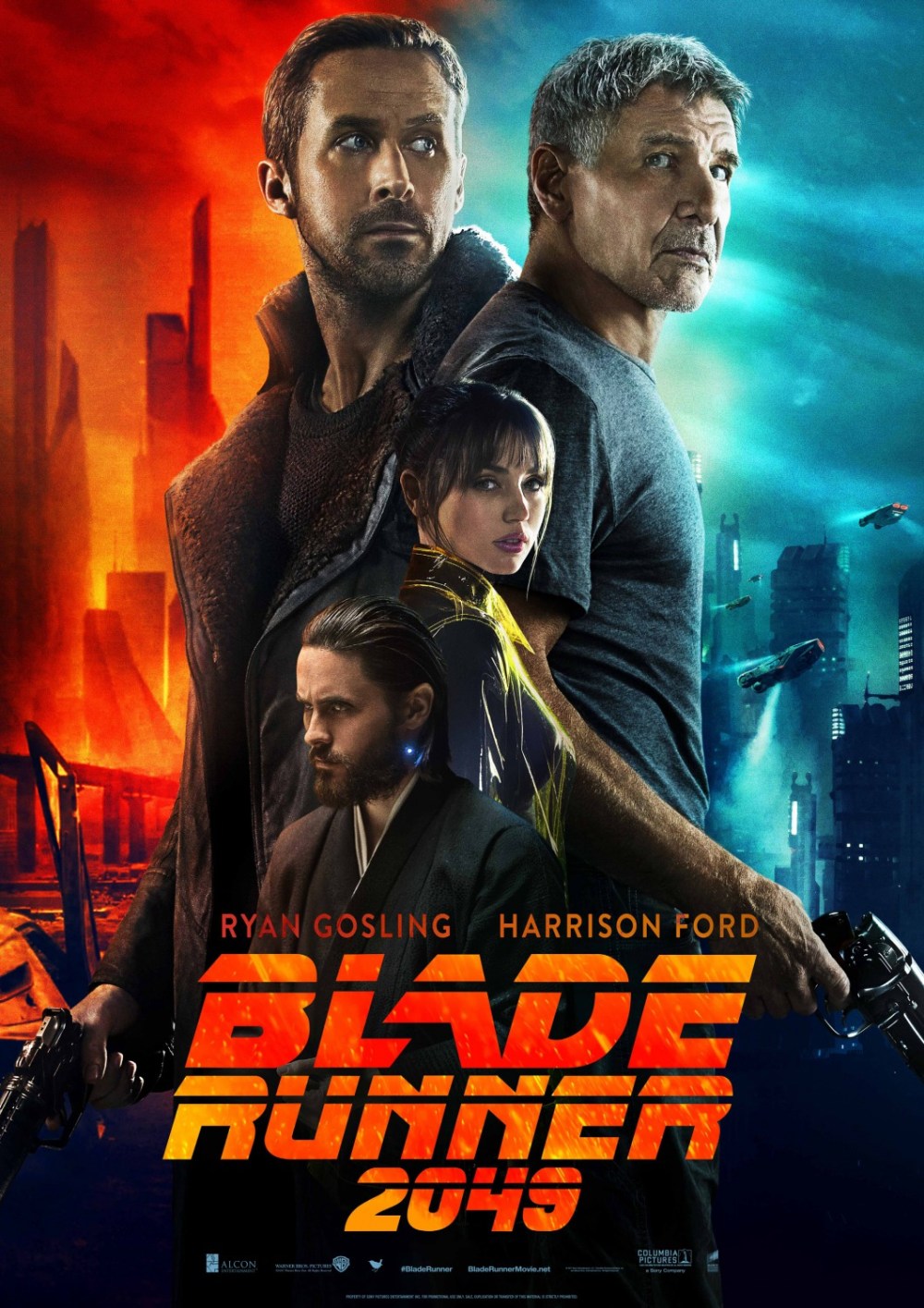
Taking place thirty years after the events of the original, the sequel introduces us to a new blade runner played by Ryan Gosling, and he comes to be known by a pair of names for reasons best left unsaid here. After enduring a brutal battle as he attempts to retire rogue replicant Sapper Morton (Dave Bautista), he becomes aware of a long-buried secret which is overdue for a thorough investigation. In the process, he tracks down former blade runner Rick Deckard (Harrison Ford) who has been off the grid for many years as he seeks answers only Deckard can give. What results is a form of evolution no one could have seen coming.

Telling you more about “Blade Runner 2049” will prove to be detrimental to your viewing experience as you should only know so much about its plot before going into the theater. What I can tell you is the future world portrayed is even more beautifully bleak than the one Scott gave us 35 years ago, something I didn’t even think was remotely possible. The colors are vibrant, but everything is still subject to a never-ending rainstorm, the kind we needed in California for the longest time. And in this fictional universe, Pan Am is still a corporate giant even though it ceased operations in the real world back in 1991.

While I was bummed to learn Scott would not be directing this sequel (he serves as executive producer instead), they couldn’t have found a better filmmaker here to fill his shoes as Villeneuve takes on what must have been a truly daunting challenge here. “Blade Runner,” despite being a critical and commercial disappointment, has long since been considered one of the greatest science fiction movies ever made, and it certainly is. Making a sequel to it interested many including myself, and yet it could easily take away from the original as nothing easily compares to what came before. But Villeneuve is the same guy who gave us “Arrival,” another sci-fi masterpiece which invited and deserved comparison with “Close Encounters of the Third Kind,” and this gave me confidence he could bring something special to “Blade Runner 2049.” Indeed, he has made a sequel which will prove to be every bit as memorable as its predecessor as the years go by as he expands on the themes and delivers a cinematic experience which is equally profound.

Furthermore, Villeneuve allows things to go at the same methodical pace Scott went at back in 1982. If you go into “Blade Runner 2049” expecting something along the lines of “Star Wars,” you will be seriously disappointed as the original defied sci-fi conventions with a vengeance. What was unique about “Blade Runner” is how it enthralled audiences with big ideas more than with wall-to-wall action sequences. The same is true with “Blade Runner 2049” as it probes the idea of what it means to be human, and it deals with characters searching for something which doesn’t feel the least bit artificial in a world dominated by technology. For me, the key line of dialogue comes when Lieutenant Joshi (played by Robin Wright) tells Gosling’s blade runner, “We’re all just looking out for something real.” This is certainly the case here, but as we catch up with these characters, their chances of finding anything real seem very small.

By the way, if Roger Deakins does not get this year’s Oscar for Best Cinematography, I will be seriously miffed. For far too long, this man has been the Randy Newman of the cinematography category, and this feels criminal as has given us beautiful and extraordinary images in “Sicario,” “Skyfall,” “No Country for Old Men,” and “The Shawshank Redemption” to where it is not easy to compare his work to others. Deakins, however, really outdoes himself here as he gives each scene in “Blade Runner 2049” a stunning look which shows both the beauty and the emptiness of the world these characters are forced to inhabit. What he has accomplished here is simply extraordinary as it all feels incredibly unique.

Gosling has long since proven to be as good an actor as he is a tremendously sexy one, and he is superb in a role which is very tricky to pull off. Again, I can only say so much about his character as it is too easy to spoil certain aspects of this movie, but once you understand who this blade runner is, it becomes clear as to the kind of balancing act Gosling has to play here. While life in the rainy and futuristic city seems to have burned this blade runner out completely, there are still glimpses of humanity to him which come out in a way which feels spontaneous and never forced. As a result, the “Drive” actor proves to be a genius at playing someone who is no longer certain as to how he should feel about the discoveries he has made.

Harrison Ford doesn’t show up as Deckard until the movie’s third act, but he makes it worth your time to wait for his first appearance. After watching him have tremendous fun playing Han Solo again in “Star Wars: The Force Awakens,” it’s great to see him bring another of his iconic characters back to life. Ford makes Deckard into a burned out shell of a man who is forced to hide not just from those threatening his existence, but also from the things he yearns to connect with most of all, and he illustrates the character’s never ending internal conflict without ever having to spell everything out for the audience.

The rest of the cast is superb as they bring a unique quality to roles which have them acting in both human and inhuman ways. Robin Wright kicked ass earlier this year in “Wonder Woman,” and she does it again here as Gosling’s superior officer who is a no-nonsense Lieutenant and eager to keep a war from being ignited. Ana de Armas, whom you might remember from Eli Roth’s “Knock Knock,” is perfection as Joi, Gosling’s hologram girlfriend who is definitely even better than the real thing as she comes equipped with a humanity which strikes at your emotions. Sylvia Hoeks is riveting as Luv, a replicant who can appear charming at one moment and incredibly lethal in the next, and she makes this character vicious and frightening as she is determined to make discoveries before others do. Jared Leto and Dave Bautista have essentially cameos here, but they make the most of their time onscreen and show the depth they are willing to give to even the smallest of roles.

My only real disappointment with “Blade Runner 2049” is we will never get to hear the music score by Villeneuve’s regular composer, Johann Johannsson. For some odd reason, he was removed from this project and is contractually forbidden from talking about why he was let go. His score to “Sicario” is one of my favorites, and it would have been great to hear what themes he could have brought to this sequel.

Having said that, the score by Hans Zimmer and Benjamin Wallfisch, the latter who recently did the music for “It,” is excellent as it captures the vibe of Vangelis’ score from the original without simply updating it for a new audience. It doesn’t even sound like the typical Hans Zimmer score as his music is usually pretty easy to recognize, although the last few cues do have a bit of “Dunkirk” in it. I feared “Blade Runner 2049” would get a more conventional score than the great one Vangelis composed years ago, but Zimmer and Wallfisch bring something wonderful, beautiful and thrilling to everything we see and listen to here.

The original “Blade Runner” came out in 1982, one of the greatest years for movies and one which many have called the year of the nerd. In addition to “Blade Runner,” we also got “Star Trek II: The Wrath of Khan,” John Carpenter’s “The Thing,” “The Dark Crystal,” “Tron” and “E.T. The Extra Terrestrial” among many others. “Blade Runner” was not a commercial hit and critical reaction to it was sharply divided, but like “The Thing” and “Tron,” its stature has grown over time to where it is now revered as the great motion picture it always was.

“The Thing” and “Tron” managed to generate a prequel and a sequel more than 20 years later, but neither could equal the power of their predecessors. This makes the achievements of “Blade Runner 2049” all the more profound as it equals the original film and digs even deeper into its theme which Scott explored to brilliant effect. What Villeneuve and company have come up with here feels as unique in today’s cinematic landscape as “Blade Runner” did in the 1980’s. I had every reason to lower my expectations on this one as sequels which come out decades later are typically doomed to failure, but this one defies the odds and I am so thankful everything worked out so well. It may not have Rutger Hauer, but very few movies can ever be perfect.

And for God’s sake, give Deakins the Cinematography Oscar! No excuses!

* * * * out of * * * *

Is ‘Blade Runner: The Final Cut’ Ridley Scott’s Solution to his Masterpiece?

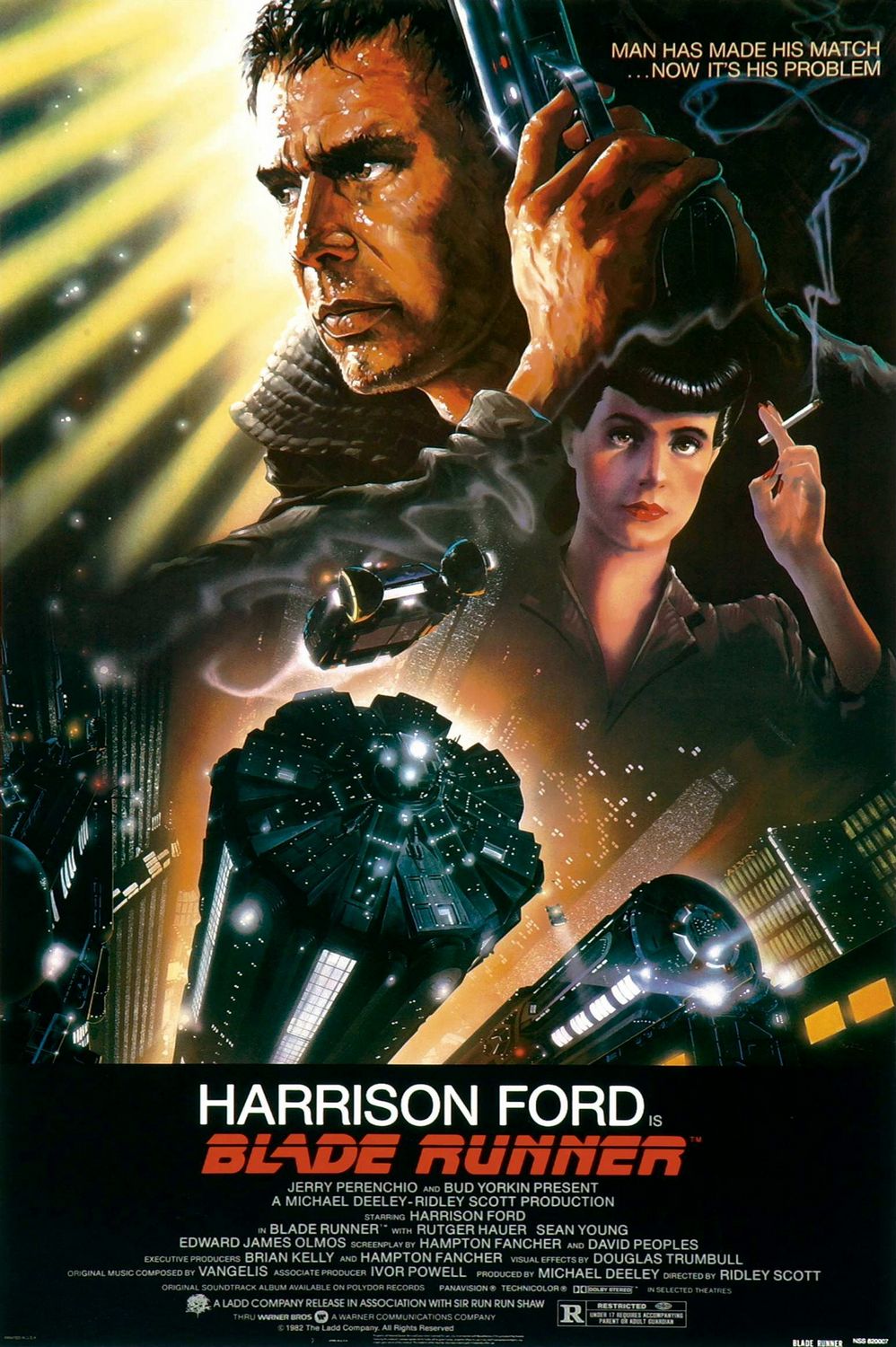
Blade Runner movie poster

I always wondered why Ridley Scott could never leave “Blade Runner” well enough alone. It was released back in 1982 and, at that time, was one of the few Harrison Ford movies to bomb at the box office. But, like many great science fiction movies, it has gained a well-deserved cult following which appears to be getting bigger and bigger each year.

One of my close friends is a die-hard fan of this movie, and he believes Scott went back to do another cut because the acclaimed filmmaker realized he would never ever have it this good as a director ever again. Ridley has made a lot of great movies since this one, but I can see what he meant.

“Blade Runner” remains, after all these years, one of the best science fiction films ever made as it has a look which is so unique to where I cannot easily compare it to any other movie from its genre. It puts a lot of other futuristic movies to shame; especially those made so cheaply (remember “Cyborg” with Jean Claude Van Damme?), and seeing it on the silver screen in all of its visual glory was a sight to behold.

Harrison Ford stars as Rick Deckard, a blade runner who is hired to track down and kill replicants who have escaped and are looking for their maker. Replicants are human clones created to serve colonies outside of Earth, and this shows how far we have gone in terms of space travel in regards to the time this movie takes place in. As a blade runner, Rick specializes in terminating replicants who have been labeled illegal after a bloody mutiny which they caused.

Ford embodies the character of Fred Decker as though he walked out of a detective story from the 1940’s. Decker is from a long line of burned out detectives who are the best at a job they no longer want to be the best at. But of course, they have to come out of retirement as no one else can do what they do so well. Ford looks as though he has had the life sucked out of him at the movie’s start, but he becomes resurrected upon becoming involved with a female replicant named Rachael, and she is played by Sean Young.

Watching Young in this movie is something else as she is perfect here as a female who is so clearly a replicant when we first meet her. However, as the movie goes on, we find ourselves forgetting this as she exhibits human emotions which we would not expect to see from someone like her. Decker becomes utterly infatuated to her, and you want to say he is falling in love with what is essentially a robot. But I guess when a robot is as pretty as Young is here, and she was in her 20’s when the movie was released, I guess you can’t really argue with that.

Seeing “Blade Runner” for the first time in years, it is funny to see how its themes have been used over and over again in popular culture This movie seems to suggest we made these replicants to remind ourselves of how human we used to be. Like U2 said, they threaten to be even better than the real thing. They exhibit a life force which has long since been burned out of us as we have become numbed to how brutal real life can be on our conscious mind. Or maybe they are here to remind of us how much of a slave we have become to technology. There are points where you have to wonder if any of these characters can tell the difference between what is real and what is not.

The leader of this group of renegade replicants is Roy Batty, a viciously passionate replicant played to the hilt by Rutger Hauer. He has ten times more passion than the humans he relentlessly torments, and his last speech in “Blade Runner” is one of the most beautiful moments ever in a 1980’s film. The “tears in the rain” part of it was something he actually improvised on the spot.

So, what is it about this “final cut” which makes it different from the other versions? To be honest, I’m not sure. My understanding is the director’s cut which came out previously did not have Scott’s input on it. So, it is safe to say this cut is his final statement, so far, on this movie.

After all these years, “Blade Runner” remains a true sci-fi classic which is ever so deserving of its huge cult following. Again, there is really no other movie I can easily compare it to on a visual level. Thematically speaking, there are many movies which deal with the future, dystopian or otherwise, but none of them will ever look like the one Scott conjured up here.

* * * * out of * * * *

Save

‘Prisoners’ is Not Your Average Child Abduction Thriller

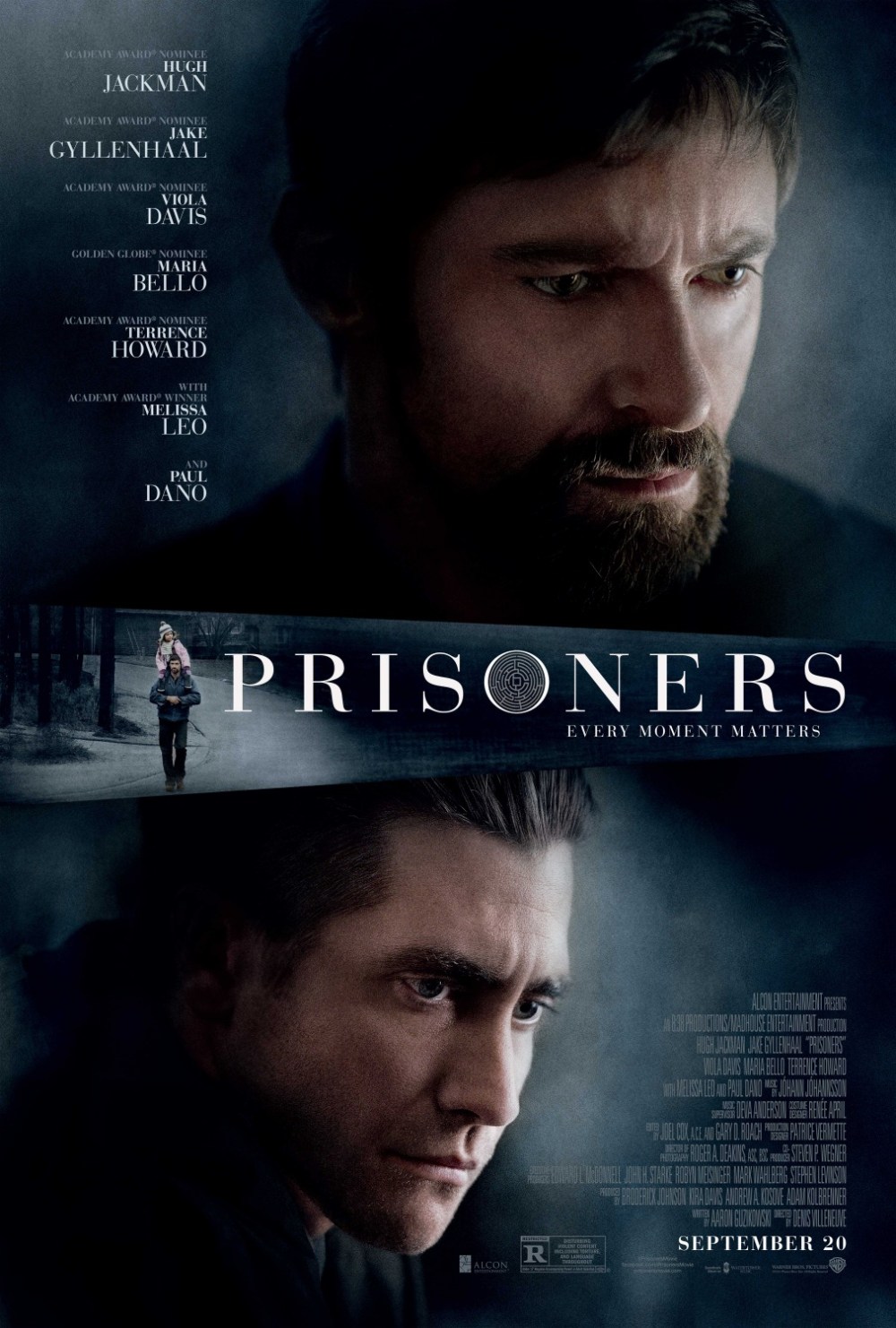
Prisoners movie poster

From the trailers, “Prisoners” looked like just another average child abduction movie with a strong cast which would hopefully make it seem slightly above average. I have seen so many movies like this to where they now seem like the same one no matter who is starring or directing. Boy, was I wrong about this one! “Prisoners” is a heavy-duty character driven drama which generates an agonizing amount of tension and never loses any of it throughout its two and a half hour running time. In a time when many movies are in serious need of an editing job, this one manages to make every single minute count.

It’s a snowy day when Keller Dover (Hugh Jackman) takes his family over to his friend Franklin Birch’s (Terrence Howard) house to celebrate Thanksgiving with a big feast. Both men have loving wives, two teenaged children who are unsurprisingly not all that interested in hanging out with their parents, and they have two beautiful six-year old daughters named Anna and Joy who can never seem to sit still for a single moment. But when Anna goes back to her home with Joy to fetch her safety whistle, both of them disappear without a trace and their families begin a desperate search to find them before it is too late.

The only suspect in the case is Alex Jones (Paul Dano), a man with the IQ of a 10-year old, whose RV Anna and Joy were playing around earlier in the day. When the police and Detective Loki (Jake Gyllenhaal) are not able to get any answers from Alex as to where the girls are, they are forced to let him go for lack of evidence. Keller, however, becomes convinced Alex does know where they are at, and he becomes infinitely, and frighteningly, determined to make Alex give him the answer he wants. Suffice to say, some moral boundaries are definitely crossed.

It should be no surprise Hugh Jackman gives a seriously intense performance here as a father obsessed with finding his child as we have gotten used to him playing the Wolverine in all those “X-Men” movies. But as furious as he got in “Logan” this past year, Jackman seems even more frightening here as he loses his moral perspective while desperately searching for answers. Just watch him as he bashes a bathroom sink with a hammer.

Jake Gyllenhaal also gives one of his best performances ever as Detective Loki, a man equally obsessed with getting the girls back even as he struggles with an uneasiness which will not let him be. What I especially like about Gyllenhaal here is how he implies certain things about this character without ever having to spell it out for the audience. Loki is a man with a troubled past who has his own demons to fight, and while we don’t always know what those demons are, this allows Gyllenhaal to add another layer to his character which only increases Loki’s complexity.

Terrence Howard, who gave a terrific performance in “Dead Man Down,” gives another one here as the other desperate father. It’s interesting to see him go from playing an intimidating crime lord to a helpless dad who finds himself in a morally dubious position when he is presented with a way of getting the answers, but he becomes increasingly unnerved at the way Keller is trying to obtain them. Howard is great at showing how helplessly conflicted his character is, and he makes you feel his inescapable pain and confusion as he is forced to go down a path he becomes convinced is the wrong one to go down.

Kudos also goes out to Maria Bello and Viola Davis who play the wives to Jackman and Howard. Bello portrays Grace Dover, and she has an especially difficult to watch scene in which she completely falls apart emotionally as she faces the worst nightmare no parent ever wants to face. As for Davis, she once again proves how powerful she can be in the smallest of roles. It should also be noted how each of these actors is a parent in real life, and I cannot even begin to think of what emotional depths they went to give such authentic portrayals.

Paul Dano continues to astonish in each film he appears in, and his performance as Alex Jones is one of his most enigmatic to date. Dano could have just fallen into the trap of making an Alex a caricature or the clichéd mentally disabled character we have seen too many times, but he is much too good an actor to do that. We can never figure out if Alex is truly helpless or cleverly manipulative, and Dano keeps us guessing as to what the answer is for the majority of the movie.

“Prisoners” was directed by Denis Villeneuve, a Canadian writer and director who won the Genie Award (Canada’s equivalent of the Oscars) for Best Director three times for his films “Maelström,” “Polytechnique” and “Incendies,” the latter which earned an Academy Award nomination for Best Foreign Film. In recent years, he has given us the brilliant “Sicario” and “Arrival,” and it makes sense he is at the helm of the eagerly anticipated “Blade Runner 2049.” Like I said, I have seen many movies involving child abduction, but he succeeds in making this one of the most intense and agonizing ever made. The fact he is able to main such a strong level of suspense and tension for over two hours is very impressive, and “Prisoners” would make for a great, albeit an emotionally exhausting, double feature with Ben Affleck’s “Gone Baby Gone.”

The screenplay by Aaron Guzikowski seems well thought out and has characters who don’t seem like anything the least bit stereotypical. Looking back, this could have been one of those scripts where the writer would come out saying, “Look how clever I am! I kept you guessing, didn’t I?” Guzikowski, however, is not out to make us feel like an idiot and instead gives us a fairly realistic scenario of just how harrowing a kidnapping situation can get.

The filmmakers have also employed the brilliant cinematographer Roger Deakins, who should have gotten the Oscar for “Skyfall,” and he makes the snowy climate these characters inhabit all the more vividly freezing. Even as the setting gets bleaker, Deakins still manages to find a haunting beauty in everything going on.

Child abduction movies can be very difficult to pull off because it is easy to fall into the realm of exploitation. It’s a credit to the filmmakers and actors that “Prisoners” never falls into this trap as it instead focuses on how frayed and unraveled emotions can get when parents have no idea where their children are. This is definitely not a film for new parents or those with small children to watch as I’m sure it will make them seriously uncomfortable. But for those who like their movie going experiences to be infinitely intense, “Prisoners” is definitely worth checking out. It was not at all what I expected it to be, and that’s a good thing.

* * * ½ out of * * * *

‘It’ Proves To Be one of the Best Stephen King Movies in a Long Time

It teaser poster

It” isn’t just one of my favorite Stephen King novels, it’s also one of my favorite books ever. On one hand, it is a terrifying tale of a malevolent force who takes the form of a clown and feeds on the fearful children living in Derry, Maine. On the other, it is a thoughtful and deeply felt examination of kids who are forced to endure a tougher childhood than anyone ever should. I read King’s massive novel (1,138 pages) back when I was a teenager, and it made me realize it was okay to be different than others. Looking back, it also reminded me of a line of dialogue from one of my all-time favorite movies, “Pump Up the Volume:”

“High school is the bottom. Being a teenager sucks, but that’s the point. Surviving it is the whole point.”

For those who have read this novel, you can see how it is more about the kids than it is about Pennywise the Dancing (not to mention incredibly vicious) clown. Thank goodness director Andy Muschietti realized this when he came on to direct the long-awaited film version of “It.” While Muschietti delivers the requisite thrills and chills a horror film like this one demands, he keeps a very observant eye on the kids and the conflicts they are forced to endure, and I don’t just mean Pennywise.

The film focuses on the book’s first half when the members of “The Losers’ Club” were suffering the slings and arrows of daily life at school. But while King set this half in the 1950’s, Muschietti moves things up to the 1980’s, a time of Ronald Reagan, calculator watches, New Kids on the Block, and movies like “Gremlins” and “Beetlejuice” which, like “It,” were released by Warner Brothers. This was a decade defined by greed, but for these kids, it was a time of innocence which would be destroyed for them far too quickly.

“It” was previously made into a wonderfully entertaining television miniseries by Tommy Lee Wallace, but Muschietti lets you know right from the start how the censorship of American television was not going to apply here. Little Georgie Denbrough suffers a most terrible fate when Pennywise bites his arm off and drags his body into the sewer, and even if you know this event is coming, it is still chilling to witness as this is the kind of thing movies typically avoid showing. From there, I couldn’t help but remain in a state of heightened anxiety as while I knew what was going to happen, the safety of network television was not around to reassure me about the horrors I was going to witness.

The misery and sufferings of The Losers’ Club feel much more unnerving on the silver screen than on television. It’s especially galling to see poor Beverly Marsh get wet garbage poured all over her in the bathroom as she has become the victim of unsubstantiated rumors that she is promiscuous. But judging from the moment she when she puts her backpack over her head for protection, she has been dealing with this stigma for a very long time. Or how about Ben Hanscom, the overweight new kid in town who has zero signatures in his yearbook, one of the saddest sights the audience is forced to take in here. While these kids’ sufferings don’t feel as raw as what Sissy Spacek endured in “Carrie,” it’s still easy to feel for these kids who have been cast out of what is perceived to be the realm of normal.

Heck, even their parents prove to be an emotionally distant, and if they are not, they instead prove to be ridiculously overprotective. Beverly’s father seems to care for her a little too much, and this care seems to imply crimes more insidious than our imaginations can ever handle. Eddie Kaspbrak’s mother is determined to keep him safe from any and every germ planet Earth has to offer, and at times she threatens to be as scary as Pennywise due her raising her son as if he is the reincarnation of Howard Hughes. As for William Denbrough, things will never be the same between him and his parents following the death of his brother Georgie.

There’s some passage in the Bible which says God only gives you what you can handle, but the members of The Losers’ Club have far more than anyone should ever be made to handle, and this is made clear before Pennywise begins to disrupt their unfairly depressing lives. As a result, they need each other to get from one day to the next, and the strength they have together allows them to be a formidable force against Pennywise. Muschietti’s attention to these kids’ struggles makes this film very effective as we come to care for them deeply, and this makes their stand against this homicidal clown all the more involving.

Speaking of Pennywise, Bill Skarsgard makes him into the freakiest clown and scarier than any clown Rod Zombie could come up with. Whereas Tim Curry’s Pennywise was at first approachable and then murderous, Skarsgard’s is vicious right from the get go whether the kids realize it or not. Even before those set of jaws come out, Skarsgard more than reminds the audience of how clowns have always been creepy, and he makes Pennywise into the clown who gleefully inhabits all our nightmares.

So where do I rank this particular Stephen King adaptation among the many already unleashed on the public? Hard to say. It is easily one of the best King adaptations in a while, but it is not as scary as “The Shining” or “Carrie.” This is not a motion picture filled with jump scares every 5 minutes as Muschietti is more in creating something which is infinitely chilling and suspenseful. What results is a highly entertaining movie which never feels like a simple remake of the miniseries. He is also blessed with a terrific cast of actors who are not afraid to embrace the depressing natures of their characters. I just hope none of them have to deal with this shit in real life.

I’m also thrilled no one tried to fit the whole book into one movie. There’s no way you could have done that without messing everything up. There was already talk of a sequel long before this movie even opened, and this is a sequel I am more eager to see than any “Star Wars” movie which has yet to be released. It’ll be interesting to see how The Losers’ Club will transition from childhood to adulthood as they attempt to put the past behind them. But as Peter Gabriel once sang, “Nothing fades as fast the future. Nothing clings like the past.”

* * * ½ out of * * * *