Richard Gere on Making Us Root for the Bad Guy in ‘Arbitrage’

Photography By Myles Aronowitz

WRITER’S NOTE: This article was originally written in 2012.

Don’t get me wrong, Richard Gere has played many likable characters in movies like “Pretty Woman” and “An Officer and a Gentleman,” but it’s when he plays despicable ones that he truly excels as an actor. The latest example of this is his brilliant performance as Robert Miller in “Arbitrage,” the movie which marks the directorial debut of writer Nicholas Jarecki. Robert is a hedge fund magnate who is desperately trying to cover up his instances of fraud, cheats on his wife, and willfully deceives his children. On paper this character is a jerk, but the beauty of Gere’s performance is how he keeps us rooting for him regardless of this fact.

So, how does Gere manage to make such an unlikable person so fascinating and relatable on screen? Audie Cornish of NPR’s “All Things Considered” asked him this question as she couldn’t get past the fact that Robert Miller is a “monster” and yet still wanted him to get away with what he did.

“Isn’t that funny? I mean, that’s one of the uniform things and kind of mystifying things,” Gere said. “And the comments I’ve gotten back, even from very close friends, that they’re very angry with me, that they care about this guy and want him to get out of trouble, although they’re well aware the guy is a jerk, as you say, and makes some very bad decisions in his life and has a kind of a mindset that you go, huh?”

“But look, that’s my job, is to make characters human, to make them knowable on some level,” Gere continued. “I think it had root in when you spend time with even supposed monsters, there’s a human being there. And in storytelling, you’ve got to find that human being.”

This humanity certainly shows up in the scene between Robert and his daughter, Brooke (played by Brit Marling), where he has to break her heart by telling her the truth of his fraudulent activities. What he is doing to her is terrible, and yet you still feel for him as he tries to explain how his business really works. Regardless of all the bad things Robert has done, there’s no doubt as to just how much he loves his family.

“That was a scene we (Gere and Marling) worked on a lot, and in the end, it came out of an improvisation actually, that she’s not my partner, that she works for me,” Gere said. “And I found myself almost in an animal growl saying everyone works for me. And I think that was the truest moment with this character, that that’s his mentality – horrifying but true. I mean, he’s naked in that moment.”

Another great scene in “Arbitrage” has Robert to do the right thing only to see him look for another way out. Being the reckless gambler that Robert is, he always seems to find another angle which can keep him up and running for yet another day. Gere remarked about how his sister, who is a psychiatrist, found this moment in the film especially fascinating.

“That mentality of I’m always going to find a way out, always find a way out. I think it’s that kind of a gambler’s thing,” Gere said. “Well, I’m down to my last penny, but I’m going to turn that penny into two pennies, and I’m going to get out of this. It’s a really interesting kind of person that never truly gives in. Now, if you’d imagine they were in the service of something extraordinary on the planet, what they could achieve, I guess the hope for me is, is that the people who are so effective in the world and can do this stuff, which is just ultimately pretty silly, just the accumulation of wealth, if they were putting their minds and their talents and their skill towards being of service and responsible on this planet, man, this will be a garden.”

Whether or not he is playing good or bad guys, Richard Gere always comes across in his performances as someone we want to support. Regardless of whether he plays a self-serving defense attorney in “Primal Fear” or “Chicago” or portraying an infinitely corrupt cop in “Internal Affairs,” there is something about this actor which is always alluring. Just don’t expect him to explain what it is because even he’s not sure:

“I don’t know. I don’t know what that is. I suppose it’s some peculiar thing I’m able to do. I don’t know. It’s certainly nothing I work at or particularly aware of in the process.”

Perhaps it’s best he does not find out because we want to see him giving more great performances like this one in the near future.

SOURCE:

Audie Cornish, “Richard Gere on Playing a Jerk You Want to Root For,” All Things Considered, NPR, September 14, 2012.

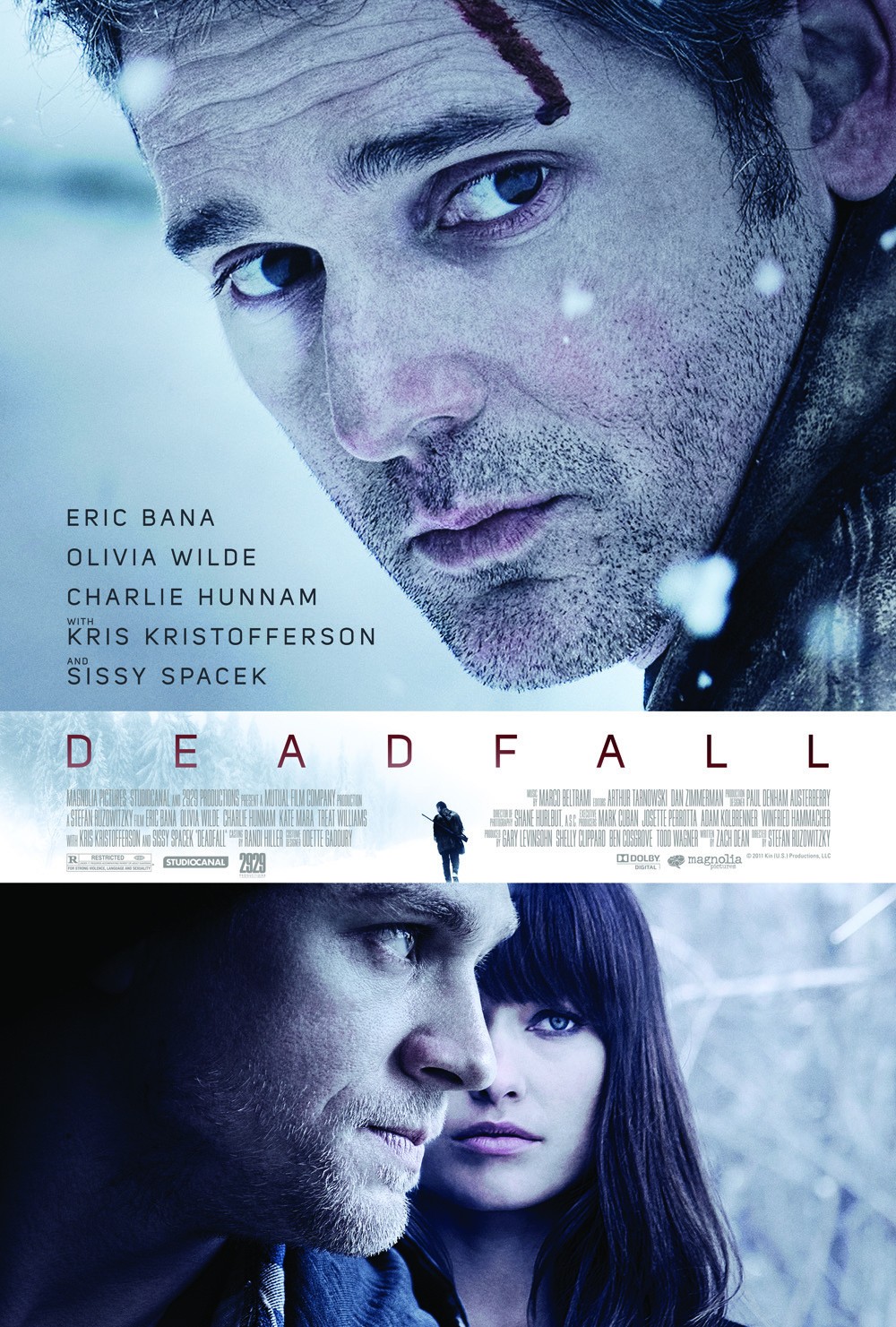
Eric Bana on Portraying Such a Charming Villain in ‘Deadfall’

WRITER’S NOTE: This article was originally written in 2012.

Watching Eric Bana as Addison in Stefan Ruzowitzky’s “Deadfall” will remind many of his breakthrough performance as Chopper Read in “Chopper.” Both films have him playing characters who are charming yet fearsome, and his unpredictability as an actor had us on the edge of our seats throughout. But hearing Bana talk about how he prepared to play Addison is a reminder to all actors on how to approach a role like this; the character may be a bad guy, but he’s still a human being with wants and needs like anybody else. It’s not just about acting evil all the time.

I was lucky enough to attend the “Deadfall” press conference at the Four Seasons Hotel in Beverly Hills, and Bana said he really liked Zach Dean’s screenplay and was “immediately compelled” by Addison. Bana described the character as being “quite hilarious actually,” and this was one of the main reasons he wanted to play him. It was interesting to hear him say that because funny is not an easy adjective to give to a character like Addison who can react violently without little or any notice. Bana, however, started out as a stand-up comedian and saw the opportunity to bring some darkly comedic touches to this role.

“I don’t think there was anything deliberately funny in Addison, but I think the situations that all the characters find themselves in and some of the things he does are inadvertently very funny,” Bana said. “It wasn’t like playing for laughs but I knew the audience probably would laugh at some of the ridiculous nature of what we’re all forced to do.”

Bana also went on to say he thought Addison was “morally straight” and that he really did not see the character as being a bad guy. Now while the crimes he commits in “Deadfall” certainly tell us otherwise, I really liked Bana’s approach to this role. It reminded me of a behind the scenes special on “Die Hard” where Alan Rickman talked about how he saw his character of Hans Gruber:

“As far as I’m concerned, I am not playing ‘the villain.’ I’m just playing somebody who wants certain things in life, has made certain choices and goes after them.”

The same can be said about Bana in the way he portrayed Addison.

“He had a strong sense of purpose in what he was doing and that is what makes those characters so scary, knowing you can’t really negotiate with him,” Bana said of Addison. “In his mind everything he’s doing is completely and morally correct and there’s a real reason for it. It’s not the actor’s place to judge, but I’m more than happy to be morally corrupt for a few months for the benefit of my career.”

This thought process was even more on display when Bana was interviewed by James Rocchi of MSN Entertainment. Rocchi talked about “Deadfall’s” first scene in which Addison’s car crashes and ends up shooting a state trooper in the process, and he described Addison as being spontaneous in his actions as this guy is thinking on his feet and improvising constantly. Bana explained that when the actor commits fully to their character’s actions, they should all come out naturally.

“I don’t like to think too much about what my physicality’s going to be here. I’d rather immerse myself in the character’s brain and allow my body to react accordingly,” Bana told Rocchi. “But that instance in the beginning of the film kind of sets in motion the rest of the stakes really for Liza (Addison’s sister who is played by Olivia Wilde) and Addison from that point on in that it just keeps getting worse and worse and worse. But you’re right. I mean he had no intention of shooting anybody. They got away from the casino, they got the cash, and all was going really well until that freaking deer popped out into the middle of the road and it all changed.”

Throughout “Deadfall,” Addison ends up engaging a couple of nasty fights, some of which are with Jay who is played by Charlie Hunnam (“Sons of Anarchy”). We keep hearing actors say how they did their own stunts in this or that movie, but we can never be too sure as the insurance people are usually dead set against that ever happening. But I believed Bana when he said that he did his own stunts in “Deadfall” because even he couldn’t hide the toll it took on his body.

“My neck was ruined,” Bana told Ariel Kashanchi of Screen Picks. “Charlie Hunnam beat the shit out of me. I don’t think I landed a punch. It was just like bang, bang. I remember after about five takes I was stiff all over and thinking ‘how much more can my neck take.’ I’m used to throwing punches and now I just have to just sort of take it. But it was kind of fun.”

“Deadfall” has received mixed reviews, but there is no denying Bana gives a riveting performance as Addison. Playing a charming bad guy is nothing new for this Australian actor, and he is still great at it. In a year of movies filled with truly intimidating antagonists, Bana’s performance deserves to be held up alongside the best of the bunch.

SOURCES:

Ben Kenber, “Interview with the Cast and Director of ‘Deadfall,’” We Got This Covered, December 7, 2012.

Alan Rickman: Hans Gruber is not a villain,” YouTube

James Rocchi, “Interview: Eric Bana of ‘Deadfall,’” MSN Entertainment, December 7, 2012.

Ariel Kashanchi, “Interview: Eric Bana on ‘Deadfall,'” Screen Picks, December 6, 2012.

Javier Bardem on Portraying an Unforgettable Bond Villain in ‘Skyfall’

WRITER’S NOTE: This article was originally written back in 2012.

As Raoul Silva, Javier Bardem gives us one of the most unforgettable and nastiest of Bond villains in the 007 movie “Skyfall.” But unlike other Bond villains who are bent on world domination, Silva is far more interested in seeking revenge on one of this series’ regular characters. It should be no surprise at how Bardem can play such an unnerving character to a great extent as he won an Oscar for playing Anton Chigurh in “No Country for Old Men,” but it’s the actor’s attention to character which makes his performance as Silva especially riveting.

For Bardem, it doesn’t matter whether the characters he plays are good or bad. What matters to him is if he is able to portray a character as a full-blooded human being with flaws and all.

“As long as there’s a human being behind the character, with some kind of conflict, as we all have, then it’s interesting to play anyone, whether it’s a villain, good guy, bald, long hair, tall or short,” says Bardem.

“Here there is a broken person,” Bardem continued. “What I like the most is there is a clear motive to kill. We understand he is very human and this is powerful. I was attracted to the villain because I thought he was a nice guy. I could see it in his eyes.”

In talking with “Skyfall’s” director, Sam Mendes, Bardem was told the key word regarding Silva was this one, uncomfortableness. This is a character who lives to make the skins of his opponents’ crawl, and Bardem portrays this ever so brilliantly here.

“I don’t want him to be someone that threatens somebody that’s threatening to someone. It’s about creating a very uncomfortable situation every time he talks to somebody else,” Bardem said.

There has also been a lot of talk regarding Silva’s sexuality as many wonder if this is the Bond’s franchise first homosexual villain. In a perfect world, this question would be completely irrelevant as good and bad comes in all forms, but many still cannot help but be curious. Bardem ended up using Silva’s ambiguity to his advantage.

“The character’s sexuality was part of the game,” Bardem said. “Sexuality was there as something important to create the behavior of being uncomfortable. From uncomfortableness, we brought the sense of humor.”

Bardem went on to describe Silva as being “really confident about himself in a weird way,” and that this character thinks of himself as “the most beautiful man in the world.” The actor also explained that while he wanted to make this particular Bond villain unique, he was also fully aware of how these movies were made with the fans in mind.

“You have to work on two different levels,” Bardem said. “One is to make him as real as possible. And the other is to fly a little bit higher than the rest of the characters. You are allowed to do that. Because that is what people are expecting to see when you play a Bond villain, especially since the films are turning 50 years old.”

Mendes himself went on to talk about how playing a Bond villain allows actors to create unusual kinds of characters.

“Doing a Bond movie affords you that kind of flamboyance that you can’t get in purely naturalistic movies,” said Mendes. “As an actor, you get an opportunity to do things that, frankly, are hovering a foot above the ground. They’re not rooted in reality. Javier always has a slight theatricality about him, which we just tweaked in this movie.”

The James Bond movie franchise is now fifty years old, but “Skyfall” makes it feel like it has been reborn. A lot of this is thanks to Mendes and the actors, and it says a lot about Javier Bardem and of how he has created one of the most memorable villains this series has ever seen. Raoul Silva is far from your usual one-dimensional bad guy and who is instead one who has been wronged and is actually justified in seeking revenge against those who abandoned him. As a result, Silva has more layers to him than your usual Bond villain, and Bardem more than rises to the challenge in making him one of the more complex bad guys you will ever see in this or any other motion picture.

SOURCES:

Bryan Alexander, “Javier Bardem gets in Bond’s head as ‘Skyfall’ villain,” USA Today, November 7, 2012.

Alexandra Gratereaux, “Javier Bardem on Being James Bond ‘Skyfall’ Villain: He’s a Broken Person,” Fox News Latino, November 8, 2012.

Jake Coyle, “Javier Bardem in ‘Skyfall’: James Bond Villain for The Ages?” The Huffington Post, October 23, 2012.

Former ‘Dr. Who’ Actor David Tennant on Portraying a Psychopath in ‘Bad Samaritan’

Bad Samaritan David Tennant

We know him best for playing the Tenth Doctor on the never-ending BBC television series “Dr. Who,” and for playing the sociopathic Kilgrave on Netflix’s “Jessica Jones.” Now in “Bad Samaritan,” David Tennant plays Cale Erendreich, a far more psychotic character than any he has played in recent years. When we first lay eyes on Cale, he is incredibly rude to a pair of valets at a local Italian restaurant. When he hands the keys to his Maserati over to them, he makes it clear his car is not be messed with or smoked in, and this leads the valets to invade his house and rob him, but they soon discover Cale has a woman chained up in his office. From there, we learn just how screwed up on an individual Cale is as this particular victim clearly is not his first, and he even tells her at one point, “You have earned the next stage in your evolution.”

Watching Tennant in “Bad Samaritan” reminded me of Ben Kingsley’s performance as Don Logan in “Sexy Beast.” As Don Logan, Kingsley gave us a character who truly was the anti-Gandhi and, in the process, he gave us one of the greatest and most fearsome villains the world of cinema has ever seen. In an interview, Kingsley talked about how he played the wound of the character as this was the thing which gave Don Logan the most ferocity. Hearing him say this remains fascinating to me to this very day as it gave me a stronger idea of how to play a villain in a movie or a play.

When Tennant appeared at the “Bad Samaritan” press day at the London Hotel in West Hollywood, I got to ask him what he felt Cale’s deepest wound was. His answer showed just how much research he did on this character and of how complex Cale is.

David Tennant: Well Cale certainly doesn’t know. A lack of self-awareness is probably right up there. Obviously, there is a lot of damage in his background and a lot of it, I’m sure, goes back to his parents and upbringing. Doesn’t it always? I think he’s a broken human being who doesn’t realize he is. He’s fatally damaged and believes he’s the only one who isn’t, so I suppose it’s that. It’s the gap between where he really sits in society and where he believes he sits in society I guess.

It is never enough to play a villainous character who revels in being so evil as it does nothing but make such an antagonist so one-dimensional and infinitely boring. Thank goodness we have actors like Tennant who are eager to explore the dark side of humanity to where they can give audiences a villain who is never easily forgotten.

Be sure to check out “Bad Samaritan” which is now playing in theaters everywhere.
BS_KA_r5v1 JPEG

Click here to check out my interview with Dean Devlin, the director of “Bad Samaritan.”