No, I Haven’t Seen It Until Now: ‘Dracula’ (1931)
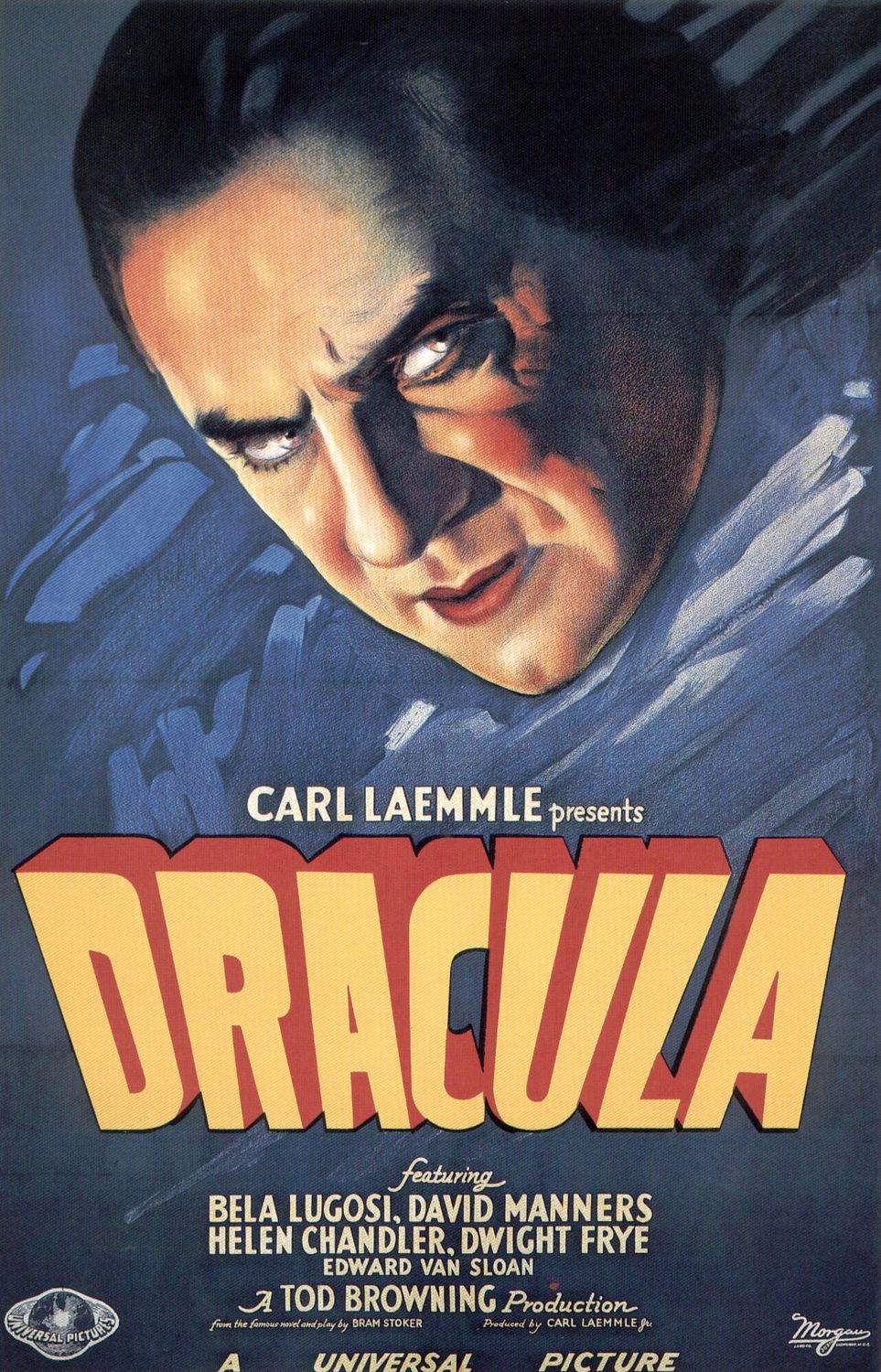
Dracula 1931 poster

While at a party celebrating the DVD, Blu-ray and Digital release of “Ouija,” I was one of several people who won the DVD box set of “Universal Classic Monsters,” a complete 30-film collection of all the movies from Universal Pictures’ Monster Universe which played in theaters from 1931 to 1956. These movies included such iconic characters as Frankenstein, The Wolf Man, The Mummy, The Invisible Man, Phantom of the Opera, and Creature from the Black Lagoon. With the occasion of Halloween rapidly approaching, I decided to sit down and watch the 1931 English-language version of “Dracula.” While I am familiar about Count Dracula and how he says “I want to suck your blood” on what seems like a regular basis, this marks the first time I have taken the time to sit down and watch this particular movie.

Having grown in a time of horror movies like “Jaws,” Halloween,” “Friday the 13th,” and “A Nightmare on Elm Street,” I wondered how this would affect my enjoyment of this horror classic which was first released back in 1931. Watching “Dracula” today made me wonder if I would react to it in disdain, and I came out of it wondering how I would have reacted to it were I alive and watched it when it first came out. Nevertheless, I can see why this version of “Dracula” remains such an unforgettable cinematic classic. While certain aspects of its production seem cheap by today’s standards (we all know it took a fishing pole to make the bat fly), time has been kinder to this version than I expected.

“Dracula” begins with a group of people riding in a stagecoach to a local village, and among them is Renfield (Dwight Frye), a solicitor on his way to Transylvania to visit Count Dracula for business purposes. The mention of Dracula’s name, however, has everyone reacting with wide-eyed expressions (and we are talking really wide) as his reputation for sucking blood is never in doubt, and the townspeople beg Renfield to reconsider going to his residence. But unlike some stupid kid in an 80’s horror flick eager to tempt fate because he thinks he is invincible, Renfield has actual business to do with Dracula, so it’s understandable how the man will not be deterred from meeting with the man everyone rightfully believes is a vampire. Of course, by the time Renfield discovers this, it is too late.

The first thing I want to talk about in regards to this particular version of “Dracula” is the man who plays Bram Stoker’s iconic character, Bela Lugosi. Before watching this movie, I was more familiar with what happened to Lugosi’s career after he played Dracula than what came before it. A victim of typecasting, he would later descend into oblivion to where he appeared in Ed Wood’s infamous films, “Plan 9 From Outer Space” being the most memorable, and people in Hollywood had long since assumed he had died. Lugosi would be memorialized years later by the late Martin Landau who played him in Tim Burton’s delightful and thoughtful biopic “Ed Wood.”

But seeing him here made me realized just how perfectly cast Lugosi was why he remained forever typecast as a result. From his first appearance, Lugosi is an insidiously frightening presence as all he has to do is stare in the distance to give you an idea of how threatening he can be if you dare cross him. When he claims his first onscreen victim, he simply waves his arm to let his three undead wives know this one is his to turn. When it comes to movies, this is an example of showing power as the character doesn’t need words to show how commanding they are.

Lugosi is wonderfully mesmerizing throughout “Dracula” as he just needs to give off a look with his eyes to let you know what is going on in his obsessive mind. Every physical step he takes is tinged with a sheer menace, and the actor also benefits from the wonderful cinematography by Karl Freund, whom many consider an uncredited director on this film. When he tells a character to “come here,” the power in his voice more than suggests you should take his order very, very seriously as he doesn’t need any additional dialogue from David Mamet or Aaron Sorkin.

It should be noted how when this film was made, Hollywood had just emerged from the era of silent movies.  As a result, the acting is more emotive than the kind we often see in movies today. The transition from silent films to talkies was not without its bumps, so the actors we see here are still used to a process of trying to get things across to an audience by acting out emotions instead of inhabiting their characters. Still, I did get a kick out of Dwight Frye’s performance as Renfield as he is clearly having a blast playing an infinitely possessed human being whose suffering, caused by a vampire’s bite, comes close to equaling Nicolas Cage’s present-day theatrics.

“Dracula” was directed by Tod Browning, a filmmaker who these days is better known for his 1932 cult classic, “Freaks,” one of the movies which is impossible to erase from the mind once you have seen it. I really liked how he used silence to the film’s advantage instead of giving us a music score. The tension is still taut as he follows Dracula’s every step, and this is a vampire who moves ever so gracefully because he doesn’t have to move quickly for anybody.

There was a score composed for the film by Philip Glass in 1998 and performed by Kronos Quartet, and you can tell it’s a Philip Glass score right from the start. It suits “Dracula” well, but I enjoyed the film more without it.

If there is anything disappointing for me about “Dracula,” it was the ending. Now this is largely the result of me being spoiled by countless slasher movies from the 80’s, but I think things could have been handled in a far more spectacular fashion than just driving a stake into a character’s heart and the happy couple running off together. It seems such like am abrupt ending to a classic motion picture, but then again, I am watching it close to a hundred years after its release.

There are many other versions of “Dracula” I need to watch now as I am eager to see how this character has evolved cinematically from one generation to the next. Browning’s 1931 version is a good one to start with, and lord knows there are also many other classic horror movies I need to watch. In order to better understand and appreciate the present, we at times have to go back to the past to discover how things got started.
* * * ½ out of * * * *

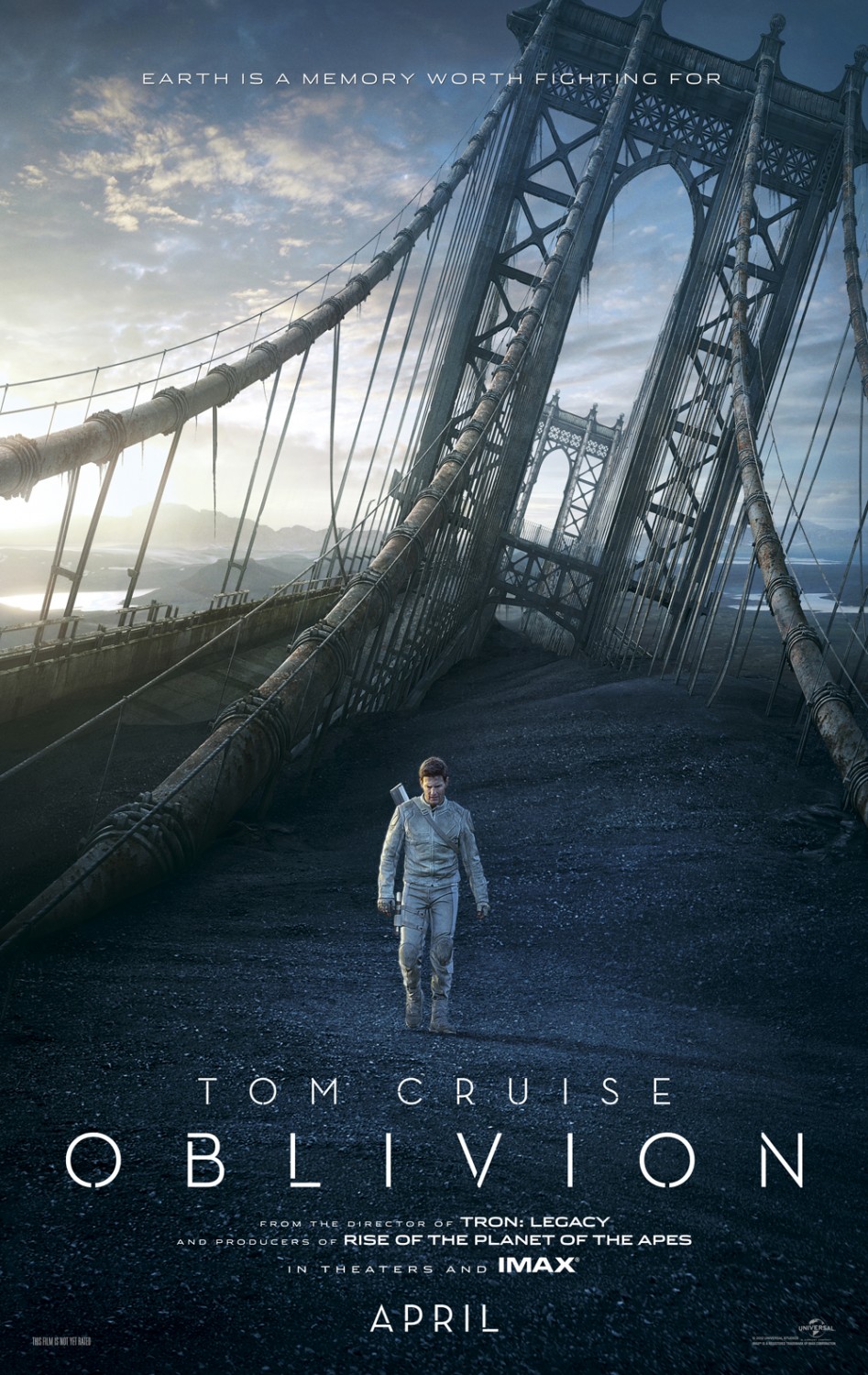
‘Oblivion’ is Familiar, and Yet Visually Unique

Oblivion movie poster

On one hand, I feel like I should be punishing “Oblivion” for its lack of originality as the story will easily remind viewers of other science fiction movies like “Total Recall” (the original, not the remake), “Moon,” “The Matrix” and “Logan’s Run.” On the other, I found Joseph Kosinski’s film to be a compelling piece of entertainment, and I liked how he took various elements from those sci-fi movies and put them together to create something which feels more original than I expected it to. The look of “Oblivion” is incredible, and the film benefits from a very strong cast, great visuals, and a truly awesome music score.

Like many science fiction movies, this one takes place in a distant future. The year is 2077, and sixty years earlier an alien invasion destroyed the Moon, which in turn decimated Earth and left it in shambles. Jack Harper (Tom Cruise) is one of the last human beings left, and he and his communications officer Victoria Olsen (Andrea Riseborough) spend their days helping to harvest what’s left of the planet’s natural resources and repairing drones which help protect it from further alien invasions. They are due to leave Earth in two weeks so they can rejoin the rest of humanity which has long since relocated to another planet. Of course, we all know what happens when people say they only have a few weeks before they leave Earth; they don’t.

Talking about “Oblivion” from here gets complicated because I don’t want to give away the story’s twists and turns and have it seem like a plot summary stolen from Wikipedia, but I’ll do my best. One day, a spaceship crashes on Earth which carries a number of capsules with astronauts sleeping inside them. One survivor is astronaut Julia Rusakova (Olga Kurylenko) who, once awoken from her deep sleep, she makes Jack see he has a past which has long since been denied to him.

This is all I’m going to say about the plot as telling you more would be spoiling the fun. Granted, I have seen many science fiction movies, so when the plots twists and turns came here, I wasn’t surprised. At the same, I was very much enthralled by what was going on. Even if I had a pretty good idea of what was coming next, I was still glued to my seat and eager to see what direction the film was going to head in next.

Much of the success with “Oblivion” comes from its distinct visuals which are very striking, and a lot of the credit for this goes not just to Kosinski but also his director of photography Claudio Miranda. I’ve lost count of how many post-apocalyptic movies which show Earth obliterated beyond all repair to where everything is dark, grey and gloomy. Many famous landmarks like the Empire State Building are shown to be either barely standing or covered up with a lot of dirt in “Oblivion,” but this is the first movie of its kind I can remember which takes place mostly in the daylight. While Earth isn’t in one piece in “Oblivion,” there is still a unique beauty to how it looks here. Those snowy mountains still look worth skiing on, and I found it rather comforting to see plants, grass and trees still growing even after an alien invasion, and this gives the movie an uplifting feel.

The other thing I really liked about “Oblivion” was the architecture of the buildings and the design of the spaceships. The Sky Tower which Jack and Victoria live in is beautiful, and I would love to live in it. This tower looks like the world’s most unique condominium, and I’ve never seen anything quite like it before. Also, it has the coolest swimming pool ever, and it makes me more excited about swimming pools than I have been in ages. Plus, I doubt I will see a cooler looking spaceship than the Bubbleship Cruise flies all over the place.

This is only Kosinski’s second movie as a director, but here he seems to have found his filmmaking voice this time around. His first film was “Tron: Legacy,” and like many eagerly awaited science fiction events, it was greeted with an obscene amount of hype and a lot of fan indifference. With “Oblivion,” however, he is not restricted to staying within certain boundaries dictated by a previous film or a long-running franchise, and he also has a stronger story (based on the graphic novel of the same name by him and Arvid Nelson) to work with as well.

Kosinski also benefits greatly from having M83 and Joseph Trapanese as his music composers here. Their score to “Oblivion” is much like what Daft Punk’s was to “Tron: Legacy:” a beautiful combination of electronic and orchestral music which sounds far more original than any other film score I have listened to recently, and it adds so much to the striking visuals of “Oblivion” as well as the emotion inherent in the story.

Much has been said about Cruise as a person these past few years, but I’m still happy to defend him as an actor. His work as Jack Harper is actually quite understated, and he never descends into the state of “grinning like an idiot every fifteen minutes” (as Dougray Scott described him in “Mission: Impossible II”) for too long. That grin does come along from time to time, but not in a way which ends up annoying half the audience. Along with his strong performance in “Jack Reacher,” his work in “Oblivion” proves he’s still a better actor than people tend to give him credit for.

Kurylenko, since her performance as a Bond woman in “Quantum of Solace,” has proven to be far more than a pretty face. This should have been made clear after we saw her in Terrence Malick’s “To the Wonder,” but there’s no mistaking her talent in “Oblivion” as she creates a complex portrait of someone who knows more than she lets on. I also very much enjoyed Riseborough’s performance as Victoria which was sweet and yet somewhat devious, and I look forward to seeing more of her work in the future.

Then there’s the great Melissa Leo who plays Sally, the mission control commander with a thick accent who oversees Jack and Victoria’s work from afar. Just like in “Flight,” she gives her character a sweet voice tinged with serious intentions which leaves the viewers on edge. As nice as she sounds, you can tell there’s some evil plot lurking behind her eyes. Some may see the role of Sally as a small one, but in Leo’s hands, no role can ever seem small when she plays it.

Oh yeah, Morgan Freeman shows up as well as Malcolm Beech. To say more about his character would further give away certain plot points, but I can confirm he gives the usual strong performance we always come to expect from him. Also, it was really cool to see him shooting a heavy-duty pair of fifty caliber machine guns as I’m not sure I have seen him do so before.

“Oblivion” may seem overly derivative, but then again, most movies released these days are far from original. What matters to me is that a filmmaker can take elements from the movies which inspired him/her and make them their own, and Kosinski has succeeded in doing so here. I very much enjoyed how “Oblivion” took me down the rabbit hole films often do, and I absolutely loved the visual look of it. It also benefits from a number of strong performances and a fantastic film score which sounds epic in a way other scores can only aspire to. When all is said and done, this film is quite a cinematic accomplishment.

If you can, see it in IMAX.

* * * ½ out of * * * *

The Stars of ‘Repo Man’ Drop By New Beverly Cinema

Repo Man poster

More than 30 years after its release, Alex Cox’s cult classic “Repo Man” still holds up with its truly authentic punk attitude and black humor. This was proven to be the case when a special screening of the movie was held at the New Beverly Cinema which brought out many fans eager to see some of the actors who starred in it. Among them was the great character actor Harry Dean Stanton who plays Bud, the Mr. Miyagi or Yoda to Emilio Estevez’s Otto. Also there was Tracey Walter who played the philosopher of mechanics, Miller, Olivia Barash who played Otto’s would-be girlfriend, Leila, and Del Zamora as Lagarto, one of the Rodriguez brothers.

“Repo Man” is so defiantly punk and proudly refuses to fit into the realm of regular mainstream entertainment. Never politically correct, it delves into a highly exaggerated, not to mention intense, depiction of the life of a repossession agent. Watching it makes you realize there are not enough movies like this these playing at the local multiplex. We need something to balance out all these watered-down blockbusters which comes to us like McDonald’s Happy Meals from the world of corporate cinema. This movie was actually intended to be a UCLA student film, but somehow it managed to become something much bigger.

The actors came out immediately after the end credits concluded, and they looked really happy to be at the New Beverly. Stanton, however, looked like he was three sheets to the wind and occasionally spoke about things not really related to “Repo Man.” At one point he even asked, “Can I smoke in here?” The other actors sympathetically told him they weren’t sure the theater would allow him to smoke. “We can’t smoke in here?” Stanton said, “That’s fucking nonsense!” The crowd couldn’t help but laugh as Stanton looked like he was perfectly prepared to keep smoking for the rest of his days.

Stanton said he couldn’t remember exactly how he got involved in “Repo Man,” and added this lack of memory up to being one of his “senile” moments. Walter, however, said he got his role after having previously worked with producer Michael Nesmith on “Timerider.” Barash said she was originally encouraged not to do the movie on the advice of her agents as they didn’t know the people involved in it very well, and they thought it might be dangerous for her to even go to the audition. But Barash was and still is a huge punk rock fan, and she got immediately sold on “Repo Man” upon seeing that bands like Black Flag were going to be involved. She even told us Iggy Pop, who composed the movie’s theme song, was her neighbor in the apartment building she lived in back then.

Zamora didn’t say exactly how he got cast, but he did remember how Cox got Nesmith involved as a producer. Simply put, Nesmith’s car had gotten repossessed, so he could relate to those car owners who were not paying up on what they bought. Zamora also talked about how Cox got both Stanton and Estevez involved in “Repo Man.” Basically, Cox caught up with Estevez and told him Stanton was already connected to the movie even though he wasn’t at that point, and then he went to Stanton and told him Estevez was connected to the film even though he wasn’t. Suffice to say, both actors did become involved.

Stanton then went on to say he and Cox didn’t always get along. During the shooting of “Repo Man,” Cox got so sick and tired of Stanton telling the actors what to do and threatened to fire him on the spot. To this Stanton replied, “Kiss my ass! Fire me so I can get paid!” Later on, Stanton asked Zamora to let Cox, whom Zamora is still in touch with, know he’s not mad at him anymore and that he would welcome him as an honored guest the next time he saw him.

“Repo Man” also had an abundance of generic food and drink items on display, and the audience couldn’t help but laugh at just how openly generic they all were. Product placements are usually reserved for big budget movies which are more likely to be bland and inoffensive. Zamora said they really had no money so they did talk with companies who were willing to do product placements in the movie. And then they read the script… What they ended up using was a generic brand from Ralphs Supermarket, one of the most dominant of supermarket chains in Southern California today. Of course, had “Repo Man” been made today, Ralphs might not have been as inclined to be involved.

In the end, Zamora and Walter said the art directors did the majority of the work and succeeded in creating the world of the movie which was very convincing despite the low budget. Then Stanton spoke up again and asked who Zamora played in “Repo Man,” and Zamora told him he played Lagarto, one of the Rodriguez brothers, to which Stanton replied, “How many brothers were there?”

 Speaking of the Rodriguez brothers, Stanton’s character of Bud has this intense confrontation where he wields a baseball bat which he threatens to bash the brothers with. Stanton said Cox gave him a rubber bat to use, but he wanted to work with a real one instead, and this led to a fight between the two of them. Zamora remembered this moment on set and said Stanton was under control, but Stanton, who was starting to remember more of the filming, made it bluntly clear he was really crazy and didn’t have any idea of what he was doing.

Walter was asked about his famous “shrimp monologue” scene, and he said it was originally meant to be just an audition piece. It was never intended to be in the film, but Walter fought for it. Indeed, it makes for one of the most memorable moments in “Repo Man” as his character of Miller describes the way he sees things:

“A lot o’ people don’t realize what’s really going on. They view life as a bunch o’ unconnected incidents ‘n things. They don’t realize that there’s this, like, lattice o’ coincidence that lays on top o’ everything. Give you an example; show you what I mean: suppose you’re thinkin’ about a plate o’ shrimp. Suddenly someone’ll say, like, plate, or shrimp, or plate o’ shrimp out of the blue, no explanation. No point in lookin’ for one, either. It’s all part of a cosmic unconsciousness.”

To this day, Walter says that every once in a while he runs into someone who utters one of his signature lines from “Repo Man” like, “John Wayne was a fag!” But of course, the real signature line of “Repo Man” belongs to Stanton’s character of Bud who says, “The life of a repo man is always intense.”

One audience member asked the actors if they still talk to Estevez after all these years. Zamora and Walter said Estevez still works, but more as a producer and director these days because that’s where his passion lies. Estevez still acts occasionally, but it apparently doesn’t interest him as much as it used to.

Wrapping up the evening, the actors were asked if they knew they were making something special during the filming of “Repo Man.” Some of them believed they were, but Stanton bluntly said, “I didn’t give a shit if it was special while making it.” Despite his apparent demeanor and not being able to remember his entire experience on this particular movie, Stanton still had us laughing hysterically. Not once did he try to ruin the fans’ appreciation of “Repo Man.” Whether he realizes it or not, no one could have played Bud better than him.

Many were in agreement when Stanton said both “Repo Man” and “Sid & Nancy” were truly the peak of Cox’s directing career. We haven’t heard as much from him since then, but Barash said he just finished making a quasi-sequel called “Repo Chick” which she has a cameo in it. However, this has not stopped Universal Pictures from sending Cox cease and desist letters as they insist only they have sequel rights to “Repo Man.” Still, Cox has been showing it at festivals, so it looks like nothing is going to stop him.

Before everyone got up and applauded, another audience member asked a question which brought to mind one of Bud’s great lines from “Repo Man,” “Is there any good place around here to get sushi and not pay?” Stanton left us with his best answer of the evening, “That’s where we’re going right now.”


Mad Monster Celebrates 30th Anniversary of ‘Jaws 3-D’ with Guests

Jaws 3D Mad Monster poster

Okay, “Jaws 3-D” is not a great movie (I’m being generous here), but I couldn’t pass up the opportunity to see it on the big screen where it was being shown in 3D. I had seen it on television so many times and kept wondering if the experience of watching it with the extra dimension would make it more exciting. Mad Monster put together the 30th anniversary screening for this much-maligned sequel together at TCL Chinese Theatres in Hollywood back in 2013, and they presented fans with a beautiful DCP 3D print to watch. I have a hard time believing the 3D effects looked as good in 1983 as they did that evening.

In addition, Mad Monster also brought along guests who were involved in the making of “Jaws 3-D:” director Joe Alves, screenwriter Carl Gottlieb and producer Rupert Hitzig. All three were eager to talk about the making of this sequel, but they never did discuss how it was received when it was released 30 years ago.

The original plan for the third “Jaws” movie was to make it into a spoof to be called “Jaws 3, People 0.” Plans for this, however, fell through due to conflicts with Universal Studios, and this led to David Brown and Richard Zanuck resigning from the studio. Alves remarked how the pre-production on “Jaws 3-D” showed how smart Hollywood executives are. Of course, he said this with a bit of sarcasm.

“They really didn’t want to make ‘Jaws,’ and we fought to get that made. They tried to stop it four times,” Alves said of the executives. “’Jaws 2,’ after they fired the first director, they closed it down and Verna Fields (who won the Best Editing Oscar for “Jaws”) and I had to convince Ned Tanen (then President of Universal Studios) that we should go ahead and make it. And then here comes the third one, and they think so much of their biggest movie that they title it ‘Jaws 3, People 0’ which means they are making fun of their most successful film.”

Fields, who later became Vice President of Universal Studios, contacted Alves and told him, since Brown and Zanuck left, the rights to “Jaws” were sold to Alan Landsburg, a television producer best known for “That’s Incredible,” and he was making a mess of everything. Fields asked Alves to talk with Landsburg, which he did, and Landsburg offered him the chance to produce the sequel. But having worked 100 days as a Second Unit Director on “Jaws 2,” Alves was far more interested in directing it. But the conversation became very interesting when Landsburg told Alves of what his plans were for this sequel.

“I said you have to think about making a big shark,” Alves told Landsburg. “And he said, ‘oh no, no, no, no, no. I just want to use real sharks from what I have from ‘That’s Incredible’ and mechanical people.’ So that’s how great the thinking was when this production started.”

Alves then went to visit various aquatic parks for research, and he came across an underwater exhibit which was in 3D. He thought it was great and loved the depth of the technology being used. After exiting the exhibit, he started to think about the possibilities of filming “Jaws 3” in 3D.

“With ‘Jaws 3-D,’ you accomplish two things,” Alves said. “You take the onus off the third because there were very few thirds back then; I think ‘Rocky III’ was the only one at the time. And then you introduce a fresh look at it (the franchise). I went home and did a shark drawing in 3D and I took it to Landsburg and to Sid Sheinberg, and he looked at it and said, ‘Can I have this?’ I said ‘Sid, you’re President. You can have whatever you want! I just got to show it to Lew Wasserman first.’ I got the directing job and that’s how it started.”

Gottlieb had written the screenplays for the previous two “Jaws” movies, but he originally was not brought on board to write the third. The original script was credited to the late, great Richard Matheson whom Gottlieb said he great respect for, but at the same time he found his script to be “problematic” at best. As a result, the studio called him to see if he could help them out once again.

“When Joe (Alves) and Rupert came on, they all agreed on me,” Gottlieb said. “I had done the other two under difficult circumstances, and they said, ‘Can you do it again?’ So off I went to Florida and looked at Sea world, surveyed the situation and thought, yes I can do the script.”

Once everything was ready to go, the cast and crew proceeded to Orlando, Florida to film “Jaws 3-D,” and Gottlieb said the only food down there was “deep fried, refried or just fried.” Making the movie proved to be challenging not only because they were filming in 3D, but also due to the fact they were dealing with water and a big shark. Alves described the process of working with 3D to the audience.

“We worked with one film and not two cameras,” Alves said. “You take and split 35mm film one way that you have a proportion that is really difficult to compose. A shark is very difficult to get out into the audience because it has a dorsal fin. If you cut the dorsal fin off, you could float it right into the audience. You could take a snake through it, but as soon as something hits that frame it jumps back. So, the shark could come out as far as the dorsal fin and that was it.”

Hitzig went into further detail about the complexities of working with 3D back in 1983.

“This film was so different because we were so awed by the concept of 3D, but you only see in 3D those frames that work; you don’t see the ones that don’t work,” Hitzig said. “Now there is a point of convergence, and the two lenses of the camera have to be put into convergence. So if I’m focusing on you and you’re in vertical in the back, then I’m focused on you but you’re gonna be two images in the back. Joe had to watch out that there were no verticals in the back because they were going to be too strong. So we go to the motel room in Orlando and we would be watching the movie and going ‘that shot is beautiful’ and ‘oh no!’ Our eyes would go cross eyed or walleyed and we ducked to the floor. Nobody was looking at the performances. So, after the third week, I put a sign in the motel room that said ‘just when you thought it was safe to open your eyes – Jaws 3-D!’”

Now its 30 years later, and 3D has come back to life thanks to new technologies which have made it far more effective than ever before. Then again, not everyone is a big fan of 3D and many are tiring of seeing every other movie with the extra dimension. Gottlieb shared with us his thoughts on 3D.

“I haven’t seen it (‘Jaws 3-D’) in 30 years and I’m looking forward to it,” Gottlieb said. “Every 3D movie is an experience, and sometimes I like to see them twice; once in 3D to have the stuff whizzing by, and a second time flat so that I can enjoy the story and the performances and everything else without the distractions of shooting for effects.”

Before the screening of “Jaws 3-D” began, Hitzig wanted to remind the audience of something.

“Remember that its 30 years ago,” Hitzig said. “We didn’t have CGI, we didn’t have video editing and everything was cut on film which was a problem with 3D. I remember in the very beginning, Sid Sheinberg said, ‘If you can get the shark to come through the screen and land in the audience’s lap, we’ll all be rich. So try and get that shark (which was so huge) through that little screen.’ Instead of CGI, we had to composite on videotape and then go back to 3D which was almost an impossible technical stunt. It’s not an apology, it’s just a realization of what you’re going to see.”

Alves also remarked on a conversation he once had with film critic Gene Shalit.

“I had talked to him on ‘Jaws 2,’ and he wanted to know what we were doing on the third one,” Alves said of Shalit. “I was showing him the 3D stuff and was saying, ‘If it was a snake I could get it into the audience.’ A couple of years later I happened to be working on another movie and I saw Gene and he yelled over, ‘It should have been a snake!’”

Gottlieb left us with one last technology note.

“This script was typed on a typewriter. Fingers on keys, an IBM electric, clickety-clack, clickety-clack.”

Well, “Jaws 3-D” will never go down as one of the finest motion pictures ever made, but watching it reminded us of how much better it is than “Jaws: The Revenge.” Plus, seeing it in 3D made the experience more fun than without it, and this is saying a lot because these days 3D isn’t worth the extra money. The film may not have been a critical success, but it still did turn a profit at the box office and people have not forgotten about it. Big thanks to Joe Alves, Carl Gottlieb and Rupert Hitzig for taking the time to talk about their experience making “Jaws 3-D.”

‘Jaws 2’ Proves to Be a Pretty Decent Sequel

Jaws 2 movie poster

WARNING: THIS REVIEW DOES CONTAIN SPOILERS, BUT YOU PROBABLY KNOW WHAT THEY ARE ALREADY.

“Just when you thought it was safe to go back into the water…”

Ah, what a great tagline to a halfway decent sequel. “Jaws 2” is easily the best sequel to Steven Spielberg’s horrifying classic which became the first movie to make over $100 million dollars, so of course a sequel had to be made. Another shark is off the coast of Amity Bay, to get revenge or just to feed or just to scare the crap out of the residents who depend on the summer months for their very existence.

Some people seem to think this is the same shark from the first movie… What are you, stupid? IT GOT BLOWN UP! This is probably the wife of that shark, or maybe it’s his mother. Maybe it was the shark’s gay lover or something. We never do learn about the shark’s relatives, do we? I am assuming that the shark in “Jaws 3-D” was not a distant relative, but someone who just hates Florida theme parks with a passion. As for the shark in “Jaws: The Revenge,” that one was definitely a relative. It had to be to swim all the way to the Bahamas to go after the damn Brody family!

Anyway, back to this shark, also a relative who waited a little while after the first one to strike. This sequel takes place a couple of years after the original and opens with some divers exploring the wreckage of the Orca who get attacked by the shark. Immediately, we zoom ahead to Chief Brody (Roy Scheider) rushing off to the opening of a new hotel on Amity Island which his wife (Lorraine Gary) has helped out with. We meet up again with Mayor Larry Vaughn (Murray Hamilton) who is as excited about the summer months as he was previously. We also get to see the two Brody boys, Mike and Shaun, who have grown up a lot since we saw them last.

Then the darn shark appears again when he (or is it a she?) is least expected. There is a good scene involving a water skier which is “Jaws 2’s” first big action sequence. Of course, no one actually sees this shark attack the skier, so they just assume it was some sort of boating accident. Otherwise they would have found out earlier and got rid of the shark sooner, and there wouldn’t be a movie to watch. But then some kids find a beached killer whale on the sand which has had huge chunks of his skin bitten off, and this catches the eye of Chief Brody who becomes convinced there is another shark on the hunt. He has no proof and only his instincts to go on, so naturally no one believes him.

One of the many great things about “Jaws” was the human drama on the island was very strong. Spielberg wasn’t just interested in giving us shark attacks. That brings me to this film’s biggest weakness; the scenes on dry land suffer without the buddy relationship between Scheider and Richard Dreyfuss. The characters are more like clichés this time around instead of fully realized human beings, and the story is more contrived. One guy standing in Brody’s way is Len Peterson (Joseph Moscolo) who doubts his sanity every step of the way. He is the movie’s key idiotic character, and the one guy we desperately want to see get eaten by the shark. When movies have characters like these, it doesn’t take long for audiences to get aggravated by them.

You’d also think Mayor Vaughn would know better this time around. He went through all this crap with the first shark, and now he thinks Brody is misguided in his assumptions yet again. He urges Chief Brody not to press it this time around, and their working relationship in “Jaws 2” ends up seeming completely ridiculous. If the Mayor is not going to be trusting of Brody’s instincts, then he should have fired him a long time ago.

There was a naturalness to the characters and acting in “Jaws” which unfortunately does not carry over to “Jaws 2,” and this sequel is deeply affected as a result. It would have been great to have Spielberg and Dreyfuss back for this one, but they had better things to do like making “Close Encounters of the Third Kind.” Actually, it would have been a huge shock if Spielberg came back to direct this one, considering the hell he went through making the original.

However, if you can get past the contrived screenplay, there are still plenty of shark attacks to enjoy. The shark is still a very threatening villain like its predecessor. Every time that fin comes out of the water, I get goose bumps all over my skin. The tension is still pretty taut as the shark sneaks up on its prey stealthily. There are also a couple of good jump out of your seat moments here, especially one involving Scheider slowly going into the ocean to retrieve some boat wreckage.

While the first shark was indiscriminate in who he, or she, killed, the shark in “Jaws 2” seems to have a big hankering for teenagers, especially ones who won’t stop screaming. One critic, I can’t remember who, said this movie would be a good time for those who enjoy seeing teenagers getting eaten, so I can only imagine what parents around the globe feel about this sequel. After a while, it just seems like the shark is going after these teenagers in order to get them to shut up. It makes you wonder what the shark is thinking throughout, “WHAT ARE YOU STUPID?! I CAN HEAR EXACTLY WHERE YOU ARE YOU STUPID SHITS!!”

The teenagers do a great job of screaming and acting when they are in shock. The moments where they are in shock are very effectively done, and it helps quiet things down before the great white pops up again. Among the kids is Keith Gordon who later went on to star in “John Carpenter’s Christine” and “Back to School” with the late Rodney Dangerfield. Seeing him looking so young here is a bit of a shock after all these years.

The last half of “Jaws 2” has the teenagers out sailing, basically laying themselves out as shark meat. Among these kids are the Brody boys, both who have been grounded from getting into the water because of their father’s suspicions. But what’s a boy to do when a girl’s cousin wants to go with him to the lighthouse? She tempts Michael with that line we often hear teenagers say, “Do you always do what your parents tell you to do?”

Furthermore, why should the older brother have all the fun? Little Sean hitches a ride with Mike who really doesn’t want him around. So, they have the typically brotherly relationship which adds quite a bit to the story. When the teenagers find their lives in danger upon the appearance of the shark, how they feel about each other becomes completely irrelevant as they have to band together in order to survive.

Actually, I wonder if the filmmakers went with teenagers as shark meat in response of the sudden popularity of the slasher genre. I mean, the great white shark is in many ways the ultimate serial killer. He has sharp knives for teeth, and he (or she) can cut you up good. This one leaves no leftovers even if we wanted any, and much blood is spilt.

“Jaws 2” was directed by Jeannot Szwarc, and it is a good thing I am writing down his name instead of trying to pronounce it. He takes on daunting task of following a Spielberg masterpiece with a sequel which can only hope and pray to match the power of the original. The fact he does not entirely succeed is not altogether his fault. No one could ever have expected this sequel to be better than the original, and this certainly could have been a lot worse. Szwarc pretty much films “Jaws 2” in the same manner Spielberg did in terms of the shark attacks, but he also shows us more of the shark as well. While showing the shark takes some of the suspense away, he still does a good job of keeping the viewer on edge as we wonder when the shark will strike next.

Scheider made it clear on several occasions of how he did “Jaws 2” as a contractual obligation to Universal Pictures. I doubt he was all that excited about doing the sequel while the other key players went off to do other things. At least Robert Shaw had a good excuse; his character got eaten in the original. All the same, Scheider is still very strong here as Brody as he tries to convince the town there is another shark out there and makes it clear he’s not going to wait around for everyone to realize this. Scheider is one of the best reasons to watch “Jaws 2,” and he gives the audience a lot to cheer for as the film reaches its inevitable conclusion.

Of course, we all know what happens to the shark at the end. If you haven’t seen the movie yet and don’t want to know, don’t read any further. But it is a very cool death as Brody gets the shark’s attention by banging on a power line and drawing it in by sound. Holding the power line out for the shark to take a bite out of, his glee and anxiety are ever so apparent as he invites the shark to “SAY AHH!!!!!” The death of the shark by electrocution is right on a par with the way the first shark died, and it’s a scene I’m sure audiences cheered like crazy.

Another key ingredient of “Jaws 2” was also one of the main ones from Spielberg’s film, John Williams’ music. His score to the original remains one of the best and most frightening pieces of music ever created for a movie. With “Jaws 2,” Williams takes those themes from the first film and mixes them up with new ones for the characters inhabiting this sequel. It’s another great score which captures the heart and terror which unfolds onscreen. None of the other composers in this franchise came close to matching what Williams did. They simply lost the heart of the music and relied too much on the main “Jaws” theme to carry them through.

“Jaws 2” is understandably no masterpiece, but it is “Citizen Kane” when you compare it to the other sequels which followed it. “Jaws 2” was the last good movie in a series which soon descended into mediocrity. If you have to watch something on cable in the afternoon, you could certainly do worse than watch this one. Besides, it gave us one of the greatest taglines in movie history:

“Just when you thought it was safe to go back into the water…”

Of course, by the time “Jaws: The Revenge” came around, the tagline sounded more like this:

“Just when you thought it was safe to go back to a movie theater…”

* * * out of * * * *

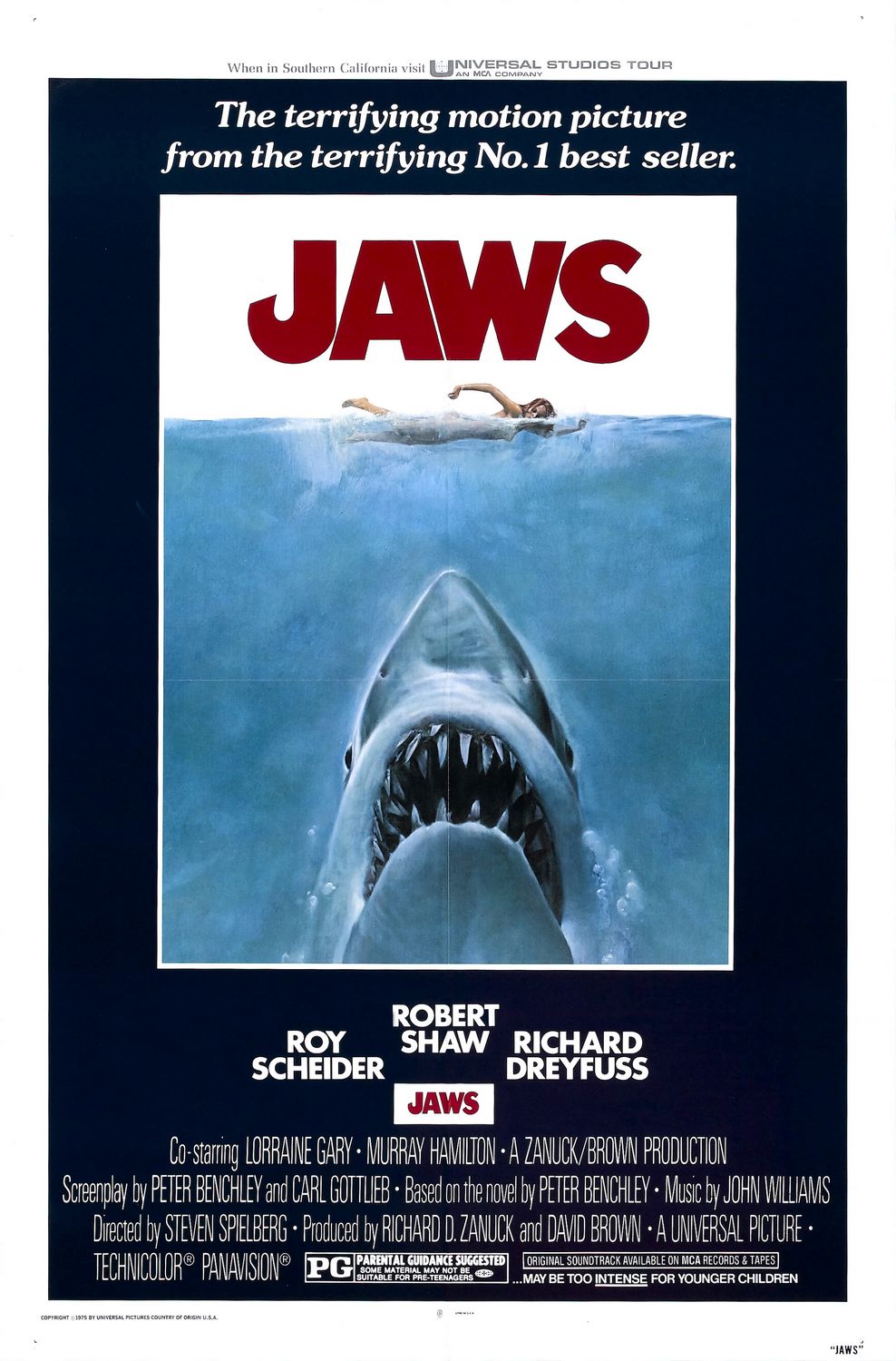
‘Jaws’ Remains a Thrilling Experience Decades After its Release

Jaws movie poster

Steven Spielberg’s “Jaws” is one of those movies I thought I watched a few years after it came out, but in retrospect I had only seen bits and pieces before finally watching it all the way through. It came out in 1975 a couple of months before I was born, and I can still vividly remember people talking about it while in a carpool to school. One of my kindergarten buddies kept telling me about all the blood the great white shark ends up spilling, and what he said made me NOT want to see “Jaws” for the longest time.

I do remember seeing certain scenes from “Jaws” for the very first time, and those moments remain forever burned in my conscious mind. When ABC presented its network television premiere of the movie, I remember those giant red letters coming out at me from the TV screen, and it was enough to have my hair standing on end. It was also the first time I saw little Alex Kintner getting dragged down to his bloody death, a very frightening image to be featured in any movie, let alone one with a PG rating.

Years later, I was watching an episode of “At the Movies” with Gene Siskel and Roger Ebert where they were talking about Spielberg’s movies in general. This was when I first saw the scene where Roy Scheider is throwing chum into the water, and the great white shark ends up rising out of the water which leads Scheider to tell Robert Shaw, “You’re gonna need a bigger boat.” This appearance of the shark scared me to death back then, and I felt exactly like Scheider’s character did as he slowly backed away from the boat’s rear.

A few years later, “Jaws” was again showing on television, and it was one of the few motion pictures shown unedited on television. Most movies, when they make their network television debut, are edited for content, but “Jaws” is so highly regarded to where it had to be shown with all the good parts intact. It was then I got my introduction to when Richard Dreyfuss was exploring Ben Gardner’s boat and Gardner’s head pops out of the hull. This proved to be another sequence which almost stopped my heart.

By the time I reached junior high school, I was already fully aware “Jaws” ended with the shark getting blown up. In fact, I had seen all the sequels by then and watched those other great white sharks bite the dust in their individual ways. Heck, I remember my brother renting “Jaws 3” on videotape, and we watched the shark getting blown up by a grenade and parts of his teeth getting thrust out at us with those 3D effects which never translated to the small screen.

While watching the last half of “Jaws” at a friend’s house all those years ago, I was truly astonished at how thrilling the movie was. I figured knowing the movie’s ending would rob it of any suspense or tension Spielberg managed to generate for audiences back in 1975, but man was I wrong. Seeing Dreyfuss trapped in the shark cage while the great white makes an effort to “reach out and touch someone” by attempting to smash through those metal bars had me begging for someone to kill it. Watching Scheider trying to keep his head above water as the boat sank had me wondering how the hell he was going to make it back to shore in one piece as his character hates the water.

I eventually rented “Jaws” on VHS in the days before Blockbuster Video became a dominant force in the video rental market. Seeing the movie in its entirety was a great experience, and it’s still one which I cannot ever get sick of watching. Even though I knew certain moments were coming, the anticipation of them still had me on the edge of my seat.

Having watched “Jaws” so many times before its Blu-ray release, the thing which keeps bringing me back to it is the human element. What Spielberg does best here is give us characters who are human and not mere clichés. Whether you’ve ever lived on an island like Amity or not, we know its inhabitants up close and why they depend on the summer months for their very lives.

Now while Spielberg did have problems with the mechanical shark which he named after his lawyer, he did have tremendous luck with his cast. What I love about Scheider, who plays Police Chief Martin Brody, is he doesn’t act the part as much as he becomes it. Those who read my reviews know I love talking about actors who inhabit their roles more than act, and Scheider proved to be one of those actors who did this very effectively. Brody is not out to be the hero, and he is like any other husband and father who just wants to keep his family safe. Scheider also makes you admire this ordinary police chief as he faces his fear of water so he can to put an end to the shark’s reign of terror.

Dreyfuss proves to be endlessly entertaining as Matt Hooper, a man whose love of the ocean and the animals inhabiting it keeps him from ever becoming a cynical bastard. Even after all these years, Dreyfuss is so much fun to watch as he shares his shark expertise with Scheider’s character and endures constant battles with Robert Shaw’s Quint who thinks this oceanographer is a little too domesticated to be sailing the ocean with him.

Speaking of Shaw, he has always struck me as one of those actors who proved to be as tough as the characters he played. This must be why he inhabits Quint so effectively, and his performance is one of the most unforgettable I have ever witnessed. Quint proves to be very hard to get along with, but then he goes into his long speech regarding his experiences on board the USS Indianapolis and of what happened after it sank. This monologue still gives us all chills every single time.

It’s the strong human element which makes “Jaws” work so phenomenally well as we come to care deeply about these characters and their hairy predicament. This could have been one of those pictures which lived or died on the quality of its special effects, and here they really could have been a detriment here more than anything else. The stories behind the making of this movie have long since become legendary as the filmmakers dealt with endless obstacles in making anything about the shark work.

But I also love how what worked against “Jaws” actually helped it in the long run. Dreyfuss loves to joke about how he kept hearing crew members saying “the shark is not working” on their walkie talkies, but it turned out the less we saw of the shark the better (something the sequels would quickly forget). “Jaws’” overall effectiveness came from the terror of what we didn’t see as opposed to what we did see. Many may prefer to see the monster, but the lack of its appearance forces our imaginations to go into overdrive, and this makes the monster so infinitely frightening.

“Jaws” is also aided tremendously by John Williams’ unforgettable music which still freaks us out whenever we hear those “dum-dum-dum-dum” sounds. So much attention is placed on this part of his score, however, to where other parts of it don’t get the praise they deserve. The music where Brody’s son mimics his dad’s every move at the dinner table is beautiful, and the same goes for the end theme which is mournful of what’s been lost and yet thankful this ordeal has finally come to an end.

This was the first movie to make $100 million at the box office, and that forever changed the way movies were made and distributed. As a result, many blame Spielberg for putting an end to the thoughtful, character-driven movies of the 1970’s, but that’s not fair. “Jaws’” success got Wall Street interested in the money which could be made from movies, and this proved to be the death knell to 70’s filmmaking. If Wall Street had looked more closely at the success of “Jaws,” they’d see how it focused as much on its characters as it did on the shark.

“Jaws” inspired a lot of filmmakers like Robert Rodriguez, Kevin Smith and Eli Roth, and it is bound to inspire many more in the future. Many have even gone on to name their companies after famous lines of dialogue like A Bigger Boat and Bad Hat Harry. It says a lot how “Jaws” is as powerful today as when it first came out in 1975, and I hope movie studios remember this if they ever foolishly decide to remake it, and heaven forbid this ever happens.

* * * * out of * * * *

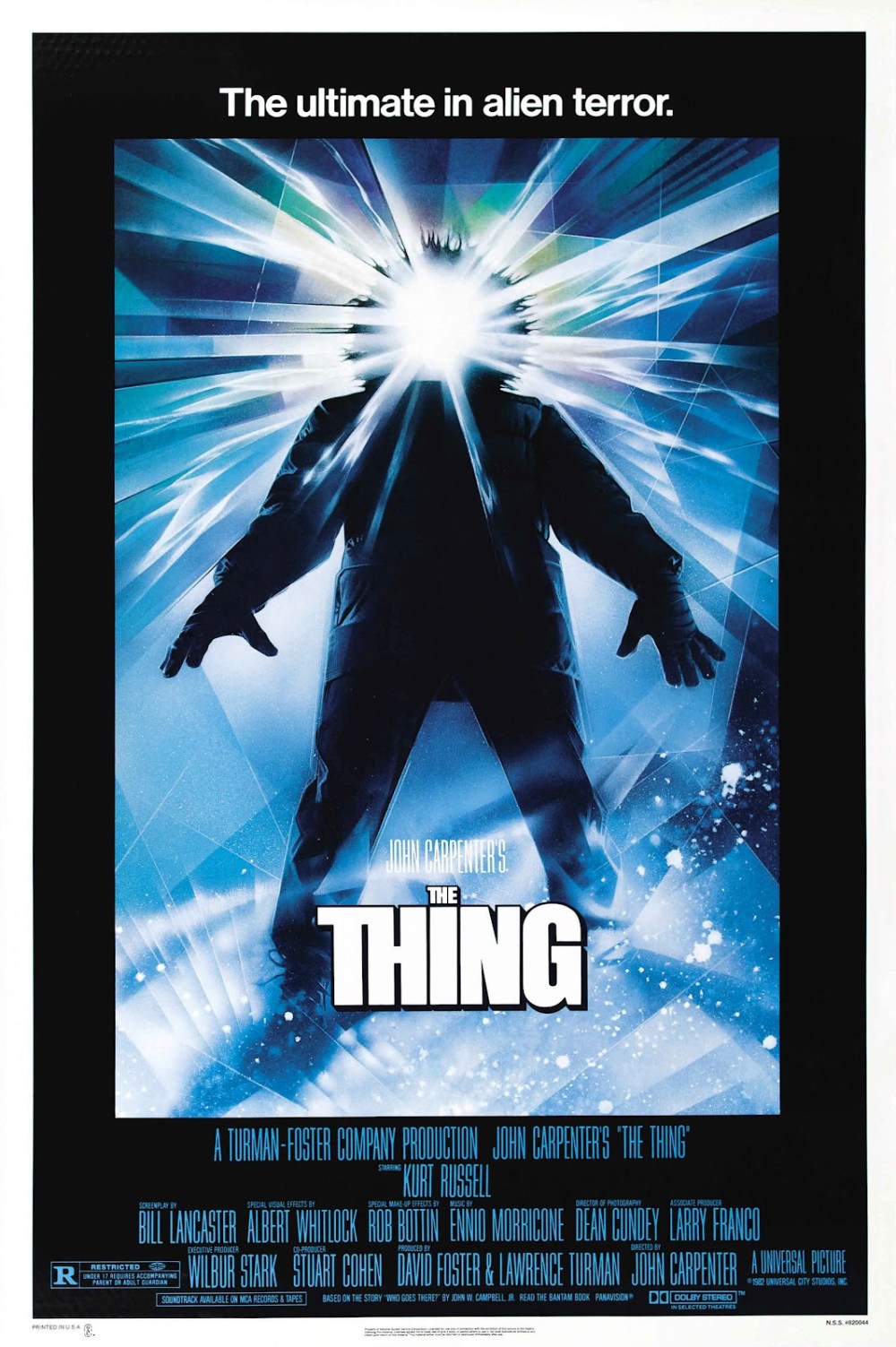
‘The Thing’ Prequel Should Have Been a Sequel

The Thing 2011 poster

It says a lot about John Carpenter’s “The Thing” that it could generate a prequel almost 20 years after its release. A critical and commercial failure back in 1982, it has since been justly reappraised as a true horror classic and remains Carpenter’s masterpiece. It proved even more terrifying than “Halloween,” and it also holds a special place on my list of my top ten favorite movies of all time. These days, it is even more frightening as the scenario it presents feels all too possible.

Now we have Matthijs van Heijningen Jr.’s “The Thing,” a prequel to Carpenter’s movie which explores the events leading up to it. Remember the Norwegian camp Kurt Russell and Richard Dysart visited which had been completely burned down? Now we get to see how it got laid waste by both the thing and the humans. But therein lies the problem; knowing the events precede those of the 1982 movie and who survives, much of the potential suspense and tension gets drowned out almost immediately.

Frankly, I would much rather see a sequel to Carpenter’s “The Thing” instead of this. His film was very effective because we never had a clear idea of who to trust. But in Heijningen’s film, we know the characters on display will eventually bite the dust, and it becomes a question of when these characters turn into the thing. After a while, it becomes more shocking when a character dies but doesn’t turn into a gooey alien. What spoils it even more is we know of at least one character who will survive what happens very early on, and all we can do is wait impatiently for him to get on the helicopter with his rifle and take shots at the wolf.

Heijningen is respectful of Carpenter’s movie and pays homage to it throughout, but I kept wondering if this was a remake instead of a prequel. Various scenes are clear imitations of the 1982 movie’s most classic moments, and I wish he had worked harder at distinguishing the prequel from it instead of just presenting us with something way too similar. He does wring some suspense and strong tension at different points, and his unique take on the blood test scene is very clever, but he is unable to sustain the tension which made Carpenter’s movie so utterly terrifying.

The special effects are very good, but they pale in comparison to the genius of Rob Bottin. Audiences are always quick to tell when CGI effects are overused. As for the performances, they are generally good even though the characters could have come out of any monster movie.

The best performance comes from Mary Elizabeth Winstead as paleontologist Kate Lloyd. Such a terrific presence in “Scott Pilgrim vs. The World” and “Live Free or Die Hard,” she holds our attention throughout and is one of the best reasons to see this prequel. While Lloyd is predictably inspired by Ellen Ripley from “Aliens,” Winstead makes the character her own and more than just another tough chick which movies like these typically rely on.

“The Thing” prequel is not terrible, but it will be of interest more to those who haven’t seen the 1982 film which itself was a remake and made back in a time when remakes were rare and actually worth watching. This particular version of John W. Campbell’s “Who Goes There?” feels like a lost opportunity, and it gets caught in the prequel trap of busily matching everything up to the film it leads into. It really sucks when you can see a movie’s ending long in advance. I did however admire the ambiguous ending shown before the end credits as it leaves you wondering if the alien really infected one of the last characters standing. Not knowing is always more unnerving than knowing, and at least the director got this right.

* * ½ out of * * * *

John Carpenter’s ‘The Thing’ is One of the Best Horror Movies Ever Made

The Thing movie poster

Many of you probably know the story behind John Carpenter’s “The Thing.” It came out in the summer of 1982, two weeks after Steven Spielberg’s “E.T,” and while the alien from Spielberg’s movie was warm and cuddly, the one in Carpenter’s was cold, ugly, and utterly vicious. As a result, “The Thing” was quickly derided by both critics and fans alike, and no one hid their disgust towards Carpenter for what they saw as pornography of violence. In all fairness, however, the movie was released at the wrong time of the year. To release it during what Carpenter called the “summer of love” opposite not just “E.T.,” but also “Star Trek II” and “Tron” was a big mistake on the part of Universal Pictures, and they would have had more luck had they released it in the winter of 1982.

Years later, “The Thing,” like many of Carpenter’s movies, found the audience it deserved through home video and digital media. Perhaps it was ahead of its time, but it is now considered, and rightly so, one of the best horror and sci-fi movies ever made, and it is easily the best horror remake in a sea of horrendously crappy ones. It certainly plays better today than it did when first released, and it is still utterly terrifying 35 years after its release.Unlike the original Howard Hawks version of “The Thing,” Carpenter’s movie hews much closer to the short story “Who Goes There?” by John W. Campbell, Jr. The movie takes place at an American scientific research outpost in Antarctica, perhaps the coldest place on Earth. We are introduced to a bunch of men who are studying the surrounding area, and they look bored and listless as they pass the days smoking, drinking scotch, watching “Let’s Make a Deal” reruns, and playing ping pong. One day, they are met by a wolf being shot at by a Norwegian for no discernable reason. This later leads to events which make them realize they have encountered an alien of unknown origin unearthed from the ice after thousands and thousands of years. It then proceeds to imitate every creature it comes into contact with, and it is revealed any of them could be the thing. They have to destroy the thing before it reaches civilization because, once it does, it would mean the end of the world.

The premise of “The Thing” is genius because it allows for an unending escalation of tension and suspense throughout. Like the characters, you have no idea who to trust. The paranoia which closes in on the characters puts them in an airtight cage, and this cage gets smaller and smaller as it heads to its infinitely bleak climax. There are no women to be found which eliminates any sexual tension and could have added an unnecessary element to the movie. Many say this makes the movie sexist, but it is a ridiculous charge.

“The Thing” was released when the whole world started to become aware of the AIDS virus. The idea of any virus infecting us completely and rearranging our body to the point may have seemed unreal to us back in 1982. But today, it is a reality more horrifying than ever, and it presents itself with no cure. This makes “The Thing” even scarier to take in when watching it now. The scene where Dr. Blair (Wilford Brimley) observes a computer image of the virus infecting a human host is one of the movie’s scariest moments, and it feels like an all too real a possibility today. The only thing truly dated about the scene is the computer graphics look like they are from some old Atari game, but it doesn’t change anything.

This movie also marks one of several collaborations between Carpenter and Kurt Russell who started working together on the TV movie “Elvis.” After all these years, Russell can still make you believe he is a regular guy like the rest of us, and his role as helicopter pilot R.J. MacReady is one of his best. You never get the feeling Russell is acting here. Instead, he inhabits the character he plays, and you follow him every step of the way without any doubt of who the hero really is.

Carpenter cast “The Thing” perfectly with actors like Richard Masur, Richard Dysart, Donald Moffat and David Clennon. But one of the best performances comes from Brimley as Dr. Blair. In the past, we have seen him in countless oatmeal commercials and in roles as the grandfather we wished we had in our lives. But his role in “The Thing” offered him an opportunity to go completely against type. Brimley goes from curious to utterly horrified by what this unknown creature can do, and he ends up wreaking havoc in a way you would never ever see in an oatmeal.

Another great actor in this movie is Keith David who plays Childs. David has a don’t mess with me intensity, and he matches Russell’s intensity every step of the way. The tension between them is as frightening as is waiting for the thing to make its next horrifically gory entrance.

But let’s talk about who the real star of “The Thing” really is, and that is Rob Bottin who designed the movie’s horrifically brilliant special effects and makeup designs. Long before the advance of computer technology, Bottin had to make all these designs from scratch, and what he came up with is now considered a benchmark in his field. The thing mimics everything it touches, and this must have been a huge inspiration for him as it allowed his imagination to run amuck with infinite possibilities. You never know what’s coming next, and this makes “The Thing” even scarier.

Some have called this movie a “geek show” made only with the intention of grossing people out. Granted, a good case could be made for that, but “The Thing” explores a theme that is commonplace in many of Carpenter’s movies; the struggle to maintain one’s individuality. Of never letting go of who you are because it allows you to survive in a world which keeps finding new ways of robbing your individuality at any given opportunity. The threat of this loss is very real, and the characters have the unfortunate disadvantage of being stuck in one of the most remote and desolate places on Earth.

I also imagine a big complaint people have about “The Thing” is we never learn about the alien or where it came from. Basically, we know it’s from outer space which imitates whatever it comes in contact with, and it clearly deals with the cold better than any of us do. Here’s the thing, do we really need to know everything about this creature? Maybe not knowing is more terrifying than knowing. It leaves a lot of things to the viewer’s imagination which I love because it leaves so many possibilities open for how this horrific situation is going to play out.

“The Thing” truly is Carpenter’s masterpiece as it shows him to be a true master of horror and suspense. He endlessly generates unbearable tension throughout, and just when you think the movie has peaked, you realize it has not. Carpenter’s goal here is not just to make us jump out of our seats, but to make us feel the terrifying isolation and complete lack of trust these characters are forced to endure.

Carpenter has said “The Thing” was the first in his apocalypse trilogy (the other two were “Prince of Darkness” and “In the Mouth of Madness”), and it does have an unrelentingly bleak tone which made it seem completely out of place back in 1982. As time goes on though, many of us keep thinking the world is coming to an end with more deadly diseases like the Ebola Virus among others, and the scenario this movie presents us feels all the more frightening and immediate as a result.

Some movies are robbed of their greatness through the passage of time, and we watch them and wonder why we liked them in the first place. But “The Thing” is an exception as the passage of time has made it all the more effective. You can’t help but think its story was ahead of its time, and it remains one of those movies I never ever tire of watching. It has more than earned its place on the list of my all-time favorite movies.

* * * * out of * * * *


John Carpenter Revisits ‘The Thing’ at the Aero Theatre

John Carpenter Dummy Magazine photo

“Escape Artist: A Tribute to John Carpenter” was held a few years ago by American Cinematheque at the Aero Theater. In addition to being treated to a double feature of “The Thing,” which is widely regarded as his best film, and “The Fog,” the writer, director and composer also showed up in between both films to give us more insight on their making and took questions from the audience. Even though these movies are now twenty to thirty years old, they still resonate deeply for movie fans today. This was proven true by the fact these screenings were sold out and packed with Carpenter’s biggest fans.

While “The Thing” was not a big hit upon its release, it has since developed a huge cult following and been critically re-evaluated as the masterpiece it always was. Eighty percent of the audience had probably seen this movie several dozen times, but they still jumped during its most shocking moments.

The Thing movie poster

After the movie ended, Carpenter came to the stage and was met with a standing ovation and thunderous applause. He thanked them for coming on out to see this movie when they could have just watched it at home. One fan in turn thanked him for coming on out to visit with us as he has millions of fans all over the world, and yet he chose to hang out with us.

Today, as the emcee pointed out, many are surprised “The Thing” was not a big hit when released back in 1982. Carpenter put it all the more bluntly:

“It tanked! 1982 was supposed to be the summer of love. It was the summer of ‘E.T.’ and it was the summer of freedom and hope, and ‘The Thing’ was about as bleak a movie as any that could have been released that year. People hated it for that, and all the sci-fi fans out there absolutely hated it and trashed it when it first came out.”

As Carpenter pointed out to actor and friend Kurt Russell on the movie’s DVD commentary, “We came out two weeks after ‘E.T.’ And while there’s was all warm and cuddly, ours was ugly and hideous.” Universal Pictures, which released both movies that summer, attempted to make it the summer of extra-terrestrials, but the timing did not work at all in Carpenter’s favor and it later cost him the job of directing the Stephen King adaptation, “Firestarter.”

One fan pointed out how “The Thing” was unique in a sense as it is one of the few Carpenter movies he did not compose the score for. While the score does have the Carpenter sound, it was actually composed by Ennio Morricone. Carpenter said Morricone is one of the greatest film composers ever, and he did point out there is one synthesizer piece of music which was not composed by Morricone. Now he wouldn’t say who composed it, but it’s safe to say he did, and in association with Alan Howarth.

Another fan pointed out several of Carpenter’s movies have been remade like “Assault on Precinct 13,” “The Fog” and “Halloween,” and a remake of “Escape From New York” is in the works. This fan said he found remakes blasphemous, and to this Carpenter replied, “I actually find it flattering. They also have to pay me a lot of money when they do that.”

Dean Cundey, director of photography on “The Thing,” worked on several of Carpenter’s movies including “Halloween.” Carpenter has not worked with Cundey for some time now, and one man asked why and if there had been a falling out between them. Carpenter replied they have not fallen out, and he recently caught up with Cundey at a movie shoot in Canada. Carpenter did, however, point out why they haven’t worked together for a while, “Dean wanted to be a director. And when you have a director on a movie, and a director of photography who wants to be a director, that’s just not going to work out.”

Everyone who knows Carpenter knows he is a big fan of westerns, and he recently recorded a commentary track for the special edition release of “Rio Bravo.” Many wonder why he still hasn’t directed a western of his own, and Carpenter replied he honestly didn’t know but that he came close several times. The closest was when he wrote the script for “El Diablo” which was made into a cable movie that earned him a Cable Ace Award. If you look closely, all of his movies do have western elements to them. The closest he has ever gotten to making a western is “Vampires” with James Woods.

Many also wondered, and it was asked, what future projects he has on tap and of what his current passions are. His reply was, “Current passions? I’m playing Ninja Gaiden, I just got Metal Gear Solid 4 for PlayStation 3… No seriously, I have a couple of things I’m looking at doing, so we’ll see what happens.”

Before he left, he did have some things to say about “The Fog,” “I have heard that the print for this movie is not in the greatest shape, and that it is pretty faded. But keep in mind that when we made this movie, we made it for only $1 million dollars, so please be kind.”

‘Get Him to The Greek’ Allows Us to Forget about Sarah Marshall

Get Him to the Greek movie poster

We have sequels and franchise reboots or remakes up the wazoo this summer, but it feels like it has been forever since we had a movie spin-off. I know there are tons of them on television these days, but TV spinoffs seem to be a necessity, especially with shows like “Law & Order” and “CSI.” We’re gonna have “Law & Order: Los Angeles” in the fall, proving the cancellation of the original “Law & Order” never ended anything. Personally, I’m waiting for “Law & Order: Barstow” and “CSI: Chico.” Now those would be the ones to really shake things up!

In fact, the last time we had a movie spin-off was “US Marshalls” which took Tommy Lee Jones’ character of Sam Gerard from “The Fugitive” and gave him his own movie. Looking back, it was more of a remake of “The Fugitive” than anything else.

Now we have “Get Him To The Greek” which takes Russell Brand’s character of spaced-out rock star Aldous Snow from “Forgetting Sarah Marshall” and has him starring in his own movie movie. Give Hollywood some credit here for being a little more creative than usual. By making a movie based on a supporting character from another, they show an air of confidence they usually only pretend to have.

Whereas Aldous was drug free in “Forgetting Sarah Marshall,” he is shown to have fallen off the wagon big time in this one as we watch him suffering the aftereffects of a horrible song he wrote and recorded called “African Child.” The song was declared to be the worst song of the decade, and it places second to apartheid as the worst thing to happen to Africa. The love of his life, Jackie Q (Rose Byrne from “28 Weeks Later”), ends up leaving him along with their son Naples, and he proceeds to go on one drinking/drug binge after another as his life goes from worst to intolerable. Then he hits rock bottom, but this doesn’t stop his spiral any.

Several years later, a record company intern named Aaron Green (Jonah Hill) brings up at a meeting how it is coming up on the 10-year anniversary of when Aldous performed a concert at the Greek Theater, one which resulted in one of the best-selling live albums of all time. After Aldous confirmed with Aaron’s boss, Sergio (Sean Combs), that he will do a new show to celebrate this occasion, Sergio sends him out to England to fetch Aldous and to make sure he makes it to the concert on time.

Judd Apatow is of course behind this one as a producer, and the setup reminded me a lot of his movie “Funny People.” Big fan meets his celebrity idol, discovers being a celebrity can be the loneliest place of all, and they somehow connect at the end in a way they never thought possible. But this one is just a flat-out comedy and has none of the dramatic edge of “Funny People.” Its humor is vulgar and crude, but like all good Apatow productions, it also has a heart.

Like “Knocked Up,” “Get Him To The Greek” exists in the entertainment world. Hearing Aaron talk about how a new concert will spur large revenue for the record company, allowing them to re-release Snow’s back catalog in new remastered editions with bonus material struck a cord with me. I always fall for this stuff myself; remastered CD’s which make you actually feel like you’re in the room with the band as they jam together. I have been an addict of these remastered editions ever since I bought the one for Eric Clapton’s “Behind the Sun.”

This is not to mention all the cameos from artists like Pink and television personalities including Meredith Vieira from the “Today” show. You even have Mario Lopez and Kurt Loder poking fun at their public perception, something they probably would not have done ten years ago. “Get Him To The Greek” does not take place in some fairy tale world where everything ends up all nice and tidy. The laughs end up stinging much more here because they remind us of all those celebrity controversies the media thrusts at us every single day.

Russell Brand’s own drug addled past has been chronicled for some time now, so part of the fascination with watching him here is figuring out where he ends and Aldous Snow begins. Regardless of how out there he may seem in the media, there is something about his personality that makes us watch his every move. Not once does he do anything to hide his character’s hedonistic ways, and he scores one solid laugh after another. I’m not sure what to say about him as an actor because I haven’t really seen him in anything else but watching him again as this character was indeed worthwhile.

Jonah Hill also was in “Forgetting Sarah Marshall” as a waiter, but here he plays an entirely different character. From “Superbad” to “Funny People,” he’s been basically playing the same kind of role over and over again. Here, he plays his most grown-up character to date. As Aaron Green, he also gets to lose his trademark hairdo which makes him look like Little Orphan Annie. Clearly, his high school days are behind him, and he has us laughing at the most insane and compromising positions his character keeps stumbling into. Hill even has a great “Pulp Fiction” kind of moment, but I leave it to you to discover it for yourself.

But while Brand stole every other scene in “Forgetting Sarah Marshall,” he has this movie stolen from him by Sean Combs. That’s right, Puff Diddy is in this movie as record company executive Sergio Roma, and it allows him to parody his own image as a hip hop entrepreneur. What I loved about his performance is you never get the feeling he was trying to be funny. The more serious he gets, the more gut-bustlingly hilarious he becomes, and no one sells the term “mindfuck” the way he does here. It’s easy to fall into the trap of playing for laughs instead of playing the scene, but Combs never falls victim to it here.

You also have some nice supporting performances from actors like Colm Meaney, the “Star Trek” journeyman actor who plays Aldous’ father Jonathan, and he makes this man anything but a father figure. Having used his drug addicted son for his own gain, it is very surprising these two actually bother to be in the same room together. Rose Byrne also has some great moments as the love of Aldous’ life, Jackie Q, and her own music is ridiculously controversial in its own terms.

“Get Him to The Greek” was written and directed by Nicholas Stoller who also helmed “Forgetting Sarah Marshall.” Stoller does good work here, but he does let the pace drag towards the end to where there are lulls where you are waiting for the next big explosion of laughter. All the same, comedy is hard work, so you have to give him credit for the loud laughs he does get out of us.

Is this as good as “Forgetting Sarah Marshall”? Not quite. In fact, “MacGruber” was a funnier movie in retrospect, regardless of its audience not showing up when it was released. The plot itself is no different from a lot of road trip comedies, and you could compare this one a bit to John Hughes’ “Planes, Trains & Automobiles” when you think about it. Still, I had a lot of fun with it, and it is easily more fun than a “Geoffrey.” Trust me; just see the movie and then you will know what I am talking about. I’m sick of giving away the best parts of movies anyway.

* * * out of * * * *