
‘In a Violent Nature’ – If Terrence Malick Directed a Slasher Movie

In a Violent Nature” has all the requisites of the average slasher film. It contains a bunch of young adults vacationing out in the wilderness in a lone wood cabin, a developmentally challenged child who died under cruel and tragic circumstances and has since become a most vengeful spirit, that one guy who tells the tale of the vengeful spirit who will eventually slaughter them all before they realize it is too late to leave, sharp objects, a mask for the killer, a variety of brutal deaths and, of course, a final girl. Anything you would expect from the average slasher film, this one has got it.

But what makes “In a Violent Nature,” which was written and directed by Chris Nash, stand out among so many others of its bloody ilk is its unique vantage point: the majority of the film takes place from the killer’s perspective. This quickly reminded of Alfred Hitchcock who dared us to see things from a murderous point of view in “Psycho” and “Frenzy,” but those films spent only so much time observing things from a killer’s mind. This IFC Films release, however, invites you to spend the majority of its 94-minute running time sharing in a murderer’s cold and brutal gaze as his victims die the most painful of deaths.

Things starts off with the image of a locket hanging on the remains of a fire tower. An unseen character takes the locket with him, and a few seconds later we see Johnny rise up from underneath the ground. Johnny, we learn, was a developmentally disabled boy who was tricked into climbing up the same fire tower years ago with the promise of getting a plethora of toys. But instead of toys, he finds someone willing to scare him out of his wits, and he tragically falls to his death. Now Johnny is back, and he aims to retrieve the locket taken from him. What particular value does this locket have for him? Keep watching to find out.

When it comes to Johnny, he looks a lot like Jason Voorhees. He has no hair, his clothes are very tattered, and he moves at a very slow pace wherever he goes. I shudder, no pun intended, to think of how bad his body odor likely was as he trudged through the woods to lay waste to his prey. It got to where I kept waiting for someone to tell this particular slasher, “Oh my god, you really need a makeover!”

But what really surprised me about “In a Violent Nature” is how quiet a slasher film it is. Most feature jump scares and loud music scores from composers who abuse violins to an overwhelming degree. This one, however, does not go out of its way to give you a sensory overload (or at least, not right away), nor does it contain a film score of any kind. The only music you hear comes from a character’s Walkman which keeps playing after he is decapitated, and we hear it play on as the batteries in it die an ever so slow death.

Some have called this horror film an “ambient slasher,” and it feels like one crossed with a nature documentary. I am curious to see what audience members and horror buffs in particular think of this methodical slasher as it is deliberately paced. I imagine they might be expecting something much different, but this little shocker is quite thoughtful in its design. If Terrence Malick ever madr a horror film, it would look something like this.

For those of you worried that this film will be seriously lacking in gory and bloody kills, have no fear. The first few deals with things unseen, and they threaten to be the most haunting moments director Nash has to offer us as he toys with our collective imaginations. But then we get one where a yoga practitioner has her body contorted in directions which would have any instructor yelling out loud, “Oh you so can’t do that to yourself! There is no downward dog pose to be found here!”

Then there is another character who ends up getting bludgeoned by an ax and repeatedly so, and it gives new meaning to the term beating a dead horse. This horse keeps getting beat to death long after its heart has stopped pumping blood, and its carcass has long since decayed. Some horror maniacs just don’t know when too much is too much, or maybe the sexual frustration they experience is completely unbearable.

The ending, which I would never dream of giving away, is especially haunting as we reach a conclusion I did not expect. It also features an actress known for her work in the “Friday the 13th” franchise, and she is very effective as she is thrust into a intense situation she was not expecting. Whether or not it is the ending you wanted or not, it is a thoughtful and unpredictable conclusion which had me at attention throughout.

“In a Violent Nature” may not reinvent the slasher film as we know it, but it does dare to take the genre in a thoughtful direction. It does have a lot of the same beats as the average horror movie, but it subverts them to where we are reminded of what filmmakers can accomplish. There are many reasons why IFC Films gave this movie, which cost well under a million dollars, its widest theatrical release to date, and why it got some extra press coverage when an audience member allegedly vomited during one of the goriest murder scenes it had to offer.

Of course, now I have to wonder if this slasher flick will get a sequel. If the money keeps rolling in, we will get another bunch of young adults dumb enough to once again take Johnny’s locket. Perhaps they will try to sell it on eBay or at a local flea market. Flea markets still exist, right? With horror sequels, the body count is much higher and gorier. Imagine the sights and sounds of such a sequel, even if it is not directed by Terrence Malick…

* * * ½ out of * * * *

Terrence Malick’s ‘To the Wonder’ – Meandering but Still Unforgettably Beautiful

Terrence Malick’s “To the Wonder” is, in many ways, a mixed bag of a film. Not all of its parts go together in a way which feels entirely cohesive. It focuses on a couple played by Ben Affleck and Olga Kurylenko who fall in love and come to America to start a new life, but they eventually find themselves falling out of love, and they constantly struggle to understand how something so wonderful can go so awry. And then we have Father Quintana (Javier Bardem), a Catholic priest who is struggling to keep his faith even as he feels the presence of God eluding him at a time when he is desperate to believe in an afterlife. The balancing act between these characters is wobbly at best, but Malick still gives us many beautiful and wondrous images which are very powerful, and these images quickly remind me of how brilliant he is at capturing nature on film.

“To the Wonder” starts off in Europe where Marina (Kurylenko) finds herself completely enamored by her American boyfriend, Neil (Affleck), as they take a tour around town. Along with them is Marina’s daughter, Tatiana (Tatiana Chiline), who is thrilled when Neil asks her if she and her mom would like to move with him to the United States to live. After briefly viewing the European sights, the film then heads over to Neil’s home state of Oklahoma where the flatlands appear to stretch out as far as the eye can see. Heck, it almost looks like hardly anybody lives there, so it is a huge relief when we see t Neil and Marina actually have neighbors.

As with “The Tree of Life,” “To the Wonder” functions mostly as a silent film as the majority of the dialogue we hear is as a voiceover. Malick is far more interested in the inner thoughts of his characters than anything else as they struggle with the things they want and which are constantly outside of their grasp. We feel their passion for one another, and we also feel their pain and disappointment when their love eventually fades away.

Having read up on Malick as a filmmaker and as a person, it is clear to me how this film and “The Tree of Life” are his most autobiographical works overall. What the characters go through is not much different from what he has experienced in his own life, and with these films, it looks as though he is still trying to pick up the pieces of what went wrong.

Kurylenko first came to my attention in “Quantum of Solace,” and she has made the most of being a Bond woman as her performance here shows. It is thrilling to watch her dancing around the streets of Europe as well as in a corporate drug store which typically sucks the life out of everyone who shops at one. In many ways, Kurylenko is the best thing about this film as she takes us through Marina’s transcendent highs and her emotionally draining lows with complete conviction throughout.

Back in 20123, people had serious issues with Affleck as an actor, and this is even after his film “Argo” won the Academy Award for Best Picture. I myself have never had any issues with his acting abilities, and he gives a strong, understated performance as Neil, and it is never his fault we come to know less about this character than the others we are introduced to here. I really wish Malick had given Neil as much attention as he did to Marina as this would have made Neil’s journey in this story all the more illuminating. Nonetheless, Affleck is still very good in here.

Rachel McAdams is inescapably luminous as Jane; a childhood sweetheart of Neil’s who shows up after Marina has gone away. Malick makes Jane look beyond beautiful as he frames her against fields of wheat, and it is emotionally draining to watch Jane bear her soul to Neil and try to melt his heart in the process. McAdams ends up disappearing from “To the Wonder” a little bit too soon, but she is a vision to watch throughout.

Bardem’s character of Father Quintana at first feels a little out of place as much of the focus seems to be on the relationship between Marina and Neil, but his presence makes more sense as this film goes on. With this character, Malick seems to be saying how our loss of love for one another may have to do with our relationship to God, or lack thereof. Bardem does some of his subtlest work as he portrays a man struggling to hold onto whatever faith he has left, and it results in some of this film’s most emotionally draining scenes.

When we watch Quintana visit the sick, the elderly and the dying, I found myself being reduced to tears as these moments ring so emotionally true in a way I would rather not realize as death is becoming all too common for me to deal with. Plus, Malick just had to use Henryk Górecki’s third symphony entitled the “Symphony of Sorrowful Songs” which Peter Weir used to such great effect in “Fearless.” It remains a piece of music which is as beautiful as it is infinitely sad, and it always reduces me to a weeping wreck whenever I listen to it. I also have to admit I was very angry at Malick for using this piece of music here as it felt so unfair that he reduced me to a complete wreck in an inescapably manipulative way. Then again, I was in the midst of a very deep depression at the time, so that did not help matters.

But as mournful as “To the Wonder” is, there are still many beautiful moments to watch for as Malick remains a master of capturing the unpredictability of nature and animals on film. This includes moments like when Affleck and McAdams are suddenly surrounded by more buffalo than Kevin Costner dealt with in “Dances with Wolves,” the sunlight piercing through the colored glass in a church, or watching Kurylenko walking across the beach as the water covers the sand. These are moments which still will not fade away from my memory anytime soon. Working again with his “Tree of Life” cinematographer, Emmanuel Lubezki, Malick still captures moments of visual poetry in ways few other filmmakers can ever hope to equal.

It is those incredible visual moments which make me want to forgive how meandering “To the Wonder” is as it unfolds before us. I have learned Malick actually shot this movie without a screenplay, and this made me wonder how the actors dealt with this style of filmmaking. Considering that Jessica Chastain, Rachel Weisz, Amanda Peet, Barry Pepper and Michael Sheen all had roles in this film which were eventually removed from the final cut has me believing there was a whole lot more to this film than what ended up onscreen. While “The Tree of Life” had several different story lines going on, Malick was able to rein them all in to where everything seemed to fit perfectly. With “To the Wonder,” he has a little too much going on, and the film ends up losing focus more often than it does not.

Still, if you are willing to tolerate those flaws, “To the Wonder” is still a profound experience filled with great performances and beautiful images which will stay with you long after this film has concluded. I really wish the audience I saw it with all those years ago felt the same way I did. I bring this up as one audience member remarked at how the lives of these characters proved to be far more boring than anyone else’s. Well hell, some people enjoy the simple pleasures in life more than others, but many are still insistent about how theirs are better than the average human being, and that is even though there is plenty of evidence to prove otherwise.

Seriously, it seems very fitting that “To the Wonder” was the last film Roger Ebert reviewed and gave to the Chicago Sun Times before he passed away in April of 2013. Rest in peace, Roger.

* * * out of * * * *

Olga Kurylenko Talks About Losing Herself in Terrence Malick’s ‘To the Wonder’


To The Wonder Olga Kurylenko

WRITER’S NOTE: This article was written in 2013.

While former Bond woman Olga Kurylenko gave a compelling performance in “Oblivion,” she gives an even greater one in Terrence Malick’s “To the Wonder.” As Marina, a European woman who moves with her American boyfriend Neil (Ben Affleck) to Oklahoma, she is fascinating to watch as she goes from being deliriously happy in love to becoming emotionally devastated when their relationship turns sour. Seeing her dance her way through a sterile drug store to becoming so upset at how bad things get makes you see what she is capable of as an actress.

Going from a big budget science fiction film like “Oblivion” to a low budget “art film” like “To the Wonder” was clearly a study in contrasts for Kurylenko, and she joked about how she at least had a trailer on the set of “Oblivion.” She went out of her way to discuss the differences between the two films to Sheila Roberts of Collider while at the “Oblivion” press conference, and it’s one of the few instances where we get a good look at how the secretive and elusive Malick works with his actors.

“It was very different. They couldn’t be further apart from each other,” Kurylenko said of “Oblivion” and “To the Wonder.” “In Malick’s film, for example, there was no script and that’s the difference. Here, with ‘Oblivion,’ the script was very detailed and very precise. The way Malick worked with us, he never rehearsed, and he was actually against any rehearsal.”

“Malick just throws actors in, but there is a backstory and again lots of conversations,” Kurylenko continued. “The way I built my character was by talking with Terrence all the time. We just spoke, spoke, spoke. I had a little homework to do before I started the movie. I had to read three Russian novels: ‘Anna Karenina,’ ‘The Idiot’ and ‘The Brothers Karamazov.’ Those are very tiny little novels (laughs). After that, I didn’t really need to read a screenplay. We just spoke. There were discussions about what I drew from the books, how we can compose the character, what similarities there are between Marina and different female characters in those books, and that’s how the character was born. It was a mixture of Dostoyevsky, Tolstoy and Terrence Malick.”

Kurylenko describes working with Malick on “To the Wonder” in even greater detail in an article she wrote which appears on the Black Book website. In the article, she makes her experience seem incredibly vivid as she describes how free spirited she became while on set. Once she and Malick had their discussions about the character, he let her run wild and encouraged her to find that elusive thing he called “the Wonder.” What is “the Wonder?” Well it sounds like the deep fascination we have with the ways of nature, and we constantly lose our fascination with that in our busy lives and continued dependence on technology. Anyway, from what Kurylenko wrote, it sounds like she was both eager and ever so desperate to find it.

“Terry smiles and I jump, twirl, run, and jump again,” Kurylenko wrote. “He claps, ‘more, more, more, like a rabbit!’ But then the Wonder suddenly goes missing. I scream and run into the house-throwing things, breaking things. It rains pretzels and cereal and there are more screams, but now they’re not mine, they’re Neil’s, and I’m laughing wildly and crying-my Marina is hysterical, unstable. I collapse on the floor and I wipe my tears from his shoes and kiss them. I ask, ‘Why do I do this? I want to be good, so good, but sometimes I suddenly feel possessed.’ And I beg forgiveness.”

“I receive pages every morning, sometimes ten, sometimes more,” Kurylenko continued. “They’re not exactly a script. Whether one exists or not is a complete mystery, but the words are (excuse my poeticism) rather like a breakfast for the soul. And every morning it’s a feast! If I digest the sense of what the pages contain, the nature of Terry’s words will shine through my eyes while we’re filming, and I won’t even need to speak. Every sentence is filled with such deep knowledge of the soul.”

One great thing I learned while looking into the making of “To the Wonder” was how Kurylenko always stayed in character even when the cameras were not rolling. Some actors believe their work stops when they have no lines of dialogue to speak or when the camera isn’t focusing on them, but any great acting teacher will tell you your work never stops even when the day is done. Kurylenko understands this perfectly, and she told Liz Braun of The Toronto Sun how this made “To the Wonder” more physically challenging for her than “Oblivion.”

“It was exhausting, because I was the character even when the camera didn’t film me — you have to be with Terrence because you never know when he’s filming you, and he doesn’t like rehearsals,” Kurylenko told Braun. “Terrence is someone I utterly admire and love. I trusted him completely, because he made me do somewhat ridiculous stuff. I never said no. I did everything, and I was dancing, moving through nature, walking constantly.”

While it may seem inconvenient for Olga Kurylenko to have two movies out at the same time as one might bury the other at the box office, the upside is both of them show the range she has as an actress. We cannot deny Kurylenko is a very talented actress, and it will be interesting to see where her career goes from here. Her role in “To the Wonder” might be a once in a lifetime opportunity, but hopefully more of those opportunities will come her way very soon.

SOURCES:

Sheila Roberts, “Olga Kurylenko Talks OBLIVION, Flying the Bubbleship, How Her Bond Experience Helped Her with Action, and More,” Collider, April 13, 2013.

Olga Kurylenko, “Olga Kurylenko on Terrence Malick and Filming ‘To the Wonder’-In Her Own Words,” Black Book, April 11, 2013.

Liz Braun, “Olga Kurylenko compares ‘Oblivion’ and ‘To the Wonder,'” The Toronto Sun, April 17, 2013.


The Best Movies of 1998

1998 logo

Now it’s time to go to take a look back at the movies of 1998, the same year when California started the ban on smoking in bars and restaurants. What else happened that year? John Glenn became the oldest astronaut to go into space, and it gave us a reason to watch the space shuttle launch on television for the first time in years. The Denver Broncos became the first AFC team in 14 years to win the Super Bowl when they beat the Green Bay Packers (I’m so glad I didn’t bet on that game). The whole controversy of President Bill Clinton’s affair with Monica Lewinsky exploded, which the President’s enemies seized upon like teenagers going through their dads’ Playboy magazine issues while he is out of town. And, most ironically, a court in Taliban-controlled Afghanistan ruled Osama Bin Laden was “a man without a sin” in regard to the 1998 U.S. embassy bombings in Kenya and Tanzania. Well, we knew better.

As for myself, I was in my second year at UC Irvine and my fourth year in college. I still had a dorm room all to myself, and I was busy with school work and appearing in plays like “Enrico IV,” “The Scarlet Letter” and “Twelfth Night.” Of course, I tried to get out to the movies as much as humanly possible. Many of the movies on this list were ones I actually didn’t get around to seeing until years later, so it’s probably best I am giving you this list now.

10) There’s Something About Mary
Theres Something About Mary poster

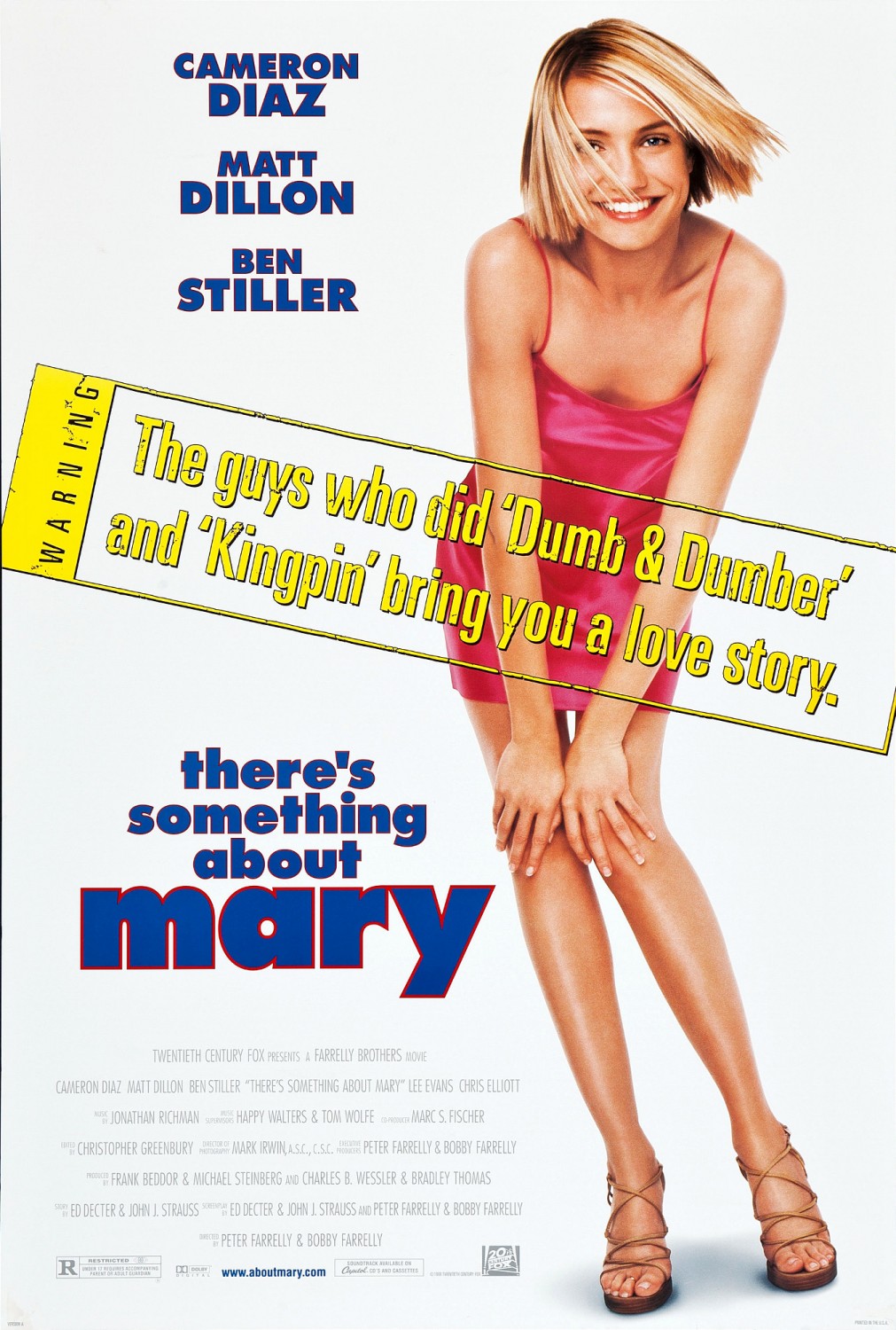
Bobby and Peter Farrelly gave us one of the most gut bustlingly hilarious movies ever made with “There’s Something About Mary.” I was dying with laughter while watching this, and I wasn’t expecting to. In retrospect, I should have though since this came from the same directors who gave us “Dumb and Dumber” as well as “Kingpin.” On top of having so many funny moments, the movie also has a lot of heart in the way it portrays the two main characters played by Ben Stiller and Cameron Diaz. Those of you who think Diaz can’t act need to revisit this one because she is so good at playing a teenager who we later see as a well-meaning adult with a few too many stalkers.

9) American History X
American History X poster

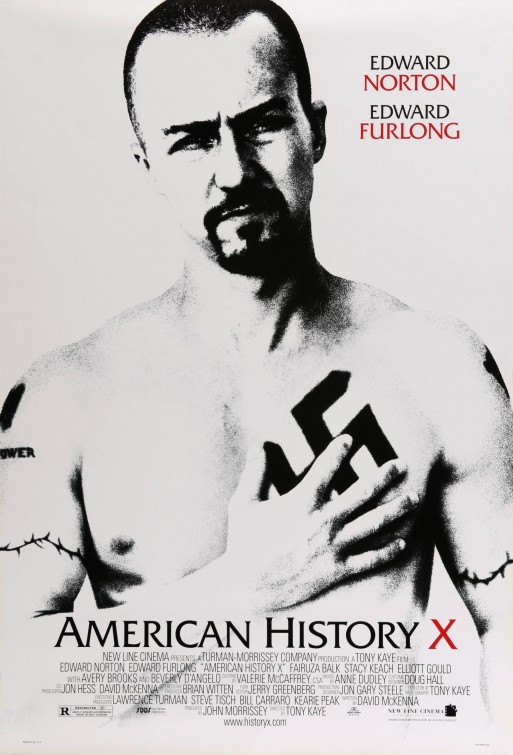
So much has been said about the making of “American History X” and the bitter disagreements between director Danny Kaye and actor Edward Norton. Regardless of whoever deserves the majority of the credit, there is no denying this is a powerful and unforgettable motion picture. Norton gave one of his very best performances as white supremacist Derek Vineyard, and the look he gives the camera after killing two people is a very chilling moment which is not easily erased from the conscious mind. Norton also gets great support from Edward Furlong who plays Danny, Derek’s brother, who threatens to tread down the same hateful path Derek has. Kaye, even if he didn’t get final cut, gives the movie an amazing look in black and white which captures the escalating tension of Derek’s journey from a world of hate to a place of compassion.

8) Dark City
Dark City movie poster

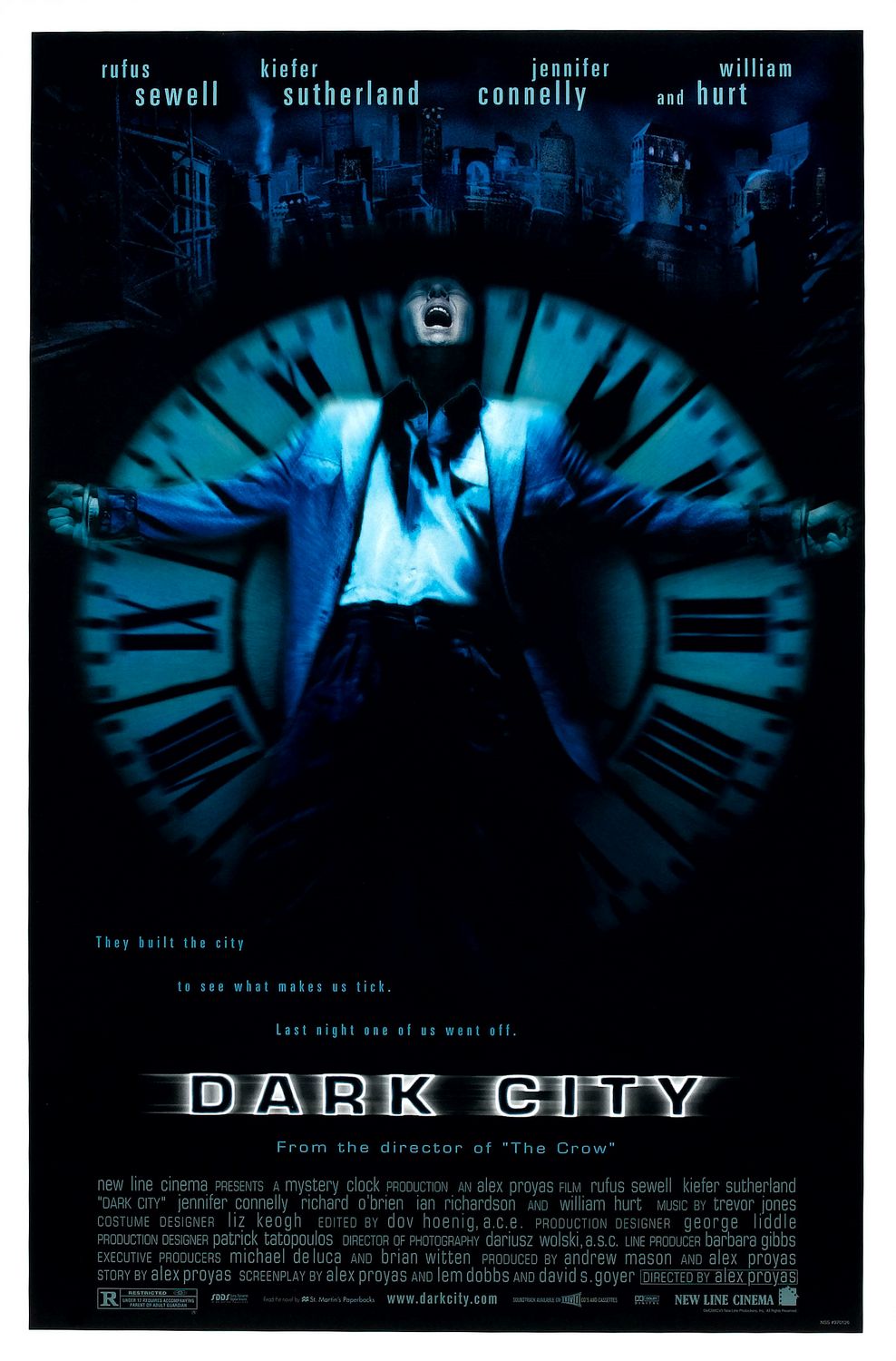
Alex Proyas followed up his brilliant adaptation of “The Crow” with this visionary sci-fi epic about a man who wakes up not knowing who he is, and of those who seek to capture him for their own twisted experiments. Like many great sci-fi movies “Dark City” was a box office flop upon its release, but it has since found an audience to where there’s no denying it is a cult classic. You’re along for the ride with Rufus Sewell as he tries to understand his place in a world ruled over by the Strangers. This movie remains suspenseful to the very end, and the look of the movie feels like no other I have ever seen. Jennifer Connelly also stars in the film and looks beautiful as always, and it is interesting to watch Kiefer Sutherland play a complete wimp after watching him for so long on “24.”

7) Out Of Sight
Out of Sight movie poster

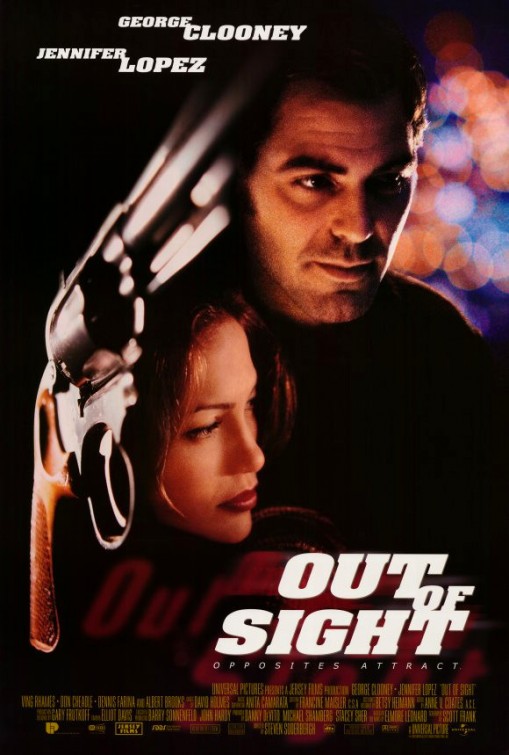
Here’s the film which brought Steven Soderbergh and George Clooney together, and it also serves as one of the very best adaptations of an Elmore Leonard novel. With “Out of Sight,” Clooney proved without a doubt there was going to be life for him after “ER” with his performance as Jack Foley, the most successful bank robber in America. When Jack escapes from jail, he ends up sharing some trunk space with Federal Marshall Karen Sisco (Jennifer Lopez). “Out of Sight” also marked the beginning of a career resurgence for Soderbergh, and he got to work from a truly great screenplay written by Scott Frank. Also starring is the fantastic Catherine Keener, Ving Rhames, Steve Zahn, Dennis Farina, Isaiah Washington, and the always reliable Don Cheadle. This movie was a lot of fun, and Clooney and Lopez had such great chemistry together.

6) Rushmore
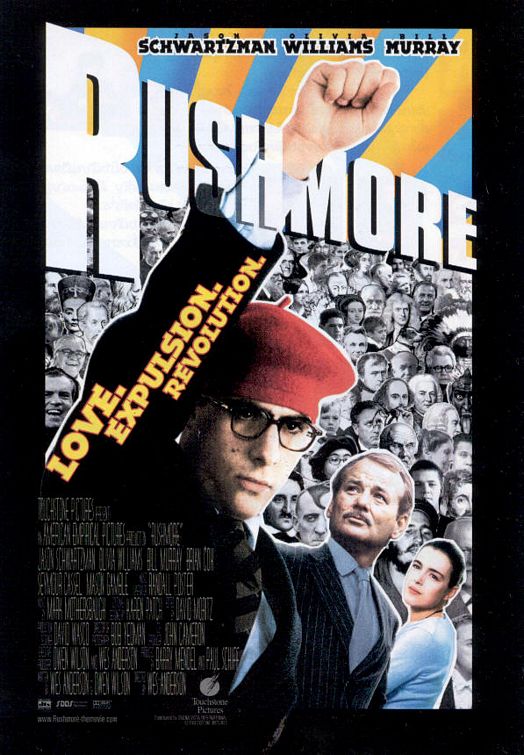
Rushmore movie poster

This was my introduction to the highly creative world of Wes Anderson. “Rushmore” is an instant comedy classic with more depth to it than many others of its genre at the time. Max Fischer is an original eccentric character; a young man involved in just about ever extra-curricular activity at school, all at the expense of his report card. Jason Schwartzman is great fun to watch as Max, and Bill Murray gives a performance which damn well should have earned him an Oscar nomination for Best Supporting Actor. With Anderson, his comedy is fueled by the sadness and isolation of his characters, and of the things they desperately want in life. “Rushmore” is filled with as much meaning as it does laughter as both Schwartzman and Murray battle over the same woman played by Olivia Williams. It also owes a lot to the late Mike Nichols’ enduring classic “The Graduate.”

5) Happiness
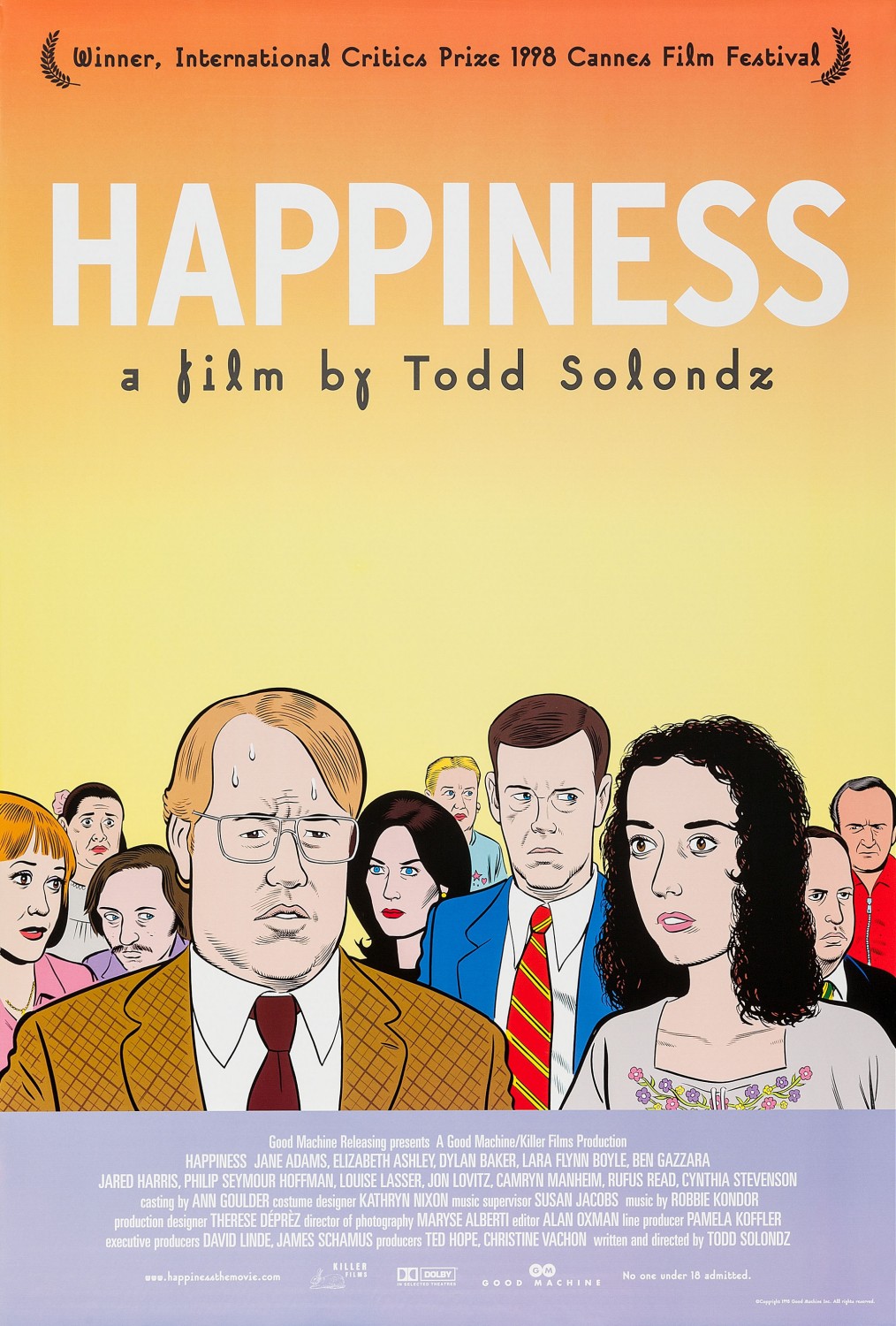
Happiness movie poster

Todd Solondz’s follow up to “Welcome To The Dollhouse” may very well be the most ironically titled film in cinema history. Controversy followed “Happiness” all the way to its release, and the MPAA of course just had to give it an NC-17 (it ended up being released unrated). One of the blackest of black comedies ever, it follows the lives of three sisters and the various people who are a part of their fragile lives. The late Philip Seymour Hoffman gives a frighteningly memorable performance as an obscene phone caller, and it was one of the first real examples of the brilliant character actor we came to see him as. But the bravest performance comes from Dylan Baker who plays Bill Maplewood, a psychiatrist, husband and loving father who, unbeknownst to his family, is a pedophile. Baker ends up making you empathize, but not sympathize, with a man who we would instantly despise once we discovered his terrible secret. As unappealing as these characters may seem, Solondz makes us see ourselves in them and to where we cannot see we are not all that different.

4) The Big Lebowski
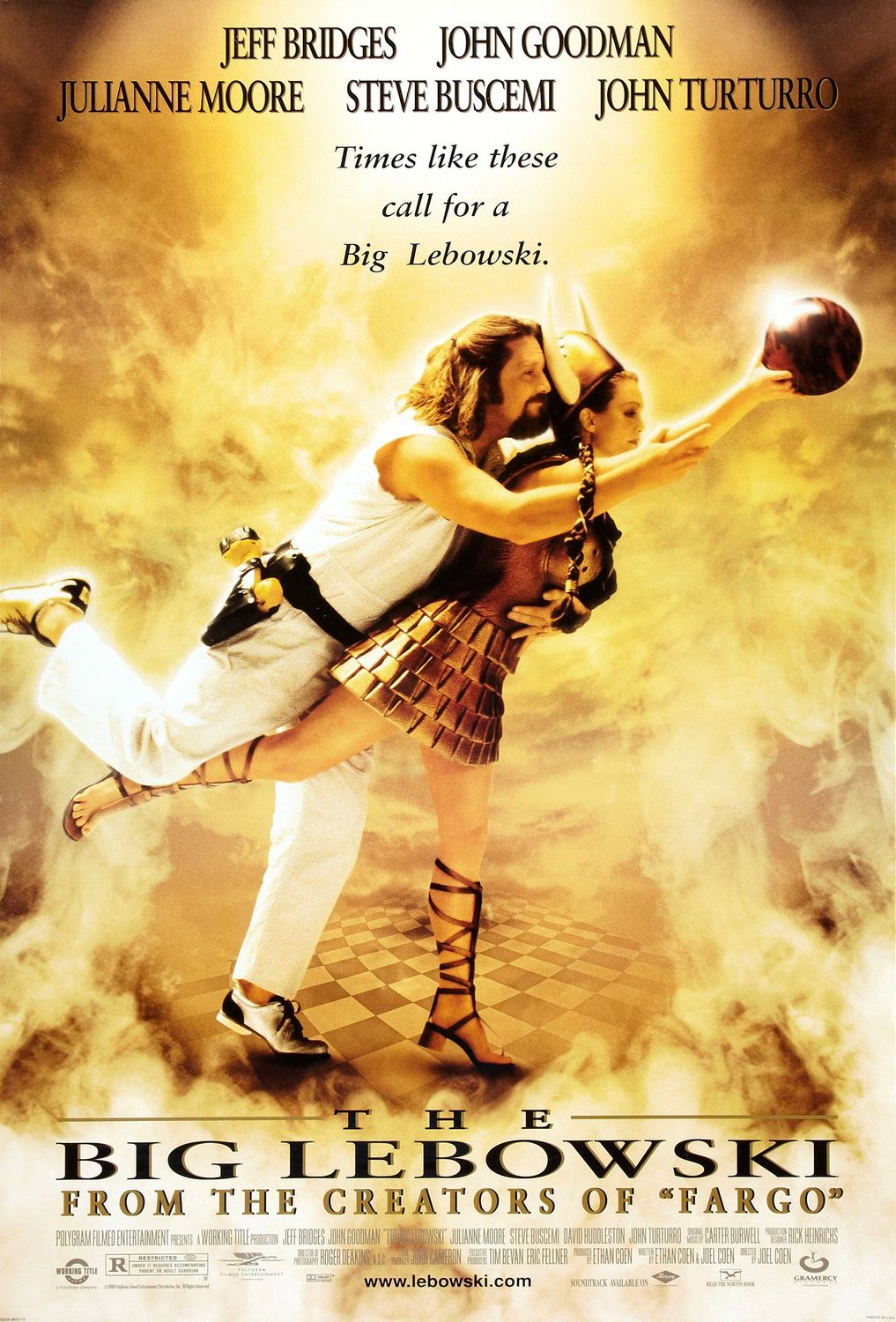
The Big Lebowski movie poster

I didn’t get to see this when it first came out in theaters, but my parents did eventually strap me down in a chair to watch it, and this should give you an idea of how much they love it. The Coen brothers follow up to “Fargo” did not get the same reception when originally released, but it has since built up an amazing cult following. Much of this is thanks to Jeff Bridges’ brilliant performance as Jeffrey Lebowski, aka “The Dude.” What could have been a performance built on stereotypes of the slackers we know in life turns out to be perhaps the most memorable character in Bridges’ long and underappreciated career. It’s an ingenious comedy with not so much a plot as a connected series of events which start with the theft of Lebowski’s carpet which he says “tied the whole room together.”

3) The Truman Show
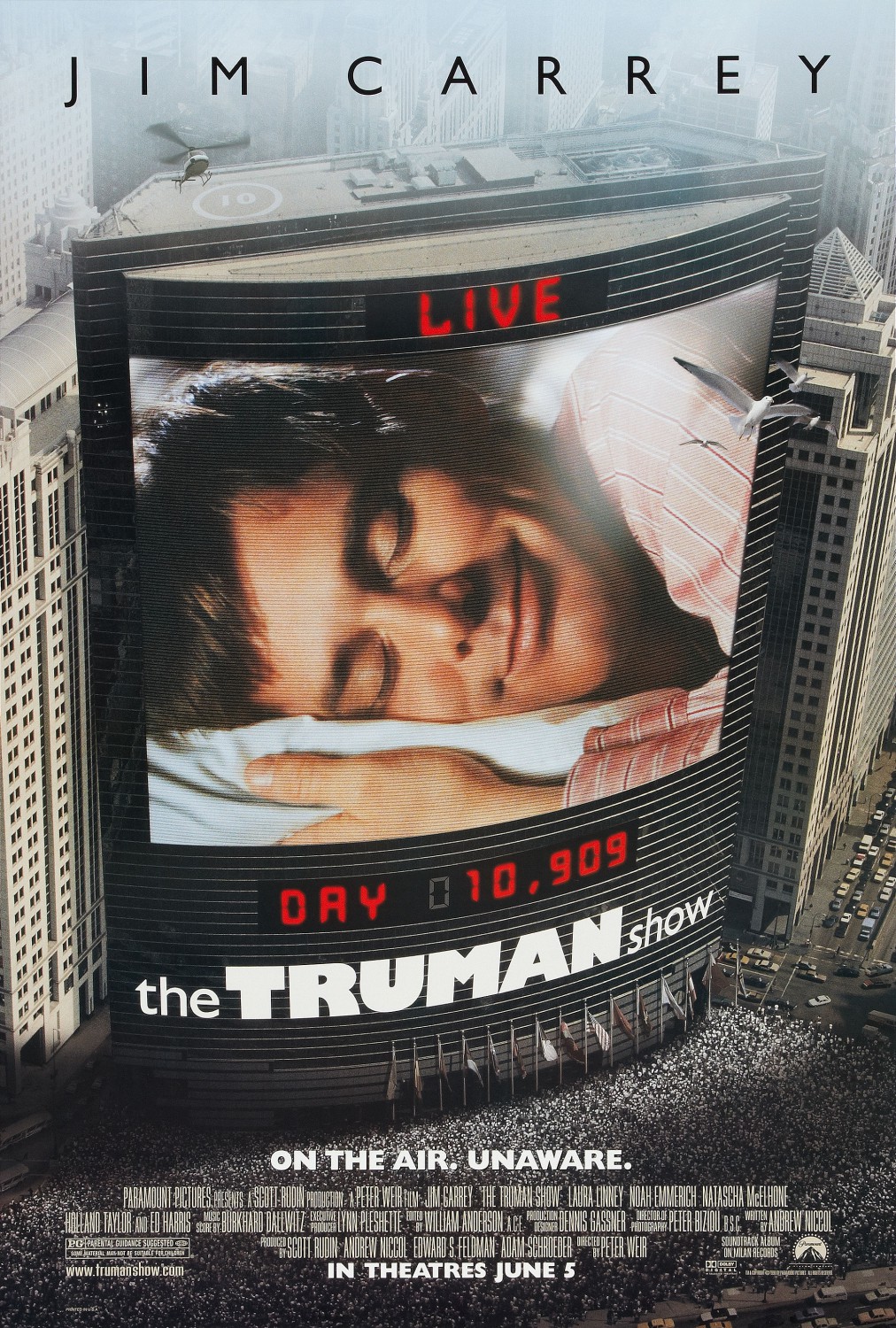
The Truman Show movie poster

It still seems criminal how Peter Weir’s film was surprisingly, and infuriatingly, snubbed for a Best Picture nomination. Jim Carrey gives a truly astonishing and powerful performance as Truman Burbank, a man who slowly becomes aware he is the star of a reality show about his life. Yes, he should have been nominated for an Oscar alongside his co-star Ed Harris, but there will always be the unforgivable snubs. “The Truman Show” has become a prophetic movie of sorts as reality shows are the norm in today’s culture, and this obsession we have over them remains very strong to this day. Andrew Niccol’s screenplay was a brilliant examination of how we might view our own life if we found out it was based on a lie, and that everything we know is actually wrong. This stands as one of Weir’s best American movies in a long and justly acclaimed career.

2) Shakespeare In Love
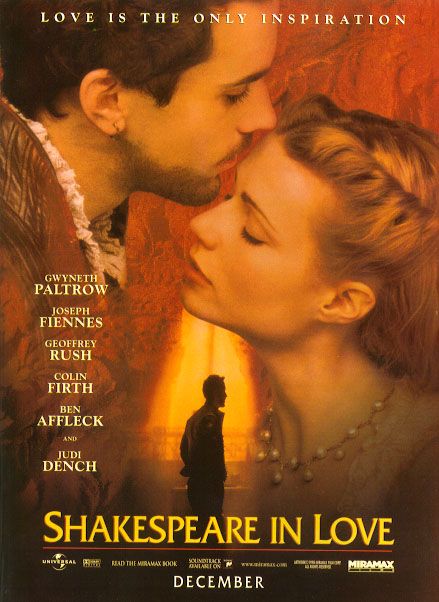
Shakespeare in Love movie poster

While it may have gotten overwhelmed by Miramax’s Oscar campaign, there’s no denying “Shakespeare In Love” is a brilliant and highly entertaining romantic comedy. The film tells the story of how Shakespeare goes about writing “Romeo & Ethel The Pirate’s Daughter” which eventually evolves into “Romeo & Juliet.” Gwyneth Paltrow gives a most entrancing performance, and I loved watching her every second she appeared onscreen. Joseph Fiennes is perfectly cast as Shakespeare himself, a passionate writer who is hopelessly enamored with Paltrow’s Viola. I also got a huge kick out of Geoffrey Rush’s performance as theater manager Philip Henslowe, a brilliant comic creation who steals every scene he is in. “Shakespeare In Love” serves as not just a great story of how Shakespeare may have written one of the most immortal plays ever, but also as a great satire of the film industry and how it deviously profits from unsuspecting participants.

And now, drum roll please…

1) Saving Private Ryan
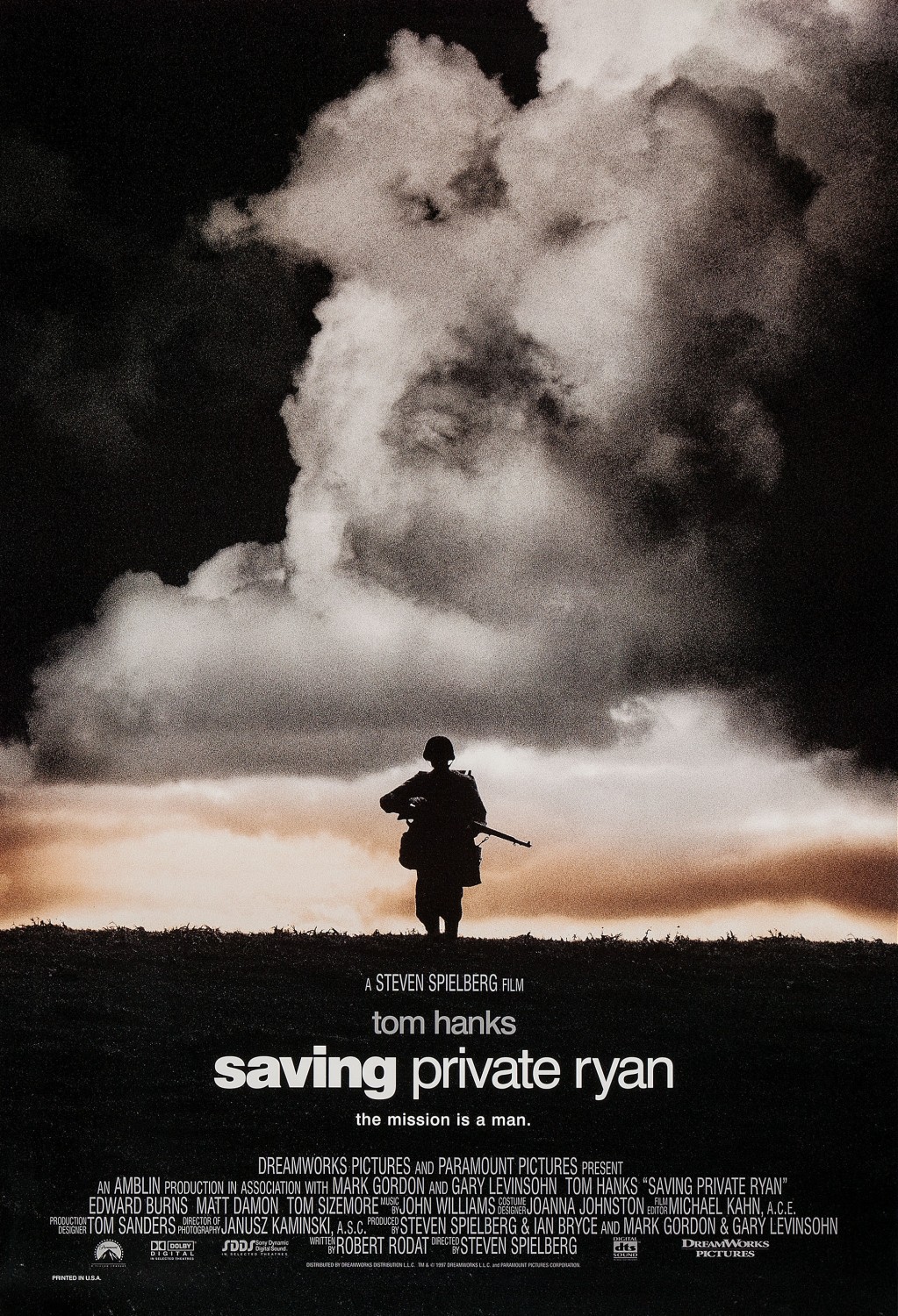
Saving Private Ryan movie poster

It would be so easy to put this as my top choice thanks to some of the greatest and most vividly realistic depictions of war ever put on film. Steven Spielberg’s depiction of the landing on D-Day is nothing short of amazing, and it was one of the reasons why I saw this film five times before it came out on DVD. But moreover, it is a deeply respectful salute to those war veterans who served in the armed forces during World War II. “Saving Private Ryan” is filled with great performances from a great cast of actors including Edward Burns, Jeremy Davies, Giovanni Ribisi, Tom Sizemore, Adam Goldberg, Vin Diesel, Matt Damon, and Barry Pepper among others. But it also has one of Tom Hanks’ best performances ever as Captain John Miller, a military man who leads his men to find Private Ryan and bring him back home to his grieving mother. Just when you thought Spielberg had peaked with “Schindler’s List,” he gives us yet another astonishing piece of filmmaking which shows him at the height of his powers.

Honorable Mentions:

Primary Colors – Great Mike Nichols movie based on the book by Joe Klein. It features great performances from John Travolta, Emma Thompson, Kathy Bates as well as an extraordinary cameo from Mykelti Williamson.

Bullworth – Warren Beatty’s scathing political satire may be a bit too broad, but it is a very effective indictment of how the Democratic Party let the American people down.

Elizabeth – Definitely worth mentioning for the brilliant breakthrough performance of Cate Blanchett as Queen Elizabeth.

Fear & Loathing in Las Vegas – Terry Gilliam’s adaptation of Hunter S. Thompson’s crazy novel is a true acid trip nightmare with Johnny Depp channeling the reporter all the way to what he was famous for wearing and smoking.

God Said, Ha! – Wonderful concert film of Julia Sweeney’s one-woman show which deals with the time her brother got cancer, and of how she later got cancer herself.

Hurlyburly – Film adaptation of David Rabe’s play dealing with Hollywood players and their dysfunctional relationships with one another. Features a great cast which includes Sean Penn, Chazz Palminteri and Anna Paquin among others.

Affliction – Another emotionally bruising movie from Paul Schrader which is based on the novel by Russell Banks. Features career high performances from Nick Nolte and the late James Coburn who deservedly won an Oscar for his work.

Next Stop Wonderland – An eccentrically unusual kind of romantic comedy which helped introduce actress Hope Davis to a wider audience.

Ronin – One of the last films from the late John Frankenheimer which stars Robert De Niro, Jean Reno, and Jonathan Pryce among others. It also features some of the very best car chases of the 1990’s.

Run Lola Run – Kinetic German thriller with Franka Potente that views her attempts to save her boyfriend’s life in three different ways. This was a great teaser for what would come in 1999, when movies of different kinds proceeded to change the rules of where a story could go.

The Thin Red Line – Terrence Malick’s first movie in over 20 years threatened to be more meandering than anything else, but it is filled with such powerful imagery and to where many considered it more anti-war than “Saving Private Ryan” was.

John Carpenter’s Vampires – It was advertised as a horror movie, but it is really a more of a western and the closest John Carpenter has ever come to making one. James Woods’ performance alone is worth the price of admission as he plays the most badass of vampire hunters, Jack Crow.

Star Trek: Insurrection – Much better than its reputation may suggest, being an odd numbered Star Trek movie and all.

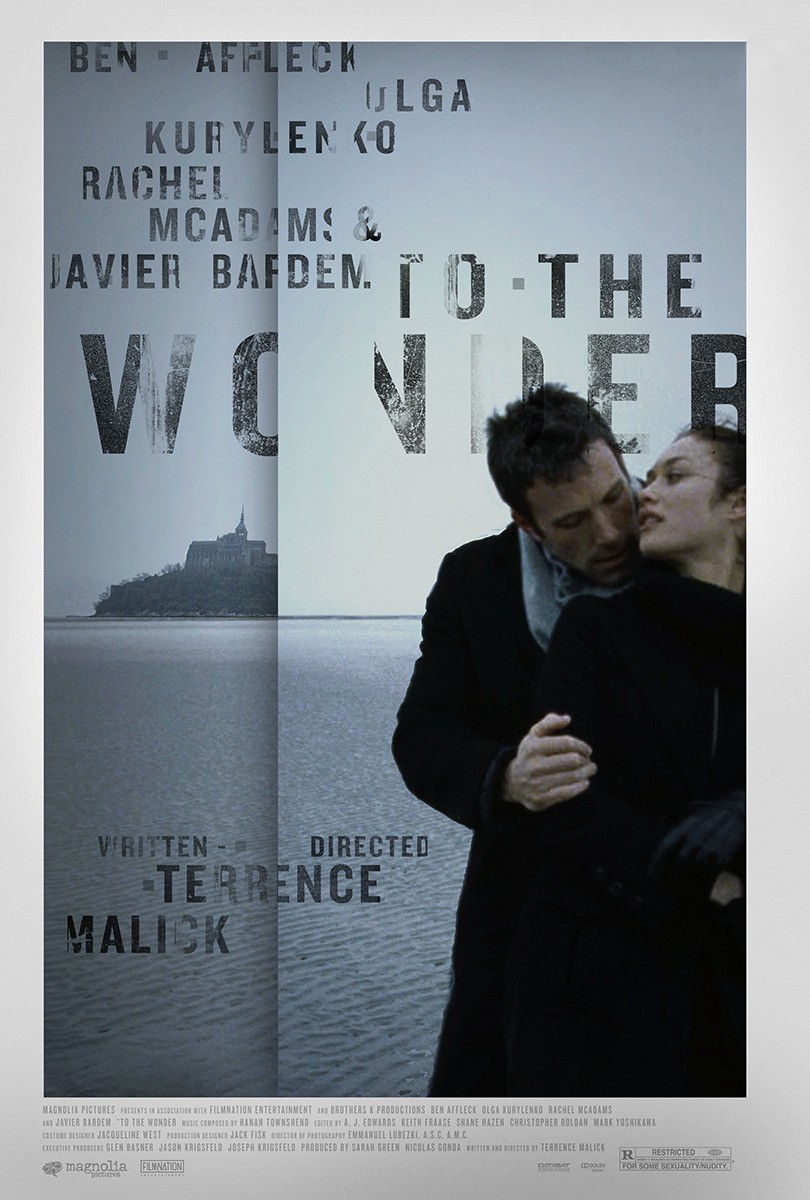


Knight of Cups

knight-of-cups-poster

Ever since he ended his decades-long hiatus with “The Thin Red Line,” Terrence Malick has been very prolific as he keeps putting out one beautifully poetic film after another. He also remains a filmmaker people either love or hate as his work leaves audiences deeply polarized. His seventh film, “Knight of Cups,” is unlikely to change the perceptions people have of him, but those who admire him will find much to take in. It’s also a film which has what many of Malick’s films lack: a straightforward narrative.

“Knight of Cups” takes its name from the tarot card which, when held upright, represents change and new excitements especially of a romantic nature, and it can mean opportunities and offers. When the card is reversed, however, it represents unreliability and recklessness and indicates false promises. But moreover, the Knight of Cups is a person who is a bringer of ideas, opportunities, and offers, and who is constantly bored and in need of stimulation. This person is intelligent and full of high principles, but he is also a dreamer who can be easily persuaded or discouraged.

The knight of Malick’s film is Rick, a Hollywood screenwriter played by Christian Bale. When we first meet Rick, he looks to be living the high life as he attends parties in Los Angeles which look as decadent as they come, but while he looks to be enjoying himself, those famous Malick voiceovers reveal him to be a lost soul who finds he is not living the life he was meant to. From there he goes on a journey to find an escape from the emptiness he feels and discover more about himself.

The film is divided into chapters named after tarot cards as Rick engages in relationships with different women as he searches for love and a sense of self. We also get to see the troubled relationships he has with his father Joseph (Brian Dennehy) who looks to have been driven insane by the hardships of life, and his brother Barry (Wes Bentley) whose life had been derailed by a drug addiction he has since gotten clean from. Throughout we get the usual Malick-isms of voiceovers, characters staring out into space and wanting to speak truthfully to those closest to them, and it’s all captured with a poetic beauty which continues to make Malick one of the more unique filmmakers working today.

Malick has the good fortune of working with the brilliant cinematographer Emmanuel Lubezki who just won his third Oscar in a row for “The Revenant,” and Lubezki captures the decadent landscapes of Los Angeles and Las Vegas with an inescapable beauty they don’t always have in reality. But he and Malick also capture the banality of them which quickly infects Rick’s soul, and the scenes where Bale is swimming in the violent ocean and wandering through a barren wilderness illustrates how inescapable his loneliness is.

It is said Malick shoots his films without a screenplay and instead gives the actors a storyline to improvise off of. This puts actors on an emotional tightrope which challenges them in ways they don’t often get challenged on, and the cast of “Knight of Cups” more than rises to the occasion. Bale is one of those actors who never backs down from any acting challenge given to him, and he gives yet another compelling performance in a career full of them. It’s also great to see Brian Dennehy here as this is the kind of film role we don’t always see him in, and it serves to remind us of how powerful an actor he can be when given the right role.

The movie also features a number of remarkable actresses playing the various lovers of Rick, and they all stand out in their own individual ways. Cate Blanchett, Australia’s answer to Meryl Streep, plays Rick’s physician ex-wife who still feels a connection to him even though she can’t quite get through to him. Imogen Poots rivets as the rebellious Della, Teresa Palmer makes Karen a most spirited and playful stripper who can seduce anyone with what seems like little trouble, and Frieda Pinto is the definition of serenity as Helen.

But one performance I was especially impressed with was Natalie Portman’s as Elizabeth, the woman Rick had wronged. After all these years, Portman remains a wonderfully vulnerable actress who is incapable of faking an emotion. She makes you feel the pain Elizabeth goes through, and you can’t take your eyes off of her for one second.

“Knight of Cups” proves to have a more straightforward narrative than Malick’s other films, and that’s saying something. His last film, “To the Wonder,” was good, but it meandered all over the place as he couldn’t decide which story was the more important one to tell. This time, however, he manages to stay with Rick and his romantic adventures for the majority of the film’s running time. It does veer off slightly when we get introduced to Antonio Banderas who plays the ironically named Tonio, a playboy who loves the company of more than just one woman. Considering Banderas’ recent stormy divorce from Melanie Griffith, his part in this film feels a bit voyeuristic as it seems like he is simply playing himself and explaining why his marriage to her fell apart.

“Knight of Cups” doesn’t reach the cinematic heights of “The Tree of Life” or “Days of Heaven,” but it is still a must for Malick’s fans as few other filmmakers can make a movie the way he can. Some will call it self-indulgent and complain it focuses on individuals who have it a lot better than the working class of America, but for those who relate to the journey Rick takes here, it is an immersive experience which leaves you guessing as to the possibilities open to him at the film’s conclusion.

It’s also worth watching to see characters drive their cars on the empty roads of Los Angeles at night. Anyone who lives in Los Angeles knows the roads are never that empty during the day, so it’s nice to know they are not always a traffic nightmare.

* * * ½ out of * * * *