Daniel Franzese Talks About ‘Bully’ at New Beverly Cinema
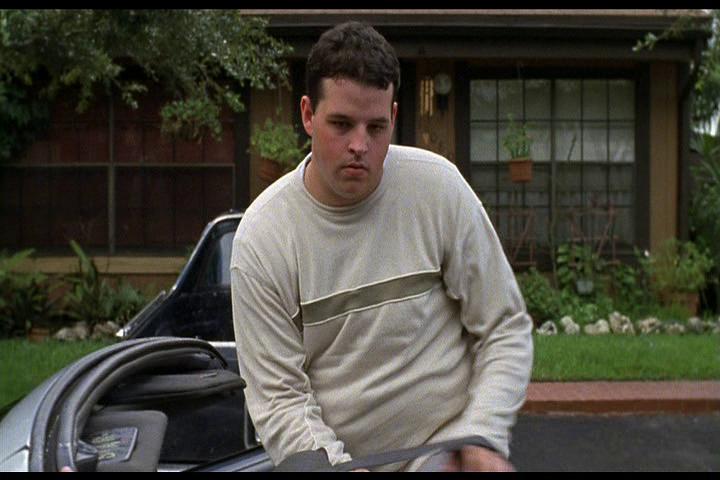
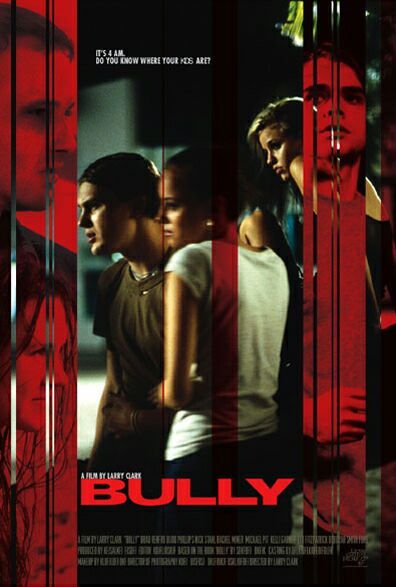
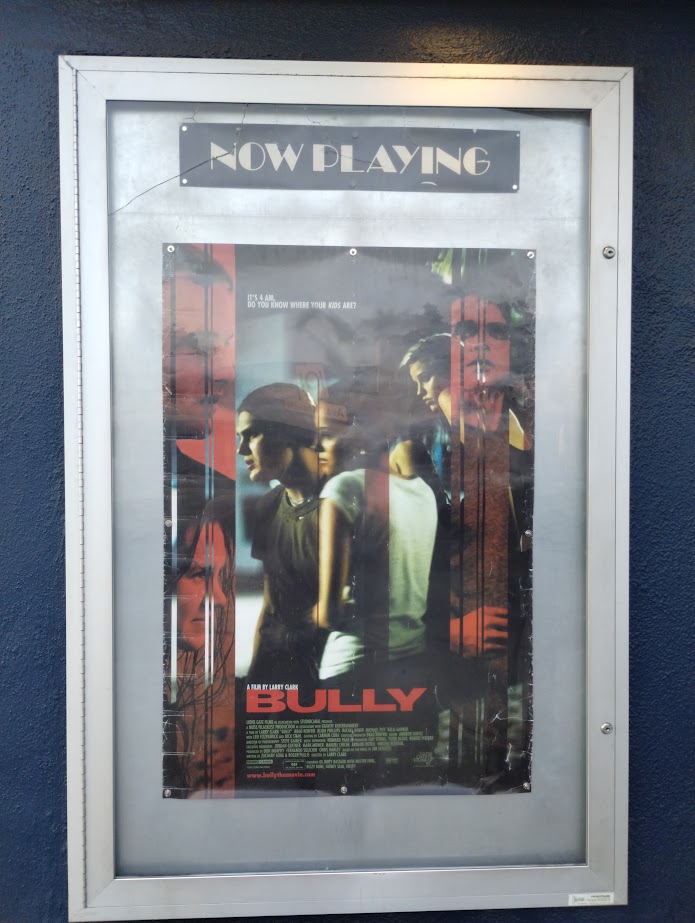
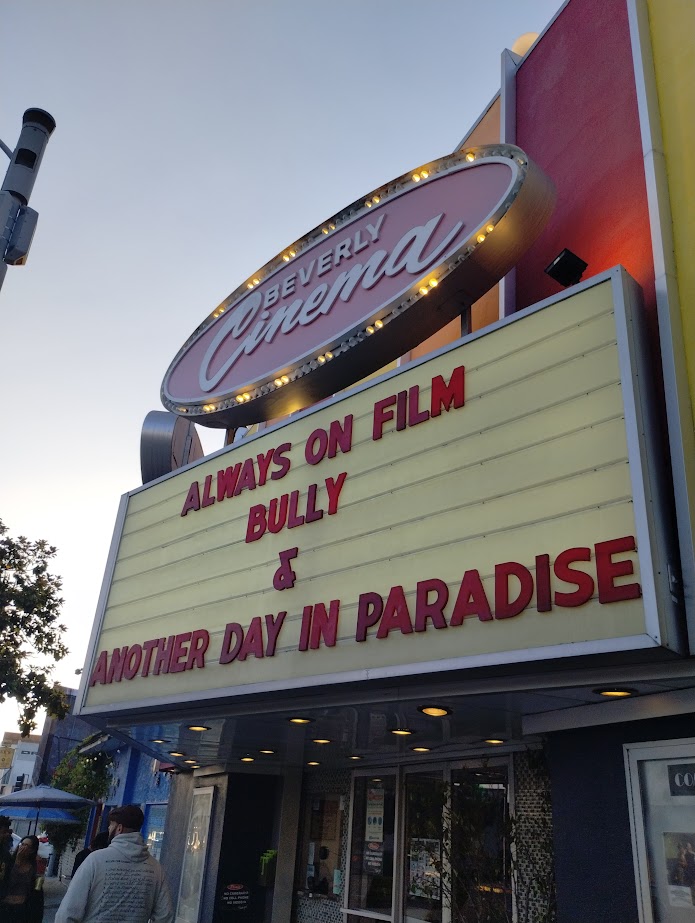
On August 12, 2025, New Beverly Cinema presented a Larry Clark double feature of two of his films: “Bully” and “Another Day in Paradise.” Before “Bully” unfolded on the silver screen, actor and filmmaker Joel Michaely brought out a special guest: Daniel Franzese who played Derek Dzvirk. “Bully” was Daniel’s film debut, and it quickly earned him his SAG card. Daniel thanked Joel for being there and remarked how he killed Joel once in a horror movie entitled “Cruel World” where he shot him in the head.

Daniel said “Bully” was the first time he ever got to hold a screenplay in his hands, and he talked about meeting the casting director, Carmen Cuba, at his audition.
Daniel Fransese: She was like, “Do you wanna see who you are going to play?” I said okay, and she opened up the true crime novel (written by Jim Schutze), and I looked exactly like the guy. And I was just like, oh shit! I can actually get this! So, it was very scary and nerve wracking.”

Rumors are that the set of “Bully” was a crazy one, and being that this was Daniel’s first film as an actor, you can understand and appreciate his feelings at the time.

DF: I’m a pretty easy-going guy, and I am also a theatre guy and a standup comedian. I’m used to being around other people, and I am good at getting along with different personalities. But this movie was next level. we are getting ready to do fittings and start our first day of this movie, and Larry (Clark) is screaming because Brad (Renfro) was in jail for trying to steal a boat. He’s screaming, “This was three years of my life! This kid’s not going to ruin it!” He’s throwing papers and I was like, whoa! That was day one and you can just imagine how the stress level got worse from there.

From there, the discussion went to the late Brad Renfro who played Marty Puccio in “Bully.” Brad first gained worldwide attention at the age of 12 years old when he was cast as Marcus “Mark” Sway in Joel Schumacher’s cinematic adaptation of John Grisham’s “The Client.” Like many people on this planet, let alone actors, he died at far too young an age He was only 25 years old, when he passed away after a drug overdose. Daniel talked about working with Brad.
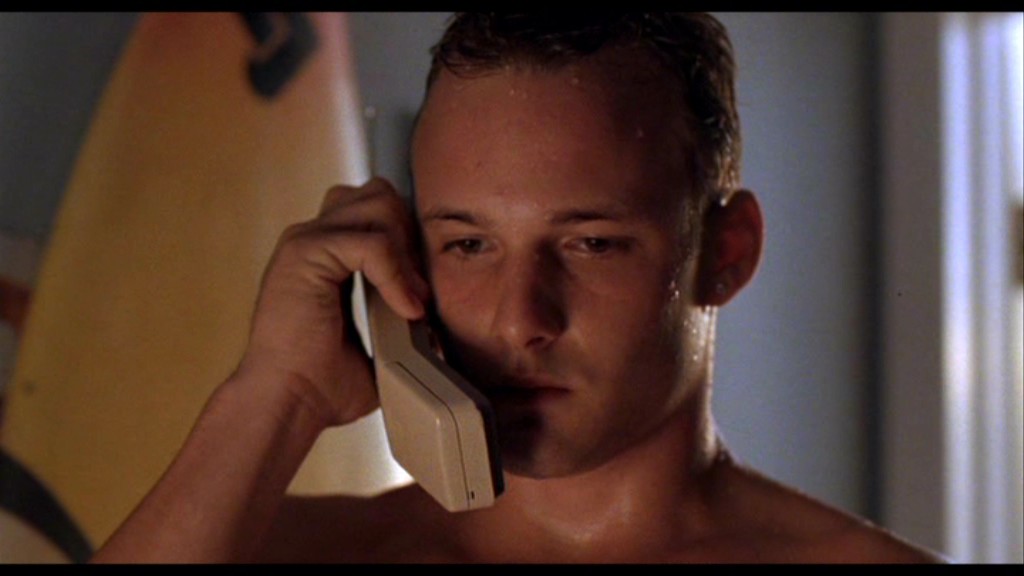
DF: Brad was great. I think he was like one of those golden retriever type people. Not evil, but dangerous. We were doing the table read for the first time, and Brad showed up wearing a white tank top completely soaked in lighter fluid. He came in saying, “I’M TRYING TO GET THE BARBECUE TO GO!” It was like, whoa! He was from Knoxville and had like that “Jackass” sensibility where you didn’t know what he could do, but I don’t think he ever had a mean bone. His intentions were always nice. If anything, he partied too much, and he once told me that at 12, he made hundreds of thousands of dollars to do “The Client,” and he was getting a lot of his drugs and stuff from family members as a kid. I don’t think he got a fair shot. If anything, the reason why I advocate for younger people in Hollywood or talked about my experiences on this movie which were crazy, I was never speaking from a victim place. I was speaking from a place of advocating for people like Brad who didn’t have anyone saying anything for them. I just think, we’re making art. It doesn’t have to be that crazy. We don’t have to be stealing boats or going nuts on sets to produce good material.

After “Bully,” Daniel went on to appear in many films, but he may still be best remembered for playing high school social outcast Damian in 2004’s “Mean Girls.” Like Joel and myself, I wondered what it was like going from an independent film to a studio movie where everybody is expected to be on their best behavior.

DF: I just don’t think the 2000s will be looked upon as a time where it was easy for people on movie sets. I really don’t. People always ask me all the time how to get their kid in Hollywood, and I say don’t. I waited until I was at least in my 20’s (before going to Hollywood), and that’s the only thing which might have saved me. A lot of our contemporaries are not around with us anymore or are in a crazy state. It was a rough time. I can’t say it was easier or better, but I think it’s better now.

Regardless of the crazy set, Daniel made it clear to the New Beverly audience what the experience of making “Bully” was like, and of how the filmmakers strived to capture the spirit of the true story it is based on.
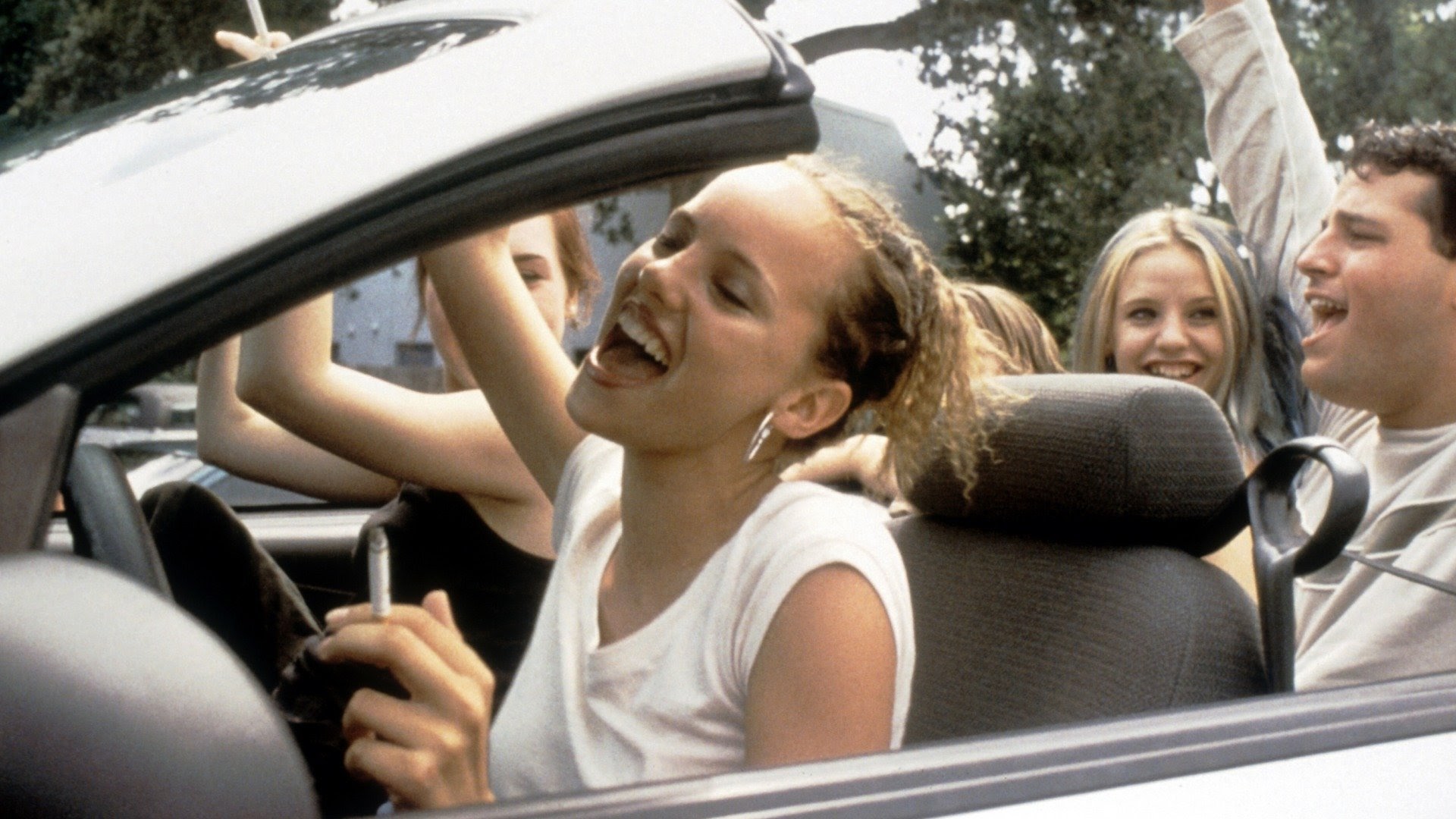
Bully (2001) Directed by Larry Clark Shown in foreground: Bijou Phillips

DF: On a positive note, though, this movie was awesome. It was so fun to make. Larry was cool, the people I was working with were all like people from Thrasher Magazine, it was just like bad ass people. They did shoot in the real locations; it was the real apartment complexes, and it was the real Pizza Hut (we shot in).

Daniel also made it clear how he was the only local hero for hire in Larry Clark’s “Bully.”

DF: They were scouting locations for the gay clubs, and I was just a young kid just figuring that stuff out and performing at the clubs with people I was in musical theatre with and stuff like that. They were like hey we’re making a movie, and I’m like I’m an actor! I had no idea it was going to turn into this. Carmen Cuba, she discovered a lot of people, and I give her all the credit for plucking me out of obscurity and putting me with these people.

An audience member told Daniel that he was from South Florida, and this led Daniel to talk about when he worked at The Gateway Theater in Fort Lauderdale as a kid. a year later, “Bully” premiered there. Daniel found his road from being an usher to a working actor to be honestly insane.

DF: I was there at the theater going, would you like the popcorn combo? I am a movie lover. I worked at Blockbuster (Video), I worked at movie theaters, that’s all I did. Until I was able to support myself as an actor, I was either an usher in theatre or worked at movie theaters. It (“Bully”) was shot in Fort Lauderdale and the whole crew got their premiere at the movie theater where I worked at. So, whoever served me popcorn today, keep writing your scripts.

Like many, Daniel Franzese considers New Beverly Cinema to be one of his favorite places in Los Angeles, and that it was extra special for him to see “Bully” being screened there on 35-millimeter film. To see films presented there in their original format, something often not available to movie buffs in most places, means a lot to him.
‘Paddington in Peru’ is a Wonderful Adventure Not Just for Kids, But the Whole Family

I initially avoided the “Paddington” movies upon their initial release. Watching the trailer for the first one had me under the belief that the filmmakers were determined to dumb down the classic works of Michael Bond as I watched the beloved bear clean out his ears with toothbrushes and almost eating what was on them. Yuck! Plus, Colin Firth, who was originally supposed to voice Paddington, dropped out of the original film during post production, and this did not give me a lot of hope for the final version which was eventually going to be unveiled before a worldwide audience.

Alas, I was proven wrong with not only “Paddington,” but also with “Paddington 2” which proved to be an even better film than the original. “Paddington 2” also earned a rare 100% score on Rotten Tomatoes for a time before some bastard critic made the blasphemous decision to give it that one negative review. I would shudder to call them kid movies as that would simply mean they were meant for a certain age group and only that one group. Truth is, these are movies for the whole family, just like the best Pixar films are, and they have something for every age group to enjoy. Hollywood does not make enough movies like them these days, and they threaten to become a rarity now more than ever before.

The same goes with “Paddington in Peru,” the third movie in this beloved franchise which arrives to us seven years after “Paddington 2.” After watching this marmalade loving bear and the only creature, animal or human, who can make a red hat look cool these days, brave the adventures London has thrust upon him, he now returns to Darkest Peru where he once grew up. This time, it’s personal! Granted, that last sentence was the tagline for “Jaws: The Revenge,” one of the worst films, let alone sequels, ever made, but it seems inescapably appropriate to use here.

His sudden exodus from London comes when he is told that his Aunt Lucy (voiced by Imelda Staunton) has gone missing from the Home for Retired Bears, and no one can find her. Joining him on this expedition is the Brown family: Henry (Hugh Bonneville), Mary (Emily Mortimer), Judy (Madeleine Harris), Jonathan (Samuel Joslin), and Mrs. Bird (Julie Walters). Through thick and thin, the Browns have had Paddington’s back even as this bear’s adventures have proven to be as exasperating as they have been thrilling.

What I really love about the “Paddington” movies is how wonderfully realized the human characters are. Just when I expected they would be rendered as one-dimensional doofuses, they prove to be more complex than the average family movie would allow them to be. I also love how the kids have evolved from then to now as this is not always the case in movies, let alone sequels.

And like any good sequel, “Paddington in Peru” does take the time to introduce new characters into the mix. Among them is Hunter Cabot, a tour guide and treasure hunter played by Antonio Banderas, who is clearly having the time of his life in this role. In addition, he gets to play many members of Hunter’s family from generations before him, and it results in one memorably hilarious moment after another.

But even better is the ever so brilliant Olivia Colman who steals every scene she has here as the Reverend Mother who oversees the Home for Retired Bears. She makes a grand entrance singing a song which almost turns “Paddington in Peru” a musical along the lines of “The Sound of Music,” and when she finished, the need to applaud her efforts was quite justified. Also, I love how her voice says one thing, but her eyes are quick to say something else. Seriously, watching Colman’s eyes dart back and forth is a wonderful delight throughout.

Hugh Bonneville remains an entertaining presence as Henry Brown who always goes from being an uptight dad to a loving and risk taking individual even when a tarantula presents an unwelcome presence in his life. I also love how Madeleine Harris and Samuel Joslin continue to grow into their roles as Judy and Jonathan, and watching them traverse the perils of adolescence into adulthood is a welcome sight for me. As for then lovely Emily Mortimer, she does a lovely job of stepping into the role once inhabited by Sally Hawkins of Mary Brown to where calling her a replacement would be insulting and unfair to both her and Hawkins.

And at the center of it all is Ben Whishaw who once again voices Paddington to where it would be unthinkable to consider anyone else in this role. Right from the start, Whishaw has given this bear we all want to look after a solid dignity and politeness which might seem far too easily manipulative in the hands of any other actor. Some will be quick to say that the computer did all the work for Whishaw here, but he adds to the visual effects in an immeasurably way to where when Paddington gives an adversary that hard stare, he makes that stare even harder than it already is, and we should all be expecting that at some point here.

Of all the “Paddington” movies to date, “Paddington in Peru” is the least of the three. I don’t say this to degrade it in any way as saying the least does it more justice than calling it the worst as doing so would be a grave insult. Granted, this one threatens to be a more formulaic adventure movie as we watch Paddington go from unfamiliar surroundings to more familiar ones, but this sequel still proves to be a wonderful adventure for all ages, and that is saying quite a bit in this day and age.

And, as always, I leave you with the immortal words of Michael Bond which continue to speak volumes:

“Please look after this bear. Thank you.”

Also, when it comes to the online attacks Tony Farinella and I continue to get, I feel the need to add this:

“Please look after this film critic. Thank you.”

* * * ½ out of * * * *

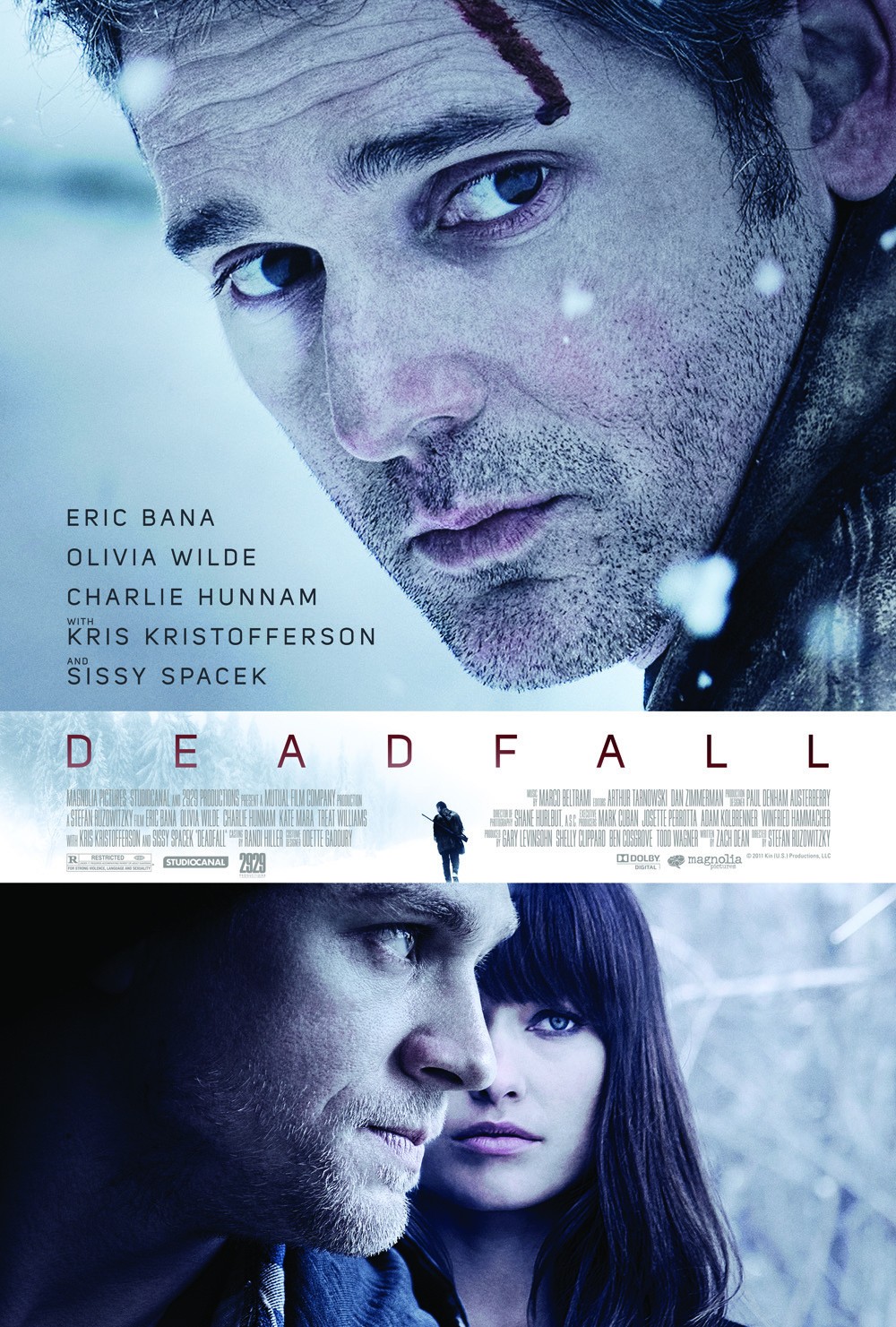
Charlie Hunnam on Acting in ‘Deadfall’ and Portraying a Former Boxer

WRITER’S NOTE: This article was written back in 2012.

Best known for his roles in the film “Green Street Hooligans” and on the television series “Sons of Anarchy,” actor Charlie Hunnam gets to do a variation on his tough guy image in “Deadfall.” Directed by Stefan Ruzowitzky, he portrays Jay, an ex-boxer who has just been released from prison. He is contemplating going back home to have Thanksgiving dinner with his parents, but things go awry for him after he seriously injures, albeit accidentally, his former coach who had betrayed him. Fearing he will be sent back to jail, Jay flees the scene and goes on the run.

While talking with Christina Radish of Collider, Hunnam said there was “real poetry” to Zach Dean’s script when he first read it and that he related to Jay’s frustration and anger over how his life felt completely out of his control. When actors study and prepare to play a role, they are always expected to go over the similarities they share with their characters as well as how they are different from them. Hunnam found that his life as an actor was similar to Jay’s career as a boxer.

“I thought that was really interesting and I could relate to it, in a way, living in Hollywood,” Hunnam told Radish. “I’m very disciplined and I have a very clear idea of how I want to be spending my time, but I’m at the mercy of everybody else who decides how I get to spend my time and whether I get to work or not. In classic storytelling terms, with the classic hero’s journey and contemporary male narrative, a man being released from prison is a dynamic that I was predisposed to be interested in and like.”

The other interesting thing Hunnam brought up in his interview with Radish was how Jay was a successful athlete. Now in crime dramas like “Deadfall,” we typically expect boxers like Jay to have failed in their profession in one way or another, be it through drugs or some sort of gambling controversy. But here, Jay proves to be a victim of circumstance which has rendered his past achievements non-existent.

“This guy seemed like a guy who had dedicated his entire life to this goal of becoming a world class athlete and actually achieved it,” Hunnam said of Jay. “We just all inherently understand the dedication and sacrifice that is needed to achieve that because we’ve all grown up watching professional athletes on TV, so I understood that. He seemed like a guy where it was day one of the rest of his life. He had ruined the prior 30 years and he was coming out completely with nothing, at all.”

One of the best things about “Deadfall” is how beautiful the snowy landscapes look and how brutally cold they appear. I got to attend the movie’s press conference at the Four Seasons Hotel in Beverly Hills, and it was surprising to hear Hunnam say how he looked forward to working in the freezing cold. Many actors would give anything not to work in such frigid temperatures, but for Hunnam it offered a change of pace. Still, he did find the snow to be a challenging environment to work in.

“I had actually been really excited about a period in the cold weather because we shoot ‘Sons of Anarchy’ in LA through the course of the summer, and I’m a skinny guy who wants to look as big as possible so I wear several layers of clothing; it gets really old being that hot,” Hunnam said. “But I must say that a couple of days in, I was craving the sunshine. You know when you’re really hot you get miserable and a little bit grumpy, but the cold is really debilitating.”

Hunnam did take the time to train as a boxer which helped him better understand his character. It also turned out he had a unique way of getting into Jay’s psyche which he accomplished by working out a lot and then suddenly stopping. Anyone who has exercised a lot at the gym and then stopped for a period can clearly understand how difficult it is to start all over again.

“I’ve also always been interested in boxing so I put myself through an intense boxing academy where I got up and ran five miles every morning and then went and had breakfast and boxed a couple of hours and then came home and watched fights all day long and then went and swam, and I did this seven days a week for five weeks before filming this movie. Then when I got to Montreal (where the film was shot) I wanted to stop completely and feel the absence, and I knew that was going to have a very negative effect on my psychology. It’s kind of a shortcut, rather than intellectually empathizing, to actually feeling the emotion. I got into a very dark and happy place during shooting because of that preparation,” Hunnam said.

Charlie Hunnam still has “Sons of Anarchy” to work on, and many are excited at what the show’s upcoming season finale has to offer. Up next for him is Guillermo Del Toro’s “Pacific Rim” in which he will be playing Raleigh Antrobus, a washed-up former pilot who has to defend the world by piloting a giant robot and fighting monsters who are rising out of the depths of the ocean. Thar one looks to be Hunnam’s biggest movie yet.

SOURCES:

Christina Radish, “Charlie Hunnam Talks DEADFALL, SONS OF ANARCHY Season 5, PACIFIC RIM, and Writing a Movie About a Drug Lord for WB and Legendary,” Collider, December 5, 2012.

Ben Kenber, “Interview with the Cast and Director of Deadfall,” We Got This Covered, December 7, 2012.

Eric Bana on Portraying Such a Charming Villain in ‘Deadfall’

WRITER’S NOTE: This article was originally written in 2012.

Watching Eric Bana as Addison in Stefan Ruzowitzky’s “Deadfall” will remind many of his breakthrough performance as Chopper Read in “Chopper.” Both films have him playing characters who are charming yet fearsome, and his unpredictability as an actor had us on the edge of our seats throughout. But hearing Bana talk about how he prepared to play Addison is a reminder to all actors on how to approach a role like this; the character may be a bad guy, but he’s still a human being with wants and needs like anybody else. It’s not just about acting evil all the time.

I was lucky enough to attend the “Deadfall” press conference at the Four Seasons Hotel in Beverly Hills, and Bana said he really liked Zach Dean’s screenplay and was “immediately compelled” by Addison. Bana described the character as being “quite hilarious actually,” and this was one of the main reasons he wanted to play him. It was interesting to hear him say that because funny is not an easy adjective to give to a character like Addison who can react violently without little or any notice. Bana, however, started out as a stand-up comedian and saw the opportunity to bring some darkly comedic touches to this role.

“I don’t think there was anything deliberately funny in Addison, but I think the situations that all the characters find themselves in and some of the things he does are inadvertently very funny,” Bana said. “It wasn’t like playing for laughs but I knew the audience probably would laugh at some of the ridiculous nature of what we’re all forced to do.”

Bana also went on to say he thought Addison was “morally straight” and that he really did not see the character as being a bad guy. Now while the crimes he commits in “Deadfall” certainly tell us otherwise, I really liked Bana’s approach to this role. It reminded me of a behind the scenes special on “Die Hard” where Alan Rickman talked about how he saw his character of Hans Gruber:

“As far as I’m concerned, I am not playing ‘the villain.’ I’m just playing somebody who wants certain things in life, has made certain choices and goes after them.”

The same can be said about Bana in the way he portrayed Addison.

“He had a strong sense of purpose in what he was doing and that is what makes those characters so scary, knowing you can’t really negotiate with him,” Bana said of Addison. “In his mind everything he’s doing is completely and morally correct and there’s a real reason for it. It’s not the actor’s place to judge, but I’m more than happy to be morally corrupt for a few months for the benefit of my career.”

This thought process was even more on display when Bana was interviewed by James Rocchi of MSN Entertainment. Rocchi talked about “Deadfall’s” first scene in which Addison’s car crashes and ends up shooting a state trooper in the process, and he described Addison as being spontaneous in his actions as this guy is thinking on his feet and improvising constantly. Bana explained that when the actor commits fully to their character’s actions, they should all come out naturally.

“I don’t like to think too much about what my physicality’s going to be here. I’d rather immerse myself in the character’s brain and allow my body to react accordingly,” Bana told Rocchi. “But that instance in the beginning of the film kind of sets in motion the rest of the stakes really for Liza (Addison’s sister who is played by Olivia Wilde) and Addison from that point on in that it just keeps getting worse and worse and worse. But you’re right. I mean he had no intention of shooting anybody. They got away from the casino, they got the cash, and all was going really well until that freaking deer popped out into the middle of the road and it all changed.”

Throughout “Deadfall,” Addison ends up engaging a couple of nasty fights, some of which are with Jay who is played by Charlie Hunnam (“Sons of Anarchy”). We keep hearing actors say how they did their own stunts in this or that movie, but we can never be too sure as the insurance people are usually dead set against that ever happening. But I believed Bana when he said that he did his own stunts in “Deadfall” because even he couldn’t hide the toll it took on his body.

“My neck was ruined,” Bana told Ariel Kashanchi of Screen Picks. “Charlie Hunnam beat the shit out of me. I don’t think I landed a punch. It was just like bang, bang. I remember after about five takes I was stiff all over and thinking ‘how much more can my neck take.’ I’m used to throwing punches and now I just have to just sort of take it. But it was kind of fun.”

“Deadfall” has received mixed reviews, but there is no denying Bana gives a riveting performance as Addison. Playing a charming bad guy is nothing new for this Australian actor, and he is still great at it. In a year of movies filled with truly intimidating antagonists, Bana’s performance deserves to be held up alongside the best of the bunch.

SOURCES:

Ben Kenber, “Interview with the Cast and Director of ‘Deadfall,’” We Got This Covered, December 7, 2012.

Alan Rickman: Hans Gruber is not a villain,” YouTube

James Rocchi, “Interview: Eric Bana of ‘Deadfall,’” MSN Entertainment, December 7, 2012.

Ariel Kashanchi, “Interview: Eric Bana on ‘Deadfall,'” Screen Picks, December 6, 2012.

‘Irreversible: Straight Cut’ – Gaspar Noe’s Infamous Film Still Packs a Devastating Punch

I remember when Gaspar Noe’sIrreversible” was released in 2002 and of the polarizing responses it received at the Cannes Film Festival and from audiences around the world. A rape and revenge story which, like Christopher Nolan’s “Memento,” is told in reverse and comprised of scenes done in long takes, it is still best known for two scenes of punishing ultraviolence: one in which Monica Bellucci’s character is raped in an underpass which lasts for almost ten minutes, and another where a man’s face is bashed in by a fire extinguisher to where he is no longer recognizable to anyone.

I never got to watch “Irreversible” when it played at a theater near me. Back in the day, I considered myself quite the adventurous moviegoer as I went out of my way to watch those films which did not often screen at the local multiplex because they were considered too disturbing for mainstream audiences. But after being so emotionally drained by “Breaking the Waves” and “Dancer in the Dark,” not to mention going through the cinematic equivalent of electric shock treatment that was “Requiem for a Dream,” I was not sure I could stomach what “Irreversible” had to offer, so I waited to view it on DVD where I could lower the volume or fast forward through the hard to watch parts.

Still, part of me regretted never having witnessed Noe’s unnerving film on the silver screen, and this is coming from someone who watched Larry Clark’s controversial “Kids” in a theater with his parents. But now, Noe has released a new cut entitled “Irreversible: Straight Cut,” and on top of it being remastered, it presents the story in chronological order this time around. The question, however, is if this cut will be just a mere gimmick.

The story remains the same with lovers Alex (Monica Bellucci) and Marcus (Vincent Cassel) going to a party along with Alex’s former boyfriend, Pierre (Albert Dupontel). But this straight cut starts with Alex and Marcus waking up after a night of passionate love making. I love watching this opening scene as the intimacy between these two characters, played by actors who were married at the time, as it is so lovely and unforced. So much attention has been paid toward those two unwatchable violent scenes that many forget about these scenes here. Seeing these two lovers together proves to be a wonderful sight as this intimacy is rarely shown enough in movies, and I came out of it feeling envious for Cassel as he got closer to Bellucci than I ever will.

From there, “Irreversible: Straight Cut” goes on a path which leads straight to hell as the road to it is always paved with good intentions. Alex is eager to bring Pierre along for the ride because she knows he gets along rather well with Marcus, and he still has feelings for her. Hearing Marcus and Pierre brag about who was better in bed with her played more strongly for me this time out in this chronological take. In fact, as we are thrust more deeply into one of “Irreversible’s” main targets which is toxic masculinity. Marcus is so consumed with rage over what happened to Alex that he is utterly impulsive and not using anything resembling common sense. Pierre is infinitely desperate to make Marcus see that he would be better off staying in the hospital with Alex rather than trying to seek vengeance and, even though I have long since seen the original cut, I found myself hoping Pierre would succeed this time around.

With “Irreversible: Straight Cut,” Noe has done an excellent job of making this version more than just a mere gimmick. The edits between each scene feel as seamless as they did before, and our attention is now glued to what may happen as opposed to what has already transpired. The more I watched this cut, the more I came to see how it dealt more with the uncontrollable impulses of man to where anything can happen, and this makes the final outcome all the more devastating. Truth be told, the events portrayed here remind me of all those moments I would love to get back as they created a level of damage I never intended.

As for the elongated rape scene, it remains as brutal and unnerving as ever. I did see one man walk out of the theater during it, and part of me expected to see more audience members to do so. I found myself looking away from the screen at times as I became increasingly enraged as ever at what the unrepentant pimp, La Tenia (played by kick boxing champion Jo Prestia in a truly fearless performance), was doing to Alex. There are few other motion pictures I have sat through where I wanted to see a certain character die a most painful death, and La Tenia is seriously deserving of such a fate.

At this point, I should make clear some facts about the rape scene as many of “Irreversible’s” detractors consider this film to be “pro-rape,” something I completely disagree with. The truth is, Noe was not sure how long the rape scene was going to last, and it turns out Bellucci was the one who ended up directing the scene as she wanted it to be as disturbing as possible. Also, Noe’s camera is constantly moving all over the place throughout “Irreversible,” but it remains paralyzed throughout the rape scene as he wants us to remain in Alex’s frame of mind instead of La Tenia’s. Had the camera moved along with every thrust of La Tenia’s body, we would have been in his mindset, and that would have affected the morality of this film in an inescapable way. In my mind, Noe justifies the rape scene in “Irreversible” because of the way he filmed it.

Seriously, “Irreversible: Straight Cut” reminded me of when I first watched “Deliverance” years ago. While many motion pictures are meant to be enjoyed, this one was made to be experienced even if it was against my will. There is no easy escape from the rage of revenge here as Marcus descends even deeper into a hell which Pierre desperately wants to keep him away from. While I have watched “Irreversible” several times before, I still found myself praying still for another outcome.

This film has also been accused of being homophobic as Marcus yells out many degrading insults to the patrons at the Rectum club, but there a couple of things to consider. Noe himself has a cameo as a Rectum regular who is busy pleasuring himself, and this was his way of showing he was on equal footing with characters he portrayed here. As for Marcus, all I can say is that when you find yourself in a state of intense anger or rage, you find yourself saying things you never thought you would ever utter.

As for Pierre, whose vicious actions end up giving him the worst outcome in this film, he represents a case study of deep repression as he keeps his emotions deep inside. But when he bashes that guy’s head in with the fire extinguisher, his repression ends up finding an exit in the worse way possible, and he ends up destroying himself in a way he could never have seen coming.

Basically, what I am trying to say about either cut of “Irreversible” is that Noe did not make this film simply to shock audiences. Yes, he went out of the way to make us feel uncomfortable while we watched it, but there is more substance to this film than we initially saw on the surface of it. In the end, it presents us with a tragedy we would be best to avoid in our own lives as it is anti-rape and anti-revenge more than anything else. If you do not believe me, then you did not look at this film closely enough.

In comparing the two cuts, I have to say I prefer the original cut more as its reverse structure carries more dramatic weight. As we come to see these horrific acts and what led to them, each preceding scene makes us think about what could have been done to avoid such horrific fates. Still, “Irreversible: Straight Cut” gives audiences something to chew on even as it takes things to a finale which is as bleak as can be. When it comes down to it, I am curious to see what people think about the straight cut, particularly those who have not seen either cut before this one. With a film like this, the responses to it prove to be endlessly fascinating.

Come to think of it, comparing “Irreversible” to “Deliverance” reminds me of the pieces of advice characters give in each film. In “Deliverance,” Jon Voight tells Burt Reynolds, “Let’s go back to town and, ah… play golf.” Imagine the horrors those men would have avoided had Reynolds heard Voight out. But when it comes to “Irreversible,” it features a terrible piece of advice which hangs over the film as Alex attempts to cross a busy street when she is told by a woman nearby:

“Take the underpass. It’s safer.”

Original Cut: * * * * out of * * * *

Straight Cut: * * * ½ out of * * * *

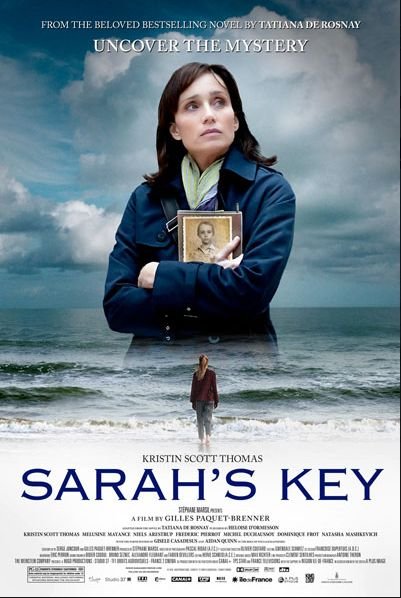
Underseen Movie: ‘Sarah’s Key’ – A Unique Look at the Effects of the Holocaust

Sarah’s Key” is what some would say is yet another movie dealing with the Holocaust and its impact on us all, but do not be fooled into thinking it is going to be the same old thing. Based on the novel “Her Name Was Sarah” by Tatiana de Rosnay, it ventures into this dark part of history from a different perspective as we watch the French army and bureaucracy aiding the Nazi party as they rounded up Jews and shipped them to Auschwitz; this event was called the Vel’ d’Hiv’ Roundup. As the story moves back and forth in time from 1942 to 2009, American journalist Julia Jarmond (Kristin Scott Thomas) works to solve a decades-old mystery which can no longer remain hidden, and these days we are all sick of things remaining hidden.

In 2009, Julia has moved into an apartment with her French husband and teenage daughter. She had previously written a celebrated article about the Vel’ d’Hiv’ Roundup, and he soon learns her husband inherited the apartment from his grandparents who came into possession of it during the 1940’s. From there, she becomes obsessed in learning about the apartment’s history, and she learns it was the scene of an unspeakable incident. Finding out the truth about this incident, however, proves to be extremely difficult as her family sees it as too damaging to reveal to the world at large.

Julia’s main focus is centered on a young girl named Sarah Starzynski (Mélusine Mayance) who hid her little brother Michel in a closet to keep him from getting rounded up by the Nazis along with everyone else. She makes him promise to stay in the closet until she returns, and she takes with her the only key which can unlock it. But Sarah soon realizes no one will be going back home anytime soon, and she escapes her captors in a desperate attempt to save Michel before it’s too late.

Like Stephen Daldry did with “The Reader,” director Gilles Paquet-Brenner makes the transitions between the past and present feel seamless to where it never feels jarring. He also avoids turning “Sarah’s Key” into a schmaltz fest begging for Oscar consideration which is quite the relief. By getting naturalistic performances from the cast, he creates an atmosphere which feels real and not exaggerated for effect. You end up getting caught up so emotionally in the story and its characters to where you do not feel like you’re watching just any motion picture.

Thomas is an amazing actress who never gets the same acclaim actresses like Meryl Streep or Viola Davis do on a regular basis. Maybe it is because her acting is not as theatrical, but Thomas’ strength is in inhabiting characters to where you never catch her acting. She pulls off a flawless American accent to where she makes the act look effortless, and she speaks fluent French ever so beautifully.

Attention must also be paid to Mélusine Mayance who gives a very believable performance as the young Sarah. Called upon to portray a child going through horribly nightmarish circumstances, Mayance holds her own amongst the adults, and she breaks your heart through her utter commitment to the character she portrays. Throughout, she makes you share Sarah’s desperation in getting to her little brother before someone else does, and she makes you feel her accomplishments and disappointments in every which way.

“Sarah’s Key” is one of those movies I find it hard to find any fault with it. Everything seems to fit together perfectly, and nothing ever appears superfluous to the story. While it treads the well-worn ground of Holocaust movies and of what happened to millions of Jews, it finds an interesting angle by looking at the complicity of the French in this atrocity. It never did get much of a release as it spent little time in theaters near you, and you will probably be hearing about it more about on physical and digital media. Here is hoping that it finds a bigger audience than the one it has already gotten to date.

* * * * out of * * * *

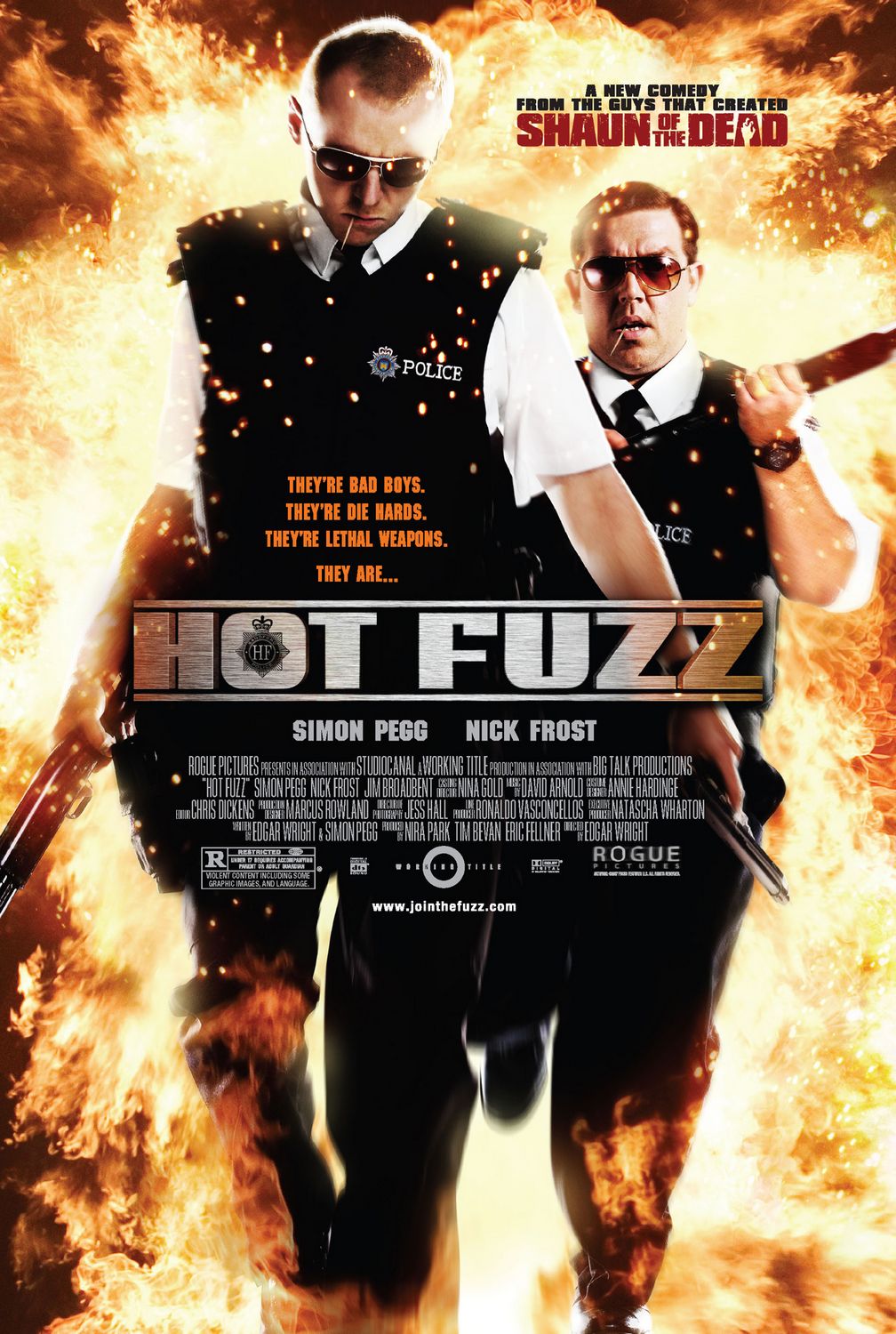
‘Hot Fuzz’ – A Ralph Report Video Vault Selection

HERE COME THE FUZZ!!!

Hot Fuzz” comes from the makers of “Shaun of The Dead,” one of the funniest comedies of the 2000’s. The great thing about that one is how it featured very well drawn our characters who we come to care about, and it makes the laughs all the heartier. Most spoofs and satires suck these days because they try too hard to make you laugh instead of playing it straight like the actors did in “Airplane!” Director Edgar Wright brings it back to this as it gives you characters to follow from start to finish while you laugh your ass off throughout.

“Hot Fuzz” proves to be every bit as hilarious as “Shaun of the Dead” as it mines genres for an infinite amount of glee while giving us characters to care about. This film’s main target is the Jerry Bruckheimer action movies of the 1990’s as well as others like “Point Break,” Silent Rage” and “Bad Boys II.” These films were also the target of the “South Park” creators when they made “Team America: World Police.” But while “Team America” held nothing back in its gleeful viciousness, this one is more well-intentioned and even funnier in the process.

“Hot Fuzz” stars Simon Pegg as Nicholas Angel, the best police officer in the London Metropolitan police force. Nicholas holds the record for the most arrests of any officer, but his superiors have decided to transfer him to the countryside. The problem is he is so good at his job that he has inadvertently made his fellow officers look bad in the process. This is bad for the department’s image, so they end up transferring him to Sanford, a town far off in the countryside where nothing much happens.

Sanford is a rather lax town where the police there easily look over such matters as underage drinking and shoplifting. Regardless of what they guilty have done, they don’t spend more than an hour in jail. Nicholas gets off to a quick start in a hilarious scene where he busts just about everyone in a bar because they are underage. But while he does the right thing, he also drives out the pub’s business. Whenever Nicholas does something right, being the stiff by-the-book officer he is, he ends up getting punished by doing the most menial duties an officer can do.

Along the way, he ends up getting partnered with an overweight and action film buff named Police Constable Danny Butterman. Played by Nick Frost, you could say he is playing the same character he portrayed “Shaun of The Dead,” but he is still hilarious here so, seriously, who cares? Danny romanticizes about living the life of action he sees in “Point Break” and “Bad Boys II.” When he meets Nicholas Angel, he believes Nicholas has come from a city where he has seen a similar kind of action. Nicholas, however, comes from a world where police work is nowhere as exciting and bombastic as it is in motion pictures. It’s serious work with very little action. That is, until several “accidents” end up occurring in Sanford which its residents are quick to easily dismiss. But Nicholas is too smart to pass these events off as accidents when it involves the value of the land and the fact that the evidence does not match up.

“Hot Fuzz” is an enjoyable movie throughout, and it never drags. Even the usher who introduced the movie to us when I saw it at Arclight Cinemas in Hollywood said it was the best thing playing there at that point. The usher was absolutely right as Wright and his cast and fellow filmmakers and actors prove to be more than up to giving us an endless barrage of laughs we can never get enough of.

What drives me nuts about movie comedies these days is you can see the jokes coming from a mile away, and this makes me constantly roll my eyes in severe frustration. Wright and company, on the other hand, give us unforgettably hilarious moments which sneak up on you when you least expect it. There are many movie references here which might have gone over the head of many in the audience. How well you can pick them out depends how big of a movie buff you are.

The most enjoyable part of “Hot Fuzz” for me was towards the end when everything turns into the bombastic and explosion filled action spectacular which is your typical Bruckheimer film. Everything blowing up around the characters, all the bad guys shooting guns and many bullets expended, but they somehow keep missing the good guys even when they have a scope on their rifles. Our heroes flying in the air while shooting their guns off like they somehow jumped into a John Woo movie. Seeing a lot of this was a huge kick and had me laughing endlessly. Completely over the top, and the movie does not take itself as seriously as Nicholas Angel takes himself as a police officer.

Of course, there are many other great performances here. Oscar winning actor Jim Broadbent plays Inspector Frank Butterman. He plays it with the kind of gleeful ease which has been on display in the many roles he has played before and after this one, let alone his scene-stealing turn in “Moulin Rouge” (“Like a Virgin” will never be the same).

One guy who is truly great here, and I was so glad to see him back in action after what feels like a long time, is Timothy Dalton. He of course is the short-lived successor to Roger Moore as James Bond, and one of the more underrated 007 actors if you ask me. He has one of the most comedically driest of roles here as Simon Skinner, whose guilt Nicholas can spot from miles and miles away while all the other police officers in town walk around with blinders over their eyes. The smirk on Dalton’s face is an image which stayed with me long after this film ended, and it makes me believe he would have given us a more well-rounded Bond in future installments had Pierce Brosnan not replaced him so soon.

As Nicholas Angel, Pegg plays a character who is very much the opposite of the one he played in “Shaun of The Dead.” He is a straight arrow here, one of the men who can’t help but have a huge stick up his rigid ass. For a while, it looked like he would be playing the same character over and over again after I saw him in “Mission Impossible III,” but he proved to us here that there is much more to him than what we had seen up to this point.

Steve Ashton of “The Ralph Report” was right, this film is full of a plethora of talented character actors. There’s Paddy Considine who does one of the best double takes here that I have ever seen any actor give. I first became consciously aware of Olivia Coleman when I watched her in “The Favourite,” but her appearance here as the sole female police officer in Sanford is probably the first thing I ever saw her in. and she is ever so delightful here. Then there is Martin Freeman who can play just about any character he wants to whether it is in this film or something like “Love Actually.” And as for Bill Nighy… Well, you can never go wrong with an actor like him.

Whether or not you think “Hot Fuzz” is better or worse than “Shaun of the Dead” or even “The World’s End” is irrelevant because it is a total blast from start to finish. The “Three Flavours Cornetto” trilogy has given us nothing but endless entertainment, and “Hot Fuzz” is merely one of several examples. Just remember this, when a character tells us “This shit just got real,” it has far more meaning here than it ever did in “Bad Boys II.”

* * * * out of * * * *

No, I Haven’t Seen It Until Now: Akira Kurosawa’s ‘Ran’

I pride myself on having a vast knowledge of movies. While my many of my friends stumble across a movie they don’t recognize, I am usually quick to name it even if I have never watched it before. Everyone is amazed at how I could know such things. Still, when it comes to older movies and the great filmmakers who ever lived, there are still many I need to catch up on.

One of those filmmakers I really need to catch up on is Akira Kurosawa who is considered by many to one of the greatest of all time. Until I saw “Ran,”, the only movie of his I had previously watched was “The Seven Samurai” which really is one of greatest movies ever made. Of course, I got exposed to the American remake, “The Magnificent Seven,” beforehand, but anyway.

“Ran” was the very last movie Kurosawa made on such an epic scale, and as amazing as it looked when it was first released, this is even more the case more than 30 years later. Kurosawa clearly had the power to request literally thousands of extras, and it is easy to see well-dressed studio executives looking at him to where, had he made this movie today, would have asked him:

“Can’t you just add all these people in with CGI? Wouldn’t it be easier and cheaper just to hire like 50 guys instead of 1200?”

If they didn’t ask them that, they would obviously come up with the obvious solution:

“We’ll solve it in post!”

Looking at the title and scenes from the movie trailer, I figured the title “Ran” meant the main characters were running from certain doom throughout like it was a big chase. This should show you what I know about the Japanese language, and that is not much. “Ran” actually means “revolt” or “chaos,” and Kurosawa’s movie is filled with so much of both to where this is ends up being a cinematic experience both physically and emotionally draining.

Kurosawa based the story on the legends of the daimyo Mori Motonari and of how he had three sons who were intensely loyal to him. This led him to look at the story a little differently and say the following:

“When I read that three arrows together are invincible, that’s not true. I started doubting, and that’s when I started thinking: the house was prosperous and the sons were courageous. What if this fascinating man had bad sons?”

Of course, anyone familiar with William Shakespeare will say that “Ran” is heavily influenced by the tragedy of “King Lear.” Indeed, the story very much resembles that of “King Lear” as we watch a powerful leader abdicate his throne, and he ends up being betrayed by his own blood in the process.

The powerful leader at the center of “Ran” is Hidetora, leader of the Ichimonji clan. The story starts with Hidetora abdicating his throne to his three sons Taro, Jiro, and Saburo. The majority of the power is given to Taro who is his eldest son, and Jiro and Saburo are ordered by their father to support him no matter what. Saburo, however, does not agree with Hidetora’s decision to disperse all of his powers, reminding him how his kingdom came about through his own treachery and massacre of others. Hidetora starts acting all uppity as if he’s a superstar celebrity who is not used to hearing the word “no” much, and he banishes Saburo from the clan as well as his servant Tango who speaks in Saburo’s defense. It’s amazing what breaking three arrows together can do to a man’s ego.

From there, it is a vicious downfall for Hidetora as he is banished from his kingdom ever so coldly. Many characters here profess to believe in a god, be it Buddha or someone else, and they pray for their assistance in this little world which is quickly collapsing. If there is a god watching over them, he, or she, is blind to their sufferings or deaf to their endless prayers. Hence, this is quite a bleak movie from a thematic and visual standpoint.

After watching “Ran,” I was compelled to learn more about it. While researching the movie more deeply, It turns out “King Lear” never really entered Kurosawa’s mind until he was deep into pre-production. Along the way, he did incorporate different elements of the play into it, and he had this to say about Shakespeare’s classic tragedy:

“What has always troubled me about ‘King Lear’ is that Shakespeare gives his characters no past. … In Ran, I have tried to give Lear a history.”

Now this is what gives Hidetora, among others characters, such gravity throughout the nearly three-hour running time. He was not a leader who earned his kingdom through family succession, but through the pillaging of villages and murdering those who were against them. Perhaps he would like to forget this, but his power and family are forever stained by his deeds, and he is reminded of this in the most painful of ways.

With this in mind, it is no wonder two of Hidetora’s three sons end up turning against him. What his legacy has taught them is you can’t get anywhere in life without beating the crap out of the other guy and stealing everything he and his followers have. Only Saburo is fearless and selfless in telling him this and of pointing out the fact he will always be seen as a killer. Saburo at least cares enough to tell him this instead of just sucking up to him like his brothers do. Some people hear the word “yes” once too often when they need some others say “no” every once in a while.

As we see Hidetora losing his mind and in a state of disbelief, I was reminded of Will Munny, Clint Eastwood character from “Unforgiven.” Both these characters become sick, and in their feverish state they become haunted by the lives they ended ever so coldly. They have tried to convince themselves they are not the same people they once were, and Hidetora appears to develop amnesia in an effort to block his mind of his past deeds. But nightmares abound in his sleep reminding him of the price he has yet to pay. You could even compare this character to Anakin Skywalker who becomes the very thing he fought against in “Star Wars Episode III: Revenge of the Sith.” In the process of trying to prevent the love of his life from dying, he gives up everything he believes in. Hidetora believes that by passing the leadership duties to his oldest son his clan will continue to prosper. The more we fear of something bad happening, the more likely that bad thing will happen.

Taking this into account makes me realize one of the most important elements in the Kurosawa movies I have seen; they are very dependent on the depth of their characters as much as they are on spectacle. Granted, this is only the second movie of his I have seen, but it feels like just enough to understand why his cinematic works made such a strong impression on Steven Spielberg and George Lucas (“The Hidden Fortress” is said to have been a huge influence on “Star Wars”). Most movies today are just about spectacle, and the characters are usually a distant second to it. But it is this focus on character which makes “Ran” so involving and gives its epic scope much more meaning.

But let’s talk about the spectacle of “Ran” which is incredible to say the least. One of the key sequences is the horrific massacre which takes place at the third castle where Hidetora takes refuge. What really struck me was how Kurosawa put Tōru Takemitsu’s music score over the sounds of violence perpetrated by his sons as it gives what is being presented to us with far more emotional power. Takemitsu’s music further illustrates the immense tragedy tearing this powerful clan apart which leaves Hidetora in an endless state of shock. Without the music, it would still be a cinematic high mark of capturing battle on celluloid, but it would not have the same effect.

The bloodbath of the massacre is made all the more vivid by Kurosawa as “Ran” was made long before the advent of CGI effects. With this sequence, Kurosawa brilliantly captures the ugliness and viciousness of war, and of the cruel nature which dominates these characters’ humanity.

All the acting is nothing short of excellent from as the entire cast invests each of their characters with various complexities which allow them to surprise us in unexpected ways. Hidetora is played by Tatsuya Nakadai, and he immerses himself completely into playing a man whose own pride and self-righteousness proves to be his undoing. Without saying a word in the last half of the massacre, Hidetora communicates his utter regret of his thoughtless decision making which has led to the decimation of what he once had. Nakadai makes Hidetora’s eventual descent into madness all the more vivid, and his performance never ever descends into camp.

I also loved Mieko Harada’s performance as Lady Kaede, Kurosawa’s version of Lady Macbeth. Through her deceitful ways, viciousness and endless manipulation, she always seems to get her way and turn the men around her into quivering jelly. Harada’s moments onscreen are among my favorites as she exploits the fears of the men around her and seduces them despite their mistrust of her. Never let it be said that Kurosawa ever writes weak roles for women because it certainly isn’t the case here. Lady Kaede wants to maintain her high status in the clan, and she is ruthless in how she pursues it.

You could say they don’t make movies like “Ran” anymore, but it did come out in a time when they weren’t being made much. For many, it serves as the culmination of all his talents, of what he has accomplished in his career, and of all the struggle and tears he shed while making this movie. During the making of “Ran,” Kurosawa’s wife passed away. By the time he got around to shooting the movie after working on the script for ten years, he was almost completely blind. Regardless of these setbacks, nothing stopped him from making this movie.

Years after its release, “Ran” stands as one of the classic movies from one of the best filmmakers ever. No one can or should doubt the heart and soul Kurosawa put into it for years and years, and getting to see it on the silver screen was a real treat. When all is said and done, the silver screen is where this movie belongs.

* * * * out of * * * *

Michael Pena on Getting Real in David Ayer’s ‘End of Watch’

WRITER’S NOTE: This article was written back in 2012.

Actor Michael Peña has already played a few cops in his career, but in David Ayer’s “End of Watch” he gets to play his most realistic one yet. It also marks the biggest role Peña has had so far in a career which has seen him give excellent performances in “Crash,” “World Trade Center” and “Observe and Report.” Taking on the role of LAPD officer Mike Zavala reminded Peña of his days growing up in Chicago, and his preparation proved to be far more intense than he ever expected it to be.

Peña grew up in a particularly rough area of Chicago where the lure of gang life was always strong. The actor, however, said he “never wanted to be in a gang” and that he “didn’t want to follow anybody’s orders” as he always thought of himself as an individual even when he was really little. Still, playing Mike Zavala brought up a lot of memories of those days:

“I grew up in the ghetto, and the thing is when there were problems, I knew when to get away. But police go to the problems,” said Peña. “I didn’t do that growing up. Seeing it through Jake (Gyllenhaal’s) eyes, it re-ignited what I always knew, but I guess I had buried it. I’ve been living in Hollywood for the past 15 years. And reality just smacks you in the face – that feeling of potential danger everywhere.”

Like his co-star Jake Gyllenhaal, Peña spent five months training with the Los Angeles Police Department which included ride-alongs which lasted 12 hours a day. There was also a good dose of weapons training, martial arts, boxing workouts, and lugging around chest cameras which were also called body cams.

“We did so many damn ride-alongs, dude,” said Peña. “At first it’s brand new, it’s awesome, and it’s amazing. You almost glamorize it in a way. Then you do ten more, and you start getting a little bored. Then ten more after that, you really get into the spirit of it. It was almost like a sport. We really wanted to get into the mindset of what it’s like to be a police officer.”

As for the body cams, Peña remembered them being “so heavy” and “gnarly.” It turned out though that some of the hardest things he had to do in “End of Watch” were not actually physical.

“I was driving a whole bunch,” Peña said. “Then you have the director (David Ayer) in back, which can be pretty nerve-wracking. Sometimes I didn’t know where life began and where the acting started.”

Pena and Gyllenhaal had never worked together before making “End of Watch,” and it apparently took some time to get the sense of brotherhood two cops can have.

“It took three months to click,” said Peña. “There’s a lot of pressure to play like brothers. We had to spend a lot of time together to opening up to each other as well as tactical training, rehearsing. Three months later we had a good rapport and we put that in the movie.”

It was also all the hard-hitting dialogue which Ayer came up with that made the working relationship between Peña’s and Gyllenhaal’s characters feels like a real brotherhood. Peña also admitted he and Gyllenhaal did very little in the way of improvisation on the set as neither of them wanted to mess with the director’s script.

“Nine times out of 10, you aren’t going to come up with something better,” Peña said.

Peña has certainly earned his moment in the spotlight, having given one memorable performance after another. His terrific work in “End of Watch” is not only a major step forward for him, but it also allows him to break through certain barriers which have been placed upon actors throughout the years:

“The script was written for actors like Jake Gyllenhaal and me – a Latin dude. It had to be a Latin dude, there is so much Latin (material) in it. Ten years ago, I don’t know if that would have been the case. I don’t know if it would have been so easy to do.”

SOURCES:

Brian Brooks, “‘End of Watch’ Star Michael Peña Sees Racial Barriers Coming Down in Hollywood,” Movieline.com, September 19, 2012.

Chris Vognar, “Michael Peña on ‘End of Watch:’ ‘We did so many damn ride-alongs,’” The Dallas Morning News, September 21, 2012.

Madeleine Marr, “Talking to ‘End of Watch’ star Michael Peña,” The Miami Herald, September 20, 2012.

Jake Gyllenhaal on His Intense Police Training for ‘End of Watch’

As Los Angeles Police Department (LAPD) officer Brian Taylor, actor Jake Gyllenhaal finally gets to play a cop for the first time in “End of Watch.” Written and directed by former South Central Los Angeles resident David Ayers, the movie follows two young police officers played by Gyllenhaal and Michael Pena who are marked for death by a notorious cartel after they confiscate money and firearms from them. Although it was shot in 22 days on a budget of just $7 million, Gyllenhaal did not skimp on the details and went through a seriously intense preparation which extended far beyond him simply getting a buzz cut.

Gyllenhaal underwent five months of serious training with the LAPD, and this included going on 12-hour ride-alongs through various crime-ridden neighborhoods. These ride-alongs had a schedule which started at 4:00 p.m. and went through to 4 a.m., and he went on them as much as three times a week.

“On my first ride-along in Inglewood, someone was murdered. We were the second car on the scene,” Gyllenhaal said of his experience. “That was definitely a wakeup call. We were involved in stolen vehicle chases. You see domestic violence, disputes that turn violent. You really see your city differently after that.”

Gyllenhaal admitted to getting a little nervous at times as he and the police rode up on crimes involving domestic disputes, attempted murders and stolen cars. The actor pointed out, however, that he was with some pretty amazing officers who made him feel very protected in such a dangerous environment. In addition, he went to a dojo in the mornings for fight training and also got a lot of exposure to weapons and tactical training as well.

“We did training with live ammunition and training with the SWAT Team a few times a week for six-hour sessions,” Gyllenhaal said. “We had to learn tactic exercises and moving exercises with live ammo and then we did fight training in Echo Park. David Ayer, our director, his best friend has a dojo, so we trained there in MMA (Mixed Martial Arts) fighting too. Eventually, after getting the crap beaten out of you and being on the street, you start to actually come into the role and feeling like you really can play the part.”

But one of the most interesting stories regarding his preparation to play Officer Brian Taylor involved him getting shot by a taser.

“I did get tased. We were at the police academy, and they asked us if we wanted to try it out and me being me said, ‘Yeah, of course, yeah!’ Actually, they gave us a choice between pepper spray and being tased,” Gyllenhaal recollected.

When it came to choosing getting tased or pepper sprayed, Gyllenhaal’s decision proved to be a well-informed one:

“Pepper spray is long and painful, it lasts for like 45 minutes and the taser just lasts for five second,” Gyllenhaal said. “But afterwards it’s actually kind of relaxing. After you’ve had thousands and thousands of volts of electricity going through your body.”

It looks like Gyllenhaal’s preparation for “End of Watch” has really paid off as he is getting some of the best reviews of his career. It is clear playing a police officer has had a tremendous impact on him as he talked of the stigma cops constantly deal with when they are out on the street in uniform. He has also gone on to say how the experience of making this movie has completely transformed not just his idea of law enforcement but of Los Angeles as well. When all is said and done, watching this film will do the same for the audience.

SOURCES:

Colin Covert, “Jake Gyllenhaal’s education on the mean streets,” Star Tribune, September 22, 2012.

Zac Shull, “Q&A: Jake Gyllenhaal Talks ‘End of Watch,’ Training with Police & If He Gets Pass for Speeding,” Baller Status, September 21, 2012.

Justin Harp, “Jake Gyllenhaal: ‘I was tased while preparing for End of Watch,'” Digital Spy, September 18, 2012.