‘Close Encounters of the Third Kind’ Still Leaves Us in Awe 40 Years Later
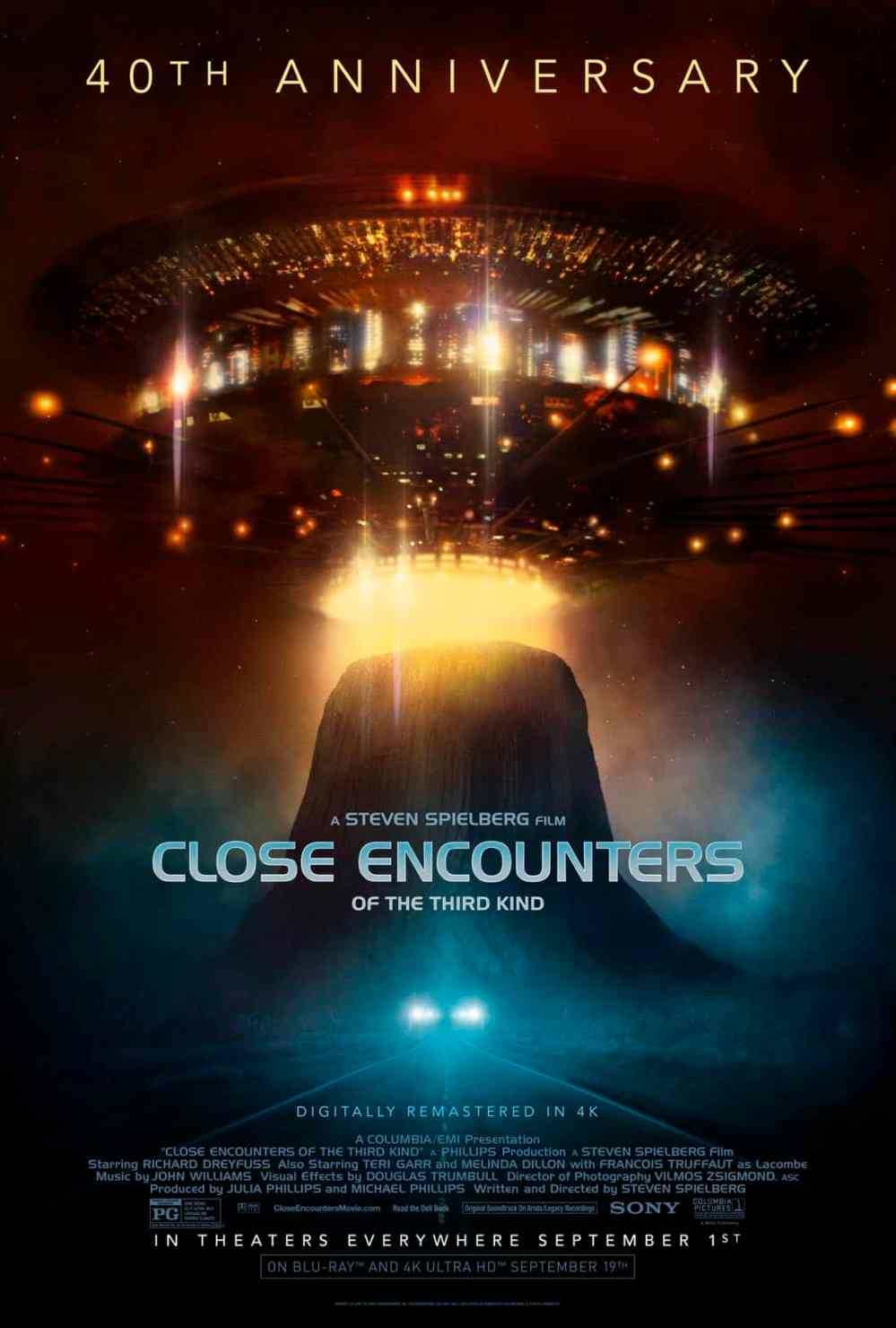
Close Encounters of the Third Kind 40th poster

On this week’s edition of yes, this movie really is that old, we have Steven Spielberg’s “Close Encounters of the Third Kind.” Released back in 1977, it is now being re-released in a new 4K remastered version in honor of its 40th anniversary. I first watched it on laserdisc at a friend’s house back in the 80’s, and I remember being somewhat traumatized by it as there were scenes which proved to be quite scary. I have since watched the film several times, but this 40th anniversary re-release allowed me to see it on the big screen for the first time. Suffice to say, this is the way you should view this particular Spielberg classic.

The film begins with strange discoveries being made in various parts of the world which include the appearance of Army airplanes reported to have gone missing back in the 1940’s, a lost cargo ship which has reappeared in the Gobi Desert for no discernable reason, and witnesses living in India are found singing a five-tone musical phrase which is revealed to be the distinctive sounds of UFO’s. Meanwhile, out in Indiana, Ray Neary a blue-collar worker, husband and father to three very loud kids, is working late at night after a large-scale power outage takes place, and he finds himself having a very close encounter with a UFO, one which lightly burns his face with its bright lights. From there, he becomes obsessed with finding out more about these alien visitors to where he gets left with subliminal messages he is desperate to find answers for.

Throughout the decades, there have been countless movies dealing with human beings and their first contact with extra-terrestrials, many of which feature the last remnants of humanity fighting off an alien invasion determined to wipe them out with extreme prejudice. As I got older, I came to realize how rare it is to have a science fiction movie which deals with aliens in a highly intelligent way. Among them are Stanley Kubrick’s “2001: A Space Odyssey,” Robert Zemeckis’ “Contact,” Spielberg’s “E.T.,” and Denis Villeneuve’s “Arrival” which was one of the very best movies of 2016. Even rarer these days is the motion picture which leaves you in an extended state of wonder and awe from start to finish and even after you leave the theater.

Even 40 years after its release, “Close Encounters of the Third Kind” still has an immense power to enthrall us as its characters come into contact with something they have longed to see. There is nothing about it which comes across as unintentionally laughable, and while technology has evolved to a whole other level since the 1970’s, this movie feels timeless in its exploration of possibilities and discoveries. It also works on many different levels in that it is funny, scary, thrilling, and deeply emotional.

This film is especially unique on Spielberg’s resume as it is one he directed and also wrote the screenplay for. It would also mark the last time he would direct his own screenplay until he made “A.I. Artificial Intelligence” in 2001. As a result, there should be no doubt of just how personal this film is to him. It turns out he wanted to make this one before “Jaws,” but he didn’t have the commercial clout at the time to get the budget he wanted. Of course, when “Jaws” came out, this changed forever.

Spielberg has said “Close Encounters of the Third Kind” is not actually a science fiction film, and watching it again has me agreeing with him completely. Yes, it does feature aliens and UFO’s, but they are not really the point. Also, this film takes place in a reality we all know and relate to. “Close Encounters” does not take place in some future dystopian world, but instead one we all inhabit as the main characters are regular people working regular jobs and supporting their families. They don’t want to see UFO’s, but they did, and now they cannot and will not deny their existence. Throughout this movie, we remain in the human universe and we never enter an alien one, and this is very important to point out here.

“Close Encounters” also deals with stories which would become a hallmark of future Spielberg films and productions such as “E.T. The Extra Terrestrial” and “Poltergeist” among others. Seeing the government conspire to keep this alien visitation a secret is presented in a way which feels not only realistic, but also very possible to pull off back in the 1970’s. But he also shows how the truth of things cannot be kept a secret forever, and, like Ray Neary, we want to see this all the way to the end because we won’t stop and until we get answers to fulfill our curiosities.

When it comes to the actors, Spielberg really just lets them loose here. He doesn’t direct them as much as he lets them run wild, and I don’t just mean the kids who are a noisy bunch as presented here. Richard Dreyfuss is perfectly cast as Ray Neary as he brings a crazed and enthusiastic energy to the role of a man who has seen things he wasn’t supposed to see, and he is not in a position to unlearn what he has learned. Even as Ray’s actions increasingly alienate him from his wife and kids, Dreyfuss makes us empathize with his plight as he is caught up in something he cannot turn his back on.

Melinda Dillon is equally wonderful as Jillian Guiler, another character who, along with her fearless son Barry (Cary Guffey), experiences a close encounter of her own. She also suffers the indignity of her son being kidnapped by aliens, but she is eventually reunited with him in the movie’s last half. It may sound like I’m giving plot points away here, but I’m not because Dillon’s performance is such an emotionally fulfilling one to witness as she takes Jillian through the stages of fright, grief, desolation, and eventually joy and happiness. She makes you experience these emotions with her, and seeing her smile when Barry reappears is a moment of pure elation.

Spielberg’s casting of filmmaker Francois Truffaut as Claude Lacombe, a French government scientist, was truly inspired. Along with Bob Balaban who plays David Laughlin, Lacombe’s assistant and interpreter, he portrays a government official who brings sanity to a situation which has other government officials responding to in a panic to where the quick answer is cover everything up and keep the number of witnesses to a bare minimum. Truffaut brings a strong level of thoughtfulness and wonderment to his character as Lacombe shows an openness to first contact others would not be quick to embrace. While military officers are eager to keep Ray and Jillian out of the area, Lacombe tries to make them see they were invited to be here.

Many images from “Close Encounters” will forever remain burned into my consciousness. The most prominent image of all is when young Barry opens the front door where an alien ship hovers outside, waiting to make contact with someone, anyone. This is still the defining image of who he not just as a filmmaker, but as a human being. Spielberg’s eagerness to make contact with aliens from another galaxy is no secret, and here’s hoping a UFO does make contact with him in his lifetime. Better they meet him than a certain person who is currently occupying the White House.

I think people these days who are seeing “Close Encounters” for the first time might say it takes too long to get to the last half where humans finally get to communicate with aliens. But like Francis Ford Coppola’s “Apocalypse Now,” this film is more about the journey than the final destination. Spielberg wants us to question what we believe and how far we will go to get answers to questions which have plagued us for an infinite amount of time, and we share the awe of the characters once those answers are delivered to us here. And it’s not just that the characters get answers here, they truly earn them as well.

This is also one of those films its director couldn’t stop tinkering with over the years. Ridley Scott couldn’t leave “Blade Runner” alone years after its release, and Oliver Stone continued to tinker with his dream project “Alexander” to where the final cut he gave us still doesn’t feel final. As Spielberg was finishing up “Close Encounters,” Columbia Pictures was in dire straits financially and begged the filmmaker to release his pet project sooner rather than later. What came out in 1977 wasn’t his complete vision, and he eventually got to make a special edition of the film which was released in 1980. The 4K restoration of “Close Encounters” is essentially a combination of both versions, but the scenes with Ray Neary exploring the inside of the mothership have been cut out. Spielberg has said over and over he never should have taken us inside the ship, and I completely agree. While Spielberg provides the characters with many answers, there are still some things better left to the imagination.

Seeing “Close Encounters of the Third Kind” at the Cinerama Dome afforded me the opportunity to see the movie in its most desirable format. The audience I saw it with was left spellbound at what unfolded, and this says so much about this movie’s staying power. Just when I think I have become so jaded and embittered a filmgoer as studios continue in their desperate search for the next big franchise, a motion picture like this comes along to remind us filmmakers still have the power to leave us in a state of sheer wonderment. It feels like we have had an overabundance of movie anniversaries lately to where these celebrations feel more like a ploy to get more money out of our pockets. But this particular anniversary is one worth acknowledging as it continually reaffirms the power of cinema to truly transport to another time and place and, in the process, rescue us from the real world even if it’s only for a temporary time.

The only thing which bugs me about “Close Encounters” these days is Ray’s decision to leave his family behind and travel with the aliens. Essentially, he is presented with the same question Captain Decker is faced with in “Star Trek: The Motion Picture;” Would you leave everything and everyone you have ever known behind just to explore another world and dimension? Seeing Ray getting on board the ship made me wonder how his family would have reacted to this decision, and it plagues my mind long after the end credits have finished. Then again, Spielberg did make this film before he had any kids of his own. Had he made it after he became a father, there’s no doubt Ray would have made a different decision. Still, one could not blame Spielberg or Ray for being tempted to go. I certainly would be tempted.

* * * * out of * * * *

Jeremy Licht Reflects on the Making of ‘Twilight Zone: The Movie’

Twilight Zone Movie Jeremy Licht

Grauman’s Chinese in Hollywood had a special screening of “Twilight Zone: The Movie” in honor of its 30th anniversary, and the screening was put together by Mad Monster. Before fans got to watch the movie in its pristine digital presentation, there was a Q&A with one of the movie’s stars, Jeremy Licht. Perhaps best known for his work as a child actor on television shows like “The Hogan Family,” Licht was very happy to share his memories of making this film.

Twilight Zone The Movie poster

Licht appears in the movie’s third segment, “It’s a Good Life,” in which he plays Anthony, a young boy who is suddenly befriended by schoolteacher Helen Foley (Kathleen Quinlan). But when Anthony takes Helen home to meet his “family,” she ends up meeting a group of people who live in sheer horror of Anthony as he lives to terrify them if he suspects they disapprove of him.

The movie is the theatrical version of Rod Serling’s classic television series “The Twilight Zone,” and it is essentially an anthology of four different films by four directors. Licht described the audition process for it as being “really interesting” and that he was not hired until after the filmmakers started shooting the first couple of segments.

“I auditioned a couple of times and knew it was starting to get close, and it was really exciting,” Licht said of the process. “On the second audition that I had, Joe Dante was in there (who directed “It’s a Good Life”). It wasn’t often that I got star struck, but I was kind of in awe of him because of what he had done. He had made ‘Piranha’ which I’m sure you all know more than I do.”

Of course, it’s impossible not to talk about “Twilight Zone: The Movie” without mentioning the tragic accident which still casts a heavy shadow over it. During the filming of the first segment, “Time Out” directed by John Landis, a helicopter crashed and killed actor Vic Morrow and two child actors, Myca Dinh Le and Renee Shin-Yi Chen. Licht got the news about the accident a week after his second audition.

“I figured that was it. That was the end of it and they were going to shelve the film,” Licht said. “About six months later, I ended up getting a call from my agent that they were actually back in production and that they had wrapped up that segment (“Time Out”), and to come back and for a third audition. I went back in, and at this point I knew it (the material) back and forth, and I walked in and there was Steven Spielberg. He had just come off of ‘E.T.’ and it was really an amazing audition. By the time I had gotten home from that audition there was an offer. It was extremely exciting time for me and for my family and we accepted the offer, and we wound up on the Warner Brothers soundstage in Burbank within a week and we spent three months in principal photography.”

“It’s a Good Life” was a remake of the classic “Twilight Zone” episode of the same name, but Licht said he never watched it until after filming was complete. It also turns out Bill Mumy, who played Anthony in the original episode, makes a cameo appearance as a restaurant patron who intervenes when his friend starts pushing Licht’s character around.

But unlike the original television episode, Dante ended up taking “It’s a Good Life” in a different direction as it was more cartoony. Licht went on to describe Dante as a very “hands-on” director as well as a “big kid,” and that this movie was “his playground.”

“Working with a director like him truly was a treat,” Licht said of Dante. “He was really into letting the actors find what they were looking for. Obviously it was over the top; he was looking for that. He was looking for that cartoonish, extremely uncomfortable feel which I think we certainly accomplished.”

In terms of what was the most rewarding thing about doing “Twilight Zone: The Movie,” Licht replied it was being part of a film which has a huge following. The television series was always unpredictable in how you never knew what direction it would take from episode to episode, and it made fans wonder what the movie was going to be like. Having acted mostly on television and in several “movies of the week,” Licht also came to discover how fortunate he was to play Anthony in this film.

“It’s very rare as a kid, let alone at 13, to be asked to lead or be one of the principals in a film or play a character where nothing is what you think it is,” Licht said. “It’s rare to have that kind of a script, to have something like that come to you, let alone be asked by Joe Dante or Steven Spielberg to be in it. I was pretty honored and pretty humbled, and I am to this day really.”

As for the question Licht gets asked the most about “Twilight Zone: The Movie,” he said it was if the cast really had to eat those peanut butter covered hamburgers.

“I read the script and I thought, ‘Wow, that is really vile! I can’t imagine doing that,’” Licht said of this unusual meal. “The day that we shot it, they actually brought in McDonald’s hamburgers and basically we tried it. First of all, if you’re peanut butter person, it’s really not bad. The problem is, good luck saying your lines with a mouthful of peanut butter!”

Licht retired from acting in the 1990’s although he did appear in a short film in 2009 called “The Closer.” These days, he has his own financial planning company called JL Capital Management which has turned out to be very successful. For a former child actor, he has done very well for himself, and he has not allowed himself to be swallowed whole by the kind of vices which have destroyed so many lives. When asked why some child actors easily transition to an adult career while others don’t, Licht sounded very level-headed in his explanation.

“When I was doing it, there were paparazzi but nothing like things are now where every moment is recorded and every stumble that you take is magnified,” Licht said. “I’ve seen it all. I’ve had friends that have had very successful careers, and sadly I’ve had friends that have fallen. I grew up with good people around me and I still do surround myself with good people. My folks are important and my family is really important. I got into the business very young, but not necessarily at the urging of my family. I wasn’t supporting my family. It (acting) was a hobby that sort of took off. My parents said to me the whole time, ‘If you stop liking this or you become unpleasant to be around, you’re out. You’re gone because this is not what that’s for.’”

“I think a degree of it is luck, I think a degree of it is also upbringing and family, but I think a lot of it is luck,” Licht continued. “It’s like any of your lives growing up, but under a big microscope. I’m sure that we’ve all had times in our life, if you can imagine if cameras were on you, when you stumble the hardest, and how can you recover from that? You can recover privately, but when everybody’s watching you and judging you it’s a tough deal.”

We keep hearing stories day after day of child actors going bad, but we never hear enough about the ones who don’t. Licht is one of those former child actors who has done very well for themselves, and it would be great to hear more about people like him instead of getting all these random updates on others who don’t have the same support.

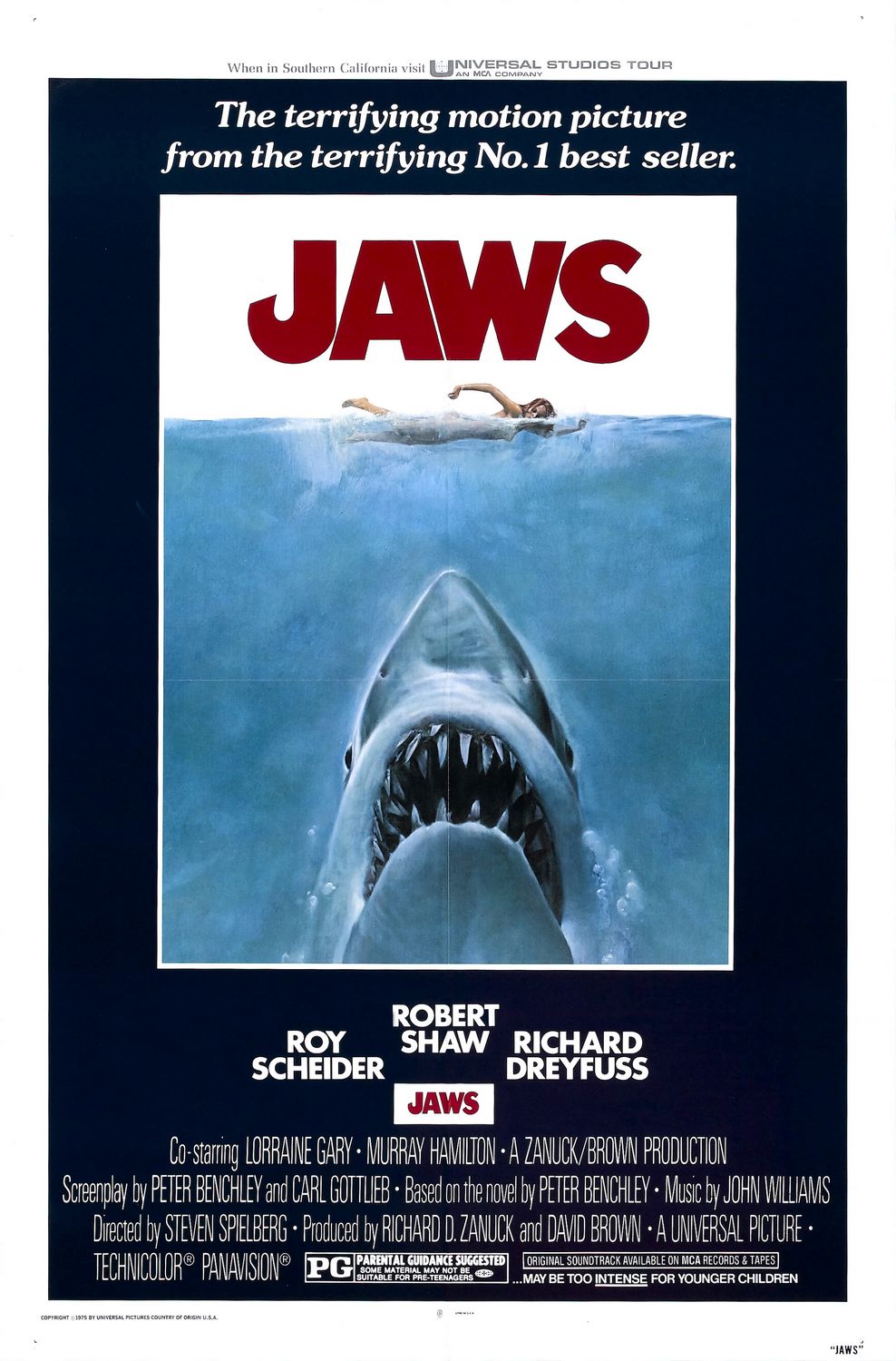
‘Jaws’ Remains a Thrilling Experience Decades After its Release

Jaws movie poster

Steven Spielberg’s “Jaws” is one of those movies I thought I watched a few years after it came out, but in retrospect I had only seen bits and pieces before finally watching it all the way through. It came out in 1975 a couple of months before I was born, and I can still vividly remember people talking about it while in a carpool to school. One of my kindergarten buddies kept telling me about all the blood the great white shark ends up spilling, and what he said made me NOT want to see “Jaws” for the longest time.

I do remember seeing certain scenes from “Jaws” for the very first time, and those moments remain forever burned in my conscious mind. When ABC presented its network television premiere of the movie, I remember those giant red letters coming out at me from the TV screen, and it was enough to have my hair standing on end. It was also the first time I saw little Alex Kintner getting dragged down to his bloody death, a very frightening image to be featured in any movie, let alone one with a PG rating.

Years later, I was watching an episode of “At the Movies” with Gene Siskel and Roger Ebert where they were talking about Spielberg’s movies in general. This was when I first saw the scene where Roy Scheider is throwing chum into the water, and the great white shark ends up rising out of the water which leads Scheider to tell Robert Shaw, “You’re gonna need a bigger boat.” This appearance of the shark scared me to death back then, and I felt exactly like Scheider’s character did as he slowly backed away from the boat’s rear.

A few years later, “Jaws” was again showing on television, and it was one of the few motion pictures shown unedited on television. Most movies, when they make their network television debut, are edited for content, but “Jaws” is so highly regarded to where it had to be shown with all the good parts intact. It was then I got my introduction to when Richard Dreyfuss was exploring Ben Gardner’s boat and Gardner’s head pops out of the hull. This proved to be another sequence which almost stopped my heart.

By the time I reached junior high school, I was already fully aware “Jaws” ended with the shark getting blown up. In fact, I had seen all the sequels by then and watched those other great white sharks bite the dust in their individual ways. Heck, I remember my brother renting “Jaws 3” on videotape, and we watched the shark getting blown up by a grenade and parts of his teeth getting thrust out at us with those 3D effects which never translated to the small screen.

While watching the last half of “Jaws” at a friend’s house all those years ago, I was truly astonished at how thrilling the movie was. I figured knowing the movie’s ending would rob it of any suspense or tension Spielberg managed to generate for audiences back in 1975, but man was I wrong. Seeing Dreyfuss trapped in the shark cage while the great white makes an effort to “reach out and touch someone” by attempting to smash through those metal bars had me begging for someone to kill it. Watching Scheider trying to keep his head above water as the boat sank had me wondering how the hell he was going to make it back to shore in one piece as his character hates the water.

I eventually rented “Jaws” on VHS in the days before Blockbuster Video became a dominant force in the video rental market. Seeing the movie in its entirety was a great experience, and it’s still one which I cannot ever get sick of watching. Even though I knew certain moments were coming, the anticipation of them still had me on the edge of my seat.

Having watched “Jaws” so many times before its Blu-ray release, the thing which keeps bringing me back to it is the human element. What Spielberg does best here is give us characters who are human and not mere clichés. Whether you’ve ever lived on an island like Amity or not, we know its inhabitants up close and why they depend on the summer months for their very lives.

Now while Spielberg did have problems with the mechanical shark which he named after his lawyer, he did have tremendous luck with his cast. What I love about Scheider, who plays Police Chief Martin Brody, is he doesn’t act the part as much as he becomes it. Those who read my reviews know I love talking about actors who inhabit their roles more than act, and Scheider proved to be one of those actors who did this very effectively. Brody is not out to be the hero, and he is like any other husband and father who just wants to keep his family safe. Scheider also makes you admire this ordinary police chief as he faces his fear of water so he can to put an end to the shark’s reign of terror.

Dreyfuss proves to be endlessly entertaining as Matt Hooper, a man whose love of the ocean and the animals inhabiting it keeps him from ever becoming a cynical bastard. Even after all these years, Dreyfuss is so much fun to watch as he shares his shark expertise with Scheider’s character and endures constant battles with Robert Shaw’s Quint who thinks this oceanographer is a little too domesticated to be sailing the ocean with him.

Speaking of Shaw, he has always struck me as one of those actors who proved to be as tough as the characters he played. This must be why he inhabits Quint so effectively, and his performance is one of the most unforgettable I have ever witnessed. Quint proves to be very hard to get along with, but then he goes into his long speech regarding his experiences on board the USS Indianapolis and of what happened after it sank. This monologue still gives us all chills every single time.

It’s the strong human element which makes “Jaws” work so phenomenally well as we come to care deeply about these characters and their hairy predicament. This could have been one of those pictures which lived or died on the quality of its special effects, and here they really could have been a detriment here more than anything else. The stories behind the making of this movie have long since become legendary as the filmmakers dealt with endless obstacles in making anything about the shark work.

But I also love how what worked against “Jaws” actually helped it in the long run. Dreyfuss loves to joke about how he kept hearing crew members saying “the shark is not working” on their walkie talkies, but it turned out the less we saw of the shark the better (something the sequels would quickly forget). “Jaws’” overall effectiveness came from the terror of what we didn’t see as opposed to what we did see. Many may prefer to see the monster, but the lack of its appearance forces our imaginations to go into overdrive, and this makes the monster so infinitely frightening.

“Jaws” is also aided tremendously by John Williams’ unforgettable music which still freaks us out whenever we hear those “dum-dum-dum-dum” sounds. So much attention is placed on this part of his score, however, to where other parts of it don’t get the praise they deserve. The music where Brody’s son mimics his dad’s every move at the dinner table is beautiful, and the same goes for the end theme which is mournful of what’s been lost and yet thankful this ordeal has finally come to an end.

This was the first movie to make $100 million at the box office, and that forever changed the way movies were made and distributed. As a result, many blame Spielberg for putting an end to the thoughtful, character-driven movies of the 1970’s, but that’s not fair. “Jaws’” success got Wall Street interested in the money which could be made from movies, and this proved to be the death knell to 70’s filmmaking. If Wall Street had looked more closely at the success of “Jaws,” they’d see how it focused as much on its characters as it did on the shark.

“Jaws” inspired a lot of filmmakers like Robert Rodriguez, Kevin Smith and Eli Roth, and it is bound to inspire many more in the future. Many have even gone on to name their companies after famous lines of dialogue like A Bigger Boat and Bad Hat Harry. It says a lot how “Jaws” is as powerful today as when it first came out in 1975, and I hope movie studios remember this if they ever foolishly decide to remake it, and heaven forbid this ever happens.

* * * * out of * * * *

‘Transformers: Revenge of the Fallen’ Belongs in the Cinematic Abyss

Transformers Revenge of the Fallen poster

To a certain extent, I have been happy to defend Michael Bay on some of his movies. “The Rock” was a kick ass action flick, and it brought Nicholas Cage to a whole new level of stardom which he has since pissed away. When he gave us “Transformers” two years ago, it seemed really good when you compared it to his other movies. It seemed like he might turn out to be better than we typically give him credit for. Heck, Steven Spielberg worked with him on it for crying out loud!

But now comes the inevitable sequel entitled “Transformers: Revenge of The Fallen,” which I thought could be the “Empire Strikes Back” of the franchise, but this not even close to being the case. If I didn’t have an intense hatred of Bay before, I sure as hell do now. I came out of this sequel cursing his name as if he had no reason to live. “Transformers: Revenge of The Fallen” may very well represent the biggest waste of money ever spent on any film I have seen since “Waterworld” or even “Norbit”. Yes, the movie has action all over the place and the effects are incredible and incredibly loud as you would expect them to be, but I came out of it wanting to spit at the screen. This is a movie with no heart or soul, and it renders all the hard work put into it as utterly meaningless. What a pathetic waste of celluloid this is! But what’s truly depressing is no matter how critically thrashed this movie gets, it will still make tons of money.

Shia LaBeouf returns as Sam Witwicky in a performance which threatens to be as utterly annoying as Ralph Macchio’s in “The Karate Kid Part III.” Despite being a hero and helping the Autobots defeat the evil Decepticons in the first movie, he still acts like a pussy whipped bitch here. I don’t think LaBeouf is a bad actor, but he needs to stop playing characters like this lest people start thinking he’s playing himself. The first “Transformers” gave his career a huge leg up, but this god-awful sequel can take him down just the same.

Megan Fox also returns as Sam’s voraciously attractive girlfriend Mikaela Banes, and she makes her entrance by leaning over a motorcycle showing off one of her best “assets.” This will probably piss people off as Bay makes good sport of objectifying women throughout, and it wouldn’t be the first time either. Still, I would be a bit of a hypocrite if I didn’t say I enjoyed this visual even if it was from a faraway distance. Hey Fox, I know you want to be taken seriously as an actress and, believe it or not, I would like to see that happen for you. All the same, if there is a third “Transformers” movie, I strongly advise you NOT to do it. I honestly think you deserve better than this.

The plot of “Transformers: Revenge of The Fallen” is… well, it’s somewhere in there. It involves… uh, some shard from that cube lodged in Sam’s clothing which…umm…well, ends up filling his head with symbols that… Jesus this is hard to describe! It makes Sam write all these symbols that…that…I don’t know, lead him to this big fight in Egypt… Oh yeah, he meets up again with Optimus Prime from the first one… Bumblebee is back too, and he threatens to be even more of a pussy than Sam is, but he kicks ass… Then they end up in Egypt and fight alongside those military dudes from the previous film…you know, Josh Duhamel and Tyrese Gibson? And then… uh, well… There’s a lot of action!

It’s clear from the start Bay is not concerned with developing a good story or giving us characters who are anything but shallow. It certainly would help to bring us into the action more on an emotional level. I have a pretty good idea what Bay is thinking: Fuck the critics! I make movies for the audience, not you snobs! But in the process of flipping the bird to film critics, he is also insulting the audience’s intelligence. And yes, this includes all those 12 and 13-year old’s who this movie was clearly made for. I can’t say I was a huge fan of the Transformers as a kid, but I bet the most die-hard fans will find much to hate about this horrid sequel, and the call for Bay’s blood will be as loud as the explosions are in this film.

All the hallmarks of a Bay movie can be found here; loud explosions every other millisecond, characters communicating by yelling at each other even when they are in earshot of each other, and inane dialogue which makes George Lucas’ sound like John Patrick Shanley’s. I’m sure there are many who will say this is a movie where you should “check your brain at the door,” but this sentiment only goes so far. There is a point where you take your audience for granted, and finding forgiveness for this transgression is a bitch. This isn’t the first time Bay has gone out of his way to intentionally piss off those critics who hate his films. “Bad Boys II,” another cinematic monstrosity, was Bay lighting a fire under the ass of many a film critic. But the maker of one god awful sequel has now succeeded in creating one which is far worse.

Bay flips the bird at us even more by introducing two Autobots which are nothing more than extremely offensive stereotypes of the blatantly racist kind. I’m talking about Mudflap and Skids, the Transformers’ answer to Jar Jar Binks. I figured by having an actor like Tyrese Gibson might balance out things here since he doesn’t descend into any stereotypical behavior, but this is a movie whose main audience will be kids for crying out loud! I usually think people look into the way certain people are portrayed in movies a little too much, but this time the criticism is more than justified as Mudflap and Skids are two infinitely misconceived characters.

Speaking of characters yelling at each other, this god forsaken sequel may very well contain the most yelling of multiple characters in any film. Do you have any idea of just how annoying it is when people TALK LIKE THIS AS IF YOU HAVE SOME HEARING DISABILITY AND THEY THINK YOU HAVE A PROBLEM WITH YOUR HEARING AID EVEN THOUGH YOU DON’T ACTUALLY HAVE ONE BUT THERE’S SO MUCH FIGHTING AND EXPLOSIONS GOING ON TO WHERE YOU DON’T HAVE THE TIME TO APOLOGIZE TO EACH OTHER BECAUSE YOU EITHER ARE RUNNING LIKE HELL FROM THOSE NASTY DECEPTICONS OR YOU HAVE TO FIGHT THEM ASSUMING YOU GOT ANY BALLS LIKE THE MILITARY DOES BUT HAVING ANY OLD GUN WON’T HELP BECAUSE YOU NEED THE EQUIVALENT OF A BAZOOKA?… I’m not sure I have seen another movie where I have been desperate to see so many tracheotomies performed in one sitting! It’s not enough to tell one person in this movie to shut the fuck up just once. You have to do it over and over, and they still will end up screaming their anxieties right out at you!

Not just that, but half the time I couldn’t even understand what the hell anyone was saying. Did Bay sneak crystal meth into everyone’s food? It’s bad enough he gave us a movie at two and a half hours long, but is this how he chooses to condense a lot of it? I wonder if Bay could actually explain to us what’s going on here. I bet the way he sees it, if he gave us all sorts of loud explosions and expensive special effects, then who are we to argue? You can get away with this in another movie, but not this one.

My reaction to this new “Transformers” movie reminds me of when I witnessed Roland Emmerich’s tragically horrific take on “Godzilla.” I went out of that movie feeling depressed and saying to myself if this is the way Hollywood is going to keep making movies, then I am not going to another one ever again. Over ten years later, it feels like we haven’t come any further. Does Bay really think this is something people will instantly embrace? In the end, it won’t really matter because “Transformers: Revenge of the Fallen” is bound to make a ton of money no matter how bad it is.

It’s not worth it wasting any more time on this movie than I already have. Seriously, I was all but ready to spit on the ground of the theater I saw it at. If you didn’t hate Bay before this movie, you will now. As I exited the theater, I quietly said to myself, “Fuck Michael Bay! Fuck him royally! Burn in hell!”

In regards to the audience I saw it with, the best piece of praise I heard from anybody about the movie was, “It’s okay.” Talk about being generous! Right now, I am sick of movies being just okay. So far, there has only been one truly great live action movie out this summer, and that’s “Star Trek.” Coincidentally, two of the screenwriters on this massive train wreck, Roberto Orci and Alex Kurtzman, also wrote the screenplay for that one. What the hell guys? Or maybe you’ll get off easy since Bay runs through your dialogue so fast to where we can’t possibly understand what anyone is saying. But don’t worry guys, Bay is taking all the heat on this one.

Michael Bay, you have just given us a great example of how NOT to make a summer blockbuster. Now if you’ll excuse me, I’m gonna go watch “No Country for Old Men” just so I won’t forget what great filmmaking looks and feels like.

ZERO out of * * * *

*This review should suffice for the “Transformers” sequel of your choice.  

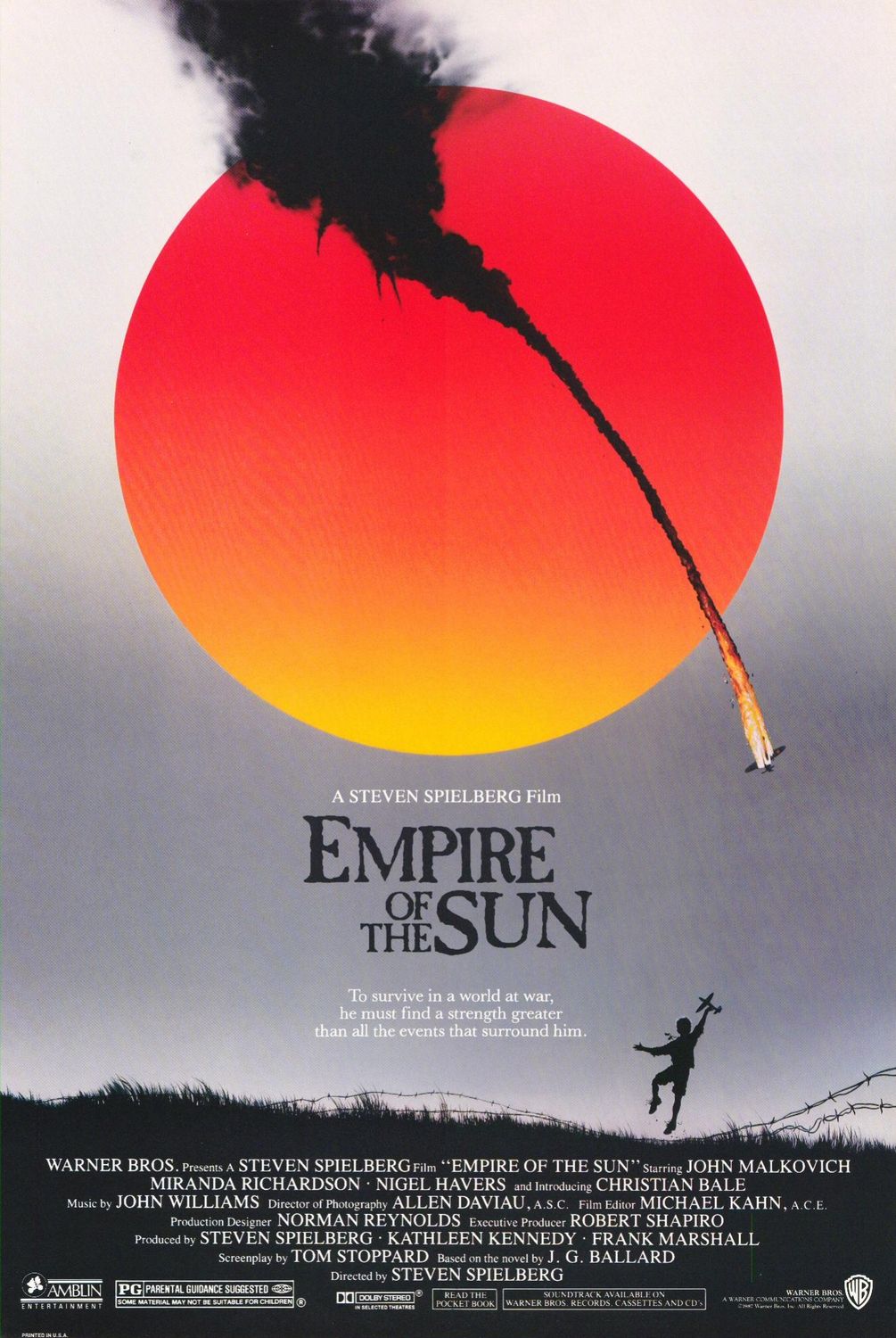
No, I Haven’t Seen It Until Now: Empire of the Sun

empire-of-the-sun-movie-poster

Empire of the Sun” is one of the few Steven Spielberg movies which has eluded my watching it for far too long. I remember when it was released back in 1987, and my brother and I watched a documentary on its making. What we saw did not make it look like the typical Spielberg crowd-pleasing movie people had come to expect from him back then. It also dealt with a young boy who is separated from his parents, and separation anxiety was a HUGE thing for me back in the 80’s. But with it now at its 30th anniversary of its release, and having the opportunity to see it on the big screen at New Beverly Cinema in 35mm, the time had come to give what is largely considered to be one of Spielberg’s more underrated films a look.

Based on the semi-autobiographical novel by J.G. Ballard, “Empire of the Sun” takes us back to the days of World War II where we meet Jamie Graham (Christian Bale in his film debut), a young schoolboy who lives a privileged life with a wealthy family out in the Shanghai International Settlement where he sings in the school choir, rides his bicycle everywhere and anywhere, and has a love of airplanes which knows no bounds. A key shot for me comes early on when we see Jamie taking some food out of an overstocked refrigerator which is filled with goodies as it shows how easy things come to this young lad to where he can boss the Japanese maid around like his parents do.

Of course, this all changes when the Japanese invade the settlement following their bombing of Pearl Harbor, and Jamie and his family are forced to flee their home and escape with their lives. In the process, Jamie gets separated from his mom after he picks up his metal toy airplane which he dropped on the ground, and he is forced to fend for himself as he is swept into a conflict far beyond anything he could have imagined.

When it comes to “Empire of the Sun,” it was no surprise to learn David Lean was originally going to direct this adaptation as Spielberg certainly made it look like a Lean movie with scenes filled with crowds of people struggling to survive in life during wartime. Spielberg ended up putting together scenes which must have made Lean proud as it brings to mind the epic shots the director pulled off in his masterpiece “Lawrence of Arabia.” Today, most of those shots would have been accomplished with the use of CGI effects, but “Empire of the Sun” was made back in a time where they weren’t so readily available.

Watching this movie reminded me of how brilliant Spielberg is at taking us back to a day and age many of us were not alive to see, and he does it so vividly to where we can never doubt his authenticity to the period. Spielberg has visited the era of World War II time and time again to amazing effect whether it’s the Indiana Jones movies or “Saving Private Ryan,” and he never seems to miss a detail in the process.

And then there’s Christian Bale who made his film debut in “Empire of the Sun,” and he brings to this role the same kind of intensity he would later bring to his work in movies like “American Psycho” and “The Fighter” among others. I could never take my eyes off of him as he takes Jamie from being a privileged young man to one who struggles for even the smallest reward like a Hershey chocolate bar. Was there another young actor who could have pulled off such a brave and emotionally honest performance as Bale does here? I think not.

Another great performance to be found here is from John Malkovich who plays Basie, an American ship steward stranded in Shanghai who befriends Jamie in his most desperately hungry state. Basie looks to be the Han Solo kind of character who befriends a young innocent who has yet to learn how cruel the world can be, but he turns out to be more of a manipulator than a hero in the making. Malkovich makes Basie into a fascinating study of someone who seeks to benefit themselves more than anyone else, and he constantly leaves you wondering if his character can rediscover whatever humanity he has left.

In addition, there are fine performances from Miranda Richardson as a neighbor of Jamie’s, Nigel Havers as a doctor who desperately tries to teach Jamie about humility, Joe Pantoliano has some choice moments as a companion of Basie’s, and Burt Kwouk, best known as Cato from the “Pink Panther” series, shows up in a small role which he is almost unrecognizable in. Heck, even Ben Stiller shows up here as an American soldier. Seeing him at first is a bit disorienting as he has since become a big comedy star to where he now seems out of place here, but I’ll chalk that up to one of the disadvantages of watching this movie at a later date.

Looking back, I feel “Empire of the Sun” was Spielberg’s first real foray into darker material which would soon pave the way for films like “Schindler’s List,” “Saving Private Ryan” and “Munich.” While it feels like he was taking baby steps here, as those aforementioned films proved to be much darker than this one, it was a giant cinematic leap for him to tackle something like this back in the 80’s.

Still, part of me wonders if he played a little too nice with the source material. Being that this was an adaptation of a J.G. Ballard novel, the same writer whose controversial books “Crash” and “High-Rise” were adapted into deliriously dark motion pictures by David Cronenberg and Ben Wheatley, I can’t imagine “Empire of the Sun” was any easier of a book to read. Ballard wrote some pretty dark stuff, and it makes me wonder just how dark his novel “Empire of the Sun” was compared to Spielberg’s film.

All the same, “Empire of the Sun” is an amazing achievement to watch today as he managed to pull off many epic scenes long before the use of CGI effects. Part of me wishes I had watched it when I was younger as it would have had a more powerful effect on me emotionally, but better late than never with a film like this. Along with cinematographer Allen Daviau, composer John Williams, writer Tom Stoppard and editor Michael Kahn, Spielberg created a World War II epic which stands out among the most memorable of them all, and it deserves more attention than it received upon its release thirty years ago.

* * * * out of * * * *

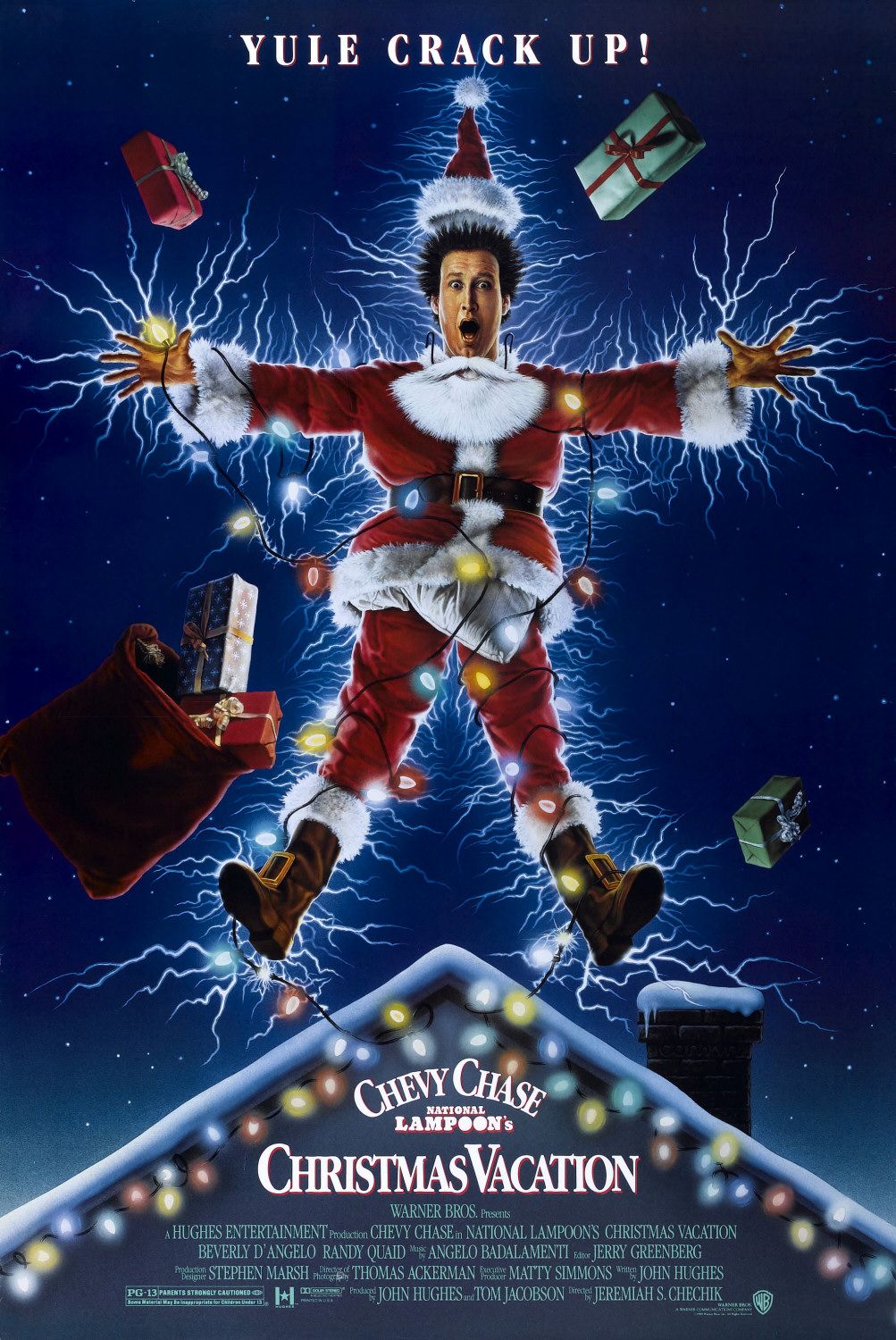
Jeremiah S. Chechik Looks Back at Making ‘National Lampoon’s Christmas Vacation’

christmas-vacation-movie-poster

Jeremiah S. Chechik was the special guest at Arclight Studios in Hollywood a few years ago when they hosted a screening of his directorial debut, “National Lampoon’s Christmas Vacation.” The third and most beloved in the “Vacation” franchise has long since become a holiday classic, and it is the Christmas film many families watch during the holiday season instead of “A Christmas Carol” and “It’s a Wonderful Life.” After the movie was over and the end credits were all done, Chechik quickly came up to the front of the audience before anyone could introduce him and said, ”I haven’t seen it since the day it opened!”

The screenplay was written by the late John Hughes and was inspired by an article he wrote for the National Lampoon Magazine called “Christmas ’59.” Chechik tipped his hand to Hughes’ wonderful writing and went on to say it was originally written as a stand-alone movie. Warner Brothers, however, read it and immediately wanted to integrate it into the “Vacation” franchise.

When asked how he got the job to direct, Chechik explained he was directing what he described as “high profile” commercials back in a time when it was unusual to go from doing commercials to directing feature films. His work eventually got him discovered by Steven Spielberg who ended up giving him an office at Amblin Entertainment. This brought a lot of awareness to his visual style, and both Chase and Hughes soon became adamant he would be the one to direct the next “Vacation” movie.

With this being his first film, Chechik said he was determined not to back down on actors who wanted to exert their power over him. While it’s tempting to think he and Chase didn’t get along as Chase’s reputation for being hard to work will never disappear, Chechik said they actually had a great working relationship on set. This came after he admitted to not being a big fan of Chase’s comedy as he described it as being “very broad.” Chechik described Chase as having a very strong point of view, a very clear intention of what the movie is about, and they worked together to find things which worked.

Chechik did say, however, that he and Beverly D’Angelo had many arguments, some of which he described as being “very heated,” on set. Still, he said all the bad blood between them is now water under the bridge.

“Christmas Vacation’s” budget was $27 million, and its shooting schedule lasted for 60 days. Much of the movie was shot in Breckinridge, Colorado while other scenes were shot the following summer at Warner Brothers in Burbank, California. Chechik was happy to say Hughes had his back throughout the whole production. When the movie went through previews, the studio heads pressured him to cut the scene where the cat got electrocuted. Chechik claimed he resisted the pressure and kept it in because he thought it was funny (and it was) and that he was more of a dog person anyway. The test audiences also loved the scene, and the studio heads didn’t bother keeping this moment out of the movie’s trailer.

Chechik said “Christmas Vacation” worked so well because we truly cared about Clark Griswold and what he went through. The mood of certain scenes was very important to him, especially the one with Chase in the attic where he watched home movies of past Christmases with tears filling his eyes. Looking at this made Chechik point out the way comedy should be done in movies:

“Funny beats funny,” he said. “If everyone thought the set pieces were funny but they didn’t care about the main character, then the movie won’t work.”

With the squirrel scene, he said a trained squirrel was brought onto the set and there was also a trainer there for the dog featured in it as well. Chechik said the filmmakers “storyboarded the hell out of it” and were eager to start filming it, but when he arrived on set that day he was confronted with the grim faces of the trainers and line producers. After shuffling around for a bit, they informed him the squirrel had died. The squirrel trainer went on to say they don’t live for very long anyway as if that could have possibly softened the blow.

So, they went out and got another squirrel for the scene which they ended up drawing out onto the set with food. From this, Chechik said he learned how to roll with things and use improvisation. About every scene in “Christmas Vacation” had a certain amount of improvisation in it, he pointed out.

As for the most difficult scene to shoot, Chechik said it was the dinner table scene where the whole family begins their Christmas Eve celebration. He did not hesitate in telling everyone that having 9 to 11 actors in a scene is a really bad idea. The blocking proved to be very complicated, and it became such a nightmare as it took days and days for him to get the scene right.

Here are some other “Christmas Vacation” trivia Chechik let us know about:

  • In the scene with the two granddads snoring in front of the television, the actors playing those roles really were fast asleep.
  • Mae Questal, who played Aunt Bethany, was the voice of Betty Boop.
  • Chevy’s angry rant on his boss was done exactly as it was written in the screenplay.

It was really nice of Chechik to come out and talk with us about “Christmas Vacation,” a movie he succeeded in making a timeless classic and, as he put it, “very postcardy.” When asked why he hasn’t seen the film since it first came out, he said he just wanted to let it go and let it live. It certainly has had a long life since 1989, and the series continued on with “Vegas Vacation” and “Vacation” which starred Ed Helms and Christina Applegate. In response to one audience member who said his family watches it every year, Chechik replied, “I like your family!”

Save

Oliver Robins Looks Back on ‘Poltergeist’ at New Beverly Cinema

oliver-robins-photo

On Thursday, August 16, 2012, Oliver Robins dropped by New Beverly Cinema to talk about the making of “Poltergeist.” Robins played Robbie Freeling, the boy who was terrified of that weird looking tree looming outside his bedroom window. These days Robins works as a filmmaker, but he explained how his time on the set of “Poltergeist” truly inspired him to make movies, and he helped debunk certain myths which continue to surround it years after its release.

Robins came up to the front of the audience after “Poltergeist” finished showing, and he talked about how he grew up at the New Beverly and discovered many movies which he might not have seen otherwise. He also remarked at how Steven Spielberg, who wrote and produced “Poltergeist,” gave him an 8mm camera as a present, and how the camera and the movie inspired him to become a filmmaker.

poltergeist-movie-poster

In talking about how he got cast, Robins said he had no real acting experience beforehand and that his only previous acting job was in a fertilizer commercial. The audition for “Poltergeist” was actually an open call which had hundreds of people coming down to be considered. Robins recalled having to wait for hours before he got inside to talk with the casting directors. When he did, they looked at him as being the true incarnation of Robbie as he talked about how he had lived in a haunted house while in New York.

Spielberg and director Tobe Hooper, however, were concerned because Robins couldn’t really scream, and they ended up getting a coach to help him learn how to. It got to where Robins was practicing his screams in his closet, and the neighbors began to wonder if there was any child abuse going on in his home. When he proved to the filmmakers he could indeed scream, Robins was informed he got the part.

When asked if a bond had formed between him and his fellow cast members, Robins told the audience “Poltergeist” was rushed into production and that there was no time for rehearsal. He did say, however, that JoBeth Williams, who played his mother Diane, really was a mother to him throughout the production.

One scene which really stands out is when Robbie’s father, Steven (played by Craig T. Nelson), teaches him how to count after lightning strikes to determine the distance between it and the sound of thunder. Robins remarked how Nelson was a comedy writer before he became an actor and that he made the set of “Poltergeist” very light-hearted as a result. Robins even remarked how working on the movie allowed him to stay up all night which he loved, and Nelson ended up telling him after one crazy night of filmmaking, “This is just another night in Simi Valley!”

Another famous scene from “Poltergeist” is when the tree comes through the window. Robins explained what ended up being 30 seconds of screen time where he got attacked by the tree ended up taking two weeks to film. Now this was back when digital effects were far from being a reality, so all the effects we see in the movie are real. Robins also pointed out there were several different trees being used for this sequence; one with roots, one where the branches reached out at him, and another which tried to eat him.

Robins described the tree sequence as being the most tedious and complex to film, and that he ended up spending much of the time being covered in molasses. He said being covered in that substance makes your body temperature drop precipitously and that he had to emote in his scenes in order create believability.

oliver-robins-in-poltergeist

Now there is an infamous story on IMDB of how when Robins gets attacked by the toy clown, he got choked for real and yet Hooper and Spielberg thought he was really acting. It was later said that when Robins face began turning purple, the filmmakers rushed over to remove the clown’s hands from around his neck. To this, Robins response was, “Maybe that did happen, but I can’t remember. Maybe I blocked it out of my conscious mind.”

When asked what it was like working with his sisters who were played by Heather O’Rourke and Dominique Dunne, Robins said it was great and that they both felt like real sisters to him. He also remarked at how Hooper and Spielberg were cool to him and other actors about wanting to change their dialogue. As a result, there proved to be a lot of ad-libbing on the set of “Poltergeist.”

There is also this ongoing story of how there were two directors on the set of “Poltergeist.” While Hooper’s name is listed as the film’s director, many believe Spielberg had the most influence. Robins, however, cleared up these rumors once and for all:

“There was only one director on set, and that was Tobe Hooper. Spielberg did write the story, but Hooper was the only one who directed me. It does feel like a Spielberg movie and he did work closely with Hooper on this project. In many ways it was a team effort, but Hooper was the true director of ‘Poltergeist.’”

Robins was also asked what it was like filming the scene between him and Beatrice Straight who plays Dr. Lesh where she tells him what she felt the true nature of ghosts were. He said Straight made him feel like he was really talking with someone who knows about ghosts, and this kept their performances from ever feeling forced.

It was great to hear Oliver Robins talk about the making of “Poltergeist” and to hear him dispel several myths about the 1982 movie. Since making that classic movie, Robins has retired from acting and went on to graduate from USC’s film school to where he has since become a very gifted filmmaker in his own right. His work in the Tobe Hooper-directed movie will continue to stand the test of time.


Save

No, I Haven’t Seen It Until Now: ‘Poltergeist’

poltergeist-movie-poster

I got the Blu-ray of “Poltergeist” around the time Circuit City was closing all their stores forever. I had seen bits and pieces of the movie before, but I had never watched it all the way through until a couple of years ago. What finally spurred me to watch it was having watched “Poltergeist III” on cable, and that sequel was a true abomination. I figured what came before that needless sequel had to be so much better. Getting past all the trivia surrounding “Poltergeist” and its so-called “curse,” it remains remarkably frightening for a PG-rated movie.

Actually, it’s quite fitting I watched “Poltergeist” during the period of the wildly successful “Paranormal Activity” movies since they all focus on the strange and bizarre happenings around suburban households. These days it seems like the “found footage” genre is the only way to make a horror movie set in the suburbs seem all the more frightening. But “Poltergeist” showed if you get the details just right, then you can find yourself relating to characters and their surroundings completely and without any question.

“Poltergeist” was directed by Tobe Hooper, but Steven Spielberg’s name is all over the movie as he came up with the story, co-wrote the screenplay and served as one of its producers. It’s hard to escape the influence he had over this production as, like “E.T. The Extra Terrestrial,” it takes place in the suburbs of America where many of us grew up.

We drop in at the home of the Freeling family which is located in the nice, clean California town of Cuesta Verde, and it’s the kind of neighborhood where the houses don’t look all that different from one another. The cars are parked out front because they aren’t parked in the garage for some odd reason, and the kids are riding their bikes all over the neighborhood.

Steven (Craig T. Nelson) is a successful realtor and his wife, Diane (JoBeth Williams), is a stay at home mom caring for their children Dana, Robbie and Carol Anne. One night, Carol Anne goes downstairs and sits in front of the television which is showing nothing but static. It’s an especially frightening image on the Blu-ray release as the flickering creates an eerie strobe light effect as if the house’s inhabitants are in the process of being brainwashed. Carol Anne begins talking to the television as if she’s having a conversation with someone invisible to everybody else. We can’t even hear what that someone is saying to her, but we believe Carol Anne is communicating with another and our imagination runs amuck at who that might be.

Following this, strange things begin to happen around the Freeling household like chairs moving by themselves and the furniture being rearranged in a heartbeat. One night while sitting in front of the television, a hand reaches out and pushes Carol Anne away which is followed by a force of energy penetrating the walls. Her parents wake up to see their daughter telling them, “They’re here…”

What makes “Poltergeist” so effective is how the filmmakers play on those childhood fears we all had. Whether it’s that creepy looking tree outside the bedroom window or the clown puppet which you fear will come alive and attack you in the night, we can all relate to what goes on here except, of course, for being sucked into another dimension. I remember always asking my mom to put my AT-AT toy, the Imperial walker from “The Empire Strikes Back”, on its side so it wouldn’t crawl over to me while I slept. I also kept having these dreams where this green school desk I had would end up rushing at my bed to attack me. Now imagine if these things happened in real life, and you will get a sense of what “Poltergeist” is all about.

There’s nothing too unique about the characters who live in Cuesta Verde, and this makes them all the more relatable. Seeing the kids’ room with those “Star Wars” posters and bed covers bring back a lot of memories. When these supernatural occurrences start happening and get increasingly worse, we can easily see it happening in our own homes. Then again, this might make our own households far more exciting than they usually are as living in the suburbs can be too low key for some.

“Poltergeist” is also perfectly cast with actors who inhabit their suburban characters with what seems like relative ease. Nelson and Williams still seem like the typical American parents we all know. Heather O’Rourke, Dominique Dunne and Oliver Robins are perfectly natural as their children, and they appear very comfortable in front of a camera. You also have Beatrice Straight as Dr. Lesh, a parapsychologist, and she gives this movie a strong dramatic weight.

There is also something to be said for Zelda Rubinstein’s performance as spiritual medium Tangina Barrons. While her high-pitched voiced might seem a little annoying, she makes her strange dialogue sound very believable as Tangina becomes the family’s last hope to save Carol Anne. It’s no wonder her presence in “Poltergeist” is so unforgettable, and not just for her immortal line, “This house is clean.”

Movies like “Poltergeist” usually have filmmakers getting too caught up in perfecting the special effects at the expense of everything else, but Hooper manages to balance everything out to create one of the most terrifying haunted house movies ever. As much as Spielberg’s name is all over this movie, I have to believe Hooper is the one who made this movie as scary as it is. While it may not be as unnerving as “The Texas Chainsaw Massacre” (and very few movies are), he really packs in a lot of scares for a PG-rated movie.

You could also say that “Poltergeist” is a serious dig at the cutthroat world of real estate as Steven makes the horrifying discovery of how certain sacred things which were not moved from their original location. People will do anything for the perfect property when there’s a ton of money involved, and if they can cut corners to make house building go faster they will. Heck, this almost sounds like a supernatural version of David Mamet’s “Glengarry Glen Ross.”

I can’t help but wonder if home insurance even covers supernatural occurrences like this. Would the Freeling’s insurance carrier find an excuse to deny them any financial compensation? Could you imagine the looks on their faces if their agent denied their claim for negligence as if it’s their fault for not reporting this to the authorities sooner? If I were on the receiving end of that, I would be pissed!

It says a lot about an 80’s movie like “Poltergeist” that it still holds up so well all these years later. Its portrayal of suburban America doesn’t look much different from what we see today. I guess the only real difference, aside from cell phones and iPads, are the number of bank foreclosures going on, and you certainly don’t see this happening here. While it may have been ruined a bit by sequels (and this movie really didn’t need any), it still is worth re-discovering and would make an interesting double feature with “Paranormal Activity.”

One other thing; is it just me or does that white spidery creature who blocks Williams from her children’s bedroom have the voice of MGM’s roaring lion?

* * * * out of * * * *