WRITER’S NOTE: As the opening paragraph indicates, this article was written over a decade ago.
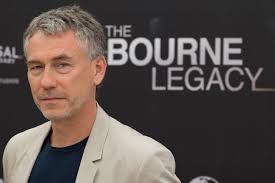
Writer/Director Tony Gilroy and actor Jeremy Renner dropped by the AMC movie theater in Century City on July 9, 2012 to answer questions regarding their upcoming summer blockbuster, “The Bourne Legacy.” The emcee of this Q&A was Dan Gilroy, Tony’s brother, who also co-wrote the screenplay for it. The film itself was not shown that evening, and the audience had to settle for its latest trailer instead, but people were allowed to ask questions about how it will differ from the “Bourne” films which came before it.
This event was presented over the internet live as well as in front of a live audience, so questions came from all over the world as well as Century City. One question came from a guy named Jose on Facebook who asked how “The Bourne Legacy” will differentiate itself from the previous three films. To this, Tony said:
“If you’ve been a casual observer of the films before, it will have an extra bit of boost. If you’re a freak, if you’re a real fan, there’s a lot of stuff that’s in there that’s designed to pay back people who have really been paying attention.”
Catherine, who submitted her question through Twitter, asked, “what does Aaron Cross bring to the Bourne franchise that makes it different from the previous movies?” Tony’s response to this was very descriptive:
“What we’re saying in this film is that there were many programs. The Treadstone program, that Jason was a part of, was an early program that was shopped out to the CIA. The program that Jeremy is in is called Outcome. The Outcome agents are not designed as assassins; they are long lead isolated people who bury down into places. So, the skill set is slightly different, and there’s an adaptive quality, there’s a verbal quality, and there’s a curiosity that we really shine on for the Outcome agents that we meet. In ‘badassery,’ the physical aspects of a lot of this are very familiar; he is a cousin to Jason Bourne in that regard. But the job is different, the design is different, and the flaws are very different. The things that go wrong are very different.”
Dan himself said, as one of the writers of this screenplay, that he was especially interested in the conspiracy side, and he asked his brother Tony how it differs from the franchise:
“Well, this time we’re pulling back (the curtain). We’re saying that what you saw before was a small piece; you watched the other three films and thought that that was the entire universe. It turns out now when we pull back the curtain that there has been a mastermind behind the entire program and these other programs, and that’s Edward Norton. In a way he’s been sitting beside you in the theater for the last 12 years watching this all go on, wondering if it’s going to cause larger problems for him and getting irritated as (“The Bourne) Ultimatum” explodes.”
Many fans of the Jason Bourne movies have been arguing loudly about the series continuing on minus Matt Damon and Paul Greengrass, but Tony Gilroy has made it clear how he made “The Bourne Legacy” with them in mind. It sounds like he has put together an exciting movie which audiences will get a kick out of, and I for one cannot wait to see it.
WRITER’S NOTE: This article was written back in 2012.
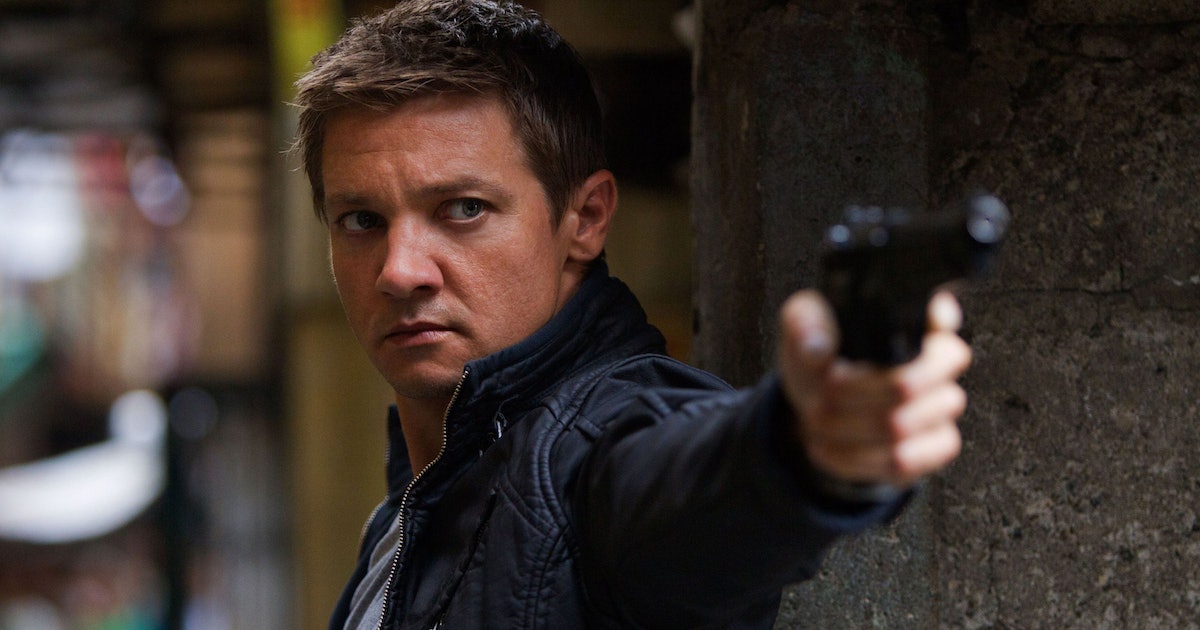
Jeremy Renner appeared at the AMC Century City on July 9, 2012 along with writer/director Tony Gilroy to talk about “The Bourne Legacy.” In addition, Renner also took time to answer questions regarding how he went about preparing to play Aaron Cross, and of his preparation for roles in general. His answers showed him to be an actor always looking to challenge himself constantly and to not get trapped in a comfort zone.
Renner has long since made a name for himself with his performances in “The Hurt Locker,” “The Town,” “Mission: Impossible – Ghost Protocol” and “The Avengers.” One person asked him which movie has required him to do the most training, and he said it was definitely “The Bourne Legacy.” Renner said this was because it required from him “a level of authenticity” the other movies did not ask of him, and that he “had to work diligently to make the fights look like I could actually do them.”
Another person quoted Renner as once saying he “makes himself uncomfortable” when he can and asked him if that has made all the difference in his life. Renner replied it makes all the difference and said it is about constantly challenging himself:
“It’s about not being complacent and not fall into the trappings of repeated behaviors and getting comfortable. As I’ve gotten older, if there are things I knew I don’t like, I would still go try them again just to make sure that I don’t like them.”
Unlike his previous movies which had him acting in a supporting role, “The Bourne Legacy” marks Renner’s first starring role in a big budget Hollywood movie. He did, however, make it clear that his preparation for this movie was no different than any other he has appeared in, and that it remains the same on each role plays. He did say, however, that his workout regimen has changed a lot from “Mission: Impossible – Ghost Protocol” to “The Bourne Legacy:”
“For ‘Mission’ I was really out of shape. I mean, I stretched for twenty minutes and that was my workout. And now I stretch for an hour and a half, fight for two hours, workout for an hour and a half, and then stretch for another hour and then go to work.”
For Renner, saying yes to “The Bourne Legacy” was actually very easy as he felt all the elements were fantastic and that he could not say no to it even if part of him wanted to. And while he may have graduated from indie films to big budget action movies, his mindset has not changed in the slightest as he compared making this sequel to movies he has done beforehand:
“For a big movie, it felt very tiny in the sense of it was not just the stunts but also the intimacy of really quiet scenes I feel I’d rather be doing as an actor. So, for me it had the balance of both; it felt like a little independent movie and a massive action movie, so I got both feels all in one.”
In answering what it was like to play Aaron Cross and how he would turn off the character at the day’s end, Renner’s response did not have any Hollywood ego in it at all:
“Oh, come on man! It’s something that’s not that far away in that we’re talking about every physical role here. I have to stick to the truth on page one to page whatever and just stick to the truths within that. There’s no turning it on or turning it off; I’m not some freak actor that way. This is a character that’s closer to me than say Jeffrey Dahmer (whom the actor played in the 2002 movie “Dahmer”), so it’s not something I have to completely lose myself in. It’s just part of my job, and I can’t explain my job.”
From this evening, we can see that Jeremy Renner is a very respectful actor who takes his craft very seriously, and he revels in his unexpected success and working with actors like Rachel Weisz and Edward Norton whom he resented for stealing so many interesting movie roles from him in the past. We look forward to what Renner has to give us not just in “The Bourne Legacy,” but in so many other performances he has yet to deliver.
If there is to be a fifth “John Wick” film in our future, or perhaps this can be included in the upcoming spinoff entitled “Ballerina,” in which a father and son visit a memorial which stretches out for a couple of miles. Their dialogue would be comprised of the following:
“Daddy, what is the wall?”
“Well son, this is a memorial for all the people killed by John Wick, a professional hitman and assassin.”
“Wow, there are so many names up there!”
“I know son. Funny thing is, this memorial was opened up the public before those who constructed it realized they had another mile or two to add on. Just when everyone thought John could not kill another soul, he somehow found the strength to kill another human who was sent out to kill him.”
“Why did so many try to kill him dad?”
“Because there was a bounty on his head son, one to the tune of around $20 million dollars.”
“Daddy, are all these names up here to show they did not die in vain?”
“Actually son, it was quite the opposite. This memorial is proof of what happens when you put greed above everything else.”
Right from the start, the “John Wick” movies have shown how its title character is a human being somewhere in between the 1980’s action heroes portrayed by Arnold Schwarzenegger and Sylvester Stallone, and John McClane from “Die Hard.” On one hand, John looks to be super-human as he dishes out punishment while taking quite a large number of brutal hits in return, but thanks to Keanu Reeves, who continues to do some of his best work in these films, this character remains fully human as he is not without a soul and is looking to find peace in a world which appears very much devoid of it, particularly for him.
“John Wick Chapter 4” starts not too long after the events of “John Wick Chapter 3: Parabellum” in which he found himself betrayed by the High Table. Since then, he has lived in an underground bunker with The Bowery King (Laurence Fishburne) who has helped nurse him back to health. Suffice to say, John’s bloody knuckles are a sign that he is ready to fight yet another battle. Of course, what makes this even clearer is the following dialogue:
The Bowery King: “You ready, John?”
John Wick: “Yeah.”
But the fact that John Wick is still alive does not sit well with Marquis Vincent de Gramont (Bill Skarsgard, who always looks like he is about to start singing “I’m Sexy and I Know It”) who chastises Winston Scott (Ian McShane) and his friend Charon (the late Lance Reddick) for failing to kill this dog-loving assassin. To see that the job finally gets done, Marquis hires Caine (Donnie Yen), a blind assassin who also happens to be an old friend of John’s. Caine is not keen on taking the job, and he shudders once he realizes what name he is reading on a braille card to where he does not even need to spell it all out. As these two come to blows, it does not take much to see how they are both victims of circumstances beyond their control as they fight to protect what they love most.
Director Chad Stahelski knows what we want and expect from a “John Wick” film when we enter then theater, but he is smart to not start things off with too big a bang. During its 169-minutes, he takes his time to reintroduce us into the world John inhabits and of the people in his universe who either benefit or suffer from his deadly actions. And when those action scenes suddenly take flight, you can bet it will take not one or two, but close to a dozen bullets to take out a single bad guy. Watching this, it makes me wonder if John will suddenly run out of bullets at the worst possibly moment.
When it comes to Reeves, many love to joke about what a bad actor he is. As for myself, I feel the need to defend him from time to time even if his work in “Knock Knock” remains too painful to endure. The truth is, he is one of the main reasons the “John Wick” movies work as well as they do. In this latest installment, he receives the deepest of bruises, is almost hung from a noose, has a tattoo searingly burned into one of his arms and ends up falling down more flights of concrete stairs than Father Karass did in “The Exorcist,” and yet he still comes out of all of this standing tall. Even if you wonder if John ever gets any sleep, has any time to go to the bathroom or if one ice bath a day is enough for him, Reeves makes you believe he can endure the worst and yet still come out of it all with a pulse. Even when a supporting character utters to John why he doesn’t just die, he makes you realize he is not about to or, at least, not yet.
Other than that, “John Wick Chapter 4” contains a lot of great things such as Ian McShane’s performance as he plays Winston Scott in a far more gleeful than he did previously, Clancy Brown who proves to be a wonderful addition as a high-ranking High Table operative called the Harbinger, a thrillingly propulsive music score composed by Tyler Bates and Joel J. Richard, and striking cinematography from Dan Laustsen.
Still, I do need to single out another performance here, and it is the one from Donnie Yen, As Caine, he shows how the blind can see things better than those who still have their eyesight, so it should be no surprise when he easily takes out his devilish opponents with something like the sound of a doorbell. Like John, Caine is in a position not of his own making, and Yen does an excellent job of showing the painful conflicts this character is forced to deal with. As much as he does not want to be in this position, you know he is not about to go easy on his prey. But will he enjoy taking down his target? That remains to be seen.
While watching “John Wick Chapter Four,” I was reminded of what happened after Ang Lee’s “Crouching Tiger Hidden Dragon” became such a worldwide phenomenon. Hollywood quickly greenlit a number of martial arts films heavy stunts, but none of them were anywhere as successful. Some studio executives proclaimed that these films had the best fight choreographers available, but they clearly missed the point. The best action films out there are not just about stunts, but also about characters with moral dilemmas they are constantly entangled in. Whether or not they win the day, they still wonder what will become of them once all the violence ends.
The ”John Wick” films are not just about stunts; they are about the characters which inhabit them. This is what makes all the amazing stunt work, and it is infinitely amazing here, so bloody effective. Whether or not you consider “John Wick Chapter Four” to be one of the best movies ever made, it is clearly one of the greatest action flicks to come out in recent years, and seeing it once is not enough. More importantly, you have got to check it out on the silver screen with the biggest audience in town.
By the way, there is a post credit scene I encourage you to stick around for. And yes, this film is dedicated to the memory of Lance Reddick, yet another actor who tragically left us far too soon. Rest in peace Lance…
The following review was written by Ultimate Rabbit correspondent, Tony Farinella.
When it comes to the genre of underdog sports films, they don’t make them any better than the original “Rocky.” It was a film that came along at the right place at the right time and with the right actor. After all, Sylvester Stallone was the writer of the original “Rocky” script, and he demanded to star in the film even though the studio wanted a big name. Stallone was unknown at the time. It’s been 47 years since “Rocky” came out, but its staying power will last forever. It is why I was extremely pleased to hear Warner Brothers was going to be releasing a collection of the first four “Rocky” films in 4K and in a set. It was one of my most anticipated releases of the year so far.
Many of you who are reading this review might be asking, “Where is ‘Rocky V?’ What about ‘Rocky Balboa?’ The ‘Creed‘ movies?” I heard rumblings that there are possible director’s cuts coming out for “Rocky V” and “Rocky Balboa.” As far as the “Creed” movies, I would imagine they will get a separate release, as they are part of their own universe. Now with all that out of the way, this review is going to focus on the first four “Rocky” movies and how they are available on 4K for the very first time.
The original “Rocky,” released in 1976, was nominated for 10 Academy Awards and won Best Picture. When revisiting the film, which I’ve seen a number of times, it is easy to see why it has such staying power. It starts with the relationship between Rocky Balboa (Sylvester Stallone) and a shy young woman named Adrian (Talia Shire) who works at a pet store. For my money, “Rocky” is a love story, first and foremost, and it is a sports movie second. The interaction Rocky and Adrian have with one another in his apartment is one of the most tender and genuine love scenes I’ve ever seen on film.
Rocky Balboa is a local southpaw boxer in Philadelphia where he makes little to no money, and he takes a lot of abuse in the process. He also collects for a local loan shark named Tony Gazzo, played by Joe Spinell. He hangs out at a local pub with his friend Paulie (Burt Young), who also happens to be Adrian’s brother. Paulie isn’t always the easiest guy to get along with, but Rocky is a very patient and understanding individual. As a matter of fact, you would be hard-pressed to find anyone that doesn’t like Rocky. It’s a well-known fact these days that Stallone was not someone the studio wanted to portray Rocky. However, the script was written by him, and he knew this character inside and out. He went on to write and direct “Rocky II, III and IV” which are also included in this set, along with “Rocky Balboa.”
That’s the beauty of this film. Stallone was an underdog actor at the time he sold his script, and the film is about an underdog boxer who is given a chance to fight the heavyweight champion of the world, Apollo Creed (Carl Weathers), after Creed’s original opponent ends up injured. Creed, being the shrewd businessman that he is, figures it would be a great idea to give an underdog a shot at the title in order to create a marketable gimmick and make some money. Rocky Balboa knows this is his chance to prove he can go make something of himself and stand out as a winner. He is trained by the cranky yet seasoned Mickey (Burgess Meredith), who is finally willing to give Rocky a chance. The two of them joust verbally back-and-forth with one another for some great comedic relief.
In “Rocky II,” Rocky is dealing with life after the big fight with Creed. Even though he didn’t win, he went the distance with the champion which shocked the world. He lasted all fifteen rounds and lost based on the decision of the judges. Regardless, many people think Rocky was the true winner of the fight. He has to figure out how to live a normal life now that he’s a well-known figure not only in Philadelphia, his hometown, but around the world as well. He starts to do commercials and even ends up with a manual labor job, but he realizes his true calling is as a boxer.
Apollo Creed also has a score to settle with Rocky. He wants to knock him out and prove to the world and himself that he’s truly the world heavyweight champion. Creed wants to show everyone that what happened in their previous fight was a fluke. Rocky, on the other hand, might go blind if he gets in the ring again after what happened in their last fight. He took quite a beating, but he came back for more. He knows he’s a fighter, and he knows the risks, even though he has to think of Adrian now and their child. Mickey has devised a plan for Rocky which he thinks will allow him to win the fight and protect his eyes at the same time.
In “Rocky III,” Rocky is forced to handle success. He learns that Mickey has been protecting him from the really good fighters out there because he wants to keep him safe and look out for him. This causes Rocky to feel like a paper champion and question his manhood. There is also a tough challenger coming for him by the name of Clubber Lang (Mr. T) who is hellbent on embarrassing Rocky in the ring and becoming heavyweight champion of the world. This time, though, he has a new trainer in Apollo Creed. Rocky once again must learn a new fighting style: it is one based on endurance and speed. Clubber Lang is bigger and stronger than Rocky, so it will take everything Rocky has in him in order to defeat him.
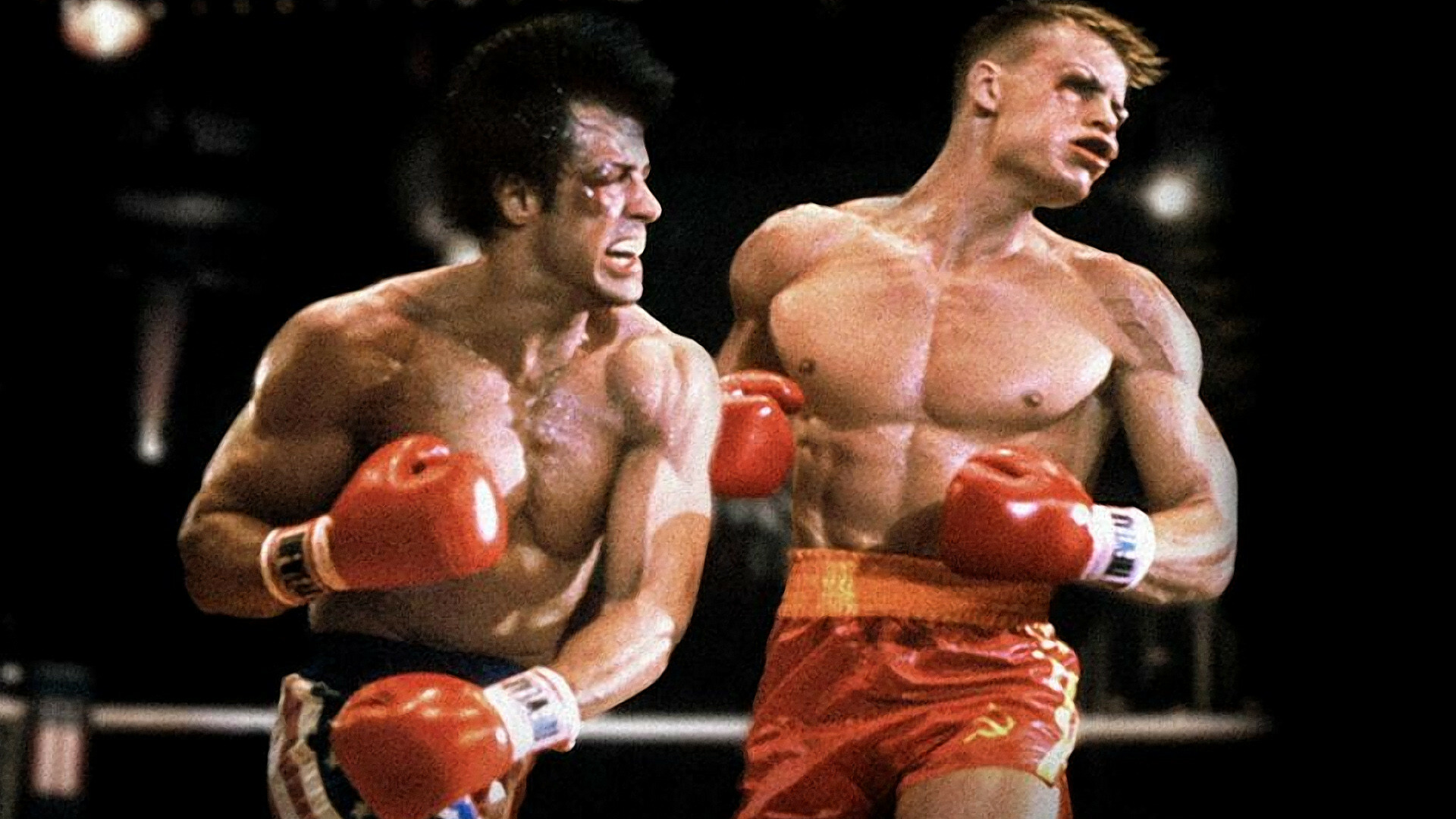
“Rocky IV” is where it gets very interesting, as there are two cuts of the film featured here on one disc. There is the original “Rocky IV” theatrical cut and also “Rocky IV: Rocky vs. Drago,” which is the ultimate director’s cut. This time, Rocky finds himself having to fight his biggest opponent yet in Ivan Drago (Dolph Lundgren), who is a foot taller and thirteen years younger than him. He also must train in Russia as the fight will be taking place there on Christmas Day. Rocky will not only train like he never has before, but he will have to win in enemy territory against “The Russian,” as he’s referred to many times throughout the course of the film.
I didn’t want to give four full-length reviews for these films, as I imagine almost anyone reading this has seen and knows them fairly well, much like myself. If I were to give my ranking of the films featured in this set, I would go with the original “Rocky” as the best, “Rocky II” as the second best, “Rocky IV: Rocky vs. Drago” as the third best, and “Rocky III” as the fourth best. I would really advise you to check out the ultimate director’s cut of “Rocky IV” over the theatrical cut. It’s only two minutes longer, but the film is more serious, intense, and flows in a much more effective manner. It’s all in the tone of the film, and I loved the tone of the ultimate director’s cut. It really gave me a new appreciation for the fourth “Rocky” film.
As soon as this set arrived, it only took me two days to go through all four films. It was truly a treat to revisit them. I understand why they released these four films in a set together. It makes sense after watching them. You can also buy them as standalone steelbooks at your local Best Buy, but I believe they have different release dates. This set is out right now and while it is far from perfect, I’ll explain why later, if you are a “Rocky” fan, you have to buy this set for your collection. The original “Rocky” will always be a great, great piece of cinematic history. The second film is very, very good as well. The third one is good, but not great. “Rocky IV: Rocky vs. Drago” is also much improved with the ultimate director’s cut.
4K Info: “Rocky: The Knockout Collection” is released on 4K from Warner Brothers Home Entertainment. This set features five discs. The first three films are on their own individual discs and “Rocky IV” has the theatrical cut and the ultimate director’s cut on it. There is also a Blu-ray disc of special features. The set also comes with a digital code to have all of them in your digital library on 4K. “Rocky” has a running time of 119 minutes, “Rocky II” has a running time of 120 minutes, “Rocky III” has a running time of 100 minutes, and “Rocky IV” has a running time of 91 minutes (theatrical cut) and 93 minutes (ultimate director’s cut). All the films are rated PG. The set comes in a flipper case with a thick cardboard slipcover, so the discs are not stacked on top of each other and can be flipped through with their own slot. On one hand, I would have loved it if they released these films in four separate cases with slipcovers in a box set. However, for space reasons, this set works for me as it’s easy to put on the shelf with all four films together on five discs (including the Blu-ray special features disc) in a single set which isn’t much bigger than your average 4K film with a slipcover. All of the films come with Dolby Vision as well, which I was VERY happy with as a 4K collector.
Video Info: Let’s talk about the look of these films. The original “Rocky” is probably the worst looking film out of the bunch. I say this because of the age of the film and its low budget. It doesn’t look awful or terrible, but I don’t think it’s ever going to be a film that looks spectacular or blows you away. There is noticeable grain here, but in many ways, it adds to the gritty nature of the original film. That being said, if you are looking for a major upgrade with the first film on 4K, you probably are going to be disappointed. “Rocky II” looks very, very good. It’s a clean transfer which is smooth looking and crystal clear. The boxing scenes, in particular, look the best I’ve ever seen them look. This is when you can see the Dolby Vision and the HDR really, really stand out. This is a major upgrade. For “Rocky III,” the transfer is above average. It’s better than “Rocky,” but it’s not as good as “Rocky II.” There was noticeable grain, but it didn’t have the same old-school charm as the original look of the film. The best-looking film out of the bunch, far and away, is “Rocky IV.” I wish the majority of the films looked like this. This counts for both the ultimate director’s cut and the theatrical cut. You can see everything on their faces, and they really cleaned up this film. It looks beautiful and modern.
Audio Info: The following audio formats were used: English DTS-HD 5.1 Master Audio, English/Spanish/French Dolby Digital, and 2.0 Dolby Digital with subtitles in English, French, and Spanish. I’ve read from a lot of people online that are unhappy with how the films sound. Personally, I don’t think the audio issues are as bad as advertised, and the problems don’t take away from the viewing experience. At times, the films can fluctuate in audio, but the dips are not that frequent. They are here and there throughout the four films. Truth be told, I would not have ever noticed these issues unless they were pointed out to me. Overall, though, I think it’s much to do about nothing.
Special Features:
“Rocky” 4K Special Features:
Audio Commentary featuring Sylvester Stallone.
Audio Commentary featuring John G. Avildsen, Irvin Winkler, Robert Chartoff, Talia Shire, Carl Weathers, Burt Young, and Garrett Brown.
Audio Commentary featuring Lou Duva and Bert Sugar
Bonus Features Disc:
The Making of Rocky vs Drago: Keep Punching
8mm Home Movies of Rocky
3 Rounds with Lou Duva
Steadicam: Then and Now
Staccato: A Composer’s Notebook
The Ring of Truth
Tribute to Burgess Meredith
Stallone Meets Rocky
Trailers
* * * ½ out of * * * *
Should You Buy It?
This set was delayed in getting to me as it had a street date of February 28th, and I imagine a lot of that had to do with people complaining about the audio issues. I’m not a film snob by any means, but I am very particular about the audio and visual quality of 4K releases, as I’ve invested heavily into the 4K format. With all that being said, the pros outweigh the cons. Yes, not all of the films look great, but this is the best they have ever looked, with “Rocky II” and “Rocky IV,” in particular, looking fantastic. Yes, the audio is problematic at times, but it’s not so noticeable that it impacted my ability to hear the films or enjoy them. Right now, the set is going for about $53 plus tax, and I think for four films in 4K that are hugely popular, it’s a good value for the price. I would say this set is imperfectly perfect, as I enjoyed watching the films and the quality of them when they were flying on all cylinders. For film fans or Rocky fans, I think there is A LOT more to like than dislike with this collection. You can buy this set with confidence and try to ignore all of those folks out there who are analyzing every little detail to death. I think people are getting way too particular with 4K films, and this is coming from someone with high standards. The key is watching and enjoying the films with quality video and audio, and I felt I was able to do that more often than not. As far as the films themselves, many would argue these are the best films in the franchise, so it’s fine that “Rocky V” and “Rocky Balboa” are not included. “Rocky Balboa” is enjoyable nostalgia, and I imagine it will get a proper 4K release along with “Rocky V” at some point. As I often bring up, the special features are old special features. It’s hard to get people to sit down and do special features anymore, I feel like. At the end of the day, buy this set and enjoy it!
**Disclaimer** I received a copy of this film from Warner Brothers to review for free. The opinions and statements in the review are mine and mine alone.
The opening credits to “Superman” and “Superman II” are among the best when it comes to movies. When Bryan Singer used this format for his “Superman Returns,” it felt like the return of a friend who had been gone for far too long, and the theme by John Williams is among the finest he has ever composed.
But then came “Superman IV: The Quest for Peace,” a sequel which was supposed to put this movie franchise back on track after the critical and commercial disappointments of both “Superman III” and “Supergirl.” Instead, we got a sequel which quickly became labeled as one of the worst motion pictures of all time. With the Salkind family abandoning the franchise and Cannon Pictures taking over, the budget got slashed in half do to their money problems, and everything came to look liken nothing but bargain basement deals or useless stuff which had been long since thrown in the trash.
As soon as the opening titles for “Superman IV” begin, we know it is going to be a rough ride even as Williams’ famous theme, conducted this time by Alexander Courage, is not enough to make our spirits soar. Even co-screenwriter Mark Rosenthal, whose audio commentary for this sequel I highly recommend, is quick to say the following in his opening remarks:
“You can tell from the very first credit that says Warner Brothers that something is terribly wrong in Metropolis.”
This is the Wal Mart, 99 Cent Store or Dollar Tree of opening credits as they look ridiculously cheap in ways the ones for the previous installments never did, and this proved to be quite the shock. Then again, perhaps they fit this sequel perfectly as the visual effects and sets look every bit as cheap as the opening titles. Watching them is heart breaking as they make clear that it is all downhill from here. No wonder this sequel was such a big bomb at the box office.
If you must, please feel free to check out the opening titles to “Superman IV: The Quest for Peace” down below:
I remember almost renting “Cannonball Run II” on VHS from Nino’s TV and Video in Thousand Oaks when I was a kid. I enjoyed the first “Cannonball Run” movie a lot and watched it many times, and these days I rate it as an Ultimate Rabbit guilty pleasure. But when I presented it to my dad as the movie I wanted to rent for the weekend, he looked at me and said, “Are you sure you want to rent this? It’s really awful.” This shook my courage in renting movies for a time as I began to doubt my taste in film. As a result, I put this one back on the shelf even though its poster looked ever so cool.
Well, while my dad’s pleas failed to keep me from renting the Clint Eastwood comedy “Every Which Way But Loose,” it did keep me from checking out “Cannonball Run II” for many years. But at a time when I should have been watching such films as “Tar,” “The Banshees of Inisherin” and “Black Panther: Wakanda Forever,” I found myself watching this 1984 sequel as it was available to view for free on You Tube (with ads of course). And though I was not expecting a good movie in the slightest, I was stunned at just how amazingly atrocious this follow up was as everyone involved cannot even bother to give the proceedings a mere 50% of their energies.
This sequel starts off with the Sheik Abdul ben Falafel (Jamie Farr) being berated by his father (played by Ricardo Montalban) for losing the Cannonball Run race last year. Having embarrassed the Falafel family (you read that family name correctly), Abdul’s father orders him to win another Cannonball Run in order to restore the family name. The problem is, there is no Cannonball Run race happening that year, so Abdul is told to buy one, and the grand prize is a million dollars.
From there, “Cannonball Run II” begins its arduous task of reintroducing characters from the original as well as introducing a whole bunch of new ones who could only dream of being as funny as Roger Moore was when he played Seymour Goldfarb, Jr. In fact, Hal Needham, who returns to direct this misbegotten sequel, spends more time with these characters than he does with the race itself.
Burt Reynolds is back as J.J. McClure, and he looks like he can save this motion picture with his charisma and sexy mustache. Dom DeLuise also returns as J.J.’s partner Victor Prinzi and his alter ego of Captain Chaos. These two always look to be having the time of their lives when they work together, but the fun they have does not translate over to the audience as it did for me in the original. This is especially the case when you watch the outtakes which play over the end credits, and you wonder what made the cast enjoy themselves endlessly as their laughter speaks more of a desperation to make this sequel worth watching.
When it comes to racing partnerships, there are a few changes. Jackie Chan is joined this time in his Mitsubishi car by Richard Kiel who plays his driver, Arnold. Doctor Nikolas Van Helsing (Jack Elam), J.J. and Victor’s partner in crime previously, is now working with Sheik Abdul to keep his ulcer in check. And Susan Anton and Catherine Bach are here to replace Tara Buckman and Adrienne Barbeau as those sexy women behind the wheel of a Lamborghini. Still, as Snake Plissken kept saying in “Escape From L.A.,” the more things change, the more they stay the same.
In directing “Cannonball Run II,” I had to wonder what was going through Needham’s mind. Was he just telling a cast which included Shirley McClaine, Dean Martin, Marilu Henner, Sammy Davis Jr., and Tony Danza among others to just go out there and be funny? If so, it did not work to anyone’s advantage as everyone looks to be either phoning it in or trying way too hard to put a smile on our faces. And if you thought the stunts from the original were lacking, the ones here are generic and pedestrian at best.
The only decently funny moment for me was at the beginning with Ricardo Montalban who plays his role as if he is not in on the joke in the slightest. Heck, he even makes the word falafel sound vaguely amusing in a way Bill O’Reilly only thinks he can. Perhaps if the rest of the cast had followed suit, this sequel might have been slightly better than it ever could have hoped to be.
I also keep thinking Needham and company kept looking at this sequel and its making to where he believed he could solve anything and everything in post. There’s a subplot involving mobsters which goes nowhere and has actors like Abe Vigoda being cast just for old time’s sake. And, yes, there is an orangutan driving a car, but he can only hope to be as memorable as Clyde was in “Every Which Way But Loose.”
So much time is spent on such overly broad character moments that Needham and his collaborators kept forgetting there was a long-distance race involved in this movie’s plot. As a result, they brought in Ralph Bakshi to animate the race’s climax in order to give it some momentum, but it doesn’t do much to speed things up, especially after a cameo with Frank Sinatra who plays himself. And yes, it is ever so easy to tell that Sinatra filmed his scenes in a studio by his lonesome. Not once do we see him and actors Reynolds, DeLuise and others in the same scene together.
“Cannonball Run II” will at best be remembered as a footnote in history for the following reasons: it marked Frank Sinatra’s final role in a theatrical motion picture, it is the final action stunt comedy for Reynolds following such films as “Smokey and the Bandit” and “Hooper” among others, it was the last film for Dean Martin, Molly Picon and Jim Nabors who is essentially parodying his character of Gomer Pyle. Other than that, this one is a certifiable waste of 108 minutes out of your life.
What is my excuse for wasting my precious time with “Cannonball Run II?” I will treat that as a rhetorical question. Still, its poster does looks really cool.
Rian Johnson’s “Glass Onion” is one of those movies I would love to analyze in every single way. It is so cleverly constructed to where I want to know how he went about writing the screenplay. Putting a mystery like this together cannot be the least bit easy because nothing this ingenious comes to any filmmaker easily, and I have to believe Johnson had this story percolating in his brain for many years before it became a reality. This film has several layers viewers will have plenty of fun peeling away at, and the misdirections it employs are wonderfully insidious in a way Ben Shapiro will never be able to appreciate like any intelligent audience member can.
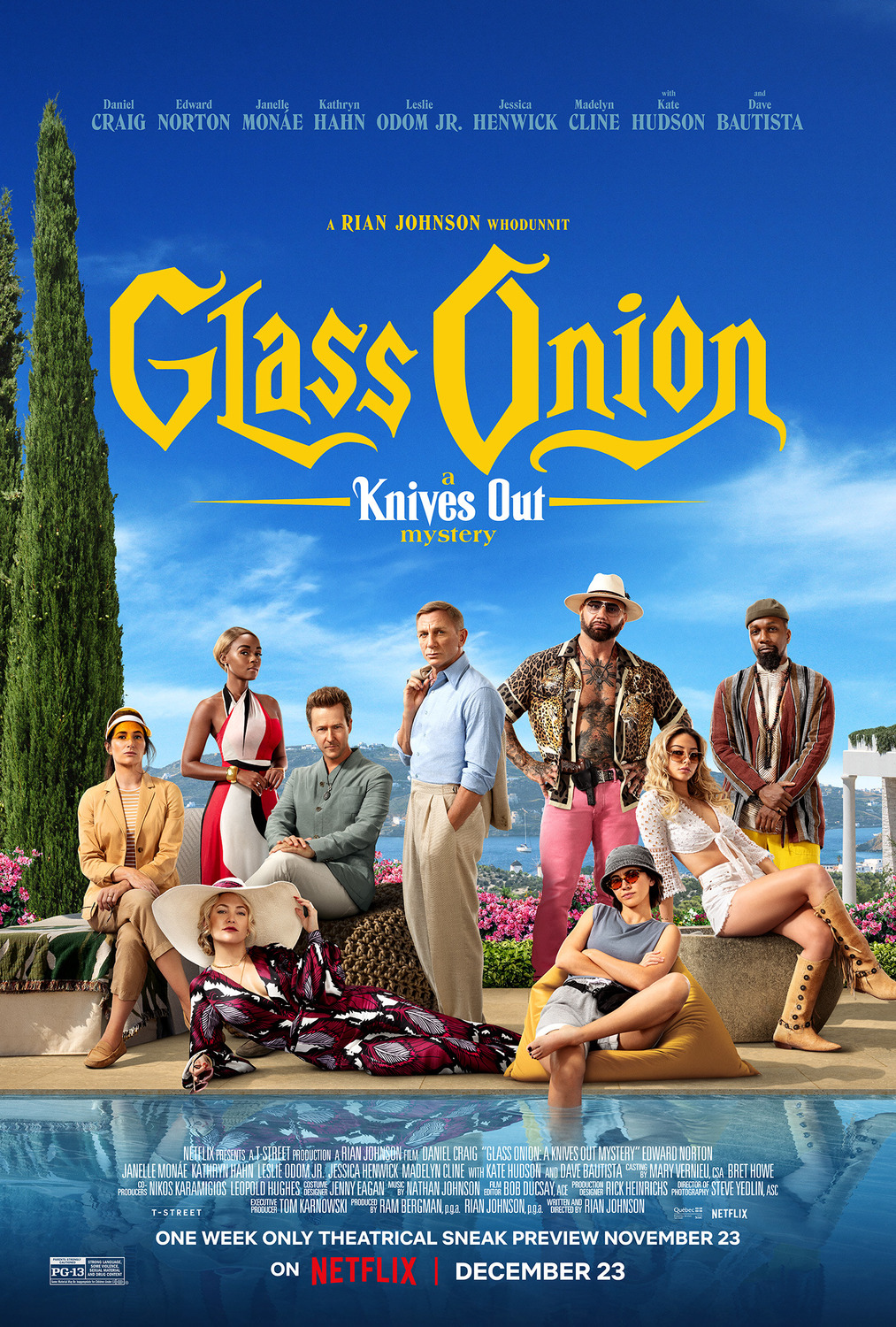
On top of being named after a classic Beatles song, “Glass Onion” is also Johnson’s sequel to “Knives Out.” Or, more correctly, it is a standalone sequel as the only actor returning from “Knives Out” is Daniel Craig who returns to play private detective Benoit Blanc. This time, Benoit has found himself invited to the private island of the billionaire co-founder of the technology company Alpha, Miles Bron (Edward Norton). Miles has brought together a group of his friends together on his island in Greece to play a murder mystery game, and they include Alpha head scientist Lionel Toussaint (Leslie Odom Jr.), Connecticut governor Claire Debella (Kathryn Hahn), controversial fashion designer Birdie Jay (Kate Hudson) who is accompanied by her harried assistant Peg (Jessica Henwick), and men’s rights streamer Duke Cody (Dave Bautista) who is accompanied by his girlfriend Whiskey (Madelyn Cline). But the most controversial guest of all is Andi Brand (Janelle Monae), the other co-founder of Alpha who was ousted from this group a long time ago, and yet she appears here to everyone’s utter shock.
Still, none of this deters Miles from getting his guests to solve the murder mystery he has in store for them. There is, however, one catch. The murder everyone needs to solve is Miles’, and it is here my friends that I refuse to tell you anymore about the story. To do so would ruin an insidiously good time you are bound to have while watching this.
Having seen “Knives Out,” I was tempted to believe I knew which direction Johnson was going to take the audience in with this follow up. But after a good twenty or so minutes, he pulls the rug out right from under us to where I really did not know where things would be heading. While it might seem obvious as to who will get murdered, it is actually not in the slightest. And once the first murder is committed, you become every bit as inquisitive and fearful as the other characters because no one can ever feel safe on this island from there.
Watching “Glass Onion,” I kept wondering what inspirations fueled Johnson to write and construct this screenplay with. Surely he could not have come up with all of this on how own, or did he? Did he read a lot of mystery novels by Agatha Christie and Gregory McDonald? Even I have to catch up with all those “Fletch” novels which I keep promising to myself I will read someday. Watching everything come together is a sheer blast as I kept thinking the fun could only last for so long until everything falls apart. But nothing ever fell apart for me as all the story elements seem to fit together perfectly in a way they never could have in all those “Saw” movies.
The average Pixar movie has so many easter eggs to where watching them once can never be enough. “Glass Onion” is no different as there are so many things you have to keep an eye out for, and the number of name drops of famous people throughout feels endless. There is also a plethora of cameos here which are too good to spoil here as they come out of nowhere, and the one involving Benoit’s partner in life is truly priceless.
I believe Craig’s role as Benoit Blanc may eventually supersede his most famous role to date as James Bond since he is clearly having far more fun playing this character than he ever did as 007 (seriously, just ask Dave Bautista). While playing a British spy may have forced this actor to act within certain boundaries, writer/director Johnson is more than willing to let him turn loose as a private investigator who is a mix of Jacques Clouseau and Sherlock Holmes. The joy of Craig’s performance is that he keeps you guessing as to whether he will solve a crime by sheer accident, or if he will actually deduce who the guilty person is before anyone else can.
The rest of the “Glass Onion” cast prove to be as game as the cast of “Knives Out,” and this did not surprise me in the slightest. Kate Hudson channels her mother Goldie Hawn’s character from “Overboard” here as Birdie Jay, and it is nice to see here in a motion picture which is as deserving of her talents as “Almost Famous” was. Kathryn Hahn brought her sublime and harried comedic talents as Governor Claire Debella here, and her constant exasperation proves to be a continued joy. Bautista once again proves there is much more to him than his character of Drax in those “Guardians of the Galaxy” movies in his portrayal of YouTube star Duke Cody, and that’s even though we should have known this after seeing him in “Blade Runner 2049.” And there is no ignoring Edward Norton who makes tech billionaire Miles Bron into every bit the bumbling manager Elon Musk has proven to be when it comes to Twitter. Of course, this is nothing more than an amazing coincidence as Johnson started writing this movie long before the Tesla visionary even thought about buying the internet app James Woods used to go apeshit on.
But the one performance worth singling out in “Glass Onion” is the one given by Janelle Monae. She portrays Andi Brand, but her role proves to be far more complex than at first glance asshe has to sell us on different facets of an individual we did not walk into the theater expecting to see. Again, I do not want to give anything away, but Monae has more to do here than the other actors, and the fact she pulls this off is beyond admirable as it makes her work look all the more impressive.
You know, when you look at Rian Johnson’s filmography, he has always appeared to be a mystery buff of sorts. His breakthrough movie, “Brick,” was a neo-noir mystery, but while his next film, “The Brothers Bloom,” was more of a caper, it still featured characters searching for answers which constantly elude them. The same goes with my favorite Johnson movie to date, “Looper,” as well as “Star Wars: The Last Jedi” in which characters we know or don’t know are trying to find some way to silence the chaos which constantly disrupts their seemingly peaceful existence.
Taking this into account, I cannot wait to see where Johnson and Craig take this franchise next. Thanks to the deal they have with Netflix, we can expect at least one more “Knives Out” installment in the future, and maybe there will be even more following that. Like James Cameron with his “Avatar” movies, Johnson and company are not about us to give us the same exact thing twice.
It is surreal that “Avatar: The Way of Water” has finally arrived in movie theaters after having its release delayed so many times. The original “Avatar” came out in 2009, and since then we have been promised a number of sequels which never quite made it to the silver screen regardless of what James Cameron promised us. This got to be aggravating for everyone including myself as I kept rolling my eyes whenever Cameron said the sequels would be coming out soon. Like many, I wanted to just yell out, “release them already!” But while so much has happened between 2009 and 2022, it suddenly feels like it was just yesterday when we first visited Pandora and all those blue people, and I was reminded about how wowed I was by everything Cameron put on display.
Well, I can certainly see why Cameron kept us waiting for years and years as he wanted to break new cinematic ground, and he has done so with again with this long awaited sequel. While “Avatar: The Way of Water” may not have the most complex of stories or characters, and his films rarely do, he succeeds in giving us one hell of a cinematic experience as he spends a lot of the 192 minutes wowing us in ways I thought he was no longer capable of. Like “Top Gun: Maverick,” I cannot wait to see it again.
Over a decade has passed since the Na’vi repelled the human invasion of Pandora, and Jake Sully is now the leader of the Omaticaya tribe. He and Neytiri (Zoe Saldana) are now parents to four children; two adventurous sons and two girls who are so fascinated by the world and creatures constantly surrounding them. But like all happily ever after endings, this fairy tale eventually comes crashing down in a nightmarish fashion.
The Resources Development Administration (RDA) has now returned to Pandora, but instead of obtaining that brilliantly named mineral called unobtanium, they are this time intent on inhabiting the planet as Earth is now in its death throes because there were never enough people there who realized climate change was real. And in this futuristic time Cameron has thrust us into, manifest destiny has taken humanity from conquering planets to taking over galaxies because, you know, heaven forbid adults get given the same kind of boundaries children are and eventually benefit from. Once again, humans are out to, as George Carlin once said, free the people and whip a little industry on them.
Fearing the worst, Jake and Neytiri flee the Omaticaya tribe along with their children and take refuge with the Metkayina reef people in hopes they will never be found by the RDA. The family, however, has trouble fitting in as they are tree people while Metkayinas are water people. This leads to a lot of awkward situations between everyone as the kids hate being uprooted and are not sure how to act around those who know the water more than what is above it.
It is when “Avatar: The Way of Water” goes into the waters of Pandora that it really takes off. The underwater footage is nothing short of amazing as we are taken through the many depths of the planet and are introduced to various aquatic creatures who must be seen to be believed. A good portion of the footage was shot in a higher frame rate (HFR) which gives the visuals a clarity which makes them look even more astonishing than they already are. I have not always been a big fan of HFR as it can make things look a little too crystal clear, and Cameron knew not shoot the whole movie in this format as the audience could have been easily alienated, but he makes HFR work to not just his advantage, but the audience’s as well.
Now much has been said about this sequel’s making and of how the actors spent many minutes underwater. As the Na’vi children are made to experience the underwater realm, “The Way of Water” could almost be seen as an advertisement for free-diving. Spend just a minute or two in the shallows or the depths is not enough to take in the last frontier left to explore on Earth or any other planet, but we are also reminded of the dangers of staying underwater for too long, and Cameron knows we know this, so he squeezes ever last ounce of tension to make this clear.
Cameron also gets to deal with themes which have been prevalent throughout his movies and documentaries to where I am quickly reminded of a line from “Aliens” uttered by Sigourney Weaver where she pointed out the difference between humans and certain extraterrestrials:
“You know, I don’t know which species is worse. You don’t see them fucking each other for a goddamn percentage.”
Indeed, we are given plenty of proof here of how marine life can be far more intelligent than humanity, and it makes the humans decimation of such sea creatures in scenes which reminded me of similar ones in “Jaws” even more painful. Clearly, these fish hunters never took the time to watch “Star Trek IV: The Voyage Home” at least once, and the fluid they remove from these creatures is treated as being even more profitable than unobtanium. All I can say about this fluid is that it’s the kind which would just fly off the shelves in Beverly Hills. I mean, heaven forbid anyone allows themselves to age gracefully, you know?
The inhabitants of Pandora also get to talk to whales in this movie, something which I am sure would make Doctor Doolittle infinitely envious. Now on paper this may have looked incredibly silly, but I never found myself laughing at those scenes where the characters could talk to the animals. That, and maybe I just want to believe deep down that we can do this for real someday if we haven’t already.
As complex as the visual effects are, the same cannot be said about the movie’s story or screenplay. Even with several other credited writers, nothing here sounds like it could have come out of a David Mamet play. Then again, Cameron has not always been known for giving such complexities when it comes to his screenplays. What you see is what you get, and it is up to the actors to bring to life even if the dialogue is not particularly great.
Speaking of the actors, their performances are mostly excellent, and the best ones come from those who will not simply let the effects teams do all the work for them. This is especially the case with Zoe Saldana who puts every single ounce of her energy into Neytiri to where the motion capture, visual effects and her performance all combine to create one big passionate fireball of energy. The same goes for Kate Winslet, reuniting with Cameron for the first time since “Titanic,” who portrays the pregnant Metkayina free diver Ronal with a passion to where it took me forever to realize it was the Oscar winning actress of “The Reader” who was playing this character.
I also have to say how envious I was of Sigourney Weaver here. Not only does she reprise her role of Dr. Grace Augustine, but she also portrays the daughter of her Na’vi avatar, Kiri. Weaver portrays Kiri with all the innocence a child could have as she comes into contact with things she is ever so quick to learn from and use to her advantage.
But my favorite performance of all comes from Stephen Lang who returns as the nefarious Colonel Miles Quaritch, albeit in Na’vi form as he died in the last movie. With his mind implanted in this avatar with memories of his past life, Miles has not changed one bit as he seeks bloody revenge on Jake Sully for what he sees as betraying his own kind. But thanks to Lang, he gives us an antagonist who is never one-dimensional as his goals are led by a patriotic duty which, while misguided, fuels his heart in ways nothing else can. Still, he lets us see another dimension hiding within Miles as he comes to meet the son he left behind on Pandora, Spider (Jack Champion), who has long since become accustomed to the environment he has been living in.
Everything in “Avatar: The Way of Water” leads to an adrenaline-fueled climax which echoes the most intense moments from one of Cameron’s more underrated works, “The Abyss,” as Jake and company are forced to literally keep their heads above water as they fight off those who exploit their planet for their own greedy purposes. When it comes to Cameron, he never lets us down when it comes to infinitely exciting third acts.
No, this is not a perfect movie, and it does not surprise how many detractors out there are quick to point this out. But still, Cameron still knows how to create a cinematic spectacle which is best experienced at a theater near you. Furthermore, no other filmmaker out there can make 3D seem like much more than a mere gimmick than he can. Regardless of how annoying it was to wait this long for an “Avatar” sequel, I think it was worth the wait. But more importantly, I am relieved we will not have to wait all that long for the next installment, and I cannot wait to see where these characters will go next.
Just remember this quote when you come out of “Avatar; The Way of Water:”
“They say the sea is cold, but the sea contains the hottest blood of all.”
That quote is from “Whales Weep Not” by D.H. Lawrence. And yes, I got that quote from a pivotal scene in “Star Trek IV: The Voyage Home.”
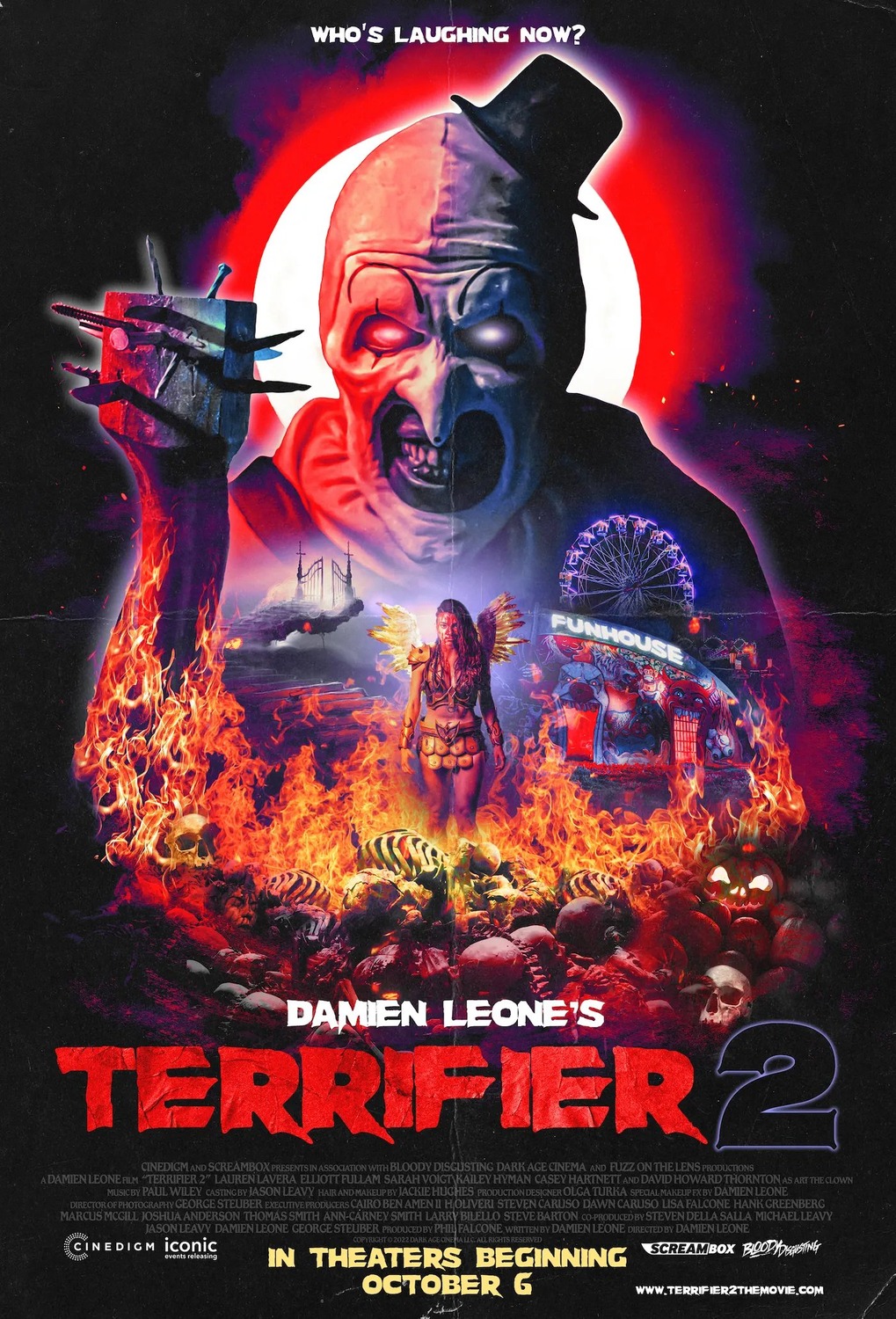
For those of you who thought “Halloween Ends” did not deliver in the way a horror film should, and I’m still not sure what you all were expecting with that one, “Terrifier 2” definitely delivers. While David Gordon Green and his fellow filmmakers looked to challenge what we have seen in the past, writer and director Damien Leone is more than happy to wallow in genre conventions as he gives us all the scares, blood and gore he possibly can, and then he gives us ten times more of it. But in the process of bringing Art the Clown back for more mayhem of the most vicious kind, Leone gives us a sequel which more than outdoes the original. This used to be a rarity, but the history of movies is always longer than we realize, so maybe we should stop being so surprised when this happens with follow ups.
“Terrifier 2” starts with Art the Clown (David Howard Thornton) laying waste to the coroner who was about to perform an autopsy on him, and he becomes the first of many examples of what Art can do to the human body before the heart and brain finally stop functioning. Just as John Doe did to the “sloth” victim in David Fincher’s “Seven,” he leaves a human body rotting in the most unimaginable way, and then we find out the victim still has a pulse. Remember how you as an audience member reacted to that? Wait until you see this.
Art prepares to move to the next phase of his murderous rampage while washing his bloody clothes, because somehow it is possible to wash blood stains off of clothing in a movie like this, and in the process, he comes into contact with a mysterious sinister entity named The Little Pale Girl (Amelie McLain) who comes to more or less follow him on his future murderous travels. There is a laundromat employee present, but he is laid waste to before he even realizes who has more quarters than the average customer.
We jump to a year later and are introduced to Sienna Shaw (Lauren LaVera), a young woman busy working on her Halloween costume which her late dad designed for her, and her younger brother Jonathan (Elliott Fullam) who has long since become fixated on Art the Clown and wants to dress up as him for Halloween. They are still dealing with the aftermath of their father’s death from a brain tumor, and their mother Barbara (Sarah Voigt) is trying to distract herself with her remote job as an insurance agent while being quick to dismiss the concerns of her children for no good reason other than the fact that reality has not been the least bit kind to her or her kids.
Seeing Sienna and Jonathan here and how they were written is one of several reasons why “Terrifier 2” outdoes its predecessor. The characters are far more interesting this time around as we become deeply invested in the crazy plight they get caught up in, and they never come across as your average horror movie stock characters. These two could have been easily typecast as the problem child and town wimp, but Sienna and Jonathan are not written or portrayed as either as this sequel only has so much time, if any, for cliches.
More importantly, both Sienna and Jonathan are stuck in an environment where the adults, including their mother, do not take the time to listen to them or their problems which are quite serious. This is a huge problem in real life as young adults are far more aware of what is going on in the world around them as opposed to the adults who are too busy blunting reality as it has long since become far too much to deal with. Watching these youngsters reminds me of the ending of Terry Gilliam’s “Time Bandits” in which the parents make the fatal mistake of not listening to their only child when they should have. The same thing applies here, and the consequences are far more brutal.
And unlike the original, this sequel has a much stronger story and narrative thrust. While the first “Terrifier” felt more or less like your average slasher flick, Leone gives himself more to work with this time around. It also benefits from the strong performances of its cast, particularly from Lauren LaVera who makes Sienna into more than the familiar final girl we see in most horror movies. Sienna does go through hell, but it is a hell which involves a lot more pain than other final girls have ever had to endure, and LaVera sells it for all it is worth.
Kudos also goes to Elliott Fullam for playing Jonathan as more than the average high school nerd I often see in movies dealing with teenagers. Yes, Jonathan is fascinated with death and serial killers like many were in their youth for a variety of reasons, but Fullman makes sure he never comes across as a mere type which I really appreciated. Furthermore, Jonathan is featured prominently in the film’s final act for good reason as he helps Sienna save the day in ways no other character like him could have.
And let us not leave out David Howard Thornton who once again gives us one of the scariest psychopaths the world has ever seen with Art the Clown. From start to finish, he gives the gory proceedings an unforgettable malevolence without even having to utter a single word. Art remains the same as he ever was, but his brutality is even more infinite than ever before as he lays waste to those in ways which do not allow for remorse or regret in the slightest.
While “Halloween Ends” looked to defy genre conventions, “Terrifier 2” is defiantly old school horror. Like AC/DC once said, “If you want blood, you’ve got it.” The viscera on display has already had many audience members reacting quite strongly, assuming the reports of fainting and vomiting in theaters are to be believed. Seriously though, the blood and gore we see here is quite the sight for those horror hounds who feel like they are not getting enough of it. There are even scenes where I imagine Tom Savini is watching this and saying, “Hey! I could have come up with that! No, seriously!”
As I write this, “Terrifier 2” has made more than $10 million dollars at the box office, and it only cost $250,000 to make. Part of me worries about Art the Clown becoming mainstream considering what ended up happening to Jason Voorhees, Freddy Krueger and, to a lesser extent, Jigsaw. Those murderous fiends proved to be ever so frightening, and then they became almost family friendly with each successive sequel we got year after year. As the post credits indicate, Art the Clown is not finished with is mayhem yet. There is bound to be another “Terrifier” in the near future, so let’s hope he doesn’t become too average before we know it.
John Carpenter is right, evil never dies, but its profitability can render it more harmless than it ever intends to.
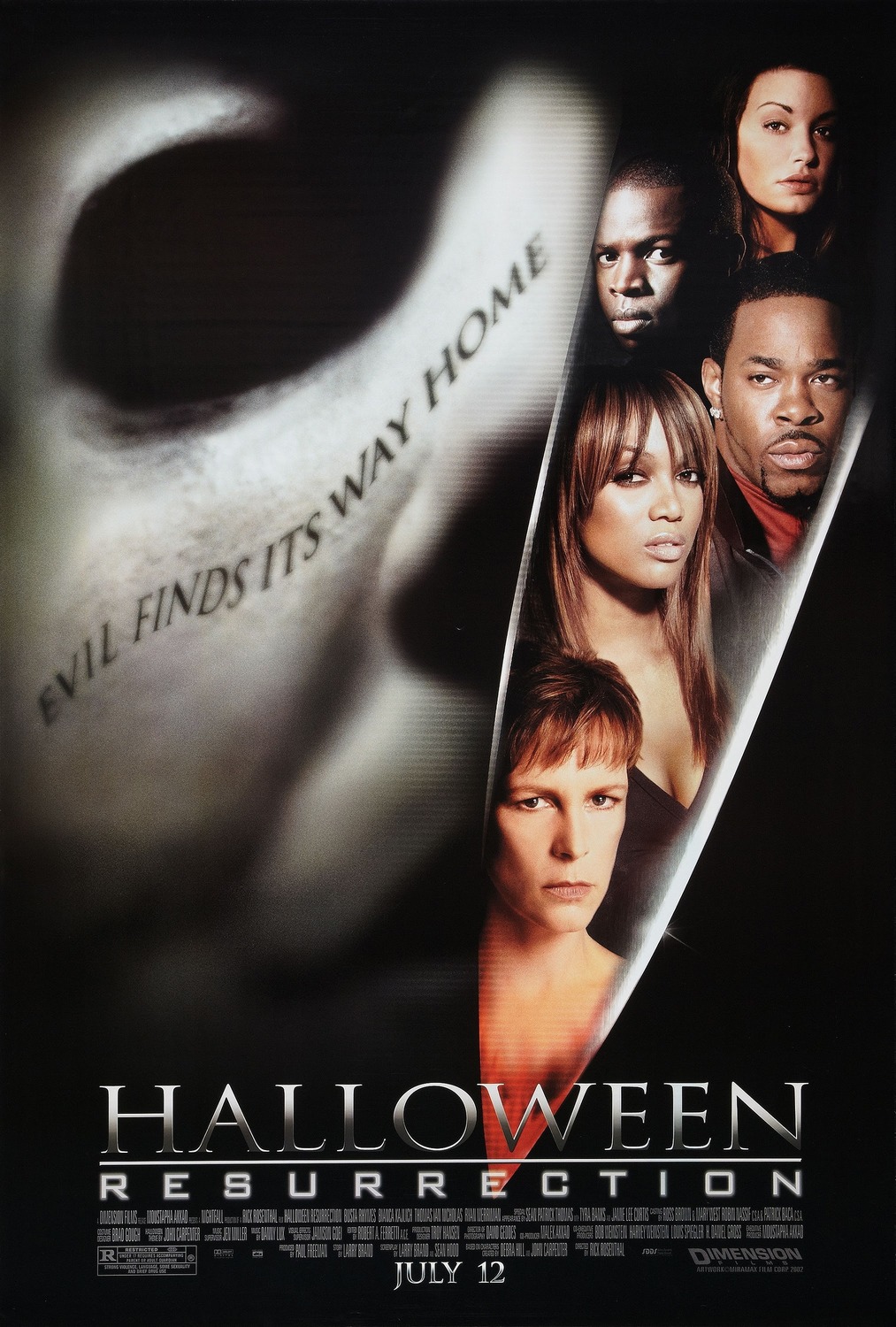
As I write this, “Halloween Ends” has earned a box office gross of over $40 million in its opening weekend. Those are great numbers, and yet many fans have been rebelling against this installment with an everlasting passion. Listening to them makes me wonder if they have seen the other sequels because, when it comes down to it, “Halloween Ends” is way better than “Halloween: Resurrection” which I actually took the time to watch over the weekend out of morbid interest. If it were not for “movie ever. While certain entries in this series may age like a fine wine, this one never will.
This ill-begotten mess begins three years after the events depicted in “Halloween H2O: 20 Years Later” which ended with Laurie Strode (Jamie-Lee Curtis) decapitating Michael Myers once and for all. But, thanks to an ironclad clause in Moustapha Akkad’s contract, Michael cannot ever be truly killed off, and it turns out the man whose head Laurie chopped off with true precision was not Michael, but instead a paramedic whom Michael attacked, crushed his larynx so he couldn’t talk, and then took his uniform to walk away from the crime scene with relative ease. Keep in mind, this development was written for “Halloween H20,” but Curtis refused to do the film if this ending was featured in the final cut.
While I knew this ending was invented to make “Halloween: Resurrection” a reality, I can’t help but wonder what was going through Michael’s mind when he took out that paramedic. I imagine he was thinking, “Okay, maybe this isn’t the time to kill my sister. Perhaps another time in the near future. In the meantime, I am getting out of town for a bit. I have a timeshare waiting for me.” Michael was so close to killing Laurie, and yet he sensed things were not going to work out for him this time around. But how did he know what asylum Laurie was going to be residing in three years later? Oh wait, you don’t ask those questions in a movie like this.
As we all know by now, Laurie gets killed by Michael even though she has the upper hand. Laurie leads him into a trap, but she still needs to look under his mask to make sure she has the right guy this time around. A knife in her belly is all the proof she needs, and her lifeless body falls to the ground. This was to be Curtis’ last time playing Laurie as she did not want to make any more “Halloween” movies, but we all know how that turned out. The promise of anything final in a horror franchise always has us rolling our eyes and laughing uncontrollably, and this one is no exception.
We then move to a year later when we arrive at the campus of Haddonfield University, and we meet the students who have just won a competition to appear on an internet reality show entitled “Dangertainment” which is operated by Freddie Harris (Busta Rhymes) and Nora Winston (Tyra Banks). They include Sara Moyer (Bianca Kajlich) who proves to be the Laurie Strode of the group as she plays with her hair in the same way Laurie did, Jennifer ‘Jen’ Danzig (Katee Sackhoff) who, like Lucy Van Pelt, keeps signing her classmates up for events they never expected to participate in, Jim Morgan (Luke Kirby) who is looking to get laid on or off camera, Rudy Grimes (Sean Patrick Thomas) who quickly proves to be quite the cook, and Bill Woodlake (Thomas Ian Nicholas of “American Pie” fame) who is looking to score even though the ladies are understandably quick to reject him. Their mission, spend a night in Michael Myer’s childhood home and determine what led him to kill so many people.
Now the key thing to keep in mind about “Halloween: Resurrection” is that these participants are being equipped with head-cameras so we can see what they see as they walk through Michael’s childhood home, and this threatens to make this sequel more promising than it has any right to be. While this one came after “The Blair Witch Project,” it came before the glut of reality shows and found footage movies like “Survivor” and “Paranormal Activity” which Hollywood burned through before the profits ran dry. Still, while this installment could have done a number of clever things with these genres, it instead devolves into the same old thing to where nothing on display feels the least bit surprising.
The one thing which got me excited about “Halloween: Resurrection” was that it was directed by Rick Rosenthal. This is the same man who directed 1981’s “Halloween II,” a sequel I came to appreciate because I first saw it years after its initial release. I thought Rosenthal deserved more credit than he was given at the time and having a veteran “Halloween” director at the helm of this installment seemed like a really smart idea.
Right from the start, however, Rosenthal quickly fumbles the ball as the art of subtlety is completely lost on him here. With his previous venture in this franchise, he knew how to keep the action and characters grounded in a reality we all knew and understood, just like with the 1978 classic. But here, the volume is turned up way too loud to where the suspense is all but neutered, and the characters are unable to speak quietly if at all. Like a certain character Will Ferrell played on “Saturday Night Live” who had vocal modulation issues, these ones make you want to turn the volume all the way down. Okay, maybe that’s pushing things a bit, but these characters got annoying ever so quickly.
The one actor I feel bad for here is Katee Sackhoff who did this film long before she broke through into our collective consciousness on SyFy’s rebooted “Battlestar Galactica.” This is not Sackhoff at her best and, like Stacy Nelkin in “Halloween III: Season of the Witch,” she has to play her last scene without a head.
I should add there is also a subplot involving a college freshman named Myles “Deckard” Barton (Ryan Merriman) who has been communicating online with Sara Moyer for months. While at a college party, he watches this virtual reality series play over the internet and invites other students to watch it with him. This could have led to some interesting moments as the characters try to disseminate what is real and what is fiction, but the performances by everyone here are too broad to where we mock these foolish characters instead of relating to them.
And there is Busta Rhymes who is the first thing anyone thinks about when it comes to “Halloween: Resurrection.” For what it’s worth, he is an entertaining presence as reality show entrepreneur Freddie Harris, but he also takes this sequel into “Batman & Robin” territory as he turns the proceedings into a complete joke, the kind which makes you wince more than laugh. Seeing him trying to take Michael Myers out via martial arts made my eyes roll, and seeing him end things by speaking to television reporters about violence in the media is insulting and a bitch slap to everything we just watched.
When it comes to the recent “Halloween” movies like “Halloween Ends,” they were made by filmmakers who wanted to try something a little different while giving fans some of the things they came to expect. “Halloween: Resurrection,” however, was made by a committee which was designed to take this installment through a number of test screenings in an effort to hopefully give audiences what they wanted and get a return on their investment in the process. If Rosenthal has any artistic aspirations with this sequel, they are all but snuffed out as soon as we realize how cheap the opening credit titles look.
It’s no wonder the Akkad family went out of there way to reboot this franchise yet again after this misbegotten entry. Sure, Michael’s eyes open wide before the screen goes to black, but who gives a shit?





 The Ultimate Rabbit