‘The Outlaw Josey Wales’ Movie and 4K Review
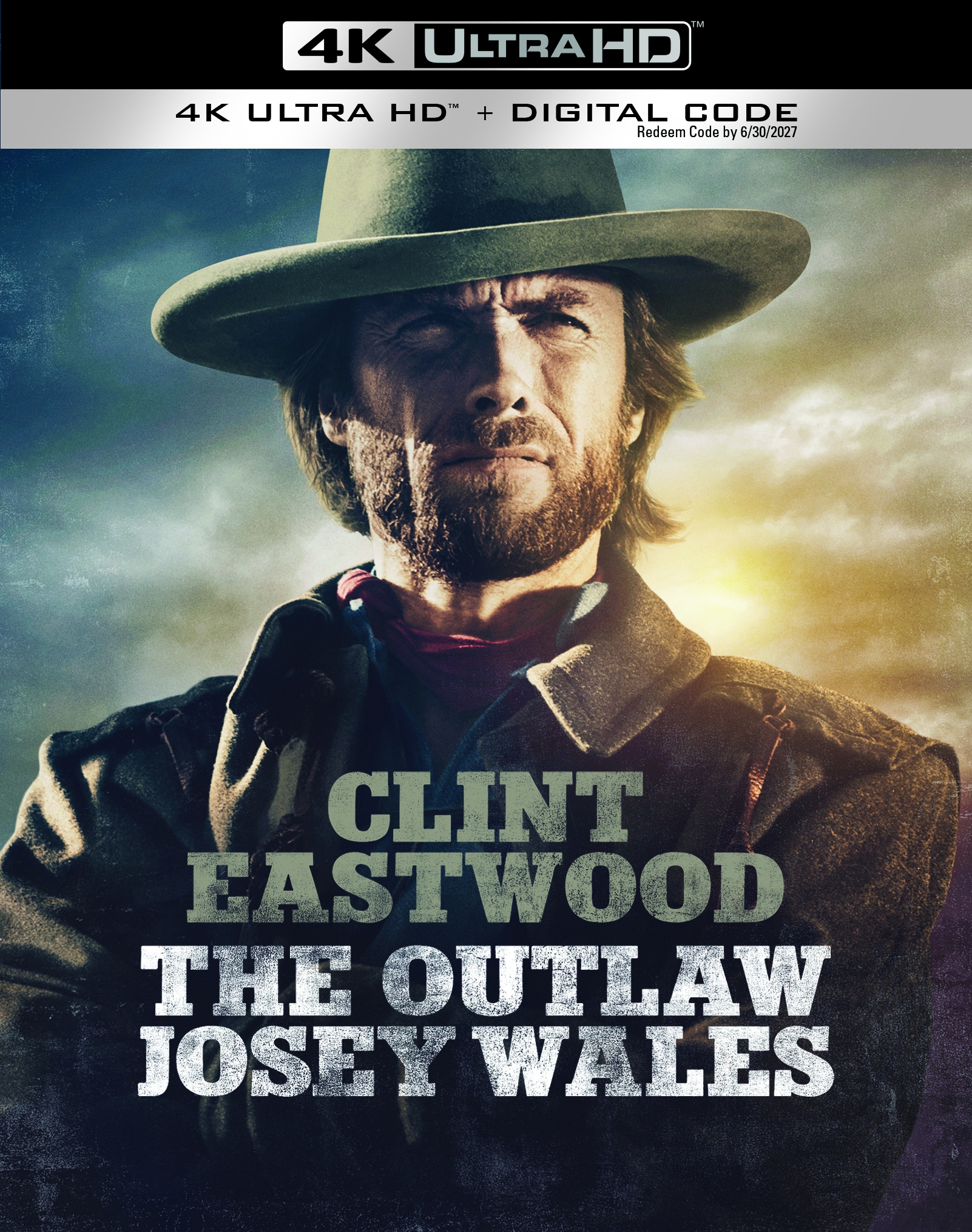
The following review was written by Ultimate Rabbit correspondent, Tony Farinella.

The Outlaw Josey Wales” was directed by Clint Eastwood, and it was adapted from the book, “Gone to Texas” by Forrest Carter. Eastwood is also the lead actor in the film, and he’s certainly in his wheelhouse when it comes to the Hollywood Western. When it comes to certain Clint Eastwood Westerns, some of them stand out more than others.  This film was released in 1976, and it was Eastwood’s second time directing a Western after first directing “High Plains Drifter.” He would return in 1985 with “Pale Rider” before putting his finishing touches on the genre with “Unforgiven” in 1992. For my money, “Unforgiven” is not only one of the best Westerns Eastwood ever directed or starred in, but it’s also one of the best Westerns of all time.

“The Outlaw Josey Wales” is set during the American Civil War, and it opens with the wife and son of Josey Wales (Clint Eastwood) being murdered by Captain Terrill (Bill McKinney) and his group of Union militia. Now, Josey Wales will stop at nothing to seek revenge for the death of his wife and son.  Throughout his journey, he stumbles upon a group of unique and eccentric characters who can either help him or get out of his way. Eastwood plays Josey Wales as subdued, determined, and unflappable. If he gets his pound of flesh, will he be satisfied? He’s on a mission, and he isn’t going to let anything or anyone slow him down or get in his way.
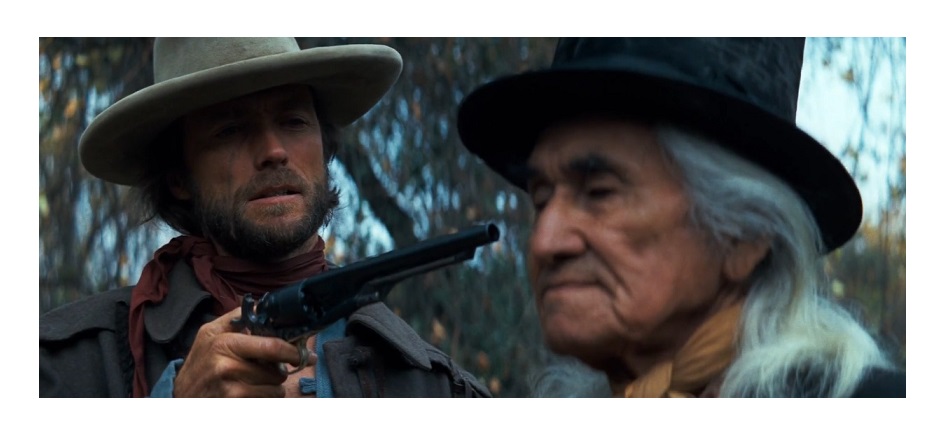
One of the more interesting characters that Josey Wales meets is Lone Watie, played by Chief Dan George. They have had an “Odd Couple” type of relationship, as it’s hard to get a read on Josey whereas Lone Watie is quite chatty. Along the way, they come in contact with various gunmen, and we quickly learn that Josey is not someone to be trifled with when he’s in a battle of life or death.  There are also quiet and reflective moments when the threat of violence isn’t in the air.  The film is shot with a keen eye by Eastwood. He’s always been a skilled and talented director, especially when he’s shooting Westerns. He makes even the mundane look spectacular and mesmerizing.

When I was watching “The Outlaw Josey Wales,” there wasn’t anything happening on screen from a plot or character perspective which drew me in or kept my attention.  I recently reviewed “Pale Rider,” which was done after “The Outlaw Josey Wales,” and that was a film with a strong pulse and interesting characters. I have seen Eastwood portray this character before, and it feels like he’s simply spinning his wheels with this performance. There is not a whole lot going on with this character of Josey, and there isn’t a whole lot going on with the majority of the story either.
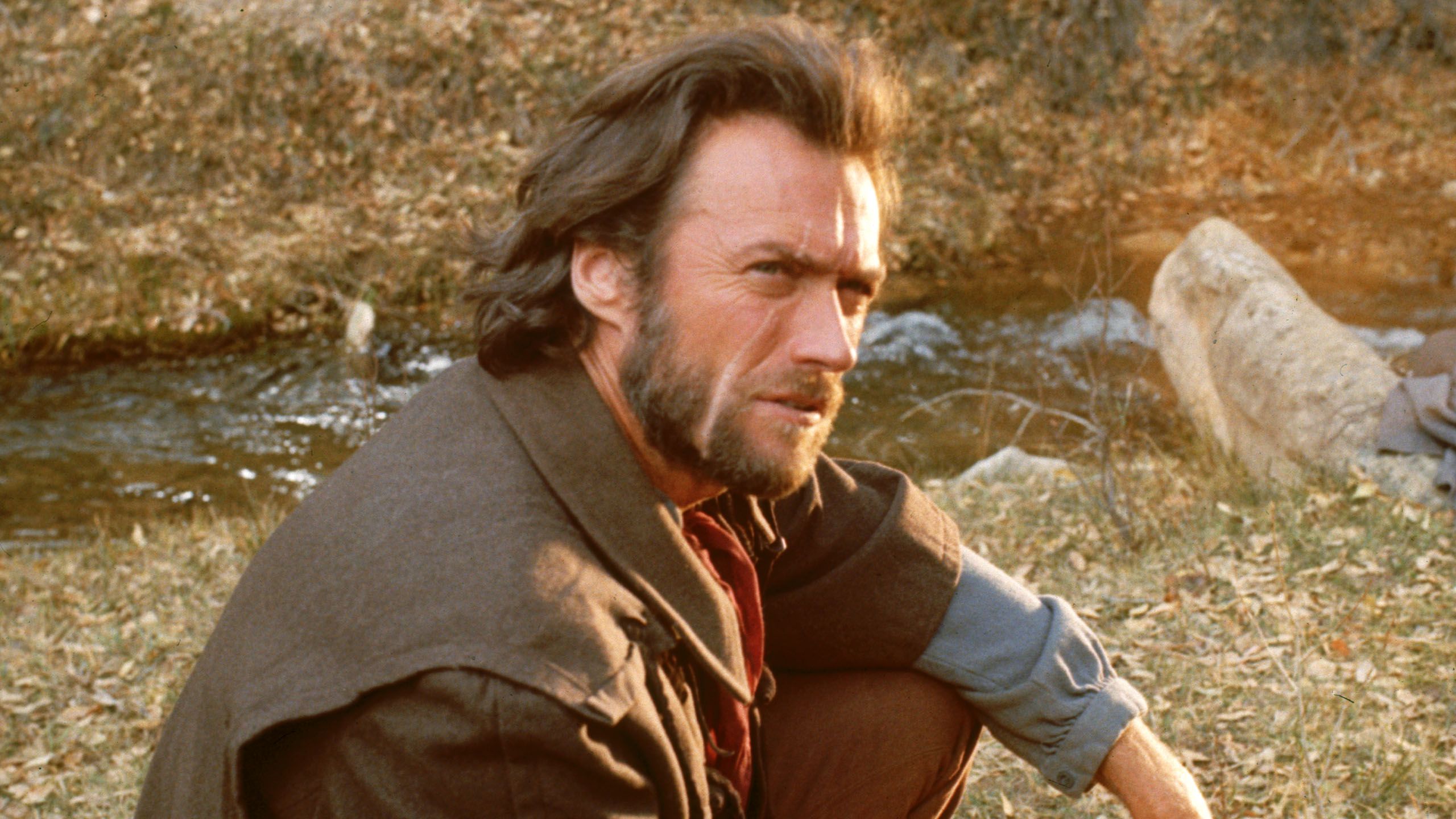
I can only get lost in the scenery and the beautiful sights and sounds for so long before I eventually start to get bored.  Make no mistake about it, “The Outlaw Josey Wales” is a beautiful film from a filmmaking perspective.  There is a ton of skill on display, and it’s a quiet and unassuming film.  The problem is it also feels bland and flat. I didn’t feel as though the film did anything to differentiate itself from a host of other Westerns which have been directed by Eastwood in the past. It’s OK for his character to not be showy, loud or outspoken, as we don’t expect that in an Eastwood Western. However, at times, it looked and felt like he was in a medically-induced coma.

As I was watching this film, I kept waiting for it to spring into action and come to life on screen. After you have seen him take out the bad guys time after time, it begins to become repetitive and it loses its luster the more you see it happen. This is a movie which is a little too focused on its sense of time and place but not focused enough on creating a captivating story.  This is a problem when you have a film that is a little over two hours long. I didn’t hate watching “The Outlaw Josey Wales,” but I didn’t particularly enjoy the experience. It left me feeling very underwhelmed.

* * out of * * * *

4K Info: “The Outlaw Josey Wales” is released on a single 4K disc from Warner Brothers Home Entertainment. It comes in either a 4K slipcover edition or a 4K steelbook. The film has a running time of 135 minutes and is rated PG. The film also comes with a digital code to redeem.

4K Video Info: The 4K of this film is absolutely magnificent.  Westerns, in particular, were made to be released on 4K. You just don’t get this type of viewing experience on Blu-ray or DVD with Westerns. The HDR on this film presents an epic picture that is utterly flawless.

4K Audio Info: The Dolby Atmos audio track also brings the film to life in your living room with a soundtrack that is big and bold. Subtitles are included in Spanish, English, and French.

Special Features:

Commentary by Richard Schickel

An Outlaw and an Antihero – NEW

The Cinematography of and Outlaw: Crafting Josie Wales – NEW

Clint Eastwood’s West

Eastwood in Action

Hell Hath No Fury: The Making of The Outlaw Josey Wales

Clint Eastwood: A Cinematic Legacy – Reinventing the West

Should You Buy It?

I had the pleasure of reviewing three Clint Eastwood 4K’s over the past week: “The Outlaw Josey Wales,” “Dirty Harry,” and “Pale Rider.” “Pale Rider,” without question, was my favorite of the three. With “Dirty Harry” and “The Outlaw Josey Wales,” I admired but didn’t love them.  I felt like I was missing something when I was watching them.  Both films are well-made and they are not terrible, but they didn’t entertain or grab me emotionally. However, I’m well aware that many people out there who love both “Dirty Harry” and “The Outlaw Josey Wales.” When it comes to “The Outlaw Josey Wales,” if you are a fan of the film, you need to add it to your collection as soon as possible.  It looks and sounds out of this world on 4K, and there is a boatload of special features here to enjoy, especially a few new ones as well. I just put this film under the category of, “It wasn’t for me.” If it is for you, you can’t ask for a better physical media release than what they have put together at Warner Brothers for this one.

**Disclaimer** I received a copy of this film from Warner Brothers to review for free.  The opinions and statements in the review are mine and mine alone.

The Coen Brothers’ ‘True Grit’ is a Far More Faithful Cinematic Adaptation Than What Came Before

Watching Joel and Ethan Coen’s version of “True Grit,” it suddenly occurred to me I had read the book it was based on back in my sophomore year of high school. I can’t believe I forgot that as I usually remember every book me and my fellow classmates were made, or forced, to read such as “The Diary of Anne Frank,” “To Kill a Mockingbird,” “Of Mice and Men” or “A Day No Pigs Would Die.” This book, which was written by Charles Portis, however, seemed to have escaped my memory of having read it. When I think of the book now, I am reminded of how Mattie Ross, when she saw the body of her murdered father in his coffin, simply told the undertakers, “Put a lid on it.”

Damn! Mattie seemed cold as ice; hell bent on pursuing her father’s killer no matter what and without ever shedding a single tear. But she is also a human being endowed with an undying sense of purpose, determined to find fairness in a world which often seems devoid of it. Now everyone remembers Rooster Cogburn more than any other character in “True Grit” because John “The Duke” Wayne portrayed him in the 1969 movie as it won him his only Oscar. But those who have read this novel know full well it is really about Mattie Ross, not the easiest person to get along with, but hard not to admire. It’s her story more than it ever was Cogburn’s, and the Coen brothers understand this completely in their cinematic adaptation which proves to be very faithful to its source material.

Jeff Bridges, Matt Damon, and Josh Brolin may have top billing, but the weight of “True Grit” rested on the soft shoulders of then 14-year-old newcomer Hailee Steinfeld. Her astonishing performance brings Mattie Ross right off the written pages of Portis’ book and to vivid life. This was not necessarily the case when Kim Darby portrayed her opposite Wayne in 1969. Our sophomore English class watched some, but not all of, the original film, and once we saw Mattie cry in a way she never would have in the novel, we all knew one liberty too many had been taken with the source material. I guess having a character appear stronger willed than one played by The Duke must have seemed unthinkable at the time.

But seriously, Steinfeld is a revelation as Mattie, and the movie would have completely failed were she not as fantastic as she was here. Seeing her stroll into the town with her no-nonsense attitude and wise beyond her years, the actress sells the character perfectly and has us eager to follow her every step as she pursues Tom Chaney before he escapes the hand of justice. Her eyes show a willful determination which I never doubted, and any sadness she shows is somehow restrained. Steinfeld takes a character who is not altogether likable and makes her one of the most compelling characters I saw in any 2010 movie. She doesn’t so much play the character as much as she inhabits the role. Now how many other 14-year-old actors do you know who can pull this feat off?

As the story goes, Mattie tries to procure the services of Rooster Cogburn because she believes he possesses “true grit;” someone who has courage, fearlessness, and guts. As played by Jeff “The Dude” Bridges, who owned the 2010 holiday season with this and “Tron: Legacy,” Rooster is a drunken lout who never appears to be fit for his line of work, but his sense of duty does manage to keep him sane in an increasingly violent world. The relationship he has with Mattie is not one based on kindness, and he would as soon as leave her in the dust than bring her along. But something about Mattie’s dogged determination, illustrated by her riding her horse across a river while keeping her head above water, wins the whiskey loving Marshall over.

I’m not going to bother comparing The Dude and The Duke because frankly I don’t have the energy. Wayne made his mark in one film after another, and Bridges’ performance works so well because he never tries to outdo what Wayne did. Like any smart actor, he makes the character his own, and his Rooster Cogburn threatens to be every bit as inebriated as Val Kilmer was when he played Jim Morrison in Oliver Stone’s “The Doors.” From the start, I was almost afraid Bridges might turn the character into a parody of sorts, and perhaps rely too much on his “Big Lebowski” persona to get him through the day. But this never was the case as Bridges makes his Rooster Cogburn into a wonderfully complex character who, despite his grungy appearance, still knows the Indian territory like the back of his hand.

Also along for the ride is Matt Damon who portrays Texas Ranger LaBeouf. I thought he would stick out like a sore thumb here, but he makes his character a wonderfully engaging one even as he keeps coming and going throughout. Seeing LaBeouf get his ass handed to him by Mattie Ross is a major highlight, only if to see the shocked expression on his face when he realizes he truly got suckered by a 14-year-old.

Josh Brolin, who previously worked with the Coens on “No Country for Old Men,” makes Tom Chaney not just a simple one-dimensional villain as his crime was motivated more out of jealousy and fear than anything else. Even he can’t intimidate Mattie as she has the strong resolve and moral fortitude he seriously lacks, and his life has lost its sense of purpose. Brolin manages to convey all this in the limited time he has onscreen.

Another guy I was happy to see here is Barry Pepper. As “Lucky” Ned Pepper (no relation I’m sure), he gives us a nasty outlaw and a vicious guy who will not allow anyone to undo his authority any more than he appears willing to brush his teeth; man, his teeth look hideous!

The main difference between the 2010 and 1969 movies is in how the wild, wild west is portrayed. The 1969 movie was more about watching Wayne blow away the bad guys just as he had in every other movie he starred in. But the 2010 version portrays the world it inhabits much more realistically, treating violence as a brutal and very vicious thing. This one is more akin to “Unforgiven” than “Rio Bravo.” Violence is a way of life for all these characters, and it defines the way they see the world around them. We also see how it affects their souls as the specter of death hangs over their every move. There’s no attempt to sweeten up the narrative or make it the kind of western many of us grew up watching.

Still, the Coen brothers have succeeded in making one of their most accessible movies to date for the mainstream audiences with “True Grit.” They also managed to do it without compromising themselves as this film sees them getting the widest audience they ever had before. They continue to employ their regular collaborators who never fail them such as cinematographer Roger Deakins, editor Roderick Jaynes, and their longtime composer Carter Burwell who contributes another in a long line of great movie scores.

If there was any problem I had with this “True Grit,” it was in the way it ended. We see one character many years later, and the effect is disorienting. It was the same thing that happened at the start and the end of Frank Darabont’s “The Green Mile,” and it just took me out of the moment. The effect wasn’t too bad in this one, but I was hoping to see the actor who played said character get more of a proper send off.

Remaking a movie like “True Grit” seems like the last thing the Coen brothers would ever do, but I believe them when they say this was never intended to be a remake. They stayed very true to the source material and even made the language Portis scribbled down seem very much alive and sharp witted. Whether or not you value Wayne’s take on Rooster more than Bridges’, you have to give the Coens credit for staying true to a book written back in 1968.

The Academy Awards showered a number of nominations for this film including Best Actor for Bridges and Best Picture. While I was happy to see Steinfeld nominated for Best Supporting Actress, I still think it was a travesty she was not nominated for Best Actress instead. Once again, this movie rested on her shoulders, and she was cast in a role which 15,000 other actors auditioned for. Seriously, Best Actress, not Best Supporting Actress. Her male co-stars were supporting her instead of the other way around.

* * * ½ out of * * * *