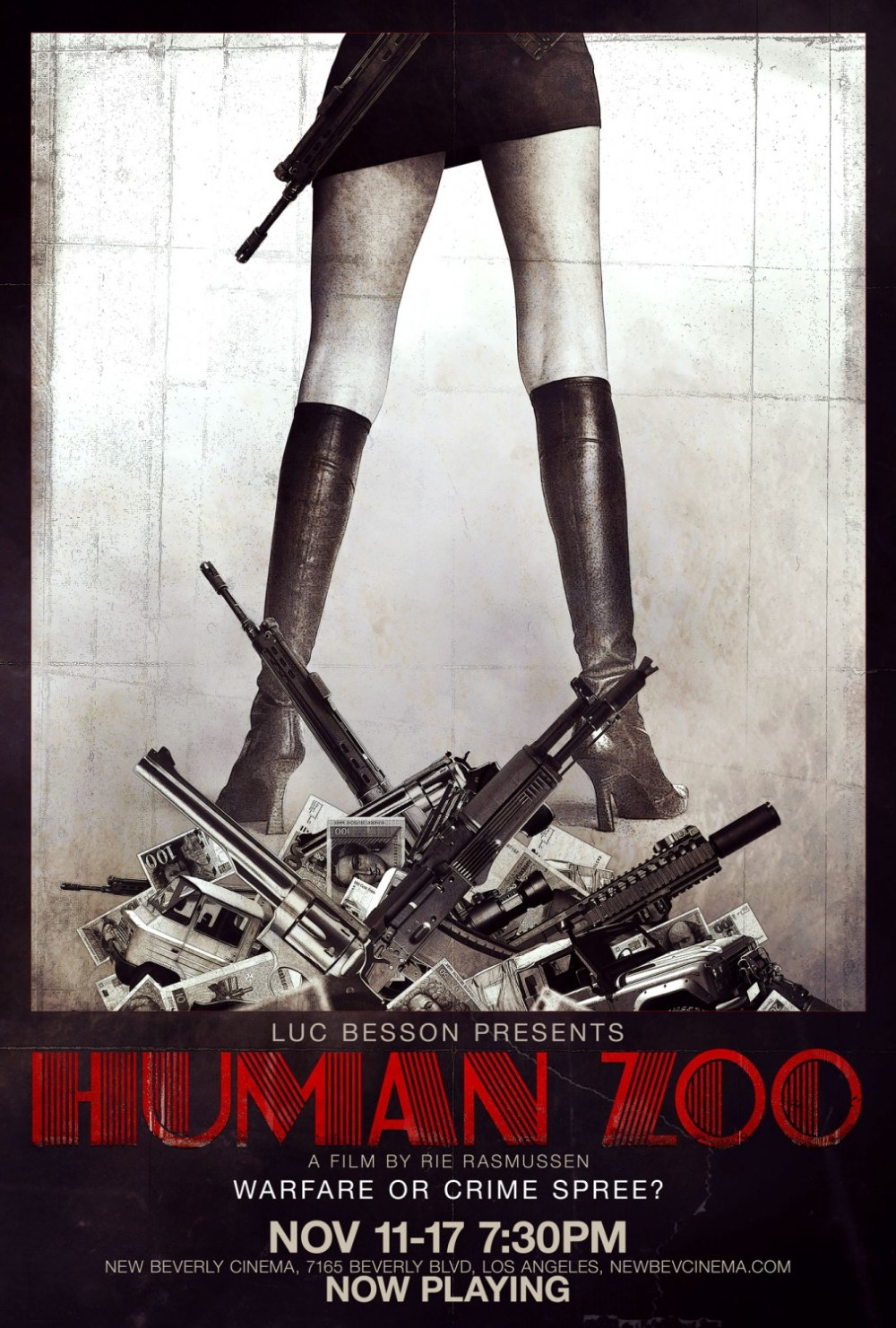
Director Eli Roth came to New Beverly Cinema on November 15, 2011 to do a Q&A with Rie Rasmussen about her film “Human Zoo.” He credited Rasmussen for giving a “ballsy performance” in her directorial debut and thanked the audience for “taking a chance on a new film and a new director.” It is only now making its American debut thanks to Quentin Tarantino, and Roth made it clear he is among this movie’s biggest fans.
Roth described “Human Zoo” as having a European sensibility in that you don’t know where it’s going, and he really liked how it gives you time to figure things out. When he asked Rasmussen where the story came from, she said it started with life and how it is a human zoo which puts us behind bars. The movie was also inspired by her stepsister Lin and the American citizenship she finally attained. Lin managed to escape the sex slave trade in Moscow which her mother was tragically sold into, and she was dropped off in Copenhagen. Rasmussen talked about how those born in America won the “ovarian lottery” and of how Lin won the second one by making it to Copenhagen.
Rasmussen also described “Human Zoo” as being a prison of the mind. Her character of Adria Shala puts herself into a mental prison when she is taken in by a sociopath named Srdjan Vasiljevic (Nikola Djuricko). Rasmussen based this on when she moved to New York where she was “let loose on a pack of wild animals.” Having run into the “alpha male attitude” in America, Rasmussen came to see the “violent aspect of males” which made her learn how to defend herself. She also added how the sociopath Srdjan was based on a real guy, and that the moment when Shawn (Nick Corey) takes off all his clothes during a fight happened in real life.
In terms of resources, Rasmussen said she was given a budget of $4 million. However, after all the union payouts for hotel accommodations and travel among other things were taken care of, she only had a million dollars left to work with. She managed to shoot for eight weeks in France while the interiors were shot in Serbia. Whereas most directors have 10 to 16 weeks to edit their movie, Rasmussen only had five as “Transporter 3” was coming in right afterwards. This is extraordinary as those who’ve seen “Human Zoo” can confirm how the movie looks like it cost much more to make.
When it came to directing the violence, Rasmussen said she was allowed to shoot it by those who survived the atrocities in Bosnia. “Human Zoo” opens with a rape sequence, but she succeeded in making it the least sexual it could ever be. She said when it comes to real life rape, no one ever gets an arousing response. Looking back, the audiences she saw the film with reacted very strongly to what they saw.
Rasmussen has had the opportunity to work with filmmakers like Brian De Palma and Luc Besson, and their influence can be seen throughout “Human Zoo.” While it has yet to receive a full blown theatrical release in America due to it being considered an NC-17 rated movie by the MPAA, those who saw it at New Beverly Cinema can attest to its astonishing brilliance. Here’s hoping that it reaches a wider audience sooner rather than later.
“Human Zoo” is one of the most astonishing directorial debuts ever as it exhilarates and shocks the audience in a way few movies do these days. Its director is Rie Rasmussen who also wrote the screenplay and stars in the film as Adria Shala, an illegal immigrant who is traumatized by a past she is still trying to escape. The fact she performed all these duties on one movie makes her accomplishment all the more profound as it would drive most people in the same position crazy.
Made in 2009, “Human Zoo” finally got its American theatrical premiere in November 2011 courtesy of Quentin Tarantino who screened it for a week-long engagement at New Beverly Cinema. Rasmussen has been at every screening to do a Q&A after the film, and on November 13, 2001, she talked with Julie Marchese who asked the question which needed to be asked most:
Rasmussen said “Human Zoo” was inspired by her adopted sister who came out of Vietnam and lost her mother who was sold into slavery in Moscow. Rasmussen’s family spent six years trying to adopt her, and it led her to wonder why our borders and nationalities end up “being our bars.” She talked of how we as a whole “trap ourselves with notions of insecurity” which eventually lead to senseless violence in society. This all fed into the script she wrote which uses the horrific war in Serbia as one of its backdrops.
Born in Denmark, Rasmussen described living in Northern Europe as being “not that fuckin’ fun,” and she even said Inglewood is nice in comparison to it. She got drawn to movies as it provided a much-needed escape from her environment, and because there wasn’t much else to do. The interest of what life had to offer fascinated her, and she found herself looking outside the norm and inspired by what she called the “not so obvious.” She also talked of being attracted to the black and destructive energy in the world and had discovered “Jackass” long before the show made its debut on MTV.
Speaking of that black and destructive energy, it is personified in the character of Srdjan who is an unbalanced psychopath who acts in the wrong ways. In talking about venturing through what she called the “darker alleys of life,” Rasmussen talked about how “the guy who can’t see right from wrong is really interesting.” This is made infinitely clear through Nikola Djuricko’s brilliant performance as Srdjan who gleefully plans to rob houses while the city is being bombed and everyone is hiding in the shelters. We see Shala drawn into this life to where no moral sense is applied to anything, and she gets more deeply involved to where she ends up “going to the dark side.”
Marchese remarked at how “Human Zoo” was sold at movie festivals as a woman’s picture, but she was correct in saying to reduce it to a certain label doesn’t do it justice. Rasmussen’s first movie as a director is so incredible in its accomplishment that it deserves to reach a wider audience than people realize. Boiling it down to a woman’s picture is unfairly misleading, and Rasmussen said it best:
“I have tits, but I’m a person, and that doesn’t take my humanity away.”
“Human Zoo” is one of the most exhilarating directorial debuts I’ve seen in some time. It’s even more astonishing to learn its director, Rie Rasmussen, also wrote the screenplay, co-produced the movie and stars in it as well. This got me to thinking about what Robin Williams said when he was presenting at the Oscars:
“There’s the writer, producer, director; one of the few people in the world who can blow smoke up their own ass!”
But having worked with Brian De Palma on “Femme Fatale” and Luc Besson on “Angel-A,” Rasmussen has learned from some of the best and shows a confidence few others have exhibited on their first feature. Released in France back in 2009, “Human Zoo” made its American theatrical debut a few years later courtesy of Quentin Tarantino who screened it for a week at New Beverly Cinema.
Rasmussen stars as Adria Shala, a Serbian-Albanian illegal immigrant who, at the movie’s start, is living in Marseille. We soon learn how she is still deeply traumatized by her past, and the story shifts back and forth in time as we see her trying to survive in the war-torn Kosovo. Adria gets captured by soldiers and almost raped when one of them, Srdjan Vasiljevic (Nikola Djuricko), saves and takes her with him as he decides to desert the Serbian army. From there, the two of them move to Belgrade where Srdjan becomes a gangster and deals out dozens of weapons to the highest bidder. Adria soon learns the ropes of how he does things and stays with him even as things get increasingly nasty (emphasis on the word nasty). It’s this past which threatens to tear apart her present as she finds a new love while helping a friend of hers obtain the citizenship that will help her find a better life.
“Human Zoo” is at times a shockingly violent movie, but never in a flashy way. The violence is an integral part of the lives of these characters, and it is portrayed in all its foul ugliness. It is never glamorized as Rasmussen is reflecting the real-life tragedy of what happened in Kosovo during the war. There is also a rape scene which is one of the most realistic ever featured in movies as Rasmussen never ever tries to make it look the least bit arousing as other directors might have.
Watching this movie twice in the same week, I was blown away at how many long shots Rasmussen pulled off. We’re in a time where movies seem to be about quick cuts and shaking the camera all over the place more than anything else. But she makes each scene flow naturally even as they seem incredibly complicated to put together. There’s one sex scene which looks astonishingly realistic as it lasts two or three minutes, and it’s this kind of directing that sucks you completely into the story and its characters.
Rasmussen also succeeds in staging a brilliant overhead shot in a gunfight sequence which has her character going down a hall as we see what’s going on in the rooms surrounding it. DePalma, among other movie directors, have pulled off scenes like this many times, but Rasmussen makes it all her own to where it feels very fresh.
“Human Zoo” could have been utterly confusing as it constantly jumps back and forth in time, but Rasmussen manages to separate the timelines to where they are easily identifiable. She uses a cold blue color when presenting the past in the same way Steven Soderbergh used different colors in “Traffic.” The color suits this part of the story as it starts in war torn Kosovo and continues on into a world which looks every bit as cold it seems. Watching Adria’s journey into an abyss where the difference between right and wrong becomes seriously blurred is one we cannot turn away from. Her friendship with Srdjan keeps growing into something else even as he maintains a detached mindset on human nature in general.
Rasmussen also gets away with tackling different issues like immigration, slavery, war, and others, and yet this film never feels overstuffed. They are all issues very important to her, and she gives time to explore them without spelling everything out to the audience.
As an actress, Rasmussen gives a ballsy performance as Adria as she takes her character from a naïve young girl to a very self-sufficient one. It’s a great role for any actress because there are so many levels to play with, and she never misses a beat. In interviews, she has talked about seeing the darker side of life which taught her how to defend herself, and this life experience certainly bleeds through into her portrayal of Adria.
Another terrific performance comes from Nick Corey who plays Adria’s American boyfriend, Shawn Reagan. At first, it looks like Corey will coast on the surfer dude stereotype when Nick bumps into Adria by accident. But Corey imbues Nick with a love for life as we learn how he has traveled from one country to another, and he gets a great scene where he prepares to fight in a bar by stripping off all his clothes. Corey makes the scene believable and funny, and it also helps how Rasmussen said she saw a guy do this in real life.
But the best performance by far in “Human Zoo” comes from Nikola Djuricko who gives us one of cinema’s most enthralling and seductive sociopaths as Srdjan Vasiljevic. We should despise Srdjan for what he does, but Djuricko makes him too entertaining to be around. For the majority of this film, his eyes never tell us if he’s a good or bad guy. In watching the delight he takes in his bad deeds and his bleak perception of humanity in general, Djuricko pulls the audience in with a tight grasp to where we can’t take our eyes off him. It’s a fearless performance as he believably portrays a person with qualities we want to believe are not a part of us, and this actor makes an infinitely appealing character out of a certified monster.
I hope “Human Zoo” eventually finds a wider audience than it has already received. The movie more than succeeds in breaking through all borders in its path, and it deserves to be taken a chance on. We are still stuck in a cycle of endless (not to mention needless) remakes and movies “based on a true story,” but this movie has a life force about it which commands your attention and exhilarates you from start to finish. I can’t say that about many movies which come out these days.
Filmmaker Duncan Jones was the guest of honor at New Beverly Cinema on November 19, 2011 where his first two movies “Moon” and “Source Code” were being shown. Right after “Moon” finished, he leapt up to the stage like a contestant on “The Price Is Right” for a Q&A alongside his “Moon” producer Stuart Fenegan. Sam Rockwell and Kevin Spacey were not in attendance, but Jones brought along Rockwell’s spacesuit and a balloon of Gerty’s face as their stand ins.
Jones explained how he had worked in the advertising industry for years with the goal of eventually working in movies. He originally wanted his first film to be “Mute” which takes place in a futuristic Berlin, but he and Fenegan came to the conclusion it was too big for them to make into a movie at that point. It’s amazing to learn “Moon” only cost $5 million to make, and Jones said he was determined to squeeze as much out of that amount as possible. Fenegan was quick to point out what was at stake and said, “With the first movie, commercial success is far more important than critical success as it determines whether you’ll make another.”
There were two distinctive sets Jones had to work with on “Moon;” a 360-degree space station set which everyone got stuck in for the day once it was sealed, and another for the lunar module which Rockwell’s character uses to travel outside. As for Gerty, the “2001” Hal-like character voiced by Spacey, Jones described it as a beautiful model which could be moved around the set, but that it was a CGI effect in the wide shots. The special effects ended up getting a polish from Cinesite, a digital visual effects and post-production facility in London.
One audience member asked if Rockwell’s character was named Sam on purpose, to which Jones said yes. “Moon” was made with Rockwell in mind for the lead, and since he plays different clones of the same person, Jones really wanted to mess with his head during the 33-day shoot. This way, Jones said, the actor would be constantly reminded of the movie’s thematic elements. While this made Rockwell uncomfortable at times, Jones described him as a good sport overall.
In terms of influences, Jones said “Moon” was inspired by many science fiction movies he watched in the 60’s and 70’s. Specifically, he cited Bruce Dern in “Silent Running,” Sean Connery in “Outland,” and the first chunk of “Alien” as the biggest influences on the movie’s story. The characters in these films came from a working class or blue collar environment, and the portrayal of it in an outer space setting made everything seem more real and relatable. As for must see movie recommendations, Jones replied “Blade Runner” is the be all and end all of science fiction. You could follow any character in Ridley Scott’s film, he said, and you would still have an amazing movie.
When asked of his future plans, Jones said that he has finished polishing his latest script and will be sending it to the one person he wants to star in it (he wouldn’t say who). It is another science fiction movie, but the director is eager to move beyond this particular genre. With “Moon” now being considered as one of the best science fiction movies of the past few years though, I’m sure his fans will be begging him to revisit the genre more often than not.
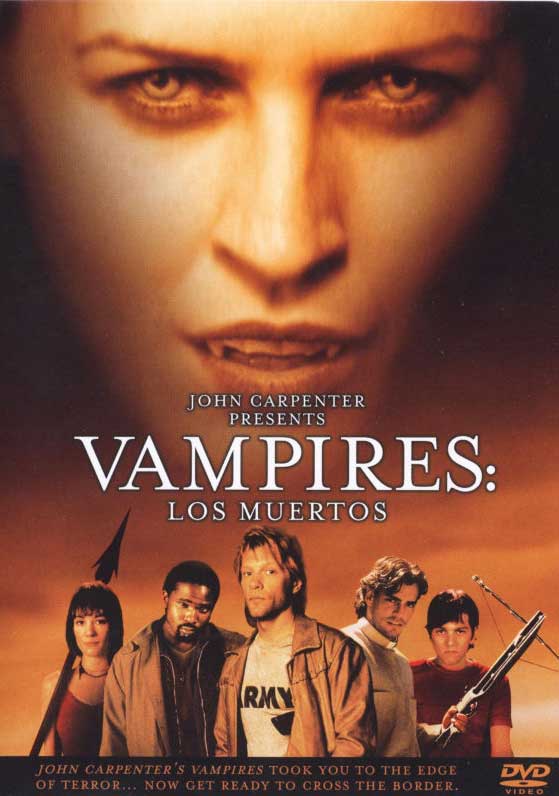
While at New Beverly Cinema on November 19, 2011 to talk about her husband John Carpenter’s movie “Vampires,” producer Sandy King also took the time to discuss its sequel “Vampires: Los Muertos.” Not many know about this one, but this is largely because it went straight to video and features none of the cast from the original. King went into detail about its making, and she summed up Screen Gems handling of it by saying, “They fucked it up!”
The original storyline for “Vampires: Los Muertos” had all the original slayers dead which necessitated that a new team be put together. Tim Guinee was set to return as Father Adam as his character was intended to be the through line for both films. Sheryl Lee was also expected to return as Katrina who had since become queen of the vampires. King never mentioned if Daniel Baldwin would be back, but I’m assuming this was not a real possibility.
The problem with this sequel, King said, was the studio thought they got the movie, but really did not. This was quickly proved when they introduced some changes during the film’s production. Guinee ended up not being brought back, and we see Father Adam’s grave at the movie’s start. Instead, they ended up casting a Mexican soap opera star named Cristián de la Fuente as a completely different character named Father Rodrigo. King was also perplexed as to why they cast rocker Jon Bon Jovi as the lead vampire hunter, Derek Bliss. Granted, Jovi is not a bad actor, but King best described him as looking like a “New Jersey surfer.”
At one point, the studio called both King and Carpenter and asked them, “Can you tell us how to fix this?” To this, King replied quite bluntly, “No.”
In the end, King made clear how the studio’s interference is what messed everything up. She said if you don’t understand the myths and legends involved in the original “Vampires” movie, then “you’re going to fuck it up.” Also, if your main villain of a female vampire is not the hottest lady, then the story won’t make a lick of sense. All of this, in her opinion, showed a lack of respect not just for the audience, but also for the genre as well.
In all fairness, “Vampires: Los Muertos” is an okay movie if you expect nothing more than a decently entertaining B-movie. Even King said director Tommy Lee Wallace, who had directed another sequel to a John Carpenter movie with “Halloween III: Season of The Witch,” did a lot of neat things which were fun to watch. I myself loved the kick ass rock and roll score by Brian Tyler who has since gone on to compose the music for “Rambo” and several of the “Fast & Furious” movies. But when all is said and done, this sequel was a missed opportunity, and it serves as yet another example of why studio executives would do best not to interfere too much, if at all, in the moviemaking process.
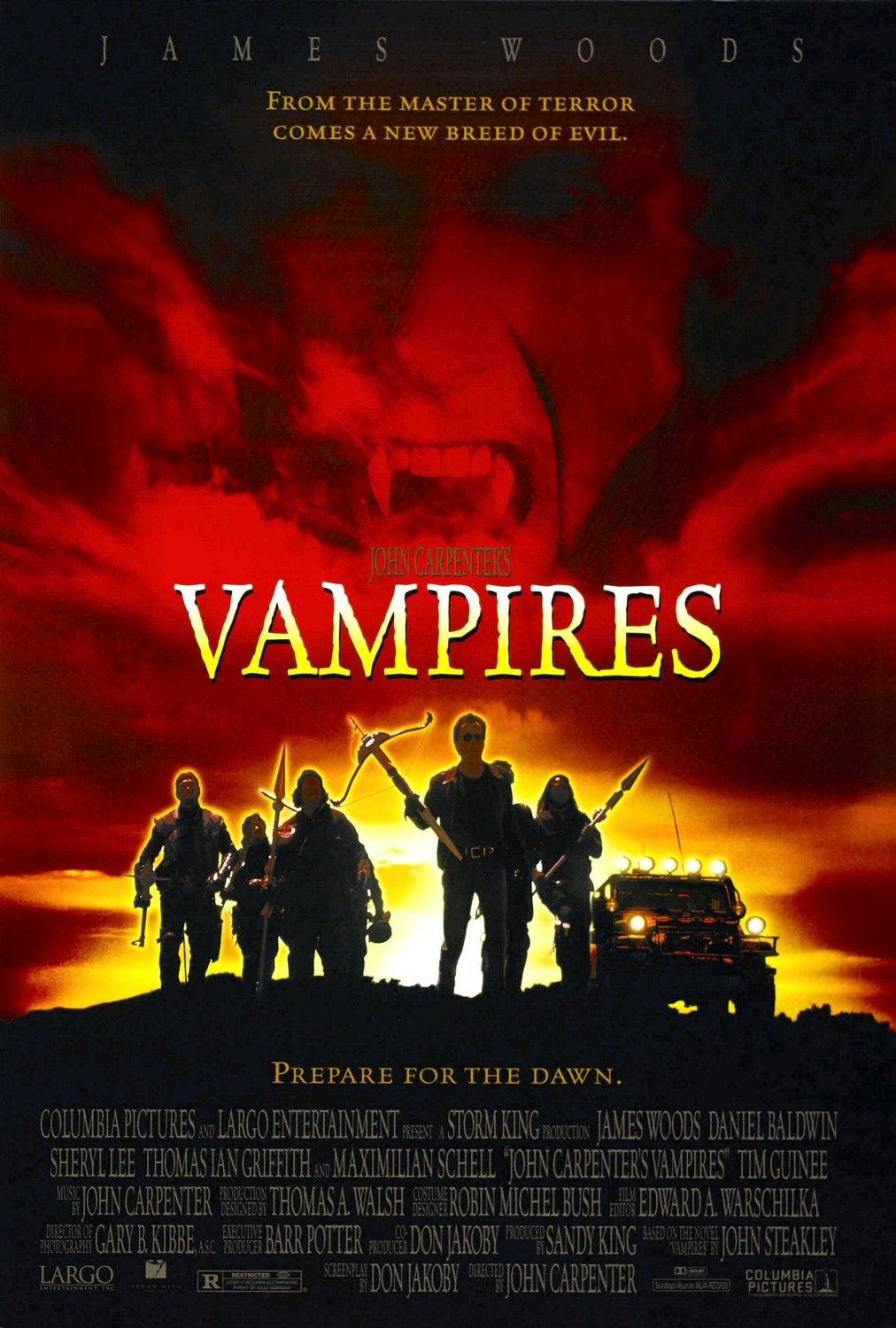
Movie producer Sandy King dropped by New Beverly Cinema on November 19, 2011 to talk about her husband John Carpenter’s movie “Vampires.” The website Horror Movie a Day hosted the midnight screening which brought out a small but dedicated crowd who yearned to see it on the big screen again. Carpenter once said he originally became a filmmaker to make westerns, and this movie, based on the novel “Vampire$” by John Steakley, is the closest he has ever come to making one.
King said the project came to her and Carpenter after she bailed out a producer who was working on a Largo Entertainment show. Largo Entertainment was the sales engine behind this feature, and while she and Carpenter were used to putting their own projects together, King stated they were “more for hire” when it came to “Vampires.”
Casting “Vampires” was Reuben Cannon who brought actors from all over the world to his casting office. There were even midget actors, King said, who were about 4 feet tall. Many who did get cast as blood suckers were stunt people as they had to perform the movie’s most dangerous stunts. The scene where vampires climb out of the dirt proved to be the roughest stunt of them all.
Thomas Ian Griffith was cast as the imposing master vampire, Valek. King was standing outside Cannon’s office when she noticed a shadow looming over her. It turned out to be Griffith who is actually 6’ 6” tall, and his height gave her the strong impression of a vampire. King also said on top of Griffith being tall and athletic, he could also act which made him a perfect choice for the role.
When it came to describing James Woods, who plays Jack Crow in the film, King said bluntly, “He’s nuts!” It turned out King and Woods shared the same publicist, and Carpenter was looking for a really good actor to play Jack Crow. While Woods proved difficult to cast as the studio didn’t want him in the lead, Carpenter was intent on working with him despite the actor’s reputation of being difficult to work with. The role, however, turned out to be a real physical challenge for Woods as he was not really an athletic actor at the time, something which is hard to believe after watching “Vampires.” Stunt coordinator Jeff Imada ended up helping him look as tough as he does onscreen, but King stressed Wood’s role was really about acting more than anything else.
As for the rest of the cast, King described them as “great” and “really good people.” She said Sheryl Lee, who played the prostitute Katrina, is “the most unspoiled actress ever.” Daniel Baldwin, who played Montoya and is better known for his legal problems, was not a problem according to her. In fact, when a wave of bronchial flu ended up infecting the cast and crew, she said Baldwin ended up bringing soup for everyone.
While receiving a rather middling reception when it debuted domestically, “John Carpenter’s Vampires” is a better movie than people generally give it credit for. Like many of the “Halloween” director’s films, it has gained a strong cult following years after its release, and I still find it to be wildly entertaining to this very day.
Looking back at some of the articles I have written about screenings at New Beverly Cinema, I kept saying or implying that you could never expect any screenings showing there to sell out. But now it looks like that’s becoming less and less the case. Ever since Quentin Tarantino bought the building where the theater is located and saved it from becoming another Supercuts, more and more movie geeks have descended on this establishment, the last standing movie reparatory theater in Los Angeles. Jason Reitman did a movie program there which featured “Election,” “Boogie Nights” and “Ferris Bueller’s Day Off,” and it brought out huge crowds of people. Torgan and company ended up having to do something they almost never do; turn people away!
Well, the line around New Beverly once again snaked around the corner as actor Peter Weller was scheduled to introduce a screening of the 1984 cult classic, “The Adventures of Buckaroo Banzai Across the 8th Dimension,” on March 29, 2010. Every single was taken, and the screening got delayed because the line at concessions threatened to snake around the theater as well. Weller brought along two other players from Buckaroo’s crew: Billy Vera who played the bass guitarist for Banzai’s rock band the Blue Blaze Irregulars, and Gerald Peterson who played Rug Sucker. The Q&A was moderated by Jeremy Smith, Mr. Beaks from Ain’t It Cool News, and he proclaimed this to be “the nerdiest movie ever made.” Upon saying this, he got a huge applause from the audience.
Weller did look a little ragged, and he later explained it was because he didn’t go to bed until about 2 a.m. the night before as he just got through 86 hours of PhD exams at UCLA. Furthermore, he said he has been wearing the same clothes for several days straight which reek of cigar smoke as he was smoking 10 of them in a day.
“Buckaroo Banzai” turned out to be a lot of fun, and this is despite the fact I have no idea of how to explain what it’s exactly about. However, it turns out the most ardent fans of this movie and the actors who starred in it can’t really explain what the plot is about either.
“I didn’t understand it (the script) actually, and I think no actor in it does understand it. I don’t think Billy or Gerald understood it, but it was fun,” Weller said.
“If you say you understood it, you’re a liar,” Vera said.
Weller went on to say 20th Century Fox didn’t know how to market “Buckaroo Banzai” at all. The studio executives came to the set around the time they were finishing principal photography and asked him, “Is it an action movie?” Later on, the editor of the movie, Oscar nominee Richard Marks, said, “That film is a comedy! It’s a comedy and they should have known that from the jump!”
But perhaps the best way to describe “Buckaroo Banzai” is its half comedy and half drama. Vera added many television shows later took on the half comedy and half drama formula, but he couldn’t think of any which came before this movie. To this, Weller added, “Or after.”
Weller was actually not sure if he was going to do this film because he had his eye on a romance movie around the same time. But this same romantic movie was getting bounced around from studio to studio, and his agent convinced him to take “Buckaroo Banzai” since it looked more and more like the other flick was not going to happen. With a cast which included Christopher Lloyd, Ellen Barkin and John Lithgow, this could not have been easy to turn down.
“The Adventures of Buckaroo Banzai Across the 8th Dimension” marked the directorial debut of screenwriter W. D. Richter who was best known for writing Phillip Kaufman’s version of “Invasion of the Body Snatchers” and also “Brubaker.” Richter was also responsible for co-writing another movie 20th Century Fox had trouble promoting, John Carpenter’s “Big Trouble in Little China.” Weller described Richter as a beautiful and really laid-back guy, and that he was also an intellectual from the east coast. Richter didn’t have the get up and go Hollywood thing going on, and Weller said this made him perfect for the actors to work with. Also, Richter was a musician as was Weller and several of the cast members, and Weller said his heroes have always been musicians.
Vera said he got cast after Richter and Weller saw him perform at the Viper Room in Hollywood. After he was done, Vera said Richter got a hold of him and asked, “You know, I like the way you improvise on stage. Do you think you could do that in a movie?” “Yeah, I do it every night,” Vera said. ”Do me a favor,” Richter said, “kind of tell me where you’re gonna stand so that I can have a camera ready for you.” Weller, Vera and Peterson all agreed that this was the way Richter directed the whole movie.
Mr. Beaks then started taking questions from the audience, the first one coming from a guy who read somewhere that the producers of “Buckaroo Banzai” were not at all happy with the film. He asked if this dislike of theirs bled onto the set to which Weller replied, “Uh, yeah.“ It must really suck to make a movie while knowing those who got the ball rolling and spent so much money on it don’t believe in it after viewing the dallies. And like many cult movies, this one was a box office flop, but it eventually found a cult following on video, cable, and DVD. You have to wonder how this movie among others could inspire such fans to watch it at least 57 times. Weller summed it all up perfectly:
“The longevity of it is that it’s unique. There’s a uniqueness to it,” Weller said. “They (the producers) wanted it to fit into a mold. They thought that it would be more slapstick, overt action and humor. The humor, although I have to say I don’t understand a lot of it, was fantastic. The humor was so… Just under the radar man.”
“And that’s why they cut a half hour of it,” Vera added. “The movie was a half hour longer which gave the jokes more room to breathe, but the studio said they wanted to cut it short so that they can show it more times per day.”
Particularly fascinating was Weller’s take on Christopher Lloyd whom we all know best as Doctor Emmet Brown from “Back to the Future.” Weller talked about when Lloyd’s house in Montecito burned down during the devastating Malibu fires. Lloyd had gone on television to talk about what happened, and Weller described how he and his wife were so devastated over what happened to him. But during a conversation with one of Weller’s professors at UC Santa Barbara, who brought up how sorry he was for Lloyd losing his house, Weller quoted exactly what he said:
“You’re gonna be the first to know the truth… I was already selling the house and there was nothing in it at all. I was living in an apartment in Montecito!”
Stunned at hearing this, Weller looked right at Lloyd and said, “Chris! The world, not just LA, but the whole world! We even saw this news in Italy! You looked so sad…” Lloyd’s response to this really did turn the whole thing into a comedy:
“I know! Because when the fire was going and I walked up and they put three cameras in my face, and I didn’t know what to do except LIE!”
Weller also said he met Jeff Goldblum on the same night he lost his virginity, and then he brought up an almost insane story about Goldblum which took place when he was getting married. Weller had already been married at that point and was telling Goldblum how excited he was to see him settling down. What Goldblum told him after that made us see him in different light:
“We’re on the other side now Peter!”
Other tidbits about “Buckaroo Banzai” included how the montage of Buckaroo and his comrades coming together during the end credits was actually an addition made by Richter later on. While filming this, Weller admitted he and the actors were actually walking to the tune of Billy Joel’s “Uptown Girl.”
Before those end credits began, there was also the promise of a sequel laid out for the audience entitled “Buckaroo Banzai Against the World Crime League.” One audience member asked why this sequel never got made, and it turns out there was more to it than the movie dying at the box office:
“Well the one guy (producer) went to prison for bank fraud, and the other guy blew his brains out in Century City Plaza,” Weller said. “Both of those guys were really good guys and I stayed in touch with the one who went to the joint, and he’s out now.”
Just before they finally started showing the movie, Weller thanked the crowd for coming out and said that this turnout and excitement was what he had expected when he walked in to meet his professors at UCLA today. Instead, they just gave him more stuff to work on, and that was after the 86 hours of work he had already done. Suffice to say, this crowd was far more welcoming.
It was great to finally see “The Adventures of Buckaroo Banzai across the 8th Dimension” after all these years, and it was even more fun watching it with a large audience. To see it on television is one thing, but there is nothing like experiencing it on the silver screen in a packed theater. Weller took a very unrealistic character who was a renaissance man, a top neurosurgeon, particle physicist, race car driver, rock star and comic book hero, and he made you buy into him without questioning the logic of how he found the time to take on all these disciplines.
Another memorable evening at the New Beverly Cinema!
On Friday June 5, 2009, Phil Blankenship presented a triple feature for horror fans at New Beverly Cinema with “Friday the 13th Parts IV, V, & VI.” The fourth film was called “The Final Chapter,” and seeing its title on the screen induced uncontrollable laughter in every member of the audience for obvious reasons. The fifth film, “A New Beginning” remains the most despised of the sequels as it tried to continue to the series without Jason, and it proved to be an embarrassing failure. “Jason Lives,” on the other hand, is one of the best in the series thanks in large part to the great sense of humor the filmmakers brought to it. All the sequels which came after this one turned out to be completely stupid and unintentionally hilarious with a few exceptions. In retrospect, these three movies marked the franchise’s peak as well as the start of its downward spiral.
As time went on, these three “Friday the 13th” sequels became known as the Tommy Jarvis trilogy. We first meet Tommy Jarvis in “The Final Chapter” where he is played by a very young Corey Feldman and spends his time playing on his computer or indulging in his hobby of making masks. Tommy ends up killing Jason with his machete, and then he can’t get himself to stop bashing him with it. In “A New Beginning,” we see an older Tommy, now played by John Shepherd, still dealing with the intense psychological damage his encounter with Jason thrust upon him. And then in “Jason Lives,” Tommy (this time played by Thom Matthews) is convinced Jason is not dead despite having been buried for years. But of course, he ends up accidentally resurrecting Jason and has to take him down yet again.
Blankenship gave the crowd a special treat by bringing out the writer/director of “Friday the 13th Part VI: Jason Lives,” Tom McLoughlin, to talk with the audience about its making. McLoughlin started off by saying how glad he was to be at New Beverly Cinema as he got all of his film education here, that shooting this sequel remains the most fun he has had as a filmmaker, and he confessed he has not seen a print of it since 1986.
When first hired to direct “Jason Lives,” McLoughlin admitted the only “Friday the 13th” movie he had seen previously was the first one. As a result, the executives at Paramount Pictures forced him to watch the other four. With “Jason Lives,” McLoughlin was intent on ignoring the events of “A New Beginning” because he said it really pissed him off. The audience at the New Beverly was in complete agreement with this, and they applauded him loudly.
McLoughlin also said he had originally planned to introduce Jason’s father, Elias Voorhees, into this sequel in order to give the iconic slasher more of a back story. We all know about his crazy mother, but not much has ever been said about Jason’s poppa. But Paramount Pictures was not crazy about this plot element because they weren’t sure which direction it would take the franchise in, so they put the kibosh on it. However, the DVD reissue of “Jason Lives” does have the film’s original ending with Jason’s father in the form of storyboards, and it is a must see for fans.
One fan asked McLoughlin how he got Alice Cooper to contribute songs to “Jason Lives.” It turns out Cooper is a big fan of the “Friday the 13th” series and was more than happy to participate, even allowing McLoughlin to use any of his songs in the movie. Cooper gave “Jason Lives” its end title song of “The Man behind the Mask,” but McLoughlin said the original version was much faster.
Blankenship asked McLoughlin the inevitable question about how he dealt with the Motion Picture Association of America (MPAA) and of what it took to get “Jason Lives” an R rating. Surprisingly, the MPAA didn’t want McLoughlin to cut scenes, but frames instead. McLoughlin said the frames didn’t have blood or gore in them, but the MPAA found them to be too intense. In the end, he made no secret he wanted this movie to be a “huge bloodbath.”
Thom Matthews was cast as Tommy Jarvis in “Jason Lives” as McLoughlin wanted someone who seemed more heroic. Plus, John Shepherd, who played Tommy in “A New Beginning,” didn’t want to return because, as McLoughlin put it, “he got all religious.” Shepherd had since become a born again Christian and his church didn’t feel like doing a slasher movie was in his best interest.
With this particular “Friday the 13th” sequel, McLoughlin admitted he tried to give it a strong sense of humor. This is apparent right from the start when you see how the opening title shot is a clever homage to the gun barrel sequences in the James Bond movies. Indeed, you come out of this sequel feeling like McLoughlin actually took the time to work on the script instead of just throwing something together at the last minute. Plus, the interplay with the kids, and this is one of few movies in this franchise which actually had kids in it, was great like when they hide under the beds and one boy asks another, “So, what were you going to be when you grew up?”
Ron Palillo, who plays Allen Hawes, is best known for playing Arnold Horshack on “Welcome Back, Kotter.” This got McLoughlin talking about how everyone in the city kept calling Palillo “Horshack” wherever he went. Looking back, he said this made him realize how hard it is for actors to get past a character they played which was so popular.
Another fan asked McLoughlin if he had any favorite on-set stories he could share. This got him to talk about a stunt man who came on the set dressed like Evel Knievel and said, “I’m here to crash something. So what do you want me to do?” The stunt he performed was an especially dangerous one as it required him to drive a big RV (is there any other kind?) over a ramp at 90 miles an hour. McLoughlin said this was the scariest time he ever had on a film set as he worried this guy would get killed. Fortunately, the stunt came out perfectly with the RV crashing on its side the way it was supposed to, and the stuntman pulled himself out of the wreckage and said, “Did I do alright?”
It turns out there were different endings thought up for “Jason Lives,” but McLoughlin made it clear he always intended for Jason to end up back in Crystal Lake. One of those endings did include Jason’s father bringing him back to life with voodoo magic. In the end, McLoughlin decided to keep it simple and used the image of Jason’s good eye suddenly opening up wide to show the audience that, surprise, he’s not done killing camp counselors yet.
As for the man behind the mask, two actors were hired to play Jason. The first was Dan Bradley who has since become known as the premier stunt coordinator for Hollywood movies like the Jason Bourne franchise. The powers that be at Paramount Pictures, however, after watching some dailies, decided he should be replaced because they felt he didn’t have the character’s build. Enter C.J. Graham who had just finished a stint as a United States Marine and had no previous acting experience. McLoughlin said Graham came onto the set answering all of his questions with “yes sir.” Today, Graham is a casino manager in Las Vegas.
In regards to his favorite death in “Jason Lives,” McLoughlin replied it was when Sheriff Michael Garris (David Kagen) gets folded in half. This came about because he wanted Jason to kill in ways he thought would seem “superhuman.” The fact Jason starts off being struck by lightning makes it seem all the more logical he would kill people this way. It certainly made for many memorably gruesome moments!
The last question for McLoughlin was if Paramount asked him to direct another installment, and why this didn’t happen. He said he was actually approached by Frank Mancuso to do the next sequel, and Mancuso asked him, “How about Jason vs. Freddy?” To this, McLoughlin replied, “How about Cheech & Chong vs. Jason?”
Later on, McLoughlin did get the offer to direct “Freddy vs. Jason,” but he said he didn’t like the script given to him. New Line Cinema, which ended up buying the rights to “Friday the 13th” from Paramount, invited him for a meeting to talk about it. However, the meeting lasted only ten minutes after which he walked out, and he has not been involved with the movie franchise since.
Since making “Friday the 13th Part VI: Jason Lives,” McLoughlin has gone on to make movies like “Date with An Angel” which featured Emmanuelle Béart at her most beautiful, and he also directed episodes of the “Friday the 13th” television series. His other credits include the Stephen King TV movie “Sometimes They Come Back.” Outside of his contribution to the “Friday the 13th” franchise, he has made a good and comfortable career as a director. Having him speak to the fans at New Beverly Cinema was a real treat, and he really enjoyed the time he spent with them. Special thanks go out to Phil Blankenship for putting this screening together. This particular sequel still remains one of the best of this series, and McLoughlin’s appearance made sitting through “Friday the 13th Part V: A New Beginning” somewhat bearable.
More than 30 years after its release, Alex Cox’s cult classic “Repo Man” still holds up with its truly authentic punk attitude and black humor. This was proven to be the case when a special screening of the movie was held at the New Beverly Cinema which brought out many fans eager to see some of the actors who starred in it. Among them was the great character actor Harry Dean Stanton who plays Bud, the Mr. Miyagi or Yoda to Emilio Estevez’s Otto. Also there was Tracey Walter who played the philosopher of mechanics, Miller, Olivia Barash who played Otto’s would-be girlfriend, Leila, and Del Zamora as Lagarto, one of the Rodriguez brothers.
“Repo Man” is so defiantly punk and proudly refuses to fit into the realm of regular mainstream entertainment. Never politically correct, it delves into a highly exaggerated, not to mention intense, depiction of the life of a repossession agent. Watching it makes you realize there are not enough movies like this these playing at the local multiplex. We need something to balance out all these watered-down blockbusters which comes to us like McDonald’s Happy Meals from the world of corporate cinema. This movie was actually intended to be a UCLA student film, but somehow it managed to become something much bigger.
The actors came out immediately after the end credits concluded, and they looked really happy to be at the New Beverly. Stanton, however, looked like he was three sheets to the wind and occasionally spoke about things not really related to “Repo Man.” At one point he even asked, “Can I smoke in here?” The other actors sympathetically told him they weren’t sure the theater would allow him to smoke. “We can’t smoke in here?” Stanton said, “That’s fucking nonsense!” The crowd couldn’t help but laugh as Stanton looked like he was perfectly prepared to keep smoking for the rest of his days.
Stanton said he couldn’t remember exactly how he got involved in “Repo Man,” and added this lack of memory up to being one of his “senile” moments. Walter, however, said he got his role after having previously worked with producer Michael Nesmith on “Timerider.” Barash said she was originally encouraged not to do the movie on the advice of her agents as they didn’t know the people involved in it very well, and they thought it might be dangerous for her to even go to the audition. But Barash was and still is a huge punk rock fan, and she got immediately sold on “Repo Man” upon seeing that bands like Black Flag were going to be involved. She even told us Iggy Pop, who composed the movie’s theme song, was her neighbor in the apartment building she lived in back then.
Zamora didn’t say exactly how he got cast, but he did remember how Cox got Nesmith involved as a producer. Simply put, Nesmith’s car had gotten repossessed, so he could relate to those car owners who were not paying up on what they bought. Zamora also talked about how Cox got both Stanton and Estevez involved in “Repo Man.” Basically, Cox caught up with Estevez and told him Stanton was already connected to the movie even though he wasn’t at that point, and then he went to Stanton and told him Estevez was connected to the film even though he wasn’t. Suffice to say, both actors did become involved.
Stanton then went on to say he and Cox didn’t always get along. During the shooting of “Repo Man,” Cox got so sick and tired of Stanton telling the actors what to do and threatened to fire him on the spot. To this Stanton replied, “Kiss my ass! Fire me so I can get paid!” Later on, Stanton asked Zamora to let Cox, whom Zamora is still in touch with, know he’s not mad at him anymore and that he would welcome him as an honored guest the next time he saw him.
“Repo Man” also had an abundance of generic food and drink items on display, and the audience couldn’t help but laugh at just how openly generic they all were. Product placements are usually reserved for big budget movies which are more likely to be bland and inoffensive. Zamora said they really had no money so they did talk with companies who were willing to do product placements in the movie. And then they read the script… What they ended up using was a generic brand from Ralphs Supermarket, one of the most dominant of supermarket chains in Southern California today. Of course, had “Repo Man” been made today, Ralphs might not have been as inclined to be involved.
In the end, Zamora and Walter said the art directors did the majority of the work and succeeded in creating the world of the movie which was very convincing despite the low budget. Then Stanton spoke up again and asked who Zamora played in “Repo Man,” and Zamora told him he played Lagarto, one of the Rodriguez brothers, to which Stanton replied, “How many brothers were there?”
Speaking of the Rodriguez brothers, Stanton’s character of Bud has this intense confrontation where he wields a baseball bat which he threatens to bash the brothers with. Stanton said Cox gave him a rubber bat to use, but he wanted to work with a real one instead, and this led to a fight between the two of them. Zamora remembered this moment on set and said Stanton was under control, but Stanton, who was starting to remember more of the filming, made it bluntly clear he was really crazy and didn’t have any idea of what he was doing.
Walter was asked about his famous “shrimp monologue” scene, and he said it was originally meant to be just an audition piece. It was never intended to be in the film, but Walter fought for it. Indeed, it makes for one of the most memorable moments in “Repo Man” as his character of Miller describes the way he sees things:
“A lot o’ people don’t realize what’s really going on. They view life as a bunch o’ unconnected incidents ‘n things. They don’t realize that there’s this, like, lattice o’ coincidence that lays on top o’ everything. Give you an example; show you what I mean: suppose you’re thinkin’ about a plate o’ shrimp. Suddenly someone’ll say, like, plate, or shrimp, or plate o’ shrimp out of the blue, no explanation. No point in lookin’ for one, either. It’s all part of a cosmic unconsciousness.”
To this day, Walter says that every once in a while he runs into someone who utters one of his signature lines from “Repo Man” like, “John Wayne was a fag!” But of course, the real signature line of “Repo Man” belongs to Stanton’s character of Bud who says, “The life of a repo man is always intense.”
One audience member asked the actors if they still talk to Estevez after all these years. Zamora and Walter said Estevez still works, but more as a producer and director these days because that’s where his passion lies. Estevez still acts occasionally, but it apparently doesn’t interest him as much as it used to.
Wrapping up the evening, the actors were asked if they knew they were making something special during the filming of “Repo Man.” Some of them believed they were, but Stanton bluntly said, “I didn’t give a shit if it was special while making it.” Despite his apparent demeanor and not being able to remember his entire experience on this particular movie, Stanton still had us laughing hysterically. Not once did he try to ruin the fans’ appreciation of “Repo Man.” Whether he realizes it or not, no one could have played Bud better than him.
Many were in agreement when Stanton said both “Repo Man” and “Sid & Nancy” were truly the peak of Cox’s directing career. We haven’t heard as much from him since then, but Barash said he just finished making a quasi-sequel called “Repo Chick” which she has a cameo in it. However, this has not stopped Universal Pictures from sending Cox cease and desist letters as they insist only they have sequel rights to “Repo Man.” Still, Cox has been showing it at festivals, so it looks like nothing is going to stop him.
Before everyone got up and applauded, another audience member asked a question which brought to mind one of Bud’s great lines from “Repo Man,” “Is there any good place around here to get sushi and not pay?” Stanton left us with his best answer of the evening, “That’s where we’re going right now.”
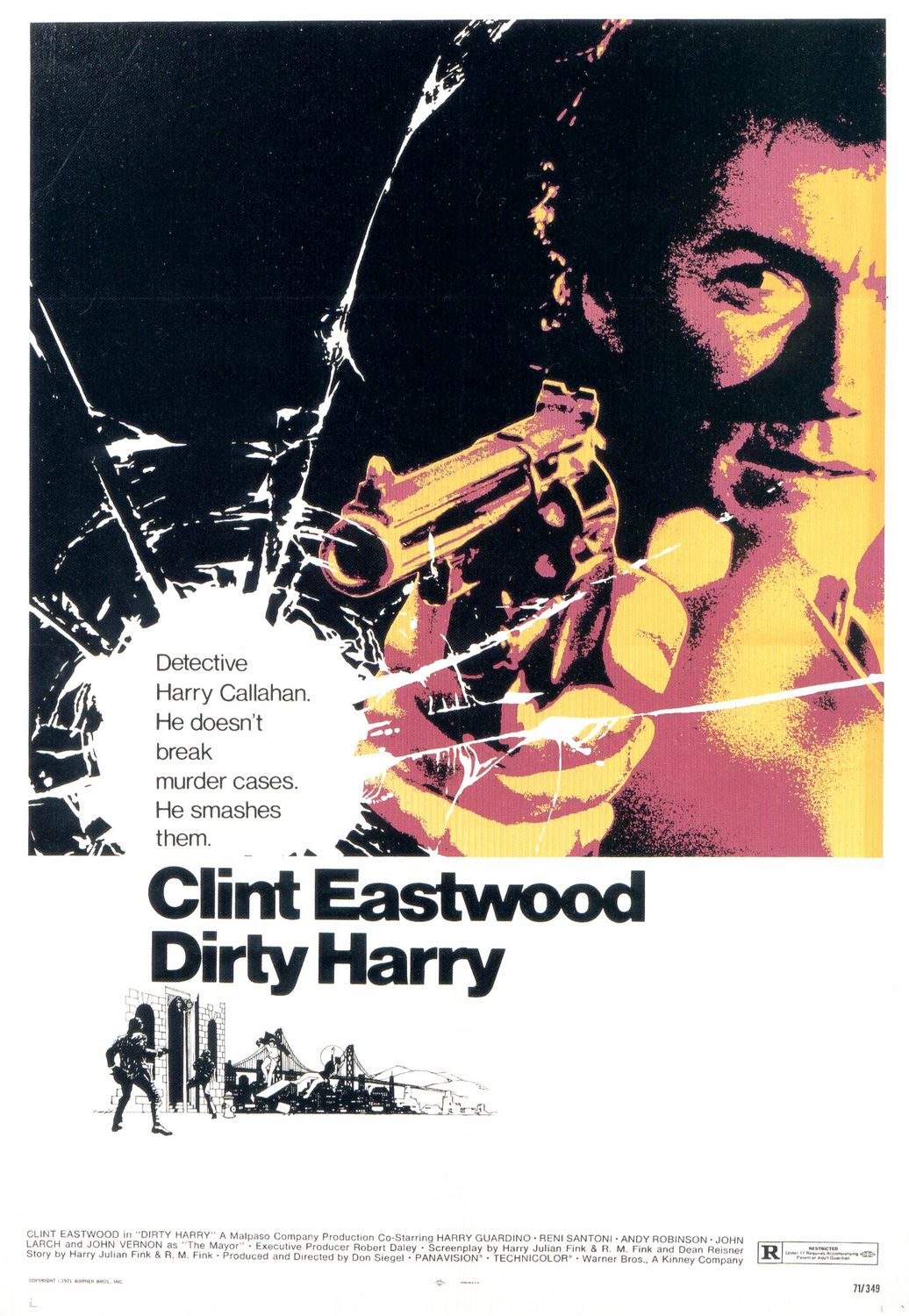
Of all the movies Edgar Wright selected for The Wright Stuff II Film Festival at New Beverly Cinema, “Dirty Harry” is the one he has watched the most. Wright screened a nice print of the 1971 classic along with another movie called “The Super Cops,” and joining him to talk about it was filmmaker Quentin Tarantino.
They started off riffing on trivia about how the original title for “Dirty Harry” was “Dead Right,” and how it was first going to star Frank Sinatra who later pulled out when the 44-magnum ended up injuring his wrist. It also turned out the late Irvin Kershner, who directed “The Empire Strikes Back,” was the first choice to direct the movie (Don Siegel eventually took the job). Tarantino and Wright also talked about how actor Albert Popwell played a different black stereotype in each “Dirty Harry” film except for “The Dead Pool,” and they both wished he played the mayor in that one.
For Wright, what he loved about “Dirty Harry” was the grittiness of its main character and the atmosphere of San Francisco. On the DVD for “Hot Fuzz,” Wright did a location tour where the film was made, and he even checked out the deli where Eastwood was filmed eating a hot dog when the bank robbery took place. As for the film’s score by Lalo Schifrin, he declared it his all-time favorite saying it marked the birth of “acid jazz.”
But much of the treasure trove of information came from Tarantino who said he first saw “Dirty Harry” when he was five or six years old, and he described it as a “political lightning rod” upon its release. Apparently, it got a lot of crap thrown at it by liberal critics who didn’t want a police fascist solution as well as from right wingers who got freaked out by Scorpio and the ills of society.
The way Tarantino viewed it, however, “Dirty Harry” does have a solid agenda. When Andy Robinson played Charles “Scorpio” Davis, there had never been a villain like him before in movies and, the term serial killer had not really been coined yet. The agenda was for there to be new laws for new crimes, and “Dirty Harry” was screaming for those new laws. Scorpio was not your average villain, and that he got such a kick out of his crimes was easy to see. There was no cure in store for such a psychotic character like this one.
Both Tarantino and Wright agreed “Dirty Harry” really holds up after 40 years. Much of this is due to its sequels treating the iconic character more as a superhero than a regular human being. With “Magnum Force,” Tarantino felt it was made more for critics of the first movie than its audience as it preached against its predecessor and the character itself by having Harry go after those taking the law into their own hands. This was the same deal with the other sequels, but “Sudden Impact” is the lone exception. Wright remarked at how, along with John Carpenter’s “Halloween,” “Dirty Harry” has one of cinema’s most perfect endings which was eventually ruined by sequels.
They also talked about Siegel who had already been around for a long time before he directed “Dirty Harry.” Siegel was a B-movie genre director from the 1950’s and a Hollywood craftsman who eventually became an auteur. For the most part, Harry Callahan represented the quintessential character of his films; the cop who takes the law into his own hands. Even after directing the 1971 classic, Siegel would continue to have a long and healthy career in films, eventually reuniting with Eastwood on “Escape from Alcatraz.”
Tarantino also described “Dirty Harry” as the single most ripped off and imitated action movie of the 1970’s. He even gave a list of every single movie which stole from it: “McQ,” “Newman’s Law,” “Nightstick,” and everything from Cannon Films. The similar thing about the ripoffs was they lost all the political subtext which made “Dirty Harry” such a strong film. It became all about going after some big drug dealer or crime syndicate, and there was nothing political about that. When it came to 1970’s movies, the only others which were stolen from as much were the ones starring Bruce Lee.
“Dirty Harry” apparently also boasts the first homosexual date in cinema history as seen through Scorpio’s scope rifle. Tarantino said it was the first instance of unforced male sexuality in movies, and he still remembers the audience laughing at this scene when he first saw it. Back then he thought the audience wanted this couple killed, pointing out how they were not as enlightened as we are today, and that they were culpable for their “sinister intentions.”
Hearing these two great filmmakers talk about this Don Siegel/Clint Eastwood classic made for one of the most interesting evenings I have ever spent at New Beverly Cinema. A new generation of audiences will look at “Dirty Harry” differently and may see it as tame compared to plethora of serial killer movies we see today. With the popularity of “The Silence of the Lambs” and the “Saw” movies among others, serial killers have long been the norm in American cinema, so the accomplishments of the 1971 classic threaten to seem diluted as a result.
Thanks to Edgar Wright and Quentin Tarantino, we are reminded of “Dirty Harry’s” place in cinematic history and how it opened doors not just for Eastwood, who made the transition from westerns to other films, but for so many other movies as well for better and for worse.



 The Ultimate Rabbit