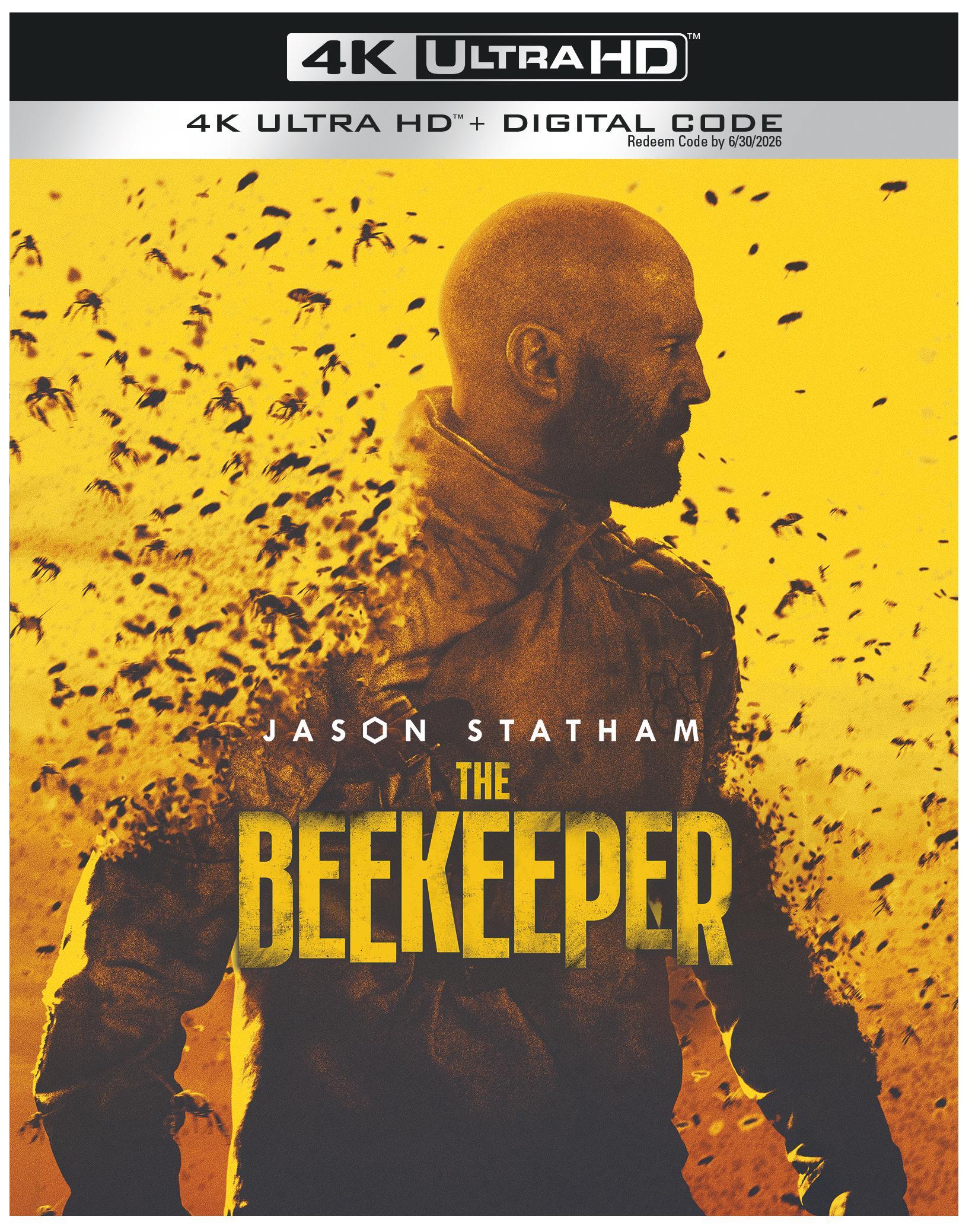
‘The Beekeeper’ Movie and 4K Review

The following review was written by Ultimate Rabbit correspondent, Tony Farinella.

Jason Statham is one of the most successful action stars of the 21st century, even though he’s not exactly reinventing the wheel with his performances. In most cases, if you have seen one Jason Statham performance, you have seen them all. He’s a calm, cool and calculated killer with a sense of humor. There is an element of over-the-top fun that permeates his films. Even though the action is fast-paced, bloody and violent in “The Beekeeper,” the tone of the film is perfectly balanced in terms of action and self-awareness.  The people making these films are fully aware of what the audience expects out of them, and they are more than happy to give it to them. They aren’t overly serious to where it’s dreary and dull, and they also aren’t so goofy you check out because it’s so silly.

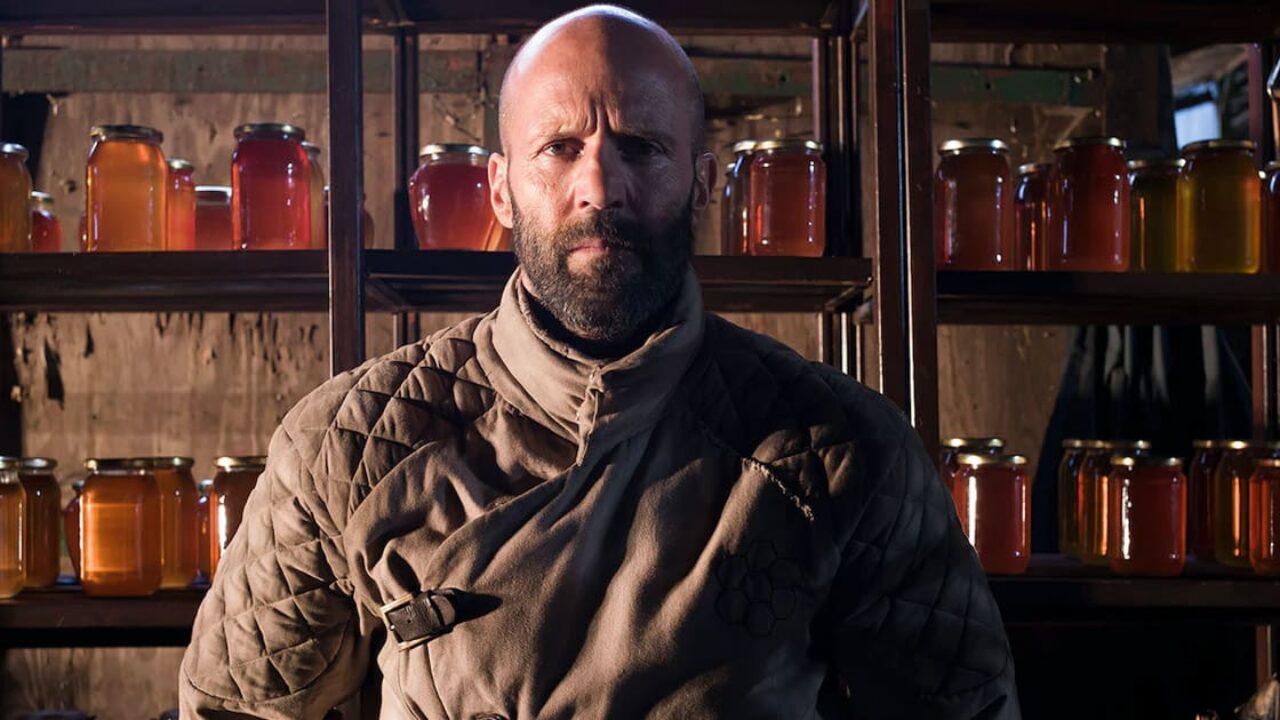
The film opens up by introducing us to a retired schoolteacher named Eloise Parker (Phylicia Rashad), who rents out her barn to Adam Clay (Jason Statham), a beekeeper with a heart of gold. One day, she falls victim to an online scam and ends up losing not only her entire life savings but also two million dollars from a charity she was managing as well. After this life-changing mistake, she ends up committing suicide. This springs the beekeeper into action, as he believes in right and wrong. He also held a special place in his heart for Eloise, as she was the only one who looked after him and took care of him.

Along the way, Eloise’s daughter, Verona (Emmy Raver-Lampman), an FBI agent, starts to look into Adam Clay and his background. She doesn’t quite understand how a beekeeper can be so violent and hard to catch. It turns out he belongs to a group called The Beekeepers, and they all work together to make sure “the hive” is protected and safe from anyone who tries to disrupt the natural order of things in the world. Once he tracks down the scammers with help from the Beekeepers, he begins to make life a living hell for them. He wants to take everything from them in the same way they have taken everything from the elderly with their online scams.

I’m a huge fan of silly, over-the-top and fun action movies which are done with style, intensity and a sense of humor. “The Beekeeper” is one of the best action movies I’ve seen in a while. The pacing is perfect as the action comes fast and furious throughout the film’s 105-minute running time. It’s directed by veteran action director David Ayer, and he knows how to make these movies sizzle and pop on screen. The fight scenes are incredibly violent, in-your-face, and gory. They left me with my jaw on the floor. That is exactly what I’m looking for out of a Statham action film.

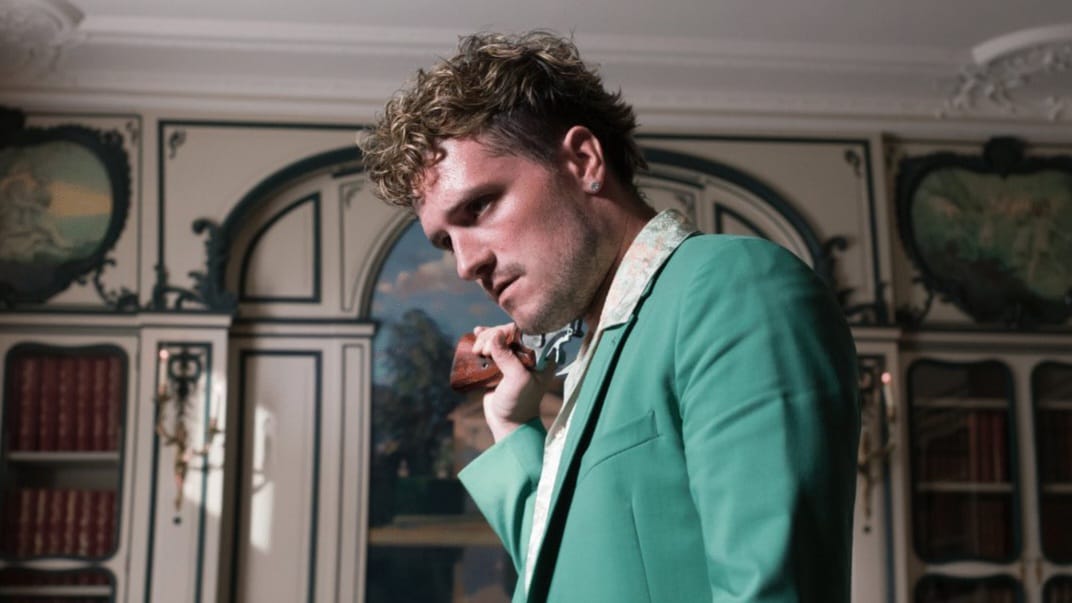
It also helps that the bad guys are so shady and underhanded, and the actors hit all of the right notes with their performances. Josh Hutcherson is smarmy, indifferent and filled with charisma and cockiness. He plays a spoiled and ruthless adult in his late twenties who has had everything handed to him, so he thinks he is above the law and can do whatever he wants. Jeremy Irons is the classic fixer.  He’s brought in to fix things and be the voice of reason when things get too hot and heavy for Hutcherson’s character. The way he reads his lines in this movie is just perfect. He’s an elegant, dignified and smooth-talking problem solver. He looks forward to these challenges, but he also knows the risks which come with them.

When it was all said and done, I had a blast with this movie. It’s a trashy action film that wears its bloody heart on its sleeve. It knows exactly what it wants to accomplish and pulls no punches. Statham is perfectly cast here as the complicated hero who will stop at nothing to get revenge on the bad guys. Even when it seems impossible and the odds are stacked against him, he finds a way to overcome all of the obstacles thrown his way.  It’s highly entertaining to see him have to wiggle his way out of tricky situations where he’s outnumbered and outmanned. The film also has some very violent and creative kills that go for the jugular and linger on the violence. I wasn’t quite sure what to expect from “The Beekeeper,” but it’s a highly entertaining action film with blood, guts and humor.

* * * out of * * * *

4K Info: “The Beekeeper” is released on a single disc in 4K from Warner Brothers Home Entertainment. It has a running time of 105 minutes and is rated R for strong violence throughout, pervasive language, some sexual references and drug use.  It comes with a digital copy of the film as well.

Video Info: They did a fantastic job with this 4K release. I thought the HDR was very vivid, bright, and colorful. Even though “The Beekeeper” is a trashy action film, they still did a great job with this transfer.  It pops with its color palette.

Audio Info: The Dolby Atmos soundtrack was the perfect choice for this action/thriller, as it allowed me to keep it on the same volume for the entire duration of the film. Action films need to have a strong soundtrack, but they can’t be so strong that they force you to turn down the volume throughout when the bullets and bodies start to fall. The soundtrack here is consistent from beginning to end, and it enhances the viewing experience.

Special Features:

None

Should you buy it?

At times, it is best to walk into a film completely blind without knowing what it is about or having read any reviews. This is exactly what I did with “The Beekeeper,” and I’m happy about that because it allowed me to enjoy the film without having any preconceived notions about it. I enjoyed the ride it took me on, and I thoroughly enjoyed Statham’s performance and the unique and grotesque kills he unleashed on the bad guys. When it comes to the 4K disc, the picture and audio quality are top-notch here. The film itself doesn’t have any special features, which is OK, as I can’t imagine they would have added a ton to the film overall. Sometimes it is better to have an air of mystery surrounding your film. Overall, I’d say buy this movie when it drops in price, as you will get a great action/thriller at a great price. I don’t think it’s the kind of movie you need to run out and buy right away, though.

**Disclaimer** I received a copy of this film from Warner Brothers to review for free.  The opinions and statements in the review are mine and mine alone.
‘The Departed’ Movie and 4K Review

The following review was written by Ultimate Rabbit correspondent, Tony Farinella.

When it comes to filmmaking, Martin Scorsese is not known for his brevity.  His films are lengthy and complex. However, because there are so many moving parts that are interesting and layered, it rarely feels like a slog to sit through them.  He also makes sure to assemble an all-star cast of some of the best actors in Hollywood so, as an audience, we are glued to the screen with each and every performance. It’s so hard to pick a favorite Scorsese film, as he’s trying to achieve something different and unique with each one.  From an entertainment standpoint, however, I think “The Departed” might be the most thrilling movie he’s ever made.  It was also the film which earned him his first and only Best Director and Best Picture Academy Award.

“The Departed” is initially set in 1980’s Boston and introduces us to a series of seedy and underhanded characters.  The local Mob boss is named Frank Costello, played by Jack Nicholson. He befriends a young Colin Sullivan and buys him groceries, as he knows he comes from a struggling family.  Fast forward to present day in the film, and Colin (Matt Damon) is now working on the inside for the Massachusetts State Police in their Special Investigation Unit.  Frank is still the leader of the Mob, but he has even more power because he knows Colin will keep him in the loop when the police get too close to him.

Billy Costigan (Leonardo DiCaprio), a police academy recruit, is brought in to meet Captain Queenan and Sergeant Dignam, played respectively by Martin Sheen and Mark Wahlberg. Considering Billy’s family has a criminal record a mile along, they think he’s the perfect mole to go undercover and bring Frank down once and for all. In order for Billy to gain the trust of Frank, he needs to serve some time in prison and also commit some crimes with the help of his cousin, so his cover isn’t blown.  However, Billy is starting to feel as though he’s living a double life and his mental health is suffering.  This is when he meets Madolyn (Vera Farmiga), a police psychiatrist who is also currently dating Colin Sullivan.  Needless to say, this is a messy and tricky situation for all parties involved.

The beauty of “The Departed” is that it keeps you guessing all the way until the finale. There are a lot of different characters and pieces of the puzzle here, but the film never feels overplotted or too complicated.  It’s very engaging, well-paced and highly entertaining.  As an audience member, it takes you on quite a ride from start-to-finish. Scorsese also takes his time in developing his characters, and he trusts his actors to put their own personal touches on their performances.  There are so many standout performances here to choose from, but Nicholson and DiCaprio in particular are remarkable.  Nicholson brings an unhinged charisma to his role as the mob boss while DiCaprio is tortured and powerful in his performance.  As the old adage goes, “Do Your Job.” Everyone in this film knows how to do their job, and Scorsese gives them the platform to do their jobs to the best of their abilities.

The screenplay, which was written by William Monahan, is also able to keep the audience engaged and thrilled without ever feeling too gimmicky or implausible.  These are well-written characters that are looking to stay alive and pull the wool over the eyes of those looking to bring them down.  They have to stay one step ahead of the audience and also one step ahead of the characters in the film.  “The Departed” is also a remake of the Hong Kong Film, “Infernal Affairs,” which I own as part of the Criterion Collection. I have yet to see that one, but I definitely need to check it out after having seen “The Departed” numerous times.

All in all, “The Departed” shows Scorsese at his best in a world he has inhibited many times in the past.  This time, though, he has new players to work with.  Of course, we are familiar with the Martin Scorsese/Robert De Niro films of the past such as “Casino” and “Goodfellas,” but it’s great to see him working with Nicholson for the first and only time along with Damon, Mark Wahlberg, and Alec Baldwin. Of course, his collaborations with DiCaprio have become legendary, but this was in the early stages of their working relationship, and you can see why they work so well together.

Screenshot

Hollywood has always had a fascination with crime movies and the characters who inhabit that world. Scorsese knows this world very well and how to make it accessible and fun for mainstream audiences. If I had to choose, my favorite Scorsese movies are “Raging Bull,” “The King of Comedy,” and “Taxi Driver.”  However, as stated earlier, if you are talking about pure entertainment value and pure fun, it’s hard to deny the power of “The Departed.” Even eighteen years later, this film still captivates and engages with its words, its story, and its players.   It only gets better and better with age. If you are seeing it for the first-time, you are in for a real treat.

* * * * out of * * * *

4K Info: “The Departed” is being released on a single disc 4K from Warner Brothers Home Entertainment.  There is also a steelbook version of the film as well.  Whether you pick up the steelbook or the 4K slipcover, you can’t go wrong with either copy of “The Departed.”  It also comes with a digital copy of the film. It has a running time of 151 minutes and is rated R for strong brutal violence, pervasive language, some strong sexual content and drug material.

Video Info: This is a gritty looking 4K that is able to keep the dark and moody look of Boston and its seedy characters alive while also cleaning up the dirt and artifacts to make it look sharp and vivid.  This is a solid 4K transfer. The HDR is a big improvement from the Blu-ray.

Audio Info:  I would have liked a Dolby Atmos soundtrack on this 4K release, but as it stands, this is still a powerful audio transfer. At times, the music and the action scenes can be a little too loud as the dialogue is more leveled, but that’s a minor issue.

Special Features:

Guilt and Betrayal: Looking into The Departed (new)

Stranger than Fiction: The True Story of Whitey Bulger, Southie, and The Departed

Crossing Criminal Cultures

9 Deleted Scenes with introductions by Martin Scorsese

Should You Buy It?

When great films, Academy Award winning films at that, are available on 4K, you have to buy and add them to your collection, if you are a film collector.  It is the only way studios are going to keep releasing these films on physical media. Now, more than ever, with more and more brick-and-mortar stores getting rid of physical media altogether, we have to purchase these films and add them to our collection.  “The Departed” looks really, really sharp on 4K.  There are the previously released special features from the Blu-ray along with a new special feature as well. This is a great film from the legendary Martin Scorsese being released in the best format possible to watch movies.  This is a no-brainer in my book.  You can’t go wrong with either the steelbook or the slipcover version of this film on 4K. This 4K of “The Departed” comes highly recommended!

**Disclaimer** I received a copy of this film from Warner Brothers to review for free.  The opinions and statements in the review are mine and mine alone.
Underseen Movie: ‘Thanks for Sharing’

WRITER’S NOTE: This review was written back in 2012, and I was reminded of this film when I recently interviewed the writer/director and stars of the 2024 film “Sweet Dreams.”

There are many who see support groups (or 12-step groups if you want to call them that). The truth, however, is that those who attend them are not any different from the rest of us, and they can at times be very funny. At the very least, these people deserve credit and applause for taking the time to get the help they need because asking for help is usually one of the hardest things to do.

Thanks for Sharing” is one of the few movies I have seen which deals with these groups and the people who attend them. While it does take the subject of addiction seriously, it also finds a good balance between drama and comedy to where we find ourselves laughing with these characters and never at them.

This movie focuses on three men who attend the same Sex Addicts Anonymous meeting: Adam (Mark Ruffalo), Mike (Tim Robbins) and Neil (Josh Gad). Adam is an over-achieving environmental consultant who is celebrating his fifth year of sobriety. Mike is a happily married man who is kind of the elder statesman of the support group these men attend. And then there’s Neil, an emergency room doctor who is in serious denial over his addictions to where he gets in serious trouble with the law. I like how we are given characters who are at different stages of dealing with this addiction to where it gives you a good idea of why people come to these groups in the first place.

Adam is at a good place as he has really cleaned up his act and is coping with life really well. He takes great pains to keep himself on the right track by taking such measures as removing television sets from his hotel rooms so he won’t find himself watching anything pornographic. But then he meets the irresistibly beautiful Phoebe (Gwyneth Paltrow) while at a party where people are eating bugs (don’t ask), and the two are instantly attracted to one another. While Adam is eager to be in a relationship with her, he is not altogether sure he is ready to fall in love again after all he has accomplished. He is trying to keep his demons at bay, but it becomes much harder for him to do so.

Mike has been in recovery the longest, and he appears to have a great relationship with his wife, Katie (Joely Richardson). Things between them, however, change very quickly when his son Danny (Patrick Fugit) turns out to have some serious addiction problems of his own. Katie is thrilled to see Danny, but Mike is not sure he can trust him after all they have been through. In the process, we come to see that Mike, despite his well-earned sobriety, still has some major control issues he has yet to make peace with.

As for Neil, he has gotten himself into a painful situation when he stands uncomfortably close to a very attractive woman while riding on the subway. From there, things come to a head for him when he loses his job under embarrassing circumstances, and this finally makes him realize he needs help. Neil eventually finds solace through another recovering addict, Dede (Alecia Moore, better known as Pink), who is just starting to deal with her personal demons as well.

I am always yearning for movies which have down to earth characters, and “Thanks for Sharing” is definitely one of them. All of what everyone goes through feels very real, and nothing ever felt contrived to me. Granted, the storyline involving Robbins’ character is one we have seen many times before, but the acting between him, Fugit and Richardson are so good to where we can forgive the filmmakers for venturing into familiar territory. It really is a shame how most Hollywood movies do not dare give us more characters we can relate to on a human level. If they did, it would make most movies far more enjoyable and invigorating as a result.

“Thanks for Sharing” was directed and co-written by Stuart Blumberg, one of the writers of “The Kids Are All Right.” Finding a balance between comedy and drama can be very hard to pull off, but Blumberg is successful in doing so for the most part. He also shows a lot of love for each character here, and not just the ones who in recovery.

Mark Ruffalo remains one of the best and most naturalistic actors working today. As Adam, I never caught him acting once, and his chemistry with Paltrow is very strong. Ruffalo makes Adam a very likable guy as he struggles to not fall back into his old habits, and he makes you see how much of a challenge this is for him.

As for Paltrow, this is the most relaxed she has been onscreen in some time. While she was a blast to watch in “Iron Man 3,” she seems more in her element here as she portrays a character who is not an addict, but one who needs to face up to the issues slowly eating away at her. Watching her in “Thanks for Sharing” reminded me of just how wonderful she can be when she is given the right role.

Robbins remains as terrific an actor as ever, and I am always enthralled when I watch him in anything he does. His character of Mike seems like the typical father who has lost trust with those he should be the closest to, but he imbues this character with a lot of humanity to where he never seems like a simple caricature. His scenes with Fugit, who we have not seen enough of since “Almost Famous,” feel emotionally true, and their relationship feels authentic when it could have come across as ridiculously manipulative.

At this point, I am not familiar with Gad’s work other than him appearing in the acclaimed musical “The Book of Mormon.” Gad has the trickiest role here as he is this movie’s comic relief, but he never plays Neil for simple laughs. We are watching Neil as he is at the start of his recovery, and it isa rough start to say the least. Gad makes you root for Neil even as he does some of the dumbest and most reckless things anyone would ever have the nerve to do.

But there is no forgetting Alecia Moore, a.k.a. Pink, who gives an impressive performance as an addict who was pushed into this particular support group by a friend. Her character of Dede ends up forming a strong rapport with Neil, and they find in each other the strength they need to move past what is destroying their lives to where they can see the light at the end of the tunnel. From start to finish, she really understands this character very well, and I could see it in her eyes. Like Ruffalo, you never catch her acting here as she grounds her character in a reality which is not all removed from our own.

I liked how “Thanks for Sharing” showed how these support groups can become another addiction as its members begin to spend more time with others instead of their own families. While these characters have made great strides in conquering their demons, they still struggle with their urges every single day. Truth be told, it takes a lot of courage to face up to the things which are tearing your life apart, and long before this movie is over, you realize these addicts are not weak but strong.

The one thing I would have liked to see more of is how the family members deal with their loved ones’ addictions. My understanding is that they can only be so involved in what an addict goes through as they can never fully comprehend how dangerous their addictions can be unless they have experienced the same thing themselves. There is a scene between Paltrow and Richardson which addresses this divide, but I would have liked to see this movie go a little bit deeper in this area.

But when all is said and done, “Thanks for Sharing” fulfilled my need to see a motion picture with characters which we can recognize in our own lives. With all these superhero movies coming at us endlessly, it is important to remember we will never be perfect and cannot be everybody’s everything. It would be nice to be a superhero though, wouldn’t it? Lord knows we could use a couple of them right now. Anyway, I think this movie is definitely worth checking out.

* * * ½ out of * * * *

Terrence Malick’s ‘To the Wonder’ – Meandering but Still Unforgettably Beautiful

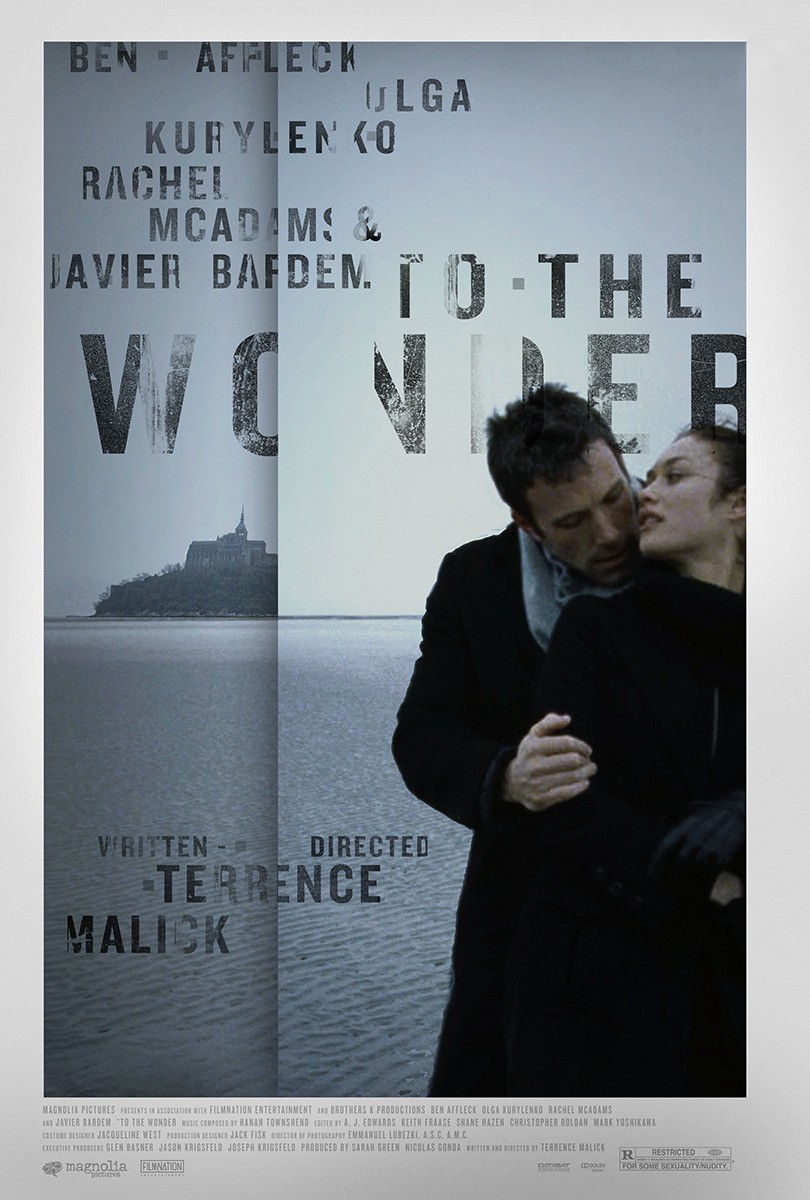
Terrence Malick’s “To the Wonder” is, in many ways, a mixed bag of a film. Not all of its parts go together in a way which feels entirely cohesive. It focuses on a couple played by Ben Affleck and Olga Kurylenko who fall in love and come to America to start a new life, but they eventually find themselves falling out of love, and they constantly struggle to understand how something so wonderful can go so awry. And then we have Father Quintana (Javier Bardem), a Catholic priest who is struggling to keep his faith even as he feels the presence of God eluding him at a time when he is desperate to believe in an afterlife. The balancing act between these characters is wobbly at best, but Malick still gives us many beautiful and wondrous images which are very powerful, and these images quickly remind me of how brilliant he is at capturing nature on film.

“To the Wonder” starts off in Europe where Marina (Kurylenko) finds herself completely enamored by her American boyfriend, Neil (Affleck), as they take a tour around town. Along with them is Marina’s daughter, Tatiana (Tatiana Chiline), who is thrilled when Neil asks her if she and her mom would like to move with him to the United States to live. After briefly viewing the European sights, the film then heads over to Neil’s home state of Oklahoma where the flatlands appear to stretch out as far as the eye can see. Heck, it almost looks like hardly anybody lives there, so it is a huge relief when we see t Neil and Marina actually have neighbors.

As with “The Tree of Life,” “To the Wonder” functions mostly as a silent film as the majority of the dialogue we hear is as a voiceover. Malick is far more interested in the inner thoughts of his characters than anything else as they struggle with the things they want and which are constantly outside of their grasp. We feel their passion for one another, and we also feel their pain and disappointment when their love eventually fades away.

Having read up on Malick as a filmmaker and as a person, it is clear to me how this film and “The Tree of Life” are his most autobiographical works overall. What the characters go through is not much different from what he has experienced in his own life, and with these films, it looks as though he is still trying to pick up the pieces of what went wrong.

Kurylenko first came to my attention in “Quantum of Solace,” and she has made the most of being a Bond woman as her performance here shows. It is thrilling to watch her dancing around the streets of Europe as well as in a corporate drug store which typically sucks the life out of everyone who shops at one. In many ways, Kurylenko is the best thing about this film as she takes us through Marina’s transcendent highs and her emotionally draining lows with complete conviction throughout.

Back in 20123, people had serious issues with Affleck as an actor, and this is even after his film “Argo” won the Academy Award for Best Picture. I myself have never had any issues with his acting abilities, and he gives a strong, understated performance as Neil, and it is never his fault we come to know less about this character than the others we are introduced to here. I really wish Malick had given Neil as much attention as he did to Marina as this would have made Neil’s journey in this story all the more illuminating. Nonetheless, Affleck is still very good in here.

Rachel McAdams is inescapably luminous as Jane; a childhood sweetheart of Neil’s who shows up after Marina has gone away. Malick makes Jane look beyond beautiful as he frames her against fields of wheat, and it is emotionally draining to watch Jane bear her soul to Neil and try to melt his heart in the process. McAdams ends up disappearing from “To the Wonder” a little bit too soon, but she is a vision to watch throughout.

Bardem’s character of Father Quintana at first feels a little out of place as much of the focus seems to be on the relationship between Marina and Neil, but his presence makes more sense as this film goes on. With this character, Malick seems to be saying how our loss of love for one another may have to do with our relationship to God, or lack thereof. Bardem does some of his subtlest work as he portrays a man struggling to hold onto whatever faith he has left, and it results in some of this film’s most emotionally draining scenes.

When we watch Quintana visit the sick, the elderly and the dying, I found myself being reduced to tears as these moments ring so emotionally true in a way I would rather not realize as death is becoming all too common for me to deal with. Plus, Malick just had to use Henryk Górecki’s third symphony entitled the “Symphony of Sorrowful Songs” which Peter Weir used to such great effect in “Fearless.” It remains a piece of music which is as beautiful as it is infinitely sad, and it always reduces me to a weeping wreck whenever I listen to it. I also have to admit I was very angry at Malick for using this piece of music here as it felt so unfair that he reduced me to a complete wreck in an inescapably manipulative way. Then again, I was in the midst of a very deep depression at the time, so that did not help matters.

But as mournful as “To the Wonder” is, there are still many beautiful moments to watch for as Malick remains a master of capturing the unpredictability of nature and animals on film. This includes moments like when Affleck and McAdams are suddenly surrounded by more buffalo than Kevin Costner dealt with in “Dances with Wolves,” the sunlight piercing through the colored glass in a church, or watching Kurylenko walking across the beach as the water covers the sand. These are moments which still will not fade away from my memory anytime soon. Working again with his “Tree of Life” cinematographer, Emmanuel Lubezki, Malick still captures moments of visual poetry in ways few other filmmakers can ever hope to equal.

It is those incredible visual moments which make me want to forgive how meandering “To the Wonder” is as it unfolds before us. I have learned Malick actually shot this movie without a screenplay, and this made me wonder how the actors dealt with this style of filmmaking. Considering that Jessica Chastain, Rachel Weisz, Amanda Peet, Barry Pepper and Michael Sheen all had roles in this film which were eventually removed from the final cut has me believing there was a whole lot more to this film than what ended up onscreen. While “The Tree of Life” had several different story lines going on, Malick was able to rein them all in to where everything seemed to fit perfectly. With “To the Wonder,” he has a little too much going on, and the film ends up losing focus more often than it does not.

Still, if you are willing to tolerate those flaws, “To the Wonder” is still a profound experience filled with great performances and beautiful images which will stay with you long after this film has concluded. I really wish the audience I saw it with all those years ago felt the same way I did. I bring this up as one audience member remarked at how the lives of these characters proved to be far more boring than anyone else’s. Well hell, some people enjoy the simple pleasures in life more than others, but many are still insistent about how theirs are better than the average human being, and that is even though there is plenty of evidence to prove otherwise.

Seriously, it seems very fitting that “To the Wonder” was the last film Roger Ebert reviewed and gave to the Chicago Sun Times before he passed away in April of 2013. Rest in peace, Roger.

* * * out of * * * *

‘Contagion’ Movie and 4K Review

The following review was written by Ultimate Rabbit correspondent, Tony Farinella.

Some of my favorite films are the ones which stick in my brain long after the credits have rolled. They make me uncomfortable, get under my skin, and make me anxious.  You might wonder why someone would want out of such a moviegoing experience, but I believe the best films really challenge and require something out of the viewer. I have seen “Contagion” three times now. I saw it during its theatrical run in 2011, re-watched it on Blu-ray during the height of the pandemic in 2020, and I watched it again recently on 4K. Every single time I’ve watched it, I’ve been utterly engrossed in it, even though I know all of the beats and how it’s going to play out. If anything, I gain something extra from this film because of how much it ended up being pretty damn accurate.

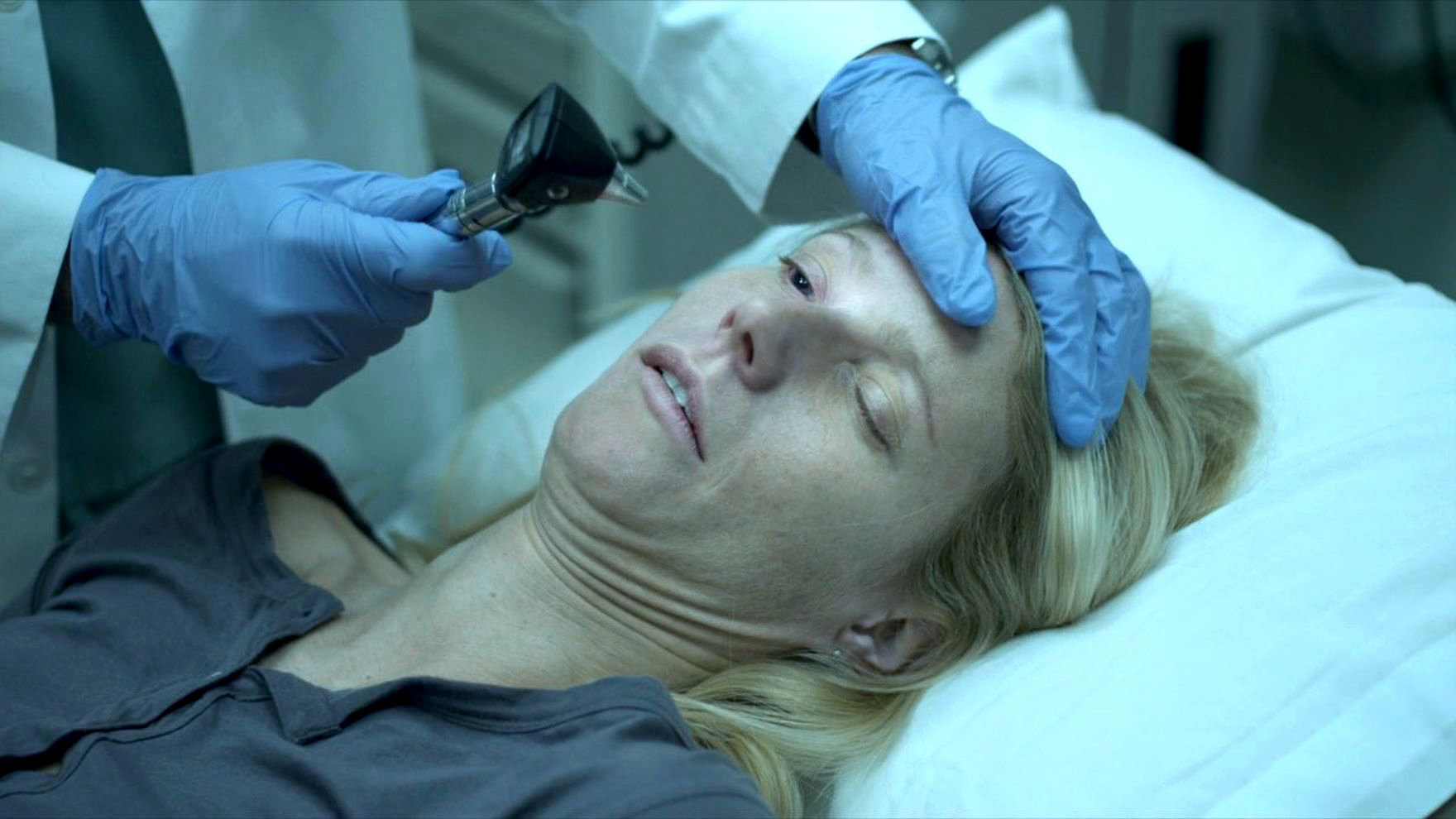
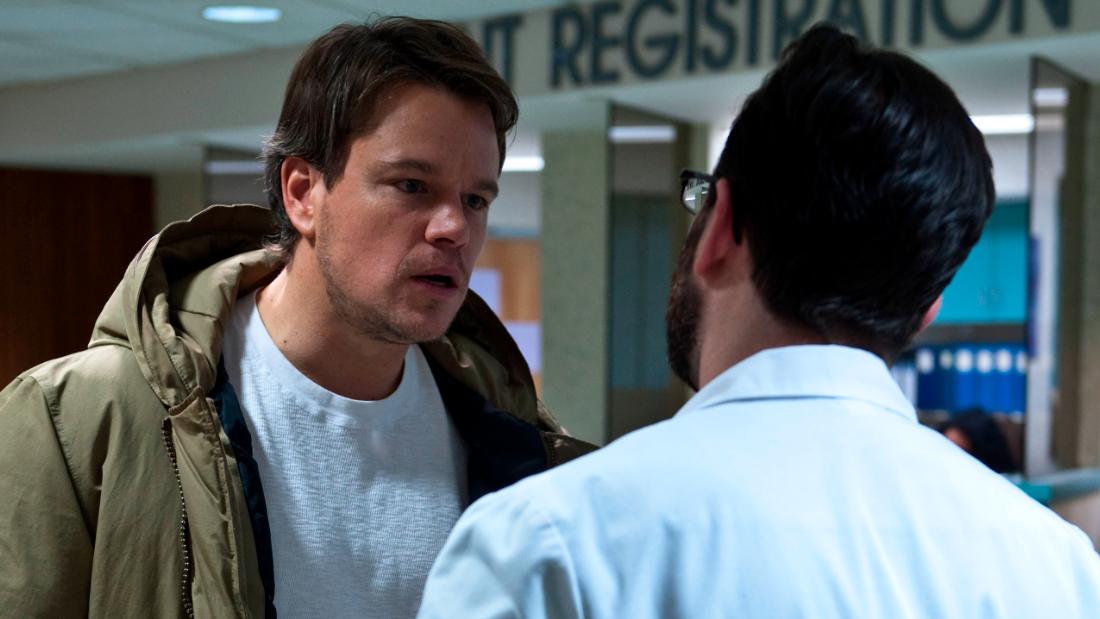
“Contagion” opens by introducing us to Beth Emhoff (Gwyneth Paltrow), an executive returning home to her husband and son after a trip to Hong Kong. Upon returning home, she has a seizure and dies in the hospital, which leaves her husband, Mitch (Matt Damon), with plenty of questions but no answers.  It becomes even more agonizing for Mitch when his stepson passes away shortly after his wife.  He is wondering what she came down with, how it was transmitted, and if he is at-risk for it along with his daughter. His whole world has been turned upside down, and he’s constantly on edge, angry, and making sure he’s doing his due diligence to stay safe.

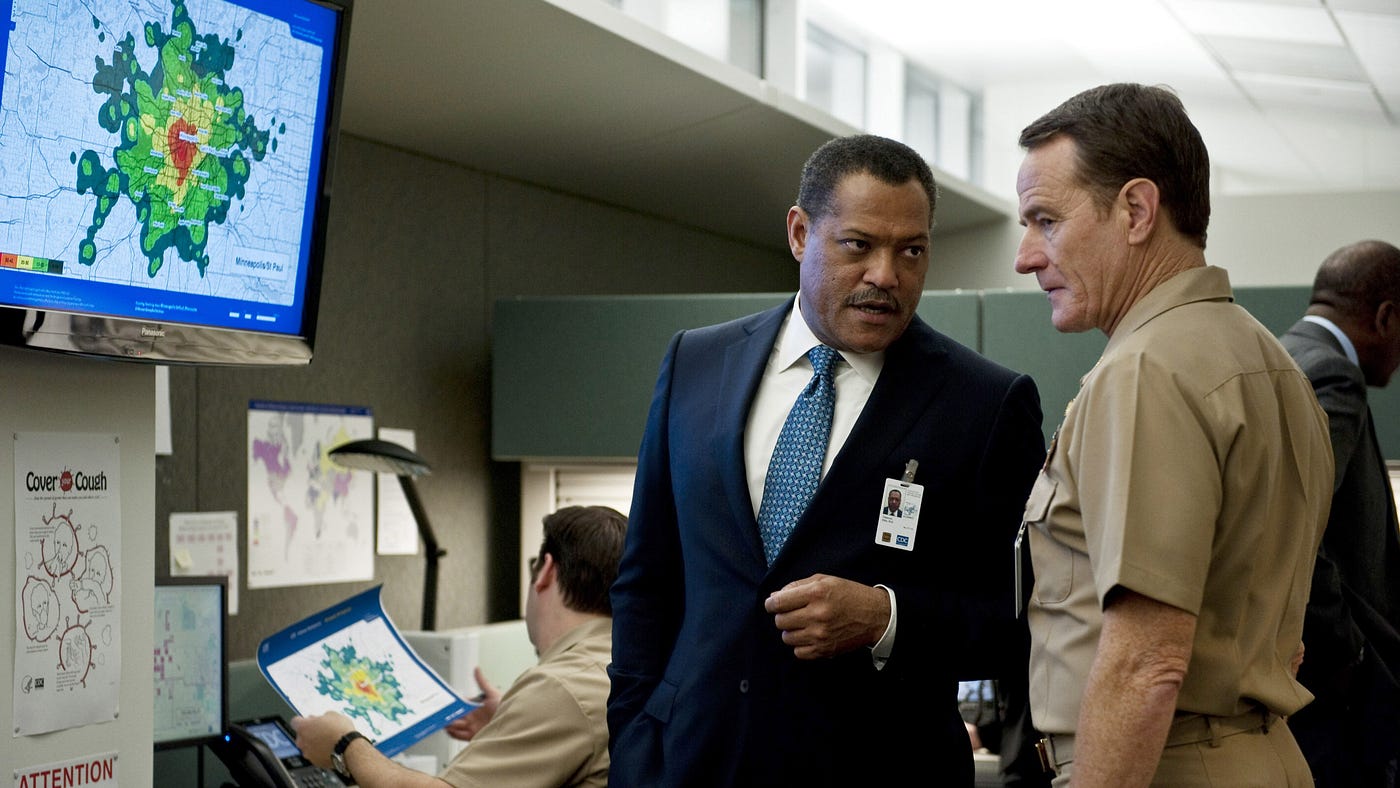
The story then shows us Dr. Ellis Cheever (Laurence Fishburne), who works for the CDC, and he’s looking to trace the root of this problem.  Is it something people should be concerned about or is it an isolated incident? He brings in Dr. Erin Mears (Kate Winslet) from the Epidemic Intelligence Service, to talk to anyone and everyone who was in contact with Beth.  She is going to look anywhere and everywhere for a connection to what might have happened to Beth. She also wants to find out if anyone else is in danger of catching what Beth had as well.

It doesn’t take long for panic and hysteria to take over when the death toll is increasing every day.  It’s becoming a dog-eat-dog world out there, and people are willing to do whatever it takes to not only survive, but to protect their loved ones as well.  They are not afraid to take extreme measures if they need to, as they don’t want to be another victim of this deadly virus which, in the film, is called the MEV-1. Dr. Ally Hextall (Jennifer Ehle), meanwhile, is working around the clock to come up with a vaccine to treat this disease.

There is also a conspiracy theorist named Alan Krumwiede with a very popular blog, and he’s played by Jude Law. Alan is brainwashing his website visitors to try Forsythia, which he believes will cure this disease.  This creates two problems: one, people begin to look at Forsythia as a miracle cure and when the pharmacies run out of it, people start to loot and destroy them. The second problem is that people are now hesitant to take the vaccine, which will actually save lives and help stop the spread of MEV-1.  He’s looking out for his own personal gain and profit, but during times of panic, people will believe anything they read on the Internet.

There is also a storyline involving Dr. Leonora Orantes, a WHO epidemiologist, played by Marion Cotillard, who is looking through countless footage of Beth in order to determine the sequence of events in which she contracted the illness and whom she might have inflicted as well. Leonora is in Hong Kong doing this, and because they are worried about how their village will survive, they kidnap her in order to make sure they have access to the vaccine when it’s released.  They don’t want to hurt Leonora, and she is not scared for her life, as she just wants to help them. As stated previously, desperate times call for desperate measures. When it’s a matter of life and death, you never know what you are capable of doing as a human being.

The only issue I had with “Contagion” and why I couldn’t give it the full four stars is the fact that some stories are more interesting than others and, at times, the plot can be a little bloated.  There are some tremendous performances in the film, especially from Matt Damon, Laurence Fishburne, Kate Winslet and Marion Cotillard. Director Steven Soderbergh gives his actors plenty of space and freedom to show off their considerable acting chops. When the film is firing on all cylinders, it’s truly engrossing and engaging. It’s pretty easy to follow as well, even when they are using scientific terms which might not be as common or familiar to someone like myself.

“Contagion” an ambitious film, and for 80% of its running time, it’s a great movie.  The other 20% is a bit of a slog and can be a little over-stuffed plot-wise. Overall, though, it is a really, really good movie which features some of the biggest names in Hollywood on screen together.  It’s a dark, moody, and tense film that is relentless when the pressure is turned up. I will say this: every single time I’ve watched “Contagion,” I’ve enjoyed it even more and gained something new from it and an even greater appreciation for what it achieved on camera. This is a powerful piece of cinema, and it is a film that will always leave an impact because of what happened to the world in 2020.

I’ll end my review by saying this: I’m not an expert on Covid-19 and the pandemic, but this film foreshadowed a lot of what happened in 2020; from social distancing, handwashing, conspiracy theorists, vaccines and the ability to access to them, and what human beings are capable of doing when they are pushed to the brink of life or death.  For a lot of people, they probably want to put 2020 in the rearview mirror and not watch a movie which focuses on things that were difficult or challenging for the world.  I, on the other hand, find it therapeutic and cathartic to watch a movie like this, as it’s a way for me to deal with what happened in my own way. 

* * * ½ out of * * * *

4K Info: “Contagion” is released on a single disc 4K from Warner Brothers Home Entertainment. It has a running-time of 106 minutes and is rated PG-13 for disturbing content and some language.  It also comes with a digital copy of the film.

Video Info: The minute I popped this movie into my 4K player, I was instantly transfixed by the picture quality.  It was a huge upgrade from the Blu-ray which I previously owned. The film has a dark and brooding look to it with green and blue hues. According to the press release, this was sourced from the original camera negative and the remastering was overseen by Soderbergh. This is exactly what you are looking for when you buy a 4K. You want it to come from the original camera negative and have it looked over by the director.  This is a beautiful 4K and the HDR is incredibly crisp and clear.

Audio Info:  There is also a Dolby Atmos soundtrack here, so this is a win-win for film collectors out there.  The music was composed by Cliff Martinez, who has worked on some of my favorite film scores, such as “Spring Breakers,” “Pump Up the Volume” and “Drive.”  He’s collaborated quite a bit in his career with Soderbergh. This movie does not work as effectively without this mesmerizing score.

 Special Features:

The Reality of Contagion – Featurette

The Contagion Detectives – Featurette

Contagion – How a Virus Changes the World –Featurette

Should You Buy It?

I was so happy to be able to review “Contagion” on 4K and check it out. I recently reviewed “Wonka,” which I thought was an incredible 4K, but this one is even better, considering the improvements they made on the transfer. It still has the same gritty and dirty look to it while also providing an improved picture quality at the same time. The film itself is very close to being a masterpiece. I was very close to giving it four stars, but I had to deduct half a star because of a few issues, which I mentioned in my review. Still, with that being said, “Contagion” comes highly recommended. As physical media shifts to mostly online retailers, it is our duty to support 4K releases of films like “Contagion.”  Why? Because it encourages Warner Brothers and other studios to go into their archives and upgrade other great movies as well.  At the end of the day, they will do their part if we show them there is a legitimate market for physical discs.

**Disclaimer** I received a copy of this film from Warner Brothers to review for free.  The opinions and statements in the review are mine and mine alone.
An Ultimate Rabbit Video Review: ‘Thanksgiving’

So here I am with another video review of a recent movie release. This time it is for Eli Roth’sThanksgiving,” a movie which was promised to us ever since Roth made his fake “Thanksgiving” trailer for 2007’s “Grindhouse.” But while that trailer came across as a send-up and satire of the many slasher films we grew up with over the years, this one is more of a reboot of what came before. It also comes with quite the cast of actors which includes Patrick Dempsey (recently crowned People Magazine’s Sexiest Man Alive), Rick Hoffman, Gina Gershon, Nell Verlaque, Addison Rae and Milo Manheim to name a few. Furthermore, it proves to be far more well-produced and directed than the average slasher flick to where it becomes clear this one has a much higher budget what filmmakers would usually expect on a shoot like this.

What results here is a horror movie which is not about to redefine the genre in any way, shape or form, but instead one which acts as a love letter to those Roth and company grew up on like “Halloween,” “Silent Night Deadly Night,” “New Year’s Evil” and “April Fool’s Day” to name a few. I found “Thanksgiving” to be a complete blast as it featured a number of truly suspenseful and scary moments, and I found myself laughing harder here than at any other movie released in 2023. While Eli Roth’s output as a director has been mixed at best, this film reminds you he is a better filmmaker than we tend to give him credit for. From start to finish, I could say everyone in front of and behind the camera put a lot of love into this project, and they must have had the time of their lives making it.

Please check out my video review below, and you can also check out both the real trailer for “Thanksgiving” and the fake one Roth created for “Grindhouse.”

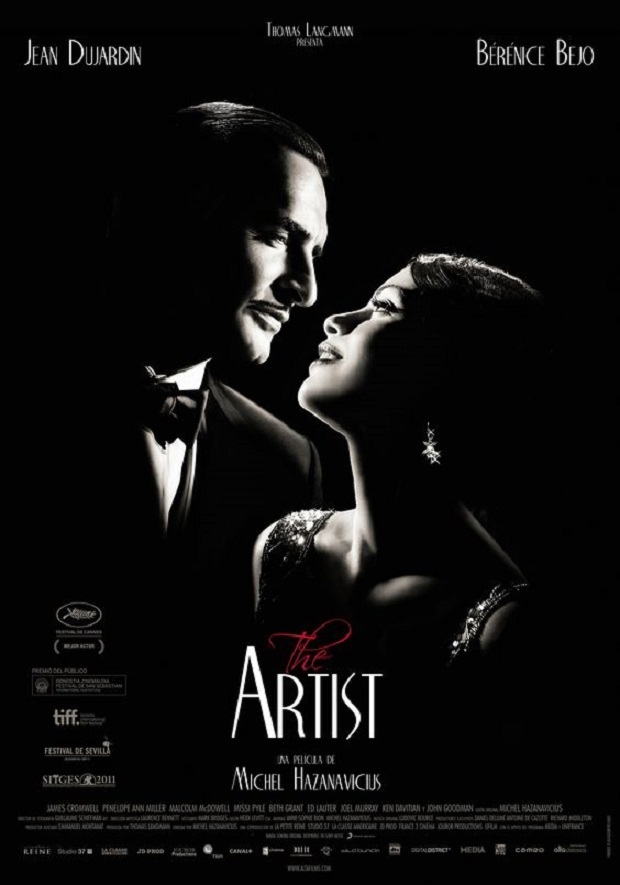
‘The Artist’ – Best Picture Winner at the 84th Academy Awards

Believe it or not, “The Artist” is only the second silent film in cinematic history to win Best Picture at the Academy Awards. The first was “Wings” which itself was the first film to win this particular award. I figured there were several other silent films which took home this award, but I guess the Oscars came about as the movie business was quickly transitioning to what was once called “talkies” when these awards began.

Looking back at “The Artist,” I have to admit it was nice to see a filmmaker reach back to a time when the movie industry was in its infancy, just like what Martin Scorsese did with “Hugo.” But while “The Artist” does not quite reach the same level of greatness that “Hugo” did, it still proves to be a compelling motion picture with great performances, a powerful story, and it serves as a reminder of how great black and white can be for certain motion pictures.

The story told here is one which has been told a million times before. George Valentin (Jean Dujardin) is a silent film star who sees his great career suddenly crash to the ground when sound is introduced into motion pictures. George initially resists this change, feeling that it is a fad which will pass by quickly before anyone knows it. Of course, we all know this is not going to be the case as change is in the air and there is no stopping it.

As George finds his career ruined by this advancement in film and technology, another actress he once befriended named Peppy Miller (Bérénice Bejo) embraces this technological change and sees her star rise to the heavens as a result. She has gotten great and truly genuine advice from George in how to make her mark as an actress, and she forever holds a special place in her heart for him. So, it comes to deeply hurt her seeing his career fall apart after what he has done for her, and then we see things for him get even more difficult with the 1929 stock-market crash. Will Peppy save George and help him make a comeback?

That the plot of “The Artist” is such an old one ended up taking away from the overall experience for me a bit as I knew where it was heading and that everything would eventually be alright. All I could hope for was that the director and actors would keep things interesting so that I was not thinking about the outcome too much. This is where this movie succeeds because the performances are so rich and the direction is nothing short of excellent to where I was caught up in the moment to where I started watching and stopped thinking so much.

Jean Dujardin looks like he walked right out of a 1920’s silent film here, and he was clearly born to play George Valentin. In doing a movie within a movie, he manages to balance out both Valentin the star and Valentin the man. Much of the acting in silent films involved a lot of mugging, and its great fun to watch Dujardin getting ready to shoot a scene as he makes clear how much he is playing for the camera. But when Valentin is not making a movie, Dujardin’s performance becomes all the more remarkable as he expresses emotions he is not in a position to verbalize onscreen or off of it.

This is the thing about screen acting; the most powerful moments in a movie can come from just one look from an actor. Being able to make clear what a character is thinking without saying it out loud is the biggest challenge, and the actors in “The Artist” have to work even harder because words will not save them, especially even when certain dialogue is put on the screen for all to see. That they do succeed in drawing us in emotionally with little in the way of sound or dialogue is a true testament to their talents.

Matching Dujardin scene for scene is Bejo who plays rising film star Peppy Miller. She is a joy to behold and an infinitely appealing presence here, and that smile of hers lit up my heart in a way few things can. Seeing Peppy rise to the level of a movie star is endless fun, but Bejo also keeps her a likable character even when success threatens to spoil her rotten. This made me like Peppy all the more as a result.

There is a slew of other great performances to be found in “The Artist” which does not have a weak one to be found in its entire cast. John Goodman looks like he’s having a marvelous time channeling his “Matinee” character for the role of studio boss Al Zimmer. James Cromwell is very touching as Valentin’s loyal butler Clifton as he becomes the conscience this fallen movie star needs to hear out. It is also great to see Penelope Ann Miller here as Valentin’s wife, Doris, a character who does not seem to be the least bit satisfied with this marriage.

But the one who upstages everyone here is Uggie who portrays George’s ever so faithful Jack Russell terrier named Jack. Uggie reminded me of Mike the Dog who stole many scenes in “Down and Out in Beverly Hills” from his human co-stars and, like Mike, he becomes as big a character as everyone else here. That he is able to convey certain emotions to where he gets a police officer to save his owner from certain death is amazing. His performance topped off what had been a great year for dogs at the movies along with another named “Beginners.” Isn’t it about time the Academy Awards gave animals special Oscars for their work onscreen?

Director Michel Hazanavicius stays very true to the way silent films were shot back in the day, and his extensive research of them certainly shows from start to finish. He makes “The Artist” look like it really came from the 1920’s as he transports you back in time to this specific cinematic period. He is also served well by a beautiful film score by Ludovic Bource which heightens the already strong emotions to great effect, and by cinematographer Guillaume Schiffman who gives “The Artist” a striking look which does not betray any of today’s technological advances which could have been used here.

Having said all this, “The Artist” would not have been my choice for Best Picture at the 84th Academy Awards (my pick was “The Tree of Life”). Plus, with such a familiar story, it feels like we are getting hit here by a case of deja vu. Regardless, it is still a fantastic piece of filmmaking which you owe it to yourself to watch if you have not already. Along with “Hugo,” many may look at 2011 as the year movies reached back in time to remind us of what a magical experience they were when they first came to exist.

* * * ½ out of * * * *

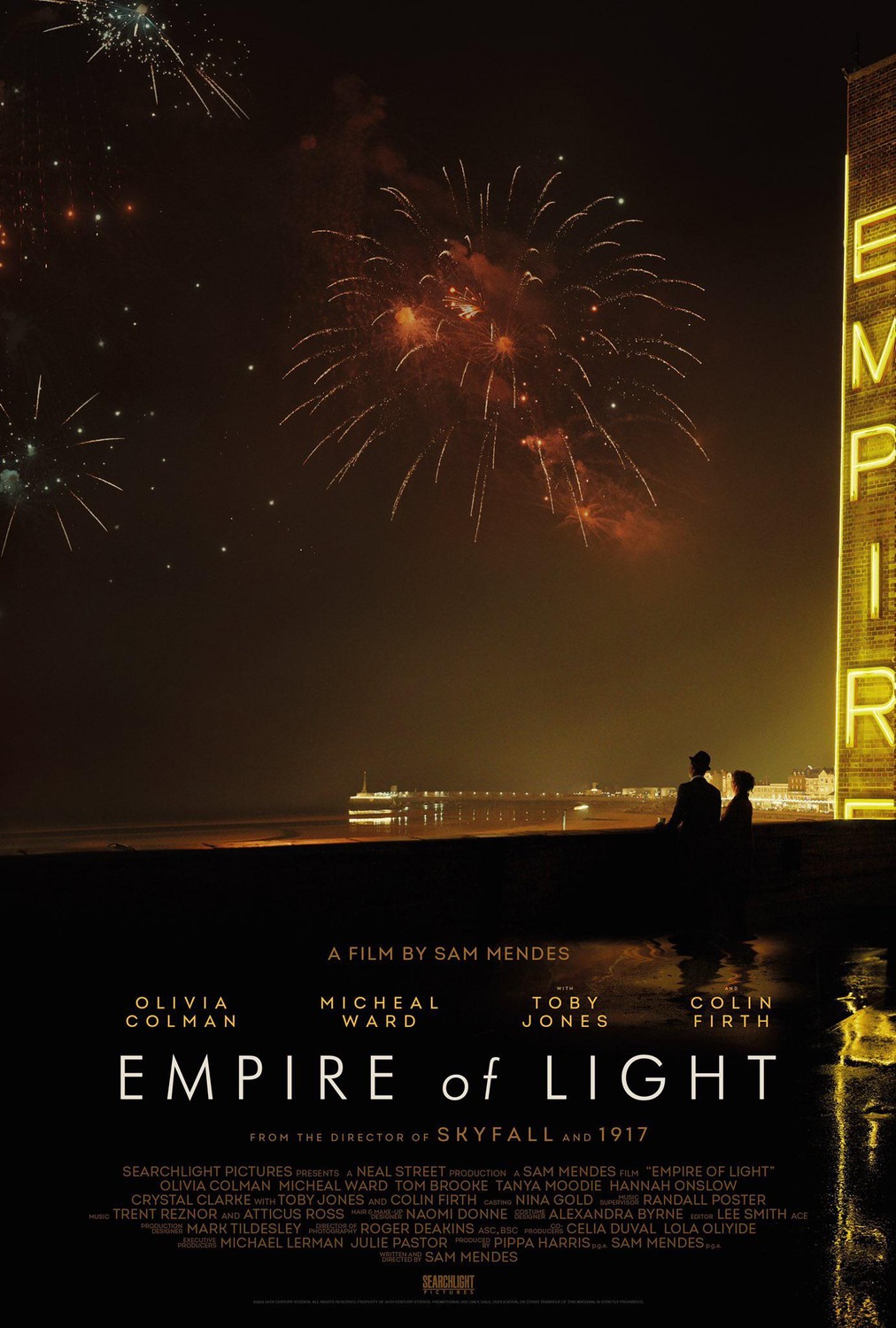
‘Empire of Light’ – Sam Mendes’ Imperfect but Enthralling Love Letter to Cinema

One of the things which really excited me about “Empire of Light” is how it reunited director Sam Mendes with the God of all living cinematographers, Roger Deakins. Together, these two geniuses have given us visual wonders in “Revolutionary Road,” “Skyfall” and “1917.” And with “1917,” Deakins finally won his second Academy Award for Best Cinematography, so he and Mendes are a match made in cinematic heaven as far as I am concerned. As this movie itself, I had no idea what to expect, and that is just as well.

“Empire of Light” transports us back to the early 1980’s where we are taken to an English seaside town where a cinema is showing “The Blues Brothers” and “All That Jazz,” the latter which I still need to watch. We meet Hilary Small (Olivia Colman), one of the cinema’s managers who dutifully opens it up at the start of a new day and helps get everything ready for audience members eager to take in the latest feature presentation. But while she at first seems like a pleasant enough human being, we soon learn during a doctor’s appointment that she is taking lithium. It is not made entirely clear why she has been prescribed this form of medication, but it implies she has been through a wealth of emotional turmoil to where she needs some reigning in. But while the medication may be helping her, she admits to her doctor that she generally feels lifeless on a daily basis. And there’s also the cinema’s chief manager, Mr. Ellis (Colin Firth), who often invites her into his office to discuss professional matters which prove to be anything but professional.

And then we are introduced to the cinema’s newest employee, Stephen (Michael Ward), a young black man who has been applying to college with little success. Quickly, a relationship forms between him and Hilary as both feel a deep need for compassion which reality constantly denies them. But the times they are forced to live through constantly threatens to tear them apart in tragic ways, and their secrets may reveal more to the other than they can possibly ever hope to deal with.

The first thing I have to mention about “Empire of Light” is the performance of Olivia Colman. As always, she remains an acting dynamo as she takes Hilary from ecstatic highs to devastating lows as her character is forced to deal with a roller coaster of emotions she cannot easily control in the slightest. Every single moment she has onscreen is mesmerizing as she exhibits emotions not easily faked, and it makes Hilary’s journey from start to finish all the more emotionally extreme.

Then there is Michael Ward who portrays Stephen, the one who helps lift Hilary out of her mundane existence. Ward is wonderful in creating a character whose passion for things helps to make him all the more charismatic as he navigates through a time of cruel racism and missed opportunities which can easily bring anyone else down. He also makes the seemingly unlikely relationship between Stephen and Hilary all the more palpable as some may be quick to dismiss any possibility of something like this actually happening. What life has taught me is that anything is possible, so why shouldn’t this relationship be a distinct possibility?

And yes, there is Deakins’ cinematography which is as captivating as ever. While it may not be as orgasmic as the visuals he gave us in “Blade Runner 2049,” he succeeds in painting a lovely atmosphere of an English coastal town, the kind which ceased to exist decades ago, but whose history is still relevant in today’s world of Brexit and humanity going backwards. His work is also complimented beautifully by the wonderfully ambient film score by Trent Reznor and Atticus Ross who stand in for Mendes’ regular musical collaborator, Thomas Newman.

When it comes to the screenplay by Mendes, however, it does try to cover more ground than it possibly can to where the focus gets lost from time to time. Part of me wanted to see more of the racism of the time explored more deeply as the script only seemed to touch the surface of it. The same goes with Hilary’s mental illness as it felt like I only learned so much about what she has been through. Perhaps this was by Mendes’ design as he wanted to keep us at a certain distance, but had we known more, perhaps this part of the movie would have been more profound as a result.

As for the love “Empire of Light” has for movies in general, it does make for one great scene involving Toby Jones who plays the cinema’s dedicated projectionist. Norman. Hearing Jones describe the intricacies of feeding film through the projectors makes for some of this movie’s most memorable and magical moments as it reminded me of the time I worked at a cinema in my youth. It also leads to a scene later on which reminded me of the climatic one in “Cinema Paradiso,” one of the greatest movies ever made about movies.

I do have to say that this film does threaten to have as many endings as “The Lord of the Rings: Return of the King.” Mendes must have been searching endlessly for the right way to conclude this particular film of his. Did he succeed? Well, I’ll leave it to you to find out. All I can say is that when you think the movie is over, it isn’t.

Despite its flaws which keep it from being the perfect Mendes motion picture which “American Beauty” and “Skyfall” are, I found “Empire of Light” to be very enthralling. It captures an interesting period of history, and its love of movies and film is deeply felt. And when all is said and done, it proves that Olivia Coleman is worth the price of admission no matter what she is appearing. Heck, my dad would pay her to read the phone to him just as he would with Tilda Swinton. I’m serious!

* * * ½ out of * * * *

William Friedkin Discusses His Career at American Cinematheque

On January 22 & 23, 2011 at the Aero Theatre in Santa Monica, American Cinematheque presented a tribute entitled “Strangle-Hold: The Gripping Films of William Friedkin.” Featured were four of the director’s most noted movies: “The French Connection,” “To Live and Die In LA,” “Sorcerer,” and “The Exorcist.” Mr. Friedkin was there both nights to talk about his work and filmmaking, and he was greeted by sold out audiences who gave him with a standing ovation.

It’s been a long road for Friedkin. Despite the many ups and downs of his long career, he still directs movies even though his work these days is constantly, and unfairly, stuck in the shadow of his greatest work. Back in the 1970’s, he gave us two of the greatest movies ever with “The French Connection” which has one of the greatest cinematic car chases ever, and “The Exorcist” which is as powerfully unnerving today as it was when it first came out. Since then, however, he was seen as stumbling both critically and commercially with movies like “Deal of The Century” and “The Guardian” to name a few.

But Friedkin has now rebounded with “Bug” starring Ashley Judd, and the re-release of “The Exorcist” which was a big hit despite it being readily available on video and DVD. Even his flops like “Sorcerer” and “Cruising” have been critically re-evaluated and gained strong cult followings in recent years. Today, he is directing Matthew McConaughey in “Killer Joe.”

Friedkin started off by remarking how the Aero Theatre’s marquee said “William Friedkin Live” and how glad he was to see that at his age. From there, he told a story about his friendship with the great writer/director Billy Wilder and how they had lunch together often at Johnny Rockets. At one point, Wilder said to him:

“You and I have something in common; we both want to make commercial films for a large audience. So don’t look for your films to get shown at the Cinematheque!”

It may have taken long enough, but American Cinematheque did come through for him!

When working with actors, Friedkin said he does not put his personal style on them, and that he always creates an atmosphere for actors to work in which allows their creativity to flow. If the actors come up with something better, he is more than willing to let them roll with it to see where it would take the movie. This aided tremendously in his job of deeply immersing the audience in the story as much as possible.

Some in the audience asked him if he had any advice to pass on to filmmakers. Friedkin was quick to the point:

“Don’t go to film school!”

Friedkin claimed he never had a single lesson in filmmaking, and he said everything he learned came from “the masters who broke the rules” like Orson Welles and Alfred Hitchcock. In fact, he encouraged everyone to get out of the classroom and watch all of Hitchcock’s movies. While they may vary in quality, he said the master of suspense’s genius is present in every shot he took.

Friedkin also encouraged aspiring directors to not even bother with the preview process or audience testing. None of his movies have ever been altered by these processes, and he really doesn’t like them anyway. Had “The Exorcist” been previewed, he said, it would not have ever have been released!

In selecting movies to make, Friedkin says the movie comes to him more than he goes to it. But the one theme which runs through each and every motion picture he has helmed is ambiguity. The works he admires the most are the ones which ask questions but don’t provide answers. As he sees it, the quest is far more interesting than the end of the journey as there are no ultimate answers, only great questions.

Friedkin also loves playing with the thin line between good and evil. Case in point is “The French Connection” where Popeye Doyle, played by Gene Hackman, is a racist and a womanizer while the drug dealer is a gentleman with manners and who loves his wife dearly. There’s only so much that separates the good guys from the bad ones, and movies like this serve as a very strong reminder of that.

Though his glory days might be behind him, William Friedkin remains a director with an unwavering vision on each film he does. This proves to be the case even in his weakest movies as even they show how fully in control of the craft he is. I look forward to seeing what he comes up with next.

How Taxi Driver Forever Changed The Way I View Movies

While “Goodfellas” introduced me to the filmmaking brilliance of Martin Scorsese and became my all-time favorite movie, it was “Taxi Driver” which really shaped the way I view movies today. Before seeing it, I always tried to avoid those movies which would make me sad or were too dark. This was a result of my parents having to carry me out of “Star Trek II” and “E.T.,” both of which I cried so hard over to where others wondered if I was okay. I promised myself I would never put my family through such embarrassing situations ever again, and this was especially the case with my brother who was constantly annoyed at my emotional outbursts.

Unlike “Goodfellas” which was immensely entertaining and had great comedic moments, “Taxi Driver” is dark, dark, dark. There is nothing the least bit glamorous to see here as we watch the main character of Travis Bickle (played by Robert De Niro) get continually sucked into a corrupted environment he deeply despises. I kept hoping for him to achieve sort of redemption and maybe, just maybe, have another chance with Cybil Shepherd’s character of Betsy whom he had a memorable first date with. But as we reach the movie’s bloody conclusion, I realized there was nowhere for Travis to go but down. While the reaction to his actions may have been surprising, we all know the truth about Travis and realize something will set him off again before we know it.

Once the end credits went up, my dad asked me what I thought about “Taxi Driver.” My initial reaction was it was not exactly enjoyable. My dad’s response to this has always stayed with me, “Not all movies are meant to be enjoyed. Some are meant to be experienced.”

Looking back, I see what he meant. Look, there are a lot of reasons to not make a movie about someone like Travis Bickle; he’s seriously nuts, not a good date if you want to go to the movies, and watching him lose his mind is painful. But the thing about “Taxi Driver” is people like Travis exist, and turning a blind eye to their existence does us no good. We need to understand why people do the things they do. It’s like what Roger Ebert said in his review of the film:

“Scorsese wanted to look away from Travis’s rejection; we almost want to look away from his life. But he’s there, all right, and he’s suffering.”

With “Taxi Driver,” I came to see how you need these kinds of movies just as much as you need the average escapist entertainment. Some movies need to shine a light on the darker parts of human nature to remind us we need to acknowledge we have a dark side and realize we have more in common with Travis Bickle than we would ever care to think or admit.

Since watching “Taxi Driver,” I have become completely open to movies which disturb me or take me on a journey I would not necessarily want to endure in real life. I can’t stand to watch films in a passive manner. I want to be moved by what I see, be disturbed and shaken, and even weep. Movies are too powerful an art form to be made just for the sake of entertainment. There are so many things about the human existence which deserve to be captured on celluloid, and I believe audiences crave these kind of cinematic experiences as they do the next Marvel movie.

“Taxi Driver” is my second favorite movie of all time, right behind “Goodfellas.” It is a movie I admire above so many others, and I still watch it from time to time. There are many I get sick of watching, but this is one I will never tire of sitting through.