Blu-ray Review: Anchor Bay’s ‘Halloween’ 35th Anniversary Edition

halloween-35th-anniversary-blu-ray-cover

Just when you thought Anchor Bay Entertainment had released the last edition of John Carpenter’s “Halloween” on DVD or Blu-ray, another one emerges to taunt the movie’s die-hard fans with the possibility of purchasing it. Now we have the “Halloween: 35th Anniversary Edition” which was released on Blu-ray and contains an all-new high definition transfer supervised and approved by the film’s cinematographer, Dean Cundey. With a couple of new special features combined with a few from previous editions, is it worth paying a few more bucks to own another version of this horror classic? Well, let’s find out…

Anchor Bay has released just about as many special editions of “Halloween” as they have of “Evil Dead” and “Army of Darkness,” so it’s hard to see what the point was of putting out yet another. But after watching this one, I can certainly see why. The colors on this high definition transfer look very balanced, and the movie looks far more vividly frightening as a result. It is a huge improvement over the 25th anniversary DVD Anchor Bay released as part of their Divimax Series as it proved to be hard on the eyes due to certain colors being far brighter than they needed to be. Seriously, this particular Blu-ray edition makes me want to watch “Halloween” over and over again as it made me feel like I had never watched it before, and I have seen this horror classic over a hundred times.

Among the brand new special features, the one I was surprised to see most was a brand-new commentary with Carpenter and Jamie Lee Curtis. That Carpenter would even consent to doing another commentary on “Halloween,” which he has long since answered every conceivable question about, is astonishing, but he sounds very enthusiastic here as he talks with Curtis about what went down during this movie’s making. It’s also great to hear Curtis’ thoughts on “Halloween” as we haven’t heard her talk too much about it in a long time. Carpenter’s commentaries are always more fun when he has someone to converse with, and he and Curtis share a lot of great memories here.

The other new special feature is the documentary “The Night She Came Home” which follows Curtis as she attends her first ever horror convention in Indianapolis, Indiana. Curtis talks about how she has stayed away from her past in horror movies because she was working on other things or being a mom, but now she feels the need to honor the fans who love “Halloween” so much because she now realizes just how strong the horror fan base is. It’s fun watching her sign autographs for fans who waited hours in line, and her generosity to them is genuinely sweet. The convention also proves to be a reunion of sorts as Curtis meets up with Charles Cyphers who played Sheriff Leigh Brackett, Brian Andrews who played the young Tommy Doyle, Production Designer Tommy Lee Wallace who would later go on to direct “Halloween III: Season of the Witch,” and filmmaker Nick Castle who was the first person to play Michael Myers.

As for the other special features, they are recycled from other previous editions. There’s the featurette “On Location: 25 Years Later” which looks at where “Halloween” was shot. Also included are the movie’s trailer, some TV and radio spots, and footage specifically shot for the television version. You’d figure Anchor Bay would make this another ultimate edition that would be jam packed with extras, but since this the umpteenth edition of this horror classic, I guess they didn’t want to make the previous editions seem altogether disposable. So for those who still own those editions, you should hang onto them as they contain a lot of extras and commentaries not to be found here.

Is it worth it to buy the “Halloween 35th Anniversary Edition” from Anchor Bay Entertainment? Well, it may depend on how much you love this movie. The remastered high definition transfer makes it look like it was filmed not too long ago, and watching it can quickly remind you of how frightening this horror classic is. You also get a nice booklet with interesting behind the scenes photos of the production and an essay by Stef Hutchinson which details why this movie still has a powerful impact on people years after its release.

The fact is none of the sequels or shameless imitators of John Carpenter’s “Halloween” can ever take away from the suspense and uneasiness it generated upon its release. I find myself revisiting this classic quite often, and this 35th anniversary edition makes me want to revisit it more and more. If you are happy with the “Halloween” special edition you currently own, then you probably won’t need this one, but you should at least check out how it looks here. For those who are still committed to buying every single incarnation of this movie Anchor Bay releases, then this one is definitely worth your money.
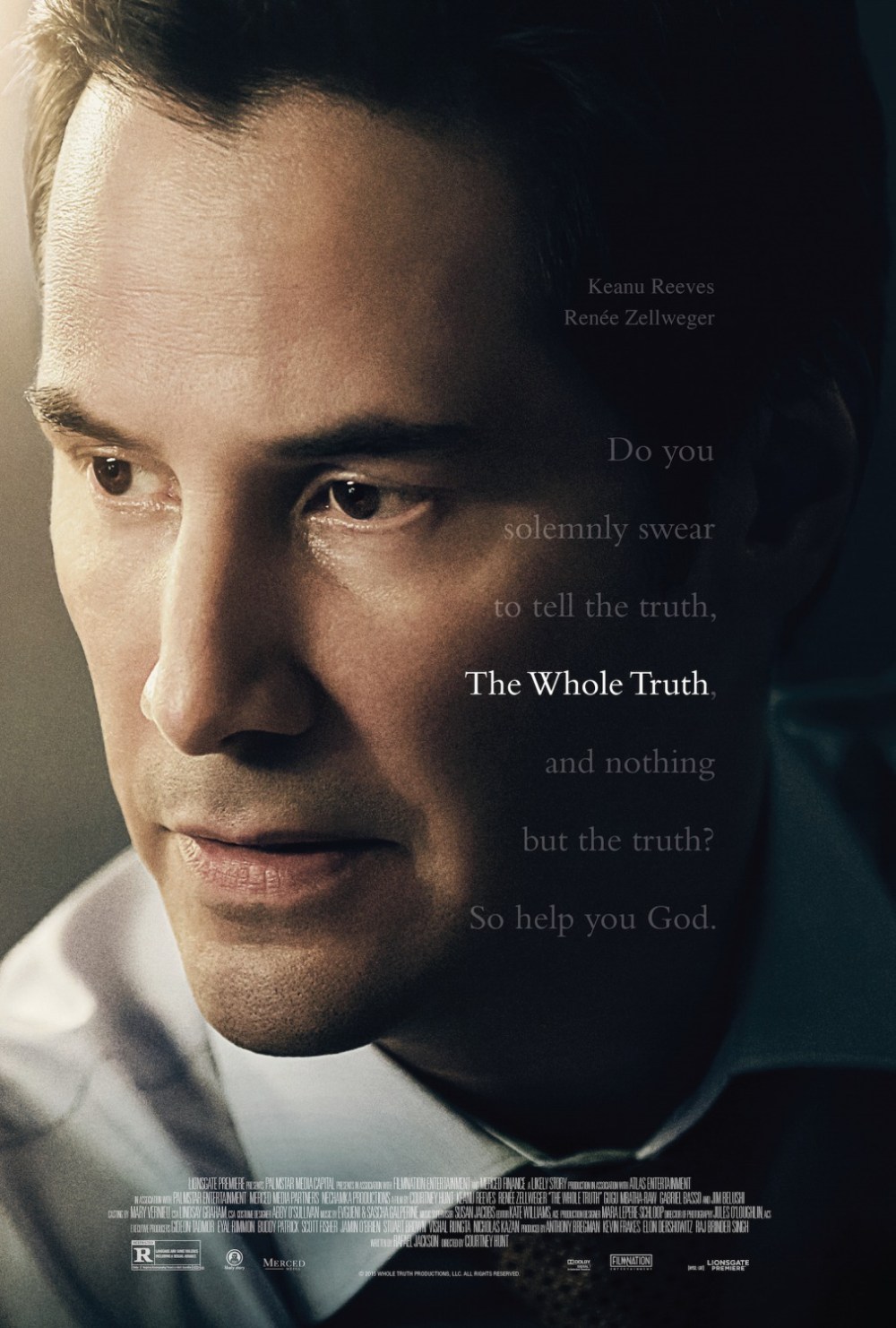
The Whole Truth

the-whole-truth-poster

Watching “The Whole Truth,” I wondered if I had seen way too many courtroom dramas over the years to have the energy to appreciate this one. Then again, this movie does start off with a narration which had me laughing unintentionally, and its plot of a young man on trial for patricide felt like I was experiencing a severe case of déjà vu. How many episodes of “Law & Order” dealt with this kind of crime? Furthermore, how many of them proved to be more enthralling than this motion picture? Considering the talent involved in front of and behind the screen, “The Whole Truth” is a major disappointment.

Perhaps one of the main problems comes from an opening image which has a snake slithering on the ground as Keanu Reeves’ lawyer character of Richard Ramsay rides his motorcycle up the road. As soon as Richard goes by, the snake slithers right after him. From there, we have a good idea of the kind of people this movie will inhabit, and realizing this makes one realize there will be no real surprises in store for us.

Richard is a defense attorney, and he is defending young Mike Lassiter (Gabriel Basso) who is accused of murdering his father, Boone Lassiter (Jim Belushi). Things are not going well for these two as Mike refuses to speak about anything regarding his father’s death, and Richard tries to make him see they are on their way to a guilty verdict. All this time, Mike’s mother, Loretta (Rene Zellweger) sits in the courtroom looking on impassively. Did Mike really kill his father? Oh, come on, you already know the answer to this.

For those familiar with the novels of John Grisham and Scott Turow or the movies based on their works, the path “The Whole Truth” takes is one which has been traveled endlessly. We know something is up from the start, and it just makes us all the more impatient for the big reveal we know is coming. And while I’m no lawyer, I can see so many plot holes in this case which defy all reasonable logic. Mike himself makes a revelation on the stand which turns everything upside down, but the prosecuting attorney doesn’t even order a medical evaluation to verify it.

As for Reeves’ character, he seems much too close to the Lassiter family to represent them without bias. Then again, this probably doesn’t matter in the real world. It certainly didn’t matter when Johnnie Cochran represented O.J. Simpson in his murder trial, so why should it here? Still, with Richard so close to the family, it’s no surprise he is involved in this fiendish crime to where I just wanted him to admit the truth already.

The most dispiriting thing about “The Whole Truth” is it was directed by Courtney Hunt, the same person who gave us the terrific crime drama “Frozen River” back in 2008. That one starred Melissa Leo and the late Misty Upham as a pair of working-class women who smuggled illegal immigrants across the border into the United States. Hunt directed her actors to incredible performances, and she gave us a movie which felt alive and was never weighed down by clichés or illogical moments.

“The Whole Truth,” however, is the exact opposite as it is full of clichés and proves to be an insult to the intelligence even before the movie reaches its halfway point. The courtroom scenes are lifelessly staged, and the actors lack conviction in their performances. I expected Howard to bring something fresh to this material, and she even had a screenplay by Rafael Jackson to work from. But none of the energy and originality she brought to “Frozen River” can be found here. It’s been eight years since that film, and I can’t help but wonder why she chose this project as her follow up.

When it comes to Reeves as an actor, he either gives you the best or the worst he has to offer. His performance in “The Whole Truth” has him delivering courtroom speeches in an inauthentic manner which is depressing to watch, and his delivery of the voiceover narration is at times laughable. While he fares much better than he did in “Knock, Knock,” watching Reeves here makes me yearn for the “John Wick” sequel to come out sooner rather than later. Just from looking at the trailer for it, he looks far more alive in that sequel than he does here.

Then there’s Zellweger who makes Loretta far too enigmatic a character here. Furthermore, she looks very sick and emaciated here; very unhealthy. This all but takes away from the great performance she could have given but doesn’t. Loretta proves to be nothing more than another helpless wife and mother, and more could have been done to make this character complex and interesting. Instead, Zellweger is wasted in a role which gives her very little to work with. It’s great to see her back onscreen, but she deserves much better than this.

The only actor who gets off easy is Belushi as he succeeds in leaving his “According to Jim” persona in the dust by playing such an unlikable prick. His character of Boone is a jerk to put it mildly, but Belushi manages to make him more than that even with his limited screen time. Boone is like Aaron Paul’s character of Peter from “The 9th Life of Louis Drax” in that Boone initially comes across as a jerk, but we soon realize there is more going on with him than what’s on the surface. Belushi manages to convey this in a way the other actors are unable to, but it’s still not enough to life this movie out of the muck of mediocrity.

Popular culture has been and still is filled with court shows like “The People’s Court” and procedurals like “Law & Order: Special Victims Unit” to where we know exactly what to expect from the trials presented to us. It’s tempting to say “The Whole Truth” suffers from being stuck in a time where we have long since been burned out from this kind of entertainment, but it still feels like so much more could have been done with this material. What ends up unfolding before us feels stale, derivative and easily forgettable. My hope is Howard will have more luck on her next film because this one does not represent a step in the right direction for her.

Daniel Craig was actually set to play Reeves’ role, but he ended up dropping out before filming began. Perhaps he realized the screenplay for “The Whole Truth” wasn’t as good as he originally thought. Jack Nicholson once yelled “you can’t handle the truth” in “A Few Good Men,” and there’s no reason why audiences should have to handle “The Whole Truth.” Courtroom dramas are a dime a dozen, and this one doesn’t even try to stand out from the pack.

* ½ out of * * * *


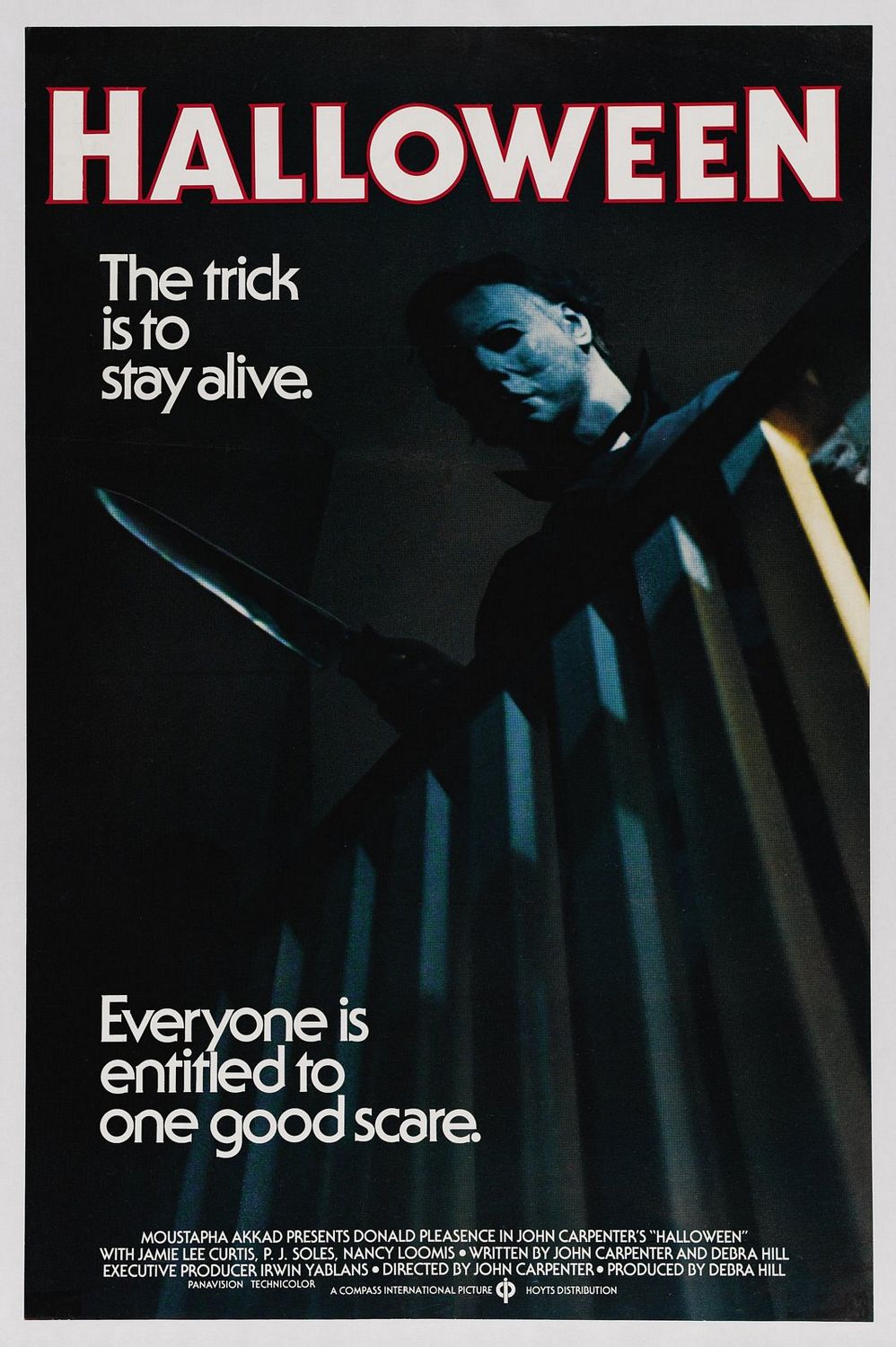
John Carpenter’s Halloween (1978)

halloween-1978-poster

What is there to say about “Halloween” which hasn’t already been said? It has been discussed ad nauseam, and even Carpenter must be sick of talking about it all the time. Granted, he did take the time to record a new commentary track with Jamie Lee Curtis for Anchor Bay’s 35th anniversary edition, but when the 25th anniversary edition came out it just had the same commentary track from the Criterion Collection laserdisc.

We all know the story, and this is in large part due to the countless imitators who rushed to create their own psychotic killer following “Halloween’s” astonishing success. At the time of its release, it was the most successful independent movie ever made. Made for about $300,000, it ended up grossing over $50 million. “Friday The 13th” would never have existed without “Halloween,” and that franchise is far more responsible for those clichés horror movies exploit to infinity.

What I love about “Halloween” is how down to earth it is. All of these characters come across as very relatable. The way the script is written and how the actors played their roles, they easily reminded us of people from our own lives we grew up with. The only character in the whole movie who is NOT down to earth is Michael Meyers as he is a killer who has no real motive for why he heads back home to kill. As the movie goes on, we eventually stop seeing him as a person and instead as a force of evil which cannot be easily stopped.

We have all lived in a town like Haddonfield, a small town where families can raise their children in peace, or so it would seem, and the problems they face there end up paling in comparison to those they were forced to endure in the city. The parents see small town life as a home away from reality, but for the children it is reality. It is all they know. So when multiple murders occur there, it threatens to define the town more than anything else. Was there anything interesting about Haddonfield before young Michael Meyers took a knife to his sister when he was only a boy?

I also love how “Halloween” was shot. Working with Director of Photography Dean Cundey, Carpenter creates truly unnerving visuals of a killer lurking in the shadows. One moment Michael appears in the frame, and in the next he is gone. Michael could be anywhere and there is no escape from him. How does one escape from evil anyway? One of Carpenter’s main themes with “Halloween” is how evil never dies. It is a force which is with us whether we like it or not, and it is always just around the corner…

One of my favorite shots is when little Tommy is fooling around with Lindsay as they watch Howard Hawks’ version of “The Thing.” But when Tommy turns around and looks out the window, he sees a man carrying a lifeless body from the garage to the front door. The bullies at school kept warning him about the boogeyman coming, and it is an unfortunate and infuriating coincidence that they are correct. It is one of the creepiest images from “Halloween,” and it is one which always stays with me. Don’t you wonder what your neighbors are up as you look at their houses across the street?

The other brilliant thing about “Halloween” is how it was edited in such a way where you cannot be sure when or where Michael will appear next. The best example of this is when Laurie Strode is running away from Michael. Carpenter puts us right in her shoes as she desperately tries to escape the madman who wears an altered William Shatner mask. The editing plays with your emotions beautifully. You want her to escape, but you soon feel as helpless as her as she yells at Tommy to wake the hell up.

The moment where Laurie is at the front door of Tommy’s house, screaming for him to let her in, is one of the scariest scenes I have ever seen in a movie. It intercuts with her banging on the door while the Shape approaches her, and Carpenter succeeds brilliantly in leaving us stuck in a place we are desperate to escape from. Like her, we are begging for Tommy to unlock the door to where we want to yell at the movie screen, TV set or whatever device you are watching this movie on.

And who could ever forget the music? Carpenter’s score for “Halloween” ranks among the greatest horror movie scores ever composed to where I would put it up alongside Bernard Herrmann’s score for “Psycho.” Carpenter’s musical work has been done mostly in a minimalist style, very much unlike the bombastic orchestral scores from every other Hollywood composer. After all these years, the main title for “Halloween” is a piece of music I never get sick of listening to. The music succeeds in heightening the ever growing tension which never lets up even after the movie is ovr.

The final shot is unnerving and utterly perfect in the way Carpenter shows how evil never dies. We see images we have become familiar with throughout the movie, and they now have the stain of evil on them. The point is point he could be anywhere at this point.

This is definitely one of my all-time favorite movies, and the recent 35th anniversary edition Blu-ray reminded me of how I never get tired of watching it. Jamie Lee Curtis is great here as Laurie Strode, the only one who is the least bit observant about what’s going on around her. Then you have P.J. Soles and Nancy Loomis as Laurie’s so-called friends who frolic around, completely unaware of the killer stalking them from a distance. And you have Donald Pleasance, and his Dr. Loomis is a character which pretty much came to define the latter half of the franchise.

Many say “Halloween” originated the undying cliché of how teenagers who have premarital sex and do drugs are the first ones to be killed off. In the Criterion commentary, both Carpenter and the late Debra Hill make it abundantly clear they were not trying to lay any sort of judgment on these characters. Religion was not intended to shoved down our throats by anyone involved with this movie. These characters don’t get murdered because they are sinners, but because they aren’t paying attention to what is going on around them. Laurie Strode, on the other hand, is always very suspicious of her surroundings.

John Carpenter’s “Halloween” will always remain the best of all the so-called slasher movies in my humble opinion. There is no way anyone can top what he did with the 1978 classic, and this is even though Rob Zombie’s take on Michael Meyers was better than people gave his “Halloween” movies credit for. It has reached such a high level of praise in the ever growing pantheon of cinema to where duplicating its power is extremely difficult to pull off. The fact it still has the power to unsettle generations of audiences is a testament to Carpenter’s brilliance as a director, and its amazing success led him to make many other great films which continue to stay with us long after the end credits have finished.

* * * * out of * * * *

Exclusive Interview with Greg McLean on ‘Wolf Creek 2’

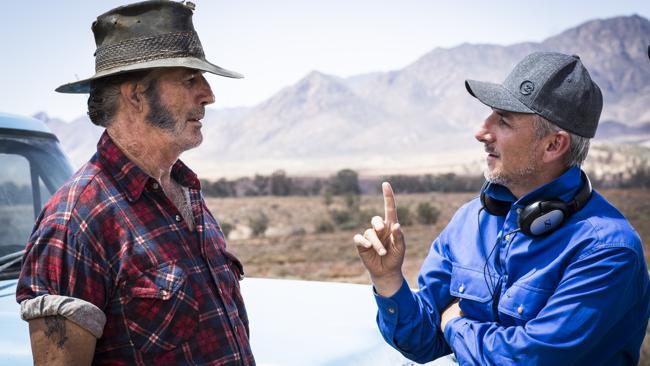
wolf-creek-2-mclean-and-jarratt

Australian film director Greg McLean returns to the scene of the crime with “Wolf Creek 2,” a movie which, supposedly anyway, is based on actual events. The original “Wolf Creek” came out in 2005 and introduced us to the relentless serial killer Mick Taylor (played by John Jarratt) who captures a group of backpackers and tortures them without any remorse. Now Mick is back to take on another group of tourists who make the mistake of crossing his path and have the serious misfortune of not being from his home country. If you are not a proud Australian and are not fully aware of the country’s rich history, pray you don’t run into Mick.

McLean also directed the killer crocodile horror film “Rogue,” and he is said to be a member of the unofficial “Splat Pack.” This term, which was created by film historian Alan Jones, refers to the modern wave of directors who make brutally violent horror films, and other members include Alexandre Aja, Neil Marshall, Eli Roth, James Wan and Rob Zombie. I spoke with McLean about “Wolf Creek 2” and he talked about how a sadistic psychopath like Mick Taylor can be strangely appealing, how this sequel differs from the original, and he pointed out the differences between making a film in Australia and the United States.

Ben Kenber: This was a terrific sequel, and it was great to see John Jarratt return as Mick Taylor. Mick is one of the most sadistic psychopaths ever put in a movie, and yet there is something about him which is undeniably appealing. Why is he so memorable and why are we drawn to characters like him?

Greg McLean: I think that people are generally fascinated with evil and true crime. A character like Mick Taylor represents a very interesting way of peering into a very, very dark psyche. People are fascinated with the nature of evil, and I think the appeal of a character like Mick Taylor is to really get a chance to examine someone who is completely devoid of any sign of humanity. He’s really incredibly dark and twisted, and he’s very terrifying. I think people who like horror films and thrillers and like being scared enjoy coming face-to-face with really disturbing personalities. There is a long history of really fascinating, evil characters and I think people are intrigued at how their personalities work.

BK: When it came to doing a sequel to “Wolf Creek,” was it something you had planned on doing all along, or did you consider doing it after the original movie was finished?

GM: My plan was always to see if the movie worked and people liked it. If people embraced the character (of Mick Taylor), then there will be a chance for another film. So it was always in my mind to do it, it just took a lot longer to get around to it than I thought it ever would (laughs).

BK: Regarding John Jarratt’s portrayal, did you develop the character with him or was it largely his creation?

GM: Well we obviously did the first film together so we had a background to how to approach the character and a discussion on what the character is about. We had been talking about this particular draft of the screenplay (for “Wolf Creek 2”) for a couple of years, so there were certain things we wanted to explore and certain aspects of the character we wanted to bring up, and we kept evolving it on set. Obviously John makes choices as an actor, and then some of those things are in the script and some are developed in the moment. When we got together, we just kind of jammed and came up with cool things to do.

BK: Since the script was in the development stage for a couple of years, did that make it easier for you to return to the character of Mick Taylor and the original movie’s setting?

GM: It certainly enabled us to mine the thematic ideas that we wouldn’t have had if we didn’t have such a long gestation period. We had a script a couple of years ago and it was good, but it just wasn’t amazing. I realized that there was an element to it that was missing and which was making me not want to pull the trigger on it, and what it didn’t have was a kind of somatic investigation into the character that I thought we needed to have. Then once I locked into that concept, then there was enough new information we revealed about his character that I thought it be worth making the film. We also wanted to make a different genre film. The first film is very much a first-person, true crime, real terror film whereas this one I wanted very much to explore the thriller film, and it’s more of an action film. It has horror elements, but it certainly is a different structure in terms of what kind of film that is.

BK: I agree, it does have a different structure and feels more like a road movie. Speaking of that, how did you manage to pull off the sequence where Mick Taylor launches the big rig truck into Paul Hammersmith’s (played by Ryan Corr) car?

GM: We just found a big hill and dropped the truck off it (laughs). It’s much easier to do stuff like that in Australia than it is in the (United) States. Doing things over there is still a bit of the Wild West. It’s interesting because I’m doing a film right now in Los Angeles and I showed that scene to some people and they were just like going, “Wow! How did you do that?” And there’s a shot after the actual truck hits where the fire is just actually continuing to burn the hillside, and everybody was freaking out about that. I said, “Why is that so weird?” They were just going, “Oh my god, how did you let the hill keep burning?” The restrictions are very intense. Obviously there are rules and regulations here and there are in Australia as well, but they were just fascinated by the idea of just literally destroying a truck and letting it burn a hole in the hill. We had fire brigades in the back, and we were able to just do some really crazy stuff. We also wanted to do it in a very practical way. I love doing CG stuff and we used a lot of CG for the kangaroo sequence, but some things I feel are just better to get onscreen practically because you see the texture of things and the physics of moving in a particular way that’s kind of cool.

BK: Yeah, I think that’s what I liked most about that sequence because it really did look real. In most American films, filmmakers would more likely film a sequence like that with CG.

GM: Yeah, I think that part of that is kind of a budgetary thing as well. When you have a low budget you have to find more practical ways of doing things. Digital effects, if you want them to, can be ultra-photorealistic and necessarily expensive. The other way to do it is to find a location you can do something like that and ask to just do it. For all the driving stuff in that sequence, we just closed down highways and did crazy driving on them for two weeks and got all the shots. It was great fun doing a sequence like that.

BK: Looking at those empty highways reminded me of “The Hitcher” with Rutger Hauer and C. Thomas Howell. You have this great open space, but still there’s something about it which is quite claustrophobic.

GM: Well I think the first movie had a very particular primary feed that it was drawing on, and this film to me was really about the fear of isolation in a desolate place. What most of the fear comes from is the primary idea of that which is quite different from the first film. The first film had a different emphasis which was more about the randomness of violence in the real terror that comes from believing someone is something and then suddenly seeing them transform. This one is really much more about exposing the audience to the real terror which comes from extreme isolation and being pursued by a character that is just relentless.

BK: What elements do you believe a horror movie should have in order for it to be successful?

GM: Two things. One, it needs to be based on a primary universal human fear that touches the psychic pressure point. Number two, the film has to have three, if not more, unique and believably memorable set pieces or things that people will talk about when they leave the cinema for hopefully weeks if not years, and that’s it.

I want to thank Greg McLean for taking the time to talk with me about “Wolf Creek 2.” The movie is now available to own and rent on DVD, Blu-ray and Digital.

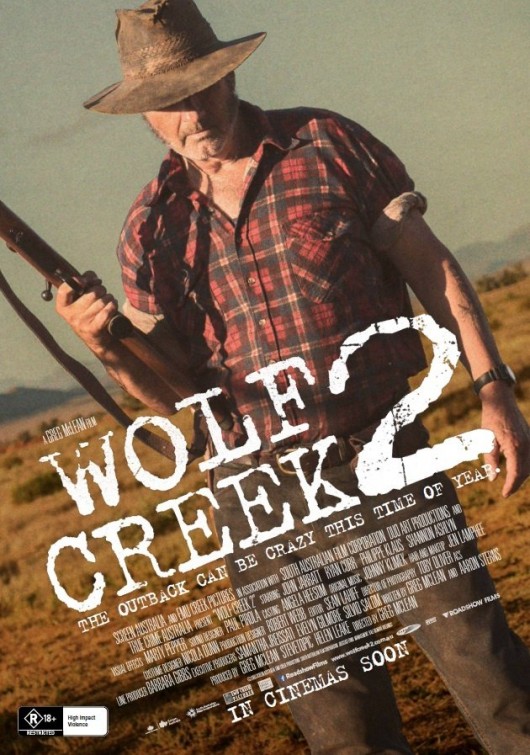
wolf-creek-2-poster


Exclusive Interview with John Jarratt on ‘Wolf Creek 2’

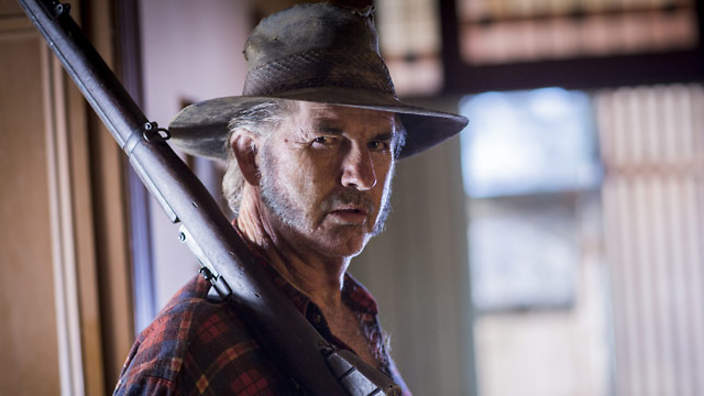
john-jarratt-wolf-creek-2

It’s been a long time coming, but Australian actor John Jarratt finally returns to his famous role of serial killer Mick Taylor in “Wolf Creek 2.” When Jarratt first played this role back in the 2005 original, he succeeded in giving us one of the most terrifying psychopaths the world of cinema has ever seen. But at the same time, he also made Mick into one of the most amusing as well, and while watching him in this sequel you can’t help but laugh with him even as he becomes increasingly sadistic. Now he’s back to terrorize a new group of backpackers from other countries who don’t quite share his love for Australia.

I got to talk with Jarratt while he was doing press for “Wolf Creek 2,” and it was a real pleasure chatting with him. The sequel isn’t so much a horror movie as it is a thriller and a road movie, and Jarratt talked about the change in tone between the two movies. In addition, he also discussed how he based Mick Taylor on his father, how method he was in his approach to playing him, and of whether or not movies like this will affect tourism to Australia.

Ben Kenber: Thanks for another great performance as Mick Taylor. It was a lot of fun watching you play him once again.

John Jarratt: Thank you very much.

BK: You’re welcome. There was a long break between “Wolf Creek” and “Wolf Creek 2” (about eight years). Were there any changes for you in the way you portrayed Mick Taylor between the two movies?

JJ: No, not a bit. It was exactly the same. He’s not the kind of guy who has growth.

BK: That’s true. It was said you stayed in character during the making of “Wolf Creek.” Was this also the case on the sequel?

JJ: Not so much because I knew what worked, but you have to stay within the realms of it. You can’t be having a coffee and just fall back into John Jarratt and then some guy says, “Come over here and cut this person’s head off,” you know? So you’ve got to kind of stay in the zone if you know what I mean (laughs).

BK: But it’s not like Daniel Day-Lewis who stays in character 24 hours a day obviously.

JJ: No, I think that’s a bit of a wank, but anyway. With Mick Taylor, I tend to go a little bit method because he’s a psychopath and a serial killer, and it’s a long way from who I am, you know? So I have to work at that. People say you’re a method actor, and I just say I’m a professional actor.

BK: It was said that you based Mick Taylor on your father but that you filled in the evil bits because your father is clearly not evil. When it came to the evil bits, what exactly did you add?

JJ: Well if Mick Taylor wasn’t a psychopath and a serial killer, if he wasn’t bent, and if he was the guy you thought you knew at the hotel at the bar if you met Mick, that’s my dad. But like all serial killers he’s bent and everyone says, “He seems like such a nice guy and he’s a terrific fella. He’s quiet and he was a good neighbor and he’s mutilated 27 people, but…” The hard part for me was to find that part of Mick, that psychopath side, and find a way that he was comfortable with it, you know?

BK: Yeah. It reminds me of when Anthony Hopkins played Hannibal Lecter in “The Silence of the Lambs” where he said he wasn’t so much interested in doing research on serial killers. Instead, he worked on finding the psychopath or the crazy person within himself.

JJ: Yeah.

BK: While the original was a full out horror movie, and one of the scariest and unnerving in recent memory, “Wolf Creek 2” is more of a thriller and a road movie. How did you feel about that shift in tone this time out?

JJ: In a way, sequels are lose, lose affair, you know? If we made it pretty much the same as the first one, you’d all be complaining about that we didn’t go anywhere with it. But if you change a little, then everyone says it’s not like the first one. To me, I thought it was a good movement on the first one. The first one you wait for the monster to come out of the cage which is about halfway through the movie, and it’s the set up that’s scary and then how he becomes (who he is) and everyone freaks out. With the second one we all know who he is, so it’s a waste of time doing that so you get them from the get-go. It’s not unlike the first one much when Mick turns up because, as you may remember in the first one, they (the unlucky tourists) drive my pick up over a cliff and then I chased them in a car and I blow the girl way, and that’s the end of the movie. So there’s a bit of chase in that one, but a hell of a lot more in this one because you get the Mick thing happening from the beginning rather than halfway through.

BK: The scene where Mick Taylor sends that big rig truck rolling down a hill where it crashes into Ryan Corr’s jeep gives “Wolf Creek 2” one of its best action sequences. Were you on the set when it was shot?

JJ: Yeah, I was there. It was fantastic (laughs). The funny thing was that the jeep came down the hill and landed like nothing had happened to it. We didn’t expect that, but it says a lot about the jeep I’ve got to say. Then the big truck comes down and creams it, and it was a great day. They were 20 cameras on it watching the truck come down the hill. In real life it was quite stunning.

BK: I imagine it was. If this was an American production, I bet they would’ve used CGI effects instead, but the fact that you did the real thing makes the sequence all the more thrilling to watch.

JJ: Yeah, it was great. It was like “Mad Max” days, you know? It’s what Aussies do really well.

BK: What would you say you added to this character that wasn’t in the script or which Greg McLean didn’t come up with?

JJ: I don’t think I added anything. He (McLean) was there for the entire film. There was more opportunity for a lot more humor I suppose, but I honestly didn’t add anything. I just knew a hell of a lot more, and I thought Mick was pretty funny in the first one. I think about 90% of this film is Mick as opposed to 50%. I think that’s the difference, I really do, so I didn’t do anything differently except you see even more of what he does. I suppose that’s different.

BK: The black humor in this movie is very clever.

JJ: Yeah, you’ve got to have a laugh. You got to remember that he (Mick) is having a ball and he’s got a great sense of humor. If you met him in a bar you’d think he was a lot of fun; he’s a big barrel of happy-go-lucky and a fun kind of guy. He’s having a ball playing games with these Pommy backpackers, so I think it lends itself to comedy.

BK: A lot of people might look at a movie like this as if it will decrease tourism to Australia, but I think it will increase it because people travel to different countries for a variety of reasons. What effect do you think “Wolf Creek 2” will have on tourism?

JJ: I tend to think that tourism improves with these kinds of films and “Crocodile Dundee” kind of films. If someone gets eaten by a crocodile in the northern territory in Australia, the tourist numbers go up from the publicity it gets. So I don’t think people will be frightened (from travelling there) really.

I want to thank John Jarratt for taking the time to talk with me. “Wolf Creek 2” is now available to own or rent on DVD, Blu-ray and Digital.

wolf-creek-2-poster

‘The Rocky Horror Picture Show’ Celebrates 40th Anniversary in Westwood

Few cult classics have had such a strong and everlasting cultural impact than “The Rocky Horror Picture Show,” and it always gains a new set of fans from one generation to the next. Based on the musical “The Rocky Horror Show” written by Richard O’Brien, the movie was a critical and commercial disappointment upon its release in 1975, but it went on to become a motion picture which made talking during the movie seem like not such a bad thing. Once it was introduced into the realm of midnight screenings in theaters everywhere, its influence became widespread, and it achieved a popularity many movies only dream of attaining.

“The Rocky Horror Picture Show” celebrated its 40th anniversary on October 30, 2015 outside of the building formerly known as the Mann Festival Theater in Westwood, California where it made its Los Angeles debut. Of all the cinemas the movie premiered in, it did the best business there when it was originally released. The theater closed down a number of years ago, but this wasn’t about to stop anyone from making the world remember that this location was where “The Rocky Horror Picture Show” got its start.

In attendance for this celebration, which was held on a ridiculously hot October day, were Tim Curry who originated the role of Dr. Frank N. Furter, Lou Adler who produced the movie, Sal Piro who is the President of the “Rocky Horror Picture Show” fan club and Los Angeles City Councilmember Paul Koretz. Joining them were a number of die-hard fans who did not hesitate to dress up as their favorite characters and the cast of Sins O’ The Flesh, a group of actors who perform at Saturday midnight screenings of “Rocky Horror Picture Show” at the Nuart Theater in Santa Monica.

Koretz declared October 30, 2015 “Rocky Horror Picture Show” Day in Los Angeles, and he remarked that while its fans may not know the capitol of every state in America, the movie continues to offer “solace, unity and friendship over the years to disenfranchised” and to anyone who feels like an outsider. The movie remains a very important one for LGBT people, and it has long since opened the doors for those who may not feel like they are part of the “mainstream.”

Adler remarked how there were almost as many people at this celebration as there were at the movie’s opening back in 1975, and he thanked what he called the “true fans” for showing up here as well as at every screening of this movie from one year to the next. Adler also remarked how Curry should have won the Academy Award for Best Actor back in 1975, and those in attendance were very much in agreement.

But make no mistake, the big star of the day was Curry, and the fans were ecstatic to see him appear at this celebration. The actor suffered a major stroke in 2013 which has left him confined to a wheelchair, but he was in good spirits as he greeted the fans and encouraged them not to fry as it was very hot outside. The fans in turn thanked him for coming to this event to which he responded, “Did you think I would miss this?”

Piro at how he and others put out the word about “Rocky Horror” midnight screenings in a time before there was social media or the internet. The fans came to see this movie over and over again through pure word of mouth, and it was the same group of people who came which showed how much it meant to them.

The ceremony concluded with the presentation of a plaque made to commemorate the movie theater in Westwood where “The Rocky Horror Picture Show” premiered all those years ago. Following this, Koretz quoted the words of Dr. Frank N. Furter and said to “give yourselves over to absolute pleasure and to don’t dream it, be it.”

I myself had the fortunate opportunity to talk with Curry following the ceremony. In addition to “The Rocky Horror Picture Show,” he also appeared in another cult classic movie called “Clue.” I asked him what the secret was to making a cult classic like this, and he replied that if he knew he would have done another one.

Be sure to check out the video of the anniversary celebration above. “The Rocky Horror Picture Show” is now available to watch on Blu-ray in honor of its 40th anniversary, but nothing will compare to seeing it on the big screen along with its many devoted followers.

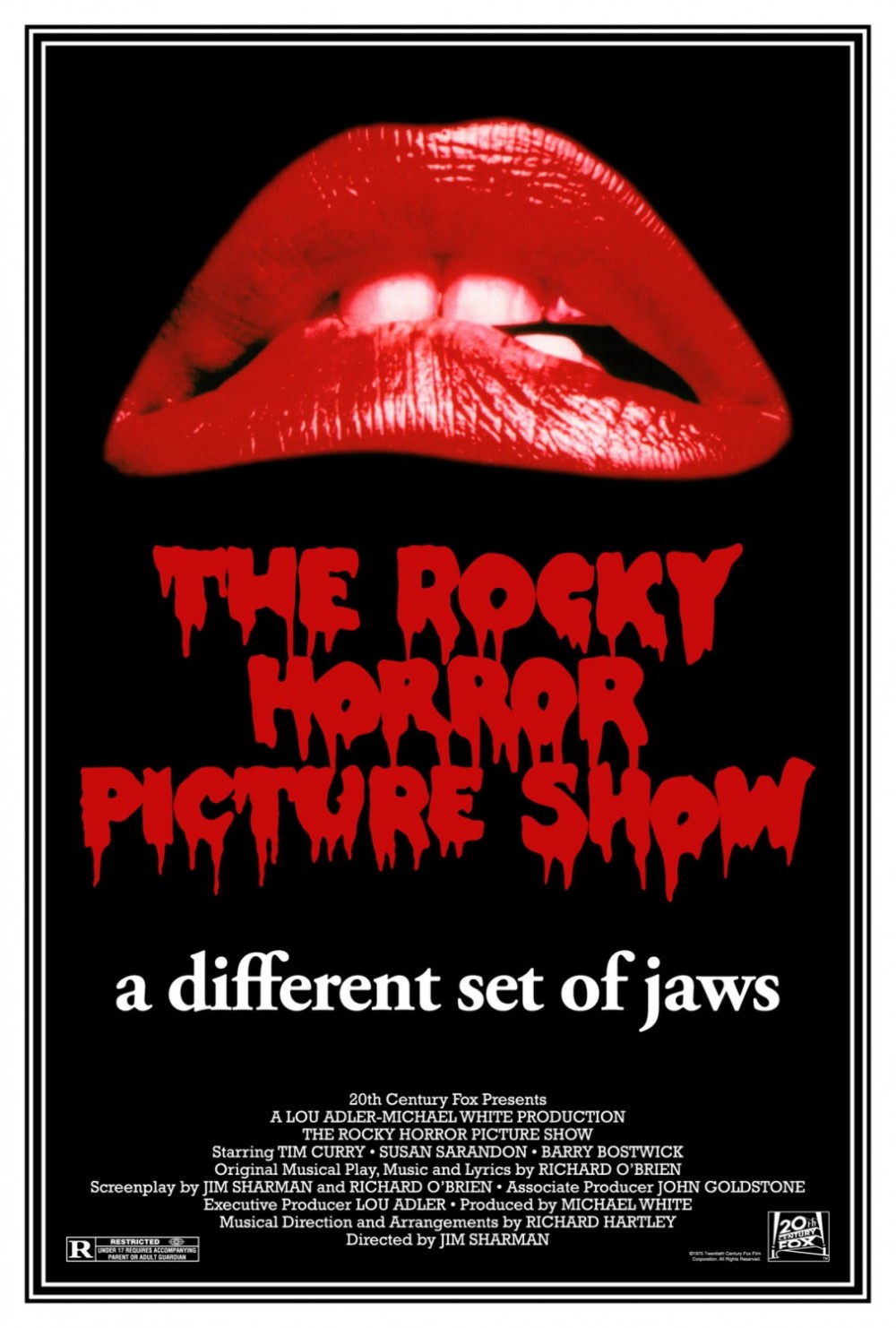
the-rocky-horror-picture-show-poster

Lone Survivor

lone-survivor

In a sense, this movie almost shouldn’t work. The title alone flat out tells you only one person will survive the battle we are about to see, and the opening shows doctors working furiously to save that person’s life. From the start, we know how this movie’s going to end even if we haven’t read the book it is based on, so this should kill any suspense it hopes to have right there. But thanks to the tense direction of Peter Berg and a terrific cast, “Lone Survivor” proves to be one of the most visceral war movies I have seen in quite some time.

Like every other movie coming out today, this one is based on a true story. Wahlberg portrays Marcus Luttrell, a United States Navy SEAL who, along with three other Navy SEALS, were dropped off in the mountainous Afghanistan-Pakistan border to conduct a reconnaissance mission on notorious Taliban leader Ahmad Shahd. This particular Taliban leader was said to have close ties to Osama Bin Laden, and we watch as these soldiers keep a very close eye on him.

But during their mission, they are accosted by a group of civilians whom they quickly restrain. Some of the Navy SEALS consider killing them so that their mission can remain a secret, but Marcus manages to convince his fellow soldiers that letting them go is the best option. To kill them would mean standing trial for murder and spending the rest of their lives in prison, and since this has already happened to other soldiers, they agree it is in their best interest to avoid this particular fate. So they let the civilians go and abort their mission, feeling they will be exposed if they stay any longer.

The time these men have to wonder if they made the right choice or not is cut short when they get ambushed by Taliban forces which end up surrounding them on all sides. From there, it is a race for survival as, despite their training, the SEALS find themselves outnumbered and out of communication range with the rest of their unit. From there, “Lone Survivor” becomes quite the blistering experience as you feel everything these soldiers are forced to experience and endure.

Berg starts the movie off with documentary footage of Navy SEAL training which is still considered the toughest military training anyone could endure. It is said 70% of the soldiers who enlist in this training end up dropping out, and from what we see here this is no surprise. I was immediately reminded of Ridley Scott’s “G.I. Jane” which had Demi Moore going through the torturous ritual of becoming a Navy SEAL, but seeing real people go through it here makes it seem all the more brutal.

This opening succeeds in showing us how these soldiers come to form such a close bond with one another, having succeeded in making it to the level of a Navy SEAL. But as this movie continues on, they will soon come face to face with something they are not used to enduring at all: failure.

Berg has proven himself to be a terrific action director with films like “The Rundown” and “The Kingdom,” and he really outdoes himself here. He makes you feel the bullet wounds, the cuts and dark bruises these men are forced to put up with as their chances for survival continue to erode. By the time “Lone Survivor” comes to its inevitable conclusion, I found myself feeling emotionally and physically exhausted by what I had seen. This is a movie which barely lets you come up for air. Even though we know who the lone survivor of the movie’s title will to be, we are still riveted because we still don’t want these soldiers to die.

Berg treats this story with tremendous respect and doesn’t ever try to exploit what these soldiers went through for the sake of entertainment. We get to know these men well enough to where their eventual demise is harrowing to witness. Berg also has quite the cast to help him make this film a reality. In addition to Wahlberg, “Lone Survivor” also stars Taylor Kitsch, Emile Hirsch and Ben Foster as the Navy SEALS, and each actor puts their all into roles which are physically and emotionally draining. Foster is especially a standout as Matthew Axelson who meets his end with sheer defiance.

2013 was a busy year for Wahlberg as he starred in “Broken City,” “Pain & Gain” and “2 Guns” in addition to this. When all is said and done, “Lone Survivor” represents the best work did that year. While watching him, you can tell how deeply he felt about this story just by looking at his eyes. Ever since he blew us away with his performance in “The Basketball Diaries,” Wahlberg has given us one unforgettable performance after another, and he rarely if ever lets us down when he’s onscreen. He has never been the kind of actor who just walks through a role, and I believe him when he talks about the effect playing Marcus Luttrell had on him.

There’s a lot more I would love to tell you about “Lone Survivor,” but I really don’t want to spoil it for those who haven’t read the book this film is based on. As much as I want to tell you this was one of the first really good movies of 2014, it was given a limited release before the end of 2013. Oh well, whether you consider it a 2013 or 2014 film, “Lone Survivor” is certainly one of the most visceral movie going experiences we have seen in a while. For those who like their movies filled with intense emotions, this is a must see.

* * * ½ out of * * * *

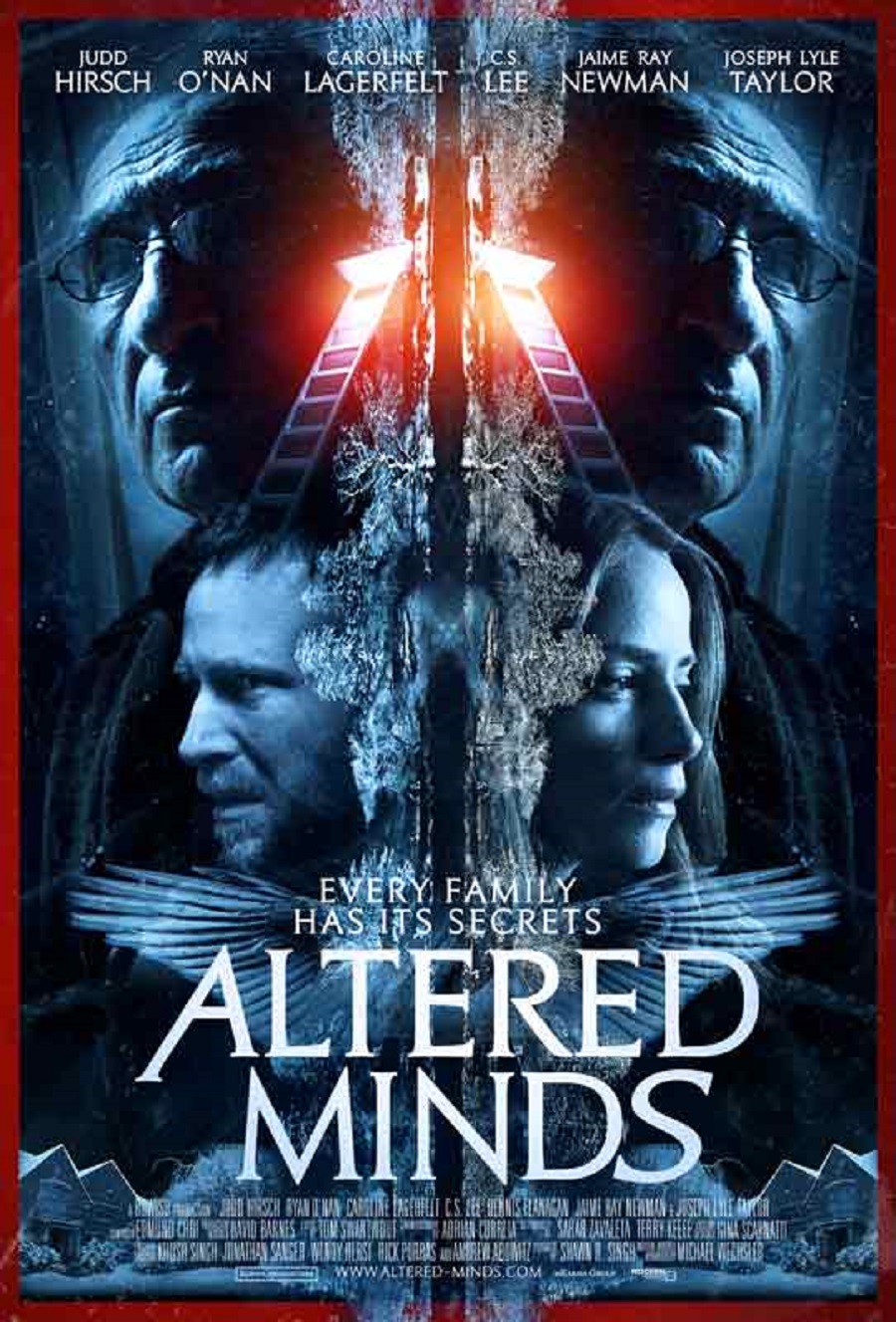
Altered Minds

altered-minds-poster

On the surface, “Altered Minds” looks like your typical “Sixth Sense” psychological thriller as the characters struggle to get to the truth of what’s terrifying them so deeply, but this description doesn’t do it justice. What we have instead is a deeply thought out and well-constructed thriller which features a strong ensemble of actors and, like the films of Alfred Hitchcock, keeps you wondering and guessing all the way to the very end.

“Altered Minds” opens up on a family reunion which takes place in a town just as cold and frozen over as the one Ang Lee took us to in “The Ice Storm.” However, it turns out we are guests at a funeral of sorts as it is the birthday of Dr. Nathaniel Shellner (Judd Hirsch), and most likely his last as he is suffering through the merciless disease that is lung cancer. Nathaniel was once a celebrated psychiatrist who won a Nobel Prize for his work in treating refugees from war zones who have been afflicted by PTSD. He is surrounded by his loving wife Lillian (Caroline Lagerfelt), his biological son Leonard (Joseph Lyle Taylor) and his two adopted children, Harry (C.S. Lee) and Julie (Jaime Ray Newman).

altered-minds-house-with-snow

The only one late to the party is Nathaniel’s third adopted child, Tommy (Ryan O’Nan), a horror novelist who is busy looking for an urn containing the remains of the family dog. But when Tommy finally arrives, there comes to be more on his mind as he accuses his father of performing cruel psychological experiments on him and the other family members. What started out as a loving family reunion soon turns into an occasion where bitter resentments and long lost memories arise to where they can be ignored no longer.

The first thing I want to mention about “Altered Minds” is how good the acting is. We’ve known Judd Hirsch for years as an actor who has played endearing characters in “Ordinary People” and “Independence Day,” not to mention his appearances on the television series “Taxi” and “Dear John.” The role of Dr. Nathaniel Shellner is one he could easily have turned into a two-dimensional adult character, but Hirsch reminds us of what a talented actor he is by making him much more. Throughout this movie, he keeps us guessing as to what’s going on in his mind and presents a humane front as he declares he wants nothing but the best for his children. Some actors would be happy to spell everything out for the audience, but Hirsch is far more interested in giving us a well-rounded character, flaws and all, who keeps you wondering if he has a dark side. How dare anyone forget how great an actor he is.

altered-minds-judd-hirsch

I was also impressed with Ryan O’Nan’s performance as Tommy as he manages to find a balance between appearing insane and being more aware of the reality of things than the others are. Like Hirsch, O’Nan keeps you on edge throughout as he makes Tommy an enigmatic character who may or may not be crazy. His performance helps add to the tension inherent in the story, and he makes everything seem just as unnerving as the movie’s potent and unsettling sound design.

Caroline Lagerfelt is a wonderful presence and plays every scene she’s in just right. C.S. Lee, best known for his work on “Dexter,” gives certain scenes a raw emotional power which is hard to look away from. Jamie Ray Newman makes Julie a wonderfully independent character the others would be smart to rely on when things don’t go their way. Joseph Lyle Taylor is at times a little stiff as Leonard, but he still does solid work in making the character appear more complex than he appears at first.

“Altered Minds” was written and directed by Michael Z. Wechsler, and he said the movie arose from obsessions he could never stop thinking about. Its story definitely has a personal vibe to it, and it does feels like his version of a Stephen King novel. Writing and directing a thriller is always tricky because audiences constantly second guess every move filmmakers make as they are eager to stay one step ahead of the action, and one wrong and foolish step could easily destroy the whole picture. Wechsler, however, keeps us hooked all the way to the end, and it’s hard not to feel as obsessed as the characters are in uncovering any secrets which have been left in the dark for far too long.

It’s also impressive to see what Wechsler was able to accomplish with such a low budget and a very short shooting schedule. A lot of independent movies these days are given ridiculously little time to be made in, and you have to be a bit forgiving if certain elements don’t fall into place because any good movie, let alone any good performance, needs time to be developed to its potential. Many filmmakers these days, however, can only work with the time they are given, and it’s not always enough. Regardless, Wechsler in the time he had managed to put together a very effective thriller which is chilling in its presentation and filled with terrific performances.

There are a lot of movies flying under the radar these days, but “’Altered Minds” is one deserving of your attention. That’s especially the case for you film buffs who like any kind of movie which is especially unnerving and deeply suspenseful. It is written and directed by a filmmaker who sidesteps the easy traps of the genre and delivers us something which keeps us on edge from start to finish. It also allows Judd Hirsch to give one of his best performances in years, and that should be more than enough of a reason to give it a look.

Copyright Ben Kenber 2016

* * * ½ out of * * * *


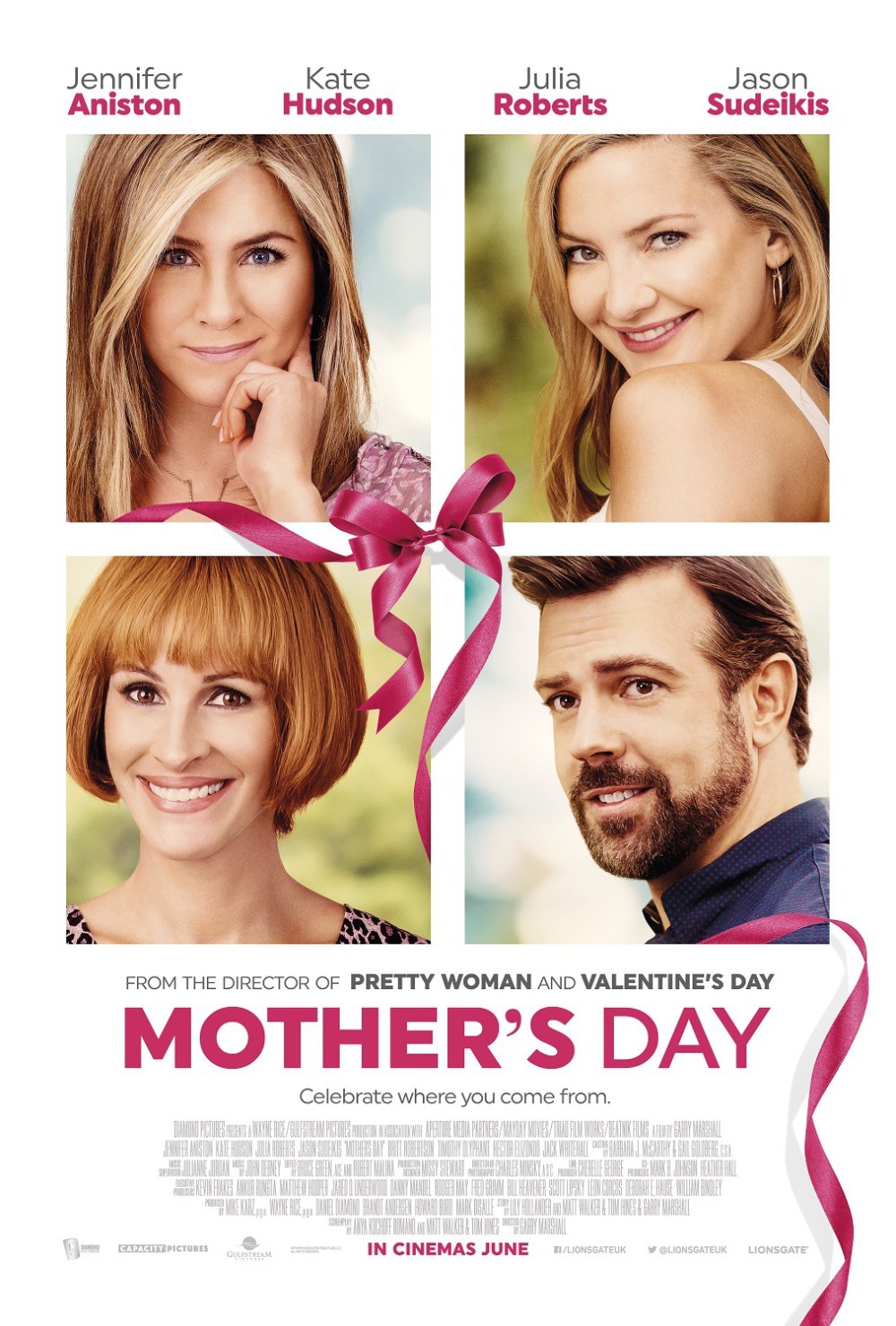
Mother’s Day

mothers-day-movie-poster

Mother’s Day” is the kind of movie I feared “The Meddler” would be, a formulaic comedy filled with overused stereotypes and cinematic traps filmmakers easily fall victim to. But even though it was directed by Garry Marshall who is well known for overdoing sentimentality in his films, nothing prepared me for how cloying and utterly contrived this movie ended up being. It’s like a network sitcom which never made it pass the pilot stage but somehow got turned into a movie for no discernable reason. Having already laid waste to New Year’s Eve and Valentine’s Day, Marshall shows no hesitation in belittling another holiday, and one with much more meaning than others.

The movie starts, of course, a few days before Mother’s Day which allows us to meet a group of people who at first have little, if any, connection with one another, but we know this is going to change from the get go. There’s single mother Sandy (Jennifer Aniston) who’s raising her two young boys by herself while her ex-husband Henry (Timothy Olyphant) spends time with his new wife Tina (Shay Mitchell) who looks like she has yet to reach the age of 30. Next we have successful book writer Miranda (Julia Roberts) whom we see selling jewelry on television and is dedicated to her career more than anything else. Then there is Kristin (Britt Robertson) who lives with her boyfriend Zack (Jack Whitehall) and their baby girl. Zack is an aspiring comedian who longs to marry Kristin, but she feels not yet ready to commit for reasons which eventually become clear. And let’s not forget Jesse (Kate Hudson), wife to Indian doctor Russell (Aasif Mandvi) who knows her parents will never approve of him or her sister who has since come out as gay.

Oh yeah, there’s also the grieving widower Bradley (Jason Sudeikis) whose wife died while serving in the military overseas, and he is left to raise their daughters on his own. The women at the fitness club he works at are eager to set him up with somebody, but he is hesitant to start dating again. And then he runs into Sandy at the local supermarket and… well, you have a pretty good idea of what happens from there.

What bothered me so much about “Mother’s Day” was how cloying and artificial the whole movie felt. Granted, not every movie can feature down to earth characters in relatable situations like “The Meddler” did, but everything here felt so one-dimensional and done by the numbers. Marshall has directed great movies in the past like “The Flamingo Kid,” “Nothing in Common” and “Pretty Women” which turned Julia Roberts into a movie star, and he’s the same guy who gave us the television classics “Happy Days,” “Laverne & Shirley” and “Mork & Mindy.” I even have good things to say about “The Princess Diaries” which introduced Anne Hathaway to the world. But after all these years, you’d think he would be able to give us a movie filled with more than standard situations and cardboard-cutout characters. I refuse to deride his horrible direction as the result of old age because that’s just cruel, but he has done so much better than this tripe.

It’s a real shame because the cast is great and they do their best with material which is far beneath them. Aniston is wonderful as a single mom, and that’s even though her work here doesn’t compare to her underappreciated performances in “The Good Girl” and “Cake.” Sudeikis has proven, in a way he should not have had to, how he can be a strong actor thanks to his performance in “Race,” and he’s wasted here in a role he is far more believable in than many would expect. Hudson, who has attracted mediocre material ever since her star-making turn in “Almost Famous,” does look very relaxed in her performance which gives us hope she will eventually star in a movie worthy of her talents.

But if there’s anyone in “Mother’s Day” who pulls off a truly emotionally honest performance, let alone a powerful moment, it’s Roberts. The scene where she explains to her daughter why she gave her up for adoption proves to be more heart-rending than what the rest of the movie ever could have promised us, and it reminds us why she remains a beloved movie star after all these years. Never mind how the situation is completely contrived as it is presented here. Roberts plays it with a lot of heart and wins us over regardless of how bad this movie truly is.

It’s a shame to see Mandvi, so great on “The Daily Show,” playing nothing more than an Indian stereotype who just happens to be a doctor. Loni Love plays Kimberly, an African-American who is taking pole dancing classes but fumbles them as she is overweight. Kimberly proves to be as funny a character as any Eddie Murphy played in “Norbit,” and no one should mistake this as a compliment. The more Marshall relies on stereotypes, the more this movie sinks into an abyss of awfulness.

But the actors I felt sorriest for were Margo Martindale and Robert Pine who played Jesse’s parents in the movie. They are presented as a couple of very conservative parents who are about to wake up to just how liberal their daughters are. Of course, they are shocked by the love partners their daughters have chosen to spend their lives with, but that they eventually come to accept their decisions in life as well as their grandchildren comes across as no surprise whatsoever. Martindale in particular is a tremendous actress, so her role here feels like an enormous waste of her time as she is forced to portray a type rather than an actual character.

The more I watched “Mother’s Day,” the more nauseous I became. This is such an emotionally manipulative movie that I couldn’t wait for it to be over. This movie has a running time of two hours, and it became increasingly torturous the longer it goes on. While it may have its heart in the right place, it still feels like a gigantic insult to the intelligence. Surely everyone involved with this crap could have come up with something infinitely better, right?

“Mother’s Day” is meant to give tribute to all the mothers out there, but there are so many other movies out there like this which put this one to shame. Regardless of its intentions, it is inescapably awful and deserving of the derision bound to come its way. If you are going to take your mother to a movie this year, take her to see “The Meddler” instead. Taking her to see “Mother’s Day” won’t seem all that different from taking her to see the camp classic “Mommie Dearest” or Gaspar Noe’s “Irreversible,” and that’s saying a lot.

Copyright Ben Kenber 2016.

½* out of * * * *

Crouching Tiger, Hidden Dragon: Sword of Destiny

crouching-tiger-hidden-dragon-sword-of-destiny-poster

Ang Lee’s “Crouching Tiger, Hidden Dragon” is one of those few movies I can describe as being truly exhilarating. It combined amazing martial arts sequences with a great story filled with compelling characters you were eager to follow along with from start to finish. To simply call it a martial arts movie was not fair as Lee gleefully subverted the genre to give us something completely mesmerizing, and it went on to become one of the most successful foreign films ever made.

So it’s a shame to see its eagerly awaited sequel, “Crouching Tiger, Hidden Dragon: Sword of Destiny” doesn’t come even close to recapturing the spirit of the original. Michelle Yeoh returns as Yu Shu Lien and Yuen Woo-ping, who choreographed the action of the original, steps in as director, but those who loved the original are bound to feel like something is missing. While Woo-ping still delivers some amazing action scenes, he lacks Lee’s poetic touch.

“Sword of Destiny’s” greatest strength is definitely Yeoh who looks fantastic at 53 years old and can still kick ass and do her own stunts like nobody else’s business. She is the only cast member from the original to appear in this sequel, and she makes it almost worth a recommendation as her performance is as powerful and heartfelt as it was before.

The movie takes place 18 years after the events of the original and sees Yu Shu Lien coming out of solitude and heading back to Peking where her lover Li Mui Bai’s legendary sword, the Green Destiny, is being held. However, it doesn’t take long for her to encounter resistance as her carriage is attacked by several warriors. In the time she was away, various clans have wreaked havoc in the martial world in an effort to gain control of it, and many have their eye on stealing the Green Destiny which will allow them to rule it with unimpeachable power.

The Green Destiny was a major focal point of the original as Jen Lu (Zhang Ziyi) stole it in an attempt to engage in the warrior lifestyle she had become envious of. That sword is a focal point in the sequel as well to where I began to wonder if perhaps destroying it instead of keeping it safe and locked up would have made more sense. It certainly would have saved the martial world a lot of trouble. Then again, destroying that sword would also have meant destroying the past, so perhaps that’s why the characters are not eager to obliterate it even for their own safety.

We get a lot of characters thrown at us this time around like Wei-Fang (Harry Shum, Jr.) and Snow Vase (Natasha Liu Bordizzo), both of whom want the sword for their own purposes. There’s also Silent Wolf (Donnie Yen) who faked his own death because he was in love with Yu Shu Lien and preferred a life of solitude as he knew Li Mu Bai was the one she loved more. And then we have Hades Dai (Jason Scott Lee), the West Lotus warlord who learns he must obtain the Green Destiny as it will allow him to rule the Martial World.

With all these characters and their various plot threads, it’s hard to get involved in their individual dramas and they are nowhere as compelling as the ones from the original. Many of the characters we see here feel like typical kind martial arts movies tend rely on. Snow Vase in particular feels like a generic version of Jen Lu, and the latter only appears a footnote in this sequel. They all fight like the best warriors, but the action feels ordinary and less than thrilling because we don’t care that much for them.

Another thing about “Sword of Destiny” is the actors speak in English instead of Mandarin, and this proves to be a big mistake. While there are many who can’t stand subtitles, seeing the dialogue spoken in English makes it seem all the more clichéd and uninspired. It’s like watching the original “Crouching Tiger, Hidden Dragon” dubbed in English; it’s still cool to watch, but everything sounds rather laughable in another language. In Mandarin, there was at least a beauty to the words they otherwise would not have had.

But perhaps “Sword of Destiny’s” biggest sin is its overall look. While the original only used CGI effects to remove the wires which helped the actors to fly all over the place, this movie looks like it bathed in them. As a result, everything looks artificial to where “Sword of Destiny” has the appearance of a video game, and not a very good one at that. In fact, the movie at times looks quite ugly because you can easily tell that what’s on the screen is not at all real. While Lee made collapsing buildings look exciting, Woo-ping is not able to recapture that magic as scenes of warriors crashing through floors of a tower looks inescapably fake and all done on a computer.

Coming out of this sequel, I wondered if “Crouching Tiger, Hidden Dragon” even needed one. The stories of both movies connect, but this one looks like it exists on a different planet. Time will only tell if there is to be a “Crouching Tiger, Hidden Dragon 3,” but “Sword of Destiny” doesn’t make much of a case for one. Yeoh is great as always and Woo-ping does pull off some nice stunts, but this sequel feels uninspired and routine at best. Perhaps it’s time for the Green Destiny to be laid to rest once and for all. Just look at what Harry Potter did with the Elder Wand in the “Deathly Hallows;” problems were solved and the wizarding world was balanced out. It’s that simple.

Copyright Ben Kenber 2016

* * out of * * * *