WRITER’S NOTE: This article was written back in 2012.
It has been two years since we saw him in “I’m Still Here,” the mockumentary on his alleged retirement from acting and bizarre transformation into a hip-hop artist. Now, thankfully, Joaquin Phoenix has returned to acting in Paul Thomas Anderson’s cinematic triumph “The Master.” Justin Craig of Fox News calls Phoenix’s performance “brutally physical,” and Peter Travers of Rolling Stone says the actor gives “the performance of his career” as Freddie Quell, a deeply disturbed World War II veteran. Just watching the various movie trailers for “The Master” reminds us of how emotionally raw Phoenix can get whenever he is onscreen, and it is both amazing and scary as there is no doubt as to how far he will go in preparation to play a character.
It turns out Anderson had Phoenix in mind when he was writing the role of Freddie, and he admitted to being amazed at Phoenix’s acting abilities and of his discipline while on the set.
“He’s like Daniel Day-Lewis in his level of concentration. He just got in character and stayed there-for three months he didn’t stop. Joaquin is very unpredictable. A lot of the time I didn’t know what he was going to do,” Anderson said.
Phoenix himself only says so much about how his preparation for a role as he compares actors to magicians in that they “don’t talk about how their tricks work, because people would go, ‘Oh, that’s all you do?'” He did say, however, how Anderson set up two cameras for certain scenes between him and Philip Seymour Hoffman who plays the charismatic Lancaster Dodd. This allowed both actors to “be in the moment and not be worried about shooting the one side and then re-lighting and shooting from the other side.” Phoenix described this as making a huge difference for him while portraying Freddie.
There is also the story of how Anderson showed Phoenix a video of a monkey falling asleep and told the actor the monkey was him.
“Paul called me Bubbles on the set,” Phoenix said. “Bubbles was Michael Jackson’s pet monkey, and I was Paul’s pet monkey. The key to Freddie is an animal, just pure id. For the scene where he’s arrested and put in jail and all that, I just watched videos of wild animals that get into suburbia. If you’ve seen video of a deer or a bear that finds its way into suburbia and the cops have to tranquilize it, it seems as if the brain stops working. If they’re cornered, they’ll slam into walls, or one leg tries to go left while the other is going right. Its complete fear and chaos. They can’t control themselves at all. That was the key to Freddie. And Paul certainly called me his pet monkey.”
While Phoenix still says he experiences problems with acting, it does look like he has rediscovered his love for it in “The Master.” Hearing him talk about being an actor shows how much he has struggled with his gift to where he had to rediscover a whole new way of doing it.
“Part of why I was frustrated with acting was because I took it so seriously,” said Phoenix. “I want it to be so good that I get in my own way. It’s like love: when you fall in love, you’re not yourself anymore. You lose control of being natural and showing the beautiful parts of yourself, and all somebody recognizes is this total desperation. And that’s very unattractive. Once I became a total buffoon, it was so liberating.
“I’d see child actors and I’d get so jealous, because they’re just completely wide open. If you could convince them that something frightening was going to happen, they would actually feel terror. I wanted to feel that so badly. I’d just been acting too long, and it had kind of been ruined for me. I wanted to put myself in a situation that would feel brand-new and hopefully inspire a new way of approaching acting. It (“The Master”) did do that for me.”
WRITER’S NOTE: This article was written in 2012. Philip, you are still missed.
Oscar winner Philip Seymour Hoffman remains one of the best character actors in movies today, and his role as Lancaster Dodd in “The Master” is yet another brilliant performance on his never-ending resume. The movie reunites Hoffman with filmmaker Paul Thomas Anderson who has cast him in five of his six movies. From the gay and painfully timid boom mike operator in “Boogie Nights” to the infinitely angry mattress store own Dean Trumbell from “Punch-Drunk Love,” Hoffman has gone from playing one unique character to portraying one who is the complete opposite, and makes one wonder how he goes about preparing to play each role he takes on.
In an interview with Rolling Stone film critic Peter Travers, Hoffman made it clear he was not out to turn Lancaster into some sort of bizarre human being with scary ideas.
“The thing is that this character needs to be as accessible as possible,” Hoffman said. “That when you meet him in the film and then when you get to know him in the film that you don’t judge him so much. I think we (he and Anderson) succeeded in that you actually take him in. He’s a real person, and you can almost see how he’s brought so many people close to him or been so successful. You could see how he can function in the world. You know he’s not too idiosyncratic or too eccentric even. He’s full of passion for his ideas, and some of his ideas are really good ones.”
Hoffman said it was those things he and Anderson wanted to concentrate on as opposed to the “oddity” of the character. When it came to Lancaster Dodd, he never looked at him as the head of a cult or even a religion. In his mind, the character was really the leader of a movement and not a fraudulent person.
Of course, much has been said about how “The Master” was inspired by L. Ron Hubbard and Scientology to where many are already nauseated at hearing this said over and over. When talking to the Wall Street Journal’s Rachel Dodes, Hoffman tried to clear up this issue as best he could:
“The idea that L. Ron Hubbard and that movement (Scientology) was the basis for some story in the film is accurate, but it’s really not a film about that, so it isn’t accurate enough for me to play L. Ron Hubbard. And so, I didn’t,” Hoffman said. “It wasn’t enough of that kind of story to do that. So, I wanted to think about other people because it was a fictional thing and the character is a very fictional character. So, I thought about other people who had that kind of charisma and moved people and people followed them, and what that meant for me. I steered clear of anything having to do with ‘The L. Ron Hubbard Story’ because it’s too specific and the film wasn’t going to support that, so I thought it would be confusing.”
From there, Hoffman was a bit cryptic as to what individuals he based Lancaster Dodd on. Dodes told him she heard Orson Welles was an inspiration for this role, but Hoffman said he never tried to emulate the “Citizen Kane” actor and director in “The Master.”
“It’s like when you are thinking about something, a lot of ideas go through your head, and references go through your head but ultimately you are just looking for something in yourself. There are certain behaviors, the way people sound. I didn’t really try to play anybody if that’s what you’re looking for.”
Like his co-stars Joaquin Phoenix and Amy Adams, Philip Seymour Hoffman is getting serious Oscar consideration for work in “The Master.” The fact he already has one Academy Award for “Capote” doesn’t seem to matter to anybody because the general feeling is he will get a second one at some point in the near future. Whether he does or does not, it is for certain we can expect many more great performances from this actor as his attention to character remains impeccable.
DOWN AND OUT IN BEVERLY HILLS, Nick Nolte, Mike the dog, 1986, on all fours
WRITER’S NOTE: As the first paragraph states, this article was written back in 2011.
As great as Nick Nolte, Richard Dreyfuss and Bette Midler were in Paul Mazursky’s “Down and Out in Beverly Hills,” they were almost completely upstaged by Mike the Dog. If there was ever an animal in movie history that deserved an Oscar, it was Mike. Forget Benji, Rin Tin Tin, and Lassie, Mike had them all beat in portraying the nasty and incredibly neurotic Scottish border collie Matisse. His reactions to his owners, the Whiteman family, and his affection for Nolte’s character of Jerry Baskin made him as much a character as anyone else in this classic comedy. Mazursky and Nolte were enthusiastic in telling stories about Mike when they appeared at the Aero Theatre on August 14, 2011 for this movie’s 25th anniversary screening.
One memorable scene had Nolte on his knees trying to get Matisse to eat his dog food by eating it with him. Determined to see this through, Nolte said he went to a nearby grocery store and bought all kinds of dog food, mostly of the meat variety. When he started dispensing it into different bowls, however, he noticed that to the side there were other dog bowls filled with peas and corn. Nolte went up to Mike’s trainer, Clint Rowe, and asked why these bowls were out. To this, Rowe replied, “Mike’s a vegetarian.”
OOPS!!!
Mazursky had even more stories to tell about Mike and the big star he was. Reminiscing about an Air France jet he flew on to Europe, he saw Mike sitting in first class and reading a magazine (he didn’t remember which one). People ended up making their way up to first class just to see him. Things got even more bizarre when Mazursky got off the plane as there were photographers out in full force at the gate. Mazursky said he greeted them kindly, but they instead went right past him to shoot pictures of Mike.
Things eventually reached a final straw when Mazursky went up to his hotel room and found he was not in room 704, but 804. Guess who was there to greet him when he opened the door? That’s right, Mike. At this point, Mazursky looked him dead in the eye and said, “Out!”
Mike complied and ran off.
Mike went on to play Matisse in the short-lived TV version of “Down and Out in Beverly Hills” and also appeared in various commercials. He has since passed away and is hanging out with Spuds McKenzie and the Taco Bell Chihuahua in doggie heaven. Still, his talent has never been lost on anyone who watched him in the 1986 comedy, let alone those who helped make it. Even during dallies, film editor Richard Halsey kept telling Mazursky:
WRITER’S NOTE: This article was written back in 2012.
After playing an escapee from an abusive cult in “Martha Marcy May Marlene” and a young woman terrorized at her vacation home in “Silent House,” actress Elizabeth Olsen finally gets to lighten up a bit in the comedy drama “Liberal Arts.” In the movie, she plays Zibby, a 19-year-old college student who ends up falling for 35-year-old college admissions officer Jesse Fisher (Josh Radnor, who also wrote and directed it) over their love of literature. Critics have called Olsen’s performance in “Liberal Arts” enchanting, radiant and luminous.
Having seen Radnor’s last directorial effort “Happythankyoumoreplease” which she really enjoyed; Olsen was very interested in working with him on “Liberal Arts.” Her audition for him consisted of reading through every single scene their characters had together in the movie. She recalled it being a lot of fun to “just sit on the floor and read through the scenes with him,” and she really liked the way he wrote Zibby’s dialogue.
For Olsen, the role of Zibby offered a nice change of pace as she had just finished her third psychological thriller. In this movie, she got to play a character who is wise beyond her years and excited about being alive. It also gave her the opportunity to play someone whom she felt was closer to who she was.
“I just always wanted to rush things, grow up sooner, couldn’t understand why someone older couldn’t make a change,” said Olsen. “There’s something really honest and great about her. Also, I wanted to say those words really badly. The words on the page were so much fun to say out loud. That’s a really simple thing to say about wanting to do a script, but I feel like that rarely happens.”
Olsen herself is still a college student at New York University, and she still has a couple of more classes to go before she graduates. Like Zibby she shares a love of learning, and this love came to inform her character deeply. To hear her talk, Olsen has always enjoyed reading literature like Zibby does.
“I went to a really great high school and I took a few AP classes in literature and language and things like that,” Olsen said. “The only type of writing I like to do or enjoy doing is academic writing, so I’m already inherently that type of person. I’ll still remember that my senior year of high school I wrote an essay on Joseph Conrad’s ‘Heart of Darkness’ that I’m still proud of to this day, so I’m already kind of a nerd when it comes to literature and theory. I wish I could have more of that in life, but I don’t because I’m always reading scripts or things to prepare for movies when I’m reading.”
Elizabeth Olsen not only has college graduation to look forward to in the near future, but she also has some exciting movies in store for her including Spike Lee’s remake of “Oldboy.” She has given us a number of wonderful performances so far and, after watching “Liberal Arts,” it is clear she still has many more to give.
WRITER’S NOTE: This article is about a press day which took place back in 2012.RIP Cicely.
The great Cicely Tyson has worked only so much in movies over the years as she is strongly determined to play only strong and positive images of African-American women. In Rob Cohen’s “Alex Cross,” she finds a very strong character in Regina “Nana Mama” Cross, Alex’s grandmother who helps keeps his children in line when he’s not around. At a press conference which took place at the Four Seasons Hotel in Beverly Hills, Tyson explained why she took on this particular role.
Upon meeting James Patterson, author of the Alex Cross novels, he said out loud “we finally found Nana Mama.” Watching her in “Alex Cross” makes this crystal clear to those who have read Patterson’s books. While Nana is Alex’s grandmother, she’s really more of a mother to him as we learn how he lost both his parents at an early age.
When asked if she would describe Nana as feisty or cantankerous, Tyson said “she’s all of that and more.” But she also sees the character first and foremost as being a mother.
Cicely Tyson: To me it is the most important feature in her personality. Then add to that fact that if anything ever happened to her son, she would not only be grandmother but mother to his children. So, I was torn between his love for the work that he chose and the fact that any day he could not come home to me or his children. So that was extremely difficult for me.
It is the danger of Alex’s work which leaves Nana Mama is constantly on edge because there’s always the possibility he won’t come home one day. Tyson said Nana knows the facts of how not only Alex’s life is in danger, but also her own and his children’s.
Tyson had previously worked with Perry on several of his movies, and when Cohen offered her the role, she told him anything with Perry interested her greatly. When asked what it was like working with him on “Alex Cross,” she talked of how he heard him say time and time again, “I can’t believe I’m in a scene with Cicely Tyson,” and he at one point told Cohen he didn’t know how to act around her. In turn, she responded that she could believe she was doing a scene with Perry.
Cicely Tyson: We both had the same anxieties about working in this particular capacity with each other.
When it comes to choosing roles, Tyson made it clear she never takes anything offered to her at face value.
Cicely Tyson: I have always maintained one way of selecting a role that I play, and it’s through reading the script. If my skin tingles, I know it’s for me, and if my stomach churns it’s a pass. That’s my way of deciding.
When asked what made her skin tingle about playing Mama Nana in “Alex Cross,” Tyson said it was working with Perry.
Tyson said she would definitely love to reprise the role of Mama Nana if “Alex Cross” is successful enough to generate a sequel. Despite its somewhat middling opening weekend at the box office, a follow up does look to be in the works with Perry returning as Alex. Tyson herself looks to work for as long as she is able to, but did she admit there is a certain play she wants to do. Now she wouldn’t say which play, but she is intent on retiring once she does it. While she never expected this opportunity to happen, it is now a possibility she will do this play sometime next year.
From “Sounder” to “Roots” to “Alex Cross,” Cicely Tyson has given us one unforgettable performance after another. Here’s hoping she doesn’t retire just yet.
The latest “Wrong Turn” installment is now available for all to watch, but while some of the filmmakers remain the same, almost everything else has changed. Directed by Mike P. Nelson, this film acts as a reboot of the “Wrong Turn” franchise as we follow a bunch of young adults who are going on a hiking trip up in Virginia. But instead of running into bloodthirsty cannibals, they run into a clan of self-sufficient people who have lived in the mountains for years and do not take kindly to outsiders. What results may seem like another horror slasher extravaganza, but unlike its predecessors, it is grounded in a reality we all know and understand, and this makes this particular reboot stand out in the overcrowded horror genre.
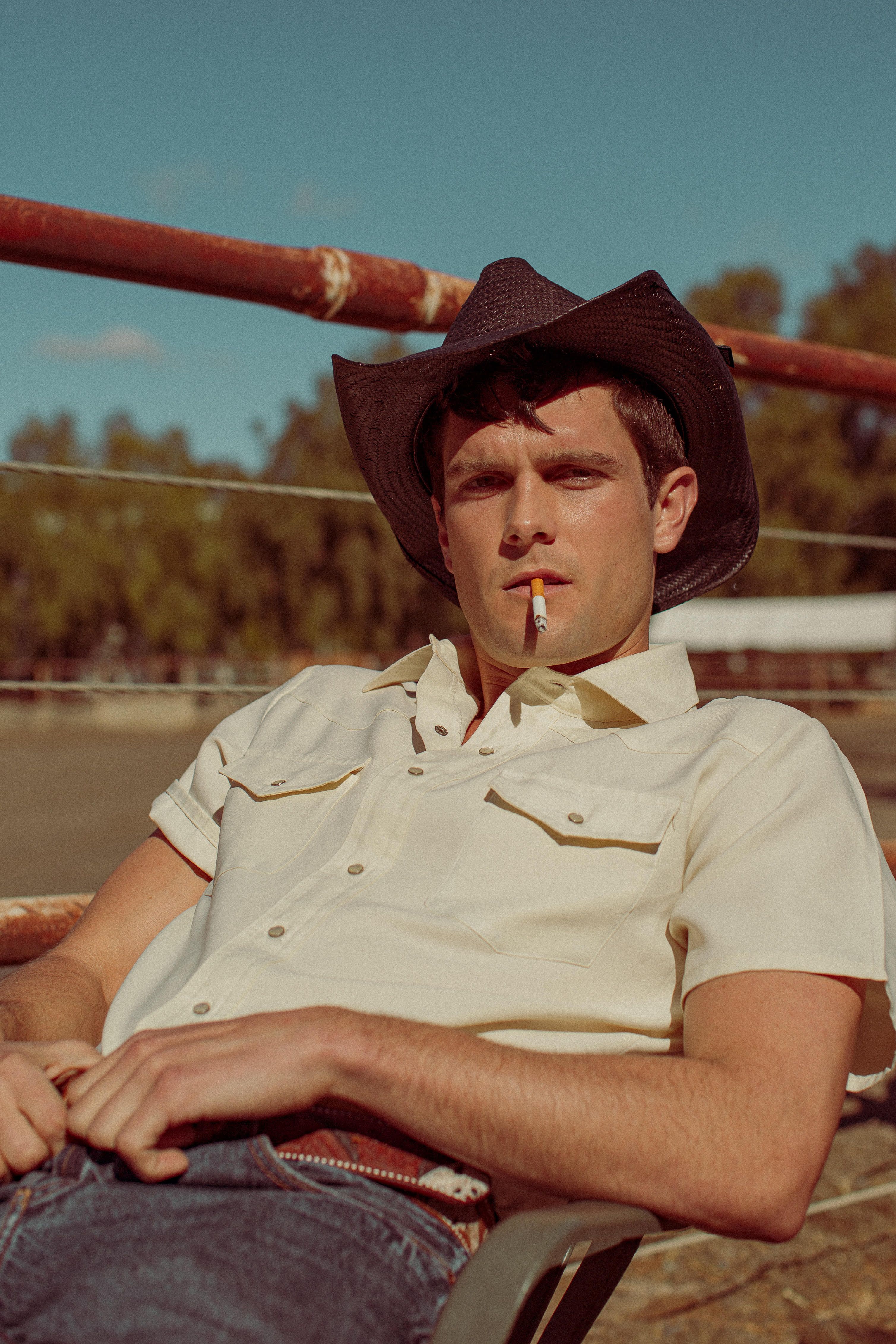
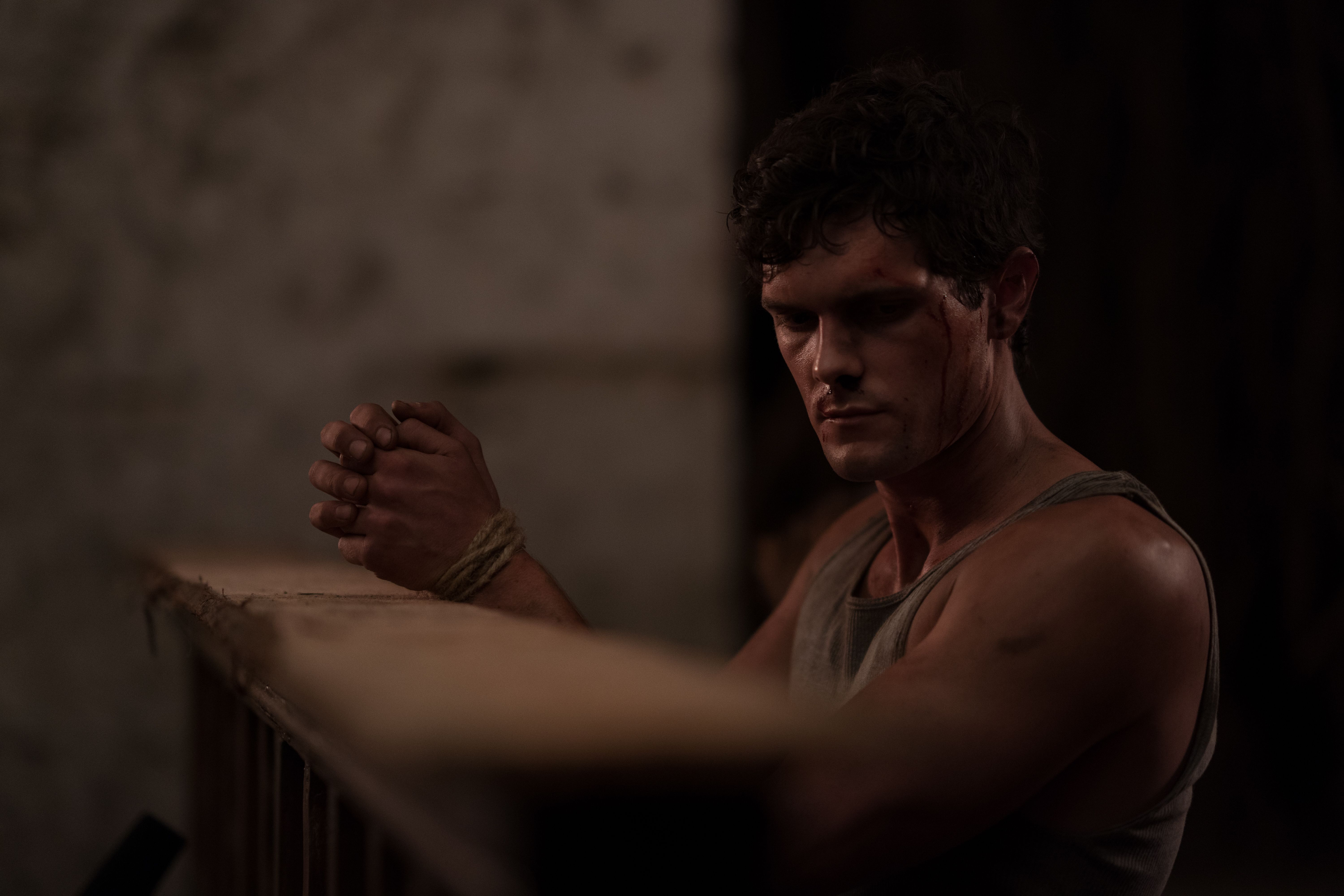
Among the young adults in the cast is Dylan McTee who portrays Adam Lucas, the loudmouth jerk of the group who never knows when to shut his mouth. But while Adam may sound like the typical clichéd you find in the average horror film, McTee invest this character with intelligence, thoughtfulness and a physicality which is on full display throughout. Born in Los Angeles, California and a graduate of USC, he played Wyatt Long in the CW show “Roswell: New Mexico,” and he also co-starred in “The Wind,” a horror film which belongs on my “Underseen Movies” list.
I spoke with Dylan about the making of “Wrong Turn” and how it differs from the average film, and we also discussed other things like training at USC and why he is so inspired by Daniel Day Lewis’ acting.
Ben Kenber: How familiar were you with the “Wrong Turn” franchise before you got cast in this reboot?
Dylan McTee: I was, and part of the reason why I wanted to do it was because it (the first “Wrong Turn” film) was one of the first horror movies I ever saw. As a kid, I remember watching it with my older brother who had, obviously without my parents knowing, had turned it on. It scared the shit out of me for months and probably messed up my brain for maybe the good, right? Because I’m in the new one (laughs).
BK: I had talked to Adrian Favela recently and he said he also saw it when he was a kid and it messed him up pretty good.
DM: Yeah. I think a lot of us were the same age as kids when the first film came out, so we were given a too early exposure to it.
BK: Well, its better seeing the original “Wrong Turn” at a young age than the original “Texas Chainsaw Massacre.”
DM: Oh yeah, that was on too. I saw all of them. I watched “The Exorcist” when I was way too young. Way too young.
BK: As the movie goes on, we learn Adam and the other young adults are not all they appear to be and prove to be more intelligent than they appear on the surface. They are more complex than I expected. Did this aspect appeal to you?
DM: Yeah, of course. Certainly, there are archetypes. This isn’t like a character drama or anything. This is still a pretty classic horror slasher film, but you are very right. I play Adam who is definitely the difficult one and why I wanted to play him was because of the fact that he is the guy who, whether or not it is socially right to do so, says the truth or at least what he believes to be the truth, and he’s not afraid to fight about it. That’s sort of what the film is about. At its heart it’s a fun, fun slasher just for you to have fun while watching, but it is also sort of about social issues that we have today like division. I think that we’re all quick to judge, and in the universe of this film that is exactly what gets you killed. I think that was really fun to explore.
BK: In other interviews, you have said you are attracted to very challenging roles which explore the darker side of humanity, and we definitely get to see Adam’s dark side when he is forced to defend himself in the worst way possible. What was it like portraying that?
DM: That’s so true. I love playing the darker side of humanity for sure, just like playing the joy and all that. Adam was a particularly interesting character because he is so erratic. You don’t really quite know what’s going to happen next to him. He is deeply selfish and violent, and then he is caring and comforting, and then he lies and then he tells the truth, and to me that’s exciting when you don’t know what’s going to happen next with someone. But at the end of the day, obviously it can be argued that he is not the best person. I love to think there is a part in all of us that is deeply just mental and is willing to fight and violently fight for those assumptions we have of others. That’s, in my opinion, the lesson. It’s the weaker route to take. It’s harder to take a step back and say, well where are these people actually coming from? Where am I coming from? It’s much easier to just assume something about someone, and then that’s the job, right? At least my job in this film was to show this aspect of humanity which unfortunately we all have.
BK: Yes, we do make assumptions about people even when we shouldn’t, and this is what gets the characters in trouble.
DM: Yeah, so I really like that (Alan B.) McElroy added that. He is also the screenwriter of the original film, and I am glad that he brought that in.
BK: It must be nice to work with writers and filmmakers like McElroy who are working to freshen up the genre if only by a little bit.
DM: Yeah. This is my third film ever, so I am not going to pretend like I’m some sort of veteran. In many ways I’m starting out, but this was definitely a different experience and definitely my first experience where I realized the horror genre has really changed. I find the audiences are more sophisticated than ever before. If you are going to go about rebooting something that people like, you need to push the envelope. Sure, there’s gonna be people who are upset that maybe Three Finger is not in this iteration, but I just really respect the fact that we just did something no one is expecting really. I think that’s fun to watch, and to me that’s worth it.
BK: Another movie you were in which I really liked was “The Wind.”
DM: That was a cool movie.
BK: That’s kind of a wilderness movie as well. Were there any similarities for you in filming “The Wind” and “Wrong Turn?”
DM: Oh god, they were so different. I had a fairly small part in “The Wind,” but the characters are just opposites. In “The Wind” I was a very subdued and quiet, late 1800’s city boy. In this one, I was, well, a very violent, fighting city boy, so there you go. They were both city boys (laughs). “The Wind” was very quiet, eerily so. This one is more running and trying to solve problems and action and movement and then just fighting for survival. So (they are) very different films even though they are in the same genre. But I love Emma (Tammi) and Caitlin (Gerard). They were just genius.
BK: Speaking of running and jumping, you and the rest of the cast did a lot of that in “Wrong Turn.” How physically demanding was shooting this movie for you?
DM: Incredibly. In any film, it’s how ever much you want to put in it, and for me, at least in my experience, I put in a lot. I want it to be authentic as possible, and really at the end of the day the only way to do that is just to do it. Obviously, we followed all of the safety protocols, but I was really dragged by a chain and I really fell down a hill. I am fairly equipped just from my own experience. I am a black belt in karate, I like fight choreography, I love all that stuff. It was actually something I looked for. So, for me at least, it was a huge part of the attraction to this role and this film really.
BK: I read that you studied martial arts. Which of them would you say you are proficient?
DM: Just Kenpo, a Japanese karate, and then I also do boxing and obviously some stage combat which is very like, I’m a thespian! (Laughs) But that’s not real fighting. And then at school I got in fights, but I’m not like an MMA guy. That would be cool. Maybe I will do that for the next role.
BK: You have said you are very inspired by the acting of Daniel Day Lewis. Is there any specific performance of his which you really like?
DM: One that really hit me was “In the Name of the Father.” There’s a scene where he’s talking to his dad in a jail cell, and just the way in which he lets it rip… He’s not afraid to look ugly. That’s just something I look up to. He just gives his heart and soul, and that’s what we want to watch. That’s so inspiring to me.
BK: Yes. There are many actors out there who just want to look cool onscreen, and then there are those who are more than prepared to dirty themselves up if the role calls for it.
DM: Yeah, totally. I think most of the actors that reach the top or the ones I look up to are aware of the fact that they are servants. It’s not about me. We are here to serve the story and to represent something that someone maybe is actually watching and saying, that’s me. There is a huge responsibility to acting in my opinion.
BK: You trained at University of Sothern California (USC). What classes did you benefit most from as an actor there?
DM: My favorite class was dialects. The fact that you could find movement and bring that to the voice and how you can watch videos of people and all the research involved of finding a certain specific southern accent or Northern Irish or Southern Irish or New York or Bronx and all these different things and just how you can bring it into your body. That was huge for me and so much fun. I definitely want to do more of that character stuff. I love that element of acting.
“Wrong Turn” is now available on VOD, Digital, DVD and Blu-ray. You horror fans be sure to check it out!
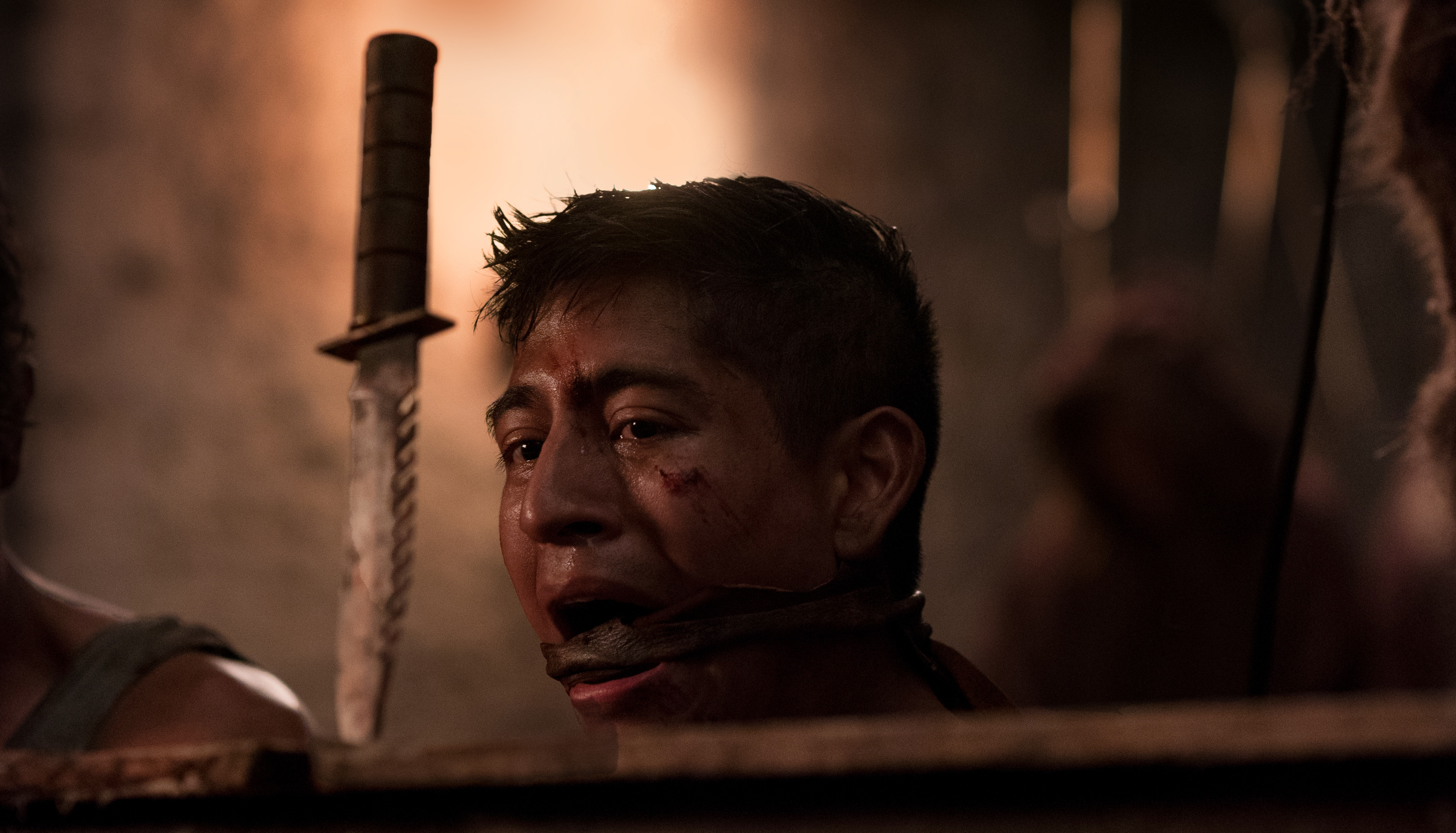
He received national attention for playing the starring role of Pepe in the award-winning film “Requiescat,” and he co-starred opposite Laurence Fishburne in the upcoming theatrical release of “Under the Stadium Lights.” And now, you catch Adrian Favela in the horror film “Wrong Turn” which is debuting on digital and physical media and serves as a reboot of the long-running franchise. In it he plays Luis, a member of the LGBT community who is vacationing with his friends in Virginia where they go hiking around the Appalachian Trail. But as the title implies, they go in the wrong direction and find themselves at the mercy of a community of villagers who are not the least bit happy to deal with outsiders.
I got to speak with Adrian over the phone while he was in Los Angeles, and we talked about how this “Wrong Turn” reboot proves to be a lot more grounded in reality than its predecessors ever were. We also talked about his character and the others are a bit different from others the horror genre typically has to offer.
Ben Kenber: This “Wrong Turn” film was not at all what I expected. It feels a lot more grounded in reality, and the characters including yours are not your typical horror movie cliches. Your character of Luis Ortiz is part of the LGBT community and has a boyfriend, and this is something we do not always see in a film like this. How do you feel about that?
Adrian Favela: I think it’s really amazing. We don’t always get to see other LGBT characters represented in a non-stereotypical way. The way Alan B. McElroy wrote the script, he made the characters very normalized and I think that’s really special. I have tons and tons of fans reaching out saying how represented they felt, and I really truly feel special for that.
BK: I love the scene where the characters including yours are in the bar and this redneck-like character comes up to insult them. In the process, we come to discover how educated you and the others are.
AF: Yeah, I loved the idea behind it. Instead of the typical dumb kids in the woods doing dumb things, it was really smart everyday people in a terrible situation which I really appreciate.
BK: I expect most actors in horror films to overact or emote to a ridiculous extent. How did you and the filmmakers work at keeping your character so grounded?
AF: Originally what he (director Mike P. Nelson) did to make us all really blend into the characters is he made all of the cast hang out and become really good friends before we even started shooting, so that really grounded us in the space. So, when got to the points of huge emotions, we run into a big ravine scene with Gary and Luis, when you actually know the person next to you personally, it really opens you up to new emotions. It’s not like the fake emotions that you want to put on for show, but it is also your own personal emotions that you are able to attach to the character and magnify the extent of what Luis is going through. So, it was really cool and special. Mike also is huge on horror with heart, so he wanted us to dig within ourselves so it’s not just like, oh somebody died, let’s run away. It’s like, somebody died, let’s feel what happened.
BK: I read that when you auditioned for this film, you had to act in a blank space and pretend things were there when they were not. How did you go about doing that?
AF: Through the audition there was traps, there was the character Adam getting sucked into the hole by chains, and snakes, etc. It was one of the craziest auditions I had ever seen. So, the way I really approached it was I wanted just to take to my imagination. I really have to sell the idea these things are happening to me, but if you do it in a way which is too structured, you get lost and you’re trying to play something compared to seeing somebody living in this imaginary world. I think that’s what ultimately helped me book the role, just taking to my imagination and playing in the space.
BK: Were you at all familiar with the “Wrong Turn” franchise before you were cast in this reboot?
AF: The first one came out when I was around 10 (years old) and I remembered watching bits of it with my dad and just being absolutely horrified. It was burned into my mind. I don’t know if you’ve seen the first one where they are chopping up the person on the table. I was just remember being mind blown and horrified and had nightmares for months and months. So, when I got the audition I was like, oh my god, is that the movie which just horrified me my entire childhood? (Laughs.) It was like a full circle.
BK: This film was shot in the wilderness. What challenges did this present to you and the other actors?
AF: It was definitely really tough. I will say the terrain was really brutal. There are some real falls which made the final cut. We were out in the place called Hocking Hills. It is a state park, and it is full of caves and caverns. The trails were really, really thin, so we’re filming with tons and tons of crew and we’re just trying to act and not fall down the hill at the same time (laughs). The night shots, especially the outer foundation area, it was in the middle of the night and there were no lights. I remember being carted to set and you couldn’t see anything in front of you. It was just the headlights, and it was insane. It was brutal, but it really kept us in character for what these characters were actually going through.
BK: It really shows up onscreen. You really can’t fake that.
AF: Yeah (laughs).
BK: What I liked about the screenplay is how it does not reveal its secrets right away. When you first read it, did you get all the information you needed, or was it a situation where the filmmakers revealed things to you as production went on?
AF: The original script is a little bit different than the final cut of the film, but we still got the same idea. In the original script we found a reveal at the very end that a ton of time has passed and Jen has been in the Foundation for months. This is why she is so incredible at her kills and survival skills. I was very surprised at how they approached it. I think the approach that Michael did was absolutely perfect. It explains to the audience that there is a time lapse happening. It says right at the top that this is six weeks prior (to what we just saw in the prologue). That way we were just led in, and it all leads up to when Matthew Modine’s character finds Jen.
BK: Did you have a small role in Olivia Wilde’s “Booksmart?”
AF: Yeah, there was this casting for a bunch of party guys. The original script of “Booksmart” was supposed to be something along the lines of a female version of “Superbad.” It was a crazy (party) scene, and they ended up cutting all that out. It was definitely a bummer, but it was really cool to see everybody working and that kind of giant cast ensemble feeling and how to work in that space.
BK: “Booksmart” was one of my favorite movies of 2019, and it’s the kind of teen movie I like best as it takes the problems adolescents go through more seriously as opposed to joking about them endlessly.
AF: Yeah, ”Booksmart” was incredible. When I saw the final cut of it, I was like wow, this movie is amazing.
AF: Yeah, just a bit. I met her. She was super, super kind and loving and sweet. You don’t always get that with directors, so it was really cool to see her giving her everything.
BK: How do you feel about the response this “Wrong Turn” has received thus far?
AF: Of course, we are going to get mixed reviews. Horror always has mixed reviews (laughs).
BK: Yes, I tend to moderate my expectations when I watch any movie these days. There have been many horror movie reboots over the years, but this is really one of the better ones.
AF: Oh, thank you!
BK: This film has the same screenwriter as the original “Wrong Turn” film, Alan B. McElroy, and this is the same man who wrote “Halloween 4: The Return of Michael Myers.” This is a guy who clearly knows how to put a fresh spin on a long running horror franchise.
AF: I think the thing with “Wrong Turn” was it was moving in a single direction for so long. We had the standard of the flesh-eating cannibals and the classic tire pop as they are moving toward West Virginia. I think what Alan B. McElroy did was he flipped it on its head. Instead of giving you the same path, he flipped it in a new direction. At the end of the day, horror fans are really, really, really smart fans. They know everything. We pulled a lot of the flesh-eating cannibals and we traded it for food for thought which I think was really smart and an interesting move and something you don’t always see in horror. If you go into this film with an open mind and an open heart for something new and something fresh, I think you will find it in this film. But if you are looking for something along the lines of, I want to see a flesh-eating cannibal, you might not like it (laughs).
“Wrong Turn” will be available to own and rent on VOD, Digital, DVD and Blu-ray starting on February 23, 2021.
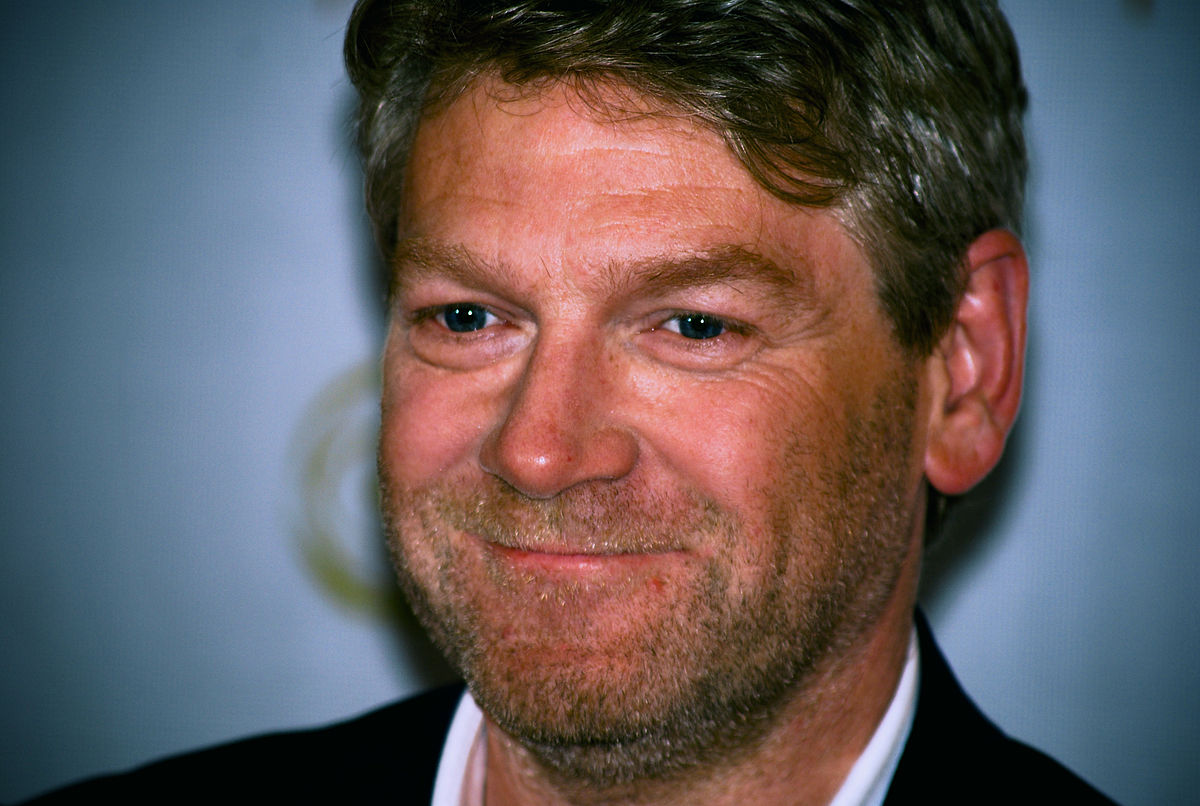
Kenneth Branagh, the director of movies like “Thor” and “Jack Ryan: Shadow Recruit” is best known for bringing the works of William Shakespeare to the silver screen. With movies like “Henry V,” “Much Ado About Nothing” and “Hamlet,” he has succeeded in opening up the works of this famous playwright to new generations of actors and artists. Considering how passionate he is as an actor and filmmaker about Shakespeare’s comedies and tragedies, I always wondered what his first experiences of reading and performing them was like. He gleefully told us about his introduction to Shakespeare when he visited the Aero Theatre in Santa Monica back in 2011.
Born and raised in Belfast, Northern Ireland, Branagh said his family had no interest in Shakespeare, and that there were no books in the house. Then the family relocated to Reading, Berkshire where Branagh said he got bullied a lot. As a result, he withdrew into himself and became fascinated with literature, and he soon found himself developing a love for words. He even recalled buying his very first book, but his father didn’t understand why he was so excited and asked him, “What did you buy that for? Why not just go down to the public library?”
His first exposure to Shakespeare came in a class where everyone read from “The Merchant of Venice.” Branagh remembered being terrified to perform it out loud, and he also freely admitted that he “didn’t understand the language.” But regardless of his fear, he ended up surviving the experience and was soon bitten by the acting bug.
When he did a school production of “Romeo & Juliet,” Branagh recollected how the director played “You Are Everything,” a song sung by Marvin Gaye and Diana Ross. When the song was finished, the director told everyone, “The song was about sex, it’s a mating call. Now that you know what ‘Romeo & Juliet’ is about, open up your text and let’s read!”
Through all the yelling and screaming during the rehearsal, Branagh said the play was actually not hard to understand. It came down to this gang hating that gang, of two young people in love, etc. From there, the words of the Bard enthralled him like nothing else, and he has since made vastly entertaining movies which clearly reflect his infinite passion of Shakespeare’s literature.
Kenneth Branagh said that he would like to do more Shakespeare in the future. While he is a number of years off from playing “King Lear,” but I would love to see him adapt another Shakespeare play in the future like “Macbeth” or even “Twelfth Night.” He even portrayed Shakespeare in the 2018 film “All is True” which he also directed. We still have “Death on the Nile,” the sequel to his version of “Murder on the Orient Express” to look forward to, but hopefully he will tackle one of the Bard’s favorite texts sooner rather than later.
Pole dancing has long been associated with strip clubs, but it has since expanded from that realm to dance studios where it is taught as a form of aerobic exercise. Still, there is a strong stigma to this form of dancing as it most people refuse to see it as anything other than pornographic and debasing. But with the new documentary “Strip Down, Rise Up,” female instructors use pole dancing as a way to help women deal with traumas and body-image issues which have plagued people for far too long. Through sensual movement, the participants find themselves transforming to where they succeed in reclaiming their self-esteem and sexuality, and they find a power within themselves which can never be lost.
The director of “Strip Down, Rise Up” is Oscar-nominated filmmaker Michèle Ohayon, and her cameras capture a diverse group of women from various walks of life. Among them are Evelyn who has lost her husband and trying to deal with her grief, the successful businesswoman Patricia who is uncomfortable in her own skin, and the very brave Megan who was sexually abused and ended up testifying against her abuser. We also get to see instructors like Sheila Kelley, Amy Bond and Jenyne Butterfly whose methods differ from one another in fascinating ways.
Ohayon hails from North Africa, and she has said her films are largely about transformations. In addition to “Strip Down, Rise Up,” her work includes “Colors Straight Up” which is about at-risk youth in Los Angeles who turn their lives around through the performing arts, the hidden homeless women documentary “It Was a Wonderful Life” which had the privilege of being narrated by Jodie Foster, and the docu-comedy “Cowboy del Amor” about a cowboy who becomes a matchmaker. Her inspiration for “Strip Down, Rise Up” came about when she and her daughter attended a pole dancing class as a way to explore a new form of exercise.
I got to speak with Ohayon recently, and this marks my first ever video interview done via Zoom, so please bear with me as the video quality is a bit different from what we are all used to.
“Strip Down, Rise Up” debuts on Netflix on Friday, February 5, 2021. Please check out the interview above and be sure to check this documentary out when it drops.
WRITER’S NOTE: This screening took place back in 2011.
Jason Reitman described the last double feature he presented as part of his guest programming at New Beverly Cinema by saying, “Whereas the last few movies I chose were sad in some respects, these two just make you feel good.” After dealing with the downfalls and missed opportunities which were major parts of “Shampoo” and “Boogie Nights,” he finished off his slate of favorites with “Breaking Away” and “Bottle Rocket.”
The first movie shown was “Breaking Away” which was directed by Peter Yates, the same man who made the Steve McQueen classic “Bullitt.” For years it has been considered one of the best sports movies ever made, and it’s also a movie where several young actors got their start together like in “Taps” or “Fast Times at Ridgemont High.” Among those actors were Dennis Quaid, Dennis Christopher and Daniel Stern. We even got to see a teenage Jackie Earle Haley in it, and he has since gone from career oblivion to critical acclaim for his performances in “Little Children” and “Watchmen.”
Reitman asked how many people in the audience were seeing this film for the first time, and many hands, including mine, immediately went up. To this he replied, “I am so jealous!”
On “Breaking Away,” Reitman described it as a movie you associate with watching with your father, and one which captures the lives of twenty somethings very well in the indecisions of where to go from high school; unsure of what to do with the rest of their lives. It’s also a great story about class wars in society; of those who have everything and those who never have enough. Upon looking for trivia about “Breaking Away,” Reitman found the film was originally two screenplays. One was called “The Cutters” which became the name of the people from the working-class environment, and the other one was about the bike race the characters train for.
Joining Reitman for this screening were Dennis Christopher who played the endlessly obsessive bike rider Dave Stoller, and Daniel Stern who played Cyril. Reitman usually had his guests hidden from sight before introducing them, but they were already in the theater giving autographs and posing for pictures which got posted on Facebook. Both Quaid and Stern also said they were so envious of those who were seeing this for the first time.
Reitman started off by asking them if they knew they were working on something very special. Stern was the first to reply:
“That was my first movie,” Stern said. “I had never been in a movie before, and so I thought they were all like that. There is a wonderful simplicity to the movie, to the script, to the way the movie was made and the way it comes across. It does have a lot of depth to it too. I look back at it thinking, that was just an incredibly unique experience. I didn’t know what I was doing, I didn’t know where the camera was, and I didn’t know anything about that!”
Christopher, on the other hand, had worked in movies before with acclaimed directors like Robert Altman and Federico Fellini, so he knew a bit about being on big sets. The experience of making “Breaking Away” proved to be a bit different though.
“The thing that really made it special was because after that horrible first day of being a big Italian impersonator, because they made me all dark and I had my hair slicked back, black shirt, a tight waistline, etc. He was supposed to look like a ‘Saturday Night Fever’ guy,” Christopher said. “He (Yates) wanted him to be that kind of Italian. And I thought, why the fuck did they hire me? I looked like Lily Tomlin would when dressed up like men! That’s exactly what I looked like! I was waiting for them to glue hair on my chest!”
“I was so shaken, and the next day I came onto the set and I just burst into tears,” Christopher continued. “I told Peter that I just can’t do this and he said I KNOW, I KNOW! And we had a big talk with Steven (Tisch, who won an Oscar for his screenplay) and Peter, and then the character evolved; the way he looked and the way he was. So for me that was the special thing of collaborating with a director who cared about what you thought. So, for me I thought whoa, this is amazing!”
Reitman then spoke for those who had this on their minds after Christopher spoke:
“So what you’re saying is that Robert Altman really doesn’t care…”
This got a big laugh from the audience.
After making all the changes with Christopher’s character and making it more like him, they reshot everything and had to wait three weeks to see how it all looked. For those who have seen this movie, you have to agree this was one of the smartest choices Yates made. If Christopher was forced to do an Italian impersonation, it probably would have wrecked the movie.
Reitman also asked Christopher and Stern what kind of bike riding they did before production began. Christopher replied he did the “regular kind” and was never involved in any bike competitions like his character. Stern, on the other hand, said he was not a bike rider which turned out to be perfect for his character.
This led Stern to tell everyone he didn’t even audition for “Breaking Away.” He came into the office to read for Yates, and he was on a phone call nearby and saw him. Once he got off the phone, Yates handed Stern a script and was asked to be on set in a short time.
Unlike a lot of the big productions he had previously been involved in, Christopher said this film was almost completely the opposite of them. They had a very small crew working on it, and there was no overabundance of trailers parked on every street corner.
Barbara Barrie played Dave Stoller’s mother, Evelyn, and she got nominated for an Academy Award for Best Supporting Actress. However, it turns out she was a little peeved when she read the script and found there was no big scene for her. Christopher even recalled her telling Yates quite loudly, “WHERE IS MY BIG SCENE?!” So Barrie, Tisch and Yates worked together and did an improvisation which led to that wonderful moment where Evelyn talks about getting her passport and how she always keeps it handy.
People did not expect much from “Breaking Away” while it was being made, but it turned out to be a surprising success which won many awards, and it even spawned a prequel television series in which Haley and Barrie reprised their roles for. Of course, like many movies adapted to television, it lasted only one season. Stern called it “the little engine that could kind of movie,” and he even came to this screening wearing his white “Cutters” t-shirt. Christopher said this and “My Bodyguard” were the first movies for kids which were taken seriously by adults, and he and Stern said people’s overall reaction to it today is still quite powerful.
Christopher also told the audience about when he took his dad, whom he was estranged from at the time, to see “Breaking Away” when it was first released. After it was over, he said his dad came out of it “ruined” and looked quite frail. His dad could not believe how great the movie was, and when people outside the theater asked Christopher for his autograph, he got in line with the others. His dad even acted as his security chief in getting people in the line to move along.
The Q&A ended with both actors asking Reitman, “Is this a good print of the movie we’re showing tonight?”
“We’ll see,”Reitman replied.
Reitman said he had previously seen “Breaking Away” on VHS and laserdisc but seeing it with an audience was something else. The nearly sold-out crowd at New Beverly Cinema really got into the proceedings and cheered loudly throughout. You came out of the theater agreeing with Reitman that “Breaking Away” was as good as reputation has long since suggested.