‘Sicko’ Makes a Strong Case for Universal Health Care in America
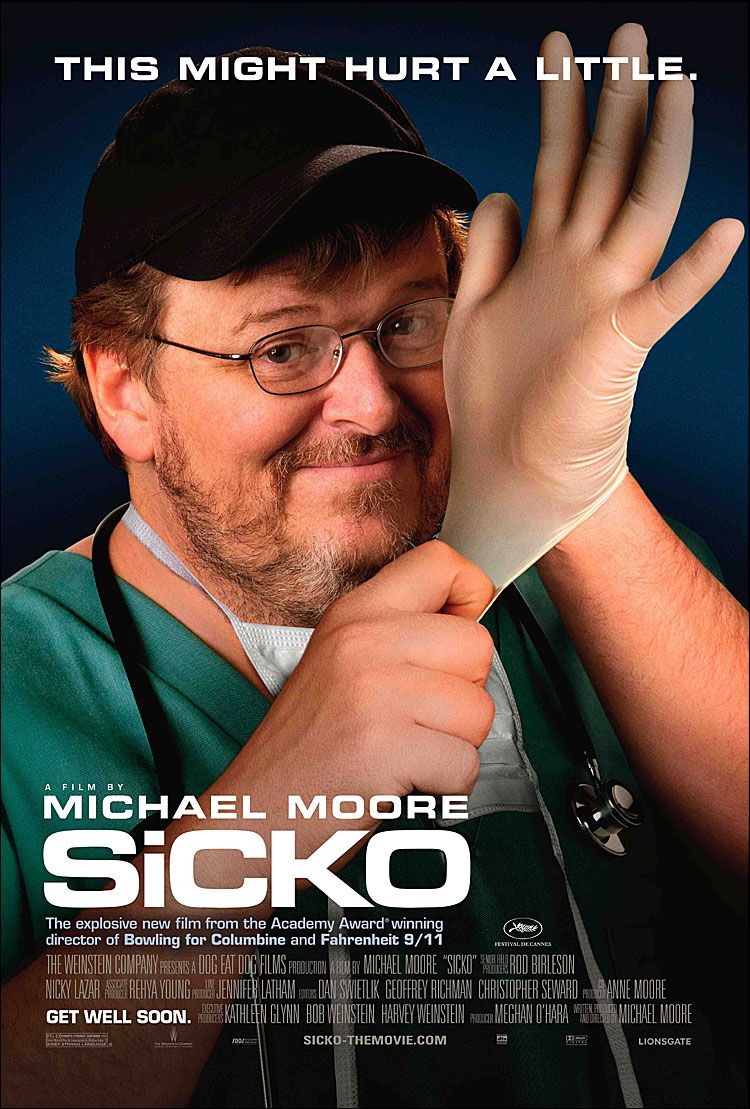
Sicko movie poster

The important thing to keep in mind about “Sicko” is how it is not about those who do not have health insurance in this country. Michael Moore’s movie begins brilliantly with the stories of those who had no health insurance and were forced to pay obscenely high fees for surgical operations. It’s a brilliant beginning because it distinguishes itself from what the rest of the movie is really about: those of us who do have health insurance and how we still end up paying obscenely high fees for medical treatment.

The problem with the American health care system is that it is more of a business run by capitalists than anything else. The bottom line is those who run this industry seek to gain as big a profit as they can, and that’s even if many Americans end up filing for bankruptcy when they cannot pay their medical bills. Moore makes his case strong and clear as he interviews many people who have come to him with their horror stories of the health care industry, and there were literally thousands of them. What is especially horrific is how many stories reveal the many ways people get rejected for health insurance. The CEOs are on a mission to keep anyone away who could be a possible threat to their profit margin.

The movie’s second act deals with Moore going to different countries to see how their health care industries operate, figuratively speaking. The difference between them and America are actually quite frightening. Canada and England seem to have it over everyone else as they do not bill their patients when they come in or leave because they are under a government run system which provides them with universal health care. There is a cashier at one hospital, but instead of billing patients, he pays them for cab fare if they were financially inconvenienced in their method of getting over to the hospital.

My only issue with the second act of “Sicko” is Moore never really gets into the negatives these countries deal with in regards to health insurance. I refuse to believe everything is as rosy as it is presented here. My understanding is Canadians and the English don’t completely love their health care systems to the same degree. Then again, what scares me is that if Moore did include some of the negatives of these countries and put them together with the positives, America would still look pretty bad in comparison.

With Moore’s films, he does manipulate the audience but usually for good reason. He wants you to be mad at those who keep us from having universal health care because it would affect their profit margin. He wants you to be angry at politicians on either side of the political spectrum for being bought out by the health care industry. He aims to wake you up to the problems surrounding us and to do something about them. He may not be telling you everything, but this does not make him a liar.

The last half of “Sicko” focuses on some of the heroes who rushed to the rubble of the World Trade Center in September 11, 2001 to help those in need, and on the medical woes they inherited from working in the toxic environment which was left for them after the destruction of the twin towers. Because they were volunteers and not employed by city fire departments and police stations, they were not given the same medical consideration as those who were. Moore takes them to Cuba which is reputed to have one of the very best health care systems in the world. This, of course, got Moore into trouble with the American government which provided him with some free publicity he may or may not have been seeking.

The difference between the prices for medication in Cuba and America as presented in “Sicko” are ridiculous and embarrassing. You feel both the heartache and relief of these people as they come to discover a place where those in power are not at all quick to suck all the money of their wallets. Whereas our country rewards those who limit health care services, others reward those who actually help their patients. Why the hell isn’t America doing this?

You feel for the families who go through illnesses they never asked for and having to pay exorbitant amounts for their health care and go into bankruptcy in the process. The fact they are forced to sell their homes and move in with their children feels so very unfair, and you know people will be quicker to shame them instead of help them.

There’s no denying “Sicko” is a highly effective and utterly devastating documentary which you cannot help but have a strong reaction to. You may come out of this documentary thinking Moore is very anti-American. I don’t think he is and never have. In his own way, he is a patriotic American who cares enough about this country to point out its weaknesses for everyone to see so we can face them rather than avoid them. We need more people like Moore, those who ruffle the feathers of the conservative firebrands who want you to believe everything is alright. We need someone to shake things up from time to time, and he continues doing this even when you think his career will be ended sooner than we think. Just remember, what you resist, you empower.

* * * * out of * * * *

Exclusive Video Interview with Scott Beck and Bryan Woods about ‘Nightlight’

Before they co-wrote the screenplay for “A Quiet Place” along with John Krasinski, filmmakers Bryan Woods and Scott Beck spent some time in the found footage genre with “Nightlight.”  This movie takes place in Covington forest, a place believed to be haunted as many troubled youths have gone there and committed suicide. This, however, doesn’t stop a group of five teenagers from venturing out there for an evening of flashlight games and blood curdling ghost stories. But of course, it doesn’t take long for the fun to come to a screeching halt as they end up awakening a demonic presence, an unseen evil wastes no time in preying upon their deepest fears. From there, the five friends struggle to help each other to escape the forest before they are forever plunged into the most terrifying of nightmares.

From the outset, “Nightlight” looks to be your typical found footage horror movie a la “The Blair Witch Project,” but there is one thing which helps set it apart. It is one of the recent films in this genre which deals seriously with issues teens go through. We come to discover how these kids lost a friend of theirs named Ethan to suicide, and he ended up taking his life in the same forest they are spending the night in. While trying to evade the demonic force hunting them down, they also try to make peace with Ethan’s death and of the part they feel they played in it. While a lot of horror movies are filled with dumb teenage characters, these ones in “Nightlight” feel relatable, and their problems may end up reminding you of what you felt like at their age.

I got to speak with Woods and Beck back in 2015 while they were in Los Angeles to promote “Nightlight,” and it turns out they have known each other since the sixth grade. Their early years of making movies with action figures has gotten them to where they can confidently helm their own feature films, and their careers would soon hit an even bigger peak with “A Quiet Place.” They were full of details on the making of “Nightlight” such as how they found the forest featured prominently in this movie, how they wanted to make this particular found footage stand out from so many others like it, and why they decided to cast unknown actors. In addition, they also had some interesting stories to tell about animal wranglers and the importance of sound design in a horror movie.

Please check out the interview above. “Nightlight” is now available to own and rent on DVD, Blu-ray and Digital.

Nightlight movie poster

Denis Villeneuve’s ‘Sicario’ is a Seriously Intense Motion Picture

Sicario

I think we have all long since come to the conclusion that the war on drugs is, to put it mildly, an utter failure. Instead of ridding the world of illegal substances, this war has allowed the drug trade to exist in a way it never intended to. Furthermore, many fighting this war have become just as bad as the drug czars they are pursuing, and this should not be seen as anything new. And when you cross a drug cartel, they punish you in the most painful way possible and let the rest of the world know it in a horrifyingly unforgettable manner. In short, we will never get rid of illegal drugs if we keep going on the route we have been on for far too long.

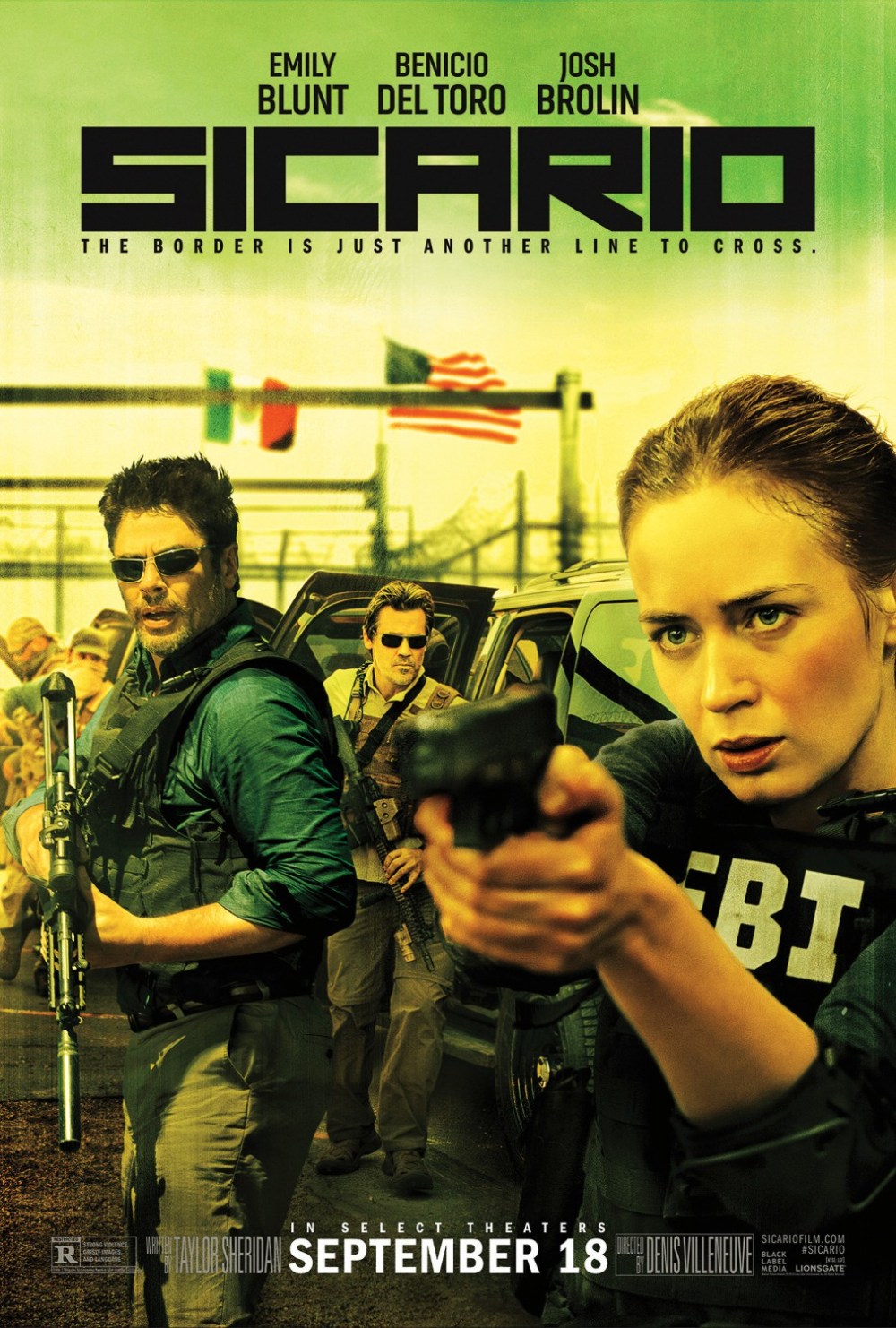
There are many movies which have chronicled the pointlessness and shocking brutality of the war on drugs and the unscrupulous politics behind it like Steven Soderbergh’s “Traffic,” “Kill the Messenger” and David Ayer’s “Sabotage” which I liked more than most people did. “Sicario” is the latest film you can add to the list, and it proves to be one of the most riveting and nerve wracking of its kind as we follow an idealistic FBI agent as she descends into the hellish center of this war and learns a number of harsh truths never taught at Quantico.

“Sicario” hits the ground running with a very intense scene which sets up the chief perspective you will see things from. We meet FBI special agent Kate Macer (Emily Blunt) as she rides along with her fellow agents to a drug bust in which they raid a house where a kidnap victim may be at. Things get even more heightened when the agents discover dozens of dead and decaying bodies hidden in the walls, and this is only the beginning of what’s in store for the audience.

This bust leads Kate to be enlisted, voluntarily of course, by an undefined government task force led by Matt (Josh Brolin) which is put together to aid in the drug war escalating at the U.S./Mexican border. But once there, Kate will find her idealistic nature put to the test as she discovers this war has become more personal to some than she was led to believe.

It should be no surprise “Sicario” is a seriously intense piece of filmmaking considering it was directed by Denis Villeneuve who gave us the equally intense “Prisoners” a few years back. He succeeds in putting us right into Kate’s shoes as we follow her every step of the way as she enters a town as foreign to her as it is to us. We discover things at the same time she does like a couple of naked dead bodies hung from a nearby bridge, a chilling warning of what happens to those who interfere with the drug trade. We also share her sense of panic and terror when a character next to her says, “Keep an eye out for the state police. They’re not always the good guys.”

The movie also makes us share in Kate’s utter frustration as Matt and his troops keep the nature of their overall mission a secret to her and her partner, Reggie (Daniel Kaluuya). But once she is sucked into this increasingly insane mission, she finds it impossible to tear herself away from it even as she questions its legality.

Villeneuve is a master at creating a slow burn intensity which keeps escalating for what seems like an eternity before the situation finally explodes. The picture he paints of the drug war is an a very bleak one, and I imagine this movie won’t do much for the Mexican tourist trade. He is also aided tremendously by master cinematographer Roger Deakins who captures the bleakness of a town long since ravaged by the drug war in a way both horrifying and strangely beautiful, and by composer Jóhann Jóhannsson whose film score lights the fuse to “Sicario’s” intense flame and keeps it burning to where, once you think it has hit its peak, it burns even brighter.

Emily Blunt proved to the world just how badass she can be in “Edge of Tomorrow,” and she is clearly in her element here as an FBI agent who has yet to learn how the drug war is really fought. Seriously, this was one of the best performances by an actress in a 2015 movie. Blunt fully inhabits her character to where you can never spot a faked emotion on her face. It’s a fearless performance which must have emotionally draining for her to pull off, and I love how she never strives for an Oscar moment. Blunt just is Kate Mercer, and you want to follow her into the depths of hell even if you know you won’t like what’s about to be unveiled.

Josh Brolin is perfectly cast as Matt Graver, a government agent who clearly knows more than he lets on. We can see this is a character who has seen a lot of bad stuff go down and has long since become numbed to the effects of an endless drug war which shows no signs of stopping. Brolin doesn’t necessarily have one of those clean-scrubbed faces as his is rough around the edges, and Hollywood doesn’t seem to value this kind of face enough. Some actors benefit from having history written all over them, and Brolin is one of those actors as he makes you believe he has long since been to hell and back.

But make no mistake; the best performance in “Sicario” belongs to Benicio Del Toro who portrays Alejandro, a mysterious figure whose motives and intentions are eventually revealed towards the movie’s conclusion. Del Toro is great at hinting at the horrors his character has faced as Alejandro looks to be suffering a serious case of PTSD, and he makes this character into a dangerously unpredictable one whose next move is always hard to guess. His role in this movie reminds us of what a brilliant actor he can be, not that we ever forgot, and he succeeds in increasing the already high-tension level this movie already has.

“Sicario” is a hard-edged and remarkably intense thriller which grabs you right from the start and holds you in its grasp all the way to the end. Like any great movie, it will shake you up and stay with you long after you have left the theater. Some movies are made to be watched, but “Sicario” was made to be experienced. It’s not the kind of experience audiences are always pinning for, but those willing to travel down its dark path will find much to admire.

* * * * out of * * * *

Eli Roth Explores the Home Invasion Genre with ‘Knock Knock’

Knock Konck movie poster

It has been eight years since “Hostel: Part II,” and the phrase “directed by Eli Roth” has been largely absent as the horror filmmaker has focused more on producing and acting, but 2015 saw him return to the director’s chair with a vengeance. First, he gave us the cannibal horror film “The Green Inferno” which saw its release delayed for a couple of years, and he quickly followed it up with the home invasion thriller “Knock Knock.” Keanu Reeves stars as Evan Webber, an architect and happily married husband and father whose family leaves him alone at home one weekend so he can work on his latest project. But Evan soon makes the biggest mistake of his life when he lets two young women into his home after they claim to be lost, and they come to play a number of psychosexual games which have him begging for his life.

Roth was at the Four Seasons Hotel in Los Angeles, California to do a press conference on “Knock Knock,” and he was very verbose in discussing what motivated him to make this film. Now whereas his previous movies “Cabin Fever,” “Hostel” and “The Green Inferno” featured young adults heading out of their comfort zones and into the world for a dose of excitement and danger, “Knock Knock” is very different in that it rarely strays from Evan’s comfort zone which is his home. I asked Roth if this scenario presented any new challenges for him as a writer, and his answer was far more descriptive than I expected.

Eli Roth: No, I mean I liked the idea. Obviously I was very interested, probably because I grew up in Massachusetts with that kind of over sheltered, over-privileged and overeducated upper middle-class kid image that yearns for that life experience. In “Cabin Fever” they want irresponsible partying and drinking and drugs, in “Hostel” they want sex they think they can’t find, and in “The Green Inferno” they want validation through this vanity act and they want Twitter followers and it all comes back to bite them in the ass, literally in “Green Inferno.” But with this one, it is about what happens when you let that force into your life that you’re suddenly like, oh my God there’s a crazy person in my house. What have I done? You realize that, because you’re smart, that’s actually what makes you vulnerable. You think well I know how to handle this situation because I’m a smart person and look how well I’ve done so far, and then you drop your guard and then maybe there is some situation where someone’s in your home for whatever reason and you realize, oh my God, this person could take my stuff. There are my alarm codes and they could just really unravel me, and they could do it in such a short amount of time. And then Nicolas (Lopez) and I decided to add the social media aspect. We also were interested in the generational difference in sexuality. Girls in their teens or their 20’s, they must be so much crazier because of internet pornography. There is this grass is always greener mentality and looking at the way teenagers sexualize themselves on Instagram for likes and follows, we’re looking at some people like, in the cast and crew, their young sisters that are 15 or 16 and looking at their friends. You can’t tell in your 40’s if that girl is 16 or 36, and I’m playing on that difference of the sexuality in generations. Now nothing is private anymore, so when we were writing it we just thought about all of the things about modern fears. I wrote “Cabin Fever” when I was 22, I wrote “Hostel” when I was 32, and I wrote “Knock Knock” when I was 42, so they are all very much written about my fears at those ages.

Well, whether he is directing a movie or just producing or acting in one, Roth is certainly not a filmmaker you should ever call lazy. He remains as prolific as ever, and he has a large number of projects he is working on. Among them is “Meg,” an adaptation of Steve Alten’s science fiction novel about an ancient 60-foot long shark which terrorizes a small coastal town. Some critics have described the book as the “Moby Dick” of killer shark novels, so it will be interesting to see Roth’s take on it.

Knock Knock” is now available to own and rent on DVD, Blu-ray, and Digital.

‘Red State’ is the Best and Most Unlikely Film from Kevin Smith

Red State movie poster

Red State” is to Kevin Smith as “Unforgiven” was to Clint Eastwood; a game changer in the way we perceive him as an artist. Any shred of Jay and Silent Bob is completely absent here as he probes the horror of an ultra-fundamentalist church whose fear of God prompts a siege of destruction which tests its members as well as those ordered to bring them down. Nothing Smith has done previously will prepare you for what he comes up with in “Red State.” We know he’s been looking to do something other than “Clerks” or those formulaic comedies he has spent far too long apologizing for. With this one, his creativity and passion for moviemaking are completely reinvigorated.

The movie starts off innocently enough with one of Smith’s favorite subjects: young men talking about sex. Three teens named Travis, Jared, and Billy Ray drive out to a remote area and meet up with a woman named Sarah (Melissa Leo) who has promised to make out with each of them. But after a couple of beers, they pass out and wake up to find themselves prisoners of the Five Points Church, a fundamentalist cult led by God-fearing pastor Abin Cooper (Michael Parks) who seeks to punish those who have morally corrupted America whether they be homosexuals or adulterers among other sinners. But when things get out of hand, as they always do, the church is forced to make a last stand as the police and FBI intervene in a showdown destined to have a bad ending.

The Five Points Church is Smith’s not so subtle representation of that church which is known for protesting funerals of homosexuals and dead soldiers. You probably know the church he’s referring to. For those of you who don’t, you can just figure it out on your own. While we see them for the fascist hate mongers they are, you have to wonder what draws anyone to a church with such unrealistic and obscene views. Some are just looking for an answer, and any answer after a while will do to give their life meaning. Whether or not you believe in the beliefs of the Five Points Church or that church is beside the point; what should concern you is there are people out there who do believe in the ridiculously hateful things they have been taught, and they will do anything to defend those values at any cost.

The leader of that church can only dream of being as charismatic as Abin Cooper. Michael Parks performance is nothing short of brilliant as he makes you believe that people can fall under the spell of a religious pervert. Parks was introduced to a whole new generation of fans when he played Texas Ranger Earl McGraw in “From Dusk till Dawn,” “Kill Bill Vol. 1,” and “Grindhouse.” After watching him in “Red State,” you come out wondering why he is not a bigger star. Parks doesn’t just give us a mere impersonation of some maniac preacher. Instead, he gives us an infinitely charismatic portrayal of a deeply religious man who is as seductive as he is dangerous.

With the actors, Smith just lets them loose to do their own thing, and the results are enthralling. Melissa Leo, who deservedly won an Oscar for her performance in “The Fighter,” gives it her all as Cooper’s daughter Sarah. Her emotional conviction in this role is proof of how far Cooper’s influence as a preacher goes, and Leo remains one of the best actresses working today.

Another big standout is John Goodman who plays ATF Special Agent Keenan. Goodman has always been a great actor, but you get the sense after so many years that most people don’t recognize him as such. His work in “Barton Fink” and “The Big Lebowski” should be more than enough to convince you of his greatness. Anyway, he gives some of the film’s best speeches as his character is forced into a situation which goes against his moral values, but it is a situation he cannot simply override. Goodman inhabits this character perfectly, giving him the emotional turmoil and confusion etched all over his face.

Other great performances come from Kerry Bishé as Sarah’s daughter, Cheyenne, and she is ever so intense in her desperation to save the women and children whom she feels will fall victim to the government’s actions for the wrong reasons. Kevin Pollak provides memorable support as Keenan’s right-hand man, Special Agent Brooks. You also have to give credit to the three young actors playing the teens: Michael Angarano, Kyle Gallner, and Nicholas Braun. The roles they are given appear one-dimensional, but they bring more to the material than what is on the page, and they give you a reason to care about what happens to them.

Smith’s movies in the past have dealt with conversations about pop culture, but there’s none of this in “Red State.” He instead exploits certain movie conventions which have us believing we’ve figured the whole story out, and then he pulls out the rug from under us. The violence is truly shocking as characters meet their fates in a way we don’t see coming. This is not your typical good guys versus bad guys story as everyone here is morally flawed in one way or another. The events of David Koresh’s demise in Waco, Texas hang heavily over the proceedings, and no one looks to come out of this a hero.

This movie could have been a simple look at the damage caused by religious perversion, but there are different levels at work here. We see how the church, the government, and the local police react to the violent situation they are all immersed in. Look closely at the end credits; the cast is divided by religion, police, and politics. It becomes about containment by any means necessary. So, when all is said and done, no one’s coming out of this battle in one piece.

Working with his longtime director of photography Dave Klein, Smith finds a unique look for this movie thanks to the RED digital camera. Both are able to get shots which give the material a visceral feel you wouldn’t expect from the director of “Jersey Girl.” The flexibility they find with this device feels inspirational as it allows them to do things they couldn’t do previously.

Smith still seems determined to retire from making movies, and that’s a shame. “Red State” represents a new chapter in his long career which has me begging him to keep on going. It’s not a horror movie in the usual sense of things jumping out at you to give you an easy scare. Instead, it shows horror we find in everyday life. Who knew he would capture it to such powerful effect? In a time when the voices of independent movies appear to be gasping their last breath, Smith shows himself to be the last man standing and gives us a reason why we can’t let movies like his simply fade away.

* * * * out of * * * *


A Most Wanted Man

A Most Wanted Man movie poster

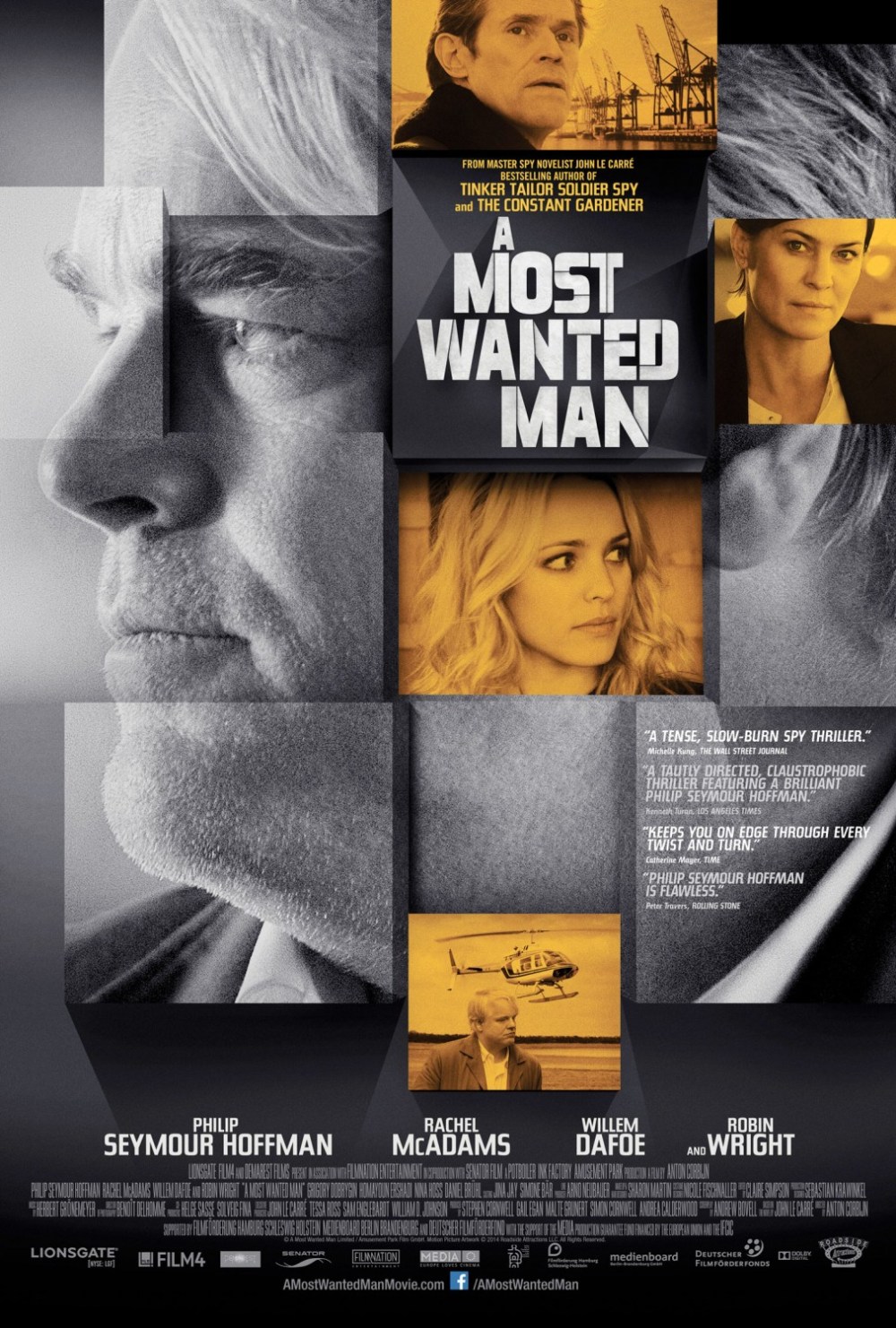
I have not read any John le Carre novels as of yet, but I have seen many movies based on them. Whether it’s “Tinker Tailor Soldier Spy” (be it the miniseries or the film), “The Constant Gardner,” “The Tailor of Panama” or “The Russia House,” all of Carré’s stories deal with people who have seen it all and have long since been burned out by the possibility of changing the way people exist in the world. Since he was once an employee of the British intelligence agency MI6, Carré’s books generally deal with spies who are not like the ones we remember from James Bond or Jason Bourne movies. Instead, these are spies who inhabit a morally duplicitous world they have to struggle in even as it tears away at who they once were. They claim to be doing this work for the sake of peace, but after a while, you begin to wonder how much they believe this as they soon look like they are kidding themselves.

A Most Wanted Man” is the latest Carré cinematic adaptation, and it is a perfect example of the kind of spies he has become famous for writing about. This film has also taken on an added importance as it features the very last lead performance from the late Phillip Seymour Hoffman who plays Günter Bachmann, the weariest looking spy who has ever walked the face of the earth. Only Hoffman could have inhabited such a worn-out character and make him so endlessly fascinating as Günter goes through this movie looking like he barely has a pulse.

This movie starts off with a note saying the German port city of Hamburg is where Mohammed Atta and his collaborators planned the September 11th attacks. The fact Atta was able to plan the attacks without being caught beforehand was due to failures in intelligence among other things and, as a result, the intelligence operatives continue to work as hard as they can to make sure this never happens again. The story takes place over a decade after 9/11, and it doesn’t take too long to see how these characters still treat the horrific day as if it just happened yesterday.

Günter is the leader of an anti-terrorism team which seeks to develop sources within the Islamic community in the hopes of getting leads on high-profile subjects. His team eventually finds one in Issa Karpov (Grigoriy Dobrygin), a half-Chechen, half-Russian who has just immigrated to Hamburg illegally after suffering torture and imprisonment which has made him look like a walking corpse. At the same time, he is also on the verge of claiming an inheritance worth millions in Euros. The question is, will any of this inheritance go towards funding terrorist groups, or will Issa make sure it goes to who needs it the most?

“A Most Wanted Man” was directed by Anton Corbijn, a Dutch filmmaker who previously directed George Clooney in another spy movie called “The American,” and he is not out to give us the typical spy thriller designed to give the audience a potent adrenaline rush. The spies here are all about playing mind games with their prey as well as with those from another country than they are in getting into gun fights and car chases. This might frustrate some viewers who prefer their spy movies to exhilarate like few other cinematic experiences can, but Corbijn is intent on taking his time with this story at a pace which befits the le Carre novel it is based on. For those of you who have seen “The American,” this should not come as a surprise.

Seriously, not enough can be said about Hoffman’s performance. You never really catch him acting here. Hoffman simply becomes Günter right before our eyes, and he makes you feel his character’s weariness for all it’s worth. Watching Hoffman is heartbreaking because he really does give us a master class in acting here, and this sadly is one of the last times we will ever get to see him do that.

Among the highlights of “A Most Wanted Man” are the scenes Hoffman has with Robin Wright who plays CIA agent Martha Sullivan. Currently on a critical high from her work on the Netflix series “House of Cards,” Wright matches Hoffman scene for scene as these two play a mental game of chess, trying to guess what the other is thinking without revealing too much of themselves in the process. Looking into the eyes of both these actors, you can tell how much fun they have sparring with one another. When they tell one another they are trying to make the world a safer place, you can smell the deceitful sarcasm dripping from their mouths as their jobs now force them to become competitors over nabbing the next big terrorist suspect.

Granted, Hoffman’s German accent is a little off-putting at first, but we do get used to it eventually just as we do with the one Rachel McAdams pulls off. McAdams portrays Annabel Richter, a deeply passionate human rights attorney who does her best to protect Issa from unnecessary prosecution. However, when Annabel is put in a position where she is forced to betray those closest to her, McAdams makes you feel her character’s agony without even having to use words to express it. As for Willem Dafoe who plays bank manager Tommy Brue, you can never really go wrong with him in anything he’s in.

“A Most Wanted Man” is, at times, a little hard to follow to where you may come out of it thinking the plot was a little too convoluted for its own good, but most viewers should be able to get the gist of the story. The pace is also a little too slow at times although things do pick up before the end. Whatever the case, it is definitely worth seeing for the performances, especially the ones given by Hoffman and Wright. It will be hard to escape the bittersweet feeling this movie leaves you with as this is one of Hoffman’s last, and I came out of it wondering if we would ever see an actor like him ever again; one who doesn’t look like a movie star but whose talents have more than earned him the right to be one.

* * * ½ out of * * * *

No, I Haven’t Seen It Until Now: La La Land

La La Land movie poster

I cannot believe how ridiculously long it took me to watch this movie which won Best Picture for about three or four minutes at this year’s Oscars. “La La Land” is Damien Chazelle’s eagerly awaited follow-up to “Whiplash,” my favorite movie of 2014. Due to not being invited to any press screenings for it, working to pay my bills, buying Christmas presents for my family and working to pay them off as well, taking care of the rent and my overall sanity, I could never make the time to see it. They say life happens when you’re busy making plans, but I’m too busy to even make any kind of plan.

Well, I finally had the opportunity to check out “La La Land” and it is, in a word, superb. From its opening sequence all the way to the end titles, it is a wonderful homage to the movie musicals of the past, and it serves as a dedication to all the dreamers out there who dare to make their passions their livelihood and are willing to make fools of themselves in the process. Just like Akira Kurosawa once said, “In order to survive in an insane world, you have to be crazy.”

The movie starts off on a typical sunny Los Angeles day on the LA freeway of your choice with cars at a complete standstill. It could be the 110, the 105 or the 405 we are watching, but it doesn’t matter because they all turn into used car lots once rush hour hits. Next thing you know, everyone is bursting into the song “Another Day of Sun,” and it’s Chazelle’s way of showing you how exhilarating “La La Land” will be to watch. It starts off with an infectious energy, and it never loses it once the song is over.

We are introduced to Mia Dolan (Emma Stone), an aspiring actress who auditions constantly, shares an apartment with several female roommates, and works as a barista at a café located on a studio lot. She does the best she can at auditions, but some of them last only a few seconds before she is thanked for her time and escorted to the door. Soon afterward, we meet Sebastian Wilder (Ryan Gosling), an aspiring jazz musician who yearns to see this art form live on instead of being ruined by current forms which manipulate into something very artificial. Eventually, we know these two will hook up.

Like the most romantic of couples, Mia and Sebastian do not get off to the best start as she gives him the finger after he honks his car horn for an insidiously long time (I hate it when people do that) at her when she keeps him waiting on the freeway. Even after Mia walks into a jazz bar upon hearing Sebastian play an impassioned improvisational riff while being forced to play classic Christmas songs, he is quick to brush her off as he heads for the door. But the two eventually consummate their budding romance after a screening of “Rebel Without a Cause,” and from there we watch as their romance goes through exhilarating heights and emotionally draining lows.

Watching “La La Land” reminded me of how singing can be the most emotionally challenging art of all as it forces you to be open in a way we typically are not in everyday life. You can be a brilliant singer, but all the technique you bring to it won’t mean a thing if you don’t bring any real feeling to the song. When it comes to many movie musicals, they can feel emotionally manipulative or overly sentimental to where you find yourself cringing like you did when Darth Vader yelled out “nooooo” in “Star Wars Episode III: Revenge of the Sith.” But every single moment in “La La Land” feels earned as the cast makes it all feel truly genuine, and I never came out of this movie feeling like I was played like a piano. Everything in this movie felt earned, and I was enamored by everything I witnessed.

Also, Chazelle gets everything about Los Angeles down perfectly. Whether it’s the standstill traffic on the freeways, the street signs we never pay attention to until it’s too late, the incredible view of the city from the Hollywood Hills, the Griffith Observatory, the single screen movie theaters or even those auditions where an assistant just has to walk into the room while you are doing your thing for the casting directors, he gets at all the things a struggling artist is forced to endure while fighting against stiff odds. This is not the kind of musical which takes place in some fantastical world, but instead in a reality we all know and understand.

Of course, to many, Los Angeles is still a fantastical place, and it certainly shows here thanks to the beautiful cinematography of Linus Sandgren. “La La Land” almost looks like something from the 1950’s with Sandgren’s use of many beautiful colors, and we get caught up in the magic this crazy city has to offer after all these years. I have lived in Los Angeles for a number of years now, and I can tell you honestly that it is not as glamorous as it is often portrayed in the media. Still, it is a place for creative minds to come up with something extraordinary, and this movie reminded me of this.

Emma Stone is simply sublime as the aspiring Mia as she captures all the heartache, joy and persistence any actor has experienced in pursuit of a seemingly impossible dream. Her face is luminous and can say so much without her having to say single a word at times, and she makes you feel Mia’s every emotion as she suffers every triumph and career setback. But her biggest show-stopping moment comes when she sings the song “Audition (The Fools Who Dream)” in which the camera stays on her for several minutes. It’s an incredibly captivating moment and makes me see why she could have won an Oscar over Isabelle Huppert who was nominated for “Elle.”

As for Ryan Gosling, he still remains a sexy son of a bitch whom the ladies swoon over every single minute of every single day, and I guess I just have to live with that. But seriously, he perfectly embodies the dreamer who is forced to compromise his passion for the sake of survival, and he communicates the aching confusion Sebastian feels as he desperately tries to rationalize his choices as a means of convincing himself that he is not selling out. Whether you think Sebastian is selling out or not, Gosling makes you sympathize with him as we come to wonder what we have done to convince ourselves of the actions we take in life.

Yes, I think “La La Land” more than lived up to the hype, and it establishes Damien Chazelle as one of the most promising film directors working today. It could have easily been a silly trifle of a musical, but Chazelle’s heart and soul shine through every frame as he pays tributes to all those who dared to dream and constantly risked failure at every turn. Like the best movies, it stays with you long after it has ended, and it takes you on a wondrous journey I feel I haven’t been on in a very, very long time.

* * * * out of * * * *

Arbitrage

arbitrage-movie-poster

Definition of Arbitrage:

  1. The nearly simultaneous purchase and sale of securities or foreign exchange in different markets in order to profit from price discrepancies.
  2. The purchase of the stock of a takeover target especially with a view to selling it profitably to the raider.

Arbitrage” looks like the average thriller better suited to the usual made for TV movie on network television or the Lifetime Channel. However, it turns out to be a brilliant thriller which takes a seemingly simple story and spins it into a complex one filled with characters that seem easy to figure out but prove to be anything but. Just when you think this will be a film about what’s right and wrong, it becomes one in which everyone finds their moral values permanently compromised no matter how good their intentions are.

Richard Gere stars as Robert Miller, a hedge-fund magnate whose every inch of his being oozes success like it’s supposed to. Robert looks to have all the money he ever needs, a loving family, a loyal wife, grandkids and the whole nine yards. We soon find, however, that he is deeply immersed in fraudulent practices which could tear his whole empire down if exposed. Robert’s only salvation is to sell off his trading empire to a major bank before his wall street crimes are revealed so he may pay off all his debts for good.

But things get seriously complicated for Robert when he is driving to upstate New York with his mistress Julie (Laetitia Casta) and their car flips over on the road. The crash ends up killing Julie and leaves Robert in a serious predicament as he cannot report what happened to the police. If he does, it will seriously delay the sale of his company which could put him and his family on the brink of financial disaster. The walls continue to close in when NYPD Detective Michael Bryer (Tim Roth) is assigned to the case and finds circumstantial evidence implicating Robert in Julie’s death. The question is, how much longer he can keep up this moral duplicity before it undoes him permanently?

“Arbitrage” marks the directorial debut of writer Nicholas Jarecki whose work deals with larger than life characters and morally ambiguous themes of industry, power, and corruption. What I loved about his direction here was how naturalistic everything seemed, be it the acting or the setting. No one in the cast overdoes their performance which makes for a more invigorating cinematic experience than we typically get.

Jarecki also gives us some brilliantly conceived characters who appear to represent right and wrong very clearly, but as the story goes on, we find they are not immune to moral compromises. Even the police detective who represents working class Americans sick of being screwed over by the rich proves he is not above bending the rules to get a conviction. All this time, Julie becomes less of a human being and more of a bargaining chip for everybody involved.

I was listening to an interview with Gere and NPR’s Audie Cornish who remarked how she’s always rooting for the actor no matter what character he plays. Whether he’s playing a slick defense attorney who lives for self-promotion in “Primal Fear” or as a seriously corrupt cop in “Internal Affairs,” Gere comes across as strangely likable even when his characters are jerks to say the least. His role as Robert Miller is further proof of how brilliantly he portrays the kind of people we love to hate in these endlessly difficult economic times.

Robert is at his heart a slick manipulator and a liar; he deceives his children, cheats on his wife, is knowingly committing fraud, and is not about to accept any responsibility for his mistress’ death. Throughout “Arbitrage’s” running time, Gere is riveting as he tries to stay one step ahead of the law, and we find ourselves rooting for him to do so. We should despise this man and his morally duplicitous ways, but you have to admit Robert is a very smart guy who has managed to stay afloat despite some bad decisions.

Although his New York accent sounds a little weird, Tim Roth is also excellent as NYPD detective who becomes bent on taking Robert down. His character of Michael Bryer is on the side of law and justice, but he proves to be as ruthless as Robert while he pursues witnesses relentlessly, and he has no problem threatening their livelihoods in order to get a conviction.

Nate Parker plays Jimmy Grant; a family friend of Robert’s who helps him out of and then finds himself in the middle of his problems. Jimmy is a familiar character in that he is caught between doing the right thing and keeping his mouth shut and we see so many of them in movies. But Parker does great work in conveying Jimmy’s inner turmoil to where this character seems like anything but a cliché, and he makes you feel what it’s like to walk in his shoes.

Brit Marling is wonderful as Robert’s daughter and heir-apparent Brooke, and seeing her transition from loyal daughter to one whose trust is forever shattered is heartbreaking. Her scene with Gere will remind those of us who have been put into impossible situations we cannot easily extricate ourselves from, and the look on her face is one which never goes away.

But it’s Susan Sarandon who almost steals the show as Robert’s wife Ellen, and she reminds us what a powerhouse of an actress she can be. Sarandon portrays Ellen as loyal almost to a fault, but she reveals vulnerabilities throughout which indicate she knows more about what’s going on than Robert realizes. Sarandon’s final confrontation with Gere is a knockout as she comes up with an extra strategy which is as brilliant as the one Katie Holmes pulled on Tom Cruise.

In addition, there’s also a wealth of beautiful cinematography by Yorick Le Saux and a music score by Cliff Martinez which fits this material like a glove.

I was stunned at how much I liked “Arbitrage,” and it really is one of the best movies I saw in 2012. It’s the kind of film you can’t quite prepare yourself for how good it will be because it came cloaked in trailers and advertisements which make it look ho-hum. Jarecki, however, gives us a film which is anything but average, and I thank him for that.

* * * * out of * * * *

Here Comes The New ‘Blair Witch,’ Same As The Old ‘Blair Witch’

blair-witch-poster

While watching “Blair Witch,” I kept hearing these lines of dialogue between Richard Attenborough and Jeff Goldblum from “The Lost World: Jurassic Park” in my head:

“Don’t worry, I’m not making the same mistakes again.”

“No, you’re making all new ones.”

This particular “Blair Witch” movie came out of nowhere as it was filmed in secret under the title “The Woods,” but over this past summer it was revealed to actually be a direct sequel to “The Blair Witch Project.” With a couple of talented filmmakers at the helm and a cast of unknown actors in front of the camera(s), this third “Blair Witch” movie showed a lot of promise as the memories of watching the original all those years ago remain very vivid to me. But what we end up with here has me paraphrasing the lyrics of a song by The Who: Here comes the new Blair Witch, same as the old Blair Witch.

The movie opens up on James Donoghue (James Allen McCune), the brother of Heather Donoghue, viewing some grainy footage which leads him to believe his sister might still be alive. As a result, he forms an expedition to venture into the Black Hills woods in Burkittsville, Maryland to search for her, and he is joined by Lisa Arlington (Callie Hernandez), an aspiring film student who wants to make a documentary on James’ search, and their friends Peter (Brandon Scott) and Ashley (Corbin Reid). Also along for the ride are Talia (Valorie Curry) and Lane (Wes Robinson), local residents responsible for uploading the grainy footage James watched and who have forever been interested in the legend of the Blair Witch as they do not live far from the events of the original movie.

Once these characters leave their cars behind, we are pretty confident they will never be seen again. Still, we are intrigued at the possibility of James meeting up with Heather as her body, nor Michael’s or Joshua’s, was never found. As expected, this expedition starts with everyone having fun by the campfire, but we all know what will happen from there. Once again, Goldblum’s dialogue from “The Lost World: Jurassic Park” was playing loudly in my head:

“Oh, yeah. Oooh, ahhh, that’s how it always starts. Then later there’s running and um, screaming.”

If there’s anything different about this “Blair Witch” movie, it is the technology. Whereas the trio from the original had video and film cameras at their disposal, these characters have GPS, walkie talkies, digital and DAT cameras, cell phones and a drone which can give them a wider view of the woods. But of course, they are in an area where their cell phones don’t get very good, if any, reception. As for the rest of their gear, it will only do them so much good as they venture deeper into the woods. I mean, we all know what curiosity did to the cat, right?

The beauty of “The Blair Witch Project” was that it never felt like a movie. Instead, it felt more like a unique experience we were not used to having. We were there in the woods with the characters as their situation became increasingly perilous and more terrifying as time went on. Unlike most horror movies, we were not inflicted with cheap scares every five minutes. We were creeped out by the ambiguity of the situation as our imagination ran riot over the things we could not see. This is not to mention the movie’s brilliant marketing campaign which included the fake documentary “Curse of the Blair Witch” and missing photos of the three filmmakers posted at theaters. I’m surprised the studio didn’t put their faces on milk cartons as well.

But “Blair Witch” is unable to match the original’s “you are there” feeling, and I could not escape the fact that I was watching a horror movie. Furthermore, it was a weak horror movie which takes us down a road we have traveled far too often. This time the filmmakers resort to jump scares, and only a few of them work. Also, the characters here are stereotypical ones we usually expect to see in movies like these, and they are none too bright to put it mildly. Then again, horror movies usually thrive on stupid characters because otherwise nothing interesting would ever happen. One character pleads for everyone to head back home, but no one is about to. Just as when Jon Voight suggested to Burt Reynolds in “Deliverance” that they go back home and play golf, we are presented with good advice which is not taken.

After a time, it felt like I was watching a mashup of a “Blair Witch” and a “Paranormal Activity” movie as the soundtrack gets overtaken by dark ominous sound and tents start flying up in the air which has our intrepid characters running for their lives while filming the action any which way they can. I mean heaven forbid they don’t get anything on camera because otherwise there would be no movie.

Let’s face it folks, the found footage genre has long since been beaten to death. It thrived for a time after “The Blair Witch Project,” and it was reignited to very terrifying effect with “Paranormal Activity” and a few of its sequel. But like anything Hollywood gets its hands on, it has been beaten to death to where we are left with diminishing returns in the form of “Paranormal Activity: The Ghost Dimension” and “The Hollows.” There’s nothing new to be found in this genre with “Blair Witch.” Nothing.

When Artisan Entertainment, which later became Lionsgate, decided to make “Book of Shadows: Blair Witch 2,” they hired “Paradise Lost” director Joe Berlinger to co-write and direct it. What resulted was a mess of a movie with bad acting and a poorly conceived story. Either that, or Artisan kept messing around with the movie and recut it behind Berlinger’s back as he has constantly accused them of doing.

This time around, they hired Adam Wingard to direct and Simon Barrett to write this movie, and this had me believing audiences were in for a treat. This is the same duo who gave us the black comedy slasher “You’re Next” and the highly underrated action thriller “The Guest.” Both movies show how familiar they were with the genres they cheerfully exploited, and they succeeded in bringing a freshness to those genres which appeared to have long since reached their peak. With them behind the camera(s) for “Blair Witch,” I felt they could bring something unique and fresh to the found footage genre, but even they can’t help but fall back on tried and true tricks, many of which we can see coming from a mile away.

For what it’s worth, Wingard and Barrett do give us a thrilling climax as the characters run through that creepy house we remember from the original, and we keep guessing as to how long they can last before they are pulled away with only their cameras left behind, recording the floor from an obtuse angle. But this sequence is not enough to save the movie, and what we are left with is, if you’ll excuse the expression, the same old shit.

The directors of the original, Daniel Myrick and Eduardo Sanchez, had often talked about doing a prequel which would show how the legend of the Blair Witch came about. That would be an interesting movie to see. Or perhaps we could get one where we see things from the point of view of the Blair Witch herself as she toys with the foolish humans by scaring them silly before eventually doing them in. One thing is for sure; unlike Donald Trump supporters, she does not discriminate.

* * out of * * * *

Copyright Ben Kenber 2016.

Save

Imperium

IMPERIUMfinalposter

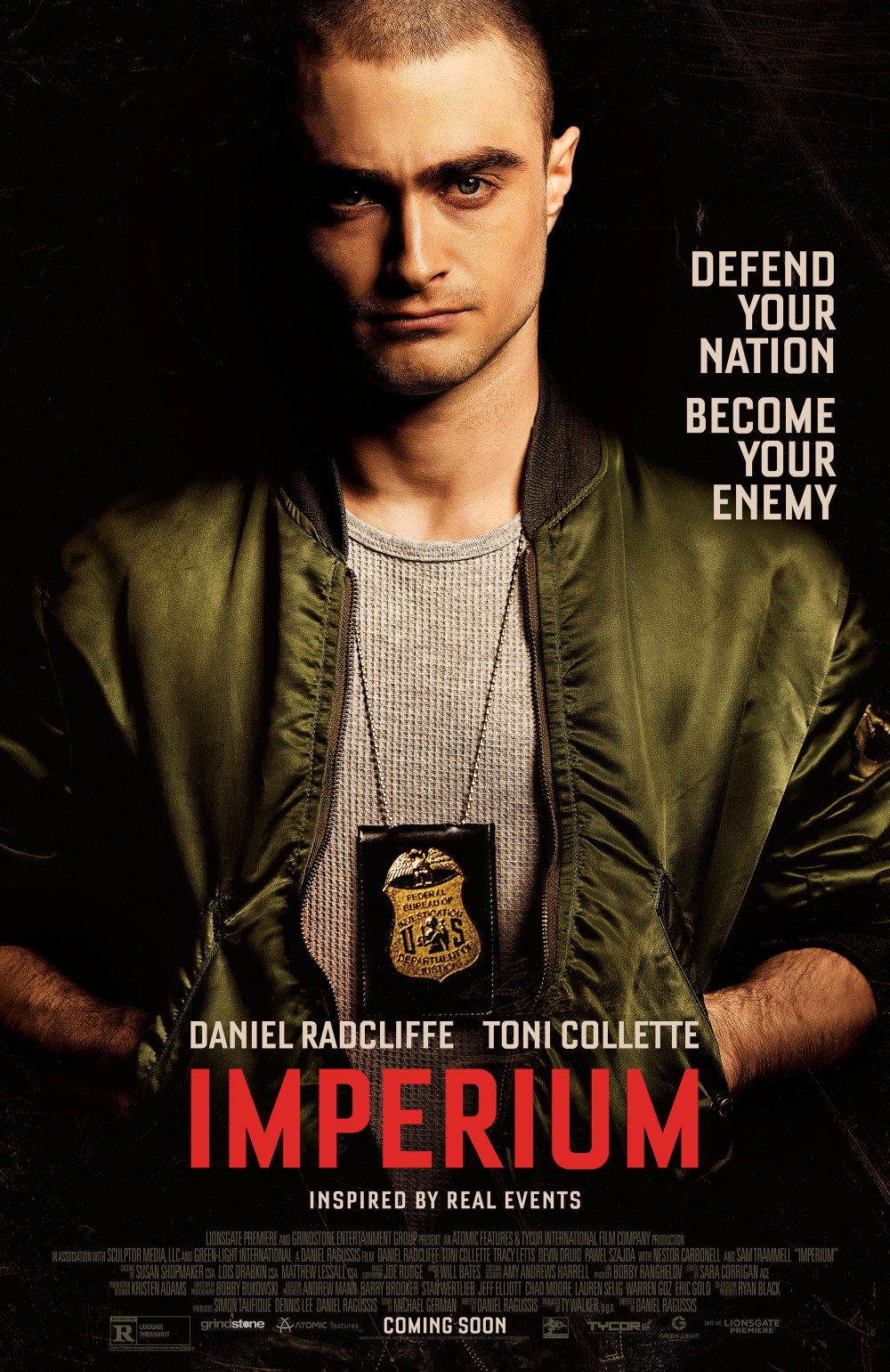
Imperium” is being released not along after “The Infiltrator,” another movie dealing with an FBI agent going undercover and entering a vicious criminal organization in order to stop the bad guys in their tracks. Like “The Infiltrator,” “Imperium” doesn’t break any new ground in the realm of undercover cop movies, but it is a taut thriller which holds our attention as it throws a barely prepared protagonist into a den of snakes who are quicker to kill than trust.

Front and center in “Imperium” is Harry Potter himself, Daniel Radcliffe. Ever since playing the lightning-scarred wizard, the actor has taken on many challenges to prove to the world there is more to him than J.K. Rowling’s infinitely popular literary character. At first he seems out of place as FBI agent Nate Foster, but that’s kind of the point. Nate comes across as a bespectacled and bookish nerd who is more comfortable doing research than going outside of the office. It also doesn’t help he’s the butt of jokes by his fellow agents who have yet to take him the least bit seriously.

But then along comes agent Angela Zamparo (Toni Collette) who sees a strong potential in Nate for undercover work. She is also sick of her superiors devoting all their resources to foreign terrorism instead of putting just as much focus on domestic enemies. Angela brings Nate into her office, tells him what he needs to know and gives him a copy of “How to Win Friends and Influence People” by Dale Carnegie, the only book needed for undercover work. From there, Nate transforms himself into a war veteran turned skinhead and navigates his way into the dangerous underworld white supremacy.

I have to give writer and director Daniel Ragussis a lot of credit as he focuses on something I desperately want America’s politicians to focus on: domestic terrorism. When it comes to the “War on Terror,” much of the focus has been focused on international groups like ISIS or The Taliban, but the threat inside America has proven to be far greater these days. Ragussis makes this very clear as he features video footage and photos of Neo-Nazis at work, be it going on marches or committing heinous crimes against those people who are not white.

Radcliffe may still have the shadow of Harry Potter hanging over him, but this doesn’t affect his performance as Nate Parker in the slightest. He makes Nate’s transformation into an undercover agent not just believable, but at times frightening. Movies like these show their protagonists sinking so deep into their assignments to where they lose contact with who they are and develop strong friendships with criminals they are supposed to bring down. Radcliffe shows, a lot of times without words, just how desperate Nate is to get to the truth. We already know just how great an actor he is, and his performance in “Imperium” goes to show the kind of acting challenges he is willing to step up to the plate to take on.

But there’s also Toni Collette who proves to be every bit as good as Radcliffe in her portrayal of, Angela Zamparo. Collette makes Angela cool as they come, and it’s loads of fun watching her reduce her male colleagues to rubble as they can’t even begin to match her job efficiency. Collette made her big breakthrough back in 1994 with “Muriel’s Wedding,” and ever since then she has immersed herself so deeply into each role she plays to where you completely forget the ones she played previously. The scenes she shares with Radcliffe here are great as we watch a rookie and a veteran slowly start to figure one another out, and nothing is never as it seems.

“Imperium” has the requisite scenes where Nate has to think fast on his feet so his cover doesn’t get blown, and some resonate with intensity more than others. One of the best comes when Nate is going to a potential site for a party along with Andrew Blackwell who is played by “The Knick’s” Chris Sullivan. Blackwell brings his best poker face to this scene as we watch Radcliffe tremble in fear as he is made to feel death is just around the corner. Both actors succeed in creating an almost unbearably intense scene here as if they are about to make the most pivotal move in a chess game.

Now “Imperium” will not go down as one of the best undercover cop movies ever made, but it does get the job done. It also shows Radcliffe taking on a new challenge and growing even more as an actor. Both he and Collette are more than enough of a reason to check this movie out sooner than later. Writer and director Daniel Ragussis also deserves a lot of credit for focusing on domestic terrorism as it feels like a realm in today’s day and age which doesn’t get enough attention. Sometimes the greatest threat to a nation isn’t from outside of it, but from within. Seriously, look at what Donald Trump’s bizarre run for President has brought out into the open.

* * * out of * * * *

Copyright Ben Kenber 2016.