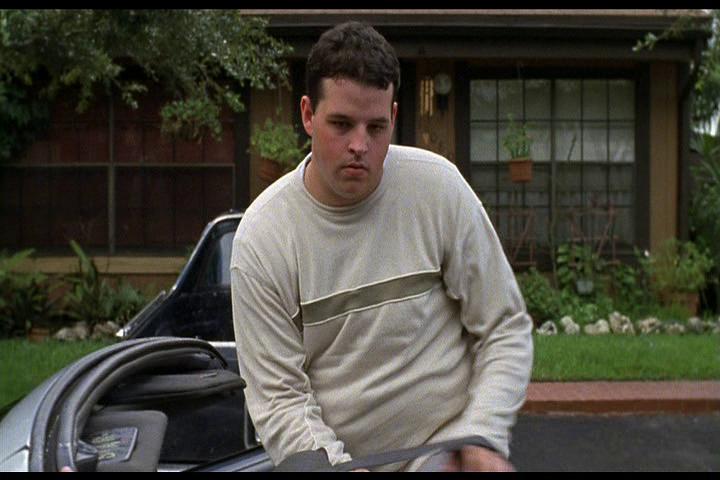
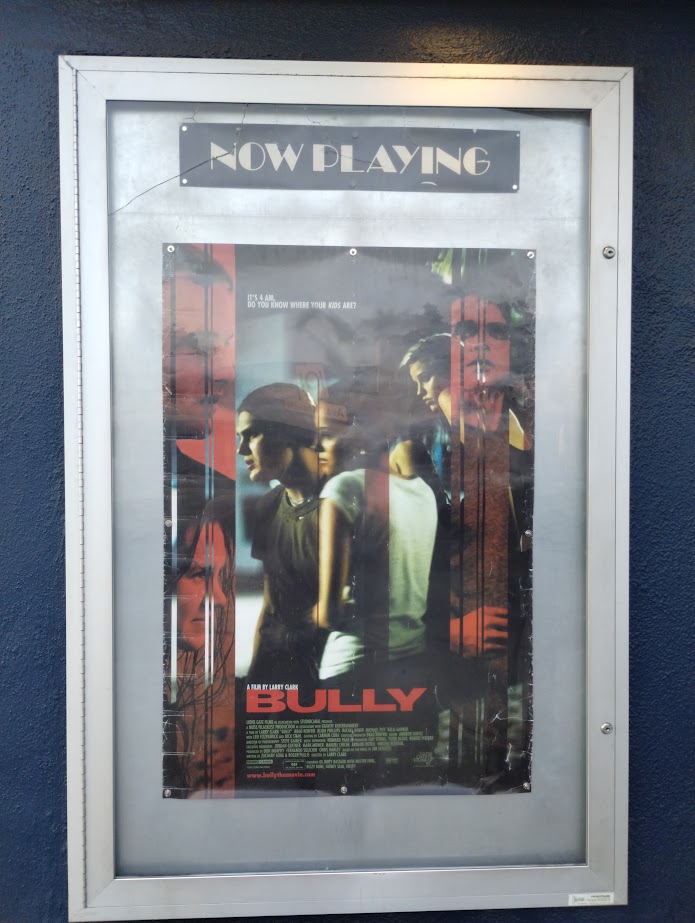
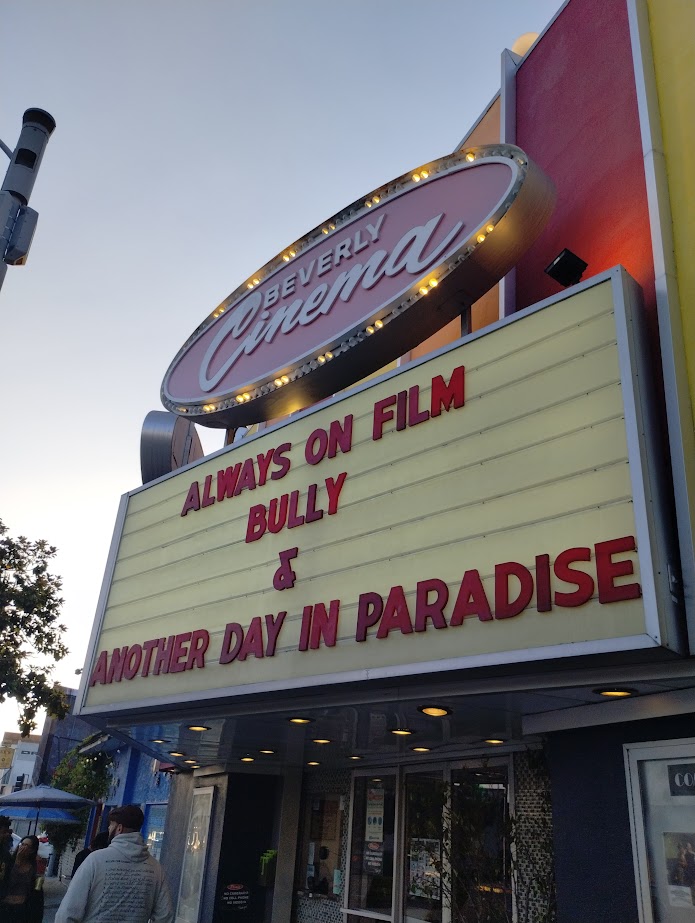
On August 12, 2025, New Beverly Cinema presented a Larry Clark double feature of two of his films: “Bully” and “Another Day in Paradise.” Before “Bully” unfolded on the silver screen, actor and filmmaker Joel Michaely brought out a special guest: Daniel Franzese who played Derek Dzvirk. “Bully” was Daniel’s film debut, and it quickly earned him his SAG card. Daniel thanked Joel for being there and remarked how he killed Joel once in a horror movie entitled “Cruel World” where he shot him in the head.
Daniel said “Bully” was the first time he ever got to hold a screenplay in his hands, and he talked about meeting the casting director, Carmen Cuba, at his audition.
Daniel Fransese: She was like, “Do you wanna see who you are going to play?” I said okay, and she opened up the true crime novel (written by Jim Schutze), and I looked exactly like the guy. And I was just like, oh shit! I can actually get this! So, it was very scary and nerve wracking.”
Rumors are that the set of “Bully” was a crazy one, and being that this was Daniel’s first film as an actor, you can understand and appreciate his feelings at the time.
DF: I’m a pretty easy-going guy, and I am also a theatre guy and a standup comedian. I’m used to being around other people, and I am good at getting along with different personalities. But this movie was next level. we are getting ready to do fittings and start our first day of this movie, and Larry (Clark) is screaming because Brad (Renfro) was in jail for trying to steal a boat. He’s screaming, “This was three years of my life! This kid’s not going to ruin it!” He’s throwing papers and I was like, whoa! That was day one and you can just imagine how the stress level got worse from there.
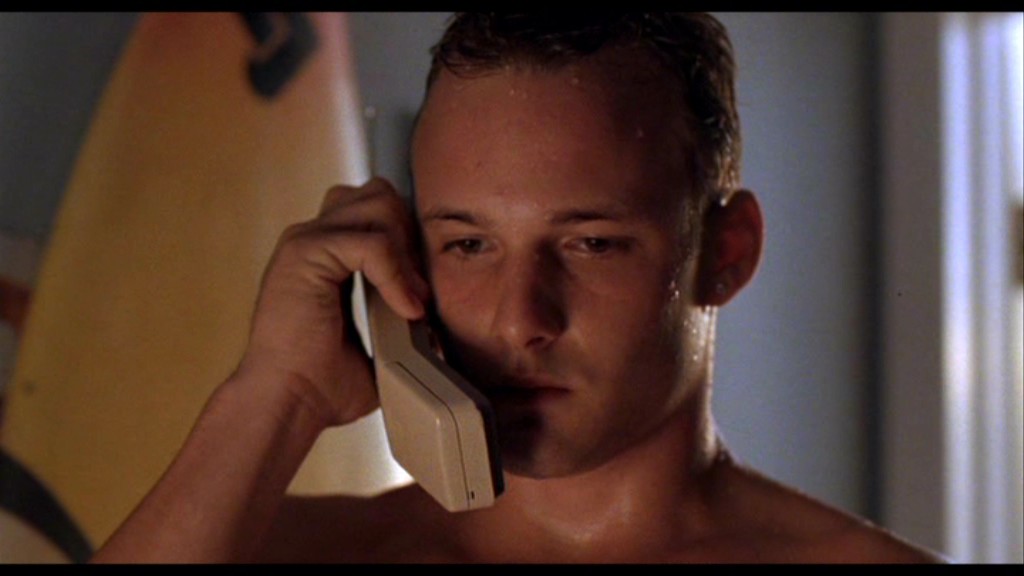
From there, the discussion went to the late Brad Renfro who played Marty Puccio in “Bully.” Brad first gained worldwide attention at the age of 12 years old when he was cast as Marcus “Mark” Sway in Joel Schumacher’s cinematic adaptation of John Grisham’s “The Client.” Like many people on this planet, let alone actors, he died at far too young an age He was only 25 years old, when he passed away after a drug overdose. Daniel talked about working with Brad.
DF: Brad was great. I think he was like one of those golden retriever type people. Not evil, but dangerous. We were doing the table read for the first time, and Brad showed up wearing a white tank top completely soaked in lighter fluid. He came in saying, “I’M TRYING TO GET THE BARBECUE TO GO!” It was like, whoa! He was from Knoxville and had like that “Jackass” sensibility where you didn’t know what he could do, but I don’t think he ever had a mean bone. His intentions were always nice. If anything, he partied too much, and he once told me that at 12, he made hundreds of thousands of dollars to do “The Client,” and he was getting a lot of his drugs and stuff from family members as a kid. I don’t think he got a fair shot. If anything, the reason why I advocate for younger people in Hollywood or talked about my experiences on this movie which were crazy, I was never speaking from a victim place. I was speaking from a place of advocating for people like Brad who didn’t have anyone saying anything for them. I just think, we’re making art. It doesn’t have to be that crazy. We don’t have to be stealing boats or going nuts on sets to produce good material.
After “Bully,” Daniel went on to appear in many films, but he may still be best remembered for playing high school social outcast Damian in 2004’s “Mean Girls.” Like Joel and myself, I wondered what it was like going from an independent film to a studio movie where everybody is expected to be on their best behavior.
DF: I just don’t think the 2000s will be looked upon as a time where it was easy for people on movie sets. I really don’t. People always ask me all the time how to get their kid in Hollywood, and I say don’t. I waited until I was at least in my 20’s (before going to Hollywood), and that’s the only thing which might have saved me. A lot of our contemporaries are not around with us anymore or are in a crazy state. It was a rough time. I can’t say it was easier or better, but I think it’s better now.
Regardless of the crazy set, Daniel made it clear to the New Beverly audience what the experience of making “Bully” was like, and of how the filmmakers strived to capture the spirit of the true story it is based on.
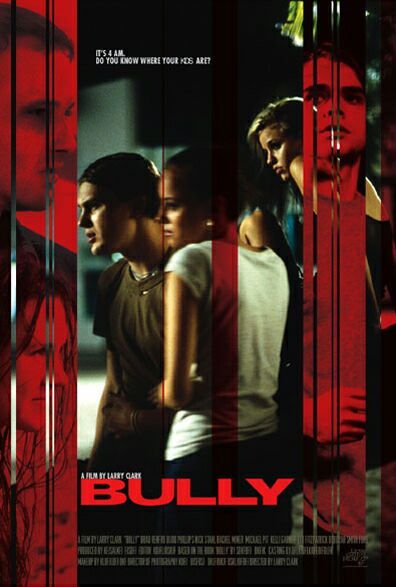
Bully (2001)
Directed by Larry Clark
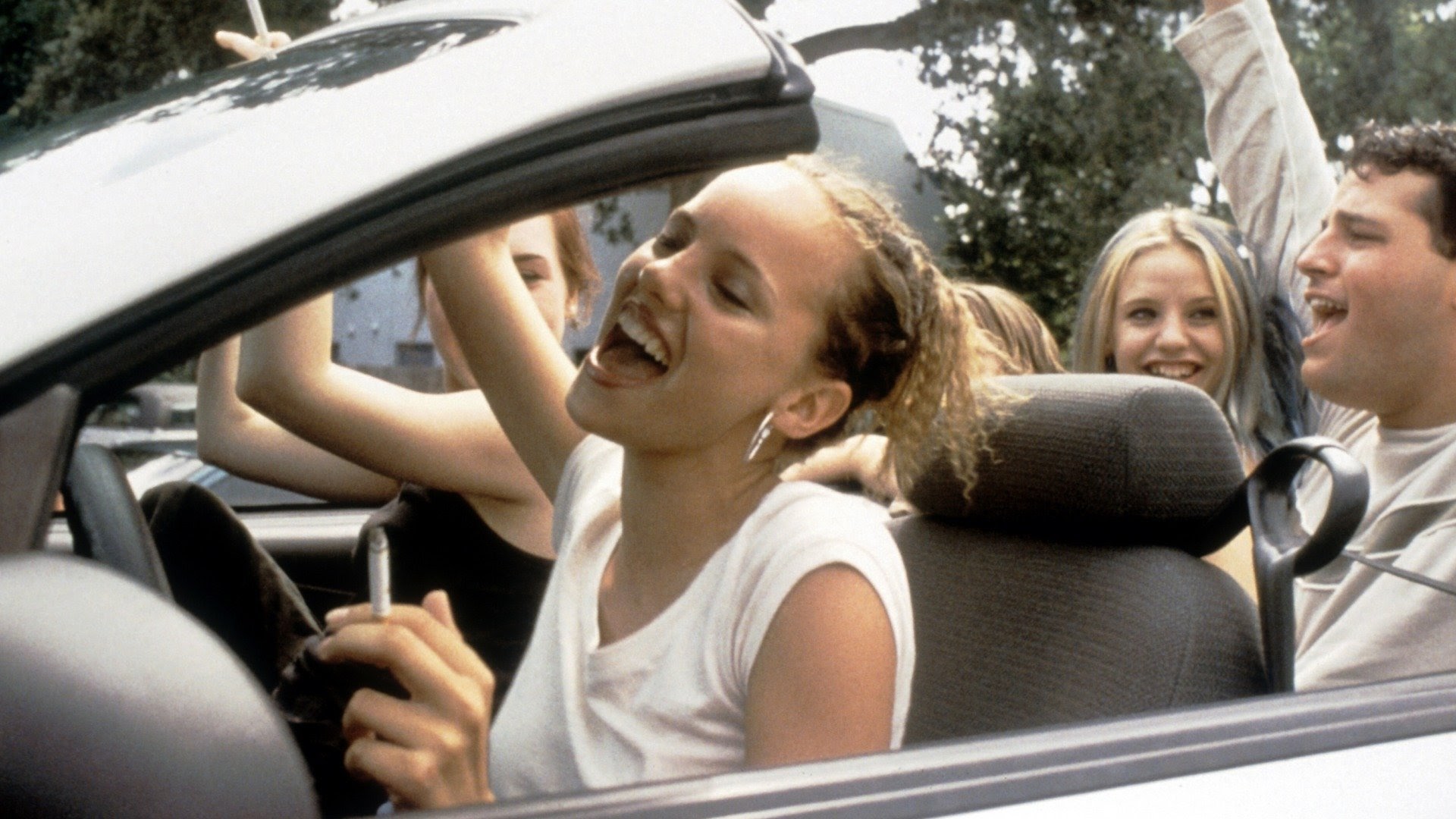
Shown in foreground: Bijou Phillips
DF: On a positive note, though, this movie was awesome. It was so fun to make. Larry was cool, the people I was working with were all like people from Thrasher Magazine, it was just like bad ass people. They did shoot in the real locations; it was the real apartment complexes, and it was the real Pizza Hut (we shot in).
Daniel also made it clear how he was the only local hero for hire in Larry Clark’s “Bully.”
DF: They were scouting locations for the gay clubs, and I was just a young kid just figuring that stuff out and performing at the clubs with people I was in musical theatre with and stuff like that. They were like hey we’re making a movie, and I’m like I’m an actor! I had no idea it was going to turn into this. Carmen Cuba, she discovered a lot of people, and I give her all the credit for plucking me out of obscurity and putting me with these people.
An audience member told Daniel that he was from South Florida, and this led Daniel to talk about when he worked at The Gateway Theater in Fort Lauderdale as a kid. a year later, “Bully” premiered there. Daniel found his road from being an usher to a working actor to be honestly insane.
DF: I was there at the theater going, would you like the popcorn combo? I am a movie lover. I worked at Blockbuster (Video), I worked at movie theaters, that’s all I did. Until I was able to support myself as an actor, I was either an usher in theatre or worked at movie theaters. It (“Bully”) was shot in Fort Lauderdale and the whole crew got their premiere at the movie theater where I worked at. So, whoever served me popcorn today, keep writing your scripts.
Like many, Daniel Franzese considers New Beverly Cinema to be one of his favorite places in Los Angeles, and that it was extra special for him to see “Bully” being screened there on 35-millimeter film. To see films presented there in their original format, something often not available to movie buffs in most places, means a lot to him.
WRITER’S NOTE: This article was written back in 2013.
Filmmaker Joe Swanberg has been a major figure in the Mumblecore movement, a subgenre of American independent film which is characterized by low budget production values and naturalistic dialogue. Among his films is “Hannah Takes the Stairs” which stars Greta Gerwig and was actually shot without a script. The way Swanberg works, he gives his actors an outline of the plot of what he wants to film, and they improvise their scenes from there. This way of filmmaking offers actors the opportunity to take a lot of risks and make the kind of movie Hollywood studios do not want to right now.
Swanberg’s latest film, “Drinking Buddies,” stars Olivia Wilde as Kate, an employee at a Chicago craft brewery who spends her days flirting with her co-worker, Luke (Jake Johnson). They would make the perfect couple, but Kate is already going out with Chris (Ron Livingston) while Luke is seeing Jill (Anna Kendrick). But when their significant others are out of town one weekend, both Luke and Kate begin to wonder if the feelings they have for one another will eventually come to the surface.
As with “Hannah Takes the Stairs,” “Drinking Buddies” was shot without a script, and the actors improvised all their scenes. Swanberg took the time to talk with us about the experience of making the movie while at the Four Seasons Hotel in Los Angeles, California as well as the fascinating world of craft beers.
What would you say is the difference between a microbrew and craft beer?
Joe Swanberg: Same thing, different terminology. The way that the world is soused out is basically in terms of how many barrels a year that places are outputting between micro-breweries and macro breweries. I would argue that you’re either there because you’re passionate about it, or you’re there because it’s a job, and that’s the difference between the two.
You mentioned “Bob & Carol & Ted & Alice” as one of your influences on this film, and that was a studio comedy with an adult point of view. Your films always have that great point of view and you keep going back to that well time and time again. What keeps you going back there, and what was your motivation to do this film?
Joe Swanberg: Well, a lot of it has to do with operating in a space where I can carve out a little area for myself to play in. Sadly, complex contemporary adult movies, there aren’t many of them. I’ve always been allergic to just doing what everybody else was doing, so it’s kind of just remained a place where there aren’t that many other things happening. I don’t have to be nervous that we’re sort of recycling the zeitgeist or anything like that, then it’s also just one I’m fascinated by. I think if you were to catch me most days of the week and asked me what I was thinking about, it would be a conversation my wife and I had about making time for each other to both be able to do our creative things, or some friend of mine who’s going through a breakup or something. I’m interested in people in that way, how we interact with each other. It’s very easy for me to continue to generate stories that are based around that because it’s kind of always on my mind anyway.
What would you say was your favorite scene in “Drinking Buddies?”
Joe Swanberg: My favorite sequence in the movie is Jake and Olivia playing cards, he’s playing blackjack with her, and Ron and Anna are hiking in the woods. Just the start of the back-and-forth of seeing these two couples we’ve established in terms of each other sort of swapping a little bit and feeling out how to flirt with someone else. I feel like I have this experience in my own life within the context of my relationship with my wife where I’ll just be with another woman and you just sort of get to play make-believe for 45 minutes or something of “oh this is what it would be like if we were together and we went to get lunch or something. This is how we would relate to each other,” and it’s different than the relationship you’re in. These little daydream scenarios, that scene in particular is really fun to me to see play out. I also love listening to Jake and Olivia on the porch. Anna has fallen asleep and they sneak out. I’ve had a lot of those nights in my life where the floodgates open and you just start being really honest and it starts feeding into the other person’s honesty. Before you know it, you’re just talking about things you’ve never told anybody with someone you hardly know. It was fun to try get something like that into the movie and to let them share stories with each other, and I just get to bear witness to it.
Did you have this great cast in mind from the beginning?
Joe Swanberg: No. Usually I’m working with friends of mine so I do know exactly who is going to play the parts before I gear the thing up, but this was one where I just sort of had broad stroke ideas about who the characters were. It’s the first time I’ve ever done a casting process where I met with a lot of actors and try to think about chemistry and placing different people in different roles.
Why did you film in Chicago? Why not Boulder, Colorado?
Joe Swanberg: Well, I live in Chicago, so that’s a big reason. Also, there’s a specificity that I can give the movie because I know what kinds of apartments these people live in and what bars they would drink at. So, every choice gets be a real choice because I know them and I’m friends with them. I’ve been to places I’ve never been to before and done the same process, but then I either have to take somebody else’s word for it like where the hipsters drink, or where it’s just not specific at all. I’m just like choosing places that look nicer something. It was fun to do something at home where I could use the city is an indicator of certain things. Also, I have a kid now so traveling is way less appealing than it used to be. Going to sleep in my bed every night was a huge bonus.
Was the backpack scene in the woods between Ron and Anna when they have that awkward moment completely improvised?
Joe Swanberg: Yeah. It’s the first film that I’ve done where I had an art department and a props master and all these people, so it was really fun as a director to show up to the production office every day and have somebody bring in four different backpacks that I could choose from. It was just too funny to pass up. It says a lot about her (Anna Kendrick). It’s a really great use of a prop.
Beer wise, what are you drinking now especially after you’ve had this little bit of education?
Joe Swanberg: I’m still leaning on the hoppy IPA side of things, but it’s interesting because I didn’t drink at all until I was 25. On my honeymoon I had a beer. I guess I must’ve felt like “alright, I’m here,” so it’s new to me. It’s really been something that I’ve just gotten into in the last five years. It’s interesting because I remember drinking a really hoppy beer early on and just thinking it tasted disgusting, and now I really like the flavor so I’m really curious as to where my taste buds will lead me in terms of the stuff. I find that I go through cycles with it. There was a period of time where I just wanted to drink stouts and dark beers, and then I got into Belgian stuff and then went to the hoppy stuff so I don’t know what the next wave will be.
Any brands you like?
Joe Swanberg: Sure, but too many to even name. I’ll stick to the Midwest: Revolution Bar where we shot, Three Floyds, and Half Acre. We are very spoiled in Chicago. I think twelve new breweries opened this year. It’s a nice time to be in Chicago right now.
“Drinking Buddies” is available to own and rent on DVD, Blu-ray and Digital.
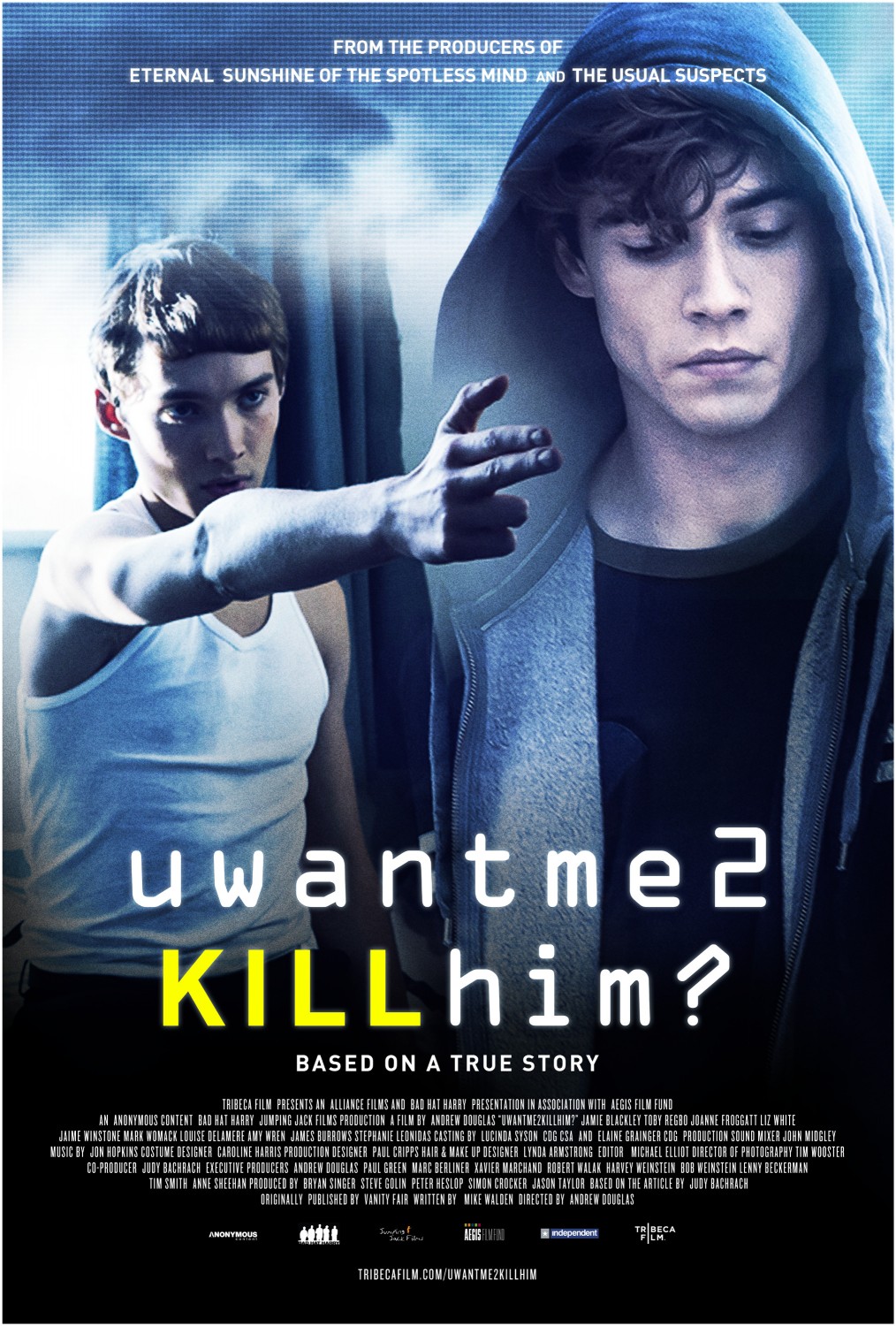
“U Want Me 2 Kill Him?” is yet another in a long line of movies “based on a true story.” But after watching it, you have to believe it’s true because no one could make a story like this up. Based on the Vanity Fair article by Judy Bachrach, it stars Jamie Blackley as Mark, a very popular high school student who ends up getting into a relationship with his online girlfriend Rachel. Mark ends up becoming so hopelessly in love with Rachel to where he’s willing to do anything to win her favor, and she soon has him befriending her lonely younger brother John (Toby Regbo) who gets picked on at school every day. As a result, Mark and John develop a strong friendship which soon leads them down some very dark paths that will have them doing things they never believed they were capable of. It all leads to one of the most shocking and baffling crimes in England’s history.
The movie’s director is Andrew Douglas who is best known for making the acclaimed documentary “Searching for the Wrong-Eyed Jesus” and for helming the 2005 remake of “The Amityville Horror.” I got to speak to him about “U Want Me 2 Kill Him?” which I felt served as a reminder of how threatening technology is in this day and age, and of how the emotions of a teenager are always simmering just beneath the surface. Douglas talked about the long road it took to get this movie financed and made, how familiar he was with the real-life story, and he also gave me an update of what’s happened to Mark and John since the movie’s release.
WARNING: THIS INTERVIEW DOES CONTAIN SPOILERS.
Ben Kenber: I was not at all aware of the true story this movie was based on. Were you aware of this story or the Vanity Fair article it was based on before you got the script?
Andrew Douglas: I’m not a big magazine reader anymore because of the internet, but for some reason I did look at that magazine and I did see the article. Ever since “The Amityville Horror” I’ve always got a weather eye out for projects. I didn’t know at the time what it could be or what it might be, but it just seemed such an extraordinary story. Being in America and finding a story from back home was also very appealing, and then it took a couple of years (to get it off the ground). It had a funky journey because uncharacteristically I tried to buy the rights to the story. It wasn’t something I’m used to, but I did have an agent and I reached out to try to buy the rights to that story thinking it was so extraordinary that I got to be able to do something with this. In the meantime, Bryan Singer of all people had also reached out and snagged the rights. So, a year went by or maybe six months, and a script came out based on that story which Bad Hat Harry, Bryan Singer’s company, had produced and it was pretty good and I took a meeting on it. It went into the air as what’s called an open directing assignment, so I managed to arrange a meeting on it. In the meeting I pitched a slightly different interpretation of the same material, and then another year went by during which the studio the project was with, Warner Independent Pictures, went down the tubes taking the script with it. So, all of a sudden that material was untouchable, so Bat Hat Harry got in touch with me and said, “Remember the take that you had on this story?” I said, “Yeah.” They said, “Well could you come in and re-pitch it to Bryan?” So, I did and they really liked it and they felt it was sufficiently different from where they’ve been in order to start again with the same thing. Over the next year I developed up the script and I found a young English writer who had a great voice for authentic youth, and I presented it to Bad Hat Harry and got my commercial company, Anonymous Content, involved a little bit as well to pony up some money, and all of a sudden, we had a film. Interestingly, right around the time I was shooting, there was also in London an opera based on the same article. I went to see it and it was kind of very operatic and it couldn’t be more different from the film, but it was very interesting to me that here’s a story that grabbed at least three different people in three different ways. The first script was quite documentary in the sense that they presented the kids from a kind of adult perspective, and really to me it was a story of how weird the world is. The opera was told from the police woman’s point of view, so to some extent the story was really about a police woman being puzzled by the internet and by the strange landscape of the internet. My take on it was here’s this weird world, here’s this odd landscape that we haven’t really explored in literature or in film yet, but I’m going to approach it from the point of view of one of the inhabitants of it. The idea was to see if I could find a way through the perplexing nature of what Mark does. What was interesting to me as a kind of challenge was we have these two ordinary boys, more or less ordinary boys, who live in an ordinary town, horribly ordinary, who go to a regular school. They are not project kids, they are not kids who are used to knives or used to violence. How do they make the journey that they made? That was really a kind of interesting challenge to me, and I felt as though it would be best served by really taking on the point of view of one of the kids. It could’ve been either of them funny enough, and John certainly makes an interesting journey as well. But I thought Mark was slightly the more difficult journey to explain; a regular kid who’s handsome and good at football and popular with the girls. What is missing in his life that he needs this thing so badly, that he needs to go as far as he goes? And I just thought that was both interesting in a conventional drama, but also interesting in the context of this new landscape of the internet.
BK: Yes, absolutely. These days people seem to be more open with one another on the internet than in real life when they are face-to-face.
AD: Yeah, I think that’s true, and also not necessarily honest as well of course. One of the things that internet provides then and now, even though we have cameras now which we didn’t have in the wild west of 2003, is the secret language of texting. So, I might be projecting on this, but there is still something very alluring, hopefully not with my kids, about what is called the dark room. Being able to go into a dark room where nobody knows you and nobody can really see you and you can be anything. Maybe it was two years ago that there was a floater piece about young gamers with their avatars. They had a real portrait of the gamers and then right next to them was their avatars, and it was so interesting and, in many ways, it was like a pageant. You get for example a disabled person or another person or the most extreme avatar who is everything that they weren’t, and it was very interesting and moving to see that article. I think to some extent this is what we do and this is what my film’s about. The film doesn’t judge them. Mark says early on to John, “I want a mad life like you have,” and John gives him one. He so does for six months there; he gets a very, very mad life. John on the other hand, he’s just sort of like a brother or somebody to look out for him, and you get that. So, I try not to judge the kids and say they’re weird or they’re bad. I just try and say that in a funny way both kids got what they needed and what they weren’t getting from home. And I thought the judge was very cool. I copied the dialogue straight from the court transcripts, so when the judge says that each boy is an extension of the other, that’s actually what the judge said. I thought that was like one of the coolest judgments. You’ve got to expect courts to be that smart, and I just thought that was really interesting because it was something that nobody had really seen before. It was a new crime so John was accused of organizing his own death, and Mark equally was accused of stabbing him. So, for the judge and for all the generations of the legal institution, it was very perplexing which could have been another take on the movie of course. This is material that has many different points of view on it. Somebody else could’ve taken it from the point of view of the trial and try to figure that out. You know how cool “The Social Network” was? It was all based around those court hearings. That could have been another way to go, but you just make your choices and I am pretty happy with how it came out. There are moments where it has to kind of stretch credibility. I had Mike Walden (the movie’s screenwriter) write the characters as realistically as I could bear, but still when you look back from the end of the film they’re melodramatic. They’re still not quite real and that was kind of intentional. The film is almost more fun watching it the second time. A film like “The Usual Suspects” or “Fight Club,” when you watch these kinds of films a second time you see all the tricks, and it’s very satisfying the see how the filmmakers flirted with showing you everything.
BK: This is definitely a movie that needs to be watched at least twice to see how the characters managed to accomplish all that they did. “U Want Me 2 Kill Him?” also reminded me of what it’s like being young and how the emotions of a teenager are just simmering below the surface to where they don’t know how to deal with certain things.
AD: Right, and the stakes for a kid dealing with those emotions are always so high. So, here’s this person online who he never met. He has a girlfriend of sorts, although that other girlfriend in the real world is just kind of messing him around, but here’s this girl he’s never met and he knows the stakes are so high somehow, and that kind of felt true. You’re absolutely right in what you just said. You have a feel as though one meeting and he loves somebody, and then they die and then you have to seek revenge. Teenage emotions, they run so big really.
BK: Yes, they do. It’s almost easy to believe that a young teenage boy could do what he did, and that’s scary too because when you’re that young and you feel the need to do something, you can get easily manipulated. The other thing I found fascinating, even though we know what happens at the end, is how the movie shows the power women can have over men.
AD: Yeah, it’s all about sex in a way. What John is so instinctively clever about is that every kind of invention is really about sex or power. So, to create Rachel or somebody you talk about, but also somebody who is also in danger and in jeopardy… I didn’t really invent that, I kind of refined it. I was very careful to stay pretty close to the instant messaging transcripts, so all those characters come right from the source. So, John was kind of preternaturally clever in understanding that Mark is going to fall for both the damsel in distress and the sex, and this is going to be too alluring for him. Each time he loses Mark’s attention, he has to up the stakes to invent something even bigger. So finally, he invents the spy woman, and again the relationship is very kind of sexual. It’s funny in that there are so many ideas there and a film can only tackle a few without getting too dense. You’re right, that’s so interesting.
BK: At the movie’s end it is said that only so much can be revealed about these two boys because of their age, and they were ordered to never contact each other ever again. Since the making of the movie, has there any other news about these two boys?
AD: No, and it’s so disappointing. When I was doing screenings in London, I was so hoping that in the audience was one of them. I was so hoping that one of them would come out. I always imagined it was going to be John. My interpretation of his character was that he was kind of very proud of what he did. I tried to capture that when he’s proud of that scar. And I felt as though Mark might be more humiliated by the whole thing and that he might well disappear and use the anonymity of the court much more than John. But I felt that John would continue being a con man which is why I do that thing at the end where he’s still conning. That felt as though the con man as a character… We know now as grown-ups that they use people and that they always have to romance us and exaggerate, so the con man as kind of archetype, it’s hard to break that. But sadly, I never found out about them, and I really wish I could. Remember that film “The Fighter” that Christian Bale was so good in as the messed-up boxer? At the end of the movie you get this real satisfaction that you see the real guy (that his character was based on). I’d love to have been able to do that because it just kind of completes the circle, and it also nails down that this extraordinary thing you just saw is real. I would’ve loved to have done that. I would’ve loved to have been able to show pictures of them now. It would’ve been very satisfying to do that but no, not a glimpse.
BK: This is not a story you could easily make up. It definitely feels like it came from real life.
AD: I know, it’s too extraordinary isn’t it? Sometimes during the filming, I was going, “Oh man I wish I could put ‘based on a true story’ several times through the movie because otherwise people are just going to think I’m crazy to expect people to believe this.” But since I made this film, there was a big event here in America with that Heisman Trophy winner with that Hawaiian name. It just shows you what people will believe like Christianity or something like Mormonism. People believe what they need to believe, I think, at every kind of level. It’s almost as if the internet is like a new country or a new landscape, and I’m a bit surprised that there aren’t more movies about it. One of the things that occurred to me is that I think maybe studios are scared of films where the danger is all going to happen on the computer. I know that was certainly true for myself when I was trying to get financing for the movie. They said, “Oh is it all going to be on computer?” That’s why I kind of invented that thing where often times they are talking, so it doesn’t feel as though it’s all written onscreen. I’m just a bit surprised there aren’t more films coming out (on this subject).
BK: Yeah, it’s been a while. If you look back over the years, it’s kind of been an ongoing theme here and there like with movies such as “WarGames” from the 1980’s.
AD: Oh yes Ben, you’re absolutely right. I had forgotten about that.
BK: It’s interesting to see how technology has evolved over time. Even back then it was a threat, but technology is even more of a threat today than ever before.
AD: Right, right. I think that there was one moment in the film when the police are interviewing Mark’s parents in his bedroom and his dad says he just sits on that thing and points at the computer, not understanding that the computer is a door. It is a door to a place that the dad knows nothing about. That wasn’t kind of forefront in my mind as a parent or anything. It wasn’t meant to be a cautionary tale. It was meant to be a roller coaster to be honest. It’s really true that parents don’t quite understand that this technology is a back door, so who knows what?
BK: How did you go about casting the actors in this movie? They are all really good and very natural.
AD: Yeah, they’re terrific. It was just a normal process really. It started by trying to get real people cast. I really like Shane Meadows’ films like “This is England” and he always tends to use real people. But I quickly found that the script and the ideas and the characters were actually too complicated for real people to kind of be able to layer it, and so I went back to more conventional casting. It took a while. It took a lot of backwards and forwards with like 40 or 50 kids. Jamie was a stretch because that boy had to shave every hour (laughs). He’s got a real heavy beard. While everybody else would be having lunch, we sent him off to shave again.
BK: Much of the movie looks like it was shot handheld.
AD: That was intentional. There was a limited budget, but also it felt that the film would be best served if it looked very realistic because the story is so unrealistic. I felt if I shot it as realistically as possible, not quite documentary but very handheld and very real, I thought as though that would create a tension within the story.
BK: I liked that because you watch this movie and it just washes over you. It does feel like you’re being invited into these kids’ private lives in a way you wouldn’t necessarily be invited otherwise. In some cases, people might view this story as being rather convoluted, but it is based on a true story and the realism of it aids the movie very well.
AD: Oh good, I’m glad to hear you say that.
BK: Well thank you for your time Andrew, it has been very interesting to talk with you and I thank you for your time.
AD: Not at all. I appreciate your liking this film. Independent films need help; they need champions so it’s really great that you’re supporting independent films. It’s also easy to just go for the big studio films, but then I think we lose something. I’m a big fan of all kinds of movies. Along with everybody else I’ll be there watching the Superman or the Spiderman and I’ll be there on the first day, but equally I just love independent cinema and I love the way it deals with often times more grown-up ideas. It’s all great.
BK: I agree. My hope is that independent cinema goes through another renaissance really soon.
AD: Oh, I know, absolutely because you see films like “12 Years a Slave” or even “American Hustle” and they are very independent in spirit and they do so well. So, it just feels as though we don’t just want to watch tent pole movies. It’s just not enough because that’s too simplistic and sometimes you feel as though all you are is a consumer. You’re just consuming a kind of product. And with big movies they have less and less dialogue because they travel more easily like a “Transformers” movie. There’s not any dialogue in them anymore because that way they can just export it all over the world, and you just feel like a sucker sometimes.
“U Want Me 2 Kill Him?” is now available to own and rent on DVD, Blu-ray and Digital.

 The Ultimate Rabbit