Exclusive Interview: Kris Perry and Sandy Stier on ‘The Case Against 8’

The Case Against 8 Kris Perry and Sandy Stier photo

The Case Against 8” is a highly in-depth documentary about the historic federal lawsuit filed to overturn the discriminatory (and completely unnecessary) ban on marriages for gay couples. This fight for marriage equality went on for five years, and filmmakers Ben Cotner and Ryan White were there for it all as they went behind the scenes with the legal team of David Boies and Ted Olson (the same two lawyers from the “Bush v. Gore” case) and the four plaintiffs named in the suit. HBO aired the documentary on June 23, 2014 which coincided with the first anniversary of the Supreme Court rulings which restored marriage equality to California and ended federal discrimination against gay couples under the Defense of Marriage Act (DOMA).

I was very excited to talk with Kris Perry and Sandy Stier, two of the plaintiffs in the case, when they arrived in Los Angeles in 2014 to talk about “The Case Against 8.” We see them both getting married at the documentary’s beginning, and it’s a wonderful ceremony to watch. But then came the passage of Proposition 8 which defined marriage as exclusively between a man and a woman, and their marriage was soon declared void. After five years of fighting for marriage equality, Kris and Sandy succeed in getting married again and they are still trying to adjust to the reality of that.

The Case Against 8 poster

Ben Kenber: When the idea of the documentary came about, was it something you were initially open to or were you hesitant to participate in it?

Kris Perry: Well we were a little hesitant about media in general at the beginning of the process. We didn’t know how it would turn out, we didn’t know what was going to happen, and we knew people would be opposed to marriage equality and they might direct it at us personally. So we were pretty reticent about media, but the filmmakers were sort of in a different category. They obviously were supportive of Sandy and I and everybody on the team. The obviously had good intent, they were incredibly trustworthy and thoughtful and supportive, so we always felt like they were different and they did something different than what a lot of people did which was just cover a minute or two here and there. They lived through it all with everybody and I think that sets them apart and made them special for us, so we were really happy they were around actually.

Sandy Stier: They became invisible very early on which is kind of interesting. They were very quiet so they set up the cameras quietly everywhere and they were such sweet guys. It was easy to accept them being there, and they also seemed protective of us in some really nice ways. I always felt like they wouldn’t include anything that we didn’t feel comfortable with, and they were very open to our perspective and what we felt okay with being in it or not. And also, on some level, I don’t really believe they would make a documentary or that it would really even happen because we had no idea what would happen with the case. We didn’t expect it to be as big a deal as it was, and I thought these nice guys are here filming and that’s great. They might make a documentary, but it’s probably kind of a long shot that it’ll be something that’s that big of a deal. So I know that sounds kind of crazy but I thought that they were so sweet and I hope that this works out okay for them, but I kind of thought that they were wasting their time.

BK: Is there anything that you wish was included in this documentary but wasn’t for one reason or another, or are you perfectly happy with the way it turned out?

KP: We’re very happy with it. We were just on a panel with the editor (Kate Amend) the other night, and somebody asked her that question because she looked at all 600 hours and was the one with the job of deciding what was in or out and had to fight with Ben and Ryan about what they wanted in. Her answer I thought was beautiful as she said, “Now that I’ve seen it this many times, I think I wouldn’t change one bit of it. I wouldn’t put anything in that I took out, and what’s in is what should have been in.” I was happy to hear her say it because she saw everything and we never did and yet I think it couldn’t be longer, it couldn’t have more in it, and I think they made some beautiful decisions.

SS: I think they did certainly a fantastic job, and we will never really know about all the footage that they have. I’m sure we would be kind of blown away by some of what they have that we will probably never see. The one thing is when I watch our wedding, I loved the way they captured it but hoped so much that are four boys would’ve been there that day we got married, and they couldn’t be there. It’s always a reminder of how we had only one out of the four and that was just painful, but they could not have done a better job putting it together and making it make sense. It’s a complicated case to make sense of and they did a great job of weaving it together.

BK: The voice of love speaks louder in this documentary than any other voice that’s featured in it. What was it like watching your wedding as it is presented here?

KP: It’s great. I mean who gets to see their wedding on a full screen in a movie theater with Dolby? That’s like a really lucky thing. I like seeing Sandy’s face again because it really was such a blur that day and there was so much happening and there were so many people including the Attorney General and all the people standing there all of a sudden. To be able to focus just on the person I was marrying was like, “Oh right, that was what was happening too.” There were the two of us and then there was everybody else, but you get pulled into that everybody else part. So I like how easy it is to focus on the two of us in the way that they included it in the film, but you can see everybody else too. But they are not the point of the wedding.

SS: To see all the people that were there supporting us at our wedding, it’s a rare wedding where you don’t know most of the people. But that’s how it happened. It’s kind of fun to see all those faces again.

BK: Now that the documentary is finished, what effect do you think it has had on your life so far?

SS: So far I think it has been a wonderful gift to us to go back and see people and see how it comes together and relive it. Every time we get to relive it slightly differently and focus on a different part of the film. It’s been a very positive impact on us so far. I think it that what will honestly be a little weird is that once it’s on TV on HBO, there are all these people we don’t know who will see it and they peer into your lives. People are in your kitchen with you and at your child’s graduation, and it’s just an odd thing knowing that so many people we don’t know will have been viewing our lives. But it’s okay.

KP: Yeah, I really think it’s been positive so far. The people who have seen it like you who have come in and say, “Wow, I didn’t realize how much was going on because I didn’t track it every day,” I’m really glad for someone like you that’s open to looking at the bigger story. It gets interesting again, and now when you hear about Utah or you hear about Pennsylvania or Illinois you’ll go, “Wow! Now I know what it takes to fight something in court. Now I know what it takes to be a plaintiff.” It gives you new perspective.

BK: What was your first reaction when you found out that Ted Olson, the lawyer who essentially gave us George W. Bush as President, would be representing you in this case?

KP: Skepticism maybe a little bit. But the people that found him and wanted him to do it and hired him are some of the people I respect the most. The political efforts of Chad Griffin and Rob Reiner and Bruce Cohen and Dustin Lance Black, I just thought these are guys who have seen so many battles and have tried to win so many rights that, if they think Ted’s the guy, who am I to question their wisdom? And they were right; he ended up being a terrific champion and still is and will continue to be. So I just was relying on the jury of peers that we had before we met.

BK: We’re so quick to judge people based on political beliefs, and I’m really getting sick of that. One of the great things about “The Case Against 8” is that it strips away partisan politics and forces us to get beyond our own biased beliefs to fight for what’s right.

SS: Yeah, and I think on some level that highlights the fact that we have politicized almost every argument in our country as though they are political arguments and they aren’t. Issues of marriage equality, why is that a political argument? Why are so many other issues… Why do they need to be political arguments also? So the more we can get out of that realm, the more we can actually make progress.

BK: The lawyers representing you at one point talk about how they’re getting more grief from the gay and lesbian groups than the conservative groups, and it shows how the mob mentality can take over on either side of the political spectrum. The documentary aims to be saying that need to be open to people and what they have to offer, and that’s even if you don’t agree with their belief system.

KP: Yeah. I think getting away from the ballot box and raising money for political campaigns and people saying things in political campaigns that aren’t even true and winning is necessary. I think it was the right time to go on to a new path and try to create a new way to solve that problem, and I think it was a better path. It’s harder on some levels as it takes forever. Campaigns are over in a year, and this was a five-year effort so everybody can’t do it but maybe everybody won’t have to.

BK: What are your plans for the future?

SS: Well when we were in the case it was always that and doing that in addition to our lives. Back then we were raising kids and working, and now the kids have launched basically. They take a lot less time. The youngest kids are in college and the older kids are grown-ups so we’re no longer actively parenting on a day-to-day basis, but we both have very big and busy careers that need a lot of attention and a lot of focus. So that’s our immediate thing to just get back to work and make work a huge priority, and we both in our work do a certain amount of advocacy as well. Kris still works in early childhood education advocacy at the federal level now. I work on public health and systems and policy so we want to get refocused on that, but in terms of the issue of marriage equality, the fight’s not over. We don’t have marriage equality in 50 states, so there is a lot more work to be done to the degree that we can help advance that cause in those states. We are absolutely happy and very motivated to participate, and beyond that there are so many other issues. There is employment discrimination, there are still a lot of issues around LGBT rights and, beyond rights, quality of life. It’s just something that I think Kris had a great a-ha moment when she talks about the quality of life as an LGBT kid and what it does to you to feel like you don’t have the same options and that your life is less than others. There’s a lot of work to do.

BK: Do you still encounter a lot of obstacles in life or do you feel like you are on a good path now?

KP: I think because it matters so much to get married and stay married, you have to work at it. You have to work really hard at being grateful that you have that, and you have to keep making it work because circumstances are changing all the time. Even having a situation where we had kids or we don’t, that’s an obstacle. And we don’t know what the future holds. There could be some hard things and you have to keep the bond strong, and we’re just lucky we got married. We are still trying to believe that, you know? That took so long and we’re still digesting the fact that we actually got married.

It was a real pleasure to talk with Kris Perry and Sandy Stier, and I wish them the best in life. “The Case Against 8” is now available to own and rent on DVD, Blu-ray and Digital.

Exclusive Video Interview: Maria Elena Laas and Ser Anzoategui Talk ‘Vida’

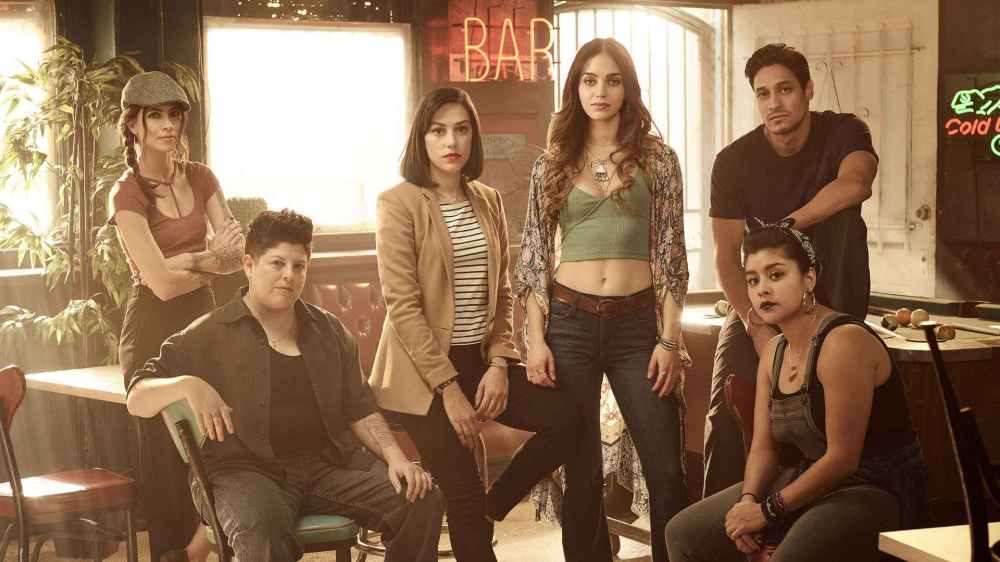
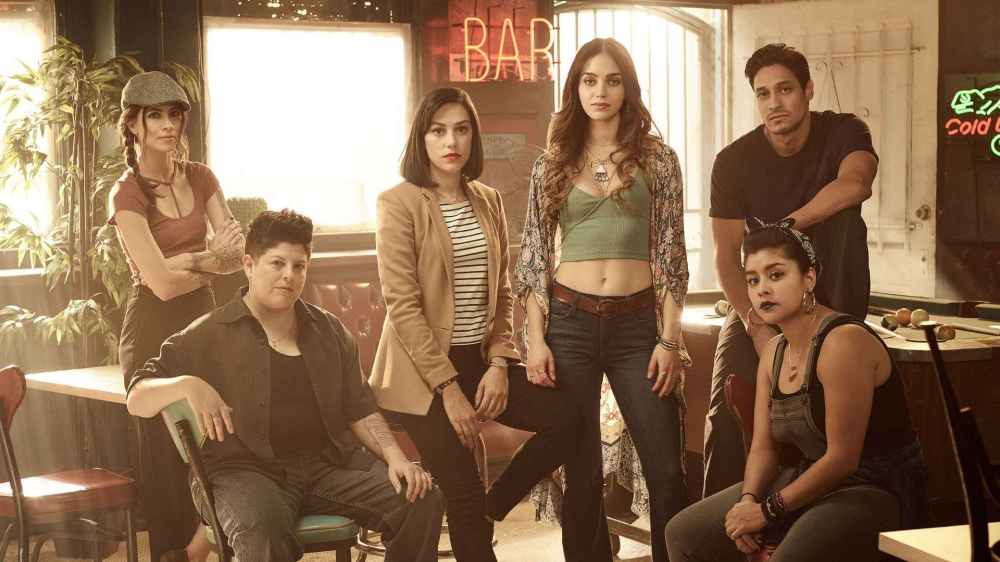
Among the talented actors to be found in the new Starz series “Vida” are Puerto Rican actress Maria Elena Laas and Latinx actor and playwright Ser Anzoategui. The two portray characters caught up in the vibrant and changing area of East Los Angeles, and their lives are suddenly disrupted by the appearance of two estranged sisters who have come back home for their mother’s funeral. Anzoategui plays Eddy, a sensitive and trustworthy person who was married to the sisters’ mother and who proves to be the heart of the community as well as an intimidating presence upon first glance. Laas stars as Cruz, and enigmatic lesbian who was a mentor to one of the sisters, Emma (Mishel Prada), before she left Los Angeles for Chicago. Now that Emma is back in town, she and Cruz will come to terms with the things left unspoken between them for far too long.

Laas has appeared in the movies “The Hot Chick,” “Suffering Man’s Charity” and “Airplane Disasters,” and she has appeared on the television shows “Chicago PD,” “How to Get Away with Murder” and TNT’s “Dallas.”

Anzoategui has had a gained a strong recognition due to her success in the theatre, and this led to Anzoategui being cast as a recurring character on the Hulu show “East Lost High.” In addition, Anzoategui has appeared on “Crazy Ex-Girlfriend,” “The Fosters” and “Shameless.”

While talking with Laas and Anzoategui at the “Vida” press day in Los Angeles, they spoke enthusiastically of how lucky they are to be a part of a show which blows away the stereotypes Hollywood has typically had of Latinos.

Please be sure to check out the interview below. “Vida” is now available to watch and stream on Starz, and the show proves to be an excellent case study in authenticity.

Vida cast photo

Exclusive Video Interview: Chelsea Rendon and Carlos Miranda Talk ‘Vida’

While at the press day for the new Starz show “Vida,” I got to talk with two of its stars, Chelsea Rendon and Carlos Miranda. Rendon plays Marisol, a young woman who is passionate about her politics and determined to fight against any and every injustice thrown into her path. Miranda stars as Johnny, a well-meaning guy who is busy running his dad’s auto shop and is on the verge of getting married to his pregnant girlfriend. However, when Johnny’s ex-girlfriend, Lyn (Melissa Barrera), arrives back in town, his plans for being a good husband and dad are challenged to a large degree. Both characters reside in East Los Angeles and in a community filled with pride and passion, and while they are certain of the paths in life they are meant to take, everything gets turned upside down for them.

Rendon began acting at the tender age of six years old, and she has won numerous awards for her role as Cristina on “No Turning Back.” She was featured on the shows “The Bridge,” “Major Crimes” and “Code Black,” and she also has a recurring role on “The Fosters.”

Miranda was born in raised in San Francisco, California, and he has appeared in such movies as “Warrior,” Sofia Coppola’s “The Bling Ring” and “Grandma” which starred Lily Tomlin. On television, his credits include “Chicago PD,” “How to Get Away with Murder” and on the TNT revival series “Dallas.”

Please check out the interview below and be sure to watch “Vida” when it debuts on the Starz network on May 6th.


Exclusive Video Interview: Tanya Saracho Talks About ‘Vida’

Vida cast photo

She has served as a writer on “How to Get Away with Murder” and on the HBO TV series “Girls” and “Looking.” And now, playwright Tanya Saracho presents us with her very own television series, “Vida.” Set in East Los Angeles, it follows a pair of estranged sisters who reunite for their mother’s funeral. Their hometown is a vibrant area and features a strong Latinx community with residents who find an empowerment in this place they cannot easily find anywhere else. As “Vida” goes on, we discover just how much history this part of Los Angeles contains and of the changes others threaten to make which can erase a past which needs to be preserved.

In addition to her work on television, Saracho has had her plays produced at New York City’s Primary Stages and 2nd Stage, Steppenwolf Theater, The Denver Theatre Center, and the Oregon Shakespeare Festival. She was named one of nine national Latino Luminarios by Café Magazine and was given the first Revolucionario Award in Theater by the National Museum of Mexican Art. In addition, she is the founder of the Alliance of Latino Theatre Artists (ALTA).

I got to speak with Saracho while she was in Los Angeles to promote “Vida.” She talked of how she went about creating such complex characters, how she likes to give her cast only so much information before they receive the next episode’s script, and of how excited she is about filming the show in East Los Angeles. I often say there is always something new to discover about Los Angeles no matter how long you have lived there, and Saracho agreed as she is still learning of how far back the history of this particular community extends.

Please check out the interview below and be sure to watch “Vida” when it premieres on Starz May 6th.

Exclusive Video Interview: Dean Devlin Talks About the Making of ‘Bad Samaritan’

Bad Samaritan

With Roland Emmerich, he helped bring “Independence Day,” “Godzilla” and “The Patriot” to the silver screen. In 2017, he struck out on his own and made his directorial debut with the disaster film “Geostorm.” Now filmmaker Dean Devlin follows that up with his sophomore directorial effort, a horror thriller named “Bad Samaritan” which was written by Brandon Boyce (“Apt Pupil”) and stars former “Dr. Who” actor David Tennant, Robert Sheehan and Carlito Olivero. Whereas “Geostorm” was a big budget Hollywood blockbuster, “Bad Samaritan” sees Devlin taking the independent film route to create his most intimate motion picture yet.

We get introduced to Sean Falco (Sheehan), an aspiring photographer who works as a valet with longtime friend Derek Sandoval (Olivero) at a local Italian restaurant. What his employers do not know, however, is Sean and Derek have more on their minds than parking cars. Once customers give them their keys, they drive out to their homes to burglarize them, and among the items they abscond with is a diamond ring which Sean gives to his girlfriend, Riley (Jacqueline Byers). But one night, when Sean breaks into the home of an especially rude customer, Cale Erendreich (Tennant), he discovers a woman chained to a chair. From there, it becomes a cat and mouse game as Sean tries to find a way to save her without getting arrested as a thief in the process.

I was lucky enough to speak with Devlin at the London Hotel in Los Angeles, California where he was doing press for “Bad Samaritan.” Devlin talked about how making this movie reminded him of why he got into filmmaking in the first place, the twisted psychology of Tennant’s character, what made him especially interested in working with Boyce, and of the advantages he had in shooting the film in Portland, Oregon.

Please check out the interview below.

AN ULTIMATE RABBIT NOTE: This interview was recently updated in order to rectify any potential copyright issues and to make it available to the largest audience possible. 


Exclusive Video Interview: Melissa Barrera and Mishel Prada Talk About ‘Vida’

Vida Emma and Lyn photo

Melissa Barrera and Mishel Prada play long-estranged sisters, Lyn and Emma, who reunite for their mother’s funeral on the new Starz television series, “Vida.” These two could not be more different than the other, and both are forced to deal with the building their mother, Vidalia, owned and the bar she ran. What they thought would be a short trip turns into a homecoming where they reassess where their lives are at and come to terms with their mother’s sexuality after meeting her wife and now widow, Eddy (Ser Anzoátegui). From there, we come to learn more about Lyn and Emma with each successive episode as both Barrera and Prada create complex characters who are not all they appear to be on the surface.

Barrera plays Lyn, a care-free party girl who has taken her good lucks and used them to her advantage to get a wealthy boyfriend and live a fabulous life in San Francisco. Barrera previously appeared in the third season of Netflix’s “Club de Cuervos,” and she has acted on popular telenovelas back in Mexico including “Siempre Tuya Acapulco” and “Tanto Amor.” Having trained in musical theater at New York University, she has starred in the musicals “Spring Awakening” and “Young Frankenstein.”

Prada portrays Emma, a smart and very driven woman who has created a strong career for herself in Chicago. She starred as Gabi in the AMC short form series “Fear the Walking Dead: Passage” and is one of the founding members of Damarosa, a female art collective which celebrates the significant role of women have played in art, literature, and politics.

It was a real treat to speak with Barrera and Prada while they were in Los Angeles for the “Vida” press day held at the Four Seasons Hotel. Both described how wonderfully flawed and complex their characters are on the show, how rare it is to find roles like these, and of the joy they had in filming these episodes on the streets of East LA.

Please check out the interview below and be sure to watch “Vida” when it debuts on the Starz network on May 6.

Exclusive Interview with Andrew Douglas about ‘U Want Me 2 Kill Him?’

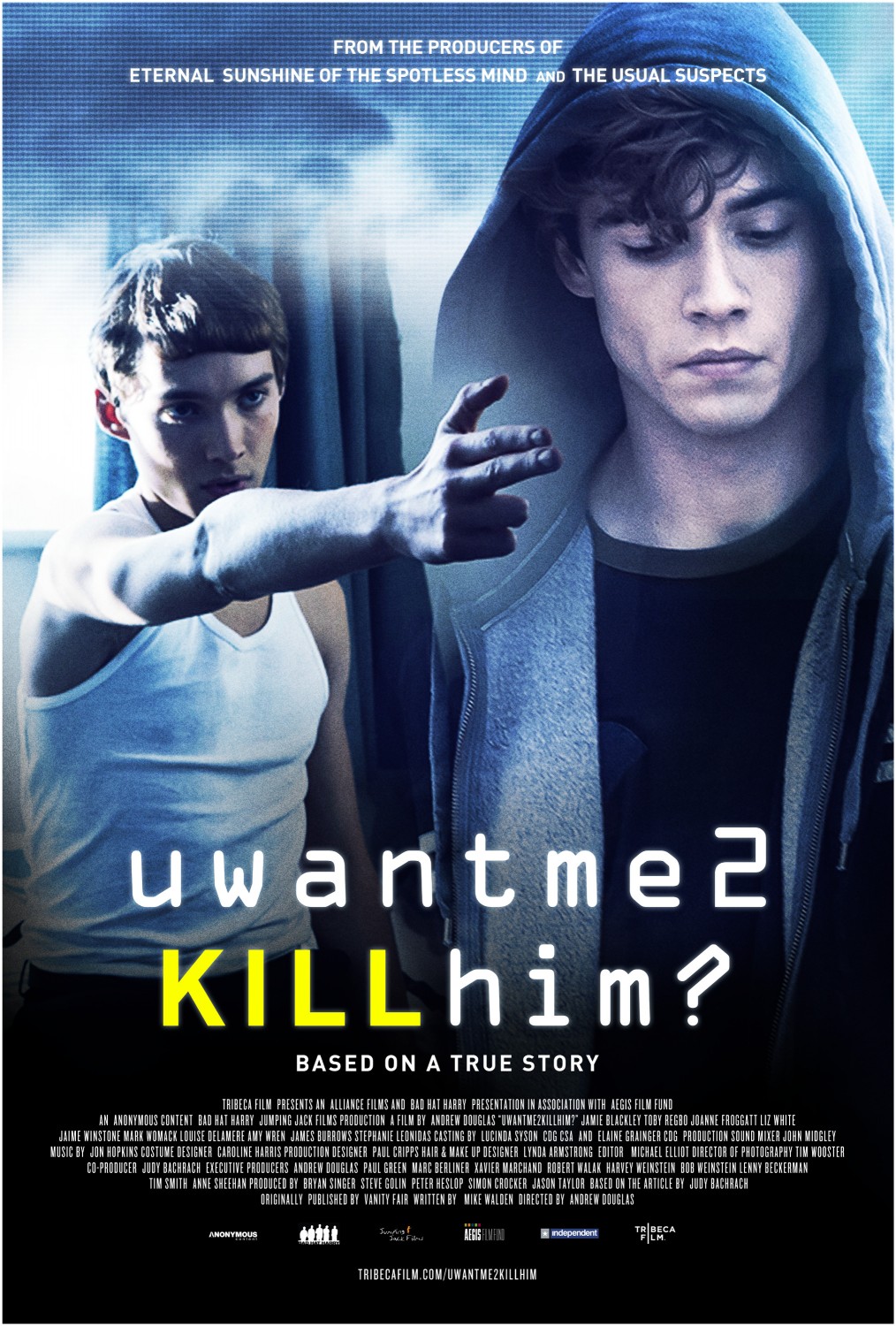
U Want Me 2 Kill Him poster

U Want Me 2 Kill Him?” is yet another in a long line of movies “based on a true story.” But after watching it, you have to believe it’s true because no one could make a story like this up. Based on the Vanity Fair article by Judy Bachrach, it stars Jamie Blackley as Mark, a very popular high school student who ends up getting into a relationship with his online girlfriend Rachel. Mark ends up becoming so hopelessly in love with Rachel to where he’s willing to do anything to win her favor, and she soon has him befriending her lonely younger brother John (Toby Regbo) who gets picked on at school every day. As a result, Mark and John develop a strong friendship which soon leads them down some very dark paths that will have them doing things they never believed they were capable of. It all leads to one of the most shocking and baffling crimes in England’s history.

The movie’s director is Andrew Douglas who is best known for making the acclaimed documentary “Searching for the Wrong-Eyed Jesus” and for helming the 2005 remake of “The Amityville Horror.” I got to speak to him about “U Want Me 2 Kill Him?” which I felt served as a reminder of how threatening technology is in this day and age, and of how the emotions of a teenager are always simmering just beneath the surface. Douglas talked about the long road it took to get this movie financed and made, how familiar he was with the real-life story, and he also gave me an update of what’s happened to Mark and John since the movie’s release.

WARNING: THIS INTERVIEW DOES CONTAIN SPOILERS.

Ben Kenber: I was not at all aware of the true story this movie was based on. Were you aware of this story or the Vanity Fair article it was based on before you got the script?

Andrew Douglas: I’m not a big magazine reader anymore because of the internet, but for some reason I did look at that magazine and I did see the article. Ever since “The Amityville Horror” I’ve always got a weather eye out for projects. I didn’t know at the time what it could be or what it might be, but it just seemed such an extraordinary story. Being in America and finding a story from back home was also very appealing, and then it took a couple of years (to get it off the ground). It had a funky journey because uncharacteristically I tried to buy the rights to the story. It wasn’t something I’m used to, but I did have an agent and I reached out to try to buy the rights to that story thinking it was so extraordinary that I got to be able to do something with this. In the meantime, Bryan Singer of all people had also reached out and snagged the rights. So, a year went by or maybe six months, and a script came out based on that story which Bad Hat Harry, Bryan Singer’s company, had produced and it was pretty good and I took a meeting on it. It went into the air as what’s called an open directing assignment, so I managed to arrange a meeting on it. In the meeting I pitched a slightly different interpretation of the same material, and then another year went by during which the studio the project was with, Warner Independent Pictures, went down the tubes taking the script with it. So, all of a sudden that material was untouchable, so Bat Hat Harry got in touch with me and said, “Remember the take that you had on this story?” I said, “Yeah.” They said, “Well could you come in and re-pitch it to Bryan?” So, I did and they really liked it and they felt it was sufficiently different from where they’ve been in order to start again with the same thing. Over the next year I developed up the script and I found a young English writer who had a great voice for authentic youth, and I presented it to Bad Hat Harry and got my commercial company, Anonymous Content, involved a little bit as well to pony up some money, and all of a sudden, we had a film. Interestingly, right around the time I was shooting, there was also in London an opera based on the same article. I went to see it and it was kind of very operatic and it couldn’t be more different from the film, but it was very interesting to me that here’s a story that grabbed at least three different people in three different ways. The first script was quite documentary in the sense that they presented the kids from a kind of adult perspective, and really to me it was a story of how weird the world is. The opera was told from the police woman’s point of view, so to some extent the story was really about a police woman being puzzled by the internet and by the strange landscape of the internet. My take on it was here’s this weird world, here’s this odd landscape that we haven’t really explored in literature or in film yet, but I’m going to approach it from the point of view of one of the inhabitants of it. The idea was to see if I could find a way through the perplexing nature of what Mark does. What was interesting to me as a kind of challenge was we have these two ordinary boys, more or less ordinary boys, who live in an ordinary town, horribly ordinary, who go to a regular school. They are not project kids, they are not kids who are used to knives or used to violence. How do they make the journey that they made? That was really a kind of interesting challenge to me, and I felt as though it would be best served by really taking on the point of view of one of the kids. It could’ve been either of them funny enough, and John certainly makes an interesting journey as well. But I thought Mark was slightly the more difficult journey to explain; a regular kid who’s handsome and good at football and popular with the girls. What is missing in his life that he needs this thing so badly, that he needs to go as far as he goes? And I just thought that was both interesting in a conventional drama, but also interesting in the context of this new landscape of the internet.

BK: Yes, absolutely. These days people seem to be more open with one another on the internet than in real life when they are face-to-face.

AD: Yeah, I think that’s true, and also not necessarily honest as well of course. One of the things that internet provides then and now, even though we have cameras now which we didn’t have in the wild west of 2003, is the secret language of texting. So, I might be projecting on this, but there is still something very alluring, hopefully not with my kids, about what is called the dark room. Being able to go into a dark room where nobody knows you and nobody can really see you and you can be anything. Maybe it was two years ago that there was a floater piece about young gamers with their avatars. They had a real portrait of the gamers and then right next to them was their avatars, and it was so interesting and, in many ways, it was like a pageant. You get for example a disabled person or another person or the most extreme avatar who is everything that they weren’t, and it was very interesting and moving to see that article. I think to some extent this is what we do and this is what my film’s about. The film doesn’t judge them. Mark says early on to John, “I want a mad life like you have,” and John gives him one. He so does for six months there; he gets a very, very mad life. John on the other hand, he’s just sort of like a brother or somebody to look out for him, and you get that. So, I try not to judge the kids and say they’re weird or they’re bad. I just try and say that in a funny way both kids got what they needed and what they weren’t getting from home. And I thought the judge was very cool. I copied the dialogue straight from the court transcripts, so when the judge says that each boy is an extension of the other, that’s actually what the judge said. I thought that was like one of the coolest judgments. You’ve got to expect courts to be that smart, and I just thought that was really interesting because it was something that nobody had really seen before. It was a new crime so John was accused of organizing his own death, and Mark equally was accused of stabbing him. So, for the judge and for all the generations of the legal institution, it was very perplexing which could have been another take on the movie of course. This is material that has many different points of view on it. Somebody else could’ve taken it from the point of view of the trial and try to figure that out. You know how cool “The Social Network” was? It was all based around those court hearings. That could have been another way to go, but you just make your choices and I am pretty happy with how it came out. There are moments where it has to kind of stretch credibility. I had Mike Walden (the movie’s screenwriter) write the characters as realistically as I could bear, but still when you look back from the end of the film they’re melodramatic. They’re still not quite real and that was kind of intentional. The film is almost more fun watching it the second time. A film like “The Usual Suspects” or “Fight Club,” when you watch these kinds of films a second time you see all the tricks, and it’s very satisfying the see how the filmmakers flirted with showing you everything.

BK: This is definitely a movie that needs to be watched at least twice to see how the characters managed to accomplish all that they did. “U Want Me 2 Kill Him?” also reminded me of what it’s like being young and how the emotions of a teenager are just simmering below the surface to where they don’t know how to deal with certain things.

AD: Right, and the stakes for a kid dealing with those emotions are always so high. So, here’s this person online who he never met. He has a girlfriend of sorts, although that other girlfriend in the real world is just kind of messing him around, but here’s this girl he’s never met and he knows the stakes are so high somehow, and that kind of felt true. You’re absolutely right in what you just said. You have a feel as though one meeting and he loves somebody, and then they die and then you have to seek revenge. Teenage emotions, they run so big really.

BK: Yes, they do. It’s almost easy to believe that a young teenage boy could do what he did, and that’s scary too because when you’re that young and you feel the need to do something, you can get easily manipulated. The other thing I found fascinating, even though we know what happens at the end, is how the movie shows the power women can have over men.

AD: Yeah, it’s all about sex in a way. What John is so instinctively clever about is that every kind of invention is really about sex or power. So, to create Rachel or somebody you talk about, but also somebody who is also in danger and in jeopardy… I didn’t really invent that, I kind of refined it. I was very careful to stay pretty close to the instant messaging transcripts, so all those characters come right from the source. So, John was kind of preternaturally clever in understanding that Mark is going to fall for both the damsel in distress and the sex, and this is going to be too alluring for him. Each time he loses Mark’s attention, he has to up the stakes to invent something even bigger. So finally, he invents the spy woman, and again the relationship is very kind of sexual. It’s funny in that there are so many ideas there and a film can only tackle a few without getting too dense. You’re right, that’s so interesting.

BK: At the movie’s end it is said that only so much can be revealed about these two boys because of their age, and they were ordered to never contact each other ever again. Since the making of the movie, has there any other news about these two boys?

AD: No, and it’s so disappointing. When I was doing screenings in London, I was so hoping that in the audience was one of them. I was so hoping that one of them would come out. I always imagined it was going to be John. My interpretation of his character was that he was kind of very proud of what he did. I tried to capture that when he’s proud of that scar. And I felt as though Mark might be more humiliated by the whole thing and that he might well disappear and use the anonymity of the court much more than John. But I felt that John would continue being a con man which is why I do that thing at the end where he’s still conning. That felt as though the con man as a character… We know now as grown-ups that they use people and that they always have to romance us and exaggerate, so the con man as kind of archetype, it’s hard to break that. But sadly, I never found out about them, and I really wish I could. Remember that film “The Fighter” that Christian Bale was so good in as the messed-up boxer? At the end of the movie you get this real satisfaction that you see the real guy (that his character was based on). I’d love to have been able to do that because it just kind of completes the circle, and it also nails down that this extraordinary thing you just saw is real. I would’ve loved to have done that. I would’ve loved to have been able to show pictures of them now. It would’ve been very satisfying to do that but no, not a glimpse.

BK: This is not a story you could easily make up. It definitely feels like it came from real life.

AD: I know, it’s too extraordinary isn’t it? Sometimes during the filming, I was going, “Oh man I wish I could put ‘based on a true story’ several times through the movie because otherwise people are just going to think I’m crazy to expect people to believe this.” But since I made this film, there was a big event here in America with that Heisman Trophy winner with that Hawaiian name. It just shows you what people will believe like Christianity or something like Mormonism. People believe what they need to believe, I think, at every kind of level. It’s almost as if the internet is like a new country or a new landscape, and I’m a bit surprised that there aren’t more movies about it. One of the things that occurred to me is that I think maybe studios are scared of films where the danger is all going to happen on the computer. I know that was certainly true for myself when I was trying to get financing for the movie. They said, “Oh is it all going to be on computer?” That’s why I kind of invented that thing where often times they are talking, so it doesn’t feel as though it’s all written onscreen. I’m just a bit surprised there aren’t more films coming out (on this subject).

BK: Yeah, it’s been a while. If you look back over the years, it’s kind of been an ongoing theme here and there like with movies such as “WarGames” from the 1980’s.

AD: Oh yes Ben, you’re absolutely right. I had forgotten about that.

BK: It’s interesting to see how technology has evolved over time. Even back then it was a threat, but technology is even more of a threat today than ever before.

AD: Right, right. I think that there was one moment in the film when the police are interviewing Mark’s parents in his bedroom and his dad says he just sits on that thing and points at the computer, not understanding that the computer is a door. It is a door to a place that the dad knows nothing about. That wasn’t kind of forefront in my mind as a parent or anything. It wasn’t meant to be a cautionary tale. It was meant to be a roller coaster to be honest. It’s really true that parents don’t quite understand that this technology is a back door, so who knows what?

BK: How did you go about casting the actors in this movie? They are all really good and very natural.

AD: Yeah, they’re terrific. It was just a normal process really. It started by trying to get real people cast. I really like Shane Meadows’ films like “This is England” and he always tends to use real people. But I quickly found that the script and the ideas and the characters were actually too complicated for real people to kind of be able to layer it, and so I went back to more conventional casting. It took a while. It took a lot of backwards and forwards with like 40 or 50 kids. Jamie was a stretch because that boy had to shave every hour (laughs). He’s got a real heavy beard. While everybody else would be having lunch, we sent him off to shave again.

BK: Much of the movie looks like it was shot handheld.

AD: That was intentional. There was a limited budget, but also it felt that the film would be best served if it looked very realistic because the story is so unrealistic. I felt if I shot it as realistically as possible, not quite documentary but very handheld and very real, I thought as though that would create a tension within the story.

BK: I liked that because you watch this movie and it just washes over you. It does feel like you’re being invited into these kids’ private lives in a way you wouldn’t necessarily be invited otherwise. In some cases, people might view this story as being rather convoluted, but it is based on a true story and the realism of it aids the movie very well.

AD: Oh good, I’m glad to hear you say that.

BK: Well thank you for your time Andrew, it has been very interesting to talk with you and I thank you for your time.

AD: Not at all. I appreciate your liking this film. Independent films need help; they need champions so it’s really great that you’re supporting independent films. It’s also easy to just go for the big studio films, but then I think we lose something. I’m a big fan of all kinds of movies. Along with everybody else I’ll be there watching the Superman or the Spiderman and I’ll be there on the first day, but equally I just love independent cinema and I love the way it deals with often times more grown-up ideas. It’s all great.

BK: I agree. My hope is that independent cinema goes through another renaissance really soon.

AD: Oh, I know, absolutely because you see films like “12 Years a Slave” or even “American Hustle” and they are very independent in spirit and they do so well. So, it just feels as though we don’t just want to watch tent pole movies. It’s just not enough because that’s too simplistic and sometimes you feel as though all you are is a consumer. You’re just consuming a kind of product. And with big movies they have less and less dialogue because they travel more easily like a “Transformers” movie. There’s not any dialogue in them anymore because that way they can just export it all over the world, and you just feel like a sucker sometimes.

“U Want Me 2 Kill Him?” is now available to own and rent on DVD, Blu-ray and Digital.
Exclusive Video Interview with Jonas Carpignano about ‘A Ciambra’

A Ciambra” was Italy’s official submission in the Foreign Language Film category for the 90th Academy Awards, and it was made in the heart of the country’s Romani community. A gritty coming of age story, it follows Pio Amato, a 14-year-old boy who is eager to grow up real fast. Pio spends his days smoking and drinking as well as following his older brother Cosimo (Damiano Amato) around town while learning the skills needed for survival in their hometown. While tensions between the different factions, the Italians, the African immigrants and his fellow Romani, remain high, Pio is able to slide through each in a way few others can. When Cosimo is arrested one night, Pio is quick to convince everyone he is more than ready to fill his older brother’s shoes and take care of things. But as the movie goes on, he wonders if he is truly ready to become a man.

“A Ciambra” was written and directed by Jonas Carpignano whose previous film, “Mediterranea” won various awards including Best Directorial Debut from the National Board of Review and the Gotham Award for Breakthrough Directing. What he has succeeded in doing here is giving us a motion picture which makes you feel like you are hanging out with these characters instead of just watching them from a distance. Carpignano combines biographical elements with documentary style filmmaking to give us something we experience more than anything else. There are not many movies like this one these days, and I will take them wherever I can get them.

Carpignano spent his childhood between Rome and New York City, and he currently lives in Italy where he continues his filmmaking endeavors. He was in Los Angeles to talk about “A Ciambra,” and it was a pleasure taking with him about how he went about making the film with non-professional actors. In addition, he spoke of what it was like to work alongside Martin Scorsese who is the film’s executive producer and of the most valuable piece of advice the “Goodfellas” director gave him.

“A Ciambra” opens in Los Angeles at Laemmle’s Royal Theater on February 2, 2018. Be sure to check out the interview above as well as the movie’s trailer below.

A Ciambra poster

Exclusive Interview with Ron Shelton about ‘Just Getting Started’

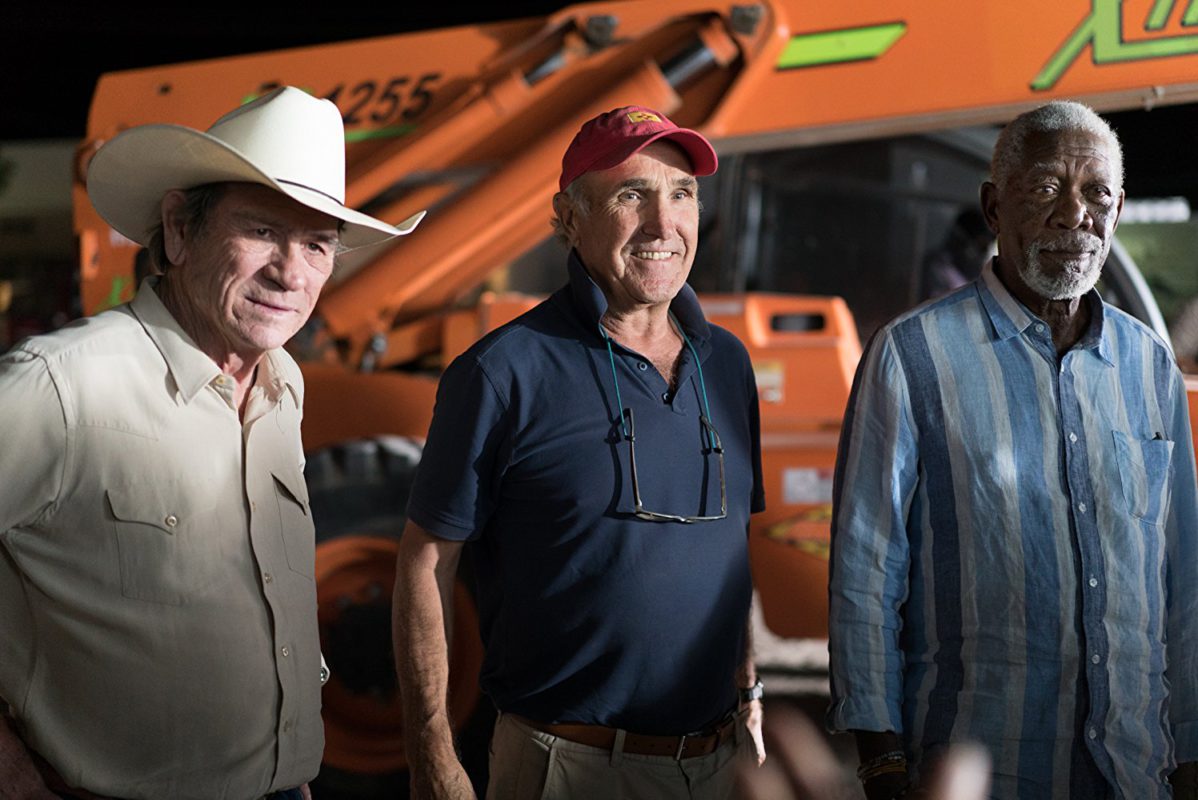
Just Getting Started Shelton with Jones and Freeman

When I first looked at the poster for “Just Getting Started,” I was very happy to see the following phrase on it: written and direct by Ron Shelton. Shelton is responsible for creating some of the best sports movies such as “Bull Durham,” Tin Cup” and “White Men Can’t Jump,” and he has a true gift for creating fantastic dialogue and getting wonderful performances out of his actors. Somewhere along the line, he stopped making movies to where I wondered where he was and what he was up to. Now we know.

“Just Getting Started” takes place at a luxury resort in Palm Springs, California called the Villa Capri. This resort is managed by Duke Diver (Morgan Freeman), a man with a mysterious past who is determined to make sure his residents will never ever stop partying or having fun. But while Duke is the life of the party, his ego becomes threatened by the arrival of Leo (Tommy Lee Jones), an ex-military man who wastes no time in battling Duke for the top spot of Alpha male at the Villa Capri. Things get even more complicated when a new resident, the beautiful Suzie (Rene Russo), arrives at the resort, and the two become determined to gain her affections in an effort to prove who is the better man. But once Duke’s past comes back to haunt him, he and Leo are forced to work together in an effort to stay alive.

It was a real pleasure talking with Shelton, and he spoke about what brought him back to the director’s chair for the first time in over a decade, how he goes about directing a comedy, and of what it was like to have Freeman and Jones go against type and play characters who are not so serious and eager to have fun. Shelton also talked about Glenne Headly who passed away recently, as this was the last movie she appeared in before her death.

Just Getting Started movie poster

Ben Kenber: I was very excited to learn you were directing another movie. This is your first feature film since “Hollywood Homicide.” What was it about this story which inspired you to get back in the director’s chair?

Ron Shelton: Well I had three or four movies which fell through at the last second, so it’s not like I suddenly decided to get off the couch and direct. I have been writing steadily and developing TV things and trying to finance features. In the independent world, there are so many moving parts to the financing that if one piece falls out, the whole thing falls apart. So it hasn’t been for lack of effort, and now I have a couple more I think that are gonna go. It won’t be such a dearth of time between them, and I got some other projects I’m working on. This one came together financially, that’s why this one got made.

BK: What inspired you to write this particular screenplay?

RS: Southern California where I grew up, and maybe you grew up, in the winters and Christmas, to me, I’m used to it. You go to the beach and play golf. But people from cold climates come out here and they are just like appalled; this doesn’t count as Christmas. And I started saying to half the world, this is Christmas, this kind of weather. What’s wrong with it? When the Nativity happened, it was probably more like Palm Springs (laughs). Then I remembered driving to Palm Springs at Christmas and there were dust storms and Christmas trees were blowing off lots down the street and Johnny Mathis was being piped in, and I thought, yeah, this was a good backdrop for a movie, so that’s where the backdrop came from. And then basically, the Duke Diver character is based on a hustler a producer and I knew who was a good hustler. He wasn’t a criminal hustler, but he was a guy everybody loved, and nobody ever knew what he did for a living or how he survived. So, I kind of turned that into this character, and the whole thing fell together.

BK: The characters played by Morgan Freeman, Tommy Lee Jones and Rene Russo, they are not all they appear to be at the start.

RS: Right, exactly.

BK: Your movies take place in the real world which we all understand and complain about more often than not, and they also contain fantastical elements which you can only find in the realm of fiction. How much of a challenge is it for you to balance those two elements out?

RS: It’s what I prefer to do. What I couldn’t imagine is a movie set in outer space or in the future or time travel or Death Stars blowing up or toys that turn into monsters or Transformers. That doesn’t interest me. I’m interested in human behavior whether it’s tragic or comic, and all of my movies, however disparate they are, are about how people behave. I just think that’s the most exciting thing to observe, and I tend to like movies about human behavior and not special effects. That’s just me. I’m in the minority obviously when you look at the box office results out there. I like to take the audience into a world they never would go into except for a movie whether it’s playground basketball (“White Men Can’t Jump”), minor league baseball (“Bull Durham”), or the political world of Louisiana politics in the 1950’s (“Blaze”). That’s just what interests me. It’s as simple as that.

BK: I fear many people will consider “Just Getting Started” as a movie about old people, but it really isn’t. It’s more about how no one ever really acts their age and how we roll with the punches.

RS: Well you don’t go to a retirement home to die. You go there to party. Everybody onscreen is not looking back and reliving their loses which everyone has, looking at their high school yearbooks, or thinking about what might have been. Everybody there probably is divorced or widowed, and all they are doing is looking for what’s next in their life. I’m 70. When you get to 70, that’s all you’re doing. I don’t think of myself as old. I can’t hit a golf ball as far, but I’m a better golfer. Morgan’s 80 and Tommy’s my age. We’re all about moving forward, working more, discovering things about ourselves, and that’s really what I think interests me. Most people I know who are my age, whether they are in the movie business or not, are not looking back. They are looking forward and looking forward to tomorrow. That’s all it’s about.

BK: I love how you cast Morgan Freeman and Tommy Lee Jones in these roles. Both are known for playing dramatic roles with a lot of gravitas, so seeing them let loose here is a joy because we don’t see them often in comedic roles. When it comes to directing actors to be funny, do you let them play the joke or play the scene?

RS: Play the scene always. Never play the joke. I’m not a very good joke writer anyway. I try to write behavior and interchange and exchange that’s humorous or that’s real and based on behavior, and I just say play it. You’re the actors, play it. Don’t ever look for a laugh. Don’t ever worry about where the punchline is because there’s probably not a punchline, and that’s the way we do it.

BK: That’s great because a lot of movies today, filmmakers just like to play the joke and that doesn’t work.

RS: Right.

BK: I think the trick with comedy, especially with your movies, is to play the scene and never play it like you are in on the joke.

RS:  Exactly. A lot of times an actor, not these two because they are so good, but in another movie I’d be directing, they would say this line is so funny on the page and I don’t think I’m getting the laugh out of it. I said you shouldn’t be trying to get the laugh, just play it real. Play every line real, and the laughs come or they don’t come. Sometimes you think there’s going to be a laugh in the script, and it’s a smile. Sometimes a laugh comes when you least expect it, but it’s not going to come on the punchline because there aren’t any, or they rarely are.

BK: You worked with Rene Russo in “Tin Cup,” and she looks and is fabulous in this role. It looks like a serious role for her at first, but then she pulls out the stops.

RS: Rene plays the strong woman who’s really a mess better than anybody I know (laughs).

BK: How did you direct the actors? Did you just let them loose?

RS: When a director says “action,” his work is done. It’s like you’re a basketball coach; at the first tip, you’re done. Plus, with these people, you don’t have to direct them as much as you give them a note and then get out of the way. Just help stage it and shoot it. Tommy’s note was look you’re not competing with Duke, he’s competing with you. You’re not threatened by Duke, he’s terribly threatened by you. So that’s where some of the chemistry comes from. Tommy’s toying with Duke, and Duke is fighting for his existence with Tommy. So that just needs a slightly different motivation.

BK: When you write a screenplay, you usually have a vision of it in your head of how the dialogue should sound like. What is it like when actors speak the dialogue you have written?

RS: Well then, it’s the third thing: You write one movie, you shoot another movie, and then you edit a third movie as the old saying goes. Once they have it, it takes on a new life of its own. That’s the truth. Once you’ve hired the actor and I hand them the script, I always say look, until this moment, I know more about this character than you because I have been living with this character and writing him and figuring him out. Now, it’s yours. Now you’re going to discover things about this character I didn’t even think about. So in a certain way, I’m handing this character to you.

BK: I also liked the three ladies (played by Sheryl Lee Ralph, Elizabeth Ashley and the late Glenne Headly) whom Duke flirts with, and I loved their dialogue because you expect them to not know what’s going on, but they know more than they let on. What was it like writing those characters?

RS: They were great. I wish I had more time. It was a fast shoot. We had 28 days if you can believe that. If we had more time, we could have done more with those wonderful actresses. And yes indeed, it was a shocking loss when Glenne passed. Nobody anticipated it at all, and it happened suddenly too. It wasn’t like a disease. But they were all great to work with. They were so happy to be working in a nourishing environment where everybody was having fun, and there was mutual trust and we could play. But everybody was very respectful of the script. There was virtually no improvising in the whole movie, and they were just pros. I love working with pros.

BK: I really thought the dedication you gave Glenne at the conclusion of the end credits was really lovely.

RS: Thank you.

BK: In regards to the shooting schedule you had for this movie, how did shooting it in less than 30 days affect you as a director?

RS: It’s not a shooting schedule when a movie is shot in three different cities with 80 and 70-year-old actors with about 80 locations. It’s a schedule when you’ve got sets, and we didn’t have any sets, and you’re moving the company all the time. When you’re moving the company all the time, that’s what takes time. The second unit I shot in Palm Springs because we also shot in Albuquerque and Santa Fe, and I picked up a day in Valencia. So that’s a lot of movie for 28 days.

BK: Another actor I was happy to see in this movie was Jane Seymour, and she is almost completely unrecognizable here. Was this by design or was it her idea to look completely different from any role she has played previously?

RS: When she said she would love to do this, she was a late add. She said, what’s my hair look like? I said I don’t know, I hadn’t thought about that. And she said, I have two different wigs. And I said, why don’t you wear them both? We’ll just alternate them in scenes. She thought that was a great idea, and she said one is blonde and one is brunette. I said perfect, every time we cut to you, you’ll look different.

BK: How did this movie evolve for you while you were in the editing room?

RS: Well you keep finding the movie. The big question in editing was, how much should the audience know that you keep a secret? You don’t want to make it too much, and you also don’t want to say he doesn’t have a secret because when the golf cart blows up, it can’t be like, what the hell’s happening? It has to be oh, now we’re going to get to the bottom of the secret. So we were always playing with how much to share with the audience and how much not to share. That’s just a difficult kind of problem you address in post-production.

I really want to thank Ron Shelton for taking the time to talk with me. It was a real pleasure. “Just Getting Started” will open on December 8, 2017. Be sure to check it out!

Poster, photo and trailer courtesy of Broad Green Pictures.

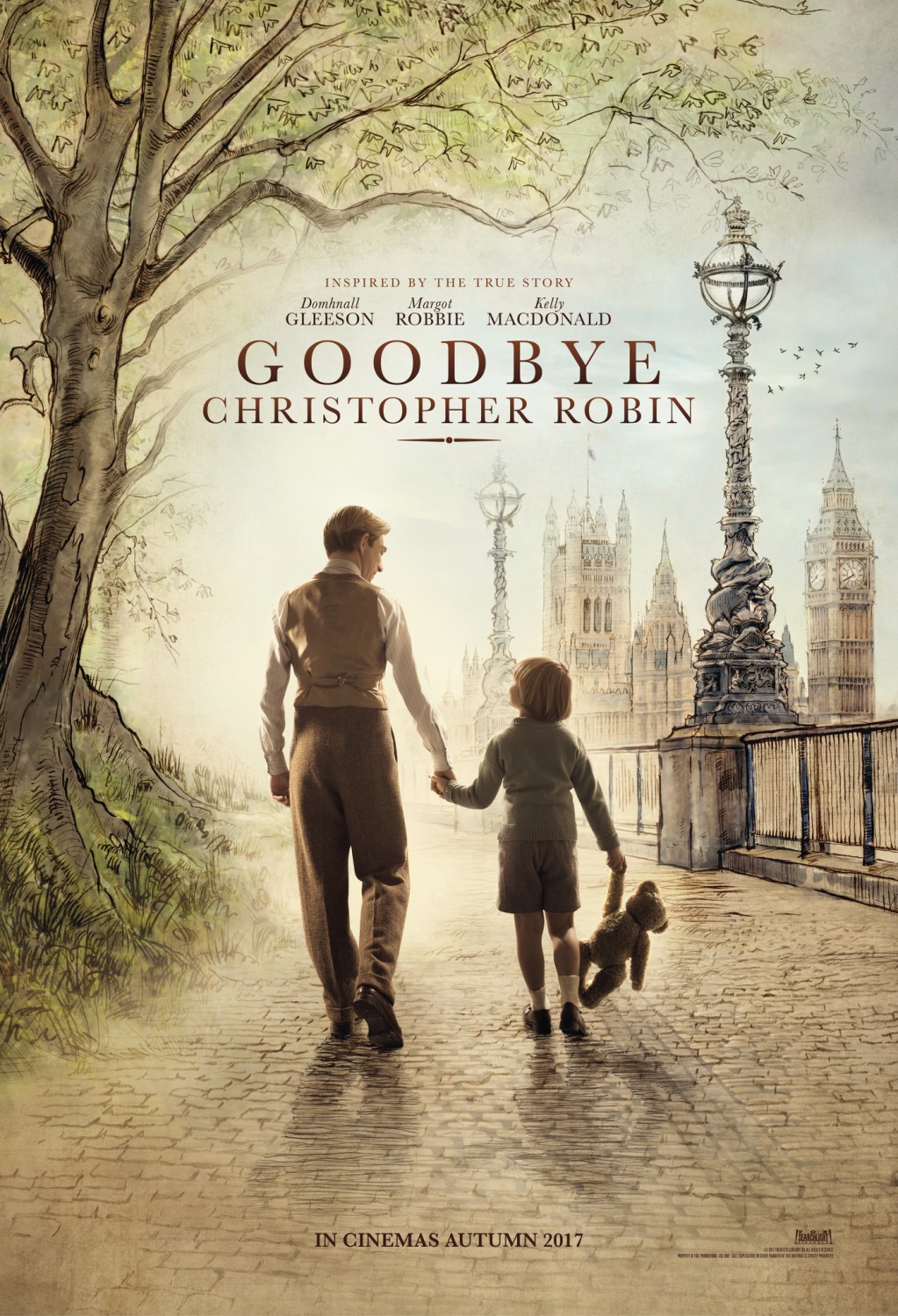
Exclusive Interview with Simon Curtis about ‘Goodbye Christopher Robin’

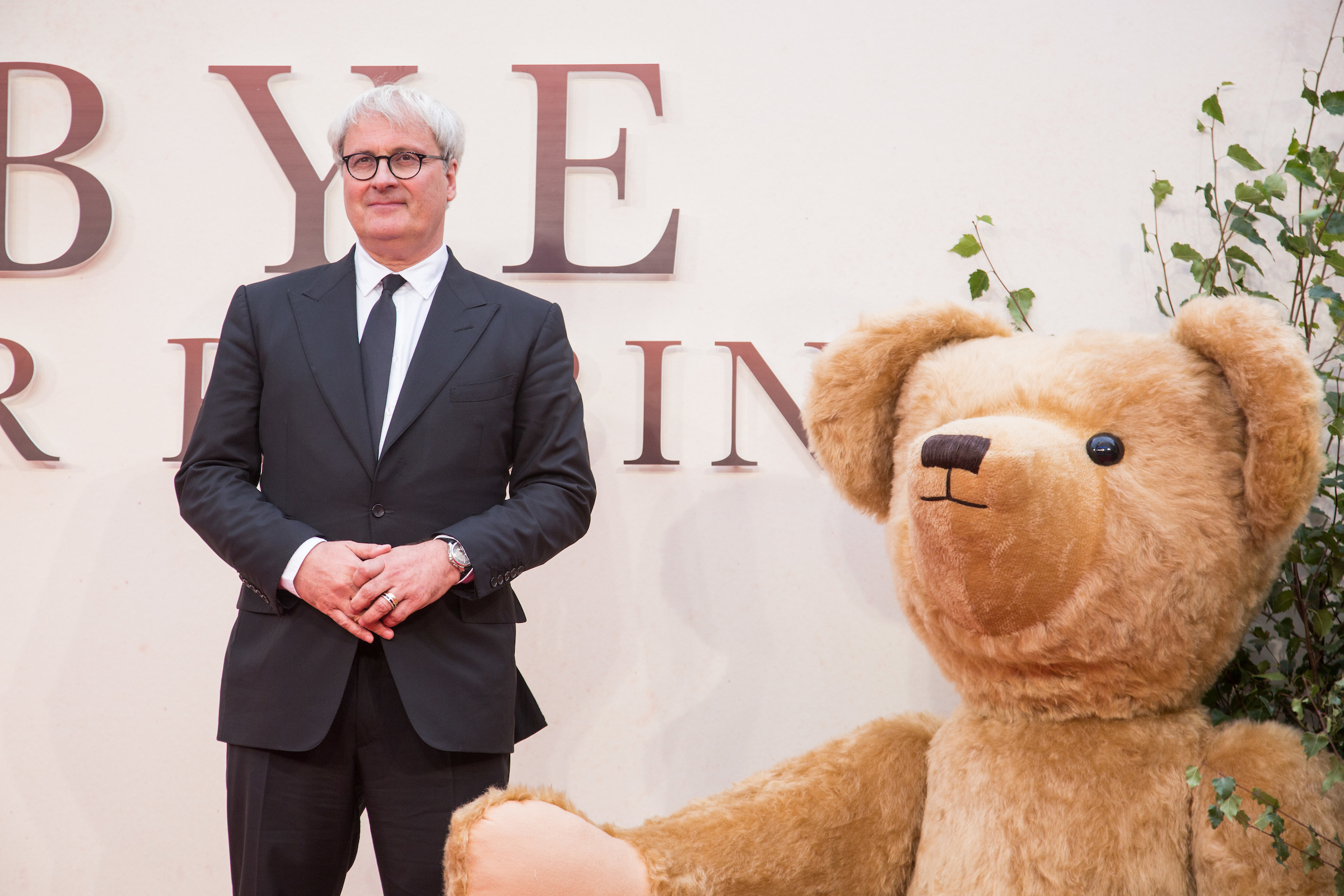
Goodbye Christopher Robin Simon Curtis

Filmmaker Simon Curtis gave us one of the best adaptations of the Charles Dickens’ novel “David Copperfield” back in 1999, he brought Marilyn Monroe back to life along with the help of Michelle Williams with “My Week with Marilyn,” and he directed Helen Mirren to one of her many great performances in “Woman in Gold.” Now he gives us his latest directorial effort, “Goodbye Christopher Robin,” which looks at the creation of Winnie-the-Pooh and the other characters who inhabit the 100 Acre Wood. But while it looks to be a simple biopic focusing on the creation of classic literature, it also proves to be an examination of the scars war leaves behind, the importance of having a regular childhood, and of the damages fame can cause before others can realize it.

I got to speak with Curtis while he was in Los Angeles recently, so please feel free to check out the interview below.

Goodbye Christopher Robin poster

Ben Kenber: From a distance, this movie looked like it would be a simple story of how A.A. Milne came up with Winnie-the-Pooh, but what I really liked though was how the story developed from the effects of fame to a childhood being stolen. Was this inherent in the screenplay (written by Frank Cottrell-Boyce and Simon Vaughan) when you first read it?

Simon Curtis: That’s a good comment. Yes is the answer. I loved the script from the get-go because you think it’s going to be exactly that, but it is about so many other things: family and creation and the impact of war. And yes, Christopher Robin was almost like the prototype child celebrity. And to be fair to the Milne family, it was such an unknown territory. They couldn’t have predicted that the stories would become so popular and the attention it would bring to the boy.

Ben Kenber: There’s no way they could have been prepared for it, and this is what makes A.A. Milne and his wife, Daphne, so incredibly complex. On one hand, you want to get mad at them for robbing Christopher of his childhood, but at the same time, they both come to realize the damage being done. But by the time they stop it, it is too late.

Simon Curtis: Yes, that’s right.

Ben Kenber: I found it very fascinating, and I liked how the movie deals with the PTSD flashbacks. If you’re in a theater with really good sound, you feel the impact of each bang and balloon pop.

Simon Curtis: Yeah, you do. I was trying to make the point that war doesn’t only impact on the men and the women who fight in the war, but their families and their descendants as well. So, the boy is a victim of World War I even though he wasn’t born until it ended.

Ben Kenber: When it comes to introducing the stuffed animals, I loved how Margot Robbie and Domhnall Gleeson introduced them. She had the voices, and he came up with Eeyore’s name. Was there anything about the stuffed animals which you wanted to include in the movie but were unable to?

Simon Curtis: I don’t think so. I love how it’s this almost accidental thing that they buy bear at Harrods or wherever it was, and suddenly it becomes this iconic thing. One of my favorite moments, in terms of when she first gives him the tiger and she says “happy” and then she hands it to him. Then the father says, “Well what should we call it?” “Tigger.” “Why?” “Because it’s more tiggerish” (laughs). It’s just lovely writing.

Ben Kenber: It is. The names all come by accident. It is not some pre-destined thing.

Simon Curtis: Absolutely. They were just little puppets, and that’s the great thing about art. There’s a surprising element to it.

Ben Kenber: A.A. Milne is very eager to say something about war and reality. The interesting thing is, in terms of the way the Pooh stories were written, he found a way of dealing with reality of writing readers with an escape from it.

Simon Curtis: Yes, good.

Ben Kenber: The young actor who plays Christopher Robin Milne, Alex Lawther, was excellent, and he is a very tough role to play here as you see him revel in seeing this stuff animals come to life, and yet he is thrust into a spotlight you couldn’t be less prepared to deal with. Was it hard casting this role?

Simon Curtis: It was lengthy. But I cast a nine-year-old boy would never acted before, do you know that was? Daniel Radcliffe (Curtis cast him in “David Copperfield”), and he had never acted before, so that gave me some confidence. But this boy Alex was a joy and a gift. He was fantastic.

Ben Kenber: Domhnall Gleeson brings a lot of depth to this role.

Simon Curtis: He does.

Ben Kenber: He has scenes where he says one thing, but his eyes have to say something else. How do direct an actor in scenes like those?

Simon Curtis: I don’t know is the answer. You just try to make every scene as good as possible and help the actor to do their best work, and Domhnall is one of those actors who thinks a great deal about it in advance. It brings a lot to the dad, and he was a real partner. The film improved because of his work in the scenes and elsewhere.

Ben Kenber: Margot Robbie has a very tricky part to play here because in some cases the audience may find her to be not for a likable, but she does come across as a very loving mother. It’s a British thing that they hold back. Some of my friends said Daphne is not very likable.

Simon Curtis: But that’s missing the point because that’s the way people were. Not everyone has to be likable in the world, and that’s the way people were mothers in those days. They had the baby, handed it over to a nanny, and waited for the wedding.

Ben Kenber: I always tell people it is not a question of whether a character is likable or not in a movie. It’s whether or not they are interesting.

Simon Curtis: Exactly.

Ben Kenber: Robbie’s performance is really good because she delves into the unlikable parts of her character, but you never doubt the love Daphne has for her son.

Simon Curtis: Yes, and she doesn’t shy away from it. She has such natural warmth herself as a woman, and that kind of balances it out on another level.

Ben Kenber: For many years, there has been a long battle between the Milne family and Walt Disney over the rights to the Winnie-the-Pooh stories. Was this something you considered including in this film?

Simon Curtis: No because that’s in the future, that story.

Ben Kenber: The movie’s ending could have been too sentimental with two characters hugging, but they don’t hug and I like that they didn’t because it would’ve seemed too manipulative.

Simon Curtis: Yeah, that’s England. Someone said astutely I thought how in England we are the world storytellers from Shakespeare to JK Rowling, but we can’t say I love you to our kids (laughs).

Ben Kenber: I loved the scene where A.A. Milne tells Christopher you will not write another word about Winnie-the-Pooh. The way the same was played was brilliant because it’s straight to the point.

Simon Curtis: I agree. That was Domhnall’s idea for him to be seated and looking up at Christopher who is standing. It was a really good idea. As a director I look like a genius, but it was totally the actor’s idea.

Ben Kenber: Do you give a lot of freedom to your actors?

Simon Curtis: Yeah. Plus, to be perfectly honest, there are so many little things, you can’t have them all solved in your head.

Ben Kenber: The stuffed animals we see in this movie are replicas of the original ones which are now part of a museum exhibit in New York. Did you have any issues with Disney over the rights to show these stuffed animals here?

Simon Curtis: I don’t think so in this case because they all predate Disney. They are not Disney. Winnie-the-Pooh doesn’t have his little red vest. We just wanted him to be this Victorian toy.

Ben Kenber: Were there any dramatic liberties you took with the factual material?

Simon Curtis: Well I think the fame comes much more quickly than a probably would’ve done, so it was that sort of thing.

Ben Kenber: The movie takes a real left turn when the books become incredibly popular, and the sun becomes an unwitting celebrity to where A.A. Milne begins to question the effect fame is having on Christopher.

Simon Curtis: I love that scene where he thinks he is speaking to his dad on the phone, and it is revealed to be a radio interview.

Ben Kenber: It is such a painful moment because you see in the dad’s eyes that he really shouldn’t be doing this.

Simon Curtis: That’s exactly right.

Ben Kenber: Kelly Macdonald’s character of the nanny, Olive, is wonderful as she serves as the Mary Poppins of this story.

Simon Curtis: She is certainly the emotional heart of it.

Ben Kenber: How did you come to cast Macdonald in this part?

Simon Curtis: Well she did a play with my wife about 10 years ago so I’ve always loved her work, and she just struck me as the perfect person at the perfect time.

Ben Kenber: I like how you portrayed England as still recovering from World War I.

Simon Curtis: Very much so, and I think it chimes in now because it feels like were living in wounded times now.

Ben Kenber: Was that something you planned?

Simon Curtis: It just happened in a way.

Ben Kenber: There are a number of things about A.A. Milne I didn’t know before watching this movie such as the fact he was a soldier and a playwright.

Simon Curtis: Yeah, I didn’t know he was a successful playwright.

Ben Kenber: At the beginning of the movie, A.A. Milne does not look the least bit prepared to be a parent. It’s almost like the movie “Kramer vs. Kramer.”

Simon Curtis: Yes, it is. We talked about that actually. There’s the first breakfast and then there’s the expert breakfast in “Kramer vs. Kramer.”

Ben Kenber: The arc of this movie goes from father and son being strangers to them coming together and then later becoming estranged from one another.

Simon Curtis: The thing that bonded them became the thing that tore them apart.

Ben Kenber: The segment where Chris for a sent off to school was handled very quickly. Was this a segment you ever wanted to expand on?

Simon Curtis: Not really because the last thing you want at that point in the film is to be slow.

Ben Kenber: “Goodbye Christopher Robin” has a running time of 107 minutes. I usually expect biopics like this one to go one for over two hours as filmmakers seem desperate to get every little about their subject’s life onto the silver screen. Did you ever feel this pressure when making this movie?

Simon Curtis: I don’t know really how to answer that. I was just doing the script.

Ben Kenber: This movie is dedicated to Steve Christian. Can you tell me more about him?

Simon Curtis: He was one of the producers who supported this script through years of development and who unfortunately passed away after he saw the first cut.

Ben Kenber: Well, it’s nice to know he did see a cut of the film.

Simon Curtis: Yes, it is nice.

Ben Kenber: The way I see this movie, I feel it is about the long journey to happiness. When father and son come together again, they realize to get to a point of happiness, they have to experience a lot of sadness and pain in order to better appreciate joy.

Simon Curtis: To me, the theme is pay attention to your loved ones while they are around because they won’t be around forever. And also, we punish ourselves over getting this or getting that done, and actually just being with your loved ones is the greatest gift of all. Somehow, that’s embedded in the film. I’m so glad when my kids were young because it was before these (cell)phones because I would’ve been totally on them the whole time.

Ben Kenber: In the movie’s postscript, it is revealed A.A. Milne did get to write his anti-war piece. Was this something you wanted to include in the movie as well?

Simon Curtis: Yeah. He didn’t intend to be known only as the writer of Winnie-the-Pooh. There’s a quote (by A.A. Milne) in the “Goodbye Christopher Robin” book introduction by Frank Cottrell-Boyce. Just read that.

Ben Kenber: “…little thinking

                     All my years of pen-and-inking

                    Would be almost lost among

                    Those four trifles for the young.”

Simon Curtis: Yeah. In fact, it’s not almost, it’s now completely. So that’s good, isn’t it?

I want to thank Simon Curtis for taking the time to talk with me. “Goodbye Christopher Robin” will arrive in movie theaters on October 13, 2017. Click here to check out my review of the film.