David Twohy Looks Back at the Making of ‘Riddick’
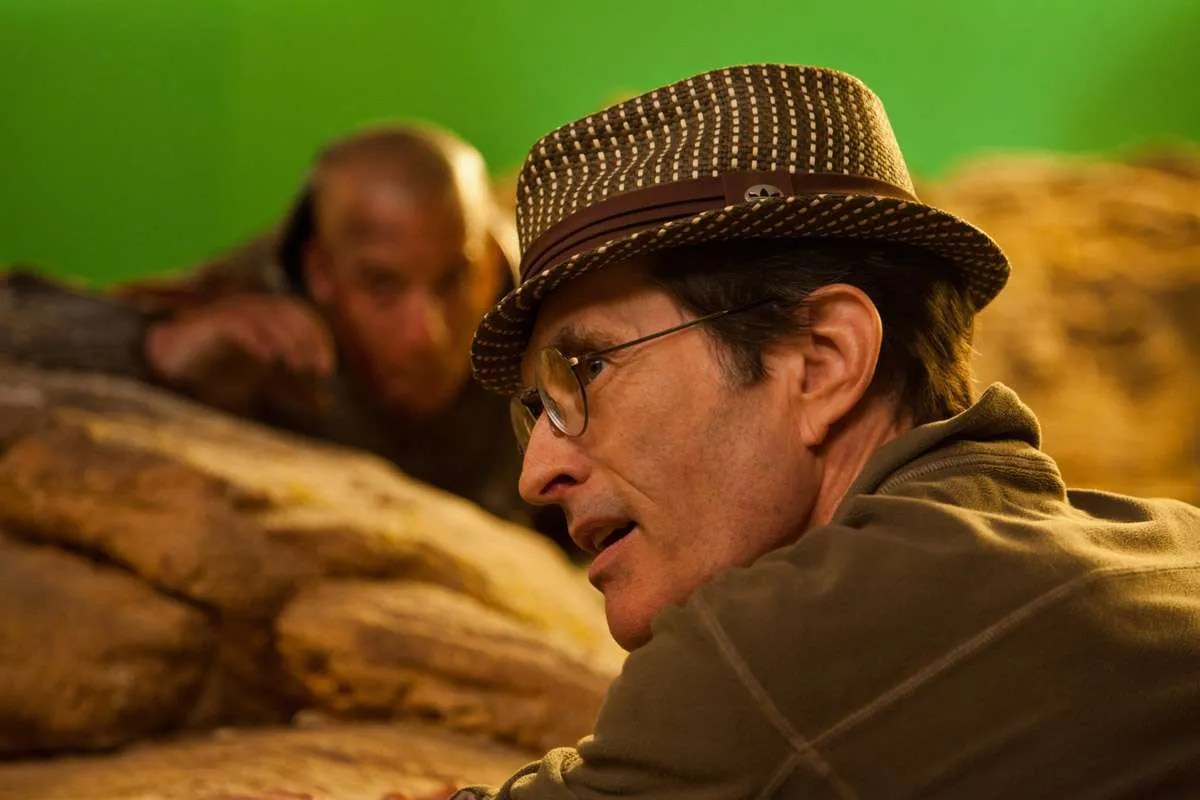
Born and raised in Los Angeles, California, filmmaker David Twohy has left a strong impression on moviegoers everywhere. He got his start as a screenwriter on “Warlock,” “The Fugitive” and “Waterworld,” and he eventually proved himself to be an effective director with the underrated “The Arrival” which starred Charlie Sheen as an astronomer who discovers evidence of intelligent alien life, and the equally underrated submarine supernatural horror film “Below.”

But the movie Twohy is still best known for is “Pitch Black” which had him joining forces with “The Fast & The Furious” star Vin Diesel who played the dangerous criminal, Riddick. Its budget was only $23 million, but Twohy and Diesel created a movie that was intensely exciting and which made the most of its modest budget. So strong was the cult following for “Pitch Black” that the two later made “The Chronicles of Riddick” which had a budget of over $100 million. While the sequel was not a commercial success, fans were still craving another Riddick movie and kept pushing at Twohy and Diesel to bring this anti-hero back to the silver screen.

Fans got their wish when “Riddick,” the third movie in the “Pitch Black” franchise, opened in theaters on September 3, 2013. After dealing with a big budget and a Hollywood studio, Twohy and Diesel ended up raising the money independently to make this particular sequel a reality and maintain full creative control over it. It follows Riddick as he is left for dead on a desolate planet and ends up being sought out by bounty hunters who are prepared to bring his head back in a box. But soon they are stalked by vicious alien predators, and they are forced to join forces with Riddick in order to survive the long dark night.

I was lucky enough to attend the “Riddick” press conference at the Four Seasons Hotel in Los Angeles, California just before this sequel was released back in 2013. Twohy talked about the challenges of making this particular movie as well as what it was like working with Diesel who had just received his star on the Hollywood Walk of Fame.

Question: How did the final film compare to what you originally envisioned, and were there any big challenges you faced in terms of the look of the film?

David Twohy: Did the finished product end up like we had imagined it? Yeah, it does because really, as a responsible filmmaker, I have to imagine the whole movie. After I script the movie, I have to storyboard it out, I have to budget it, and I have to understand if I can afford all those visual effects or not. So more than anybody, it looks like the movie I had imagined, sometimes better, sometimes not quite as good depending on how we execute the visual effects. But yeah, I’m not surprised by it because it’s what I do and it’s what I set out to make. Sometimes Vin, who is not privy to everything that’s in my head and all the work that I’ve done with the concept artist (and he likes it that way), is surprised, but I don’t have the luxury of being surprised. I can’t be surprised by anything in the filmmaking process if I’m doing my job right. So, it’s very much the movie we set out to make, and we set out to make something that would fit into the budget that we had ($38 million). I think you all know that this was an independent movie this time out instead of a studio movie. So, knowing that we would have limited resources, Vin and I sat down in his kitchen and we came up with a story that would fit that budget. It couldn’t be as grand as the last movie, and it had to be more contained. It feels more like “Pitch Black” to some people. It probably is more like that at least in its tone and scope (we limited it to one world), but it’s very much the movie we set out to make, and there were not that many surprises for me along the way.

Question: It was interesting to see that Dahl (played by Katee Sackhoff) was not a love interest in this movie. Usually, the girl ends up being the love interest of someone, but instead she was this independent woman who can hold her own. Can you talk about casting Katee and why you chose to make her this independent woman who can take care of yourself?

David Twohy: I remember Ridley Scott telling me this story about the original “Alien;” Ripley was scripted to be a man, and he decided to make her a female thinking that these parts should be gender-neutral. I’ve always remembered that, and the women in my movies do stand up on their own two feet and are not pieces to anybody, and I like that. In terms of Katee, she was the first person to read for the role of about a hundred actresses, and that I remembered her throughout the whole process speaks highly of her. So finally, I said, “Who was that girl who came in the first day, she had blonde hair and she kind of killed it? Who is she?” They said, “Oh that’s Katee Sackhoff from ‘Battlestar Galactica.'” Well, I didn’t really follow “Battlestar Galactica,” so I didn’t even know her from that, so I’m not casting or for that. I just thought she was the best available actress so we cast her like that, and I’m so glad we did because she was a joy to have on the set. And clearly, like the character, she holds her own amongst the men and swears worse than any of them. Her off-screen lines are just as good.

Question: What made you bring this franchise back to R-rated territory after the PG-13 “Chronicles of Riddick,” and is there going to be another “Riddick” anime, game or ride?

David Twohy: (laughs) A Riddick ride? Well, actually we are doing some D-Box seats in theaters, the motion platform seats. I just experienced them for the first time and it’s the closest thing to a Riddick ride as you’ll get. It’s watching the movie, but it’s motion based. I don’t know what that in between thing will be, but we embrace them, and I would like to do more. We published the motion graphic novel as well which helped with the back story of how Riddick went from King of the Necromongers to a man alone on a planet. We embrace those things, and it would be great to get another game off the ground, but those things are very hard to launch. They are costly and they need a lot of lead time, so it’s hard to sync those games to the release of a movie. But we would like to do another one and we are talking about it. The R-rated movie was important to us because, as a filmmaker, I have the flexibility I need to do what I want. With PG-13 I feel like I’m pulling my punches either in the script or working with my actors on the set and coming up with stupid analogues for the word “fuck.” I’m getting tired of that. It gets to the point where people aren’t talking like people talk anymore. Just because I don’t want to pull my punches anymore, I felt this was important to me. It also plants a flag in the ground for our fans as well and lets them know we are true to the character and the nature of the series. The reason for PG-13 last time is obvious. It was because we were a big studio movie funded by a big studio, and to minimize their risk they wanted to branch out to what they think is the widest possible audience and they think that’s PG-13. There is actually a sound reason for that, but Vin and I feel more comfortable back in the R-rated universe.

Question: In “Riddick” you deal with the Necromongers briefly and just move on from there. Do you plan on going back to that story thread if this movie is successful enough to merit a sequel?

David Twohy: Yes. If it is successful and if we have a flexibility to go wherever want for the next movie, and Vin and I are talking about two more movies and probably just that (it would be good to do a closed ended franchise rather than a franchise that just keeps spitting them out just to spit them out), we would like to get back to the Necromongers. I am currently cutting the director’s cut DVD right now which includes more of an epilogue which has Riddick returning to the Necromonger empire and actually setting things right there in terms of the guy who abandoned him on this planet and left him for dead, and his search for Vaako (played by Karl Urban) who he thinks has the answer to where his home world lies. The next few weeks will be telling for us, and we want to pay off the fans who have stuck with us all this time. They have never stopped talking about this movie to us, and it was them who made us open our eyes and say it will be honestly irresponsible to leave it like it was and not make another movie.

Question: How did you and Vin get back to the savagery of the “Pitch Black” with this one and made it look like “Conan the Barbarian” as opposed to “Conan the Destroyer?”

David Twohy: That was important too, and it was also part of the character who thinks at the story’s outset that maybe he feels that he is gotten a little slow, a little soft, who has dulled his own edge as King of the Necromongers and wonders what happened to him. Did he commit the greatest crime of all? Did he get civilized? So, the exploration of him trying to get back to basics to find his edge again, to get back to the lean thing he was, it’s a good evolution for Riddick and it’s also sort of a parallel to what the franchise has undergone

Question: What do you like most about collaborating with Vin Diesel?

David Twohy: That he doesn’t shut up (laughs). He’s a guy who aims high and pushes me to aim high. He’s a guy who dreams and thinks that anything is possible, and me I’m more of a practical guy. I try to be a responsible filmmaker, living with the constraints of what I’m given to make a movie with, but Vin doesn’t think like that. Vin thinks like anything is possible and he thinks big. Sometimes that’s almost a folly but other times it can be inspiring and it can open up my ideas to other ways of doing things. What’s great about it is that he’s a guy who has all the confidence in the world and always has ever since I cast him as just a guy, an actor, in “Pitch Black.” But he had an unshakable confidence in himself even back then, and he just seems to see the future or will it into being (laughs) so that he can say “hey I was right all along!” He’s great like that and he’s inspiring like that. Just about the time you think that Vin Diesel is a guy with big muscles and a big head and your kind of willing to dismiss him as that, you realize that this is a guy with a big heart too. He dreams no small dreams, and that’s good and that rubs off on everybody else he works with.

Question: Can you talk about crafting Riddick’s voiceover in the movie?

David Twohy: Here’s how I craft it, I sit in front of my computer screen and I write it. Then I’ll rewrite it, I’ll tweak it, I’ll rewrite it and then I’ll show it to Vin and he’ll say I’m digging this or I’m digging that. When he gets in front of a microphone, he’ll say 90% of it, but every once in a while, he’ll just stick in a line. I later find out it’s because it’s too similar to something else he said in another movie. We just work it out and then I’ll spitball three alternatives and when something pops up that he likes we’ll just lay it down. We’ve built a good level of trust with each other lately. As opposed to the voiceover in “Blade Runner” where it was just filling in stuff that you needed to know about the world and it wasn’t character-based, the one in “Riddick” is character-based and it comes with Riddick’s voice and how he sees the world. It takes a while to get it right.

Question: Riddick’s relationship with the puppy is one of the best things about this movie…

David Twohy: By the way, every woman who has interviewed me today talked about the damn puppy (laughs). I cut a trailer of this movie that was all about Riddick and his relationship with the dogs and I gave it to Universal and said, “Hey maybe we want to broaden our audience a little bit and make sure we get the women in here, you know?” Then they go, “It’s a little soft for a Riddick movie Dave.” God, I wish the marketing people were listening to this! I’ve been trying to tell Universal, I’ve been trying…

Question: Since the puppy was created with CGI effects and has a lot of interactive scenes with the actors, what did they have to work with on the set?

David Twohy: All the actors have plenty of reference whether its concept art which they can paper their trailers with or I’ll show them on the morning of the shoot. The puppy has stand ins. For the puppy, I got a 12-pound silicone puppy that looks like the real puppy. It’s furred, it’s got glass eyes and everybody wants to hold it, and it just feels right. The puppy made it into the movie in a couple shots. Plus, Vin has big dogs too, so more often than not he’s telling me how to greet the dog and how to pet it (I’m a cat guy, Vin’s a dog guy). So, he says, “No you don’t pet it like a cat. If you want to say hello to your big dog, you slap it on the shoulder.” So that’s what we do in the movie.

Question: What were the differences, both positive and negative, that you found making this movie independently versus working on a studio movie?

David Twohy: Mostly positive. We shot it in 48 days which was pretty streamline. During postproduction I showed it to an audience of 50 or 60 people and didn’t score it, didn’t test it. I just wanted to know what confused them so I could go back and clear up the confusions. I showed one or two cuts to Vin and then I locked the picture. That is as atypical as it gets in the professional filmmaking world because a lot those movies you saw this summer were focus grouped, tested, scored, recut, reshot, recut, tested, scored, and after a while there is a factory-made feel to those movies. So hopefully something this simple, streamline and filmmaking pure results in something that’s at least different and maybe better just in the handcrafted sense of it.

Question: So, would you say you had more fun with less money in some ways?

David Twohy: Yeah, we did, and I’m sure most independent filmmakers will tell you that. The downside is that we staggered to the starting line. We were up, we were down, we were up, and we were down. It all comes down to, is the paperwork closed? Is the bond closed? You have to close the bond to get the bank loan. It’s a lot of stuff I don’t know much about, and I wish it didn’t affect my life but it does. We started and we were shut down, kicked out of our studios, the doors locked. We had to come back three months later and pay our bills and start over. So those are the vicissitudes of independent filmmaking.

Riddick” is now available to own and rent on DVD, Blu-ray, 4K UHD and Digital.

As this interview was conducted in the past, it may contain outdated information.

Click here to check out my exclusive interview with David Twohy which I did for We Got This Covered.
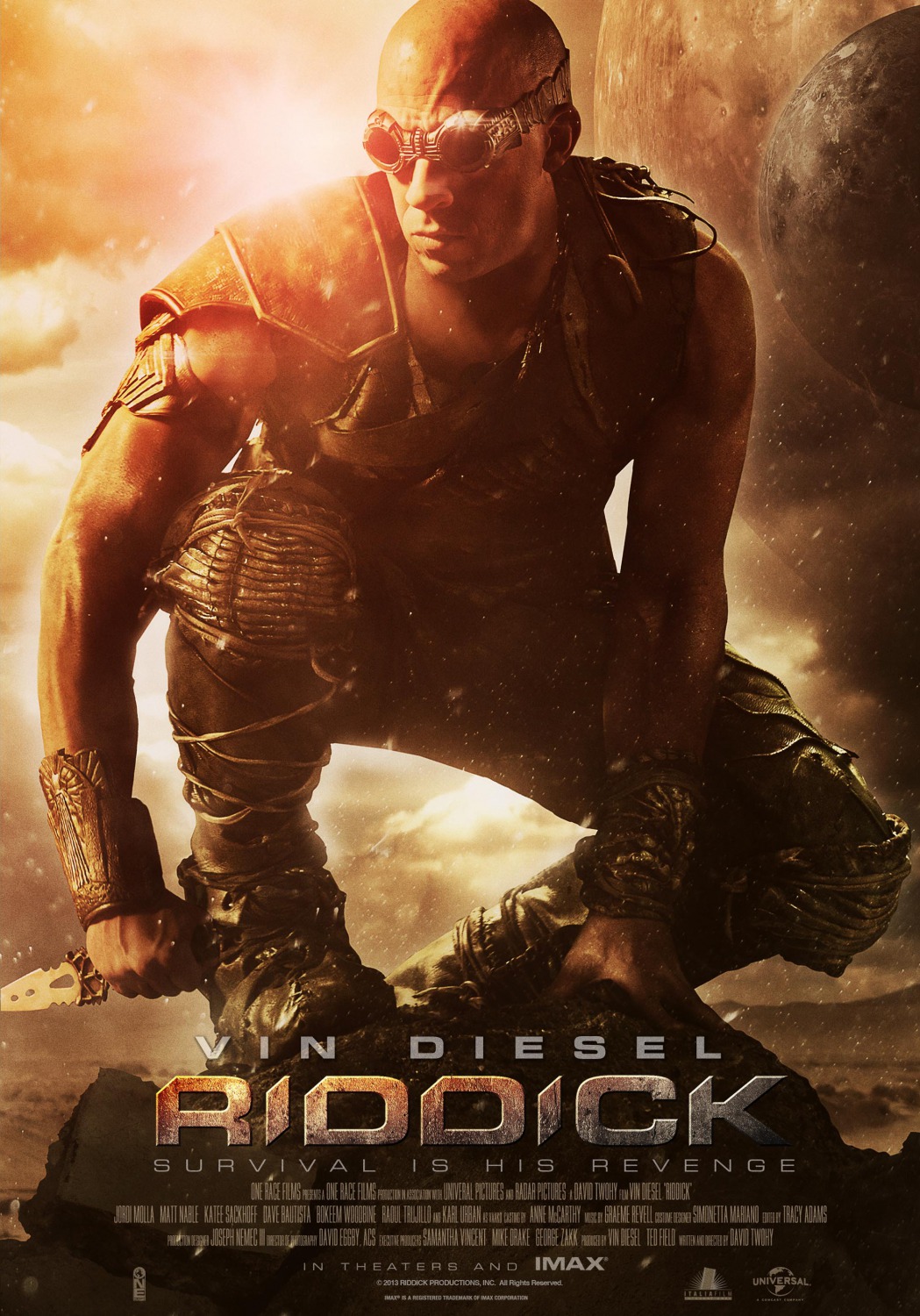
‘Riddick’ – A Welcome Return to ‘Pitch Black’ Basics

After the bloated motion picture that was “The Chronicles of Riddick,” filmmaker David Twohy and star Vin Diesel return for “Riddick,” the third in a trilogy which began with the riveting “Pitch Black.” This sequel proves to be a return to as the story here is a lean one and is not about to overwhelm us with too many plot points. Also, it proves to be a stand-alone film which does not require you to view the previous installments (or “The Chronicles of Riddick” at the least) to understand all that is going on.

As the movie starts, Riddick (Vin Diesel) is now King of the Necromongers, but he ends up being betrayed by his supposed followers when he is left for dead on a planet which he is led to believe is his home world of Furya. From there, this anti-hero struggles to survive in a hostile environment where all these scorpion-like creatures and dog beasts are out to eat anything that moves on at least two feet. To make matters worse, bounty hunters are once again on his tail as he is forced to expose his location in order to find a way off of this barren planet.

What I found interesting about “Riddick” is how being King has somehow robbed this anti-hero of his abilities to survive. Diesel has made it no secret of how much he loves playing this character, and he invests Riddick with everything he has. Whatever you may think of his acting, you cannot say “The Fast & The Furious” star is not dedicated to giving this character the respect he deserves. Riddick is a bad dude, but like the best anti-heroes in movies, I still found myself rooting for him.

This sequel is truly a passion project for Diesel and Twohy more than anything else. Because “The Chronicles of Riddick” was a big budget studio movie that didn’t do well commercially, the two of them ended up having to raise the money independently to make this one a reality. Going from a budget of over $100 to one of under $40 million may have forced them to cut a lot of corners, and this is probably not the “Riddick” movie they originally envisioned doing. Still, I liked what they were able to come up with given the limited resources at their disposal.

One of the joys of watching “Riddick” is seeing how Twohy deftly skewers a lot of sci-fi clichés and wonderfully plays on the bounty hunters’ collective fear of their prey. Once the hunters arrive on this barren planet, Riddick leaves them a warning to leave one ship behind for him or suffer the consequences. Right away, you know that a majority of these characters are screwed. The question is, how are they going to die? There’s a great scene where they think Riddick has gotten into one of their storage compartments which is protected by a highly explosive device. Did he or didn’t get inside? That’s the question. Whatever the answer is, it leads to one of the film’s most wonderfully suspenseful moments.

Among the crew of bounty hunters is Katee Sackhoff whom we all know and love for her work on “Battlestar Galactica” and “Longmire.” She plays Dahl, a female mercenary who can dish it out as much as the men can and then some, and the punches Dahl inflicts on the male population she is forced to deal with are exquisitely painful to say the least, and they leave scars which will not be easily forgotten. Sackhoff is awesome in a role that definitely reminds us of how much we love her work, but she isn’t just playing Starbuck all over again. Dahl makes it abundantly clear at one point that she doesn’t fuck guys, and Sackhoff leaves you wondering just what exactly her character means by this. Remember, a single word never has just one definition.

Also in the cast is Jordi Mollà who has been nominated three times for the Goya Award for Best Actor, but none of those nominations include the performance he gave in Michael Bay’s horrifically bombastic “Bad Boys II.” Here he plays Santana, the leader of one of the bounty hunter groups, and Santana does very little to hide just slimy of a bastard he is. Mollà clearly relishes playing such a despicable character, and I got a kick watching him go over the top as he hunts down his prey. I don’t think it’s giving away too much to say that his character gets the painful fate he so deserves.

Then there is Matt Nable who plays the leader of the other bounty hunter team (who have much better equipment by the way), Boss Johns. I have no idea if his mother gave him that name, but I can only imagine the playground beatings this character got as a kid. Talk about a name to live up to!

Anyway, Nable, a former professional rugby player, does good work in conveying the conflicted emotions of his character as it turns out he needs Riddick for more than just a simple bounty, and it gives this sequel a complexity I did not expect it to have.

Dave Bautista, a former WWE wrestler who has since given memorable performances in movies like “Blade Runner 2049” and “Spectre,” plays the most bone crushing bounty hunter of all, Diaz. With Bautista in the cast, we know he and Diesel are going to have an all-out fight. And yes, it is quite the fight.

Most of the visual effects we see here are rendered in CGI, but that’s understandable given the movie’s budget. While the overuse of CGI effects in movies tends to drive me crazy, many of them look really good, and the alien landscapes are memorably illustrated. Riddick also gets to adopt a dog in the process, and the dog turns out to be one of this sequel’s best characters. Despite all the snarling, this dog is a cuddly little beast at heart.

It is also great to see Graeme Revell back composing the score for “Riddick” as he also did the music for the previous two films as well. It also marks a welcome return to the electronic elements he utilized so well in both “The Crow” and “Dead Calm.” It’s a wonderful reminder of how Revell doesn’t always need a full orchestra to create suck a compelling score.

“Riddick” is not a great movie and does not reinvent the wheel for either the action or science fiction genres, but it kept me entertained throughout. It also says a lot about Diesel and Twohy that they managed to bring this character back to the silver screen despite the commercial disappointment of “The Chronicles of Riddick.” The fans still wanted to see Diesel’s most favorite character make a return to the big screen. It took almost a decade for this to happen, but Diesel and Twohy came through even though they had fewer resources to work with.

And now we have news that a fourth “Pitch Black” movie is in the works. I am intrigued to see what Diesel and Twohy come up with next, and it is nice to know Diesel has another character to rely on other than Dominic Toretto.

* * * out of * * * *

Exclusive Interview with Salome Breziner about ‘Helicopter Mom’

Back in 2014, I got to speak with filmmaker Salome Breziner about her film “Helicopter Mom.” It stars “My Big Fat Greek Wedding” creator Nia Vardalos as Maggie, a completely overbearing single mother who is about to see her only son, Lloyd (Jason Dolley), finish up high school and then move on to college. Maggie feels ever so close to Lloyd, and she quickly proves to be much too close to him. While Lloyd does love his mom, he cannot help but be constantly annoyed at her being more of a best friend to him than a parent as she is almost completely unable to leave him alone for a second.

Maggie’s relationship with Lloyd then enters another plateau when she discovers that gays can get scholarships for college. Constantly worries about she will pay for Lloyd’s college tuition, Maggie decides to tell the whole world that her son is a homosexual in the hopes of securing a scholarship. The problem is, Lloyd is not really gay or, at least, doesn’t think he is. In fact, he finds himself very confused about his sexuality to where life is not about to give him an easy answer to who he really is.

What results is a motion picture which deals with the confusion teenagers typically experience about life and themselves during their formative years, and it promotes a message of acceptance for people of all kinds. Deep down, we are only so different from one another.

Breziner previously directed the 2013 independent comedy “The Secret Lives of Dorks,” and her other directorial efforts include “Fast Sofa,” “An Occasional Hell,” “Tollbooth” and “Lift.” During my interview, she talked about how she went about director the comedic powerhouse that is Nia Vardalos, her own experience as a single mother, the luck she had in being able to shoot the film in Los Angeles and Venice Beach, and of how she got to cast Mark Boone Junior in a role which allows him to go completely against type.

Please check out my exclusive interview below, and be sure to also check out the movie’s trailer.

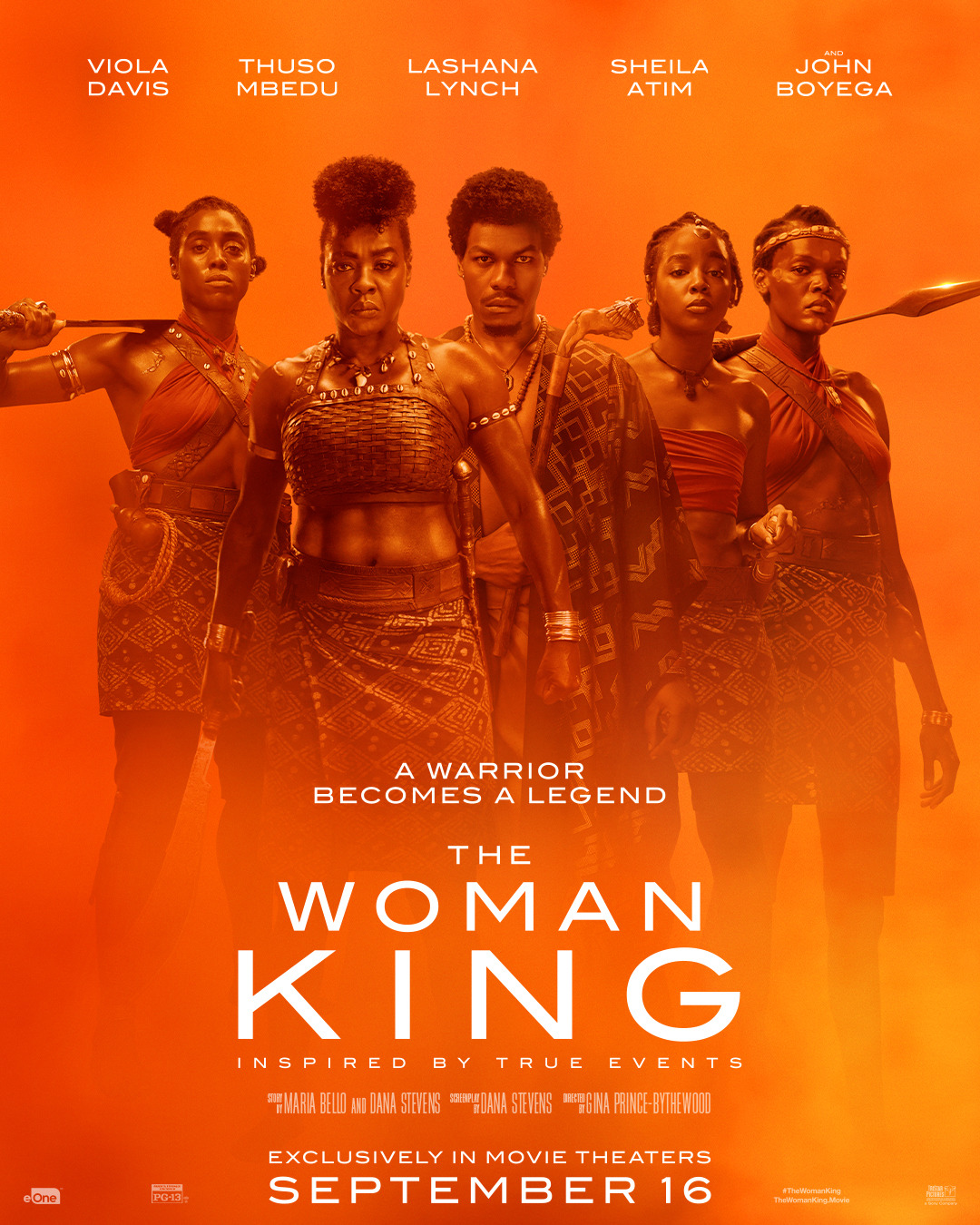
‘The Woman King’ – Viola Davis Kicks Ass, and That’s No Surprise

As soon as Viola Davis rises from the bushes as General Nanisca in “The Woman King,” I knew this film was going to kick ass. Throughout her career, whether she was in “Doubt,” “Out of Sight” or “The Help,” this Oscar-winning actress has proven to be a force of nature and one to be reckoned with. When it came to the film version of “Fences,” the question was not if Davis could her own with Denzel Washington, but if Denzel could hold his own with her. As for her work as Amanda Waller in those “Suicide Squad” movies, she made the crew of delinquents and outright criminals working under her command look like a bunch of pussies. She does the same here as she dominates the screen to where no one with a half a brain should even dare to question how lethal she can be as she lays waste to her oppressors with little in the way of remorse.

“The Woman King” takes us back to the 1800s to the kingdom of Dahomey in West Africa. There is an opening prologue which tells us of the peril this kingdom is under that is a little hard to follow, but the main thing to know is that the kingdom is protected by an all-female unit of warriors known as the Agojie. As the opening sequence makes clear, they are far and away the most feared warriors on the continent as we watch them crush their opponents ever so confidently. Of course, you don’t see a lot of blood here as this is a PG-13 rated motion picture, but all the bones breaking and shattering are here on display, reminding us once again that the MPAA remains far more comfortable with violence than love-making.

Yes, this group of warriors did exist in reality. Actress Maria Bello became aware of this piece of history while visiting Africa, and she serves as “The Woman King’s” co-producer and co-writer for good reason. Granted, the movie’s story does deal with inescapable cliches and familiar storylines to where the term “inspired by true events” this movie is being promoted with makes a lot more sense than “based on a true story,” and you all know how I feel about that term which has long since become useless to me.

The story follows certain conventions and employs familiar cliches in an effort to make us follow and understand these characters on a general level. While General Nanisca (Davis) is well-regarded as a warrior, others such as the many wives of King Ghezo (John Boyega) see her as a mere commoner, unworthy of such admiration. Of course, one of those wives gets her comments thrown back in her face upon being reminded of how she hid behind locked doors while the kingdom was being attacked. Be careful when you talk shit about others!

Into the plot comes the young Nawi (Thuso Mbedu) who is about to sold to a man who is to be her husband. This prospective husband, however, is quick to smack Nawi in the face when she does not respond to him, and her response is to shove him back several feet to where he lands flat on his back. Instead of fighting back, he cowers away, blaming Nawi’s father for raising such crazy children.

From there, Nawi’s father drags her to the area where the Agojie train and presents her as a gift to the king. It’s punishment for her not accepting a husband, but even she knows this is her only destiny. Like the Jedi, the Agojie cannot marry or have children, and this is a destiny she is prepared to take on. Of course, it will come with many bumps and bruises throughout time.

Okay, let me get to the performances. Like I said, Davis is a force of nature, and it is so thrilling to watch her use every fiber of being and body to portray such a hardened warrior. Just from looking at her eyes, she makes you believe this is a warrior who has survived many battles and endured much pain and suffering others would never be able to handle. It’s tempting to compare General Nanisca to Tom Berenger’s character of Sgt. Barnes from “Platoon,” but Nanisca still has a lot of heart under that hardened gaze of hers.

Upon her entrance into training, Nawi is met by another Agojie warrior, Izogie, and she is played by “No Time to Die’s” Lashana Lynch who is wickedly good here. Izogie is also a hardened warrior, but she still has a wide smile and an undeniably sharp sense of humor even after all she has been through. It’s a blast watching her as she steals the show in the same way she did opposite Daniel Craig when she portrayed another 007.

Special attention should be also given to Mbedu who takes her character of Nawi from an innocent soul to a true warrior. She runs the gamut of emotions throughout and embodies this soldier-in-training with tremendous enthusiasm to where you believe every part of her rough and tumble journey on an emotional and physical level. You have to respect the actor/actress who can make a transition like this in a motion picture because it is never easy.

Director Gina Prince-Bythewood (“Love & Basketball,” “Beyond the Lights” and “The Old Guard”) keeps things moving at a steady pace throughout, and the film never lags for a second. She has created one of the more engrossing and action-packed films of 2022 and has brought us a piece of history which will never be easily forgotten once you have watched the action in front of you.

As I write this, “The Woman King” has since earned an A+ rating on CinemaScore and debuted at the top of the U.S. box office. It’s a thrill to see it doing so well in this day and age. Still, part of me wished the filmmakers had given the action more of the “Braveheart” brutality as there were plenty of bones and bodies being crushed, but not much blood. I mean, come on, this is war and battle we are talking about. Seeing it getting the PG-13 treatment feels like a bit of a cheat, but perhaps there is a director’s cut just waiting around the corner.

Regardless, “The Woman King” is both thrilling and endlessly enthralling throughout, and it would be a shame if you missed it on the silver screen. And when you walk out of the theater, the only words you should say, particularly about Viola Davis, is “not bad for a human.”

* * * ½ out * * * *

‘Deep Water’ – Neither Erotic Nor Mysterious Enough For Your Enjoyment

With “Deep Water,” I could not help but feel a certain level of excitement at its arrival. With erotic thrillers, it feels like we have been in a drought of them at our local cinema. Sure, there was the “Fifty Shades of Grey” trilogy, but those movies were far more laughable than they ever were truly entertaining. This one also marks the return of Adrian Lyne to the director’s chair for the first time in 20 years, and he is known for specializing in erotic films such as “9 ½ Weeks,” “Fatal Attraction” and “Unfaithful.” And yes, the trailer in which we get to gaze at Ana de Armas’ lovely body as Ben Affleck gazes at her from a distance proved to be ever so alluring. Oh, I almost forgot to mention, it is based on the novel of the same name by Patricia Highsmith, the same author who wrote “The Talented Mr. Ripley” and “Strangers from a Train?” This should have been the first I pointed out here.

Seriously, all these elements were in place for a great motion picture for us to take in, but despite an interesting start, “Deep Water” ends up faltering long before it ends as secrets are revealed far too soon to where the suspense is completely destroyed for no good reason. Also, the film is nowhere as erotic as you may hope it will be. Moreover, Disney, which bought 20th Century Fox and since renamed it 20th Century Studios, decided to dump it on Hulu as even Mickey Mouse was saying, “Even Minnie wouldn’t show me that much skin!” Well, some only get so lucky,

Ben Affleck and Ana de Armas star as Vic and Melinda Van Allen, a married couple living in the small town of Little Wesley, Louisiana who appear to have it all: an affluent lifestyle, a gorgeous home where they host many parties for their equally affluent friends, a beautiful daughter named Trixie (Grace Jenkins) who keeps telling Alexa to play “Old McDonald Had a Farm” to her mother’s infinite annoyance, and anyone outside of their lifestyle must be looking at them with either envy or tremendous resentment. Their marriage, however, appears to be a loveless one as Melinda seems far more interested in flirting with the many incredibly handsome men around her as Vic looks on, wondering what she is up to. On one hand, Vic seems content with her being with other men as he is willing to accept her for who she is, but the more you look into his eyes, the more you see how frustrated he is with this situation to where he might actually become emotional. This frustration becomes even more pronounced once some of the men Melinda is seen with are found dead. Were they murdered? What’s really going on with this couple?

Lyne tantalizes us with these questions in the first half of “Deep Water” as, while he used to show us a lot of wild sex in his previous films, only hints at what is going on here. Vic may be convinced Melinda is sleeping with other men, but he only sees so much of what she is up to. In the meantime, he tells her potential suitors that he murdered a man who was once her boyfriend. Is he being serious? It’s hard to say as Affleck is quick to remind us what a gifted poker player he can be, and that’s even if he has been banned for life from a casino or two.

Indeed, this film works best when the screenplay does not reveal all its cards to the audience. Affleck seems to revel in getting under the skin of others to where you wonder just how much his character enjoys in doing so. The same goes with de Armas who appears to revel in her husband’s inability to obtain her in the ways a husband can. As Vic and Melinda circle around one another like bloodthirsty sharks, I began to wonder if their continued relationship was strengthened by their endless strife with one another. While divorce might make more sense for these two, the conflicts between them seem to invigorate them to where a normal life is completely out of the question for them. It even reminded of a season six episode of “Homicide: Life on the Street” entitled “Strangled, Not Stirred” in which we see a couple achieve supreme intimacy through murder. I figured things here would go in this direction with these characters, but no such luck.

When “Deep Water” reaches its midway point, it completely implodes as it reveals its cards to where the suspense is killed. In fact, things become increasingly laughable as the story barrels towards a conclusion that is unforgivably abrupt and unsatisfying. Like I said, this one comes from the director of “Fatal Attraction” which had one of the most divisive endings in cinematic history, but at least its ending had a catharsis which it demanded despite what others thought. This one, however, leaves far too many story threads to where I have to wonder if there’s a director’s cut just waiting for us to check out.

In retrospect, “Deep Water” might have been far more interesting if Lyne had focused more on the characters played by Affleck and Tracy Letts who plays Don Wilson. Don is immediately suspicious of Vic, especially after he playfully admits to murder, and seeing these two together in one scene to the next is especially fulfilling as we are watching actors who enjoy not just facing against one another, but are also eager to turn their characters into anything but mere cliches this genre often employs to a detrimental extent.

Considering the talent involved, I could not help but have high expectations for “Deep Water” as it arrives at a time when superhero/comic book movies continue to dominate our local multiplexes to where we wonder if variety is still a thing. Moreover, movies for adults are a thing I have been deprived of for far too long. Even with it going straight to streaming, I figured there was much more in store for the audience. That it falls short of greatness is frustrating as it may be a long time before we get another motion picture of its ilk.

In my research, I did learn this particular Highsmith novel is a favorite of Gillian Flynn’s who deeply admired how it showed the in-your-face warfare between a husband and wife. I believed this novel inspired her to write “Gone Girl” which became a bestseller and was later adapted into the twisted cinematic masterpiece directed by David Fincher. Whether or not “Deep Water” aspired to be on the same level as “Gone Girl,” it came up far too short.

When all is said and done, Lyne’s movie makes me want to pick up a copy of Highsmith’s novel even though I have so many books on my shelf to where it looks like a Jenga piece on the verge of collapsing. I am convinced a great movie can be made out of this novel, but we have yet to see it.

* * out of * * * *

Underseen Movie: ‘What If’ – A Romantic Comedy I Actually Enjoyed

Okay, this is getting scary. I’m starting to enjoy romantic comedies again, and that is so not like me. Recent years have given us a few actually worth watching like “Obvious Child” and “Trainwreck,” both which went far beyond my expectations. This all started to happen as the genre began finding itself suffering from burnout thanks to a lot of banal movies which have made me roll my eyes on a regular basis, many of them adaptations to Nicholas Sparks novels. Then there was “What If” (or “The F Word” as it is known in certain circles) which is by no means an original romantic comedy. It owes quite a bit to “When Harry Met Sally” among other classics, and it does follow a lot of the same conventions I have come to expect from this genre. But what keeps it from feeling ordinary is a terrific screenplay, smart direction and wonderful performances from its two undeniably adorable leads: Daniel Radcliffe and Zoe Kazan.

Radcliffe plays Wallace, a medical school dropout who has been in one failed relationship too many, and this makes him take a long break from the game of love. But while at a friend’s party, he ends up bumping into Chantry (Kazan), an animator with a sparkly personality which more or less matches his own. After walking her home, Chantry informs Wallace she has a boyfriend named Ben (Rafe Spall) whom she has been with for a few years, and that she would love for her and Wallace to just be friends. Wallace agrees, but as time goes on, he wonders if they can be more than just friends. Lord, I have had many friendships with women where I wondered the same damn thing.

The questions of whether or not men and women can be friends still seems to come up from time to time, and that’s even though the answer should be a resounding yes. But there is always that one friend who belongs to someone else whom you endlessly pine for. “What If” really digs into this state of mind to where I could not help but feel Wallace’s passionate longings which he tries to cover up with a seemingly cynical take on love. We all have had crushes on others, and we are constantly aware of how painful crushes can be when they turn into shattering examples of unrequited love. It all reminds me of some dialogue from John Hughes’ “Sixteen Candles:”

“It just hurts.”

“That’s why they call them crushes. If they were easy, they’d call ’em something else.”

I was reminded of this while watching “What If” because, unlike other romantic comedies, I really found myself desperately rooting for Wallace and Chantry to become a couple. A lot of it is thanks to the fantastic chemistry between Radcliffe and Kazan as they bring this movie to such vivid life. Both play off one another wonderfully, and once you see the two discussing the ingredients of a Fool’s Gold sandwich (Elvis Presley’s favorite sandwich of all), you can tell they were made for each other.

Radcliffe may always have the shadow of Harry Potter hanging over him, but it’s really past the point where we have to recognize what a truly talented an actor he is. As he heads from one genre to the next, the young actor shows all the on-the-job training he got from playing J.K. Rowling’s unforgettable wizard has really paid off. While Wallace tries to put a solid front in an attempt to show how love has not gotten him down, Radcliffe shows what’s going on beneath the surface without ever having to spell it out for the audience.

Kazan has a uniquely adorable beauty about her, and she continues to do great work in every project she’s in. As Chantry, she gets the opportunity to take a character who appears to be comfortable with where she’s at in life, and we follow her through a journey of self-discovery which is honestly long overdue. She has a nice boyfriend and doing the work she loves to do, but throughout “What If” we watch her as she begins to discover what she really wants out of life. As she makes these subtle changes in her character, Kazan shows us just how wonderful an actress she can be.

There’s also a great scene-stealing performance from Adam Driver as Wallace’s best friend, Allan. Always giving bad advice on women and yet having a lot more success with them than Wallace, Driver has a wonderfully dry sense of humor here which is irresistible, and it’s a blast watching him stumble over his words on a regular basis.

I also have to give credit to Rafe Spall who plays Chantry’s boyfriend, Ben. This could have been the usual douchebag boyfriend who deserves to be dropped flat, but Spall makes him a good hearted man who just doesn’t have his priorities straight.

“What If” was directed by Michael Dowse whose other films include the two “FUBAR” movies, “Goon” and “Stuber.” While he doesn’t go out of his way to reinvent the romantic comedy wheel here, he does freshen up the formula and gives us something which does not feel like something you have seen a hundred times before. Along with screenwriter Elan Mastai, who based this screenplay on the play “Cigars and Toothpaste” by T. J. Dawe and Michael Rinaldi, he does a good job of keeping us emotionally involved in the plight of these should-be lovers all the way up to its end.

I still have issues with romantic comedies from time to time, but “What If” shows what good filmmakers can do with a formula that has been done to death. Even though I have seen this kind of film so many times before, this one proved to be a lot more emotionally involving than I ever could have expected it to be.

* * * out of * * * *

CHECK OUT THE VIDEO BELOW TO VIEW THE EXCLUSIVE INTERVIEW I DID WITH DANIEL RADCLIFFE ON “WHAT IF.”

Mike Leigh Transports Us to Another Time in ‘Mr. Turner’

Mike Leigh on set of Mr. Turner

English filmmaker Mike Leigh, the man behind such masterpieces as “Secrets & Lies” and “Naked,” takes a stroll back in time with “Mr. Turner.” It stars Timothy Spall who gives one of the very best performances of 2014 as J. M. W. Turner, the landscape painter who became famous for his work in the 1800’s during the Romantic period. But as brilliant an artist as Turner was, he was also a controversial figure due to his eccentric behavior. He was full of great passion and could be very generous, but he was also quite selfish and anarchic. Leigh’s movie looks at the different aspects of Turner’s personality and how it came to inform the paintings which he became remembered for.

One of the things which really struck me about “Mr. Turner” was how fully Leigh sucked us into the time period of the 1800’s to where it felt like we were really there. From start to finish, it never felt like I was watching a movie but experiencing something very unique. Now there have been many period movies in the past few years but watching “Mr. Turner” made me realize how artificial many of them have been. They take you back in time, but there’s something very modern about their presentation which reminds you that you’re just watching a movie. This made me wonder how Leigh had succeeded in taking us back in time so effectively with this film.

Mr. Turner movie poster

I got the chance to ask Leigh about that while he was at the Four Seasons Hotel in Los Angeles, California. In describing how he perfectly captured the period “Mr. Turner” takes place in, he pointed out why authenticity is missing in so many other movies these days.

Mike Leigh: Well to be honest with you, apart from anything else, this is a function of strong views I have about period films. You get any number of period films where they say, let’s not have period language. The audience can’t deal with that. Let’s make it contemporary then the audience can access it. Let’s not make the women wear corsets because it’s not sexy, etc., etc., etc. Now the principle here with this film and with “Topsy-Turvy” and with “Vera Drake” which was also period but here not least is we said okay, let’s do everything we can in every aspect from the performance to the language to the frocks, to the props, to the places, to everything and to make it really possible for the audience to feel they have got into a time machine and have gone back and experienced it. Okay, there’ll be things people say that’s strange and you don’t quite get (what they’re saying), but that doesn’t stop people getting what that means. In fact, that smell of antiquity in some way makes it all the more plausible. I can imagine Hollywood executives being pretty twitchy about the pig’s head being eaten, but that’s what they did.

I keep thinking about “L.A. Confidential” which took place 1950’s Los Angeles but of how its director, Curtis Hanson, didn’t let the actors be governed by the period it took place in. Granted, the contemporary feel didn’t take away from that movie, but that’s the exception. With “Mr. Turner,” Mike Leigh shows us we don’t have to give every period movie a contemporary feel, and this is what makes it such a brilliantly vivid movie to watch. You come out of it feeling like you lived through part of the 19th century, and very few filmmakers can pull off such a feat these days even with the biggest of budgets.

“Mr. Turner” is now available to own and rent on DVD, Blu-ray and Digital.

Exclusive Interview with Ron Shelton about ‘Just Getting Started’

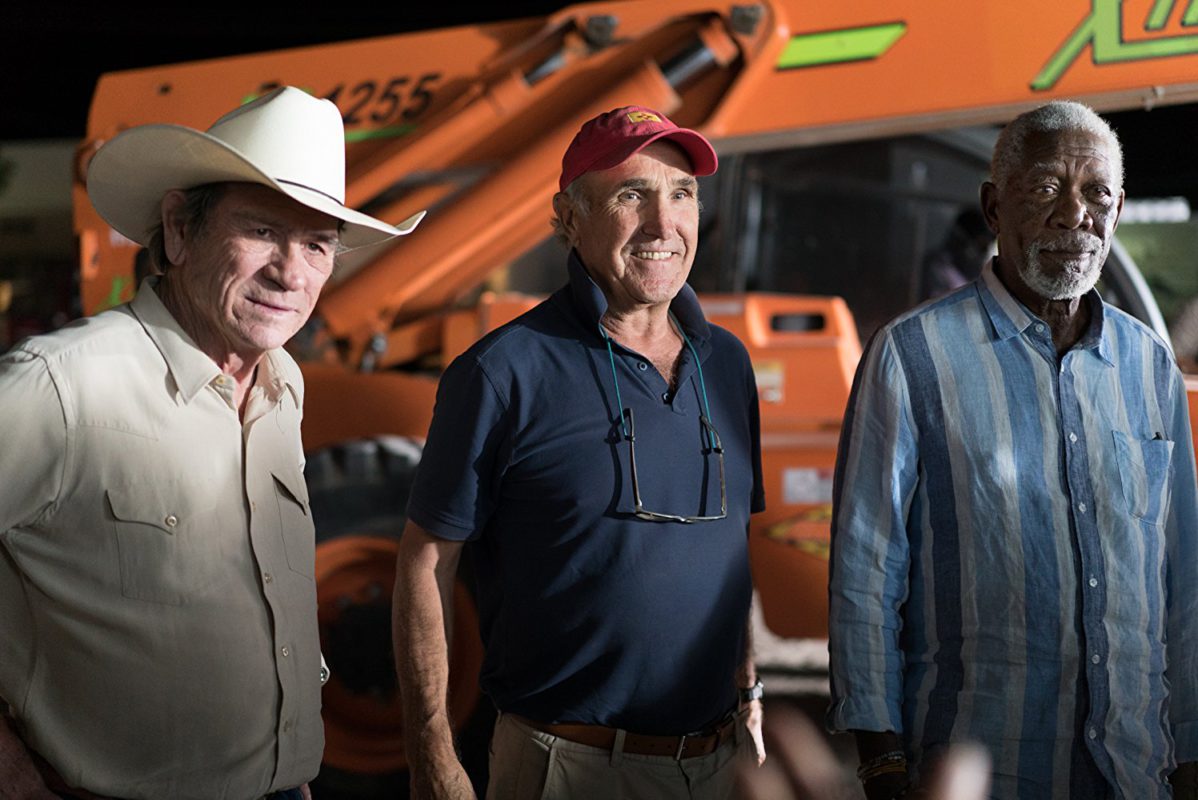
Just Getting Started Shelton with Jones and Freeman

When I first looked at the poster for “Just Getting Started,” I was very happy to see the following phrase on it: written and direct by Ron Shelton. Shelton is responsible for creating some of the best sports movies such as “Bull Durham,” Tin Cup” and “White Men Can’t Jump,” and he has a true gift for creating fantastic dialogue and getting wonderful performances out of his actors. Somewhere along the line, he stopped making movies to where I wondered where he was and what he was up to. Now we know.

“Just Getting Started” takes place at a luxury resort in Palm Springs, California called the Villa Capri. This resort is managed by Duke Diver (Morgan Freeman), a man with a mysterious past who is determined to make sure his residents will never ever stop partying or having fun. But while Duke is the life of the party, his ego becomes threatened by the arrival of Leo (Tommy Lee Jones), an ex-military man who wastes no time in battling Duke for the top spot of Alpha male at the Villa Capri. Things get even more complicated when a new resident, the beautiful Suzie (Rene Russo), arrives at the resort, and the two become determined to gain her affections in an effort to prove who is the better man. But once Duke’s past comes back to haunt him, he and Leo are forced to work together in an effort to stay alive.

It was a real pleasure talking with Shelton, and he spoke about what brought him back to the director’s chair for the first time in over a decade, how he goes about directing a comedy, and of what it was like to have Freeman and Jones go against type and play characters who are not so serious and eager to have fun. Shelton also talked about Glenne Headly who passed away recently, as this was the last movie she appeared in before her death.

Just Getting Started movie poster

Ben Kenber: I was very excited to learn you were directing another movie. This is your first feature film since “Hollywood Homicide.” What was it about this story which inspired you to get back in the director’s chair?

Ron Shelton: Well I had three or four movies which fell through at the last second, so it’s not like I suddenly decided to get off the couch and direct. I have been writing steadily and developing TV things and trying to finance features. In the independent world, there are so many moving parts to the financing that if one piece falls out, the whole thing falls apart. So it hasn’t been for lack of effort, and now I have a couple more I think that are gonna go. It won’t be such a dearth of time between them, and I got some other projects I’m working on. This one came together financially, that’s why this one got made.

BK: What inspired you to write this particular screenplay?

RS: Southern California where I grew up, and maybe you grew up, in the winters and Christmas, to me, I’m used to it. You go to the beach and play golf. But people from cold climates come out here and they are just like appalled; this doesn’t count as Christmas. And I started saying to half the world, this is Christmas, this kind of weather. What’s wrong with it? When the Nativity happened, it was probably more like Palm Springs (laughs). Then I remembered driving to Palm Springs at Christmas and there were dust storms and Christmas trees were blowing off lots down the street and Johnny Mathis was being piped in, and I thought, yeah, this was a good backdrop for a movie, so that’s where the backdrop came from. And then basically, the Duke Diver character is based on a hustler a producer and I knew who was a good hustler. He wasn’t a criminal hustler, but he was a guy everybody loved, and nobody ever knew what he did for a living or how he survived. So, I kind of turned that into this character, and the whole thing fell together.

BK: The characters played by Morgan Freeman, Tommy Lee Jones and Rene Russo, they are not all they appear to be at the start.

RS: Right, exactly.

BK: Your movies take place in the real world which we all understand and complain about more often than not, and they also contain fantastical elements which you can only find in the realm of fiction. How much of a challenge is it for you to balance those two elements out?

RS: It’s what I prefer to do. What I couldn’t imagine is a movie set in outer space or in the future or time travel or Death Stars blowing up or toys that turn into monsters or Transformers. That doesn’t interest me. I’m interested in human behavior whether it’s tragic or comic, and all of my movies, however disparate they are, are about how people behave. I just think that’s the most exciting thing to observe, and I tend to like movies about human behavior and not special effects. That’s just me. I’m in the minority obviously when you look at the box office results out there. I like to take the audience into a world they never would go into except for a movie whether it’s playground basketball (“White Men Can’t Jump”), minor league baseball (“Bull Durham”), or the political world of Louisiana politics in the 1950’s (“Blaze”). That’s just what interests me. It’s as simple as that.

BK: I fear many people will consider “Just Getting Started” as a movie about old people, but it really isn’t. It’s more about how no one ever really acts their age and how we roll with the punches.

RS: Well you don’t go to a retirement home to die. You go there to party. Everybody onscreen is not looking back and reliving their loses which everyone has, looking at their high school yearbooks, or thinking about what might have been. Everybody there probably is divorced or widowed, and all they are doing is looking for what’s next in their life. I’m 70. When you get to 70, that’s all you’re doing. I don’t think of myself as old. I can’t hit a golf ball as far, but I’m a better golfer. Morgan’s 80 and Tommy’s my age. We’re all about moving forward, working more, discovering things about ourselves, and that’s really what I think interests me. Most people I know who are my age, whether they are in the movie business or not, are not looking back. They are looking forward and looking forward to tomorrow. That’s all it’s about.

BK: I love how you cast Morgan Freeman and Tommy Lee Jones in these roles. Both are known for playing dramatic roles with a lot of gravitas, so seeing them let loose here is a joy because we don’t see them often in comedic roles. When it comes to directing actors to be funny, do you let them play the joke or play the scene?

RS: Play the scene always. Never play the joke. I’m not a very good joke writer anyway. I try to write behavior and interchange and exchange that’s humorous or that’s real and based on behavior, and I just say play it. You’re the actors, play it. Don’t ever look for a laugh. Don’t ever worry about where the punchline is because there’s probably not a punchline, and that’s the way we do it.

BK: That’s great because a lot of movies today, filmmakers just like to play the joke and that doesn’t work.

RS: Right.

BK: I think the trick with comedy, especially with your movies, is to play the scene and never play it like you are in on the joke.

RS:  Exactly. A lot of times an actor, not these two because they are so good, but in another movie I’d be directing, they would say this line is so funny on the page and I don’t think I’m getting the laugh out of it. I said you shouldn’t be trying to get the laugh, just play it real. Play every line real, and the laughs come or they don’t come. Sometimes you think there’s going to be a laugh in the script, and it’s a smile. Sometimes a laugh comes when you least expect it, but it’s not going to come on the punchline because there aren’t any, or they rarely are.

BK: You worked with Rene Russo in “Tin Cup,” and she looks and is fabulous in this role. It looks like a serious role for her at first, but then she pulls out the stops.

RS: Rene plays the strong woman who’s really a mess better than anybody I know (laughs).

BK: How did you direct the actors? Did you just let them loose?

RS: When a director says “action,” his work is done. It’s like you’re a basketball coach; at the first tip, you’re done. Plus, with these people, you don’t have to direct them as much as you give them a note and then get out of the way. Just help stage it and shoot it. Tommy’s note was look you’re not competing with Duke, he’s competing with you. You’re not threatened by Duke, he’s terribly threatened by you. So that’s where some of the chemistry comes from. Tommy’s toying with Duke, and Duke is fighting for his existence with Tommy. So that just needs a slightly different motivation.

BK: When you write a screenplay, you usually have a vision of it in your head of how the dialogue should sound like. What is it like when actors speak the dialogue you have written?

RS: Well then, it’s the third thing: You write one movie, you shoot another movie, and then you edit a third movie as the old saying goes. Once they have it, it takes on a new life of its own. That’s the truth. Once you’ve hired the actor and I hand them the script, I always say look, until this moment, I know more about this character than you because I have been living with this character and writing him and figuring him out. Now, it’s yours. Now you’re going to discover things about this character I didn’t even think about. So in a certain way, I’m handing this character to you.

BK: I also liked the three ladies (played by Sheryl Lee Ralph, Elizabeth Ashley and the late Glenne Headly) whom Duke flirts with, and I loved their dialogue because you expect them to not know what’s going on, but they know more than they let on. What was it like writing those characters?

RS: They were great. I wish I had more time. It was a fast shoot. We had 28 days if you can believe that. If we had more time, we could have done more with those wonderful actresses. And yes indeed, it was a shocking loss when Glenne passed. Nobody anticipated it at all, and it happened suddenly too. It wasn’t like a disease. But they were all great to work with. They were so happy to be working in a nourishing environment where everybody was having fun, and there was mutual trust and we could play. But everybody was very respectful of the script. There was virtually no improvising in the whole movie, and they were just pros. I love working with pros.

BK: I really thought the dedication you gave Glenne at the conclusion of the end credits was really lovely.

RS: Thank you.

BK: In regards to the shooting schedule you had for this movie, how did shooting it in less than 30 days affect you as a director?

RS: It’s not a shooting schedule when a movie is shot in three different cities with 80 and 70-year-old actors with about 80 locations. It’s a schedule when you’ve got sets, and we didn’t have any sets, and you’re moving the company all the time. When you’re moving the company all the time, that’s what takes time. The second unit I shot in Palm Springs because we also shot in Albuquerque and Santa Fe, and I picked up a day in Valencia. So that’s a lot of movie for 28 days.

BK: Another actor I was happy to see in this movie was Jane Seymour, and she is almost completely unrecognizable here. Was this by design or was it her idea to look completely different from any role she has played previously?

RS: When she said she would love to do this, she was a late add. She said, what’s my hair look like? I said I don’t know, I hadn’t thought about that. And she said, I have two different wigs. And I said, why don’t you wear them both? We’ll just alternate them in scenes. She thought that was a great idea, and she said one is blonde and one is brunette. I said perfect, every time we cut to you, you’ll look different.

BK: How did this movie evolve for you while you were in the editing room?

RS: Well you keep finding the movie. The big question in editing was, how much should the audience know that you keep a secret? You don’t want to make it too much, and you also don’t want to say he doesn’t have a secret because when the golf cart blows up, it can’t be like, what the hell’s happening? It has to be oh, now we’re going to get to the bottom of the secret. So we were always playing with how much to share with the audience and how much not to share. That’s just a difficult kind of problem you address in post-production.

I really want to thank Ron Shelton for taking the time to talk with me. It was a real pleasure. “Just Getting Started” will open on December 8, 2017. Be sure to check it out!

Poster, photo and trailer courtesy of Broad Green Pictures.

‘Left Behind’ is as Cinematically Atrocious as Movies Get

Left Behind movie poster

The 2014 version of “Left Behind” received quite the critical smackdown upon its release, and this made me all the more interested in seeing it. How many times do you get the opportunity to say you were one of the handful people who got to see such a god-awful motion picture on the big screen which notoriously flopped at the box office during its incredibly short time in theaters? There were a few people who proudly wore t-shirts signifying they saw “Gigli” while it was in theaters, and some wear it like a badge of honor.

“Left Behind” looks like one of those so bad it’s good movies, but even on that level it is a complete failure. This cinematic version of the best-selling novel by Tim LaHaye and Jerry B. Jenkins is every bit as hideous as its reputation suggests. The acting is amazingly bland and lifeless, the dialogue is unforgivingly bad, and the direction is beyond incompetent. Upon coming out of this movie, one has to wonder if its best sequences were all left behind on the cutting room floor on purpose or by accident.

The movie opens on Chloe Steele (Cassi Thomson) arriving home from college to surprise her father, airline pilot Rayford Steele (Nicolas Cage), for his birthday. Rayford, however, is already set to pilot a flight to London and cannot make it. Also, his marriage to his wife Irene (Lea Thompson) is on the fritz as she has since become a devout Christian, something which drives him and Chloe up the wall. He also has his eye on an infinitely beautiful flight attendant to the point where he doesn’t hesitate to leave his wedding ring in the glove compartment of his car.

Anyway, the family members go their separate ways to do their thing, but then people suddenly vanish into thin air without any explanation, and the world quickly descends into utter chaos. Their clothes and belongings are left behind, but their bodies have apparently disappeared and don’t look to reappear anytime soon. It turns out the end of the world is much nearer than the non-believers ever bothered to realize, and those who believe in Jesus are now under his, or her, protection. As for those back on Earth, they are forced to prepare for the rapture which is certain to kill them off at some point in the not too distant future.

“Left Behind” is actually a remake of the 2000 film that starred Kirk Cameron and which received largely negative reviews upon its release. In a time where every other movie is being remade, this looked like the rare remake which could have easily improved upon the original, but no such luck. For all we know, this remake is even worse than its predecessor, and sitting through it is like pouring salt on an already gaping wound.

Where do we start with a cinematic monstrosity like this? Well, let’s take into account how the story lacks much in the way of drama. Those characters who didn’t go up to heaven are basically condemned to a hellish existence, so where’s the drama? As for what’s going on up in the sky, the characters stuck in the airplane are forced to act stupidly and utter dialogue so silly and inane to where it makes the screenplays of the “Star Wars” prequels sound like they were written by Aaron Sorkin.

The saddest thing about “Left Behind” is watching Nicolas Cage give one of the worst performances of his long career. Granted, Cage has done more bad movies than good ones these past few years, but even he can sometimes elevate a terrible motion picture into something which is, at the very least, entertaining. But here he looks like he is about to fall into a coma like Ben Carson threatens to during his campaign for President as he appears bereft of passion and meaning. What made Cage decide to do this movie anyway? He can underplay a role to great effect in movies like “Joe,” but here he only succeeds in making a terrible movie all the more infinitely pathetic.

The director of this misbegotten disaster is Vic Armstrong who is said to be the world’s most prolific stunt double in movies. He doubled for Harrison Ford in the first three “Indiana Jones” movies, Timothy Dalton in “Flash Gordon” and George Lazenby in “On Her Majesty’s Secret Service.” Whatever lessons he gleaned from the directors he worked with on those projects did not translate to “Left Behind.” He should be forgiven for the lousy special effects he had a budget of only $16 million which, for a movie like this, is not nearly enough to, but my sympathy doesn’t extend much further than that. His direction is so amateurish to where I wondered how he got the directing job at all.

There is only so much time one can waste on a movie like “Left Behind” because there are hundreds upon hundreds of other movies out there so much better than this one. It ends on a note of seeming uncertainty as the apocalypse has only begun, but Cage stares at it so blankly as if to say he won’t be around for the sequel, assuming there will ever be one. It’s depressing to see a number of careers hit rock bottom here, but this is what happens here as movies don’t get much worse than this one. Sitting through a Dinesh D’Souza “documentary” is hard enough, but this one is a real endurance test.

For what it’s worth, it is nice to see Lea Thompson here as she always proves to be a very appealing presence in each movie or television show she appears in. What a shame it is that she disappears from this movie far too soon.

½* out of * * * *