This teaser trailer for “The Silence of the Lambs” was my introduction to this film, and it immediately grabbed me in a way few trailers do. Back then, the internet had yet to be discovered by me, I only knew Jodie Foster from “The Accused” which she won an Oscar for, and I had no idea who Anthony Hopkins was in the slightest. I should also add that not once in this trailer is there any mention that this adaptation of Thomas Harris’ novel was directed by Jonathan Demme. Had Demme’s name been included here, it would have made me all the more eager to check this film out as “Married to the Mob” and “Something Wild” were still very fresh in my mind.
What I love about this particular trailer is how it gives this film a look which makes it feel like no other cinematic experience that was coming soon to a theater near you. Everything about it was full of darkness, but it was a darkness like no other. With its striking images and shrieking noises, and also Anthony Hopkins staring directly into the camera in a way few other actors could, I felt I was being promised an experience which not be average or cliched in any conceivable way. I also very much prefer it to the main theatrical trailer which, quite frankly, gave far too much of the story away to where I am so very thankful I didn’t see it before I saw this brilliant motion picture on the silver screen at Crow Canyon Cinemas.
For the record, “The Silence of the Lambs” is one of my favorite movies ever, and one which I am happy to revisit quite often. This teaser trailer is also one of my favorites as those who put it together made it clear to audiences that this was a motion picture you would be foolish to miss out on. While the darkness it presented could have frightened many audience members off, not once did it feel like your average slasher flick.
WRITER’S NOTE: This article was originally written back in 2012.
Sir Anthony Hopkins has played real-life people in movies such as President Richard Nixon in “Nixon” and John Quincy Adams in “Amistad,” but he was initially hesitant about playing the brilliant filmmaker Alfred Hitchcock in “Hitchcock.” The master of suspense has been imitated so many times over the years to where it seems impossible to portray the man without it feeling like it is a joke. Hopkins, however, was won ever by the film’s director, Sacha Gervasi, who told him, “You’re not Alfred Hitchcock, you’re Anthony Hopkins playing him.” From there, Hopkins knew he would be portraying Hitchcock without ever having to do a mere impersonation of him.
Hopkins actually had the unique privilege of meeting Mr. Hitchcock while he was alive. It’s always great fun to hear from actors who have met the highly esteemed filmmaker as the majority of us have only seen him from a distance. We all wondered what Hitchcock was really like as his films generally delved into the pitch-black darkness of humanity, and that had many assuming he was a somewhat disturbed human being himself. Hopkins described the experience of meeting Hitchcock to Fox News.
“I met Hitchcock in Hollywood in 1979. He had just been awarded his knighthood and I was with my agent, and his agent in fact, George Chasen,” Hopkins said. “This was many years ago. I saw Hitchcock sitting in the restaurant and I said to my agent, ‘I’d love to meet him.’ He said ‘I’ll introduce you.’ So, we walked out of the restaurant after we finished our meal, and Hitchcock was sitting there drinking a large brandy. And George said ‘Congratulations Sir Alfred,’ and he said, ‘Thank you very much George. How are you?’ and George said, ‘This is my client Anthony Hopkins,’ and (Hitchcock) said ‘Charmed, I’m sure, very good luck to you.'”
For Hopkins, a key importance for him was getting the look of the famous filmmaker right. The fact is he is far slimmer than Hitchcock was, and Hitchcock famously known for being overweight. It was up to Academy Award-winning makeup artist Howard Berger to transform Hopkins into Hitchcock. In a conversation with Andrea Mandell of USA Today, Berger talked about doing six makeup tests with Hopkins before filming on “Hitchcock” began, and they experimented with all sorts of prosthetics to get the look right.
“I think the biggest challenge was finding the right combination of Alfred Hitchcock and Anthony Hopkins,” said Berger. “We knew from the get-go; we didn’t want to completely cover and disguise Tony. As Hopkins became more comfortable with the character, slowly we started to strip things away.”
Berger went on to describe the end result of his work as being a portrait of Hitchcock on Hopkins. The makeup process took two hours each day to complete, and this included applying a prosthetic jowl and neck pieces to Hopkins. In addition, Hopkins took to wearing a bodysuit and brown contact lenses, and he also shaved “a patch of hair at the back of his head to replicate the director’s hair pattern.” With the makeup done, it freed Hopkins to concentrate on the inner life of his role as opposed to the physical aspects of it. In the end, this is what actors need to focus on the most when playing any role.
But the one thing you will not find Hopkins doing during shooting is staying in character when the cameras are not rolling. Right now, the movie “Lincoln” is in theaters, and it stars Daniel Day Lewis as President Lincoln. Stories from that set have described Lewis as staying in character throughout the shoot to where other actors kept referring to him as Mr. Lincoln. In talking with Philip Sherwell of The Telegraph, however, Hopkins made it very clear how this method of acting is completely unnecessary for him.
“I think that’s a lot of crap,” Hopkins said. “I just don’t understand that. If actors want to do that, fine. If they want to be miserable, that’s up to them. I’m not interested. It’s a job. Who the hell wants to be with some miserable grump because he wants to get his performance right, so you have to call him this or call him that? It’s so boring. I’ve been with actors like that and… they’re unpleasant to work with and I don’t think they’re always that good either.”
With all the great performances he has given throughout his illustrious career in “Silence of The Lambs,” “Remains of the Day” and “Titus,” Anthony Hopkins doesn’t need to stay in character a whole day in order to give audiences a confident performance. His role as Alfred Hitchcock in “Hitchcock” is just the latest example of the kind of work we can always expect from an actor of his caliber. Hopkins never takes the easy way out with a role, and he understands it is the inner life of a character that the actor needs to work on. As for how he looks on the outside, that is someone else’s concern.
“Thor” makes its presence known with thunderous abandon. Now like many comic books, this one is yet another I haven’t read, so I can’t say how true it stays to its origins. However, judging from the great Kenneth Branagh’s handling of the material, I imagine it’s very respectful to the character.
Heeding closely to classic Norse mythology, Thor is the god of thunder and heir to the throne of Asgard. But on the day of his ascension, the Frost Giants invade the planet’s deeper regions to retrieve the Casket of Ancient Winters, the source of their power. They are easily defeated, but their violation of the truce put together between them and Asgard seriously pisses Thor off. Against his father’s wishes, he and his fellow warriors journey to the Frost Giants home planet of Jotunheim to keep some frosty ass. Odin, however, intervenes and, infuriated with his son’s arrogance, strips him of his powers and banishes him to Earth. For a warrior like Thor, being banished to Earth does feel like a nasty insult.
First off, I really liked the way Branagh handled this material. In the wrong hands, this could have easily become high camp which would have been enjoyable for all the wrong reasons. But Branagh takes the characters and places they inhabit seriously, and he infuses them all with a strong humanity which comes to define them more than does their place in the universe. Even the villains are remarkably complex as their corruption results not so much from a need for power, but instead for a father’s love and approval. Of course, with Branagh directing, you can count on many Shakespearean references throughout, be it Iago from “Othello” or “King Lear,” and they prove to be a perfect fit for this movie.
I was also impressed with how well Branagh handled the visual elements of “Thor.” The last time he made a movie heavy with special effects was “Mary Shelly’s Frankenstein,” and he seemed a bit out of his league with that one. Perhaps we should not be impressed as this movie has a budget of at least $100 million, not counting advertisement costs, but the key thing here is the effects succeed in being an extension of the characters instead of just dwarfing them completely. Then again, that giant creature the Frost Giants unleash on Thor immediately had Liam Neeson screaming in my head, “RELEASE THE KRAKEN!!!”
As Thor, Chris Hemsworth, who played Captain Kirk’s father in J.J. Abrams’ “Star Trek,” owns the role right from the first moment he walks onscreen. Hemsworth clearly revels in portraying the great power Thor possesses, and he is a gentleman when the situation calls for it. Seeing him as a fish out of water on Earth also makes for some splendid moments which are slyly comic. I’m also glad to see Thor is not just another character who doesn’t want to be “the one,” conflicted about the things he is destined to do. With Hemsworth, you know from the get go he is fully aware he’s “the one” and owns this knowledge to where you feel his impatience in wanting to prove it to the universe. Instead of a whiny Anakin Skywalker, Hemsworth gives us a powerful warrior worth cheering for, and one who eventually learns from his mistakes.
As scientist Jane Foster, Natalie Portman’s casting in the role seems like a no brainer. We know from her off screen life that she is a remarkably intelligent human being, so she doesn’t have to prove to us how believable she can be as a scientist. She sparks instant chemistry with Hemsworth (damn those six pack abs!!!), and that shy smile of hers kills me every single time.
Then there’s the great Sir Anthony Hopkins whose portrayal of Asgard’s king and father to Thor, Odin, is nothing short of gallant. This is especially the case with the opening narration which he recites with such depth to where he makes all other actors who’ve done it before him sound like they were sleepwalking their way through it. While many may think this is one of those roles Hopkins did for an easy paycheck, it’s really one of the best performances he’s given in a while.
Tom Hiddleston plays Loki, Thor’s brother and the movie’s main villain. What I liked about Hiddleston is how he does so much more than give us the usual one-dimensional bad guy. Just like Joaquin Phoenix’s character from “Gladiator,” Loki feels slighted by his father as he prefers another man over him, and he becomes desperately eager to prove himself in any way he can. But of course, he ends up doing it in the worst way possible. Hiddleston makes Loki into a character who is more spiteful than hateful, and this makes his eventual fate seem all the more tragic in retrospect.
There are other strong performances throughout this blockbuster affair to enjoy as well. Rene Russo, where have you been? Idris Elba makes a memorable Heimdall, and it never seems like a small part with him playing it. Kat Dennings steals a few scenes as Darcy Lewis, Jane’s co-worker whose science is more political than astronomical. And Stellan Skarsgård remains a dependable actor as always playing scientist Erik Selvig, a character who ends up playing an important role in “The Avengers.”
Having said all this, “Thor” did feel like it could have been a little more exciting. It doesn’t quite have the same invigorating sweep as some of Branagh’s Shakespeare adaptations like “Hamlet” or “Henry V,” and it takes longer to get to the action than it should. It’s not quite as entertaining as “Iron Man,” but I would definitely rank it above “The Incredible Hulk.”
Regardless, there is still much to like about “Thor,” and Branagh has done the best job anyone could have in bringing this particular comic book hero to the big screen in such a respectful fashion. It also benefits from excellent casting, especially Hemsworth who looks like he came out of the womb looking like a warrior with a mighty hammer in his hand. This is one of the few times where “getting hammered” will sound more like a threat than an embarrassing state of drunkenness.
So, without further ado, I present to you my list of my top ten movies to watch on Halloween night, and they are presented here in no particular order:
“John Carpenter’s Halloween”
Despite the many imitators and endless sequels, not to mention the two movies directed by Rob Zombie (which was actually pretty good), there’s no beating the granddaddy of them all. Carpenter’s film is a true horror classic with a music theme I never get sick of listening to. All these years later, the original “Halloween” has lost none of its power to creep you out as it offers audiences a truly terrifying experience.
There are moments which have stayed with me long after I saw “Halloween” for the first time. That moment where Michael Meyers kills the boyfriend and then tilts his head from side to side always gets to me. Plus, the ending leaves you with the unnerving truth of how evil never dies.
“John Carpenter’s The Thing”
While his original “Halloween” remains a true classic, Carpenter’s remake of “The Thing” is his masterpiece. The film bombed back in 1982, but it has since gained a huge cult following and is now considered one of the best horror films ever made. The story of a group of scientists doing research in Antarctica, one of the most isolated places on Earth, who get copied almost perfectly by an alien is far more effective today than when it first came out. “The Thing” is a great example of how to keep escalating tension throughout a movie’s entire running time, and Rob Bottin’s incredible work on the makeup and effects still looks disgustingly brilliant to this very day.
“The Texas Chainsaw Massacre”
I finally got to see this movie all the way through for the first time a couple of years ago when I rented it from Netflix. What I thought would be a fun and hopelessly dated 1970’s movie turned out to be more horrifying than I ever could have imagined. Even while watching it on my 32″ television, “The Texas Chainsaw Massacre” proved to be a brutal cinematic experience which has lost none of its power to make you shrink in your seat. With a movie like this, it’s not what you see that gets to you; it’s what you don’t see which messes with your head, and that makes this classic of the most unnerving movie going experiences you will ever endure.
“Suspiria”
It was released 40 years ago, and it remains Dario Argento’s true masterpiece of horror. There are very few directors who can make a grisly death look like a beautiful work of art. The tale of an American female dancer who comes to a ballet school which turns out to be a witches’ coven doesn’t always make sense, but then again, a lot of Argento’s movies don’t. The movie is still scary as hell and beautifully horrific in a way most horror films can only dream of being today. A friend of mine once told me that if she were ever to be murdered (heaven forbid), she wants it to look like something out of a Dario Argento movie. I see what she means.
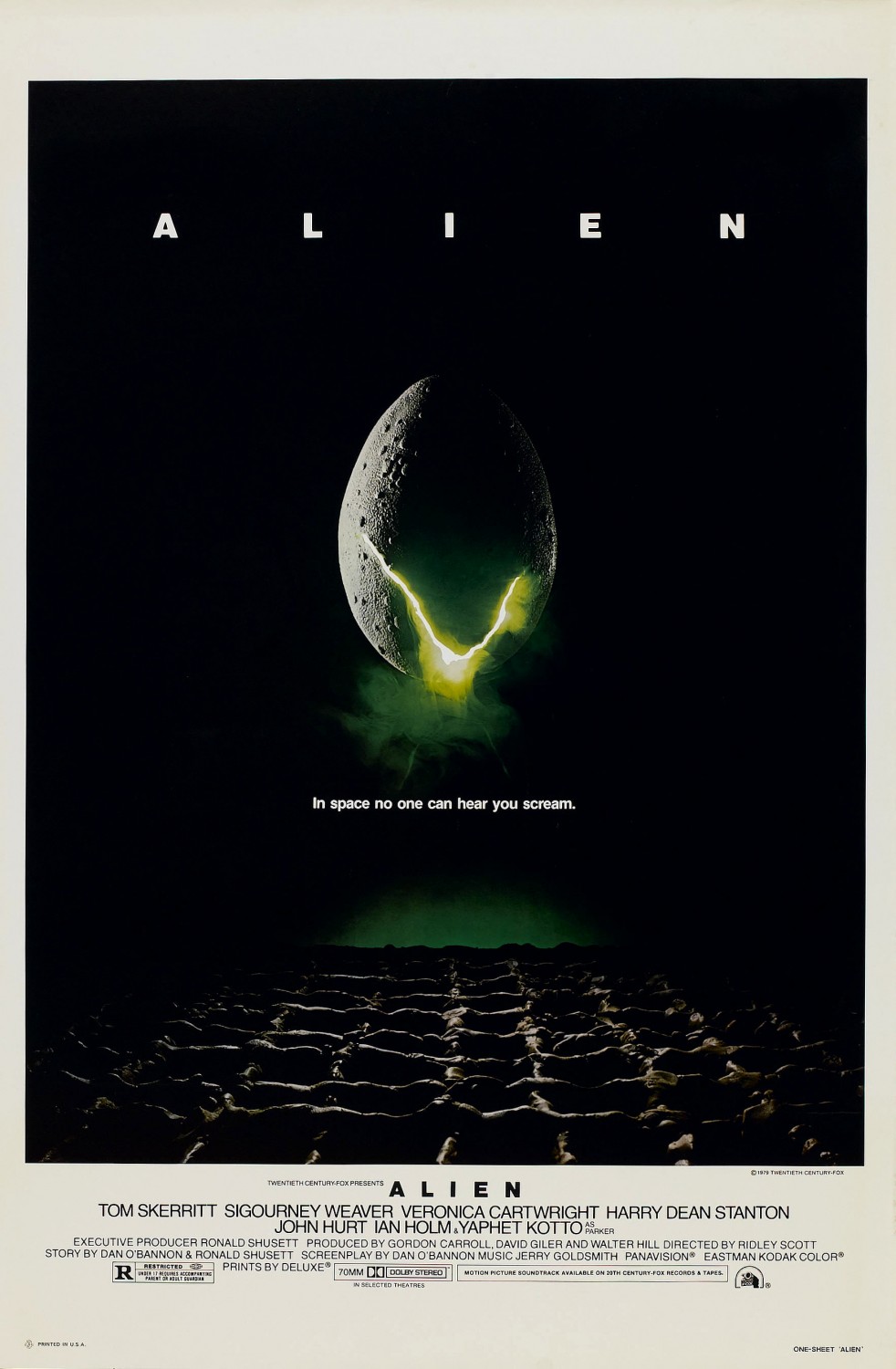
“Alien”
Be it the original version or the director’s cut, Ridley Scott’s “Alien” is still an overwhelmingly terrifying experience to sit through. When I rented this one on videotape years ago and watched it on my parents’ 13-inch television set in their bedroom (they robbed me of using the family room), I found myself hiding my eyes at key moments. The silence really got to me, and I impatiently waited for Jerry Goldsmith’s score to come back on. Keep in mind, I actually saw James Cameron’s “Aliens” before I saw this one, and it still scared the hell out of me!
“The Exorcist”
I tell you, these horror movies from the 1970’s still have the same power to shock you today as they did when first released. When William Friedkin’s “The Exorcist” was re-released in “the version you’ve never seen,” it still had a visceral power to unsettle us regardless of the passage of time. The story of a girl who becomes possessed by an ancient demon benefits greatly from a documentary feel which has that “you are there” feel, and it almost felt like I wasn’t watching a movie, but instead a real-life event which somehow all got caught on camera.
“Evil Dead 2: Dead by Dawn”
All the “Evil Dead” movies are great fun, but if you have to go with just one, then I recommend “Evil Dead 2: Dead by Dawn.” On a budget of $3 million dollars, maybe even less than that, director Sam Raimi gave us one of the most endlessly creative and hilarious horror movies you could ever hope to watch. After all this time, it remains as scary as is funny. Plus, you have Bruce “Groovy” Campbell in his most iconic role as Ash, the pussy whipped salesman from S-Mart who keeps getting chased by the demons he was dumb enough to awaken from their slumber. Campbell gives a fantastic performance even if he keeps telling us he’s not much of an actor. This is so far from the truth, but you do have to admire the sense of humor he has about himself, and you haven’t lived until you listen to one of his “Evil Dead” commentary tracks.
“28 Days Later”
“Slumdog Millionaire” director Danny Boyle was said to have reinvigorated the zombie genre with this propulsive horror thriller where they are anything but slow. In this film, the zombies, or the infected as they are referred to are not the real enemy, we are. The virus the infected have been stricken with represents our inability to face the darkness inside of ourselves which sooner or later rises to the surface. There is no let up on the tension in this movie, and the thrills come fast and furious.
“Dawn of the Dead” (the original and the remake)
This one is a tie because both versions of this movie stand strongly on their own merits. George Romero’s brilliant sequel to his classic “Night of the Living Dead” is really a satire of the consumerist society we all live in. You know, the one which encourages us to buy all sorts of things which are said to make you happy, and yet all the money and objects you purchase end up making you feel empty inside. This is what Romero is saying with this film, and he does this while providing us with a great deal of blood, gore, beheadings, eviscerations, decapitations, and whatever else he could afford when he made “Dawn of the Dead.” All of you in the Fangoria crowd will be more than satisfied with this one, but you knew that already.
Zack Snyder, who later went on to direct “300,” “Watchmen” and “Batman vs Superman: Dawn of Justice” helmed this remake which turned out to be the best of its kind since “John Carpenter’s The Thing.” This one is more of a straight forward horror action film with a surprising amount of emphasis on character development. It also features Canada’s greatest import in the lead role, Sarah Polley. The remake of “Dawn of the Dead” turned out to be a visceral thrill ride, and it allowed us to invest in the characters in ways most horror movies typically avoid.
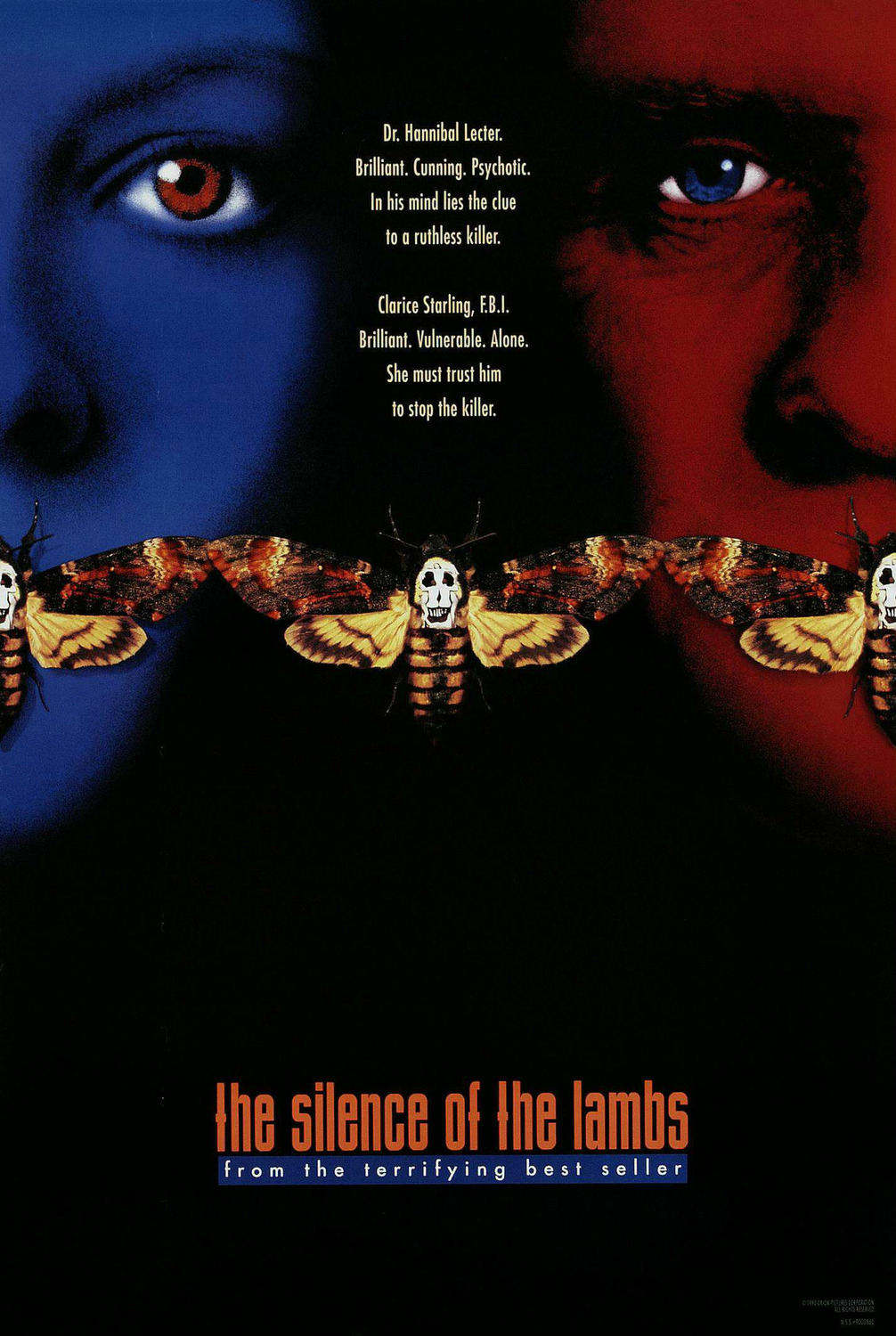
“The Silence of the Lambs”
The specter of Hannibal Lecter, as portrayed by Anthony Hopkins, never fails to unnerve me like he did when I first saw this movie on the big screen. Jonathan Demme’s Oscar winning classic remains one of the definitive serial killer films ever made. Hopkins’ performance is like a perverse love letter to HAL from Stanley Kubrick’s “2001” whose voice inspired his performance. We also get one of cinema’s greatest heroines with Clarice Starling, brilliantly played by Jodie Foster.
Darren Aronofsky’s “Noah” is a movie I have conflicted feelings about. On one hand it is a deeply flawed effort with moments which belong in another movie, but on the other hand it brings up questions inspired by the actions of the characters which I found endlessly fascinating, and those same questions stayed with me long after the movie ended. With “Noah,” Aronofsky has been handed the biggest budget he has ever had to make a movie with, but what amazes me is how much of his vision ended up on the silver screen. You’d think Paramount Pictures would have the last say on final cut, but Aronofsky has managed to graduate to the big leagues without losing his unique voice as a filmmaker.
The movie gets off to a shaky start as we watch a young Noah being initiated into manhood by his father with what looks like a magical snakeskin, but then his father is brutally murdered in front of him by Tubal-Cain and Noah runs like hell to get away from him and his followers. For a moment, I thought this would turn into a revenge movie with Noah going after Tubal-Cain to where the ark becomes a secondary story. Fortunately, this was not the case.
The story then leaps forward many years later when Noah (now played by Russell Crowe) is a husband to Naameh (Jennifer Connelly) and a father of three boys: Shem, Ham and Japheth. However, it’s not long until Noah begins having frightening dreams about a great flood swallowing up every living and breathing thing on earth. Eventually, he comes to discover he has been giving a mission: to build an enormous ark and fill it up with animals so that when the great flood comes to wipe out the evilness of humanity, the animals will survive to restart civilization anew.
One of the big stumbling blocks of “Noah” comes when we are introduced to fallen angels known as the “Watchers.” They are these enormous stone creatures who tower over all humans, and they kept reminding me of those tree creatures from “The Lord of the Rings: The Two Towers.” Furthermore, the “Watchers” almost took me out of the movie completely and had me thinking about those stone creatures William Shatner wanted to put in “Star Trek V: The Final Frontier.” While watching “Noah,” I kept thinking about what Shatner must have been thinking when he Aronofsky’s film. Shatner was probably thinking, “Damn you Aronofsky! My film had biblical themes in it too! Why didn’t I get to put any stone creatures in my movie?”
When all those animals start making their way to the almost completed ark, you can tell they were all created using CGI effects. Then again, I can’t blame Aronofsky for going this route as directing real life animals must feel next to impossible especially in a movie like this. Plus, if he did get access to real animals, how would he have dealt with all those animal droppings the crew would have spent hours trying to clean up? Imagine the smell that would have created. Yuck!
As “Noah” continued on, the things which bothered me began to make sense, and the film really hit its stride just before the ark sets sail in the flood. I figured the movie would end there, but it goes on to look at how Noah and his family deal with issues like survivor’s guilt and questioning the motivations of “the creator” (the word God is never mentioned). Aronofsky does terrific work in giving all these characters complexities which render them far more fascinating, and the challenges they face come to define who they are. This is not a good guy vs. bad guy story as all the characters inhabit a morally grey area, and it gets to where we’re not sure who to root for.
Since his Oscar winning turn in “Gladiator,” Russell Crowe’s career has been all over the place as he has given terrific performances in “Cinderella Man” and “American Gangster” and suffered through cinematic misfires like “A Good Year” and “The Man with the Iron Fists.” As Noah, Crowe does some of the best work he’s done in a while as he humanizes a character made famous through biblical tales. When Noah threatens a course of action which may very well to his family apart, Crowe still makes us feel for him as he struggles to remain true to what is asked of him.
Jennifer Connelly also gives one of her best performances as Noah’s wife, Naameh, and no, she does not play Joan of Arc (Keanu Reeves got that wrong in “Bill & Ted’s Excellent Adventure”). As Naameh, she plays a character similar to the one she played in “A Beautiful Mind;” a woman very much in love with her husband and yet deeply afraid of what he is capable of doing. Connelly is no stranger to the Aronofsky universe, having given such an earth shattering performance in “Requiem for a Dream,” and she is not afraid to go to emotional extremes. Watching her trying to reach her husband, Connelly sucks you vividly into the fearful state she has been thrust into, and she makes us share in her desperation to protect what is left of humanity.
“Noah” is also well served by a strong supporting cast which includes Ray Winstone, Douglas Booth, Logan Lerman and Emma Watson who shows there is more to her than playing Hermione in the “Harry Potter” movies. In addition, Aronofsky brings along his dedicated team of collaborators such as editor Andrew Weisblum, cinematographer Matthew Libatique and composer Clint Mansell. Speaking of Mansell, he gives us yet another great film score with “Noah.” While it might not be on a par with his work on “Requiem for a Dream,” he gives the movie a great emotional power, and he continues to be one of the more unique film composers working i today.
So again, “Noah” has some glaring flaws I could have done without, but its strengths eventually outweigh its weaknesses to where the movie had a strong impact on me. I’m not sure I will ever forget hearing all those screams from people begging to be rescued while Noah and his family sail away in the ark, and Aronofsky is fearless in questioning the audience as to what they would have done were they in his position. This movie also shows how even biblical characters have dysfunctional families to deal with, so we have no business being surprised when we have to deal with the same thing in life.
When all is said and done, I’m glad that Aronofsky managed to get his vision of “Noah” to the big screen without too much studio interference. All the same, I hope he thinks twice about putting giant stone creatures in his next film.




 The Ultimate Rabbit