‘Kingsman: The Golden Circle’ Suffers from Overkill, But it’s Still Worth a Look
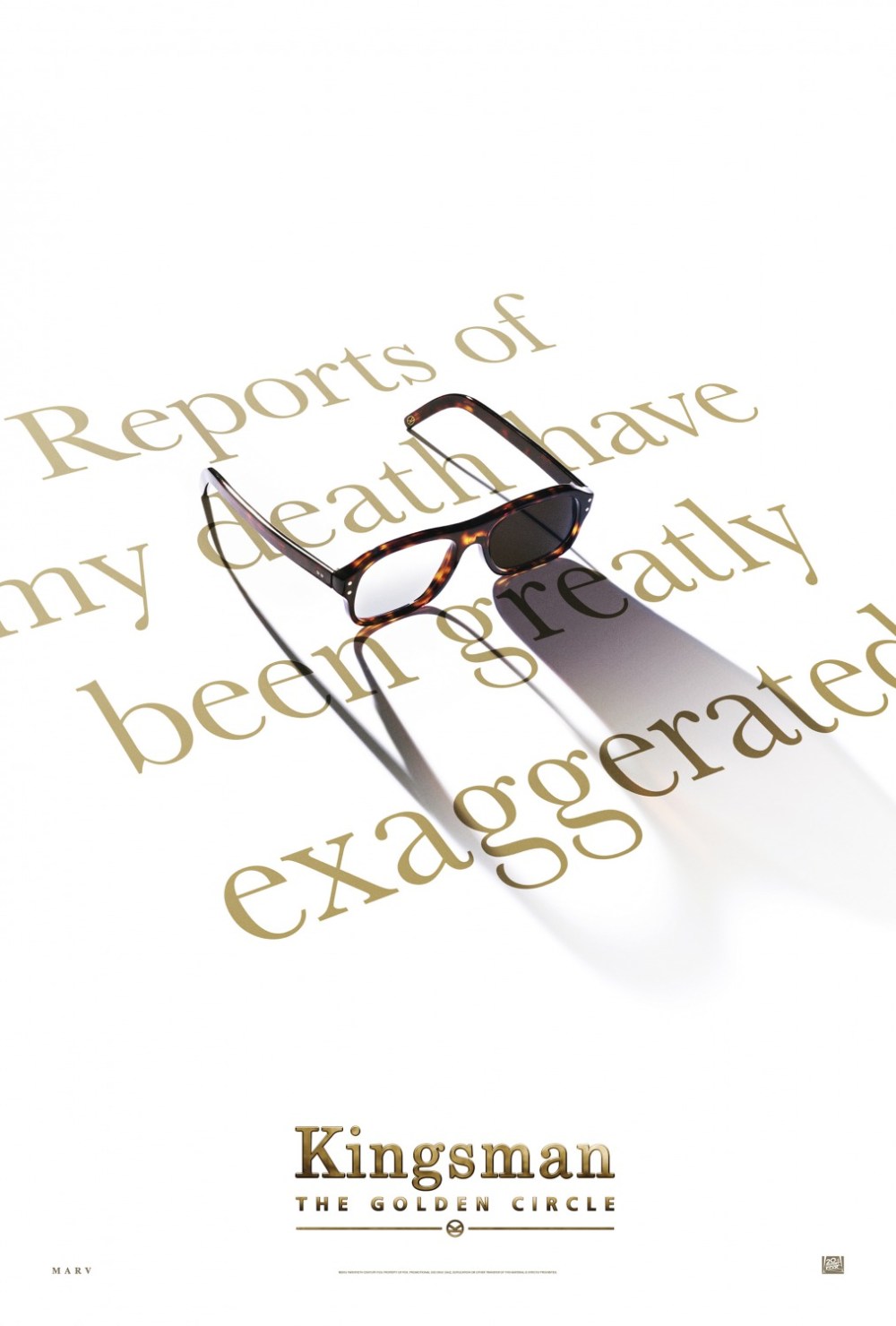
Kingsman The Golden Circle poster

Ever since his directorial debut with “Layer Cake,” filmmaker Matthew Vaughn has done an excellent job of reinvigorating different movie genres to great effect. His “Kick-Ass” was the comic book movie many were too afraid to make, and I like to think it paved the way for “Deadpool.” He brought the “X-Men” franchise back to vibrant life with the prequel “X-Men: First Class,” and it was a prequel which put so many others like it to shame. And then he gave us “Kingsman: The Secret Service” which turned the world of spy movies upside down. In a time where James Bond, Tom Cruise’s “Mission: Impossible” movies and the Jason Bourne franchise ruled the spy genre with an iron fist, Vaughn made “Kingsman” stand out amongst the competition to where it felt fresh and unique as it was filled with invigorating action sequences and characters who were wonderfully realized and as suave as 007 is without being anywhere as cold.

While Vaughn skipped out of doing follow-ups to “X-Men: First Class” and “Kick-Ass,” it was very re-assuring to see him come back to co-write and direct “Kingsman: The Golden Circle.” Now that all the origin stuff is out of the way, we can now watch Eggsy Unwin/a.k.a. Galahad (Taron Egerton) battle the enemies of the world in a beautifully tailored suit without having to prove to us he is worthy of the status he has attained.

Indeed, Vaughn refuses to keep us waiting as “Kingsman: The Golden Circle” opens with a gangbusters action sequence in which Eggsy fights former Kingsman trainee Charlie (Edward Holcroft) in the back of a taxi as it hurtles through the streets of London while Prince’s “Let’s Go Crazy” blasts away on the speakers. It’s a lively introduction to a movie as Vaughn looks to be holding nothing back, and it made me eager to see if he could top what came before.

But just as Eggsy looks to be settling down with the beautiful Princess Tilde (Hanna Alstrom), a sudden attack completely decimates the Kingsman suit shop and its headquarters to where he and his trainer and die-hard John Denver fan Merlin (Mark Strong) are desperate to defeat the nemesis who laid waste to their well-dressed intelligence community. They eventually discover their chief antagonist is the notorious criminal mastermind Poppy Adams (Julianne Moore) who looks to gain worldwide stardom as a drug dealer, and this leads them to join up with their American counterpart, the Statesman, in an effort to exact revenge.

At this point, I should say while “Kingsman: The Golden Circle” proved to be a fun time at the movies for me, it does have flaws impossible to ignore. With a running time of over two hours, I couldn’t help but think a lot of fat could have been trimmed as this sequel feels overstuffed with characters Vaughn can’t give enough attention to as he tries, perhaps too hard, to subvert our expectations as this movie heads towards its unsurprisingly violent climax. Also, while the original was full of anarchic energy, this one settles into a rhythm which might seem more conventional than “Kingsman” fans may care for.

Still, I had a giddy time with this sequel, and one of the main joys I got from it was the casting of Julianne Moore as she gives us one of the most lovely and appealing sociopaths I have ever seen in a movie. Her character of Poppy Adams is the world’s biggest drug dealer, but she suffers from homesickness while hiding away in the undiscovered ruins of Southeast Asia. Poppy ends up curing her homesickness by making her hideout into a 1950’s theme park which evokes memories of “American Graffiti” and the classic television show “Happy Days.” I kept waiting for The Fonz to show up, but Poppy ends up entertaining herself with a certain musician who should remain nameless before you watch this sequel.

Moore is clearly having a great time co-starring in this “Kingsman” movie as she makes Poppy into a villain who is as delightful as she is devious. Even as she entertains prospective applicants wishing to join her evil empire, it doesn’t take much for her to show an ever so subtle psychosis with those who have failed her as they meet a fate as grisly as the one who got put into a wood chipper in the movie “Fargo.” Even as her actions show her to be incredibly vicious, Moore is a hoot throughout to where she makes it hard for us to hate Poppy even though we should despise her from the get go. She also has kidnapped a certain musician who… Well, I will leave you to discover the identity of the superstar she has kidnapped for her own personal entertainment.

While this sequel does tread familiar ground, it allows our protagonists to travel to Kentucky where they meet their American equivalent, the Statesman who have a flair for alcohol as Kingsman does for clothing. It also allows for charming American actors like Channing Tatum, Jeff Bridges and Halle Berry to join the party in a variety of roles which they fit them like a glove. It’s especially nice to see Berry in something good after appearing in the critical debacle released this past summer which was “Kidnap.”

One who stands out in “Kingsman: The Golden Circle” is Chilean-American actor Pedro Pascal, best known for his work in “Game of Thrones” and “Narcos,” as Statesman secret agent Whiskey. Pascal has a wonderful Burt Reynolds vibe going on here, and I don’t just mean his mustache. He also proves to be incredibly effective with a lasso, albeit an electronic one which can decapitate its victims as well as capture them before they can escape.

As for the cast members from the original, Taron Egerton does a wonderful job of taking Gary “Eggsy” Unwin to the next stage in his life as we watch his character continue his journey from leading an aimless life to embracing one filled with purpose. Eggsy still has his friends from the past, but he is open to embracing a future which includes a lifelong commitment to the woman he loves. It’s not often you see a spy movie where a secret agent calls his girlfriend to ask for permission to sleep with the enemy in order to save the world.

Mark Strong also gets to have more fun with his character of Merlin as he gets to be more of a field agent this time out. Strong also makes Merlin’s funniest moments feel genuine to where it feels more emotionally moving than I expected. His rendition of a particular John Denver song carries more meaning these days than when it first became a hit, and it makes for of this sequel’s most unforgettable moments even as the Monty Python bit, “Farwell to John Denver,” kept playing in my head as I watched him.

And yes, it is so great to see Colin Firth back as Harry Hart. While Harry suffered a rather grisly fate in the original, this character had to come back in one way or another. Even as Harry struggles to remember the secret agent he once was, Firth invests him with a dignity and sense of duty which empowers his performance in a very memorable way.

When all is said and done, I did have a lot of fun with “Kingsman: The Golden Circle” regardless of its flaws. At almost 2 hours and 30 minutes, it runs a lot longer than it should, and it does suffer from overkill as Vaughn looks at times to be desperate in topping what came before. The sequel also could have been more anarchic as the original lovingly laid waste to many spy movie clichés. This one threatens to be a little more conventional, but it still embraces its R-rating with a lot of glee.

Rumor has it that Vaughn already has a third “Kingsman” in the works, and it would be great to see this franchise grow even further. But if he is to make another one, my hope is he embraces the anarchic nature of the original more than he did here. As spy movies continue to be made, the genre will always need a swift kick in the butt.

* * * out of * * * *
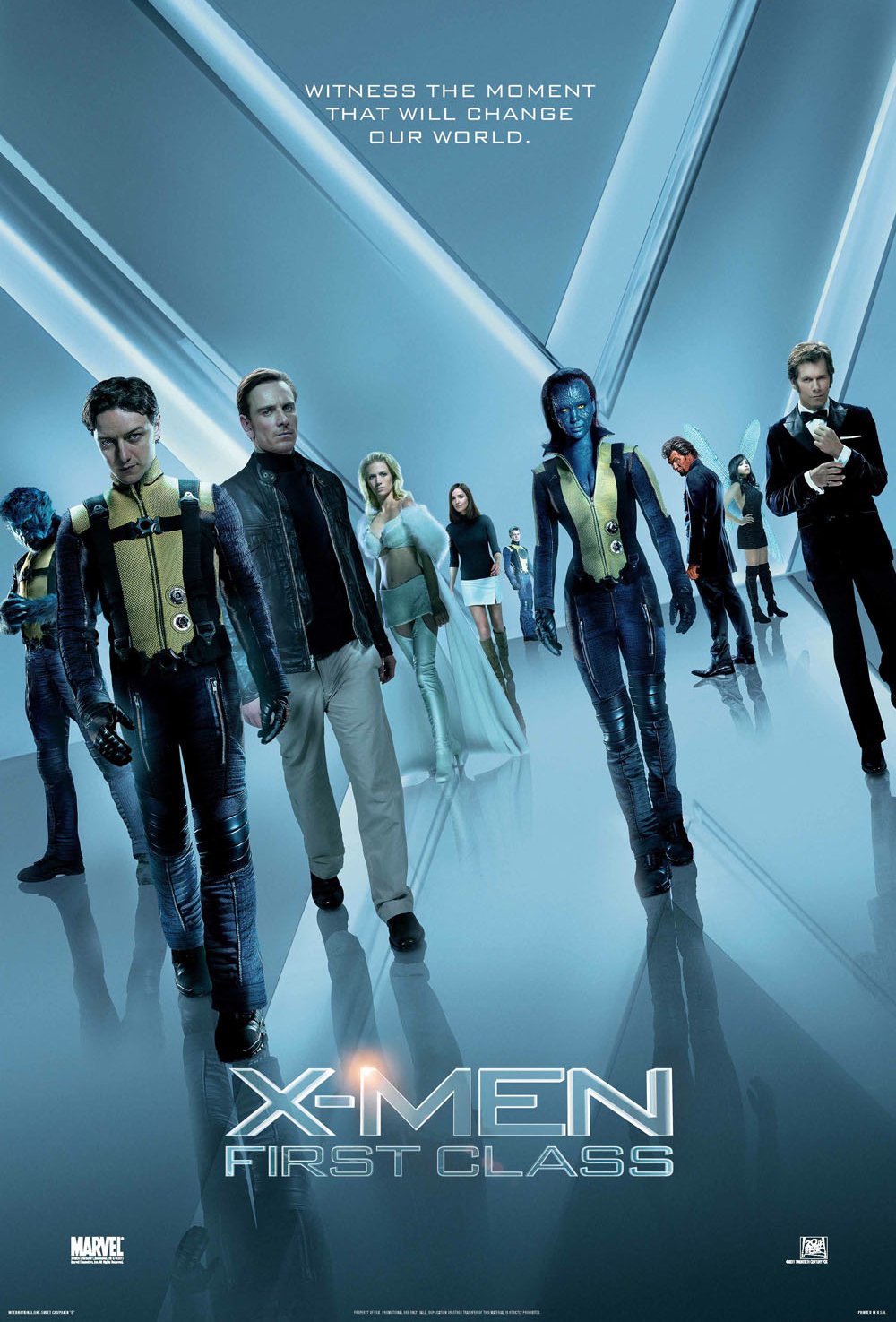
 

‘X-Men: First Class’ Represents What a Prequel Should Be Like

X Men First Class poster

X-Men: First Class” is a huge improvement over the previous entry, “X-Men Origins: Wolverine,” and it’s also the best film in the series since “X-Men 2.” It’s breezy fun, the special effects are terrific, and the emphasis on character this time around makes for a more involving prequel. With Wolverine shoved to the side, this fifth movie and the second prequel in the long running franchise, many other characters get their chance to shine.

The primary focus of “First Class” is on Charles Xavier/Professor X (James McAvoy) and Erik Lehnsherr / Magneto (Michael Fassbender) as we see the significant events which shaped and brought them together. But while Charles’ upbringing was a privileged one, Erik’s was unbearably tragic as he and his parents were imprisoned in a World War II concentration camp. Erik’s ability to control magnetism becomes evident early on, and this talent soon gets exploited by scientist Sebastian Shaw (Kevin Bacon) who commits an atrocious act in front of him. From there on, the driving force in Erik’s life is one of bloody revenge.

Prequels are tricky because we are naturally inclined to be against other actors taking over roles previously portrayed by Sir Patrick Stewart and Sir Ian McKellen. Then there’s that cynical feeling of studios taking this route just to save money. It was deemed after “X-Men: The Last Stand” that a fourth movie with the same cast would have been far too expensive to make. Of course, with a reported budget of $160 million, “X-Men: First Class” doesn’t sound like much of a bargain. Moreover, does anyone remember “Dumb and Dumberer: When Harry Met Lloyd?” Did you think audiences were going to be fooled by a Jim Carrey-less prequel? Anyone remember “The Flintstones in Viva Rock Vegas?” Heck, does anyone remember the first “Flintstones” movie? I remember seeing it, but the plot details escaped me once I walked out of the theater.

But what’s great about “X-Men: First Class” is the cast doesn’t need to worry about living up to the actors who inhabited the same roles before them. They get to approach these classic characters in a different light, and this frees them up from any restrictions which could have been imposed on them. Characters like Mystique and Dr. Hank McCoy are given more depth and complexity than ever before, and many surprises are in store for the audience as the script invests a lot of emotion in these characters including those bad mutants we rooted against in the past.

James McAvoy is excellent as the young Charles Xavier, and he looks like he had lots of fun making this prequel. Whereas Patrick Stewart’s Professor X was wise and mature, McAvoy’s is just getting started in his career and comes across as quite the ladies’ man. I also admired that while Charles is incredibly intelligent, we find his ego getting the best of him. So sure of all the things he is knowledgeable of, McAvoy does great work in making Xavier well-intentioned but not as open to mutants being themselves in the real world.

Erik Lehnsherr/Magneto remains one of the most fascinating characters in the “X-Men” universe. While he’s been the series’ chief villain and a megalomaniac, Magneto is simultaneously an anti-hero and has even been seen as a hero in the comic books. It’s hard not to feel sympathy for him considering the horrors he was exposed to in his youth, and it makes his future actions understandable, if not excusable. No wonder actors have so much fun in this role; you never know for sure the direction Magneto will end up taking. All you can say is, whatever he ends up doing, it will be to his benefit more than anyone else’s.

With movies like “Fish Tank” and “Inglourious Basterds” under his belt, Michael Fassbender is the perfect choice to play the young Erik Lehnsherr before and after he becomes Magneto. Fassbender has given performances deep with complexity and feeling; looking like the good guy at one point and then later turning into one seriously twisted individual. As Erik, he is great at showing the different layers to this character who is forever caught in a horrific moment he can’t get out of.

But one character who really gets expanded in “X-Men: First Class” is Raven whose shape-shifting abilities earn her the nickname of Mystique. Rebecca Romijn played Raven in the first three movies as a villain, and her character never got much in the way of psychological depth. Jennifer Lawrence, however, gets more to work with as we come to meet Raven at the time her allegiance to her “brother” Xavier begins to wane.

In Lawrence’s hands, she makes Raven/Mystique a strong female role model, one who is determined to be open about who she is and not be ashamed of it. While hiding herself in human form, as she is encouraged to do so by Charles Xavier, Raven’s frustration at appearing in public as someone other than herself is beginning to take its toll. Lawrence is riding high on some incredibly strong performances, and she continues to show how far her acting chops can stretch.

With Bryan Singer returning to this franchise as a producer, I’m sure he had a good hand in getting this particular entry focused more on character development. Each character is shown to be suffering through conflicted emotions as to what path the mutant race should follow, making them no different from the humans who deal with many of the same issues. Mutants are seen as the next stage in human evolution, but the haunting question of whether this will be to humanity’s best interests or detriment always hangs in the air.

But the person who deserves the most credit for “First Class” is its director, Matthew Vaughn. Coming off of the gleefully rebellious “Kick Ass,” one of 2010’s best movies, he manages to bring a lot of inventive energy to a franchise in desperate need of it. Vaughn also makes the special effects benefit the actors instead of just overwhelming them. What made the first few “X-Men” movies so special was the amount of emotion they generated, and the same thing is definitely the case here. It’s our connection with these characters which makes the action set pieces all the more exciting.

If there are any problems with “X-Men: First Class,” they come in the last half as the filmmakers become overly concerned about bringing the characters in line to where they are at in the first “X-Men” film. This was also a big problem with “X-Men Origins: Wolverine” even though that prequel was much more convoluted. It would have been nicer to see the friendship between Charles and Erik get expanded instead of just ending this one with them taking opposite sides. Then again, perhaps it still could be expanded on in future installments.

Kevin Bacon, always a terrific actor, is perfectly detestable as the movie’s most irredeemable villain. At the same time, I wished the writers had expanded on his character more. Compared to the others, Sebastian Shaw threatens to be a little too one-dimensional in his actions. If Sebastian had more complexity to him, it would have made the transition of power between him and Erik all the more believable and compelling.

Other strong performances come from Rose Byrne as Dr. Moira MacTaggert and Nicholas Hout as the highly intelligent yet shy Dr. Hank McCoy. On the other hand, while January Jones is amazingly beautiful as Emma Frost/White Queen, her one-note delivery of dialogue is one of this film’s major detriments.

“X-Men: First Class” is a prequel done in the same spirit of J.J. Abrams’ “Star Trek,” and it’s proof you don’t need Wolverine present to make a good “X-Men” movie. This is a reboot which works to everyone’s advantage, and I am eager to see what comes next.

By the way, don’t bother staying through the end credits. There’s no post-credits sequence, so take care of that urine ache ASAP.

* * * ½ out of * * * *

William Friedkin Discusses the Creation of ‘The French Connection’ Car Chase

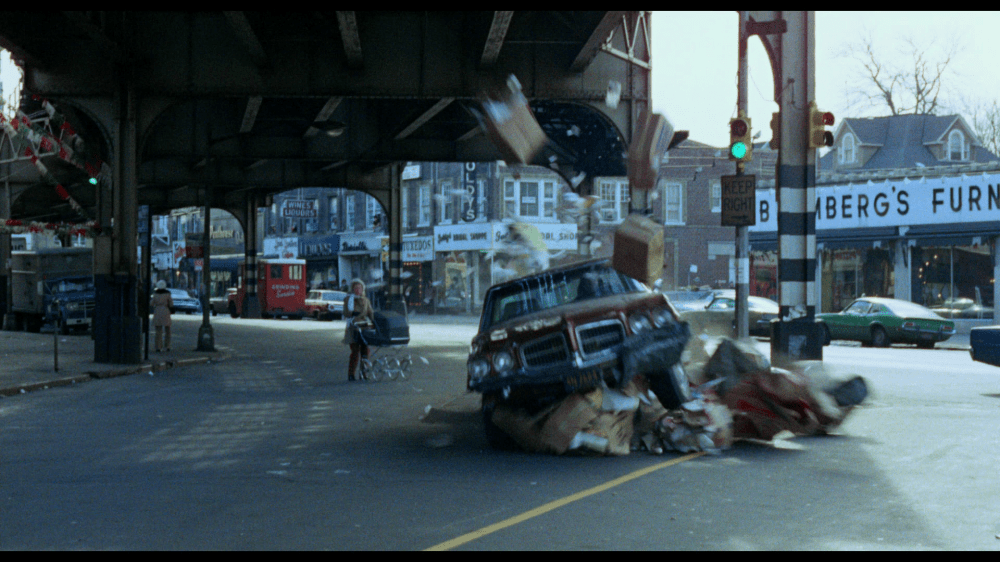
The French Connection car chase

William Friedkin’s “The French Connection” was shown as part of American Cinematheque’s tribute to him, and he went into great detail about how the famous car chase came together. It is still one of the best car chases in cinema alongside “Bullitt,” and it’s the kind Hollywood doesn’t dare do anymore.

The French Connection movie poster

Actually, it turns out there was never a car chase in the original script for “The French Connection,” but Friedkin felt it needed one as this was a police procedural, and the audience would need a temporary release from it. Also, Friedkin didn’t do any storyboards to prepare for it. In fact, he has never done storyboards for any of his movies because he feels he has to see it in his mind. The shots captured on film come together from what he sees at the time, and he doesn’t even use a second unit to shoot any footage. All that you see on screen in “The French Connection” comes from life as it happened in front of Friedkin.

In coming up with the chase, he and some crew members walked down 50 blocks of New York streets to figure out how it would work best. As Friedkin kept walking, he suddenly felt the subway under his feet. Now logistically, he couldn’t do a car chase with a subway as it was underground, but it made him wonder if there were any elevated trains left in New York. The production team ended up finding one in Brooklyn, so Friedkin went to the Transit Authority to get their cooperation in pulling this chase off.

The first thing to figure out was how fast the trains could go. Friedkin said if they went over 100 mph, they couldn’t do the chase as it would be impossible for Popeye Doyle to follow the train by car. The train supervisor he talked to said the trains go at 50 mph, so what seemed impractical suddenly became possible. Not only did Friedkin want to have a car chase the train, he also wanted to crash the train for the chase’s climax. But the train supervisor said it would be too difficult because they had never had an elevated train crash or even heisted. Having heard all this did not deter Friedkin, and he planned to steal the scene if the transit authority’s cooperation was not going to be granted.

As Friedkin and his crew headed for the exit, the train supervisor suddenly said, “Wait a second. I told you it would be difficult. I never said it would be impossible!” He told Friedkin that if he were to help him with this, then he would need $40,000 and a one-way ticket to Jamaica. His reasoning was if the movie was to be done Friedkin’s way, he would be fired, and retiring to Jamaica was always in the back of his mind. Sure enough, the supervisor was fired, and he moved to Jamaica like he said he would, so it’s safe to say he lucked out.

In filming the chase, the shots were picked up just as they happened in real life. There’s no way they would ever be able to film a chase like this today without prior approval from the city, but Friedkin and his crew were young and reckless, and they unleashed mayhem New York never saw coming. There were not supposed to be any accidents while filming it, but there ended up being many of them which forced the crew to fix the car after each take. I’m pretty sure they ended up using more than one as a result. Friedkin ended up saying they did a number of things he would never even think about doing today, and that they were very fortunate no one got hurt.

Taking all this information into account, this car chase feels even more thrilling than when I first saw it. The way it was filmed was completely insane, and the fact they pulled it off at all was a miracle. When Gene Hackman finally brings the 1971 Pontiac LeMans he is driving to a complete stop, the sold-out audience at the Aero Theatre applauded loudly which shows how powerful the sequence remains today. “The French Connection,” like many of Friedkin’s movies, has deservedly stood the test of time.

An Ultimate Rabbit Guilty Pleasure: ‘The Cannonball Run’

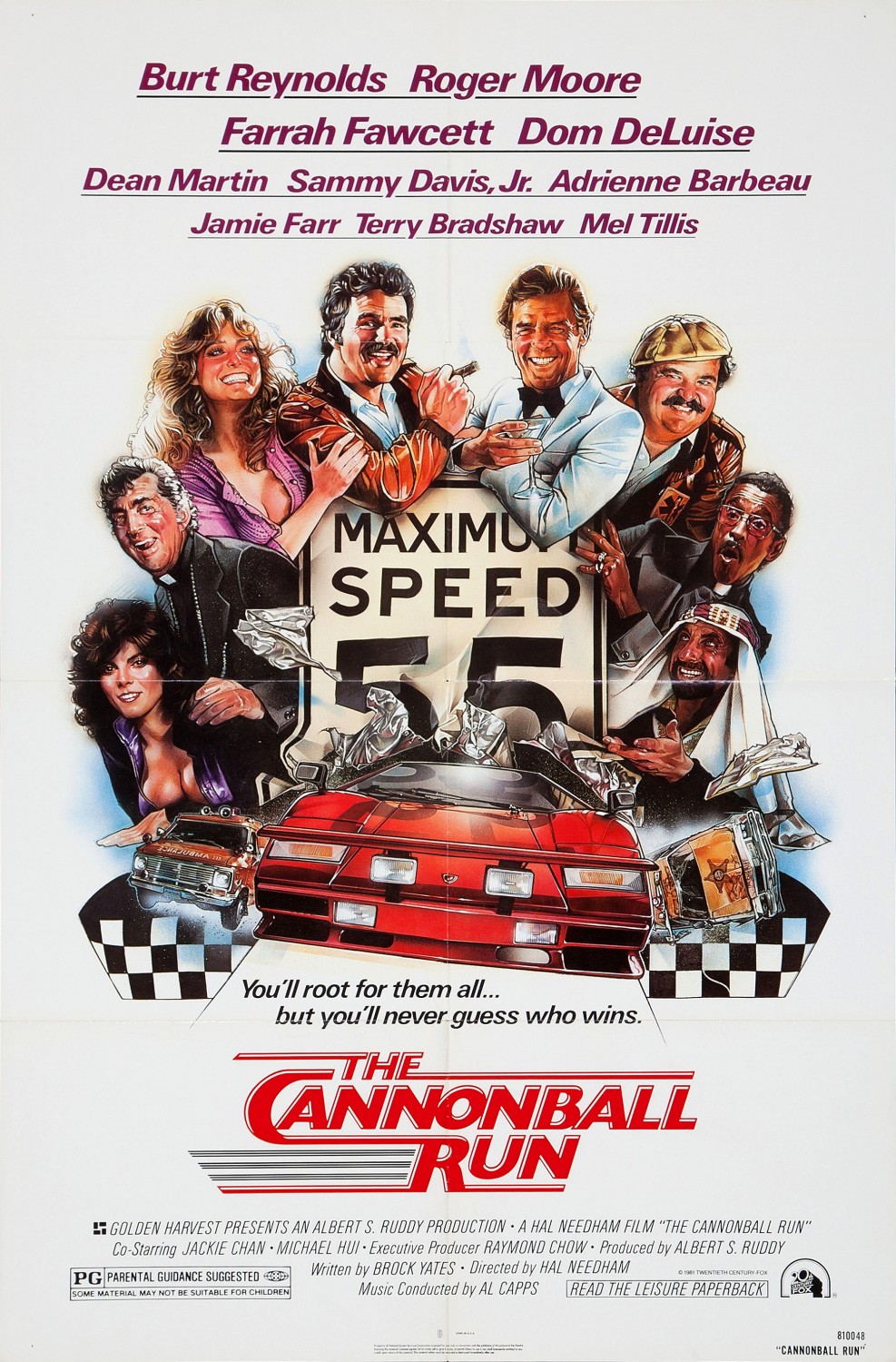
The Cannonball Run poster

So sue me, I still enjoy watching “The Cannonball Run” after all these years. The critics eviscerated it upon its release, especially Roger Ebert who awarded this movie half a star out of four, but my enjoyment for it has only dampened so much. I was just a kid when I saw first watched it with my brother, and I had yet see “Smokey and the Bandit” which we can all agree is a better movie. Looking back, I dug Burt Reynolds’ ever so cool demeanor, Dom DeLuise’s over the top performance, the ever so beautiful Farrah Fawcett who makes you want to love trees as much as she does, Roger Moore gleefully spoofing his role as James Bond, and Jackie Chan kicking Peter Fonda’s butt among others. Hal Needham may have never directed a motion picture worthy of being compared to “Vertigo” or “Citizen Kane,” but he sure did know how to give audiences a fun time (this time around anyway).

recently got to revisit “The Cannonball Run” when New Beverly Cinema screened it as part of a tribute to the late Roger Moore. This offered me my first chance to see it on the big screen after seeing it on television time and time again, and I couldn’t resist the opportunity. After all this time, I still have a blast seeing the filmmakers have fun with the 20th Century Fox logo as a couple of cars keep crashing into those famous spotlights.

For those who have avoided “The Cannonball Run” because of the dreadful reviews, it is about a variety of different personalities who participate in a highly illegal cross-country race which takes them from Connecticut all the way to California. For these drivers, the speed limit of 55 miles per hour means nothing, and they have their own individual plans for reaching the finish line before everyone else. The most prominent of these drivers is J.J. McClure (Burt Reynolds) who is joined by his best friend Victor Prinzi (DeLuise) who at times breaks out into his alter ego of Captain Chaos when times get rough.

Watching “The Cannonball Run” today, I am reminded of what filmmakers used to get away with in a PG-rated movie. You have Terry Bradshaw and Mel Tillis driving their Chevrolet Malibu NASCAR Grand National race car with a pathetic paint job while having dozens of Budweiser Beer cans clearly visible in the back seat. When they are intercepted by the uptight antagonist Arthur J. Foyt (George Furth) at a road block, it’s astonishing they get busted for participating in the Cannonball instead of having an infinite supply of Budweiser on display, let alone open cans in their hands. Foyt is determined to stop the race, but drunk driving doesn’t appear to be as big a concern to him. Go figure.

Heck, most of the drivers we see here are as interested in getting hopelessly inebriated as they are in winning this illegal race. Jamie Blake (Dean Martin) and his partner Morris Fenderbaum (Sammy Davis Jr.) are unsure of who should be at the wheel as they are both sloshed to the point where they should get a designated driver like Richard Petty. J.J. McClure is flying a plane and becomes pissed upon realizing he and Victor are out of beer and ends up landing in the middle of a street near a convenience store where Victor can rush in to get a 6-pack. Seriously, the last 80’s movie I can remember its characters having too much alcohol was “Star Trek V: The Final Frontier,” and that also had a PG-rating.

The first time I saw Jackie Chan in anything was in “The Cannonball Run” where he played a version of himself as a talented race car driver who, along with Michael Hui, navigates a super high-tech Subaru across America. Seeing Chan beating up members of a motorcycle gang was awesome to a 10-year-old like myself, and it was hysterical watching him cover up the rips in his jeans after knocking two guys out. Chan also showed us the future of texting while driving as he watched the Marilyn Chambers porn classic “Behind the Green Door” while behind the wheel. I would like to think this movie predicted the future where drivers stopped paying much attention to what was on the road ahead of them, but I’m pretty sure few would be willing to give Needham and company the credit.

“The Cannonball Run” was also my introduction to Rick Aviles, an actor and comedian who would later become famous for doing the unthinkable in a 1990’s movie, killing Patrick Swayze in “Ghost.” We get a taste of his comedic acting here which wasn’t as present in other movies he appeared in, and he does a Richard Nixon impersonation which still has me in hysterics. What a shame Aviles’ life was cut short at the age of 42.

Burt Reynolds has gone on the record to say “The Cannonball Run” is not one of his favorite movies, and to be honest, he does look to be coasting on his natural charisma as J.J. McClure. Regardless, I still loved how he coasted on it here as it makes his job seem ever so easy. All he needs to do is give you a certain look, make a certain sound, or just twist his mustache in a certain direction to get your full attention. Now how cool would it be to go through life being so cool without putting too much effort into it? Like Rod Stewart said, some guys have all the luck.

It’s a shame Dom DeLuise is no longer with us. Whether he was in the best of movies or the worst of movies, he was such a delightful presence in them all. His character of Victor Prinzim has an upbeat attitude about himself even as J.J. tries to keep it under control, especially when Victor talks about “him.” The him is Captain Chaos, Victor’s alter ego who jumps into action when things get threatening or when he finds himself falling behind in the race. Watching DeLuise become Captain Chaos is a blast, and this is even though he saves the day one time too many near the finish line.

For me, Roger Moore was the James Bond I grew up on, and seeing him here shows what a great sense of humor he had about his tenure as 007. Moore never ever plays his role of Seymour Goldfarb, a Jewish heir to a family fortune pretending to be a movie star named Roger Moore, as if he is in on the joke. Seeing him keep his cool even as the police pursue his speeding silver Aston Martin is great fun, and you know Sean Connery and Daniel Craig would never be quick to do the same thing. George Lazenby maybe, but never Connery.

Watching Jamie Farr as the oil-rich Middle-Eastern sheikh Abdul ben Falafel serves as a reminder of how there is more to this actor than him playing Maxwell Klinger on “M*A*S*H.” Some may consider his performance to be an offensive caricature, but he is so wonderfully over the top here as he proclaims his driving is only rivaled by the lightning bolts from the heavens to where it is a waste of time to take what he does here seriously. Farr makes his character’s unchecked ego all the more palpable, and the scene where he essentially flips the bird to the cops is one to cheer for if you have ever been given a speeding ticket. And yes, Farr makes you believe this is a character who knows when you have had too much couscous.

Was there anything I saw in “The Cannonball Run” that I had not seen before when watching it at New Beverly Cinema? Yes, a few actually. The grotesque Doctor Nikolas Van Helsing (Jack Elam) announces himself to be a proctologist to where a certain finger on his hand becomes far more frightening to me now than ever before. Then again, I had no business knowing what a proctologist does when I was a pre-teen.

Also, Farrah Fawcett’s nipples are much more present as they poke prominently through her dress during the scene where she first catches the attention of Reynolds. Then again, there is an enormous amount of cleavage on display from start to finish, much of it courtesy of Adrienne Barbeau and Tara Buckman who use their sex appeal to avoid the much-deserved speeding tickets which should automatically come with the purchase of a Lamborghini, any Lamborghini.

But after all these years, I still get won over with moments like when Fawcett bonds with DeLuise as he talks about the first appearance of Captain Chaos in his life, or when Reynolds tells Fawcett why he races cars. This might seem like a movie too shallow to contain moments like these, but they were pretty deep to me when I watched “The Cannonball Run” back in the 1980’s, and today they still are.

I don’t know, maybe my opinion of this movie would be different had I seen “Cannonball” or “The Gumball Rally” beforehand, both of which are said to be much better than “The Cannonball Run.” Well, fate had it that I would watch Needham’s 1981 comedy ahead of them, and I still enjoy watching it despite the numerous detractors it has. For those who think this is a prime example of lazy filmmaking, check out “Cannonball Run II” which is exactly that (or better yet, don’t bother).

I feel like I should apologize liking “The Cannonball Run” as much as I do, but I am sick and tired of apologizing for who I am. Besides, this movie remains a prime example of the things filmmakers could get away with in a PG-rated movie back in the 80’s. They wouldn’t get away with any of this today.

* * ½ out of * * * *

David Cronenberg’s ‘The Fly’ Proves to Be More Than the Average Gross-Out Movie

The Fly 1986 movie poster

David Cronenberg’s remake of “The Fly” was released in 1986, a year filled with everlasting cinematic classics like “Aliens,” “Ferris Bueller’s Day Off,” “Star Trek IV: The Voyage Home,” “Platoon,” and “Top Gun.” More importantly, it came out during a time where remakes were very rare compared to today, and also when remakes were actually worth watching. Whereas remakes these days serve to capitalize on a known quantity or are being exploited for the sake of some potential franchise, “The Fly” is one where the director took what came before and made it completely his own.

You should all know the story by now. Seth Brundle (Jeff Goldblum) is a brilliant and eccentric scientist who has invented a set of telepods which allow objects to travel instantaneously from one pod to another. Seth shares the story of his invention with science journalist Veronica Quaife (Geena Davis) as he attempts to test teleportation on living subjects. Eventually, Seth decides to test it on himself, but he doesn’t realize a common housefly has entered the telepod with him, and the computer gets confused and ends up merging the two lifeforms at a molecular-genetic level. Seth believes the teleportation has purified his body as he discovers a strength he didn’t previously have, but it’s all a build up for a transformation which becomes all the more horrifying as “The Fly” reaches its gruesome climax.

What I love about “The Fly” is its slow build as Cronenberg makes Seth’s transformation into “Brundlefly” all the more unnerving by taking it one step at a time. We first see him engaging in an extraordinary set of gymnastics we would all love to be capable of, and then we watch as he puts an enormous amount of sugar into his coffee at a local diner. This leads Veronica to ask him, “Do you normally take coffee with your sugar?” While I expected a reply along the lines of Christian Slater’s in “True Romance” where he said, “I’m not satisfied until the spoon is standing straight up,” it is immediately clear that Seth is too involved in his own process to see the damage it is doing to his body.

Seth’s face comes to look like it is riddled with severe acne scars, and this brought about a number of PTSD flashbacks for me of when I dealt with my own acne outbreaks back in high school. But the key moment doesn’t come when Seth snaps a guy’s arm in half during an arm wrestle contest (it’s always painful to see a bone sticking out of a person’s body), but instead when he finds himself pulling out his own fingernails. Just the idea of pulling out your own fingernails is painful in itself, but seeing Seth pulling his out to where a great deal of puss explodes from his fingers proves to be even more painful than watching George Clooney getting his fingernails pulled out with a pair of plyers in “Syriana.”

At this point, I want to point out one of “The Fly’s” biggest stars which is Chris Walas. Walas won an Academy Award for Best Makeup for his work here, and it should go without saying just how much he deserved it. As Seth’s body continues to deteriorate in the midst of an unwanted, let alone unexpected, transformation, Walas makes each moment sting with a thankfulness we are not going through what this misguided scientist is. He also gives you the assurance that he and his colleagues have researched all there is to know about this kind of metamorphosis, and this makes Seth’s transformation all the more horrifying. Walas makes you believe something like this could actually happen to where you cannot help but react strongly to everything unfolding before you.

1986 was a big year in science fiction as Sigourney Weaver not only had the lead role in “Aliens,” back when it was rare for an actress to have such a role in a movie, but she also scored an Oscar nomination for her performance which was well-deserved. It’s a shame Goldblum didn’t get the same respect from the Academy as his performance is truly brilliant and wholly original. Just as Weaver dominated all those special effects in “Aliens,” Goldblum makes it clear the makeup is not doing all the acting for him as he fully inhabits Seth Brundle at every stage of his transformation. For the actor, the makeup becomes a costume which comes to inform his character throughout, and Goldblum is fearless in portraying this scientist’s descent into an unwanted fate.

Scientists in movies tend to be either over the top or exceedingly modest and timid, but Goldblum gives us one whose eccentricities make him more alluring than the average one. The actor even sells us on a wonderful moment where he explains why he wears the same suit, shirt and tie each day, and seeing his closet reminded me of a number of movie spoofs where this same situation was used for sheer comedic effect. Even as Seth becomes increasingly unpredictable, let alone unlikable, to be around, Goldblum seduces us deeply into his strange plight which brings about a change he never saw coming.

But let’s not leave out Geena Davis who shares a strong chemistry with Goldblum throughout, and this only makes sense as they were a couple at the time and were briefly married. As Veronica Quaife, Davis creates a complex character whom is eager to take advantage of Seth’s invention for the story of the century, but she soon finds herself falling for him to where she cannot tear herself away from his hideous transformation. The scene where she hugs him after getting her first glimpse at the horrific changes his body is going through brought about a loud gasp of disgust from the audience I watched this movie with at New Beverly Cinema, but it shows just how powerful her performance is. Veronica is at once mortified at how bad things are getting for Seth, and yet she can’t tear herself away from him because she is too emotionally involved to just give up on him. Davis’ commitment to her performance shows the range which would eventually earn her an Academy Award for her work in “The Accidental Tourist.”

Many see Cronenberg as a filmmaker who makes nothing more than gross-out horror movies, but they neglect to see the intelligence and thought he puts into each movie he makes. Whether it’s “The Fly” or “Rabid” or “Scanners” or “Dead Ringers” or “eXistenZ,” Cronenberg has fearlessly explored the phobias we all have of bodily transformation and disease to unforgettable effect. His movies are not designed to make you throw up, but instead to confront how our bodies deteriorate in one way or another. His remake of “The Fly” is one of his most unforgettable motion pictures as we can’t take our eyes off the screen even as Seth Brundle’s transformation becomes all the more disgusting. Its power comes from how it draws you in emotionally more than anything else, and we have as much luck at disconnecting ourselves from Seth’s unnerving plight as Veronica does.

Watching “The Fly” again, it is clearer than ever that this movie is about a tragic romance more than anything else. Heck, Shakespeare would have been proud to have written a tragedy like the one presented here. While much of the attention on this remake is forever directed at the makeup design which still grosses audiences out to this very day, it is the romance between Seth and Veronica which drives the story more than anything else. The two of them want to tear themselves away from one another, but deep down neither of them can truly bare to do so, and they are the kind of couple U2 sang their song “With or Without You” about.

If there’s anything wrong with “The Fly,” it’s the ending as things are resolved in a way which is not altogether satisfying. We are left with questions which would not be answered until “The Fly II,” and while that sequel had its moments, it’s no surprise how it paled in comparison to Cronenberg’s remake.

Horror movie remakes are a dime a dozen these days, but Cronenberg’s “The Fly” remains one of the best and most visceral. It is still the director’s biggest commercial hit to date, and I prefer to see this as proof of how his unique style of filmmaking can reach a wider audience than we typically realize. All these years later, Cronenberg remains one of the most original filmmakers working today, and we eagerly await his next cinematic opus with great anticipation.

* * * * out of * * * *


‘War for the Planet of the Apes’ Caps Off a Truly Great Trilogy

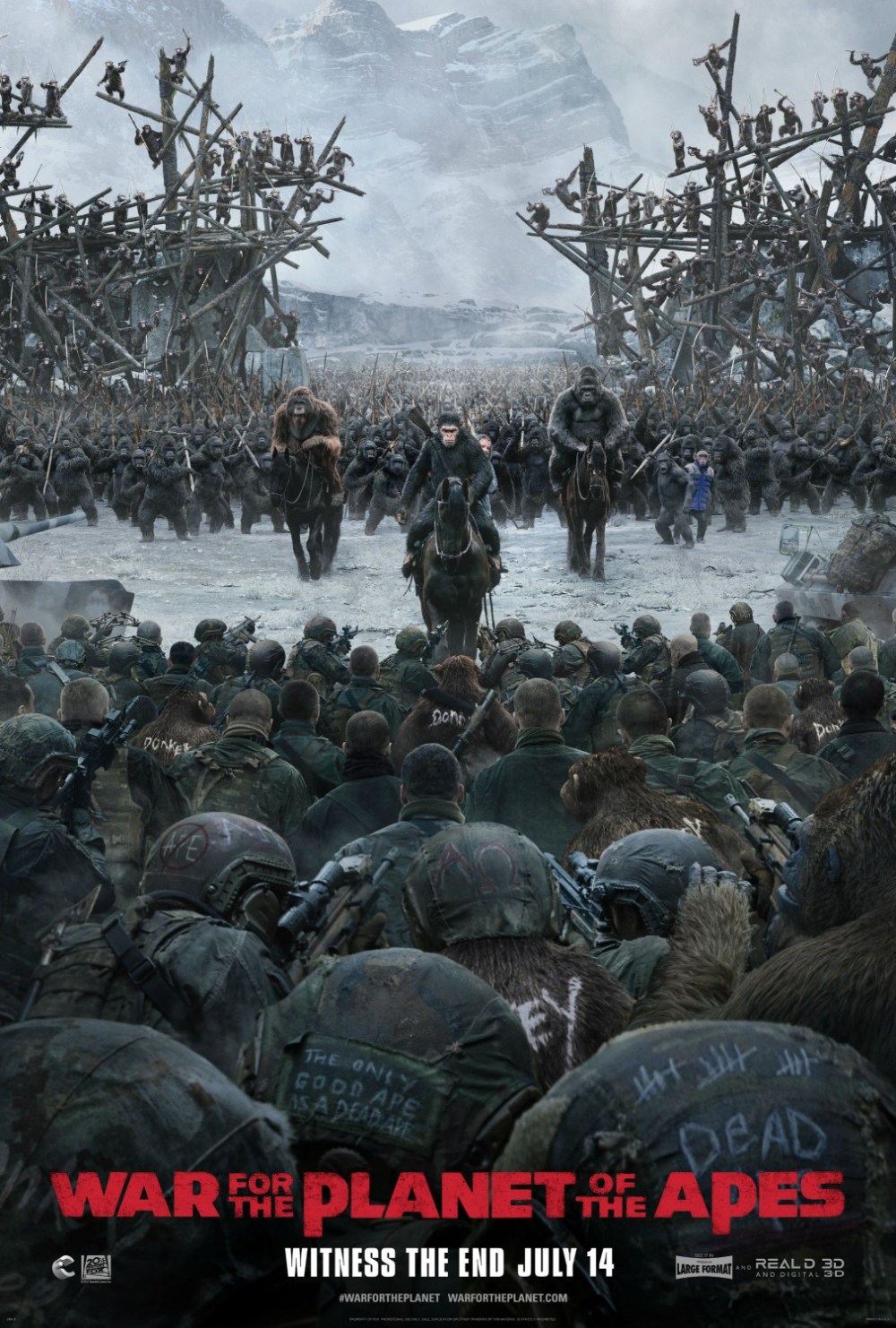
War for the Planet of the Apes poster

The summer 2017 movie season hasn’t necessarily been a bad one, but so far it has been overrun by franchise fatigue. Did we really need another “Transformers” sequel? Was the wait for the latest “Pirates of the Caribbean” really worth it? Can’t Pixar do more than just give us another sequel to “Cars?” Some franchises have seriously overstayed their welcome to where it feels like we need to take a LONG break from sequels of any kind, except of course for the next ones coming from the Marvel Cinematic Universe.

But now we have “War for the Planet of the Apes,” the third in the rebooted “Apes” franchise which is not only the best one to date, but also one of the best movies of 2017. Unlike other sequels which essentially repeat the same story to nauseating effect, “War” is not out to give us a replica of everything which happened before. From the start, we see how far the apes have evolved, and we also see the humans going through a state of de-evolution as well. In this war, it won’t matter who wins because nothing will ever be the same for anybody.

Taking place two years after the events of “Dawn of the Planet of the Apes,” “War” finds the conflict between the apes and the humans getting bloodier and bloodier. Both sides have taken heavy casualties, and the humans have resorted to recruiting apes to betray their own in a desperate effort to gain the upper hand in an escalating conflict. Caesar (Andy Serkis) has now reached a mythic status on the planet as a strong leader, and he now speaks as well as any human. When the movie starts, he has just survived another battle which leaves many dead in its wake, but instead of killing the remaining human soldiers, he sends them back to their base with a message to their leader, leave us alone. At this point, Caesar merely wants to protect his fellow apes and everything which is rightfully theirs.

But after being reunited with his loving family, Caesar suffers an unimaginable tragedy perpetrated by a military unit led by the ruthless Colonel McCullough (Woody Harrelson), and he heads out on a mission of revenge which, to quote a Klingon proverb, will be best served cold. Joined by several of his closest friends which include the wise and benevolent Maurice (Karin Konoval), Caesar comes not just to understand the world around him, but also about himself and of how he may be the maker of his own fate.

Whereas “Rise” dealt with evolution and how humans may not be a superior race of beings, and “Dawn” observed how humans and apes can be their own worst enemies, “War” focuses on the themes of vengeance and hate and what they do to the soul. Caesar’s quest for revenge is completely understandable, but his friends worry about what his hate for the Colonel is doing to his inner self. Caesar finds his strength from within and is as wise as he is strong, but we can see his soul is being corrupted on this mission as he is determined to exterminate his enemy with extreme prejudice.

The cost of revenge is a common theme in many stories, but “War” treats it with a great deal of intelligence. Caesar is constantly haunted by visions of Koba (Toby Kebbell) whose treacherous actions led Caesar to drop him to his death in “Dawn.” Maurice, the Obi-Wan Kenobi of these “Apes” movies, reminds Caesar of how Koba never got past his hate for humans to see the need for peace. But while Caesar convinces himself his motives are far purer than Koba’s, he comes to realize he is no different from Koba as his need to exact revenge takes precedence over everything else which holds great meaning in his life. The question is, can Caesar pull out of this moral nosedive before it’s late, or will he sink into an abyss of hatred which will rob him of all he stands for?

Not enough can be said about Andy Serkis’ performance as Caesar, and his work should have netted him at least one Oscar by now. We have seen Caesar go from being a frightened young ape into a hardened warrior, and Serkis has made every emotional beat count for something deep and true. While the visual effects help to illustrate how he has paid a price for the war being fought, it is Serkis who gives these effects soul and meaning as he plumbs the depths of Caesar to give us a character who is wonderfully complex and haunted by past deeds which cannot be simply washed away.

Woody Harrelson once again reminds us how he can play just about any role given to him these days with his portrayal of Colonel McCullough. His performance draws a bit from Marlon Brando’s in “Apocalypse Now” as, like Colonel Kurtz, McCullough has become a rogue soldier as his need to wipe out the apes and save the humans comes from a place of pain and delusion instead of from a higher military authority. Part of me expected to McCullough to be the usual military antagonist movies of this kind typically employ, but Harrelson gives this character much more dimension than you might be anticipating, and he matches Serkis scene for scene as their characters come to discover how alike they really are.

In addition, Serkis and Harrelson get strong support from Karin Konoval who makes Maurice far wiser than CGI can ever convey, Steve Zahn whose character of “Bad Ape” is kind of the equivalent to “Harry Potter’s” Dobby, and Amiah Miller is a scene-stealer as the mute war orphan who comes to be known as Nova.

Matt Reeves, who directed “Dawn,” returns to helm “War” and tops what he gave us before. The third movie in a franchise usually falls back on a well-trod formula, but he instead advances the plight of the apes to another level which furthers their evolution, and of the humans’ furious attempts to eradicate them which reveals their failings and a tremendous lack of understanding about where we all came from. And while the visual effects are tremendous in how they make the apes look ever so real, they are not the point. Reeves’ focus is more on character and performance more than ever before, and it is those things which make “War” especially epic. A lot of summer blockbusters are geared towards wowing us with special effects to where the human element is lost, but Reeves and company have the special effects serving the movie and its characters in a wonderfully effective way. On top of all this, “War” is well-served by one of Michael Giacchino’s best film scores to date.

The “Apes” reboot trilogy now joins the company of great cinematic trilogies such as Episodes IV, V and VI of “Star Wars,” the Jason Bourne trilogy, and “The Lord of the Rings” among others. It’s so pleasing to see filmmakers give us the kind of summer blockbuster many don’t always expect to see, one filled with great performances and intelligence as well as characters who are very interesting and whom you want to root for. Many blockbusters are the equivalent of a fast food meal which you may have enjoyed eating but which does not leave much of an aftertaste, but this is epic filmmaking which you can’t help but be emotionally drawn into. In a summer movie season which has been lacking to say the least, “War for the Planet of the Apes” is a real winner.

I also have to say “War” kept reminded of a Talking Heads song called “(Nothing But) Flowers.” As apes and humans traverse a landscape dominated by trees, rocks and lakes to where you can’t remember the last time you saw a building, the following lyric kept playing in my head:

“If this is paradise, I wish I had a lawnmower.”

* * * * out of * * * *

‘Dawn of the Planet of the Apes’ is an Infinitely Worthy Sequel

Dawn of the Planet of the Apes movie poster

“So, what is it that separates you and me from the goldfish, the butterfly, the flat billed platypus? Our minds? Our souls? That fact that we can get HBO? Well maybe it’s that humans are the only species to put other animals in cages, put its own kind in cages.”

-Augustus Hill

“Oz”

This quote from one of my favorite, and most unsettling, television shows of the 1990’s kept reverberating through my mind as I watched “Dawn of the Planet of the Apes,” the sequel to the surprisingly well-received “Rise of the Planet of the Apes.” Animals do operate by their own set of rules and are not governed by the same ones we follow on a regular basis. But what if animals evolved to where they could cage us? Would they really be any different from us? Every creature on this planet yearns for independence from others, but what cost are we all willing to pay for it? This is one of the many questions this movie asks its viewers, and it’s particularly noteworthy to see in a summer movie with a very large budget.

“Dawn” takes place ten years after the events of “Rise,” and the world has changed in a highly dramatic fashion. Much of human civilization has been wiped out by the ALZ-113 virus which Gen-Sys created in the hopes of curing Alzheimer’s disease, and the apes are now the dominant species on Earth. Caesar (Andy Serkis) is still the leader of the apes, and we see them in their natural habitat working to survive in a hostile world and educating their young. It’s been a very long time since any of them have seen a human, but this changes when they run into Carver (Kirk Acevedo), an ape hating human who makes the mistake of shooting one of them.

From there, we come to see there are still many human beings who have not succumbed to the virus, and among them is Malcolm (Jason Clarke) who is determined to reach out to the apes in a peaceful manner. The humans are running low on power and need to gain access to a hydroelectric dam which is in the apes’ territory. Of course, this requires a lot of trust between the different species for this to happen, and neither one is prepared to make it easy for the other.

With Serkis returning as Caesar, all eyes are on him as he was brilliant in “Rise,” and he knocks it out of the park once again in “Dawn.” Time has hardened Caesar and his trust in humans has almost completely disappeared, and his days are spent protecting his fellow apes and keeping them in line. Yes, all the apes you see here are CGI-created, but the great thing about actors like Serkis is, after a while, they make you forget about how you’re looking at a visual effect. Serkis invests Caesar with such a raw emotional power to where you can’t help but feel for him when things go horribly wrong. Even when Caesar speaks, and it was a shock to hear him say “no” in the previous film, Serkis makes the character’s struggles all the more palpable to where you root for him to ease the divisions between humans and apes.

But what makes “Dawn” especially effective is, like the best science fiction stories, it reflects the struggles of the world today. The conflicts between the humans and apes could easily be compared to those between Israel and Palestine, blacks and whites, the rich and the poor and perhaps even between Star Wars and Star Trek fans (let’s not leave anyone out here). Director Matt Reeves (“Cloverfield” and “Let Me In”) mines this material for all the emotional depth it has, and none of the characters, human or otherwise, can be boiled down to a one-dimensional cliché. If they can just get past their perceived differences, the world can become a peaceful place for them to live in.

Also, “Dawn” gets at the unavoidable truth of how the greatest threat to a group doesn’t come from its enemy, but instead from within. Caesar’s second in command, Koba (Toby Kebbell), can’t get himself to make peace with all the cruel animal testing he was forced to endure before the virus laid waste to the planet. And on the human side, you have Dreyfus (Gary Oldman), the leader of the remaining human survivors who is determined to protect them no matter what. There will always be change and there will always be resistance to change, and Koba and Dreyfus represent the greatest threat to any change which can occur. If they could see that their differences are only skin deep, then maybe there would be a chance but, as Peter Gabriel said, fear is the mother of violence.

Now a lot of people have said the human element in “Dawn” is lacking, but I’m not sure about that. Granted, the CGI creation of the apes is amazing to look at and the actors who inhabit them deserve more recognition than they will probably get when awards season comes around, but “Dawn” has a good human cast as well. Jason Clarke, so good in “Zero Dark Thirty,” proves to be a human worth rooting for as Malcolm, a man who has shared about the same number of loses as Caesar has. Keri Russell, who is currently kicking ass on “The Americans,” reminds us of how lovely she can be playing such a tough woman devoted to her loves in her life as well as in science and facts. Oldman, who can be prone to overacting in movies like this, is fun to watch here as he gives us a character who is not quite a bad guy but not necessarily a good one either. It’s also great to see Kirk Acevedo, so great as Alvarez on the HBO series “Oz,” here as Carver, a former water worker who has trouble getting past his fear and misunderstanding of apes.

The rebooting of the “Planet of the Apes” franchise was not exactly met with open arms, and this was especially the case after we witnessed Tim Burton’s incredibly disappointing remake. But ever since “Rise of the Planet of the Apes,” this franchise has proven to be one to look forward to. Our expectations for it remain in check, and things get even better this time around with “Dawn of the Planet of the Apes.” Even if this movie ends on a note of despair over what could have been, there is still an inkling of hope as we look into Caesar’s eyes. For once, we get the feeling all of humanity might actually learn from its mistake, and maybe the apes can too.

* * * ½ out of * * * *

‘Alien: Covenant’ Mixes the Old and the New for a Pulse-Pounding Ride

Alien Covenant poster

With the “Alien” franchise, it always helps to keep your expectations in check. The first one, released back in 1979 was one of the scariest science-fiction movies ever made, “Aliens” was one of the most intense, “Alien 3” was one of the most infinitely depressing, and “Alien Resurrection” was the slimiest by far. When Ridley Scott, who directed “Alien,” returned to the franchise with “Prometheus,” he presented us with a film containing, as he said, “strands of ‘Alien’ DNA in it,” but it was also designed to have its own mythology and ideas while existing in the same cinematic universe. Each time, the filmmakers brought their own unique vision to this franchise and succeeded in creating something daring, and at times maddening, which no other franchise would have dared pulled off. As for the “Alien vs Predator” movies, the less said, the better.

Now Scott returns again to the franchise with another prequel, “Alien: Covenant,” which looks to be a return to basics after the mixed reaction “Prometheus” received. Sure enough, composer Jed Kurzel’s score starts off with a taste of Jerry Goldsmith’s theme from “Alien” which has the audience feeling like they are entering familiar territory. But Kurzel’s music also has the music Marc Streitenfeld created for “Prometheus,” and it made me realize Scott was not about to leave the themes he explored previously in the dust.

“Alien: Covenant” picks up ten years after “Prometheus” as we come across the spaceship Covenant making its way to a remote planet where colonists intend to start a new life. These plans go awry when a neutrino blast hits the ship, killing some of the passengers and leaving the survivors in a state of devastation they cannot be expected to quickly recover from. Suddenly they intercept a human radio transmission from a nearby planet not on their charts and despite some objections, which of course are ignored, they change course to investigate. From there, you have a pretty good idea of what will happen.

Scott, as usual, works visual wonders along with cinematographer Dariusz Wolski which put us right into the action instead of just viewing it from a distance. Seeing these humans arrive on a planet we know many of them will not leave, not in one piece anyway, jacks up the tension in no time at all, and he still knows how to make those xenomorphs look more vicious than the average sci-fi creatures.

At the same time, he continues the themes of “Prometheus” with the assistance of one of its best actors, Michael Fassbender (god he has an awesome last name!). Fassbender returns as David, the synthetic android who is revealed to be alive and in one piece on this new planet, and he also plays Walter, another synthetic android assigned to look after the crew of the Covenant. Seeing David and Walter share scenes with one another prove to be some of this movie’s most fascinating for me as Fassbender makes you forget special effects were involved in him having a conversation with himself.

The balance between the themes of “Prometheus” and the typically visceral action of the average “Alien” movie is a tricky one, and Scott manages to pull it off for the most part. Still, it will be interesting to see how audiences react to this one as they may like certain parts of “Alien: Covenant” more than others.

I do wish Scott and screenwriters John Logan and Dante Harper had given more attention to the characters here as many of them appear to be too one-dimensional for this movie’s own good. This franchise thrives on our getting to know these characters as individuals we can relate to, but many of them appear to exist solely for the xenomorphs to rip apart limb from limb. Some characters fare better than others, but the rest of the pack deserved more attention than they got.

Katherine Waterston, unforgettable in Paul Thomas Anderson’s “Inherent Vice,” has a big challenge here as she is essentially playing the Sigourney Weaver/Ellen Ripley role as terraforming expert Daniels Branson. What I really admired about Waterston’s work here is how she never invites easy comparison to Weaver, and I never bothered spending time comparing the two actresses as the movie unfolded before me. Waterston fully embraces her character’s complex emotions as she is forced to deal with an unexpected tragedy which would easily wreck another, and she turns Daniels into formidable warrior long before the movie’s furious climax.

Another actor I got a kick out of seeing here was Danny McBride who plays the chief pilot of the Covenant, Tennessee. McBride is best known for his no-holds-barred comedic performances in “Pineapple Express,” “Tropic Thunder,” “The Foot Fist Way,” and the HBO series “Eastbound & Down,” and several critics have said they felt he was miscast here. I completely disagree as he brings the kind of the down-to-earth character the “Alien” movies can’t exist without as well as a subtlety which makes his emotions feel genuine and never faked. Once again, I truly believe that if you can do comedy, you can do drama.

I also have to give Billy Crudup a lot of credit for taking a character like the self-serious man of faith, Christopher Oram, who lacks the confidence a leader should have and making him into someone more human than any other actor could have. I say this because this kind of character usually comes across as totally annoying and infinitely idiotic, but Crudup succeeds in making Christopher down to earth and more empathetic than you might expect. And those scenes he has with Fassbender in the latter half? Priceless.

Does “Alien: Covenant” reach the exhilarating heights of the first two “Alien” movies? No, but I wasn’t surprised it didn’t. We have long since gotten used to these vicious creatures to where they aren’t as terrifying as when we first met them. Still, I found “Alien: Covenant” to be a pulse-pounding ride with strong performances, a sleek design and the kind of stunning look you can always expect from the average Ridley Scott film. It pays homage not just to its predecessors, but also to “Blade Runner” as well, and it has an infinitely unnerving conclusion which reminds us all that in space, no one can hear you scream.

Just try to go into it with an open mind. There is a bit of the old here which I know fans will enjoy, but there is also a lot of thought put into the story which you don’t often get with the usual summer blockbuster.

* * * ½ out of * * * *

Ridley Scott’s ‘Alien’ Remains an Exceptionally Intense Experience

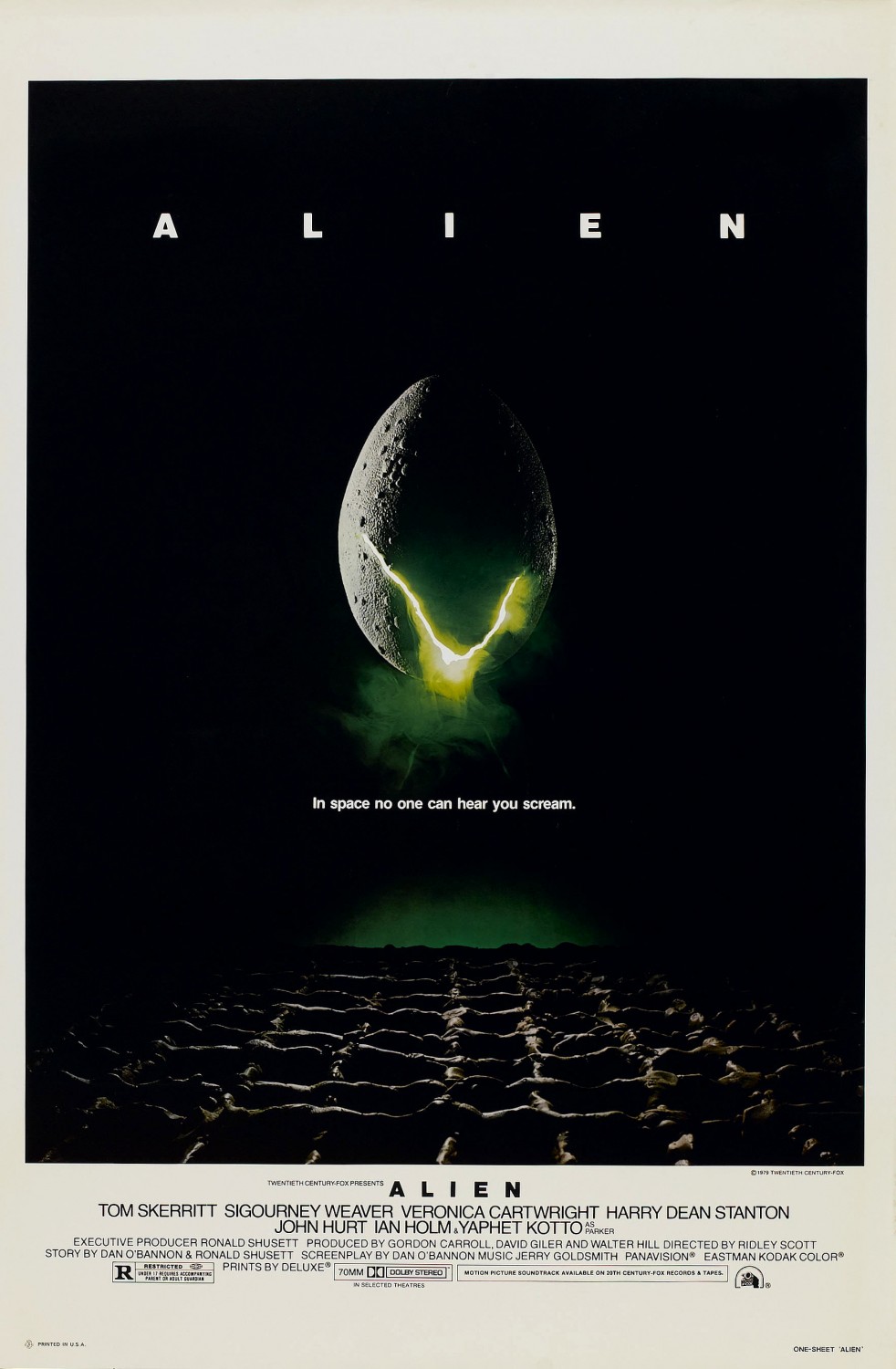
Alien movie poster

In regards to horror movies, “John Carpenter’s The Thing” ranks highest on the list of my all-time favorite movies in general. However, if you were to ask me what I consider to be the scariest movie ever, the first that quickly comes to mind is Ridley Scott’s “Alien.” Now considered a classic haunted house kind of movie, it freaked me out far more than I had expected it to. These days, if I come across someone who hasn’t seen “Alien,” I would be desperate to take the time and watch it with them just to see the look on their face. What may seem like a harmless old science fiction movie still has the power to unnerve and creep up on its audience when they least expect it.

Now when I say that this movie freaked me out more than I expected it to, there are a number of reasons why: I ended up seeing James Cameron’s sequel “Aliens” beforehand, so I already knew Ellen Ripley (played by Sigourney Weaver) was the sole survivor from the original. When I watched “Alien” for the very first time, it was back in the days of VCR’s and VHS tapes, and the one I obtained from my favorite video store was a fairly old copy which showed a bit of wear and tear. When it came to watching it, I got consigned to my parents’ bedroom as they had already called dibs on the big television in the family room which was connected to a “super cool” stereo system. The TV set in their bedroom was tiny by today’s standards. As I remember, it was a 13-inch set which was already on its last legs after years of use. This one didn’t have any surround sound system to enhance the experience, so I just tried to be happy I had a TV to view it on at all.

Having said all this, “Alien” still had my hairs standing on end throughout. Even though I knew who would live and die, the suspense and tension were extreme throughout, and you never ever felt safe on board the spaceship Nostromo. I can still remember hiding my eyes and would be turning the volume down at certain points because my heart threatened to stop beating a few times. Imagine if I had watched it for the first time on a big screen TV with surround system, or better yet, in a movie theater when it originally came out! I wouldn’t have slept for days! Some movies play better on the silver screen than on your television, but “Alien” appears to work on either format with the same degree of success.

There are many different reasons why Scott’s film remains such an effective sci-fi horror classic to this day. For me, it starts with the characters and how down to earth they are. While other outer space movies have characters who revel in the wonder of what’s out there, all the workers on the Nostromo treat their dark habitat as just another office job they take to get by. When we meet up with them, they are on their way back to Earth and just want to be home already. The writers also gave the actors dialogue which was never too heavy on the technobabble and hearing the characters talk about how they deserve full shares for the work they did defines them as blue collar workers. These are not brilliant scientists looking to discover new planets; they’re just people working for the man. The time Scott takes in introducing all these individuals pays off by the time we are given a visceral introduction to the alien of the movie’s title.

Now let’s talk about this alien which was designed by H.R. Geiger, a Swiss surrealist artist. I can’t really compare it to other movie creatures I’ve seen in the slightest because it looks so frighteningly unique in its construction. Its mouth hides an additional set of jaws that lunges out at unsuspecting victims as if they are “faster than a speeding bullet.” Furthermore, there is something quite phallic about that jaw in how it juts out at you without warning or of any thought of the damage it is about to inflict. Its lethal penetration is highly unnerving in how it reminds the viewer of what we all agree constitutes a serious and unconscionable violation to the human body.

But one of Ridley’s most brilliant moves with “Alien” was in not showing the creature fully. We only got glimpses of it throughout the film until the end, and even then we weren’t entirely sure of all that we saw. It was all up to our imaginations to figure out what kind of a threat this creature is. This added immeasurably to the film’s infinite suspense and unending tension. Plus, with the spaceship Nostromo designed to look all dark and shabby with not much light to be found in certain sections, this made it easier for the creature to hide. When it leaped up at the cast member about to meet his maker, it was completely unexpected and defined the jump out of your seat moment for me.

As the movie goes on, we get to an even more frightening aspect; of how corporations can put profits above their workers so coldly. When Ripley discovers the Nostromo crew was made to pick up an alien organism to bring back for further study and that they were expendable, it only further demonstrates just how much alone everyone is on the ship. To realize the company which has employed you couldn’t care less about your existence makes you fully aware of your immediate surroundings, and the instinct to survive becomes stronger than ever. Of course, are cynicism today has us expecting this from any corporation we work with, so we’re more prepared for this than the Nostromo crew was.

A lot of credit also goes to the late Jerry Goldsmith for creating a music score which adds subtly to the action, or at least until the film’s last half hour when the realm of outer space feels even smaller than before. His music touches on the tension inherent in each character without becoming melodramatic, and at times it sounds like invisible ghosts hovering over the unprepared crew waiting to strike. Also, the use of silence in certain scenes makes it even more frightening as we are reminded of how unsettling things can be when our surroundings become far too quiet for comfort.

All of this leads to one of the most intense climaxes in cinema history as we are fully aware of time running out. Just when you think the movie’s over, there’s still another horrendous challenge to overcome. It’s in the movie’s last minute where you can finally breathe a much-needed sigh of relief. Even if you know how of this movie will end, it is still an intensely riveting experience that never lets up for a second. The look in Ripley’s eyes as she makes her way to the escape shuttle perfectly mirrors our own emotions as she is forced into a situation which leaves her with no other options to consider.

I still have very vivid memories of seeing this movie on that unspectacular little television set in my parents’ bedroom while they enjoyed something on Masterpiece Theater with more advanced technology. As the beginning credits began to roll, I was convinced that sitting through this would be a piece of cake. Coincidentally, I also felt the same way about the original version of “The Texas Chainsaw Massacre” when I rented it through Netflix. “Alien” remains one of the most truly terrifying experiences I have ever had watching a movie either on the big screen or the small one. To this day, it remains an effectively scary movie which has lost none of its power. Now if 20th Century Fox had fully realized how all these elements had added to make such a great movie, those hopelessly pathetic “Alien vs. Predator” films might have actually been worth watching.

* * * * out of * * * *


‘Diary of a Wimpy Kid: The Long Haul’ is Too Long Even at 90 Minutes

Diary of a Wimpy Kid The Long Haul poster

With “Diary of a Wimpy Kind: The Long Haul,” I enter this long-running movie franchise a fresh newbie. I have not seen the previous entries, and this will save me the trouble of comparing this one to what came before. This one also has an entirely new cast of actors as the previous cast had other things to do or simply got too old to play the roles they made famous. But if this sequel truly equals its predecessors in terms of quality, I have all the reason in the world to avoid them at all costs.

As you may be able to discern from its title, “The Long Haul” is a road movie as we watch the Heffley family travel in a minivan to visit their grandmother for her 90th birthday. However, young Greg Heffley (Jason Drucker), the hero of this series, has other plans as he and his brother Rodrick (Charlie Wright, who looks a lot like Ezra Miller here) intend to escape their parents’ loving clutches and go to a video game convention where they can redeem their meager social status and become mega-popular in the eyes of their schoolmates.

At this point in my life, I feel like I have seen every road movie ever made, and this made watching “The Long Haul” especially cloying and painfully irritating. This one has shamelessly stolen from all the classics like “National Lampoon’s Vacation,” “Midnight Run,” “Lost in America” and “Tommy Boy” among others to where this feels like a greatest hits collection performed by a cover band that cannot come close to equaling what the original artists pulled off. The filmmakers could have taken this material and made it all their own, but perhaps the studio executives were more interested in making this movie seem as bland and generic as humanly possible.

Seriously, every single cliché from road movies is on display in “The Long Haul.” You have the family staying at a motel which should be condemned and has a pool the kids are excited about swimming in until they discover it is either empty or grossly polluted. There’s also plenty of flatulence jokes, family members getting mud all over them while trying to move their car, parents singing songs their kids can’t stand, a kid vomiting while on an amusement park ride, and there’s a spoof of the “Psycho” shower scene, a classic scene which has been spoofed to death. The only thing missing is Christie Brinkley driving along in her red Ferrari which, while this is a PG-rated movie, would have been a welcome sight.

Over the years, I have come to resent movies about young kids as they fail to represent them realistically and instead present them as types of characters designed to appeal to a certain demographic. At least Greg Heffley, the main character of this series, resembles someone we can relate to as his anxieties remind us of how horrifying it was to be socially ostracized at school. But everyone else here is designed to fill a certain niche, and the actors, as a result, can only do so much with the shallow material they have been given.

If there is one thing I liked about “The Long Haul,” it was Alicia Silverstone who plays the matriarch of the Heffley family, Susan. It’s been a long time since she stole our hearts in “Clueless” and all those Aerosmith music videos, and she remains as appealing as ever even as the screenplay fails her constantly. Ever since her big breakthrough, she hasn’t been seen as much and has been largely relegated to projects which, more often than not, fly under the radar. But seeing her here reminded me of what a wonderful presence she can be in any movie, and that’s even though this one is largely undeserving of her talents.

Directing “The Long Haul” is David Bowers who was a storyboard artist on “Wallace & Gromit: The Curse of the Were-Rabbit” and directed the vastly underrated animated film “Flushed Away.” Rumor has it Bowers wanted to make this “Diary of a Wimpy Kid” sequel into an animated film, and I truly believe it would have been a far more interesting cinematic experience if he had done that instead. The books themselves have a unique cartoon style which I think would lend itself well to a feature film, but as this series has been a live action one for three movies, I imagine studio executives were not about to change anything up.

When all is said and done, “Diary of a Wimpy Kid: The Long Haul” is an endlessly irritating exercise in futility, and I’m not even sure fans of this franchise will find much to enjoy here. I snickered through most of it, and I don’t recall laughing once. Instead, I found myself wondering why the characters’ cell phones never seemed to run out of energy. I mean, there should have at least been one scene where they plugged them into a power source as I find myself recharging mine every other half hour. Also, that slide the kids travel down at the movie’s start is red and, when they come out at the end, suddenly turns blue. Glaring errors like these became far more interesting to me than anything else in this sequel’s 90-minute running time.

Seriously, save your money and binge watch “Freaks & Geeks” instead as it represents a far more entertaining example of growing up a kid. It was a brilliant show, and like all brilliant shows which aired on network television, it lasted only one season.

* out of * * * *