Jenny Slate Makes a Lasting Impression on us in ‘Obvious Child’

Obvious Child Jenny Slate

We all know Jenny Slate from her brief tenure on “Saturday Night Live,” and she has since left an impression on us with “Marcel the Shell with Shoes On” and on episodes of “Parks and Recreation.” But in Gillian Robespierre’sObvious Child,” Slate gives one of the best breakout performances of 2014 which will stay with you long after the movie has ended. As comedian Donna Stern, we watch as her life hits rock bottom after she gets dumped by her boyfriend and fired from her job in rapid succession. Then after a one-night stand with a really nice guy named Max (Jake Lacy), she finds herself dealing with an unplanned pregnancy. She decides to get an abortion, and it all leads up to the best/worst Valentine’s Day she’s ever had.

Obvious Child movie poster

I was very excited to meet Slate when she arrived for a roundtable interview at the “Obvious Child” press day held at the Four Seasons Hotel in Los Angeles, California. I told her I came out of the movie wanting to hug her character, and she replied that was great and exactly the way we were supposed to feel (I couldn’t agree more). The movie is advertised as being the first “abortion comedy” ever, but that’s far too simplistic a description. To me, it was about how Donna learns how to empower herself and trust people again after having her heart broken, and Slate felt the same way.

Jenny Slate: It’s not representative of what the film actually does or how it unfolds. I guess, trying to look on the positive side, if people think that’s all that it is when they go and see the film, they will be delighted to see how complex and thoughtful it is and funny. If you think about it as just the story of one woman trying to understand the process of going from passive to active and trying to understand how to make choices you’d think, well why would I try to shy away from that? That’s a human story and I should just tell it.

“Obvious Child” derives its title from the song of the same name by Paul Simon. The discussion about the song led Slate to talk about when she used to ride the subway while she was a college student living in New York. She reminisced about how, when the train went through a tunnel, the window across from her would become a mirror, and this usually happened when she had headphones on.

JS: I remember sophomore year of college I would listen to, on repeat, the “Amelie” soundtrack and just imagine myself as a woman in a movie that was about a woman. It’s pretty interesting that I got to do it. I think a lot of people connected music that way. It makes them feel like they’re in a movie.

In the movie, Slate’s character is a comedian who does a stand-up act at a club in Brooklyn. The way Slate performs Donna’s act, you can’t help but think all her material was improvised, but Slate made it clear those scenes were the result of her collaboration with Robespierre.

JS: Gillian wrote this stand up based off of the style that I perform in; sort of loose storytelling, very instant with the audience, a conversation that’s evolving and not clubby or anything like that. She wrote it, we cut it down, we did some workshopping where I improvised a set based off of what she had written, and she recorded that, rewrote it, and then on the day of the shoot the shooting draft of the film had that stand-up set that we turned into bullet points so that I was not memorized and that it could be natural. You would have the feel of Donna feeling it out, and we talked about it and then I went up and went through these subjects that Gillian had set out and some of them are exact lines of her writing and some of them are lines that came up during it, and she would also call out to me during the shooting and be like, you know, circle back to talking about dirty underwear or whatever. And then I would go back and, during that time of walking backwards, new material would come in. I think if somebody says to me that it’s okay to work and it’s okay to be loose then I go with that. It’s in my nature to be playful and it’s my nature to feel a little bit claustrophobic with the rules, and that’s something I often just have to deal with and work through. You can’t improvise on every job, and you should be good enough at acting that you can say your lines. But for Gillian to say you can be a little looser and for her to be comfortable enough in what she had written to be flexible was an amazing testament to her. We are just a good pair.

One actress who was brought up with much excitement during this interview was Gaby Hoffman who plays Donna’s roommate, Nellie. Hoffman is best known for playing Kevin Costner’s daughter in “Field of Dreams” and for playing Maizy Russell in “Uncle Buck.” The interesting thing is that Slate and Hoffman actually look a lot alike to where you want to see them play sisters in a movie together. As it turns out, Hoffman’s career proved to have a major effect on Slate’s.

JS: I have always wanted to be an actress since I was young and can’t remember anything else. It was my ultimate desire, and she was my age and acting when I was growing up. I used to think I looked like her and was just like, oh I want to be like that girl. And when I got to meet her in my adulthood, I was like totally blown away in general just because I was such a huge fan. After getting past that, the real ultimate moment of just like being totally floored was discovering her personality. She’s very wise, really open and just like really no nonsense. She’s very fearless and I think she sets the bar really high for performance, and I felt that in a good way. I wanted to impress her, and I just think she’s the closest you can get to like a goddess. She’s got that real mythical vibe.

Now many people may say Slate is just playing herself in this movie, but this is the kind of unfair assumption we tend to make about actors in general. We may think we know an actor from reading about them in magazines or seeing them on the countless talk shows on television, but while Slate is a stand-up comedian like Donna, she was quick to point out the differences between herself and her character. Most importantly, she does not expound endlessly on her personal life like Donna does.

JS: I don’t do it. It just never seems right to me, but I’m not Donna. I know my boundaries and I think, although my standup is about like being horny and diarrhea and things like that, I still feel like it’s paired with really nice manners. I think the cornerstone of having nice manners is to have an equal exchange. Someone says how are you, and I say fine how are you, and Donna does not understand boundaries and limits at the beginning of the film. For me, I get it. My relationships are precious and I don’t talk about my husband on stage unless it’s something flattering. But even if it was something flattering that was going to embarrass him, I wouldn’t do it because there’s just too much to talk about.

Seriously, Jenny Slate’s performance in “Obvious Child” is one of the best and most moving I saw in 2014, and it’s a must see even for those who, like me, are not fans of romantic comedies. Regardless of how you feel about the Valentine’s Day Donna ends up having, it’s a lot better than the one Slate told us about from her past.

JS: I had a really bad Valentine’s Day one year because I had a really shitty boyfriend who forgot that it was Valentine’s Day, and he gave me his digital camera in a sock. Wow, thanks! Such a bummer, the worst present ever. That’s like a present that a baby would give to somebody. I never wanted a digital camera in general. I don’t care, I don’t like technology. I just wanted some fucking chocolate. Look around you! There’s hearts everywhere! Fucking get it right! Dammit! My husband is so good at Valentine’s Day. He rules at it. No socks.

Gillian Robespierre Sets the Record Straight about ‘Obvious Child’

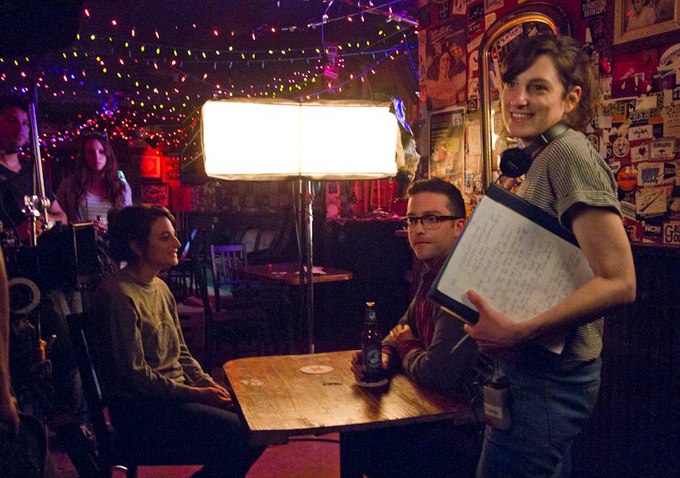
Obvious Child Gillian on set

Obvious Child” marks the feature film directorial debut of Gillian Robespierre, and it is one of the most assured directorial debuts I have seen in some time. It tells the story of aspiring stand-up comedian Donna Stern (Jenny Slate in a star making performance) whose life has just hit rock bottom. As the movie starts, she gets dumped by her boyfriend, fired from her job, and then finds herself pregnant after a one-night stand. Suffice to say, this is not the best of times for her. But at the same time, what happens from there results in one of the best romantic comedies you could ever hope to see.

Obvious Child movie poster

Now since Donna decides to get an abortion, “Obvious Child” has been labeled by many as the first ever “abortion comedy.” But while Robespierre is glad this has given her movie far more attention than she ever expected, she does not share this point of view. During an interview at the Four Seasons Hotel in Los Angeles, she made this very clear.

Gillian Robespierre: That’s not why we made this movie, to be called an abortion comedy, because we don’t think it is. I don’t think abortions are funny or hilarious, and I think that shorthand leads to believe we’ve been flippant or glib with the topic. We wanted to accomplish a couple of things with making this movie, and one was making a romantic comedy that was very entertaining, had a lot of romance, had a really funny leading lady, and had somebody who was recognizable onscreen who felt like she could be you or your sister or your best friend. And her parents were recognizable and her best friends were recognizable in a genre that sometimes doesn’t seem relatable. That’s what we wanted to do and really wanted to show. And we wanted to take some stigma away from abortion at the same time and show a procedure that was not full of regret and shame. Donna doesn’t put it on herself and her friends and the characters around her don’t put it on her either. That’s simply all we wanted to accomplish.

Indeed, the movie is really about how Donna picks herself up from her depressed state, comes to empower herself, and eventually learns to trust other people again after getting her heart shattered. This allows Robespierre to find humor in the more serious moments, and at the same time she succeeds in keeping things both human and intimate. These days it seems incredibly difficult to make a movie with such down to earth characters, but she pulls this off with what seems like relative ease.

GR: I think when we talk sometimes even in one sentence, offstage or on stage in a movie or in real life, sometimes we write comedy and tragedy in one beat. I think we’re just trying to take that sort of natural tone that we have and put it on the screen and cut out all the fat that movies and romantic comedies have and have the tone just be very realistic. Donna is a naturally funny character so in one beat she’ll be saying something very self-deprecating, and in the next second she’ll be saying something very sweet and heartfelt. I think that’s just how we interact with each other. To me, it’s just a realistic portrayal of how modern people speak to each other.

When it came to the movie’s title, Robespierre admitted it came from the song of the same name by Paul Simon. She explained why she chose it.

GR: I don’t think Donna is a child or an obvious child. I think Donna is somebody who’s not ready for what the late 20’s is giving her, and she thought she would be someplace else,” Robespierre said. “She didn’t know that the late 20’s is just as hard as her early 20’s, and she’s just trying to figure out how to be confident in where her voice is on and offstage. She’s just trying to figure out how to take over this passivity that seems to be a running narrative in her life, and I think she’s mature and thoughtful, and I think she’s doing something that needs to be done.

The fact Robespierre chose the title of a Paul Simon song for her movie made me wonder if the lyrics played a big part in her decision.

GR: I’m a rhythm girl. I do know the lyrics to the song, I’ve read the liner notes, and I think that determines the feel of the song. It’s not just like drum and bass, it’s obviously Paul Simon’s beautiful poetry that he’s written. But I just liked it for nostalgic reasons and I’m a sucker for nostalgia. I listened to that song a lot when I was little in my car looking out the window, making up my little movie ideas; ‘Oh look at that tree, I feel like I’m in a movie.’

Of course, with this movie being a comedy, you come out of it wondering how many of its scenes were improvised instead of scripted. When you have a strong comedic talent heading your cast, we are quick to believe the director had no choice but to let their main star rewrite the screenplay themselves. But to hear Robespierre say it, the job of a director is to work with people instead of for them.

GR: I think filmmaking makes me really excited about being a filmmaker, and wanting to do this in the first place is that you get the chance to collaborate with a lot of smart, creative, intelligent actors, cinematographers, and editors. Every step of the way is collaboration, and what Jenny and I found in each other was a tone of how we like to speak with one another, and a comfortability of where our parameters are. I was very comfortable with letting Jenny go because she knows Donna just as well as I do, and we were really on the same page. So if a word didn’t feel true and if a sentence would have been funnier this way, I was very malleable. I have an ego, but it’s a different kind of ego.

“Obvious Child” started off as a short film Robespierre made, and it made me wonder about the differences between making a short as opposed to a feature length movie. Her immediate response was time and money as she never had enough of either, but she did go into more detail about what she had to deal with this time around.

GR: We had a crew of 30 people which was very new for me. The short was just four or five people all from film school. This was a real movie set where my producer Elizabeth (Holm) and I worked really hard to hire a crew. We were a boss and paid thirty people, and there’s something really exciting about that and really scary about that. To be somebody’s employer comes with, I think, a lot of heaviness and respect for the people who work for you and who were coming in every day and bringing in so much of themselves to their roles whether it’s Jenny coming in every day focused, but also the crafty person and the DP and the gaffer. Everybody was full-fucking focused.

Still, with “Obvious Child” dealing with the divisive issue of abortion, people can’t help but think pro-life supporters have been giving the filmmakers and actors a lot of grief. Robespierre responded she hasn’t personally received any feedback from any pro-life groups, and she again reiterated her movie is not an abortion comedy. In my opinion, I liked how it dealt with abortion in an intelligent and refreshing manner. Movies like “Juno” and “Knocked Up,” both which I loved, sidestep abortion in favor of dealing with unplanned pregnancies in another way. But in this post Roe vs. Wade world, it’s surprising we haven’t had more movies like “Obvious Child.” But while it may seem like a revolutionary movie, Robespierre made it clear she wasn’t out to reinvent the wheel.

GR: There’s room for other storytellers out there. I think just because one movie is tackling unplanned pregnancy that ends in childbirth, that’s a real narrative and that’s a story that happens. We’re tackling it in a different way but also making it a comedy using a genre that we love which is the romantic comedy. I was just watching “Knocked Up” last night, it was on TBS, and I laughed my head off.

“Obvious Child” was, in my opinion, one of the ten best movies of 2014. While Jenny Slate is getting the praise she deserves for her performance, the movie’s success is really thanks to Gillian Robespierre whose work here bodes well for the great future she has ahead of her. In a sea of independent films which constantly get lost in the shuffle of all the superhero blockbusters being unleashed on us, it’s great to see a movie like this get the attention it deserves.

Image, poster and featurette courtesy of A24.


‘Obvious Child’ Ranks Among My Favorite Rom Coms of All Time

Obvious Child movie poster

Uh-oh, I think I’m becoming a fan of romantic comedies. For the longest time, I have been avoiding them like the plague as they feature characters whose problems don’t even compare to what I go through, dialogue which makes me cringe in such an incredibly painful way, and acting that is embarrassing and flat. But just as the genre looks to be finally dying out, 2014 brought us movies like “What If” and “The One I Love” which succeed in reinvigorating it to where I got surprised in a way I didn’t expect. But moreover, these movies have provided us with down to earth characters we can actually relate to instead of sneer at in bitterness.

Of all the romantic comedies released in 2014, I doubt I will see one better than “Obvious Child.” It marks the feature film directorial debut of Gillian Robespierre, and it’s a very confident and assured debut as she follows the trials and tribulations of a twenty-something woman whose life hits a low point which leaves her in a depressed funk. It also deals with a very touchy subject in a way both intelligent and very refreshing, and that makes this rom com a brilliantly subversive one.

Former “Saturday Night Live” star Jenny Slate stars as Donna Stern, a comedian and bookstore employee who is about to go through one of the worst periods of her life. “Obvious Child” starts with Donna’s boyfriend dumping her which leaves her utterly devastated, and then she is informed the bookstore she works at will be closing which will leave her out of a job. This leads her sinking into a depressed state which results in one of her worst stand up gigs ever, but on that same night she meets a really nice guy named Max (Jake Lacy) with whom she strikes up an easy-going conversation. From there, the two of them have a night of fun where Max accidentally farts in Donna’s face, and they end up having sex after an exuberant dancing session to Paul Simon’s “The Obvious Child,” a song from which this movie gets its name.

Not long afterwards, Donna discovers this one-night stand has gotten her pregnant, something she is not the least bit prepared for. As a result, she decides to get an abortion but finds she has to wait a few days before the doctors can perform the procedure. During this time, she wonders about whether or not to tell Max about her decision, and the movie chronicles her journey towards the best/worst Valentine’s Day she has ever had.

Many have been describing “Obvious Child” as the first ever abortion comedy, but that description doesn’t do it justice. Yes, abortion is a theme here, but it’s not what this movie is about. The main focus is on how Donna’s unplanned pregnancy forces her to confront the realities of independent womanhood for the first time in her life, and it proves to be a journey both rough and, at times, truly hilarious.

Many of us remember Slate from her brief stint on “SNL” where she accidentally let the F-word slip out of her mouth. She left after only season, but she has since made a name for herself on “Parks & Recreations” and “Marcel the Shell with Shoes On.” Slate’s performance in “Obvious Child” proves to be a huge breakthrough for her, and you just want to hug her after watching this movie. She infuses Donna with a lot of heart and makes you relate to her struggles as life constantly throws an endless number of curveballs in her direction, and we get so emotionally absorbed in Donna’s journey as she faces up to her responsibilities and rises above her misery which threatens to consume her completely. Slate is both warm and funny at the same time, and that’s not always an easy combination to pull off. It’s one of the best performances from an actress I have seen this year.

Slate is also backed up by a terrific supporting cast which features characters who come to reveal things about themselves we wouldn’t otherwise have known. Gaby Hoffmann is wonderful as Donna’s friend and roommate Nellie, Richard Kind is drolly amusing as Donna’s father Jacob, Polly Draper has some very moving moments as Donna’s mother Nancy, Gabe Liedman is a hoot as everyone’s gay best friend Joey, and David Cross has some hilarious scenes as Sam, a comedian and a guy who just doesn’t get what’s going on around him.

I also have to give Jake Lacy a lot of credit as he makes Max a truly nice guy we never find ourselves snickering at. Roles like these are often very bland and don’t give actors a lot to work with, but Lacy makes you believe Max is the real deal and the kind of significant other we all hope to find in our own lives. Max could have been the most boring and thankless character in “Obvious Child,” but Lacy keeps him from becoming this with a lot of humor and charm.

When it comes to the abortion issue, which has already split people on “Obvious Child” (particularly those who haven’t even bothered to see it), Robespierre handles it in a manner which is actually very refreshing. She’s not out to demonize abortion, but she also doesn’t make light of it either. In this Roe vs. Wade world we have been living in for the past few decades, I’m surprised we haven’t had more movies like this one.

Robespierre has created a truly wonderful film I am very eager to see again soon, and it’s one of the most intelligent rom-coms to come out in some time. “Obvious Child” really left a smile on my face as I walked out of the theater. Regardless of whether or not you have gone through what Donna has, or whether you’re a man or a woman for that matter, you can sympathize with what she goes through as we have all hit a rocky point in our lives. What’s great is how she rises above her problems and becomes a stronger person as a result. Robespierre and company confront the painful moments in these characters lives with a lot of intelligence and warmth, and it’s also really funny. It’s deep, but it also had me laughing a lot.

* * * * out of * * * *

‘Interstellar’ Takes Us on an Outer Space Journey Like Few Others Can

Interstellar movie poster

Christopher Nolan’s “Interstellar” is a film which demands to be seen on the biggest screen nearest you. Like “Gravity,” seeing at home on television will not have the same effect as seeing it in a darkened theater, and that’s even if certain people around you forget to turn off their cell phones (doesn’t anyone ever learn?). Whether or not you think “Interstellar” is Nolan’s best film, you can certainly say it is his riskiest and most ambitious to date as he combines elements from Stanley Kubrick’s “2001,” Phillip Kaufman’s “The Right Stuff,” and even Robert Zemeckis’ “Contact” to make a most enthralling space adventure for us to experience.

“Interstellar” takes place in a not too distant future when Earth is unable to sustain humanity as crops are constantly ravaged by blight, dust storms keep laying waste to towns everywhere, and teachers have changed school textbooks to make children believe the Apollo moon landings were faked (blasphemy). In the middle of all this is farmer, widower, and retired astronaut Joseph Cooper (Matthew McConaughey) who spends his days tending to his farm and raising his son and daughter with the help of his father-in-law Donald (the always dependable John Lithgow). Cooper keeps going about his business but still takes the time to indulge his daughter Murph (Mackenzie Foy) in her curiosities about outer space and the ghost she believes is haunting her bedroom.

One of those curiosities ends up leading Cooper and Murph to a secret NASA space installation out in the middle of nowhere where they meet Professor Brand (Sir Michael Caine) who informs them humanity will not survive for much longer. However, scientists have discovered a wormhole orbiting Saturn, and this presents the possibility of new planets for humans to inhabit. Cooper volunteers to pilot the experimental space shuttle Endurance into the wormhole, and he is joined by a crew of three as well as a couple of multi-purpose robots on a mission which will take several years to complete. But the mission also means Cooper must leave his family behind, and this ultimately devastates Murph who begs him not to go. Cooper promises Murph he will return once the mission is complete, but this may be a promise he might not be able to keep.

I don’t want to reveal much else of what happens in “Interstellar” as it is full of surprises, and it helps to come into this movie free of expectations and knowing only so much about it. We all love his “Dark Knight” films and have been following his work ever since he made his breakthrough with “Memento,” but this is really Nolan at his most emotionally open and, dare I say, sentimental. Almost nothing he has made previously compares to what he has given us here.

The movie does take a while to achieve liftoff (pun intended), and I know many have complained about the “sluggish” pacing in the first half. The way I see it, I admired how Nolan took his time with the story as many other filmmakers would have been pushing to get into outer space a lot sooner. These days we are in such a hurry to get everywhere and nowhere, and cable channels like IFC are content to speed through the end credits of a movie as if none of the hundreds of crew members who worked on it ever mattered. It’s nice we get to know these characters to where they have enough depth which makes us want to follow them on their journey to where no one has gone before.

I also liked how “Interstellar” deals with real science and doesn’t go out of its way to heedlessly disregard the laws of physics and gravity. Granted, there’s a lot of technobabble dialogue here which is at times hard to decipher and makes certain scenes a little confusing, but considering how much work Nolan and his fellow collaborators (which includes noted theoretical physicist Kip Thorne) put into researching space travel, this movie does have the feeling of plausibility throughout. We still may be years away from the kind of space travel presented here, but Nolan and company make you believe it will become a reality at some point.

Along with cinematographer Hoyte van Hoytema, Nolan captures some exceptionally beautiful images as Cooper and company seek out new life and new civilizations. Some of the shots are bound to remind viewers of “2001,” and Kubrick’s classic film is certainly a huge influence on the story. Still, Nolan takes us on a journey which feels surprisingly unique to others captured on celluloid recently and previously.

At this point, it should go without saying that McConaughey is on a roll. When he first made his breakthrough in “A Time to Kill,” many were heralding him as the next Paul Newman when they should have just let him be Matthew McConaughey. This led him to star in a number of dopey romantic comedies which were far beneath him and his fellow co-stars, and many quickly lost faith in him. However, the last few years have seen him turn in one remarkable performance after another in “Mud” and “Dallas Buyers Club.” His work in “Interstellar” is remarkable and heart wrenching as he watches videos of his children who are growing up without him, and he grieves over the things he has missed out on.

Anne Hathaway, who previously worked with Nolan on “The Dark Knight Rises,” turns in a strong performance as Amelia (as in Earhart?) Brand, an astronaut and scientist whose heart threatens to get in the way of her duties as a scientist when hard choices have to be made. David Gyasi is also very good as physicist Romilly, and time proves to be a real burden for him throughout the movie. As for Wes Bentley who plays geographer Doyle, he is underutilized here as he has little to do other than spout off a lot of technobabble, and his character never gets much in the way of development.

But one of the best performances to be found in “Interstellar” comes from Jessica Chastain who plays the older version of Murph. Still resentful of her father for leaving, she channels her anger into her own work with NASA as she works with Professor Brand to bring him back. Even as the film threatens to be a little ridiculous with answers that may have been better left to the imagination, Chastain keeps you hooked into her character’s quiet desperation to find her father and save the world to where you are begging for these two to reunite sooner than later.

Another collaborator of Nolan’s who really challenges himself here is composer Hans Zimmer who has given us some of the most exciting music scores in the last few years. With “Interstellar,” Zimmer abandons the usual thrilling bombast of “The Dark Knight” and “Inception” for something more spiritual and Phillip Glass-sounding. His music acts as a requiem for the wonders and perils of voyaging through space and of the solitude humans are forced to endure when stuck in another galaxy. You can usually notice the Zimmer sound in each film score he does, but his work here sounds so remarkably different from what he has done in the past.

This movie does have its flaws, and there are moments towards the end which strain credibility to where things threaten to become laughable, but its strengths eventually overcome its weaknesses by a large measure. Just when it looks like the plot will go off the rails in an M. Night Shyamalan way, it doesn’t, and it speaks to how deeply Nolan feels about the story and what it implies.

In the end, “Interstellar” is not another science fiction movie about astronauts looking for little green men (it would have been a disaster if it did). It’s about the power of love and how it can transcend both time and space no matter where you are. Regardless of the laws of physics and gravity, love carries on from one galaxy to the next and can never be easily conquered. I came out of this movie happy to know that, even in the deep, dark and silent void of outer space, love can remain constant.

For the record, I saw “Interstellar” at the historic Grauman’s Chinese Theatre in Hollywood in IMAX 70mm. I am more than convinced this is the best way to see it, and it also represents one of the last chances for all of us to see a movie projected on film. I’m sure it looks great in digital, but film still works best for Nolan.

* * * * out of * * * *

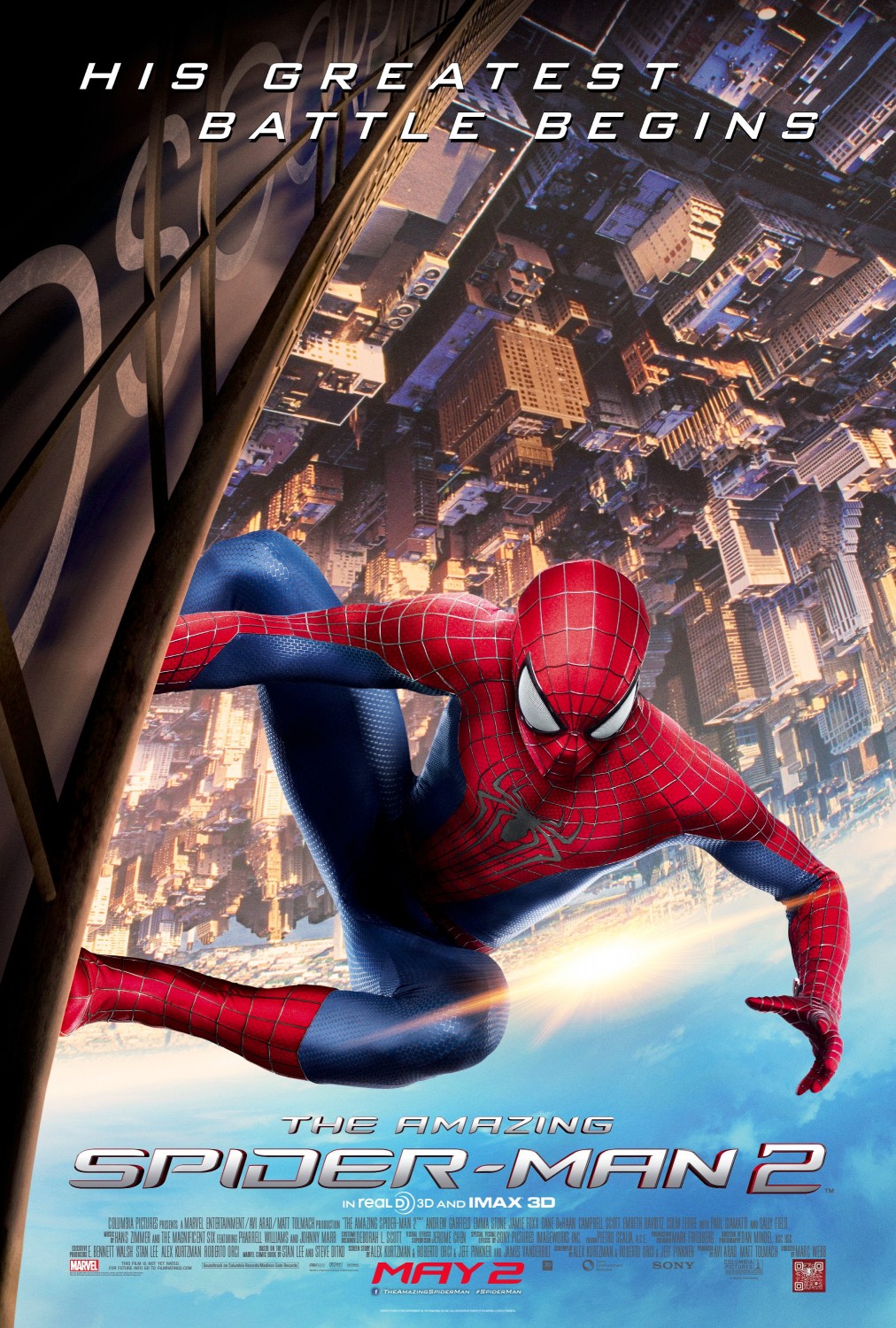
‘The Amazing Spider-Man 2’ Has Way Too Much Going On

The Amazing Spiderman 2 poster

I figured after “Spider-Man 3,” movie studios and filmmakers would think twice before putting three villains in a film, but lo and behold they have done it again with “The Amazing Spider-Man 2,” a sequel to the surprisingly successful reboot which wasn’t necessarily needed so soon. Director Marc Webb is forced to deal with a story that doesn’t have much of a focus and contains too many characters for it to deal with. What results is a incredibly underwhelming superhero movie which plays more like a two-hour plus trailer for other movies, and while this is the fifth “Spider-Man” film in just over a decade, my disappointment with this one has little to do with franchise fatigue.

Not much time has passed since the events of “The Amazing Spider-Man,” and we find ourselves catching up with Peter Parker/Spider-Man (Andrew Garfield) and Gwen Stacy (Emma Stone) as they are graduating from high school. Of course, Peter is delayed a bit as his alter ego of Spider-Man has to fight crime when Russian mobster Aleksei Sytsevich, who will later be revealed as Rhino, tries to drive out of New York City with a case full of plutonium vials. Paul Giamatti plays Aleksei and he clearly is having a blast playing such an over the top character, but he’s barely in the movie. We see him at the very beginning and at the end, but nowhere in between.

This brings me to one of my major gripes with superhero movies today. Studios are so insanely desperate in starting the next big franchise to where they already have at least two sequels planned before their big tent pole movie is even released, and it has gotten to where everyone has forgotten how to make a self-contained movie. Rhino is basically here to act as a bridge to the future spinoff “The Sinister Six,” and it ends up taking away from a movie which already has way too much on its plate.

Then we get to meet Max Dillon, an electrical engineer who is invisible to everybody and has no real friends. But after a freak accident lands him in a tank full of genetically modified electric eels, he quickly mutates into an electric generator of a monster who calls himself Electro. Jamie Foxx plays this character who is considered one of the greatest villains in comic book history, and his performance in a way reminded me of Jim Carrey’s in “Batman Forever” where he played Edward Nygma/The Riddler. Both characters come to idolize the heroes which dominate their lonely lives, but when they feel betrayed by those same heroes, the affection they have toward them is revealed to be a deep-seated resentment that soon evolves into sheer anger.

Foxx is a terrific actor and this role could have given him a number of great avenues to explore, but once again this movie has too much to deal with which results in Max Dillon/Electro not getting enough screen time. In fact, Electro ends up disappearing for a good portion of the movie to where you wonder if he’s disappeared for good. When he does come back onscreen, he’s reduced to spewing out a lot of lame one-liners I kept thing were rejected from “Batman & Robin.” Electro could have been one of the most memorable villains to appear in movies this year, but instead he turns out to be one of the lamest.

Next, we come to villain number three which is Harry Osborn/Green Goblin who has just inherited his late father’s business, Oscorp Industries. Played by James Franco in Sam Raimi’s “Spider-Man” movies, he is portrayed here by Dane DeHaan who has made quite the name for himself after his acting triumphs in “Chronicle” and “Kill Your Darlings.” DeHaan does excellent work as Harry in portraying his manipulative control over his newly acquired board of directors, and he makes us feel his desperation to escape the same fate which befell his father. But when DeHaan becomes the Green Goblin, he goes from giving one of the best performances in “The Amazing Spider-Man 2” to one of the worst as his acting is reduced to hissing a lot at people. Don’t even get me started on his makeup because it made me miss that cheap looking mask Willem Dafoe was forced to wear in the first “Spider-Man” movie.

So, is there anything which works in “The Amazing Spider-Man 2?” Well yes, the scenes between Andrew Garfield and Emma Stone which continue to be the best parts of this rebooted franchise. Whenever they are together onscreen, the movie comes to life in a way that doesn’t require a single special effect. Like Tobey Maguire before him, Garfield understands what makes Spider-Man such a relatable superhero as, aside from his amazing superpowers, he is a really down to earth guy who has problems like everybody else. As for Stone, she makes Gwen Stacy a wonderfully intelligent human being and the appealing girlfriend many of us hope to have.

Seeing them together also reminded me how Webb directed one of the best romantic movies of recent years, “(500) Days of Summer.” While his handling of this superhero franchise has become shoddy, he really does know how to direct actors to where their intimacy feels ever so genuine. I hope he goes back to directing character dramas very soon.

Actually, when it comes to the failure of “The Amazing Spider-Man 2,” I find myself blaming Sony and Columbia Pictures more than I blame Webb. In trying to make a hugely entertaining movie, everyone involved got so caught up in setting the stage for future sequels and spinoffs to where this feels like a coming attraction for something far more entertaining. Yes, there are some fantastic special effects on display here which look great in either 2D or 3D, but even they can’t lift this movie out of the muck. There’s never a shortage of fights, explosions and chases, and maybe that’s the problem. While Webb is looking to unlock his inner Michael Bay here, this sequel ends up getting robbed of much of its soul.

I really hate it when history repeats itself, be it in the real world or at the movies. Maybe you can get away with two villains in a movie, but you should not have three. “Spider-Man 3” and “Iron Man 2” should have taught us all this, but some people just don’t listen. Seriously, haven’t we learned anything? Are we destined to keep repeating the same mistakes over and over again?

* * out of * * * *

‘Dawn of the Planet of the Apes’ is an Infinitely Worthy Sequel

Dawn of the Planet of the Apes movie poster

“So, what is it that separates you and me from the goldfish, the butterfly, the flat billed platypus? Our minds? Our souls? That fact that we can get HBO? Well maybe it’s that humans are the only species to put other animals in cages, put its own kind in cages.”

-Augustus Hill

“Oz”

This quote from one of my favorite, and most unsettling, television shows of the 1990’s kept reverberating through my mind as I watched “Dawn of the Planet of the Apes,” the sequel to the surprisingly well-received “Rise of the Planet of the Apes.” Animals do operate by their own set of rules and are not governed by the same ones we follow on a regular basis. But what if animals evolved to where they could cage us? Would they really be any different from us? Every creature on this planet yearns for independence from others, but what cost are we all willing to pay for it? This is one of the many questions this movie asks its viewers, and it’s particularly noteworthy to see in a summer movie with a very large budget.

“Dawn” takes place ten years after the events of “Rise,” and the world has changed in a highly dramatic fashion. Much of human civilization has been wiped out by the ALZ-113 virus which Gen-Sys created in the hopes of curing Alzheimer’s disease, and the apes are now the dominant species on Earth. Caesar (Andy Serkis) is still the leader of the apes, and we see them in their natural habitat working to survive in a hostile world and educating their young. It’s been a very long time since any of them have seen a human, but this changes when they run into Carver (Kirk Acevedo), an ape hating human who makes the mistake of shooting one of them.

From there, we come to see there are still many human beings who have not succumbed to the virus, and among them is Malcolm (Jason Clarke) who is determined to reach out to the apes in a peaceful manner. The humans are running low on power and need to gain access to a hydroelectric dam which is in the apes’ territory. Of course, this requires a lot of trust between the different species for this to happen, and neither one is prepared to make it easy for the other.

With Serkis returning as Caesar, all eyes are on him as he was brilliant in “Rise,” and he knocks it out of the park once again in “Dawn.” Time has hardened Caesar and his trust in humans has almost completely disappeared, and his days are spent protecting his fellow apes and keeping them in line. Yes, all the apes you see here are CGI-created, but the great thing about actors like Serkis is, after a while, they make you forget about how you’re looking at a visual effect. Serkis invests Caesar with such a raw emotional power to where you can’t help but feel for him when things go horribly wrong. Even when Caesar speaks, and it was a shock to hear him say “no” in the previous film, Serkis makes the character’s struggles all the more palpable to where you root for him to ease the divisions between humans and apes.

But what makes “Dawn” especially effective is, like the best science fiction stories, it reflects the struggles of the world today. The conflicts between the humans and apes could easily be compared to those between Israel and Palestine, blacks and whites, the rich and the poor and perhaps even between Star Wars and Star Trek fans (let’s not leave anyone out here). Director Matt Reeves (“Cloverfield” and “Let Me In”) mines this material for all the emotional depth it has, and none of the characters, human or otherwise, can be boiled down to a one-dimensional cliché. If they can just get past their perceived differences, the world can become a peaceful place for them to live in.

Also, “Dawn” gets at the unavoidable truth of how the greatest threat to a group doesn’t come from its enemy, but instead from within. Caesar’s second in command, Koba (Toby Kebbell), can’t get himself to make peace with all the cruel animal testing he was forced to endure before the virus laid waste to the planet. And on the human side, you have Dreyfus (Gary Oldman), the leader of the remaining human survivors who is determined to protect them no matter what. There will always be change and there will always be resistance to change, and Koba and Dreyfus represent the greatest threat to any change which can occur. If they could see that their differences are only skin deep, then maybe there would be a chance but, as Peter Gabriel said, fear is the mother of violence.

Now a lot of people have said the human element in “Dawn” is lacking, but I’m not sure about that. Granted, the CGI creation of the apes is amazing to look at and the actors who inhabit them deserve more recognition than they will probably get when awards season comes around, but “Dawn” has a good human cast as well. Jason Clarke, so good in “Zero Dark Thirty,” proves to be a human worth rooting for as Malcolm, a man who has shared about the same number of loses as Caesar has. Keri Russell, who is currently kicking ass on “The Americans,” reminds us of how lovely she can be playing such a tough woman devoted to her loves in her life as well as in science and facts. Oldman, who can be prone to overacting in movies like this, is fun to watch here as he gives us a character who is not quite a bad guy but not necessarily a good one either. It’s also great to see Kirk Acevedo, so great as Alvarez on the HBO series “Oz,” here as Carver, a former water worker who has trouble getting past his fear and misunderstanding of apes.

The rebooting of the “Planet of the Apes” franchise was not exactly met with open arms, and this was especially the case after we witnessed Tim Burton’s incredibly disappointing remake. But ever since “Rise of the Planet of the Apes,” this franchise has proven to be one to look forward to. Our expectations for it remain in check, and things get even better this time around with “Dawn of the Planet of the Apes.” Even if this movie ends on a note of despair over what could have been, there is still an inkling of hope as we look into Caesar’s eyes. For once, we get the feeling all of humanity might actually learn from its mistake, and maybe the apes can too.

* * * ½ out of * * * *

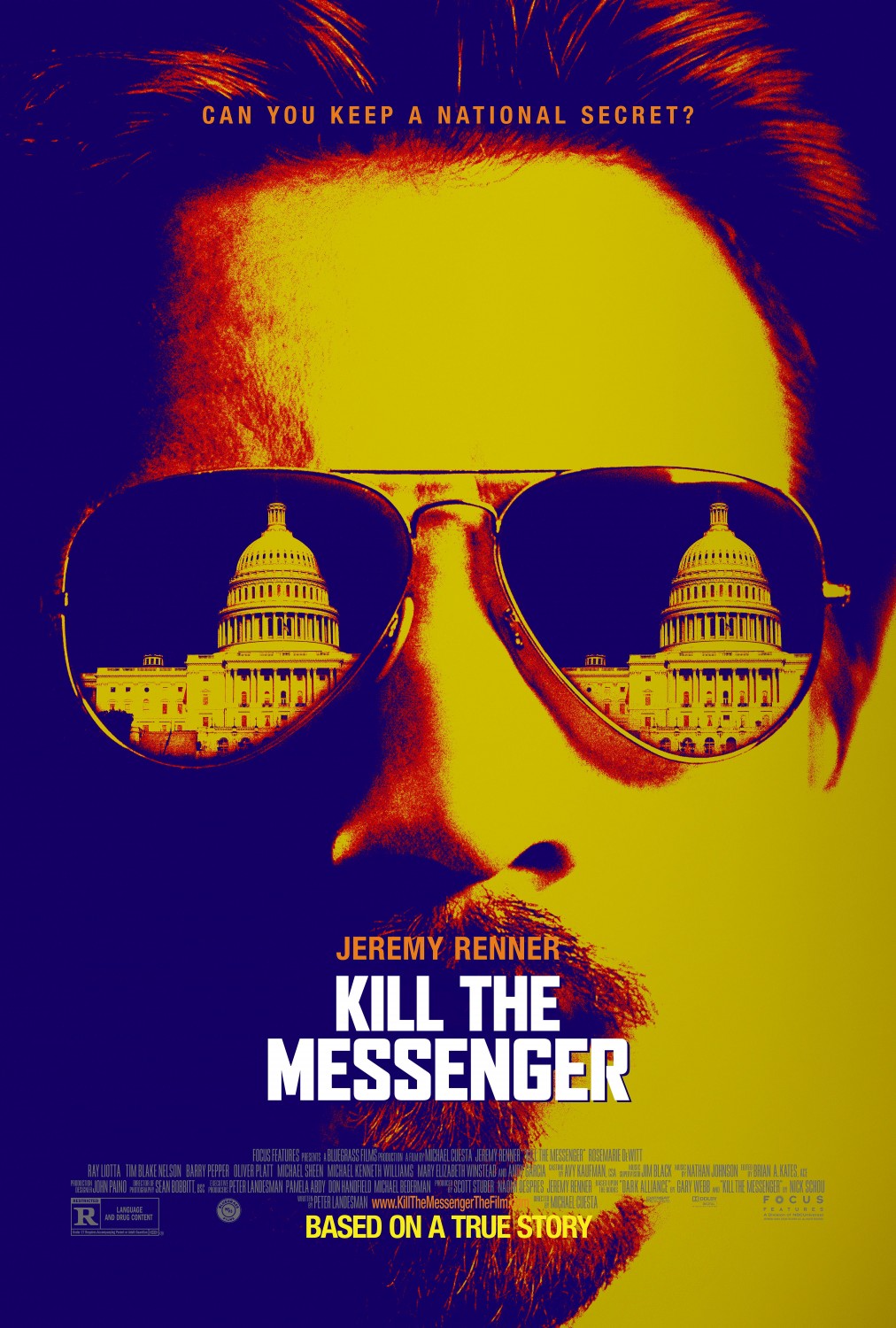
‘Kill the Messenger’ Pays Tribute to a Martyr for the Truth

Kill the Messenger movie poster

“The widespread use of drugs is a symptom of a sick society. The war on drugs is bullshit. Especially since the CIA is one of the biggest dealers around.”

-David Byrne in 1992

I don’t think it’s any secret our government, let alone any government in the world, was at one time or another complicit in drug dealing. It’s not like we don’t treat as if it’s no big thing, it’s just that we have gotten so used to it to where many don’t bother to acknowledge or do anything about it. But one man, Gary Webb, did not hesitate to expose the CIA for its involvement in drug smuggling back in the 1980’s, and he ended up paying the ultimate price for telling the truth.

Kill the Messenger” is one of many movies which is “based on a true story” or “inspired by actual events,” but it deals with a story which needs to be told. Gary Webb was a reporter for the San Jose Mercury News, a newspaper not known for doing international stories until he came along. We watch as he stumbles across a story dealing with the shady origins of the crack epidemic which spread throughout the nation’s inner cities, particularly in South Central Los Angeles. His investigation into the matter led him to discover how, in order to raise money for the fight against the Nicaraguan Sandinista Government, the CIA supported the cocaine smuggling of top members of Nicaraguan Contra Rebel organizations. When Webb published his articles on this story, which later became the basis for his book “Dark Alliance,” he won a lot of praise for his work, but then the roof caved in.

It’s no surprise the CIA came down hard on Webb as they began to conduct a vicious smear campaign on him which included veiled threats against his life. But what really stunned me was how rival newspapers went after him with a vengeance as he broke the story before they ever had a chance to investigate it. The Washington Post in particular hated how Webb broke the story as they were known for being first to report stories on the United States government, and their attacks on his credibility became more about protecting their own integrity as opposed to pursuing the truth. Taking this into account, it gives the audience an idea of just how cutthroat the newspaper business can be. As for myself, it makes me wonder if there is any business on this planet which is not cutthroat.

Playing Webb in “Kill the Messenger” is Jeremy Renner, and his performance here ranks among his best. He doesn’t try to make Webb a heroic character but instead a regular, ordinary man who does the job he is hired to do, and he does it really well. Renner makes us revel in Webb’s victories and feel for him when the whole world, even his own newspaper, suddenly turns against him. Not once does the actor overplay his role, and that he is able to keep Webb so grounded here is one of the things which makes “Kill the Messenger” work as well as it does.

Rosemarie DeWitt also shines as Webb’s wife, Susan. This could have been a throwaway role with DeWitt being left with little to do other than beg her husband to stop pursuing this story, but the actress makes Susan into the conscience Gary desperately needs through the toughest of times. Like Renner, DeWitt keeps the character grounded in a reality we can all relate to as she tries to make sense of a situation spiraling out of her husband’s control.

Directing “Kill the Messenger” is Michael Cuesta who also directed the powerful “L.I.E.” which the MPAA just had to give an NC-17 rating to for the most inexplicable of reasons. Could he have gone deeper with the subject matter that inspired this movie? Perhaps, but he makes a very good case for why we should be infuriated over why people were more interested in burying Gary Webb than they were in confronting how our government knew about and participated in the drug dealing being conducted on American soil.

Is this movie historically accurate to what actually happened in real life? I don’t know and I don’t care. Most movies based on true stories take liberties with the truth for dramatic purposes, and I doubt “Kill the Messenger” is an exception to that. What matters to me is this movie tells a compelling story which keeps you involved from start to finish, and Cuesta has given us just that. For those interested in getting to the absolute truth, try reading Webb’s “Dark Alliance” and Nick Schou’s book of the same name. This movie was based on both of those books.

“Kill the Messenger” joins the company of movies like “The Insider” and “Good Night and Good Luck” which are about people who decide to tell the truth and get punished for it in varying degrees. These days it seems like there are larger numbers of people who are more interested in their own monetary gain than they are in exposing wrongdoings. Webb’s story is one which deserves to be told as it is about a man whose job was to get to the truth of things, and the fact he was dragged through the coals because of that is one of the many unnecessary reminders of how unfair life can be. But in the end, he was vindicated, and this movie stands as a strong tribute to what he accomplished.

* * * ½ out of * * * *

Check out the video below where I interviewed Jeremy Renner and Rosemarie DeWitt.

Exclusive Interview with Ira Sachs about ‘Love is Strange’

Ira Sachs photo

Ira Sachs’ previous films have dealt with the dangers of being in love and how it can feel like an illusion, but his latest film “Love is Strange” has him dealing with love in a more positive fashion. It focuses on a gay couple, George and Ben (played by Alfred Molina and John Lithgow), who have been together for over 30 years. When gay marriage is made legal in New York, they finally get married and are super excited about starting a new chapter in their lives together. But things quickly change for them quite drastically when the Catholic school where George teaches decides to terminate his employment upon discovering he married Ben, and this forces them to spend time apart for the first time in years as they search for cheaper housing.

I very much enjoyed talking with Sachs over the phone while he was doing press for “Love is Strange.” The movie not only chronicles the challenges these newlyweds face, but of the impact that their situation has on the family and friends closest to them. During our interview, I asked Sachs how he goes about keeping his characters in the movie down to earth, why he decided not to get political considering the issues involved, and why he decided this time to make a different movie about love than he had previously.

Love is Strange movie poster

Ben Kenber: This movie has such a wonderfully organic feel to it. How do you go about keeping the characters in the story feeling so down to earth?

Ira Sachs: That’s a nice question. I try to be as open as possible to my collaborators and to the city and to the situations that are in front of me. I think of directing as not so different to acting in a way in that my job is to listen and respond organically and authentically, and you have to do that 1000 times a day when you make a film. But if you situate yourself in a place which is most open and attentive, you have to be very observant as well. I think it creates something that has the organic feeling you’re describing.

BK: John Lithgow and Alfred Molina are both brilliant in this film, and they have been friends for a long time. The rapport they have together onscreen feels just wonderfully natural. Did you have to do a lot of directing with them, or did you just let them loose?

IS: We made a pact, the three of us, that we were going to create a certain kind of texture for their relationship that was going to be different than what either actor had been asked to do in a long time. There was a level of realism and naturalism and simplicity that the roles called for. These are really modest man, Ben and George, but they maintain a confidence as individuals that I felt was very much what I witnessed in John and Alfred, and I wanted the film to share that confidence. So we had this kind of agreement that everything would be kept to a very delicate tone, and both actors are known for their larger qualities in terms of performance. What I wanted to do was rein that in, and I think that allowed for some new things to appear.

BK: What I really admired about “Love is Strange” is it could have been a polemic about intolerance and that, even with gay marriage now a reality in many states like New York, we still have a way to go for achieving equality in life. But this movie is more humane and very objective in how it views the different forces which threaten to tear these two characters apart.

IS: My interest as a director is to depict the intricacies of relationships and of intimacy, and that includes romantic relationships as well as family and community. In this case it also includes the city of New York. I set out to make a romantic film about New York. I’m also as a director at bit of a historian meaning that my job is to be accurate about the time that I live as well as my characters, so the kind of pulled from the headlines quality just gives the film shape in a certain way. I like to think of myself as a neo realist, someone who is interested in making the ordinary of everyday lives extraordinary. For me that should in addition also include some amount of documentation of the details of these characters’ lives in a way that’s very specific.

BK: One performance in particular I really wanted to point out was Charlie Tahan’s who plays the temperamental teenager Joey. It’s always great when you get an exceptional performance from a child actor because they are not always easy to get, and the character has a nice arc throughout the movie. What was it like working with Charlie?

IS: Well, to me he is the revelation of the film because we don’t know him, and what we’re actually discovering is the birth of a great, great actor. I felt like there was conversation when we were shooting the film about Leonardo DiCaprio in (“What’s Eating) Gilbert Grape;” it’s that kind of performance. It’s so open and so honest and so raw and so easy. There’s just this ease and I think that was something that impressed all of us, more experienced filmmakers and actors on set, about Charlie was how naturally it came. He is an experienced child actor. He’d been in “Charlie St. Cloud” with Zac Efron. He was the voice of the kid in “Frankenweenie” so he worked with Tim Burton. He wasn’t plucked from nowhere, but he came in and gave an audition that was breathtaking.

BK: Charlie said you really knew how to write for kids and that you really understood them and what they went through. Did Charlie stay close to the script and was there anything specifically that he added to it during shooting?

IS: Well the script is a blueprint for the emotions you hope to reveal, so actors add everything. I’m quite specific about the script and it is a very written film and it’s constructed through the screenplay, and yet I search for a kind of emotional improvisation on set that has to be very, very fresh and real. So I don’t rehearse my actors before we start shooting. We talk, we spend some time with each other, but I’ve never heard the line said nor have the other actors. What it gives the movie is a kind of freshness. I think two words that should be banned from the set are “subtext” and “motivation” because when you’re speaking to those things, you’re trying to pin down the impossibly ineffable of any one moment.

BK: Another performance I really loved in this movie was Marisa Tomei’s. Not only does she bring a naturalness to her role, but she’s also able to communicate so much without saying a word. What was it like watching her pull that off?

IS: She’s like this quiet storm because she’s so focused as an actress. There’s a scene where she has no dialogue and she’s in bed with her husband and she’s got a lot on her mind, and as a director you just watch and you think, “She’s writing paragraphs for me.” She thinks so much while doing so little. I think what was exciting about this role for Marisa, and I think what makes people connect to it, is that she was allowed to play a woman of her experience and her intelligence, and she wasn’t asked to do anything other. In this case, Marisa is the fulcrum of the story; she’s the generation in the middle. The film is really about these multiple generations: the older couple, Marisa and her husband (played by) Darren Burrows who were very much in the middle of their lives, and Charlie Tahan who’s playing in adolescent learning about love for the first time. But it all kind of centers on Marisa and she is in a way a stand-in for me, the artist who is watching these things and trying to figure out how to act.

BK: Your previous films “Delta” and “Keep the Lights On” tend to deal with love as an impossibility or an illusion among other things, but “Love is Strange” sees it in a much different light. What made you decide to do a story on love in this particular way?

IS: I think I’ve changed a lot in the last 10 years. My previous films were all about characters trying to understand themselves, and they were films of self-discovery. I think it was very much what I personally was involved in, trying to understand who I am and become comfortable with who I am, and that took a long time. In my 40’s things have been different and I feel much more at ease, and I think that has created the possibility of new kinds of relationships. I’m married and my husband and I are raising children, but it’s not just the kind of signifiers that imply change. It’s something much more internal, and I think the film is about the internal qualities of love which are so distinct for each of us.

BK: Since this is a low budget independent movie, I imagine you had very little time in which to shoot it in. How did this affect you overall as a filmmaker?

IS: I’m a producer on all my films as well as the writer and director, and I always create the situation where I have the economic means to create the aesthetic objects that I need so my sets are very calm. I’ve made films that cost $200,000 and I’ve made ones that cost multi-million dollars, and the experience is not too different. If you’re doing your job right as a filmmaker, you have what you need.

BK: Regarding Alfred Molina’s character of George, it’s interesting because the Catholic school he teaches at doesn’t seem to mind his relationship with Ben much until the two of them get married. Later on in the movie, George has a great line where he says, “Life has its obstacles, but I’ve learned early on that they will always be lessened if faced with honesty.” What inspired that line?

IS: I think it speaks to the heart of the film. The film is in some ways about education with a small e. What do we teach each other? What is our responsibility? How as a culture do we carry on our values? What do we share in relationships and as parts of family? Also, the film speaks to how loss impacts individuals not just in terms of rights but in terms of experience. You can imagine George as a teacher being somewhat, to me, like what Alfred Molina is as a person which is you want to be your best self around him, and those are the kinds of people that I have known whether it be my parents or… I was very close to a sculptor who was 99 when he died, and at 98 he began his last work which was of a teenager with his backpack, and to me the idea that he was reaching for creative opportunities at that age was something I could learn a lot from. I feel that the film talks about those kinds of educations, and I think that when you’re young you don’t realize that your parents are people and that your grandparents are also. I think this film is about perspective and how we begin to recognize that people in our family are actually human beings with their own stories.

I want to thank Ira Sachs for taking the time to talk with me. “Love is Strange” is now available to own and rent on DVD, Blu-ray, and Digital.

Photo courtesy of the New York Times. Poster courtesy of Sony Pictures Classics.

Exclusive Interview with Alfred Molina about ‘Love is Strange’

Alfred Molina Love is Strange

He has played a variety of characters in movies like “Raiders of the Lost Ark,” “Prick Up Your Ears,” “Boogie Nights,” “Spider-Man 2” and “Not Without My Daughter” to where it seems like he can play anybody (and he probably can). Now Alfred Molina takes on a more intimate role in Ira Sachs’ “Love Is Strange” where he plays George, a Catholic school music teacher who, as the movie starts, marries his lover of 39 years, Ben (played by John Lithgow). They have a joyous ceremony, but once word reaches the school of George’s wedding, they subsequently fire him. This leads to a great deal of upheaval in the newlyweds’ life as they are forced to sell their apartment and spend time apart for the first time in years as they search for more affordable housing. The situation weighs very heavily on George to where he feels like he’s failing Ben and everyone around him.

It was a great pleasure to speak with Molina while he was doing press for “Love Is Strange.” It turns out that he and Lithgow have been friends for many years, so the fact that they have great chemistry onscreen should be no surprise. In addition, I also asked Molina about how sees the world of independent filmmaking today, why Stanley Kubrick’s “Spartacus” inspired him to become an actor, and of what it was like to shoot this film without any rehearsals.

Love is Strange movie poster

Ben Kenber: Since you and John Lithgow have been friends for a long time, did the chemistry you two developed onscreen come easy to you?

Alfred Molina: Yes, it did. I think the advantage of being friends with John, having had a relationship as friends, helps us both in a way. For me, it just meant there was shorthand already in place. There was an ease and a rapport and a relaxation between us that was very easy and also very conducive and helpful for the roles we were playing. I think we would’ve still enjoyed the fact that we are friends if we had been playing adversaries in a movie or a good guy, bad guy. But the fact that we were playing a couple in a long-term relationship, I think our history as friends only helped and sort of aided that.

BK: What I really liked about this movie is that what the characters go through is quite ordinary, but it takes on a different feeling here. We don’t see enough movies these days about regular ordinary people, and the problems the characters go through here feel quite epic.

AM: Yeah. People lose their jobs, people lose their homes and it’s always bad news. But it happens very often for the most trivial of reasons, and I think the fact that Ira Sachs and (co-writer) Mauricio Zacharias created a couple who, by their very ordinariness, when this crisis happens to them, it takes on epic proportions. And like most crises that happen to ordinary people it becomes huge because normally in our own lives we don’t have the power or the means to overcome them quite so easily. It takes time and I think the fact that George and Ben are, for all intents and purposes, a very ordinary and a very anonymous couple adds to the strength of this story.

BK: I also wanted to congratulate you on receiving the Spotlight Award from the Creative Coalition at Sundance for your work in independent films. How do you think the world of independent films is faring today? Has it gotten easier to make them or harder?

AM: Well, I think it all depends on one’s perspective. Independent moviemaking is always a challenge. I think whenever you’re working on projects that don’t have immediate commercial appeal and you’re working outside of the studios, especially on low budget films where you’re really scrambling to raise $2 or $3 million to make a movie or however much it is, you’re working under all kinds of restrictions and challenges and the biggest one of course being time. You don’t have time. You very often don’t have time to absorb any mistakes or any accidents or anything that happens that kind of works against your schedule, so it’s always a challenge. But I think the fact that there are so many independent movies finding an eager audience means that there’s something being done right and well. There is an audience out there for good stories. There’s an audience out there for well-made, well-crafted, sincere movies about real people in real situations, and I think the reason why there’s an audience is because of the way cable TV, for instance, has welcomed movies. So many directors and writers and actors are now working on cable shows because that’s where some of the best movies are being made where young directors are getting the chance to make their films and tell their stories. The relationship between the product and the audience has changed a lot. There was a time when you were working on television that you were very much the guest in someone’s house. But now cable has changed all that because you’re paying for it. Also, our TVs have gotten bigger so it’s like watching a movie, and if you’ve got a 50-inch screen in your front room, the ratio is pretty typical of a small movie house. You can be watching movies at home and I think that changes the dynamic between the product and the audience, and there’s an audience out there for small films. The independent industry lurches from one crisis to another, and in those ups and downs there’s some great movies being made.

BK: I’ve talked with a lot of indie filmmakers recently and they usually get a shooting schedule that’s 30 days if they’re lucky, but those schedules keep getting shorter as time goes on.

AM: That’s right, yeah, because making movies gets more and more expensive. But there will always be an independent director, writer, actors who want to continue to work in that milieu because ultimately that’s where the most interesting stuff is happening. I can only speak for myself, but I think that’s where the best films are being made.

BK: Your character of George has a great line in this film where he says, “Life has its obstacles, but I’ve learned early on that they will always be lessened if faced with honesty.” I think it’s very interesting in that George teaches at a Catholic school and has for many years, but the school doesn’t always respect the individual that he is.

AM: Absolutely, and I think that’s a great shame for anyone who’s in the same position as George; losing your job or losing your home or being chastised by society in some way because of who you choose to love and who you choose to spend your life with. As a heterosexual that’s something I’ve taken completely for granted. I can take it for granted that I can love whoever the hell I want and no one can stop me, but my gay friends have only recently begun to enjoy that right. So I think that’s why lines like that in the movie are terribly important and very, very resonant not just for gay men and women but for everybody. I was talking today with John (Lithgow) about how… He’s only been to a few gay weddings in recent years, but we both found them incredibly moving. Weddings are moving anyway. Anybody who confidently stands up and says I want to spend the rest of my life with this other person is making a very dramatic and a very moving and emotional statement, but when it’s two gay people you know that it’s not just full of the romantic and emotional power of the moment. It’s full of years, sometimes decades, of struggle to reach that point, so it has even more significance.

BK: That’s a very good point. In recent years, we’ve had movies like this and “The Kids Are All Right” which are about gay couples, but the fact the couples are gay becomes irrelevant because they deal with the truth of what married life is like and the struggles which come with it.

AM: You ask anyone who’s active in any kind of human rights or equal rights campaign and I’m sure they would say that their ultimate goal is to no longer have to have conversations like this where one sexuality is no longer relevant. Whenever I come across any kind of vaguely homophobic sentiments I’ve gotten to ask people, “When did you first realize that you were straight?” It’s amazing the reaction that gets because they don’t know how to answer, and the truth is that no one should have to put up with being asked that.

BK: I once read that you said you have to believe in what you’re saying in the same way your character does. Whether it’s Mother Teresa or Adolf Hitler you’re playing, you have to portray them honestly and accurately regardless of whether they were good or bad. A lot of actors like to change material to where it suits them better, but I liked what you said because it goes the fact that the part is not about you, it’s about the character you’re playing.

AM: I’ve always regarded my job as being about serving the character regardless of who the character is. At a certain point taking on a job and then once you signed the contract and taken the money then saying “oh by the way I don’t think my character would say this” or “I don’t think my character would be like this,” that’s a conversation that one should have before you sign the contract and take the money. Once you have committed to something, you should be committing to the same things that everyone’s agreed on. Just as an act of creativity, you’ve got to give the same amount of dedication to whether you’re playing Adolf Hitler or Mother Teresa.

BK: I also read you were inspired to become an actor after watching the movie “Spartacus.” What was it specifically about the movie which inspired you so much?

AM: You know, I don’t know myself. It was so long ago and I must’ve been about nine years old when the film came out. I just remember coming out of that film just knowing that’s what I wanted to do. I don’t mean I wanted to be a gladiator, but I just wanted to be doing that; making films, being in films. I’m not quite sure what it was that prompted that, but it was a very powerful feeling.

BK: There were no rehearsals of scenes when it came to filming “Love is Strange.” How did this affect you as an actor?

AM: Well it was an interesting process really because normally you have rehearsals and work things out. I would hate for you to think that it was due to a lack of preparation; it wasn’t that. Ira Sachs, our director, came to the project impeccably prepared. What he didn’t do though was that he didn’t have us rehearse the scene and then play into the camera what we had rehearsed. He just wanted us to go into the take with the camera running and to just discover it in the moment. That was a very refreshing way to work, I loved it. I’m looking forward to doing it again. It’s very rare that directors give you that kind of freedom and also, given the fact that we were under the severe constraints in terms of time and money, it worked out well.

BK: “Love is Strange” seems to give the audience a very unique look at New York whereas other movies tend to portray it as a crime ridden place among others things. Would you say this movie gives a more accurate view of New York than other recent films have?

AM: Well, I think it’s as accurate a view of New York as any other movie. I don’t think the view of the city that the movie has is a negative one by any means. The city looks beautiful in this movie especially in that last sequence with that sunset and the two young characters on their skateboards. It’s a beautiful, beautiful ending to the film. Because it’s the most photogenic city in the world, any film that takes place in New York has to deal with New York as a character in the film. There’s nothing nondescript about New York. It’s a unique looking place. No other city in the world looks quite like it, so I think it’s something any filmmaker has to embrace.

BK: The interesting thing about the way Ira Sachs frames this movie is that it could’ve taken a huge political stance but he doesn’t which feels quite appropriate. He’s not taking issue with anybody, but he’s takes good observations of the Catholic doctrine and how it affects certain people.

AM: Yeah, absolutely. It’s not a political film; it’s not a diatribe on the state of gay culture or the Catholic Church. It’s a domestic story. It’s a love story set against some real events that happened to real people, and I think it makes some very wry observations about the city and about New York real estate and about the conditions a lot of people live under. It’s not a message movie. What drives the movie is a kind of deep humanity.

I want to thank Alfred Molina for taking the time to talk with me. “Love is Strange” is available to own and rent on DVD, Blu-ray, and Digital.


‘Big Eyes’ Marks a Return to Form for Tim Burton

Big Eyes movie poster

Tim Burton’s unique talents as a filmmaker have floundered in recent years with his abysmal remakes of “Planet of the Apes” and “Alice in Wonderland” which was lacking in wonder. But with “Big Eyes,” he gives us his best and most human movie in a long time as he examines the life of American artist Margaret Keane whose paintings of children with oversized, doe-like eyes became very popular in the 1950’s. It reunites Burton with his “Ed Wood” screenwriters Scott Alexander and Larry Karaszewski who have provided us with some of the most unique biopics in recent memory like “The People vs. Larry Flynt” and “Man on The Moon.” Yes, it is based on a true story, but for once it helps to know this as the movie is a tale which proves there are things much stranger than fiction.

“Big Eyes” starts with a narrator saying the 1950’s was a good time if you were a man. This certainly seems to be the case with Margaret Keane (Amy Adams) as she is in the process of leaving her husband and drive herself and her daughter Jane out to San Francisco to start all over again. This decade had women relegated to the role of housewife, and they could do very little else as feminism had yet to become a movement. Margaret has trouble finding work until she gets a job at a furniture company painting baby cribs. At the same time, she is quite the painter who paints pictures of children, most of which resemble her daughter, that stand out because of the big eyes she gives her subjects.

While at an art sale, Margaret meets Walter (Christoph Waltz), a fellow painter who quickly becomes enamored of her and her paintings, and he quickly begins to encourage her not to sell herself short. They soon fall for one another and get married, and they become determined to sell their art to the masses. When their attempts to get their work hung up at art houses fails, Walter resorts to renting the walls at The Hungry I club owned by Enrico Banducci (Jon Polito). It is there the paintings begin to gain notice, but patrons are far more interested in Margaret’s work than they are in Walter’s. In the process, Walter starts to take credit for his wife’s paintings, and this is where things take a rather interesting turn.

Margaret is repulsed at first by the idea of Walter taking credit for her work, but she finds herself giving in to him as he promises to give her everything she ever wanted in life like a big house to live in. But as the popularity of the paintings grows, a rift forms between them as Margaret ends up residing in the background while Walter takes center stage at various talk shows and public engagements. Soon, Margaret goes from being timid to becoming a very determined person as she aims to reclaim the art she created.

What happened between Margaret and Walter Keane became the story of one of the most epic art frauds in history, and I have to admit I was not aware of this piece of history before I saw “Big Eyes.” If this story were presented to me as fiction, I’m fairly certain I would not have bought it as this story would have been far too bizarre to be the least bit believable. But these events did happen, and Burton’s strong affection for Margaret’s work is definitely on display here.

I’m so glad Alexander and Karaszewski are still getting away with making these renegade biopics about individuals who might otherwise not get cinematic treatment. The fact they brought this particular story to the big screen is extraordinary as it involves an act of plagiarism which didn’t take place in Hollywood. It sounds like a typical good guy/bad guy story, but the way the story develops shows this to not be the case.

Adams is her usually remarkable self as she takes Margaret Keane from the depths of isolation and bitterness to the heights of confidence and self-assertion. She also presents Margaret to us with flaws and all to where we respect her deeply even if some say she put herself in the position of having her work stolen. The 1950’s may have not been the best time for women, but the victory Margaret achieved opened doors for them to where they would never ever be held back by the role society expected them to play.

Waltz won his two Oscars for good reasons as he portrayed his characters in Quentin Tarantino’s “Inglourious Basterds” and “Django Unchained” with such relish. His performance in “Big Eyes” proves to be equally wonderful as he makes Walter into such a charismatic figure to where it’s no wonder Margaret falls under his spell. While his character is essentially the bad guy of this piece, Waltz does give Walter some empathy as his actions result from a rather unconscious need for approval in a world which has deemed him a fair artist at best. While we can’t condone his actions, we can certainly understand where his motivations come from.

For Burton, “Big Eyes” is a return to the low budget roots he started out in. While it may not feel like the typical Burton movie along the lines of “Beetlejuice,” “Edward Scissorhands” or even “Batman,” it’s certainly his most heartfelt movie in a long time. He recreates the San Francisco many of us know from the 1950’s and 1960’s, and he shows us how Walter succeeded in commercializing art to where it became available at all the local supermarkets. But at the heart of it all, “Big Eyes” fits in with the kind of stories Burton loves to tell; of outsiders who are seen as far too different to succeed in popular culture.

“Big Eyes” falters a little towards the end as Walter starts to come across as less complex and more of a one-dimensional bad guy the audience understandably wants to see go down. Part of me wanted to see Burton delve a little deeper into his psychology as making him the typical bad guy in this movie seemed much too easy. Still, it makes for a very entertaining courtroom scene where both he and Margaret fight for the right to Margaret’s work like never before.

It’s heartening to see Burton give us such a heartfelt motion picture like “Big Eyes” as his last few movies kept taking away from his distinct talent as a director. Even with a lower budget than what he is used to working with, he still gives us a wondrous if roughened up look at an artist caught up in a real-life situation which threatens to rob her of the work she created. Here’s hoping we see more movies like this from Burton in the near future.

* * * ½ out of * * * *