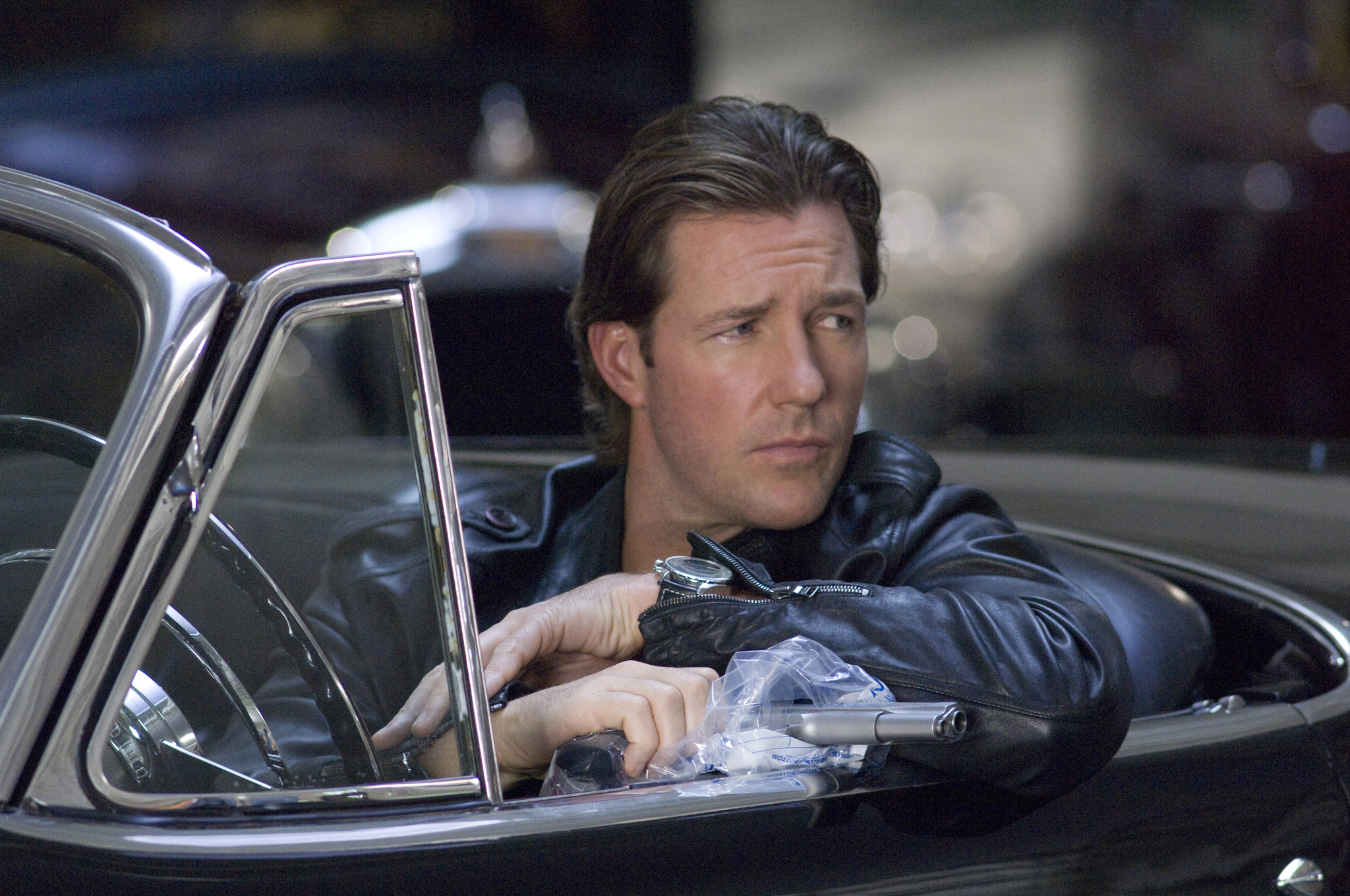
Actor and filmmaker Edward Burns comes from a family of cops, and he always relishes the opportunity to play one in a movie. In “Alex Cross,” he got to portray Detective Tommy Kane who is partner and childhood friend to Dr. Cross (played here by Tyler Perry), and the boyfriend of Detective Monica Ashe (Rachel Nichols). While at the movie’s press conference which took place at the Four Seasons Hotel in Beverly Hills back in 2012, he talked about what drew him to the role.
Burns said he was aware of James Patterson’s Alex Cross books and that he had read a few of them. The character he plays, however, is not actually in any of Patterson’s books and was an original creation for this movie. He ended up getting a call from the movie’s director, Rob Cohen, who was determined to make this particular Cross film more of an action picture than a police procedural.
Edward Burns: Rob told me that he wanted to develop this new character opposite Alex that’s sort of a best friend. He said we’ll be working on this script up until we shoot and that he’d love to have some input from me. Anytime a filmmaker says they want you to collaborate with them that gets an actor excited, so I jumped in.
When it came to establishing the relationship between Tommy and Alex, Burns said there are two scenes in the movie that give viewers insight as to when these two met and how their relationship has evolved over the years.
Edward Burns: The thinking was we became friends as kids, and when we were little, I was a little more of the protector of him. When we got older, bigger and smarter, he then became the guy that looked after me. That’s what the tone of the relationship is between these characters in the film, and in our last scene together in the car we reminisce about how our roles have changed over time.
For Burns the one fun thing about playing cops in movies is that there’s always that period of when you have to do tactical police training.
Edward Burns:We had a great time working with the guys from the Detroit SWAT team and police department, and that’s always a lot of fun. It’s amazing because you always have to keep relearning that stuff (sweeping a room and proper weapons procedure).
Some actors hate being typecast as cops, but Edward Burns appears to be happy to play as many of them as he can. We look forward to him playing as many more cops in the future, and we applaud him on his continued dedication to the realm of independent film.
“Alex Cross” is now available to own and rent on physical media and digital.
WRITER’S NOTE: This interview took place back in 2012 and may contain outdated information.
There are many who see support groups (or 12-step groups if you want to call them that). The truth, however, is that those who attend them are not any different from the rest of us, and they can at times be very funny. At the very least, these people deserve credit and applause for taking the time to get the help they need because asking for help is usually one of the hardest things to do.
“Thanks for Sharing” is one of the few movies I have seen which deals with these groups and the people who attend them. While it does take the subject of addiction seriously, it also finds a good balance between drama and comedy to where we find ourselves laughing with these characters and never at them.
This movie focuses on three men who attend the same Sex Addicts Anonymous meeting: Adam (Mark Ruffalo), Mike (Tim Robbins) and Neil (Josh Gad). Adam is an over-achieving environmental consultant who is celebrating his fifth year of sobriety. Mike is a happily married man who is kind of the elder statesman of the support group these men attend. And then there’s Neil, an emergency room doctor who is in serious denial over his addictions to where he gets in serious trouble with the law. I like how we are given characters who are at different stages of dealing with this addiction to where it gives you a good idea of why people come to these groups in the first place.
Adam is at a good place as he has really cleaned up his act and is coping with life really well. He takes great pains to keep himself on the right track by taking such measures as removing television sets from his hotel rooms so he won’t find himself watching anything pornographic. But then he meets the irresistibly beautiful Phoebe (Gwyneth Paltrow) while at a party where people are eating bugs (don’t ask), and the two are instantly attracted to one another. While Adam is eager to be in a relationship with her, he is not altogether sure he is ready to fall in love again after all he has accomplished. He is trying to keep his demons at bay, but it becomes much harder for him to do so.
Mike has been in recovery the longest, and he appears to have a great relationship with his wife, Katie (Joely Richardson). Things between them, however, change very quickly when his son Danny (Patrick Fugit) turns out to have some serious addiction problems of his own. Katie is thrilled to see Danny, but Mike is not sure he can trust him after all they have been through. In the process, we come to see that Mike, despite his well-earned sobriety, still has some major control issues he has yet to make peace with.
As for Neil, he has gotten himself into a painful situation when he stands uncomfortably close to a very attractive woman while riding on the subway. From there, things come to a head for him when he loses his job under embarrassing circumstances, and this finally makes him realize he needs help. Neil eventually finds solace through another recovering addict, Dede (Alecia Moore, better known as Pink), who is just starting to deal with her personal demons as well.
I am always yearning for movies which have down to earth characters, and “Thanks for Sharing” is definitely one of them. All of what everyone goes through feels very real, and nothing ever felt contrived to me. Granted, the storyline involving Robbins’ character is one we have seen many times before, but the acting between him, Fugit and Richardson are so good to where we can forgive the filmmakers for venturing into familiar territory. It really is a shame how most Hollywood movies do not dare give us more characters we can relate to on a human level. If they did, it would make most movies far more enjoyable and invigorating as a result.
“Thanks for Sharing” was directed and co-written by Stuart Blumberg, one of the writers of “The Kids Are All Right.” Finding a balance between comedy and drama can be very hard to pull off, but Blumberg is successful in doing so for the most part. He also shows a lot of love for each character here, and not just the ones who in recovery.
Mark Ruffalo remains one of the best and most naturalistic actors working today. As Adam, I never caught him acting once, and his chemistry with Paltrow is very strong. Ruffalo makes Adam a very likable guy as he struggles to not fall back into his old habits, and he makes you see how much of a challenge this is for him.
As for Paltrow, this is the most relaxed she has been onscreen in some time. While she was a blast to watch in “Iron Man 3,” she seems more in her element here as she portrays a character who is not an addict, but one who needs to face up to the issues slowly eating away at her. Watching her in “Thanks for Sharing” reminded me of just how wonderful she can be when she is given the right role.
Robbins remains as terrific an actor as ever, and I am always enthralled when I watch him in anything he does. His character of Mike seems like the typical father who has lost trust with those he should be the closest to, but he imbues this character with a lot of humanity to where he never seems like a simple caricature. His scenes with Fugit, who we have not seen enough of since “Almost Famous,” feel emotionally true, and their relationship feels authentic when it could have come across as ridiculously manipulative.
At this point, I am not familiar with Gad’s work other than him appearing in the acclaimed musical “The Book of Mormon.” Gad has the trickiest role here as he is this movie’s comic relief, but he never plays Neil for simple laughs. We are watching Neil as he is at the start of his recovery, and it isa rough start to say the least. Gad makes you root for Neil even as he does some of the dumbest and most reckless things anyone would ever have the nerve to do.
But there is no forgetting Alecia Moore, a.k.a. Pink, who gives an impressive performance as an addict who was pushed into this particular support group by a friend. Her character of Dede ends up forming a strong rapport with Neil, and they find in each other the strength they need to move past what is destroying their lives to where they can see the light at the end of the tunnel. From start to finish, she really understands this character very well, and I could see it in her eyes. Like Ruffalo, you never catch her acting here as she grounds her character in a reality which is not all removed from our own.
I liked how “Thanks for Sharing” showed how these support groups can become another addiction as its members begin to spend more time with others instead of their own families. While these characters have made great strides in conquering their demons, they still struggle with their urges every single day. Truth be told, it takes a lot of courage to face up to the things which are tearing your life apart, and long before this movie is over, you realize these addicts are not weak but strong.
The one thing I would have liked to see more of is how the family members deal with their loved ones’ addictions. My understanding is that they can only be so involved in what an addict goes through as they can never fully comprehend how dangerous their addictions can be unless they have experienced the same thing themselves. There is a scene between Paltrow and Richardson which addresses this divide, but I would have liked to see this movie go a little bit deeper in this area.
But when all is said and done, “Thanks for Sharing” fulfilled my need to see a motion picture with characters which we can recognize in our own lives. With all these superhero movies coming at us endlessly, it is important to remember we will never be perfect and cannot be everybody’s everything. It would be nice to be a superhero though, wouldn’t it? Lord knows we could use a couple of them right now. Anyway, I think this movie is definitely worth checking out.
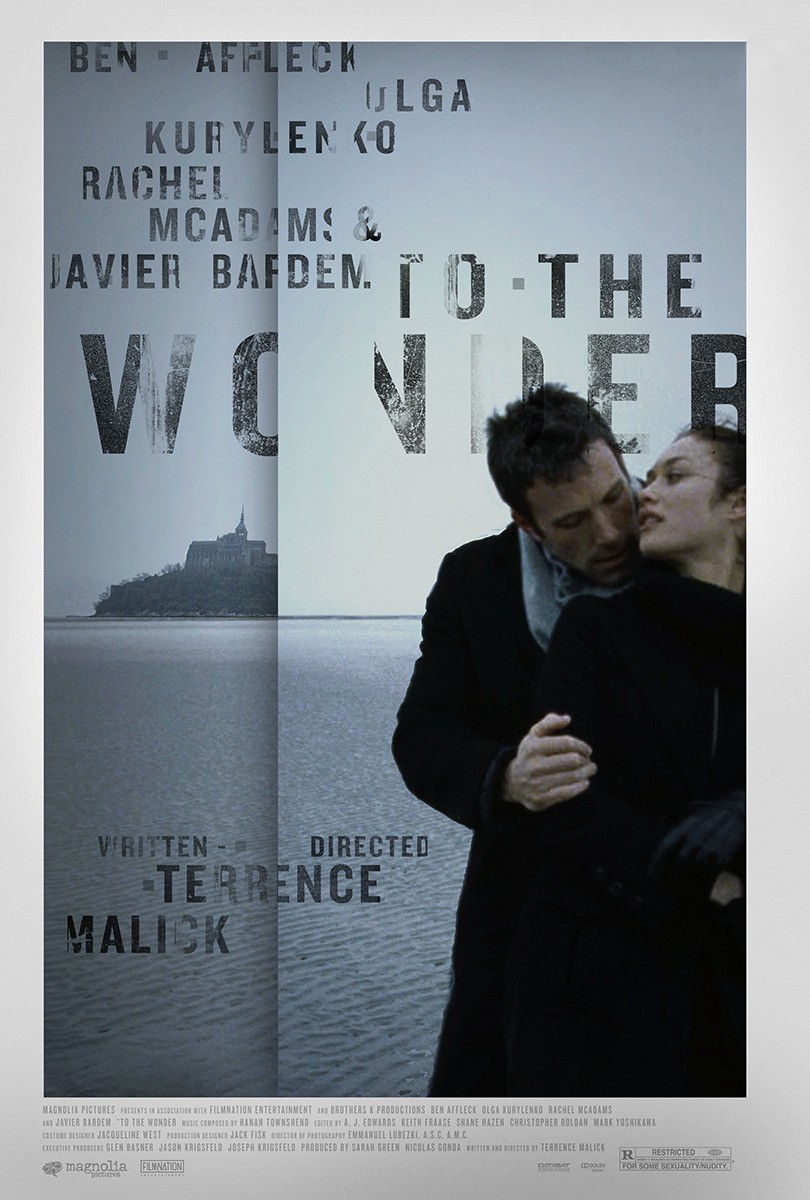
Terrence Malick’s “To the Wonder” is, in many ways, a mixed bag of a film. Not all of its parts go together in a way which feels entirely cohesive. It focuses on a couple played by Ben Affleck and Olga Kurylenko who fall in love and come to America to start a new life, but they eventually find themselves falling out of love, and they constantly struggle to understand how something so wonderful can go so awry. And then we have Father Quintana (Javier Bardem), a Catholic priest who is struggling to keep his faith even as he feels the presence of God eluding him at a time when he is desperate to believe in an afterlife. The balancing act between these characters is wobbly at best, but Malick still gives us many beautiful and wondrous images which are very powerful, and these images quickly remind me of how brilliant he is at capturing nature on film.
“To the Wonder” starts off in Europe where Marina (Kurylenko) finds herself completely enamored by her American boyfriend, Neil (Affleck), as they take a tour around town. Along with them is Marina’s daughter, Tatiana (Tatiana Chiline), who is thrilled when Neil asks her if she and her mom would like to move with him to the United States to live. After briefly viewing the European sights, the film then heads over to Neil’s home state of Oklahoma where the flatlands appear to stretch out as far as the eye can see. Heck, it almost looks like hardly anybody lives there, so it is a huge relief when we see t Neil and Marina actually have neighbors.
As with “The Tree of Life,” “To the Wonder” functions mostly as a silent film as the majority of the dialogue we hear is as a voiceover. Malick is far more interested in the inner thoughts of his characters than anything else as they struggle with the things they want and which are constantly outside of their grasp. We feel their passion for one another, and we also feel their pain and disappointment when their love eventually fades away.
Having read up on Malick as a filmmaker and as a person, it is clear to me how this film and “The Tree of Life” are his most autobiographical works overall. What the characters go through is not much different from what he has experienced in his own life, and with these films, it looks as though he is still trying to pick up the pieces of what went wrong.
Kurylenko first came to my attention in “Quantum of Solace,” and she has made the most of being a Bond woman as her performance here shows. It is thrilling to watch her dancing around the streets of Europe as well as in a corporate drug store which typically sucks the life out of everyone who shops at one. In many ways, Kurylenko is the best thing about this film as she takes us through Marina’s transcendent highs and her emotionally draining lows with complete conviction throughout.
Back in 20123, people had serious issues with Affleck as an actor, and this is even after his film “Argo” won the Academy Award for Best Picture. I myself have never had any issues with his acting abilities, and he gives a strong, understated performance as Neil, and it is never his fault we come to know less about this character than the others we are introduced to here. I really wish Malick had given Neil as much attention as he did to Marina as this would have made Neil’s journey in this story all the more illuminating. Nonetheless, Affleck is still very good in here.
Rachel McAdams is inescapably luminous as Jane; a childhood sweetheart of Neil’s who shows up after Marina has gone away. Malick makes Jane look beyond beautiful as he frames her against fields of wheat, and it is emotionally draining to watch Jane bear her soul to Neil and try to melt his heart in the process. McAdams ends up disappearing from “To the Wonder” a little bit too soon, but she is a vision to watch throughout.
Bardem’s character of Father Quintana at first feels a little out of place as much of the focus seems to be on the relationship between Marina and Neil, but his presence makes more sense as this film goes on. With this character, Malick seems to be saying how our loss of love for one another may have to do with our relationship to God, or lack thereof. Bardem does some of his subtlest work as he portrays a man struggling to hold onto whatever faith he has left, and it results in some of this film’s most emotionally draining scenes.
When we watch Quintana visit the sick, the elderly and the dying, I found myself being reduced to tears as these moments ring so emotionally true in a way I would rather not realize as death is becoming all too common for me to deal with. Plus, Malick just had to use Henryk Górecki’s third symphony entitled the “Symphony of Sorrowful Songs” which Peter Weir used to such great effect in “Fearless.” It remains a piece of music which is as beautiful as it is infinitely sad, and it always reduces me to a weeping wreck whenever I listen to it. I also have to admit I was very angry at Malick for using this piece of music here as it felt so unfair that he reduced me to a complete wreck in an inescapably manipulative way. Then again, I was in the midst of a very deep depression at the time, so that did not help matters.
But as mournful as “To the Wonder” is, there are still many beautiful moments to watch for as Malick remains a master of capturing the unpredictability of nature and animals on film. This includes moments like when Affleck and McAdams are suddenly surrounded by more buffalo than Kevin Costner dealt with in “Dances with Wolves,” the sunlight piercing through the colored glass in a church, or watching Kurylenko walking across the beach as the water covers the sand. These are moments which still will not fade away from my memory anytime soon. Working again with his “Tree of Life” cinematographer, Emmanuel Lubezki, Malick still captures moments of visual poetry in ways few other filmmakers can ever hope to equal.
It is those incredible visual moments which make me want to forgive how meandering “To the Wonder” is as it unfolds before us. I have learned Malick actually shot this movie without a screenplay, and this made me wonder how the actors dealt with this style of filmmaking. Considering that Jessica Chastain, Rachel Weisz, Amanda Peet, Barry Pepper and Michael Sheen all had roles in this film which were eventually removed from the final cut has me believing there was a whole lot more to this film than what ended up onscreen. While “The Tree of Life” had several different story lines going on, Malick was able to rein them all in to where everything seemed to fit perfectly. With “To the Wonder,” he has a little too much going on, and the film ends up losing focus more often than it does not.
Still, if you are willing to tolerate those flaws, “To the Wonder” is still a profound experience filled with great performances and beautiful images which will stay with you long after this film has concluded. I really wish the audience I saw it with all those years ago felt the same way I did. I bring this up as one audience member remarked at how the lives of these characters proved to be far more boring than anyone else’s. Well hell, some people enjoy the simple pleasures in life more than others, but many are still insistent about how theirs are better than the average human being, and that is even though there is plenty of evidence to prove otherwise.
Seriously, it seems very fitting that “To the Wonder” was the last film Roger Ebert reviewed and gave to the Chicago Sun Times before he passed away in April of 2013. Rest in peace, Roger.
What really happens to us when we die? It almost seems like a foolish question to ask because we will only get to find out when we depart this mortal coil, and we won’t be able to tell anyone what it’s like. The only thing people can seem to agree on is that they move towards a “bright light,” but this only tells us so much. Nevertheless, we still look for an answer to this question mainly because we hope it will confirm the things we are led to believe. At the same time, thinking about the future this deeply is not much different from being stuck in the past.
Movies like “Flatliners,” “The Sixth Sense” and even “Heaven Can Wait” have explored this subject in various ways, but David Spaltro’s “Things I Don’t Understand” is one of the more thoughtful I have seen on it in recent years. It’s not interested in coming up with some supernatural answer to this question, but instead in how our curiosity can somehow rob us of what meaning our lives have. Here we meet a variety of characters whose mind and thoughts are broken as their present lives seem unfulfilling because of physical and emotional scars, and their futures all seem relentlessly bleak as a result.
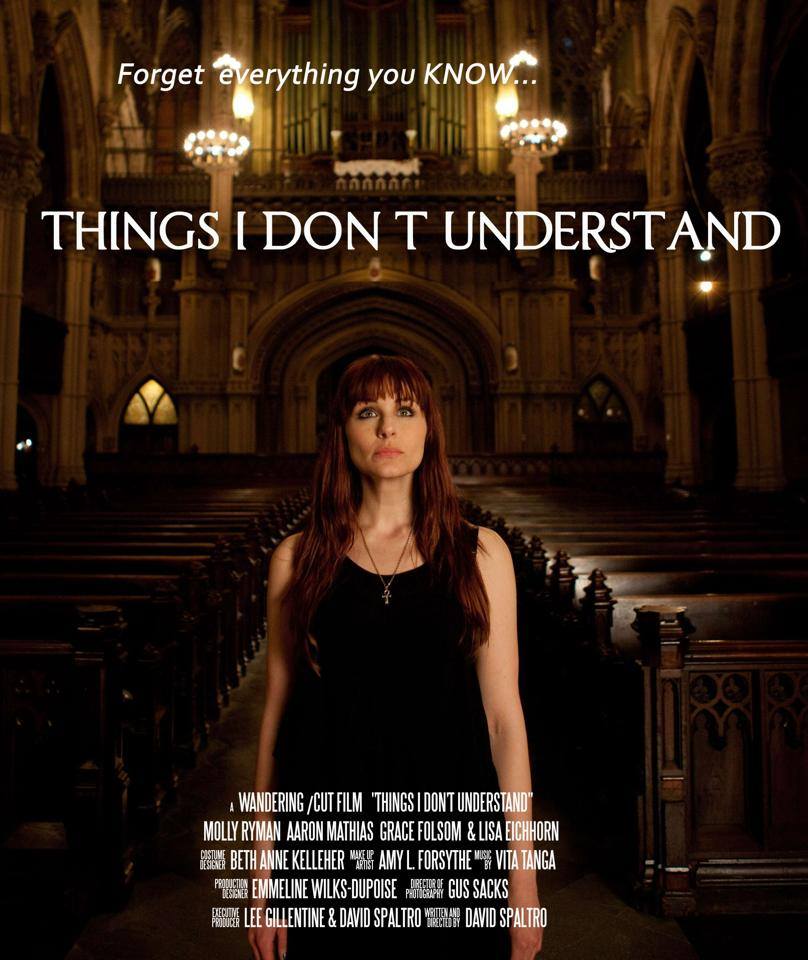
Molly Ryman stars as Violet Kubelick, a graduate student working on a thesis of what becomes of us after death. Over time, Violet has emotionally detached from the world and those around her after surviving a failed suicide attempt, and she has since developed a pessimistic attitude about life and what it has to offer. She lives to avoid every customer who enters the bookstore she works at and freely embraces a life of drugs, alcohol and promiscuous sex as though she is daring death to take her away from this ever so cruel world.
Things come to a head for Violet as she and her obsessively artistic roommates, bi-sexual musician Remy (Hugo Dillon) and hypersensitive artist Gabby (Melissa Hampton), face eviction from their home in Brooklyn and have to quickly come up with the money to save it. As this is happening, Violent comes to interview Sara (Grace Folsom), a girl with end stage cancer who approaches the end with a sardonic sense of humor, and she forms a friendship with lonely bartender Parker McNeil (Aaron Mathias) who is trapped by a tragic past that won’t leave him be. All these relationships bring about a much needed catharsis for everyone as they need to break free of what holds them back.
What I really liked about “Things I Don’t Understand” is how it doesn’t come to us with easy answers about the afterlife as it is far more interested in raising questions about life after death. To define what happens when you die in a movie is tricky because you threaten to lose half your audience with your own interpretation. Spaltro avoids this trap and examines how our questions about life after death come to define how we live life day by day. For these characters, it has seemingly robbed them of a positive outlook on life and has frozen their emotions at a moment in time to where they may never fully thaw.
The acting all around is very good, and Spaltro has given each actor a challenging role regardless of how big or small it is. Ryman has the tough job of portraying a character who is not altogether likable, and she simultaneously (and without words mind you) has to indicate the psychological trauma which has come to define her life. As Spaltro has us guessing as to what that is, Ryman gives us a deeply felt complex portrait of an individual we might easily, and thoughtlessly, dismiss as damaged goods, but who is fighting a battle within herself to find a reason to keep on living.
The best performance in “Things I Don’t Understand,” however, belongs to Grace Folsom as Sara. The role of a terminally ill person can be a thankless one as we have seen it so many times to where it often feels like a shamelessly manipulative device filmmakers use to lay waste to our emotions for no really good reason. But Folsom fully inhabits this character with a hard-won dignity and a biting sense of humor that keeps what is left of her spirits up. Everything Folsom does here feels genuine and real, and her emotions never ever appear faked in the slightest.
Aaron Mathias also has a tough role of someone whose happiness came to an abrupt stop years ago, and the shadow of his past hovers over everything he does. As Parker, he comes across as genuinely nice but still struggling with guilt he cannot put to rest. Mathias succeeds in capturing the complexities of his role in giving us a good-natured guy whose eyes betray a deep sadness which still overwhelms him. I could have done without his line of how being a bartender is like being a psychiatrist spiel, but that is only because I have heard it so many times before.
As for the supporting performances, they at first seem too broad for a movie like this, but in retrospect, they feel just about right. Hugo Dillon and Melissa Hampton play artists so dedicated to their art that they have foolishly denied other outlets which could very well add to it. Their characters strive not just for artistic truth but for acceptance from others, something they feel completely lacking in. In a world which can be so cold and unfeeling to their desires, they have forgotten to respect themselves. As much as Dillon and Hampton go over the top, they both inhabit their characters fully and are more than willing to experience their longings and horrific embarrassments (just wait until you see Gaby’s play) in order to reach a new level of understanding about themselves.
Other performances worth noting include Eleanor Wilson’s as Darla, the new to town actress who looks and sounds dumb, but who turns out to have a positive view of life by choice to where she cannot be mistaken as a victim of blissful ignorance. Lisa Eichhorn takes what could have been a throwaway roll as Violet’s psychiatrist, Anne Blankenship, and gives it a nice edge you don’t always see in characters like this one. And let’s not forget Mike Britt who gives great comic support as Parker’s good friend, Big Felix.
“Things I Don’t Understand” is one of those movies wandering around in the overcrowded world of independent cinema which I hope finds the audience it deserves. While it looks like yet another movie wondering about what happens when we die, it takes this question and uses it to define how we can live for today. The more I think about this film, the more it reminds me of the lyrics of one of my favorite Pearl Jam songs:
“You can spend your time alone, redigesting past regrets, or you can come to terms and realize you’re the only one who can’t forgive yourself. Makes much more sense to live in the present tense.”
WRITER’S NOTE: This article was originally written in 2012.
Don’t get me wrong, Richard Gere has played many likable characters in movies like “Pretty Woman” and “An Officer and a Gentleman,” but it’s when he plays despicable ones that he truly excels as an actor. The latest example of this is his brilliant performance as Robert Miller in “Arbitrage,” the movie which marks the directorial debut of writer Nicholas Jarecki. Robert is a hedge fund magnate who is desperately trying to cover up his instances of fraud, cheats on his wife, and willfully deceives his children. On paper this character is a jerk, but the beauty of Gere’s performance is how he keeps us rooting for him regardless of this fact.
So, how does Gere manage to make such an unlikable person so fascinating and relatable on screen? Audie Cornish of NPR’s “All Things Considered” asked him this question as she couldn’t get past the fact that Robert Miller is a “monster” and yet still wanted him to get away with what he did.
“Isn’t that funny? I mean, that’s one of the uniform things and kind of mystifying things,” Gere said. “And the comments I’ve gotten back, even from very close friends, that they’re very angry with me, that they care about this guy and want him to get out of trouble, although they’re well aware the guy is a jerk, as you say, and makes some very bad decisions in his life and has a kind of a mindset that you go, huh?”
“But look, that’s my job, is to make characters human, to make them knowable on some level,” Gere continued. “I think it had root in when you spend time with even supposed monsters, there’s a human being there. And in storytelling, you’ve got to find that human being.”
This humanity certainly shows up in the scene between Robert and his daughter, Brooke (played by Brit Marling), where he has to break her heart by telling her the truth of his fraudulent activities. What he is doing to her is terrible, and yet you still feel for him as he tries to explain how his business really works. Regardless of all the bad things Robert has done, there’s no doubt as to just how much he loves his family.
“That was a scene we (Gere and Marling) worked on a lot, and in the end, it came out of an improvisation actually, that she’s not my partner, that she works for me,” Gere said. “And I found myself almost in an animal growl saying everyone works for me. And I think that was the truest moment with this character, that that’s his mentality – horrifying but true. I mean, he’s naked in that moment.”
Another great scene in “Arbitrage” has Robert to do the right thing only to see him look for another way out. Being the reckless gambler that Robert is, he always seems to find another angle which can keep him up and running for yet another day. Gere remarked about how his sister, who is a psychiatrist, found this moment in the film especially fascinating.
“That mentality of I’m always going to find a way out, always find a way out. I think it’s that kind of a gambler’s thing,” Gere said. “Well, I’m down to my last penny, but I’m going to turn that penny into two pennies, and I’m going to get out of this. It’s a really interesting kind of person that never truly gives in. Now, if you’d imagine they were in the service of something extraordinary on the planet, what they could achieve, I guess the hope for me is, is that the people who are so effective in the world and can do this stuff, which is just ultimately pretty silly, just the accumulation of wealth, if they were putting their minds and their talents and their skill towards being of service and responsible on this planet, man, this will be a garden.”
Whether or not he is playing good or bad guys, Richard Gere always comes across in his performances as someone we want to support. Regardless of whether he plays a self-serving defense attorney in “Primal Fear” or “Chicago” or portraying an infinitely corrupt cop in “Internal Affairs,” there is something about this actor which is always alluring. Just don’t expect him to explain what it is because even he’s not sure:
“I don’t know. I don’t know what that is. I suppose it’s some peculiar thing I’m able to do. I don’t know. It’s certainly nothing I work at or particularly aware of in the process.”
Perhaps it’s best he does not find out because we want to see him giving more great performances like this one in the near future.
WRITER’S NOTE: This article was written back in 2012.
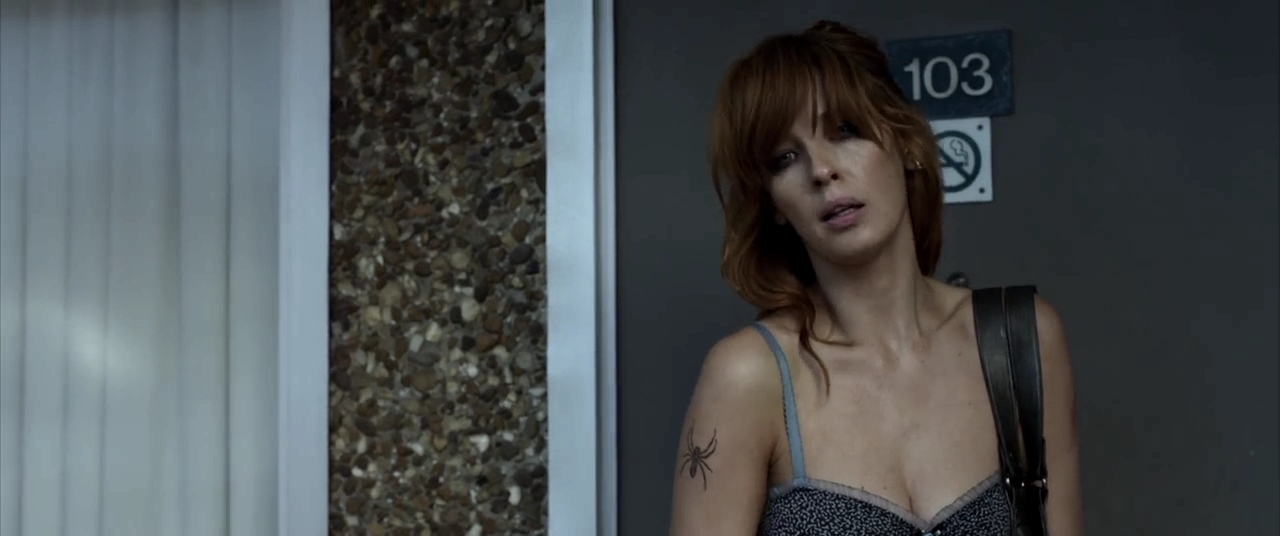
Robert Zemeckis’ “Flight” ended up surprising us all by being a riveting character driven film as opposed to your average Hollywood action movie. It is filled with a number of great performances from very talented actors, and one of the most notable is Kelly Reilly’s as former photographer Nicole Maggen. When we first meet Nicole, she is in the throes of a nasty heroin addiction that almost claims her life. While in the hospital, she meets airline pilot William “Whip” Whitaker (Denzel Washington) who is going through his own substance abuse issues and becomes a kindred spirit of sorts as they both look for ways to escape their demons.
For Reilly, “Flight” marks the first American movie she has appeared in. Before this, she was best known for playing Mary Watson in the “Sherlock Holmes” movies, and she starred opposite Michael Fassbender in the unnerving horror film “Eden Lake.” When it came to playing Nicole in “Flight,” she explained to Christopher Rosen of the Huffington Post how she goes about preparing for a role.
“If it’s there in the script it makes your life a lot easier,” Reilly said. “You’re not searching for something. You’re not trying to figure out how to make this character believable or real. You’re not trying to skirt around bad writing. This character, to me, just jumped out. I already felt a kinship to her; I wanted to play her. I knew that this sort of addiction that got hold of her so tightly was a symptom of this woman’s heartbreak. I knew there was somebody underneath worth fighting for. There are all these stereotypes of heroin addicts being junkies or dropouts or people who we shouldn’t care about. I just thought that can’t be true. They’re somebody’s son or daughter; they’re human beings. They’re just lost. That is something John Gatins got in his script. I really wanted to play that rather than the stereotype of the heroin addict.”
When it came to playing a heroin addict, Reilly explained to Rosen the amount of research she did to better understand her character. She spent a lot of time on Google learning about those addicted to this particular drug, but that only gave her so much information. But while I was at “Flight’s” press conference at the Montage Hotel in Beverly Hills, Reilly went more into depth about who gave her the answers she needed to know the most.
“I did consult a wonderful guy called Mitch in Atlanta who helped me understand the inner life of a heroin addict as much as one can without experiencing it, and he really did open up his story to me,” Reilly said. “There was a technical side of it as well as he taught me how to inject heroin without really injecting heroin. I wanted to honor the truth of somebody in that situation, and I think that was the most difficult part without ever having experienced that.”
But despite “Flight” gaining strong critical praise for its direction and performances, Reilly doesn’t see herself being nominated for an Academy Award. When it comes to the Oscars, they tend to honor the showiest performances above all others. Reilly’s performance as Nicole is powerful largely because it is an understated one which does not draw too much attention to itself. She explained this in more detail to Rosen.
“I know there is a lot of buzz around Denzel and the film. A few people have kind of suggested that it could be a possibility for me. I don’t see it myself,” Reilly said. “That’s just not me being humble or anything. I genuinely don’t imagine that to be the case. Mine is more of a quiet performance and I don’t think it’s an award winner. I still feel incredibly flattered to have people even suggest that. As much as it was never a dream of mine — a dream of mine would be to be on stage in New York — it would still be a mind-blowing thing to happen especially for something you feel proud of.”
Michael Caine once said that in the theater you play a character, but in television and film you are the character. Some of the greatest performances I see from actors in movies come from those who inhabit their characters more than play them, and Kelly Reilly’s performance in “Flight” is no exception. While we all love the showiest of performances, it is those subtle ones which deserve the most credit. My hope is that the Oscars will prove Reilly wrong and give her the credit she deserves for her work here. It’s one of the best portrayals of an addict I have seen ever since Michael Keaton played one in “Clean and Sober.”
WRITER’S NOTE: This article was originally written back in 2012.
Sir Anthony Hopkins has played real-life people in movies such as President Richard Nixon in “Nixon” and John Quincy Adams in “Amistad,” but he was initially hesitant about playing the brilliant filmmaker Alfred Hitchcock in “Hitchcock.” The master of suspense has been imitated so many times over the years to where it seems impossible to portray the man without it feeling like it is a joke. Hopkins, however, was won ever by the film’s director, Sacha Gervasi, who told him, “You’re not Alfred Hitchcock, you’re Anthony Hopkins playing him.” From there, Hopkins knew he would be portraying Hitchcock without ever having to do a mere impersonation of him.
Hopkins actually had the unique privilege of meeting Mr. Hitchcock while he was alive. It’s always great fun to hear from actors who have met the highly esteemed filmmaker as the majority of us have only seen him from a distance. We all wondered what Hitchcock was really like as his films generally delved into the pitch-black darkness of humanity, and that had many assuming he was a somewhat disturbed human being himself. Hopkins described the experience of meeting Hitchcock to Fox News.
“I met Hitchcock in Hollywood in 1979. He had just been awarded his knighthood and I was with my agent, and his agent in fact, George Chasen,” Hopkins said. “This was many years ago. I saw Hitchcock sitting in the restaurant and I said to my agent, ‘I’d love to meet him.’ He said ‘I’ll introduce you.’ So, we walked out of the restaurant after we finished our meal, and Hitchcock was sitting there drinking a large brandy. And George said ‘Congratulations Sir Alfred,’ and he said, ‘Thank you very much George. How are you?’ and George said, ‘This is my client Anthony Hopkins,’ and (Hitchcock) said ‘Charmed, I’m sure, very good luck to you.'”
For Hopkins, a key importance for him was getting the look of the famous filmmaker right. The fact is he is far slimmer than Hitchcock was, and Hitchcock famously known for being overweight. It was up to Academy Award-winning makeup artist Howard Berger to transform Hopkins into Hitchcock. In a conversation with Andrea Mandell of USA Today, Berger talked about doing six makeup tests with Hopkins before filming on “Hitchcock” began, and they experimented with all sorts of prosthetics to get the look right.
“I think the biggest challenge was finding the right combination of Alfred Hitchcock and Anthony Hopkins,” said Berger. “We knew from the get-go; we didn’t want to completely cover and disguise Tony. As Hopkins became more comfortable with the character, slowly we started to strip things away.”
Berger went on to describe the end result of his work as being a portrait of Hitchcock on Hopkins. The makeup process took two hours each day to complete, and this included applying a prosthetic jowl and neck pieces to Hopkins. In addition, Hopkins took to wearing a bodysuit and brown contact lenses, and he also shaved “a patch of hair at the back of his head to replicate the director’s hair pattern.” With the makeup done, it freed Hopkins to concentrate on the inner life of his role as opposed to the physical aspects of it. In the end, this is what actors need to focus on the most when playing any role.
But the one thing you will not find Hopkins doing during shooting is staying in character when the cameras are not rolling. Right now, the movie “Lincoln” is in theaters, and it stars Daniel Day Lewis as President Lincoln. Stories from that set have described Lewis as staying in character throughout the shoot to where other actors kept referring to him as Mr. Lincoln. In talking with Philip Sherwell of The Telegraph, however, Hopkins made it very clear how this method of acting is completely unnecessary for him.
“I think that’s a lot of crap,” Hopkins said. “I just don’t understand that. If actors want to do that, fine. If they want to be miserable, that’s up to them. I’m not interested. It’s a job. Who the hell wants to be with some miserable grump because he wants to get his performance right, so you have to call him this or call him that? It’s so boring. I’ve been with actors like that and… they’re unpleasant to work with and I don’t think they’re always that good either.”
With all the great performances he has given throughout his illustrious career in “Silence of The Lambs,” “Remains of the Day” and “Titus,” Anthony Hopkins doesn’t need to stay in character a whole day in order to give audiences a confident performance. His role as Alfred Hitchcock in “Hitchcock” is just the latest example of the kind of work we can always expect from an actor of his caliber. Hopkins never takes the easy way out with a role, and he understands it is the inner life of a character that the actor needs to work on. As for how he looks on the outside, that is someone else’s concern.
“The Expendables 2” is the kind of dumb action movie fun we have come to expect from the likes of Sylvester Stallone, Arnold Schwarzenegger and Bruce Willis among others famous in this particular genre. Clearly everyone involved in its making was simply out to give action fans what they want, and while there are no real surprises in store, it is still fun for those who just want to enjoy the R-rated carnage being inflicted onscreen without analyzing this sequel’s threadbare plot. It’s also nice to see a lot of these action movie icons come together in the same film, and it helps to make “The Expendables 2” more memorable than its predecessor.
This sequel opens like gangbusters as the Expendables blast their way through a village to rescue someone who looks rather familiar (I’ll leave it to you to find out who it is). Those who survived the first movie, or proved to be nowhere as expendable as the film’s title suggested, are back, and seeing them lay waste to a foreign army made me wonder if these were the soldiers John Rambo forgot to eviscerate in “Rambo.”
Afterwards, Barney Ross (Sylvester Stallone) is greeted by the secretive Mr. Church (Bruce Willis) who gives Ross a mission he is in no position to turn down; recover an electronic device that can help retrieve a dangerous substance which cannot fall into enemy hands. It turns out that this substance is plutonium, and the gang is met by an especially villainous character appropriately named Jean Vilain (Jean-Claude Van Damme) who plans to sell it to the highest weapons making bidder. This leads to the Expendables losing one of its members in unforgivably cold-blooded fashion, and that ends up making this particular mission especially personal.
Stallone once again has the lead role and co-wrote the script, but he has turned the directing duties over to Simon West, the filmmaker responsible for “Lara Croft: Tomb Raider,” “The General’s Daughter” starring John Travolta, some remakes which vary in degrees of quality (“When A Stranger Calls” and “The Mechanic”), and perhaps the best Jerry Bruckheimer guilty pleasure to date, “Con Air.” While I have no problem defending Stallone as a director, having West take over proved to be a good move. The action scenes are more cohesive, the editing is not all over the place, and everything we see onscreen remains appropriately LOUD.
By the way, those who complain about how loud “The Expendables 2” is, just shut up. All the action movies released in summer 2012 are just as loud, so we should expect the increase in volume by now. Next time bring yourself some ear plugs if you want to preserve what’s left of your hearing!
Now Stallone and Schwarzenegger are definitely showing their age here (Schwarzenegger especially), but it is great to see them still kicking ass even as they have long since become senior citizens. In an industry which continues to be increasingly youth-based, these action movie veterans prove the odds against them are more expendable than they are. Seeing Schwarzenegger handle a machine gun is especially fulfilling as it shows he has not lost aim after getting caught up in the realm of politics as Governor of California.
Jason Statham, who returns as knife specialist Lee Christmas, almost looks like a kid compared to the rest of the cast. Liam Hemsworth, who portrays former military sniper Billy the Kid, practically resembles an infant next to Stallone which probably makes the majority of the cast feel jealous as a result, and Terry Crews still knows how to rock a nasty looking gun as weapons specialist Hale Caesar (nice name). Randy Couture returns as demolitions expert Toll Road, but he does not much to do here. The same goes for Jet Li who plays combat expert Yin Yang as he ends up disappearing from this sequel far sooner than I would have anticipated. As for Dolph Lundgren, who reprises his character of the volatile Gunner Jensen, he actually grew on me a bit this time around.
There are some “new” cast members who team up with the Expendables this time, and they prove to be welcome additions. Nan Yu adds that needed touch of estrogen to this testosterone dominated franchise as Maggie, a CIA agent who provides some of this sequel’s few surprises as she proves to be an expert in more ways than one. The previously mentioned Liam Hemsworth gives “The Expendables 2” that youthful feel of someone who has yet to become as cynical as his hard-bitten colleagues, and he gives a strong performance as a soldier eager to steer his destiny in a new direction.
One action star, however, who I was happy to see here was Chuck Norris who portrays a “lone wolf” retired military operative named Booker, an homage to the character he played in “Good Guys Wear Black.” Now while I can’t agree with Norris’ political beliefs in real life, seeing him appear onscreen had me applauding. Norris has always had a strong and memorable presence in the movies I have seen him in, and he has one of this movie’s best lines regarding a snake.
But one actor I actually had more fun watching than I thought I would in “The Expendables 2” was Jean-Claude Van Damme. His limited acting skills prove to be a perfect fit for this sequel’s main villain, and he creates a perfectly detestable bad guy we want to see Stallone and company beat the crap out of. Now while he may be one of my dad’s favorite actors (just kidding), I have never cared much for him in movies other than “Hard Target” or “JCVD.” But here, Van Damme proves he still has those graceful moves as he dares his opponents to take him out minus the use of guns.
I guess I could complain more about “The Expendables 2” as it likely has more plot holes than anyone would notice upon first glance. But hey, in the end this is a movie which should be fun, and for me it was. I enjoyed seeing these action stalwarts come together in one place, and seeing them interact made for some exciting and funny moments. This sequel may not reach the exhilarating action movie heights of this year’s “The Dark Knight Rises” or even “The Raid: Redemption,” but it does get the job done. With something like this, that is usually the best you can hope for.
WRITER’S NOTE: This article was written back in 2012.
Best known for his roles in the film “Green Street Hooligans” and on the television series “Sons of Anarchy,” actor Charlie Hunnam gets to do a variation on his tough guy image in “Deadfall.” Directed by Stefan Ruzowitzky, he portrays Jay, an ex-boxer who has just been released from prison. He is contemplating going back home to have Thanksgiving dinner with his parents, but things go awry for him after he seriously injures, albeit accidentally, his former coach who had betrayed him. Fearing he will be sent back to jail, Jay flees the scene and goes on the run.
While talking with Christina Radish of Collider, Hunnam said there was “real poetry” to Zach Dean’s script when he first read it and that he related to Jay’s frustration and anger over how his life felt completely out of his control. When actors study and prepare to play a role, they are always expected to go over the similarities they share with their characters as well as how they are different from them. Hunnam found that his life as an actor was similar to Jay’s career as a boxer.
“I thought that was really interesting and I could relate to it, in a way, living in Hollywood,” Hunnam told Radish. “I’m very disciplined and I have a very clear idea of how I want to be spending my time, but I’m at the mercy of everybody else who decides how I get to spend my time and whether I get to work or not. In classic storytelling terms, with the classic hero’s journey and contemporary male narrative, a man being released from prison is a dynamic that I was predisposed to be interested in and like.”
The other interesting thing Hunnam brought up in his interview with Radish was how Jay was a successful athlete. Now in crime dramas like “Deadfall,” we typically expect boxers like Jay to have failed in their profession in one way or another, be it through drugs or some sort of gambling controversy. But here, Jay proves to be a victim of circumstance which has rendered his past achievements non-existent.
“This guy seemed like a guy who had dedicated his entire life to this goal of becoming a world class athlete and actually achieved it,” Hunnam said of Jay. “We just all inherently understand the dedication and sacrifice that is needed to achieve that because we’ve all grown up watching professional athletes on TV, so I understood that. He seemed like a guy where it was day one of the rest of his life. He had ruined the prior 30 years and he was coming out completely with nothing, at all.”
One of the best things about “Deadfall” is how beautiful the snowy landscapes look and how brutally cold they appear. I got to attend the movie’s press conference at the Four Seasons Hotel in Beverly Hills, and it was surprising to hear Hunnam say how he looked forward to working in the freezing cold. Many actors would give anything not to work in such frigid temperatures, but for Hunnam it offered a change of pace. Still, he did find the snow to be a challenging environment to work in.
“I had actually been really excited about a period in the cold weather because we shoot ‘Sons of Anarchy’ in LA through the course of the summer, and I’m a skinny guy who wants to look as big as possible so I wear several layers of clothing; it gets really old being that hot,” Hunnam said. “But I must say that a couple of days in, I was craving the sunshine. You know when you’re really hot you get miserable and a little bit grumpy, but the cold is really debilitating.”
Hunnam did take the time to train as a boxer which helped him better understand his character. It also turned out he had a unique way of getting into Jay’s psyche which he accomplished by working out a lot and then suddenly stopping. Anyone who has exercised a lot at the gym and then stopped for a period can clearly understand how difficult it is to start all over again.
“I’ve also always been interested in boxing so I put myself through an intense boxing academy where I got up and ran five miles every morning and then went and had breakfast and boxed a couple of hours and then came home and watched fights all day long and then went and swam, and I did this seven days a week for five weeks before filming this movie. Then when I got to Montreal (where the film was shot) I wanted to stop completely and feel the absence, and I knew that was going to have a very negative effect on my psychology. It’s kind of a shortcut, rather than intellectually empathizing, to actually feeling the emotion. I got into a very dark and happy place during shooting because of that preparation,” Hunnam said.
Charlie Hunnam still has “Sons of Anarchy” to work on, and many are excited at what the show’s upcoming season finale has to offer. Up next for him is Guillermo Del Toro’s “Pacific Rim” in which he will be playing Raleigh Antrobus, a washed-up former pilot who has to defend the world by piloting a giant robot and fighting monsters who are rising out of the depths of the ocean. Thar one looks to be Hunnam’s biggest movie yet.
WRITER’S NOTE: As the opening paragraph indicates, this article was written over a decade ago.
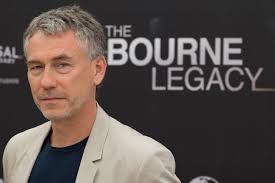
Writer/Director Tony Gilroy and actor Jeremy Renner dropped by the AMC movie theater in Century City on July 9, 2012 to answer questions regarding their upcoming summer blockbuster, “The Bourne Legacy.” The emcee of this Q&A was Dan Gilroy, Tony’s brother, who also co-wrote the screenplay for it. The film itself was not shown that evening, and the audience had to settle for its latest trailer instead, but people were allowed to ask questions about how it will differ from the “Bourne” films which came before it.
This event was presented over the internet live as well as in front of a live audience, so questions came from all over the world as well as Century City. One question came from a guy named Jose on Facebook who asked how “The Bourne Legacy” will differentiate itself from the previous three films. To this, Tony said:
“If you’ve been a casual observer of the films before, it will have an extra bit of boost. If you’re a freak, if you’re a real fan, there’s a lot of stuff that’s in there that’s designed to pay back people who have really been paying attention.”
Catherine, who submitted her question through Twitter, asked, “what does Aaron Cross bring to the Bourne franchise that makes it different from the previous movies?” Tony’s response to this was very descriptive:
“What we’re saying in this film is that there were many programs. The Treadstone program, that Jason was a part of, was an early program that was shopped out to the CIA. The program that Jeremy is in is called Outcome. The Outcome agents are not designed as assassins; they are long lead isolated people who bury down into places. So, the skill set is slightly different, and there’s an adaptive quality, there’s a verbal quality, and there’s a curiosity that we really shine on for the Outcome agents that we meet. In ‘badassery,’ the physical aspects of a lot of this are very familiar; he is a cousin to Jason Bourne in that regard. But the job is different, the design is different, and the flaws are very different. The things that go wrong are very different.”
Dan himself said, as one of the writers of this screenplay, that he was especially interested in the conspiracy side, and he asked his brother Tony how it differs from the franchise:
“Well, this time we’re pulling back (the curtain). We’re saying that what you saw before was a small piece; you watched the other three films and thought that that was the entire universe. It turns out now when we pull back the curtain that there has been a mastermind behind the entire program and these other programs, and that’s Edward Norton. In a way he’s been sitting beside you in the theater for the last 12 years watching this all go on, wondering if it’s going to cause larger problems for him and getting irritated as (“The Bourne) Ultimatum” explodes.”
Many fans of the Jason Bourne movies have been arguing loudly about the series continuing on minus Matt Damon and Paul Greengrass, but Tony Gilroy has made it clear how he made “The Bourne Legacy” with them in mind. It sounds like he has put together an exciting movie which audiences will get a kick out of, and I for one cannot wait to see it.




 The Ultimate Rabbit