It was a huge shock to hear of the sudden passing of “Rowdy” Roddy Piper who died on July 31, 2015 from a heart attack at the age of 61. Many of us remember him from his wrestling days with the World Wrestling Federation (WWF, now WWE) where he battled Hulk Hogan and Mr. T in the ring, and for also making Cyndi Lauper’s life (in her music videos anyway) a living hell.
But for me, I’m always going to remember him best for his performance in John Carpenter’s “They Live” in which he played a nameless drifter who discovers that the earth has been taken over by aliens disguised as rich people. While he may have seemed an unusual choice for a movie role, Carpenter said he cast Piper because he had life written all over his face, and that’s a quality that not enough people in Hollywood pay attention to these days.
The following is an article I wrote after I attended a special screening of one of Carpenter’s best movies.
Former wrestler and actor Roddy Piper visited New Beverly Cinema on June 10, 2012 to talk about his role in John Carpenter’s “They Live.” Once the film ended, Piper made his way to the front and leapt onstage and yelled out for all to hear:
“I HAVE COME HERE TO CHEW BUBBLE GUM AND KICK ASS!!! AND I AM ALL OUT OF BUBBLE GUM!!!”
This screening was put together by the horror convention Days of The Dead, and moderating the Q&A was Brian W. Collins from the website Horror Movie a Day. During the time he spent with the audience, Piper looked so incredibly happy to be there.
When Brian asked him how he got cast in “They Live,” Piper said he was doing Wrestlemania III and got asked out to dinner by Carpenter afterwards. Piper had, as he said, “been on the road since he was 15 years old,” and he admitted to the audience he “had no idea of who John Carpenter was.” But once he realized he was a movie director offering him the lead role in a motion picture, Piper was eager to work with him.
In talking about filming the destruction of the shantytown, Piper pointed out how many people in that scene were actually homeless and not your average Hollywood extras. He also said the filmmakers had to pay two gangs off so that, when they left at night, the trailers would still be there in the morning. Piper said he also knew the president of each gang, and that really helped.
Then there was the discussion about the “bubble gum” line which Brian heard was improvised by Piper. Piper confirmed it was his idea and jokingly described it as “lame,” and it came about when Carpenter told him just before the cameras started rolling:
“Roddy, you know you’re going into a bank, you got bullets on, you got a shotgun, you got sunglasses. You gotta say something because you’re not robbing it. Action!”
Piper said the line, and then Carpenter yelled cut and immediately said, “Lunch!”
One audience member asked Piper if he did his own stunts in “They Live,” and he admitted he did all of them except for when Meg Foster pushes him out the window. Piper, however, also said if it was the last shot of the movie, then they would’ve let him do it. Speaking of Foster, he confessed he did indeed trip out over her eyes because they are so beautiful. Looking back, he marveled at how she brings you right in with those eyes.
We never do learn Piper’s character’s real name, and he is called Nada in the end credits which in Spanish means nothing. In describing Nada, Piper said, “You don’t know where he came from, you don’t know why he’s doing what he’s doing, you don’t know why he’s wearing a wedding ring. You know nothing about him.” Carpenter told him the thought behind this was if you don’t know anything about him, it makes him more intriguing to where you want to watch more.
Piper ended the evening by speaking profoundly about his role:
“Nada is you, he is every one of you, not blue collar or white collar. He’s you and that’s why you know nothing about him because it depends on if it’s you, then that’s what’s about him. He’s supposed to represent everybody, not just America, but everybody in the world. And that’s kind of why you as an audience fill in the nothing with whatever ethics and morals you’re fighting for at the time.”
Upon hearing of Piper’s death, Carpenter said he was “devastated to hear the news of my friend Roddy Piper’s passing today. He was a great wrestler, a masterful entertainer and a good friend.”
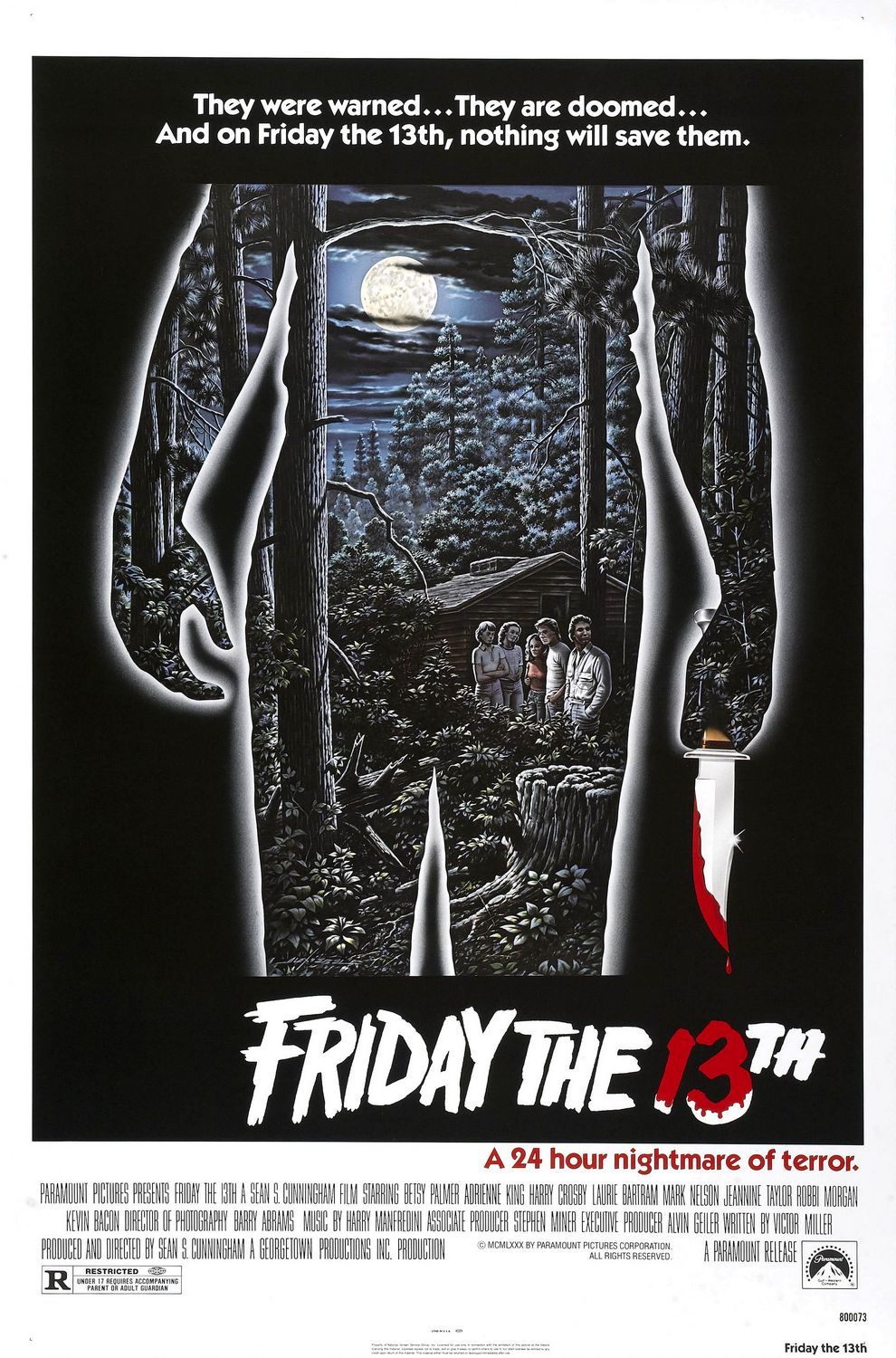
Look, no one is going to mistake any “Friday the 13th” movie for cinema at its best. It started out as a rip off of “Halloween” with a little bit of “Psycho” thrown in for good measure, and it soon became a never-ending franchise which, to this day, still won’t die. We had two of the sequels with the word “final” in them, and each turned out to be a flat out lie. Just when it looks like this franchise has breathed its final breath, it is resurrected once again. Perhaps the world is overpopulated with too many horny teenagers who need to be dealt with in a messy way. In the end, these films touch on our deepest fears and exploit them for all they are worth. We know they’re not good for us, but we can’t help ourselves and want to see what nasty crimes will be perpetrated next.
The “Friday the 13th” movies are essentially the equivalent of a fast food meal, the kind which has an obscene amount of cholesterol in them. You know it’s bad for you, but you keep coming back for more. It’s not just tapping into our deepest desires, but into our willingness to be bad and rebel against what our parents don’t like. Film critics never stopped attacking these movies and continually bashed them to pieces, and yet they made so much damn money on such low budgets. It represented horror being taken to the next level for the children of the 80’s. Our parents hated the movies, and that made us all the more curious about seeing them. Jason Voorhees eventually became as familiar to us as Santa Claus. I remember when “Friday the 13th: The Final Chapter” (LOL) came out when I was in the second grade, and none us had ever looked more forward to a movie none of us would be able to see (nor had we any business to). Yes, these slasher flicks bring back a lot of nostalgia for me.
The original “Friday the 13th” seems much better in retrospect. This is especially the case when you compare them to the sequels, let alone all the endless knockoffs, which came after it. What surprised me is how some of the murders which occur in this movie actually happen off screen. We have no idea they have occurred until we see the carnage put on display right in front of our eyes. It’s pretty vicious what is perpetrated in this film, and this was back when an arrow through an eye actually felt shocking. For the most part, “Friday the 13th” and a couple of sequels felt very real. You have to give the filmmakers credit because none of the slasher movies made today can’t even touch that feeling of reality. We all know we’re watching a movie when it comes to the sequels, but the original was experienced more than watched.
I’m sure we all know by now what Drew Barrymore should have known at the beginning of “Scream;” Jason was not the killer in this one. Instead, it was his mother, played in an over the top performance by Betsy Palmer. Mrs. Voorhees is basically what Norman Bates’ mother would have looked like, had Norman not have killed her off. Those moments where she is clearly schizophrenic and acting as if her son is actually telling her to kill people are both chilling and hilarious at the same time. This is far from a convincing performance, but Palmer is so much fun to watch in her deranged state to where it really doesn’t matter.
The cast of actors were basically hired not so much for their acting talent, but because they resemble, as director Sean S. Cunningham put it, those kids who came out of a Pepsi commercial. In many ways, this casting choice helped give “Friday the 13th” a stronger feeling of reality as they are people we recognize from our own lives. They are not models who have enhanced themselves with endless plastic surgeries (those would appear in the sequels). The ladies look very sweet and fetching, and the men look down to earth and not like those guys who spent way too much time at the gym.
“Friday the 13th” also was the movie which started the cliché of how if you have premarital sex with your boyfriend of girlfriend, you would die. The last person left standing was always a virgin, or the one too shy to ask a boy for a date. As a result, many people think there is some highly conservative Christian value system in place in these movies which one must follow in order to survive an experience with a masked maniac. Some will say Carpenter originated this with the original “Halloween,” but he made it clear in the DVD commentary he was not trying to spread religious dogma. Carpenter said the characters got killed because they weren’t paying attention, but ever since the first “Friday the 13th,” it’s been open season on kids who don’t practice safe sex.
There is also the crazy old man Ralph (Walt Gorney) who warns everybody of how they “are all doomed.” Of course, it’s always some crazy guy no one ever listens to. God forbid it’s some normal person people take the time to listen to. But if everyone were to believe this guy, then there would be no movie.
Of all the actors in this film, let alone the entire series, Kevin Bacon is the one who came out of it with the most successful career. “Friday the 13th” may not show off his best talents, but he does have one of the coolest death sequences in horror movie history. Bacon also gets to have one of the sweetest love making scenes any horror movie could ever hope to have. His character and his girlfriend actually do make love. It’s not one of those humping and pumping moments you can find in so many other movies where one person is doing all the work and the other is not having enough pleasure. It makes their inevitable deaths feel kind of sad. Even if we really wanted to see these two get bumped off, we don’t look forward to it.
Sooner or later, we were bound to see this movie because people couldn’t stop describing the more graphic moments in it. I remember my brother telling me about the scene where Kevin’s girlfriend does finally get it:
“You see her looking into the shower stalls and no one’s there. But while she is looking, you can see in the background the shadow of an ax being raised up. When she turns around, you can see the ax going into her face!”
My reply to this at the time was:
“Whoa! Cool!”
Then you have the unforgettable Harry Manfredini music score which basically sounds like Bernard Herrmann’s “Psycho” score on speed. Never have woodwind instruments been as thoroughly pummeled as they are here. This is not to mention the “chi, chi, chi, ha, ha, ha” sound (it’s actually “ki, ki, ki, ma, ma, ma”) which is so clearly identified with this undying franchise. When you hear it, you know Jason is not far away with a rusty machete in his grasp.
Cunningham is no John Carpenter, and he is a better producer than a director, but he does keep the suspense quota of “Friday the 13th” at a high level and generates a number of good scares. This one does not focus so much on the killings as it did on the messy aftermath. While you did see characters gutted in the most painful places imaginable, there were a couple of others you kept wondering about until you saw their bloodied corpses. The later sequels would get a little more creative with the murders.
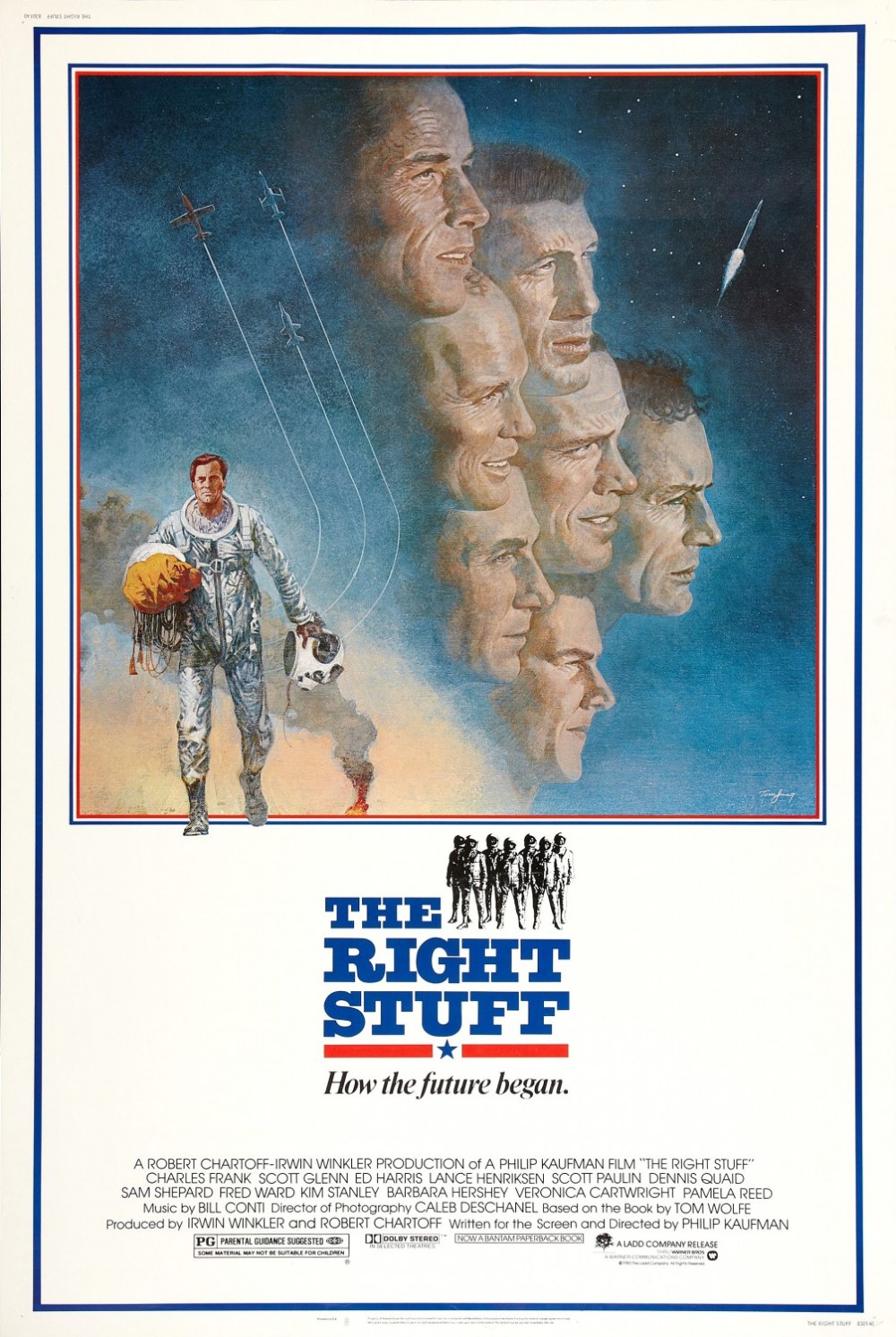
Filmmaker Brian McQuery asked New Beverly Cinema to program it, and his wish came true on July 4, 2013 when the revival theater screened “The Right Stuff” in honor of its thirtieth anniversary. Philip Kaufman’s adaptation of Tom Wolfe’s non-fiction book on the Mercury Seven astronaut program and Chuck Yeager was not a box office success when it first came out, but it did find its audience on video, cable and Digital. Seeing it again on the big screen was a real treat, and the audience got an even bigger one when McQuery welcomed actress Veronica Cartwright to the stage.
Cartwright played Betty Grissom, wife to Gus Grissom who was the second American to fly into outer space. Gus’ flight, however, ended on a controversial note after he landed in the ocean and the hatch on his spacecraft suddenly exploded and came off. This caused the spacecraft to sink, and the whole incident left NASA feeling embarrassed. Gus was later found to be not at fault for what happened.
Cartwright had previously worked with Kaufman on his remake of “Invasion of the Body Snatchers,” and he told her he had written the part of Betty Grissom with her in mind. Still, Cartwright had to convince to the movie’s producers she was the right person for the role, but there was one thing which threatened to derail her interview with them.
Veronica Cartwright: I had been in a car accident in 1981 where I broke my leg in 35 places. Then this interview came up and I was six months in a cast, and I had nine screws and an 8-inch plate in my ankle. I had just gotten out of my cast and my mother had to drive me to the interview, and I dressed in red, white and blue. I thought this was the appropriate thing to do. As I got up the stairs and I walked, Phil came out. Well I had a bit of a limp at this point so I thought, oh my god if he sees me limping… So, I went, “Hey Phil! What’s happening?” And I danced the whole length of the hallway.
Despite the shape her leg was in, Cartwright still got the part. In fact, she didn’t even tell Kaufman or any of the producers her leg was broken until after shooting wrapped. However, she did have to wear high heels for a scene three months after her leg came out of the cast which was anything but comfortable.
Cartwright’s character is of course based on a real person, but she admitted she never got to meet Betty Grissom before, during or after making the movie. This was due to a big lawsuit going on after Gus died aboard Apollo 1 which caught fire before it took off, and Betty was not in a good state of mind to assist with the production of “The Right Stuff.” As a result, Cartwright had to rely on other ways to get into character, and she talked about how she prepared to play Betty.
VC: We looked at the archival footage and we were all given backgrounds of where the characters were born and how they met their husbands and how they got involved in the whole space program. When you’re doing a real character, I think it’s a little scarier because you want to do that person justice. It’s not coming off of your own imagination. It’s coming off of reality so you have to be careful. I hope I justified her. I always write myself a biography so I know where I came from and stuff like that. Of course, a lot of that was supplied because of her being an actual person. If I know who the person is, just from however I created them, then the lines come like that because I have become that person. I believe you need to have enough background and stuff so that, say something improvisational comes up, you would act according to what your character would do. It’s become ingrained as part of your character. I do a lot of homework before I do something, and I always found that it works for me.
During filming, Cartwright said the actors hung out with the actors while the actresses hung out with the actresses. She remarked how they were “separate entities” as a result which in a weird way was what the movie was about. Everyone in the cast, however, became a close-knit group by the end of filming, and Cartwright pointed out how this showed in the big barbecue scene where their characters are given a huge banquet in Texas courtesy of Vice President Lyndon B. Johnson. The scene was actually shot at the Cow Palace in San Francisco with hundreds of extras, and she remembered the shooting of it quite vividly as the meat being barbecued was not as tasty as it looked.
VC: We were in the Cow Palace for five days and those sides of beef weren’t very pretty after five days. We kept hearing, “DO NOT EAT THE MEAT! DO NOT EAT THE MEAT!” Oh my gosh! They would bring in thousands of McDonald’s burgers. Bags of McDonald’s were handed out because they kept saying, “DO NOT EAT THE MEAT!” They would be over there with that blowtorch and putting that glaze all over the beef and it was disgusting. But it was a wonderful experience (filming that scene), it was really great.
In talking about Kaufman, Cartwright described him as a great, lovely person. Since “The Right Stuff” is such a big ensemble piece, everyone had major rehearsals to get the blocking right, but Kaufman did allow for improvisation. Cartwright also admitted the scene in the hotel where Betty gets upset with Gus because they were not invited to the White House after his space mission took a whole day to shoot.
The screenplay for “The Right Stuff” was to be written by William Goldman, but Goldman wanted to leave out the Chuck Yeager story and focus solely on the astronauts. Kaufman disagreed with this decision as he felt Yeager’s story was a very important part of the film because, even though he didn’t go into space, the future of space travel really began with him. Goldman ended up withdrawing from the film and Kaufman wrote the screenplay himself. Cartwright lauded his work.
VC: I thought the script was brilliant because the book is sort of like a train of thought and things that are said but not spoken out loud. What Phil did was he took that book and made all those thoughts reality. I think very rarely can books translate into the movies and the movies be as good as the books were, and in this case, he was right on.
The cinematographer for “The Right Stuff” was Caleb Deschanel who received an Oscar nomination for his work. He was also nominated for his work on the films “The Natural,” “Fly Away Home,” “The Patriot” and “The Passion of the Christ.” Of course, these days he is known as the father of Emily and Zooey Deschanel who have become successful actresses in their own right.
VC: He’s very meticulous. The lighting was amazing. He didn’t have standard lights. Everything had these big shrouds of silks over the top of them. The whole Cow Palace was lit and it would be on gimbles where they could just move the lighting, but it took hours to set up. It was pretty intense. And it’s so funny to see Zooey now because she was three-years old during the making of the movie, and Emily had just been born. Thirty years is a long time!
Actually, the most fascinating story Cartwright told that evening involved how Kaufman and his crew filmed the flying sequences. Until “Top Gun” came along, “The Right Stuff” had some of the best and most convincing aerial footage of any movie I had ever seen. So it was a big surprise when Cartwright revealed to us what kinds of planes and special effects were used to create those moments.
VC: When you see the planes going up and down, those were all Japanese models and they (the filmmakers) stood on the top of a very tall building and chucked them off (laughs). That was the CGI! They just sort of painted them and Phil said “oh my God it was incredible! We just go up on the top of the building and throw the plane off and see what happens!” So when you’re watching the movie tonight, you can figure out that it’s a little Japanese air model. It was hysterical!
Veronica Cartwright ended her Q&A with Brian McQuery by saying “The Right Stuff” was a wonderful movie and that she loved the sense of drama and comedy and how it was a wonderful blend of the two. Thirty years after its release, we couldn’t have agreed more. “The Right Stuff” remains one of the greatest movies to come out of the 1980s, and it has lost none of its power to excite and entertain those who watch it. Some movies don’t age well, but this one has.
The Aero Theatre in Santa Monica was sold out yet again when director Savage Steve Holland was there to talk about his two 1980’s comedies “Better Off Dead” and “One Crazy Summer” back in June 2008. But the big attraction of the evening was “Better Off Dead” as it still has a huge cult following 30 years after its release. Like many movies from our youth, it was a box office flop and got eviscerated by critics. Siskel and Ebert gave it two thumbs down, and Peter Travers tore it apart limb from limb, but it eventually found its audience on video, cable, DVD and Blu-ray. These days, you would be hard pressed to find anyone who hasn’t watched “Better Off Dead,” and everyone who has seen it loves it.
“Better Off Dead” follows Lane Meyer (John Cusack), a teenager with an obsession for skiing and an even bigger obsession for his girlfriend Beth (Amanda Wyss). But soon after the movie begins, Beth dumps Lane for the captain of the ski team, and this leaves him utterly devastated to where he tries to kill himself in order to get her attention. Throughout, he is forced to deal with a crazed paperboy who wants his two dollars, his mother’s bizarre ways of cooking food, his dad’s insistence on doing something about his Camaro which remains immobile on the front lawn, his kid brother who reads books on how to pick up “trashy woman,” and a lovely foreign exchange student who has the misfortune of staying with the dork heads, ahem, the Smiths next door.
After “Better Off Dead” ended, Holland came to the stage and was greeted with thunderous applause. Dressed in jeans, a white buttoned-down shirt and wearing a green baseball cap, he was so happy to see all these people who came out to see this movie which he made long ago. Along with Holland was Diane Franklin who played the French exchange student Monique, and Curtis Armstrong who plays Lane’s best friend Charles de Mar.
Holland said “Better Off Dead” was inspired by his own life experiences, particularly the one where a girlfriend dumped him for somebody else. One scene has Lane tying an extension cord around his neck in the garage, and Holland said he did the same thing and had attached the cord to a pole while standing on a plastic garbage can. Holland said he became terrified and couldn’t go through with it, and then the lid of the garbage can suddenly broke and he fell right into it. Then the pipe above him broke, water came out and he almost drowned as a result. His mother came into the garage to see what was going on, and she ended up yelling at him for breaking the pipe.
“Better Off Dead” did so well in test screenings to where Warner Brothers gave Holland even more money to make “One Crazy Summer.” The studio executives were so convinced they had a big hit on their hands, and they wanted to work with him again on his next movie. Unfortunately, “Better Off Dead” failed at the box office and, while he did get the opportunity to make “One Crazy Summer,” Holland said he was quickly consigned to what he called “movie hell.” This is the place you go to when your movie doesn’t have a big opening weekend, and all those friends you thought you had in Hollywood stop calling you as a result.
One fan asked Holland what the difference was between making “Better Off Dead” and “One Crazy Summer.” With “Better Off Dead,” Holland said he had total creative freedom to where no one was looking over his shoulder, and this made it the best filmmaking experience he has ever had. With “One Crazy Summer,” it was very different because there was more money involved, and studio executives were on set watching his every move. A lot of this was due to their initial response following the first “Better Off Dead” screening as they came out of it horrified, thinking it was a sequel to John Water’s “Pink Flamingos.”
Franklin, as it turns out, is not French. She said her father is in fact German, so this may account for her looking like she is from another country. As for her French accent, Franklin said she took French classes in high school and became very good at speaking the language, and the accent came to her easily as a result. When she came in to read for “Better Off Dead,” Franklin was actually up for the roles of Beth and Monique. Franklin said making this movie remains the best experience she has had as an actress, and she remarked how Holland created a fun and comfortable atmosphere for everyone to work in. She also confirmed it was indeed a woman who did her skiing sequences in the movie and not a man as many assumed. Holland did say, however, that her stunt double looked almost exactly like her, and the only thing separating them was the stunt double’s tan.
Also up for the role of Monique was Elizabeth Daily who sang the movie’s title track at the school dance. But in the end, it was determined Daily was just “too hot” for the role.
Armstrong came up with some of the most memorable aspects of Charles de Mar. The scene where the ski captain asks Beth what her name is and Charles replies, mistakenly thinking he the one being talked to, was Armstrong’s idea. He also came up with the top hat Charles wears throughout the movie, saying it was inspired by his love for The Beatles and, in particular, George Harrison. It was also his idea to bring along the jar with the dead pig in it to school. However, Armstrong said he could not take credit for this famous piece of dialogue: “I have been going to this high school for seven and a half years. I’m no dummy.”
Armstrong also brought up a brief conversation he had with Kim Darby who played Lane’s mom. At one point during a break from filming, Darby came up to Armstrong, took him by the shoulders and said, “Watch out! They’re trying to destroy you!” After that, she never spoke to him again.
Holland also discussed some of the movie’s deleted scenes, and among them was one which showed how Lane’s mother belonged to the cult of Gumby and was collecting money for it at the airport. Other deleted scenes included Lane’s father (played by David Ogden Stiers) coming home to find his wife vacuuming the lawn, Lane trying to practice the theme song to “Flipper” on his saxophone, and there is a seal there which ends up applauding another person who ends up performing it better than him. Also, the scene of the paperboy falling off the cliff actually lasted a lot longer as Holland had about three minutes of it on film, but test audiences had a very sickened reaction to it, and it got shortened as a result.
If there was one thing which dampened the mood for “Better Off Dead” fans, it is the fact Cusack hates the movie. Holland said he got along great with Cusack while making “Better off Dead,” and he really wanted Cusack to like it as much as he did. Before they began shooting “One Crazy Summer,” Holland got the cast members to hang out with each other in Cape Cod so they could become comfortable with one another. While there, someone was presenting a screening of “Better Off Dead” which they all went to. Twenty or so minutes into it, Cusack walked out. Holland figured Cusack had to take a call or something, but the actor never returned. Holland later caught up with Cusack who told him he thought the movie was horrible and that he no longer trusted him as a director. Suffice to say, this really brought the audience at the Aero Theatre down.
Someone else asked how Rupert Hine came to score “Better Off Dead.” One of the companies involved in the movie’s making was A&M Records which had worked on soundtracks for other films like “The Breakfast Club.” Hine was a featured performer on that soundtrack but had never actually done a film score before. “Better Off Dead” was his first effort as a film composer, and the resulting soundtrack release for the movie is indeed awesome.
This evening was a lot of fun for everyone involved, and it says a lot about “Better Off Dead” that it remains so popular decades after its release. One fan proudly proclaimed it as being “bar none, the greatest movie ever made.” Such a fan this guy was, he got Holland to sign an authentic air filter for a 1967 Camaro, just like the one featured in the movie. Along with that, he also had the original vinyl release of the soundtrack as well as the movie’s original script.
“Better Off Dead” is truly one of the most entertaining comedies to come out of the 1980’s, and it is a movie Cusack really should be proud of. What else can you say about a movie in which Steven Williams utters one of the most famous lines in cinema history?
“Now that’s a real shame when folks be throwing away a perfectly good white boy like that.”
Looking back at some of the articles I have written about screenings at New Beverly Cinema, I kept saying or implying that you could never expect any screenings showing there to sell out. But now it looks like that’s becoming less and less the case. Ever since Quentin Tarantino bought the building where the theater is located and saved it from becoming another Supercuts, more and more movie geeks have descended on this establishment, the last standing movie reparatory theater in Los Angeles. Jason Reitman did a movie program there which featured “Election,” “Boogie Nights” and “Ferris Bueller’s Day Off,” and it brought out huge crowds of people. Torgan and company ended up having to do something they almost never do; turn people away!
Well, the line around New Beverly once again snaked around the corner as actor Peter Weller was scheduled to introduce a screening of the 1984 cult classic, “The Adventures of Buckaroo Banzai Across the 8th Dimension,” on March 29, 2010. Every single was taken, and the screening got delayed because the line at concessions threatened to snake around the theater as well. Weller brought along two other players from Buckaroo’s crew: Billy Vera who played the bass guitarist for Banzai’s rock band the Blue Blaze Irregulars, and Gerald Peterson who played Rug Sucker. The Q&A was moderated by Jeremy Smith, Mr. Beaks from Ain’t It Cool News, and he proclaimed this to be “the nerdiest movie ever made.” Upon saying this, he got a huge applause from the audience.
Weller did look a little ragged, and he later explained it was because he didn’t go to bed until about 2 a.m. the night before as he just got through 86 hours of PhD exams at UCLA. Furthermore, he said he has been wearing the same clothes for several days straight which reek of cigar smoke as he was smoking 10 of them in a day.
“Buckaroo Banzai” turned out to be a lot of fun, and this is despite the fact I have no idea of how to explain what it’s exactly about. However, it turns out the most ardent fans of this movie and the actors who starred in it can’t really explain what the plot is about either.
“I didn’t understand it (the script) actually, and I think no actor in it does understand it. I don’t think Billy or Gerald understood it, but it was fun,” Weller said.
“If you say you understood it, you’re a liar,” Vera said.
Weller went on to say 20th Century Fox didn’t know how to market “Buckaroo Banzai” at all. The studio executives came to the set around the time they were finishing principal photography and asked him, “Is it an action movie?” Later on, the editor of the movie, Oscar nominee Richard Marks, said, “That film is a comedy! It’s a comedy and they should have known that from the jump!”
But perhaps the best way to describe “Buckaroo Banzai” is its half comedy and half drama. Vera added many television shows later took on the half comedy and half drama formula, but he couldn’t think of any which came before this movie. To this, Weller added, “Or after.”
Weller was actually not sure if he was going to do this film because he had his eye on a romance movie around the same time. But this same romantic movie was getting bounced around from studio to studio, and his agent convinced him to take “Buckaroo Banzai” since it looked more and more like the other flick was not going to happen. With a cast which included Christopher Lloyd, Ellen Barkin and John Lithgow, this could not have been easy to turn down.
“The Adventures of Buckaroo Banzai Across the 8th Dimension” marked the directorial debut of screenwriter W. D. Richter who was best known for writing Phillip Kaufman’s version of “Invasion of the Body Snatchers” and also “Brubaker.” Richter was also responsible for co-writing another movie 20th Century Fox had trouble promoting, John Carpenter’s “Big Trouble in Little China.” Weller described Richter as a beautiful and really laid-back guy, and that he was also an intellectual from the east coast. Richter didn’t have the get up and go Hollywood thing going on, and Weller said this made him perfect for the actors to work with. Also, Richter was a musician as was Weller and several of the cast members, and Weller said his heroes have always been musicians.
Vera said he got cast after Richter and Weller saw him perform at the Viper Room in Hollywood. After he was done, Vera said Richter got a hold of him and asked, “You know, I like the way you improvise on stage. Do you think you could do that in a movie?” “Yeah, I do it every night,” Vera said. ”Do me a favor,” Richter said, “kind of tell me where you’re gonna stand so that I can have a camera ready for you.” Weller, Vera and Peterson all agreed that this was the way Richter directed the whole movie.
Mr. Beaks then started taking questions from the audience, the first one coming from a guy who read somewhere that the producers of “Buckaroo Banzai” were not at all happy with the film. He asked if this dislike of theirs bled onto the set to which Weller replied, “Uh, yeah.“ It must really suck to make a movie while knowing those who got the ball rolling and spent so much money on it don’t believe in it after viewing the dallies. And like many cult movies, this one was a box office flop, but it eventually found a cult following on video, cable, and DVD. You have to wonder how this movie among others could inspire such fans to watch it at least 57 times. Weller summed it all up perfectly:
“The longevity of it is that it’s unique. There’s a uniqueness to it,” Weller said. “They (the producers) wanted it to fit into a mold. They thought that it would be more slapstick, overt action and humor. The humor, although I have to say I don’t understand a lot of it, was fantastic. The humor was so… Just under the radar man.”
“And that’s why they cut a half hour of it,” Vera added. “The movie was a half hour longer which gave the jokes more room to breathe, but the studio said they wanted to cut it short so that they can show it more times per day.”
Particularly fascinating was Weller’s take on Christopher Lloyd whom we all know best as Doctor Emmet Brown from “Back to the Future.” Weller talked about when Lloyd’s house in Montecito burned down during the devastating Malibu fires. Lloyd had gone on television to talk about what happened, and Weller described how he and his wife were so devastated over what happened to him. But during a conversation with one of Weller’s professors at UC Santa Barbara, who brought up how sorry he was for Lloyd losing his house, Weller quoted exactly what he said:
“You’re gonna be the first to know the truth… I was already selling the house and there was nothing in it at all. I was living in an apartment in Montecito!”
Stunned at hearing this, Weller looked right at Lloyd and said, “Chris! The world, not just LA, but the whole world! We even saw this news in Italy! You looked so sad…” Lloyd’s response to this really did turn the whole thing into a comedy:
“I know! Because when the fire was going and I walked up and they put three cameras in my face, and I didn’t know what to do except LIE!”
Weller also said he met Jeff Goldblum on the same night he lost his virginity, and then he brought up an almost insane story about Goldblum which took place when he was getting married. Weller had already been married at that point and was telling Goldblum how excited he was to see him settling down. What Goldblum told him after that made us see him in different light:
“We’re on the other side now Peter!”
Other tidbits about “Buckaroo Banzai” included how the montage of Buckaroo and his comrades coming together during the end credits was actually an addition made by Richter later on. While filming this, Weller admitted he and the actors were actually walking to the tune of Billy Joel’s “Uptown Girl.”
Before those end credits began, there was also the promise of a sequel laid out for the audience entitled “Buckaroo Banzai Against the World Crime League.” One audience member asked why this sequel never got made, and it turns out there was more to it than the movie dying at the box office:
“Well the one guy (producer) went to prison for bank fraud, and the other guy blew his brains out in Century City Plaza,” Weller said. “Both of those guys were really good guys and I stayed in touch with the one who went to the joint, and he’s out now.”
Just before they finally started showing the movie, Weller thanked the crowd for coming out and said that this turnout and excitement was what he had expected when he walked in to meet his professors at UCLA today. Instead, they just gave him more stuff to work on, and that was after the 86 hours of work he had already done. Suffice to say, this crowd was far more welcoming.
It was great to finally see “The Adventures of Buckaroo Banzai across the 8th Dimension” after all these years, and it was even more fun watching it with a large audience. To see it on television is one thing, but there is nothing like experiencing it on the silver screen in a packed theater. Weller took a very unrealistic character who was a renaissance man, a top neurosurgeon, particle physicist, race car driver, rock star and comic book hero, and he made you buy into him without questioning the logic of how he found the time to take on all these disciplines.
Another memorable evening at the New Beverly Cinema!
This was one of the few R-rated movies my parents let me see long before I turned 17. Of course, I was already sneaking into R-rated movies before I reached that age. I’d buy a ticket to “Ghost” and instead walk into the theater showing “Marked for Death.” I guess my mom and dad decided, since I was watching all these movie review shows like “Siskel & Ebert” and “Sneak Previews,” and I had seen this movie’s trailer numerous times on the Movietime Channel (long before it turned into E! Entertainment Television), that the damage to my fragile little mind had already been done. Then again, it’s not like they were exposing my brother and I to “The Texas Chainsaw Massacre.” Had they done so, it would have scarred us for life!
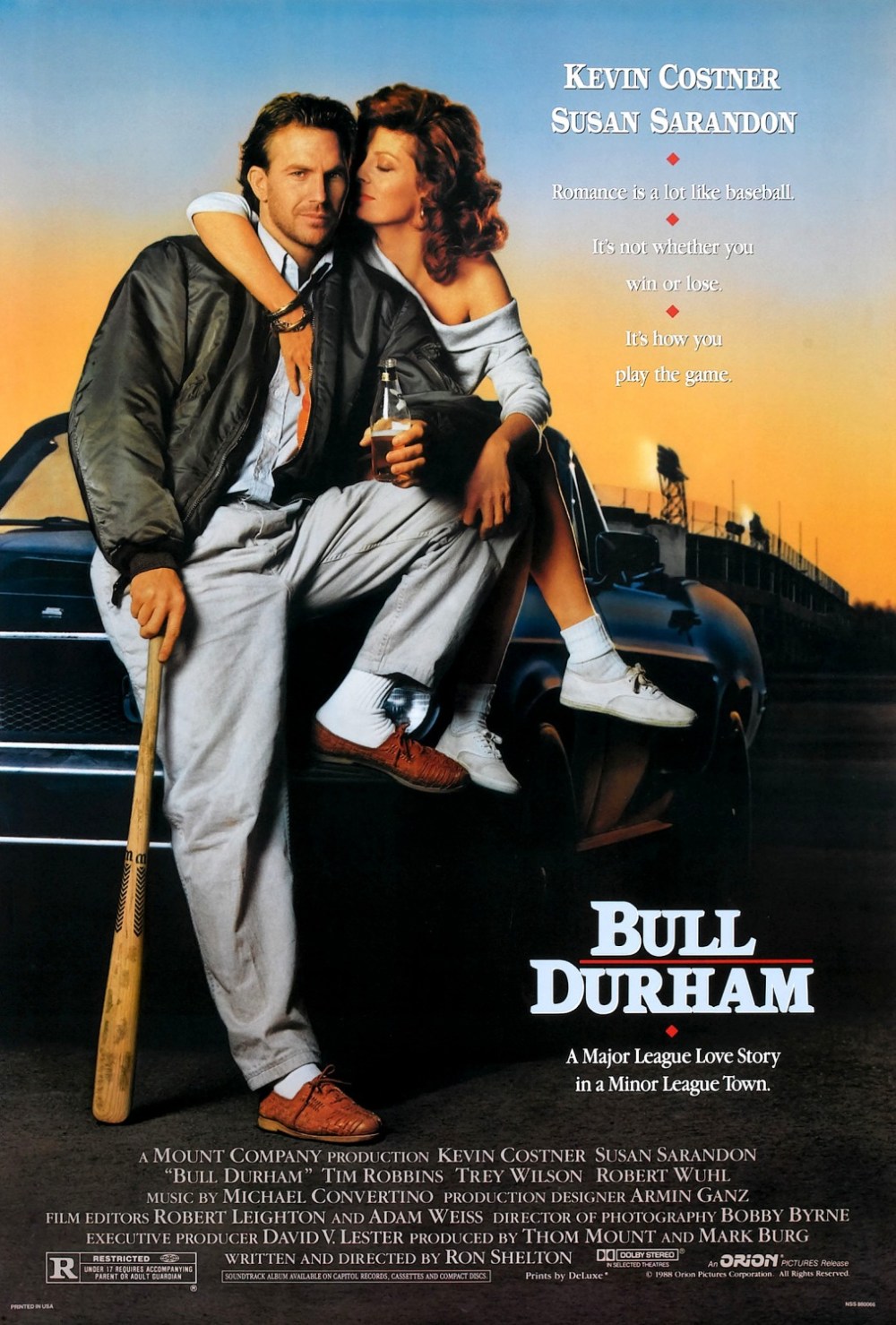
When I first saw “Bull Durham” on VHS, I was already very used to the Hollywood sports movie formula where the hero suffers a crushing defeat and has to build themselves back up again to an audience-pleasing finish. When I was younger, I was far more comfortable knowing how a movie would end, and I wanted them all to end the same way. It feels like this with today’s generation of audiences as they thrive on repetition in stories and of the good guys beating the villains we are led to believe good will always triumph over evil. When you’re young, you have yet to learn that in reality the bad guys get away with a lot before anyone notices, especially if they have corporate and/or political connections.
“Bull Durham,” however, forever changed the way I looked at sports movies in general. It didn’t always have to be about training montages and the build up to the big game. Instead, it was about the reality of the game itself, and of the various personalities inhabiting it. Whether or not the characters get their big moment at the end, their victories and accomplishments were never about coming out on top or being the best. The real victory came from struggling through one important stage in your life, and surviving long enough to get to the next. Or, in other words, closing one chapter in your life and moving on to the future.
Most baseball movies focus on the major leagues, but what makes “Bull Durham” especially unique is it is about the minor leagues. Writer and director Ron Shelton based this film on his own experiences in the minors which he played in for several years, and he shows it to be a much looser environment and one which is far more fun and carefree. The baseball stadium may be smaller, but the connection between the players and the fans is more intimate and not engulfed in corporate greed or network contracts. Still, all these players see getting to the majors, which they refer to as “the show,” as their holy grail, the one thing they feel destined to get to at some point. The sad thing is, many of them will never make it there.
“Bull Durham” focuses on three characters throughout: Crash “the player to be named later” Davis played by Kevin Costner, Ebby Calvin “Nuke” LaLoosh played by Tim Robbins, and Annie Savoy played by Susan Sarandon. LaLoosh is the star pitcher of the Durham Bulls and is about to make his professional debut. When he does, he ends up, as Millie (the incredibly cute Jenny Robertson) says, pitching the same way he makes love, “All over the place.”
Hence, veteran catcher Crash is brought in to teach LaLoosh how he can control his pitching, and to get him prepped for the major leagues. During this time, the two of them will meet the high priestess of baseball, Annie Savoy. Her church is the one of baseball, and she hooks with one guy a season to help them with their playing and to expand their mind. This player also gets to share her bed with her, and considering just how amazingly hot Sarandon is in this role, it looks very foolish to even consider turning her down.
At the age of 14, I may not have understood all of what “Bull Durham” was about, but it was not a movie as disposable as a McDonald’s Happy Meal. Shelton offers us a closer look into the world of baseball than I could have expected to see back in 1988. The intimate details of the minor leagues make it very unique among other films of its genre. You also get to learn the importance of the relationship between the pitcher and the catcher, and of how one better not cross the other if he is looking to win.
Aside from the main players, the other team members are individualized to where you can tell one from the other. There’s the one player who swears by the bible and wants all his fellow teammates to follow in his righteous path. Then you have another who uses a necklace with a cross to bless his baseball bat, and who later needs a live rooster to take the curse off his glove. Crash Davis also shows an alternative way to get a rainout which results in one of the movie’s funniest moments.
Kevin Costner was perfectly cast as a veteran baseball player, and he also had the athletic ability to hit a ball right out of the park during filming. In “Bull Durham,” Costner gives us a man knowledgeable of the majors and the minors, and through his eyes he shows us the yearning he has to get back to “the show” as he was there once for 20 days, the greatest days of his life. You can only imagine how much he is working to get back there, but it seems more like a mirage that gets further and further away from him as time marches on.
Looking back at Tim Robbins’ performance, it is clearer to me now he had the toughest role to play in “Bull Durham.” Throughout, he has to take LaLoosh from being a wild and crazy guy on and off the baseball to someone more mature and ready to enter the majors. Robbins makes the transition look seamless, and it was the first indication of the brilliant actor we now see him as today. Seeing him again in “Bull Durham” after all these years is a kick because he is so loose and fancy free.
But seriously, the most memorable performance comes from Susan Sarandon as Annie Savoy. To say Sarandon is sizzling hot remains an understatement as she captivates the audience in the same way she reels in Robbins and Costner. With this character, Shelton gave us one of the most original female characters ever seen on the silver screen. Annie is a strong female, and Sarandon succeeds in making Annie this and more. It may almost sound ridiculous to have a character believing in the “church of baseball” when you look at it on the page, but once Sarandon utters those words which start off “Bull Durham,” you never doubt that she fully believes in it for a second. After all these years, it is still a travesty she didn’t receive an Oscar nomination for her performance.
But the real star of “Bull Durham” is Shelton, and he sees a lot of Crash Davis in himself. After this film came out, he became the go to guy for writing sports movies. You never get a “Rocky” like movie from him, and the characters he creates are rich, complex, and they always have such fantastic dialogue coming out of their mouths. This great talent of his led him on to make “White Man Can’t Jump” where Woody Harrelson and Wesley Snipes were as brilliant at hustling on the basketball courts as they were at verbal sparring with each other and their opponents, “Tin Cup” which left me thinking Costner and him should make as many movies together as possible, and “Cobb” with Tommy Lee Jones which may very well be the definitive anti-sports biopic of all time.
Incidentally, the commentary track he did for the DVD remains one of my all-time favorites. Throughout the movie, he strips away the mythology of other baseball movies to give us an idea of what the game is really like. I also loved how he talked about the fight to get Robbins cast even though the studio didn’t view him as a big enough star. The way they saw it, the audience would never believe Sarandon would ever fall for a guy like him. This led Shelton to bring up how he is godfather to one of their sons.
Shelton also pays great respect to the other actors like the late Trey Wilson who is so good here as the coach, and to Robert Wuhl whom he cast despite him giving the worst audition of any actor he had ever seen. He also lays bare how much he loves making movies and how much he hates the business.
Shelton may have never made it to the majors, but his experiences allowed him to give us “Bull Durham,” one of the funniest and most irresistibly sexy films of all time. I still see it as my all time favorite sports movie, and I don’t care how much more acclaim “Rocky” and “Raging Bull” have over it/ Besides, where else will you find a movie about minor league baseball? Oh yeah, there’s “Major League: Back to The Minors,” but who’s in a hurry to see that?
So, without further ado, I present to you my list of my top ten movies to watch on Halloween night, and they are presented here in no particular order:
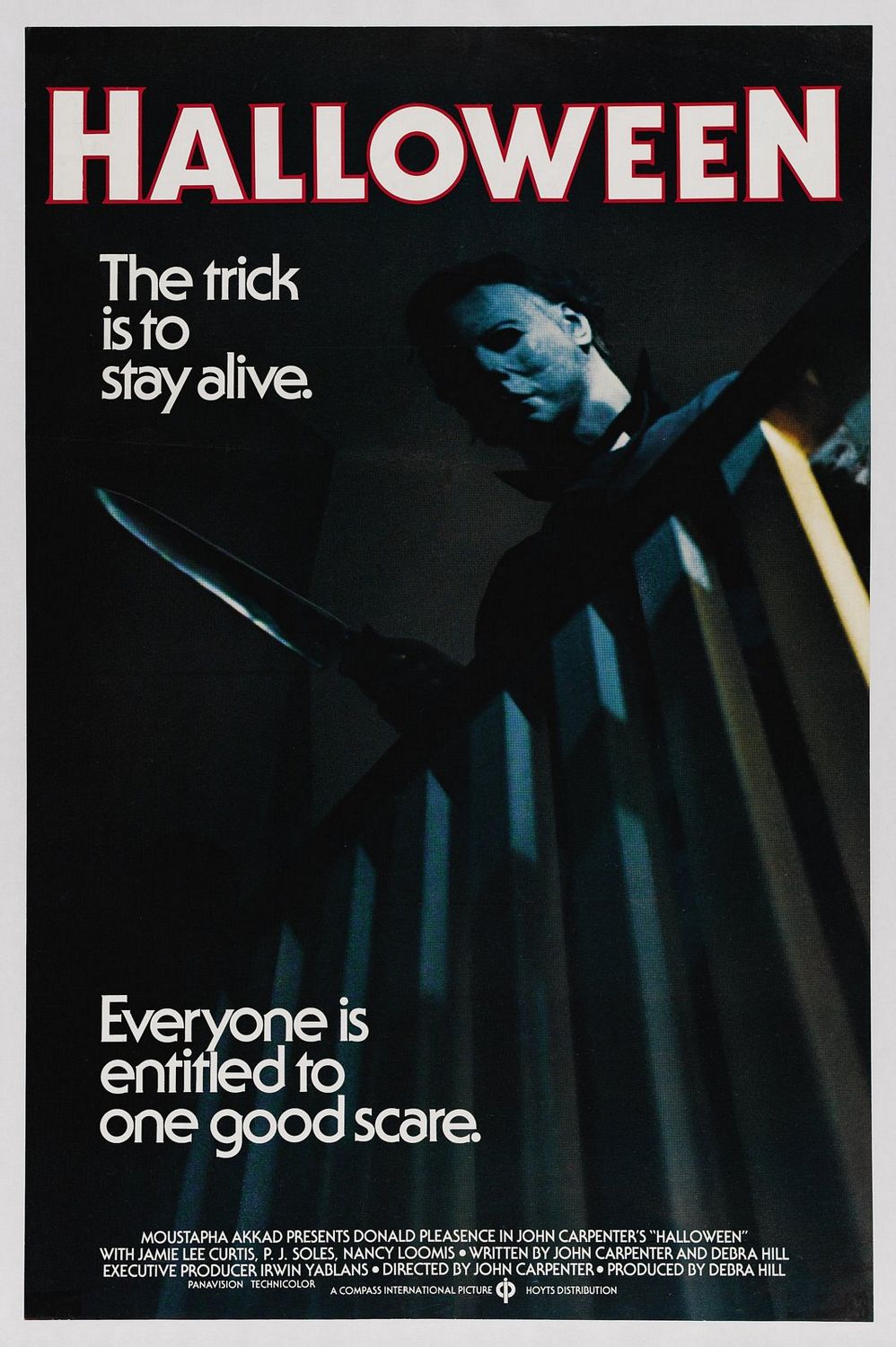
“John Carpenter’s Halloween”
Despite the many imitators and endless sequels, not to mention the two movies directed by Rob Zombie (which was actually pretty good), there’s no beating the granddaddy of them all. Carpenter’s film is a true horror classic with a music theme I never get sick of listening to. All these years later, the original “Halloween” has lost none of its power to creep you out as it offers audiences a truly terrifying experience.
There are moments which have stayed with me long after I saw “Halloween” for the first time. That moment where Michael Meyers kills the boyfriend and then tilts his head from side to side always gets to me. Plus, the ending leaves you with the unnerving truth of how evil never dies.
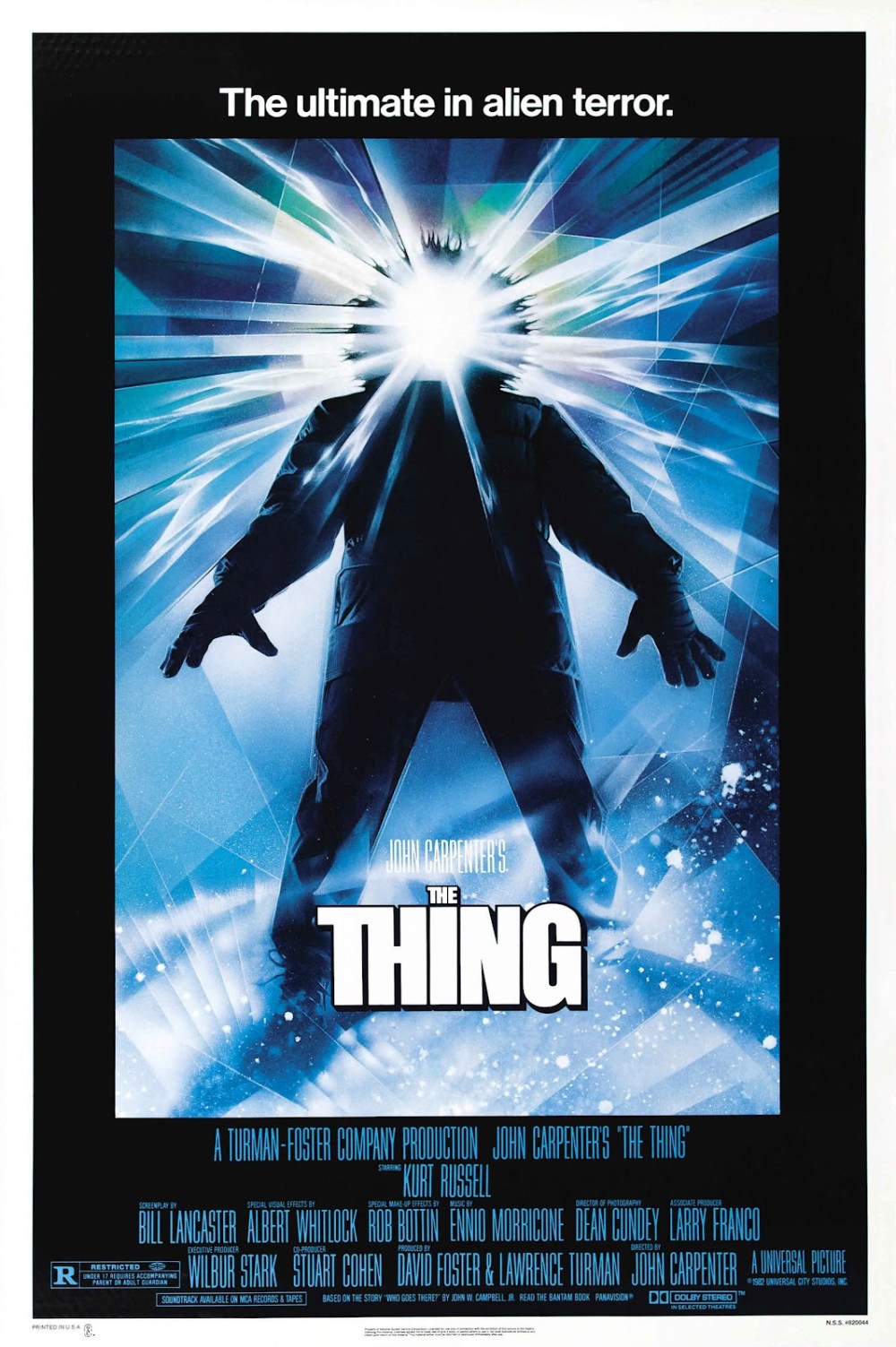
“John Carpenter’s The Thing”
While his original “Halloween” remains a true classic, Carpenter’s remake of “The Thing” is his masterpiece. The film bombed back in 1982, but it has since gained a huge cult following and is now considered one of the best horror films ever made. The story of a group of scientists doing research in Antarctica, one of the most isolated places on Earth, who get copied almost perfectly by an alien is far more effective today than when it first came out. “The Thing” is a great example of how to keep escalating tension throughout a movie’s entire running time, and Rob Bottin’s incredible work on the makeup and effects still looks disgustingly brilliant to this very day.
“The Texas Chainsaw Massacre”
I finally got to see this movie all the way through for the first time a couple of years ago when I rented it from Netflix. What I thought would be a fun and hopelessly dated 1970’s movie turned out to be more horrifying than I ever could have imagined. Even while watching it on my 32″ television, “The Texas Chainsaw Massacre” proved to be a brutal cinematic experience which has lost none of its power to make you shrink in your seat. With a movie like this, it’s not what you see that gets to you; it’s what you don’t see which messes with your head, and that makes this classic of the most unnerving movie going experiences you will ever endure.
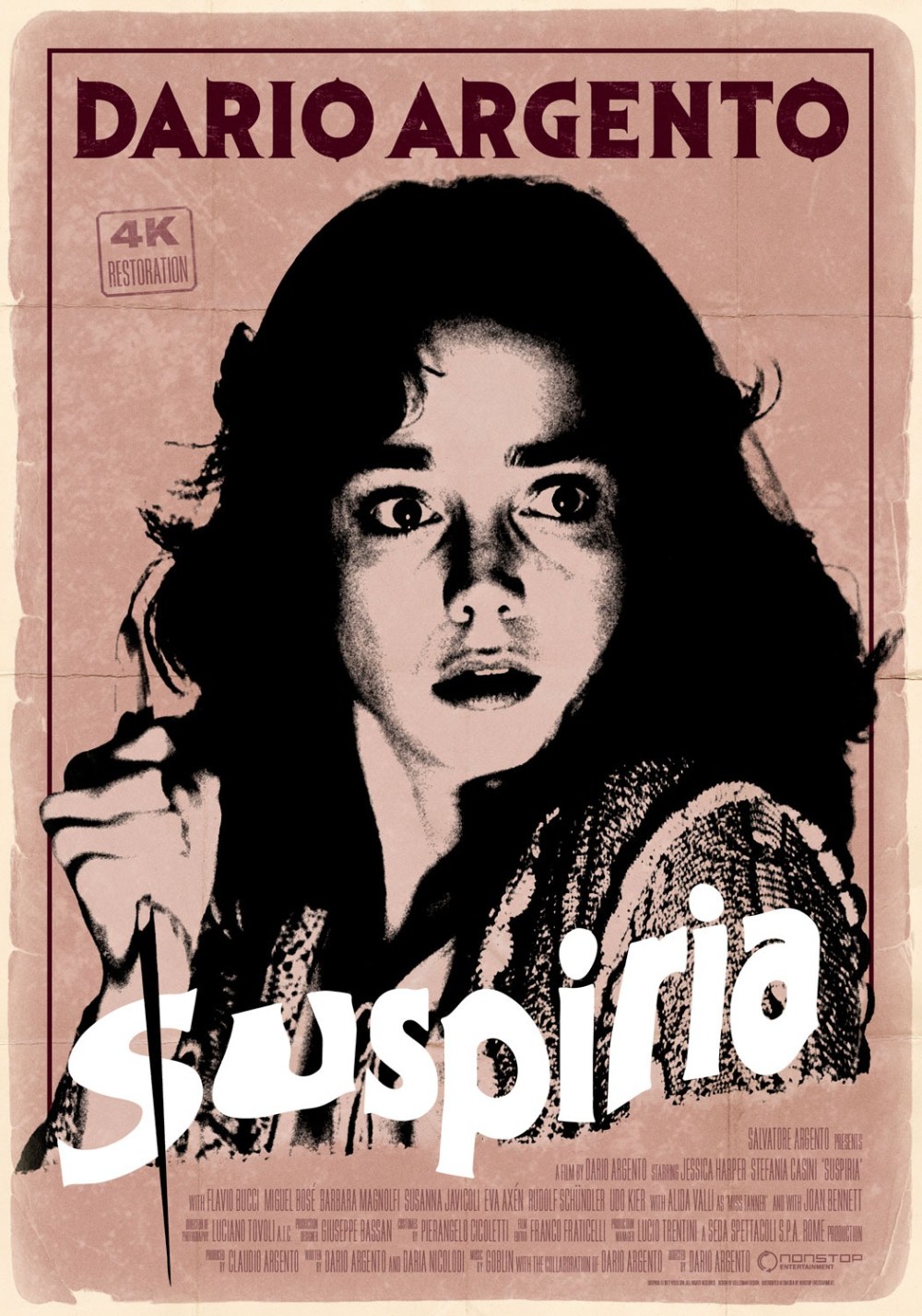
“Suspiria”
It was released 40 years ago, and it remains Dario Argento’s true masterpiece of horror. There are very few directors who can make a grisly death look like a beautiful work of art. The tale of an American female dancer who comes to a ballet school which turns out to be a witches’ coven doesn’t always make sense, but then again, a lot of Argento’s movies don’t. The movie is still scary as hell and beautifully horrific in a way most horror films can only dream of being today. A friend of mine once told me that if she were ever to be murdered (heaven forbid), she wants it to look like something out of a Dario Argento movie. I see what she means.
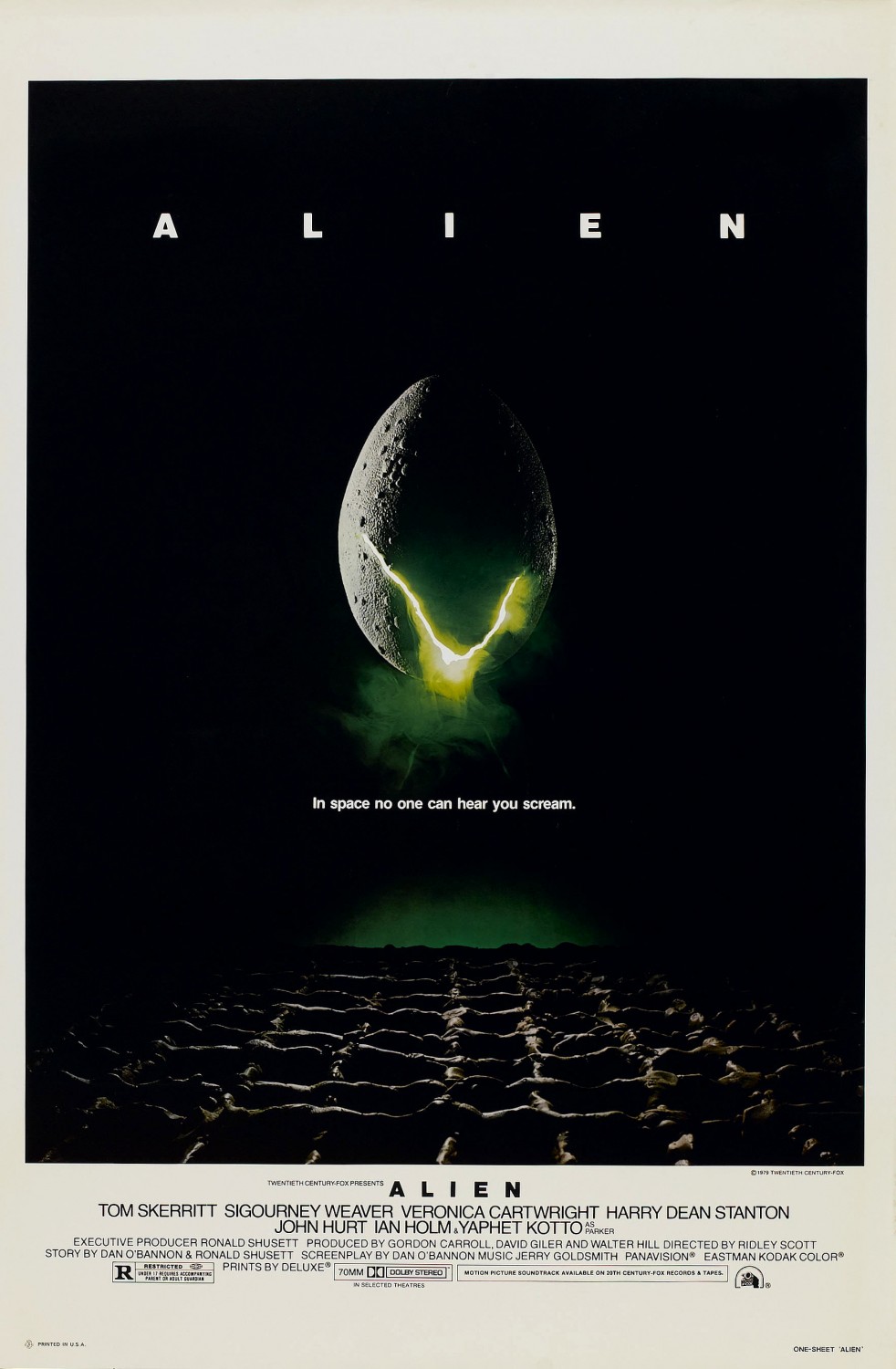
“Alien”
Be it the original version or the director’s cut, Ridley Scott’s “Alien” is still an overwhelmingly terrifying experience to sit through. When I rented this one on videotape years ago and watched it on my parents’ 13-inch television set in their bedroom (they robbed me of using the family room), I found myself hiding my eyes at key moments. The silence really got to me, and I impatiently waited for Jerry Goldsmith’s score to come back on. Keep in mind, I actually saw James Cameron’s “Aliens” before I saw this one, and it still scared the hell out of me!
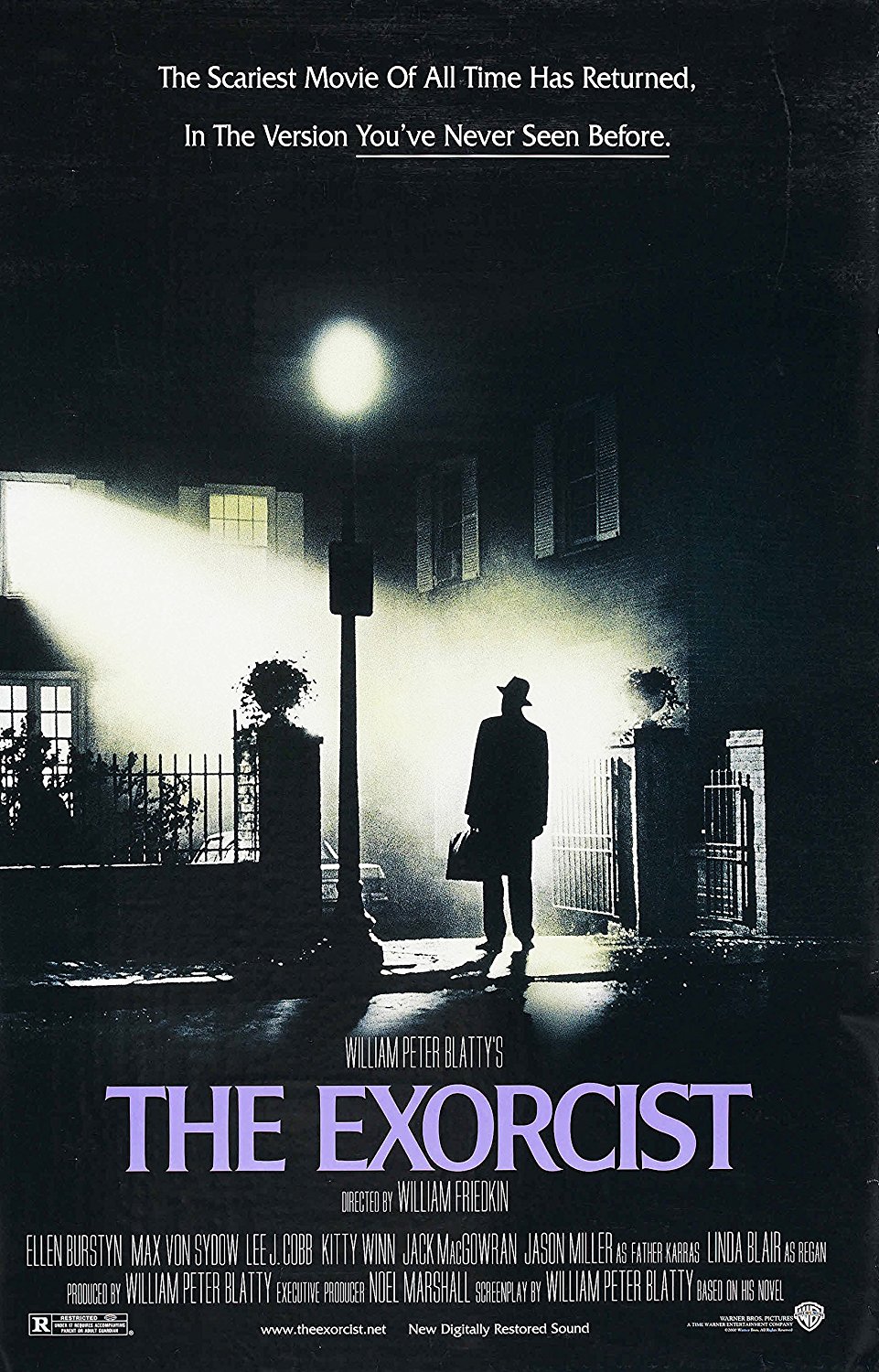
“The Exorcist”
I tell you, these horror movies from the 1970’s still have the same power to shock you today as they did when first released. When William Friedkin’s “The Exorcist” was re-released in “the version you’ve never seen,” it still had a visceral power to unsettle us regardless of the passage of time. The story of a girl who becomes possessed by an ancient demon benefits greatly from a documentary feel which has that “you are there” feel, and it almost felt like I wasn’t watching a movie, but instead a real-life event which somehow all got caught on camera.
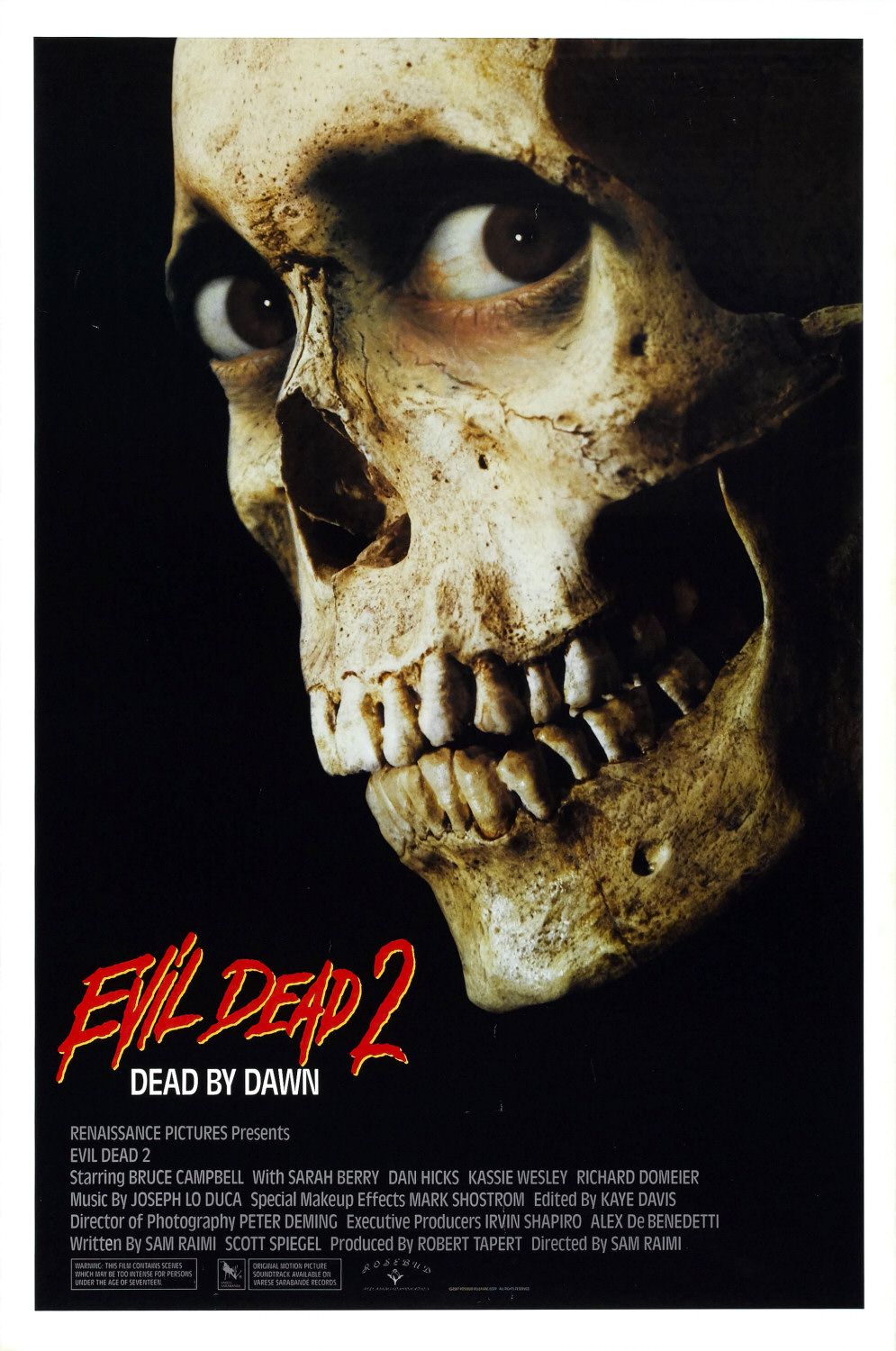
“Evil Dead 2: Dead by Dawn”
All the “Evil Dead” movies are great fun, but if you have to go with just one, then I recommend “Evil Dead 2: Dead by Dawn.” On a budget of $3 million dollars, maybe even less than that, director Sam Raimi gave us one of the most endlessly creative and hilarious horror movies you could ever hope to watch. After all this time, it remains as scary as is funny. Plus, you have Bruce “Groovy” Campbell in his most iconic role as Ash, the pussy whipped salesman from S-Mart who keeps getting chased by the demons he was dumb enough to awaken from their slumber. Campbell gives a fantastic performance even if he keeps telling us he’s not much of an actor. This is so far from the truth, but you do have to admire the sense of humor he has about himself, and you haven’t lived until you listen to one of his “Evil Dead” commentary tracks.
“28 Days Later”
“Slumdog Millionaire” director Danny Boyle was said to have reinvigorated the zombie genre with this propulsive horror thriller where they are anything but slow. In this film, the zombies, or the infected as they are referred to are not the real enemy, we are. The virus the infected have been stricken with represents our inability to face the darkness inside of ourselves which sooner or later rises to the surface. There is no let up on the tension in this movie, and the thrills come fast and furious.
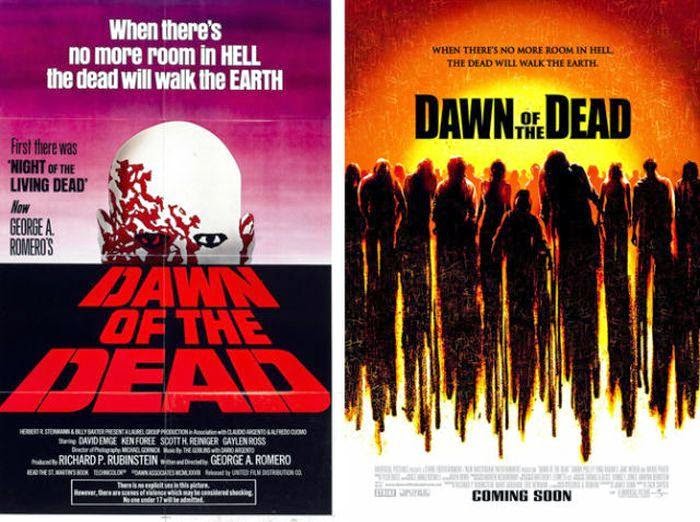
“Dawn of the Dead” (the original and the remake)
This one is a tie because both versions of this movie stand strongly on their own merits. George Romero’s brilliant sequel to his classic “Night of the Living Dead” is really a satire of the consumerist society we all live in. You know, the one which encourages us to buy all sorts of things which are said to make you happy, and yet all the money and objects you purchase end up making you feel empty inside. This is what Romero is saying with this film, and he does this while providing us with a great deal of blood, gore, beheadings, eviscerations, decapitations, and whatever else he could afford when he made “Dawn of the Dead.” All of you in the Fangoria crowd will be more than satisfied with this one, but you knew that already.
Zack Snyder, who later went on to direct “300,” “Watchmen” and “Batman vs Superman: Dawn of Justice” helmed this remake which turned out to be the best of its kind since “John Carpenter’s The Thing.” This one is more of a straight forward horror action film with a surprising amount of emphasis on character development. It also features Canada’s greatest import in the lead role, Sarah Polley. The remake of “Dawn of the Dead” turned out to be a visceral thrill ride, and it allowed us to invest in the characters in ways most horror movies typically avoid.
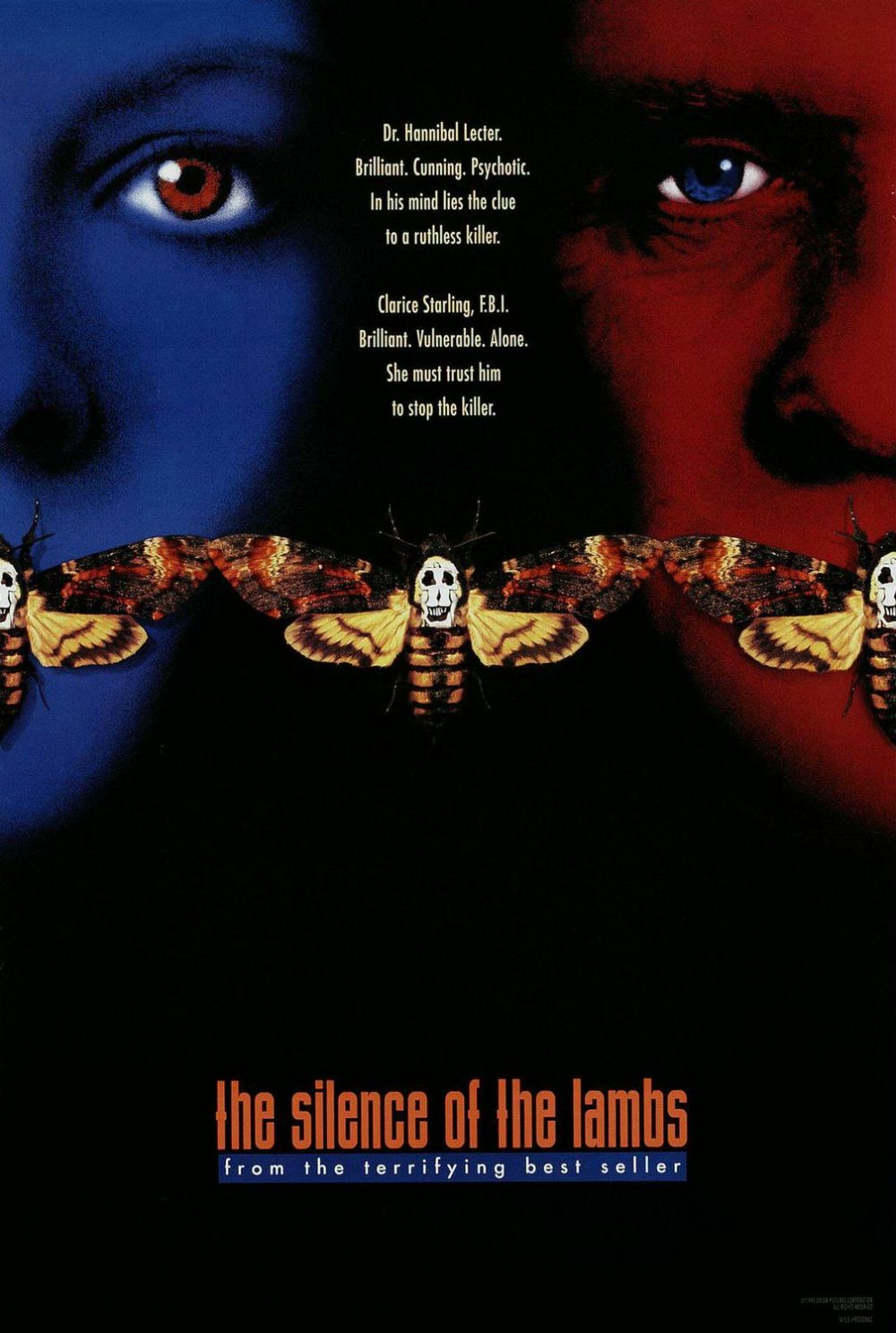
“The Silence of the Lambs”
The specter of Hannibal Lecter, as portrayed by Anthony Hopkins, never fails to unnerve me like he did when I first saw this movie on the big screen. Jonathan Demme’s Oscar winning classic remains one of the definitive serial killer films ever made. Hopkins’ performance is like a perverse love letter to HAL from Stanley Kubrick’s “2001” whose voice inspired his performance. We also get one of cinema’s greatest heroines with Clarice Starling, brilliantly played by Jodie Foster.
It continually amazes me how the movies of John Carpenter have endured years after their release. Many of them were critical and commercial disappointments when they first came out, and it seemed for the longest time that Carpenter would forever be trapped in the shadow of his most successful movie, “Halloween.” “Prince of Darkness” was one of those movies, but it has long since gained a cult following to where the original DVD release became a very valuable collector’s item once it went out of print. Now, Shout Factory has released a special collector’s edition of it on Blu-ray, and it shows us why this movie has lingered in our minds long after we first saw it.
“Prince of Darkness” is about a research team of academics, students and a priest who discover an ancient canister in the basement of an abandoned church. This canister contains a liquid which ends up turning people into zombies, and the team eventually realize they have unknowingly unleashed the evilest thing imaginable as it could destroy anything and everything. It is not your typical horror movie as it deals with theoretical physics and atomic theory, but once you get into the story and look closely at the theories being explored, everything becomes quite terrifying.
I won’t bother going into how great the audio and visual elements of this Blu-ray are because it goes without saying “Prince of Darkness” has never looked as good as it does here. Let’s just skip ahead to the special features on the disc as the ones included here will provide fans with a wealth of information.
First off, the Blu-ray case states there is a commentary track with John Carpenter, but what it neglects to mention is that he is joined on this track by actor Peter Jason. Jason plays Dr. Leahy in “Prince of Darkness,” and he has appeared in many of Carpenter’s movies from this one to “Ghosts of Mars.” Carpenter’s commentary tracks are always great fun to listen to, but they are even more entertaining when he’s pared with someone else, and the conversations he has with Jason are tremendous fun as they discuss what it was like making a horror film with a budget of only $3 million dollars. Actually, this track was originally included in the Region 2 DVD release of “Prince of Darkness,” so it’s nice for those us who lack multi-region players to finally get the opportunity to listen to it.
Another special feature to is a brand-new interview with Carpenter called “Sympathy for the Devil.” In it, Carpenter explains how he had been making big budget studio movies before “Prince of Darkness” and had gotten tired of making them. With “Prince of Darkness,” he got the opportunity to go back to making low budget features where he had complete creative control. Carpenter speaks of how a book on quantum physics inspired him to write the script for this movie, under the name of Martin Quatermass, and of how he loves to view the apocalypse through movies even though he does not look forward to it in real life.
There’s also a brand-new interview with musician Alice Cooper who plays the leader of the street people who surround the abandoned church (he is billed as “street schizo”). The interview is called “Alice at the Apocalypse,” and Cooper talks about how he grew up on black and white horror movies like “Creature from the Black Lagoon” which he said “scared him appropriately.” He even admits he was glad his character had no dialogue, and I loved how he described how his songs get at how Satan’s greatest trick is in getting you to believe he doesn’t exist.
Then there’s “The Messenger,” an interview with actor and Special Visual Effects Supervisor Robert Grasmere. Grasmere portrays Frank Wyndham, the one guy who thinks that the research team’s job at the abandoned church is just a bunch of hooey. He starts off the interview talking about the practical effects used in “Prince of Darkness” and of how much of a nightmare the canister was to move around the set. Then he goes into how he got cast as an actor in it, and of how he ended up speaking some of the movie’s most famous lines of dialogue.
I want to take this time to tell you “Prince of Darkness” features of my favorite scores by Carpenter and Alan Howarth. Howarth himself shows up for the interview “Hell on Earth” in which he discusses how they worked on the music for this movie. Howarth has done interviews on other Shout Factory releases like “Halloween II” and “Halloween III: Season of the Witch,” but this feels like the most detailed interview he has given on working with Carpenter yet. It’s also fascinating to hear what it was like to make a film score before everything was recorded digitally.
Other special features on this collector’s edition include an episode of “Horror’s Hallowed Grounds” in which host Sean Clark toured the locations where “Prince of Darkness” was shot. Some of it was filmed at Carpenter’s Alma mater USC, and the church used is located in downtown Los Angeles and is now known as The David Henry Hwang Theatre. The scenes of the church were shot in a deserted ballroom in Santa Barbara which has long since been demolished.
You will also find the movie’s theatrical trailer which seems to imply things were supposed to end a little differently than it did. There are also radio spots which are amusing to listen to, a still gallery, and the alternate opening from the movie’s television version. Regarding the alternate opening, it makes the whole film look like it was all a dream in Jameson Parker’s head, and I never quite understood why Universal Pictures did this (it was definitely not Carpenter’s idea).
In addition, there is an easter egg to be found on this Blu-ray. When you click on the Bonus menu, you will see a cross on the right side. Click on it, and you can watch a Q&A with Carpenter at Screamfest 2012 where “Prince of Darkness” was screened in honor of its 25th anniversary. The whole thing was shot on iPhone so you will need to pump up the volume a bit to hear what is being said.
“Prince of Darkness” is by no means a perfect movie. Some of the acting is weak and the special effects do show their age, but it is still a very compelling horror film which deals with scientific theories that give the story more of an edge. Those of you who are big John Carpenter fans would do yourselves a disservice by not checking out this release. Those who really like this film will agree Shout Factory has given it the respect it deserves.
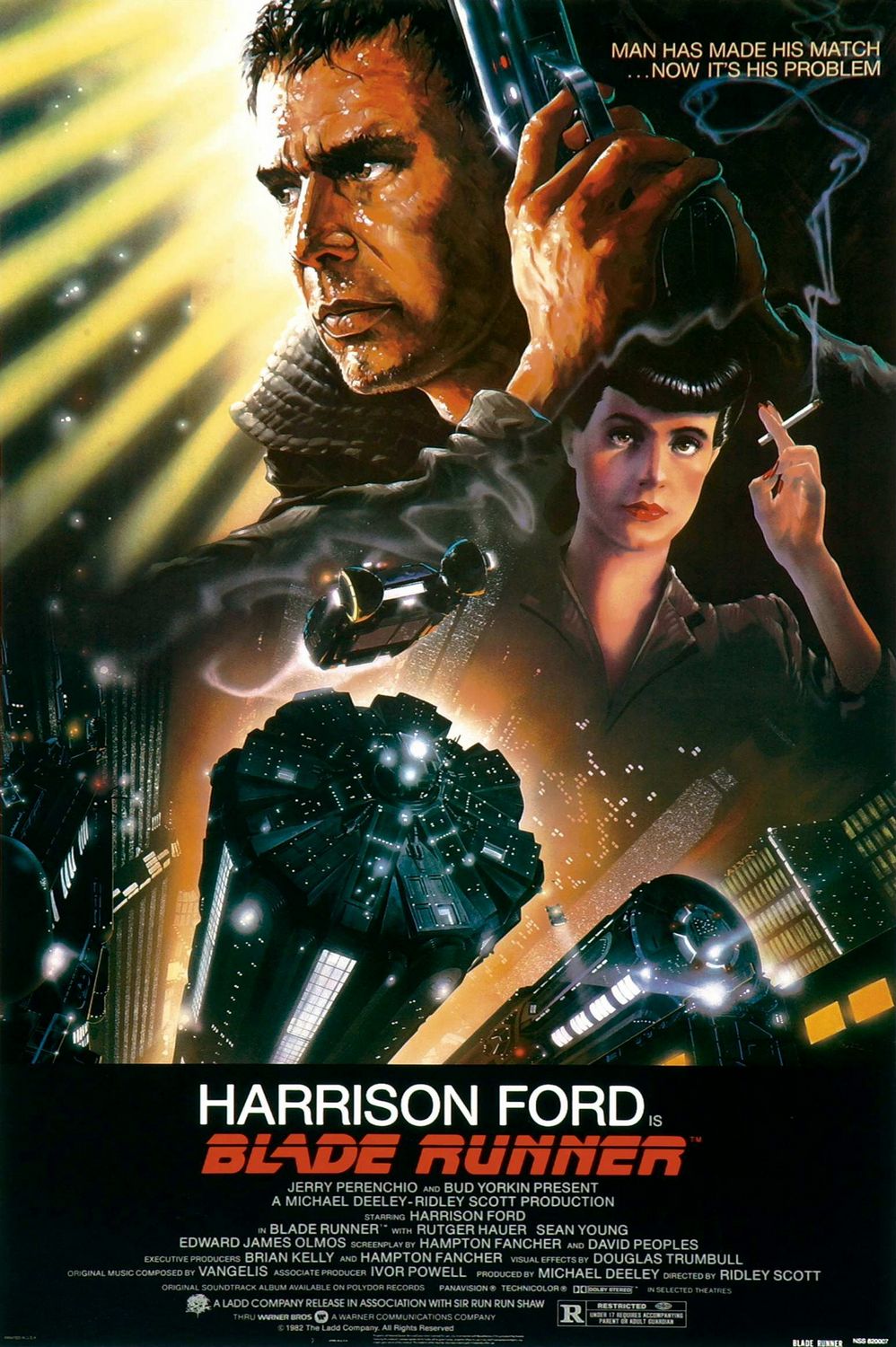
I always wondered why Ridley Scott could never leave “Blade Runner” well enough alone. It was released back in 1982 and, at that time, was one of the few Harrison Ford movies to bomb at the box office. But, like many great science fiction movies, it has gained a well-deserved cult following which appears to be getting bigger and bigger each year.
One of my close friends is a die-hard fan of this movie, and he believes Scott went back to do another cut because the acclaimed filmmaker realized he would never ever have it this good as a director ever again. Ridley has made a lot of great movies since this one, but I can see what he meant.
“Blade Runner” remains, after all these years, one of the best science fiction films ever made as it has a look which is so unique to where I cannot easily compare it to any other movie from its genre. It puts a lot of other futuristic movies to shame; especially those made so cheaply (remember “Cyborg” with Jean Claude Van Damme?), and seeing it on the silver screen in all of its visual glory was a sight to behold.
Harrison Ford stars as Rick Deckard, a blade runner who is hired to track down and kill replicants who have escaped and are looking for their maker. Replicants are human clones created to serve colonies outside of Earth, and this shows how far we have gone in terms of space travel in regards to the time this movie takes place in. As a blade runner, Rick specializes in terminating replicants who have been labeled illegal after a bloody mutiny which they caused.
Ford embodies the character of Fred Decker as though he walked out of a detective story from the 1940’s. Decker is from a long line of burned out detectives who are the best at a job they no longer want to be the best at. But of course, they have to come out of retirement as no one else can do what they do so well. Ford looks as though he has had the life sucked out of him at the movie’s start, but he becomes resurrected upon becoming involved with a female replicant named Rachael, and she is played by Sean Young.
Watching Young in this movie is something else as she is perfect here as a female who is so clearly a replicant when we first meet her. However, as the movie goes on, we find ourselves forgetting this as she exhibits human emotions which we would not expect to see from someone like her. Decker becomes utterly infatuated to her, and you want to say he is falling in love with what is essentially a robot. But I guess when a robot is as pretty as Young is here, and she was in her 20’s when the movie was released, I guess you can’t really argue with that.
Seeing “Blade Runner” for the first time in years, it is funny to see how its themes have been used over and over again in popular culture This movie seems to suggest we made these replicants to remind ourselves of how human we used to be. Like U2 said, they threaten to be even better than the real thing. They exhibit a life force which has long since been burned out of us as we have become numbed to how brutal real life can be on our conscious mind. Or maybe they are here to remind of us how much of a slave we have become to technology. There are points where you have to wonder if any of these characters can tell the difference between what is real and what is not.
The leader of this group of renegade replicants is Roy Batty, a viciously passionate replicant played to the hilt by Rutger Hauer. He has ten times more passion than the humans he relentlessly torments, and his last speech in “Blade Runner” is one of the most beautiful moments ever in a 1980’s film. The “tears in the rain” part of it was something he actually improvised on the spot.
So, what is it about this “final cut” which makes it different from the other versions? To be honest, I’m not sure. My understanding is the director’s cut which came out previously did not have Scott’s input on it. So, it is safe to say this cut is his final statement, so far, on this movie.
After all these years, “Blade Runner” remains a true sci-fi classic which is ever so deserving of its huge cult following. Again, there is really no other movie I can easily compare it to on a visual level. Thematically speaking, there are many movies which deal with the future, dystopian or otherwise, but none of them will ever look like the one Scott conjured up here.
After I finished watching “The Texas Chainsaw Massacre,” I was in no hurry to watch part two. The 1974 horror classic still probes to be an intensely unsettling cinematic experience decades after its release, and Tobe Hooper’s film was far more terrifying than I expected it to be. Recovering from the original was no different than when I slowly pulling myself back together after watching Darren Aronofsky’s “Requiem for a Dream” or just about any Lars Von Trier film. But with Hooper having recently passed away, the time had come for me to check out “The Texas Chainsaw Massacre 2,” a sequel heavily criticized when it opened in 1986, but which has since become a cult classic in the eyes of many.
“The Texas Chainsaw Massacre 2” takes place over a decade after the original, and an opening narration tells us the police searched for Leatherface and his cannibal family but never found any trace of them. But of course, it doesn’t take long for this sequel to reintroduce us to Leatherface as he gleefully slices away at a pair of obnoxious high school seniors who harass on-air radio DJ Vanita “Stretch” Brock (Caroline Williams). Stretch captures the audio of these kids’ murders and passes it on to Lieutenant Baude “Lefty” Enright (Dennis Hopper), uncle to Sally Hardesty and her wheelchair-bound brother Franklin who were victims of Leatherface’s chainsaw wrath. From there, the two of them become determined to end Leatherface and the Sawyer family’s reign of terror once and for all.
How you enjoy this sequel largely depends on what your expectations are when you go into it. If you think Hooper planned to match the claustrophobic terror and unnerving power of the original, you are in for a serious disappointment. But if you are able to accept this sequel in regards to what Hooper intended to accomplish with it, I think there is a good deal of fun to be had even if feels like there is a lot missing from this follow-up.
With “The Texas Chainsaw Massacre 2,” Hooper wanted to focus more on the black comedy he said was inherent in the original. Was there black comedy in the original? Yes, but it took a couple of viewings to realize this was the case. This sequel, however, was made to satirize both horror movies and the excess of the 1980’s. Since this one came out in 1986, the time had come to take aim at the greed which came to define this particular decade. Also, when you take into account how the poster gleefully parodies the one for “The Breakfast Club,” you should know this a film which will not take itself too seriously. Plus, this was released by Cannon Films, so you could count on it being entertaining, and maybe for reasons its director didn’t intend.
Looking back at “The Texas Chainsaw Massacre 2,” my feelings about it are decidedly mixed. I did enjoy the frenzied energy Hooper and company brought to the proceedings, and the actors look like they had great fun committing onscreen mayhem. At the same time, it feels like a missed opportunity as the style and substance of this sequel proved to be much too distant from the original. Its links to the 1974 film are very weak to where this feels like a sequel in name only. Sally Hardesty (Marilyn Burns’ character from the original) is only mentioned in the opening narration as having since gone into catatonia. It would have been cool to see her come back in one way or another, perhaps as some badass hardened warrior eager to get revenge. Heck, this sequel came out in the summer of 1986 not long after Sigourney Weaver set a new standard for female action heroes in “Aliens.” Had Burns come back, it could have been the summer of the vengeful female warrior.
One thing which especially bummed me out was the lack of actors returning from the original. In fact, the only actor from the original to appear here was Jim Siedow who reprises his role as Drayton Sawyer. While his creepy face alone is the kind which inspires wicked nightmares, Siedow doesn’t get as much to do this time around. As for Leatherface, he is portrayed by Bill Johnson and not Gunnar Hansen who brought a twisted realism to the iconic horror character. Johnson isn’t bad as he can wield a rusty chainsaw like the best of them, and his sudden appearance from a room filled with vinyl records results in one of this sequel’s scariest moments, but Hansen is sorely missed here as no other actor can possibly match what he brought to the first film.
The rest of the cast, however, does rise to the frenzied challenge Hooper laid out for them. Bill Moseley, who has since appeared in Rob Zombie’s “House of a 1,000 Corpses” and “The Devil’s Rejects,” looks to be having the time of his life as Chop-Top Sawyer as he gleefully tortures Stretch even after a part of his skull gets accidentally sawed off by Leatherface. Speaking of Stretch, Caroline Williams brings a wonderfully spunky energy to the role as she uses her smarts to outwit the Sawyer family in an effort to escape with her life, and her last moment in this sequel is a memorable one to say the least.
But the actor I got the biggest kick out of watching in “The Texas Chainsaw Massacre 2” was Dennis Hopper who played former Texas Ranger Baude “Lefty” Enright, a man deeply obsessed with finding the Sawyer family and avenging the suffering they and Leatherface inflicted on his kin. Hopper was in the midst of a major comeback in 1986 as he appeared in “Hoosiers,” “River’s Edge” and, most famously, David Lynch’s “Blue Velvet.” While those films are better examples of his acting, his performance in this sequel is equally inspired as he clearly knew he was in an over-the-top horror movie and relished the opportunity to go mano-a-mano with Leatherface. Seeing the “Easy Rider” battle Leatherface with a chainsaw is wickedly gleeful fun as a battle with chainsaws is something this sequel just had to have.
So, when all is said and done, I did admire “The Texas Chainsaw Massacre 2,” but certainly not it in the same way I admired the original. Hooper’s vision wasn’t lacking here in the slightest, but he instead took things in direction fans were prepared for 30 years ago. It is only with the passing of time we can look at it differently and understand how it attained cult status. I don’t think it’s a bad film, but it does feel strange compared to what came before.
Looking back, “The Texas Chainsaw Massacre 2” represented one of several attempts by Menahem Golan and Yoram Globus of taking a well-received motion picture and turning it into a hopefully long-running franchise. Clearly, they had more luck commercially, if not critically, with “Death Wish,” but at least this sequel fared much better than “Superman IV: The Quest for Peace,” the film which pretty much put the final nail in the coffin for Cannon Films.
Of course, “The Texas Chainsaw Massacre” franchise didn’t stop there as the buzz of the saw is still an inviting sound to horror fans all over the world, and filmmakers have continued on with other sequels, a remake, prequels and, yikes, an upcoming origin story. People still want to experience the visceral thrill the 1974 horror classic in one way or another, but when it came to “The Texas Chainsaw Massacre 2,” perhaps Hooper realized from the start that it was not possible to top the original or match its terrifying power. Instead, he felt it was better to try something a little different, and that’s what he did with this sequel for better and for worse.









 The Ultimate Rabbit