No, I Haven’t Seen It Until Now: ‘Super Fly’ (1972)
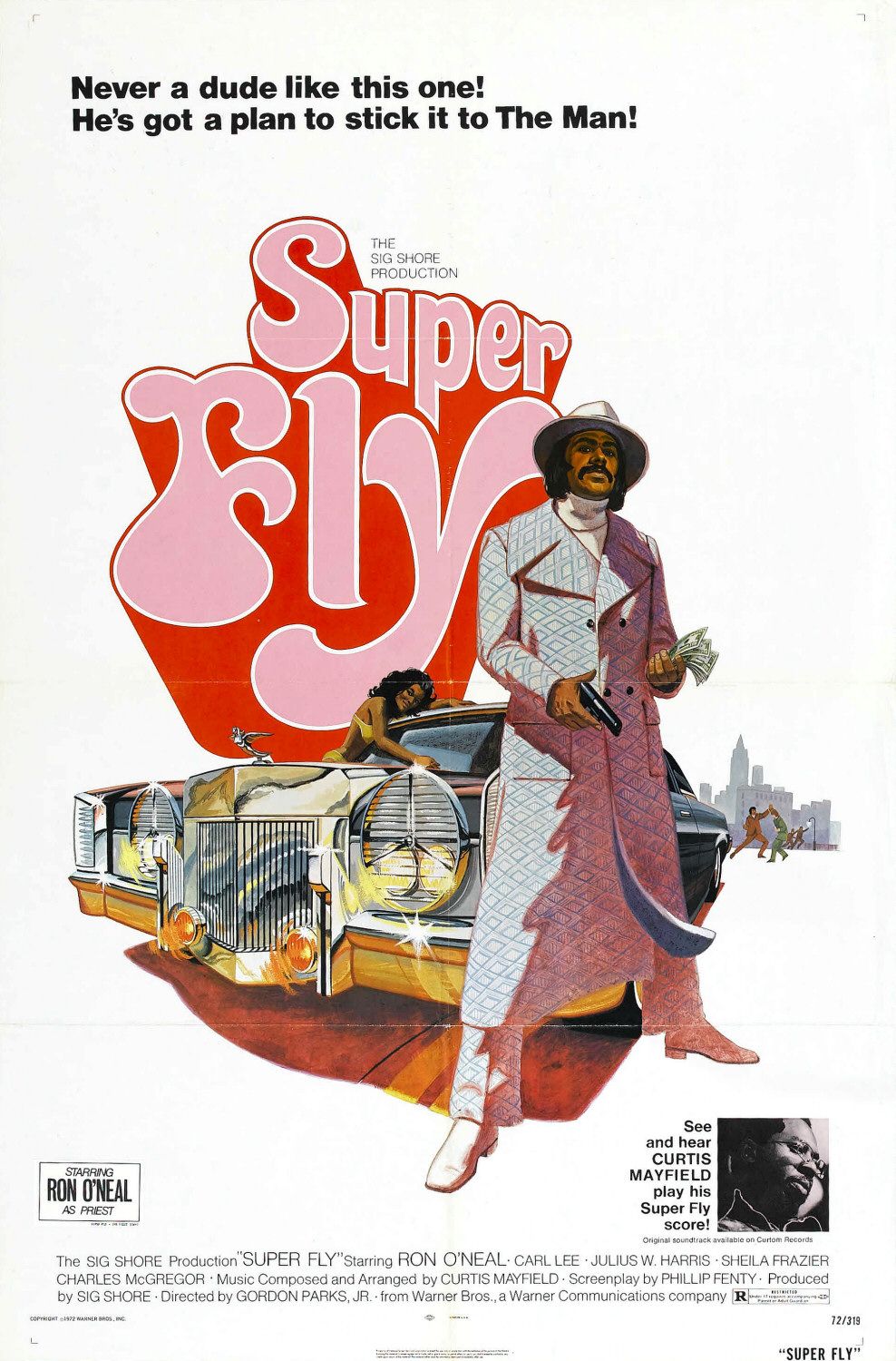
Super Fly 1972 poster

With the remake about to be released, it was time to check out “Super Fly,” the 1972 blaxploitation crime drama which is considered one of the biggest classics of the genre. I have been aware of this film’s existence for years, and the photo on its VHS cover of Ron O’Neal holding a gun and looking ever so cool in his white suit and pants has been burned into my memory for decades. But like many movies I perused at local video stores, all of which have since vanished, I never got around to watching it until now.

While I certainly understand why “Super Fly” is long considered a classic blaxploitation film, it is not necessarily a great movie. On one hand the signs of its low budget are very much on display throughout to where I was reminded of what John Carpenter once said about the rule of making independent movies: “Shoot as little film as possible and make it as long as you can.” But on the other, it presents us with a New York time which no longer exists in modern day America, and the gritty realism of the city streets is on display throughout to where the movie’s existence is especially important as you can only fake this kind of realism in today’s cinematic world.

Ron O’Neal plays Youngblood Priest, an African-American drug dealer who enjoys a luxurious lifestyle in Harlem, New York. He got the name Priest because of the cross he wears around his neck. While this cross may or may not reflect his belief in God or any religious deity, a closer inspection reveals that the tip of the cross is fashioned in the shape of a spoon, and this allows him to do lines of cocaine whenever he needs a hit. In addition to his high-class apartment, the kind which would fetch at least a million in today’s New York real estate market, he also has a dedicated girlfriend in Georgia (Sheila Frazier), a white girl mistress named Cynthia (Polly Niles), the best set of clothes any man would be lucky to own and wear at the time, and he drives around town in a 1971 customized Cadillac Eldorado. Looking at Priest is to be convinced this is a man who has a lot of power and confidence you would be foolish to question, and this is something he does not have to spell out to anyone in words.

But as successful as Priest is, he yearns for a life outside of the underground drug business. This, of course, leads to him to plan one last “big score” which he believes will allow him to retire and go straight, but those of us who have watched countless gangster movies know this last big score will be the one fraught with the most danger. It gets to where there I expected the one scene where Priest just shakes his head as if to say to himself, “I should have gotten out of the life sooner, and now it’s too late.” Still, Priest is much smarter than his friends and foes realize, and we watch as he plots his way to his biggest drug deal ever, and then attempt to stay one step of everyone else who wants to do him in.

It has been said that the screenplay for “Super Fly” was only 45 pages long, and this is why we get exposed to so many shots of people walking, driving and talking in restaurants. This is the kind of film editing you would never see today as everything needs to move at a fast pace. This ends up dragging the movie down a bit as certain moments play themselves out for much longer than is necessary. Still, it allows us to take a look back at the New York that was before it, for better or worse, was cleaned up to where much of the state if unaffordable to live in. This helps to make up for other scenes which are staged rather pathetically, especially one in which a character gets hit by a car.

O’Neal immediately comes across as the personification of cool from the first moment he appears onscreen. He was in his 30’s when starred in “Super Fly,” but his face has the look of a man who has seen a lot in life up to that point, and this makes his performance as Priest feel all the more powerful and authentic. I never got the feeling he was trying to glamourize Priest’s lifestyle, and he was not afraid to make this character a rough and unlikable dude at times. He simply portrays Priest as a man who makes his way through life the only way he knows how, and his methods as you can imagine are not always morally sound.

As for the rest of the cast, their performances range from okay to pretty good. Charles McGregor, who was released from prison before “Super Fly” began filming, has some good moments as Fat Freddie, and Carl Lee, who plays Eddie, has a strong scene in which he tells Priest if it wasn’t for him, he would have overdosed. This line of dialogue would later prove to be tragically ironic as Lee became a heroin addict, and he died of a drug overdose back in 1986.

When “Super Fly” was released, many African-Americans were said to have been displeased with the way the movie glamourized people like themselves as drug dealers and pimps, but it resonated deeply with others who saw the movie as an example of how to rise up in the American class system. Does this movie glamourize the lifestyles of drug dealers? Well, perhaps it does, but the scary truth is there is always an allure to a life like this as it affords us a wealth which constantly seems out of our reach. Still, it should be noted how we never really see Priest enjoying himself much in the movie. While he has many things a person would want in life, we see right from the start how he has long since tired of his role in society to where it is believable and understandable why he yearns to do something legitimate for a change.

For those who think “Super Fly” provides audiences with a rather ambiguous look at the world of drugs and drug dealing back in the 1970’s, you need to take the time to listen Curtis Mayfield’s soundtrack to it which, by the way, is one of the best of its kind ever. An exhilarating fusion of soul and funk music, Mayfield also provided lyrics which were very socially aware and took an even closer look at drugs and poverty in society. When you read the lyrics of the song “Freddie’s Dead,” you can see the evidence of this very clearly:

“Everybody’s misused him

Ripped him up and abused him

Another junkie plan

Pushing dope for the man

A terrible blow

But that’s how it goes

A Freddie’s on the corner now

If you want to be a junkie, wow

Remember Freddie’s dead

We’re all built up with progress

But sometimes I must confess

We can deal with rockets and dreams

But reality, what does it mean

Ain’t nothing said

‘Cause Freddie’s dead.”

Looking at this, it is no wonder the soundtrack ended up making more money than the movie itself, and the movie did make a huge profit.

So “Super Fly” may not be an example of great filmmaking, but it should be noted how its production succeeded in offering advances for African-Americans. The city of Harlem went out of its way to back the movie financially, and many black businesses helped with production costs. Furthermore, the majority of the crew were in fact African-American, something which was very rare at this time in cinema. Taking all this into account makes “Super Fly” all the more enjoyable as it was a movie made with passion and respect as the filmmakers sought to tell it like it is. Despite its glaring flaws, it is a very cool movie to experience, and I am glad I finally got the chance to check it out, especially before I went out to see the remake.

* * * out of * * * *

‘Klute’ Features One of Jane Fonda’s Best Performances on Film

Klute movie poster

Many keep wondering what draws people, and not just women, to prostitution. It seems such a sordid profession which offers nothing but degradation and humiliation to those involved in it. Other than money, what does draw people into a lifestyle like this one which has been around for so long? From a physical point of view, it’s got to get tiresome after a while. Maybe it is appealing from a psychological point of view; people profiting off the needs and weaknesses of others may very well be its selling point. To have control over another person is always an appealing prospect.

This is made clear in “Klute” which was directed by Alan J. Pakula who had a talent for taking familiar stories and populating them with characters you can recognize from real life. The movie revolves around the case of a missing man and a private detective named John Klute (Donald Sutherland) who has been assigned to find him. The only lead he has is a prostitute named Bree Daniels, and she is played by Jane Fonda in one of her best roles.

Fonda won one of her two Oscars for her performance in this classic 1970’s thriller. It is a wonderfully complex role for an actress to play as Bree is a struggling actress and model who finds a power and control as a call girl she doesn’t have elsewhere in life. In one of several meetings with her psychiatrist, Bree admits she doesn’t enjoy the physical part, but she does enjoy the act she plays for all her clients. When she is with them, she considers herself to be the greatest actress in the world and brilliantly exploits their weaknesses to gain a higher price for her services.

Bree, however, ends up finding a different view on life with John, a man as straitlaced and upstanding as they come. Donald Sutherland has one of his best roles here, and while his character ends up succumbing to Bree’s charms, he never completely loses himself in his desires. Throughout the movie, he remains the source of hope and strength Bree needs when she finds out someone wants to kill her.

When Bree does ends up sleeping with John, she thinks she has him right where she wants him. She quickly intuits her strength over him as a result of him not making her orgasm as a weakness on his part, but later finds herself losing this power she has over men while she is with him. Bree finds she likes being with him, and this scares her because love is not something anyone can have any control over. There is a beautiful moment when she is shopping with John at a local farmer’s market, and you can see the insecurity on her face. She feels strongly for John, and it frightens her as the addiction she has for being a call girl may overwhelm her true love for him.

Pakula does a great job of increasing tension throughout “Klute,” and this is heightened by the characters being very relatable and down to earth. This has been the case with the majority of his movies like “All the President’s Men,” “The Parallax View” and even “Presumed Innocent.” Even if the plots of some of his movies seem far-fetched, it is the reality of the characters and the world they inhabit which sucks us in.

“Klute” also features another great performance by the late Roy Scheider as Frank Ligourin, a pimp disguised as a record producer. Scheider makes him unlike other pimps we have seen in “Taxi Driver” or “Street Smart” as he makes his character much more casual in his cruelty and control over those who work for him. He doesn’t deal too much in force because it doesn’t suit him well, and it would affect the relationships he has with his employees.

We do find out who’s threatening Bree early on, so the whodunit element of “Klute” disappears rather quickly. This could have really sunk the movie, but Pakula gets away with it because we find it is integral to the themes the movie explores: perversity, sexuality and the mentality behind them. Many think they are above perversity, but there is a darkness inside of us which often goes unchecked. The more we repress it, the more explosive it becomes when finally released. There are no good or bad guys in this movie, just people trying to measure out what they feel is right and wrong, and some do a better job of figuring this out than others.

“Klute” does have an anticlimactic ending, but that’s probably because the one we expect a movie like this to have would have just taken away from the reality of the story. Either way, it proves to be one of the most memorable movies of the 1970’s.

* * * * out of * * * *

‘Sorcerer’ May Very Well Be William Friedkin’s Masterpiece

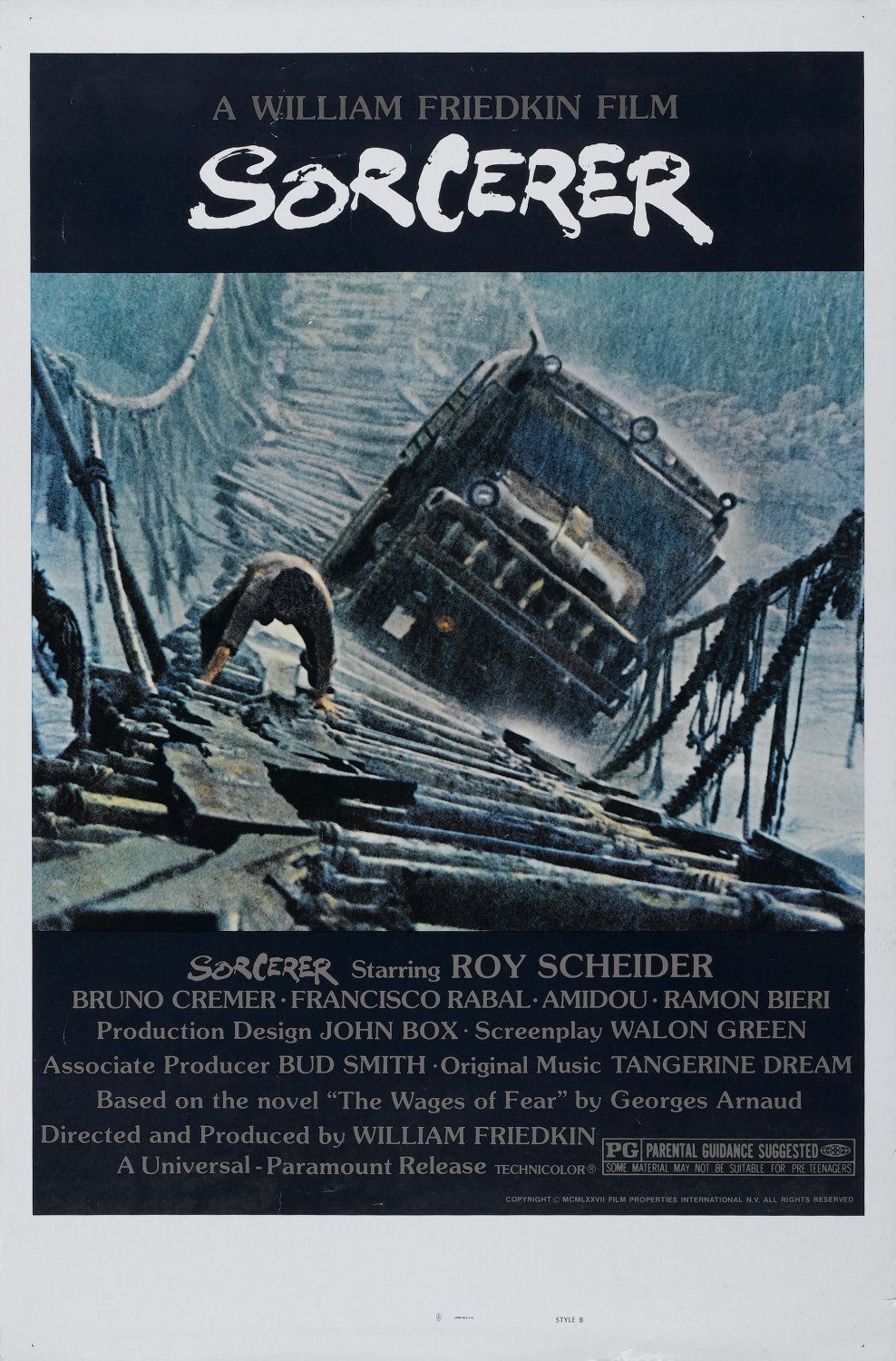
Sorcerer movie poster

This is the movie that almost completely destroyed filmmaker William Friedkin. “Sorcerer” came into theaters with a high level of anticipation, which was understandable as it was made by the same man who gave us “The Exorcist” and “The French Connection.” Lines were wrapped around the block when it opened at Mann’s Chinese back in 1977, but by the second week the theater was practically empty. “Sorcerer” was considered to be a critical and commercial failure, and Friedkin’s career has never been the same since. Of course, it opened around the same time as a small independent feature which blew away the competition. You may have heard of it, “Star Wars?”

Well, they say time heals all wounds, and “Sorcerer” has been critically re-evaluated to where it has received the critical acclaim it long deserved. The film is quite an accomplishment and a fascinating study in madness and redemption, and you will never look at truck driving the same way again after watching it. Depending on who you ask, it t is a remake of Henri-Georges Clouzot’s “The Wages of Fear” (Friedkin denies it is). The Oscar-winning director put his heart and soul into “Sorcerer,” and it pins you back into your seat and thoroughly exhausts you long before it ends. Like many great movies, it is one you experience more than watch.

“Sorcerer” takes its time getting started as we watch the back stories for its four main characters and of how they ended up at where they are. We meet hitman Nilo (Francisco Rabal) who takes down a target with a simple bullet, Kassem (Amidou) as he bombs a local church with the help of his friends, investment banker Victor Manzon (Bruno Cremer) who is about to be jailed for fraud, and then there’s Jackie Scanlon (Roy Scheider) who is marked for execution after his gang robs a church and accidentally kills a priest.

After this protracted prologue, the action moves to an unnamed location in a Latin American country which these four people have escaped to and seek refuge in. The utter squalor these men are forced to live in is so vivid to where it feels like the flies and stench of the environment doesn’t stop at the silver screen. You know how some people look at a movie and say it really made them want to take a cold shower? One shower is not enough to get past the filth these characters are forced to live in from day to endless day. This place is hell on earth for anyone, but these men obviously prefer it to death. They managed to avoid prison, but they came to a different kind of prison they are now ever so desperate to escape.

The chance for escape comes when an oil refinery suddenly explodes into a fireball, and the firefighters are unable to put the fire out without the help of explosives. Company executives manage to find a surplus of nitroglycerin sticks which can do the job, but the only catch is these sticks have not been turned and, as a result, have become highly sensitive and to where the slightest vibration could make them explode. So when an offer comes to drive this unstable set of explosives to the burning oil field for a high reward, these four jump at the chance to do the job. The rest of the movie follows their treacherous journey in trucks to deliver the explosives and hopefully not lose their lives in the process.

One thing I really admired about “Sorcerer” is how Friedkin dared to give us characters who were not altogether sympathetic. They are criminals of one kind or another, and yet we follow them every step of the way through their treacherous trip. Friedkin saw their incredibly dangerous journey as their chance not to just escape the filthy poverty they were stuck in, but also as an opportunity to redeem themselves for whatever bad deeds they committed. But their entire journey is a lot like sailing down the river Styx as they have to travel to through hell in order to escape it.

Friedkin does a great job of sustaining the tension as these men drive the trucks over terrain which looks like it’s on the verge of collapsing, and who encounter unwanted guests that have no idea of the cargo they are carrying. But the movie’s big action centerpiece is when they are force to drive the trucks over a suspended bridge which looks more than ready to completely fall apart. Add to that some furious rainstorms, and you have yourself one hell of a sequence which leaves you wrung out by the end.

Of all the actors in the cast, the most recognizable is Scheider. As a man on the run from the mob, he gives a performance which is never less than compelling, and you can only imagine the hell Friedkin put him through to play this role. The journey these men go on is not just dangerous physically, but also psychologically. Scheider does great work here as he is constantly on the verge of losing his mind, and this is especially in the movie’s second half.

Francisco Rabal, Amidou and Bruno Cremer are equally as good as they show the exhaustion and determination their characters have to complete this mission, and they too are put through the wringer to where they never seem to be acting their roles, but instead living them. You feel every bead of sweat which drips from their faces, and it makes “Sorcerer” even more of a visceral cinematic experience.

The imagery Friedkin captures is incredible as he shows us the squalor and unhealthy environment these characters live in so well, you can’t help but feel as trapped in it as they are. Friedkin has gone on record to say this film was the toughest for him to make, and I don’t doubt that for a second.

One of the other big pluses of “Sorcerer” is the brilliant score composed and performed by Tangerine Dream. Interestingly enough, they never saw a frame of the movie’s footage while working on the music, and yet they capture the events and psychology of the characters ever so perfectly. Like many of Tangerine Dream’s movie scores from “Thief” to “Risky Business,” this one is highly original and hard to compare to others. The soundtrack is still available on compact disc if you look hard enough for it.

After all these years, “Sorcerer” can no longer be mistaken as one of Friedkin’s misfires as it is now seen as one of his greatest cinematic achievements. It has since gained a strong cult following and is truly one of the most underrated movies of the 1970’s. It is unlikely we will ever get to see a movie made the way this one was ever again, and this makes it a must see for every and any film buff out there.

* * * * out of * * * *

The Ultimate Rabbit’s Top Ten Horror Movies for Halloween

Halloween head tilt

So, without further ado, I present to you my list of my top ten movies to watch on Halloween night, and they are presented here in no particular order:

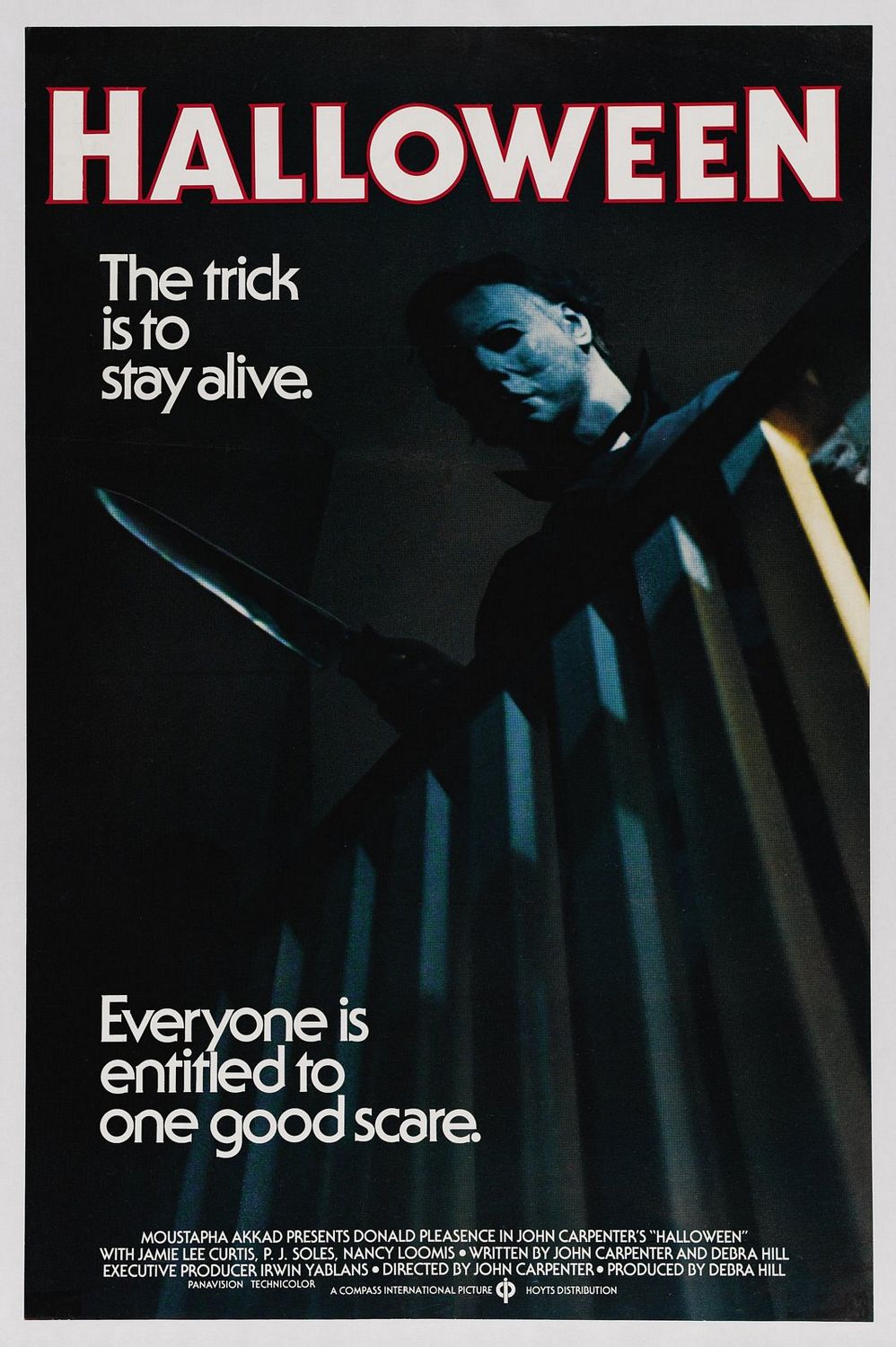
halloween-1978-poster

“John Carpenter’s Halloween”

Despite the many imitators and endless sequels, not to mention the two movies directed by Rob Zombie (which was actually pretty good), there’s no beating the granddaddy of them all. Carpenter’s film is a true horror classic with a music theme I never get sick of listening to. All these years later, the original “Halloween” has lost none of its power to creep you out as it offers audiences a truly terrifying experience.

There are moments which have stayed with me long after I saw “Halloween” for the first time. That moment where Michael Meyers kills the boyfriend and then tilts his head from side to side always gets to me. Plus, the ending leaves you with the unnerving truth of how evil never dies.


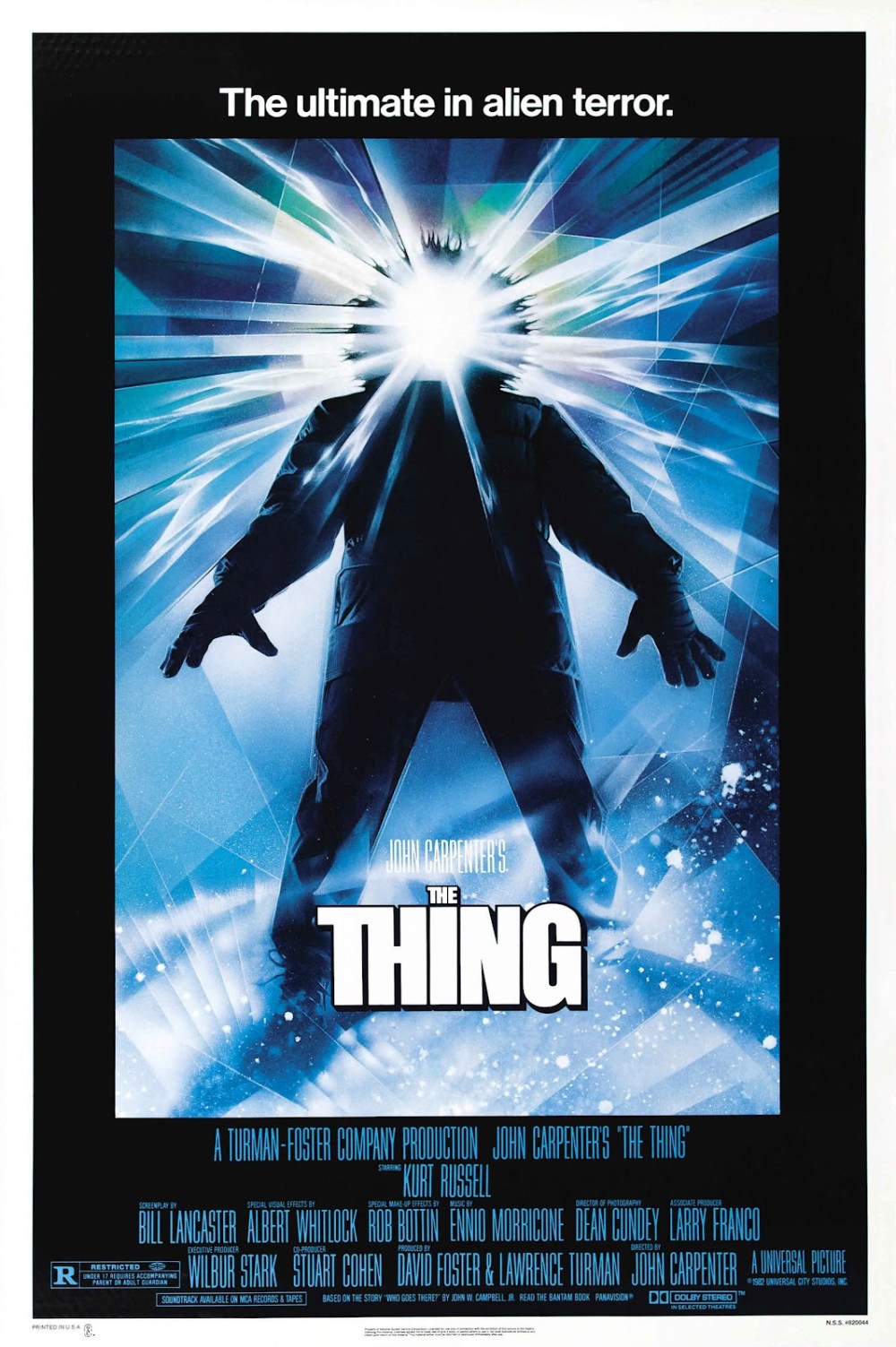
The Thing movie poster

“John Carpenter’s The Thing”

While his original “Halloween” remains a true classic, Carpenter’s remake of “The Thing” is his masterpiece. The film bombed back in 1982, but it has since gained a huge cult following and is now considered one of the best horror films ever made. The story of a group of scientists doing research in Antarctica, one of the most isolated places on Earth, who get copied almost perfectly by an alien is far more effective today than when it first came out. “The Thing” is a great example of how to keep escalating tension throughout a movie’s entire running time, and Rob Bottin’s incredible work on the makeup and effects still looks disgustingly brilliant to this very day.


The Texas Chainsaw Massacre poster

“The Texas Chainsaw Massacre”

I finally got to see this movie all the way through for the first time a couple of years ago when I rented it from Netflix. What I thought would be a fun and hopelessly dated 1970’s movie turned out to be more horrifying than I ever could have imagined. Even while watching it on my 32″ television, “The Texas Chainsaw Massacre” proved to be a brutal cinematic experience which has lost none of its power to make you shrink in your seat. With a movie like this, it’s not what you see that gets to you; it’s what you don’t see which messes with your head, and that makes this classic of the most unnerving movie going experiences you will ever endure.


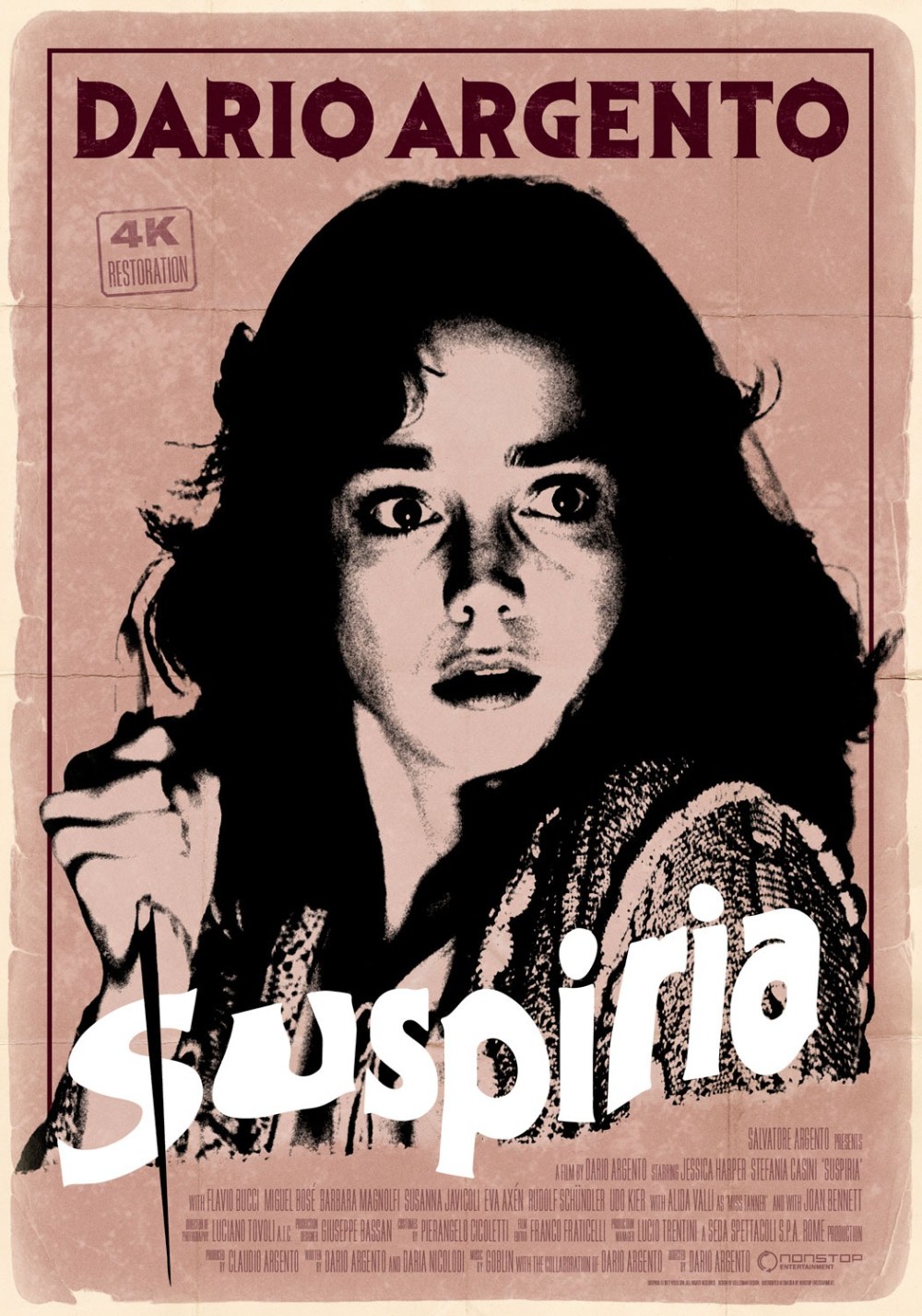
Suspiria 4K restoration poster

“Suspiria”

It was released 40 years ago, and it remains Dario Argento’s true masterpiece of horror. There are very few directors who can make a grisly death look like a beautiful work of art. The tale of an American female dancer who comes to a ballet school which turns out to be a witches’ coven doesn’t always make sense, but then again, a lot of Argento’s movies don’t. The movie is still scary as hell and beautifully horrific in a way most horror films can only dream of being today. A friend of mine once told me that if she were ever to be murdered (heaven forbid), she wants it to look like something out of a Dario Argento movie. I see what she means.


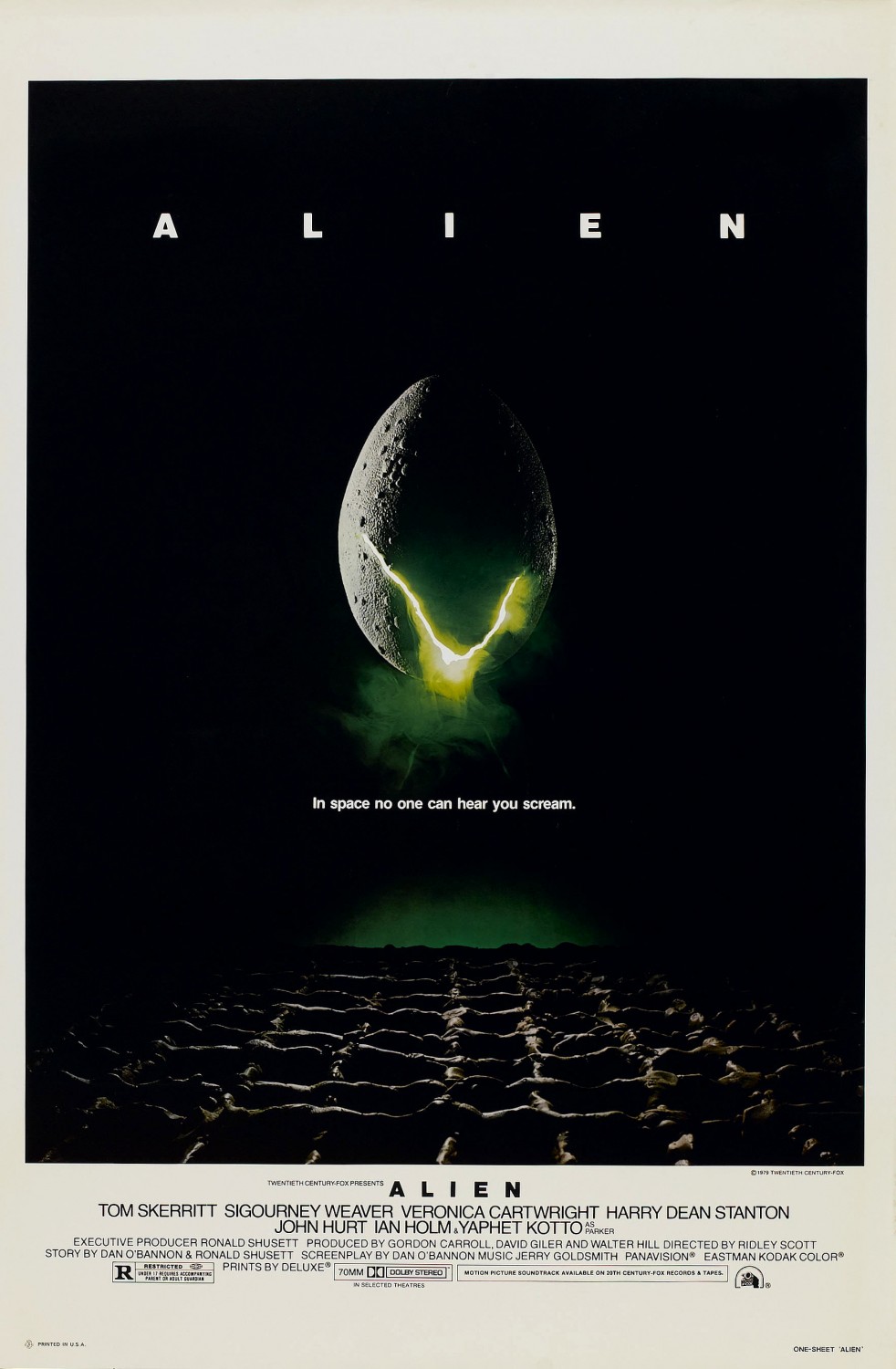
Alien movie poster

“Alien”

Be it the original version or the director’s cut, Ridley Scott’s “Alien” is still an overwhelmingly terrifying experience to sit through. When I rented this one on videotape years ago and watched it on my parents’ 13-inch television set in their bedroom (they robbed me of using the family room), I found myself hiding my eyes at key moments. The silence really got to me, and I impatiently waited for Jerry Goldsmith’s score to come back on. Keep in mind, I actually saw James Cameron’s “Aliens” before I saw this one, and it still scared the hell out of me!


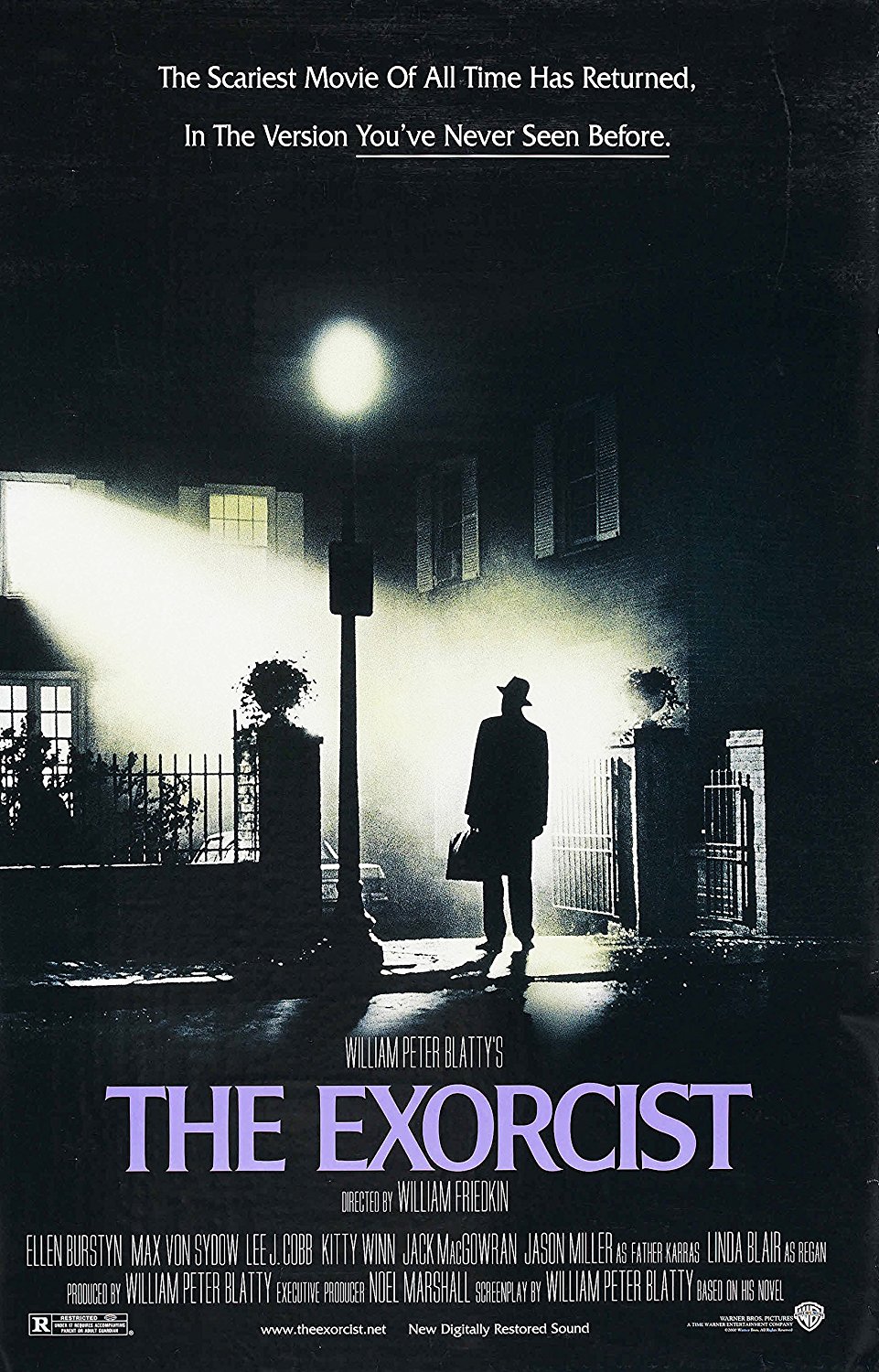
The Exorcist movie poster

“The Exorcist”

I tell you, these horror movies from the 1970’s still have the same power to shock you today as they did when first released. When William Friedkin’s “The Exorcist” was re-released in “the version you’ve never seen,” it still had a visceral power to unsettle us regardless of the passage of time. The story of a girl who becomes possessed by an ancient demon benefits greatly from a documentary feel which has that “you are there” feel, and it almost felt like I wasn’t watching a movie, but instead a real-life event which somehow all got caught on camera.


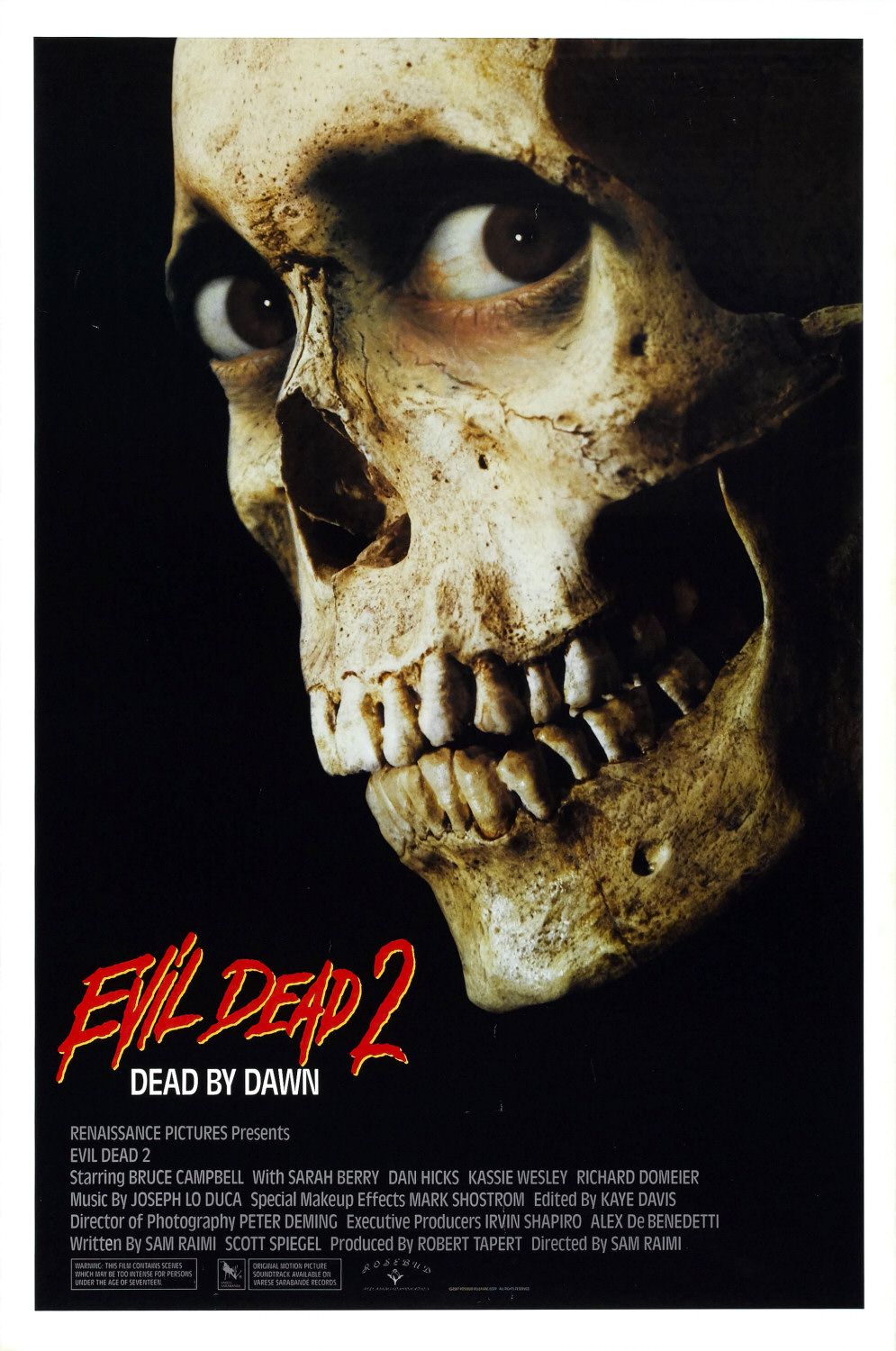
Evil Dead II poster

“Evil Dead 2: Dead by Dawn”

All the “Evil Dead” movies are great fun, but if you have to go with just one, then I recommend “Evil Dead 2: Dead by Dawn.” On a budget of $3 million dollars, maybe even less than that, director Sam Raimi gave us one of the most endlessly creative and hilarious horror movies you could ever hope to watch. After all this time, it remains as scary as is funny. Plus, you have Bruce “Groovy” Campbell in his most iconic role as Ash, the pussy whipped salesman from S-Mart who keeps getting chased by the demons he was dumb enough to awaken from their slumber. Campbell gives a fantastic performance even if he keeps telling us he’s not much of an actor. This is so far from the truth, but you do have to admire the sense of humor he has about himself, and you haven’t lived until you listen to one of his “Evil Dead” commentary tracks.


28 Days Later movie poster

“28 Days Later”

“Slumdog Millionaire” director Danny Boyle was said to have reinvigorated the zombie genre with this propulsive horror thriller where they are anything but slow. In this film, the zombies, or the infected as they are referred to are not the real enemy, we are. The virus the infected have been stricken with represents our inability to face the darkness inside of ourselves which sooner or later rises to the surface. There is no let up on the tension in this movie, and the thrills come fast and furious.


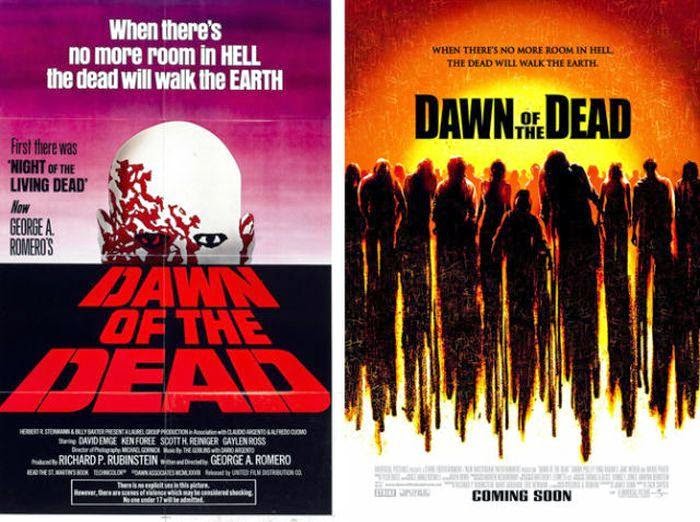
Dawn of the Dead original and remake posters

“Dawn of the Dead” (the original and the remake)

This one is a tie because both versions of this movie stand strongly on their own merits. George Romero’s brilliant sequel to his classic “Night of the Living Dead” is really a satire of the consumerist society we all live in. You know, the one which encourages us to buy all sorts of things which are said to make you happy, and yet all the money and objects you purchase end up making you feel empty inside. This is what Romero is saying with this film, and he does this while providing us with a great deal of blood, gore, beheadings, eviscerations, decapitations, and whatever else he could afford when he made “Dawn of the Dead.” All of you in the Fangoria crowd will be more than satisfied with this one, but you knew that already.

Zack Snyder, who later went on to direct “300,” “Watchmen” and “Batman vs Superman: Dawn of Justice” helmed this remake which turned out to be the best of its kind since “John Carpenter’s The Thing.” This one is more of a straight forward horror action film with a surprising amount of emphasis on character development. It also features Canada’s greatest import in the lead role, Sarah Polley. The remake of “Dawn of the Dead” turned out to be a visceral thrill ride, and it allowed us to invest in the characters in ways most horror movies typically avoid.


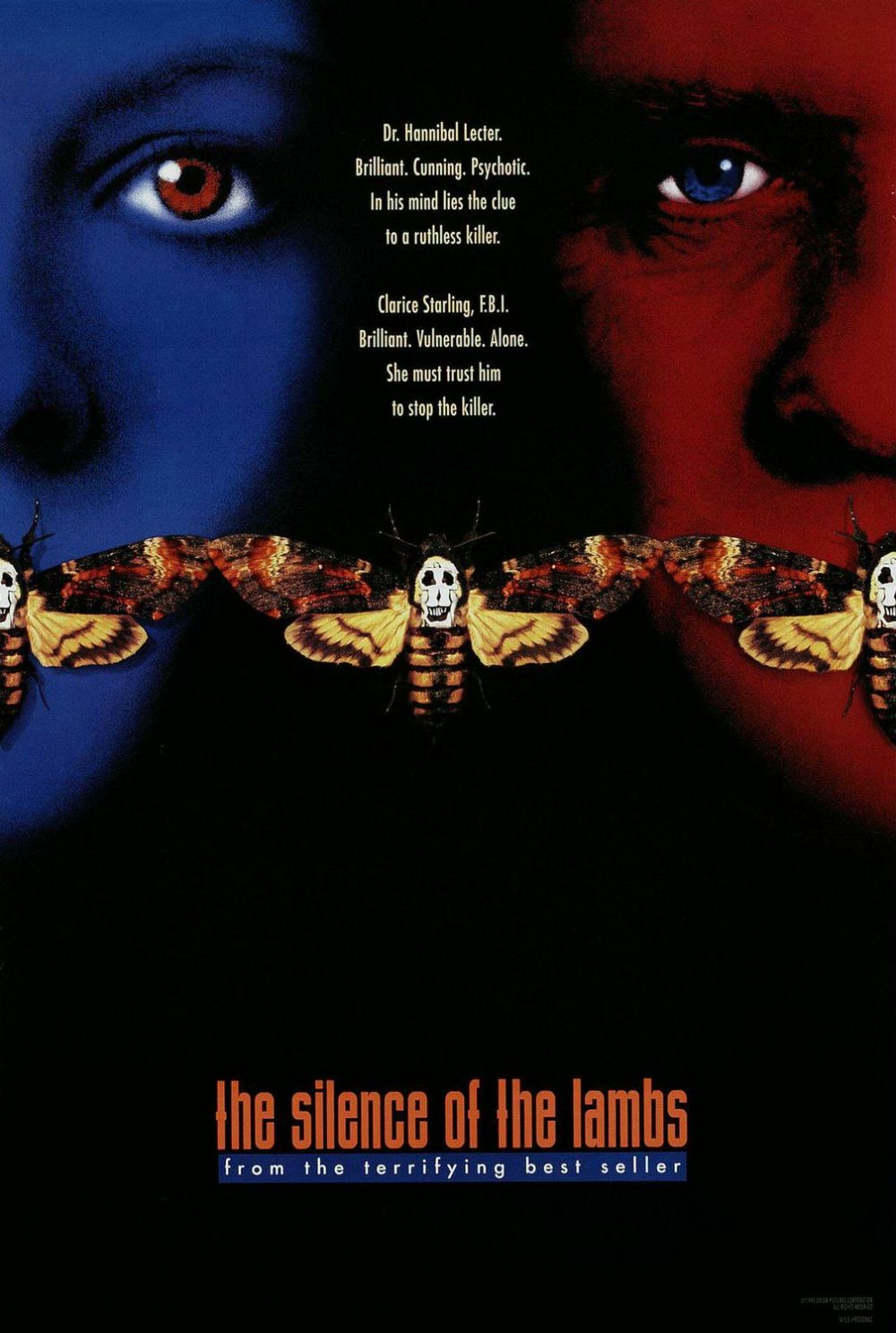
Silence of the Lambs poster

“The Silence of the Lambs”

The specter of Hannibal Lecter, as portrayed by Anthony Hopkins, never fails to unnerve me like he did when I first saw this movie on the big screen. Jonathan Demme’s Oscar winning classic remains one of the definitive serial killer films ever made. Hopkins’ performance is like a perverse love letter to HAL from Stanley Kubrick’s “2001” whose voice inspired his performance. We also get one of cinema’s greatest heroines with Clarice Starling, brilliantly played by Jodie Foster.

Have a happy Halloween everybody!

No, I Haven’t Seen It Until Now: ‘The Texas Chainsaw Massacre’

The Texas Chainsaw Massacre poster

Tobe Hooper’s “The Texas Chainsaw Massacre” is a movie I had heard a lot about over the years, and I have watched numerous documentaries about its making to where it felt like I had seen it even though I had not. It wouldn’t be until the year 2000, just after I graduated from college, when I sat down to watch it on my new 27-inch JVC television set. I just started my subscription with Netflix, and this was one of the first movies I rented from it.

“The Texas Chainsaw Massacre” came out in 1974, so I went into it thinking there was no way it could be as horrifying now as it was when first released. I sat down in front of my TV prepared to eat my dinner, a Cedarline Mediterranean Stuffed Focaccia, while watching this horror classic. One of the first images, however, was of a pair of rotting corpses draped over a gravestone in a cemetery, and I decided it would be better to turn off the TV and finish my dinner before continuing. Once I was done and tossed my plate into the dishwasher, I turned the set back on and continued watching, believing it would be a piece of cake to sit through this lauded horror classic.

It has now been over 40 years since the original “Texas Chainsaw Massacre” was unleashed on the world, but when I watched it on DVD, I had no idea it would prove to be one of the most unnerving and brutal motion pictures I ever sat through. I figured no movie going experience would ever be more intense than “Requiem for a Dream” was when I saw it in Hollywood with a sold-out audience, but then I watched Hooper’s horrifying masterpiece. After it was over, I wondered to myself if I could have possibly endured this film had I first watched it on the silver screen.

“The Texas Chainsaw Massacre” opens with a crawl, narrated by John Larroquette, stating it is based on a true story, but it turns out this was not the case. However, certain plot elements were inspired by serial killer Ed Gein whose acts of violence came to inform many other movies including Alfred Hitchcock’s “Psycho.” We are introduced to a group of two siblings and three of their friends as they travel out to Texas to visit the grave of their grandparents. As you can imagine, what they discover far surpasses any imagined fears anyone could have endured when they were young.

I knew I was in trouble when this group of kids picked up a hitchhiker (played by Edwin Neal). This guy looked like he hadn’t showered in weeks as his face and hair seemed much slimier than anyone else’s on planet Earth. Seeing him cut himself and one of the kids had my hair standing on end, and this was just the beginning. The horror this movie had to offer was just starting, and the intensity would only increase exponentially from there.

By the time everyone got to the house, I was already sweating. I hadn’t seen the movie, but I already knew what was coming. People don’t just die a horrible death in “The Texas Chainsaw Massacre,” they die a realistic one. When Leatherface (Gunnar Hansen) smashes one guy on the head with a hammer, the guy falls down and convulses horribly. Watching this sequence, I felt this is the way a person would react if bashed in the head with the hammer, and it showed me this would not be your average horror movie in the slightest.

What’s especially surprising about this film is it’s not as bloody or gory as you might expect. I figured there would be an ocean of blood on display, but instead it’s what I didn’t see which really messed with my head. We see Leatherface impale the beautiful Pam (Teri McMinn) on a meat hook, but we never see the hook go into her body. The expression you see on Pam’s face ends up feeling all the more unbearably real as a result because you can’t help but wonder how the hook went in and of how long she could hope to last before all her blood drained out.

In some ways, the powerful effect “The Texas Chainsaw Massacre” gives off was something of an accident. When making this movie, Hooper was aiming for a PG-rating and even talked with members of the MPAA to find out how he could earn such a rating for a horror film like this one. A lot of the advice het got was to not show any body penetration or the chainsaw slicing into human flesh, and of course, he needed to limit the amount of blood shown. But instead of getting the PG-rating, Hooper saw his film get an X as these guides he was given proved to have the opposite effect. The fact it managed to get an R seems astonishing even by today’s standards. Still, this seems as welcome an accident as the shark not working on the set of “Jaws” was.

This could have been nothing more than a mere horror flick of the exploitation kind, but there really is a lot of artistry on display throughout. The acting all around is never weak, cinematographer Daniel Pearl gives everything a dirty look which will make you want to take a shower quickly after this movie’s conclusion, and the sound design makes you feel like you are in a real-life slaughterhouse. Hooper may have had a simple mission in mind while making this horror classic, but it turned into something far scarier than he ever intended.

Leatherface remains one of the scariest villains any horror movie could ever hope to have, and it’s a real shame this was the only time Gunnar Hansen played this iconic character as he brought a lot of thought and an instinctual energy to the role. Seeing him wander around in that human flesh-made mask of his, I started to fear what Leatherface looked like without the mask.

But while I want to give credit to all the other actors, I have to single out Marilyn Burns who plays Sally Hardesty. While she has an easy time during the movie’s first half, the last half has her screaming endlessly to where you want to see her get a Purple Heart instead of an Academy Award for her work. She screams and screams and screams to where I wondered just how tortured she felt throughout shooting. The closeup of her eyes while she is a guest at the most devilish of family dinners had me staring at the screen in utter horror. Even though I knew exactly how this movie would end, I was still gripped as I became desperate for Sally to escape any and every which way she could.

The movie’s last half is a frenzy to where I wondered how I could have survived this had I first watched it on the silver screen. Watching it on my television set with the volume turned down was hard enough as I wanted Sally’s hellish experience to end sooner rather than later, but her torture dragged on longer to where I refused to believe “The Texas Chainsaw Massacre” is a mere 84 minutes long. When the screen finally went to black, it felt like such a welcome relief as I wondered just how much more I could have sat through had Hooper extended things out to two hours.

“The Texas Chainsaw Massacre” has long since earned its place alongside the greatest horror movies ever made, and the fact it hasn’t lost any of its power to unnerve and horrify the bravest of film buffs speaks to a power most filmmakers hope to have in their lifetime. The only other horror movies which equal this one’s power to terrify decades after their release are John Carpenter’s “Halloween” and William Friedkin’s “The Exorcist.” Some horror movies play better on the big screen than on television, but this one proves to be every bit as effective on both.

I still have yet to watch any of the sequels as I feel like I am still recovering from this cinematic experience over 10 years later. I did watch the Platinum Dunes remake, but the only thing about it which truly unnerved me was when Leatherface took off Eric Balfour’s face and made it into a mask for himself. As I write this review, the prequel “Leatherface” is about to released in theatres everywhere. Filmmakers can only hope to equal Hooper’s film, but it hasn’t stopped them from trying.

* * * * out of * * * *

‘Close Encounters of the Third Kind’ Still Leaves Us in Awe 40 Years Later

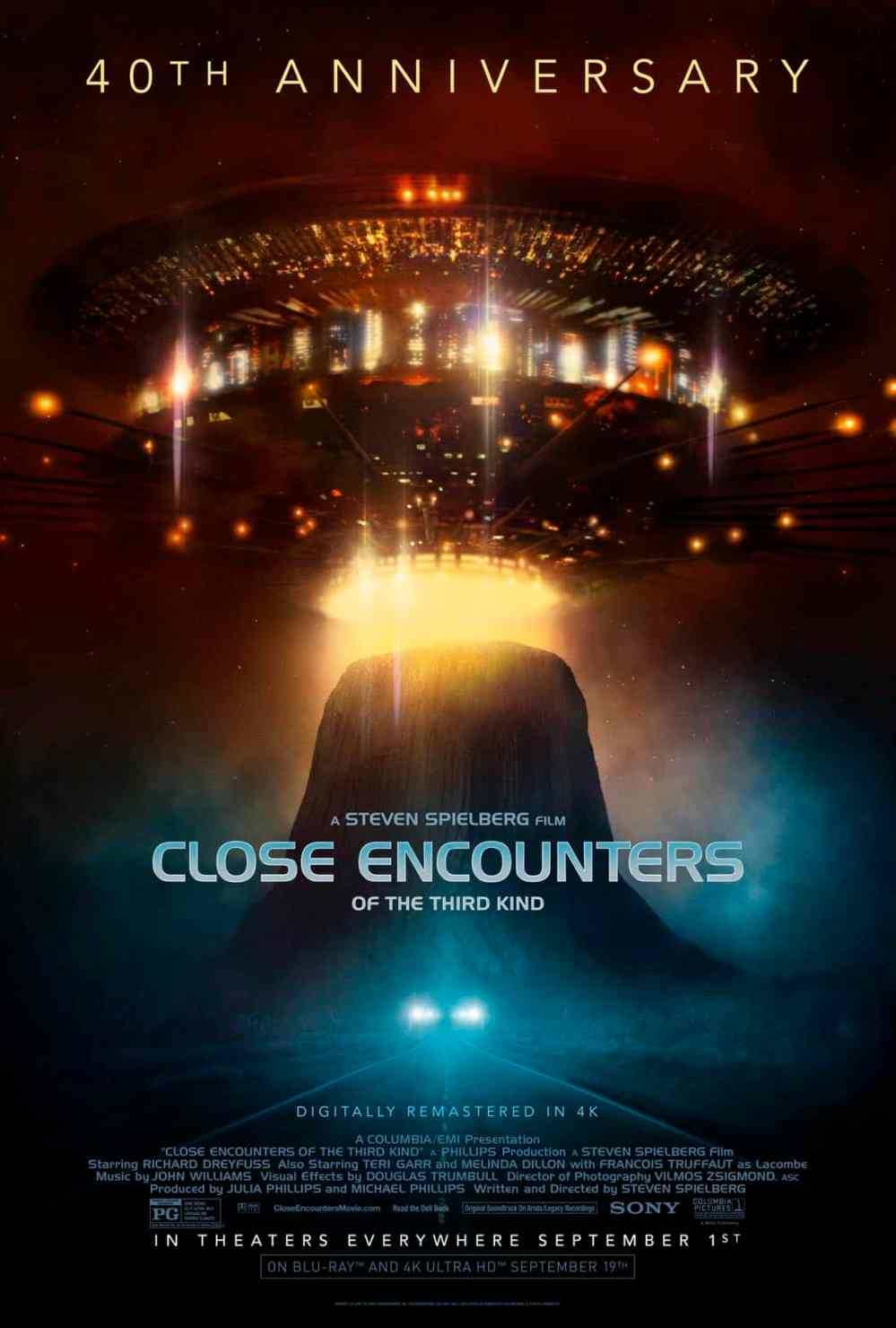
Close Encounters of the Third Kind 40th poster

On this week’s edition of yes, this movie really is that old, we have Steven Spielberg’s “Close Encounters of the Third Kind.” Released back in 1977, it is now being re-released in a new 4K remastered version in honor of its 40th anniversary. I first watched it on laserdisc at a friend’s house back in the 80’s, and I remember being somewhat traumatized by it as there were scenes which proved to be quite scary. I have since watched the film several times, but this 40th anniversary re-release allowed me to see it on the big screen for the first time. Suffice to say, this is the way you should view this particular Spielberg classic.

The film begins with strange discoveries being made in various parts of the world which include the appearance of Army airplanes reported to have gone missing back in the 1940’s, a lost cargo ship which has reappeared in the Gobi Desert for no discernable reason, and witnesses living in India are found singing a five-tone musical phrase which is revealed to be the distinctive sounds of UFO’s. Meanwhile, out in Indiana, Ray Neary a blue-collar worker, husband and father to three very loud kids, is working late at night after a large-scale power outage takes place, and he finds himself having a very close encounter with a UFO, one which lightly burns his face with its bright lights. From there, he becomes obsessed with finding out more about these alien visitors to where he gets left with subliminal messages he is desperate to find answers for.

Throughout the decades, there have been countless movies dealing with human beings and their first contact with extra-terrestrials, many of which feature the last remnants of humanity fighting off an alien invasion determined to wipe them out with extreme prejudice. As I got older, I came to realize how rare it is to have a science fiction movie which deals with aliens in a highly intelligent way. Among them are Stanley Kubrick’s “2001: A Space Odyssey,” Robert Zemeckis’ “Contact,” Spielberg’s “E.T.,” and Denis Villeneuve’s “Arrival” which was one of the very best movies of 2016. Even rarer these days is the motion picture which leaves you in an extended state of wonder and awe from start to finish and even after you leave the theater.

Even 40 years after its release, “Close Encounters of the Third Kind” still has an immense power to enthrall us as its characters come into contact with something they have longed to see. There is nothing about it which comes across as unintentionally laughable, and while technology has evolved to a whole other level since the 1970’s, this movie feels timeless in its exploration of possibilities and discoveries. It also works on many different levels in that it is funny, scary, thrilling, and deeply emotional.

This film is especially unique on Spielberg’s resume as it is one he directed and also wrote the screenplay for. It would also mark the last time he would direct his own screenplay until he made “A.I. Artificial Intelligence” in 2001. As a result, there should be no doubt of just how personal this film is to him. It turns out he wanted to make this one before “Jaws,” but he didn’t have the commercial clout at the time to get the budget he wanted. Of course, when “Jaws” came out, this changed forever.

Spielberg has said “Close Encounters of the Third Kind” is not actually a science fiction film, and watching it again has me agreeing with him completely. Yes, it does feature aliens and UFO’s, but they are not really the point. Also, this film takes place in a reality we all know and relate to. “Close Encounters” does not take place in some future dystopian world, but instead one we all inhabit as the main characters are regular people working regular jobs and supporting their families. They don’t want to see UFO’s, but they did, and now they cannot and will not deny their existence. Throughout this movie, we remain in the human universe and we never enter an alien one, and this is very important to point out here.

“Close Encounters” also deals with stories which would become a hallmark of future Spielberg films and productions such as “E.T. The Extra Terrestrial” and “Poltergeist” among others. Seeing the government conspire to keep this alien visitation a secret is presented in a way which feels not only realistic, but also very possible to pull off back in the 1970’s. But he also shows how the truth of things cannot be kept a secret forever, and, like Ray Neary, we want to see this all the way to the end because we won’t stop and until we get answers to fulfill our curiosities.

When it comes to the actors, Spielberg really just lets them loose here. He doesn’t direct them as much as he lets them run wild, and I don’t just mean the kids who are a noisy bunch as presented here. Richard Dreyfuss is perfectly cast as Ray Neary as he brings a crazed and enthusiastic energy to the role of a man who has seen things he wasn’t supposed to see, and he is not in a position to unlearn what he has learned. Even as Ray’s actions increasingly alienate him from his wife and kids, Dreyfuss makes us empathize with his plight as he is caught up in something he cannot turn his back on.

Melinda Dillon is equally wonderful as Jillian Guiler, another character who, along with her fearless son Barry (Cary Guffey), experiences a close encounter of her own. She also suffers the indignity of her son being kidnapped by aliens, but she is eventually reunited with him in the movie’s last half. It may sound like I’m giving plot points away here, but I’m not because Dillon’s performance is such an emotionally fulfilling one to witness as she takes Jillian through the stages of fright, grief, desolation, and eventually joy and happiness. She makes you experience these emotions with her, and seeing her smile when Barry reappears is a moment of pure elation.

Spielberg’s casting of filmmaker Francois Truffaut as Claude Lacombe, a French government scientist, was truly inspired. Along with Bob Balaban who plays David Laughlin, Lacombe’s assistant and interpreter, he portrays a government official who brings sanity to a situation which has other government officials responding to in a panic to where the quick answer is cover everything up and keep the number of witnesses to a bare minimum. Truffaut brings a strong level of thoughtfulness and wonderment to his character as Lacombe shows an openness to first contact others would not be quick to embrace. While military officers are eager to keep Ray and Jillian out of the area, Lacombe tries to make them see they were invited to be here.

Many images from “Close Encounters” will forever remain burned into my consciousness. The most prominent image of all is when young Barry opens the front door where an alien ship hovers outside, waiting to make contact with someone, anyone. This is still the defining image of who he not just as a filmmaker, but as a human being. Spielberg’s eagerness to make contact with aliens from another galaxy is no secret, and here’s hoping a UFO does make contact with him in his lifetime. Better they meet him than a certain person who is currently occupying the White House.

I think people these days who are seeing “Close Encounters” for the first time might say it takes too long to get to the last half where humans finally get to communicate with aliens. But like Francis Ford Coppola’s “Apocalypse Now,” this film is more about the journey than the final destination. Spielberg wants us to question what we believe and how far we will go to get answers to questions which have plagued us for an infinite amount of time, and we share the awe of the characters once those answers are delivered to us here. And it’s not just that the characters get answers here, they truly earn them as well.

This is also one of those films its director couldn’t stop tinkering with over the years. Ridley Scott couldn’t leave “Blade Runner” alone years after its release, and Oliver Stone continued to tinker with his dream project “Alexander” to where the final cut he gave us still doesn’t feel final. As Spielberg was finishing up “Close Encounters,” Columbia Pictures was in dire straits financially and begged the filmmaker to release his pet project sooner rather than later. What came out in 1977 wasn’t his complete vision, and he eventually got to make a special edition of the film which was released in 1980. The 4K restoration of “Close Encounters” is essentially a combination of both versions, but the scenes with Ray Neary exploring the inside of the mothership have been cut out. Spielberg has said over and over he never should have taken us inside the ship, and I completely agree. While Spielberg provides the characters with many answers, there are still some things better left to the imagination.

Seeing “Close Encounters of the Third Kind” at the Cinerama Dome afforded me the opportunity to see the movie in its most desirable format. The audience I saw it with was left spellbound at what unfolded, and this says so much about this movie’s staying power. Just when I think I have become so jaded and embittered a filmgoer as studios continue in their desperate search for the next big franchise, a motion picture like this comes along to remind us filmmakers still have the power to leave us in a state of sheer wonderment. It feels like we have had an overabundance of movie anniversaries lately to where these celebrations feel more like a ploy to get more money out of our pockets. But this particular anniversary is one worth acknowledging as it continually reaffirms the power of cinema to truly transport to another time and place and, in the process, rescue us from the real world even if it’s only for a temporary time.

The only thing which bugs me about “Close Encounters” these days is Ray’s decision to leave his family behind and travel with the aliens. Essentially, he is presented with the same question Captain Decker is faced with in “Star Trek: The Motion Picture;” Would you leave everything and everyone you have ever known behind just to explore another world and dimension? Seeing Ray getting on board the ship made me wonder how his family would have reacted to this decision, and it plagues my mind long after the end credits have finished. Then again, Spielberg did make this film before he had any kids of his own. Had he made it after he became a father, there’s no doubt Ray would have made a different decision. Still, one could not blame Spielberg or Ray for being tempted to go. I certainly would be tempted.

* * * * out of * * * *

Edgar Wright and Quentin Tarantino Look Back at ‘Dirty Harry’

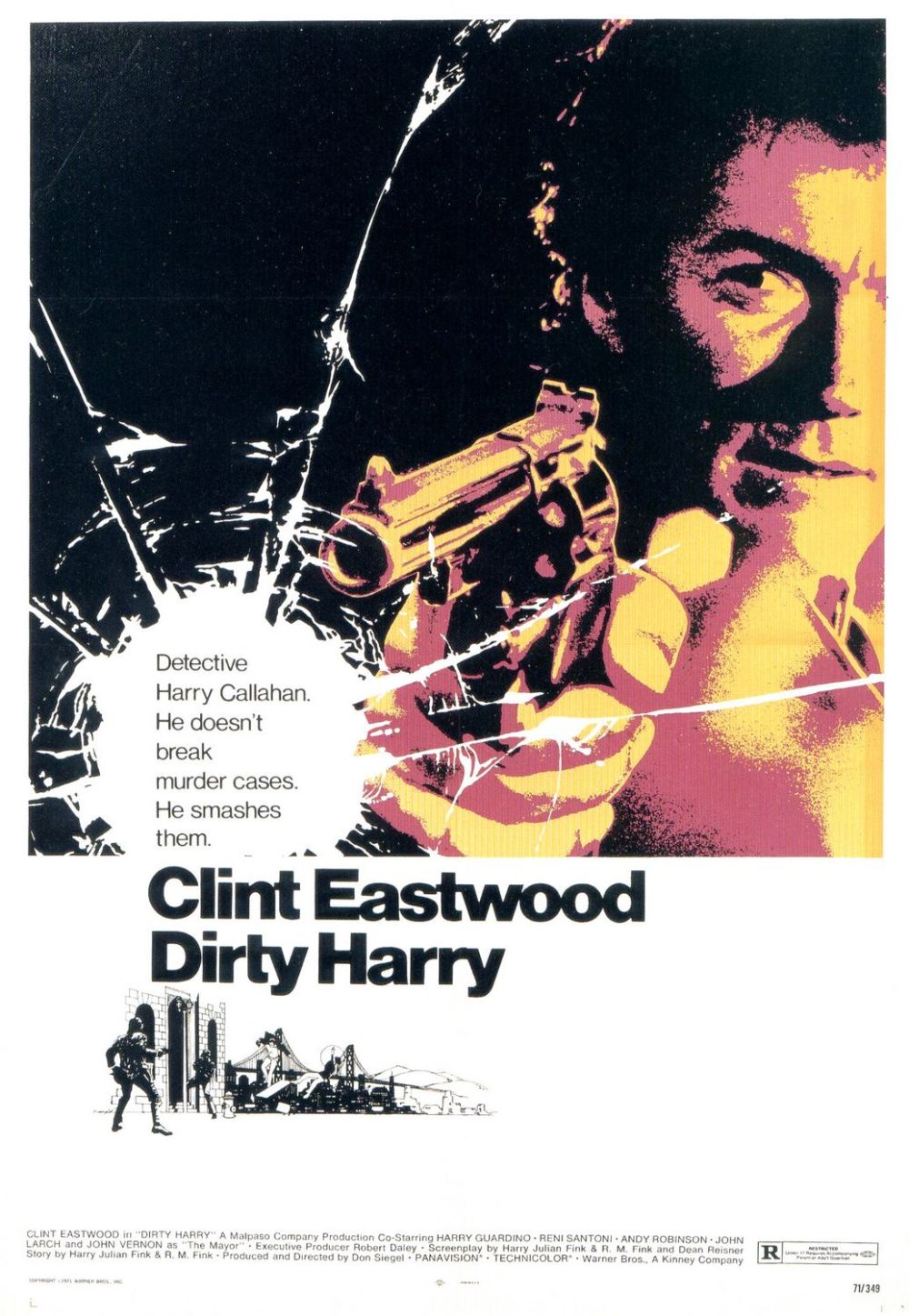
Dirty Harry poster

Of all the movies Edgar Wright selected for The Wright Stuff II Film Festival at New Beverly Cinema, “Dirty Harry” is the one he has watched the most. Wright screened a nice print of the 1971 classic along with another movie called “The Super Cops,” and joining him to talk about it was filmmaker Quentin Tarantino.

They started off riffing on trivia about how the original title for “Dirty Harry” was “Dead Right,” and how it was first going to star Frank Sinatra who later pulled out when the 44-magnum ended up injuring his wrist. It also turned out the late Irvin Kershner, who directed “The Empire Strikes Back,” was the first choice to direct the movie (Don Siegel eventually took the job). Tarantino and Wright also talked about how actor Albert Popwell played a different black stereotype in each “Dirty Harry” film except for “The Dead Pool,” and they both wished he played the mayor in that one.

For Wright, what he loved about “Dirty Harry” was the grittiness of its main character and the atmosphere of San Francisco. On the DVD for “Hot Fuzz,” Wright did a location tour where the film was made, and he even checked out the deli where Eastwood was filmed eating a hot dog when the bank robbery took place. As for the film’s score by Lalo Schifrin, he declared it his all-time favorite saying it marked the birth of “acid jazz.”

But much of the treasure trove of information came from Tarantino who said he first saw “Dirty Harry” when he was five or six years old, and he described it as a “political lightning rod” upon its release. Apparently, it got a lot of crap thrown at it by liberal critics who didn’t want a police fascist solution as well as from right wingers who got freaked out by Scorpio and the ills of society.

The way Tarantino viewed it, however, “Dirty Harry” does have a solid agenda. When Andy Robinson played Charles “Scorpio” Davis, there had never been a villain like him before in movies and, the term serial killer had not really been coined yet. The agenda was for there to be new laws for new crimes, and “Dirty Harry” was screaming for those new laws. Scorpio was not your average villain, and that he got such a kick out of his crimes was easy to see. There was no cure in store for such a psychotic character like this one.

Both Tarantino and Wright agreed “Dirty Harry” really holds up after 40 years. Much of this is due to its sequels treating the iconic character more as a superhero than a regular human being.  With “Magnum Force,” Tarantino felt it was made more for critics of the first movie than its audience as it preached against its predecessor and the character itself by having Harry go after those taking the law into their own hands. This was the same deal with the other sequels, but “Sudden Impact” is the lone exception. Wright remarked at how, along with John Carpenter’s “Halloween,” “Dirty Harry” has one of cinema’s most perfect endings which was eventually ruined by sequels.

They also talked about Siegel who had already been around for a long time before he directed “Dirty Harry.” Siegel was a B-movie genre director from the 1950’s and a Hollywood craftsman who eventually became an auteur. For the most part, Harry Callahan represented the quintessential character of his films; the cop who takes the law into his own hands. Even after directing the 1971 classic, Siegel would continue to have a long and healthy career in films, eventually reuniting with Eastwood on “Escape from Alcatraz.”

Tarantino also described “Dirty Harry” as the single most ripped off and imitated action movie of the 1970’s. He even gave a list of every single movie which stole from it: “McQ,” “Newman’s Law,” “Nightstick,” and everything from Cannon Films. The similar thing about the ripoffs was they lost all the political subtext which made “Dirty Harry” such a strong film. It became all about going after some big drug dealer or crime syndicate, and there was nothing political about that. When it came to 1970’s movies, the only others which were stolen from as much were the ones starring Bruce Lee.

“Dirty Harry” apparently also boasts the first homosexual date in cinema history as seen through Scorpio’s scope rifle. Tarantino said it was the first instance of unforced male sexuality in movies, and he still remembers the audience laughing at this scene when he first saw it. Back then he thought the audience wanted this couple killed, pointing out how they were not as enlightened as we are today, and that they were culpable for their “sinister intentions.”

Hearing these two great filmmakers talk about this Don Siegel/Clint Eastwood classic made for one of the most interesting evenings I have ever spent at New Beverly Cinema. A new generation of audiences will look at “Dirty Harry” differently and may see it as tame compared to plethora of serial killer movies we see today. With the popularity of “The Silence of the Lambs” and the “Saw” movies among others, serial killers have long been the norm in American cinema, so the accomplishments of the 1971 classic threaten to seem diluted as a result.

Thanks to Edgar Wright and Quentin Tarantino, we are reminded of “Dirty Harry’s” place in cinematic history and how it opened doors not just for Eastwood, who made the transition from westerns to other films, but for so many other movies as well for better and for worse.

William Friedkin Discusses the Creation of ‘The French Connection’ Car Chase

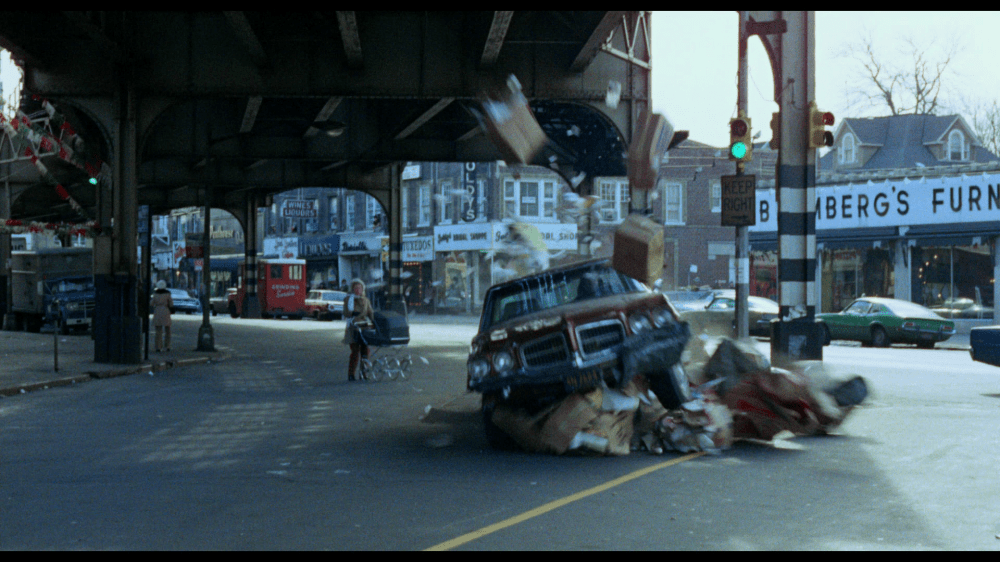
The French Connection car chase

William Friedkin’s “The French Connection” was shown as part of American Cinematheque’s tribute to him, and he went into great detail about how the famous car chase came together. It is still one of the best car chases in cinema alongside “Bullitt,” and it’s the kind Hollywood doesn’t dare do anymore.

The French Connection movie poster

Actually, it turns out there was never a car chase in the original script for “The French Connection,” but Friedkin felt it needed one as this was a police procedural, and the audience would need a temporary release from it. Also, Friedkin didn’t do any storyboards to prepare for it. In fact, he has never done storyboards for any of his movies because he feels he has to see it in his mind. The shots captured on film come together from what he sees at the time, and he doesn’t even use a second unit to shoot any footage. All that you see on screen in “The French Connection” comes from life as it happened in front of Friedkin.

In coming up with the chase, he and some crew members walked down 50 blocks of New York streets to figure out how it would work best. As Friedkin kept walking, he suddenly felt the subway under his feet. Now logistically, he couldn’t do a car chase with a subway as it was underground, but it made him wonder if there were any elevated trains left in New York. The production team ended up finding one in Brooklyn, so Friedkin went to the Transit Authority to get their cooperation in pulling this chase off.

The first thing to figure out was how fast the trains could go. Friedkin said if they went over 100 mph, they couldn’t do the chase as it would be impossible for Popeye Doyle to follow the train by car. The train supervisor he talked to said the trains go at 50 mph, so what seemed impractical suddenly became possible. Not only did Friedkin want to have a car chase the train, he also wanted to crash the train for the chase’s climax. But the train supervisor said it would be too difficult because they had never had an elevated train crash or even heisted. Having heard all this did not deter Friedkin, and he planned to steal the scene if the transit authority’s cooperation was not going to be granted.

As Friedkin and his crew headed for the exit, the train supervisor suddenly said, “Wait a second. I told you it would be difficult. I never said it would be impossible!” He told Friedkin that if he were to help him with this, then he would need $40,000 and a one-way ticket to Jamaica. His reasoning was if the movie was to be done Friedkin’s way, he would be fired, and retiring to Jamaica was always in the back of his mind. Sure enough, the supervisor was fired, and he moved to Jamaica like he said he would, so it’s safe to say he lucked out.

In filming the chase, the shots were picked up just as they happened in real life. There’s no way they would ever be able to film a chase like this today without prior approval from the city, but Friedkin and his crew were young and reckless, and they unleashed mayhem New York never saw coming. There were not supposed to be any accidents while filming it, but there ended up being many of them which forced the crew to fix the car after each take. I’m pretty sure they ended up using more than one as a result. Friedkin ended up saying they did a number of things he would never even think about doing today, and that they were very fortunate no one got hurt.

Taking all this information into account, this car chase feels even more thrilling than when I first saw it. The way it was filmed was completely insane, and the fact they pulled it off at all was a miracle. When Gene Hackman finally brings the 1971 Pontiac LeMans he is driving to a complete stop, the sold-out audience at the Aero Theatre applauded loudly which shows how powerful the sequence remains today. “The French Connection,” like many of Friedkin’s movies, has deservedly stood the test of time.

Matt Cimber Discusses ‘The Black Six’ at New Beverly Cinema

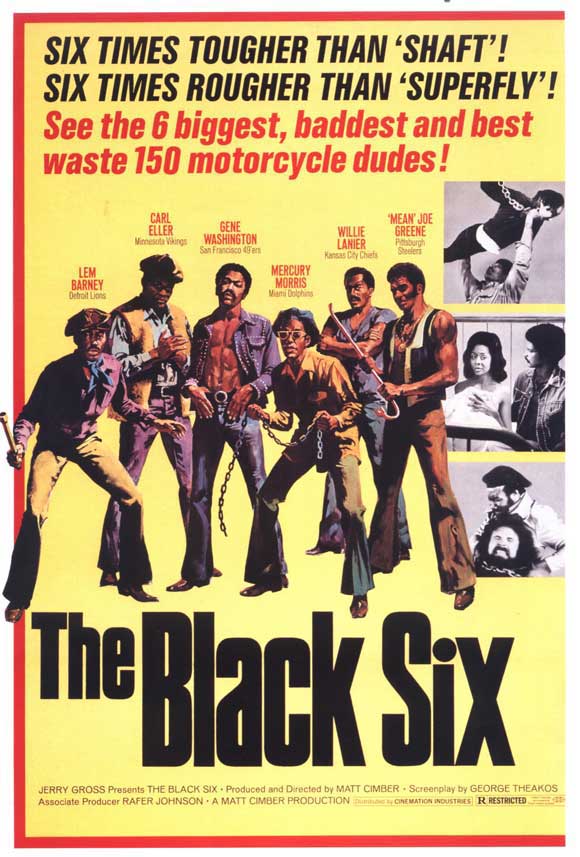
The Black Six movie poster

On February 22, 2011, the Grindhouse Film Festival presented their answer to Black History Month with the blaxploitation classic “The Black Six.” This took place at New Beverly Cinema, and the organizers of the festival, Eric Caidin and Brian Quinn, had this to say, “As white guys, we find this an important part of black culture.”

Joining them was the director of “The Black Six,” Matt Cimber. He announced to the audience this was the first time he has seen the movie in 40 years, and he said he “suffered through it.” The film is best known for starring football players who were at their peak: Gene Washington, Mean Joe Greene (his name generated the biggest applause), Mercury Morris, Lem Barney, Willie Lanier, and Carl Eller. Cimber’s agent at the time told him he could put together a bunch of football players if he could put together a movie. The only catch was there could be no drugs, no swearing, and no naked women.

Cimber said all the guys were game and that he wrote a good script for them to work with. When he started as filmmaker, he was encouraged by a friend to make “black films” because the thought was most people didn’t understand black people. It was fun making “black pictures” for him because there was a lot of great talent in the black community, and many actors weren’t really getting hired.

“The Black Six” also had actual members of the Hell’s Angels in it, and they had to be paid at the end of each day in cash. But there was an even bigger problem: they didn’t like blacks. However, it turned out they were also big NFL fans, and everyone ended up getting along great. The film crew had to work hard though to keep the Hell’s Angels quiet during takes. One of them ended up driving his motorcycle through a hotel!

This film had a budget of $90,000, but each of the NFL players got $10,000 each. Cimber ended up being forced to cut corners wherever he could. The lady playing the farm owner was actually the one who owned the farm they filmed at, and that’s why she’s in the film. Triumph also gave the production some motorcycles to work with although the players said they looked like “little toys.”

The movie came out in 1974 long before the days of VHS, DVD, or any other kind of home entertainment. Back then, if you didn’t get your movie into theaters, you didn’t get your money back and you were dead. When it opened on Broadway in New York, many other movies were opening at the same time, but Cimber proudly said this was the only one with a line around the block.

Matt Cimber went from “The Black Six” to create a “varied” resume which was the result of him never focusing on just one idea or one thing. He also created and directed the successful TV series “GLOW: Gorgeous Ladies of Wrestling” which was a satire of the sport (Quentin Tarantino is said to be a big fan of it). While his work may not cry out for an Oscar, he has had a strong career which has lasted several decades and shows no signs of stopping anytime soon.

‘Jaws 2’ Proves to Be a Pretty Decent Sequel

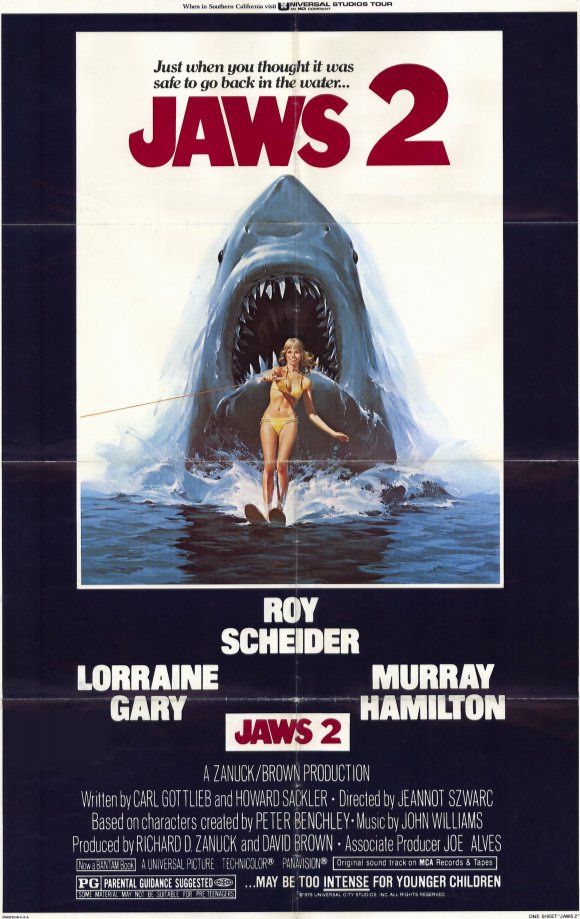
Jaws 2 movie poster

WARNING: THIS REVIEW DOES CONTAIN SPOILERS, BUT YOU PROBABLY KNOW WHAT THEY ARE ALREADY.

“Just when you thought it was safe to go back into the water…”

Ah, what a great tagline to a halfway decent sequel. “Jaws 2” is easily the best sequel to Steven Spielberg’s horrifying classic which became the first movie to make over $100 million dollars, so of course a sequel had to be made. Another shark is off the coast of Amity Bay, to get revenge or just to feed or just to scare the crap out of the residents who depend on the summer months for their very existence.

Some people seem to think this is the same shark from the first movie… What are you, stupid? IT GOT BLOWN UP! This is probably the wife of that shark, or maybe it’s his mother. Maybe it was the shark’s gay lover or something. We never do learn about the shark’s relatives, do we? I am assuming that the shark in “Jaws 3-D” was not a distant relative, but someone who just hates Florida theme parks with a passion. As for the shark in “Jaws: The Revenge,” that one was definitely a relative. It had to be to swim all the way to the Bahamas to go after the damn Brody family!

Anyway, back to this shark, also a relative who waited a little while after the first one to strike. This sequel takes place a couple of years after the original and opens with some divers exploring the wreckage of the Orca who get attacked by the shark. Immediately, we zoom ahead to Chief Brody (Roy Scheider) rushing off to the opening of a new hotel on Amity Island which his wife (Lorraine Gary) has helped out with. We meet up again with Mayor Larry Vaughn (Murray Hamilton) who is as excited about the summer months as he was previously. We also get to see the two Brody boys, Mike and Shaun, who have grown up a lot since we saw them last.

Then the darn shark appears again when he (or is it a she?) is least expected. There is a good scene involving a water skier which is “Jaws 2’s” first big action sequence. Of course, no one actually sees this shark attack the skier, so they just assume it was some sort of boating accident. Otherwise they would have found out earlier and got rid of the shark sooner, and there wouldn’t be a movie to watch. But then some kids find a beached killer whale on the sand which has had huge chunks of his skin bitten off, and this catches the eye of Chief Brody who becomes convinced there is another shark on the hunt. He has no proof and only his instincts to go on, so naturally no one believes him.

One of the many great things about “Jaws” was the human drama on the island was very strong. Spielberg wasn’t just interested in giving us shark attacks. That brings me to this film’s biggest weakness; the scenes on dry land suffer without the buddy relationship between Scheider and Richard Dreyfuss. The characters are more like clichés this time around instead of fully realized human beings, and the story is more contrived. One guy standing in Brody’s way is Len Peterson (Joseph Moscolo) who doubts his sanity every step of the way. He is the movie’s key idiotic character, and the one guy we desperately want to see get eaten by the shark. When movies have characters like these, it doesn’t take long for audiences to get aggravated by them.

You’d also think Mayor Vaughn would know better this time around. He went through all this crap with the first shark, and now he thinks Brody is misguided in his assumptions yet again. He urges Chief Brody not to press it this time around, and their working relationship in “Jaws 2” ends up seeming completely ridiculous. If the Mayor is not going to be trusting of Brody’s instincts, then he should have fired him a long time ago.

There was a naturalness to the characters and acting in “Jaws” which unfortunately does not carry over to “Jaws 2,” and this sequel is deeply affected as a result. It would have been great to have Spielberg and Dreyfuss back for this one, but they had better things to do like making “Close Encounters of the Third Kind.” Actually, it would have been a huge shock if Spielberg came back to direct this one, considering the hell he went through making the original.

However, if you can get past the contrived screenplay, there are still plenty of shark attacks to enjoy. The shark is still a very threatening villain like its predecessor. Every time that fin comes out of the water, I get goose bumps all over my skin. The tension is still pretty taut as the shark sneaks up on its prey stealthily. There are also a couple of good jump out of your seat moments here, especially one involving Scheider slowly going into the ocean to retrieve some boat wreckage.

While the first shark was indiscriminate in who he, or she, killed, the shark in “Jaws 2” seems to have a big hankering for teenagers, especially ones who won’t stop screaming. One critic, I can’t remember who, said this movie would be a good time for those who enjoy seeing teenagers getting eaten, so I can only imagine what parents around the globe feel about this sequel. After a while, it just seems like the shark is going after these teenagers in order to get them to shut up. It makes you wonder what the shark is thinking throughout, “WHAT ARE YOU STUPID?! I CAN HEAR EXACTLY WHERE YOU ARE YOU STUPID SHITS!!”

The teenagers do a great job of screaming and acting when they are in shock. The moments where they are in shock are very effectively done, and it helps quiet things down before the great white pops up again. Among the kids is Keith Gordon who later went on to star in “John Carpenter’s Christine” and “Back to School” with the late Rodney Dangerfield. Seeing him looking so young here is a bit of a shock after all these years.

The last half of “Jaws 2” has the teenagers out sailing, basically laying themselves out as shark meat. Among these kids are the Brody boys, both who have been grounded from getting into the water because of their father’s suspicions. But what’s a boy to do when a girl’s cousin wants to go with him to the lighthouse? She tempts Michael with that line we often hear teenagers say, “Do you always do what your parents tell you to do?”

Furthermore, why should the older brother have all the fun? Little Sean hitches a ride with Mike who really doesn’t want him around. So, they have the typically brotherly relationship which adds quite a bit to the story. When the teenagers find their lives in danger upon the appearance of the shark, how they feel about each other becomes completely irrelevant as they have to band together in order to survive.

Actually, I wonder if the filmmakers went with teenagers as shark meat in response of the sudden popularity of the slasher genre. I mean, the great white shark is in many ways the ultimate serial killer. He has sharp knives for teeth, and he (or she) can cut you up good. This one leaves no leftovers even if we wanted any, and much blood is spilt.

“Jaws 2” was directed by Jeannot Szwarc, and it is a good thing I am writing down his name instead of trying to pronounce it. He takes on daunting task of following a Spielberg masterpiece with a sequel which can only hope and pray to match the power of the original. The fact he does not entirely succeed is not altogether his fault. No one could ever have expected this sequel to be better than the original, and this certainly could have been a lot worse. Szwarc pretty much films “Jaws 2” in the same manner Spielberg did in terms of the shark attacks, but he also shows us more of the shark as well. While showing the shark takes some of the suspense away, he still does a good job of keeping the viewer on edge as we wonder when the shark will strike next.

Scheider made it clear on several occasions of how he did “Jaws 2” as a contractual obligation to Universal Pictures. I doubt he was all that excited about doing the sequel while the other key players went off to do other things. At least Robert Shaw had a good excuse; his character got eaten in the original. All the same, Scheider is still very strong here as Brody as he tries to convince the town there is another shark out there and makes it clear he’s not going to wait around for everyone to realize this. Scheider is one of the best reasons to watch “Jaws 2,” and he gives the audience a lot to cheer for as the film reaches its inevitable conclusion.

Of course, we all know what happens to the shark at the end. If you haven’t seen the movie yet and don’t want to know, don’t read any further. But it is a very cool death as Brody gets the shark’s attention by banging on a power line and drawing it in by sound. Holding the power line out for the shark to take a bite out of, his glee and anxiety are ever so apparent as he invites the shark to “SAY AHH!!!!!” The death of the shark by electrocution is right on a par with the way the first shark died, and it’s a scene I’m sure audiences cheered like crazy.

Another key ingredient of “Jaws 2” was also one of the main ones from Spielberg’s film, John Williams’ music. His score to the original remains one of the best and most frightening pieces of music ever created for a movie. With “Jaws 2,” Williams takes those themes from the first film and mixes them up with new ones for the characters inhabiting this sequel. It’s another great score which captures the heart and terror which unfolds onscreen. None of the other composers in this franchise came close to matching what Williams did. They simply lost the heart of the music and relied too much on the main “Jaws” theme to carry them through.

“Jaws 2” is understandably no masterpiece, but it is “Citizen Kane” when you compare it to the other sequels which followed it. “Jaws 2” was the last good movie in a series which soon descended into mediocrity. If you have to watch something on cable in the afternoon, you could certainly do worse than watch this one. Besides, it gave us one of the greatest taglines in movie history:

“Just when you thought it was safe to go back into the water…”

Of course, by the time “Jaws: The Revenge” came around, the tagline sounded more like this:

“Just when you thought it was safe to go back to a movie theater…”

* * * out of * * * *