‘The Amazing Spider-Man 2’ Has Way Too Much Going On

The Amazing Spiderman 2 poster

I figured after “Spider-Man 3,” movie studios and filmmakers would think twice before putting three villains in a film, but lo and behold they have done it again with “The Amazing Spider-Man 2,” a sequel to the surprisingly successful reboot which wasn’t necessarily needed so soon. Director Marc Webb is forced to deal with a story that doesn’t have much of a focus and contains too many characters for it to deal with. What results is a incredibly underwhelming superhero movie which plays more like a two-hour plus trailer for other movies, and while this is the fifth “Spider-Man” film in just over a decade, my disappointment with this one has little to do with franchise fatigue.

Not much time has passed since the events of “The Amazing Spider-Man,” and we find ourselves catching up with Peter Parker/Spider-Man (Andrew Garfield) and Gwen Stacy (Emma Stone) as they are graduating from high school. Of course, Peter is delayed a bit as his alter ego of Spider-Man has to fight crime when Russian mobster Aleksei Sytsevich, who will later be revealed as Rhino, tries to drive out of New York City with a case full of plutonium vials. Paul Giamatti plays Aleksei and he clearly is having a blast playing such an over the top character, but he’s barely in the movie. We see him at the very beginning and at the end, but nowhere in between.

This brings me to one of my major gripes with superhero movies today. Studios are so insanely desperate in starting the next big franchise to where they already have at least two sequels planned before their big tent pole movie is even released, and it has gotten to where everyone has forgotten how to make a self-contained movie. Rhino is basically here to act as a bridge to the future spinoff “The Sinister Six,” and it ends up taking away from a movie which already has way too much on its plate.

Then we get to meet Max Dillon, an electrical engineer who is invisible to everybody and has no real friends. But after a freak accident lands him in a tank full of genetically modified electric eels, he quickly mutates into an electric generator of a monster who calls himself Electro. Jamie Foxx plays this character who is considered one of the greatest villains in comic book history, and his performance in a way reminded me of Jim Carrey’s in “Batman Forever” where he played Edward Nygma/The Riddler. Both characters come to idolize the heroes which dominate their lonely lives, but when they feel betrayed by those same heroes, the affection they have toward them is revealed to be a deep-seated resentment that soon evolves into sheer anger.

Foxx is a terrific actor and this role could have given him a number of great avenues to explore, but once again this movie has too much to deal with which results in Max Dillon/Electro not getting enough screen time. In fact, Electro ends up disappearing for a good portion of the movie to where you wonder if he’s disappeared for good. When he does come back onscreen, he’s reduced to spewing out a lot of lame one-liners I kept thing were rejected from “Batman & Robin.” Electro could have been one of the most memorable villains to appear in movies this year, but instead he turns out to be one of the lamest.

Next, we come to villain number three which is Harry Osborn/Green Goblin who has just inherited his late father’s business, Oscorp Industries. Played by James Franco in Sam Raimi’s “Spider-Man” movies, he is portrayed here by Dane DeHaan who has made quite the name for himself after his acting triumphs in “Chronicle” and “Kill Your Darlings.” DeHaan does excellent work as Harry in portraying his manipulative control over his newly acquired board of directors, and he makes us feel his desperation to escape the same fate which befell his father. But when DeHaan becomes the Green Goblin, he goes from giving one of the best performances in “The Amazing Spider-Man 2” to one of the worst as his acting is reduced to hissing a lot at people. Don’t even get me started on his makeup because it made me miss that cheap looking mask Willem Dafoe was forced to wear in the first “Spider-Man” movie.

So, is there anything which works in “The Amazing Spider-Man 2?” Well yes, the scenes between Andrew Garfield and Emma Stone which continue to be the best parts of this rebooted franchise. Whenever they are together onscreen, the movie comes to life in a way that doesn’t require a single special effect. Like Tobey Maguire before him, Garfield understands what makes Spider-Man such a relatable superhero as, aside from his amazing superpowers, he is a really down to earth guy who has problems like everybody else. As for Stone, she makes Gwen Stacy a wonderfully intelligent human being and the appealing girlfriend many of us hope to have.

Seeing them together also reminded me how Webb directed one of the best romantic movies of recent years, “(500) Days of Summer.” While his handling of this superhero franchise has become shoddy, he really does know how to direct actors to where their intimacy feels ever so genuine. I hope he goes back to directing character dramas very soon.

Actually, when it comes to the failure of “The Amazing Spider-Man 2,” I find myself blaming Sony and Columbia Pictures more than I blame Webb. In trying to make a hugely entertaining movie, everyone involved got so caught up in setting the stage for future sequels and spinoffs to where this feels like a coming attraction for something far more entertaining. Yes, there are some fantastic special effects on display here which look great in either 2D or 3D, but even they can’t lift this movie out of the muck. There’s never a shortage of fights, explosions and chases, and maybe that’s the problem. While Webb is looking to unlock his inner Michael Bay here, this sequel ends up getting robbed of much of its soul.

I really hate it when history repeats itself, be it in the real world or at the movies. Maybe you can get away with two villains in a movie, but you should not have three. “Spider-Man 3” and “Iron Man 2” should have taught us all this, but some people just don’t listen. Seriously, haven’t we learned anything? Are we destined to keep repeating the same mistakes over and over again?

* * out of * * * *

‘The Amazing Spider-Man’ is a Better than Expected Reboot

The Amazing Spiderman poster

When “The Amazing Spider-Man” was finally released in movie theaters everywhere, we finally got to answer the question nagging at us: isn’t it far too soon for a franchise reboot or remake or whatever the hell you want to call this? Well, the answer ends up going both ways here as Marc Webb’s film does tread familiar ground, but it gets better as it goes on. This time, our friendly neighborhood Spider-Man has a lot more edge to him and is a little more complex than he was in the Sam Raimi-directed movies.

This version starts off with a very young Peter Parker being left in the company of his Uncle Ben (Martin Sheen) and Aunt May (Sally Field) by his parents, Richard and Mary Parker (Campbell Scott and Embeth Davidtz), who are forced to leave town under mysterious circumstances. Forward several years later, and Peter is now a sullen teenager played by Andrew Garfield, one of several actors who should have gotten an Oscar nomination for “The Social Network.”

Like before, Peter is a social outcast who is not exactly the most popular person on the high school campus. But unlike Tobey Maguire’s interpretation, Peter here is sullener this time around; sensitive and shy while dealing with anger at the life he has been dealt which is anything but normal. In essence, he is more of a real-life teenager than he was in previous incarnations; confused about his place in life and unsure of himself. “The Amazing Spider-Man” hence becomes the story of a young man on a journey to find himself, and this helps ground the superhero in a reality we all know and understand.

The first part of “The Amazing Spider-Man” made me a bit impatient as it travels through all the things leading up to Peter adopting his alter-ego. Sam Raimi’s first “Spider-Man” movie may have come out ten years ago, but its images are still fresh in our minds. I’m not just talking about Kirsten Dunst kissing Maguire while he hangs upside down. Still, Webb and company do their best to make the material their own. The moments where Garfield develops his power to swing from place to place is exhilarating to watch, and whereas Raimi’s “Spider-Man” movies were like a comic book brought to life, Webb deals with Peter Parker in a more realistic fashion.

Speaking of Garfield, he has repeatedly said how happy he was to get this role, and the thrill he gets from playing this iconic comic book character is clearly on display. Throughout “The Amazing Spider-Man,” the actor looks to be having the time of his life, and he certainly has earned the right to enjoy himself based on his excellent performance here as he makes this role his own. I also really liked was how he wasn’t afraid to make Parker unlikable at times. Clearly this is a young man with issues, having lost his parents in a way no child should, and the actor makes Parker’s confusion over what is expected of him all the more palpable.

Matching Garfield scene for scene is the wonderful Emma Stone who plays his highly intelligent love interest, Gwen Stacy. Stone shares a strong chemistry with Garfield, and she gives the role a feisty kick which makes her so much fun to watch. She also infuses her Gwen with a strong humanity which keeps her from being just another love interest, and her performance goes way beyond what we could have expected.

Rhys Ifans portrays Dr. Curt Connors, once a friend of Parker’s father, who is developing ways to regrow limbs and human tissue. But something ends up going terribly wrong, as it always does, with an experiment, and he is soon turned into The Lizard. The dilemmas this character faces are not too different from what Norman Osborn/Green Goblin character dealt with, but Ifans makes the character a fascinatingly complex one as his intent to test his experimental serum on himself is not about proving oneself to a whole bunch of doubters as it is about taking responsibility for one’s creation when others are more interested in results and profit.

While I miss seeing the late Cliff Robertson and Rosemary Harris as Uncle Ben and Aunt May, both Martin Sheen and Sally Field fill the roles wonderfully. I also really liked Denis Leary as Gwen Stacy’s father, NYPD Captain George Stacy, who gets into an argument with Peter as to why he considers Spider-Man a vigilante. After watching him on “Rescue Me” and as an endlessly cynical standup comedian all these years, Leary once again reminds us of just how effective an actor he can be in playing an upstanding citizen and a strong family man.

Previously, Webb was best known for directing music videos, and the only other movie he made was “(500) Days of Summer.” You can’t help but wonder what the studio executives were thinking when they hired him after he made a $7.5 million indie movie to helm a summer blockbuster with a reported budget of over $220 million. Maybe all the other big name directors were busy or something. Then again, when you look at both “(500) Days of Summer” and “The Amazing Spider-Man,” they have strong similarities. Both feature main characters in the process of figuring themselves out while moving on to the next stage of their lives, and they also have them romancing a female who is as intelligent as she is attractive. Each movie succeeds in giving us relationships which were not the usual dopey romantic kind, and they are all the better as a result.

With “(500) Days of Summer,” Webb also showed a keen understanding of how important it is for the audience to be emotionally involved with the characters in a movie. This ended up making him an ideal choice to direct “The Amazing Spider-Man” as we need to care about these characters in order for the movie’s story and its special effects to work effectively. Webb succeeds in getting us emotionally involved in what goes on, and it makes this reboot stand out from the typical summer blockbuster which invades our local movie theaters more often than not.

Another thing I have to point out is the film score by James Horner. Danny Elfman had done such a brilliant job defining the sound of Spider-Man in Raimi’s movies, and this gave Horner a hard act to follow. But Horner succeeds in giving us music which is as adventurous and invigorating to listen to as Elfman’s was. Of course, this doesn’t keep him from stealing from himself as there is a musical cue from “Star Trek II” in here, and it is instantly recognizable to those who have listened to that soundtrack over and over again.

It would have been nice if Raimi and Maguire got to make a “Spider-Man 4,” if for no other reason than to make up for the huge disappointment that was “Spider-Man 3.” But in retrospect they must have seen the writing was on the wall as there was nowhere else for them to take the character. While a reboot still feels way too soon for this franchise, “The Amazing Spider-Man” is a very entertaining movie which looks to get this series back on track. Now that we got the origin story out of the way once again, we can get to an even more exciting chapter in Peter Parker and Gwen Stacy’s lives.

* * * out of * * * *

‘Spider-Man 3’ is a Major Disappointment

Spiderman 3 poster

After the brilliance of “Spider-Man 2” one of the best comic book movies ever made, “Spider-Man 3” proves to be an astonishing disappointment. Even though this sequel has the same actors and directors as its predecessors, they are faced with a screenplay with too many characters, too many subplots which don’t reach a satisfying conclusion, villains who are not very satisfying, and some character choices which feel out of place in a movie like this.

I already had a problem with “Spider-Man 3” before I went in as there were too many villains for one motion picture. It would have been better for it to have just one villain for Spider-Man to face because it allows the filmmakers to give more attention to the characters to where they can become unforgettable. You can get away with two villains sometimes, but you are better off with one as this movie shows.

This ended up being the last “Spider-Man” movie Sam Raimi directed, and my original thought was he knew this would be the case, so he ended up putting in everything but the kitchen sink. In retrospect, I think the studio forced him to add characters who were big comic book fan favorites, and Raimi obliged even though there was little chance of those characters getting enough screen time. In the process of pleasing the fans, “Spider-Man 3” succeeded in alienating them by throwing things at us the filmmakers assumed we would like.

Spider-Man’s first nemesis is the New Goblin, same as the Old Goblin. We all know the New Goblin is actually Harry Osborn, played once again by James Franco, and he ends up giving his best performance in all of the “Spider-Man” movies here. Franco revels in going all over the place as he seethes at Peter Parker whom he is still convinced killed his father. In the process of trying to kill Peter, Harry gets amnesia and forgets about what Peter supposedly did. But this doesn’t keep Harry from messing with Peter’s life or stealing away those closest to him.

Then comes Spidey’s next darn nemesis, Sandman/Flint Marko played by Thomas Haden Church who was on a roll after his Oscar nominated performance in “Sideways.” This is an interesting villain as you can clearly see what drives him: his love for his sick little girl. While Church does what he can with an underwritten part which has him disappearing from the screen for far too long, he is nowhere as compelling as Alfred Molina was as Doc Ock was in “Spider-Man 2.” Flint never gets the chance to revel in his new-found powers, and he doesn’t feel as threatening as a result.

After that, we get yet another antagonist in the form of Eddie Brock who later turns into one of the most famous comic book villains ever, Venom. Now while I can see how Venom is such an immensely popular character in the “Spider-Man” universe, his appearance in “Spider-Man 3” feels like an afterthought. Furthermore, he is portrayed by Topher Grace who, while having given terrific performances in movies like “Traffic,” is completely miscast. Eddie Brock/Venom feels too broad as he is portrayed here, and we don’t get to invest emotionally in this character as much as we would like to.

Tobey Maguire has long since proven to be one of the best Spider-Man’s we have ever seen on the big screen, and the best acting he does here is with his eyes and face. He can get you right in the heart with just one look, and he never gives you a false emotion in any scene. This is especially the case in a pivotal moment between him and Mary Jane Watson which is truly heartbreaking to watch.

“Spider-Man 3” also sees the famous web-slinger exploring his dark side when an alien symbiote lands down on earth in his vicinity and infects him and changes his behavior. But things soon degenerate as Maguire is forced to play Peter as if he is some sort of emo dude to where he is suddenly struck with the urge to dance in public for no particularly special reason. Some of these scenes are amusing to watch, but they belong in a different film.

It also sucks to see the female characters underused here. Kirsten Dunst is back as Mary Jane Watson, and it’s great to see her again as she has been fantastic in this series. But in “Spider-Man 3” she doesn’t have much to do here other than end up in a perilous state and hanging on for dear life. You’d think at this point Mary Jane would realize she’s better off without Peter as her life remains in constant danger while they are together. How many times do you think you could take fighting for your life when your boyfriend is Spider-Man? Well, if you’re Jack Bauer, I guess you could do it quite a bit. This is regardless of the fact Mary Jane Watson is not Jack Bauer’s girlfriend, but anyway…

Bryce Dallas Howard co-stars as Gwen Stacy, a huge fan favorite of the Spider-Man series, but she gets even less to do than Dunst. I think Gwen ended up here because Marvel and Columbia Pictures insisted on her inclusion as they figured the fans were ever so eager to see this character in any “Spider-Man” movie at that point. Howard is a fantastic actress and makes for a very good Gwen Stacy, but this character has little purpose for being in “Spider-Man 3” other than to please the most die-hard fans.

There are other welcome returns in “Spider-Man 3” like Rosemary Harris who plays Aunt May, the Yoda of Peter Parker’s life who gives him the wisdom he needs to hear. J.K. Simmons remains the consummate scene stealer as J. Jonah Jameson, and he had me in hysterics from his first scene where his secretary reminds him to watch out for his high blood pressure. And yes, Bruce Campbell does his usual “Spider-Man” cameo, this time as a waiter desperate to help Peter and Mary Jane have the most wonderful of times at a restaurant. It’s always good to see Campbell in a movie no matter what kind of role he plays.

The climax has the Sandman teaming up with Venom to take down Spider-Man, and while it is an emotionally charged climax, we still come out of this movie very disappointed as it feels like there are so many missed opportunities. Once again, each of these villains are very underdeveloped to where the stakes don’t feel high, and everything ends up feeling far less exciting. Plus, we have seen Mary Jane in danger far too many times to where everything going on begins to feel boring and redundant. I ended up going on a bathroom break during the movie, something I usually never do, but I’m positive I didn’t miss much.

For what it’s worth, I liked how Raimi deals with the futility of revenge and how it destroys the soul, and he also shows how it is better to forgive. This is something I need to remind myself of more often. It makes for a strong moment between Peter and the Sandman as well as with Harry. It’s these moments where you feel the strength and pain of the characters ever so purely, and this movie could have used many more moments like these.

I couldn’t help but come out of “Spider-Man 3” feeling completely let down. “Spider-Man 2” was so good to where I couldn’t help but come into this one with high expectations. The fact everyone involved screwed this motion picture up feels utterly baffling considering what came before, and the disappointment this sequel generates really stings. I’d like to think that “Spider-Man 3” stands as an example of how not to make a comic book movie, but after watching “The Amazing Spider-Man 2,” it is still a lesson everyone needs to learn.

* * out of * * * *

‘Spider-Man: Homecoming’ Gives the Web-Slinger a New Lease on Life

Spiderman Homecoming poster

The thought of another “Spider-Man” reboot had me rolling my eyes as this comic book character has already gotten through one too many versions already. But after watching Tom Holland portray him in “Captain America: Civil War,” I found myself getting excited about where the character could go from there. So, it’s my relief and delight to tell you all that “Spider-Man: Homecoming” proved to be a really good movie which successfully breathes new life into a franchise suffering from misdirection and too many chefs in the kitchen. With Holland, we also get the best incarnation of Spider-Man/Peter Parker yet as he gives the role a spirited turn full of youthful energy and boundless enthusiasm.

Director Jon Watts and the screenwriters, too many to name here, wisely avoid regurgitating Peter Parker’s origin story the way “The Amazing Spider-Man” did, and they instead hit the ground running. Peter has received a new Spidey suit courtesy of Tony Stark (the always welcome Robert Downey Jr.), but he is not quick to welcome Peter into the Avengers fold. Instead, Peter has to spend his days at high school like any other teenager and with his equally intelligent best friend Ned (Jacob Batalon). But when a new villain who even the Avengers don’t see coming called the Vulture starts wreaking havoc in Queens, New York, Peter finds himself too impatient to just sit on the sidelines and let him get away with his felonious deeds.

Holland really hits it out of the park here, and his boundless enthusiasm is set up perfectly through a home movie Peter Parker makes which encapsulates his time with the Avengers and battling Captain America. While the character remains the conflicted superhero who has trouble balancing out his school life with his crime stopping job, Holland makes the role his own and brings such an infectious spirit which makes the proceedings endlessly entertaining. Whereas Tobey Maguire and Andrew Garfield made Spider-Man too emo for his own good, Holland doesn’t go the same route, and his interpretation is much closer to the character we grew up reading in the comic books. I was frightened he might become too enthusiastic for Spider-Man’s own good, but his performance never becomes ingratiating and he also shows us a vulnerability which feels genuine and not easily achieved.

Of course, comic book movies need a good villain, and “Spider-Man: Homecoming” has one and, thank goodness, only one. The Vulture is an interesting choice as the person who inhabits him, Adrian Toomes, is as regular a guy as Peter Parker is a regular kid. Adrian is not so much a bad guy as he is a man who feels betrayed and left behind by those who have it all. His belief is that those in power couldn’t care less about the little man or anything he could possibly contribute to society, so he does many villainous things for his own benefit. But unlike many James Bond villains, he is not out for world domination. He just wants to provide for his family like any parent does.

It is a great pleasure to see Michael Keaton return to the world of comic book movies, and he arrives here just as “Batman Returns” celebrates its 25th anniversary. As Adrian Toomes/The Vulture, Keaton renders him into someone all too human even as he lays waste to Queens, New York and anyone foolish enough to get in his way. Even as the character sinks deeper and deeper into the criminal life, Keaton gives Vulture a humanity, albeit a corrupted one, which makes him seem more threatening and morally complex.

The rest of the cast is excellent, and it’s great to see Jon Favreau here as Happy Hogan gets more screen time here than he has in previous Marvel movies. One of the last scenes he shares with Holland is especially good as Hogan comes to see just how much attention he really should have paid to Peter. Downey Jr. continues to bring a sharp attitude to Tony Stark/Iron Man, but he also allows the character to evolve as Tony finds himself becoming a father figure to Peter, albeit a reluctant one. Even Chris Evans shows up in a cameo as Steve Rogers/Captain America, and he steals every scene he is in.

There has been a lot of talk of how Marisa Tomei was too young to play May Parker in “Spider-Man: Homecoming,” but that’s ridiculous. If May Parker is the sister to Peter’s mother, she wouldn’t be as old as Rosemary Harris now, would she? Either way, she brings a wonderful sass to this role, and she remains an enormously gifted actress after all these years. All the same, I wished we got to see more of her here as she has a wonderful chemistry in her scenes with Holland. I kept waiting for Tomei to be the Yoda to Holland just as Harris was to Tobey Maguire, but I guess we will see this come about in the inevitable sequel.

Watts previously directed “Cop Car” which was about two young kids who steal a police car from a corrupt sheriff. Essentially, that movie was about kids getting into the kind of trouble they would be smart to avoid, and “Spider-Man: Homecoming” has the same thing going on. Peter eventually comes to see he is in over his head to where Tony has to take away his Spidey suit. This sets up the third part of the movie where Peter has to see there is more to being a superhero than having a really cool suit. With great power does come great responsibilities, but this Spider-Man comes to see how great power needs to come from within as it cannot simply be co-dependent on nifty gadgets.

Some of the action scenes are a little too frenetic to where it’s hard to tell what is going on, and I was hoping for a little more in the way of emotional gravitas which highlighted Raimi’s first two “Spider-Man” movies. Still, it is a surprise to see how wonderfully inventive “Spider-Man: Homecoming” is as it gives us what appears to be a formulaic story, and yet it keeps giving us one surprise after another, all of which are too clever to spoil here. Just when you think you know how things will play out, the script veers in another direction you don’t see coming, and it makes the movie more interesting as the conflicts become increasingly intense.

I came into “Spider-Man: Homecoming” believing it could never top “Spider-Man 2” which has earned its place among the best comic book/superhero movies of all time. This one doesn’t, but it lands at number two among the “Spider-Man” movies as it is endlessly entertaining and wonderfully cast. My hat is off to the filmmakers for breathing new life into this franchise during a summer where so many others are suffering from fatigue, and I am infinitely eager to see where Spider-Man will go from here. For now, Columbia Pictures appears to have learned from the mistakes made with “Spider-Man 3” and “The Amazing Spider-Man 2” as this iteration is neither an overstuffed bird or a 2-hour long trailer for movies which never materialized. Here’s hoping the filmmakers keep from making those same mistakes in future installments.

And yes, there are two post-credit sequences, and both are worth sitting through the end credits to get to. The second one is priceless and brilliant. Trust me, you’ll see.

* * * ½ out of * * * *


‘The Little Hours’ Cast and Director Talk About Making This Satirical Comedy

The Little Hours poster

From its trailer, I figured “The Little Hours” would be a spoof of all the religious movies we grew up watching. But actually, it is a straightforward comedy which instead looks to satirize a culture we assumed was wholly religious, but was actually a lot looser and fun than history books ever made it out to be.

Based on the first tale of the third day from “The Decameron,” it stars Dave Franco as Massetto, a young servant who flees from his master after he is found out to be having an affair with his wife. Massetto is taken under the wing of Father Tommasso (John C. Reilly) who agrees to hide him and pass him off to the residents as a deaf-mute to avoid detection. But among the residents are a trio of medieval nuns, Alessandra (Alison Brie), Fernanda (Aubrey Plaza) and Ginevra (Kate Micucci), who think nothing of berating a pleasant laborer, chafing at their given duties, and also spying on one another. When they become aware of Massetto, a wealth of sexual repression becomes awakened along with a dose of substance abuse and wicked revelry, and he wonders how long he can keep this act up before giving in to temptation.

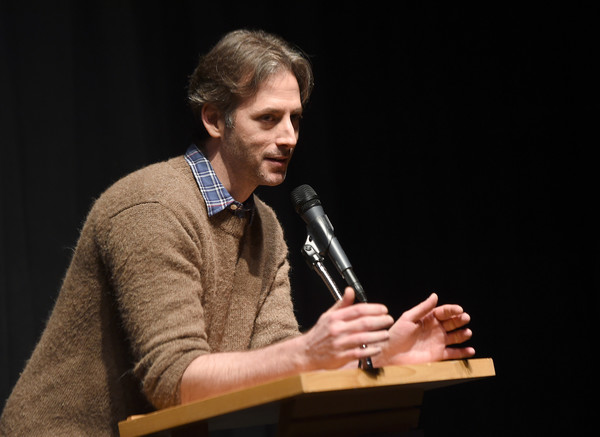
The Little Hours Jeff Baena

“The Little Hours” was written and directed by Jeff Baena whose previous credits were “Life after Beth” and “Joshy,” and he was joined at the movie’s Los Angeles press day by actors Dave Franco, Aubrey Plaza, Alison Brie and Molly Shannon. Baena explained how, while he was studying filmmaking at NYU, he also earned enough credits to get a minor in Medieval and Renaissance Studies. This is where he learned about “The Decameron,” a collection of short stories written by Giovanni Boccaccio in the 14th century. The stories dealt with life lessons and love, and I asked Baena why he chose to make a movie out of one particular story from it.

Jeff Baena: I wasn’t expecting something as funny and bawdy coming from a source material that is almost 700 years old. So, when I read it, it just read to me as something so human and just highlighted how similar we are to these people even though obviously the context is completely different. I was just drawn to how amazingly easy it is to connect to this thing and find our commonalities and also highlighting differences and showing how much we’ve changed despite that. All that stuff was really interesting to me.

I was also interested in learning from Baena about how he conceived this movie. Like I said, I thought this would be a religious spoof after watching the trailer, but “The Little Hours” proves to be much more than that. I was curious to see how this story evolved for him as he went about turning it into a movie.

Jeff Baena: I just wanted to achieve something similar to what “The Decameron” does itself which is funny. It’s a humanist book, so more than anything I just wanted to get the tone of that silliness but also the historicity which is a sort of strange balance, and then highlight all these actors who I love being in this world and then finding a way to make it adjustable for people to digest.

The Little Hours Dave and Aubrey

“The Little Hours” takes place in the year 1347 and was shot in Tuscany, Italy. As a result, it was tempting to believe the actors did a lot of research in preparation for filming. But in talking with Franco, he explained why this didn’t end up being your average period film.

Dave Franco: I kept asking Jeff what kind of research I could do and what research I should be doing, and he told me not to overthink it. He said it is not about knowing about the time period or how they talked or what activities they were doing there anything like that. It was more about the human connection. Even though the movie is set in the 14th century, it’s just about the relationships and we want you to talk in your own natural cadence. We don’t want you having to talk flowerily language. So yeah, it was just about connecting to one another.

The Little Hours Nuns

Both Alison Brie and Aubrey Plaza play nuns who are not at the convent for religious reasons as much as they are for some form of persecution. Many have asked the actresses what it was like wearing the nun costumes, and they replied they were heavy and itchy. But being an actor myself, I was more interested in how these costumes influenced their performances and if it changed the way they thought about their characters. Actors spend a lot of time preparing a role, and the costume is like the finishing touch or the missing puzzle piece which completes everything.

Aubrey Plaza: Yeah. Nun habits can feel really depressing. They are like really weighing you down literally, and only having just your face exposed is really hard. So, I think psychologically it helped get us all into character because we were totally de-sexualized, we couldn’t use our bodies, and we just felt after 10 hours of that we were all kind of like, “Can we get this fucking thing off?” Because it’s a drag.

Alison Brie: I feel like it made the character. The costume, the habit, is very oppressive and I found myself to be very depressed while wearing it, and my character’s in that same mental state a lot of the movie. So, it definitely helped and it did sort of change the way I went about performing in the movie because I’m a very physical person, and I think that that is one of my biggest tools that I use often. It’s like the tool I always reach for first in the bag. So, to have that kind of physicality taken away from you and also any sexuality robbed from you and to have just this small part of your face exposed, it was an interesting challenge in minimalism and in conveying ideas with as little movement as possible sometimes.

The Little Hours Molly Shannon poster

Then there was Molly Shannon who plays Sister Marea, easily the nicest and kindest character to be found in “The Little Hours.” When it comes to Shannon, we all know her best from “Saturday Night Live,” where she created Mary Katherine Gallagher, the awkward and unpopular Catholic schoolgirl prone to severe mood swings. Last year, I got to attend a special screening of “Superstar” which starred Shannon as MKG, and she spoke of how she went to Catholic school as a child and the experiences she had which to came to inform the creation of that character. I asked Shannon if MKG or her Catholic school experiences came to inform her performance as Sister Marea in “The Little Hours.”

Molly Shannon: That’s interesting. No, I wouldn’t say so much Mary Katherine Gallagher, but we did have a nun when I was in grade school named Sister Rosemary and she seemed really unhappy to me. She was fascinating because she seemed kind of miserable. She was young and she had a beautiful face. She was my first-grade teacher and she would take the hall pass and go, “Do you want to smell it?” Meaning like she wanted to hit you with it. I used to go pray at her convent after school to get extra credit, and I would just kind of study her and I was like wow, this is so weird. This young girl lives in this clean house. And then she left the convent and was seen on this golf course with a miniskirt like whooping it up with one of my schoolmates’ fathers and I was like, “Yay, she’s free! She got out!” I think about her in that little golf cart and I’m like, “Wow!” I could see she wanted to escape. She seemed unhappy. I think I always liked to study characters. I would study people. So, I think maybe I thought more of her.

While “The Little Hours” might seem crude on the surface, it is truly one of this year’s more original and subversively wicked comedies. It also shows how the 14th century was nowhere as stolid as we all have been led to believe, and it serves as a highly entertaining showcase for Baena and his super-talented cast. It opens in theaters on June 30, so be sure to check it out!

Stills, posters and trailers courtesy of Gunpowder & Sky

Jeff Baena photo courtesy of Getty Images


‘The Thing’ Prequel Should Have Been a Sequel

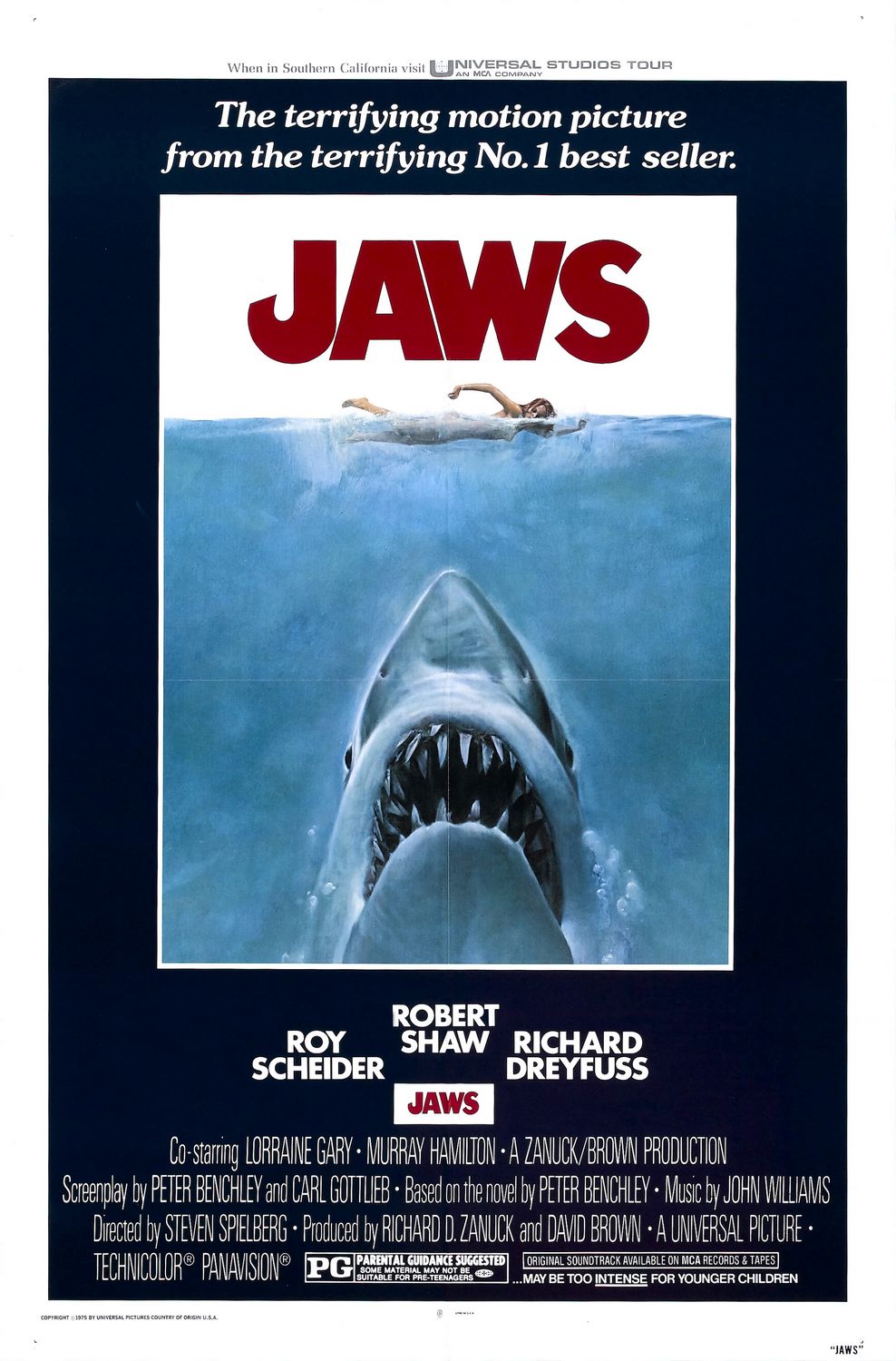
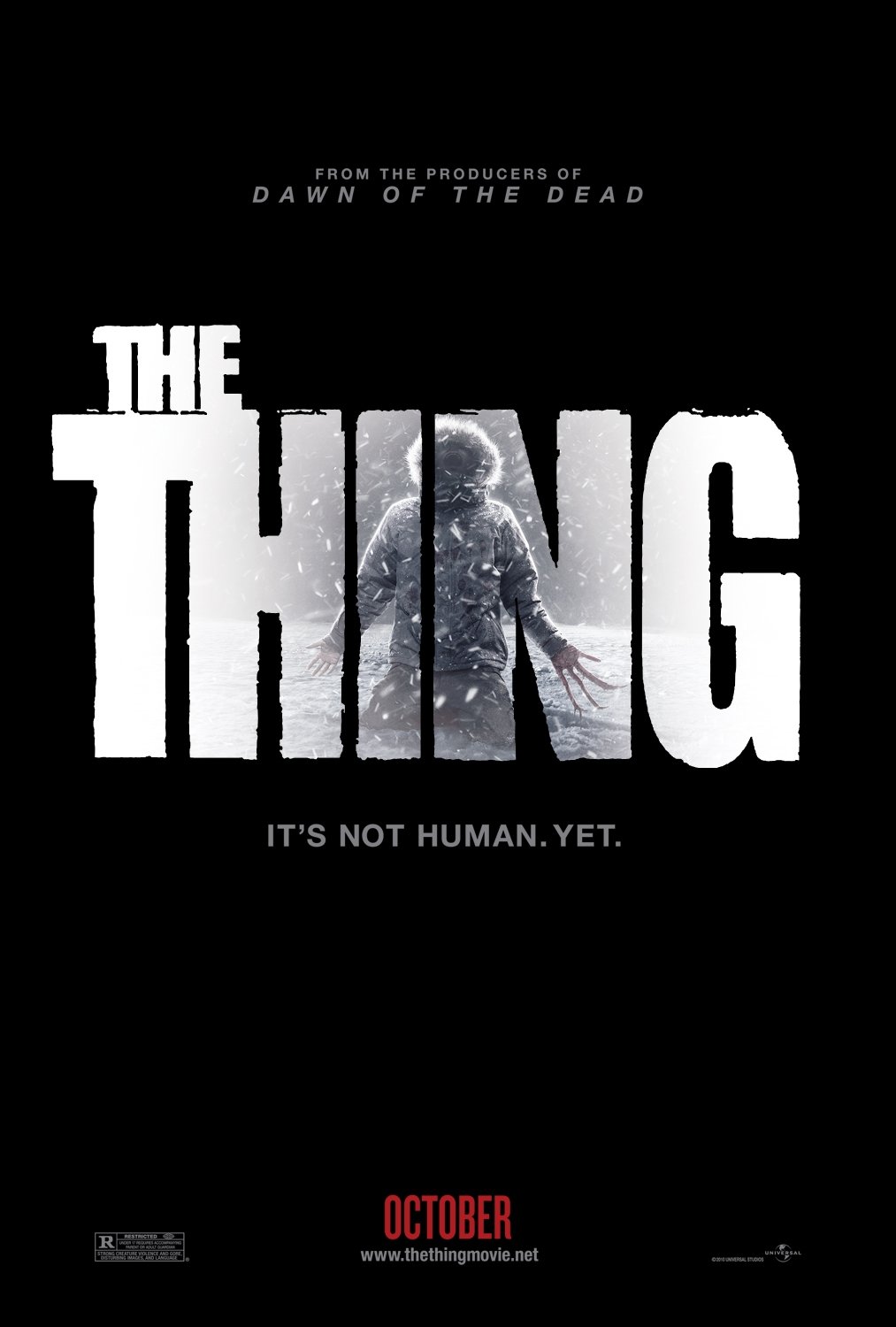
The Thing 2011 poster

It says a lot about John Carpenter’s “The Thing” that it could generate a prequel almost 20 years after its release. A critical and commercial failure back in 1982, it has since been justly reappraised as a true horror classic and remains Carpenter’s masterpiece. It proved even more terrifying than “Halloween,” and it also holds a special place on my list of my top ten favorite movies of all time. These days, it is even more frightening as the scenario it presents feels all too possible.

Now we have Matthijs van Heijningen Jr.’s “The Thing,” a prequel to Carpenter’s movie which explores the events leading up to it. Remember the Norwegian camp Kurt Russell and Richard Dysart visited which had been completely burned down? Now we get to see how it got laid waste by both the thing and the humans. But therein lies the problem; knowing the events precede those of the 1982 movie and who survives, much of the potential suspense and tension gets drowned out almost immediately.

Frankly, I would much rather see a sequel to Carpenter’s “The Thing” instead of this. His film was very effective because we never had a clear idea of who to trust. But in Heijningen’s film, we know the characters on display will eventually bite the dust, and it becomes a question of when these characters turn into the thing. After a while, it becomes more shocking when a character dies but doesn’t turn into a gooey alien. What spoils it even more is we know of at least one character who will survive what happens very early on, and all we can do is wait impatiently for him to get on the helicopter with his rifle and take shots at the wolf.

Heijningen is respectful of Carpenter’s movie and pays homage to it throughout, but I kept wondering if this was a remake instead of a prequel. Various scenes are clear imitations of the 1982 movie’s most classic moments, and I wish he had worked harder at distinguishing the prequel from it instead of just presenting us with something way too similar. He does wring some suspense and strong tension at different points, and his unique take on the blood test scene is very clever, but he is unable to sustain the tension which made Carpenter’s movie so utterly terrifying.

The special effects are very good, but they pale in comparison to the genius of Rob Bottin. Audiences are always quick to tell when CGI effects are overused. As for the performances, they are generally good even though the characters could have come out of any monster movie.

The best performance comes from Mary Elizabeth Winstead as paleontologist Kate Lloyd. Such a terrific presence in “Scott Pilgrim vs. The World” and “Live Free or Die Hard,” she holds our attention throughout and is one of the best reasons to see this prequel. While Lloyd is predictably inspired by Ellen Ripley from “Aliens,” Winstead makes the character her own and more than just another tough chick which movies like these typically rely on.

“The Thing” prequel is not terrible, but it will be of interest more to those who haven’t seen the 1982 film which itself was a remake and made back in a time when remakes were rare and actually worth watching. This particular version of John W. Campbell’s “Who Goes There?” feels like a lost opportunity, and it gets caught in the prequel trap of busily matching everything up to the film it leads into. It really sucks when you can see a movie’s ending long in advance. I did however admire the ambiguous ending shown before the end credits as it leaves you wondering if the alien really infected one of the last characters standing. Not knowing is always more unnerving than knowing, and at least the director got this right.

* * ½ out of * * * *

John G. Avildsen’s ‘The Karate Kid’ is Still the Infinite Crowd Pleaser

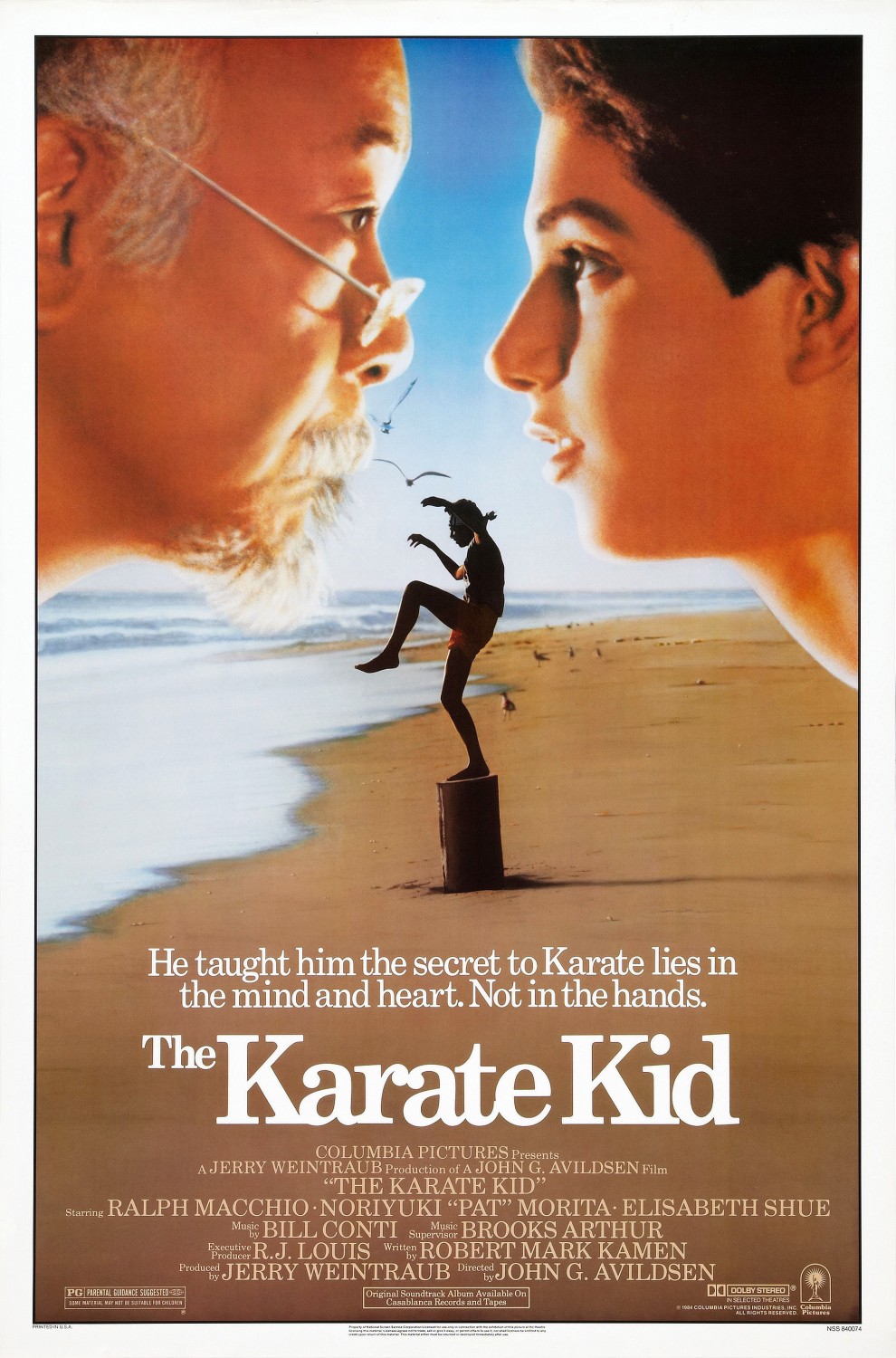
The Karate Kid 1984 poster

I wanted to write about “The Karate Kid” because it’s one of those movies which stays with me to where I know every piece of dialogue in it. I got to see it at the long-gone Melody Theater back in Thousand Oaks where I saw many classic 1980’s movies. I still vividly remember seeing it with my older brother and mom, and it was one of the few movies she would ever take us to see in a theater back then.

It has now been more than 30 years since the original it came out, so I guess it’s safe to say you all know the story by now. Ralph Macchio plays Daniel LaRusso, a high school teenager who moves with his mom from New Jersey to California. Having moved a lot as a kid, I can appreciate his frustration at having to adapt to new surroundings which are not prepared to welcome you with open arms. He runs afoul of a tough gang known as the Cobra Kais, and they are led by Johnny Lawrence (William Zabka). When he sees Daniel flirting with his girlfriend Ali (Elisabeth Shue), Johnny lays down the law and kicks Daniel’s ass without any pity.

“The Karate Kid” had a strong impact on me. I got picked on a bit when I was a kid, and seeing him get messed around with filled me with a sadness and anger in how unfairly people get treated. You want to see him get his revenge against these guys even though it will likely bring the same vicious reaction from the Cobra Kai. When you see him get beat up again, I remember how angrier and angrier I got. But that’s when this movie gave us one of its best moments as Mr. Miyagi came to the rescue and kicked ass. Seeing Miyagi coming from behind in the shadows got my heart and excitement up, and it was a pleasure to see him give those bullies the beating they deserved.

Mr. Miyagi is one of the best characters to come out of the 1980’s, and he remains one of my favorites from that decade. He is basically an Okinawan Yoda, and he is brought to life by the late Pat Morita in a performance I was so hoping would snag him the Best Supporting Actor Oscar he was nominated for. Although this character became a cliché for many other movies, the guy who does a low profile and lonely job but who is actually a war hero with the greatest of skills and training, Morita is brilliant in how he shows the seriousness of Miyagi as well as his joyous and humorous side as well. I did not realize Morita was a stand-up comedian before he did this movie. Then again, he was on “Happy Days” for a while.

After all these years, “The Karate Kid” still proves to be one of the few movies which really shows us the truth about karate. Karate is a spiritual thing more than anything else, and it was not about being trained to attack the way John Kreese (Martin Kove) taught others to do. It was about defense more than anything else. Moreover, it was about making yourself a better person on the inside as opposed to just the outside. I have heard from my closest friends about how studying karate helped raise their self-esteem to where they felt better about themselves. I even studied karate for a bit to experience it for myself, and it’s something I hope to continue in the near future.

The friendship between Daniel and Miyagi is one of the best I have ever seen portrayed onscreen. You are pretty much in Daniel’s shoes as he tries to figure out what the heck is going on when Miyagi has him washing his cars, painting his fence, sanding his floor and painting his house instead of teaching him karate. This leads to one of my favorite moments where Daniel realizes Miyagi has trained him in karate without him even knowing it. All these chores give him reflexes which have become ingrained in his consciousness to where they are practically automatic, and it is then that he realizes he has long since learned how to defend himself.

As Daniel LaRusso, Macchio gave us his quintessential performance from the 80’s. In the first two “Karate Kid” movies, he found a balance between being obnoxious and sincere, and he makes LaRusso a likable guy to where his transformation into a true karate student feels real and authentic.

Shue was so beautiful in this movie, and I liked how she embodied her character to where she practically spits at the clichés of the typical spoiled rich girl we have seen in far too many movies. Shue and Macchio might seem like a highly unlikely couple, but these two convince you they could be together. I always hated how Shue’s character got dumped in “The Karate Kid Part II.” I never really bought how that all came about, and I thought it was really shitty to not include her in the sequel. Shue was a wonderful and vivacious presence here, and she went on to give an unforgettable performance in “Leaving Las Vegas.”

Morita’s career went downhill after appearing in “The Karate Kid.” Seeing him doing local car center commercials was frustrating, but what he does here with Miyagi is amazing. It’s one of those performances where the actor becomes the character to where you never really see him acting, and that’s great film acting.

John G. Avildsen, best known for directing “Rocky,” helmed this movie with the same level of confidence as he did with the one he won a Best Director Oscar for, and he gives us a rousingly good time at the movies in the process. Since he has two great actors in the lead roles, he doesn’t waste time trying to manipulate our emotions because he makes everything in “The Karate Kid” feel very real. You’re not just watching this movie, you’re experiencing it along with the characters.

I also want to mention Kove’s performance as John Kreese as he proves to be the real villain of “The Karate Kid.” He trains his students viciously as if they are in a constant state of military basic training you would rather see end sooner than later. Kreese has programmed these kids to hurt and inflict punishment, any they look up to him for all the wrong reasons. But towards the end, they come to see Kreese is not all he is cracked up to be. There’s a great moment where he looks at Zabka as he is taking a break in the climatic fight with Daniel LaRusso and tells him to “sweep the leg.” Zabka’s character of Johnny Lawrence looks at Kreese like he is out of his mind, and it adds another to where it keeps the characters from becoming a pair of one-dimensional jerks we have seen too often.

“The Karate Kid” is a well written movie directed to near perfection and acted with supreme skill. After all these years, I never get sick of watching it, and I don’t think I ever will.

* * * * out of * * * *

John Carpenter’s ‘The Thing’ is One of the Best Horror Movies Ever Made

The Thing movie poster

Many of you probably know the story behind John Carpenter’s “The Thing.” It came out in the summer of 1982, two weeks after Steven Spielberg’s “E.T,” and while the alien from Spielberg’s movie was warm and cuddly, the one in Carpenter’s was cold, ugly, and utterly vicious. As a result, “The Thing” was quickly derided by both critics and fans alike, and no one hid their disgust towards Carpenter for what they saw as pornography of violence. In all fairness, however, the movie was released at the wrong time of the year. To release it during what Carpenter called the “summer of love” opposite not just “E.T.,” but also “Star Trek II” and “Tron” was a big mistake on the part of Universal Pictures, and they would have had more luck had they released it in the winter of 1982.

Years later, “The Thing,” like many of Carpenter’s movies, found the audience it deserved through home video and digital media. Perhaps it was ahead of its time, but it is now considered, and rightly so, one of the best horror and sci-fi movies ever made, and it is easily the best horror remake in a sea of horrendously crappy ones. It certainly plays better today than it did when first released, and it is still utterly terrifying 35 years after its release.Unlike the original Howard Hawks version of “The Thing,” Carpenter’s movie hews much closer to the short story “Who Goes There?” by John W. Campbell, Jr. The movie takes place at an American scientific research outpost in Antarctica, perhaps the coldest place on Earth. We are introduced to a bunch of men who are studying the surrounding area, and they look bored and listless as they pass the days smoking, drinking scotch, watching “Let’s Make a Deal” reruns, and playing ping pong. One day, they are met by a wolf being shot at by a Norwegian for no discernable reason. This later leads to events which make them realize they have encountered an alien of unknown origin unearthed from the ice after thousands and thousands of years. It then proceeds to imitate every creature it comes into contact with, and it is revealed any of them could be the thing. They have to destroy the thing before it reaches civilization because, once it does, it would mean the end of the world.

The premise of “The Thing” is genius because it allows for an unending escalation of tension and suspense throughout. Like the characters, you have no idea who to trust. The paranoia which closes in on the characters puts them in an airtight cage, and this cage gets smaller and smaller as it heads to its infinitely bleak climax. There are no women to be found which eliminates any sexual tension and could have added an unnecessary element to the movie. Many say this makes the movie sexist, but it is a ridiculous charge.

“The Thing” was released when the whole world started to become aware of the AIDS virus. The idea of any virus infecting us completely and rearranging our body to the point may have seemed unreal to us back in 1982. But today, it is a reality more horrifying than ever, and it presents itself with no cure. This makes “The Thing” even scarier to take in when watching it now. The scene where Dr. Blair (Wilford Brimley) observes a computer image of the virus infecting a human host is one of the movie’s scariest moments, and it feels like an all too real a possibility today. The only thing truly dated about the scene is the computer graphics look like they are from some old Atari game, but it doesn’t change anything.

This movie also marks one of several collaborations between Carpenter and Kurt Russell who started working together on the TV movie “Elvis.” After all these years, Russell can still make you believe he is a regular guy like the rest of us, and his role as helicopter pilot R.J. MacReady is one of his best. You never get the feeling Russell is acting here. Instead, he inhabits the character he plays, and you follow him every step of the way without any doubt of who the hero really is.

Carpenter cast “The Thing” perfectly with actors like Richard Masur, Richard Dysart, Donald Moffat and David Clennon. But one of the best performances comes from Brimley as Dr. Blair. In the past, we have seen him in countless oatmeal commercials and in roles as the grandfather we wished we had in our lives. But his role in “The Thing” offered him an opportunity to go completely against type. Brimley goes from curious to utterly horrified by what this unknown creature can do, and he ends up wreaking havoc in a way you would never ever see in an oatmeal.

Another great actor in this movie is Keith David who plays Childs. David has a don’t mess with me intensity, and he matches Russell’s intensity every step of the way. The tension between them is as frightening as is waiting for the thing to make its next horrifically gory entrance.

But let’s talk about who the real star of “The Thing” really is, and that is Rob Bottin who designed the movie’s horrifically brilliant special effects and makeup designs. Long before the advance of computer technology, Bottin had to make all these designs from scratch, and what he came up with is now considered a benchmark in his field. The thing mimics everything it touches, and this must have been a huge inspiration for him as it allowed his imagination to run amuck with infinite possibilities. You never know what’s coming next, and this makes “The Thing” even scarier.

Some have called this movie a “geek show” made only with the intention of grossing people out. Granted, a good case could be made for that, but “The Thing” explores a theme that is commonplace in many of Carpenter’s movies; the struggle to maintain one’s individuality. Of never letting go of who you are because it allows you to survive in a world which keeps finding new ways of robbing your individuality at any given opportunity. The threat of this loss is very real, and the characters have the unfortunate disadvantage of being stuck in one of the most remote and desolate places on Earth.

I also imagine a big complaint people have about “The Thing” is we never learn about the alien or where it came from. Basically, we know it’s from outer space which imitates whatever it comes in contact with, and it clearly deals with the cold better than any of us do. Here’s the thing, do we really need to know everything about this creature? Maybe not knowing is more terrifying than knowing. It leaves a lot of things to the viewer’s imagination which I love because it leaves so many possibilities open for how this horrific situation is going to play out.

“The Thing” truly is Carpenter’s masterpiece as it shows him to be a true master of horror and suspense. He endlessly generates unbearable tension throughout, and just when you think the movie has peaked, you realize it has not. Carpenter’s goal here is not just to make us jump out of our seats, but to make us feel the terrifying isolation and complete lack of trust these characters are forced to endure.

Carpenter has said “The Thing” was the first in his apocalypse trilogy (the other two were “Prince of Darkness” and “In the Mouth of Madness”), and it does have an unrelentingly bleak tone which made it seem completely out of place back in 1982. As time goes on though, many of us keep thinking the world is coming to an end with more deadly diseases like the Ebola Virus among others, and the scenario this movie presents us feels all the more frightening and immediate as a result.

Some movies are robbed of their greatness through the passage of time, and we watch them and wonder why we liked them in the first place. But “The Thing” is an exception as the passage of time has made it all the more effective. You can’t help but think its story was ahead of its time, and it remains one of those movies I never ever tire of watching. It has more than earned its place on the list of my all-time favorite movies.

* * * * out of * * * *


John Carpenter Revisits ‘The Thing’ at the Aero Theatre

John Carpenter Dummy Magazine photo

“Escape Artist: A Tribute to John Carpenter” was held a few years ago by American Cinematheque at the Aero Theater. In addition to being treated to a double feature of “The Thing,” which is widely regarded as his best film, and “The Fog,” the writer, director and composer also showed up in between both films to give us more insight on their making and took questions from the audience. Even though these movies are now twenty to thirty years old, they still resonate deeply for movie fans today. This was proven true by the fact these screenings were sold out and packed with Carpenter’s biggest fans.

While “The Thing” was not a big hit upon its release, it has since developed a huge cult following and been critically re-evaluated as the masterpiece it always was. Eighty percent of the audience had probably seen this movie several dozen times, but they still jumped during its most shocking moments.

The Thing movie poster

After the movie ended, Carpenter came to the stage and was met with a standing ovation and thunderous applause. He thanked them for coming on out to see this movie when they could have just watched it at home. One fan in turn thanked him for coming on out to visit with us as he has millions of fans all over the world, and yet he chose to hang out with us.

Today, as the emcee pointed out, many are surprised “The Thing” was not a big hit when released back in 1982. Carpenter put it all the more bluntly:

“It tanked! 1982 was supposed to be the summer of love. It was the summer of ‘E.T.’ and it was the summer of freedom and hope, and ‘The Thing’ was about as bleak a movie as any that could have been released that year. People hated it for that, and all the sci-fi fans out there absolutely hated it and trashed it when it first came out.”

As Carpenter pointed out to actor and friend Kurt Russell on the movie’s DVD commentary, “We came out two weeks after ‘E.T.’ And while there’s was all warm and cuddly, ours was ugly and hideous.” Universal Pictures, which released both movies that summer, attempted to make it the summer of extra-terrestrials, but the timing did not work at all in Carpenter’s favor and it later cost him the job of directing the Stephen King adaptation, “Firestarter.”

One fan pointed out how “The Thing” was unique in a sense as it is one of the few Carpenter movies he did not compose the score for. While the score does have the Carpenter sound, it was actually composed by Ennio Morricone. Carpenter said Morricone is one of the greatest film composers ever, and he did point out there is one synthesizer piece of music which was not composed by Morricone. Now he wouldn’t say who composed it, but it’s safe to say he did, and in association with Alan Howarth.

Another fan pointed out several of Carpenter’s movies have been remade like “Assault on Precinct 13,” “The Fog” and “Halloween,” and a remake of “Escape From New York” is in the works. This fan said he found remakes blasphemous, and to this Carpenter replied, “I actually find it flattering. They also have to pay me a lot of money when they do that.”

Dean Cundey, director of photography on “The Thing,” worked on several of Carpenter’s movies including “Halloween.” Carpenter has not worked with Cundey for some time now, and one man asked why and if there had been a falling out between them. Carpenter replied they have not fallen out, and he recently caught up with Cundey at a movie shoot in Canada. Carpenter did, however, point out why they haven’t worked together for a while, “Dean wanted to be a director. And when you have a director on a movie, and a director of photography who wants to be a director, that’s just not going to work out.”

Everyone who knows Carpenter knows he is a big fan of westerns, and he recently recorded a commentary track for the special edition release of “Rio Bravo.” Many wonder why he still hasn’t directed a western of his own, and Carpenter replied he honestly didn’t know but that he came close several times. The closest was when he wrote the script for “El Diablo” which was made into a cable movie that earned him a Cable Ace Award. If you look closely, all of his movies do have western elements to them. The closest he has ever gotten to making a western is “Vampires” with James Woods.

Many also wondered, and it was asked, what future projects he has on tap and of what his current passions are. His reply was, “Current passions? I’m playing Ninja Gaiden, I just got Metal Gear Solid 4 for PlayStation 3… No seriously, I have a couple of things I’m looking at doing, so we’ll see what happens.”

Before he left, he did have some things to say about “The Fog,” “I have heard that the print for this movie is not in the greatest shape, and that it is pretty faded. But keep in mind that when we made this movie, we made it for only $1 million dollars, so please be kind.”

‘War for the Planet of the Apes’ Caps Off a Truly Great Trilogy

War for the Planet of the Apes poster

The summer 2017 movie season hasn’t necessarily been a bad one, but so far it has been overrun by franchise fatigue. Did we really need another “Transformers” sequel? Was the wait for the latest “Pirates of the Caribbean” really worth it? Can’t Pixar do more than just give us another sequel to “Cars?” Some franchises have seriously overstayed their welcome to where it feels like we need to take a LONG break from sequels of any kind, except of course for the next ones coming from the Marvel Cinematic Universe.

But now we have “War for the Planet of the Apes,” the third in the rebooted “Apes” franchise which is not only the best one to date, but also one of the best movies of 2017. Unlike other sequels which essentially repeat the same story to nauseating effect, “War” is not out to give us a replica of everything which happened before. From the start, we see how far the apes have evolved, and we also see the humans going through a state of de-evolution as well. In this war, it won’t matter who wins because nothing will ever be the same for anybody.

Taking place two years after the events of “Dawn of the Planet of the Apes,” “War” finds the conflict between the apes and the humans getting bloodier and bloodier. Both sides have taken heavy casualties, and the humans have resorted to recruiting apes to betray their own in a desperate effort to gain the upper hand in an escalating conflict. Caesar (Andy Serkis) has now reached a mythic status on the planet as a strong leader, and he now speaks as well as any human. When the movie starts, he has just survived another battle which leaves many dead in its wake, but instead of killing the remaining human soldiers, he sends them back to their base with a message to their leader, leave us alone. At this point, Caesar merely wants to protect his fellow apes and everything which is rightfully theirs.

But after being reunited with his loving family, Caesar suffers an unimaginable tragedy perpetrated by a military unit led by the ruthless Colonel McCullough (Woody Harrelson), and he heads out on a mission of revenge which, to quote a Klingon proverb, will be best served cold. Joined by several of his closest friends which include the wise and benevolent Maurice (Karin Konoval), Caesar comes not just to understand the world around him, but also about himself and of how he may be the maker of his own fate.

Whereas “Rise” dealt with evolution and how humans may not be a superior race of beings, and “Dawn” observed how humans and apes can be their own worst enemies, “War” focuses on the themes of vengeance and hate and what they do to the soul. Caesar’s quest for revenge is completely understandable, but his friends worry about what his hate for the Colonel is doing to his inner self. Caesar finds his strength from within and is as wise as he is strong, but we can see his soul is being corrupted on this mission as he is determined to exterminate his enemy with extreme prejudice.

The cost of revenge is a common theme in many stories, but “War” treats it with a great deal of intelligence. Caesar is constantly haunted by visions of Koba (Toby Kebbell) whose treacherous actions led Caesar to drop him to his death in “Dawn.” Maurice, the Obi-Wan Kenobi of these “Apes” movies, reminds Caesar of how Koba never got past his hate for humans to see the need for peace. But while Caesar convinces himself his motives are far purer than Koba’s, he comes to realize he is no different from Koba as his need to exact revenge takes precedence over everything else which holds great meaning in his life. The question is, can Caesar pull out of this moral nosedive before it’s late, or will he sink into an abyss of hatred which will rob him of all he stands for?

Not enough can be said about Andy Serkis’ performance as Caesar, and his work should have netted him at least one Oscar by now. We have seen Caesar go from being a frightened young ape into a hardened warrior, and Serkis has made every emotional beat count for something deep and true. While the visual effects help to illustrate how he has paid a price for the war being fought, it is Serkis who gives these effects soul and meaning as he plumbs the depths of Caesar to give us a character who is wonderfully complex and haunted by past deeds which cannot be simply washed away.

Woody Harrelson once again reminds us how he can play just about any role given to him these days with his portrayal of Colonel McCullough. His performance draws a bit from Marlon Brando’s in “Apocalypse Now” as, like Colonel Kurtz, McCullough has become a rogue soldier as his need to wipe out the apes and save the humans comes from a place of pain and delusion instead of from a higher military authority. Part of me expected to McCullough to be the usual military antagonist movies of this kind typically employ, but Harrelson gives this character much more dimension than you might be anticipating, and he matches Serkis scene for scene as their characters come to discover how alike they really are.

In addition, Serkis and Harrelson get strong support from Karin Konoval who makes Maurice far wiser than CGI can ever convey, Steve Zahn whose character of “Bad Ape” is kind of the equivalent to “Harry Potter’s” Dobby, and Amiah Miller is a scene-stealer as the mute war orphan who comes to be known as Nova.

Matt Reeves, who directed “Dawn,” returns to helm “War” and tops what he gave us before. The third movie in a franchise usually falls back on a well-trod formula, but he instead advances the plight of the apes to another level which furthers their evolution, and of the humans’ furious attempts to eradicate them which reveals their failings and a tremendous lack of understanding about where we all came from. And while the visual effects are tremendous in how they make the apes look ever so real, they are not the point. Reeves’ focus is more on character and performance more than ever before, and it is those things which make “War” especially epic. A lot of summer blockbusters are geared towards wowing us with special effects to where the human element is lost, but Reeves and company have the special effects serving the movie and its characters in a wonderfully effective way. On top of all this, “War” is well-served by one of Michael Giacchino’s best film scores to date.

The “Apes” reboot trilogy now joins the company of great cinematic trilogies such as Episodes IV, V and VI of “Star Wars,” the Jason Bourne trilogy, and “The Lord of the Rings” among others. It’s so pleasing to see filmmakers give us the kind of summer blockbuster many don’t always expect to see, one filled with great performances and intelligence as well as characters who are very interesting and whom you want to root for. Many blockbusters are the equivalent of a fast food meal which you may have enjoyed eating but which does not leave much of an aftertaste, but this is epic filmmaking which you can’t help but be emotionally drawn into. In a summer movie season which has been lacking to say the least, “War for the Planet of the Apes” is a real winner.

I also have to say “War” kept reminded of a Talking Heads song called “(Nothing But) Flowers.” As apes and humans traverse a landscape dominated by trees, rocks and lakes to where you can’t remember the last time you saw a building, the following lyric kept playing in my head:

“If this is paradise, I wish I had a lawnmower.”

* * * * out of * * * *