I guess you could say this particular trailer for Stanley Kubrick’s “The Shining” was an early example of a teaser trailer. These days we get teaser trailers for all the big Hollywood releases, and they are designed to whet our appetite not just for the next big blockbuster, but also for the next trailer which will give us even more information of what is in store for us. These days, we even have teaser trailers for teaser trailers, something which I hope will be stopped soon because they are ever so annoying. We get teased enough as kids, so doing this at the movies does not help.
What I love about this trailer for “The Shining” is how simple it is in its design, and yet it still feels deeply unsettling. All we see at first is part of a hotel lobby with two elevators and chairs. The camera never moves an inch as the movie’s credits move upwards indicating the title, the actors starring in it (Jack Nicholson and Shelley Duvall), the names of the screenwriters, how it is based on “Stephen King’s Best-Selling Masterpiece of Modern Horror,” and the one credit us movie buffs are always happy to see, “Directed by Stanley Kubrick.” Seeing this had me wondering what one could expect with this adaptation of King’s work, and the music composed by Wendy Carlos and Rachel Elkind certainly sends a shiver down my spine.
Watching this trailer reminded me of Alfred Hitchcock’s “Psycho” as Kubrick, like Hitchcock, managed to find a sinister quality in everyday things and the ordinary. There’s nothing particular special about this hotel lobby here as it looks like any other we have ever been through. This makes it all the more horrifying when those gallons of blood start pouring out of the elevators and into the lobby,
Once again, the camera never moves or pans away, and seeing the blood wash over it is incredibly frightening as you feel trapped and unable to escape. Our instincts tell us to run away, but Kubrick is not about to let his audience off the hook. As the blood drips off the camera to reveal the damage left in its wake, it is clear how the “Dr. Strangeglove” director is more than prepared to take us on a most unsettling ride.
Opinions about Kubrick’s “The Shining” have varied over the years, and King himself has said numerous times how much he despised it. Whatever you may think of the film, this trailer for it is a brilliant piece of work. It’s a shame we don’t see more trailers like this one these days. Of course, if you know of any, please feel free to share them with me.
Okay let’s be honest, “Maximum Overdrive” is not a good movie, and that is being generous. It is one of the many adaptations of a Stephen King novel or short story, in this case “Trucks,” and it also marked the feature film directorial debut of King as well. The fact he hasn’t directed a movie since should be no surprise to anyone who has seen this one. The acting is embarrassingly over the top, the editing very sloppy, and not even a rock and roll score by AC/DC is enough to lift, as King described it, this “moron movie” out of the cinematic abyss.
But when all is said and done, the trailer for “Maximum Overdrive” is one of my favorite movie trailers of all time. Watching King gleefully describe what he has in store for us makes me want to watch this movie again, and that’s even though I already know just how bad it is.
Right from the start, King makes it clear to the audience how “Maximum Overdrive” will be a unique movie compared to the others based on his work, and as the camera closes in on his face, he gives off a wide-eyed expression and a twisted smile which quickly reminds us how this is the same man who wrote “Carrie,” “Salem’s Lot” and “The Shining.” I love how he talks about how he “sort of enjoyed” directing a motion picture, but it makes me wonder if this was the cocaine talking as he later admitted how “coked out of his mind” he was while making this Golden Raspberry nominated film.
It was also a brilliant move to use the “Chariots of Pumpkins” theme John Carpenter and Alan Howarth composed for the “Halloween III: Season of the Witch” soundtrack here as the wonderfully creepy music adds to King’s creepy appearance while he stands in front of the Green Goblin mask which is featured prominently on the front of the biggest truck in “Maximum Overdrive.”
The worst parts of each actor’s performance are kept to a bare minimum here, but the annoying nature of the character Yeardley Smith plays is something even the makers of this trailer could not hide from the public. But do not feel bad for Smith. She has more than persevered since “Maximum Overdrive” as she still is the voice of Lisa Simpson on “The Simpsons,” and it is enviable role for any actor which she has held onto now for decades.
When King points his finger at us and says “I’m going to scare the hell out of you and that’s a promise,” it is a wonderfully unsettling moment as those of us who are fans of his writing are well-aware of how often he has kept us up nights. Of course, this movie is anything but scary, so perhaps he was talking about one of his books instead without even realizing it.
In a world filled with an infinite number of movie trailers, the one for “Maximum Overdrive” stands out for me among so many others. Even though the movie it advertises proved to be a critical disaster, I still enjoy watching it from time to time as there are few other trailers like it.
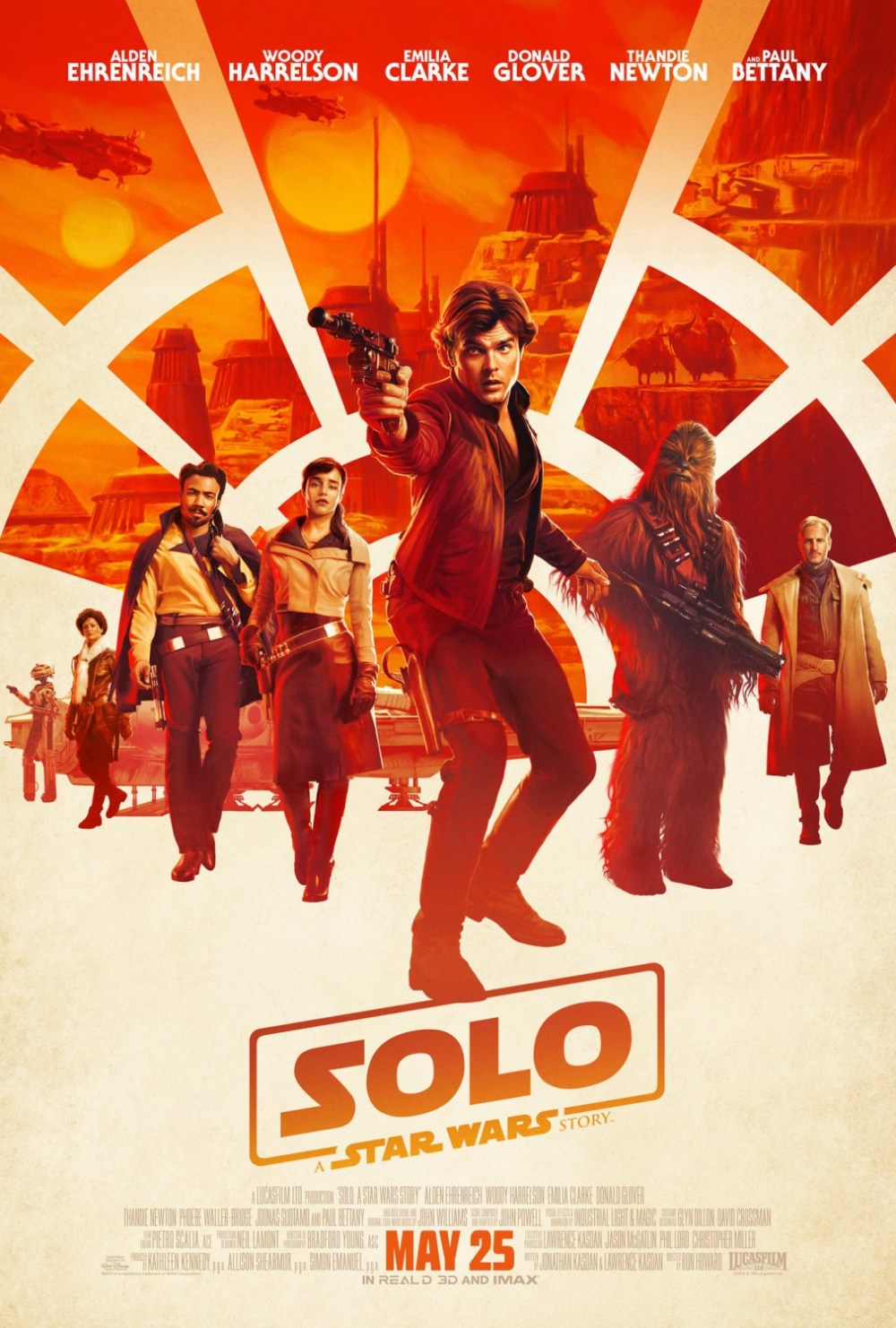
Here we are again in a galaxy far, far away, and it is the third time we have ventured there in three years. We also head back to an even longer time ago when one of our favorite “Star Wars” characters, in this case Han Solo, was young, full of vigor and demographically desirable. But while the “Star Wars” movies have always been filled with tremendous imagination and unforgettable characters, I have to be honest and say that “Solo: A Star Wars Story” proved to be an underwhelming space adventure. While I am as big a Han Solo fan as the next person, seeing his early years portrayed here felt strangely ordinary to where this didn’t feel like a “Star Wars” movie, but instead an average science fiction movie yearning to be.
This movie begins with a routine chase sequence in which Han (Alden Ehrenreich) and his girlfriend Qi’ra (Emilia Clarke) attempt to escape a criminal gang, and from there I started to have a bad feeling about this. Usually these movies have me totally hooked in right from the start, but I did not feel the same kind of excitement I usually feel with the average Lucasfilm adventure. When Qi’ra and Han are suddenly separated at a transport station, Han tells her he will come back for her. Will he? Well, she is played by Emilia Clarke. Will Qi’ra and Han live happily ever after? Did Greedo really shoot first?
“Solo” reminded me of the problems I have with most prequels as they seem more concerned with connecting the dots between their story and the ones we have seen a thousand times. Like “X-Men Origins: Wolverine” and “The Thing” prequel, the filmmakers are saddled with a cinematic history they are forced to adhere to, and it results in a lack of surprise and suspense as we know how things will turn out. And, like “Hannibal Rising,” it tells us more than we need to know about an iconic character to where I walked out feeling how certain things are best left to the imagination instead of being made into a movie.
Alden Ehrenreich has been an actor on the rise ever since his scene-stealing role in “Hail, Caesar,” and he certainly has a strong screen presence as Han Solo. At the same time, he ends up giving a one-note performance as the intergalactic smuggler which lacks the charisma Harrison Ford brought to the role. While he tries to play it cool throughout, Ehrenreich never quite comes to life here, and what results is a disappointing case of miscasting.
We do get introduced to some new characters, and among which is Tobias Beckett who is played by Woody Harrelson. As always, I am reminded of how Harrelson can play just about any character he takes on, and he provides us with the mentor Han Solo was always destined to have. Tobias, like Han, is a smuggler, but he also represents the darker road Han could find himself on if he is not careful.
Other actors are not as lucky. Thandie Newton shows up as Val Beckett, Tobias’ wife and partner in crime, but she is gone way too soon. Jon Favreau voices the alien character Rio Durant, but Rio merely functions as an easily disposable member of Tobias’ crew who we know will not last long. Paul Bettany makes Dryden Vos into a wonderfully ruthless crime lord, but his presence in “Solo” feels a bit uneven as if he is there to fill in the missing blanks. It should be noted how Bettany took over this role after the original actor cast, Michael K. Williams, was unable to return for reshoots. Things had to be changed to accommodate Bettany, and it shows.
Production problems kept plaguing “Solo” before its release, the biggest of which was the firing of the original directors, Phil Lord and Christopher Miller, both of whom still received an executive producer credit. It was one of several instances which showed how protective Lucasfilm was of this franchise. The word behind the scenes was that Lord and Miller were looking to mix things up and did not want to give audiences the same old thing, but Kathleen Kennedy was not about to let anyone change things up. While I commend Kennedy and Lawrence Kasdan for taking extra special care of this franchise, I came out of “Solo” thinking they should shake things up in the future if they want it to maintain the relevance it still has.
Replacing Lord and Miller is Oscar-winning director Ron Howard, and this had me excited as this is the same man who directed “Apollo 13.” That film was based on a real-life event everyone knew the outcome of, and yet he turned it into a riveting piece of entertainment. I figured he would bring this same energy to “Solo,” but even he is saddled with the characters’ history which he cannot easily maneuver around. Apparently, Howard reshot 70% of this movie, and I came out of it wondering how much of the finished product was his. As a result, the whole movie feels inescapably uneven.
For what it is worth, “Solo” does improve when Donald Glover, a man of many talents, arrives on the scene as Lando Calrissian. Glover brings the kind of charisma to this role I expected Ehrenreich to bring a wealth of to Han, and it makes me want to see Lando get a film of his own. From the first moment he appears onscreen, Glover makes this character the epitome of cool to where he does not need a can of Colt 45 to prove it, and he brings an infectious joy to a movie which needed it sooner.
We also get to meet another unforgettable droid here, L3-37. As voiced by Phoebe Waller-Bridge, she is a sardonic delight as she shows more attitude and resilience than any other droid I have seen in any previous installment. It is also a kick to see L3-37 discuss the possibilities of sexual compatibility between her and Han with Qi’ra. After all these years, the “Star Wars” movies are proving to be more progressive than ever before! As for Lando, I think it is safe to say this is the droid he was looking for.
While certain moments like the first time Han meets Chewbacca (played here by Joonas Suotamo) and the initial appearance of the Millennium Falcon end up feeling uninspired and anticlimactic, the scene where Han makes the infamous Kessel Run in less than twenty parsecs is thrilling to watch, and it reminded of why I love the “Star Wars” movies so much. Yes, we know how things will turn out, but Howard keeps us on the edge of our seats as he subverts our expectations and plays with our emotions with glee.
Sure, “Solo” does have its moments, but they only served to remind of everything about it which does not work. The screenplay by Jonathan Kasdan and Lawrence Kasdan features dialogue which feels lifeless even when spoken by talented actors. Granted, there is none of the god-awful dialogue Hayden Christensen was forced to utter in “Attack of the Clones,” but it still feels derivative of lesser sci-fi movies which cannot even compare to “Star Wars” in general. I was also surprised at how uninspired the film score by “Jason Bourne” composer John Powell ends up sounding, and it only comes to life when he utilizes the immortal themes of John Williams.
“Rogue One” was also a prequel, but it had a cast of characters you really cared about, and its story of sacrifice pushed all the right buttons as we came to deeply admire the heroic actions they took. Even though we know the secret plans of the Death Star would end up in the hands of the Rebels, getting there was more than half the fun. “Solo,” however, is nowhere as effective, and what results is a big disappointment and a missed opportunity. This marks the first time I have ever given a negative review for a “Star Wars” movie, and yes, I have seen “The Phantom Menace.”
Lucasfilm would be better off looking to the future instead of going back to the past. Enough backstory has been established for these iconic characters to where we don’t need any additional information. We will certainly be looking forward when “Episode IX” is released in December of 2019, but it appears other “Star Wars” origin movies are in the works such as one on Obi-Wan Kenobi. Seriously, I am with Ralph Garman when he said, wouldn’t a movie about Obi-Wan watching Luke Skywalker growing up from a distance be a little too creepy?
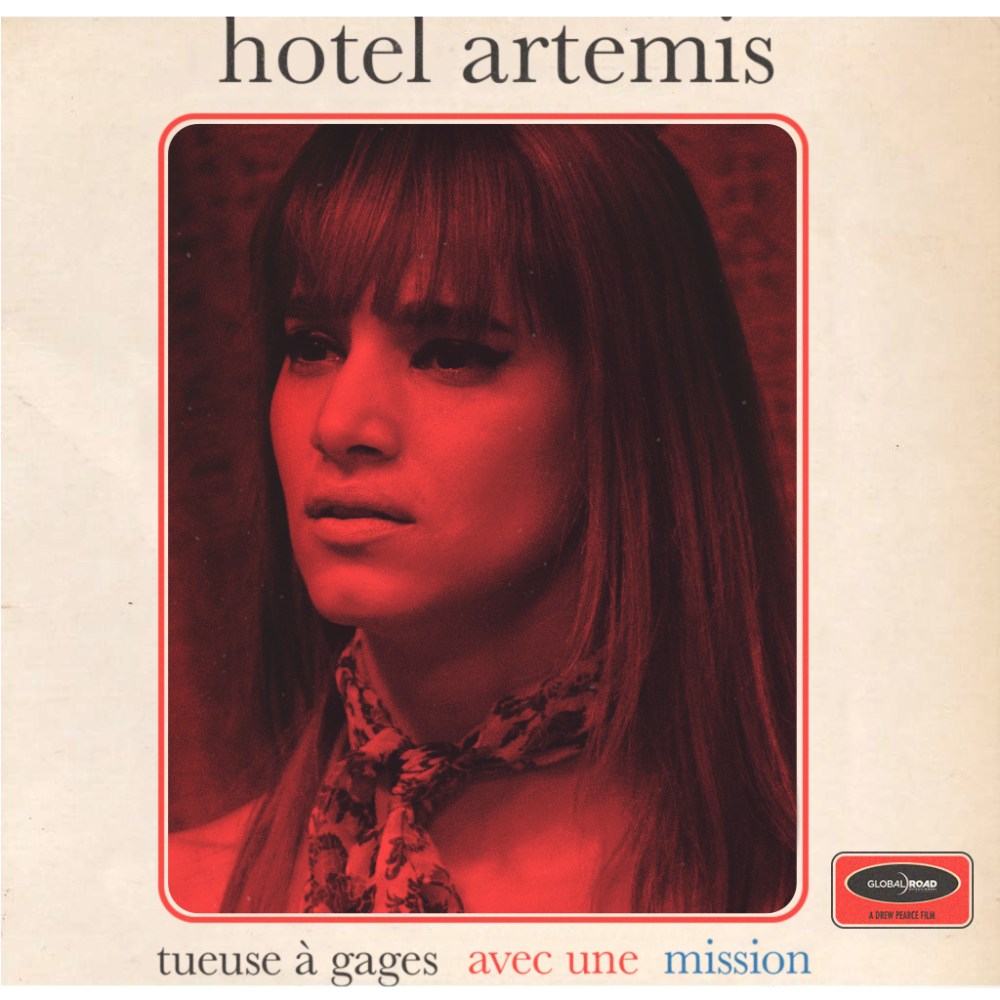
With its first trailer, “Hotel Artemis” gave us all the reason to expect it to be one of the most twisted delights of the summer 2018 movie season. Written and directed by Drew Pearce (the co-writer of “Iron Man 3”), it takes place in the Los Angeles of 2028 where violence and riots threaten to tear the city apart yet again. Now with its red band trailer, we get a good look at just how down and dirty this science-fiction action movie is going to get.
First, I have got to say what a pleasure it is to see Jodie Foster here. “Hotel Artemis” marks her first onscreen film appearance in five years (her last being in “Elysium”), and hear she plays Jean Thomas, better known as The Nurse, who runs the hotel of the movie’s title, a secret hospital for criminals in Los Angeles. I am not sure Foster needed any old age makeup as she does not need it to convince us just how well she can portray a character who has seen everything in life to where she is no longer easily shocked. The trailer provides her with its best lines of dialogue including the following:
“This is America. 85% of what I fix are bullet holes.”
“I know we’re in L.A. but it’s raining assholes in here.”
Looking at the first line of dialogue above, it looks like this movie will contain a lot of subversive humor on display as America as a country is more focused on making athletes stand for its national anthem than it is in passing legislation on gun control. I also enjoyed how the trailer presents this hotel as a place for criminals to get medical attention, but which was also built on a foundation of trust and rules. But even Niagara/The Wolf King (Jeff Goldblum) is quick to say, “People don’t always do what they’re told.”
In addition to Foster and Goldblum, “Hotel Artemis” features an all-star cast with Sterling K. Brown (“This is Us”), Sofia Boutella who adds yet another female ass-kicking character to her ever-growing resume, “Atlanta’s” Brian Tyree Henry who we see complaining about all the bullet holes in his jacket, Charlie Day whom I kept mistaking for Sam Rockwell here, and Dave Bautista as the hotel’s biggest and most badass of orderlies, Everest. Also in the cast are Jenny Slate (“Obvious Child”) and Zachary Quinto (“Star Trek”), but we do not get to see much of them here.
This red band trailer is certainly designed to showcase “Hotel Artemis’” violent side, but like the trailer which came before it, the studio has done an excellent job of showing how this particular movie is going to stand out from so many others coming out this summer. Furthermore, I already love the look of it as the lighting and colors scream out Roger Deakins. The director of photography, however, is actually Chung-hoon Chung, a South Korean cinematographer best known for his collaborations with Park Chan-wook and his work on the Stephen King cinematic adaptation of “It.”
“Hotel Artemis” is set to be released on June 8th, and I am very much looking forward to seeing it. Please check out the trailer below and be sure to also check out the commerative set of classic Los Angeles music and literary homage posters which feature the movie’s characters.
Anyone remember “Papillon,” the 1973 prisoner drama starring Steve McQueen and Dustin Hoffman? Based on the autobiography of the same name, McQueen starred as Henri Charriere, a safecracker who is framed for murder and given a life sentence in the penal system in French Guyana, some of it spent on the infamous Devil’s Island, a location which more than earned its name. Well, Hollywood in its infinite wisdom has decided to remake “Papillon,” and it is set for release this summer. With its first trailer now having been released, one has to wonder if this particular remake of a Steve McQueen movie will have been worth the trouble. I mean, we all saw what happened to Alec Baldwin when he remade “The Getaway.”
Whereas the 1973 had a brutal palette of colors to work from, the trailer starts off with a beautiful image of Henri (now played by Charlie Hunnam) walking outside of the Moulin Rouge with his girlfriend Nenette (Eve Hewson), and it all looks like something out of a dream. This dream, however, is soon shattered when the police break down Henri’s door and arrest him for murder. From there he is sent to the notorious Devil’s Island where he meets Louis Dega (Rami Malek in the Hoffman role), a counterfeiter whom Henri offers to protect if he can help him escape.
The jail, as I see from the trailer, does not look like a particularly inviting place, but then again, no jail ever does. At the same time, it almost looks a little too clean compared to prisons from cinema’s past. As portrayed in the 1973 original, Devil’s Island was the most brutal of locations and one you wanted to keep as far away from as humanly possible. But in this remake, Devil’s Island almost looks like the Hilton in comparison. Furthermore, the big question I have is, how will this remake compare to one of the most brutal prison films of all time, “Midnight Express?” Every other prison film pales in comparison to that one, and watching it makes you see how smuggling hashish out of Turkey is probably not such a good idea.
Hunnam has the unenviable challenge of playing a role originated onscreen by Steve McQueen, a task almost too daunting to undertake. Still, he has proven to be a tough cookie in the past, whether it was on “Sons of Anarchy” or in “Pacific Rim.” Rami Malek, one of the stars of “Mr. Robot,” is currently seeing his stardom rise up to the heavens with the upcoming release of the Queen biopic “Bohemian Rhapsody” in which he portrays Freddie Mercury. Both actors prove to have a good chemistry at work here, so this makes me a little more eager to check out the movie as a result.
Whether or not it was a good reason to remake “Papillon,” we will find out the answer for ourselves when Bleecker Street releases the film this August. Please check out the trailer below.
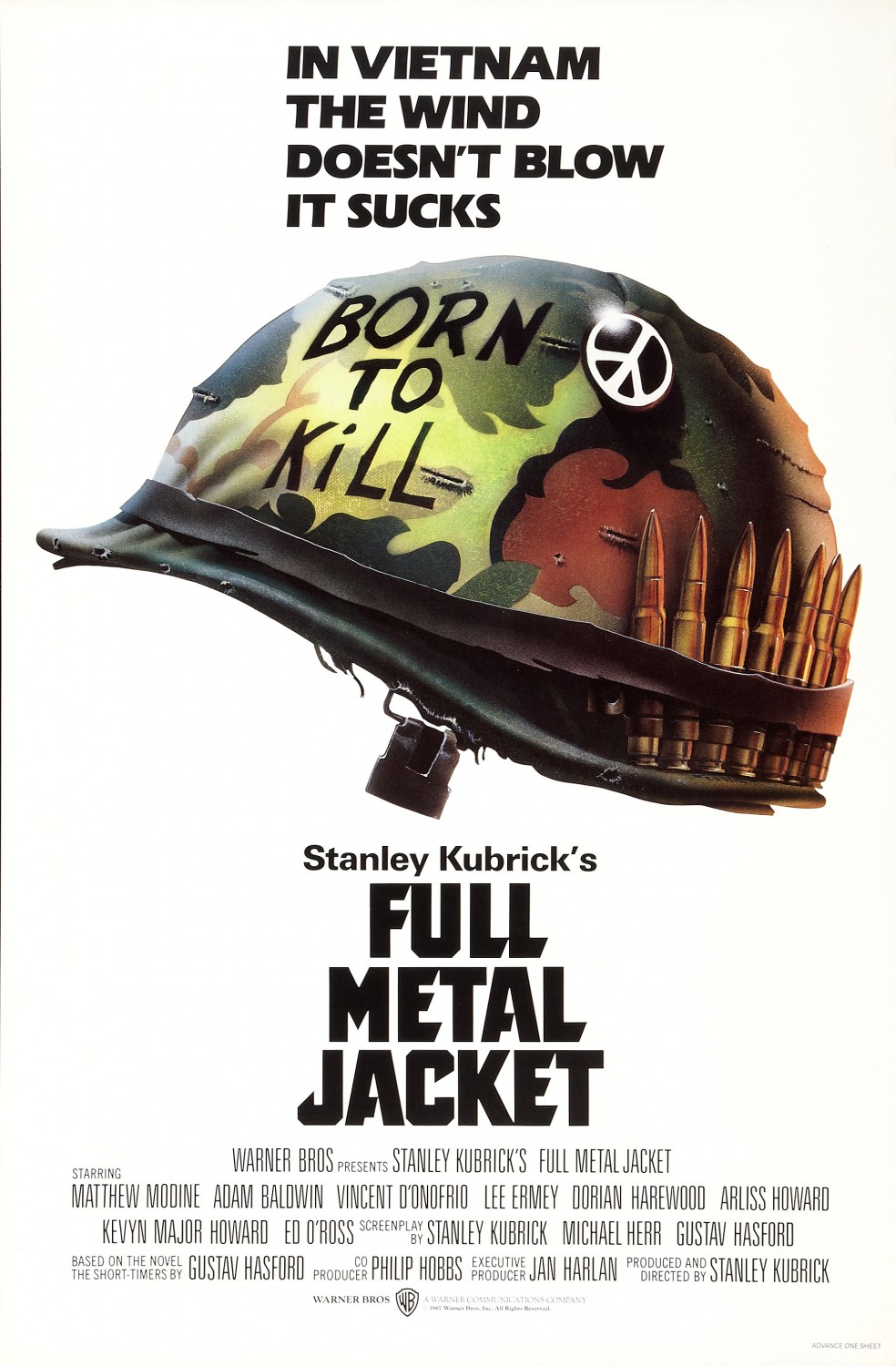
While moderating a Q&A session with Leon Vitali and Tony Zierra about “Filmworker” at the Nuart Theatre in Los Angeles, actor Matthew Modine shared some stories about the making of Stanley Kubrick’s “Full Metal Jacket.” In the 1987 war film, Modine plays Private Joker, one of a dozen soldiers who endure Marine Corp basic training under the brutal and abrasive instruction of their drill instructor, Gunnery Sergeant Hartman (the late R. Lee Ermey). Following graduation, he heads to South Vietnam to work as a war correspondent for the Stars & Stripes newspaper, and it is there he witnesses the atrocities of war up close. The question is, how much of his humanity can hold onto in the face of death and destruction?
The stories of Kubrick’s behavior and work ethic have long since become legendary in regards to the methods he used to get an actor into a specific emotional state and the number of takes he puts his cast through. The first story Modine shared with us about Kubrick, however, proved to be a bit unexpected.
“Stanley liked to carry a walkie talkie because he wanted to be a part of every aspect of the filmmaking,” Modine said. “Why shouldn’t he have a walkie talkie and know what the assistant directors were saying and what kind of movements were happening? We broke for lunch and the assistant director, Terry Needham, got a call from Stanley, and Stanley asked Terry to come over here. Terry said, ‘Okay, but where is here?’ He said, ‘I’m over here,’ and Terry said come out of the tent where we were having lunch. Terry didn’t want to say on the radio that he was stuck in the portapotty. He couldn’t get the door open. So that’s just a little window into a different part of Stanley that doesn’t appear in the documentary.”
During the Q&A, we learned how the crew on a Kubrick film was actually very small, and the one on “Full Metal Jacket” totaled about 15 people. Vitali even said there was only one electrician, and his job was simly operate the lights on a dimmer. Modine ended up adding a nice bit of trivia to this story.
“The one electrician that we had working on the film, because of the union, he would come in and turn the lights on, and then Stanley would tell him to fuck off to his house because there was some wiring problem in his house,” Modine said. “He had to pay him for the day so he said go wire my house.”
Perhaps the most bizarre and hilarious story Modine shared with us was when he talked about Dorian Harewood who played Eightball, the soldier who experiences an especially brutal and bloody death which is captured in slow motion. The way this scene was shot, however, makes sense when Modine discussed what Harewood demanded from Kubrick.
“Dorian Harewood is a wonderful actor,” Modine said. “We were originally contracted for about six months I think, and the contracts were coming to an end. So they wanted to renegotiate the contracts, and it wasn’t a renegotiation. It was just a reupping to continue the contracts for a longer period of time, and Dorian came to Stanley and said, ‘I want to renegotiate. I want more money,” and Stanley couldn’t believe the audacity of this young guy. He’s like, ‘You’re working for Stanley Kubrick and you are asking me to pay you more money?’ And he (Harewood) said, ‘Well yeah, I have to go back to Los Angeles. I have a singing career, I have an acting career, there’s other jobs, and if you want me to stay here, you’re gonna have to pay for it.’ Stanley couldn’t believe it, and I remember him stumbling around for hours furious with that crazy look on his face, and then he turned and he said, ‘I’m gonna kill him!’ I really thought, oh fuck, Stanley’s gonna commit murder. He’s going to kill Dorian Harewood. I said, ‘What do you mean?’ He goes, ‘I’m going to kill him.’ Remember when Dorian gets shot all over the body? It was because however number of days were left upon Dorian Harewood’s contract, Stanley was going to put in all the bullet hits he could. It was really cold. You could see Stanley wearing that hat and two coats, and we were wearing Vietnam khakis. It was freezing cold and snowing in London, and we were dressed up for North Vietnam. He killed him for as many days left that he had on the contract, and he had five days left lying on the cold earth with bullet hits. He (Stanley) would say, ‘Nah, we have to do it again. Put more bullet hits on him.’ And they were full loads full of exploding blood and everything.”
It was great to hear Matthew Modine share his stories about “Full Metal Jacket” as it remains one of Kubrick’s most memorable films. Many critics have called it the best war film ever made, and it features images which are impossible to forget. The actor also left us with something he wanted to share with all the directors in the audience.
“My favorite direction from a director ever was from Stanley Kubrick,” Modine said. “He would clear his throat and pull on his beard and say, ‘Matthew, you’re not going to do it that way, are you?’ It’s my favorite direction because it’s so specific.”
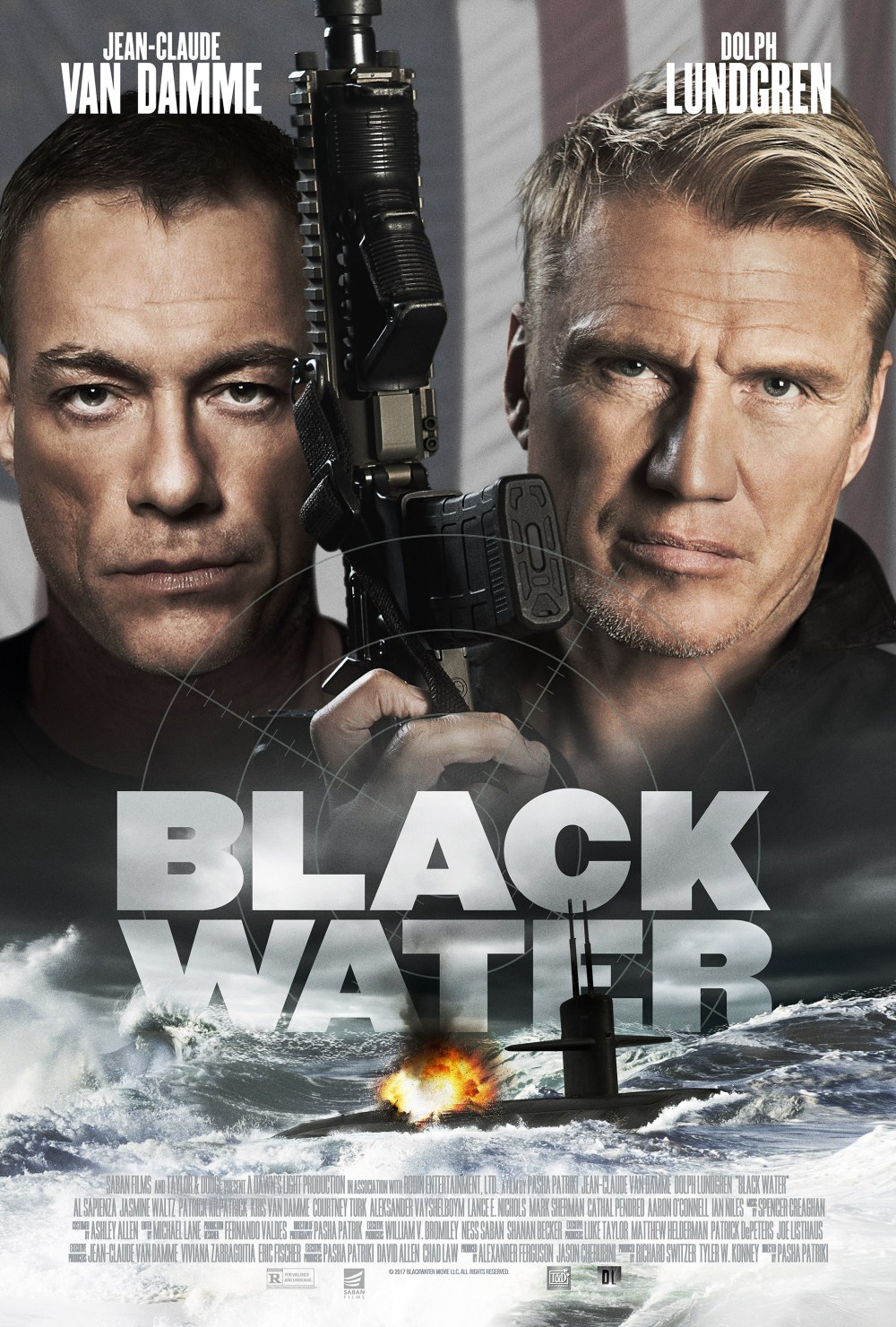
For many, Jean-Claude Van Damme and Dolph Lundgren are still a match made in action movie heaven. They first appeared as soldiers on opposite sides in Roland Emmerich’s 1992 film “Universal Soldier,” and they returned to this franchise years later for two sequels, “Regeneration” and “Day of Reckoning.” And, of course, they had to make at least one appearance in “The Expendables” franchise to show they were not worse for the wear, and they did so together in “The Expendables 2.” Now, Van Damme and Lundgren share the screen in their fifth film collaboration, the action thriller “Black Water.” But this time, they are on the same side.
The first image we see in this trailer is of a submarine diving underwater, and from there we are introduced to deep cover operative Wheeler once the hood over his head is removed. Wheeler has been imprisoned on the submarine which serves as a CIA black site, those places we are not supposed to know about but do anyway, and his interrogator, Patrick Ferris (Patrick Kilpatrick), tells him he is an enemy combatant and will not be granted any rights. Upon giving Wheeler the old action cliché of “welcome to hell,” Patrick orders an agent to prepare to insert a hypodermic needle into Wheeler’s eye in the same way Michael Myers did to an unsuspecting nurse in “Halloween II.” But as you can expect, Wheeler breaks free of his captors and escapes, and from there he does what he can to clear his name.
This just released trailer for “Black Water” is of the “what you see is what you get” variety as the movie’s plot points come from a dozen other action flicks of the past like “The Fugitive” and “Air Force One.” Clearly, no one here is trying to present us with something original, and this one is designed to show us the kind of story we all grew up on to where it makes us interested to see it done once again. Having the story take place in a submarine underwater is clever as the claustrophobic nature of such an environment will make the action more intense. I also imagine it is a way for the filmmakers to keep costs down as they won’t have to build too many sets.
Van Damme’s face is beginning to look a bit like Danny Trejo’s these days as it shows a life lived hard, perhaps too hard. Perhaps these hardened looks of his will help add to his role here. At the very least, we know he can still perform the perfect split.
Having interviewed Lundgren in the past, I know what a great sense of humor he has and seeing him in this trailer makes me hope he will bring some of it to this movie. Furthermore, he looks to have loosened up a lot over the years, and I hope Van Damme can loosen up to the same degree as well. But even though these two stars are headlining this underwater adventure, I get the feeling one will have more screen time than the other.
Kilpatrick looks to give “Black Water” the typical CIA agent who obsesses over controlling the uncontrollable, but I couldn’t help but be amused when he talks about how Wheeler is a “highly trained officer and a trained killer,” so it makes me wonder if he put enough thought into how he would handle this operative to where he would not be a problem (my guess is he did not).
We are also meet Cassie Taylor, a rookie agent played by Jasmine Waltz who, like any other rookie, wants to know what the hell is going on here. She also shows a bit of skin here which suggests there will be a sex scene at some point. The question is, can such a scene take place between her and another character (I am guessing Wheeler) when they are busy avoiding detection in the most claustrophobic of environments? In space no one can hear you scream, but in a submarine, you should be able to hear an orgasm let alone gunshots.
“Black Water” is set to be released on the Dish Network on May 25th, and it will premiere in theaters and on demand starting June 29th. Please feel free to check out the trailer below.
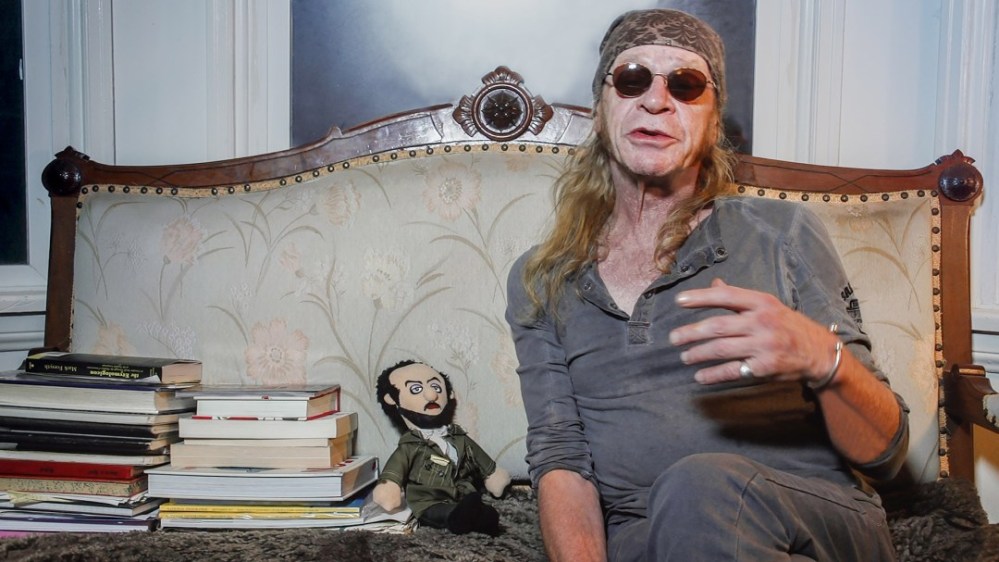
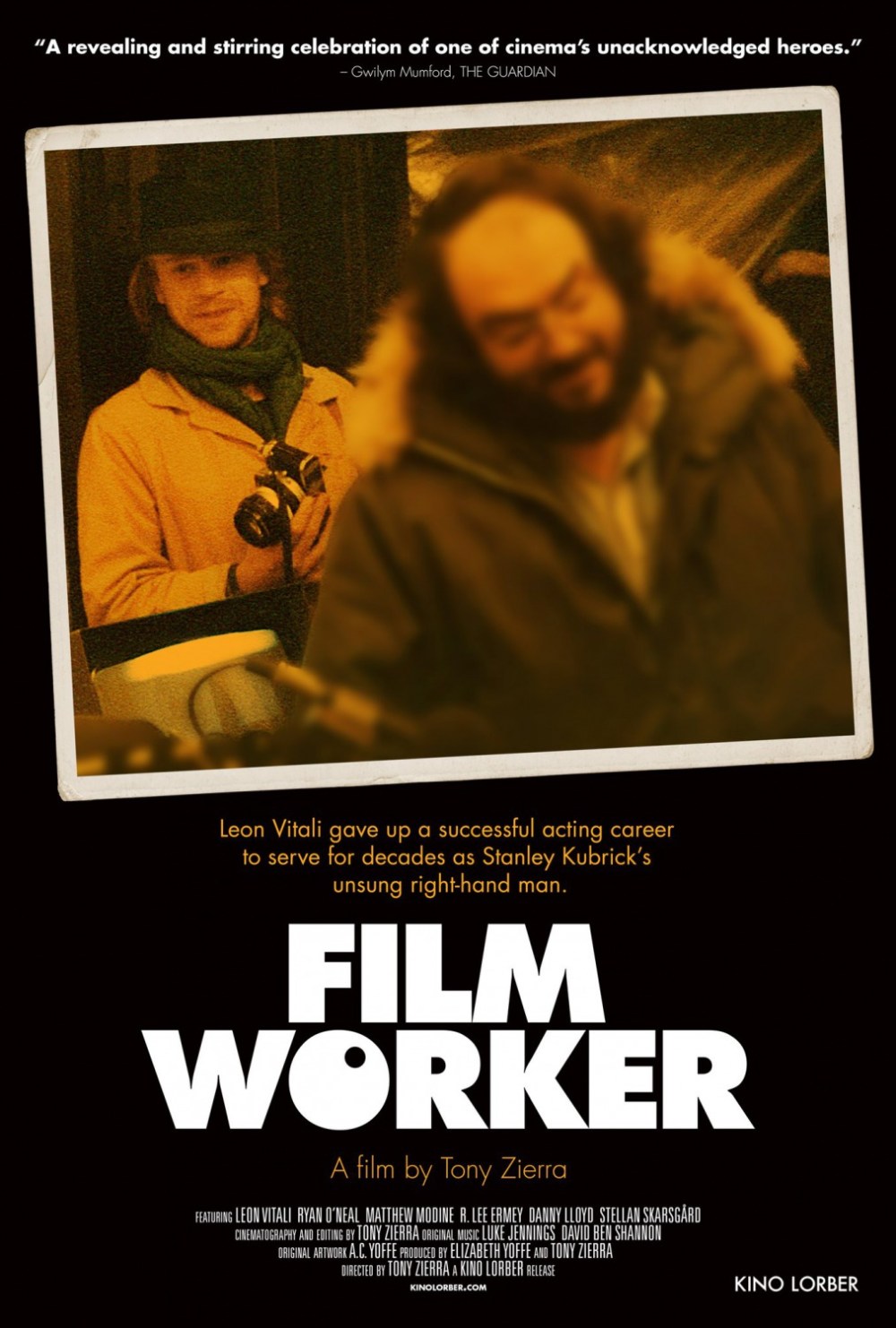
Leon Vitali was the guest of honor at the Nuart Theatre on Friday, May 18, 2018 where the documentary “Filmworker” was being shown. Directed by Tony Zierra, it chronicles how Vitali went from being a successful British actor to becoming Stanley Kubrick’s personal assistant after starring in “Barry Lyndon,” and of the intense dedication he gave to the filmmaker’s work from “The Shining” to “Eyes Wide Shut.” Vitali was greeted with a much-deserved standing ovation as he made his way to the stage for a Q&A. Joining him were Zierra and actor Matthew Modine who played Joker in “Full Metal Jacket.”
Modine remarked about a scene which was cut out of “Filmworker” where he said “Stanley stood on Leon’s shoulders” and how much of a marriage Leon and Stanley’s working relationship was, and he described it as being “at times dysfunctional” and “lovely in a British way.” Zierra was actually working on another documentary about Kubrick called “SK13” when he met Vitali, and he said talking with Vitali was a must as it was well-known how he was one of Kubrick’s closest associates. Zierra managed to track him down in Culver City and met with him, and what resulted was this documentary which was filmed over three and a half years.
“This is the worst nightmare for a filmmaker that when you are really super independent you pick up another documentary and you can’t even finish one,” Zierra said. “I went back and told my producer and partner, Elizabeth Yoffe, this is the most amazing story and I have to do a documentary about this guy, but I’m not sure if I really want to take on another project. But then I remember she said to me you are going to regret it if you don’t do it, so I went back and I asked him, and he said no. And I realized that Leon is just not used to talking about himself. He can talk about Kubrick forever, so it was quite difficult.”
Zierra then remarked how he and Vitali eventually “broke the ice” when he volunteered to organize the heaps of notebooks and materials Vitali had kept over the years while working for Kubrick. As we see in “Filmworker,” Vitali has a huge collection which really does deserve an exhibit of its own.
Modine talked about the overall crew numbers on a Kubrick film and illustrated just how important Vitali was to the famed filmmaker. In the process, he revealed something very surprising as Kubrick’s movies have such an epic look about them to where it looked like hundreds, maybe even thousands, of people worked for him. But as life often teaches us, looks can be deceiving.
“(People) imagine the enormity of Stanley Kubrick’s legend is that he was a filmmaker who must’ve had hundreds of people working for him, and it was quite the contrary,” Modine said. “Leon really did wear 100 different hats because when you went to work there was sometimes, when we were filming on the stage, maybe it felt like 15 people working on the film. What I feel is that Stanley Kubrick created an environment for himself to be able to keep production costs down to the minimum so that he could have the ability to work for an extended period of time to do as many takes as were necessary. But in fact, he was probably the most independent filmmaker I’ve ever worked with.”
“That’s absolutely true,” Vitali responded. “The crew on ‘Full Metal Jacket’ ended up looking like a well-crewed student film, you know? We had one electrician, that was it, because he shot so much of it in natural light. And any light he did have, it was a bank of lights like in the barracks for instance that just went up and down on a dimmer. So, he was always conscious about getting every single dollar on the screen. It was the most important thing to him.”
Vitali did share stories about Kubrick which involved him calling Vitali a certain word which has a broader meaning in England and Scotland but a simpler one in America as many find it extremely offensive (hint: it begins wit a c and ends with a t), and he also talked about the pie fight scene which was taken out of “Dr. Strangeglove” because they just felt it would have been a terrible way to end the movie. In terms of filmmakers today who Vitali considers in Kubrick’s league, he said he really admires Paul Thomas Anderson, Guillermo Del Toro because he gets back to the fairy tale part of the storytelling, and Sean Baker who directed “The Florida Project.” In terms of his favorite Kubrick movie, he said if you put a gun to his head he would have to say it is “2001: A Space Odyssey.”
One of the most interesting moments of the evening, however, came when Modine asked Vitali what an artist is and what value art and movies have.
“Artist has become a word like love or hate, and it’s used so loosely I think” Vitali said. “To me, anyone can be an artist. In my vacation time from drama school, I used to work with a brick layer, and I eventually saw the way he worked with the bricks. He was an artist at what he did. I’ve seen car mechanics who find their way around because it’s all a process of elimination. I think an artist’s work is a process of elimination because the hardest thing to do is to get back to simplicity of whatever it is you are trying to tell or the story you are trying to tell, and how often things come in which seem like good ideas but they are big distractions. So, you are all the time working to get rid of the junk, however appealing it might seem at the time. Composers and musicians and actors or any of those, they are all artists because that’s what they do. It’s getting everything down to the simplest that you can make it to make the story resonate and have a point. That’s what I think anyway.”
“Filmworker” is an absolute must see for Stanley Kubrick fans, and it is now playing at the Nuart Theatre in Los Angeles through May 24th.
Photos, poster and trailer courtesy of Kino Lorber.
It has been almost 20 years since Stanley Kubrick passed away, but his presence is still deeply felt among cinephiles. Some may say this is because “2001: A Space Odyssey” is being re-released in honor of its 50th anniversary, but it goes much further than that. Kubrick had a singular vision, and stories of his directorial methods, such as getting an actor to do dozens upon dozens of takes of a single scene, remain legendary as only a handful of filmmakers could have gotten away with this. And as the documentary “Room 237” showed, people continue to share their interpretations of “The Shining” and of the meanings they believe certain images in it have. Indeed, Kubrick’s films had a large degree of ambiguity in them, and watching them just once is never enough.
But just when you thought you had heard every story about Kubrick, along comes Tony Zierra’s documentary “Filmworker” which looks at the life and times of Kubrick’s right-hand man, Leon Vitali. As an actor, he worked a lot in British television, but after appearing in Kubrick’s film “Barry Lyndon,” he dedicated his life to helping the famed director any which way he could. What results is a movie about working with such a meticulous human being, and of the overall effects it had on Vitali to where it is shocking to see he is still above ground.
“Filmworker” starts with a look at Vitali’s early life as an actor, and it shows how o often he worked in British television and movies to where he was never ever lacking for a job, a position I and my actor friends get to enjoy at some point in this lifetime. Then he got the role of Lord Bullingdon in “Barry Lyndon,” and this introduced the actor to the Kubrick life he was quick to embrace. In a scene where Ryan O’Neal ends up punching Vitali in the back, O’Neal says Kubrick told him, “You’re not hitting him hard enough.” From there, they did the scene 30 more times, and it served as Vitali’s introduction to Kubrick’s obsessive nature in getting things just right down to the smallest of details.
It is very easy to see why Vitali became such a die-hard Kubrick fan after he watched “2001” and “A Clockwork Orange.” Both films reflected a singular vision no other director could have conjured, and Vitali remarked how “2001” dared to have no dialogue in its first 20 minutes, something which seems unthinkable in this day and age. Following their collaboration on “Barry Lyndon,” Kubrick sent him a copy of Stephen King’s “The Shining” to see if it would be worth turning into a movie. Once Vitali told Kubrick it was, the director brought him on so he could search for the perfect child actor to play Danny Torrance. From there, he abandoned his acting career and dedicated his life to Kubrick all the way through his last movie, “Eyes Wide Shut.”
Vitali ended up doing just about every kind of job for Kubrick including casting director, acting coach, location scout, sound engineer and color corrector to name a few. Upon Kubrick’s passing, he became the only person to restore his films. To say he dedicated his life to Kubrick’s work would be the understatement of the millennium. We watch as he works tirelessly to get all the details right, and we see the toll it takes on him and his body. He speaks of how he worked two 36-hour shifts on one project and of how he slept on the floor to catch a two-hour nap while fully dressed so that, when he woke up, he could get right back to work.
Watching “Filmworker,” I wasn’t always sure if I should thank Vitali for all the work he has done or pity him. Some describe him as Igor to Kubrick’s Dr. Frankenstein. I prefer to see him as Waylon Smithers to Kubrick’s Mr. Burns. This man gave up a thriving acting career to work for the director of “Dr. Strangeglove,” and their relationship certainly had a bit of Dr. Jekyll and Mr. Hyde to it. Vitali shows us the note Kubrick wrote to him in thanks for his work on “Barry Lyndon,” and he remarks at how his first handshake with the filmmaker proved to be “very warm.” But once they began working on “Full Metal Jacket,” Vitali admitted he came to see another side of Kubrick, one which few others got to see up close.
Many like to talk about the Stanley Kubrick they met and of how he was so different compared to all the rumors which were circulating throughout Hollywood about him, but Vitali makes it abundantly clear how he knew Kubrick in a way no one else could. At one point, he even describes Kubrick as the film industry’s equivalent to Gordon Ramsey, the chef from “Hell’s Kitchen” and a man who is always in serious need of anger management classes. People keep asking Vitali how he handled Kubrick, but he responds to this by saying he never handled him but instead handled himself so that he could exist in Kubrick’s world.
Actors like Matthew Modine, Danny Lloyd and the late R. Lee Ermey are interviewed at length here, and they have great stories to share about both Kubrick and Vitali. Lloyd and Ermey credit Vitali for helping them with their performances in a way no one else could, and Modine remarks at how selfless Vitali is when it comes to his work for Kubrick. Modine is just one of several individuals who freely admit they are too selfish to dedicate their lives to Kubrick the way Vitali did. O’Neal goes out of his way to say he “fled” the set of “Barry Lyndon” once his work there was done as he was terrified of being subjected to reshoots.
Indeed, the level of dedication Vitali gives Kubrick is both commendable and scary. You also have to feel for him as he suffers under the heavy hand of Warner Brothers while working to give Kubrick’s films the attention they deserved. I remember when the first DVD’s of his work came out and how bad they were, and Vitali spent his precious time getting the color just right. Hearing how Kubrick got incensed if the green was off reminded me of Robin Williams in “One Hour Photo” when his character of Sy went off at a repairman for not taking a difference of three points in color all that seriously. If you are passionate enough about something, you will see it through to the very last detail.
As you can imagine, there is a good deal of trivia about Kubrick on display here. Among the most interesting bits come from Ermey who played Gunnery Sargent Hartman in “Full Metal Jacket” as he discusses how he went about getting actors for the movie, and it is eerie to see him describe what the movie did for his career and of how he has led a great life as it was only a few weeks ago he died due to complications from pneumonia. We also get to hear from Tim Colceri who was originally cast as Hartman before being replaced by Ermey. He ended up playing the doorgunner who shoots away at any and every Vietnamese individual regardless of whether or not they are the “enemy.” Watching Colceri’s face as he reflects on the role he could have had is heartbreaking as his disappointment looks to last a lifetime.
In a lot of ways, “Filmworker” serves as a love letter to Vitali as his work on Kubrick’s films is extraordinary, and we should be thankful for what he has done as this documentary shows how no one else could have preserved the iconic director’s work the way he has. But beyond that, it also acts as a love letter to those who work tirelessly behind the scenes on film sets as they often do not get the respect they deserve. To many, they simply appear as names on a movie’s end credits, and some of those credits move at lightning speed when those movies are shown on the Sundance Channel. But after watching this documentary, we have every reason to thank Vitali for his devotion to Kubrick as, without him, no one could have been able to give “Eyes Wide Shut” the release it deserved. But more importantly, it provides Vitali with the happy ending he has long since earned.
While watching “Filmworker,” I was reminded of what Homer Simpson told his family while they watched the end credits for “The Simpsons Movie:”
“A lot of people worked hard on this film, and all they ask is for you to memorize their names!”
This is, of course, completely unrealistic, but when it comes to “Filmworker,” I want to believe such a thing could be possible.
It has now been 30 years since John McTiernan’s “Predator” was unleased on audiences everywhere, and the action classic still holds up. Since then, we have been exposed to sequels and those horrid “Alien vs Predator” movies, both of which we would love to erase from cinematic history. But now comes the first trailer for the latest in the franchise, “The Predator,” and it is co-written and directed by Shane Black who also co-starred in the 1987 original as Rich Hawkins. With this sequel, Black said he promises to give us an event film which he hopes will “event-ise” the Predator once again and make it “more mysterious.” He has also remarked how “The Predator” will return the franchise to the intimate scale of the original, and judging from this teaser trailer, it looks like he will deliver on those promises.
The first thing I should point out is how little we see of the Predator here. From “Predator 2” and beyond, 20th Century Fox has put this particular cinematic alien front and center to where little is left to our collective imaginations as to what it looks like. But this time, we only see bits and pieces of the creature as the attention is focused more on the human characters. By leaving this iconic creature in the shadows, the Predator suddenly seems as threatening as when he battled Arnold Schwarzenegger all those years ago.
What wrecked the previous “Predator” movies were how they paid too much attention to their human characters who resembled little more than stock characters who were nothing more than clichés. Not only that, they acted so stupidly at times to where you couldn’t wait to see them killed in some brutal fashion. But considering “The Predator” is coming from the man who wrote the screenplay for “Lethal Weapon” and directed “Iron Man 3” and the criminally underseen “The Nice Guys,” I feel confident Black will give us characters who are down to earth and have memorable lines of dialogue at their disposal.
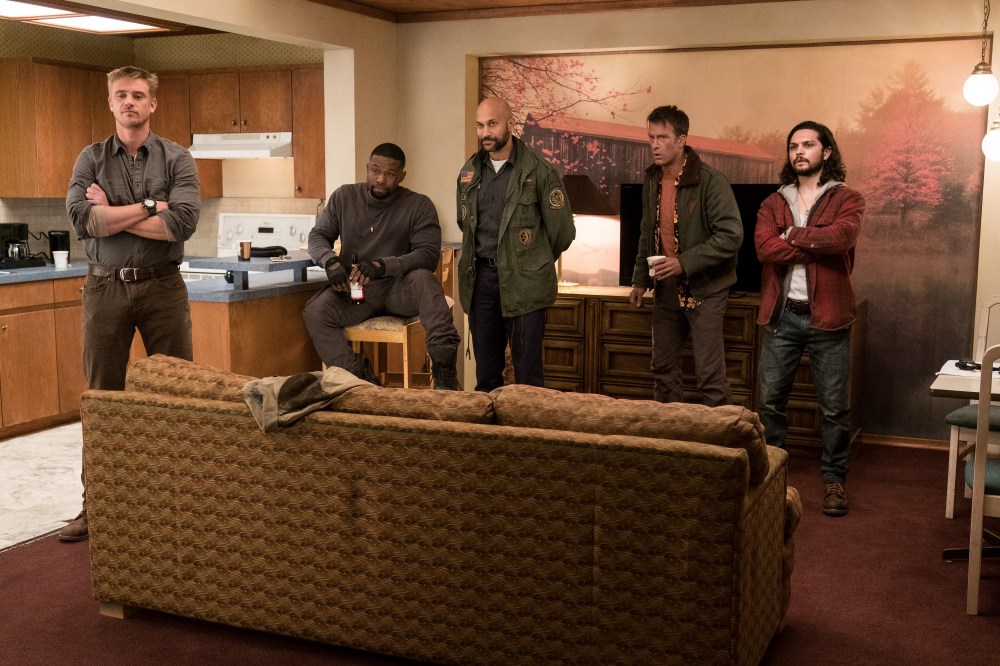
Boyd Holbrook, who gave us a wonderfully slimy antagonist in “Logan,” stars as Quinn McKenna, a Marine and Special Forces commando who we see being interrogated about a mission he was on. The interrogator asks Quinn if he saw anything “unusual,” and I love how he responds not just with words, but also with his eyes. It’s as if Quinn is saying cut the crap and let’s get to the point, and I imagine this is Black’s way of telling us how the characters in this film are going to be smarter and more interesting than the typical schmuck that has inhabited the average “Predator” movie once too often. I also loved how Quinn, when asked if he poses a threat, responds by saying, “We’re assassins. Isn’t posing a threat kind of the point?” Exactly! Why dance around the issue?
Olivia Munn also shows up here as Casey Bracket, a disgruntled science teacher who provides us with information about what this particular Predator and its ilk are up to. She says they are attempting “hybridization” as they are “upgrading on every planet they visit.” This harkens back to the ending of “Predator 2” in which we learned how far back these creatures have been to Earth and of how many lifeforms they have encountered. This helps to make the Predator all the more mysterious as he looks ready to attack in ways we cannot see coming.
I also enjoyed the opening part of the trailer in which Jacob Tremblay (the amazing young actor from “Room”) opens up a package with contains some kind of alien object. Tremblay ends up detaching a small part from it which lights up, and he treats it like a spaceship as he flies it around his room and crashes it into his Jenga set. Forget for a moment how he unknowingly has signaled the Predator’s spaceship to Earth where its occupant will surely lay waste to every and any human foolish enough to be in its path. Black captures the wondrous imagination of a child, and it reminds us of the worlds we create inside our minds as life seemed full of possibilities when we were young. Hence, this sequel does not look to be lacking in imagination.
“The Predator” is said to take place between the events of “Predator 2” and “Predators,” but watching this trailer makes me feel this sequel will blow those two out of the water. It is set to be released on September 14, 2018. Please feel free to check out the teaser trailer below.









 The Ultimate Rabbit