‘Now You See Me 2’ Wants To Be Cleverer Than It Is

Now You See Me 2 poster

There’s a great moment, one of the very few, in the 007 adventure “Die Another Day” when James Bond is being presented with the latest nifty gadget from Q. Upon seeing what the gadget does, Bond tells Q, “You know, you’re cleverer than you look.” To this Q replies, “Still, better than looking cleverer than you are.” Those lines of dialogue kept repeating in my head as I watched “Now You See Me 2,” a movie which tries to be cleverer than its predecessor. But in the process, this follow up become so infinitely exhausting as it heedlessly defies logic more often than not.

We follow up with the Four Horsemen a few years after the events of the first movie, and they have managed to stay in hiding regardless of how impossible it is to stay off the grid these days. But Atlas (Jesse Eisenberg), Merritt (Woody Harrelson) and Jack Wilder (Dave Franco) are soon brought out of retirement to expose a Steve Jobs-like tech guru whose fraudulent practices have caused hardship for millions of people. Henley Reeves is out of the group, due to Isla Fisher’s pregnancy, and in her place is Lula (Lizzy Caplan) who quickly proves to be more than just a wannabe magician.

They work again in conjunction with FBI agent Dylan Rhodes (Mark Ruffalo), who was previously revealed to be the one who brought the Four Horsemen together, but their big comeback show goes awry when it is sabotaged by someone who shows that Jack never died and of Dylan’s role in the whole endeavor. That someone is revealed to be Walter Mabry (Daniel Radcliffe), a tech prodigy who invested a lot of money in companies run by Arthur Tressler (Michael Caine) and lost much of it after the Horsemen stole Tressler’s millions. Walter wants his money back and forces the group to pull off their greatest heist yet, and they run into additional trouble when the imprisoned Thaddeus Bradley (Morgan Freeman) finds a way to get his revenge from behind bars.

“Now You See Me” was a runaway hit back in 2013 and, while it had a number of plot holes, it proved to be a fun ride and had a terrific cast of actors whose charisma made it all the more watchable. But this same cast, even with new additions Caplan and Radcliffe, can’t save this sequel as we come to spend more time debunking their actions than we do in just going along for the ride. While I am prepared to suspend my disbelief through many films, it became impossible to do so with this one.

Watching “Now You See Me 2” becomes increasingly ingratiating as so many random characters try to stay one step ahead of each other. But while we go to a movie like this to see good defeat bad, the filmmakers have tried much too hard to keep the audience guessing from start to finish. Considering how this sequel takes place in a time long after movies like the “Ocean’s Eleven” trilogy have been released, you would think the bad guys would be better prepared. Then again, crime does make you stupid.

If it weren’t for the talented cast, this movie would be almost unwatchable. Ruffalo, Harrelson and Eisenberg have an effortless charisma about them, and they slip back into these roles as if a day hadn’t passed since the original. Both Caine and Freeman could play their roles in their sleep, and that’s what they do here. While it’s a bummer Fisher couldn’t return, Caplan proves to be an engaging presence and her enthusiasm is wonderful to take in. And it’s great to see Radcliffe join in with this ensemble as he reminds us of something which should be abundantly clear by now: there’s much to him than Harry Potter.

Behind the camera this time is Jon M. Chu who previously directed the “Step Up” sequels, “G.I. Joe: Retaliation” and “Jem and the Holograms,” a movie better known for its terrible box office opening weekend than anything else. While Louis Leterrier, who directed the original (he is an executive producer on this one), managed to keep things going at a steady pace, Chu stretches things out to where this sequel overstays its welcome by at least half an hour. He also ends this movie in a way which makes no logical sense considering where certain characters ended up in the original. Long before it ended, I found myself having a headache that had Excedrin written all over it, and I knew taking any would not make me feel any better.

You can only fool an audience for so long until they start analyzing the story very closely. When they start asking questions during the movie’s running time, you are in trouble. “Now You See Me 2” gets undone because the filmmakers didn’t care if it all made sense or not. Instead, they end up insulting our intelligence to where you wonder if it was worth it to even make this sequel.

In the future, I would love to see a prequel to this sequel in which we watch the characters get together and figure out how they will pull all their plans and magic tricks off. It will be worth watching just to see if the characters can convince themselves, let alone the audience, that their mischievous plans make any sense whatsoever regardless of the unpredictable variables which will come their way. If they can accomplish that, you will have one hell of a movie.

Copyright Ben Kenber 2016.

* * out of * * * *


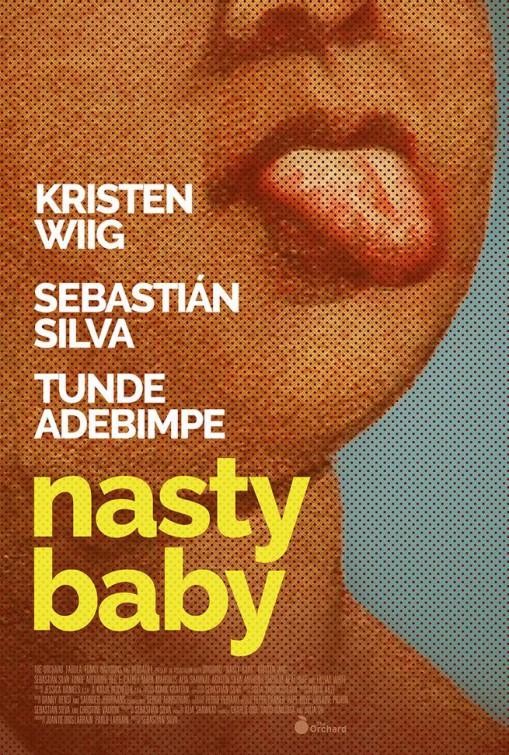
Kristen Wiig and Sebastián Silva Discover a Cinematic Freedom in ‘Nasty Baby’

Nasty Baby UK poster

After winning various awards on the festival circuit including the Teddy Award for best LGBT-themed feature film at the 65th Berlin International Film Festival, “Nasty Baby” finally made its way to American audiences. The movie stars Sebastian Silva, who also wrote and directed it, as Freddy, an experimental artist based out of Brooklyn, New York who is desperate to have a baby with his boyfriend Mo (Tunde Adebimpe). Joining them on this quest for parenthood is their best friend Polly (Kristen Wiig) who plans to be the surrogate mother for the couple, and we watch as they deal with various complications and obstacles which keep them from starting a family. But when an especially annoying neighbor known as The Bishop (Reg E. Cathey) constantly harasses them, it leads to a terrifying situation which could destroy all their plans forever.

Kristen Wiig and Sebastian Silva were on hand recently for the “Nasty Baby” press conference which was held at the London Hotel in West Hollywood, California, and they were both very descriptive about what went into the making of this movie. We all know Wiig of course from her endlessly hilarious years on “Saturday Night Live” and for acting in and co-writing the wonderful comedy “Bridesmaids.” Silva’s previous directorial efforts include “The Maid,” “Crystal Fairy & the Magic Cactus” and “Magic Magic.”

One thing that struck me in particular was how freed up the actors appeared to be onscreen as the movie was shot mostly with a hand held camera. I couldn’t help but think that the actors had an easier time moving around and performing scenes this way than they would have on any other film set as they didn’t have to worry about being in the right position at the right time. They were all just let loose and trusted that the cameraman would capture their best moments with no problem. I ended up asking about them about this aspect of filmmaking.

Ben Kenber: This movie was shot mostly with a hand held camera, and it felt like this gave the actors a lot more freedom to move around that they would not have had on a regular movie set. Would you say that you found a special freedom in acting with this way of filming?

Kristen Wiig: Yeah, I did. Sergio (Armstrong, the director of photography) was amazing. You just sort of feel like you can be those people and do the scenes and he’ll kind of find you. If you wanted to do it again he would kind of figure out where to go. There was a lot of freedom. There weren’t a lot of marks we had to hit.

Sebastian Silva: Yeah, there were no marks at all. All of the actions of course are written and all the scenes so we know the locations and everything that needs to happen. But there are a lot of times where we didn’t use the slate, and then we would move from a wide shot to a close up without cutting ever. I was acting, I had never acted before, but I feel that for actors not to be cutting all the time that it is also so much fun because scenes and takes usually don’t last more than four minutes. It’s usually like ‘action’ and then it’s like four minutes that the actor gets to do his or her thing, and then it’s like ‘cut,’ makeup and then they don’t really get to enjoy performing as much as like when you’re improvising a take and go for as long as 35 minutes sometimes, right?

KW: Yeah.

SS: Yeah, it was a lot like that, changing things as we were shooting without cutting. It was fun.

BK: I imagine that not having to worry about hitting your marks frees you up a lot.

KW: Oh yeah, definitely (laughs).

The one thing they always taught in those acting on camera classes is that the camera is always your friend and will never let you down. It certainly didn’t let Wiig or Silva down during the making of “Nasty Baby” as the both inhabit their characters more than play them, and it never feels like you are watching a movie. Instead, it feels like you are watching real life unfold, and this is not an experience you often get at the movies.

“Nasty Baby” is now available to watch on YouTube, iTunes and Amazon Video.

Copyright Ben Kenber 2015.

Nasty Baby American poster

American Sniper

American Sniper poster

I came into Clint Eastwood’s “American Sniper” the same way I came into Dinesh D’Souza’s documentary ‘America: Imagine the World Without Her;” wondering if it was even remotely possible to review this movie in an objective fashion. With its look at the Iraq War, many on either side of the political spectrum have been arguing on whether this biopic of Chris Kyle, who is said to be the deadliest marksman in U.S. military history, is pro-war or anti-war. In the end, many are going to end up bringing their own emotional baggage to this movie whether they intend to or not.

The way I see it, Eastwood is not the slightest bit interested in making a case about whether or not we should have been at war with Iraq to begin with. Like Kathryn Bigelow did with “The Hurt Locker,” Eastwood just accepts the fact that, like it or not, we were in Iraq and he is far more interested in what this war did to the soldiers in the long run. While I wished Eastwood dug deeper into the subject matter here, “American Sniper” is the most compelling movie he has directed since “Gran Torino.”

Bradley Cooper portrays Chris Kyle, and he more than deserved the Oscar nomination he received for his performance. Cooper disappears completely into this role which required him to lift some seriously heavy weights to appear the least bit believable as Kyle, and he fearlessly shows us the moral weight he carries after killing so many people for better and/or for worse. Cooper’s face shows the toll of what Kyle has been through to where the actor doesn’t have to tell us what Kyle is experiencing psychologically. The moments where he may be forced to shoot a child weigh hardest on us because you see that his choices on how to resolve this situation are severely limited.

While Eastwood’s portrayal of soldiers under fire in Iraq might pale in comparison to what Bigelow pulled off in “The Hurt Locker” or the brutality of basic training Stanley Kubrick made us witness in “Full Metal Jacket,” he still captures the feel and atmosphere American soldiers got caught up in while on foreign soil. Although we may think we would have reacted to similar situations differently, it’s hard to convince ourselves of this after watching “American Sniper.” I don’t know about you all, but I have never served in the military and have no idea how I would and should react if I ended up in a war situation like this. Moreover, I shudder to think what I would have done under the same circumstances Chris had to face.

Sienna Miller plays Kyle’s wife, Taya, and she ends up being stuck at home while her husband keeps going off on several tour of duties. Now in some ways Miller has a thankless role as she has little to do but wait at home and hope her husband survives the war. However, her character provides a center in Chris’ life which he eventually realizes is more valuable than anything else he has in his life. So is Miller wasted in this movie? I don’t think so unless you really want to complain about how she doesn’t have a lot to do.

I have to applaud Eastwood and Cooper for bringing attention to how many soldiers still deal with severe cases of PTSD which has left them unable to fully function in civilian life. While I wish they dug a little deeper into this issue, the fact that any movie these days is dealing with it feels like a miracle. It’s a huge issue which many who have sent many brave souls to the battlefield never take the time to fully understand, and we see this in all the cuts in programs designed to benefit veterans.

Much has been said about the kind of person Chris Kyle was, and I can’t really attest to that because I don’t have much knowledge about the man other than what I have read and seen so far. What I can say is he served as a sniper in the Iraq War, came out of it with psychological issues which needed to be addressed and eventually came around to help those who suffered as he did. His death at such a young age was tragic however which way you look at it. Regardless of how you feel about Kyle, Eastwood’s “American Sniper” pays tribute to what American soldiers had to endure during the Iraq War. At the very least, the movie serves as a reminder of why we need to thank those soldiers for defending our freedoms regardless of whether or not we agreed with the war they fought it.

Here’s hoping those soldiers still dealing with mental health issues get the attention they deserve because they do not deserve to be left out in the cold.

* * * out of * * * *

Copyright Ben Kenber 2014.

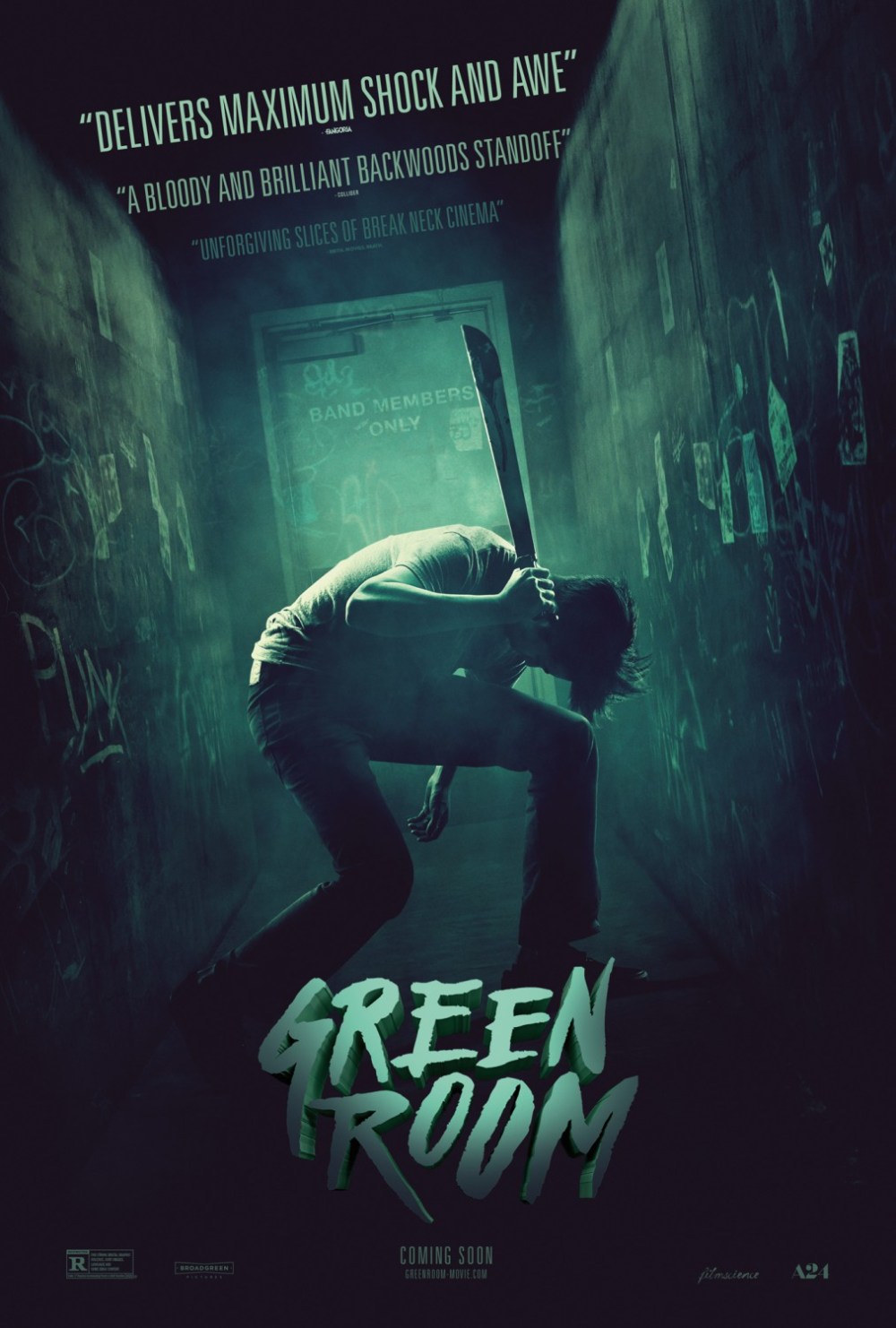
Green Room

Green Room movie poster

Green Room” is a nasty piece of work which sticks the knife into the viewer and sticks it real deep. Like “Assault on Precinct 13” (the original, not the remake), it is a siege movie but not the one you are necessarily used to seeing. The characters are really fleshed out to where the actors are inhabiting them more than acting, and the violence is not the usual PG-13 bloodless action. For those of you who like your movies seriously intense, ultra-violent and filled with characters who look and feel real, “Green Room” is one you want to check out. For those who do not care for violent movies in the slightest, you would do your best to avoid this one. If you thought “Harry Brown” was dark and bleak, wait till you get a load of this.

The movie opens on The Ain’t Rights, a punk band about to complete their long and largely unsuccessful tour, and their last show has them going to a rural place outside of Portland, Oregon. But upon arriving there, they discover it is a neo-Nazi skinhead bar located deep in the woods, far from the prying eyes of the police among others. Their show goes fine even though things get off to a rough start as they do a cover of Dead Kennedys’ “Nazi Punks Fuck Off” which has some audience members hurling beer bottles at them, but they still manage to get off the stage in one piece. But then they stumble upon a crime never meant for their eyes, and they soon find themselves trapped in the bar and at the mercy of the skinheads who, desperate to cover up their extra-curricular activities, have no plans to let them leave while they are still breathing.

There’s something endlessly fascinating about human beings being driven to the limit of survival. We start having what seems like an ordinary day which we often sleepwalk through, and then something happens which threatens our livelihood and activates our survival instincts to where they cannot be turned off. These punk band members are trapped in a horrific situation not of their own making, and they will soon find themselves acting in their most primal state as death constantly looms around the corner.

What surprised me most about “Green Room” was how real and complex all the characters were. These are not just a bunch of character types simply designed to infuriate moviegoers or immediately gain their sympathy. They all feel like real people caught up in a situation we hope never to be in, and they cannot escape the possibility of a grisly fate. Heck, even a simple negotiation between one character and another takes on a more sinister edge here as the intensity is ratcheted up to a level to where this movie feels like a blood relative of Sam Peckinpah’s “Straw Dogs.”

Plus, you cannot help but be deeply affected by the violence displayed here. Not once is it ever glorified as it is presented in an ugly and visceral form you will react very strongly to. One character gets their arm slashed in a way that reminded me of Naomi Watts’ gaping leg wound from “The Impossible,” and I could not help but gasp in response. Regardless of how many ultra-violent movies you have seen, you cannot leave “Green Room” feeling unaffected by what you have witnessed.

“Green Room” was written and directed by Jeremy Saulnier whose previous film, “Blue Ruin,” received a lot of critical acclaim. I have not seen that one yet, but you can sure bet I will be checking it out soon. He takes what is essentially a genre picture and upgrades it to one that feels far more potent than most. He also gives the punk band which occupies it an authentic feel as nothing they do onstage ever comes across as generic. Clearly this director has been around bands like these for a good portion of his life, and he knows how they operate as they work hard to keep their music from being easily corrupted.

Saulnier also benefits greatly from having a top notch cast which grounds their characters in a reality that feels all too real. Chief among them is Anton Yelchin who plays Pat and who is forced to get to his most primal state in a way he never expected to when he got up in the morning. Also effective is Alia Shawkat as Sam, the band’s sole female member who manages to control her fear enough to keep one step ahead of the skinheads looking to eliminate those in their path. Joe Cole and Callum Turner give memorable turns as the other band members Reece and Tiger, and Macon Blair leaves a strong impression as Gabe, a skinhead who actually grows a conscience in the midst of all the chaos.

One real stand out performance in “Green Room” comes from Imogen Poots who plays Amber. When we first meet Amber, she comes across as a helpless victim who is in over her head and becomes trapped with the rest of the band. But quickly, she becomes a very enigmatic character capable of violence the others are not. We only learn so much about Amber throughout, but Poots imbues her with what seems like a dark history filled with violence that she has somehow managed to survive in spite of her circumstances. Amber knows what’s at stake, and she’s willing to do anything she can to stay alive, anything.

But, of course, the biggest star in “Green Room” is Sir Patrick Stewart who plays a man who is the polar opposite of Jean-Luc Picard or Professor Charles Xavier. Stewart portrays Darcy Banker, the leader of this skinhead gang. What’s especially chilling about Stewart’s performance is how he makes Darcy into an ordinary guy capable of such insidious evil. Not once does he try to chew the scenery or turn Darcy into your typical skinhead villain drunk with power and hatred, but someone who has dealt with unfortunate situations like this before and has long since handled them in a calm fashion. Stewart never has to overplay the part as he conveys just how comfortable Darcy is in his belief structure and psychosis to where taking a human life is not all that different from swatting a fly.

“Green Room” is not high on originality and features situations we have seen in countless movies before, but arguing about this is a waste of time. It’s a heavy duty thriller that takes no prisoners and is unafraid in dragging us into an ultra-violent realm of society we would never want to see in person. If you like your movies claustrophobic and filled with an intensity which really jacks up your adrenaline, this one is for you. For those who do not like these kind of movies, don’t bother. Some movies are meant to be infinitely disturbing and effectively so, and this is one of them.

Copyright Ben Kenber 2016.

* * * ½ out of * * * *

Money Monster

Money Monster poster 1

2016 has been a good year for pulse-pounding thrillers, and “Money Monster” is the latest example. While not as intense as “10 Cloverfield Lane” or as viciously gruesome as “Green Room,” it certainly gets the adrenaline running thanks to taut direction and terrific acting from a star studded cast. While the handling of the material is at times scattershot and you come out feeling like it could have been better, what ended up on screen makes for solid entertainment.

“Money Monster” opens up on the set of a cable show with the same name which is hosted by wall street financial guru Lee Gates (George Clooney), a man whose ego is bigger than his knowledge of stocks. During what seems like a normal day of filming an episode filled with tips for investors as well as dancing and graphics to keep viewers entertained, Kyle Budwell (Jack O’Connell) somehow makes it onto the set, fires a gun in the air and takes Lee hostage. It turns out Kyle invested in a company Lee was especially enthusiastic about, but he ended up losing his entire savings in the process. After making Lee put on a vest filled with plastic explosives which could level a skyscraper, Kyle becomes intent on making him apologize not just to him but millions of investors who lost all their money thanks to the “advice” they received on his show.

Watching this movie reminded me of others which dealt with morally duplicitous human beings who, whether they intended to or not, ran into monsters they created out of their own greed and lack of understanding. Costa-Gavras’ “Mad City” quickly come to mind, but “Money Monster” stands above it because the filmmakers don’t deal with the subject manner in such an obvious way. There’s more going on here than what we see on the surface, and this makes what seems like an average movie one of the more intelligent ones I have seen in a while.

Clooney is perfectly cast as a man whose over confidence has long since gotten the best of him, and he shows a lot of vulnerability as his character of Lee Gates is exposed for all his falsehoods. We watch as his regularly scheduled program is interrupted in one of the worst ways possible, and it forces him to think fast on his feet in order to stay alive. Clooney excels in this kind of role as he is not afraid to show the deep cracks in this man’s façade, and this is even after he is revealed to be a three-time divorcee, the kind we see a lot of in movies.

As Kyle, Jack O’Connell brings the same fierce intensity to this role as he did in “Eden Lake,” “Starred Up” and “Harry Brown” among others. It’s almost exhausting to watch him here as his he starts at such a high pitch of energy to where he can’t allow himself to go slack for very long. This is definitely an actor to keep an eye on.

After suffering through the hideous debacle of “Mother’s Day,” Julia Roberts rebounds here as Lee’s long-suffering director, Patty Fenn. Now Patty may not be the star of the show, but she’s the one who makes it a reality on a daily basis. Roberts doesn’t need to do much to show how much of a veteran Patty is at her job as it involves dealing with dozens of people in a high pressure environment, and she truly shows grace under pressure when Kyle turns everyone’s world upside down. Patty quickly becomes the voice that keeps Lee sane as she continues directing the show which threatens to be more unpredictable than it already it is. Roberts is riveting to watch throughout as she does her best to keep her cool while everyone else loses their own much too easily.

In fact, what’s notable about “Money Monster” is how the female characters are much stronger than their male counterparts. This is the case not just with Patty, but also with Diane Lester (the excellent Caitriona Balfe), a high ranking executive who shows little hesitation in digging through her boss’ dealings in order to get to the truth. Just watch as one of her male bosses attempts to fire her; she doesn’t even break a sweat. Or how about Kyle’s pregnant girlfriend Molly (scene stealer Emily Meade) who has a show-stopping scene where she brutally berates Kyle without any hesitation.

Many of the male characters on the other hand are quick to crumble as their egos cannot handle defeat easily. Some might look at this as a bit sexist, or maybe the movie and its screenplay just exposes the reality that women are stronger because they have more to overcome both in society and in the workplace.

“Money Monster” marks Jodie Foster’s fourth film as a director, and she does a very good job of keeping the tension ratcheted up high throughout. Along with screenwriters Alan Di Fiore, Jamie Linden and “Stakeout’s” Jim Kouf, she takes what looks like a predictable story and messes around with the elements to where second guessing what’s about to happen becomes pointless. At the same time, she does have some trouble balancing out both the dramatic and comedic aspects here, and the more comedic the movie becomes, the more it loses its dramatic power. It’s a strong movie for sure, but you do come out of it thinking it could have been even better.

Still, “Money Monster” is an entertaining thriller that benefits from strong direction and terrific performances from its talented cast. It’s no “Network,” but it does have a lot to say about how money rules our lives and has us making rash decisions for the purpose of staying one step ahead of losing everything. While its ending is a bit too pat, it’s not just another mindless thriller. And in the end, it’s always nice to see wall street take a beating in any movie.

Copyright Ben Kenber 2016.

* * * ½ out of * * * *


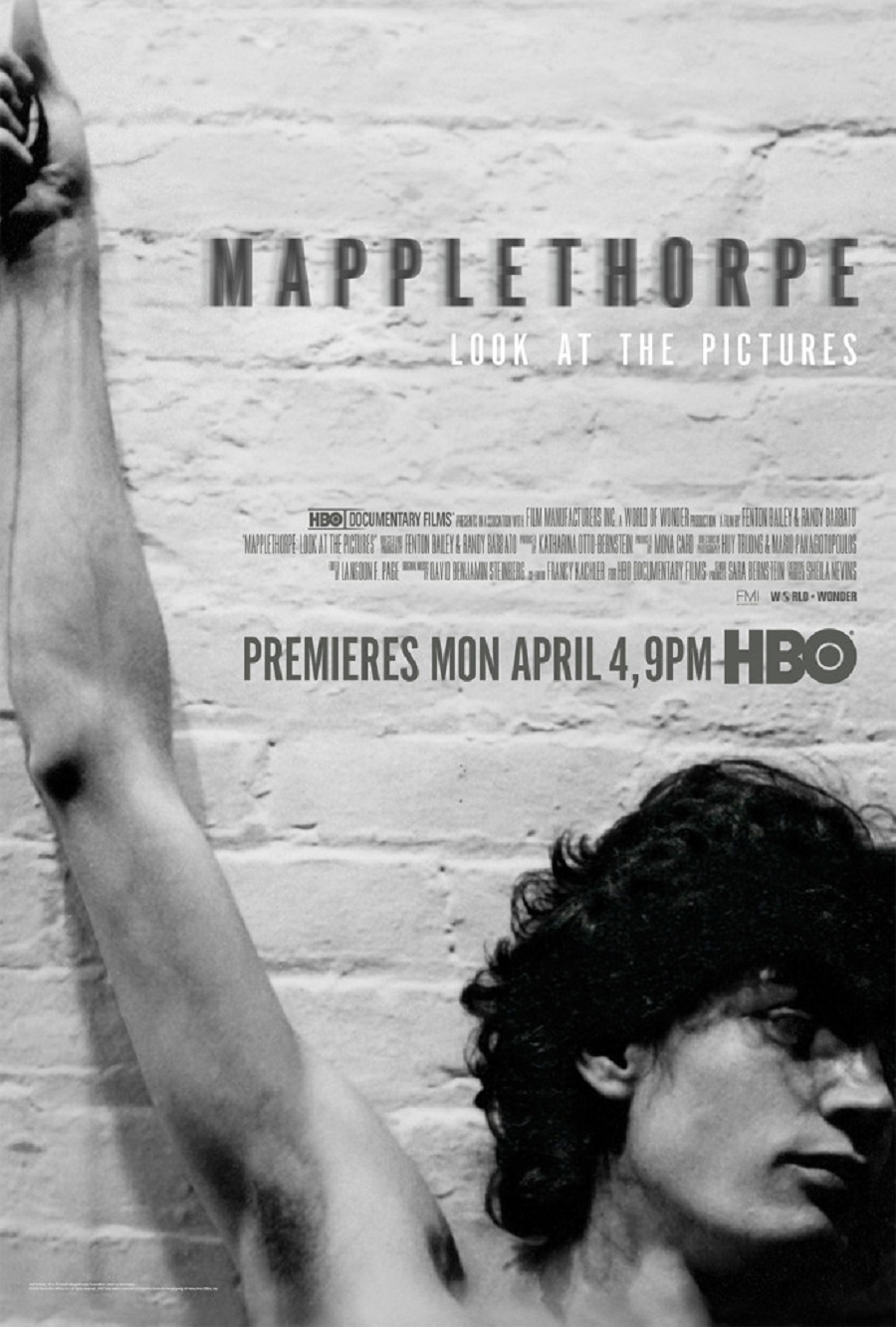
Mapplethorpe: Look At The Pictures

Mapplethorpe poster

This documentary starts off with former Senator Jesse Helms on the floor of congress back in 1989 where he denounced the controversial photography of Robert Mapplethorpe. Now Mapplethorpe’s work ended up pushing a lot of social boundaries with his frank depictions of sexuality, nudity and fetishism, and since he became known during the age of Ronald Reagan’s moral America, many saw him as nothing more than a shameless pornographer and refused to look at his photographs with any penetrating insight. What was on the surface bothered them, but like with any work of art it is about how the mind perceives it and of the effect it has on your perception of the world around you.

Helms told congress to look at the pictures as if they were done by someone possessed by the devil, but the HBO documentary “Mapplethorpe: Look at the Pictures” invites the viewer to look at them from a less biased perspective and see how this artist managed to turn contemporary art into fine art. What results is a fascinating look at an artist who in some ways is more prolific in death than in life, and it is probably the most in depth look at his life currently available.

We get scenes featuring curators at The J. Paul Getty Museum and The Los Angeles County Museum of Art as they prepare to open a landmark retrospective of Mapplethorpe’s work. Their intent is to look at him as a human being, and that intent is shared by the documentary’s directors Fenton Bailey and Randy Barbato whose previous work includes “Inside Deep Throat,” “The Eyes of Tammy Faye” and “Party Monster” (both the documentary and the feature film starring Macaulay Culkin). They dig deep into Robert’s past and never sugar coat his life for easy consumption.

It was very interesting to see Robert as a kid when he was considered the pogo stick champion of his neighborhood and somewhat unsurprising to learn he never really fit into any of the social circles in high schools (the great artists never seem to). Throughout the documentary we get to hear his voice from old recordings, and he says that he grew up in suburban America which he described as a good place to come from because it is also a good place to leave. He also admits he never set out to be a photographer as he took a course on it and hated it. And yet during his college years he found a creative spark which never left him.

“Mapplethorpe: Look at the Pictures” also features interviews with various friends, family members and celebrities who all seem to agree Robert was a largely mysterious person who was always looking to get a rise out of people.  At the same time, his brother Edward said he could be quieter than anyone else in the room. Writer Fran Lebowitz even described him as looking like a “broken Cupid,” so it’s safe to say that many people viewed him differently. As the documentary continues on, it shows us a man struggling to express himself during a time where voices which differed from the norm were quickly chastised and silenced.

One of the documentary’s most fascinating segments comes when Robert meets up with singer Patti Smith and observes the time they spent together at the famous Chelsea Hotel in New York. This segment also takes us back to a time when the Big Apple was bankrupt, corrupt and looked nothing like the insanely expensive city it is today. The two of them fed off each other creatively and created art no one else ever could have, and Mapplethorpe even shot the photograph which became the cover for her first album, “Horses.” The fact that their relationship is cut a little short in the documentary is disappointing as it would have been great to see more of them here, and it could very well make for a great documentary of its own.

Both Bailey and Barbato also might have fared a little bit better had they given equal time to the methods Robert used to create his art instead of his personal life. Many of his photographs, including his famous “Man in the Polyester Suit,” are on display here, and while we get an idea of how he messed around with his Polaroid photos to create something startlingly unique, it would have been nice to see more of his technique in how he pulled certain photographs off.

Instead, “Mapplethorpe: Look at the Pictures” spends more time than it needs to on Robert’s love life and his various lovers. Granted, hearing them talk about Robert does give us deeper insight into his psychology and how selfish he became as he got older. We even here Robert say at one point, “Life is about using people and being used by people,” so his self-centeredness is very understandable. But to hear people talk about him in this manner makes the documentary at times feel like a broken record.

However, “Mapplethorpe: Look at the Pictures” finishes on a strong note as we watch Robert putting up his last solo show entitled “The Perfect Moment.” By this time, he had been diagnosed with AIDS which back then was a death sentence, and some described this show as being a “memorial with a living corpse.” Robert was only 42 years old when he died on March 9, 1989, but he looked more like he was in his late 60’s. In his later years he sought fame like crazy, and he soon became more famous in death than in life. The effect this final show had on the general public was profound, and it served to secure his legacy after he passed away.

Despite some minor flaws, “Mapplethorpe: Look at the Pictures” is a compelling documentary which serves to look at the famous artist as more than just a controversial figure. Robert was a human being with problems like anybody else’s, but he always photographed what he loved and the people he loved to be with. He pushed all sorts of boundaries as he described art as being about “opening something up.” He certainly opened the world up to looking at things differently than ever before, and he remains a potent force in the art world today. Looking at his photographs now, one cannot help but wonder why certain parts of the human body are still considered more dangerous than a loaded gun.

Copyright Ben Kenber 2016

* * * ½ out of * * * *


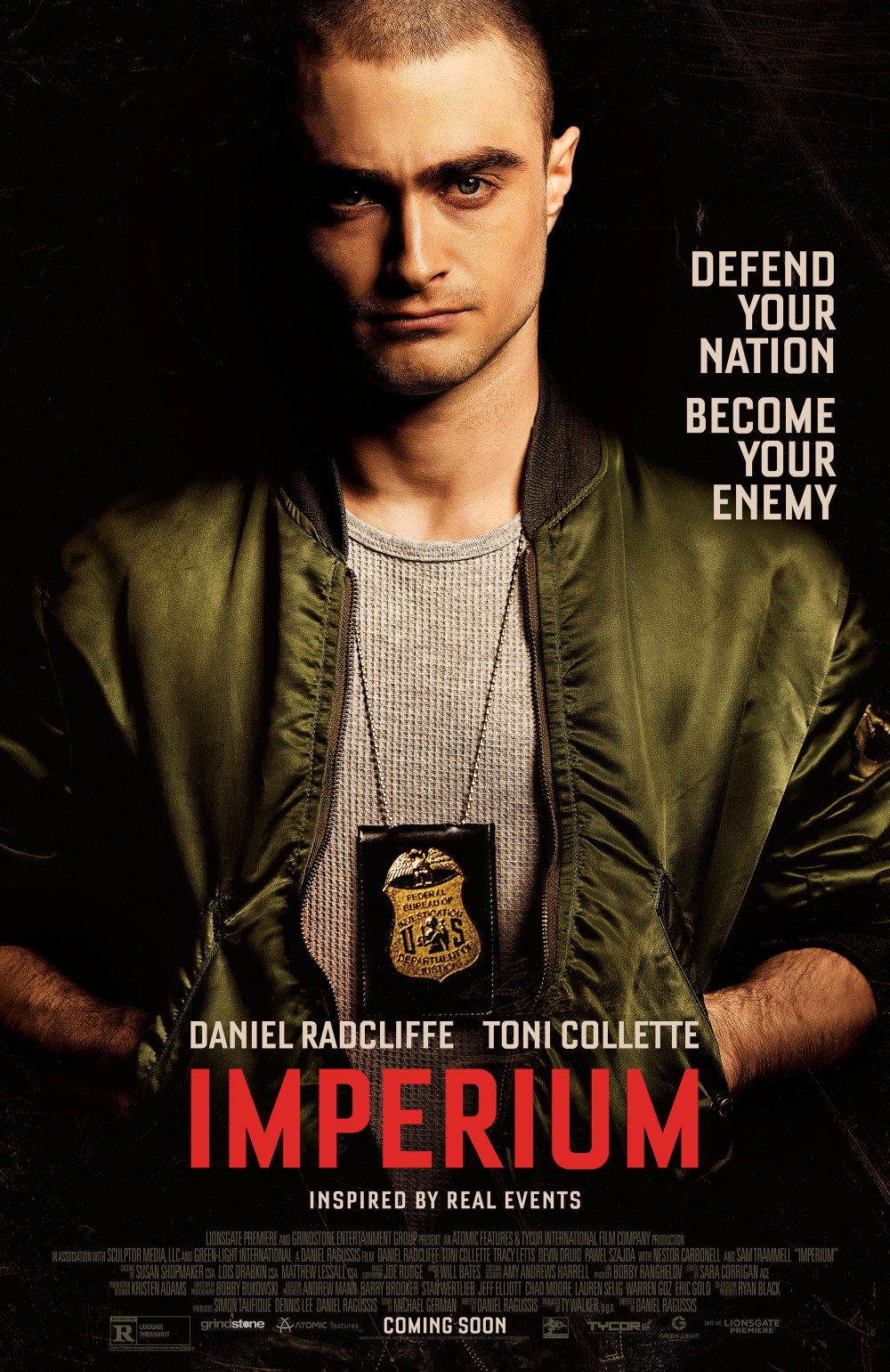
Imperium

IMPERIUMfinalposter

Imperium” is being released not along after “The Infiltrator,” another movie dealing with an FBI agent going undercover and entering a vicious criminal organization in order to stop the bad guys in their tracks. Like “The Infiltrator,” “Imperium” doesn’t break any new ground in the realm of undercover cop movies, but it is a taut thriller which holds our attention as it throws a barely prepared protagonist into a den of snakes who are quicker to kill than trust.

Front and center in “Imperium” is Harry Potter himself, Daniel Radcliffe. Ever since playing the lightning-scarred wizard, the actor has taken on many challenges to prove to the world there is more to him than J.K. Rowling’s infinitely popular literary character. At first he seems out of place as FBI agent Nate Foster, but that’s kind of the point. Nate comes across as a bespectacled and bookish nerd who is more comfortable doing research than going outside of the office. It also doesn’t help he’s the butt of jokes by his fellow agents who have yet to take him the least bit seriously.

But then along comes agent Angela Zamparo (Toni Collette) who sees a strong potential in Nate for undercover work. She is also sick of her superiors devoting all their resources to foreign terrorism instead of putting just as much focus on domestic enemies. Angela brings Nate into her office, tells him what he needs to know and gives him a copy of “How to Win Friends and Influence People” by Dale Carnegie, the only book needed for undercover work. From there, Nate transforms himself into a war veteran turned skinhead and navigates his way into the dangerous underworld white supremacy.

I have to give writer and director Daniel Ragussis a lot of credit as he focuses on something I desperately want America’s politicians to focus on: domestic terrorism. When it comes to the “War on Terror,” much of the focus has been focused on international groups like ISIS or The Taliban, but the threat inside America has proven to be far greater these days. Ragussis makes this very clear as he features video footage and photos of Neo-Nazis at work, be it going on marches or committing heinous crimes against those people who are not white.

Radcliffe may still have the shadow of Harry Potter hanging over him, but this doesn’t affect his performance as Nate Parker in the slightest. He makes Nate’s transformation into an undercover agent not just believable, but at times frightening. Movies like these show their protagonists sinking so deep into their assignments to where they lose contact with who they are and develop strong friendships with criminals they are supposed to bring down. Radcliffe shows, a lot of times without words, just how desperate Nate is to get to the truth. We already know just how great an actor he is, and his performance in “Imperium” goes to show the kind of acting challenges he is willing to step up to the plate to take on.

But there’s also Toni Collette who proves to be every bit as good as Radcliffe in her portrayal of, Angela Zamparo. Collette makes Angela cool as they come, and it’s loads of fun watching her reduce her male colleagues to rubble as they can’t even begin to match her job efficiency. Collette made her big breakthrough back in 1994 with “Muriel’s Wedding,” and ever since then she has immersed herself so deeply into each role she plays to where you completely forget the ones she played previously. The scenes she shares with Radcliffe here are great as we watch a rookie and a veteran slowly start to figure one another out, and nothing is never as it seems.

“Imperium” has the requisite scenes where Nate has to think fast on his feet so his cover doesn’t get blown, and some resonate with intensity more than others. One of the best comes when Nate is going to a potential site for a party along with Andrew Blackwell who is played by “The Knick’s” Chris Sullivan. Blackwell brings his best poker face to this scene as we watch Radcliffe tremble in fear as he is made to feel death is just around the corner. Both actors succeed in creating an almost unbearably intense scene here as if they are about to make the most pivotal move in a chess game.

Now “Imperium” will not go down as one of the best undercover cop movies ever made, but it does get the job done. It also shows Radcliffe taking on a new challenge and growing even more as an actor. Both he and Collette are more than enough of a reason to check this movie out sooner than later. Writer and director Daniel Ragussis also deserves a lot of credit for focusing on domestic terrorism as it feels like a realm in today’s day and age which doesn’t get enough attention. Sometimes the greatest threat to a nation isn’t from outside of it, but from within. Seriously, look at what Donald Trump’s bizarre run for President has brought out into the open.

* * * out of * * * *

Copyright Ben Kenber 2016.

Abortion: Stories Women Tell

Abortion Stories Women Tell poster

Was there ever a time when abortion didn’t seem like such a controversial issue? Well, if there was, that was certainly a long, long, long time ago. Even with the passage of Roe v. Wade in 1973, which gave every woman in the United States the right to an abortion, many have still been doing their best to get it overturned. Never mind that the Supreme Court has the final say on issues like this, never mind that Roe v. Wade was passed to stop women dying from abortions, and never mind that abortions make up a very tiny percentage of the work Planned Parenthood does; people are still swayed by their emotions more than they are by facts, and many have to be reminded of the importance of the separation between church and state.

The HBO documentary “Abortion: Stories Women Tell” is not out to take sides on this contentious debate. Instead, it gives women the opportunity to talk about their experiences with both pregnancy and abortion and to tell their own stories without any filters. Some men are heard on this too, but the focus is on women on both sides of the fence as they are the ones who have to deal not just with their decisions, but also the aftermath they are unwillingly exposed to.

The documentary starts off with a pro-life rally in Missouri where supporters chant “all in Christ,” and an elected representative tells them they are making progress in closing clinics in the state as they now “have the ability to look inside the womb.” But the focus then quickly shifts to a title card which states how since 2011, more than half of the United States have significantly restricted access to abortions, and those restrictions have increased from year to year. Abortion opponents may not be able to overturn Roe v. Wade, but they have managed to find ways around it.

Missouri at this time has only one abortion clinic which means the women who live there are more likely to drive many miles across the state border into Illinois to seek help. The documentary looks at the daily happenings at the Hope Clinic in Granite City, Illinois where employees do their best to help women in need of health care even while they are constantly harassed by protestors. None of them have any shame over the work they do, and that’s even if some consider themselves the black sheep of their family as a result.

The stories we hear cover different parts of the spectrum regarding the abortion debate. There’s Amie, a 30-year-old single mom who works 70 to 90 hours a week to make ends meet and cannot afford to have another baby right now. We get to meet Sarah who has discovered her baby will have lungs missing and won’t survive long after birth. Then there’s Kathy whose house is filled with various religious objects, and she is setting up a peaceful pro-life march to get what she sees as God’s message across to others. And there’s no forgetting Alexis who is 17 years old and pregnant, whose mother died when she was just 8 and who gets picked on at school because of her condition. It’s painful to see how isolated all these women are from the rest of society as the stigma of abortion is still all too harsh. Granted, Kathy might not seem as isolated, but there is a strong sense of loneliness about her as she pursues her quest to end abortions.

Director Tracy Droz Tragos, herself a Missouri resident, presents all these women’s stories without any judgment. She has given them a forum to speak their minds, and they all need to be heard regardless of how we feel about this infinitely taboo subject. There’s no narration to be found here as Tragos is not looking to steer the conversation one way or another, and this is even though the number of pro-lifers interview here pales in comparison to the pro-choice advocates. But for what it’s worth, the pro-life women interviewed here come across as very nice and full of much love, and this is in sharp contrast to those protestors (mostly men) who stand outside the clinic berating anybody and everybody who enters it.

But for me, the most important takeaway from “Abortion: Stories Women Tell” is that none of the women featured here take the issue of abortion lightly. Why would they? Many people who oppose abortion treat those who have had one with such disgusting disdain as if to say they never bothered to put much thought into what they were doing. But as Representative Jackie Speier said in a session of congress, the thought that anyone enters into such a decision with a cavalier attitude is just “preposterous.”

It’s impossible not to be emotionally affected by what these women go through. Plus, one cannot but be infuriated at those protestors who hold up signs featuring what looks like aborted fetuses which are disgusting and unforgivably cruel as they do nothing more than try to manipulate the actions of people they have no interest in knowing personally. Tragos briefly gets to interview one of the most outspoken pro-lifers who follows a clinic escort all the way to her car, begging her to repent. He talks about a law in California which punishes someone with not one, but two murders when they kill a pregnant woman. Whoever this person is, he may need to look at the California law book more closely.

With the United States currently entering the most contentious of Presidential elections, the future of Roe v. Wade is in more danger than ever. But watching “Abortion: Stories Women Tell” is a stark reminder of how women are still treated like a minority even though they make up more than fifty percent of the world’s population. This documentary will bring about a fury of emotions for everyone who watches it, but the one thing to keep in mind is all the women featured here are no different from one another. They believe in the same things and have more in common than they bother to realize.

I also have to quote Kenneth Turan of the Los Angeles Times here as he made an excellent point in his review I wish I had made myself:

“The key to understanding why ‘Abortion: Stories Women Tell’ is a quietly powerful documentary is not the first word in the title, but the final three.”

* * * * out of * * * *

Copyright Ben Kenber 2016.


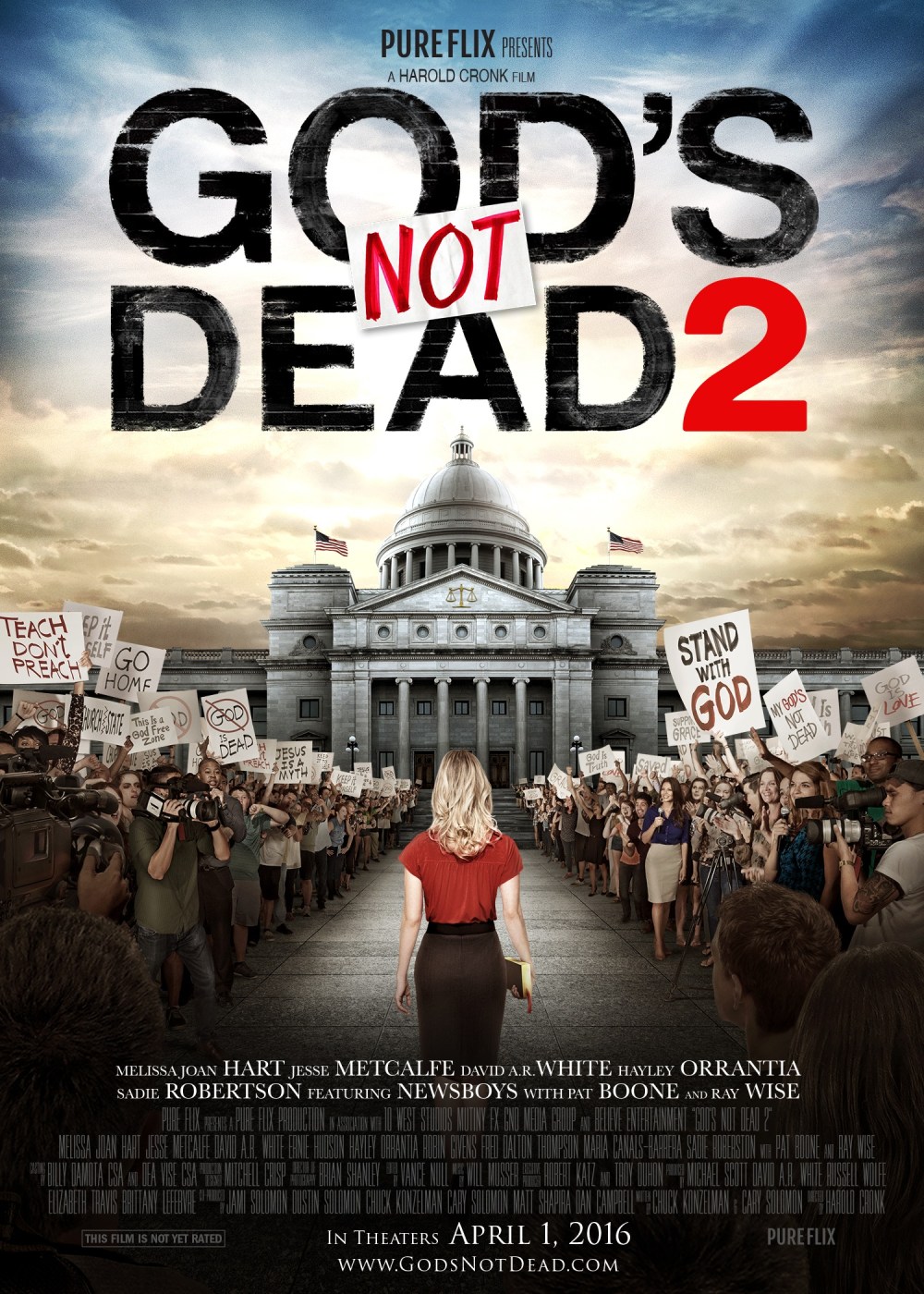
Exclusive Interview with Jesse Metcalfe on ‘God’s Not Dead 2’

Gods Not Dead 2 Jesse Metcalfe photo

He has gone on romantic and paranormal adventures on the soap opera “Passions” and took on the role of Christopher Ewing on TNT’s continuation of “Dallas,” but now Jesse Metcalfe finds himself defending the use of God in public discourse in “God’s Not Dead 2.” In it he plays defense attorney Tom Endler who is assigned to represent Grace Wesley (Melissa Joan Hart) as she is being put on trial for mentioning God in her high school classroom. Tom himself is not Christian like Grace and considers himself a non-believer, but he soon finds himself seeing religion in a new light to where he sees the importance of winning this case.

I got to speak with Jesse while he was in Los Angeles recently for the “God’s Not Dead 2” press day and he couldn’t have been nicer. He talked about the challenges he faced in a playing a non-believer in a faith based movie, of how he prepared to deliver a 6 ½ minute monologue, and how doing this movie affected his own faith overall.

Gods Not Dead 2 movie poster

Ben Kenber: You have a very interesting role in this movie because your character of Tom Endler is not a Christian and a non-believer, but he still does his job as a lawyer in defending his client in court.

Jesse Metcalfe: Absolutely.

BK: What were the biggest challenges for you in playing that kind of a role?

JM: I think probably the biggest challenge was figuring out what the real emotional arc of the character was to be. I took experience from my personal life in sort of layering in the emotion of that character which was basically my own journey into reconciling a relationship with God and giving the willing care of my life over to him through the process of getting sober and through the 12 step program of Alcoholics Anonymous. I thought was interesting in the movie was that the character ends up exploring his own faith towards the end of the movie and being very empathetic to not only the plight of his client but to the plight of Christians has depicted in this movie. It was a complicated role because he is a non-believer, but at the same time my character’s really pushing the message of the movie. But it was intriguing to me because I never played a defense attorney before, and I really thought that a lot of my material was really well-written. I never really had the opportunity to tackle a 6 ½ page monologue with my closing argument in the movie, so I was intrigued by the challenge.

BK: 6 ½ pages? How did you go about preparing that long of a monologue?

JM: Well I just a lot of prep. The night before I almost stayed up till dawn. I stayed up till like 5 o’clock in the morning and had like an 8 a.m. call time, so I think that fatigue really sort of played in my performance and played into the emotional aspect of the character. I feel like Tom was really at the end of his rope with the case and really felt like it was almost a lost cause and that this was his last ditch effort to try to save Grace, his life and career, so my fatigue really worked for the scene (laughs).

BK: “God’s Not Dead 2” has the same director and screenwriters of the original, but it also has a mostly new cast and a different story. Did that concern you at all when you came on board this sequel?

JM: It didn’t concern me because I thought that the script that was written for “God’s Not Dead 2” was superior to the one that was written for the original movie. I really felt like it was more relatable, and the characters were not so stereotypical. There is a lot more gray area within the characters that made them, to me, more real. We need to discuss this issue in a way that is not black and white because it isn’t black and white. There is good and bad people in every walk of life that live under and belief in every different belief system, so we can’t hate groups of people with such broad strokes. There is really a lot of nuance to every different individual, and I thought that story was told in “God’s Not Dead 2” more effectively.

BK: You had said that life without faith was not necessarily a fulfilled one. How would you say faith has helped you in your life?

JM: It’s helped me overcome adversity. There’s been struggles in my life that I don’t think I would’ve had the strength or the perspective to overcome if I didn’t have belief in something that I couldn’t see or touch in a higher power. And I think that aspect of having a spiritual connection within someone’s life is essential.

BK: You shot this movie in Little Rock, Arkansas. What do you think that location added to the movie?

JM: Well it added some great locations. We had access in the town of Little Rock that I think was really, really special. You don’t always get that type of access when you are shooting a television show or a film. We were in the state capitol courthouse so that was pretty special, and I thought it added a lot of production value and a lot of grandeur. When you shoot a movie like this in the South it seems apropos, and I enjoyed the experience. It was cool. It was definitely a tightknit group and we spent a lot of time together in Little Rock. There’s not a ton to do there, but it is a really cool and beautiful city. I think from a production side it added a lot, and also for maybe a social and political perspective it added a lot as well.

BK: In preparing for your role did you do any research on defense lawyers?

JM: No, I didn’t really do any research on defense attorneys. I did delve into some of the case studies that the producers of the movie made available to us to sort of give myself a frame of reference on a topic that I really wasn’t that familiar with. So for me it was really an education, especially to have these experts that take the stand in the movie. I thought that was really interesting as well and I learned a lot. What we prove in the movie I believe. I do believe that Jesus actually existed and he was a man that walked this earth, and I think because of that we can never completely eliminate religious discourse from the public square. This is a part of our history and it deserves that respect. Whether or not it needs to be a part of our education system or our political process or our government remains to be seen. That debate is going to continue to rage on.

BK: There were a lot of cases that apparently inspired the story for this movie. Were there any specific cases that spoke the most to you?

JM: It really is an amalgam of multiple cases. At the end of the movie, which is a cool ass bit of this movie, they added 25 case studies that people, if they want to, can call their curiosity and explore further. But at the end of the day it’s a fictional story.

BK: How long did you have to shoot “God’s Not Dead 2?”

JM: It was under a month. It’s obviously very challenging to create a great movie with those kind of time restraints, so it speaks to the cast and the producers and stuff like that. It really was a good group and there was great chemistry among everybody.

BK: Did you find any benefits and having that short of shooting schedule to work in?

JM: It really keeps the energy up. When you have six months to shoot a movie which happens on a lot of these big-budget movies, I think a lot of time is typically wasted because people feel like they have all the money and all the time in the world. I only got a couple of takes on that closing argument, so that’s why I stayed up till 5 o’clock in the morning to make sure I was prepared as possible because I knew time was just not on our side. But at the same time that energy is palpable.

BK: Christianity is still the dominant religion in America, but in “God’s Not Dead 2” it is treated like a minority. How do you feel about that?

JM: Well I think that obviously this film is told from the Christian perspective. There’s no doubt about that, but I do feel like the film is effective in opening up this very important conversation that we need to have which is the role of religion in our increasingly secular society in the modern era and the time that we live in. I understand the push back from the Christian community because they probably feel in the more PC world that we now live in that they are being marginalized to a certain extent, and this is the tact that this particular movie takes. I think it’s effective in its messaging, but my personal belief is that all people have a right to freedom of speech and freedom of religion. I don’t think one side or the other is being persecuted or silenced more. I think everybody deals with a certain level of persecution for their beliefs. There is always going to be a detractor and there’s always going to be a naysayer. We are never going to live in a society where if you say one thing somebody doesn’t say the other. There is always going to be, for a better term, a “devil’s advocate” out there trying to say that your beliefs and your opinions are wrong.

BK: “God’s Not Dead” is being released on April 1 which is now only April Fools’ Day, but also National Atheist’s Day. What’s your opinion on that?

JM: I don’t really have an opinion on that because I’m not an atheist. Obviously they are trying to say something by having their day on April 1.

BK: What would you say that you brought to this movie that wasn’t in the screenplay?

JM: I would say that I brought an emotional foundation to the character that really brought the character to life. But that’s the job of an actor which is to bring the character to life and bring the words on the page to life. I hope I did that adequately, and I know for me it was a fun experience and an enlightening one. I feel like it strengthened my own faith and my own personal connection to God and my higher power.

BK: What effect has doing this movie and on you so far?

JM: It’s had a great effect on me. It was a great opportunity, like I said before, to be a part of a very important discussion that I think needs to happen right now because I think a lot of people, politicians especially, sort of use religion to shape issues. I don’t necessarily think that’s always the most effective thing to do. I think there’s important issues in this country and they are not necessarily linked to religion. This country was founded upon and known for freedom. We need to maintain and protect people’s religious freedoms at all costs because that’s what makes this country great. We are not a monotheistic society right now. We are a pluralistic society and we need to proceed with tolerance and with respect.

I want to thank Jesse Metcalfe for taking the time to talk with me. “God’s Not Dead 2” is now available to own and rent on DVD and Blu-ray. Be sure to visit the movie’s website (www.godsnotdeadthemovie.com) for more information.

Exclusive Interview with Robin Givens on ‘God’s Not Dead 2’

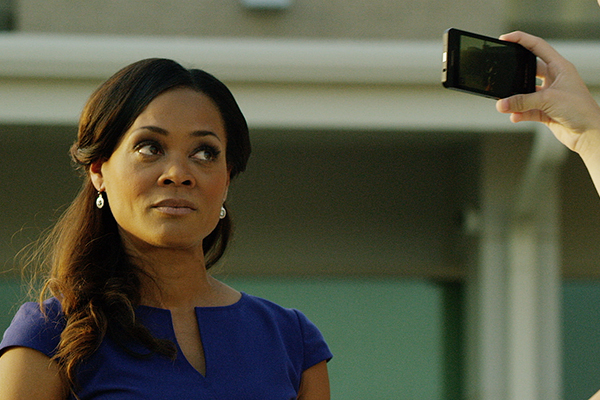
Gods Not Dead 2 Robin Givens

Robin Givens has graced us with her presence for years whether it be on television, onstage or on the silver screen. She caught Theodore Huxtable’s gaze on “The Cosby Show,” played the infinitely spoiled Diane Merriman on “Head of the Class” and gave Eddie Murphy a taste of his own medicine in “Boomerang.” Now she adds a faith based movie to her resume with “God’s Not Dead 2,” a sequel to surprise box office hit from 2014. In it she plays Principal Kinney, the chief administrator at Dr. Martin Luther King High School where a teacher, Grace Wesley (Melissa Joan Hart), becomes the center of controversy when she mentions God in a response to a student’s question. From there Principal Kinney is forced to decide whether to stand up for Grace or to stand by the school district officials who demand Grace to apologize for violating the “separation of church and state.”

I got to speak with Givens while she was in Los Angeles to do press for “God’s Not Dead,” and she could not have been nicer. Her family were huge fans of the original, and she jumped at the chance to appear in this sequel. She discussed what was most challenging about her role, how doing the movie affected her own faith and she shared her opinion about the fact that the movie not only opening on April Fool’s Day, but also National Atheist’s Day.

Gods Not Dead 2 movie poster

Ben Kenber: You play a high school principal in this movie. Did you do any research on principals at all?

Robin Givens:  No, I didn’t too much and I kept thinking of my own. I didn’t have a principal. I had a headmaster, Dr. Paul Firestone. I kept thinking of my children so I approached one from the students’ point of view and then one from a parents’ point of view. It’s interesting when you begin to approach the character and you are actually in the school. We were in a very, very large high school, and however big the kids were makes you assume a certain posture. You really do assume a posture even physically, so that was pretty interesting for me.

BK: This is a sequel which has the director and screenwriters returning to it, but most of the cast from the original did not return. Did that concern you at all?

RG: No, no, not at all. My family and I are very big fans of the first one. I guess I was not surprised they were doing a second one based on its success which I’m sure even surprised them. You kind of get the feeling that they were going to camp it up a little bit. When I met Harold Cronk, the director, I just loved him so much so I was not concerned about it at all.

BK: What would you say was the most challenging aspect for you in playing this character?

RG: Just for me, what I believe versus what she believes. You can play different characters that have nothing to do with you; that’s the most wonderful thing about acting. But with this one, I kind of wanted to insert myself for the first time. I wanted to be on Grace’s side in helping her along, not just sort of walking the line or concerned about following the rules. So that was the big part for me that was difficult.

BK: It can be tricky because you don’t want to judge your character.

RG: Exactly.

BK: “God’s Not Dead 2” is being released on April 1 which is not just April Fool’s Day, but also National Atheist’s Day. Do you have any thoughts on that?

RG: (Laughs) Somebody mentioned that to me and I didn’t know there was a National Atheist’s Day. I think it’s interesting that it’s also April Fool’s Day and that April Fools’ Day is different from National Atheist’s Day, but they also mentioned the irony that they didn’t know that was the day when they decided to release it, so maybe that was God intervening.

BK: Perhaps. You said your character was torn between her job and her heart, and that makes her complex as a result. What would you say were the challenges of playing those complexities?

RG: I think it was really difficult for me to get out of the way, that’s what I would say. I wanted to not judge her, but I wanted to not play the subtext of this really isn’t me and this is not what I believe. Just letting myself get out of the way of it was really hard for me. If I could go to Harold now, and now that I know him better, I would go, “Could you write a scene that actually explains the difficulties she is having?” It’s like one scene for me is missing, you know?

BK: Was there anything you brought to this movie that wasn’t in the screenplay?

RG: I try to portray the difficulty she was having, that’s the choice that I made. So I tried to bring the fact that she did believe, but she was still wanting to do her day job well. I tried to bring the conflict she was having, and I don’t know if that was originally planned but I wanted her to be conflicted.

BK: Has doing this movie strengthened your faith in your own life a lot?

RG: I feel like, for me, it was one big God wink. A friend of mine gave me a book called “God Wink” which talked about how there are no coincidences. It was such an important movie in our lives, my family personally, that to be asked to do the movie a year later was almost like a big God wink or validation of like “I’m with you.” So in some respects, not that it changed my mind about anything, it just sort of brought validation.

BK: When Melissa Joan Hart’s character of Grace Wesley talks about God in the classroom, she is really talking about him as a historical being instead of a divine one.

RG: I love that! I don’t know how you feel about that, but for me I think that was so smart. I loved how they put Christ in a historical context with Martin Luther King and Gandhi. I just love that.

BK: There seems to be a lot of confusion about when or if you should bring up God in the classroom, and the way Grace does it is not really offensive at all. But if she was forcing people and saying believe in God or you will get an F, that would be a different story.

RG: Absolutely, and also when she’s talking about it she’s just talking about it in very simple terms: tolerance, being a better person and being kind. I think because she’s talking about it in such simple terms then how can anybody complain about this, but that it still creates an uproar is interesting and shows where we are at.

BK: Christianity is still the dominant religion in America, but in “God’s Not Dead 2” it is presented more as a minority because of the way certain Christians are treated. How do you feel about that?

RG: This is America; we have freedom of religion. You can’t be persecuted for what you believe. People come from other countries to this country maybe not for only that reason, but that’s a big thing. You get to believe the way you believe here, and sometimes we get so caught up defending other people’s rights that even things that have been the fabric of our country have gotten pushed to the side. I do think Christianity is a big thing in America still, and I think that’s why these films are so successful because maybe people shouldn’t talk about, but they love that they get to see themselves or what they believe are the discussion. I think people really do love it.

BK: Was there anything in regards to religion you really wanted this movie to have?

RG: I think that probably lies a lot on Melissa’s shoulders in terms of what she wanted it to have. I was there to sort of help her in many respects to find her way and help her character find her way as opposed to my own beliefs.

BK: This movie has quite the cast with actors like Ray Wise, Ernie Hudson and Fred Dalton Thompson in what turned out to be his last role before he passed away. Did you have the opportunity to work with Fred?

RG: No I didn’t, but I always think of Fred Thompson when he was running for office which is like, it’s so cool. I’m a big fan not only of his acting but also politically. He was so thought-provoking in many respects, so I’m just happy to have been in the film with him.

BK: You mentioned that your mom goes to church every Sunday and that she saw “God’s Not Dead” and it made the family very happy. I imagine they were very happy to hear that you were involved in “God’s Not Dead 2.”

RG: Oh my God. My family doesn’t know where I’ve came from just in terms of the entertainment business. They are never too into it. But they loved it and they couldn’t believe it. It was something we did together as a family, so when she went to see it (“God’s Not Dead”) and then we all went to see it as a family there was a certain irony there. But it made them very happy.

BK: What would you say your mother got out of the first movie?

RG: It was a difficult time in our lives as a family, and I think that what everybody needs is just faith. I think certain things can always trigger what’s going on in our own lives, so just to have faith I think was a big thing.

I want to thank Robin Givens for taking the time to talk with me. “God’s Not Dead 2” is now available to rent or own on DVD and Blu-ray, and you can visit the movie’s website at www.godsnotdead.com.

Copyright Ben Kenber 2016.