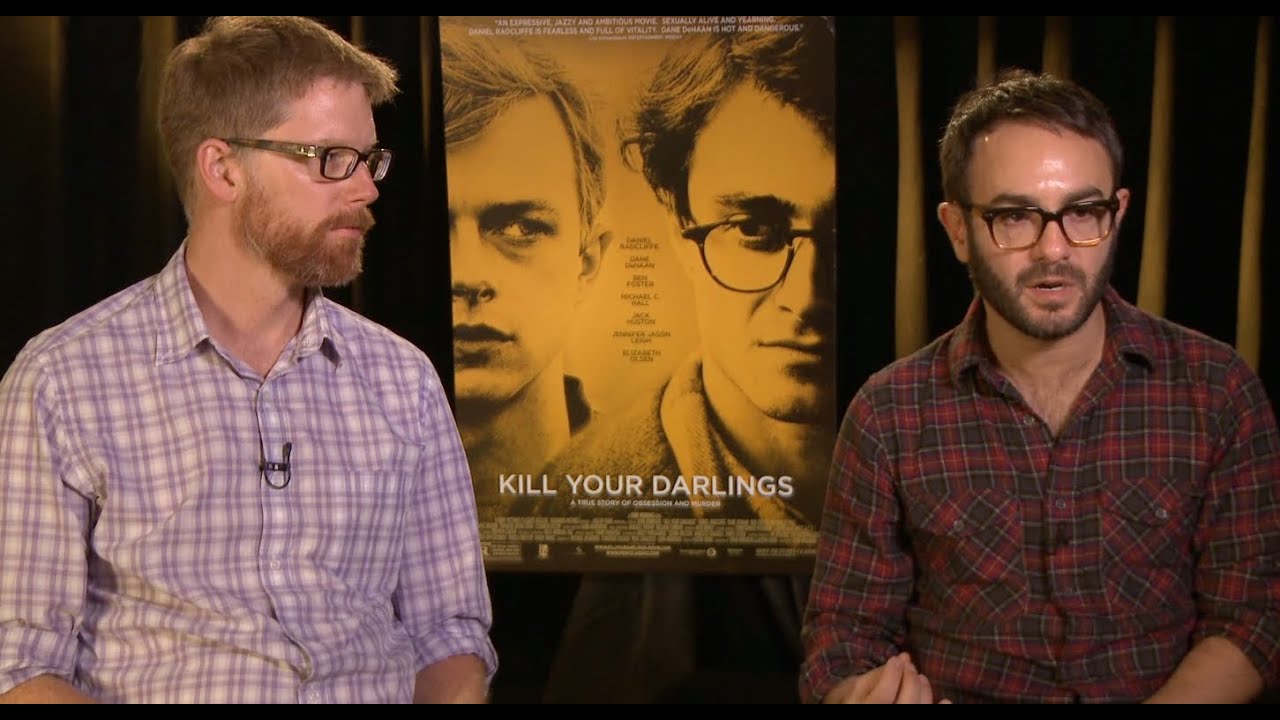
John Krokidas and Austin Bunn Discuss ‘Kill Your Darlings’

WRITER’S NOTE: This interview took place back in 2013.

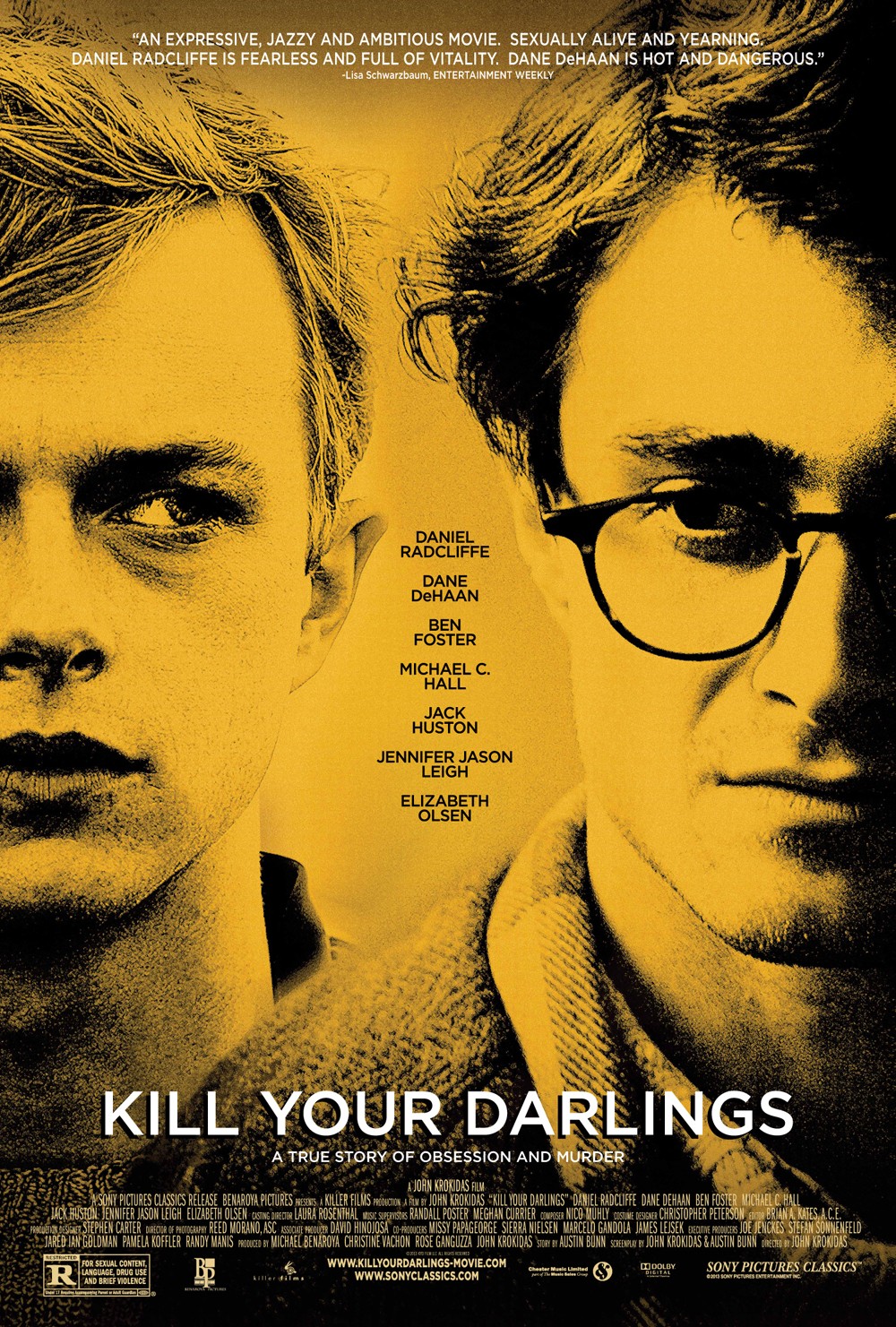
John Krokidas makes his feature film directorial debut with “Kill Your Darlings” which stars Daniel Radcliffe, Dane DeHaan and Michael C. Hall. The movie is about a murder that occurred in 1944 which brought three poets of the beat generation (Allen Ginsberg, Jack Kerouac and William Burroughs) together for the first time. Radcliffe portrays Ginsberg as a 17-year-old who is about to start college at Columbia University, and he ends up falling under the extroverted spell of fellow classmate Lucien Carr (DeHaan) who introduces him to the poets who would later bring a new vision to writers everywhere. It is when Carr murders his love David Kammerer (Hall) that their relationship starts to become unglued.

Krokidas co-wrote the script for “Kill Your Darlings” with his Yale University roommate Austin Bunn. A former magazine journalist, fiction writer and reporter, Bunn graduated from Yale and went on to get his master’s degree at the University of Iowa Writers’ Workshop. As for Krokidas, he later attended New York University’s Graduate Film Program where he made the short films “Shame No More” and “Slo-Mo.”

I got to hear how Krokidas and Bunn made the film under challenging circumstances when they appeared at the “Kill Your Darlings” press conference held at the Four Seasons Hotel in Los Angeles, California.

Question: What was the division of creative responsibility between you two like?

Austin Bunn: Probably like a lot of people in this room, I discovered the beats in college. I used to go to the campus bookstore and just track down the poetry collection, find Allen’s books and read them like they were some secret transmissions from the future version of myself. I was a closeted, young creative writer from New Jersey so Allen Ginsberg’s work meant the world to me. So, I had this really strong connection with Allen and of beat biographies and the history. I read a lot of the back catalog and I had come to John with the idea. So, in terms of the division of responsibility, I would write the first draft and then John would come in. The thing about John, as you will soon learn, he wanted to raise the emotional decibel level in every scene. John is one of the most riveting and vital and least hagiographic version of this story. We didn’t want to take the beats’ greatness as a given, so John sort of demanded that we write a really emotional roller coaster. Then we just went back and forth. John talks about it as the Postal Service, like the band version of producing a script. We were living in different cities at the time; I was at the University of Iowa Writers’ Workshop as a graduate student and John was in New York finishing film school.

John Krokidas: Austin wanted to do this as a play first. He was a playwright and a short story writer of some renown, and we were college roommates and we shared ideas with each other as college roommates and good friends do. But I, of course, started seeing the movie version in the back of my head and I had just gotten out of NYU film school and started convincing him that the play would be really flat and undramatic, but as a movie…

Austin Bunn: The Jedi mind trick!

John Krokidas: This would be amazing. But I would say I’m the structure guy I think, coming from NYU’s film program. I’m very traditionalist in terms of Sidney Lumet’s “find your spine,” and Austin is really wonderful with character and dialogue. If anything, he’s on a religious crusade against expository dialogue, and I would write these three paragraph monologues for each character expressing their emotion like that scene where Jennifer Jason Leigh finally turns to Allen to give him advice. I had a two-page monologue version and Austin crossed it all out (Austin laughs) and wrote the one line that’s in the movie, “The most important thing your father ever did was fail me,” which said everything.

Question: The movie is also very visual too because of the beats’ energy and such. How did you go about creating the look with cinematographer Reed Morano?

John Krokidas: I’m so proud of what we brought to this film. The movie is set in 1944 and it’s a murder story. Even in the writing process, I looked up and saw that “Double Indemnity” won Best Picture that year, and it was the year of “Laura” and “Gilda” and all these great American Film noirs. So, I said, “Why don’t we incorporate this even in just the fabric of the movie and start with the jail scene in a place of heightened tension flashback to more innocent times, and then build again to see whether or not these characters can escape or not escape their fate?” So, I started looking at noir style at first, but I thought an academic recreation of Film noir, who wants to see that? Going back to spine and theme, I thought what this piece was really about was young people finding their voice. So, what about going from conformity, the row houses of New Jersey and the pillars of Columbia, to nonconformity? And of course, where film noir went in the hands of the French was the New Wave. So I thought, “Okay well let’s start off with these controlled, composed, expressionistic-lit shots, and then as the boys go down the rabbit hole together, let’s take the camera off the tripod. Let’s get some jazzier free-form style.” So, I made this book of the 1940s. I had learned that Ang Lee, for “The Ice Storm,” did a 50 page book on the 1970s with colors, fonts and important historical events, you name it. So, I did that with the 1940s and then gave it to Reed. The great thing that I have learned on this is you can do all the academic treatises you want, but then you hire great people. She saw the goal post of what I wanted and then she showed me Jean-Pierre Melville’s films. She showed me films that meant a lot to her and then let kind of what I wanted filter through her own imagination. What I am amazed by specifically in her work is we did this movie in 24 days. Each scene was done in two hours or less, and she has the instincts to be like a documentary camera person and is able to light like that at the same time. We wanted to make sure this film felt relevant and contemporary as opposed to just being a traditional biopic.

Austin Bunn: (We didn’t want it to be) the greatest hits version of their lives.

John Krokidas: It was looking at Ryan McGinley photographs and contemporary, counterculture, young images of today and then finding what connected them to the 1940s. What was resonant in counterculture then and today at the same time.

Question: What was the direction that you were giving your actors? We were told that sometimes you would pull them aside for a more dramatic scene, but was there a consciousness you went into to direct the film and the actors? Were they any kind of specific kind of notes you gave them?

John Krokidas: Here’s the embarrassing story; Austin and I actually met freshman year because we were both acting in a production at Yale of “The Lion in Winter.”

Austin Bunn: Yes.

John Krokidas: Neither of us were the greatest actors in the world which is, I think, why we went into writing and directing. But I trained as an actor as an undergraduate and what you learn is that each actor has their own method and way. It’s whatever it takes for them to get the emotions to the surface. So, when I met with each actor that I cast, I would just simply ask them, “Have you trained? How do you like to work and what don’t you like?” Michael C. Hall gave me one of the greatest lessons in directing in which he said, “If what I am doing is not making you happy, don’t tell me that because that will make me self-conscious and it will make me think about what I’m doing. Just tell me to add whatever you want to what I’m doing.” That’s just a great lesson for life. Dan and I, when we were working together, we spent time before production (he was so generous and hard working on this) and he wanted to approach this like it was his first film which was very poignant to me. I said, “Would you like to try learning a new method and approach acting in a different style?” He said, “Absolutely!” So, with Dan, he’s so bright and in his head, and for the intellectuals Meisner works really well in focusing your action on what you are trying to do in the scene. Dane had trained extensively, and what he does is create a Bible for the character and does tons of research before production. Then he burns it and starts really becoming the character on set. Ben Foster (who plays William Burroughs) has something I’ve never seen another actor do which is, once we’ve basically got the scene up on its feet, he goes and he does the blocking of the scene by himself in the location several times. He calls it “the dance” because once he’s memorized the dance and knows the physicality (“I need to pick up the fork here, I need to put it down there”), he doesn’t have to think about it anymore and that’s completely freeing to him. So it’s like cooking this huge seven course meal where you have to get everything done at exactly the right time, but every plate needs a little bit of love in a different way. To me the greatest thing was being able to get this dream cast and then just to work with them to find how they like to work and what got the best out of them.

Austin Bunn: John had a really intuitive idea which was to keep the actors from reading past this point in the biographies, so none of the actors came in burdened by the mythology of who these guys would become. They were just 19-year-old kids. So, I think that was really smart and it released the actors from having to play the later decisions in their lives and the kinds of writers they would become. They just got to be young people, and that was a great relief I think for them.

John Krokidas: Yeah, and for us too as writers. I had a talk with Jack Huston once when he and I shared the same room and I’m saying, “Oh my god, I’m directing you as Jack Kerouac.” But we were like, “No. You are Jack who is a college student on a football scholarship who hates the other jocks, who just wrote a book which he thinks might be completely trite and he just wants to get out of college and have some real-life experience and join the war so he could begin to have real material to write his next book. That’s who you are.” That just liberated all of us.

Question: When writing the script, how much are you tied to the truth and how much are you allowed to take creative license?

John Krokidas: We did so much research for this. We felt we had to, and I think part of it’s our academic background because there’s so much in the biographies. There are so many biographies of them out there, but then also we would find different accounts online for example from David Kammerer’s friends. They said that that relationship between him and Lucien was never portrayed accurately and that Lucien actually kept coming back to David and David was asking him to end the relationship. And then we may have broken into Jack Kerouac’s college apartment together. We did the trick of pressing all the buzzers and then somebody let us in. But what’s interesting is Columbia students were living there and they had no idea that they were in Jack Kerouac’s apartment. So, we physically went to all of the locations in which this movie took place, and that just helped inform our writing process as well; getting to be able to visualize the actual spaces. Add to that, we went to Stanford University to the Allen Ginsberg archives. It wasn’t about the lack of material out there. If anything, it was about making sure that we really just focused on who they were up until the point which the movie takes place.

Austin Bunn: Just to add to that, the people that I know that have seen the film have been really surprised at how much is actually totally accurate. The day after the murder, Allen Ginsberg went to the West End Bar, “You Always Hurt the One You Love” was playing on the jukebox and he wrote the poem that ends the film. It ends with “I am a poet;” that is a line from August 20, 1944 so we worked really hard to weave it in. But like John was saying before, we didn’t want to do the dutiful, stuffy, every box checked kind of biopic that has been around for a while. We wanted to do something that felt more in line with the spirit of the beats that was more specific and honest and transgressive, and I hope we got there.

Question: Did you two have a specific goal of what you wanted to portray and what you wanted the audience to leave with either of the time or of the characters themselves?

John Krokidas: What I want the audience to leave with is that feeling of when we were 18 and 19 years old just like these guys were in the movie; when everything seemed possible and you knew that you had something important to say about with your life. That you wanted to do something different and unique and not just what your parents taught you, not just what school taught you, but you wanted to really leave your mark on the world. The fact that after the movie these guys actually did it and created the greatest counterculture movement of the twentieth century is amazing. I have had plenty of people come up to me after seeing the movie and said, “This movie made me want to be a better writer” or “this movie made me want to go back and start playing music again.” That to me means everything. That’s ultimately, deep in my heart, why I wanted to make this movie.

Austin Bunn: The pivot point was this murder. I loved Allen Ginsberg for his openness and his honesty, and to think that at one point in his life he was called upon to defend his best friend in an honor slaying of a known homosexual, the very thing that Ginsberg went on in his life to defy and radically create change about the idea of being in the closet and the shame around that issue, that contradiction was really exciting to us dramatically.

John Krokidas: You know this movie took, from the time that we started talking about this until the time that we are getting the chance to be with you all today, over 10 years to make. When I really think about it, the thing that kept me going and kept me wanting to tell this story is that there needs to be something that pisses me off at night. The fact that in 1944 you could literally get away with murder by portraying your victim as a homosexual, that pissed me off to no end. This isn’t a political movie and it’s one scene and it’s obviously what informed how Lucien Carr got away with murder, but for me that was the thing that kept me up all night that said, “No, I have to tell the story.”

Question: The movie has different kinds of music playing throughout it like jazz and contemporary music. Did you envision using different musical styles when it came to making this movie?

John Krokidas: I originally wanted a bebop jazz score similar to Miles Davis’ score for Louis Malle’s “Elevator to the Gallows” because the transition from swing to bebop at this time was exactly what these guys wanted to do with words; to go from rhythms to exploding them into something beautiful. My music supervisor, Randal Poster, said to me, “John put down your academic treatise, put down your paper. Go make your movie. Your child’s going to start becoming the person that he or she wants to be.” So I went and I made my movie, and then I put jazz music on the film and it didn’t work at all. And then I went and did only period accurate music and it felt like Woody Allen’s “Radio Days” which is a great movie but it’s not the young rebellious movie about being 19 and wanting to change the world that we wanted to make. So, I actually went back to the playlists that Austin and I used a while writing this movie and I used Sigur Rós and stuff that was timeless but contemporary, and it brought the movie to life. Then I realized that the composer Nico Muhly had arranged all of those albums and worked with Grizzly Bear and Björk and other people that we were using as temp track. So, we got the movie to Nico and just thankfully he loved it. Now that I knew that I had contemporary music in a period film, then we get to that heist sequence. I had heist period music on it, it was so corny. The sequence didn’t work, it didn’t have any stakes to it, and I can academically tell you when the beats come on, they led to the hippies which led to the punks, and the punks led to Kurt Cobain and the 90s, etc. But the truth is that while I can intellectualize it, you go with what’s visceral and what feels honest and true to you. For me, the biggest lesson in making my first film is to do all of your homework, do all your research, know what you’re doing, but then don’t be afraid to get out of the way if your movie starts to tell you what you should be doing.

Question: How did you decide on what literary quotes to put in, and how did you work with the actors in establishing the cadence and the elocution on those?

Austin Bunn: What a great question! If you know any of the beat history, this new vision was real for them and they have written volumes about it, none of which makes any sense. We couldn’t make heads or tails of it.

John Krokidas: Do you all remember your journals when you were 20 years old or those conversations you had at three in the morning with other college students? We got to read their version of it, and there’s a reason that we hide all of our journals and don’t let them see the light of day.

Austin Bunn: It was challenging. With the uninhibited, uncensored expression of the soul, that’s actually a credible quote directly from the Ginsberg new vision manifesto. So in some ways we knew we had to distill some of that material from the Ginsberg journals to help make the argument for how valuable this manifesto was and the irony honestly of what transpires in the plot which is the very thing that Allen’s called to do which is to create this censored version of history. But in terms of the poetry itself, it was really challenging because as we all know there are movies about poets and writers where recitations happen and they are really flat and they can be corny and there’s a time where you tune out of the movie when you’re waiting for the poetry to end. Specifically, I think of Allen’s first poem that happens on the boat. We were really challenged to find a poem that would speak to audiences but was genuinely an Allen Ginsberg poem written in his voice. So what we had to do was really channel Allen. His early work is quite rough and burdened by trying to impress his dad and his professors. John had the concept of this isn’t a poem that he’s just reading to impress people, it’s a poem he’s reading to Lucien Carr. The audience knows that, you know that and Lucien finds it out on the boat at that moment. That really gave me permission to kind of rethink what the poem was going to do and how we would make it, so we came upon Allen’s method which was kind of magpie; stealing from the American vernacular and going out and finding common speech and repurposing it, creating this Whitman-esque inclusion. So you hear in the poem things that you’ve already heard in the film just like Ginsberg did himself. Things like Allen in wonderland is reworked in the poem, unbloomed stalwart is the very thing that David said to him at the party. So we’re kind of hopefully paying off not just a poem that is emotionally powerful, but also something of the method that Ginsberg would use for the rest of his life.

John Krokidas: Radcliffe was such a hard worker. While he was on Broadway doing a musical, we would meet once a week for two months before even preproduction and rehearsals began to work on the accent and to work together. I have him on my iPhone reading “Howl.” We didn’t look at the later recordings, we looked at the earliest vocal recordings possible of Allen Ginsberg to make sure that we weren’t capturing the voice of who he became, but his voice at that time and what his reading voice was like. To be honest, it’s just really telling the actor, “You’re not performing a poem. You are letting Lucien know that he is loved with this poem and that you love him and that you can see inside him.” It’s playing the emotion underneath the poem which was the direction.

Question: What does it do for you when all the main characters are gay? Normally you got the female characters who can be a love interest but they are not going to be a rival. Usually, even now in films and in life, there is a separate role where as if you are all the same gender, you can all be anything to each other.

John Krokidas: I think this is a movie with every character is discovering what their sexuality is (gay, straight, bi or all over the place), and more importantly whether or not they are worthy of being loved. I personally don’t know if Lucien Carr was straight or gay, and to me it’s irrelevant because I have seen this relationship play out amongst gay people I have known so many times where an older man who is gay and a younger man of questionable sexuality develops such a close bond. The stereotype I think would be is that the young man had an absent father figure or finds the older man’s confidence and just the care and nurturing qualities of them very attractive. What happens though is that those two get so intimate that ultimately there’s nowhere else to take the relationship but sexual, and when that happens then the power position in that relationship twists and the younger man suddenly realizes that he holds the power because he’s the sexually desired one. That’s where a lot of conflict ensues. Whatever you read about that relationship between Lucien and David, everyone knew that they were codependent. Everyone knew it was toxic and going to end badly. Nobody knew it was going to end in murder.

Austin Bunn: I think a lot of the biopics we see are kind of denatured of their sexual qualities and the edginess of the relationships in them. So, I think we were trying to do something that restored some of that ambiguity, lust, desire and confusion that is genuinely in the beats’ history. We were not making that up.

Kill Your Darlings” is available to own and rent on DVD, Blu-ray and Digital.
Eric Bana on Portraying Such a Charming Villain in ‘Deadfall’

WRITER’S NOTE: This article was originally written in 2012.

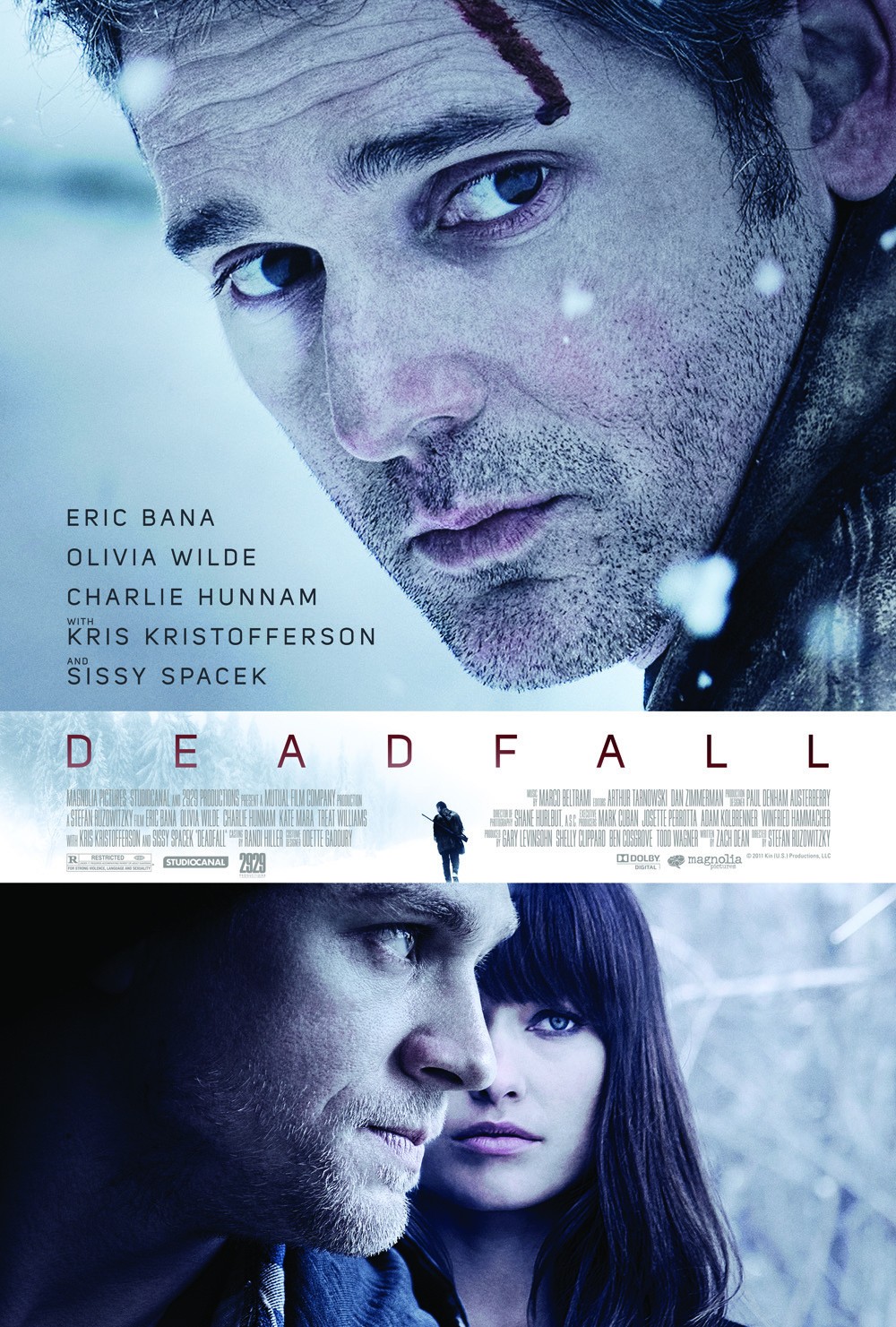
Watching Eric Bana as Addison in Stefan Ruzowitzky’s “Deadfall” will remind many of his breakthrough performance as Chopper Read in “Chopper.” Both films have him playing characters who are charming yet fearsome, and his unpredictability as an actor had us on the edge of our seats throughout. But hearing Bana talk about how he prepared to play Addison is a reminder to all actors on how to approach a role like this; the character may be a bad guy, but he’s still a human being with wants and needs like anybody else. It’s not just about acting evil all the time.

I was lucky enough to attend the “Deadfall” press conference at the Four Seasons Hotel in Beverly Hills, and Bana said he really liked Zach Dean’s screenplay and was “immediately compelled” by Addison. Bana described the character as being “quite hilarious actually,” and this was one of the main reasons he wanted to play him. It was interesting to hear him say that because funny is not an easy adjective to give to a character like Addison who can react violently without little or any notice. Bana, however, started out as a stand-up comedian and saw the opportunity to bring some darkly comedic touches to this role.

“I don’t think there was anything deliberately funny in Addison, but I think the situations that all the characters find themselves in and some of the things he does are inadvertently very funny,” Bana said. “It wasn’t like playing for laughs but I knew the audience probably would laugh at some of the ridiculous nature of what we’re all forced to do.”

Bana also went on to say he thought Addison was “morally straight” and that he really did not see the character as being a bad guy. Now while the crimes he commits in “Deadfall” certainly tell us otherwise, I really liked Bana’s approach to this role. It reminded me of a behind the scenes special on “Die Hard” where Alan Rickman talked about how he saw his character of Hans Gruber:

“As far as I’m concerned, I am not playing ‘the villain.’ I’m just playing somebody who wants certain things in life, has made certain choices and goes after them.”

The same can be said about Bana in the way he portrayed Addison.

“He had a strong sense of purpose in what he was doing and that is what makes those characters so scary, knowing you can’t really negotiate with him,” Bana said of Addison. “In his mind everything he’s doing is completely and morally correct and there’s a real reason for it. It’s not the actor’s place to judge, but I’m more than happy to be morally corrupt for a few months for the benefit of my career.”

This thought process was even more on display when Bana was interviewed by James Rocchi of MSN Entertainment. Rocchi talked about “Deadfall’s” first scene in which Addison’s car crashes and ends up shooting a state trooper in the process, and he described Addison as being spontaneous in his actions as this guy is thinking on his feet and improvising constantly. Bana explained that when the actor commits fully to their character’s actions, they should all come out naturally.

“I don’t like to think too much about what my physicality’s going to be here. I’d rather immerse myself in the character’s brain and allow my body to react accordingly,” Bana told Rocchi. “But that instance in the beginning of the film kind of sets in motion the rest of the stakes really for Liza (Addison’s sister who is played by Olivia Wilde) and Addison from that point on in that it just keeps getting worse and worse and worse. But you’re right. I mean he had no intention of shooting anybody. They got away from the casino, they got the cash, and all was going really well until that freaking deer popped out into the middle of the road and it all changed.”

Throughout “Deadfall,” Addison ends up engaging a couple of nasty fights, some of which are with Jay who is played by Charlie Hunnam (“Sons of Anarchy”). We keep hearing actors say how they did their own stunts in this or that movie, but we can never be too sure as the insurance people are usually dead set against that ever happening. But I believed Bana when he said that he did his own stunts in “Deadfall” because even he couldn’t hide the toll it took on his body.

“My neck was ruined,” Bana told Ariel Kashanchi of Screen Picks. “Charlie Hunnam beat the shit out of me. I don’t think I landed a punch. It was just like bang, bang. I remember after about five takes I was stiff all over and thinking ‘how much more can my neck take.’ I’m used to throwing punches and now I just have to just sort of take it. But it was kind of fun.”

“Deadfall” has received mixed reviews, but there is no denying Bana gives a riveting performance as Addison. Playing a charming bad guy is nothing new for this Australian actor, and he is still great at it. In a year of movies filled with truly intimidating antagonists, Bana’s performance deserves to be held up alongside the best of the bunch.

SOURCES:

Ben Kenber, “Interview with the Cast and Director of ‘Deadfall,’” We Got This Covered, December 7, 2012.

Alan Rickman: Hans Gruber is not a villain,” YouTube

James Rocchi, “Interview: Eric Bana of ‘Deadfall,’” MSN Entertainment, December 7, 2012.

Ariel Kashanchi, “Interview: Eric Bana on ‘Deadfall,'” Screen Picks, December 6, 2012.

All-Time Favorite Trailers: ‘Blow Out’

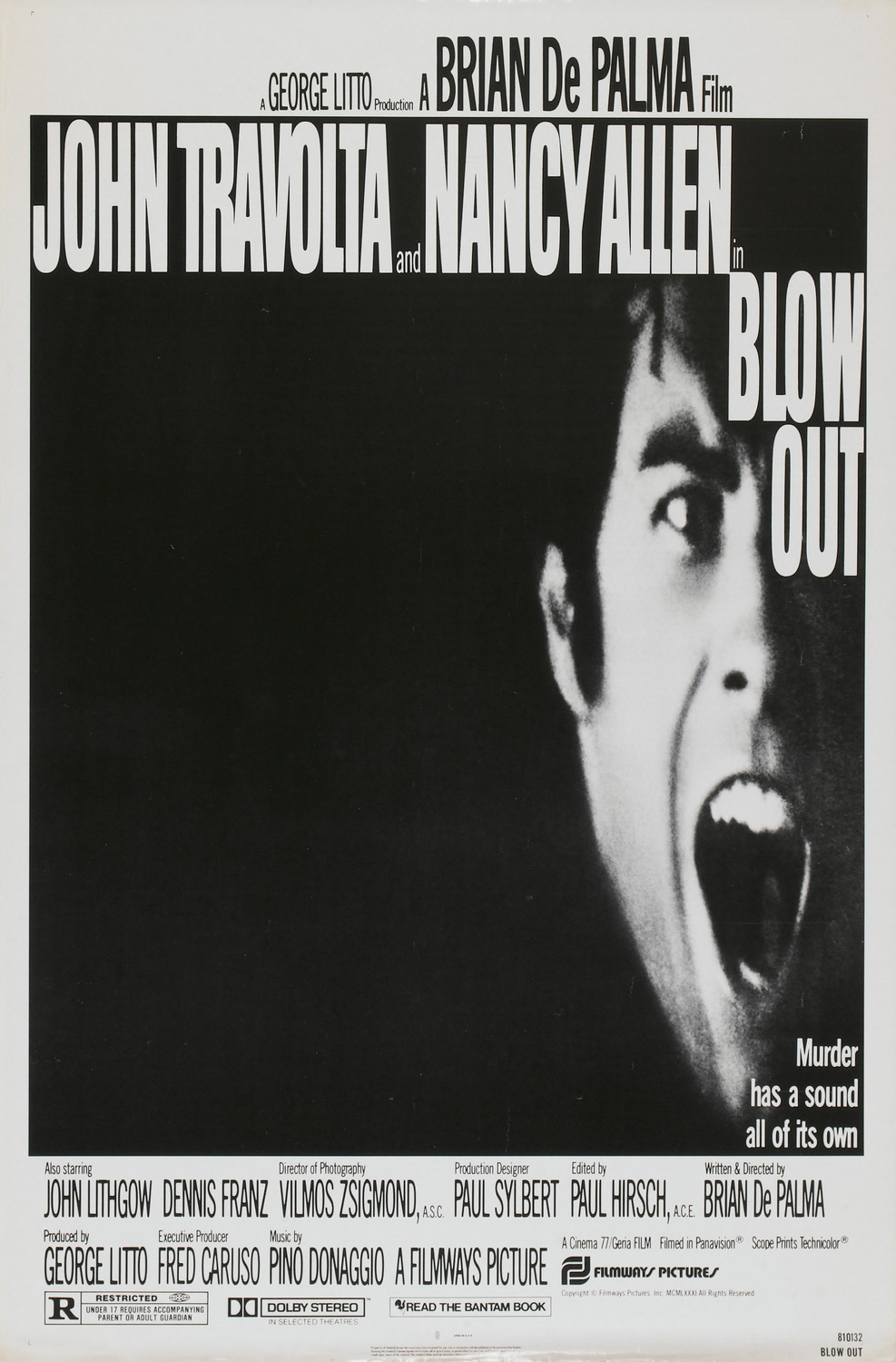
I first remember watching the trailer for Brian De Palma’s “Blow Out” years ago before a double feature at New Beverly Cinema. While I don’t remember which double feature I was seeing that evening, I do remember the trailer itself and in becoming excited about checking out this underappreciated De Palma classic. Roger Ebert gave it four out of four stars and proclaimed it to be one of those “hidden treasures” at your local video store, and Quentin Tarantino, who bought the building New Beverly Cinema is housed in, has declared this to be one of three motion pictures he would love to take with him to a deserted island.

That little needle bouncing up when a certain sound is detected instantly reminded me of when I recorded my favorite records to audio tape when I was a boy. You had to make sure the levels did not go into the red area as the sound could become distorted and easily lay waste to your expensive stereo system. But when Jack Terry (played by John Travolta) ends up recording a loud sound no one was ever supposed to hear, and which ended up on the red side of the sound mix, we immediately know this was no mere accident.

I love how this trailer shows Travolta, Nancy Allen and John Lithgow giving the performances of their lives here. Seeing them shows how committed they are to the material, and I love the ever so cold look on Lithgow’s face as he is about to take the life of an innocent victim who is completely unsuspecting  of someone about to strangle them. They way this trailer builds to a fever pitch made me want to check it out sooner rather than later.

“Blow Out” was a box office disappointment when released back in 1981 despite positive reviews, but thanks to Ebert and Tarantino among others, it has since gained a cult following it richly deserves. I finally got to check it out at the New Beverly Cinema where it played as a double feature with a movie said to have inspired it, Michelangelo Antonioni’s “Blow-Up.” This proved to be quite the cinematic evening for yours truly.

Check out the trailer for “Blow Out” down below.

Underseen Movie: ‘Sarah’s Key’ – A Unique Look at the Effects of the Holocaust

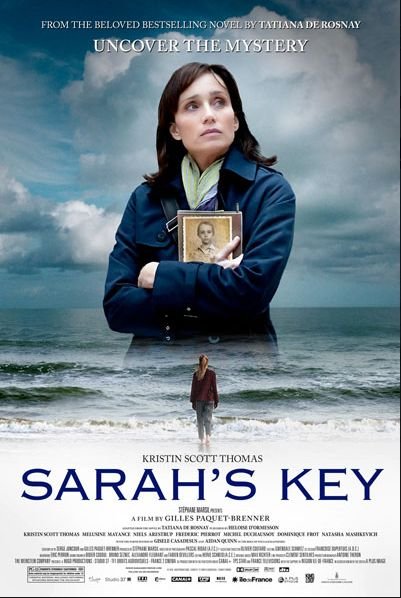
Sarah’s Key” is what some would say is yet another movie dealing with the Holocaust and its impact on us all, but do not be fooled into thinking it is going to be the same old thing. Based on the novel “Her Name Was Sarah” by Tatiana de Rosnay, it ventures into this dark part of history from a different perspective as we watch the French army and bureaucracy aiding the Nazi party as they rounded up Jews and shipped them to Auschwitz; this event was called the Vel’ d’Hiv’ Roundup. As the story moves back and forth in time from 1942 to 2009, American journalist Julia Jarmond (Kristin Scott Thomas) works to solve a decades-old mystery which can no longer remain hidden, and these days we are all sick of things remaining hidden.

In 2009, Julia has moved into an apartment with her French husband and teenage daughter. She had previously written a celebrated article about the Vel’ d’Hiv’ Roundup, and he soon learns her husband inherited the apartment from his grandparents who came into possession of it during the 1940’s. From there, she becomes obsessed in learning about the apartment’s history, and she learns it was the scene of an unspeakable incident. Finding out the truth about this incident, however, proves to be extremely difficult as her family sees it as too damaging to reveal to the world at large.

Julia’s main focus is centered on a young girl named Sarah Starzynski (Mélusine Mayance) who hid her little brother Michel in a closet to keep him from getting rounded up by the Nazis along with everyone else. She makes him promise to stay in the closet until she returns, and she takes with her the only key which can unlock it. But Sarah soon realizes no one will be going back home anytime soon, and she escapes her captors in a desperate attempt to save Michel before it’s too late.

Like Stephen Daldry did with “The Reader,” director Gilles Paquet-Brenner makes the transitions between the past and present feel seamless to where it never feels jarring. He also avoids turning “Sarah’s Key” into a schmaltz fest begging for Oscar consideration which is quite the relief. By getting naturalistic performances from the cast, he creates an atmosphere which feels real and not exaggerated for effect. You end up getting caught up so emotionally in the story and its characters to where you do not feel like you’re watching just any motion picture.

Thomas is an amazing actress who never gets the same acclaim actresses like Meryl Streep or Viola Davis do on a regular basis. Maybe it is because her acting is not as theatrical, but Thomas’ strength is in inhabiting characters to where you never catch her acting. She pulls off a flawless American accent to where she makes the act look effortless, and she speaks fluent French ever so beautifully.

Attention must also be paid to Mélusine Mayance who gives a very believable performance as the young Sarah. Called upon to portray a child going through horribly nightmarish circumstances, Mayance holds her own amongst the adults, and she breaks your heart through her utter commitment to the character she portrays. Throughout, she makes you share Sarah’s desperation in getting to her little brother before someone else does, and she makes you feel her accomplishments and disappointments in every which way.

“Sarah’s Key” is one of those movies I find it hard to find any fault with it. Everything seems to fit together perfectly, and nothing ever appears superfluous to the story. While it treads the well-worn ground of Holocaust movies and of what happened to millions of Jews, it finds an interesting angle by looking at the complicity of the French in this atrocity. It never did get much of a release as it spent little time in theaters near you, and you will probably be hearing about it more about on physical and digital media. Here is hoping that it finds a bigger audience than the one it has already gotten to date.

* * * * out of * * * *

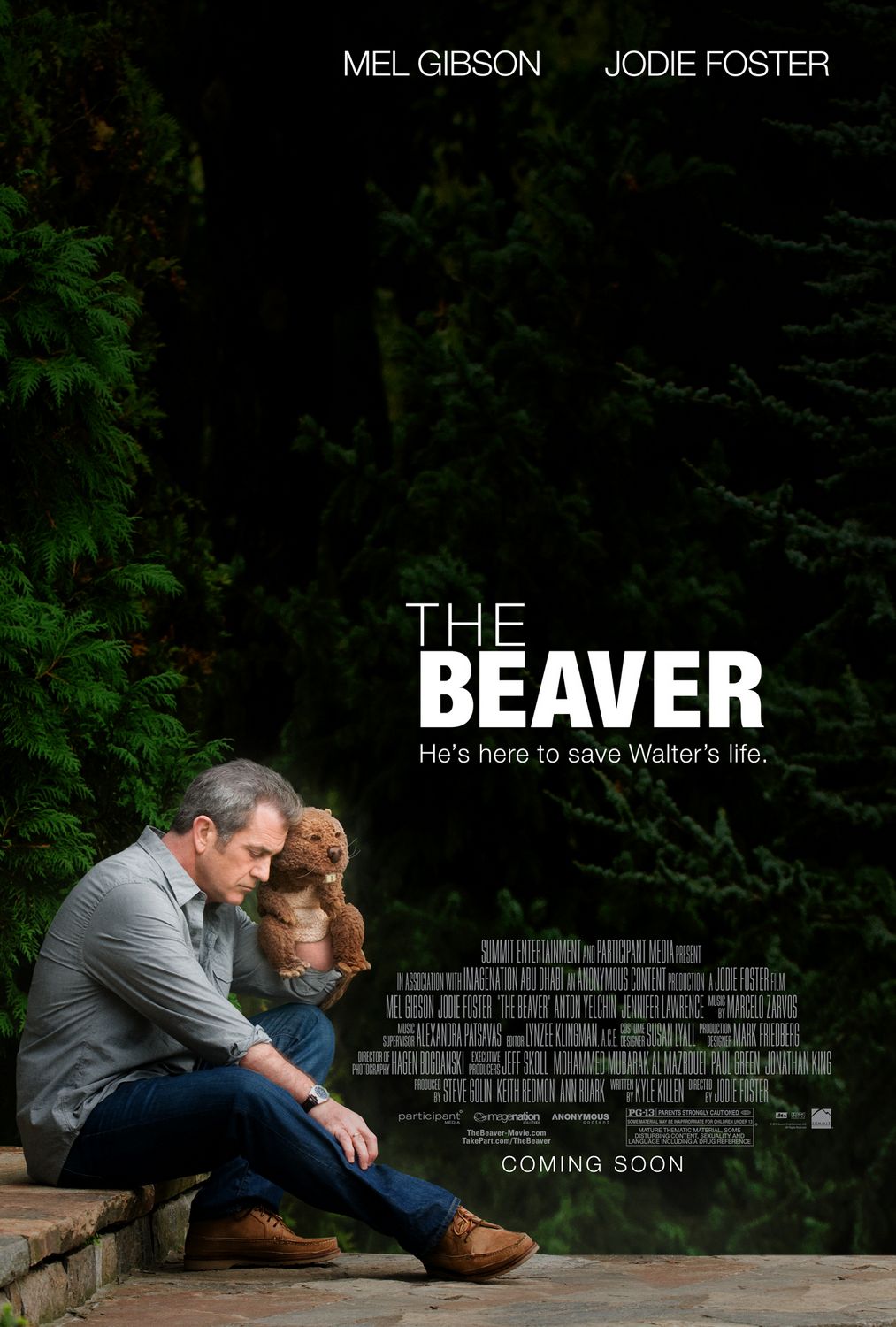
Underseen Movie: ‘The Beaver’ – A Movie Which Deals Effectively with Depression

The Beaver” was Jodie Foster’s first feature film directorial effort since “Home for The Holidays” and it starts off with Mel Gibson as Walter Black laying on an inflatable cushion in his pool, looking lifeless as if any direction he’s had in life has been rendered completely non-existent. We quickly learn he is the CEO of a toy company, has a beautiful wife and two sons, and that he is severely depressed. We are meeting him at the point where he has been in this depressive state for quite some time, and it has gotten to where his wife Meredith (played by Foster) doesn’t want him living at home anymore, and his kids don’t know what to make of him.

After a failed suicide attempt, Walter is brought back to the land of the living through a hand puppet of a beaver which develops a life of its own after he puts it on his hand. With a Michael Caine cockney-like accent, the beaver tells him he is going to save Walter’s life. And sure enough, his life gets better very quickly as the beaver begins doing all the talking for him both at home and at work. But as time goes on, this beaver threatens to make Walter hit rock bottom in a way he may never be able to recover from.

“The Beaver” is a black comedy which gets blacker as it rolls along. The trailers made it look like a light affair, but this is most certainly not the case. It does have its funny moments, but it is really a serious examination of depression. This is an important issue because it is not something you can just simply get over regardless of what others will tell you. Depression can seriously debilitate you and affect those who love you the most, but not many fully understand this. The idea that you must go through life and take the punches which come with it can only go so far. Sooner or later, we find we can only take so much until we break. While some may have a great smile on their faces, they may be fighting a battle you know nothing about.

As Walter Black, Gibson reminds us of what a great actor he can be when given the right material. Aside from his work as a director, which really has been truly remarkable, it is easy to forget what a great presence he can be onscreen. Gibson captures Walter’s emotional downfall in a way few actors could, and he makes you care about him even as he heads further downhill emotionally. It is a brave performance that doesn’t hold anything back, and you have to admire the lengths Gibson goes here.

Foster remains an excellent actress as always, and seeing her acting alongside Gibson is a treat as they were so much fun to watch together in “Maverick.” She makes Meredith Black a strong-willed person who holds it together despite Walter’s behavior. It all makes Foster’s work even more fascinating to watch, and you sympathize with her plight throughout.

It is a real shame it took Foster 16 years to direct another movie. Her past efforts of “Little Man Tate” and “Home for The Holidays” showed a great eye for characters isolated from others because of who they are and what they are going through. Her work on “The Beaver” is especially commendable in that it is not an easy script to bring to the silver screen. Finding the balance between the comedy and drama makes this challenging even for the best directors working today. But Foster manages to pull it off like the professional she is, and she shows an incredible sensitivity to the subject of depression.

For me, “The Beaver” is one of the best films made about mental illness. The screenplay by Kyle Killen topped the 2008 Black List, a ranking of the best unproduced screenplays. I can see why as it features wonderful characters which are thankfully down to earth, and the dialogue feels fresh and does not contain an abundance of worn out clichés. Many will find the premise of a man working through mental illness with the aid of a hand puppet to be far-fetched and unbelievable. But this screenplay really takes some chances, and I honestly did not find any of what I saw as being beyond belief.

Besides, is it really that far-fetched for an adult to play around with puppets or stuffed animals? Look at these names: Jim Henson, Frank Oz and Ben Kenber. All these men have become well known for performing with puppets to the joy of many. Yes, I did put my name up there because I still have a love for stuffed animals which I used to make home movies with and sometimes bring to my day job. People may think this is strange, but I like how it sets me apart from the rest of the crowd.

In addition, there are other wonderful performances to be found here. The late Anton Yelchin, who did unforgettable work in the “Star Trek” movies, “Terminator Salvation,”  and “Green Room” among others. He is excellent as the Black’s oldest son, Porter. Throughout, he is terrified of becoming like his dad and implores his mother to divorce him. Yelchin makes what could have been a major brat into a fascinating individual whose endeavors in doing homework for others have long since become quite a profitable venture for him. His relationship with his father never feels contrived, so when we get to the end of the film, the emotions in their climatic meeting feels truly earned.

I also really liked Jennifer Lawrence as Norah, the popular valedictorian cheerleader who hires Porter to write her graduation speech. When this film was released, she was still riding high on the acclaim she received for “Winter’s Bone.” Norah is anything but a cliché, and she surprises us as much as she does Porter with a strong intelligence and a completely welcome lack of snobbery for a popular high school student. At the same time, she also hides a pain deep inside which defines her state of mind, and this presents her with something to overcome. Lawrence is great to watch here, and it was a sign that she had more great performances to give us which we eventually got in films like “Silver Linings Playbook.”

Congrats also goes out to young Riley Thomas Stewart who portrays the Black’s youngest son, Henry. It’s a remarkable performance for an 8- or 9-year-old as he has to convey both the confusion and effect his dad’s depression has on him. The scenes he shares with Foster and especially Gibson are wonderfully realized, and it helps that he has a former child actor directing him who knows how to coax a performance out of such a young human being.

Watching “The Beaver” reminded me of another great movie which had a big effect on me, “Lars And The Real Girl.” Both films featured characters whose pasts damaged them emotionally, and who seek release through unorthodox methods. With Gibson, it’s a hand puppet, and with Ryan Gosling it’s a sex doll he treats as his new girlfriend. Each takes what seems like a completely implausible story and surprises us by making it more than some average comedy which just dumbs everything down.

If you have not already seen “The Beaver,” I do hope you give it a look. Regardless of how you feel about Gibson these days, it’s an incredibly well made movie that takes a great script and visualizes it with respect and empathy to the subject of depression. While it was declared a “flop” after its first week at the box office, this should not define its worth. This film may not be for everyone, but those in the mood for something cinematically unique should find much to admire here. More importantly, I applaud any motion picture which takes the subject of depression seriously. It is not a mental condition that anyone can simply get over.

By the way, I love how Foster got Teri Gross of “Fresh Air” fame to do a cameo. I always wondered what her studio at WHYY in Philadelphia looked like, and we get a brief look at it here. Now how often does that happen?

* * * * out of * * * *

‘Public Enemies’ – Michael Mann and Johnny Depp Take on John Dillinger

“The reason you caught me, Will, is we’re just alike! You want the scent? Smell yourself!”

-Dr. Hannibal Lecktor (Brian Cox) speaking to Will Graham (William Peterson) from a scene in Michael Mann’s “Manhunter.”

After all these years, Michael Mann still has a strong fascination with criminal masterminds and those who spend their careers chasing them down. Film after film, he has spent his time delving into how the “good guys” and “bad guys” feed off of one another, and if they could not exist without one another. “Public Enemies” reminded me a lot of “Heat” in that respect, and it shares a lot of similarities as it looks at the famous John Dillinger, played here by Johnny Depp, and at the man sent to catch him, Melvin Purvis. It’s not as great a film as “Heat” was, but it is still a masterful piece of filmmaking and the kind we have come to expect from director Michael Mann.

“Public Enemies” starts with Dillinger and his friends breaking out of a maximum-security prison, something which seemed easy to do back in 1933. It turns out Dillinger is actually quite the celebrity and can find safe havens in one town or another. To many he is seen as a hero, and to others he is nothing more than a criminal. But as Dillinger continues to rob more banks, the FBI and J. Edgar Hoover (played by Billy Crudup) become increasingly persistent in bringing him to justice. In the process, Hoover turns to Melvin Purvis (played by Christian Bale) who subsequently leads a manhunt to take down Dillinger, and in the process changes from the person he thought he could be to the one he is chasing after.

One thing which has not changed about Mann’s movies is he still knows how to stage one hell of a gunfight. Back in 1995, he gave us one of the greatest in Downtown Los Angeles with “Heat,” and he has lived in the shadow of that brilliantly staged moment ever since. Sure, he has choreographed gun battles every bit as effectively brutal like in “Collateral” and his film version of “Miami Vice.” In his films, you don’t just watch guns go off, you feel them going off. When a bullet hits a body, characters don’t just fall down like in an old western. Their bodies are forever shattered, and the wounds they carry last long after the end credits have finished. There are a lot of strong action scenes like this throughout “Public Enemies,” and each one is equally hair raising. While “Heat” may remain his masterpiece, his other works do not pale in comparison necessarily.

Having Johnny Depp cast as Dillinger must have seemed like a no brainer. They appear to share some similar tastes minus the heavy gunfire, given Depp’s previous reputation as a “wild boy:”

“I like baseball, movies, good clothes, fast cars… and you. What else you need to know?”

-Johnny Depp as John Dillinger from “Public Enemies”

Depp remains one of the best actors of his generation, and he has constantly challenged himself to where this particular role is no exception. Dillinger was a criminal celebrity, perhaps one of the first, and Depp effortlessly shows you how Dillinger made this seem possible. With his eyes, Depp can still seduce the most knowledgeable and naïve of women without even having to try too hard. The actor also clearly brings out the joy Dillinger gets out of life, and he also gets at the depth of pain he experiences as those closest to him leave him, cut him loose, or get killed.

As Melvin Purvis, Christian Bale delves into many of the same situations which haunted Bruce Wayne/Batman in “The Dark Knight.” Melvin starts off as a man who is dedicated to the law and follows the rules and regulations to the letter. But after some serious setbacks, Melvin finds he has to use different methods in order to get his man. These methods include acts and people which and who work outside of the law. In the process, he comes to see what he has to become in order to capture Dillinger. But unlike Bruce, Melvin may not be able to live with himself when this is all through. Bale pulls off a really solid accent while playing Melvin, and he has a much more nuanced character to play here than he did in movies like “Terminator Salvation.”

But the one performance I enjoyed most in “Public Enemies” was Marion Cotillard’s who plays Dillinger’s girlfriend, Billie Frechette. Cotillard won the Best Actress Oscar for giving one of the greatest performances of all time in cinematic history in “La Vie En Rose.” She shares great chemistry with Depp throughout, and she is delightful to watch as Billie is ever so quickly drawn into Dillinger’s dangerous world. Billie does sense the trouble which lies ahead, but everything happening is too exciting for her to pass up. Showing both fear and excitement in a film scene without words is easier said than done, and she pulls it off like it’s no big deal.

If there’s anything which takes away from “Public Enemies,” it is that it doesn’t delve as deeply into the characters’ lives as I had hoped it would. If anything, this film would have benefited more from a back story, especially for Dillinger as to why and how he became a bank robber. It was also said that Dillinger was a hero because the banks he robbed ended up freeing things up for those who were economically challenged because of the Great Depression. I would have liked to have seen more of this because Mann may have thought this was clear from the way regular people treat Dillinger, but it doesn’t feel like they have a good enough reason to. Had there been a little more depth to these characters, this could have been as great a movie “Heat.”

Still, “Public Enemies” is fine filmmaking and continues Mann’s theme of looking at how the line between cops and criminals is often blurred and how both are actually one and the same. You could almost call this “Heat” as a period piece. Mann makes you wonder if a criminal can ever find and hang onto a love despite their law-breaking nature, and if the cop can ever lead a normal life outside their career of going after the crook. From William Petersen trying to think like the killer in “Manhunter” to James Caan trying to leave a life outside of crime in “Thief,” it’s a thin line indeed. Perhaps Mann keeps pursuing this theme in hopes that there will be a tomorrow for characters like these regardless of their opposing natures. Maybe he will find the answer in a future motion picture, and hopefully we will not have to wait too much longer for such a cinematic work.

* * * ½ out of * * * *

Paul Williams and Stephen Kessler Discuss ‘Paul Williams Still Alive’ at the Nuart

WRITER’S NOTE: As the opening paragraph indicates, this article was originally written ten years ago.

On June 27, 2012, singer and songwriter Paul Williams along with filmmaker Stephen Kessler appeared at the Nuart Theatre in support of their documentary “Paul Williams Still Alive.” After its conclusion, both men were greeted by a packed audience that had been deeply moved by what they just witnessed. The documentary follows up with Williams years after his enormous success back in the 1970s, and it finds him experiencing happiness and fulfillment in life he didn’t have back then.

Kessler has described making this documentary as “a labor of love,” but Williams quickly pointed out that it didn’t start that way. Their relationship when filming began was an uncomfortable one, but Williams eventually warmed up to Kessler, and their strong friendship proved to be very authentic as they talked with the audience at the Nuart. Kessler even went out of his way to say the following:

“I’ve never said this in front of people before, but you (Williams) were brave to do this movie.”

No one in the audience disagreed with this assessment. Williams described this as a “warts and all documentary” that shows him at his best and worst. One particular sequence, when he was co-hosting Merv Griffin’s talk show while on drugs, was one he originally wanted to be cut out as he was terribly afraid of what his kids would think about him. His son Cole, however, was in the audience, and when asked about what he thought of the documentary, he said, “It’s great dad!”

Kessler made it clear he had no intention of putting himself in this documentary, and he even said he “can’t stand movies that do that;” directors becoming the subject of their own films. His increased participation in “Paul Williams Still Alive,” however, helped to illuminate the songwriter much more than it would have without him. While Kessler keeps going back to the past, Williams looks to the future instead.

When Williams was asked when he reached his bottom as an alcoholic, he responded it happened when he started looking out the window for what he called the “tree police.” He even joked and said, “You know you’re an alcoholic when you’ve misplaced an entire decade.” What made him say this was the embarrassing truth that he forgot for a time that Ronald Reagan was once President of the United States.

Since becoming sober, Williams says he now knows what it feels like to be around people he feels safe with. He has also entered into what he calls his “Paulie Lama” period of life as he goes out of his way to pull people off of bar stools, and that he would be thrilled to work at the Betty Ford Center if asked.

1992’s “A Muppet Christmas Carol” marked the first project Williams ever did sober, and he remembered going into it feeling very scared. But after he finished working on it, he found he was able to approach his work in a more productive way:

“Success for me has to be about authenticity and honesty. Today I have to trust that I am enough. Never again will I ever let tension and my ego keep me from writing songs.” The emcee of the Nuart told us not to ask either of the two how much “Paul Williams Still Alive” cost to make or when it will come out on DVD. This is because he wants to see it again with as a big an audience in the midst of all these summer blockbusters being thrust at us. It is certainly one of the sweetest documentaries you will ever see, and to see Williams today is to see a man very comfortable with who he is and who does not need another cup of fame to feel better about himself.

Underseen Movie: ‘Paul Williams Still Alive’

Going into this documentary, I thought it would be one of those great comeback stories of a fallen celebrity who gets their dormant career resurrected through the help of one die-hard fan. But while filmmaker Stephen Kessler seems intent on reminding the world of what this gifted songwriter has given us, “Paul Williams Still Alive” is not that kind of documentary. Instead, it’s a story of a man whose life was run into the ground by a strong addiction to fame and drugs, and of his journey back to a place of happiness and fulfillment he is ever so thankful for today. This is not an artist looking to make a comeback, but of one who appreciates what they have to where not much more is needed than that. As a result, this makes “Paul Williams Still Alive” one of the sweetest and most life affirming documentaries I have seen in some time.

Kessler is best known for having directed many popular television commercials and “Vegas Vacation,” a sequel which rated high in test screenings, but still turned out to be a dud. Kessler starts off this documentary recounting how he grew up being such a big fan of Williams and of how the songwriter seemed to be everywhere in the 1970s. Williams appeared on “The Muppet Show,” made numerous appearances on television shows such as “Beretta,” and he became an incredibly popular guest on “The Tonight Show” with Johnny Carson. On top of that, he composed the music for “The Muppet Movie,” the cult classic “Phantom of The Paradise,” and eventually won an Oscar along with Barbara Streisand for the song “Evergreen.”

Somewhere along the line, Kessler assumed Williams had passed away at far too young an age. But while ordering one of Williams’ albums on the internet one night, he discovers to his surprise that the singer and songwriter is still very much alive and continues to create and perform music throughout the world. From there, Kessler makes it his mission to make a movie about Williams in an effort to let the world today know how much of an impact his music has had on all of us and still does to this day. Remember, he was a featured artist on Daft Punk’s “Random Access Memories.”

Kessler started filming Williams when the songwriter visited Winnipeg, Canada where a fan convention for “Phantom of The Paradise” was taking place. This collaboration gets off to a rocky start as Williams shows a sharp reluctance to being filmed. There’s even a moment where he is singing in a San Francisco nightclub and gets the house manager to dim the lights so Kessler can’t get a good view of him onstage. As for Kessler, his solution to this problem provides this documentary with one of its funniest moments.

In some ways William’s reluctance is refreshing because, in a time where we are constantly flooded with reality shows with people becoming famous just for the sake of being famous, he is not keen about being part of this. In fact, it doesn’t take long to see he is not the least bit interested in becoming famous again like he once was as he has described the pursuit of fame as being in his own words, “pathetic.” As this documentary goes on, the narrative focuses much more on the person he is today, a much healthier human being who is humble and thankful for what he has.

“Paul Williams Still Alive” does give us a brief biography of the songwriter and of how he grew up with an alcoholic father who made him sing “Danny Boy,” and that his being so short ended up ostracizing him from his classmates at school. He comes to blame his lack of height on hormones being injected into him early in life. This was done to make him taller, but it ended up having the exact opposite effect. After moving out to Los Angeles to become a film actor, he ended up finding success as a songwriter which eventually turned him into a huge celebrity. The attention it gave him was something he came to live for, and it would eventually become an even bigger addiction for him than drugs.

As time goes on, Williams eventually warms up to Kessler, and this becomes clear during a trip to the Philippines. Williams even encourages Kessler to join him in front of the camera instead of just staying behind it, and that is saying a lot. Now this might have proven disastrous as “Paul Williams Still Alive” could have ended up becoming more about the filmmaker than his subject, but Kessler’s increased involvement proves to be a major plus. The relationship between these two men helps to define Williams as he is today.

While Kessler constantly looks to the past, Williams only wants to look forward. The one scene which makes this clear is when Williams watches himself guest hosting Merv Griffin’s talk show. Clearly high on drugs and making an absolute fool of himself, the realization of what he was doing back then forces him to stop watching the rest of the footage. The person Williams was back then is so different from who he is today, and the pain which crosses his face over his embarrassing past deeds is impossible to hide.

Near the end, Williams gives Kessler a whole bunch of videotapes he has in storage, having no idea of what’s on them. One particularly disturbing video has Williams celebrating Christmas with his family, and then later going upstairs to film himself getting high. Watching this illustrates just how far down the songwriter’s drug addiction took him and, looking at him today, it’s almost like we’re looking at a completely different person.

It should be clear by now that Kessler is not out to embarrass Williams in the slightest. Instead, his intention is to bring the songwriter back to the world’s attention, and this is a noble intention indeed. Williams is the same man who wrote the song “Rainbow Connection” for Kermit the Frog, “We’ve Only Just Begun” for the Carpenters, and “An Old-Fashioned Song” and “Rainy Days and Mondays” for himself. Heck, he even did the music for “Emmett Otter’s Jug Band Christmas,” one of my favorite holiday specials ever.

Today, Williams continues to make beautiful music which deals with themes like love, loneliness and alienation, and he definitely deserves to be recognized for the countless music contributions he has given us. Maybe not everyone has forgotten who he is, but we do need to be reminded of what he has created.

Now some have accused “Paul Williams Still Alive” of not including more of his music, but this documentary is not intended to be a career retrospective. In actuality, it becomes more about how Williams is a better, not to mention a far more interesting, human being today compared to when he was an overindulgent celebrity. He has been clean and sober for over 20 years, and he is even a certified drug and alcohol counselor. Looking back, it seems as though he lives to be a counselor more than he wants to create new music, and that is saying a lot.

With “Paul Williams Still Alive,” Kessler has given us far more than the average showbiz documentary. He has given us an individual worth appreciating who, while having made some serious mistakes in life, has come out of it on the other side a proud and happy person. All of this is all accomplished without Kessler ever trying to be manipulative or play at our heartstrings unnecessarily. This is a warts-and-all documentary which doesn’t hide anything, and I came out of it with not just a deep respect for Williams, but also for his healthy perspective on life.

During a time which sees certain celebrities desperately grasping for whatever fame is available to them, here is one who has found the happiness we all mistakenly thought we would get when we became a super star in everyone’s eyes. In the end, “Paul Williams Still Alive” is more about what it means to be happy, and Williams has more than earned the happiness he has today. Like he says, he does not need “another cup of fame” to make him a satisfied man.

* * * * out of * * * *

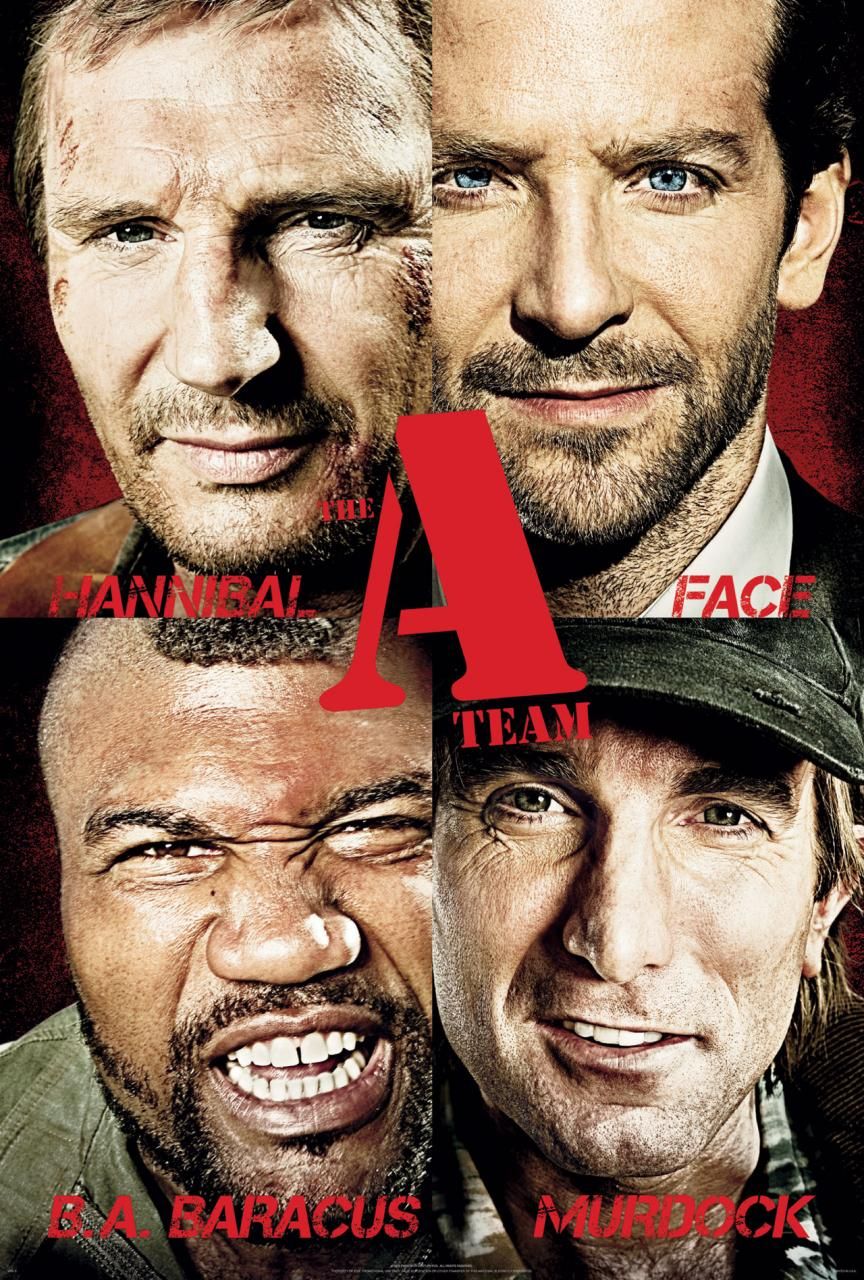
Underseen Movie: ‘The A-Team’ – A Ralph Report Video Vault Selection

The movie version of the 1980s television show “The A-Team” is one of those examples of how, as U2 put it in their song “Numb,” too much is not enough. The plot is razor thin, and the stunts defy all things we see as logically possible. And you know what? I didn’t care because I HAD SUCH A BLAST WATCHING IT!!! Many reviewers have been bemoaning how it was not what it could have been. I, on the other hand, prefer to see it for what it is, a highly entertaining film and the kind we usually expect to watch during the summer season.

After a prologue that shows how this team of Army rangers came together, we get thrust right into the action as we catch up with Hannibal, Faceman, B.A. Baracus, and the consistently insane Murdock as they are about to wrap up their tour of duty in Iraq. But before they can leave, they are given another mission to retrieve U.S. treasury plates that insurgents intend on using to make counterfeit money; the same kind of plates we would love to have in our possession as they would allow us to quit our day jobs. Without going into much detail, the plan goes awry, and they get set up to take the fall for something they are completely innocent of. The rest of the movie has them going on a mission to get the plates back and clear their names.

The director behind this unrestricted mayhem is Joe Carnahan. This is the same filmmaker who began his career with the $7,500 budgeted “Blood, Guts, Bullets and Octane” and later directed one of the best crime thrillers with “Narc.” Not once does he allow us to take the characters or what they are doing at all seriously, and it is clear from the get-go how he wants us to take joy in the utter insanity of everything going on. For those who think this movie could have been more serious and reality-based, you came into it with the wrong expectations.

Just look at the insane things these guys do here. They parachute out of a plane in a tank, and they are forced to steer it by firing the turret. There are other moments that defy simple description, and you just have to watch it without wondering too much over how they pulled this insanity off without a hitch. These are characters who prepare for their missions by doing the impossible, or so it would seem. While Carnahan at times gets caught up in the current trend of action film editing which features quick shots that leaves us a little confused as to what we are watching, he keeps us entertained throughout and even allows us to breathe when we need to. Not every filmmaker allows us to pause for a moment, so this is worth pointing out.

Seeing Liam Neeson here as John “Hannibal” Smith was great fun as it allows him to let loose in a way he doesn’t often. Typically, we see him as a mentor in movies like “Star Wars: The Phantom Menace” and “Batman Begins,” but as Hannibal, he doesn’t have to be his old serious self. Once you see him pop a cigar into his mouth and light it up, you can see why Neeson was eager to join this project. The “Taken” actor wanted to have fun and lighten up for a change.

Bradley Cooper plays Templeton “Faceman” Peck, the Casanova of the group who, despite his womanizing ways, still has eyes for Charisa Sosa (Jessica Biel). Cooper has come a long way from beating the crap out of Vince Vaughn in “Wedding Crashers,” and he manages to convince us of his various intentions and has us believing this despite all the craziness he keeps getting caught up in.

The part of B.A. “Bad Attitude” Baracus is played by Quinton “Rampage” Jackson, former UFC Light-Heavyweight champion. I kept thinking that his nickname of “Rampage” won him the part. Taking on a part made famous by Mr. T could not have been an enviable position to be in, but Jackson pulls it off. Is this role a stretch for him? It doesn’t matter because he has us believing in Baracus, and that’s even when this character says he has become a pacifist. We all know that can’t last, and Jackson does surprisingly good work here and without the use of gold chains. Not one is he ever a fool we have to pity.

But the real scene stealer of “The A-Team” is Sharlto Copley who takes on the role of H.M. “Howling Mad” Murdock. It is only when he slips back into his South African accent that you remember he was in one of the very best movies of 2009, “District 9.” Having said that, he actually pulls off a compelling southern accent here, showing us he is a far more talented actor than we first realized. Watching him go utterly nuts, be it jump-starting a car with a defibrillator or singing a Dead or Alive song while hanging onto a rotor blade of a helicopter had me in stitches.

Jessica Biel is on board as Faceman’s eternal love interest Charisa Sosa, and she makes for a convincing badass female soldier here. It’s in some ways the same kind of role she played in “Blade Trinity,” and it is nice to see her doing it again in an infinitely better movie.

For those of you wondering if the show’s famous theme song is at all featured, it is. While some say it is not in this movie enough, they should be happy it was included. The score was composed by Alan Silvestri, famous for writing the music for such classic movies like “Back to The Future” and “The Abyss.” Listening to his work here, it is great he still has it in him to create such rousing action scores to keep our adrenaline up and running.

“The A-Team” also proves what I have been saying about how the US military is treated in movies today; they are not anti-troop in the slightest, they are anti-mercenary. Whether it is “Rambo” or “The Hurt Locker” or “Green Zone” we are dealing with, troops are shown to be a dedicated bunch to their country. The main villains are mercenaries who don’t even try to hide the fact they make more in one day than an American soldier makes in a year. Now tell me, who do you think is more patriotic?

You could complain about how absurd this movie version of “The A-Team” is, but Carnahan plays on what made the show so appealing back in the 1980s, and he pays homage to it without making a simple carbon copy of what many of us grew up on. Every once in a while, we need a movie that is brainless fun and does not require us to overthink everything going on. “The A-Team” succeeds on this front, and I enjoyed it much more than I thought it would.

Oh, by the way, be sure to stay through the end credits. You’ll see why. Like the average Marvel movie, it has some surprises up its sleeve.

Like Eddie Pence of “The Ralph Report,” I very much appreciated this cinematic adaptation of this 1980s television classic. What a shame it is that this movie never got a sequel.

* * * ½ out of * * * *

Underseen Movie: ‘The Men Who Stare at Goats’ – A Highly Unusual War Movie

WRITER’S NOTE: This review was written in 2009.

“More of this is true than you would believe.”

You know something? It’s really nice to see a movie use a phrase other than “based on a true story” or “inspired by true events.” Those descriptions have all but lost their meaning because even if what we are seeing actually did happen, it has all been watered down into a formulaic feel-good movie we have seen over and over again to where we want to gag. Even worse, we keep getting suckered into seeing them even when we should know better. Either that, or there’s nothing better to watch. But this year has proven to be great as filmmakers have worked hard to subvert those worthless phrases with movies like “The Informant.” That Steven Soderbergh film made it very clear how it was based on actual events but that certain parts had been fictionalized, and it ended by saying:

“So there!”

Now we have “The Men Who Stare at Goats” which opens with the sentence at the top of this review. The story behind this one is so bizarre to where it’s almost impossible to believe any of what we are watching could ever have happened. All the same, it appears a good portion of these happenings did take place, and it makes for what is truly one of the more unique war movies I have seen in a while. The film is based on a non-fiction book by Jon Ronson which looked at how US military forces used psychic powers against their enemies. They look at New Age concepts as well as paranormal activities to achieve these goals, and of how they worked to use these methods to their advantage. The movie takes place during the Iraq war, but not to worry, the filmmakers is not trying to shove any politics down your throat (not consciously anyway).

Ronson serves as the inspiration for Bob Wilton, an investigative journalist played by Ewan McGregor. Bob’s wife has just left him for his editor and, of course, he is depressed and decides he needs to do something more important with his life in the hopes he can win her back. As a result, he travels to Kuwait to do firsthand reporting of the Iraq War, with hopes of finding someone who can get him across the border. Bob ends up having a chance meeting with a Special Forces operator named Lyn Cassady (George Clooney) who was in the military, but now runs a dance studio. Lyn reveals to Bob he was part of an American unit that was trained to be psychic spies or, as he eventually calls them, “Jedi warriors.” From there, Bob learns everything about this special unit which sounds like something out of a science fiction novel.

I love the irony of all the talk about “Jedi warriors” here, especially since McGregor played one in the “Star Wars” prequels.

Anyway, “The Men Who Stare at Goats” is really a cross between a war movie and a road movie as Lyn and Bob traverse the sandy dunes of the Middle East to where not everything is as it appears. This film is also a mix of comedy and drama the same way “Three Kings,” another war movie which starred Clooney, was. While the tone is largely uneven, especially towards the end, this was definitely an inspired film which kept me entertained throughout and proved to be quite unpredictable.

McGregor is playing the main character here, but let’s face it, Clooney steals the show right out from under his feet. His performance as Lyn Cassady is truly one of his most surprising and inspired. Despite how ridiculous Lyn may seem, Clooney plays him straight and never appears to be self-conscious. Seeing Clooney trying to burst clouds with his mind, and trying to reach into his enemy’s mind by staring right at them has the actor going through emotions ranging from serious to funny to downright tragic. Having gone from playing dramatic roles in movies like “Syriana” to “Michael Clayton,” Clooney once again shows he is really good at comedy and never has to strive hard for a laugh.

I don’t want to take away from McGregor though, who pulls off a convincing American accent. In many ways, his role is more of a reactionary one as he is subjected to conditions one is never fully prepared for. Bob is bewildered at what Lyn is telling him, and yet he still wants to journey further and further into Lyn’s head. I also have to give McGregor a lot of credit because he could have made it look like he was consciously aware of all those “Star Wars” references, but he never did.

But one of the great delights is watching Jeff Bridges channel his inner-dude-ness from “The Big Lebowski” into his role of Bill Django, a military leader who, after being wounded in Vietnam, has a New Age vision of combat he wants to develop. This leads him to study concepts which he incorporates into a special unit called the New Earth Army. Bill becomes a teacher of using non-lethal techniques to gain advantage over the enemy, and his training techniques are unorthodox to say the least. Bridges plays the character broadly, but not too broadly. As funny as Bridges is, he infuses Django with a disappointment which threatens to render him useless to those around him, and with a deep sense of fear and tragedy as his techniques are misused or taken advantage of by those who seek to profit from them.

Having been in London doing tons of theater, it seemed like it would require a herculean effort to bring Kevin Spacey back to the big screen. Seeing him here is a kick as he plays the real antagonist of the film, Larry Hooper. Larry is basically the Darth Vader to Bill’s Obi Wan Kenobi and Lyn’s Luke Skywalker as he takes the non-lethal methods of the New Earth Army and ends up using them for more lethal purposes. Larry ends up doing this not so much out of greed as he does resentment since Django does not consider him in the same light as Lyn. His actions bring about the downfall of the New Earth Army, and he turns all these abilities they developed into something far more insidious. From there, you will see why the movie and the book it is based on has the title it does.

Spacey has great fun as he channels the inner smugness which has enveloped Larry over time. While his role is a little more serious than the others, he still has great moments of comedy which remind us of what a talented actor he is as he balances out the serious and comedic aspects of Larry without tilting too much in one direction.

“The Men Who Stare at Goats” was directed by Grant Heslov, Clooney’s business partner on many films. He has his work cut out for him here as he must find a balance between the humorous and dramatic aspects of the story. Granted, Heslov doesn’t always succeed but he creates a most unusual war movie, and it is all the more entertaining as a result. Even more telling is the way he portrays the Iraqi people in certain scenes. They are not shown as gun toting terrorists, and he captures the look of their helplessness in having to deal with a military occupation they did not ask for.

Like I said, there’s no serious politicizing of the Iraq war in this movie, so don’t feel like you are walking into some sort of trap. Like “The Hurt Locker,” it merely focuses on what those Americans in Iraq were doing in the midst of the chaos, albeit in a more comical way. “The Men Who Stare at Goats” seems almost far too bizarre to be real, but a part of you just might want it to be real. One thing’s for sure, you will never look at “Barney and Friends” in the same way ever again, assuming you ever watched it in the first place (c’mon! Don’t deny it!).

* * * ½ out of * * * *