WRITER’S NOTE: This interview took place back in 2015.
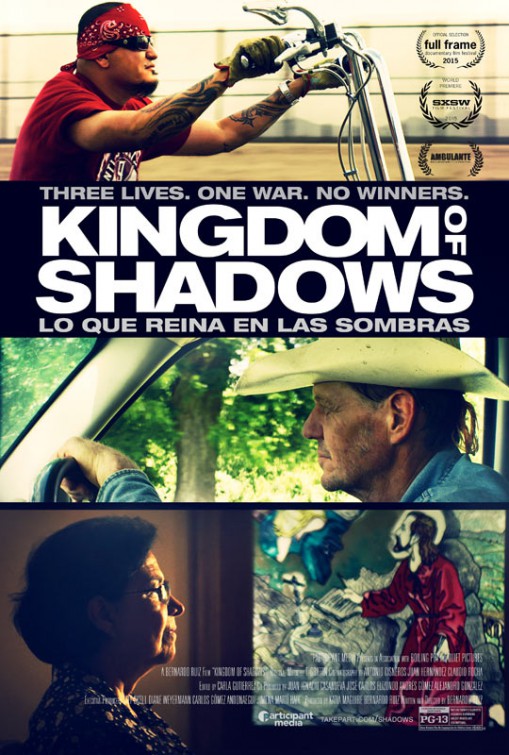
The U.S.-Mexico drug war is one many of us watch from a distance, but the documentary “Kingdom of Shadows” forces you to look at the war more closely than usual as it puts a human face on the damage left in its path. Director Bernardo Ruiz observes the ongoing conflict through the perspectives of three individuals: activist nun Sister Consuelo Morales who prods government officials to take action against the drug cartels who have kidnapped many people, Texas rancher and former drug smuggler Don Henry Ford Jr. who offers a descriptive context for the evolution of drug trafficking, and undercover agent turned Homeland Security officer Oscar Hagelsieb who offers a unique perspective on America’s role in the drug war. The majority of what we see takes place in Monterrey, a devastated and violence scarred town in Mexico that Oscar felt less safe to be in than when he was a soldier in the Middle East.
Watching “Kingdom of Shadows” is deeply moving and unsettling as we see how vicious the war on drugs has become, and it makes the intense thriller “Sicario” feel all the more real and unnerving in retrospect. Bernardo takes a real close look at the cost of this war from both the U.S. and Mexico sides, and he gives us an unflinching look at the human rights crisis it has generated and which only recently made international headlines.
I was among a group of reporters who got to sit in on an interview with Bernardo Ruiz and Oscar Hagelsieb while they were in Los Angeles to promote “Kingdom of Shadows.” Bernardo also directed the documentary “Reportero” which chronicled a veteran reporter and his colleagues at a weekly newspaper challenging drug cartels and corrupt local officials during an unprecedented wave of violence against journalists in Mexico. Oscar’s life began in a drug infested neighborhood where he was raised by undocumented parents, and despite having been an undercover officer for several years, he explained why he was more than willing to show his face in this documentary.
Bernardo talked about the kind of resistance and challenges he faced in making “Kingdom of Shadows,” and he explained why he introduced Oscar the way he did. Oscar was asked how he manages not to take his work home with him, and he explained why the legalization of marijuana will cause the drug war to become even more violent.
Please check out the interview below, and you can also check out the trailer as well. “Kingdom of Shadows” is now available to own and rent on DVD, Blu-ray and Digital.
The following review was written by Ultimate Rabbit correspondent, Tony Farinella.
For those of you who keep up with my reviews on this website, you are familiar with my feelings on most superhero films. It is not my favorite genre, but I’m always willing to give it a try and hope for the best. It hasn’t happened in a while, which is why I was so pleased to be completely enamored with “Blue Beetle.” I went into the film knowing absolutely nothing about it, and it ended up being one of the more enjoyable viewing experiences I’ve had this year. When you sit down to watch a movie, you truly never know what is going to transpire on screen. It’s the beauty of cinema.
Prior to seeing “Blue Beetle,” I had never even heard of this character in any shape or form. After watching this movie, I hope to see more of this character, especially if he’s played by the uber-talented Xolo Maridueña, who is terrific on “Cobra Kai.” However, after the low box office numbers, I wonder if it’s a realistic expectation.
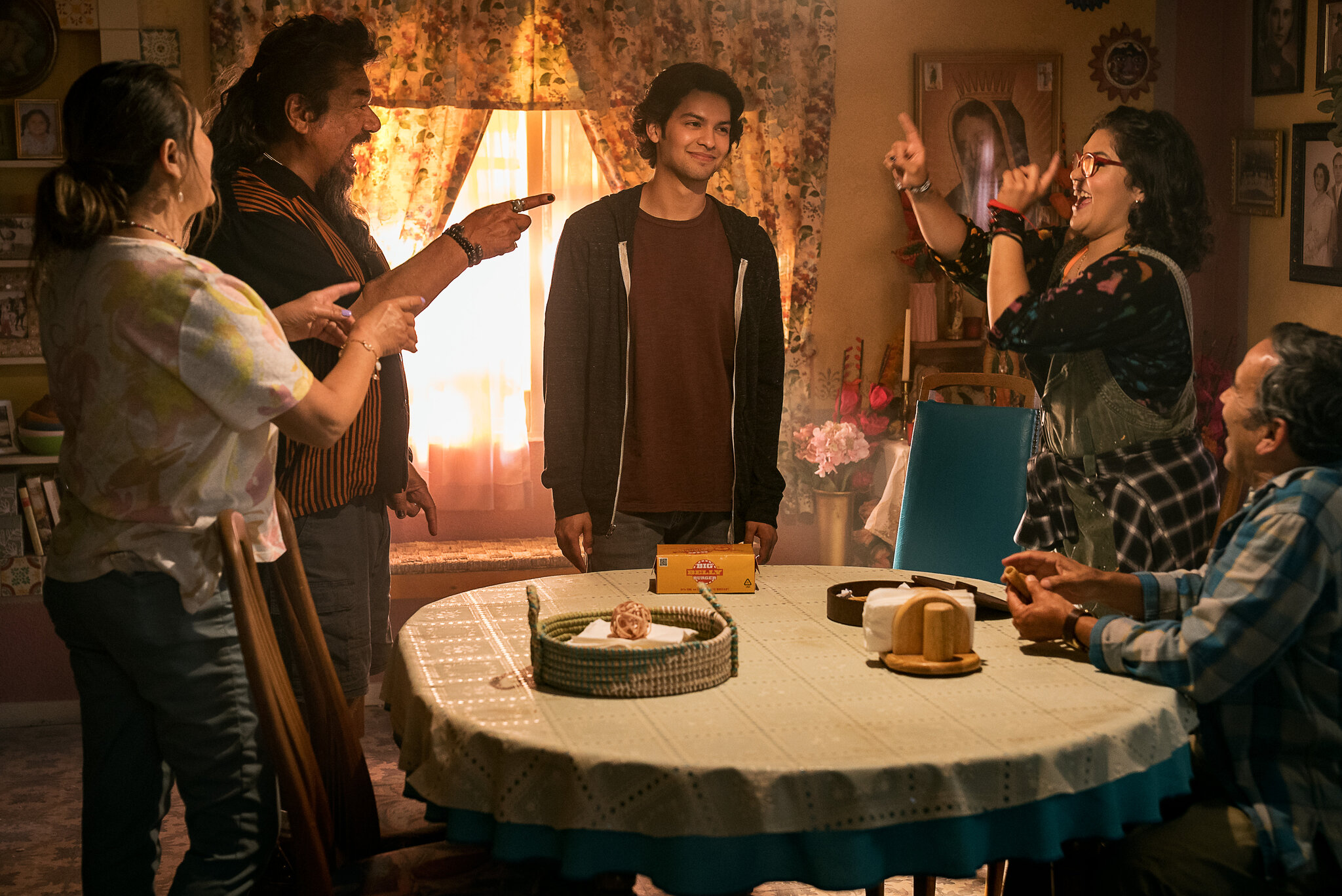
Maridueña stars as Jaime Reyes, a recent college graduate with a degree in pre-law, who returns home to Palmera City to discover a plethora of problems for his family. They are struggling to keep their heads above water as the father had a heart attack, recently lost his job, and they are about to lose their family home. However, he believes if they stick together, they can find a way to make it work.
Family is at the heart of “Blue Beetle,” and the film has a big old heart attached to it which I absolutely adored. This is a family of fun, eccentric and entertaining characters. You have the wise-cracking sister, Milagro, played wonderfully by Belissa Escobedo. You have the tough, no-nonsense Nana Reyes played by Adriana Barraza. There is also the pot-smoking conspiracy theorist Uncle Rudy played by George Lopez. All of these characters are unique and fun in their own way. They feel like a real family as the chemistry between all of the characters on screen is off-the-charts.
When Jaime discovers that jobs are hard to come by after college, he gets one with his sister working for the CEO of Kord Industries, Victoria Kord (Susan Sarandon), at their mansion. After Jaime and Milagro end up losing their jobs when they are caught eavesdropping on a conversation between Victoria and her niece, Jenny (Bruna Marquezine), Jaime must figure out what to do next. Jenny was impressed by the way Jaime stuck up for her and might have a job opportunity for him. When he goes to meet up with her, she hands him the Scarab, an artifact which holds special powers. She tells him not to open it, but when his family opens it for him, he soon finds out that his life will never be the same again.
With this Scarab, it chooses you, you don’t choose it. It has chosen Jaime, and he has to figure out how to handle the responsibilities which come with it. He’s also dealing with a nosey family, a newly developing crush on Jenny, and having to fight off Victoria who wants to have the Scarab to create a series of One-Man Army Corps. He also learns that Jenny’s father was Ted Kord, a vigilante named Blue Beetle who left the family company because they were more interested in creating mayhem instead of working for the greater good. Victoria is also not pleased she was overlooked by her father in favor of her brother when it came time to take over Kord Industries.
“Blue Beetle” is a film I was able to follow with relative ease, which is a huge accomplishment considering I didn’t know anything about it or the character as previously mentioned. I do believe a comic book movie should be able to stand on its own two feet for first-time viewers and long-time fans. This film does this for first-time viewers, and I imagine fans of the “Blue Beetle” comic will not be disappointed. I was also quite pleased to see the film really lean into the ethnic dynamics of the family. It’s rare to see a film which is almost entirely composed of Latino actors. Even though I’m an Italian-American, I felt as though the film was accessible to everyone. Although, I imagine you will enjoy it even more if you are Latino as some of the jokes and TV shows they reference will be more in your wheelhouse.
This film is about 15-20 minutes too long, but it is never boring or uninteresting. Some of the scenes involving lasers, blades and various high-flying actions can be a little repetitive, but I thought the special effects looked terrific and they were still fun to watch. This is one of the best superhero movies I’ve seen in a while. As a matter of fact, it’s my favorite superhero movie I’ve seen since 2022’s “The Batman.” It has so much going for it: the cast, the love story, the backstory, the acting, and the fact it wears its big heart on its sleeve.
I like when my superhero movies are grounded in reality with a sense of wonder, and “Blue Beetle” knows all of the right notes to hit. Maridueña is perfect at getting his ass kicked and being a likable underdog to root for, as we have seen in this film and also in “Cobra Kai.” He’s incredibly likable, and he has the emotional elements of the character down pat along with the physical transformation as well. The family is hilarious, and I loved spending time with them. This is a fun superhero movie with a tremendous sense of humor. I really enjoyed “Blue Beetle,” and I hope it finds a second home with this physical media release.
* * * ½ out of * * * *
4K Info: “Blue Beetle” is released on a single 4K disc from Warner Brothers Home Entertainment. It has a running time of 127 minutes and is rated PG-13 for sequences of action and violence, language and some suggestive references. It comes with a digital copy of the film as well.
4K Video/Audio Info: Once again, we are treated to a tremendous Dolby Vision transfer. I loved the look of this movie on 4K. It has a gorgeous blue hue throughout, and when the suit lights up, it looks absolutely incredible. It’s an eye-popping transfer. The Dolby Atmos soundtrack also brings the film to life in your home theater. Subtitles are included in English, Spanish and French.
Special Features:
“Generations: Blue Beetle” – 4-part documentary
Told in distinct chapters, explore the journeys of actors and filmmakers bringing “Blue Beetle” to the big screen for the first time ever. Audiences will be immersed in the POV of filmmakers who showcase their experiences on set and in their creative studios making the story of this DC character a reality.
Nana Knows Best – featurette
Witness Nana’s transformation from an adorable ‘abuelita’ into a machine gun-wielding revolutionary, and stop in for a few of her most fun moments on set throughout production.
Scarab Vision – 2-part featurette
Xolo Maridueña hosts this series of scene study walk throughs that showcases how the scarab works and the role it plays in some of Blue Beetle’s most epic moments.
Should You Buy It?
I can’t tell you how pleased I was with “Blue Beetle” both as a film and as a 4K release with tremendous visuals and a powerful Dolby Atmos soundtrack. One of the greatest joys of being a film reviewer is when you are completely caught off guard by a movie in the best possible way. You go into most movies with an open mind and open heart, but certain movies you are more excited to watch and review than others. As soon as I finished this one, I couldn’t wait to write this review and spread the word to those who have not seen it to check it out. It’s a film which deserves a lot more attention than it has received so far. This is the kind of superhero film I truly enjoy and want more of in the future. The 4K was released on Halloween, and I think the Best Buy steelbook looks really, really cool. If you can pick that up, I’d recommend it. If not, the 4K slipcover is really good as well.
Do yourself a favor and check out “Blue Beetle.” It’s one of the most pleasant surprises of 2023.
**Disclaimer** I received a copy of this film from Warner Brothers to review for free. The opinions and statements in the review are mine and mine alone.
WRITER’S NOTE: This article is about a screening which took place in 2012.
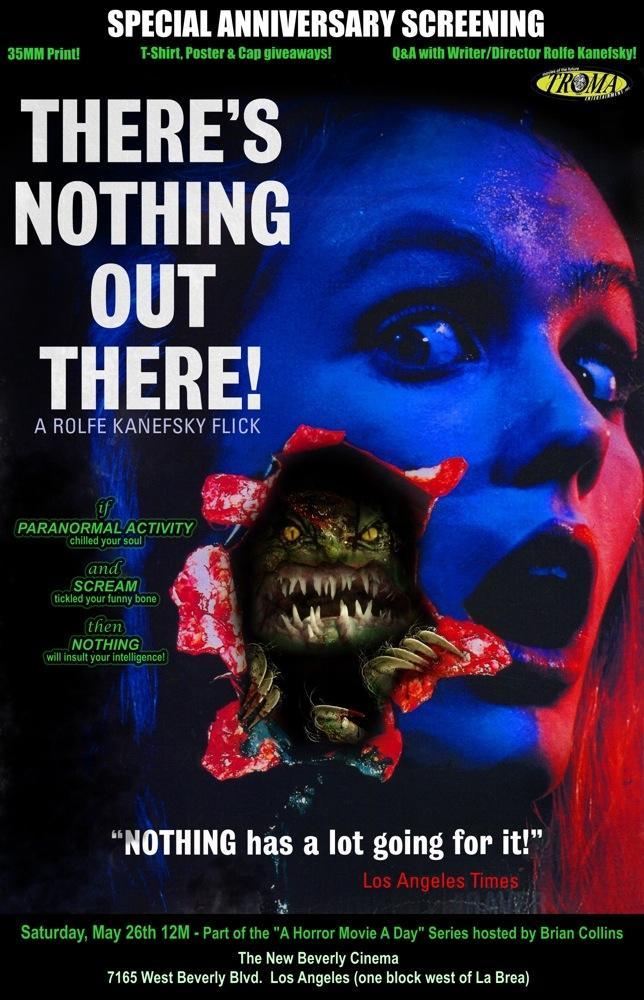
Writer and director Rolfe Kanefsky appeared at New Beverly Cinema where Brian Collins of the Horror Movie a Day website presented a special midnight screening of his directorial debut, “There’s Nothing Out There.” Joining him for this screening were two of the film’s crew members, still photographer Dave Shelton and assistant director Michael Berily. It tells the story of a group of teenagers, one of them a horror movie fan, spending spring break at a cabin in the woods, and it pre-dates Wes Craven’s “Scream” in making fun of the clichés horror movies always deal with.
Kanefsky spoke with audiences about what got him into movie making, and of what spurred the idea for this particular film of his:
Role Kanefsky: I’ve wanted to make movies since I was four years old. As I got older, I watched every horror movie that was ever made which got me to thinking about why people keep making the same mistakes in this genre over and over again. I wrote the script when I was in high school, but no one really liked it.
Kanefsky then went to college where he wrote several scripts, but then he came back to the one he wrote for “There’s Nothing Out There” after he graduated. It was 1988 when he started looking for the money to make it, and he was able to get a few private investors to help him out. He even told the audience his parents helped by selling their house, and after that he had a budget of around $150,000. One audience member asked him if his parents ever got to buy their house back with the profits and he responded:
Rolfe Kanefsky: You don’t get into movies to make money. You get into them because you love to make them.
When asked about the house used in the film, Kanefsky said a friend of his from college found it for him. It was located right near the border of New York and New Jersey, and he described what it was like filming in and around the house:
Rolfe Kanefsky: It was owned by two women who were a couple, and one of them was a sound artist which came in very handy for us. We did, however, have to use three different houses for the interior, and this forced us to cheat certain shots so that everything matched up in the end.
When it came to specific influences, Kanefsky looked mostly to 1950’s monster films, and he made several nods to them throughout. But he was also looking to make fun of the overused clichés in horror movies like the one where a cat jumps out at characters from nowhere, and of how one person warns of the danger ahead while everyone else ignores their advice. Kanefsky did, however, make one thing very clear to us:
Rolfe Kanefsky: It was never my intention to mock the (horror) genre, but instead the lazy filmmaking that has overwhelmed it.
One unique thing about “There’s Nothing Out There,” when compared to other horror movies of the time, is that what’s stalking the characters is not a deranged serial killer, but instead a monster from another planet. Keep in mind, this film was made long before the advent of CGI effects, so there was a lot of puppeteering involved in bringing this creature to life. Kanefsky was specific in what he was looking for:
Rolfe Kanefsky: I didn’t want a guy in a suit for the creature because I wanted to do something different. The way I saw it, the creature was half alligator and half octopus. I also intentionally made it a dumb creature, and you can tell it was not the smartest as there was a big learning curve going on with it. We ended up having to use crowbars just to move its tentacles around.
Kanefsky then invited his fellow crew members to share their experiences of making “There’s Nothing Out There.” Dave Shelton still has very vivid memories of how it all started:
Dave Shelton: I was working at Nickelodeon at the time and there weren’t many things being shot in New Jersey back then. When I met with Rolfe and he talked about his script, I knew right away what his vision was. He also said that no one is getting paid to make this movie and knew it was going to be good as a result. We got a lot of family and friends to be extras in the movie and we improvised a lot of stuff. Not everything worked, but we did the best with what we had. This was such a fun project to be a part of.
Michael Berily was originally hired to be the second assistant director on the set, but things changed for him very quickly:
Michael Berily: The first AD left three days into shooting, so I took over and spent a lot of time yelling and screaming at people because I didn’t know what I was doing. Still, it was an incredible experience working on it, especially when it came to raising the money. Rolfe was very ambitious then as he does a lot of set ups in one day.
Kanefsky attributed his working style of numerous set-ups a day, far more than what most Hollywood productions are able to accomplish, as he and his crew had a twenty-four-day shooting schedule. He has since made over twenty movies since “There’s Nothing Out There,” and to date it still has the longest shooting schedule of any movie he has made.
Horror Movie A Day’s screening of “There’s Nothing Out There” at New Beverly Cinema was certainly a historic one as it marked the first time a 35mm print of the movie had been shown in twenty years. Kanefsky said there were a number of reasons why this was the case:
Rolfe Kanefsky: When we showed it to studios and critics, they were all ambivalent about supporting it because they saw it as too funny to be scary and too scary to be funny. The movie ended up getting a small theatrical release back in 1992, and we managed to get some good reviews from newspapers like the Los Angeles Times. After that it began building up more and more of an audience through midnight screenings… and then the L.A. Riots (following the Rodney King verdicts) happened, and that destroyed us because no one went to the movies for a long time after that.
Kanefsky has attributed its ongoing success to cable and video and now sees this movie as an underground film which people found over the years. The studio which released “There’s Nothing Out There” never really got behind it, he said, and it really found its audience through word of mouth.
Before the evening ended, audience members asked Kanefsky if there would ever be a sequel or a Blu-ray release:
Rolfe Kanefsky: Blu-ray? Maybe, but right now it doesn’t make financial sense to do that and neither does the sequel. We do have the capabilities and original elements to remaster the movie in high definition, but the special edition DVD hasn’t sold enough copies to justify us doing that.
He does however have a title for the sequel:
Rolfe Kanefsky: ‘There’s Still Nothing Out There.’ The tagline for it is, ‘if you were afraid of nothing before, its back!’
Well, hopefully we will get to see a Blu-ray release and a sequel become a reality. There is no doubt “There’s Nothing Out There” was a passion project for Kanefsky and his crew when they made it, and it is clear everyone involved in it worked really hard to make it a reality. That people are still talking about it twenty years later makes it a triumphant motion picture which survived in a marketplace where many other horror movies get swept under the rug, never ever making it to the silver screen.
WRITER’S NOTE: This article was written back in 2013.
Filmmaker Joe Swanberg has been a major figure in the Mumblecore movement, a subgenre of American independent film which is characterized by low budget production values and naturalistic dialogue. Among his films is “Hannah Takes the Stairs” which stars Greta Gerwig and was actually shot without a script. The way Swanberg works, he gives his actors an outline of the plot of what he wants to film, and they improvise their scenes from there. This way of filmmaking offers actors the opportunity to take a lot of risks and make the kind of movie Hollywood studios do not want to right now.
Swanberg’s latest film, “Drinking Buddies,” stars Olivia Wilde as Kate, an employee at a Chicago craft brewery who spends her days flirting with her co-worker, Luke (Jake Johnson). They would make the perfect couple, but Kate is already going out with Chris (Ron Livingston) while Luke is seeing Jill (Anna Kendrick). But when their significant others are out of town one weekend, both Luke and Kate begin to wonder if the feelings they have for one another will eventually come to the surface.
As with “Hannah Takes the Stairs,” “Drinking Buddies” was shot without a script, and the actors improvised all their scenes. Swanberg took the time to talk with us about the experience of making the movie while at the Four Seasons Hotel in Los Angeles, California as well as the fascinating world of craft beers.
What would you say is the difference between a microbrew and craft beer?
Joe Swanberg: Same thing, different terminology. The way that the world is soused out is basically in terms of how many barrels a year that places are outputting between micro-breweries and macro breweries. I would argue that you’re either there because you’re passionate about it, or you’re there because it’s a job, and that’s the difference between the two.
You mentioned “Bob & Carol & Ted & Alice” as one of your influences on this film, and that was a studio comedy with an adult point of view. Your films always have that great point of view and you keep going back to that well time and time again. What keeps you going back there, and what was your motivation to do this film?
Joe Swanberg: Well, a lot of it has to do with operating in a space where I can carve out a little area for myself to play in. Sadly, complex contemporary adult movies, there aren’t many of them. I’ve always been allergic to just doing what everybody else was doing, so it’s kind of just remained a place where there aren’t that many other things happening. I don’t have to be nervous that we’re sort of recycling the zeitgeist or anything like that, then it’s also just one I’m fascinated by. I think if you were to catch me most days of the week and asked me what I was thinking about, it would be a conversation my wife and I had about making time for each other to both be able to do our creative things, or some friend of mine who’s going through a breakup or something. I’m interested in people in that way, how we interact with each other. It’s very easy for me to continue to generate stories that are based around that because it’s kind of always on my mind anyway.
What would you say was your favorite scene in “Drinking Buddies?”
Joe Swanberg: My favorite sequence in the movie is Jake and Olivia playing cards, he’s playing blackjack with her, and Ron and Anna are hiking in the woods. Just the start of the back-and-forth of seeing these two couples we’ve established in terms of each other sort of swapping a little bit and feeling out how to flirt with someone else. I feel like I have this experience in my own life within the context of my relationship with my wife where I’ll just be with another woman and you just sort of get to play make-believe for 45 minutes or something of “oh this is what it would be like if we were together and we went to get lunch or something. This is how we would relate to each other,” and it’s different than the relationship you’re in. These little daydream scenarios, that scene in particular is really fun to me to see play out. I also love listening to Jake and Olivia on the porch. Anna has fallen asleep and they sneak out. I’ve had a lot of those nights in my life where the floodgates open and you just start being really honest and it starts feeding into the other person’s honesty. Before you know it, you’re just talking about things you’ve never told anybody with someone you hardly know. It was fun to try get something like that into the movie and to let them share stories with each other, and I just get to bear witness to it.
Did you have this great cast in mind from the beginning?
Joe Swanberg: No. Usually I’m working with friends of mine so I do know exactly who is going to play the parts before I gear the thing up, but this was one where I just sort of had broad stroke ideas about who the characters were. It’s the first time I’ve ever done a casting process where I met with a lot of actors and try to think about chemistry and placing different people in different roles.
Why did you film in Chicago? Why not Boulder, Colorado?
Joe Swanberg: Well, I live in Chicago, so that’s a big reason. Also, there’s a specificity that I can give the movie because I know what kinds of apartments these people live in and what bars they would drink at. So, every choice gets be a real choice because I know them and I’m friends with them. I’ve been to places I’ve never been to before and done the same process, but then I either have to take somebody else’s word for it like where the hipsters drink, or where it’s just not specific at all. I’m just like choosing places that look nicer something. It was fun to do something at home where I could use the city is an indicator of certain things. Also, I have a kid now so traveling is way less appealing than it used to be. Going to sleep in my bed every night was a huge bonus.
Was the backpack scene in the woods between Ron and Anna when they have that awkward moment completely improvised?
Joe Swanberg: Yeah. It’s the first film that I’ve done where I had an art department and a props master and all these people, so it was really fun as a director to show up to the production office every day and have somebody bring in four different backpacks that I could choose from. It was just too funny to pass up. It says a lot about her (Anna Kendrick). It’s a really great use of a prop.
Beer wise, what are you drinking now especially after you’ve had this little bit of education?
Joe Swanberg: I’m still leaning on the hoppy IPA side of things, but it’s interesting because I didn’t drink at all until I was 25. On my honeymoon I had a beer. I guess I must’ve felt like “alright, I’m here,” so it’s new to me. It’s really been something that I’ve just gotten into in the last five years. It’s interesting because I remember drinking a really hoppy beer early on and just thinking it tasted disgusting, and now I really like the flavor so I’m really curious as to where my taste buds will lead me in terms of the stuff. I find that I go through cycles with it. There was a period of time where I just wanted to drink stouts and dark beers, and then I got into Belgian stuff and then went to the hoppy stuff so I don’t know what the next wave will be.
Any brands you like?
Joe Swanberg: Sure, but too many to even name. I’ll stick to the Midwest: Revolution Bar where we shot, Three Floyds, and Half Acre. We are very spoiled in Chicago. I think twelve new breweries opened this year. It’s a nice time to be in Chicago right now.
“Drinking Buddies” is available to own and rent on DVD, Blu-ray and Digital.
WRITER’S NOTE: This article was written in 2010, back when this anniversary screening took place.
Alan Rudolph’s 1985 neo-noir movie “Trouble in Mind” reached its 25th anniversary in 2010. This is especially significant because it got lost by its distributors about twenty years ago, and they only recently found a print of it. The movie has since been restored and been released in a new special edition DVD. To celebrate its anniversary, the producer of “Trouble in Mind,” Dave Walker, showed a new print of it at New Beverly Cinema. Along with him were actors Keith Carradine who played Coop and Lori Singer who played Georgia, and they were also joined by the composer of the film’s score, Mark Isham.
In talking about working with Rudolph, both Singer and Carradine said they never really rehearsed any scenes. A lot of it came down to them meeting with Rudolph, talking about the screenplay, and getting on the same page with what he wanted to accomplish. Singer explained how he created a “very vivid atmosphere” which came about from an “organic, real feeling.” In summarizing Rudolph’s filmmaking process, Singer said, “Whatever he was shooting, he was capturing his vision. That was our rehearsal.”
Isham described Rudolph as a “jazz director” in that he wanted to get everything right in the first take. When asked how he got the job on “Trouble in Mind,” Isham explained he was being represented by CAA and his agent encouraged him to make a list of directors he wanted to work with. After seeing one of Rudolph’s other movies, “Choose Me,” Isham decided he wanted to work with him. Rudolph ended up listening to one of Mark’s albums, liked it and hired him.
One question asked of Isham was in regards to working with singer Marianne Faithful on two of the film’s songs. Isham said he knew nothing about Faithful beforehand, but that he quickly learned she was an artist of instinct, and they captured a lot of magic on tape whenever she sang. Basically, he did an acoustic piano version of each song she would sing, and he gave her the music through headphones. Isham went on to say he added synthesizers to the soundtrack afterwards.
Isham is also considered one of the best trumpet players ever, and he did perform on one here. He stated how he has been playing the trumpet since he was eight years old and is always looking to put it in any movie he works on.
Another audience member asked Carradine about Coop’s hair and why it got all funky throughout. Carradine said he contributed to the look and described it as an “expression of descent into a kind of netherworld from innocent to deeply urban sensibility he was defenseless against.” Coop saw the change of hair as him becoming beautiful, and he was convinced that Singer’s character would like it. Carradine described it as Coop’s way of trying to fit into a world he was utterly clueless about, and that the hair he used was indeed his own, and these days he doesn’t have much of it left.
Carradine and Singer also spoke of working with Divine, the actor made famous in several films directed by John Waters, “Pink Flamingos” in particular. They said they really loved him because he was the sweetest guy and wonderful to work with.
After twenty-five years, “Trouble in Mind” still holds up very well, and hopefully its DVD release will open it up to a young audience waiting to discover something new and different. Rudolph has said this films is meant to have the look of a dream, and he gave Singer all the credit for that. The dream is still a strong one even with an elongated passing of time.
Okay everyone, The Ultimate Rabbit is doing something new here, at least for him. I am doing my first ever audio commentary, and it is for the 1990 film, “Pump Up The Volume.” Written and directed by Allan Moyle, it stars Christian Slater as Mark Hunter, a high school student who has been uprooted from his hometown in New York and now lives with his parents in Paradise Hills, Arizona. Depressed and lonely, Mark ends up venting his frustration with his situation, and the world at large, on a pirate radio station where he performs under the name of Hard Harry. Chaos ensues as more and more students begin listening in, and parents and school officials do what they can to shut him down.
Now everyone who knows me best knows just how much I love “Pump Up The Volume” (click here to read my review). I first saw it at Crow Canyon Cinemas with my mother back in 1990, and it felt like a godsend to me personally. I very much related to what Mark Hunter went through as he struggles to adjust to a new environment he has been unwillingly thrust into, and I loved how Moyle deals with adolescent struggles and emotions in a real and intelligent way.
Currently, there is no special edition of “Pump Up The Volume” anywhere. It was recently released on Blu-ray, but the only special feature on it is the theatrical trailer. Perhaps Criterion, Arrow Video, Shout Factory or Vinegar Syndrome can show this film the love it deserves.
Basically, this commentary track is to be played as you watch your own copy of the film at home, be it on DVD, Blu-ray or Digital. Feel free to listen in as I try to provide information on the film’s making, and of what it still means to me all these years later.
WRITER’S NOTE: This article was written in 2013, and it contains spoilers for this film.
Stu Zicherman and Ben Karlin are best known for their work as writers in film and television. Zicherman was one of the screenwriters on “Elektra” which he did not even try to hide his disappointment over, and the Hong Kong action film “2000 AD,” and he is currently working on the FX show “The Americans.” Karlin made a name for himself as a writer and executive producer on “The Daily Show with Jon Stewart” and “The Colbert Report,” and these days he serves as one of the writers for the acclaimed ABC comedy “Modern Family.” But what you may not know is these two were best friends when they were growing up, and they are also children of divorce.
When they reunited as adults, Zicherman and Karlin began working together on the screenplay for “A.C.O.D.” which tells the story of when Carter (Adam Scott) is tasked to get his bitterly divorced parents, Hugh (Richard Jenkins) and Melissa (Catherine O’Hara), to come to their youngest son Trey’s (Clark Duke) wedding. Writing the script allowed Zicherman and Karlin to deal with their own memories of their parents separating, but they also manage to find humor in a situation which is usually filled with tremendous sadness and anger. In the process, they both succeed in turning a lot of comedy conventions on their heads and give us a movie full of endless surprises.
I got to participate in a roundtable interview with Zicherman and Karlin when they appeared for the “A.C.O.D.” press junket held at the SLS Hotel in Los Angeles, California.
Question: What was the genesis for this movie?
Stu Zicherman: Ben and I have actually been friends since we were born. What’s the quickest way to explain this? Basically, my mom was friends with Ben’s parents, and Ben’s parents were friends with my mom’s first husband who I didn’t even know about. We’ve been friends our whole lives. I have always wanted to do something with this subject matter, this generation of divorced kids. We’re both part of this generation.
Ben Karlin: Yeah. We were friends growing up and our families were friends growing up, but then, when his parents got divorced and shortly thereafter my parents got divorced, we stopped hanging out because that was the end of our families getting together and doing things.
Stu Zicherman: It was a very romantic journey where our families used to go on vacations together.
Ben Karlin: So, when we were both professional and we were established as adults in our careers, I moved to New York, and Stu was working there already and he said, “Hey, I want to write a movie about how messed up we all are” (laughs). I went, “I’m in!”
Stu Zicherman: We grew up on movies like “Kramer vs. Kramer” and dramas that were kind of tragic. Ben and I talked about this when we first started working on the movie. Our parents’ divorces were tragic and sad in their own way, but they were also not to be believed at times (laughs). They were irreverent, funny and weird. We wanted to try and find a way to make light of it and make a comedy that still had some gravity to it because it’s something that people don’t laugh about. What’s been really fun about making this movie and about taking it around and showing it at Sundance and all these places is that people are excited and relate to it. People will come up to me after screenings and want to tell their stories like, “My parents got divorced when I was 8.” We’re almost giving them license to laugh about it.
Ben Karlin: We were shooting in Atlanta, and the night before production started, it was just us. It was me, Stu, a couple of the actors, a couple of the producers, and we were out in the bar at the hotel. There was a wedding going on and there was the after party for the wedding. There was the groom, the bride, the whole bridal party. Everyone was in tuxedoes. So, it was like these two worlds. We were about to make this movie about divorce and these people who were just starting. And they were great. They were lovely people. We closed the bar down with them. And then, a week later, I got a letter from one of the bridesmaids who I had been chatting with, and she told me this long story about her family’s divorce and how it affected her. It was just so weird. Even in that moment, people were just connecting to what we were trying to do, and we found that throughout the whole process, that there seems to be something that everyone can relate to about this subject.
Question: So, everybody is trying to figure out who got married at the movie’s end…
Stu Zicherman: Well, you know, we didn’t really want to give it away. Ben and I always talked about the movie as being an anti-romantic comedy. There were certain beats we would get to in the movie as we were writing it. There’s the obvious romantic comedy beat. We were trying to turn away from that wherever we could, not to the detriment of the movie, but the end of the movie was not so much about who got married. It was more important to us that the characters, especially those three men, have evolved through the movie to a point where it could be any of them. When pressed, I always say it’s all three of them, but we like the idea of leaving it open-ended because it didn’t matter.
Ben Karlin: It didn’t really trouble us, I have to say. We wanted to create a scenario where all three characters were repaired to the point where you’d be just okay with any of them. And it could be all three of them or none of them. The point is that whatever was waiting for them in there in the church was okay.
Stu Zicherman: And it’s funny too, when editing the movie, every single time I would adjust frames or tried a different shot and put it in front of an audience, people always guessed a different person. It was bizarre. I started to lose track of why people felt what. We had to calibrate it so that it’s pretty hard to tell now. We’d had a version where there was a faceless bride running through the background.
Ben Karlin: Oh, deep, deep background. A limo, a bride, the whole thing.
Stu Zicherman: Again, it distracted from the movie. It’s such a nice, clean moment with the three of them walking in, and we like it.
Question: Everyone seems to have their own version of the movie’s ending, and that really serves as a testament to your writing because you got us so deeply invested in every single character to where we really want to know what happens to them
Ben Karlin: It’s a very hard thing to do. You want to give in. You want to give people what they want. And then, there’s the creative jerk part of you that’s like, “I know better.”
Stu Zicherman: But also, we thought about a lot of this when we were writing the movie that we didn’t want people to be right or wrong. It’s not a right or wrong thing. It’s the dad who does this impetuous thing and they get back together. He’s not wrong. He’s following his heart. What’s wrong with following your heart? And again, at the end of the movie, I always say to people it’s not a movie about divorce per se. I don’t want people just to think it’s about that. It’s really about if you’re married, if you’re not married, divorced, whatever kind of family you’re from, you’re not destined to repeat the patterns of your parents. You’re free to make your own mistakes. You’re free to live your life. That’s why I always love the word “adult” being in the movie. I always felt like you become an adult when you actually can put your past into perspective. That’s when you really start becoming an adult. And I like that about the ending because, up to that point, everybody is acting like a child.
Question: You have said the script is loosely based on your families. Have you gotten any flak from them about it?
Ben Karlin: We’ve done a pretty good job of hiding or changing details. There used to be more stuff in the script that was literally word for word from our lives. There was an incident in his family and a specific incident in mine that involved the handing off of kids on a bridge, like a prisoner transfer, but it was between the parents. And it literally, at this moment, happened to me in Cape Cod where it was my dad’s new wife actually and her children and her ex-husband, and they had to exchange and they decided the exact mid-point. It was like North Korea-South Korea. Here’s the DMZ and we’re going to trade these children over that line, and we had that exact scene in the movie for years. That probably wouldn’t have gone over so well.
Stu Zicherman: And then there was a thing in my family called the hysterectomy conspiracy that was so absurd that when it was in the script, people would read it and be like…
Ben Karlin: “That’s not real.”
Stu Zicherman: They didn’t believe it. “No, no. It’s real.” We had to take it out because people didn’t believe it. But that happened to me. There’s one moment in the movie that is sort of torn from my life and its funny. It’s the one where Carter sits his parents down. My sister was getting married, and my parents would not agree to come to the same wedding. My brother-in-law and I sat them down. What’s hilarious about that is my parents don’t remember that. They block it out.
Question: How long did it take you two to get this film made?
Ben Karlin: Oh my God! I was just talking about this the other day. I was living here (in Los Angeles) and I moved to New York in 1999, and Stu was already living there at that time. He probably approached me in 2000 or 2001 to start working on it. Obviously, we had other jobs.
Stu Zicherman: Yeah. We had other jobs, so we were working on it nights and on weekends and vacations.
Ben Karlin: The amazing thing is we were both single when we started working on this movie. I have since gotten married, had children, and gotten divorced (laughs).
Stu Zicherman: It’s crazy. We were both single when we started this thing, and now I’m married with two kids and he’s got two kids, which I think helped inform the movie a little bit.
Ben Karlin: Yes, definitely.
Stu Zicherman: It’s been a long process. It’s funny though. The movie almost got going at one point. It came really close to get going. What was great about it was once we committed to Adam Scott, the movie started to finally roll. Finally, eventually, you get so frustrated with all the games you have to play to try and get a movie made. The thing is that we always loved Adam for this. And again, it fits in a little bit with the anti-romantic idea. He’s got an anti-romantic lead in a way because he’s got a very cynical humor and perspective on life. It just worked really well. And once we got Adam, then we got Richard Jenkins. It just started to roll.
Ben Karlin: Once you have those first few pieces in place, it starts to gain a terminal velocity.
Stu Zicherman: Right. The phone starts to ring and all of a sudden people want to be in your movie. That was very exciting.
Question: What I like about the script is that you don’t know where it’s going to go. From a distance, it looks like your typical formulaic comedy, but it really isn’t. How did you go about that? Were you looking to avoid certain things that you see in a lot of comedies like this?
Ben Karlin: Yes. There are so many tropes to these kinds of movies. Because we always were around, we were like, “How do we deal with the subject of a wedding in a movie that’s essentially about divorce?” We were very resolute that if we were going to have a wedding, we were going to do it differently than that typical moment at the end of the movie where people are walking down the aisle. So, we knew we wanted that outside the wedding moment to end it. We just were acutely aware of convention and trying to understand why those conventions worked and why they existed, and then trying wherever we could to tiptoe around the obvious thing.
Stu Zicherman: But the big thing was stakes. I mean, there were so many times where we were hyperconscious with the movie, and we would do readings just to find out where we were with it. The main character, Carter, is in every single scene of the movie and he doesn’t have cancer. He isn’t beaten. It’s the kind of thing, at a certain point, where the audience could be looking at him and go, “Hey dude, get over it.” And so, there were scenes we really liked but we felt like we were going to lose the audience. We said, “We have to keep the audience rooting for him.”
Ben Karlin: We didn’t want to turn the guy into a jerk.
Stu Zicherman: So, it was this balance. At times, people would read the script and say, “Why doesn’t he want his parents to get back together?” We just had to find a way and we kept trying to find ways in through relationships. But we did at times always try to move away from the tropes like the scene with the ring that turns into the key, and moments like that. It was funny. I did a Q&A; in New York the other night and someone asked me about the whole cheating thing with Jessica Alba and how he never gets caught. In the classic romantic comedy, you always get that scene where she’s like, “What were you doing with that girl?” It never crossed our minds to go there, and the truth is because in real life most people don’t get caught. You’re just forced to live with it. And that was the great liberty of making this movie independently. We’re not beholden to a studio to hit certain tropes. Also, it made the tone what it is, because the movie is funny but it’s also got some gravity to it and it’s got this balance. I’m excited. The fact that the movie is finally coming out, I’m excited for people to see it, but I’m also going to miss it because we’ve just been carrying it around like this for so long.
“A.C.O.D.” is now available to own and rent on DVD, Blu-ray and Digital.
WRITER’S NOTE: This interview took place back in 2013.
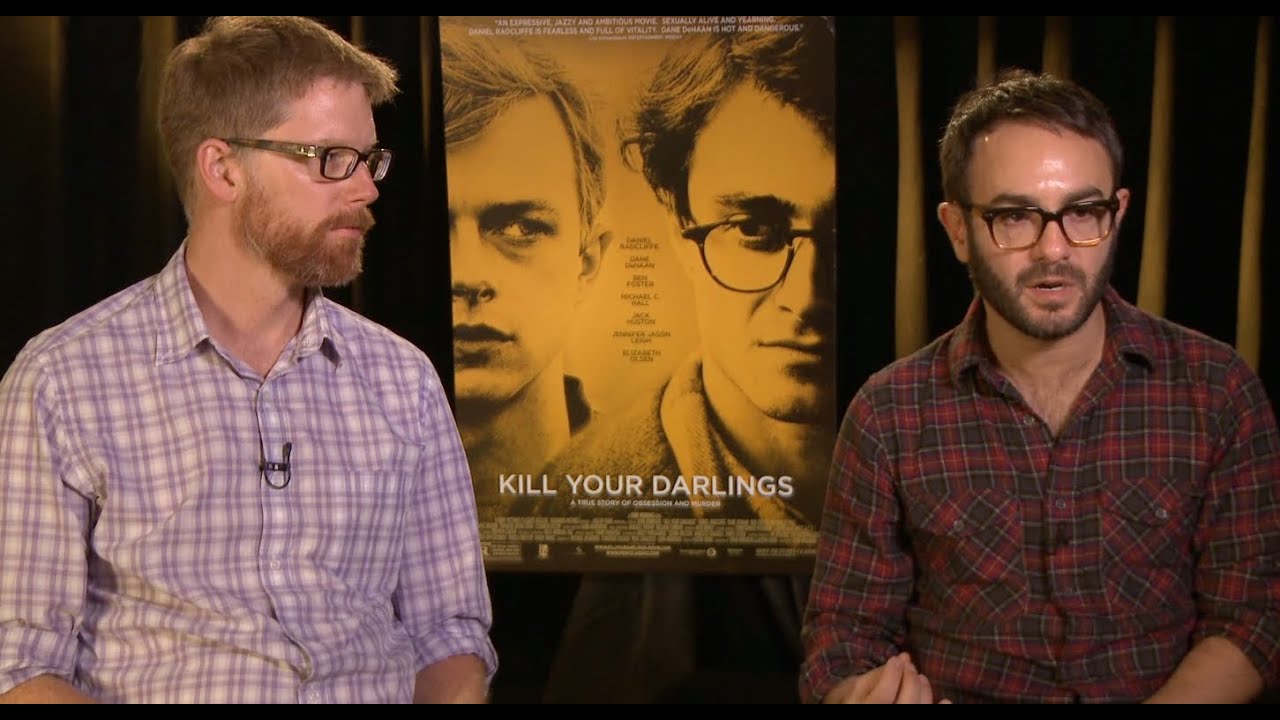
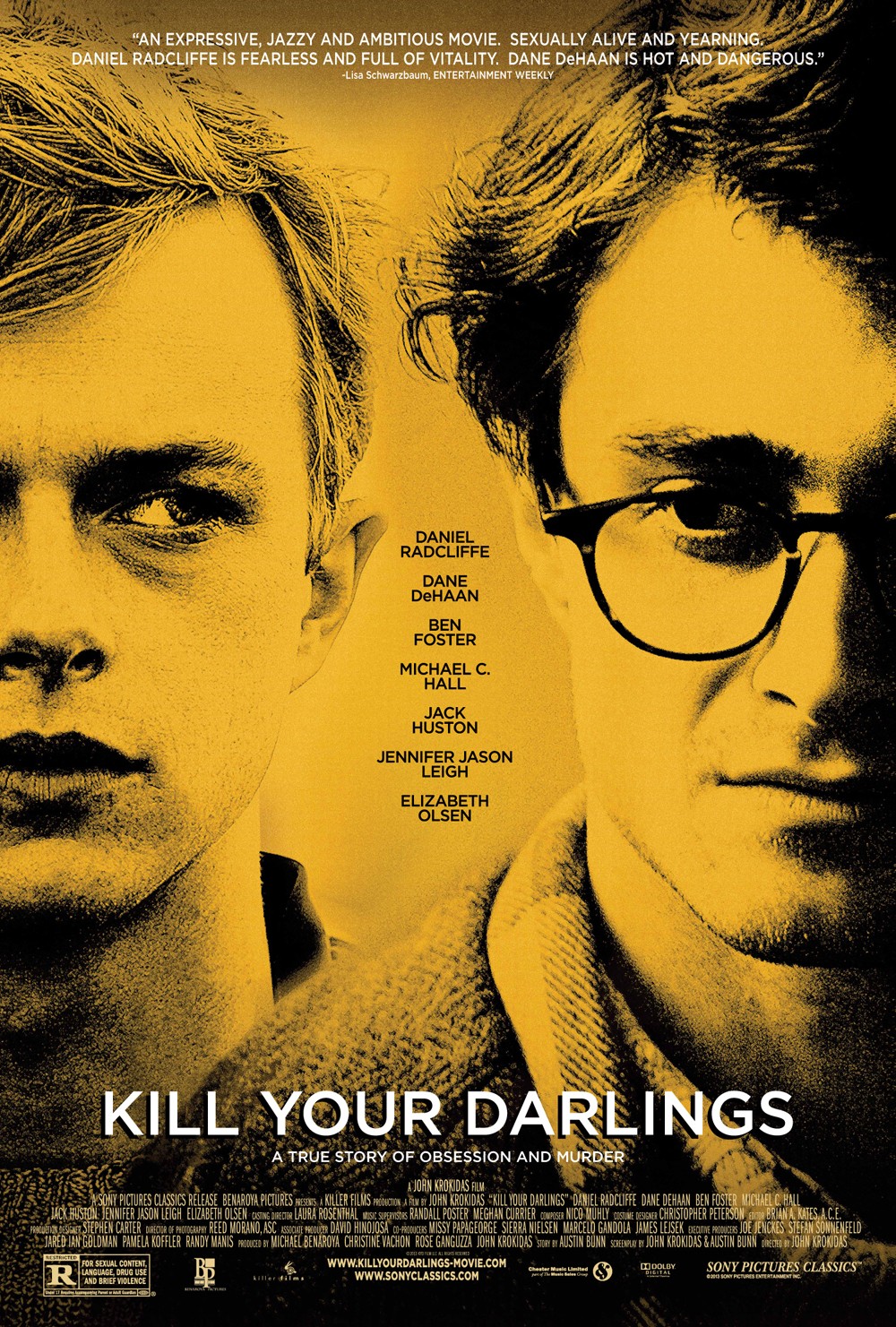
John Krokidas makes his feature film directorial debut with “Kill Your Darlings” which stars Daniel Radcliffe, Dane DeHaan and Michael C. Hall. The movie is about a murder that occurred in 1944 which brought three poets of the beat generation (Allen Ginsberg, Jack Kerouac and William Burroughs) together for the first time. Radcliffe portrays Ginsberg as a 17-year-old who is about to start college at Columbia University, and he ends up falling under the extroverted spell of fellow classmate Lucien Carr (DeHaan) who introduces him to the poets who would later bring a new vision to writers everywhere. It is when Carr murders his love David Kammerer (Hall) that their relationship starts to become unglued.
Krokidas co-wrote the script for “Kill Your Darlings” with his Yale University roommate Austin Bunn. A former magazine journalist, fiction writer and reporter, Bunn graduated from Yale and went on to get his master’s degree at the University of Iowa Writers’ Workshop. As for Krokidas, he later attended New York University’s Graduate Film Program where he made the short films “Shame No More” and “Slo-Mo.”
I got to hear how Krokidas and Bunn made the film under challenging circumstances when they appeared at the “Kill Your Darlings” press conference held at the Four Seasons Hotel in Los Angeles, California.
Question: What was the division of creative responsibility between you two like?
Austin Bunn: Probably like a lot of people in this room, I discovered the beats in college. I used to go to the campus bookstore and just track down the poetry collection, find Allen’s books and read them like they were some secret transmissions from the future version of myself. I was a closeted, young creative writer from New Jersey so Allen Ginsberg’s work meant the world to me. So, I had this really strong connection with Allen and of beat biographies and the history. I read a lot of the back catalog and I had come to John with the idea. So, in terms of the division of responsibility, I would write the first draft and then John would come in. The thing about John, as you will soon learn, he wanted to raise the emotional decibel level in every scene. John is one of the most riveting and vital and least hagiographic version of this story. We didn’t want to take the beats’ greatness as a given, so John sort of demanded that we write a really emotional roller coaster. Then we just went back and forth. John talks about it as the Postal Service, like the band version of producing a script. We were living in different cities at the time; I was at the University of Iowa Writers’ Workshop as a graduate student and John was in New York finishing film school.
John Krokidas: Austin wanted to do this as a play first. He was a playwright and a short story writer of some renown, and we were college roommates and we shared ideas with each other as college roommates and good friends do. But I, of course, started seeing the movie version in the back of my head and I had just gotten out of NYU film school and started convincing him that the play would be really flat and undramatic, but as a movie…
Austin Bunn: The Jedi mind trick!
John Krokidas: This would be amazing. But I would say I’m the structure guy I think, coming from NYU’s film program. I’m very traditionalist in terms of Sidney Lumet’s “find your spine,” and Austin is really wonderful with character and dialogue. If anything, he’s on a religious crusade against expository dialogue, and I would write these three paragraph monologues for each character expressing their emotion like that scene where Jennifer Jason Leigh finally turns to Allen to give him advice. I had a two-page monologue version and Austin crossed it all out (Austin laughs) and wrote the one line that’s in the movie, “The most important thing your father ever did was fail me,” which said everything.
Question: The movie is also very visual too because of the beats’ energy and such. How did you go about creating the look with cinematographer Reed Morano?
John Krokidas: I’m so proud of what we brought to this film. The movie is set in 1944 and it’s a murder story. Even in the writing process, I looked up and saw that “Double Indemnity” won Best Picture that year, and it was the year of “Laura” and “Gilda” and all these great American Film noirs. So, I said, “Why don’t we incorporate this even in just the fabric of the movie and start with the jail scene in a place of heightened tension flashback to more innocent times, and then build again to see whether or not these characters can escape or not escape their fate?” So, I started looking at noir style at first, but I thought an academic recreation of Film noir, who wants to see that? Going back to spine and theme, I thought what this piece was really about was young people finding their voice. So, what about going from conformity, the row houses of New Jersey and the pillars of Columbia, to nonconformity? And of course, where film noir went in the hands of the French was the New Wave. So I thought, “Okay well let’s start off with these controlled, composed, expressionistic-lit shots, and then as the boys go down the rabbit hole together, let’s take the camera off the tripod. Let’s get some jazzier free-form style.” So, I made this book of the 1940s. I had learned that Ang Lee, for “The Ice Storm,” did a 50 page book on the 1970s with colors, fonts and important historical events, you name it. So, I did that with the 1940s and then gave it to Reed. The great thing that I have learned on this is you can do all the academic treatises you want, but then you hire great people. She saw the goal post of what I wanted and then she showed me Jean-Pierre Melville’s films. She showed me films that meant a lot to her and then let kind of what I wanted filter through her own imagination. What I am amazed by specifically in her work is we did this movie in 24 days. Each scene was done in two hours or less, and she has the instincts to be like a documentary camera person and is able to light like that at the same time. We wanted to make sure this film felt relevant and contemporary as opposed to just being a traditional biopic.
Austin Bunn: (We didn’t want it to be) the greatest hits version of their lives.
John Krokidas: It was looking at Ryan McGinley photographs and contemporary, counterculture, young images of today and then finding what connected them to the 1940s. What was resonant in counterculture then and today at the same time.
Question: What was the direction that you were giving your actors? We were told that sometimes you would pull them aside for a more dramatic scene, but was there a consciousness you went into to direct the film and the actors? Were they any kind of specific kind of notes you gave them?
John Krokidas: Here’s the embarrassing story; Austin and I actually met freshman year because we were both acting in a production at Yale of “The Lion in Winter.”
Austin Bunn: Yes.
John Krokidas: Neither of us were the greatest actors in the world which is, I think, why we went into writing and directing. But I trained as an actor as an undergraduate and what you learn is that each actor has their own method and way. It’s whatever it takes for them to get the emotions to the surface. So, when I met with each actor that I cast, I would just simply ask them, “Have you trained? How do you like to work and what don’t you like?” Michael C. Hall gave me one of the greatest lessons in directing in which he said, “If what I am doing is not making you happy, don’t tell me that because that will make me self-conscious and it will make me think about what I’m doing. Just tell me to add whatever you want to what I’m doing.” That’s just a great lesson for life. Dan and I, when we were working together, we spent time before production (he was so generous and hard working on this) and he wanted to approach this like it was his first film which was very poignant to me. I said, “Would you like to try learning a new method and approach acting in a different style?” He said, “Absolutely!” So, with Dan, he’s so bright and in his head, and for the intellectuals Meisner works really well in focusing your action on what you are trying to do in the scene. Dane had trained extensively, and what he does is create a Bible for the character and does tons of research before production. Then he burns it and starts really becoming the character on set. Ben Foster (who plays William Burroughs) has something I’ve never seen another actor do which is, once we’ve basically got the scene up on its feet, he goes and he does the blocking of the scene by himself in the location several times. He calls it “the dance” because once he’s memorized the dance and knows the physicality (“I need to pick up the fork here, I need to put it down there”), he doesn’t have to think about it anymore and that’s completely freeing to him. So it’s like cooking this huge seven course meal where you have to get everything done at exactly the right time, but every plate needs a little bit of love in a different way. To me the greatest thing was being able to get this dream cast and then just to work with them to find how they like to work and what got the best out of them.
Austin Bunn: John had a really intuitive idea which was to keep the actors from reading past this point in the biographies, so none of the actors came in burdened by the mythology of who these guys would become. They were just 19-year-old kids. So, I think that was really smart and it released the actors from having to play the later decisions in their lives and the kinds of writers they would become. They just got to be young people, and that was a great relief I think for them.
John Krokidas: Yeah, and for us too as writers. I had a talk with Jack Huston once when he and I shared the same room and I’m saying, “Oh my god, I’m directing you as Jack Kerouac.” But we were like, “No. You are Jack who is a college student on a football scholarship who hates the other jocks, who just wrote a book which he thinks might be completely trite and he just wants to get out of college and have some real-life experience and join the war so he could begin to have real material to write his next book. That’s who you are.” That just liberated all of us.
Question: When writing the script, how much are you tied to the truth and how much are you allowed to take creative license?
John Krokidas: We did so much research for this. We felt we had to, and I think part of it’s our academic background because there’s so much in the biographies. There are so many biographies of them out there, but then also we would find different accounts online for example from David Kammerer’s friends. They said that that relationship between him and Lucien was never portrayed accurately and that Lucien actually kept coming back to David and David was asking him to end the relationship. And then we may have broken into Jack Kerouac’s college apartment together. We did the trick of pressing all the buzzers and then somebody let us in. But what’s interesting is Columbia students were living there and they had no idea that they were in Jack Kerouac’s apartment. So, we physically went to all of the locations in which this movie took place, and that just helped inform our writing process as well; getting to be able to visualize the actual spaces. Add to that, we went to Stanford University to the Allen Ginsberg archives. It wasn’t about the lack of material out there. If anything, it was about making sure that we really just focused on who they were up until the point which the movie takes place.
Austin Bunn: Just to add to that, the people that I know that have seen the film have been really surprised at how much is actually totally accurate. The day after the murder, Allen Ginsberg went to the West End Bar, “You Always Hurt the One You Love” was playing on the jukebox and he wrote the poem that ends the film. It ends with “I am a poet;” that is a line from August 20, 1944 so we worked really hard to weave it in. But like John was saying before, we didn’t want to do the dutiful, stuffy, every box checked kind of biopic that has been around for a while. We wanted to do something that felt more in line with the spirit of the beats that was more specific and honest and transgressive, and I hope we got there.
Question: Did you two have a specific goal of what you wanted to portray and what you wanted the audience to leave with either of the time or of the characters themselves?
John Krokidas: What I want the audience to leave with is that feeling of when we were 18 and 19 years old just like these guys were in the movie; when everything seemed possible and you knew that you had something important to say about with your life. That you wanted to do something different and unique and not just what your parents taught you, not just what school taught you, but you wanted to really leave your mark on the world. The fact that after the movie these guys actually did it and created the greatest counterculture movement of the twentieth century is amazing. I have had plenty of people come up to me after seeing the movie and said, “This movie made me want to be a better writer” or “this movie made me want to go back and start playing music again.” That to me means everything. That’s ultimately, deep in my heart, why I wanted to make this movie.
Austin Bunn: The pivot point was this murder. I loved Allen Ginsberg for his openness and his honesty, and to think that at one point in his life he was called upon to defend his best friend in an honor slaying of a known homosexual, the very thing that Ginsberg went on in his life to defy and radically create change about the idea of being in the closet and the shame around that issue, that contradiction was really exciting to us dramatically.
John Krokidas: You know this movie took, from the time that we started talking about this until the time that we are getting the chance to be with you all today, over 10 years to make. When I really think about it, the thing that kept me going and kept me wanting to tell this story is that there needs to be something that pisses me off at night. The fact that in 1944 you could literally get away with murder by portraying your victim as a homosexual, that pissed me off to no end. This isn’t a political movie and it’s one scene and it’s obviously what informed how Lucien Carr got away with murder, but for me that was the thing that kept me up all night that said, “No, I have to tell the story.”
Question: The movie has different kinds of music playing throughout it like jazz and contemporary music. Did you envision using different musical styles when it came to making this movie?
John Krokidas: I originally wanted a bebop jazz score similar to Miles Davis’ score for Louis Malle’s “Elevator to the Gallows” because the transition from swing to bebop at this time was exactly what these guys wanted to do with words; to go from rhythms to exploding them into something beautiful. My music supervisor, Randal Poster, said to me, “John put down your academic treatise, put down your paper. Go make your movie. Your child’s going to start becoming the person that he or she wants to be.” So I went and I made my movie, and then I put jazz music on the film and it didn’t work at all. And then I went and did only period accurate music and it felt like Woody Allen’s “Radio Days” which is a great movie but it’s not the young rebellious movie about being 19 and wanting to change the world that we wanted to make. So, I actually went back to the playlists that Austin and I used a while writing this movie and I used Sigur Rós and stuff that was timeless but contemporary, and it brought the movie to life. Then I realized that the composer Nico Muhly had arranged all of those albums and worked with Grizzly Bear and Björk and other people that we were using as temp track. So, we got the movie to Nico and just thankfully he loved it. Now that I knew that I had contemporary music in a period film, then we get to that heist sequence. I had heist period music on it, it was so corny. The sequence didn’t work, it didn’t have any stakes to it, and I can academically tell you when the beats come on, they led to the hippies which led to the punks, and the punks led to Kurt Cobain and the 90s, etc. But the truth is that while I can intellectualize it, you go with what’s visceral and what feels honest and true to you. For me, the biggest lesson in making my first film is to do all of your homework, do all your research, know what you’re doing, but then don’t be afraid to get out of the way if your movie starts to tell you what you should be doing.
Question: How did you decide on what literary quotes to put in, and how did you work with the actors in establishing the cadence and the elocution on those?
Austin Bunn: What a great question! If you know any of the beat history, this new vision was real for them and they have written volumes about it, none of which makes any sense. We couldn’t make heads or tails of it.
John Krokidas: Do you all remember your journals when you were 20 years old or those conversations you had at three in the morning with other college students? We got to read their version of it, and there’s a reason that we hide all of our journals and don’t let them see the light of day.
Austin Bunn: It was challenging. With the uninhibited, uncensored expression of the soul, that’s actually a credible quote directly from the Ginsberg new vision manifesto. So in some ways we knew we had to distill some of that material from the Ginsberg journals to help make the argument for how valuable this manifesto was and the irony honestly of what transpires in the plot which is the very thing that Allen’s called to do which is to create this censored version of history. But in terms of the poetry itself, it was really challenging because as we all know there are movies about poets and writers where recitations happen and they are really flat and they can be corny and there’s a time where you tune out of the movie when you’re waiting for the poetry to end. Specifically, I think of Allen’s first poem that happens on the boat. We were really challenged to find a poem that would speak to audiences but was genuinely an Allen Ginsberg poem written in his voice. So what we had to do was really channel Allen. His early work is quite rough and burdened by trying to impress his dad and his professors. John had the concept of this isn’t a poem that he’s just reading to impress people, it’s a poem he’s reading to Lucien Carr. The audience knows that, you know that and Lucien finds it out on the boat at that moment. That really gave me permission to kind of rethink what the poem was going to do and how we would make it, so we came upon Allen’s method which was kind of magpie; stealing from the American vernacular and going out and finding common speech and repurposing it, creating this Whitman-esque inclusion. So you hear in the poem things that you’ve already heard in the film just like Ginsberg did himself. Things like Allen in wonderland is reworked in the poem, unbloomed stalwart is the very thing that David said to him at the party. So we’re kind of hopefully paying off not just a poem that is emotionally powerful, but also something of the method that Ginsberg would use for the rest of his life.
John Krokidas: Radcliffe was such a hard worker. While he was on Broadway doing a musical, we would meet once a week for two months before even preproduction and rehearsals began to work on the accent and to work together. I have him on my iPhone reading “Howl.” We didn’t look at the later recordings, we looked at the earliest vocal recordings possible of Allen Ginsberg to make sure that we weren’t capturing the voice of who he became, but his voice at that time and what his reading voice was like. To be honest, it’s just really telling the actor, “You’re not performing a poem. You are letting Lucien know that he is loved with this poem and that you love him and that you can see inside him.” It’s playing the emotion underneath the poem which was the direction.
Question: What does it do for you when all the main characters are gay? Normally you got the female characters who can be a love interest but they are not going to be a rival. Usually, even now in films and in life, there is a separate role where as if you are all the same gender, you can all be anything to each other.
John Krokidas: I think this is a movie with every character is discovering what their sexuality is (gay, straight, bi or all over the place), and more importantly whether or not they are worthy of being loved. I personally don’t know if Lucien Carr was straight or gay, and to me it’s irrelevant because I have seen this relationship play out amongst gay people I have known so many times where an older man who is gay and a younger man of questionable sexuality develops such a close bond. The stereotype I think would be is that the young man had an absent father figure or finds the older man’s confidence and just the care and nurturing qualities of them very attractive. What happens though is that those two get so intimate that ultimately there’s nowhere else to take the relationship but sexual, and when that happens then the power position in that relationship twists and the younger man suddenly realizes that he holds the power because he’s the sexually desired one. That’s where a lot of conflict ensues. Whatever you read about that relationship between Lucien and David, everyone knew that they were codependent. Everyone knew it was toxic and going to end badly. Nobody knew it was going to end in murder.
Austin Bunn: I think a lot of the biopics we see are kind of denatured of their sexual qualities and the edginess of the relationships in them. So, I think we were trying to do something that restored some of that ambiguity, lust, desire and confusion that is genuinely in the beats’ history. We were not making that up.
“Kill Your Darlings” is available to own and rent on DVD, Blu-ray and Digital.
WRITER’S NOTE: This article was originally written in 2012.
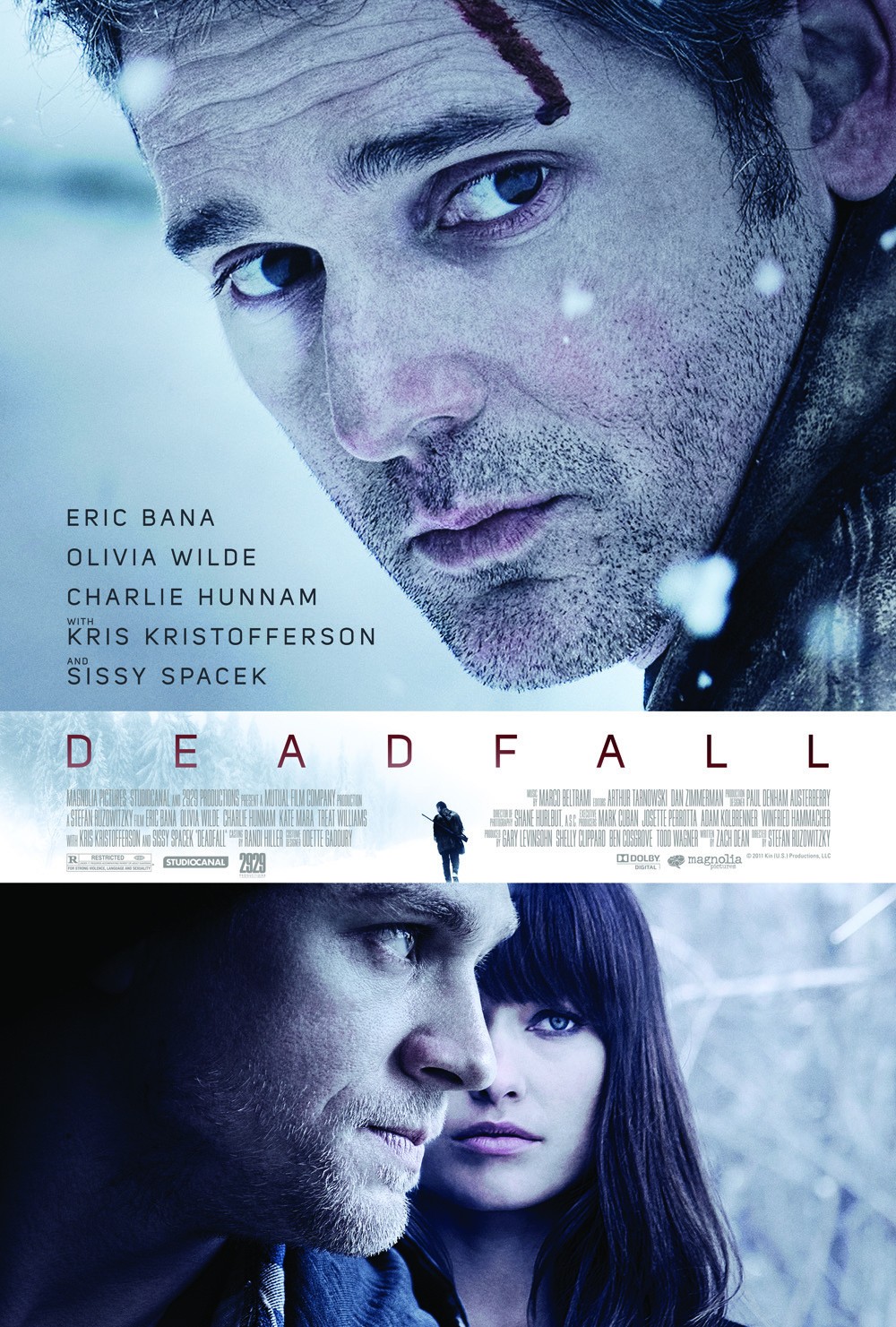
Watching Eric Bana as Addison in Stefan Ruzowitzky’s “Deadfall” will remind many of his breakthrough performance as Chopper Read in “Chopper.” Both films have him playing characters who are charming yet fearsome, and his unpredictability as an actor had us on the edge of our seats throughout. But hearing Bana talk about how he prepared to play Addison is a reminder to all actors on how to approach a role like this; the character may be a bad guy, but he’s still a human being with wants and needs like anybody else. It’s not just about acting evil all the time.
I was lucky enough to attend the “Deadfall” press conference at the Four Seasons Hotel in Beverly Hills, and Bana said he really liked Zach Dean’s screenplay and was “immediately compelled” by Addison. Bana described the character as being “quite hilarious actually,” and this was one of the main reasons he wanted to play him. It was interesting to hear him say that because funny is not an easy adjective to give to a character like Addison who can react violently without little or any notice. Bana, however, started out as a stand-up comedian and saw the opportunity to bring some darkly comedic touches to this role.
“I don’t think there was anything deliberately funny in Addison, but I think the situations that all the characters find themselves in and some of the things he does are inadvertently very funny,” Bana said. “It wasn’t like playing for laughs but I knew the audience probably would laugh at some of the ridiculous nature of what we’re all forced to do.”
Bana also went on to say he thought Addison was “morally straight” and that he really did not see the character as being a bad guy. Now while the crimes he commits in “Deadfall” certainly tell us otherwise, I really liked Bana’s approach to this role. It reminded me of a behind the scenes special on “Die Hard” where Alan Rickman talked about how he saw his character of Hans Gruber:
“As far as I’m concerned, I am not playing ‘the villain.’ I’m just playing somebody who wants certain things in life, has made certain choices and goes after them.”
The same can be said about Bana in the way he portrayed Addison.
“He had a strong sense of purpose in what he was doing and that is what makes those characters so scary, knowing you can’t really negotiate with him,” Bana said of Addison. “In his mind everything he’s doing is completely and morally correct and there’s a real reason for it. It’s not the actor’s place to judge, but I’m more than happy to be morally corrupt for a few months for the benefit of my career.”
This thought process was even more on display when Bana was interviewed by James Rocchi of MSN Entertainment. Rocchi talked about “Deadfall’s” first scene in which Addison’s car crashes and ends up shooting a state trooper in the process, and he described Addison as being spontaneous in his actions as this guy is thinking on his feet and improvising constantly. Bana explained that when the actor commits fully to their character’s actions, they should all come out naturally.
“I don’t like to think too much about what my physicality’s going to be here. I’d rather immerse myself in the character’s brain and allow my body to react accordingly,” Bana told Rocchi. “But that instance in the beginning of the film kind of sets in motion the rest of the stakes really for Liza (Addison’s sister who is played by Olivia Wilde) and Addison from that point on in that it just keeps getting worse and worse and worse. But you’re right. I mean he had no intention of shooting anybody. They got away from the casino, they got the cash, and all was going really well until that freaking deer popped out into the middle of the road and it all changed.”
Throughout “Deadfall,” Addison ends up engaging a couple of nasty fights, some of which are with Jay who is played by Charlie Hunnam (“Sons of Anarchy”). We keep hearing actors say how they did their own stunts in this or that movie, but we can never be too sure as the insurance people are usually dead set against that ever happening. But I believed Bana when he said that he did his own stunts in “Deadfall” because even he couldn’t hide the toll it took on his body.
“My neck was ruined,” Bana told Ariel Kashanchi of Screen Picks. “Charlie Hunnam beat the shit out of me. I don’t think I landed a punch. It was just like bang, bang. I remember after about five takes I was stiff all over and thinking ‘how much more can my neck take.’ I’m used to throwing punches and now I just have to just sort of take it. But it was kind of fun.”
“Deadfall” has received mixed reviews, but there is no denying Bana gives a riveting performance as Addison. Playing a charming bad guy is nothing new for this Australian actor, and he is still great at it. In a year of movies filled with truly intimidating antagonists, Bana’s performance deserves to be held up alongside the best of the bunch.
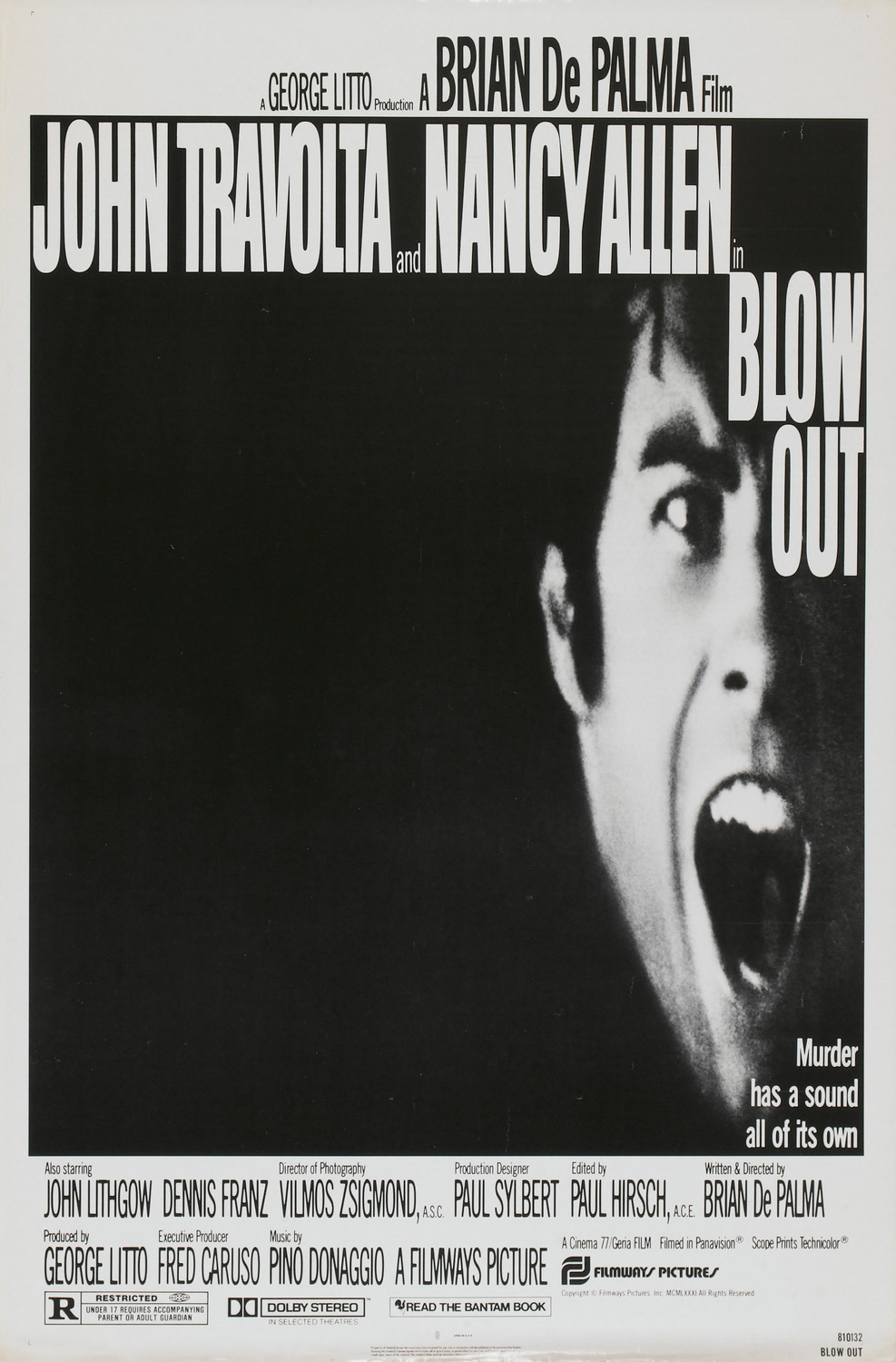
I first remember watching the trailer for Brian De Palma’s “Blow Out” years ago before a double feature at New Beverly Cinema. While I don’t remember which double feature I was seeing that evening, I do remember the trailer itself and in becoming excited about checking out this underappreciated De Palma classic. Roger Ebert gave it four out of four stars and proclaimed it to be one of those “hidden treasures” at your local video store, and Quentin Tarantino, who bought the building New Beverly Cinema is housed in, has declared this to be one of three motion pictures he would love to take with him to a deserted island.
That little needle bouncing up when a certain sound is detected instantly reminded me of when I recorded my favorite records to audio tape when I was a boy. You had to make sure the levels did not go into the red area as the sound could become distorted and easily lay waste to your expensive stereo system. But when Jack Terry (played by John Travolta) ends up recording a loud sound no one was ever supposed to hear, and which ended up on the red side of the sound mix, we immediately know this was no mere accident.
I love how this trailer shows Travolta, Nancy Allen and John Lithgow giving the performances of their lives here. Seeing them shows how committed they are to the material, and I love the ever so cold look on Lithgow’s face as he is about to take the life of an innocent victim who is completely unsuspecting of someone about to strangle them. They way this trailer builds to a fever pitch made me want to check it out sooner rather than later.
“Blow Out” was a box office disappointment when released back in 1981 despite positive reviews, but thanks to Ebert and Tarantino among others, it has since gained a cult following it richly deserves. I finally got to check it out at the New Beverly Cinema where it played as a double feature with a movie said to have inspired it, Michelangelo Antonioni’s “Blow-Up.” This proved to be quite the cinematic evening for yours truly.






 The Ultimate Rabbit