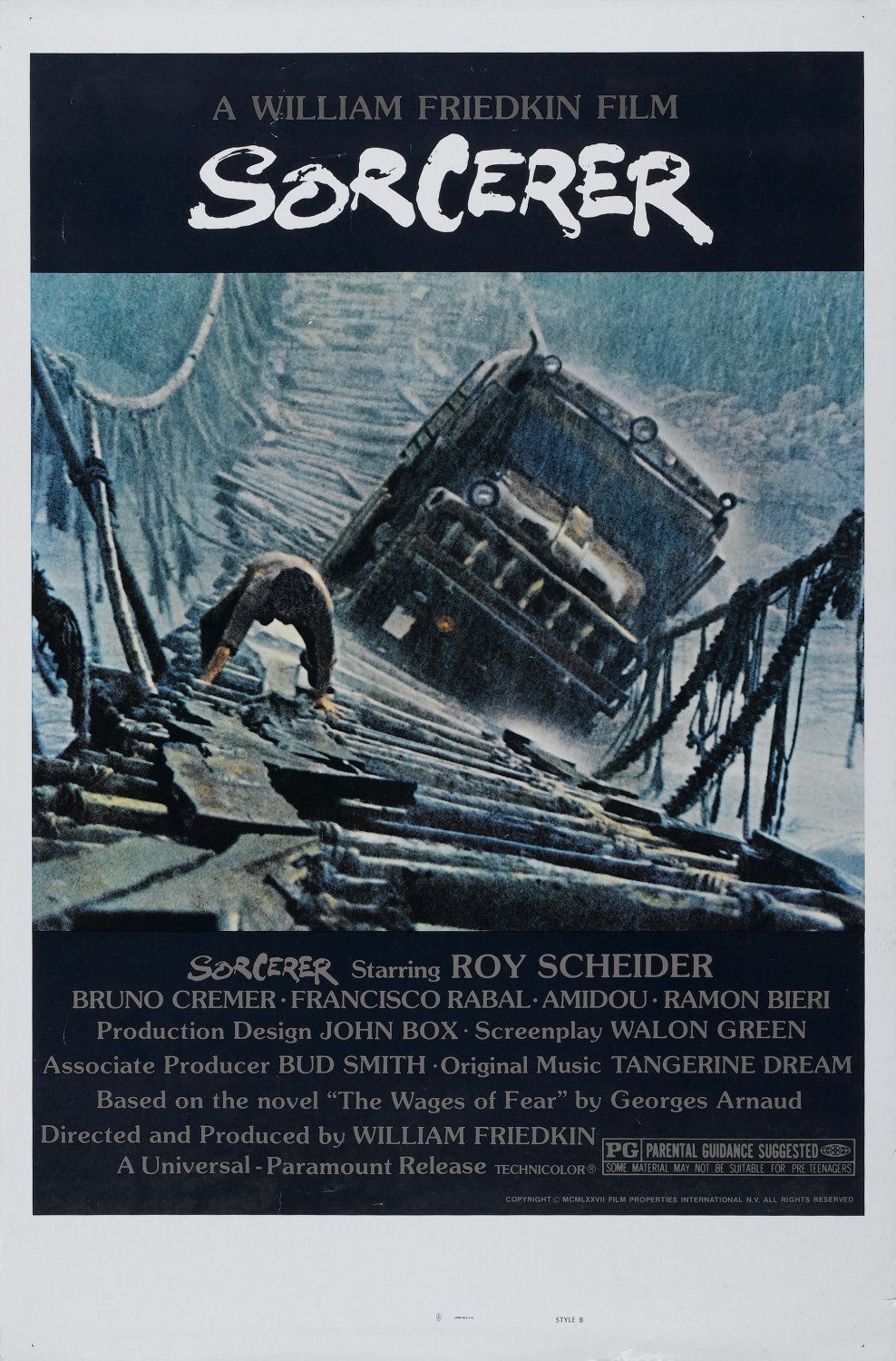
This is the movie that almost completely destroyed filmmaker William Friedkin. “Sorcerer” came into theaters with a high level of anticipation, which was understandable as it was made by the same man who gave us “The Exorcist” and “The French Connection.” Lines were wrapped around the block when it opened at Mann’s Chinese back in 1977, but by the second week the theater was practically empty. “Sorcerer” was considered to be a critical and commercial failure, and Friedkin’s career has never been the same since. Of course, it opened around the same time as a small independent feature which blew away the competition. You may have heard of it, “Star Wars?”
Well, they say time heals all wounds, and “Sorcerer” has been critically re-evaluated to where it has received the critical acclaim it long deserved. The film is quite an accomplishment and a fascinating study in madness and redemption, and you will never look at truck driving the same way again after watching it. Depending on who you ask, it t is a remake of Henri-Georges Clouzot’s “The Wages of Fear” (Friedkin denies it is). The Oscar-winning director put his heart and soul into “Sorcerer,” and it pins you back into your seat and thoroughly exhausts you long before it ends. Like many great movies, it is one you experience more than watch.
“Sorcerer” takes its time getting started as we watch the back stories for its four main characters and of how they ended up at where they are. We meet hitman Nilo (Francisco Rabal) who takes down a target with a simple bullet, Kassem (Amidou) as he bombs a local church with the help of his friends, investment banker Victor Manzon (Bruno Cremer) who is about to be jailed for fraud, and then there’s Jackie Scanlon (Roy Scheider) who is marked for execution after his gang robs a church and accidentally kills a priest.
After this protracted prologue, the action moves to an unnamed location in a Latin American country which these four people have escaped to and seek refuge in. The utter squalor these men are forced to live in is so vivid to where it feels like the flies and stench of the environment doesn’t stop at the silver screen. You know how some people look at a movie and say it really made them want to take a cold shower? One shower is not enough to get past the filth these characters are forced to live in from day to endless day. This place is hell on earth for anyone, but these men obviously prefer it to death. They managed to avoid prison, but they came to a different kind of prison they are now ever so desperate to escape.
The chance for escape comes when an oil refinery suddenly explodes into a fireball, and the firefighters are unable to put the fire out without the help of explosives. Company executives manage to find a surplus of nitroglycerin sticks which can do the job, but the only catch is these sticks have not been turned and, as a result, have become highly sensitive and to where the slightest vibration could make them explode. So when an offer comes to drive this unstable set of explosives to the burning oil field for a high reward, these four jump at the chance to do the job. The rest of the movie follows their treacherous journey in trucks to deliver the explosives and hopefully not lose their lives in the process.
One thing I really admired about “Sorcerer” is how Friedkin dared to give us characters who were not altogether sympathetic. They are criminals of one kind or another, and yet we follow them every step of the way through their treacherous trip. Friedkin saw their incredibly dangerous journey as their chance not to just escape the filthy poverty they were stuck in, but also as an opportunity to redeem themselves for whatever bad deeds they committed. But their entire journey is a lot like sailing down the river Styx as they have to travel to through hell in order to escape it.
Friedkin does a great job of sustaining the tension as these men drive the trucks over terrain which looks like it’s on the verge of collapsing, and who encounter unwanted guests that have no idea of the cargo they are carrying. But the movie’s big action centerpiece is when they are force to drive the trucks over a suspended bridge which looks more than ready to completely fall apart. Add to that some furious rainstorms, and you have yourself one hell of a sequence which leaves you wrung out by the end.
Of all the actors in the cast, the most recognizable is Scheider. As a man on the run from the mob, he gives a performance which is never less than compelling, and you can only imagine the hell Friedkin put him through to play this role. The journey these men go on is not just dangerous physically, but also psychologically. Scheider does great work here as he is constantly on the verge of losing his mind, and this is especially in the movie’s second half.
Francisco Rabal, Amidou and Bruno Cremer are equally as good as they show the exhaustion and determination their characters have to complete this mission, and they too are put through the wringer to where they never seem to be acting their roles, but instead living them. You feel every bead of sweat which drips from their faces, and it makes “Sorcerer” even more of a visceral cinematic experience.
The imagery Friedkin captures is incredible as he shows us the squalor and unhealthy environment these characters live in so well, you can’t help but feel as trapped in it as they are. Friedkin has gone on record to say this film was the toughest for him to make, and I don’t doubt that for a second.
One of the other big pluses of “Sorcerer” is the brilliant score composed and performed by Tangerine Dream. Interestingly enough, they never saw a frame of the movie’s footage while working on the music, and yet they capture the events and psychology of the characters ever so perfectly. Like many of Tangerine Dream’s movie scores from “Thief” to “Risky Business,” this one is highly original and hard to compare to others. The soundtrack is still available on compact disc if you look hard enough for it.
After all these years, “Sorcerer” can no longer be mistaken as one of Friedkin’s misfires as it is now seen as one of his greatest cinematic achievements. It has since gained a strong cult following and is truly one of the most underrated movies of the 1970’s. It is unlikely we will ever get to see a movie made the way this one was ever again, and this makes it a must see for every and any film buff out there.
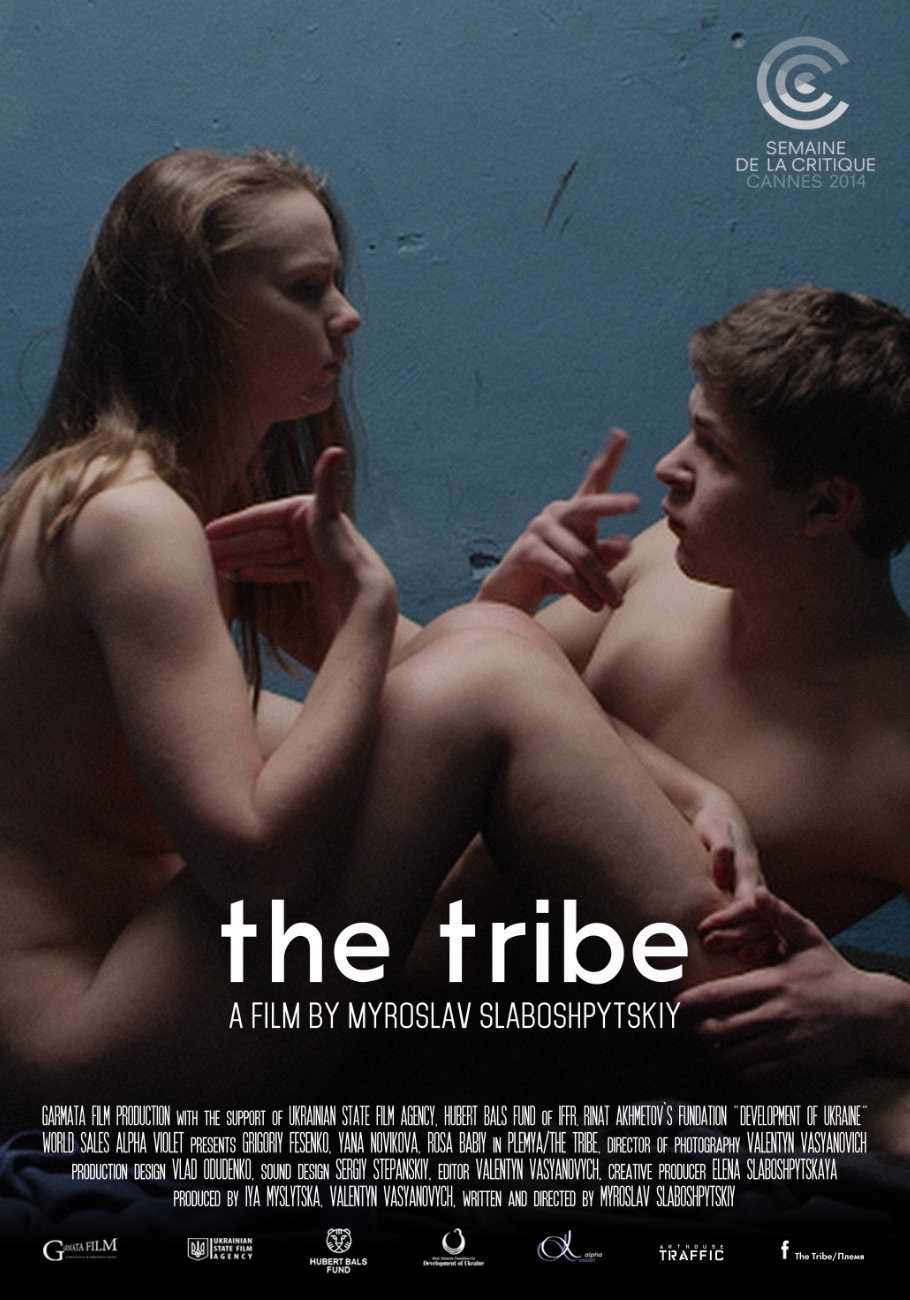
Yana Novikova is one of the stars of the critically acclaimed Ukrainian drama “The Tribe” which was written and directed by Myroslav Slaboshpytskiy. It opens up on a shy young boy named Sergey (Grigoriy Fesenko) who has just arrived at a boarding school for the deaf, and he soon finds himself being initiated into the school’s gang which deals heavily in robbery, bribery and prostitution. But just as he becomes like any other member, he falls in love with one of his female classmates, Anna (Yana Novikova), and this triggers a series of events which in turn leads to an unnerving and unforgettable conclusion.
The cast of “The Tribe” is made up of deaf, non-professional actors, and it contains no subtitles and no narration. Yana has one of the movie’s most challenging roles as her character works after school as a prostitute in order to save up money for a visa. She dives into her role fearlessly, and it’s a role which required a lot from her in terms of nudity and raw emotions. That’s not even to mention the scene where Anna gets an abortion, a subject which remains taboo in many societies.
It was a great pleasure for me to talk with Yana back in 2014 while she was in Los Angeles, and she was joined by two sign language interpreters who helped bring her beautifully long answers to light. For a first time actress, she gives an exceptionally brave performance.
Ben Kenber: How were you cast in “The Tribe?”
Yana Novikova: During my time in Belarus, which was my hometown, I was going to college and was studying engineering, tailoring and was busy with my studies. There was an acting program nearby. I was not involved with that, but I was called by a friend of mine about the fact that in Kiev, Ukraine they had a college for the deaf. So the Ukrainian friend of mine was telling me about how they had acting classes and you could learn about dance and movement and things like that. My friend told me that there was an audition taking place in Kiev, Ukraine, and it was in two weeks. So, I had two weeks to prepare for this audition before I flew out to Kiev. To start my preparation of my rehearsal I had to tell my parents about the audition, and at first my mom said no, absolutely not. She was shocked this was my plan that I wanted to do. She said, “You don’t have friends out there in Kiev. Do you even know the city?” So mom was very concerned. “You can’t drop out of college, you know? You are working on getting your degree” at the college I was attending at Belarus. I had to strongly express to her that, even though I was involved in my studies at college, I really wanted to get into acting. My mom told me repeatedly no and I had to calm her down and convince her, so I changed my story a little bit and told my mom that I was going to be visiting friends in Kiev. So, I had to lie a little bit and I did everything secretive. But I made my preparations, I flew to Kiev and stayed with a group of deaf friends and there was a group of writers there. I didn’t know who the writer was, I didn’t know who the director was, but that director was looking at who had auditioned. He was just sort of incognito. We didn’t know that he was there and he was watching all this. I got completely involved and completely absorbed in rehearsing in preparing for the audition. They tell me that, after the audition, they were going to be selecting three people and I was like, “Three people? That’s it, out of this whole group of 10?” They said there’s just not enough scholarship money to audition for this program. There’s only enough scholarship money to accept three deaf people for this acting program. I was so upset when I wasn’t chosen. I cried and I asked them questions about why I wasn’t selected, “What were you looking for? Were you more concerned about my logistical issues about living so far away? Was that an issue; would I be able to pay for the dorm or not or things like that? What were the selections based on?” And they said, “Well you’re better off staying in Belarus and continuing on with your college and your studies.” And I said, “No, my heart is not in engineering. My heart is not in sewing and tailoring. I really want to get into acting.” So we went back and forth and back and forth, and they repeatedly told me no and that they were not selecting me. But the director, who was present, made time and came up to me and said “Well perhaps if you’re willing to fly to Kiev for the next production and try out for that audition, we have an audition for another project coming up called The Tribe.” So, I ultimately did that. I flew back to Kiev and auditioned. There were about 300 people who auditioned for the film, a long line of people all deaf. They took photographs of us as part of the audition process, they got our profiles and everything, they got information, and after the audition they told us to check the Internet to look and see if your name shows up on the list to see if you were selected. So, for about a week I kept my close eye on the casting list, and when I finally saw my name on that list and that I was chosen I was thrilled. During that process there was actually another very small film project that was going on that I was given a very, very small role in. It gave me an opportunity to do some rehearsal and do some practice in the role as a boy actually, a little rebellious boy character. So I had this real short, small role in this other project, so while I was filming and preparing for that, the director really took a hard look at me and evaluated me during that whole process, and then in September I was already chosen for my role in The Tribe. I was so happy. I completely dropped out of college and I told one of my professors and he was like, “Why are you quitting? You don’t like college? You don’t like what you’re doing?” And I said, “No. I’m actually an actress and I’m getting into acting.” And I let the professor know that I got a job and the professor was like, “Are you joking?” I said, “No I’m actually going to be acting in a film.” So, once I did that I went home and packed, and still my mom didn’t know at that time what had taken place and that I was chosen for this film. So I was in the middle of my packing process and mom came in and said, “What are you doing?” And I said, “Well I was chosen to be an actress in a film.” My mom said, “Are you joking? You dropped out of college and you are completely shifting your plan?” I said yeah and my mom obviously got very, very upset and told me no I don’t want you to do this. So I ignored what she told me and I flew to the Ukraine and started filming The Tribe, and I actually didn’t see my parents for the whole month of September. I did stay in contact with my parents, but I didn’t see them in person. Once the production was done, I found out that it was chosen to be shown at the Cannes Film Festival and won some awards and things like that. Finally, through that process and learning about that on the Internet, my parents finally started to believe in me and that’s when the nudity issue came up and that I had to be nude in the film. I said, “Well mom and dad, that’s part of the acting work and life.” So I was so happy that finally I was actually a real actress and that I was a real thing.”
BK: Speaking of the nudity, you were asked to do some things that are not easy for any actor to do. How did you manage to get comfortable with the actors and the crew during the scenes where you had to be nude?
YN: The very first scene, I was just nude from the top up when the boy pushed the new student into our dorm room. But the script actually said that I was just going to be wearing a small little bra type thing, so that was what I was expecting at first during the filming of the first scene. And the director said, “Well actually, do you mind… Let’s time out for a second. I think the scene would do better with nude from the top up without the bra.” So I was like whoa, really? That was really overwhelming. I was upset at that point. I considered myself an actress and I wanted to get into my role, but I wasn’t expecting that. The director and his wife, they talked me down and calmed me down and said this was part of acting, “You don’t need to feel uncomfortable. Just focus on the beauty of the film in its entirety.” They gave me some different films to watch and to help get myself more into my preparation and into the role to help give me some ideas, and there is one specific French film called “Blue is the Warmest Color.” That specific film I watched and it had a significant impact on me. That really, really got me to change my point of view. The director decided to tell me more about the film itself which also went to the Cannes Film Festival and explained the process it had gone through, and I was full of questions about it. So, after seeing and learning more about that movie, “Blue is the Warmest Color,” I started to ask Myroslav, “So is it possible that ‘The Tribe’ could be that successful? Could it make it to Cannes and have the same level of success that the French film for that?” At that point in the whole process I hadn’t been finally selected for that full role, so we were just in rehearsals in that part of the process. So then when it was suggested to me that I watch that other film and started asking Myroslav those questions, it was at that point in time that my point of view completely changed. I got completely into the role during the rehearsals and everything, and I decided at that point I was fine with going with Miroslav’s direction of going full nude, and I wanted to prove to him that I could do it and that I was capable and that the film could make it to Cannes. So, it was a change in my point of view and my focus. During the scene where Sergey and I had to practice nudity, what we did to rehearse for that part was that we got into the nudity slowly so day by day by day we would remove more and more clothing as we rehearsed that scene. So we did all the rehearsal and then the actual filming took place, and finally everything just came together. Everything just melded so we filmed, and little by little by little by little the clothes came off as part of the filming process of that scene, and after we had done that scene it was no problem for me. We just completely filmed the whole thing, and then the next scene was the sex scene where we were in the 69 position. Our characters really grew. We became closer with one another and love developed. Our characters started to love one another, and love requires so many different ingredients and all these small and different elements being in tune with one another and showing that connection to the camera. Both myself and Sergey, it was our very, very first experience doing that type of thing and we were able to connect, and the rest is history.
BK: Another big scene for your character is when she has the abortion, and it’s a very brave scene in the movie. Myroslav explained to me that it was all an illusion, but your acting and the nurse there made it seem very real. How did you go about preparing for that particular scene?
YN: Thank you for that complement on that scene. When I learned that the abortion scene was part of the film, I didn’t have a problem doing it. I knew that it was part of the movie, but the challenge for me was that I didn’t have any real life experience with an abortion. So I had to do my research. I checked on the Internet, I interviewed and spoken to other women who had been through that experience and I tried to incorporate all those different elements into myself and then actually put those into that very scene. The other girl who was active in the film, she and I were in the same boat. She had never had that personal experience, so she and I and a director went to an actual medical clinic where they do those types of things, and the doctor there shared with us everything we needed to know about the abortion process. So, when the filming began the very next morning, it was a very long day. There were many, many takes and many retakes. We had to start from the beginning of the scene, walk-in and take off my clothing and go through the emotional part of it; the crying and the whole thing. And then we had to cut many, many times. We had to stop. Filming that scene went from morning until night. We went through a lot of tissues. I went through a lot of tissues that day. I was completely exhausted. I had to really try my best to conserve my energy before filming and then film the scene, be completely exhausted and then try and find that energy again and film the emotional parts again. It was exhausting and at that time I was trying to connect with the character and going through that abortion experience, and as a woman I tried to really reflect what it was really like and really tried to show it accurately. The director really worked with me to really draw out my genuine emotions to reflect that character. The goal was so that the audience could connect with that character and really connect with what she was really going through, and that scene was very, very important. It had a big impact in the movie. It actually was showing the beauty of what that person was going through. That’s how I would describe it. It was very, very hard work, and it was something I wanted to share.
BK: Were you aware from the get-go that this movie was going to be shown without subtitles or any narration, and how did you feel about that?
YN: I definitely was aware of that fact and I thought it was cool. I liked it because, for myself, when I watch a film I don’t like to look at the action and then have to look down and read. It’s work to do that to watch a film. It’s almost impossible sometimes to get everything all at once. I thought it was cooler because then the audience could really focus on the actual character and all the different elements of the character and really get into that, and so I absolutely completely supported Myroslav in his position to make the film without subtitles.
BK: It’s great because, even if you don’t know sign language, you still get the gist of what’s going on in the movie from scene to scene.
YN: Yes, absolutely. You get the gist, you get the story, you get the emotion, you see the facial expressions and all of that is obvious. It’s impossible to not understand from the beginning to the very, very end. It’s a very colorful film. It’s easy to understand. Everything is right there and presented visually for you. It’s like a person kind of going through and really experiencing that life and gives them that idea of getting into that story.
BK: In the end this is not a movie about deaf people but about people trapped in a situation that does not offer them an easy escape, and that’s what’s great about it. It’s not about one kind of people because it’s really universal in its themes.
YN: Yes, it is universal, absolutely. It’s both. It incorporates the deaf world and there was no interpreting needed actually. You understand the concepts and it’s beautiful. There’s no interpretation of language and it applies to all walks of life and the emotional parts of it as well. It applies to everyone. The emotions are universal. Everyone feels the same emotions. It’s very explicit.
I want to thank Yana very much for taking the time to talk with me. “The Tribe” is now available to own and rent on DVD, Blu-ray and Digital. For those movie buffs who are very interested in having a unique cinematic experience, this is a must see.
Lieutenant Al Giardello tells Detective Frank Pembleton this on an episode of “Homicide: Life on the Street” to describe the politicians who have invited Pembleton to help them out on a delicate matter involving a congressman. So eager he is to impress his bosses, Pembleton suggests letting a police report get buried, covered up, and the Deputy Commissioner orders him to do so. But when this matter is made public to where a scandal erupts in the news, the Commissioner denies his own involvement and lets Pembleton take the fall. Pembleton has become one of the wounded as the higher ups in the department hang him out to dry, and we see what politicians will do to keep their political currency protected at all costs.
I kept thinking about this exchange while watching “Chappaquiddick” which takes us back to the year 1969 when Senator Ted Kennedy was involved in a car accident. While attempting to cross the Dike Bridge on Chappaquiddick Island in Massachusetts, his car went off the side and plunged into the water. Ted was able to free himself, but his passenger, Mary Jo Kopechne, remained trapped inside and eventually drowned. Ted failed to report this incident to the police until 10 hours after it happened, and we watch as his closest advisers look for ways to spin the story to their advantage as the scandal threatens to derail Ted’s political career and forever tarnish the image of the Kennedy family.
The car accident is presented in bits and pieces throughout because, as anyone who has been in an accident can tell you, no one remembers everything in a linear fashion. After the initial accident, the story jumps ahead to a soggy Ted Kennedy walking slowly back to the house where he, his advisers and secretaries were having a party. When his close friend Joe Gargan sees him shivering in the back of a car, Ted simply says, “I’m not going to be President.” From there, everyone goes into damage control mode as they try to get a hold of the narrative and manipulate it to where Ted will come out of this accident in one piece. But there is still a dead body in the center of this tragedy, and some in the inner circle are not about to let this fact go away.
It’s fascinating to watch the political spin machine at work in “Chappaquiddick” as this kind of press manipulation is a regular thing these days, but even back in 1969 the truth was not so easy to bend as the truth still found a way to the surface. Still, we feel the pressure of the press as Ted and company scramble to come up with an answer which will exonerate the Senator in the eyes of his constituents and America at large. There are scenes where his advisers come up with ridiculous scenarios to explain Ted’s actions, like getting a physician to explain how Ted suffered a concussion in the accident even though he isn’t given a chance to examine the senator. Then there’s the story about how Ted was put on sedatives because of his concussion, but a reporter points out how taking sedatives in this condition could easily kill him. And let’s not forget the neck brace fiasco which Ted didn’t even bother rehearsing. There was no Facebook or social media back then, but there was still enough attention paid to where Ted could not walk away from this tragedy unscathed.
At the center of “Chappaquiddick” is Jason Clarke who portrays Ted Kennedy. Many actors could have easily fallen victim to simply playing the late senator as the icon we all see him as and saddle themselves with an accent which makes them sound like Mayor Quimby from “The Simpsons.” Clarke never falls into any of those traps and instead makes Ted as human as anybody else, full of flaws and passions which at times get the best of him. It’s a wonderfully complex performance as Clarke shows how Ted worked to control how the news of this tragedy coming out while wrestling with a conscience that will not let him escape the guilt he feels. Just watch Clarke as he phones Mary’s parents to inform them of her death. It’s a heartbreaking moment, and not an easy one to pull off.
Special mention goes to Kate Mara who plays Mary Jo Kopechne. It’s a small role, but Mara makes the most of her time onscreen as she forces us to see Mary as much more than a mere historical footnote. We learn Mary was a devoted supporter of Bobby Kennedy and his values, and she desperately wants to believe Ted can deliver on the same promises Bobby made before he was killed. This makes her final onscreen moments where Kate is desperately keeping her head above water as she hopes for a miracle which never comes. Whether or not you knew of Mary Jo’s existence before this movie, Mara’s performance ensures we never forget her once we leave the theater.
Indeed, the entire cast of “Chappaquiddick” is well chosen as each actor inhabits their role with a lot of passion and energy which makes this more than the average biopic. Ed Helms and Jim Gaffigan get to break free of their comic roles here as Joe Gargan and Paul Markham, two of Ted Kennedy’s closest advisers who are desperate for him to get his story straight before he does even more damage to his image. Helms is especially worth singling out here as he makes Joe the conscience Ted desperately needs to pay attention to, and whether or not Ted does is not worth revealing here as you have to look into Helms’ eyes to see what the answer is.
One truly brilliant performance worth singling out here comes from Bruce Dern who gives an almost wordless performance as Joe Kennedy, the patriarch of this famous family. When we meet Joe, he has long since become hobbled by a stroke and aphasia, and this makes Dern’s work all the more challenging as he has to express things to the audience without the use of words. The final scene he has with Clarke is brutal as the frustrations and disappointments these two have with one another come to their breaking point.
It’s great to see Clancy Brown here as the no-nonsense Secretary of Defense Robert McNamara as he cuts through the bull to make sure the narrative runs as smoothly as possible for the incumbent senator. From the first moment he appears onscreen, the “Highlander” actor shows the audience he means business as McNamara moves quickly into damage control mode and freaks when the most thoughtless of mistakes are made by subordinates.
Olivia Thirlby also shows up here as Rachel Schiff, another loyal Kennedy secretary and close friend to Mary. It’s fascinating to watch Thirlby here as she takes Rachel from being totally devastated upon learning of her friend’s death to racing into damage control mode. Whatever you may think of her actions, Thirlby shows how devoted she is to the Kennedy family as she feels the country cannot suffer over one person’s mistake.
Also worth mentioning is Vince Tycer, a noted theater director in Connecticut, who plays David Burke, an individual known as a aide to powerful men. It’s fascinating to watch Tycer in “Chappaquiddick” as he hovers in the shadows next to Ted Kennedy and looks ready to defend the senator’s honor in any possible way. This is another character who could have been played in too broad a fashion, but Tycer plays David in a thoughtfully subtle way as this is a character who is more than willing to set aside his own thoughts and desires for something he considers to be the greater good.
“Chappaquiddick” was directed by John Curran who previously helmed such movies as “The Painted Veil” and “Tracks,” and he wrote the screenplay for Michael Winterbottom’s highly controversial “The Killer Inside Me.” Curran gives this film an underplayed feel as he wants us to see these characters not as historical figures forever defined by their public images, but as people like you and me. The more we see ourselves in these characters’ shoes, the more we get sucked into the story to where this becomes more than your average biopic or just another movie which is (sigh) “based on a true story.”
The only real problem I had with this movie was it felt a little too underdone to where an infusion of energy could have come in handy. I kind of wish Curran had livened up the proceedings at times, especially when it came to watching the walls close in on Ted. There is passion on display here, but that passion could have been stronger in retrospect.
Regardless, “Chappaquiddick” proves to be a fascinating look into the broad scope of political power and at the life of a man born into privilege who uses it to escape a harsh punishment with his career mostly intact. Ted did go on to become the “Lion of the Senate” as he fought long and hard for social justice and universal health care, but I left this movie wondering if his actions were taken to atone for his part in Mary Jo’s death. In the eyes of many Americans, he earned his forgiveness, but a closeup of Clarke’s eyes in this movie’s final moments suggests Ted never fully forgave himself. Did he truly earn a redemption in the years following this accident? We may never truly know, and this makes “Chappaquiddick” especially haunting.
I came into “Take Me to the River” with little knowledge as to what the movie was about, and perhaps this is the best way to approach it. At first it looks to be a tale of a gay teenager dealing with his conservative relatives who have yet to understand how human nature really works, but then it takes a sharp left turn to reveal it is really about deep dark family secrets which are revealed in a wordless way, and the psychological impact it ends up having on its audience is far more profound than we could have ever seen coming.
We are introduced to Ryder (Logan Miller), a gay California teenager who is going with his mom Cindy (Robin Weigert) and dad Don (Richard Schiff) to a family reunion in Nebraska. Ryder is intent on revealing his sexuality to everyone there, but his parents encourage him not to. Shortly after he arrives, he is treated with suspicion from others as his red shorts look like a pair of swimming trunks and his glasses resemble something which came out of the 1980’s. His cousins, however, are crushing on him as he makes them special drawings, and they find him wonderfully rebellious. But then things go awry during a moment between him and 9-year-old Molly when she comes out of a barn with a bloodstain on her dress. Ryder is immediately suspected of abuse by his uncle Keith (Josh Hamilton), but he makes clear he didn’t do anything to her.
Now revealing more about “Take Me to the River” from there is a bit tricky because it is better not to know too much about the movie beforehand. For a time, I thought I knew where the movie was going to go, but then it becomes more like a thriller. This is especially the case when Ryder is invited to a supper with Keith and his family where Keith looks to make amends with him, but his laser-like stare indicates he has something quite devious planned for his nephew, and we are just as in the dark as Ryder is.
This movie marks the feature film directorial debut of Matt Soebel who also wrote its screenplay, and he does an excellent job of putting us right in Ryder’s shoes. Like Ryder, we have little idea of what’s going on and it leaves us with an inescapable feeling of dread. And like “The China Syndrome,” it doesn’t have, or even need, a music score to underscore the tension which continually builds up. We don’t really hear any music until the very end, and when that final song comes on, I felt like breathing a sigh of relief as the tension finally lifted.
This is also a motion picture which derives its power from what is not said more than what is. Soebel is not interested in spelling everything out to us as our imaginations are capable of generating things far more frightening, and when the story comes to hint at a deep dark family secret, we cannot help but be unsettled at what that secret could be.
But as much as “Take Me to the River” sounds like a thriller, it is also a coming of age story as Ryder comes to better understand the people around him and develops a stronger compassion than he ever had before. The fact he is gay eventually becomes a tiny issue as their bigger things to undercover which has left his family members with very nasty emotional scars. This is saying a lot because many coming of age movies don’t come constructed like this, and it makes this one all the more unique.
I was very impressed with Miller who left a strong impression on audiences in “The Stanford Prison Experiment.” We never catch him portraying a typical teenager, let alone a gay teenager, but instead a regular kid who is caught up in a situation he can’t stay one step ahead of. I also liked Hamilton’s performance as Keith because it shows him to be quite the poker player. But the most impressive performance in “Take Me to the River” comes from Robin Weigert as Cindy. At first, she makes Cindy an overprotective mother, but her actions come to reveal someone who has suffered a serious trauma she can never fully make peace with. Weigert, just with a look, shows us how deep her emotional scars go, and it’s always impressive to see any actor pull this off without having to spell it out for the audience.
There’s always something to be said for a movie which catches you by surprise, and “Take Me to the River” is certainly one. I went into it not knowing much about it, and it took me on a ride unlike few others I have been on in recent years. In a time where movies are bound by formulaic standards and studio executives who are hell bent on starting the next big franchise, it’s nice to know there are still filmmakers out there making movies which go against the grain. Not everything can be the same, and in the end, everyone needs some variety as they can get easily bored.
If you love movies which break the mold, then “Take Me to the River” is one you need to check out. When it comes to humanity, there’s always something more to a person than meets the eye. While you might think individuals can be easily divided into groups of people you feel you can easily identify, this movie comes around to remind you this it is not as easy as you think. Family secrets are never easy to unveil, and this movie serves as a reminder as to why. I look forward to what Sobel has in store for us next.
I think “We Need to Talk About Kevin” would make an interesting double feature with “Rosemary’s Baby” as both prove to be cautionary tales for prospective parents. But unlike Polanski’s classic film which dealt with the occult and supernatural, the horrors of “We Need to Talk About Kevin” are rooted in real life. Stories of kids going on murderous rampages at their schools have gotten far more media coverage than they deserve, but Lynne Ramsay’s film is not out to exploit this subject but to explore what could have triggered such a massacre.
Acting goddess Tilda Swinton plays Eva Khatchadourian (good luck trying to pronounce that last name), a successful travel writer who is picking up the pieces of her life after a tragic event people have come to blame her for. The movie shifts back and forth in time as we see Eva finding happiness with her husband Franklin (the always great John C. Reilly) to becoming pregnant with her first child, and then back to present day where she tries to make sense of the crimes her son committed. We see her as a pariah of the community, and everyone constantly stares at her as if to say, “How do you live with yourself?”
I’m not sure I’ve ever seen a character look less forward to motherhood in a movie before this one. Eva’s face of happiness is wiped away almost permanently by her new role in life, and while her husband is thrilled at being a parent, she just looks on despondently as if her life just came to a shocking end. Without words, you immediately get the impression she has no interest in being a parent, and she never really forms an affectionate bond with Kevin. Eventually, Eva sees the parts of herself she doesn’t like in Kevin’s cold, dark eyes as he glares at her as if to say she resembles everything wrong in the world.
Swinton has never been an actress content to fall victim to overly emotive acting or chewing the scenery for an Oscar moment. She inhabits her characters more than plays them, and her performance as Eva ranks among the very best of her career. She creates such an unforgettably human portrait of a mother whose superficial behavior towards her son isn’t fooling anyone, especially him. But at the same time, Swinton makes you feel deeply for Eva as she forces you to confront what you would do if you were in this unimaginable situation.
While we see Eva losing her temper at Kevin when he does bad things, we also see she’s the only person who realizes something is seriously wrong with him. Franklin, on the other hand, is either completely oblivious to his son’s nastiness or just doesn’t want to see the truth of how troubled he is. To everyone else, Kevin is just a boy doing boyish things, and this leaves Eva feeling even more isolated as she feels completely helpless in her attempts to repair the fractured relationship she has with him.
Kevin is played by three actors at different parts of his life: Rocky Duer, Jasper Newell and Ezra Miller. All do great work in making Kevin the kind of child none of us ever hope to have, and each manages to perfect the wicked glare Kevin gives off to where you would think they were auditioning for a Stanley Kubrick movie, hoping to outdo Vincent D’Onofrio’s piercing glare in “Full Metal Jacket.” But of those three actors, the one who deserves the most praise is Miller as he makes Kevin into one of the scariest sociopaths I have ever seen in a movie. Damien from “The Omen” has got nothing on this guy, and it’s tempting to think he could give Alex from “A Clockwork Orange” a run for his money. Miller never portrays Kevin as a simple one-dimensional villain, but as one whose meaning in life has been corrupted to where he doesn’t see much good in anything.
Director Ramsay previously made “Ratcatcher” and “Morvern Callar,” and her work behind the camera has been justly acclaimed. With “We Need to Talk About Kevin,” she shares in Swinton’s fearlessness in delving into subject matter many would choose to avoid if they could. Not once does she judge the characters here, and she leaves their actions up for us to judge. She is not out to provide answers to a situation like this because none are ever easy to come by.
The movie’s opening shot has Eva participating with dozens of people in some Italian tomato festival to where it looks like they are all bathing in blood, and it symbolizes what will eventually become of her life. Ramsay makes great use of the color red throughout as it acts as a stain on Eva’s conscience which cannot be washed away. The movie is beautifully shot to where the sterile setting Eva and her family lives in is just asking to be forever dirtied, and the film score by Jonny Greenwood, who composed the score for “There Will Be Blood,” illustrates the violence just underneath the surface that will eventually explode for all to see.
“We Need to Talk About Kevin” could easily have been an exploitive feature, but it never falls victim to that. There’s actually very little violence shown as Ramsay is far more interested in the aftermath of what has happened, and the movie ends on a surprising note of possible redemption for some of the main characters. Having seen it, I can now safely say Tilda Swinton was most definitely robbed of an Oscar nomination for her performance here. What she does is truly astounding as well as completely brave. Not many actors would easily venture into a topic which hits too close to home, but Swinton is never one to back down from a challenge.
Coming out of this bruising film experience, I kept thinking about this line of dialogue said by Augustus Hill on the HBO series “OZ:”
“One of the last things Jesus did on Earth was to invite a prisoner to join him in heaven. He loved that criminal. I say he loved that criminal as much as he loved anyone. Jesus knew in his heart it takes a lot to love a sinner. But the sinner, he needs it all the more…”
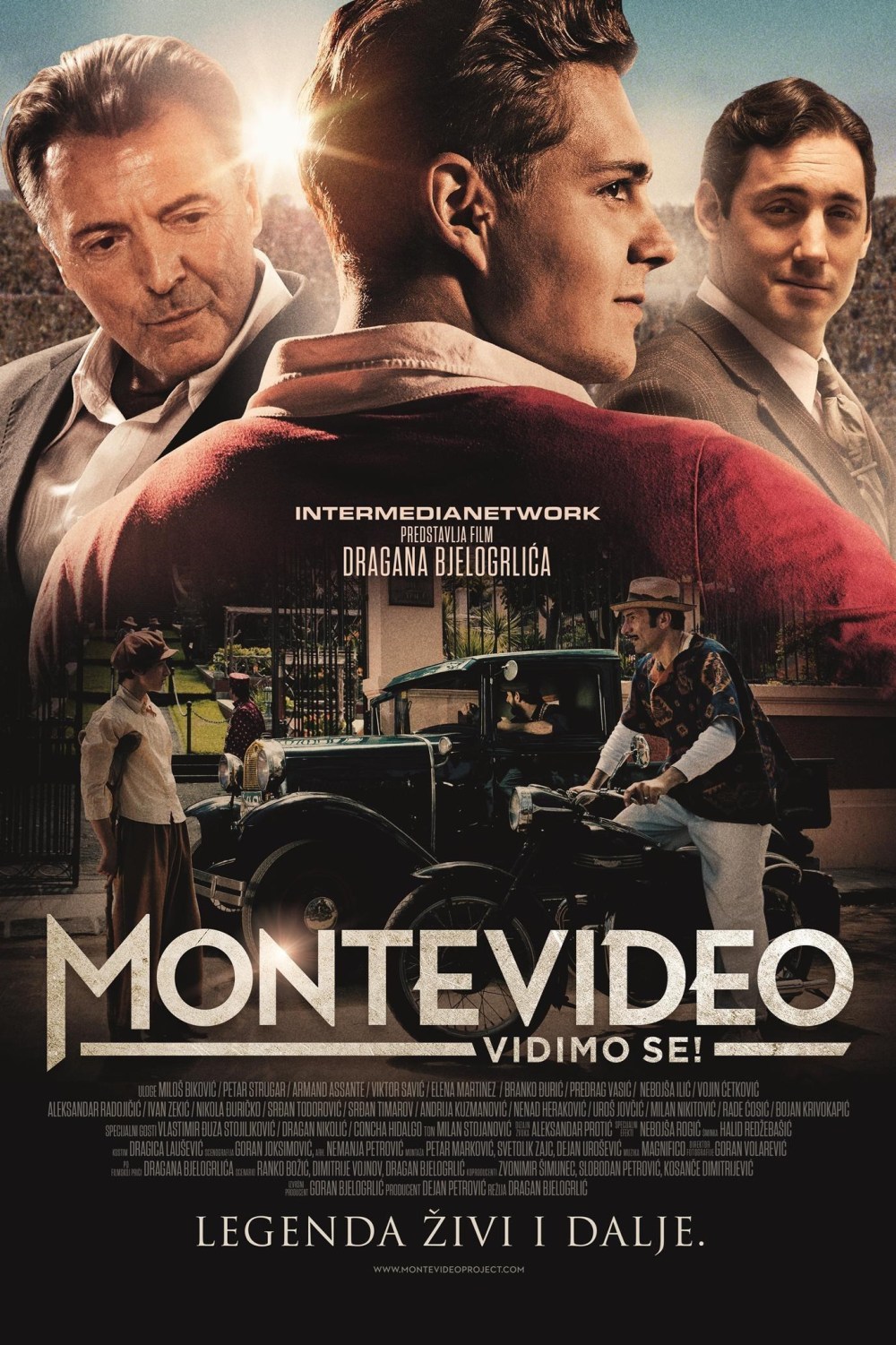
“See You in Montevideo” was the Serbian entry in the Best Foreign Language Film for the 87th Academy Awards, and it is a sequel to “Montevideo: Taste of a Dream.” It takes us back in time to the first World Cup which was held in Montevideo, Uruguay and follows the national soccer team of Yugoslavia. These players have never been outside of their home country before, and everyone else views them as outsiders to where many of their competitors treat them with utter disdain. However, they eventually win people over thanks to their youthful enthusiasm and their love of soccer. But as the games go on, we see how their love of soccer threatens to be crushed by corrupt forces beyond their control.
Both “Montevideo: Taste of a Dream” and “See You in Montevideo” were directed by the same director, Dragan Bjelogrlic. In addition to being a filmmaker, he is also an actor who is considered by many in his country to be a “Serbian Robert Redford” as he is typically cast in roles where he plays a charismatic criminal like Čika Kure in “The Wounds.”
Bjelogrlic was in Los Angeles for a screening of “See You in Montevideo” at the Landmark Theatres back in 2015, and I was lucky enough to spend a few minutes with him afterwards to talk about it.
Ben Kenber: This was a wonderful movie. I have to apologize because I haven’t seen the first movie yet.
Dragan Bjelogrlic: Oh no, no. I prefer people who have not watched the first movie because my whole idea was to make a totally independent second movie and totally independent story which is the global story. When we decided to make two movies about the same subject, I organized all of that and I said to my producer, “What do you think? Maybe I’ll make the first movie and then get something else to make the second movie.” But after the success of the first movie he said, “No, no! You must! Just forget about the first movie and try to make something else.” So I like spectators who didn’t watch the first movie (laughs). No really! And you’re right, (if you have) watched the first movie you will feel more comfortable.
BK: That’s a good point because this movie does feel like it stands on its own. I also found it fascinating how the movie chronicles the love of the sport and how it gets corrupted by greed and politics towards the end. How did you go about researching all this project?
DB: I read a lot of articles and a lot of books which were made about soccer. It’s the most popular sport. And there were a lot of journalists that wrote about it, and people didn’t read it back then. There were some people who were aware of what things were going on. There was the enthusiastic period where they were pioneers, and the people who created it first were very enthusiastic and it was good. The first World Cup was very good, but when 100,000 people come it’s some big plan. Okay let’s make some compromise, but it’s really very sad. We are witnesses now.
BK: Regarding the actors who played the soccer players, did you want real soccer players cast or were you just comfortable casting actors whether they had soccer experience or not?
DB: They are actors. At the beginning some of them were students and some of them were actors, but I try to combine actors and athletes. Thanks to God, we Serbs are good at both (laughs). We had a lot to choose from so it was not a difficult choice. That’s something which was not such a big problem. The only problem was the bind. Like somebody said, “Oh people in Uruguay, they will not like this.” It was a problem for me, but they find this fact that the policeman gave back the ball and somebody covered that. I said aha, this could be a subject. Who knows in which kind of sports football will be developed? That’s something which was my idea.
BK: In the process of turning this true story into a movie, did you have to take any dramatic license with the facts at any time?
DB: No. We just followed the facts and we tried to be precise with all facts especially with the match between Yugoslavia and Uruguay. What has happened? Who got the first goal? Who was the referee who canceled the first goal? It’s all the facts you can find in articles. There is my concession that the facts are facts.
BK: What’s up next for you?
DB: I don’t know. I have a lot of opportunities. My main job is as an actor, that’s my main profession. I like to act a little. This may be comfortable for me, but it’s not necessary for me to direct. If I find something which I feel (strongly about), I will direct.
Big thanks to Dragan Bjelogrlic for taking the time to talk with me. “See You in Montevideo” is now available to own and rent on DVD, Blu-ray and Digital.
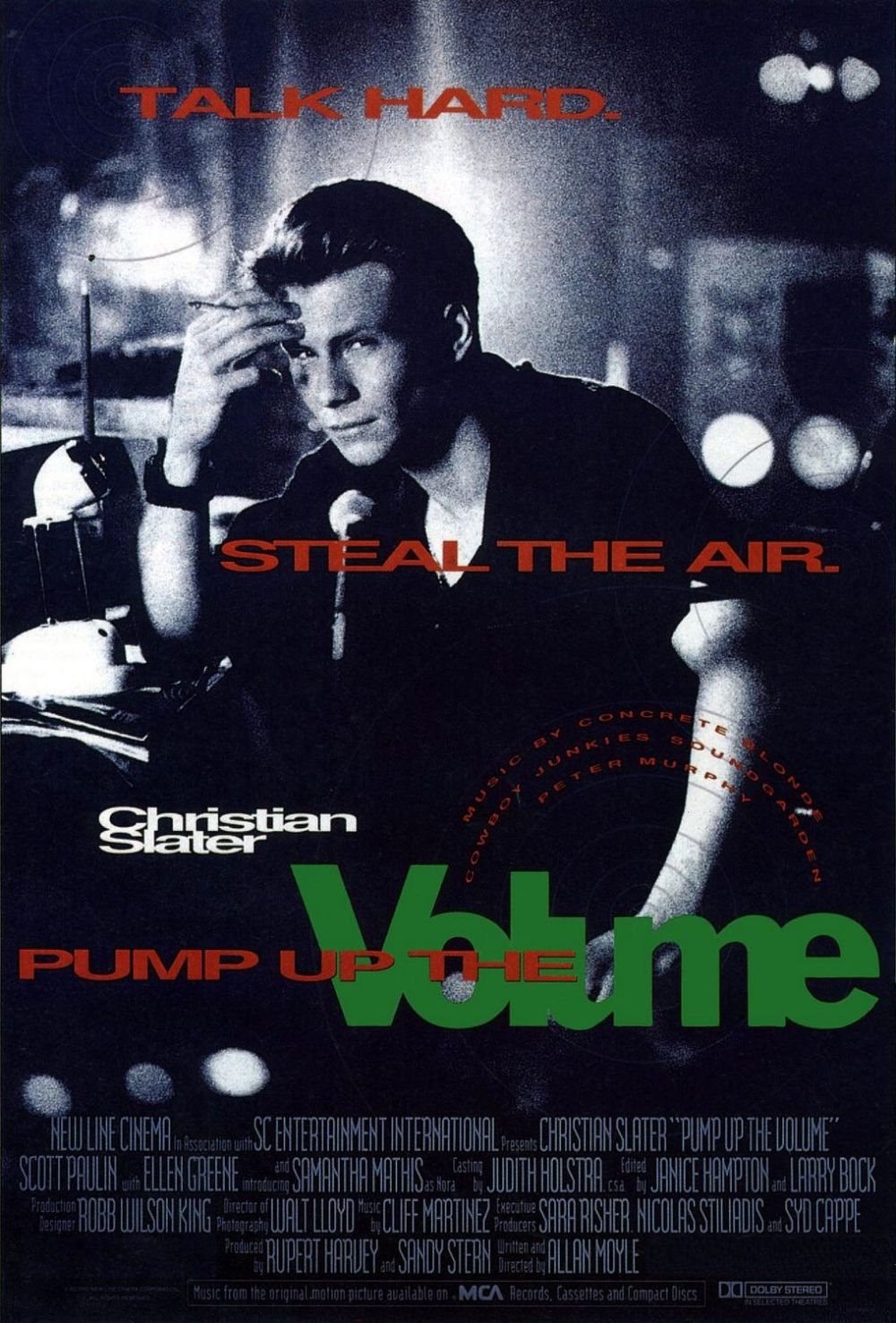
Of all the movies I have seen about being a teenager, “Pump Up the Volume” is still far and away my favorite. It is also the one which hit me the hardest emotionally as, after seeing all these movies about nerds and jocks fighting each other on school grounds, this one had characters I could actually relate to. I grew up during the years of “Beverly Hills 90210” which infected us with a fantasy version of the high school experience where you could have your troubles as a teenager but would still come out of it with a smile, a cute boyfriend or girlfriend and some fancy, fancy clothes which made you look oh so incredibly cool. This movie does not exist in that fantasy world, thank goodness, and I would love to see Hollywood produce more movies like it.
Allow me to give you some background information about myself as it will inform how strongly I feel about this movie. My family had moved around quite a bit when I was a kid, but it actually didn’t bother me much until we moved from Southern California to Northern California. I lived in Thousand Oaks for five years, and at that point it was the longest I had ever lived in one place. For once I felt settled, and then my dad quit his job and got a new one up north in the Bay Area, and my whole life went into major upheaval as I had no choice but to move with my parents and away from a place which truly felt like home.
I had to start all over again making new friends, and even after all these years it still feels so unfair to have been put through this moving thing one time too many. I became very antisocial and withdrawn as I was so frustrated and depressed at this situation I was thrown into. For a while, it felt like I could not talk to anybody as I didn’t know what to say. In retrospect, the fact I got through adolescence in one piece seems like a miracle.
“Pump Up the Volume” features a character who went through something very similar. Christian Slater gives one of his all-time best performances as Mark Humphreys, a high school senior who has just moved with his family from New York to a suburb in Arizona which appears to be located in the middle of nowhere. He is a shy and withdrawn kid, clearly not happy about his situation. He can’t talk to anybody, not even to his parents who he feels completely alienated from. But by night he is Happy Hard On, a pirate radio DJ who operates an underground station in the basement of his parents’ new home. While Mark is very quiet in the classroom, he comes to life on the radio and rants about his new neighborhood and the world he is growing up in with complete abandon.
As time goes on, his radio program starts drawing in more and more listeners who relate to what he is going through. Chaos begins to reign at his high school and the adults work to control the situation, having no idea of what the kids are really going through. This scares Mark to the point where he wants to stop doing his show, but since this is one of his biggest outlets for the frustration and aggression he constantly feels, he can’t bring himself to stop. It’s through his venting that he suddenly becomes the voice everyone needs to hear, especially the kids.
“Pump Up the Volume” covers a lot of ground that other teenage movies don’t bother to, and it’s much more down to earth than others in the genre which, for myself, was a huge relief. I got so used to seeing movies about the classroom dork winning the girl of his dreams or beating out the jocks that made him believe he was so uncool. Watching movies like those when I was a teenager just made me feel more ostracized than I already did, so “Pump Up the Volume” was a godsend in how it had a main character I could actually relate to. Adolescents need movies like this to make them realize they are not the only ones going through rough times, and to make them see how being a teenager is not always what we expect it to be.
In one scene, Mark takes a call from a kid who admits he likes guys and ends up describing a truly humiliating situation he got trapped in. In another, he takes a call from a listener who has written him a letter saying he wants to kill himself, and when Harry asks him why, the listener says with tears coming out of his eyes, “I’m all alone.” But as Mark quickly admits, maybe it is okay to be alone sometimes, and that in the end we are all alone. It sucks, but there seems to be no real escaping this fact. Then again, I have no problem with anyone proving me wrong there. I can’t think of another teen movie before this one that dealt with such down-to-earth characters.
A lot of people have complained the adult characters are largely one-dimensional. While I can definitely see some validity in this argument, I also remember seeing these seem people at my high school. Believe me, these people do exist. Annie Ross plays Loretta Creswood, the principal of Hubert Humphrey High, and she is a true bitch in every sense. Loretta lives to see her students get the highest SAT scores in the state, and she has no time for troublemakers whom she sees as having no interest in education. I have friends of mine who are teachers, and they do not hesitate in telling me just how much they hate the principals they work with. The way they are described to me, they are just as bad as the one Ross plays in this movie.
Then you have Mark’s dad, Brian (played by Scott Paulin), who at first seems oblivious about how to deal with his son’s problems, but then he turns out to be the students’ savior when upon realizing they need to be heard, not talked down to. At the same time, Loretta doesn’t show the least bit of regret in expelling those students she feels are undeserving of an education. Paulin is terrific in making Brian seem like much more than the average parent, and he makes the character a heroic educator as we how much he values the fact everyone has the right to an education.
Another great performance comes from Samantha Mathis who plays Nora Diniro, a total rebel and a free spirit who never apologizes for who she is. Nora ends up befriending the terribly shy Mark, and she later comes to discover his secret identity. Nora eventually becomes Mark’s conscience as she makes him realize the powerful effect he has on the kids in the town and on her as well. When he wants to back out when things get too dangerous for him, she angrily reminds him he has a responsibility to the people who believe in him.
There’s a great scene where the two of them are outside in Mark’s backyard when he desperately wants to communicate to Nora, and she tries to make him as comfortable as possible. Nora even ends up taking off her sweater and stands in front of Mark with her breasts bared; forcing Mark to look into her eyes as they quickly make a connection not easily broken. Both Slater and Mathis have fantastic chemistry together, and Mathis creates the kind of free spirited character we all would have loved to have been like in high school.
“Pump Up the Volume” climaxes with the walls closing in on Mark as the adults try to figure out his real identity and shut him down for good. The fact he continues to be defiant even as the authorities get closer and closer to catching him was really inspiring to me. You want to see him, in the words of Jack Black from “School of Rock,” stick it to the man. Then Slater delivers this piece of dialogue which still stays with me:
“High school is the bottom. Being a teenager sucks, but that’s the point! Surviving it is the whole point! Quitting is not going to make you strong, living will. So just hang on and hang in there.”
“Pump Up the Volume” still resonates very deeply for me all these years later. It came out in the summer of 1990 which was, ironically the summer before I started high school. This movie became one of the things which kept me going through adolescence even when I got very, very depressed. Unfortunately, it was a box office flop on its initial release, but it has since gained a strong following on home video and DVD. It’s a following I hope will continue to grow, and maybe if we’re lucky, there will eventually be a special edition DVD and Blu-ray containing documentaries, trailers, audio commentaries and even music videos. Hey, Criterion Collection, are you listening?
“Pump Up the Volume” also contains one of my all-time favorite soundtracks. My only problem with it is it doesn’t have Leonard Cohen’s version of “Everybody Knows” which serves as the perfect song to open the movie with. Instead, we have the version by Concrete Blonde which comes on towards the end when Mark makes his last stand against the powers that be. I certainly don’t want to take away from their cover of the song as they did a great job on it, but Cohen’s version is perfect fit for Mark’s state of mind. It also would have been cool to get some of Cliff Martinez’s film score on the soundtrack as well as I really loved how it sounded. Still the soundtrack does have a lot terrific tracks from The Pixies, Soundgarden, Cowboy Junkies and Sonic Youth.
For me, “Pump Up the Volume” was a godsend. It gave me a character who was dealing with the same problems I dealt with when I was a teenager, and there were few, if any other, movies which contained individuals like him. Most teen movies back then just left me with a never-ending feeling of utter resentment as they featured kids who got to experience things I never did and felt robbed of. All the misfits, social rejects and those who felt dejected and rejected need and deserve a movie like “Pump Up the Volume.” After all these years, it remains very close to my heart, and I would not hesitate to recommend it to anyone.
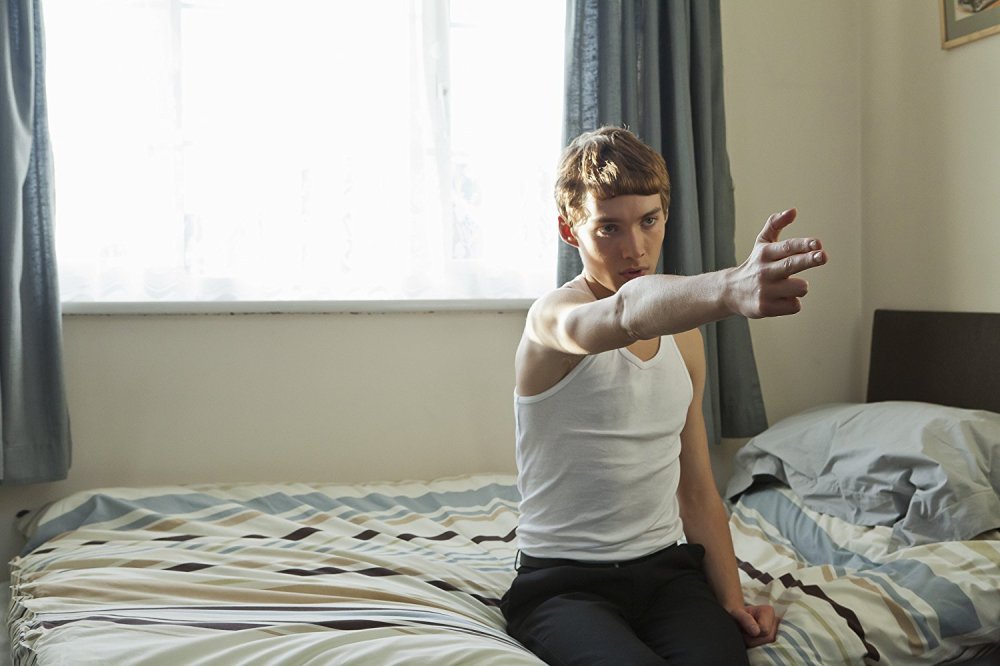
In “U Want Me 2 Kill Him?,” Toby Regbo gets one of his biggest and most memorable roles yet. The movie is based on a true story which was chronicled in Vanity Fair about a 16-year old schoolboy who gets arrested for attempted murder. His explanation was he was working under orders from an MI5 agent, but the truth of the matter ends up revealing something far more shocking.
Regbo plays John, a lonely boy who gets picked on at school and is later befriended by one of the most popular students there, Mark (Jamie Blackley). The friendship comes about because John’s sister Rachel (Jaime Winstone), whom Mark has developed an online relationship with, asked him to look out for John. But when Rachel is found murdered, both John and Mark in their devastation vow revenge against the person who took her life. What happens from there is not worth giving away, but it resulted in one of England’s most shocking crimes and showed us all how much of a threat the internet can be.
I got to speak with Regbo over the phone about his role back in 2013. During our conversation we talked about how his role reminded him of his years as a teenager, how much time he spends on the internet, the challenges of playing a character based on a real life person, and he even gave me an update on “Maleficent” which he was cast in.
Ben Kenber: Were you aware of the Vanity Fair article or the true-life story this film was based on before you got the script for it?
Toby Regbo: Not before I got the script. I read originally for Mark, the other character that Jamie Blackley ended up playing which is a good thing the roles ended up that way. But no, I didn’t know anything about it until I auditioned for it, and then once I got close to getting the part then I started looking further into it. I read the article and I also had some information that wasn’t in the article. I met the journalist who wrote the Vanity Fair Article (Judy Bachrach). In fact, she came to the set. But once you know the story, you want to know as much as possible about the case. It’s so mental that this happened.
BK: What appealed to you most about the role you ended up playing in the film?
TR: It’s hard to talk about the film without giving too much away.
BK: Yes, that’s true.
TR: I guess the interesting thing for me was trying to play the scenes in the movie without giving any tells to the ending. That was the key for me, trying to create something that was believable enough that you don’t see it coming I guess, at least for not a long way away.
BK: Yes, that must have been tricky because you read the script and wonder how you can keep from revealing everything. That must have been a challenge for everybody involved.
TR: We did a lot of rehearsals which is great. It’s the most rehearsal I’ve ever done before starting a film. Andrew Douglas, the director, and his wife Lenore sort of coached us (me and Jamie) through the movie. We did three or four weeks of rehearsals beforehand and working everything out. It was about just trying to keep them real, trying to find out exactly what motivated them. We did a whole bunch of work with sort of character objectives. We used this book called Ivana Chubbuck’s “The Power of the Actor” and we worked out what motivated our characters.
BK: Do you prefer to do a lot of rehearsal before you shoot a movie or does it depend on what movie you’re working on?
TR: It just depends on the whole vibe. I do like rehearsals, but at the same time the best stuff that ever happens is stuff that you don’t plan for. You can do things to death, but you just got to get out and do it for real. I’m doing this TV show and we’ve been shooting for like ten months now, and I’ve never shot that long before. It’s like a different process. You shoot like 8 pages a day, you get scripts like a couple of days beforehand, there’s not much preparation time and you just got to sort of go with it. It’s great training as an actor.
BK: I agree. The chemistry you have with Jamie Blackley onscreen is terrific and you two come across as very down to earth and really good friends. This makes the eventual unraveling of their friendship all the more painful to witness. How did you two develop that chemistry?
TR: It came to us naturally. Jamie is one of the easiest people to get along with that I ever met in my life. And also at the same time, when we started filming we both had fallen in love with girls at the same time, so we had that camaraderie on set. We were always talking about how long we should wait until we say I love you to a girl, so we both had that commonality. It worked out for Jamie, it worked out for me.
BK: Before you made this movie, did you spend a lot of time on the internet and in chat rooms?
TR: I’ve never been in a chat room before. There was a time where we used to go on MSN Hotmail a lot when I was like 14 which was a fucking nightmare. More than anything else, the social media revolution has helped kids talk shit about each other at an exponential rate. It’s been a lot of fun on there talking about who kissed who and what boy did what, and that was a great fucking waste of time for a couple of years. I’ve sort of grown away from it now. I thought I go and do a lot of other things than just waste all this time online.
BK: Were you able to do a lot of research on the person your character was based on? We find out at the end of the movie that a lot of information can’t be revealed due to certain laws in England.
TR: Yes, and I think that’s for the best. The character that I play, I based it on the script which was based on the Vanity Fair article. But I felt very distant from whoever this unknown boy, now a man, is. I don’t know the name, I don’t know who he is, I have no connection with him at all and I think that’s the way that it should be. On Demand on my TV earlier today I saw the trailer for the “Diana” movie. The story is about Diana and how the press ruined her life and how they like ended it. However you want to look at it, it was this terrible event that happened and now she’s dead, but they’ve made a fucking movie about it. I mean the hypocrisy of like saying oh look how terrible it is that the media ruined her life, and then they’ve made a movie about it. That doesn’t seem to make any sense. But I did feel a responsibility playing someone who is real. Although they did a very terrible thing, they shouldn’t have to have this film on their shoulders for the rest of their lives. It based on a true story, but there is this creative license in it.
BK: It’s interesting because with certain movies that are based on true stories, many actors feel the need to learn as much as they can about the real person they are playing to the point where they fall into the trap of impersonating them. I guess knowing less about the person your character was based on was probably more freeing for you because you weren’t shackled to that.
TR: Yeah, I mean I think for some actors they love that. They really want to get inside the heads of the real person, but I find it very, very strange to try sort of mesh this other person over the top of you especially when it comes to your voice and like doing an accent and that sort of thing. I think its dangerous territory where it can become an impersonation. I would always approach playing a real person with extreme trepidation, but in this case I felt like I was playing the character that was written on the page rather than this actual boy who is out there in the real world.
BK: I imagine you’re not far from the age of the character you play in this film. Did playing this role bring back any memories of being a teenager for you?
TR: I was 19 when we filmed it and I’m 22 now. Bringing back memories of a teenager would’ve only been one year. To be honest, being a teenager is fucking shit most of the time. Kids are really, really horrible, and I totally understand escapism that both of these boys are sort of trying to pursue through the power of the mundane inanity being a teenager growing up in the suburbs trying to have the “mad life” as Mark would put it.
BK: I see that you were cast in Disney’s “Maleficent” as the young Stefan. Can you tell us anything about that movie?
TR: Well I can tell you that I’m not in it (laughs). I worked two weeks on that and there was some studio nonsense. Basically they wanted the character that I was playing to be younger, much younger. We were doing this prologue to the film and they wanted 10 rather than 16, but they waited two weeks into filming before making that decision. I’m still glad that I got to be on that set. I’ve never done anything like that before, and I hope that it turns out well. It’s amazing what they are doing there, and I never been in something with such a big budget. Just the level of detail… There were these chests on the set, these like fairy chests or whatever, and you open them and they are like filled with all these intricate gilded swords and beautiful linens and stuff. The level of detail was amazing. I’m sad I’m not a part of it.
I want to thank Toby Regbo for taking the time to talk with me. “U Want Me 2 Kill Him?” is now available to own and rent on DVD, Blu-ray and Digital.
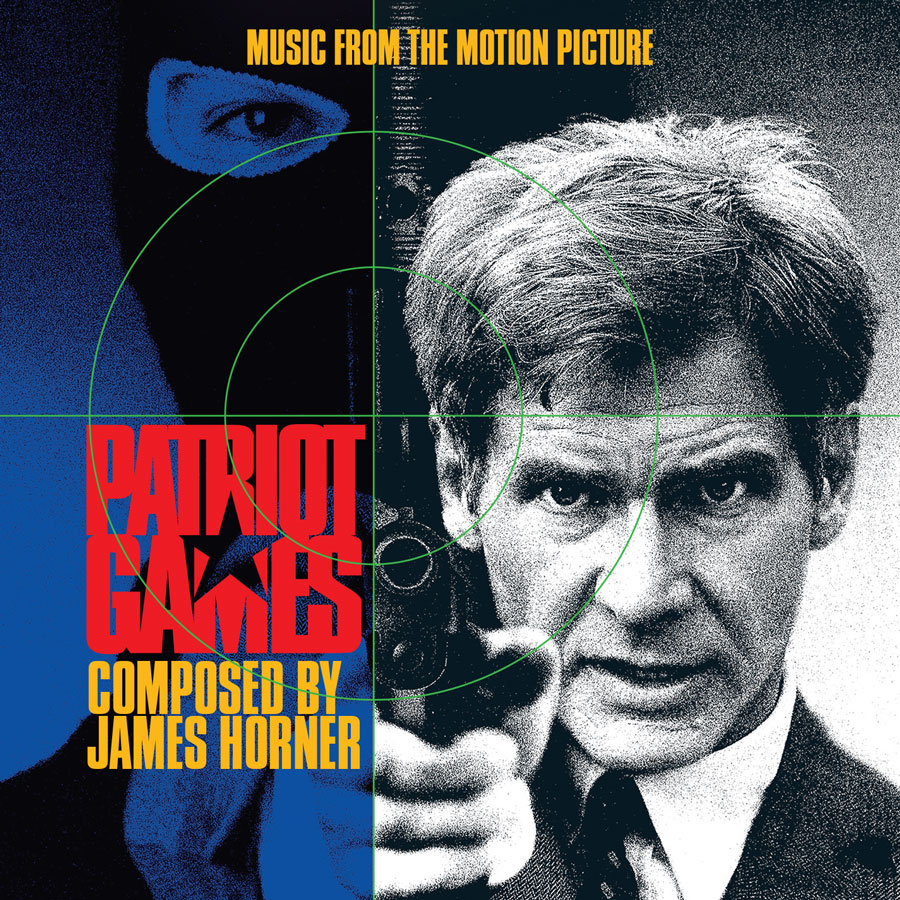
“Patriot Games” was the second Tom Clancy novel adapted to the big screen after the huge critical and commercial success of “The Hunt for Red October.” But in the process of bringing Clancy’s heroic character Jack Ryan back for another adventure, many changes ended up taking place. John McTiernan stepped away from the director’s chair and Phillip Noyce came on board, Alec Baldwin was replaced by Harrison Ford, and Basil Poledouris stepped aside for James Horner who at the time was an A-list composer very much in demand.
La La Land Records has released a remastered and expanded soundtrack to “Patriot Games” which contains a lot of music never before released, source cues and the Clannad song “Harry’s Game.” The film has Jack Ryan stopping an IRA assassination attempt on the Royal Family, but this makes him the target of a renegade faction of terrorists, especially Sean Miller (Sean Bean) whose brother Ryan ended up killing. In scoring this action and suspense film, Horner creates a surprisingly understated score which features lovely Irish and Gaelic flavors, and he combines both electronic and orchestral music to highlight the movie’s action set pieces.
Now most action scores start off with a thunderous main title to get the audience all hyped up, but the main title for “Patriot Games” is surprisingly subtle and not the least bit bombastic. This turned out to be an excellent move on Horner’s part as this film proves to be a more personal one for Jack Ryan than “The Hunt for Red October.” Among my favorite tracks are “Attempt on the Royals” which underscores Ryan’s heroic save and the loss of Sean Miller’s brother, “The Hit” in which Jack rushes after his family to save them from the vengeful Sean, and “Assault on Ryan’s House” where IRA terrorists make their last effort to eliminate the brilliant CIA analyst. I’ve always been a sucker for adrenaline pumping film music, and Horner was one of the masters at composing it.
At the same time, I really liked the low-key music he comes up with like “Closing Credits” which is a piece of music great to fall asleep to. I kept thinking it was one of the singers from Clannad who did the backing vocals on this track, but it was actually Maggie Boyle whose voice is nothing short of heavenly. Horner is great at finding the humanity in the characters inhabiting an action movie, and his music can be both thrilling and highly emotional at the same time. Not many film composers can pull off such a feat.
Among the previously unreleased tracks, it was nice to see “Sean Obsessing in Jail” on this release as Horner gets at what is eating away at Sean whose obsession for avenging his brother’s death continues to grow and grow, and I also got a kick out of “Cooley Escapes” which follows a minor character in the film who suddenly discovers he is under police surveillance. As for the source cues, they include the “Washington Post March,” some traditional Irish music and some pieces composed by Mozart, I’m not sure how necessary they were to this edition of the “Patriot Games” soundtrack. At the same time, those additions prove just how serious La La Land Records is about giving fans the most complete soundtrack to a movie they could ever hope to have.
One interesting thing about this particular La La Land Records release is it doesn’t contain the original commercial release of the soundtrack. Other releases of theirs have had them on a second disc as a bonus for those who liked the original version. But in the end, I guess they decided not to include it because everything from the original release is on these two discs anyway. I do need to point out, however, there are two different versions of “Closing Credits” on this expanded version. One is listed as the film version, and the other is listed as the album version. The difference between the two is the film version is in English and the other one is not. Regardless of which version you find yourself liking more, it is great to have both of them here.
And like many La La Land Records releases, it does come with a booklet detailing the making of the soundtrack and the movie itself. The booklet is entitled “The Pluck of the Irish,” and was written by Jim Lochner who is the managing editor of FSM Online and the owner of the website FilmScoreClickTrack.com. Now I have reviewed several La La Land Records releases, but the booklet for “Patriot Games” is one of the best they have ever put together as Lochner covers just about every single detail about the movie more than ever before.
Among the memorable passages are why Neufeld didn’t bring McTiernan back for “Patriot Games,” how Baldwin reacted to not getting cast in the film, and how Clancy was constantly upset about the changes made in bringing his book to the big screen. In describing Horner’s score, Lochner writes it is a “subtle, understated score that percolates underneath the surface, conveying the tension of a family under siege and the terrorists’ patriotic Irish roots.” I think this is the perfect description for the music of “Patriot Games,” and Lochner, in writing about the other tracks, makes the case for why Horner should have received more attention for it when the movie came out in 1992.
Once again, La La Land Records has given film music fans another remastered and expanded soundtrack which is a must buy. In a career that has seen him create unforgettable film scores for “Titanic,” “Star Trek II: The Wrath of Khan” and “Glory,” Horner’s score for “Patriot Games” stands out as one of his most unique. It is at times an understated and at other times a pulse pounding listen, and the Irish elements he puts in reminds us of what a masterful composer he was. Now it has the soundtrack edition it has long deserved.
Anybody who knows me best knows I am a huge fan of film scores and soundtracks, and James Newton Howard’s score to “Grand Canyon” is one of my all-time favorites. I knew at some point this score would get an expanded and remastered soundtrack, and La La Land Records finally came through with this limited-edition release. While he is better known for his music to “The Prince of Tides,” “The Fugitive,” “Batman Begins” and “The Dark Knight” which he worked with Hans Zimmer on, “Grand Canyon” remains my favorite work of his as the music provides a soothing heartbeat to this movie.
The movie “Grand Canyon” came out in 1991 and was directed by Lawrence Kasdan and written by him and his wife Meg. Its story revolves around six different Los Angeles residents whose lives intertwine with one another over the course of a few days. It all starts when Mac (Kevin Kline), while driving home from a Lakers game, drives into a bad neighborhood where his car breaks down. Just when it looks like he’s about to be killed by a gang, tow truck driver Simon (Danny Glover) rescues him and the two end up becoming unlikely friends. Many called it “The Big Chill” of the 1990’s, but “Grand Canyon” more than stands on its own as it observes the lives of Los Angeles residents who are dealing with personal issues which are tearing them apart.
What I love about Howard’s score is how it combines so many different kinds of music, be it orchestra, electronics, rock, jazz or percussion, to create a film score so unique to where I have a hard time comparing it to any other. It captures the coldness of big city life while giving the characters stuck in it a sympathetic voice which understands how they feel. The “Main Titles” hooked me right away and made me feel so at ease even though I knew this movie was not going to be a fairy tale.
La La Land Records limited edition release of “Grand Canyon” includes twenty-five minutes of music not included on its original release. Soundtracks, back in the 1990’s, were limited to having only forty to fifty minutes of music on a compact disc, so a lot of great stuff got left out as a result. It’s been over twenty years since this movie came out, but the music remains as powerful as ever. In addition, there are some bonus tracks which are alternate takes on certain themes as well as some source music for a violent film which Davis (Steve Martin) has produced with an unrestrained glee.
As usual, La La Land Records has provided an informative booklet on the making of “Grand Canyon” and its music which is entitled “Scoring the City of Angels” written by Daniel Schweiger, soundtrack editor of AssignmentX.com and Filmmusicmag.com. Schweiger writes extensively about the making of the movie and of how Howard came up with the music for it, and I’m not sure we have had as much detailed information on the creation of this score previously. Each track on this disc gets an individual write up, and it’s nice to see someone, let alone anyone, give this soundtrack the attention it deserves.
If there’s any downside to this edition of the “Grand Canyon” soundtrack, it’s that it doesn’t include the song “Searching for a Heart” by the late Warren Zevon. Usually La La Land Records is able to get all the songs from a movie’s original soundtrack, but I guess there was an issue with the rights this time around. It would have also been great to have the other Zevon song featured in this movie, “Lawyers, Guns and Money,” included as well. Mac plays it while he’s driving home from the Lakers game, and the lyrics turn out to be quite prophetic for him.
“Grand Canyon” is truly one of the unsung cinematic masterpieces of the 1990’s, and what’s sad is most people don’t know about this movie today. This proved to be my introduction to the work of James Newton Howard, and it is one of the main reasons why this movie is so great. I am thrilled to see La La Land Records has taken the time to make Howard’s score sound better than ever before. While he didn’t get an Oscar nomination for his work here (he was instead nominated that same year for “The Prince of Tides”), there’s no doubt in my mind this remains his most memorable film score to date.




 The Ultimate Rabbit