‘Private Eyes’ by Hall & Oates – My First Vinyl Album
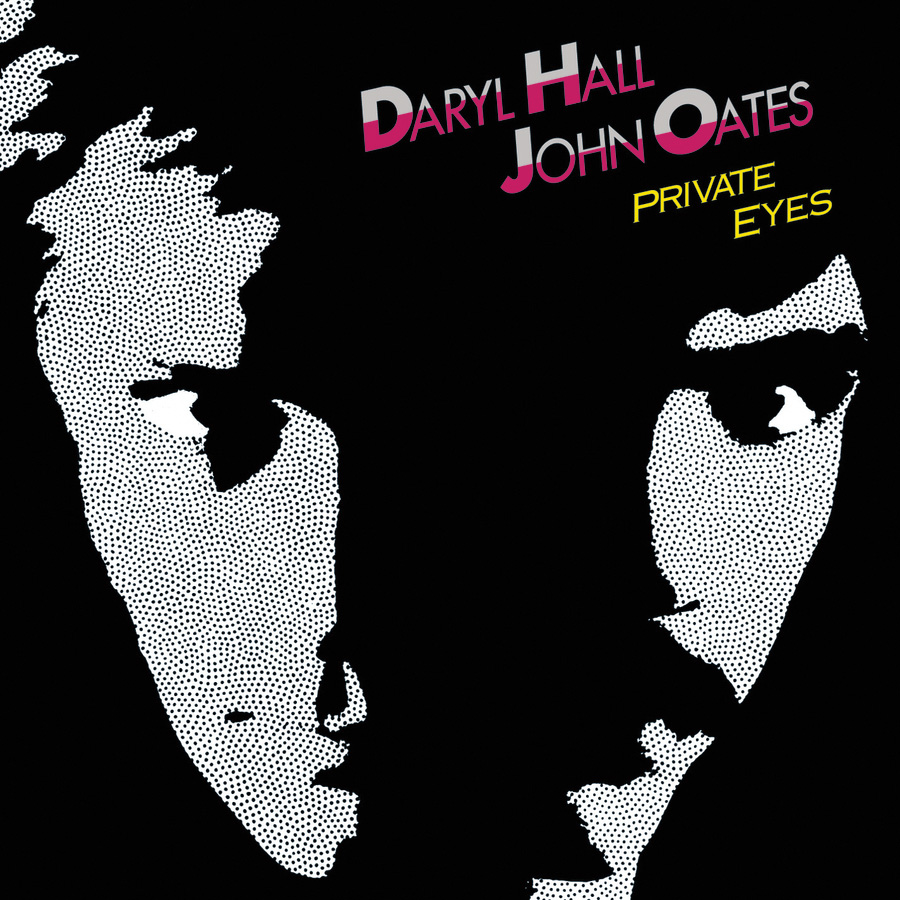
Private Eyes album cover

Hall & Oates’ 1981 album “Private Eyes” was actually the first vinyl record I ever got which I could call my own. Years ago, my mother offered to buy me and my brother one vinyl record each, and we were both really excited at the prospect of having one of our own since our parents owned several dozens of them, many of them by Fleetwood Mac and The Beatles (they have great taste in music). I don’t remember exactly why my mom did this. Maybe we were well behaved or something (a rarity for the two of us as kids).

Anyway, my brother got this KTEL album (remember those?) called “Radioactive‘ which featured popular songs of the moment from Devo (their cover of “Working in a Coalmine” is one of my favorites), REO Speedwagon, Rick Springfield and Blondie among others. “Radioactive” was the equivalent of those “Now That’s Music” CD’s which get released every other month, but the music on this particular album was excellent and never groan inducing, and it was a good selection by my older brother.

But for me, my choice was clear from the start, and it represents one of my most decisive decisions at a video or music store.

I first got exposed to “Private Eyes” when I was in Kindergarten thanks to my friend Matthew who lived down the street from me in Marietta, Georgia. Matthew had the album on cassette and we kept listening to the title track endlessly, and when those claps came into play, I made it look like I was punching myself. This made the two of us laugh hysterically, and we didn’t listen to much else on the album at the time. That one song seemed to be enough for the two of us.

But later, we started to listen to “I Can’t Go for That (No Can Do)” which I had heard on the radio, but I didn’t realize right away it was also on the “Private Eyes” album. Cool, I thought, this tape must have a lot of good songs on it. Sure enough, it did! Just before I got the album on vinyl, “Did It in A Minute” became Hall & Oates’ latest hit song. Getting “Private Eyes” at that point seemed like a do or die mission in retrospect. Come to think of it, it was!

I still have a lot of memories from listening to this definitive Hall & Oates album after all these years. My brother and I were dancing without a care to these songs, especially to “Did It in a Minute.” This was back before we both became saddled with those inhibitions which more or less came to define the adults we are today. Sometime later, my family moved from Marietta, Georgia to Thousand Oaks, California, and “Your Imagination” started playing on KIIS FM, back when Rick Dees was the morning disc jockey. I thought it was a very cool song, and I later realized it was also on the “Private Eyes” album as well. For me, this album now seemed so magical because it had so many great songs on it, and if there was a song I heard on the radio which I liked, it had to be from this album!

“Private Eyes” was just an infinitely fun album to listen to, and this is still the case more than 30 years after its release. It is one of several records from the 1980’s I can never get sick of listening to, and it always brightens my mood whenever I put it on. Hall & Oates went on to become a dominant musical duo during the 80’s with this album as well as “H2O” and “Big Bam Boom,” but neither of those albums, despite having some awesome tracks, could hold up as well as “Private Eyes” did.

Of all the songs here, I still think the best one is “I Can’t Go for That (No Can Do).” While the other songs might seem stylistically dated, this one feels timeless and could fit in with the music of today. For a time, it was the ring tone on my cell phone, and when went off in the office I used to work in, a fellow colleague remarked about how Hall & Oates once auditioned for Smokey Robinson. Robinson ended up not hiring the duo, and he later admitted it was one of the biggest mistakes of his life.

Of course, I don’t want to leave out other songs like “Did It in a Minute” which ends the first side of the record. A great up-tempo song, it was one which got me really excited about life when I listened to it (I was 5 or 6 at the time, so what did I know?). Going onto the second side, we have “Head Above the Water” which proves to be an appropriate selection to listen to during aerobic exercises. Lesser known songs like “Tell Me What You Want” and “Some Men” resonated strongly for me even when I didn’t understand the lyrics. Then again, it took me a long, long, long time after the first grade to really pay attention to a song’s lyrics. The music itself was all that mattered to me at the time.

I always kept wondering about John Oates though. Daryl Hall was always the most prominent of the duo, and John seemed to be there mostly as backup. I wonder if Mr. Oates ever got seriously resentful of Mr. Hall in a “Fatal Attraction” kind of way. But they are still together, so I guess it never got quite that bad. John, however, proved he is every bit as good a singer on songs like “Mano a Mano” and “Friday Let Me Down,” a song title which would have a depressing significance on me during my adolescent years. It didn’t even matter how I had no idea what “Mano a Mano” meant (it would be several years before I took my first Spanish class) because the song itself has a catchy rhythm which every decent 80’s song needed to have.

It should also be noted how Hall & Oates were a big hit on the R&B charts with their music back then, and this was a rare feat displayed by what some would call a “white act.” While many of us today may laugh at white people doing what others simply saw as “black music,” this musical duo was never seen as a joke, and they were respectful of the influences which inspired their musical choices. The song “Looking for a Good Sign” was actually dedicated to the original lineup of The Temptations, a huge influence on their work. The duo would later perform with two of the vocalists from The Temptations on the “Live at The Apollo” album.

“Private Eyes” is not an album with any big theme to hold all these songs together. It is not a concept album like Pink Floyd’s “The Wall,” an album which took me many years to fully appreciate. In the end, “Private Eyes” is still an endlessly entertaining album which can never be construed as boring, and it holds up really well. I still love listening to this album to this very day, and it remains one of my favorite albums of all time. Considering how it was my first vinyl record, it will forever hold a special place in my heart.

Years later, I did purchase the remastered CD of “Private Eyes, but I do still have the original vinyl record in my possession. Believe me, I will never get rid of it. Ever.


 

Music Review: ‘Houses of the Holy’ by Led Zeppelin

Led Zeppelin Houses of the Holy album cover

With “Houses of the Holy“, Led Zeppelin gave the world one of its greatest albums. Filled with a variety of unforgettable songs, it takes you on a musical journey which very few albums are able to do these days. It’s also the first album which they did not name after themselves, a curious habit Peter Gabriel picked up on when it came to naming his first three solo albums. It also captures the band at a key turning point where they began experimenting with sound designs which they used to great effect here and on future releases.

This sound experimentation is immediately apparent on the album’s first track “The Song Remains the Same”. Listening to it, you might think Jimmy Page was playing three guitars at once and using his toes to play at least one of them. Either that or he’s riffing off on his double-necked Gibson guitar. The song’s title is indeed ironic because even if this one does remain the same, nothing the band has done previously can easily compare. You can feel Page’s excitement as he layers one of his guitar licks on top of another as he creates rapturous dimensions which surround Robert Plant’s passionate vocals.

The other great thing about “Houses of the Holy” is it has the band exploring a variety of musical styles. Most of their albums up to this point were inspired by blues music, and with this one they almost leave that genre completely in the dust.

The second track, “The Rain Song,” has them playing one of their many great love ballads. Then there’s “The Crunge” which has them grooving obsessively to the funkiest beat imaginable, and it’s one of their most entertaining tracks as well as the kind you never want to end even if Plant never finds “that confounded bridge”. Along with the band exploring reggae music with “D’yer Mak’er” and even experimenting with doo-wop on the last track, “The Ocean”, you can tell every band member had the greatest time recording this album.

Some of the best Led Zeppelin songs have the listener feeling like they are on a journey, and this is definitely the case with “Over the Hills and Far Away” which makes you want to run through the fields. Plant is at his most beautiful here vocally as Page eases us in with his acoustic guitar before throttling into gear with an electric one. This is one of the musical numbers you feel like you are flying high in the sky more than anything else.

But the great thing about “Houses of the Holy” is how each band member make their unique contributions really stand out. When people think of the band, Page and Plant are the first people who come to mind. But then there’s the late great John Bonham who remains unrivaled as the greatest drummer ever, and I still cannot think of another who can match his genius. John Paul Jones never seems to get the same amount of respect as everyone else, and this is a shame as his bass playing here is what really drives the power of these songs, and the riffs he pulls off are truly thrilling.

With “The Crunge” and “The Ocean”, you can feel each band member coming together as one. No single person steals the show from the other on “Houses of the Holy,” and realizing this makes this album all the more enjoyable. Everyone here is on the same page (no pun intended) when it comes to their individual contributions, and you can feel the band’s joy as they perform the music.

Years after its release, “Houses of the Holy” continues to find new generations of listeners who love the music as much as we do, and Led Zeppelin continues to outlast the musical fads Beck sang about in “The New Pollution.” As much as fans want to see the surviving members reunite for another world tour, they don’t need to as their music remains as popular as ever. With this particular classic album, Led Zeppelin expresses an eagerness to stretch beyond their safety zone and explore avenues of creativity they had not previously tapped. It remains one of their best efforts, and there is no doubt future generations will come to love it as much as we do.

‘Dark Phoenix’ is the Worst ‘X-Men’ Movie Yet

Dark Phoenix movie poster

“X-Men: The Last Stand” has long been treated as the bastard stepchild of the “X-Men” franchise. The Brett Ratner-directed take on “The Dark Phoenix Saga” was sharply criticized by both fans and critics, and it took quite the beating from everyone it seemed including Bryan Singer who left the “X-Men” franchise to direct “Superman Returns,” and Matthew Vaughn who was set to direct this one before dropping out. “X-Men: Days of Future Past” helped wipe the slate clean by altering the timeline to where the events of “The Last Stand” no longer existed. And let’s not forget the scene from “X-Men: Apocalypse” where characters were walking out of “Return of the Jedi” which they felt paled in comparison to “The Empire Strikes Back,” and Jean Grey ends up saying, “Well, at least we can all agree the third one’s always the worst.” Please do not try to convince me this was not a jab at “The Last Stand.”

Now we have “Dark Phoenix,” the twelfth installment of the “X-Men” franchise, and it aims to give audiences a more faithful adaptation of “The Dark Phoenix Saga.” It also marks the directorial debut of Simon Kinberg, a long-time screenwriter in this franchise and someone eager to make up for the mistakes made in “The Last Stand.” With this being the last installment of the 20th Century Fox-produced “X-Men” franchise now that Disney owns Fox and plans to incorporate these characters into the Marvel Cinematic Universe, this one has to be the penultimate sequel of the bunch, right?

Nope, not a chance. With “Dark Phoenix,” Kinberg has given us the worst “X-Men” movie yet. While has a strong cast and excellent special effects to work with, the narrative is badly conceived, the screenplay is muddled, characters actions are ill-defined, and it features the blandest set of villains this franchise has ever had. While these movies have in general proven to be tremendously entertaining, I walked out of this one feeling very indifferent to it as the whole project feels inescapably dull and anti-climatic.

It’s a real shame because “Dark Phoenix” gets things off to a good start as we learn how Jean Grey came to be more or less adopted by Charles Xavier (James McAvoy) after her mutant powers inadvertently get her parents killed in a nasty car accident. From there, the story moves to 1992 when the X-Men fly into outer space to rescue astronauts after their space shuttle is damaged by a solar flare. But in the process, Jean Grey (played by Sophie Turner) absorbs the solar flare in her body and looks to have been killed. But after being rescued, she appears to be just fine, and soon she realizes her psychic powers have been amplified to an infinite degree. It’s like the scene in “Wolf” where Kate Nelligan wakes up Jack Nicholson after he’s been asleep for 24 hours. She asks how he is feeling and Nicholson, with a Cheshire cat grin, replies, “I feel ah… Good!” Yes, and so does Jean until the two separate personalities within her begin to fight with one another and leave a lot of damage which will have insurance agents scratching their heads in disbelief.

From there, everything in “Dark Phoenix” feels routine to the point where I got increasingly weary while watching it. We have been done this road before in the “X-Men” franchise before, and Kinberg fails to bring anything new or fresh to this material. This installment also lacks the powerful emotion which made the best “X-Men” even more enthralling than they already were. A major mutant character is killed off in this one, but this death was already spoiled in the trailers to where the loss feels hollow.

Jennifer Lawrence, who returns as Mystique, does have one good scene in which she chews out Professor Charles Xavier for getting caught up in all the celebrity hoopla foisted upon the X-Men for their heroic efforts they have done. She is quick to remind Charles how the women have at times been the most heroic of the bunch to where she wonders if X-Men should instead be called X-Women. Yes, score one for the Me Too and Time’s Up movements!

Other than that, Lawrence and other actors like Nicholas Hoult and Alexandra Shipp, both of whom return as Beast and Storm, don’t look terribly interested in reprising their roles. Things get even worse as alliances keep shifting back and forth and in ways which seem completely contrived. There was also plenty of laughter throughout the press screening I attended, and I have no doubt most of it was unintentional.

Then there are the villains of this piece, the D’Bari who are a shape-shifting alien race intent on obtaining the power Jean Grey now has. They are led by Vuk (Jessica Chastain, completely wasted here), and they are some of the most banal antagonists in recent cinema history. All of them look as though the life has been completely sucked out of their bodies to where I can’t help but say they each had too many Botox treatments. This alien race leaves very little to the imagination, and they are far from memorable.

Coming out of “Dark Phoenix,” I spent a lot of time wondering how something which came with a lot of promise could have gone so terribly wrong. It also makes me feel sorry for Kinberg as I have no doubt he came into this project with the best of intentions, but the road to hell is always paved with them. Everything here feels very tired and ill-thought, and having Magneto (Michael Fassbender) come back into the action after someone close to him has been killed made my eyes roll as this has always been the case with this character. Didn’t Magneto learn anything from the previous two installments?

What also infuriated me is that “Dark Phoenix” does not provide Quicksilver (Evan Peters) with a rescue scene set to a classic 1990’s song. “Days of Future Past” had this supersonic character saving his fellow mutants to the 1970’s song “Time in a Bottle” by Jim Croce, and “Apocalypse” had him doing the same thing to the tune of the Eurythmics’ 1980’s classic “Sweet Dreams (Are Made of This).” I came into “Dark Phoenix” expecting Quicksilver to do his hypersonic rescue thing to a 1990’s classic song, but no such luck. It could have been something by Nirvana, Pearl Jam, Soundgarden or perhaps Nine Inch Nails (“Head Like a Hole” would have been a great choice). Heck, they could have even used “Dyslexic Heart” by Paul Westerberg.

It’s no secret of how troubled the production of “Dark Phoenix” was. Thanks to poor test screenings, the entire third act had to be reshot. Its release was delayed a number of times as a result, and even though Kinberg describe the reshoots as being a “normal” process for any movie, none of them helped to salvage the cinematic mess we have here.

This is also the first “X-Men” movie not to feature Hugh Jackman as Wolverine as he had played the character for the last time in “Logan.” Indeed, Wolverine is the missing link here as his romance with Jean Grey gave the story much of its emotional power. This same level emotion is seriously missing here as we reach a conclusion which is never really in doubt. Then again, having Jackman romancing Sophie Turner would have seemed a bit strange.

For the record, I liked “The Last Stand,” but I have also never read the Marvel comic books it was based on. Had I done so, perhaps my feelings on Ratner’s film would have been different, but I still found it to be an entertaining ride from start to finish and with emotion to spare. Even if it paled in comparison with the first two “X-Men” movies, it still fared much better than the prequel which came after it “X-Men Origins: Wolverine,” and I did not care for that one much. While I know fans and filmmakers were eager to see a more faithful adaptation of “The Dark Phoenix Saga” come to fruition, the fact this is a complete failure makes it a stunning disappointment and the first real letdown of the summer 2019 movie season. Fans of the franchise will still go out to see “Dark Phoenix,” but the most fun they will have is in analyzing everything wrong with it.

My only hope with “Dark Phoenix” now is that it can drum up interest in the long-delayed stand-alone “X-Men” movie, “The New Mutants.” That one has seen its release delayed for over two years, and 20th Century Fox can only hide it next to the Lindberg baby for only so much longer.

* ½ out of * * * *

Olga Kurylenko Talks About Losing Herself in Terrence Malick’s ‘To the Wonder’


To The Wonder Olga Kurylenko

WRITER’S NOTE: This article was written in 2013.

While former Bond woman Olga Kurylenko gave a compelling performance in “Oblivion,” she gives an even greater one in Terrence Malick’s “To the Wonder.” As Marina, a European woman who moves with her American boyfriend Neil (Ben Affleck) to Oklahoma, she is fascinating to watch as she goes from being deliriously happy in love to becoming emotionally devastated when their relationship turns sour. Seeing her dance her way through a sterile drug store to becoming so upset at how bad things get makes you see what she is capable of as an actress.

Going from a big budget science fiction film like “Oblivion” to a low budget “art film” like “To the Wonder” was clearly a study in contrasts for Kurylenko, and she joked about how she at least had a trailer on the set of “Oblivion.” She went out of her way to discuss the differences between the two films to Sheila Roberts of Collider while at the “Oblivion” press conference, and it’s one of the few instances where we get a good look at how the secretive and elusive Malick works with his actors.

“It was very different. They couldn’t be further apart from each other,” Kurylenko said of “Oblivion” and “To the Wonder.” “In Malick’s film, for example, there was no script and that’s the difference. Here, with ‘Oblivion,’ the script was very detailed and very precise. The way Malick worked with us, he never rehearsed, and he was actually against any rehearsal.”

“Malick just throws actors in, but there is a backstory and again lots of conversations,” Kurylenko continued. “The way I built my character was by talking with Terrence all the time. We just spoke, spoke, spoke. I had a little homework to do before I started the movie. I had to read three Russian novels: ‘Anna Karenina,’ ‘The Idiot’ and ‘The Brothers Karamazov.’ Those are very tiny little novels (laughs). After that, I didn’t really need to read a screenplay. We just spoke. There were discussions about what I drew from the books, how we can compose the character, what similarities there are between Marina and different female characters in those books, and that’s how the character was born. It was a mixture of Dostoyevsky, Tolstoy and Terrence Malick.”

Kurylenko describes working with Malick on “To the Wonder” in even greater detail in an article she wrote which appears on the Black Book website. In the article, she makes her experience seem incredibly vivid as she describes how free spirited she became while on set. Once she and Malick had their discussions about the character, he let her run wild and encouraged her to find that elusive thing he called “the Wonder.” What is “the Wonder?” Well it sounds like the deep fascination we have with the ways of nature, and we constantly lose our fascination with that in our busy lives and continued dependence on technology. Anyway, from what Kurylenko wrote, it sounds like she was both eager and ever so desperate to find it.

“Terry smiles and I jump, twirl, run, and jump again,” Kurylenko wrote. “He claps, ‘more, more, more, like a rabbit!’ But then the Wonder suddenly goes missing. I scream and run into the house-throwing things, breaking things. It rains pretzels and cereal and there are more screams, but now they’re not mine, they’re Neil’s, and I’m laughing wildly and crying-my Marina is hysterical, unstable. I collapse on the floor and I wipe my tears from his shoes and kiss them. I ask, ‘Why do I do this? I want to be good, so good, but sometimes I suddenly feel possessed.’ And I beg forgiveness.”

“I receive pages every morning, sometimes ten, sometimes more,” Kurylenko continued. “They’re not exactly a script. Whether one exists or not is a complete mystery, but the words are (excuse my poeticism) rather like a breakfast for the soul. And every morning it’s a feast! If I digest the sense of what the pages contain, the nature of Terry’s words will shine through my eyes while we’re filming, and I won’t even need to speak. Every sentence is filled with such deep knowledge of the soul.”

One great thing I learned while looking into the making of “To the Wonder” was how Kurylenko always stayed in character even when the cameras were not rolling. Some actors believe their work stops when they have no lines of dialogue to speak or when the camera isn’t focusing on them, but any great acting teacher will tell you your work never stops even when the day is done. Kurylenko understands this perfectly, and she told Liz Braun of The Toronto Sun how this made “To the Wonder” more physically challenging for her than “Oblivion.”

“It was exhausting, because I was the character even when the camera didn’t film me — you have to be with Terrence because you never know when he’s filming you, and he doesn’t like rehearsals,” Kurylenko told Braun. “Terrence is someone I utterly admire and love. I trusted him completely, because he made me do somewhat ridiculous stuff. I never said no. I did everything, and I was dancing, moving through nature, walking constantly.”

While it may seem inconvenient for Olga Kurylenko to have two movies out at the same time as one might bury the other at the box office, the upside is both of them show the range she has as an actress. We cannot deny Kurylenko is a very talented actress, and it will be interesting to see where her career goes from here. Her role in “To the Wonder” might be a once in a lifetime opportunity, but hopefully more of those opportunities will come her way very soon.

SOURCES:

Sheila Roberts, “Olga Kurylenko Talks OBLIVION, Flying the Bubbleship, How Her Bond Experience Helped Her with Action, and More,” Collider, April 13, 2013.

Olga Kurylenko, “Olga Kurylenko on Terrence Malick and Filming ‘To the Wonder’-In Her Own Words,” Black Book, April 11, 2013.

Liz Braun, “Olga Kurylenko compares ‘Oblivion’ and ‘To the Wonder,'” The Toronto Sun, April 17, 2013.


Music Review: ‘If You Want Blood, You’ve Got It’ by AC/DC

ACDC If You Want Blood Youve Got It cover

While it may be more fun to watch them in concert, AC/DC’s first live album, “If You Want Blood, You’ve Got It,” will still have music fans grooving to the relentless beats of this infamous Australian hard rock band. The album cover shows Angus Young impaled by his own guitar while original lead singer Bon Scott stands behind him with an incredibly demonic look on his face. It’s their ever so subtle way of telling the listener they are about to hear some nasty rock and roll their parents don’t approve of, and they ain’t about to apologize for that in the slightest.

This album was recorded while the band was on their “Powerage” Tour back in 1978, and it captures them as they begin to find an audience outside of their native Australia. Included on it are songs from “High Voltage,” “Dirty Deeds Done Dirt Cheap,” “Let There Be Rock” and, of course, “Powerage.” Things get off to a fantastic start with “Riff Raff” as Angus commands the audience’s attention with his lightning quick guitar licks. The listener will be unable to keep his or her feet still while listening to it.

Angus, one of the greatest rock guitarists ever, makes himself known with his amazing solos on songs like “The Jack” which captures the band’s love of blues music. By the time he gets to “Let There Be Rock,” one can’t help but wonder how he finds the energy to keep going full throttle without breaking any strings on his guitar. Listening to him play away is thrilling, and it’s easy to believe he could pluck away at any six-string guitar ever given to him even while he sleeps. There’s no getting sick of his amazing talent.

But the other band member who deserves as much attention here is the late Bon Scott. Scott sounds magnetic as he holds his own with Angus and the rest of the band. This was his next to last album with AC/DC (the last being “Highway to Hell”) before his tragic death in 1980. With all due respect to Brian Johnson who took over lead vocals when the band recorded “Back In Black,” Scott had a better vocal range and always sounded like he was having the time of his life onstage while singing “Rock ‘N’ Roll Damnation” or getting the audience to chant “HIGH” during the band’s performance of “High Voltage.”

The rest of AC/DC makes their presence known as well throughout this live album. Angus’ brother Malcolm Young plays a mean rhythm guitar which Angus can improvise off of endlessly. Cliff Williams’ bass guitar is supremely powerful and keeps the audience revved up during “High Voltage” and “Let There Be Rock.” And finally, there is drummer Phil Rudd who pounds away on his set and keeps everyone else in line as Bon sings and Angus lets loose on a solo which he sounds like he cannot fully control (not that it’s a problem or anything).

Actually, this is one of those live albums which could have been a double album if the band allowed it to be. While it’s great to hear the AC/DC rocking away on these songs, fans will miss other favorites like “Dirty Deeds Done Dirt Cheap” or “T.N.T.” Unlike most other live recordings, this one feels surprisingly short and could have gone on for much longer. The band must have realized this years later on when they released double live albums for “AC/DC Live,” “Let There Be Rock: The Movie – Live in Paris” and “Live at River Plate.”

Listening to this live album again in its remastered edition, the sound design is incredible. Fans will feel like they are at the concert while they are listening to it, and they will be able to picture Angus doing his Chuck Berry two step move across the stage throughout. AC/DC remains a powerhouse of a rock group after an amazingly long run. “If You Want Blood, You’ve Got It” showed how full of potential they are when in front of a live audience, and hearing it again proves none of that potential has ever been wasted in the service of rock and role music.

Music Review: ‘Are You Experienced?’ by The Jimi Hendrix Experience

Are You Experienced album cover

After all these years, “Are You Experienced” remains the definitive album by The Jimi Hendrix Experience. It features some of Hendrix’s most well-known hits such as “Purple Haze,” “Manic Depression” and “Foxy Lady,” and many of these songs still prove to be as popular with today’s generation of music fans as they were when this album first came out in 1967. It continues to make its mark in popular culture in movies like “Wayne’s World,” and “Purple Haze” remains one of those songs with misunderstood lyrics like “‘scuse me while I kiss the sky.” Many still think Hendrix is saying, “Scuse me while I kiss this guy.”

“Purple Haze” opens the album with a burst of infectious energy that captures the listener’s attention and never lets it go. Hendrix’s guitar playing remains legendary, and he has a sound which is instantly distinctive. When he starts playing, the listener can tell it’s him twanging away. No one ever has to guess who is playing when his songs come on the radio.

When listening to the next song “Manic Depression,” listeners may wonder if Hendrix actually understands what manic depression is. With its relentlessly upbeat tempo, depression has never sounded or felt this good, and Hendrix is inviting the audience to experience it with him. It also shows how “Are You Experienced” didn’t peak with the first song.

“Are You Experienced” does have some slower songs which seduce the listener ever so gently with their elegant beauty. “May This Be Love” has Hendrix letting loose without blowing your stereo speakers out, and his level of improvisation is extraordinary. Even more beautiful, however, is “The Wind Cries Mary” which is truly one of the best love songs ever recorded. While the latter was originally released as a B-side, it was included on the album’s North American edition.

There’s also a wealth of musical experimentation going on here as Hendrix and his collaborators, Mitch Mitchell and Noel Redding, play around with what can be accomplished on a rock album. “Are You Experienced’s” lone instrumental track of “3rd Stone from The Sun” is a sonic psychedelic journey with the band playing against slowed down or distorted voices as the listener is plunged into a voyage where the destination remains unknown. While not all of what’s being said makes sense, something still pulls us music fans in throughout.

Perhaps the album’s most experimental track is “Are You Experienced?” which has the band playing back their instrument recordings at times backwards. Here’s another song that takes the listener on a journey and keeps propelling them forward past the point of no return. That monotonous piano key that is tapped on throughout never becomes annoying as this is not a song nor an album generations of music fans can tear themselves away from, ever.

But let us not forget “Foxy Lady”, of which filmmaker Penelope Spheeris made brilliant use of in “Wayne’s World” when Garth strutted over to his dream girl to the song’s rhythm. The song’s power is the kind which most musicians today can only dream of duplicating, and any lady as foxy as this one will not be heading to their nearest exits. This is straightforward rock and roll at its most classically groovy!

As much attention is paid to Hendrix and his accomplishments, no one should forget the contributions of Mitchell or Redding. In making this album, the guitarist was determined to work with some of the best musical artists he could find, and he lucked out with these two. Mitchell is a drum player who is not as well-known as others from the era this album was made in, but he proved to be as good a drummer as Keith Moon of The Who. Redding’s bass guitar provided a great rhythmic force which rock music needs to keep the beat going. They both easily match the playing power Hendrix brought to this particular project of his, and this album is all the better for it.

Like many of the greatest rock albums ever, “Are You Experienced” was made to break the rules of music as they were always meant to be broken. While other bands may have had to sacrifice power to make everything balance out in their musical compositions, this was an album which proved they didn’t always have to do that. It was re-released in recent years in a new digitally remastered version which sounds better than ever. Now is as good a time as ever to pass the music of guitar god Hendrix on to a new generation as few other guitarists these days can match his genius.

Anthony Mackie on Playing a Criminal Bodybuilder in ‘Pain & Gain’

Pain and Gain Anthony Mackie

WRITER’S NOTE: This article was written in 2013.

While much of the attention on Michael Bay’s “Pain & Gain” has been focused on Mark Wahlberg and Dwayne Johnson, there’s another actor in the cast audiences are taking notice of as well: Anthony Mackie. The Julliard School graduate made his movie debut opposite Eminem in “8 Mile,” and he has since gone on to give memorable performances in the Best Picture winners “Million Dollar Baby” and “The Hurt Locker.” “Pain & Gain” is one of several 2013 movies Mackie will be appearing in, and he does not appear to be suffering from a shortage of roles in the slightest.

In “Pain & Gain,” Mackie portrays Adrian “Noel” Doorbal, a bodybuilder and personal trainer who works with Daniel Lugo (played by Wahlberg) at the Sun Gym in Miami. Lugo ended up recruiting Doorbal to help him kidnap rich businessman Victor Kershaw (Tony Shalhoub) so they can steal his money and live out the American dream. In an interview with Billy Donnelly of the website Moviefone, Mackie recalled being blown away by the script when he first read it and couldn’t believe it was based on a true story. The actor also took the time to explain how his character differs from the ones played by Wahlberg and Johnson.

“What I love about Doorbal is that he’s the grounding force of this movie,” Mackie told Donnelly. “Everybody else does this crime so they can move into a nice neighborhood and sleep with strippers and buy sports cars. When everybody else got a sports car, he got a minivan. When everybody else blew their money on all kinds of random shit, he got married and bought a house. So, he is the true testament, the epitome of wanting to have the American dream. And I think that’s why the character works so well. Because he’s logical with every aspect of it. But in real life? He was the henchman. He was the dude who was cutting the body up and killing people and doing all the crazy stuff that Mark’s and Dwayne’s characters couldn’t do.”

For Doorbal, living the American dream means having a nice home, a loving wife, a dog and a white picket fence. Compared to Lugo and Paul Doyle (played by Johnson), he is not as greedy in his desires even though he’s every bit as guilty of the crimes they all committed. While talking with Brennan Williams of The Huffington Post, Mackie explained what playing this character had to offer him which others in the past had not.

“I have never portrayed a character in this vein before,” Mackie told Williams. “He was so dynamic and so convoluted. And I’m, for some reason, at this point in my life am really interested in people justifying their wrongs. I feel like there’s so many people that do awful things in their day-to-day life, but some kind of way in their minds, they can justify them. And that was something that I’ve become so interested in. So, I wanted to explore that in a movie. And this movie came at the right time for me to do that.”

Now a lot has been said about the weightlifting and intense workouts Wahlberg and Johnson had to endure for “Pain & Gain,” but Mackie was not an exception. Furthermore, Mackie said he and Wahlberg worked out together every morning and that they were very competitive with one another. They would constantly challenge each other to see who could bench press the most weight, and Wahlberg got to where he could lift almost 400 pounds. Mackie detailed both his workouts and the strict diet he stuck to while making this movie.

“Bodybuilding and weightlifting is more of a lifestyle than anything else, so the diet part was easy because it was just about staying focused and staying on your regimen,” Mackie said. “It wasn’t like I had to eat anything or I couldn’t eat anything. It was all about putting together what nutrients I needed day-to-day to get enough of one thing or another in my body. So, it was fairly easy for me. I ate a lot of lean protein like turkey and chicken. I got my carbs from sweet potatoes. So, it became easier as time went on. But I tell you what, after three months of doing that, I don’t want to see a piece of turkey or chicken for a long time.”

Actually, one big issue Doorbal quickly has to confront at the movie’s start is his use of steroids. He uses them to enhance his body structure, but they end up rendering him impotent and made a certain part of his body horrifically small. We all know by now how steroids are incredibly bad for your body when they are abused, but during a press conference for “Pain & Gain,” Mackie explained what his research into steroids taught him.

“From what I understand, it depends on what type you take,” Mackie said. “When doing research, they just talked about all kinds of stuff, and you cycle on this stuff and you would be very surprised at how very easy it is to get caught into it. But there ain’t no lovin’ when you’re juicin’ (laughs). That’s the message I get from the movie; if you want some lovin,’ put down the needle!”

From here, Anthony Mackie has a lot to look forward to as he has “Runner, Runner” coming up in which he co-stars with Justin Timberlake, and he is set to play Falcon in the superhero sequel “Captain America: The Winter Soldier.” While Doorbal took the wrong path in life in pursuing his dreams, Mackie did not make that same mistake and he is now one of the busiest actors in Hollywood today. In fact, Mackie made it very clear what his version of the American dream is.

“To not go to jail,” Mackie said. “I grew up in New Orleans at a time where everybody was getting killed or going to jail, so my goal in life was to go to college and not spend one night in a jail cell.”

He has succeeded in doing just that.


SOURCES:

Billy Donnelly, “Anthony Mackie, ‘Pain & Gain’ Star, on Excess, the American Dream, and ‘Captain America: The Winter Soldier,'” Moviefone, April 26, 2013.

Brennan Williams, “Anthony Mackie Talks ‘Pain & Gain,’ And Filming ‘Runner, Runner’ With Justin Timberlake,” The Huffington Post, April 26, 2013.

“Anthony Mackie on his Lil’ ‘Pain & Gain’ Pickle,” eurweb.com, April 12, 2013.

“Anthony Mackie, Vivica Fox & More Talk ‘Pain & Gain’s’ American Dream,” Eurweb.com, April 30, 2013.

‘Deadfall’ is an Effective Thriller with Strong Performances and Beautiful Cinematography

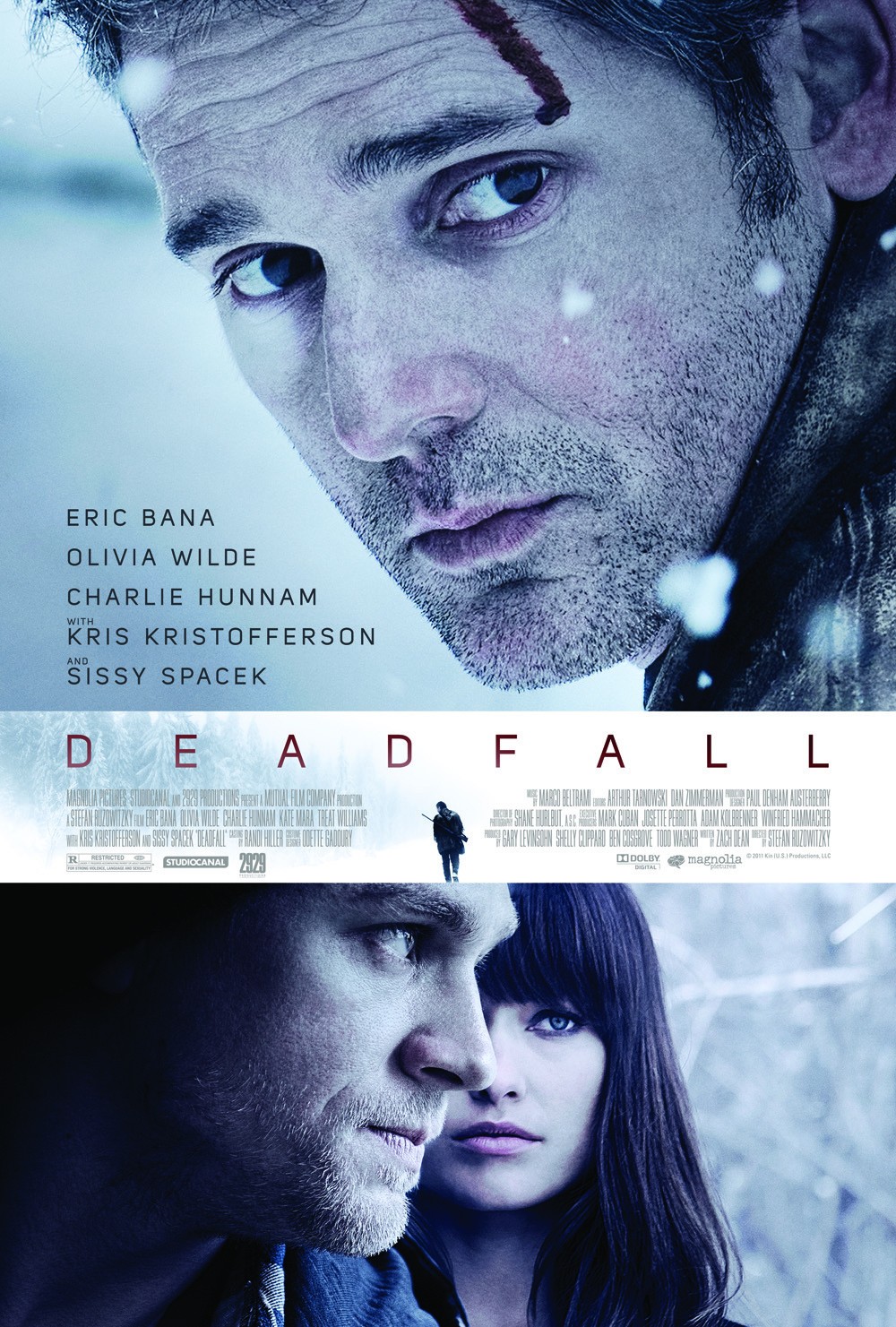
Deadfall movie poster

Deadfall” is a riveting thriller which held my attention from beginning to end, and sometimes that’s all I ask of certain movies. This one came out under the radar back in 2012, premiering on VOD first and then debuting in a few theaters, and it is no surprise in didn’t catch on with audiences as a result. But while it may not break any new ground in the crime drama genre, and I did have a couple of issues with the script, I did admire the performances from the entire cast. Also, director Stefan Ruzowitzky does strong work in keeping the level of tension high throughout the proceedings, and this is enough for me to give the movie a solid recommendation.

“Deadfall” opens with Addison (Eric Bana) and his sister Liza (Olivia Wilde) driving through a snowy landscape while on their way to the Canadian border. They have just robbed a casino which didn’t go exactly as planned (things like that never do), and their situation gets even more precarious when their car crashes which forces them to split up. The car crash which opens the movie is a hair raiser and pretty nasty, and it reminded me of how deer are more fascinated with oncoming headlights than they have any right to be.

Meanwhile, Jay (Charlie Hunnam) has just been released from prison and is contemplating the possibility of meeting up with his parents June (Sissy Spacek) and Chet (Kris Kristofferson) for Thanksgiving dinner. But things get bad for him as well after he accidently injures a former colleague severely, and he ends up on the run rather than run the risk of going back to jail. While driving through blizzard conditions he comes across Liza who is shivering due to the lack of warm clothes, and he quickly saves her from freezing to death. From there, you know all these characters’ paths will eventually cross with one another by the movie’s end.

The first thing I want to point out is how beautiful the cinematography in “Deadfall” is. It was shot in Canada and director of photography Shane Hurlbut does incredible work in capturing the snow’s beauty as well as how unforgivingly punishing it can be. Even as I watched this in a very nice air-conditioned screening room, I found myself wanting to put my jacket on. This became even more so while watching poor Olivia Wilde walk through a blizzard while wearing a miniskirt. After watching her in “Deadfall,” you cannot say she is not brave actress.

As for the performances, the best one was given by Eric Bana as Addison. The actor has left an indelible impression on us in movies like “Chopper,” “Black Hawk Down” and “Munich,” and he makes Addison a very charming bad guy. There should be no doubt in anyone’s mind that Addison’s a psycho and someone we would all be best to keep our distance from but you can also understand why some of the characters in “Deadfall” hang out with him a lot longer than they should. Bana proves to be very unpredictable in the role, and you can never be sure at certain times if he’s going to be naughty or nice.

Wilde also delivers a strong performance as Liza, and she once again proves what a fiercely intelligent actress she is. Throughout “Deadfall,” we watch as she takes Liza from seeming like a lost girl to becoming a person whose confidence in their self continues to build. The relationship Liza ends up developing with Jay helps start the process of freeing her from Addison’s Svengali hold, and Wilde creates a fascinating portrait of a woman who manages to come into her own by the movie’s end.

Charlie Hunnam, best known for his work on the television show “Sons of Anarchy,” looks appropriately tough in the role of Jay. As we watch him getting released from prison at the movie’s start, he looks more than capable of boxing any opponent into complete submission. But the strength of Hunnam’s performance comes from those shades of vulnerability which his character cannot keep hidden. While prison has made him hard, it has not robbed him of his soul. Jay has made some foolish mistakes in his life, but Hunnam makes you care about him to where you cannot help but be deeply involved in his plight.

Kate Mara is also very good here as police officer Hannah, but she is unfortunately saddled with a father who treats her poorly because she’s a girl. Treat Williams plays Hannah’s dad, but while he’s always good, his character feels like an unnecessary addition to “Deadfall.” All we see him do is talk down to his daughter even when we can tell she is absolutely right about everything she sees going on. It’s the stupidity of characters like which really gets on my nerves.

You also have to give credit to Ruzowitzky for taking the time to cast Sissy Spacek and Kris Kristofferson as Jay’s parents. It’s astonishing to realize these two actors have never worked together before, and they bring an authentic down to earth flavor which helps ground the movie’s story in a reality we can recognize. Kristofferson’s part is a little underwritten, but it’s still fun to watch him here.

“Deadfall” ends on a somewhat frustrating note as there are a lot of loose ends left over and the fates of certain characters are left unresolved. Still, I found it to be a very entertaining movie thanks in large part to the terrific performances of the entire cast. And yes, the cinematography was incredibly beautiful, and especially for a movie which cost only $12 million to make. It alone reminds me to bring layers of clothing the next time I visit a blizzard-ridden city as I have been spoiled by the sunny California weather for far too long.

* * * out of * * * *

CLICK HERE TO CHECK OUT THE INTERVIEW I DID WITH STEFAN RUZOWITZKY FOR WE GOT THIS COVERED.

Olivia Wilde Discusses Playing Liza in ‘Deadfall’

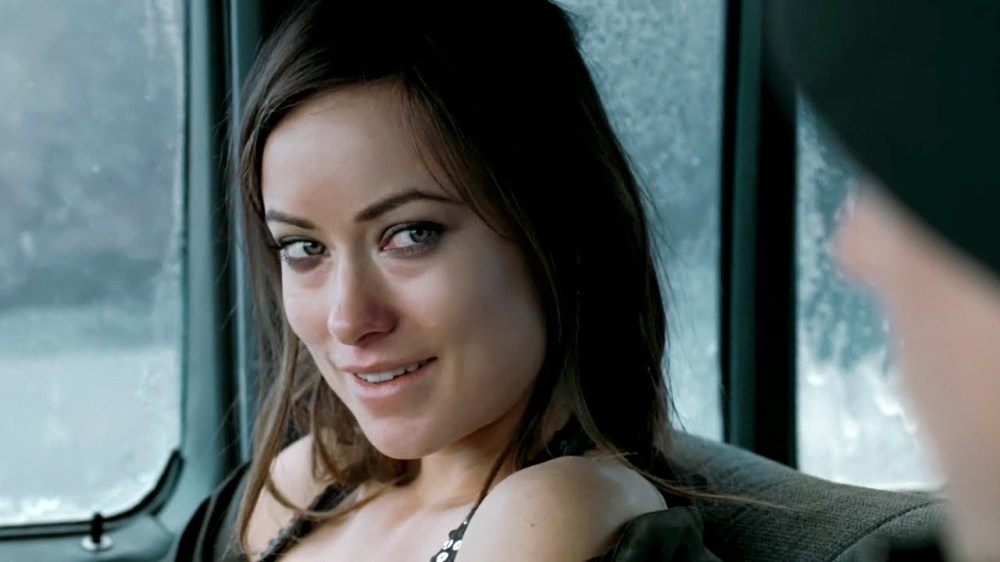
Olivia Wilde in Deadfall

WRITER’S NOTE: This article was written in 2012.

Olivia Wilde might seem like just another pretty face in Hollywood, but she continues to give the characters she plays a strong intelligence they might not otherwise have. If you look at her performances in “Tron: Legacy” and “Cowboys & Aliens,” you will realize she has put a tremendous amount of thought in how she approaches her roles to where you leave the theater incapable of forgetting the effect she had on you. The latest example of this is “Deadfall” in which she portrays Liza, the sister of Addison (Eric Bana) whom she is on the run with after a casino heist gone wrong.

Deadfall movie poster

For Wilde, the role of Liza represented a huge departure for her. She had just finished playing Dr. Remy “Thirteen” Hadley on the television show “House,” and Liza took her in a completely different direction.

“Liza was so different from anything I’d ever played before, and I think I was really attracted to playing someone a little more broken,” Wilde said to Sophie A. Schillaci of The Hollywood Reporter. “I had spent many years on ‘House’ playing this very tough woman. I had played tough women in movies, and I realized that was something I was gravitating toward because it’s probably something I aspire to. But I’m interested in exploring people who really don’t have their act together completely.”

At the beginning of “Deadfall,” Addison and Liza’s car crashes in the snow which forces them to separate and go on the run towards the Canadian border. Liza, wearing little more than a miniskirt, almost freezes to death until former boxer Jay (Charlie Hunnam) rescues and later starts up a relationship with her. I got to attend the movie’s press conference at the Four Seasons Hotel in Beverly Hills, and it was fascinating to hear Wilde talk about the relationships Liza had with each of these men and how deeply they affected her.

“Well I think with Addison she’s a perpetual child, she’ll always be his little Liza,” Wilde said. “So that established what the dynamic was like in that she’s very dependent on him. She’s terrified of him and yet she is still very drawn to him. But the romance between Jay and Liza allows her to be a woman, and you really see her coming into her own. So naturally in the writing they were very different relationships, and that kind of did the work for me.”

There was also the question of how deep the relationship between Addison and Liza went. At the start of the movie they look to be as close as a brother and sister can be, but as the story continues it looks like there is a lot of sexual tension between them. While it is not entirely clear if their relationship is an incestuous one, a kiss the two share at a Thanksgiving dinner seems to imply there might be. This led Wilde to talk more about the research she did for this role.

“That (kiss) kind of underlined the tension between them,” Wilde said. “I heard someone say that the relationship between passion and rage is very close, and there’s a violence to our upbringing in our lives that I think could just easily fall over into sex. It was really helpful to read about incestuous relationships and to know quite a lot about how that tends to happen, and yet it’s a very subtle part of the film. There are only one or two spots where it’s hinted at, and I’m glad we didn’t over explain it because it does leave it a bit of a mystery, but it adds so much to the story.”

All actors need to take the time to research the similarities and differences between them and the characters they play. For Wilde, it made her realize that her life could have been much different if she was more like Liza in “Deadfall.”

“I feel very lucky to not be Liza,” Wilde told Jay Stone of the National Post. “It makes me really appreciate having a very loving family and healthy upbringing and not having been abused. It’s a horrible problem that exists in many families. One of the reasons we’re doing this as actors is to reflect humanity, to show these types of people on screen and bring light to them in a certain sense.”

We’re going to see a lot more of Olivia Wilde in the future. Up next for her is “The Longest Week” in which she stars opposite Jason Bateman, “Black Dog, Red Dog” with James Franco and Chloe Sevigny, “Her” directed by Spike Jonze, and “Drinking Buddies” which is the project she is most excited about being a part of. As long as Wilde continues to bring that same level of thoughtfulness and intelligence she brings to movies like “Deadfall,” we will have so much to look forward to.

SOURCES:

Sophie A. Schillaci, “Olivia Wilde Sheds Her ‘Tough Woman’ Image for ‘Broken’ Character in ‘Deadfall’ (Video),” The Hollywood Reporter, December 7, 2012.

Ben Kenber, “Interview with the Cast and Director of Deadfall,” We Got This Covered, December 7, 2012.

Jay Stone, “Deadfall’s Olivia Wilde feels ‘lucky not to be Liza,'” National Post, December 7, 2012.

Brian De Palma’s ‘Domino’ is Not One of His Best Movies, But Not One of his Worst Either

Domino 2019 movie poster

BRIAN DE PALMA HAS A NEW MOVIE OUT. Now that last sentence was capitalized because I’m fairly certain most of my friends do not know this, and they are big fans of De Palma’s work. His latest film is “Domino,” not to be confused the late Tony Scott’s 2005 film of the same name, and it is being released quietly in a few theaters and on VOD on May 31st. Because of the lack of any real fanfare, many are calling this film “lesser De Palma” even before they have had a chance to view it. Even De Palma doesn’t seem all too excited about its release and is instead more interested in talking about what a difficult and horrible production it was. Now this is not the way you want your movie to open.

Well, I agree that “Domino” belongs in the “lesser De Palma” category, but having seen it twice, it’s actually better than you might expect. Yes, this was an underfunded production, and the movie is a standard cop revenge one we have seen many times before, but it still contains moments which quickly reminded me of what a master filmmaker De Palma can be when he is given the freedom to unleash his cinematic magic.

Things start off in Copenhagen on June 20, 2020. Why this movie takes place in 2020 is never made clear, but anyway. We are introduced to police officers Christian Toft (Nikolaj Coster-Waldau) and Lars Hansen (Soren Malling), and we quickly discover they have been partners for quite some time to where they see one another as family. Even Lars’ wife, Hanne (Paprika Steen), sees Christian as a son, and the closeness they all feel with one another is quite palpable.

But this partnership is brutally destroyed one night when Christian and Lars investigate a domestic disturbance which has them arresting suspected ISIS member Ezra Tarzi (Eriq Ebouaney). While Christian is checking out a crime scene, Ezra breaks free of his handcuffs, attacks Lars and slashes his throat in the process. Christian gives chase, but Ezra ends up being taken away by men who have other uses for his violent talents. Regardless, Christian vows to avenge the attack on Lars and promises to bring Ezra back to face justive.

Clearly this is a straightforward revenge flick, but other layers are added to the plot as we are introduced to duplicitous CIA agent Joe Martin (Guy Pearce) who intends to use Ezra for his own needs such as using him as a pawn to catch other ISIS members. Then there is another Copenhagen cop, Alex Boe (Carice van Houten), who is eager to bring down Ezra as well and for reasons which we will eventually become clear. Revenge may be a dish best served cold, but here it comes with an endless set of complications which will lead to many, many lives being threatened.

The attack on Lars leaves Christian riddled with guilt as he made the mistake of leaving his gun behind at home, forcing him to borrow Lars’ and leaving his partner defenseless. I tell you, if this were an American cop, the gun would never have been forgotten or left behind. It would have been remembered because Americans are a little too much in love with their guns, you know? Perhaps the Danish are a bit more relaxed with guns or, better yet, they have better way of dealing with gun control policies than Americans do.

While “Domino” fails to have the same production values which are evident in De Palma’s best work, there are still moments which remind us of what a master filmmaker he can be and how brilliant he is in ratcheting up the suspense. This especially is the case in the movie’s climax in which Christian and Alex chase down a team of ISIS terrorists who are preparing to set off a bomb in an arena. As things escalate to an explosive conclusion, De Palma keeps us on the edge of our seats through some brilliant editing and the music of one of his favorite composers, Pino Donaggio.

De Palma also utilizes split screens here and there, particularly in a terrifying moment when a female suicide bomber lays waste to a red-carpet event with a machine gun. The thought of death terrifies her, but she is endlessly manipulated by ISIS leader Salah Al Din (Mohammed Azaay) who promises her a road to God no one else can give her. Of course, it’s quite telling how he is willing to let others meet God before he does, or maybe he is simply getting others to do things he doesn’t have the guts to do himself.

Some will be quick to point out how stereotypical the terrorists are in “Domino.” Granted, they do fit the stereotypes many people have of Middle East terrorists, but I personally don’t see how you can judge an entire race of people or an ethnicity just from the portrayal of a handful of them in a movie. Then again, this is not a movie eager to dig too deep into the politics or deeply held religious beliefs. It is simply a straightforward thriller eager to give us an exciting, if not altogether memorable, time at the movies or at home on television which is where “Domino” will likely find its biggest audience.

The acting for the most part is serviceable. Coster-Waldau is believable as a cop plagued with guilt, and he gives the movie the protagonist it needs. Ebouaney helps to make Ezra more than the typically stereotypical terrorist as his acts of violence serve a similar need for vengeance involving his own family. It’s always great to see Carice van Houten in anything, and she makes Alex a strong female cop and an interesting foil for Christian. But perhaps the most colorful performance in “Domino” comes from Guy Pearce as the corrupt CIA agent who thinks nothing of working with terrorists to get what he wants, or of the laws being broken in the process. Pearce is a delight to watch as he swiftly moves from one place to another with relative ease and without ever breaking a sweat.

Indeed, “Domino” will not go down as one of De Palma’s best works, but I am glad to see it is far from being one of his worst. It certainly fares much better than “Snake Eyes” which, despite an amazing opening shot, quickly turned into a hopelessly idiotic mystery thriller. It is taut, has a streamlined running time, and while its ending feels a bit too pat, it gets the job done. Although this movie is getting dumped alongside blockbusters such as “Godzilla: King of the Monsters” and “Rocketman,” it is not the complete loss many have made it out to be.

In the documentary “De Palma,” the filmmaker talked about how he feels he can no longer make a studio movie. I thought “Domino” would be his ticket to escaping the shackles Hollywood executives are quick to put any filmmaker regardless of their long-standing reputation, but judging from the behind the scenes stories, it sounds like he didn’t quite break free of them. Regardless, this movie shows he still has his gifts. While many see him as being past his prime, I still believe he has a masterpiece or two left in him. I just hope whoever he works with next gives him the tools he needs instead of forcing him to make do with only what he has been given.

* * * out of * * * *