As I write this, the first official trailer for “The Matrix Resurrections” is about to be unveiled for the whole world to see. I have been truly enjoying visiting the movie’s official website (www.whatisthematrix.com) as it hints at what is to come, and the way it is being handled is endlessly brilliant as there are so many different images to see. Seriously, visiting this site just once is not enough as not everything is the same.
But more importantly, it reminds me of when I first saw the teaser trailer for “The Matrix Reloaded” and “The Matrix Revolutions” back in 2002. It still feels like yesterday when I was hanging out with my friends and fellow cast mates from Disneyland as we waited in line to check out “Star Wars Episode II: Attack of the Clones.” An eagerly awaited cinematic event, we first had to suffer through some needless commercials (we saw it at an AMC theater in Orange County) and trailers for movies which could not possibly be anywhere as enthralling as the weakest “Star Wars” extravaganza. And by saying that, yes, I do include the dreaded holiday special.
And then came the teaser trailer for “The Matrix Reloaded” and “The Matrix Revolutions.” The screen was dark, but the audience quickly recognized the Don Davis’ music, and this put everyone at attention. Once those digits began descending down the silver screen, everyone went wild as we were about to get our first look at the follow-up to one of the most groundbreaking motion pictures of the 1990’s.
Seeing Keanu Reeves, Carrie-Anne Moss and Laurence Fishburne, who speaks of how “the war” will have an end over this trailer, reprising their roles was exciting, and the images we were shown thrilled me to no end. Furthermore, to see everything climax to the tune of Rage Against The Machine’s “Wake Up” was just perfect.
Of course, this trailer does have one big failing. It ends with “2003” displayed across the screen, and the yells of excitement quickly turned into moans of frustration as we suddenly realized it would be a full year before the first of these sequels would be unleashed. Back then, time still moved a bit slowly.
As for how these sequels turned out, that’s for another set of articles.
The following review was written by Ultimate Rabbit correspondent, Tony Farinella.
“The Conjuring: The Devil Made Me Do” It is yet another intense, smart, funny and well-acted journey in this universe created over a number of films. It really starts and ends with the love between Ed and Lorraine Warren, played perfectly by Patrick Wilson and Vera Farmiga. The chemistry between the two actors is off the charts. It is so good you would almost believe they are together in real-life. That is top-notch acting. They have also appeared together in “The Nun” and “Annabelle Comes Home.” The formula works, and I’d be happy with even more “Conjuring” or “Annabelle” films featuring the two of them in the future.
When you have had so many films and various spin-offs, one would imagine they would have run their course by now. However, this is still a solid flick, even though it is probably the weakest of the three films. That is not a criticism, as they are all entertaining and enjoyable in their own way. In “The Conjuring 3” (let’s stick with that title), Ed and Lorraine Warren are overseeing an exorcism of an innocent eight-year-old young boy named David. At this exorcism, his family is there, along with Arne (his sister’s boyfriend) and Father Gordon. Once this demon starts to really do a number on David, Arne (Ruairi O’Connor) tells the demon to take over his body instead of David, despite Ed telling him it is not a good idea.
Ed suffers a heart attack, which sets him back for a while. When he finally starts to feel better, he realizes the demon is inside of Arne, and it has to be stopped before more damage is done to other unsuspecting individuals. He can see bad things around the corner for anyone who is near Arne. Arne is in danger as well. Together, as only they can, Ed and Lorraine Warren decide to take this demon down and remove it from the body of Arne and restore some sense of normalcy to all of their lives. Even though they encounter their share of doubters and second-guessers, they know what is really going on and will stick to their beliefs.
Without giving too much away, there is a courtroom element to the film that truly enhances it in a unique way. It talks about how demonic possession can cause someone to do things they normally wouldn’t do if they weren’t possessed by a demon. It is almost like the insanity plea a lot of people deal with in the courtroom. This was a nice touch to the film. Another thing which is consistent throughout “The Conjuring” films is how they really give you a sense of place and time. This film takes place in 1981, and from the clothes, the music and scenery, you really feel like you are in the early 80’s. The devil (no pun intended) is in the details with these movies.
The issue with “The Conjuring 3” is the fact it is almost two-hours long. There are times where the film can feel a little long in the tooth and drag. It did not need to be this long. I found myself clock-watching during certain scenes. Even though I mentioned the devil is in the details, there are some details which can be left out, as not everything needs to be explained to such an extreme degree here. I’m more interested in the necessary details and the background. It feels like they are over-explaining things at times to the audience.
Many people ask me after watching one of these films, “Was it scary?” Truth be told, I don’t get scared by movies, really. That is not a knock against the film or any of the people involved in its making. For me, what makes “The Conjuring 3” an enjoyable watch is the two main actors, their charm and chemistry, the background on these cases (based on true stories) and the way the films are directed and put together. Even though it is the weakest of the three films, it is still an enjoyable ride to take because they take it seriously and put effort into making sure they are producing quality films and not just a sequel for the sake of a sequel.
* * * out of * * * *
Blu-Ray Info: “The Conjuring: The Devil Made Me Do” It is released on a single-disc Blu-Ray from Warner Brothers Home Entertainment. The film is rated R for terror, violence and some disturbing images. It has a running time of 112 minutes.
Video/Audio Info: The film is presented in 1080p High Definition with audio formats of Dolby Atmos-TrueHD: English, Dolby Digital: English Descriptive Audio, English, Spanish and French. Subtitles are included in English, French and Spanish.
Special Features:
By Reason of Demonic Possession-An in-depth look at the true story that inspired the movie
The Occultist-Meet the terrifying new addition to the Conjuring Universe
Exorcism of Fear-Delve into the making of the movie and the chilling exorcism scene that opens the film
DC Horror Presents: The Conjuring: The Lover #1-A Video Comic that goes deeper into the Conjuring Universe.
Should You Buy It?
If you own the “Annabelle” films and the previous two “Conjuring” films like I do, you are going to want to add “The Conjuring 3: The Devil Made Me Do It” to your collection. There are some really cool special features here that really add a unique backstory to what you have seen in the film. Also, the opening scene might be one of the best I’ve seen in a horror film in quite some time. Once again, I cannot praise the work of Patrick Wilson and Vera Farmiga enough. They are the heart and soul of the film. Without them, the story and the intensity simply do not work. They are a couple to root for and a couple that is interested in helping people. While the running time can stop the film’s momentum occasionally, this is still worth owning and checking out. As long as Wilson and Farmiga keep coming back for these movies and the filmmakers keep finding case files from the Warrens, I’ll keep coming back to watch them.
**Disclaimer** I received a Blu-ray copy of this film from Warner Brothers to review for free. The opinions and statements in the review are mine and mine alone.
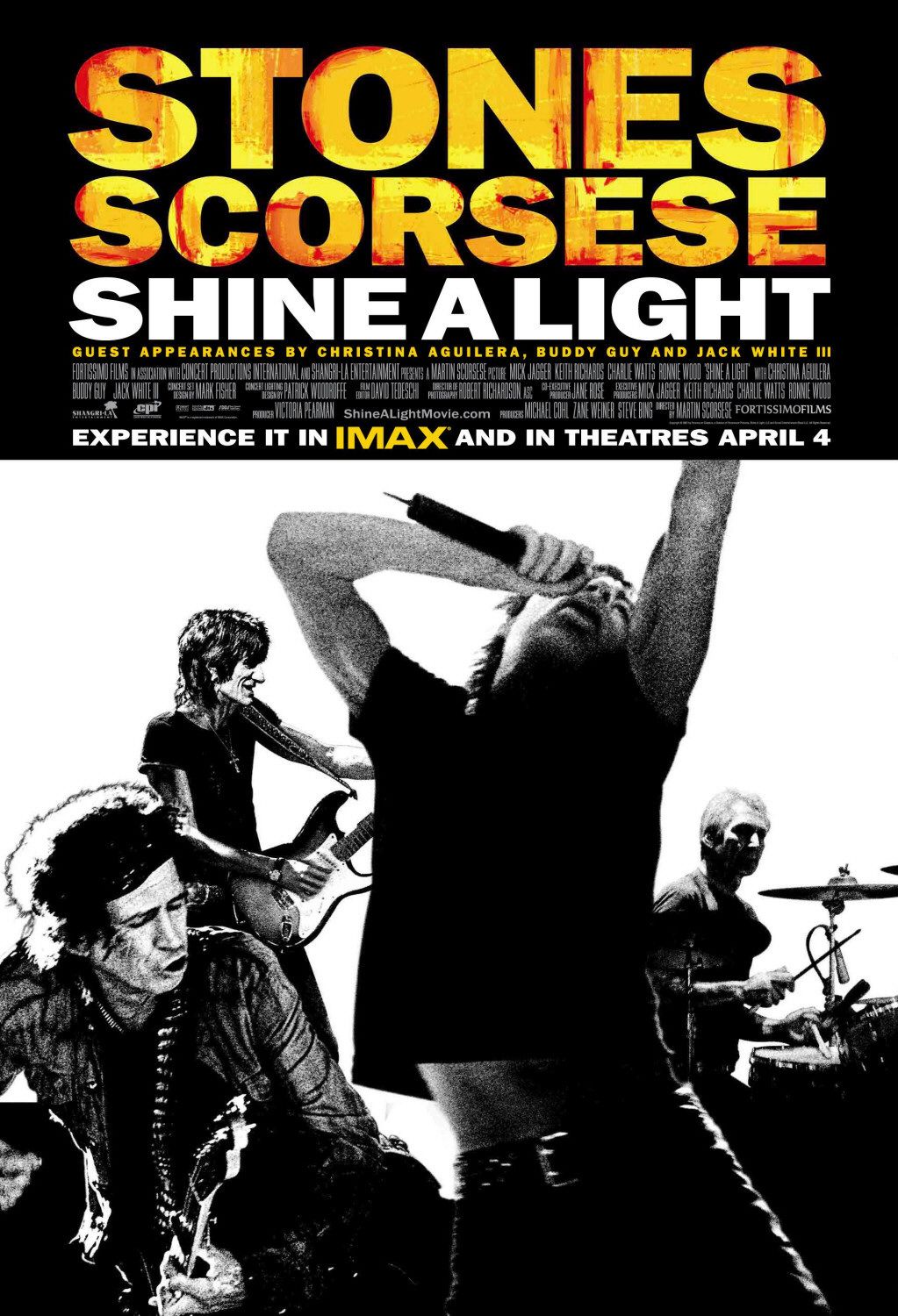
I have never been to a Rolling Stones concert before. Shame on me for constantly missing out on the opportunity to see them live. Every tour they go on always feel like it will be their last. Even if no one gets all that excited about their recent albums, no one would dare miss seeing them perform onstage. Years after they formed, they still sell out seats like crazy in concert, and some are willing to pay hundreds of dollars to get a decent seat. Heck, as long I have my binoculars with me, I am confident I can get a good view for less than what most people pay. But then again, I still have to spend a lot of money for even a crappy seat at a concert. Come to think of it, I haven’t been to a concert in a long time. Maybe I am saving up too much money!
Anyway, I caught the Rolling Stones documentary entitled “Shine A Light” which was directed by Martin Scorsese. Not only that, but I saw it in IMAX where movie screens don’t get much larger, visuals are never more visually extraordinary, and sound systems capture every single sound no matter how small. At I write this, this may be the closest I ever come to seeing a Rolling Stones concert, but it was still quite the experience. Even after being around for 40 or 50 years, they still put on one hell of a show like few others can. The band members have been beset in the last few years with legal and medical problems. Drummer Charlie Watts had a cancer scare, Mick Jagger continues to father too many children, and Keith Richards continues to astound medical experts everywhere who expected him to be dead by now. But here they are, and they are rocking as hard and with as much love as ever.
Oscar winner Martin Scorsese (it is so nice to finally say this) is a master of musical documentaries, having directed one of the greatest ever with “The Last Waltz” which was about The Band at their very last concert ever and of how they (or Robbie Robertson anyway) wanted to get off the road before the road claimed their lives. “Shine A Light,” however, is not at a film about a band on its last legs. Instead, it is about a band which continues to play with the same love, passion and excitement they had when they started making music so many years ago. It is not an in-depth documentary about the band, but instead a celebration of one of the greatest rock bands ever and their music which even I cannot ever get sick of.
We see the band and Scorsese going over the details and where the cameras are going to be at this documentary’s start. There is even a moment where Scorsese is talking with Jagger via speakerphone and of how Jagger is worried all the cameras will be distracting not just to him but to the audience as well. Scorsese and cinematographer Robert Richardson don’t even get the set list of songs until just seconds before the show begins. Jagger and the band keep going over what songs to play, having so many to choose from. The one thing I have to give them credit for is how they don’t start off the show with one of their most well-known hits like “Start Me Up” or “Sympathy for The Devil.” I guess you could say it makes this more unique than hundreds of other concerts they have performed.
This particular concert was filmed at the Beacon Theater in Manhattan, New York over a two-night period. When “Shine a Light” starts, it only appears as a small square on the enormous IMAX screen. I thought to myself, why did I spend $16 dollars to see this in IMAX? I could have seen it on a regular movie screen and saved myself a couple of bucks, you know? We see the band meeting with Bill and Hillary Clinton and also with Hillary’s mom. Hillary looks very happy here, so this all happened before her current presidential election. This turns out to be quite the star-studded event as Bill Clinton introduces the band himself, as this concert is actually a benefit for the awareness of climate change (which is very real everybody). If you look closely enough, you can see Bruce Willis out in the audience wearing a yellow hat.
But then the concert starts, and the picture goes from a simple box on the IMAX screen to encompassing 100% of it. From then on, we are instantly taken in at how the Rolling Stones is one of the greatest rock bands of all time. They may be eligible for senior benefits, but you wouldn’t know it from the way they perform. During this documentary or concert movie if you want to call it that, we get to see footage of the band from the past. Between songs, we see Jagger in a black and white interview in which he admits how he is surprised the band has lasted as long as it has. And that’s after the band has been together for two years, and he thinks that they will remain together for another year at best.
Seeing the band come onstage and perform their hearts out is inspiring. Age has not affected their love and passion for music, and I think it’s what makes this documentary especially good. No, it doesn’t get deep into the personalities of the band members and what makes them tick. Still, it does show how, even in their old age, they play rock and roll brilliantly. Even Keith Richards, who always looks like he might just keel over any second, still plays the guitar like a master. One too many cigarettes has not taken away from this man or his singing, and he gets his on solo and sings to us like a well-seasoned blues man.
This concert also features some well-known guests performing with the Stones. Among them are Jack White of The White Stripes who sings along with Jagger on “The Loving Cup.” White is no slouch on the guitar or on vocals, but we should have known this after the albums “Elephant” and “Get Behind Me Satan.” But the big treat was when Buddy Guy, one of the great bluesmen guitarists, came out to jam with the band. Richards was clearly a big fan because, at the end of the song, he ends up giving Buddy the guitar he was playing on. You can even hear Richards telling Guy, “It’s yours!”
Even Christina Aguilera is here singing with Jagger to a song which was first written and performed before she was even born. I haven’t bought any of her albums, but there is no doubt she has one hell of a voice. Does she even need a microphone? Her voice alone probably powered the extremely bright lights at the Beacon. That’s how good she was when she sang with Jagger and the others.
Kudos also goes out to the Rolling Stones for being backed up by an array of fantastic musicians. Among them are Darryl Jones of Living Color fame who has been the bass player for the band for over a decade now. There is also the great piano player Chuck Levell, and you may remember him brilliantly stealing the spotlight from Eric Clapton on his Unplugged session on MTV. Granted, the Rolling Stones don’t need all these people to sell out shows, but it certainly adds to this cinematic experience.
Scorsese and Richardson do a great job lighting the band and keeping up with them as they do their thing. The other thing which really added to this experience was the sound system in the IMAX theater I watched this film in. On top of the pristine visuals, the surround sound stereo system sucked you into the experience and made you feel like you were part of the crowd. You felt like people were clapping to the left and to right of you, and even behind you. There were points where I started looking around me to see if the people in the audience were applauding, or if it was just the sound from the film.
This all reminded me of when I saw “U2 3D” a couple of months earlier on the same IMAX screen. The 3D effects made you feel like you were in the middle of the concert. When people put their hands up onscreen, I almost told them to put them down so I could see. Then I realized it was all onscreen and not in the audience. Even though “Shine A Light” was not filmed in 3D, it didn’t need to be. I got sucked into this experience to where you can say you really felt like you were at this concert. It was also a loud film too, and this made me wonder why I didn’t bring any earplugs with me.
In the end, I’m glad “Shine a Light” was not a simple documentary which delved into the psychology of the band members and how they survived the record industry and drugs. The movie is about the fact of after so many years, the Rolling Stones continue to rock harder than ever. This is as certain as Johnny Depp’s character of Jack Sparrow from the “Pirates of The Caribbean” movies was based largely on Richards. It does not, nor should it, matter how old these guys are, but that they rock on with the same love they always have had for rock and roll. You can hear it in their music and see it in their eyes. Jagger continues strutting across the stage as though he was still in his 30’s, Richards still plays the guitar without missing a beat, Wood plays a mean slide guitar, and Watts beats away at the drum as if nothing ever serios ever happened to him. Why does age matter when you have passion for what you do?
I hope I have the same love and passion in what I do as they do in music at their age. I’m pretty sure I won’t need a boatload of drugs to get there, and even Richards would agree with me on this. Or maybe not. I guess it doesn’t matter. Or maybe I should just shut up for now…
Actor Matthew Lillard appeared at the Silent Movie Theater in Los Angeles on September 12, 2012 where Cinefamily presented a sneak preview of his directorial debut, “Fat Kid Rules the World.” Based on the award-winning book of the same name by K.L. Going, it has already won the Narrative Feature Spotlight Audience Award at the 2012 SXSW Film Festival, and the audience at the Silent Movie Theater sounded just as enthusiastic as those festival-goers did over what Lillard brought to the silver screen.
One audience member asked Lillard what the budget was on “Fat Kid Rules the World,” and to hear him answer the question gives you an idea of how tight everything has become in the realm of independent film.
Matthew Lillard: We are well under a million dollars. We are a $750,000 dollar movie. We raised $158,000 dollars on Kickstarter (the audience applauded this), and we shot in 23 days in Seattle, Washington.
After winning the audience award at the SXSW Film Festival, Lillard thought “Fat Kid Rules the World” had it made because people loved it, and the reviews were really great. But then came the time to try and sell it to Hollywood studios.
Matthew Lillard: When the offers came in, they were all pretty terrible. I mean, they were all VOD (Video on Demand), and it gave us very little opportunity for our low budget movie to make its money back.
Granted, making an independent film has never been easy, but the way they are made these days show how much this industry has changed so much since the 1990’s. Eventually, Lillard decided he and his backers should bypass the typical route filmmakers take to sell their movies and create a new opportunity for themselves.
Matthew Lillard: With the $158,000 dollars (from Kickstarter), we put the movie on the Vans Warped tour all summer long. We made a deal with Tugg (a website for movies) so any kid anywhere in America can set up a screening of our film in their local cinema. If a kid lives in Fairbanks, Alaska, he can go to tuggthefatkid.com and request a screening of our film in his local cinema. They will set a threshold and the theater will say they’ll do it for forty people, and if forty people pre-buy a $10 dollar ticket then they will set it up at that time at that date in your theater.
Lillard went on to say that the highest requested movie before “Fat Kid Rules the World” got 330 requests, and his has already gotten over 1,000.
And when it comes to the life of this movie, Lillard made it abundantly clear how it is in the hands of the people who end up seeing it. It’s always great to hear stories like this as there are many different avenues available to filmmakers today, and we are not always sure of what they are.
Lillard then finished the evening by explaining to the audience why he made “Fat Kid Rules the World.”
Matthew Lillard: We made this movie for kids that are lost in the world. It’s an underdog story about an obese kid who finds punk rock music. For me, I wanted to make the movie because I found acting in my life when I was thirteen and it changed my life, and I think that there are kids out there that need this fucking movie. I did a movie called “SLC Punk,” and kids needed that movie. If I walk down the street in Austin, Texas people will come out to me and say, “Dude, SLC Punk changed my life!” And my goal, as lame as it is, is to help a kid out there who needs the movie finds the movie and it speaks to him and it changes his life or he finds himself. And that’s our goal, and you can help us do that.
“Fat Kid Rules the World” is available to own and rent on DVD, Blu-ray, and Digital.
With Andy Summers having released his latest book, a collection of his many short stories entitled “Fretted and Moaning,” I am quickly reminded of when I met him back in 2015. The documentary “Can’t Stand Losing You: Surviving The Police” had just been released, and I got to attend its press day in Los Angeles, California. Based on Summers’ memoir “One Train Later,” it follows him from his early days as a musician where he performed with The Animals during the 1960’s to meeting Stewart Copeland and Sting which led to the formation of The Police, one of the most infinitely popular bands of the 1980’s. We also get to look at Summers’ personal life and his photography, another art form he is quite gifted at, and we get reminded of how important a guitarist is to a band even when the bassist gets the most attention.
It was a real honor and privilege to meet Summers, talk to him, and have him autograph my personal Police box set of “Message in a Box: The Complete Recordings.” During our time together, we talked about how the internal conflicts and strong egos helped make the band more creative even as those same things eventually tore this trio apart. I also asked him about his song “Mother,” his solo contribution to The Police’s album, “Synchronicity.”
Joining him in this interview is one of the documentary’s producers, Norman Golightly, who has several decades of experience in movies, television and social media. Moreover, he remains committed to promoting positive social change. Golightly talked about the obstacles in getting this documentary made, and they seem surprising as a this one is about a band which had Sting as its most unforgettable member.
“Can’t Stand Losing You: Surviving The Police” is available to own and rent on DVD, Blu-ray and Digital. For fans of The Police, I could not recommend this documentary more highly.
Below is my exclusive interview with Summers and Golightly, the press conference with them, and the documentary’s trailer.
The isolated home by the seaside or out in the wilderness always seems like the perfect location for your average horror film or psychological thriller. It’s a place where many of us go to get away from our daily troubles as well as the hustle and bustle of city life as it can become too overbearing after a time. But once characters arrive at such a peaceful destination and have fallen in love with the beautiful vistas and ambient noises, all hell breaks loose. While they want to get away from everything, a brutal form of everything is coming after them. Whether it’s “The Evil Dead,” “Gerald’s Game,” “Honeymoon,” “Silent House” or other movies which are not coming to my mind right now, I have to wonder if getting away from everything is all its cracked up to be.
These thoughts went through my mind when as I watched “The Night House,” a psychological horror film which looks to have Rebecca Hall trapped in a beautiful seaside house which is haunted. But what unfolded before my eyes proved to be much more absorbing and thrilling than I expected as it deals with the things that go bump in the night, but it also deals with universal themes such as grief and coping with such an unexpected loss. While this movie is not exactly groundbreaking, it kept me within its grasp throughout and made me jump out of my seat a few times.
Hall plays Beth, a small-town schoolteacher who is now a widow. During a rather prickly parent-teacher meeting in which a mother is a bit miffed at Beth for giving her son a C in Speech, Beth tells her that her husband had died by suicide the other week. Suffice to say, this is not your typical parent-teacher meeting, but the parent did get their offspring a higher grade as a result. Of course, the parent walked out of it all embarrassed just like she should have.
Despite all the pain and anguish she is enduring, Beth continues to reside in the house her husband Owen (Evan Jonigkeit) built for them during the early years of their marriage. Watching Beth’s home video footage of this house being built helps bring this story down to a more relatable level for me as friends of mine in Northern California shared videos of their own houses being constructed which had them all super excited. It is always more fun for some to create something than it is to destroy anything.
But when night falls, strange things begin happening around the house. The stereo system turns on by itself to play one of Beth and Owen’s favorite songs at an ear-splitting volume. Beth hears knocking on the walls but cannot find who is doing it, and with her getting drunk on a regular basis, it is getting harder to tell what is real and what is fantasy.
I sat in the darkened theater very much enthralled by “The Night House” as director David Bruckner, who previously the 2017 British horror film “The Ritual,” keeps us guessing as to what is really going on with Beth as she struggles to get past her husband’s sudden death even as she discovers things about him she was unaware of. To say he gives the proceedings a Hitchcockian vibe feels justified as the story holds onto its secret without ruining them long before the screen goes to black.
Bruckner also does a terrific job in making this house a terrifying place as he shows us how silence can be golden. As Beth moves around in her isolated home, there is little in the way of ambient sound, and it’s moments like these where I keep waiting with unbated anxiety for something loud to come out of nowhere. Yes, there are jump scares, but the ones Bruckner pulls off are highly effective as I cannot remember the last time I leaped out of my seat like this. Seriously, there may be cracks in the ceiling.
And then there’s Rebecca Hall who reminded me once again what an undervalued actress she is. Whether it’s “Iron Man 3,” “The Town” or the little seen “Christine,” she always proves to be a memorable presence as she fully invests herself in each character she plays. As Beth, she does some of her best work yet as runs the gamut of emotions while portraying a character going through the many stages of grief. Beth is sarcastic, biting and not always the nicest person to her friends, but Hall makes you empathize with her as this is her dealing with such a devastating and unforeseen death.
Hall also has nice support from her fellow actors here. Sarah Goldberg is a heartwarming presence as Beth’s best friend, Claire. While Beth may be pushing away, Claire still attempts to help her anyway she can even as she constantly apologizes for the things she said but didn’t mean to. Goldberg makes Claire feel painfully real as the character embodies the way many of us act towards a friend who has lost someone.
Vondie Curtis-Hall shows up as Mel, a local caretaker who also wants to help Beth in her time of need. The actor manages to find a subtle balance between being helpful and also vulnerable as Mel appears to be more knowledgeable about Owen than Beth initially realizes. Not all actors are successful in pulling this off, so it is noteworthy.
Stacy Martin, best known for her work in Lars Von Trier “Nymphomaniac,” has some choice scenes as Madelyne, a woman who may know more about Owen than Beth is comfortable with. It’s interesting to watch Madelyne as she struggles to befriend Beth even when Beth looks like she wants to jump across the table and strangle her. Martin does a great job in handling the awkwardness of her situation even as she looks to be risking physical and emotional harm.
I was surprised to see how deeply I was taken into “The Night House” as it looked, on the outside anyway, to be an average horror or thriller which may be fun but not leave much of an aftertaste. This film, however, really got under my skin though thanks to the performances and Bruckner’s direction which is even further enhanced by the beautiful cinematography by Elisha Christian and the ominous film score composed by Ben Lovett. But at the center of it all is Rebecca Hall who fully involves us in her character’s frightening path which looks to have no happy end. From start to finish, she is a marvel.
Seriously, I came out “The Night House” shaking. I watched it in sheer terror as I feared for the secrets Beth would end up discovering, and I also was terrified this movie would have some shaggy dog ending which would just pull the rug right out from under us in a terrible way. Remember the wannabe “Sixth Sense” ending that Nicholas Sparks adaptation “Safe Haven” had? Oh lord! Well, this one does not have that kind of an ending even though part of me was a bit perplexed by it.
In the end, “The Night House” is really meant to be an exploration of grief and how one person can go through its brutal stages It’s great to see a horror thriller pull this off in an emotional and thoughtful way, and it was all accomplished with little, if any, blood and gore. Not that there’s anything wrong with that, but anyway.
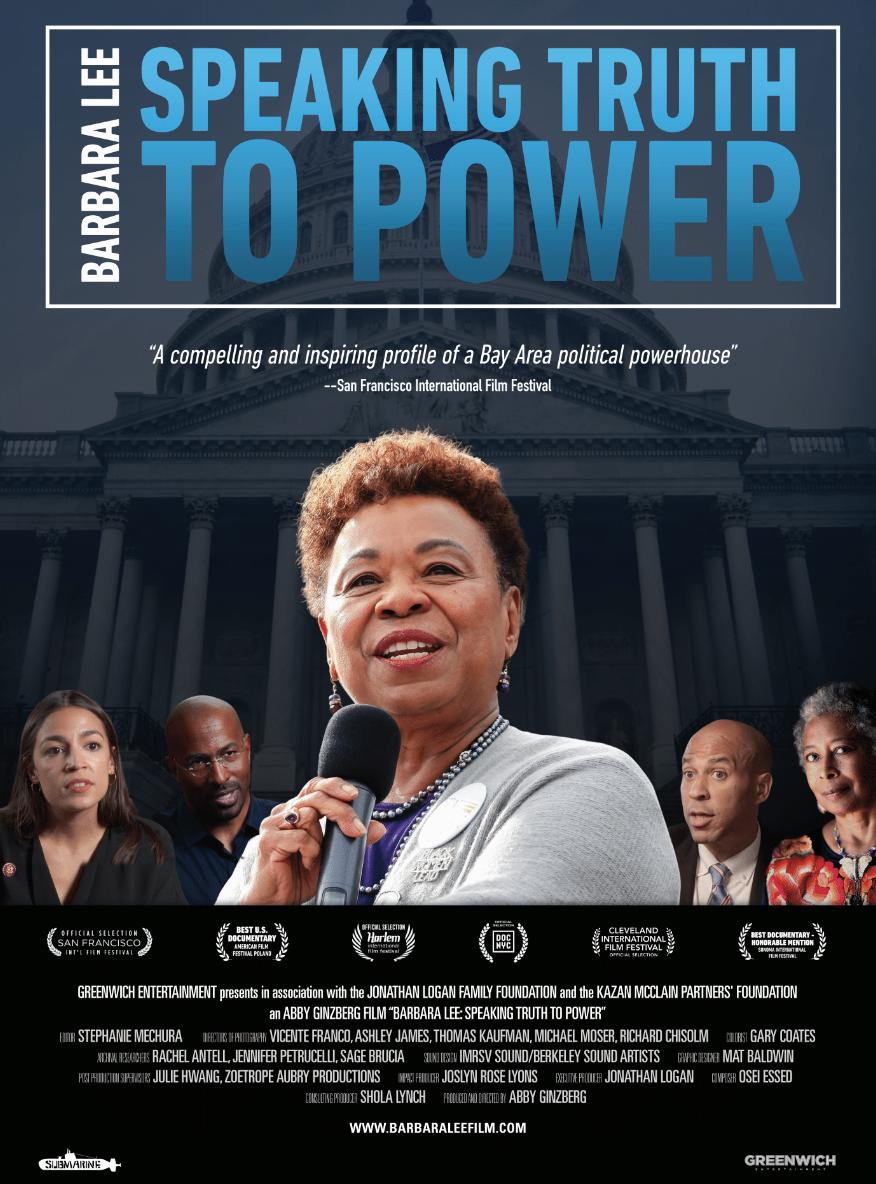
With “Barbara Lee: Speaking Truth to Power,” filmmaker Abby Ginzberg has given us one of the most memorable feature length documentaries of 2021. It introduces us to American politician and social worker Barbara Lee who currently serves as a United States Representative for California’s 13th congressional district, and this is someone we should now about. She has served in Congress for many years now and remains a strong voice for human rights, peace, and economic and racial justice in America and around the world. As Barbara’s story unfolds, we learn of her many experiences which shaped her life and beliefs such as volunteering for the Black Panther Party and escaping an abusive relationship. We also get testimonials from various politicians, journalists and other well-known individuals such as Cory Booker, the late John Lewis, Alexandria Ocasio-Cortez, Van Jones, Danny Glover and Alice Walker, all of whom cite her as a tremendous inspiration to them and others.
More importantly, Ginzberg shows how Lee has remained steadfast and true to her beliefs to where she is not worried about popularity. While politicians mostly vote along party lines and are more concerned with their corporate donors instead of their constituents, Lee is not one to merely obey those in power. This is made especially clear when we see her oppose George W. Bush’s resolution granting the President unlimited war-making authority as it did not include much in the way of specifics and was, as she put it, “too broad.” In addition, she was the only representative in Congress to vote against this resolution. While everyone else was beating the war drum, Lee did not succumb to the cries for vengeance as she issued this stern warning to her colleagues: “Let us not become the evil we deplore.”
I got to speak with Ginzberg and Lee recently about the making of this documentary. Ginzberg herself has been a filmmaker for over 30 years, and her movies are about tackling discrimination and the legal profession. Her works include “Soul of Justice” which is about federal district judge Thelton Henderson, “And Then They Came for Us” about the forced incarceration of Japanese Americans during World War II, and “Soft Vengeance” which documents the life of anti-apartheid freedom fighter Albie Sachs. With “Speaking Truth to Power,” she is keen in making Barbara Lee’s existence known to the world at large.
During this interview, the two discussed why this is not meant to be a chronological or linear documentary, Lee expressed her thoughts on President Joe Biden’s recent extension on the moratorium for renters, and they talked about what needs to be done about homelessness and the war on drugs in America.
“Barbara Lee: Speaking Truth to Power” will arrive in theaters on August 20, 2021. In Los Angeles, it will be playing at Laemmle’s Royal Theater in West Los Angeles, and there will be a Q&A with Lee and her son following the 4:30 pm showing on August 21st. In Northern California, it will be showing at Shattuck Cinemas in Berkeley, and at the Roxie in San Francisco. Barbara will appear at the Roxie after the Thursday showing on August 26th. It will play in theaters for one week, after which it will be available to stream on Amazon and iTunes.
Please feel free to check out the interview below as well as the trailer for the documentary. And remember, stay woke!
The following review was written by Ultimate Rabbit correspondent, Tony Farinella.
I remember being blown away when I walked out of the theater after watching Taylor Sheridan’s 2017 directorial debut in “Wind River,” which he also wrote. He’s an accomplished writer having written such films as “Sicario,” “Hell or High Water,” and also a number of episodes of “Yellowstone.” While “Those Who Wish Me Dead” is not as powerful and emotional of a film as “Wind River,” it still shows he has a great eye behind the camera and knows how to get powerful performances out of his actors. He also knows how to build suspense while also keeping a lean pace to his films. I look forward to what he has up his sleeve next as a writer and director.
Even though he shares the screenwriting credits with Michael Koryta (based on his book of the same name) and Charles Leavitt, his touches are still all over this film. With any thriller, you need to capture the attention of the audience right away. Sheridan does this by introducing us to Hannah, played brilliantly by Angelina Jolie. Jolie has always been an underrated actress, but here, she gets to show off her acting chops in an impressive and understated fashion. Hannah is still traumatized by the fact that in her role as a smoke-jumper, three young lives were lost. She feels completely responsible for it, even though there is always more to the story. Many nights, it is hard for her to fall asleep comfortably without horrible nightmares.
Hannah, however, gets a chance to redeem herself when she stumbles upon an injured and scared 12-year-old boy named Connor (Finn Little), who is all alone due to circumstances beyond his control. Together, they form an unlikely pairing where they must work together in order to stay alive, as Connor has some information which two very bad men are looking for, and they will stop at nothing to obtain from him. Even though Hannah has the training and the skills, it’s difficult when there is a tremendous fire heading their way at the same time. This is a film which starts off by allowing us to spend time with the characters, get to know them and care about them. It’s one of the reasons why it is so effective.
Finn Little and Jolie work so well together. At first, Connor wants nothing to do with Hannah and pushes her away. When he realizes it’s a 12-mile trek to get any help, he quickly realizes he has no choice. Even though there are horrible lighting storms going on and this intense chase, Sheridan takes time to allow the audience to have a laugh here and there along with some tender moments. There is also a side story involving Hannah’s ex, played perfectly by the always reliable Jon Bernthal. He still cares about Hannah and her well-being, but he’s also involved in a committed relationship and has a child on the way with Allison (Medina Senghore).
The bad guys are played by Nicholas Hoult and Aidan Gillen. They do a great job in portraying the villains without trying too hard to where they are over-the-top characters. It is more the threat of violence and their presence. Going back to the overall film, I’ve always enjoyed a thriller which knows how to have a good running time. This film runs at 100 minutes, and there is never a dull moment. It didn’t need to be any longer or any shorter, and it is fine exactly as it is thanks to the performances, the pacing and the action. They all work together so well.
I wasn’t quite sure what to expect with “Those Who Me Dead,” but it did remind me what a tremendous actress Jolie is and reinforced the fact that Sheridan is a director who is going to be making more thrilling action films in the future I look forward to watching. The stakes are high and, as an audience member, we feel that urgency. He’s also emotionally investing time in his characters, so we are happy to spend time with them. We are also rooting for them and care about their fate. This is one of the better films I’ve seen in 2021 so far.
* * * ½ out of * * * *
Blu-Ray Info: “Those Who Wish Me Dead” is released on a single disc Blu-ray from Warner Brothers Home Entertainment. It runs at 100 minutes and is rated R for strong violence and language throughout. It also comes with the digital copy as well.
Video Info: The film is presented in 1080p High Definition, and the picture is crystal clear, bright, and incredibly vivid.
Audio Info: The audio comes in DTS-HD MA: English 5.1, Dolby Digital: English Descriptive Audio, French and Spanish. Subtitles are in English, Spanish and French.
Special Features: Making Those Who Wish Me Dead
Should You Buy It?
“Those Who Wish Me Dead” is a great star vehicle for Angelina Jolie, and she knocks it out of the park. As a matter of fact, the cast, top to bottom, is great and there is not a weak link in it. Finn Little really holds his own in his scenes with Jolie. I don’t think the film works without their chemistry. They have a strong bond together. It’s a gorgeous film to look at, and it’s great entertainment. I highly recommend you pick this film up the next time you are out at your local retailer. You won’t regret it. It’s one of the more surprising movies of 2021.
**Disclaimer** I received a Blu-ray copy of this film from Warner Brothers to review for free. The opinions and statements in the review are mine and mine alone.
WRITER’S NOTE: This is from a press day which took place in 2013.
With “About Time,” writer/director Richard Curtis once again proves that he is the master of making romantic movies. While romantic films are currently a dying breed in America, Curtis gives the genre a much-needed re-invigoration. This is the same man who wrote the screenplays for “Four Weddings and a Funeral,” “Notting Hill” and “Bridget Jones’s Diary,” and he also wrote and directed “Love Actually” which has become everyone’s favorite movie to watch at Christmastime. Curtis populates his films with characters we can all relate to, and he shows us how the simplest things in life can be so wonderful.
I got to meet up with Curtis when he appeared for the “About Time” press conference at the Four Seasons Hotel in Los Angeles, California, and he proved to be as charming and funny as many of the characters who inhabit his films. During the roundtable interview he talked about “About Time” differs from other romantic films, how he came to cast Domhnall Gleeson and Rachel McAdams, and why this will be his last movie as a director.
While these questions came from several reporters, I did take the time to put my name to the questions I asked Richard. You will find them eventually.
Question: Why did you not tear Tim (Domhnall Gleeson) and Mary (Rachel McAdams) apart in the middle of the movie only to bring them back together?
Richard Curtis: Well, I quite liked the idea in the film. There is a kind of habit in romantic films of getting people who hate each other when they meet; he’s a Nazi and she’s a member of the Socialist Worker’s Party (laughs), however will they fall in love? But most of us, when we bump into the people we are going to spend the rest of our life with, quite like them when we first meet them. I quite liked the idea that you could do something where people like each other, and then there was the time travel and then they liked each other again. I’m interested in if you can do it. I was writing about sort of a happiness in a funny way and writing about the interesting business of how things work rather than being really interested in the way things don’t work.
Q: Speaking of the time travel aspect, it’s something that people keep watching these movies for. They’re always keeping an eye out for the loophole or plot holes. Did that make it harder writing the script?
Richard Curtis: Look, you know you’re gonna fail, that’s the thing. I know where I failed in this so you just do your best and the people and the production keep you up to it, and anybody who spots anything that’s wrong will always say it to you because it’s a fun thing to spot when they’re reading the script. So, you know you’re getting closer to true without actually getting there, and it was fun to play with it. It’s also a thing where when you decide you’re going to do a time travel movie, it is something that is in your head as you’re walking around. The thing about not being able to go past the birth of your child was definitely the result of another conversation I was having with someone about how weird it is that you commit your entire life to people who you have no ability to choose, and then I thought that’s so true. And not only that, if I had sex four seconds later, I’d have a different child and then immediately I thought that would become a key plot point.
Q: This movie has two love stories in it. It has the father and son and it has the man and the woman. How were you able to find the balance so that one didn’t overshadow the other?
Richard Curtis: On the whole you try and rig films to make sure they turn out as you want them to turn out, but I think it seems as though perhaps the strength of the Bill Nighy story is more than I expected. It’s turned out to be more emotional than I expected, and I think that’s all down to the way Bill chose to play it. He chose to play it in such a sort of gentle way that I think, when you see the film, you can insert your own father into the space that Bill creates. Oddly enough, this film is in some ways less manipulative. If you’re doing a movie that ends in a big kiss and a romance, your kind of playing the cards all the way through to try and get the maximum emotion at the end. In this one I always knew that I was always aiming for this bizarrely simple final moment which was just gonna be a guy doing the most banal things in the course of an ordinary day. So, I didn’t think so much about the dynamics of the film, perhaps I have in others. But one of the ways of doing it was by getting them to get married halfway through, so that film’s done and there’s another film to rely on.
Q: Has it affected sort of the carpe diem qualities, or is that something you practiced before you started writing the script?
Richard Curtis: No. Oddly enough I think, and Bill and I talk about, because I’ve done the movie, I am thinking about that a lot more, I really am. My girlfriend, who never makes any concessions to me, says I always work far too hard and I always think that I’m not working as hard as I used to and always am. But even she is saying that she’s noticed that I seem to be creating more space and enjoying things a little bit more and making more time for normal things. So that’s why I have said I am not going to direct another film because I think that directing a movie is not a good way to have a happy life.
Q: Is that a Steven Soderbergh promise or are you just gonna keep coming back?
Richard Curtis: Anyone who says that, Steven is their hero because it means you can change your mind. It is becoming a great tradition; the great heroes like Jay-Z, doesn’t he resign? If I come back, I’m part of a noble tradition, but that is my intention at the moment.
Q: Can you talk about Comic Relief and how that came to you at a young age?
Richard Curtis: Wow, do other people know about that side of my life? Well, it started off by an almost comical mistake in that a girl I know asked if I would like to go with her to Africa, and I just said I would go to keep her company and then the charities decided to send us to different countries. They said we would cover more ground, so that was a mistake. So, I was in Ethiopia at a very bad time and that could not but change my life. That’s something I have to carry. We did a stage show and then we did a TV show, and the TV show made so much more money than was expected that I couldn’t not do it again, and I have just gone on doing it. Every time we do it, we make more money than I will earn in my entire career. I think of it as my difficult child, it takes exactly half my time, it changes its nature so I now, and after doing it now for 25 years I got a feeling that the money we’ve raised might be less important than the education or part of it. Kids in England have always grown up knowing a lot about poverty in Africa and problems at home, and that educational thing may have actually turned out to be the function of it. The next thing I’m doing is doing a year and a half trying to be part of making the new declaration by the United Nations in 2015 to end poverty, so it’s a never-ending big subject. I think the way it’s bounced off on my career is that I haven’t written my seven bad films. I do think a lot of times when people, when they finish the thing, say have I got any other ideas whereas I’m always a year behind. I thought of this film in 2005, and then I chose to do the pirate movie (“Pirate Radio”) because I wanted to be a bit older by the time I made it. It’s actually given me breathing time and let things stew longer, so I always believe quite a lot in the projects I do by the time I get to them.
Q: Fighting poverty seems like an even bigger challenge now with the gap between the rich and poor growing bigger and bigger. Do you feel sometimes like it’s a never-ending battle and how we are going to do this?
Richard Curtis: Well, you have to be realistic about that. Actually, statistically speaking, the lives of the very poorest people on the planet have never gotten better quicker than in the last 15 years. It’s been extraordinary so I’m paying more attention to that. But the rich and poor inside countries, I’d just think it increases your responsibility to try and make sure that people like me who do live in the bubble of comfort are really aware of how peoples’ lives are at the other end of the scale. I made all my children watch a documentary called “Poor Kids” the other day. It’s just a really brilliant, very sweet-natured documentary about four really poor kids in the UK, and they literally could not believe what they saw and that increases the desire to communicate this.
Q: You also focus a lot on the joy of real people like with the Heathrow Airport scenes in “Love Actually,” and then there are scenes in “About Time” that look like they had regular people in them. Where did you find those people?
Richard Curtis: Well with “Love Actually” we put up a little black box with curtains in Heathrow and just filmed and then sent assistants rushing around and saying do you mind signing this release. It’s very weird, you haven’t seen your mom for 17 years and somebody’s saying we’ve just filmed you crying embarrassingly. The strange thing is when we edited that, over half of what I wanted in that sequence I couldn’t use because it turned out we hadn’t got the permissions. The bit at the end of this one was sort of the same thing. Quite a lot of it was sort of staged. There are some things that weren’t. Most of that was directed by my girlfriend. That was the weird thing. It was the final day of the shoot. I woke up and I was in the most astonishing pain. I thought I had kidney stones or whatever, and she leapt out of bed in the highest of spirits and said she would ring a doctor on the way to the set (laughs). Some of the loveliest images there were got by her which I think sort of shows because she is full of an energy and joy about her. It was interesting how ordinary those images had to be. I didn’t shoot them at the beginning, so I didn’t quite know how it was going to end. When I thought that I would end with a series of just normal images, I took a film by a friend of mine called Kevin McDonald called “Life in a Day” which is a movie he made about YouTube, and I cut like ten favorite images from that in and showed that to friends and it was a disaster because they were good. They were so definitive, so beautiful, so picturesque, and everyone said the movie’s all been about ordinariness and you can’t then say that every day is a beautiful sunset and every day is an astonishing child framed perfectly in a window in Milan. So, I did try and keep those end bits as sort of banal as they could be, but still joyful.
Ben Kenber: “Love Actually” is my family’s favorite movie to watch every Christmas Eve. I love it too but I’m always hoping we can add “Bad Santa” as a double feature though.
Richard Curtis: Lauren Graham’s in “Bad Santa!” I love her!
Ben Kenber: I’m not usually a big fan of romantic movies, but what I love about your movies is that the people and what they go through feels so real and relatable. A lot of American romantic films are manipulative but your films never feel like they are. Your movies touch on issues that most other filmmakers don’t really take seriously.
Richard Curtis: Well, thank you very much. I don’t have an answer for that, but don’t down American filmmakers because I think there’s a kind of feeling that romantic films may not be in a good place at the moment. “(500) Days of Summer” I thought was an incredible movie, “Like Crazy” is an amazing movie about love, and “Lost in Translation” is the greatest ever romantic comedy even though it’s not a romantic comedy. I’ve been looking back because I’m thinking about finishing and thinking why did I write all these films on this subject and then suddenly realizing it is because it is the context of my life and what matters to me. How your family treats you, who you love, how you get on with your kids and your friends are what fills most of your emotional time, and I’m just trying to hang on to that and write about normal things because I never, never bump into serial killers.
Q: A lot of people don’t seem to realize that “Love Actually” is a Christmas movie because the holiday gets so pushed into the background.
Richard Curtis: I think the funny thing about “Love Actually” is the casting is now out of whack. Originally it was 50% well known and 50% not, and now the naked guy is in “The Hobbit,” January Jones is Betty Draper on “Mad Men,” and even the boy is now in “Game of Thrones.” Liam Neeson is the greatest action hero in the world and Andrew Lincoln is on “The Walking Dead,” so it’s a hell of a cast now.
Q: You are obviously a believer in love. Do you have thoughts on marriage?
Richard Curtis: Well in a way “Four Weddings and a Funeral” was a long way of explaining to my mum why I wasn’t married. She always found it hard to accept. I haven’t gotten married for particular, peculiar reasons, but I’m sure that marriage is a wonderful thing.
Q: You make great use of music and songs in your movies. Can you give us an insight into what your playlists are?
Richard Curtis: Well, the insight I would say is that I really do have to use music in order to get through the process of writing. It really is part of me learning what I’m trying to do, and sometimes that takes very specific forms. When I handed this movie in, it said on the front cover “About Time” or “The Luckiest” or “Golden Lapels.” I thought about those two so much and was so sure I was going to use them, and I thought I might even name the movie after them. So, in this movie, all the cues were there as I was writing and helped me write the right scenes and work out what I wanted to say. There’s a version of “Downtown Train,” a Tom Waits song, by Everything But The Girl, an English group which was all I listened to while I was writing “Notting Hill.” That was all I was trying to do in the whole of that movie was reproduce the emotional temperature of that song which I knew could not be in the movie, but it was my sort of guide. And then I just use pop music to cheer me up, so I got different playlists on my computer. I’m trying to make my tastes more modern. My sons are pushing me hard in that direction. My 16-year-old says he can’t listen to traditional pop music anymore because the lyrics of the songs he listens to by people like Jay-Z are so much better than normal pop songs. Normal pop songs are so thin and so repetitive, he says, that he can’t listen to them anymore.
Q: The scene in the underground subway station is one of the best in this movie. Your use of music in all your movies is great.
Richard Curtis: Well, thank you. That was a really interesting day because sometimes you hope something works but you don’t know how. I couldn’t work out as I was shooting it how it was going to be possible to edit it because he’s always going to be singing the wrong words of the song. It was never going to be correctly timed so I just shot all night and hoped the editor could work it out, and the editor said there was no problem when we got to it.
Q: Can you talk about casting the two main parts? How did that come about?
Richard Curtis: There are completely different ways that casting works. My friend, Mike Newell, said to me, “When the movie is cast, the movie is made.” He was extraordinary when we were casting Vicar #3 in “Four Weddings and a Funeral.” The guy came in and Mike said, “So tell him about Vicar #3,” and I said, “Well the leading character is trying to decide whether to get married and the vicar comes in and…” And Mike said, “No, no, tell me why did he join the church” (laughs). That level of detail and three dimensionality, I think that casting is hugely important. Rachel, having always loved her work and having picked up a sort of vibe about her as a human being and being very interested in this part about sort of contentment and in the idea of going from someone you meet on the first date and, by the end of the film, she is the mother of three, was based on trust and faith and things that she had seen and things I had also heard about her from the people who had worked with her. Domhnall on the other hand was seen as one of the top 25 young actors in the country, and I saw lots of them as often happens when I audition. Unless it’s the right actor, there doesn’t seem to be anything there at all. That was very much the case with the sister’s part until we found Lydia Wilson. It seemed as though there wasn’t anything there, and then we got Lydia with all her complicated emotions and Domhnall instantly made it funny which is absolutely key because he’s actually interested in comedy. So many young actors, you know, aren’t. They’re actually trying not to be funny and they’re trying to make people take them more seriously and think them cool or attractive, and he was really happy to be stupid and loving. He’s a lovely actor and a very sweet man. It was complicated because he was wearing his “Anna Karenina” beard so he looked like he’d stumbled out of the woods in “Deliverance” (laughs). The beard looked great if you’re wearing a military uniform, but if you’re wearing a t-shirt and jeans you look like you’re too fond of farmyard animals. It was a real act of faith, and then I made him do a whole day on camera, still with the beard, actually acting out the part and stuff. So, he worked very hard for it and was then sort of perfect.
Q: There’s a lot of Hugh Grant in Domhnall’s role, sort of like the younger version of him in “Notting Hill.” Was there any kind of connection made there?
Richard Curtis: I wasn’t aiming for Hugh at all. It’s obviously a voice that comes out when I write that part. I actually voted against Hugh in “Four Weddings and a Funeral” when it came down to it and I was, thank God, defeated 2 to 1 because Hugh was brilliant. But I think there’s something about Domhnall that’s much closer to my original inspiration when I started writing films. I was really inspired by “Gregory’s Girl,” “Breaking Away,” “Diner” and the guys in that except Mickey Rourke, and Woody Allen really. I was always looking for awkward, normal people, and I think when you first sit down with him at the party you don’t think that he’s the guy. You think he’ll be lucky to ever get a girlfriend. I like that side of him whereas with Hugh, girls would like him.
“About Time” is available to own and rent on DVD, Blu-ray and Digital. Please feel free to check out some other “About Time” interviews I covered for the website We Got This Covered by clicking on the names below:
This image released by Sony Pictures Classics shows Tilda Swinton in a scene from “Only Lovers Left Alive.” (AP Photo/Sony Pictures Classics, Sandro Kopp)
WRITER’S NOTE: This article is in regards to a press day which took place back in 2014.
Scottish actress Tilda Swinton is not just an excellent actress but a unique one as well. She doesn’t invite easy comparisons amongst her peers because she stands out in a way few other actresses do. She is lovely in the way she portrays a character, lovely in the way she moves onscreen, and, as we learned when she appeared at the Four Seasons Hotel for the press conference on “Only Lovers Left Alive,” she speaks lovely about her work and of the vampire she portrays in this film.
Written and directed by acclaimed independent filmmaker Jim Jarmusch, “Only Lovers Left Alive” tells the tale of two vampires who have lived through countless centuries and, as the movie starts, have reunited after being apart on different continents. Swinton plays Eve who remains optimistic about the world’s future even after all she has seen, and her lover Adam is played by Tom Hiddleston (Loki of “Thor” fame) who is more pessimistic about where things are heading. You might mistakenly dismiss Jarmusch’s film as just another vampire film, but it proves to be much more than that as it deals with love and death in equal measure.
Everyone was understandably interested in what attracted Swinton to the role of Eve, and she went out of her to explain what her favorite characteristic of Eve was.
Tilda Swinton: She has this perspective, that she doesn’t sweat the small, the medium or the big stuff, and that she’s full of wonder. She’s always looking up which feels to me pretty much the prerogative of people who have lived that length of time.
This film also marks the third time collaboration between Swinton and Jarmusch. She previously appeared in “Broken Flowers” and “The Limits of Control,” and off-screen she is really good friends with the filmmaker as well. We all wondered what kind of direction Jarmusch gave Swinton on this particular movie. This led Swinton to discuss the number of years it took to get “Only Lovers Left Alive” made, and how this length of time benefited both her and Jarmusch.
TS: We talk all the time. Whether we talk about anything that’s pertinent to the making of the movie, I don’t know. We’re friends now and part of the reason that I love to work with him is it means that I get to hang out with my pal for longer than if I wasn’t shooting with him. This one was another long gestation. It was seven or eight years since now when he first rang me up and said, Hey there, let’s make a vampire film. So that means a lot of conjuring, many breakfasts when I was flying through New York saying so where are we, many moments on the phone and many conversations in dark corners about where we were going to go next over the years. When we came to shoot, the lovely thing about those long developments is that when you come to shoot, it’s just grace. You’re so relieved to finally be putting it down and you’ve also had that length of time to talk about it. You really don’t need to talk about that much.
One truly unforgettable thing about Swinton in this role, or in any other role she has played thus far, is how beautifully she moves. The physicality she shows off from moment to moment is incredible, and we all wanted to know how she came up with it. The fact she’s playing a vampire here makes her performance all the more fascinating as a result.
TS: We talked a lot about what it would be if you were that unsocialized because they’ve kind of been lifted out of human society, and very quickly we started to talk about them as lone wolves so we talked about them as animals. When we were putting together the look, we ended up filling those wigs with yaks’ hair and wolves’ hair, and there’s a heartbeat in the film that comes up and down in the soundtrack which is actually a wolf’s heart. So, I thought a lot about wolves when we were thinking about how Eve would walk about. If you’re not in the pack, if you’re alone at night, you can take your time. You can pick your rhythm. The music is very important life blood, but also the camera, the move and the feeling of the movement is always very important to Jim, and this one particularly because of this passage through these two different wildernesses.
After watching “Only Lovers Left Alive,” many wondered about the relationship between Adam and Eve and how they have lasted so long as a couple. At the start, they reside on different continents before they reunite. We asked Swinton what she did to create the really comfortable long-term bond between Eve and Adam. In the process, she brought up one of Jarmusch’s main inspirations.
TS: One of the first bits of sand in the oyster for Jim, which he immediately told me about on that telephone call eight years ago, was this book by Mark Twain, “The Diaries of Adam and Eve,” which is so delightful and playful. It’s sort of fictional or maybe not diaries of the original Adam and Eve which spells out very clearly that this is an enormous love affair between two opposites. That was a foundation in stone for us that they would be in it for the long haul, but completely different. That I find really enticing, to show two people really loving each other, but not being like each other at all. So, we talked a lot about that and that was fun because that feels really human, playing with that. Also, as you notice, we wanted it to be about a marriage in which they talk as long relationships do. There’s a sort of tradition of showing people coming together and then the end, and you never really see them actually living it out and living the ups and the downs and talking it through. We really spent a lot of time wanting to get that tone of two people who were family. It’s a long, long marriage. They are family, and that’s why they still dig each other even though they are so different and he is so tricky to live with and she is such a space cadet. They have this communication thing going and they really like talking about stuff. We really wanted to show that it felt like it was something we haven’t necessarily seen before.
Another big relationship Eve has is with playwright Christopher Marlowe, played here by John Hurt. In the universe this film takes place in, Marlowe has been proven to be the real writer of William Shakespeare’s plays, and he at one point ends up calling Shakespeare an illiterate at best. When Swinton asked about how she and Hurt established the rhythm of their characters’ relationship, she pointed how this relationship differed between the one Eve has with Adam.
TS: The relationship with Marlowe is a very precious part of the film for me. Honestly, partly because it felt very close to my own experience having a very close relationship with, in particular, Derek Jarman whose disappearance from the building I had to witness. But him being a partner, a different kind of partner for her, he’s her neighbor and he’s her companion in a way that Adam isn’t. It just felt completely alive and fresh. I just know that relationship inside out, and John does too and he was the perfect dance partner to play that out with. Our references are kind of similar. He feels like family and we just put that into the film.
One of the great joys of watching “Only Lovers Left Alive” is realizing it is not a “Twilight” wannabe. Then again, we should know Jarmusch is the last kind of filmmaker to follow current trends. The characters of Adam and Eve are unlike any vampires we have seen, and their love affair is proof of how opposites attract. While Eve is more optimistic and lives to celebrate each and every period of Earth’s history, Adam is far more cynical about the present day. We all wondered how Eve could stay so upbeat even when in Adam’s company, and her explanation of why was both fascinating and amusing.
TS: Well, he’s very young. He has yet to learn. He’s only 500 years old. She’s 3,000 years old. She seen it all and she knows that survival is possible if one keeps one’s eyes open and takes it all in. It’s not like she’s recommending a journey one space away. She talks about witnessing the Inquisition and the Middle Ages. She’s witnessed all the holocausts there have been, and yet she’s still seen humanity and spirit and nature survive those things. So, she knows that as long as one keeps looking up and as long as one keeps breathing and keeps one’s perspective, survival is possible. She’s got her priorities right. I love the fact that what Jim’s looking at here is how one goes on living, how one goes on loving, how one goes on renewing and, as they say, rebooting one’s sense of wonder and engagement. It feels strangely radical and unfashionable; the very fact that they are trying not to be young, but instead they are trying to survive youth.
Another thing that stood out to me is how the fact Adam and Eve were vampires really became secondary to the story. After a while, you don’t see them as vampires but more as a loving couple dealing with the trials and tribulations of life. Also, Adam has a heartbeat which is something we usually don’t expect vampires to have. Swinton explained this was done intentionally.
TS: We were slightly messing with the form. We’ve all seen a lot of vampire films and we like the idea of disconnecting some of the myths, some of the tropes and then also inventing some new ones. So, we’re hoping that all the vampire films from now on would involve these gloves that we actually put out there in the first place. I think we all felt the same that being vampires, very evolved vampires, very humane, virtually vegetarian vampires is secondary I would say to the idea of them being immortal and being lovers in a way that only lovers can really be immortal because they live on in each other’s spirits.
Another big question was why Detroit and Tangier were chosen as the main locations. Both prove to be major characters as they come to inform Adam’s and Eve’s individual worldviews. Detroit, which is better known these days for its problems more than anything else, suits Adam’s sensibilities perfectly while Tangier appeals to Eve in a whole other way.
TS: Detroit was always going to be a very important character in the film. My sense is that Detroit was like the Emerald City for Jim, so for him it’s really a love story to make a film there. Tangier was a kind of newer idea. There was a moment where we were going to make it Rome, and for all sorts of reasons Rome sort of detached. And then we wanted very much to making a home on the African continent, and then it became Tangier. Tangier seems to be such a natural home for her. It’s a different kind of wilderness. It’s packed full of people from all corners of this particular planet and probably others and from all particular centuries. It’s got that sense of all corners of time and space, end and start in Tangier, and you can also walk around Tangier at night and cause absolutely no ripples at all even with a massive, great wolf’s hair wig on and fantastic pants. It’s just a sort of hot spot of spirit, and it felt like a very nice partner to this relatively unpopulated Detroit where people are rare and relative to empty windows and grass and wolves. Once we settled on Tangier that really felt like the right place for her.
Tilda Swinton remains one of the best and most fascinating actresses working today, and she will continue to be as long as filmmakers are smart enough to give her free reign. She has been able to go from making independent films to studio movies with relative ease, and she still has an endless number of great performances to give. Some actors might get stifled when going from the indies to a film with an enormous budget, but this doesn’t look like it will happen to Swinton anytime soon.
TS: It’s all endlessly fascinating. It’s just a different caliber. It’s like getting a finer tooth to it. It’s only relatively rare because I come from a kind of cinema that grew out of the art world. Working with a sort of naturalistic grain is something I’ve rarely done, but when I have done it, I’ve really enjoyed it and found it just a special atmosphere. For example, in something like “Michael Clayton” or even “We Need to Talk about Kevin,” that sort of realism, just trying to spin the realism, has been really interesting. Maybe I’d always want to spin it, but to spin it with that kind of naturalistic grain like deep cover. It has been very interesting although I’ve done it very seldomly. It’s all fun to me. It’s all dressing up and playing whether it’s dressing up as a corporate lawyer or dressing up as someone of 96.
More power to you Tilda!
PLEASE CHECK OUT THE EXCLUSIVE VIDEO INTERVIEW I DID WITH TILDA SWINTON FOR WE GOT THIS COVERED DOWN BELOW:
WHILE WE ARE AT IT, CHECK OUT TILDA’S REACTION TO ME COMPLETING THE 2014 LOS ANGELES MARATHON THE DAY BEFORE THIS INTERVIEW:






 The Ultimate Rabbit