John Carpenter’s Halloween (1978)
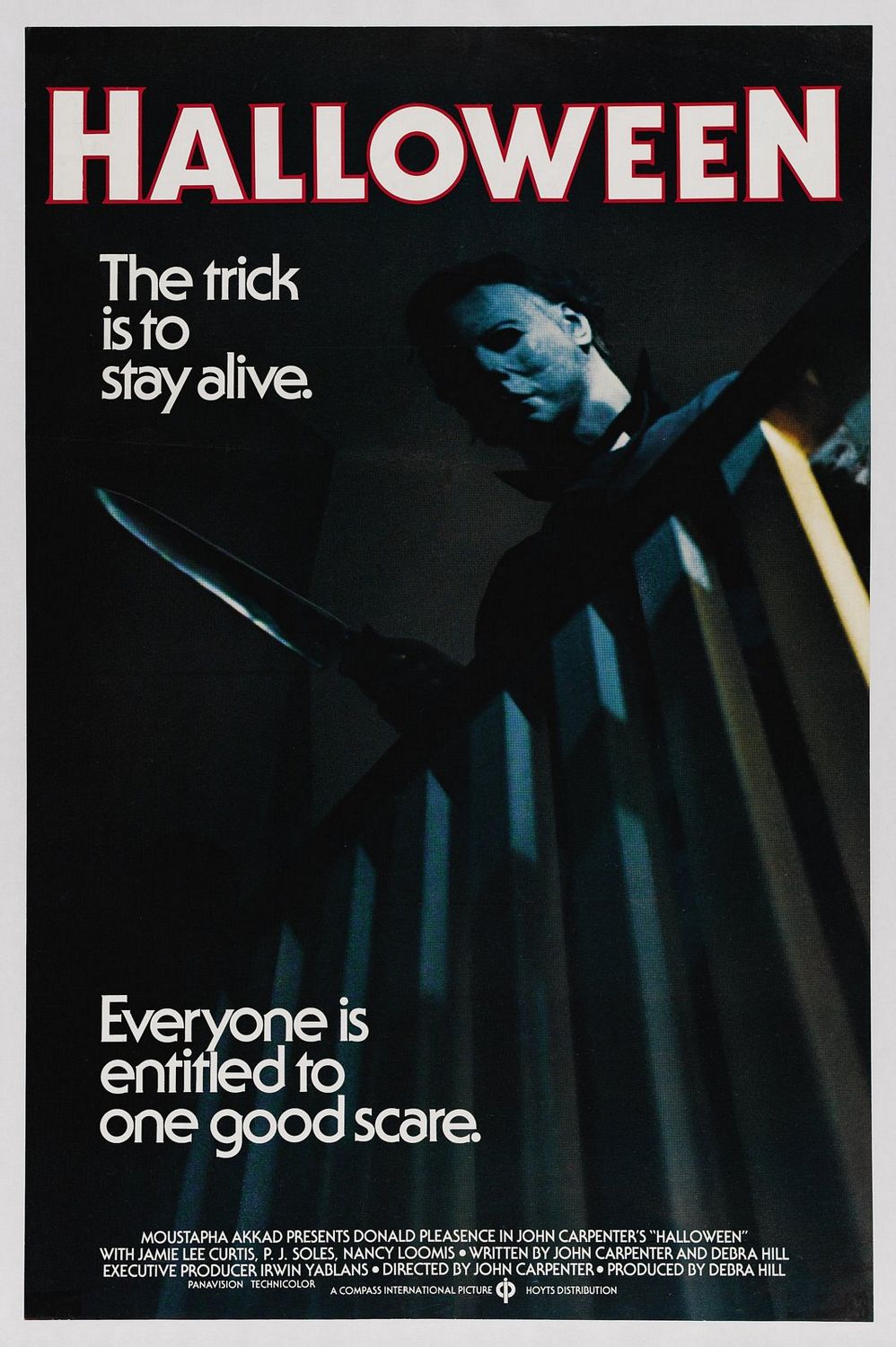
halloween-1978-poster

What is there to say about “Halloween” which hasn’t already been said? It has been discussed ad nauseam, and even Carpenter must be sick of talking about it all the time. Granted, he did take the time to record a new commentary track with Jamie Lee Curtis for Anchor Bay’s 35th anniversary edition, but when the 25th anniversary edition came out it just had the same commentary track from the Criterion Collection laserdisc.

We all know the story, and this is in large part due to the countless imitators who rushed to create their own psychotic killer following “Halloween’s” astonishing success. At the time of its release, it was the most successful independent movie ever made. Made for about $300,000, it ended up grossing over $50 million. “Friday The 13th” would never have existed without “Halloween,” and that franchise is far more responsible for those clichés horror movies exploit to infinity.

What I love about “Halloween” is how down to earth it is. All of these characters come across as very relatable. The way the script is written and how the actors played their roles, they easily reminded us of people from our own lives we grew up with. The only character in the whole movie who is NOT down to earth is Michael Meyers as he is a killer who has no real motive for why he heads back home to kill. As the movie goes on, we eventually stop seeing him as a person and instead as a force of evil which cannot be easily stopped.

We have all lived in a town like Haddonfield, a small town where families can raise their children in peace, or so it would seem, and the problems they face there end up paling in comparison to those they were forced to endure in the city. The parents see small town life as a home away from reality, but for the children it is reality. It is all they know. So when multiple murders occur there, it threatens to define the town more than anything else. Was there anything interesting about Haddonfield before young Michael Meyers took a knife to his sister when he was only a boy?

I also love how “Halloween” was shot. Working with Director of Photography Dean Cundey, Carpenter creates truly unnerving visuals of a killer lurking in the shadows. One moment Michael appears in the frame, and in the next he is gone. Michael could be anywhere and there is no escape from him. How does one escape from evil anyway? One of Carpenter’s main themes with “Halloween” is how evil never dies. It is a force which is with us whether we like it or not, and it is always just around the corner…

One of my favorite shots is when little Tommy is fooling around with Lindsay as they watch Howard Hawks’ version of “The Thing.” But when Tommy turns around and looks out the window, he sees a man carrying a lifeless body from the garage to the front door. The bullies at school kept warning him about the boogeyman coming, and it is an unfortunate and infuriating coincidence that they are correct. It is one of the creepiest images from “Halloween,” and it is one which always stays with me. Don’t you wonder what your neighbors are up as you look at their houses across the street?

The other brilliant thing about “Halloween” is how it was edited in such a way where you cannot be sure when or where Michael will appear next. The best example of this is when Laurie Strode is running away from Michael. Carpenter puts us right in her shoes as she desperately tries to escape the madman who wears an altered William Shatner mask. The editing plays with your emotions beautifully. You want her to escape, but you soon feel as helpless as her as she yells at Tommy to wake the hell up.

The moment where Laurie is at the front door of Tommy’s house, screaming for him to let her in, is one of the scariest scenes I have ever seen in a movie. It intercuts with her banging on the door while the Shape approaches her, and Carpenter succeeds brilliantly in leaving us stuck in a place we are desperate to escape from. Like her, we are begging for Tommy to unlock the door to where we want to yell at the movie screen, TV set or whatever device you are watching this movie on.

And who could ever forget the music? Carpenter’s score for “Halloween” ranks among the greatest horror movie scores ever composed to where I would put it up alongside Bernard Herrmann’s score for “Psycho.” Carpenter’s musical work has been done mostly in a minimalist style, very much unlike the bombastic orchestral scores from every other Hollywood composer. After all these years, the main title for “Halloween” is a piece of music I never get sick of listening to. The music succeeds in heightening the ever growing tension which never lets up even after the movie is ovr.

The final shot is unnerving and utterly perfect in the way Carpenter shows how evil never dies. We see images we have become familiar with throughout the movie, and they now have the stain of evil on them. The point is point he could be anywhere at this point.

This is definitely one of my all-time favorite movies, and the recent 35th anniversary edition Blu-ray reminded me of how I never get tired of watching it. Jamie Lee Curtis is great here as Laurie Strode, the only one who is the least bit observant about what’s going on around her. Then you have P.J. Soles and Nancy Loomis as Laurie’s so-called friends who frolic around, completely unaware of the killer stalking them from a distance. And you have Donald Pleasance, and his Dr. Loomis is a character which pretty much came to define the latter half of the franchise.

Many say “Halloween” originated the undying cliché of how teenagers who have premarital sex and do drugs are the first ones to be killed off. In the Criterion commentary, both Carpenter and the late Debra Hill make it abundantly clear they were not trying to lay any sort of judgment on these characters. Religion was not intended to shoved down our throats by anyone involved with this movie. These characters don’t get murdered because they are sinners, but because they aren’t paying attention to what is going on around them. Laurie Strode, on the other hand, is always very suspicious of her surroundings.

John Carpenter’s “Halloween” will always remain the best of all the so-called slasher movies in my humble opinion. There is no way anyone can top what he did with the 1978 classic, and this is even though Rob Zombie’s take on Michael Meyers was better than people gave his “Halloween” movies credit for. It has reached such a high level of praise in the ever growing pantheon of cinema to where duplicating its power is extremely difficult to pull off. The fact it still has the power to unsettle generations of audiences is a testament to Carpenter’s brilliance as a director, and its amazing success led him to make many other great films which continue to stay with us long after the end credits have finished.
* * * * out of * * * *

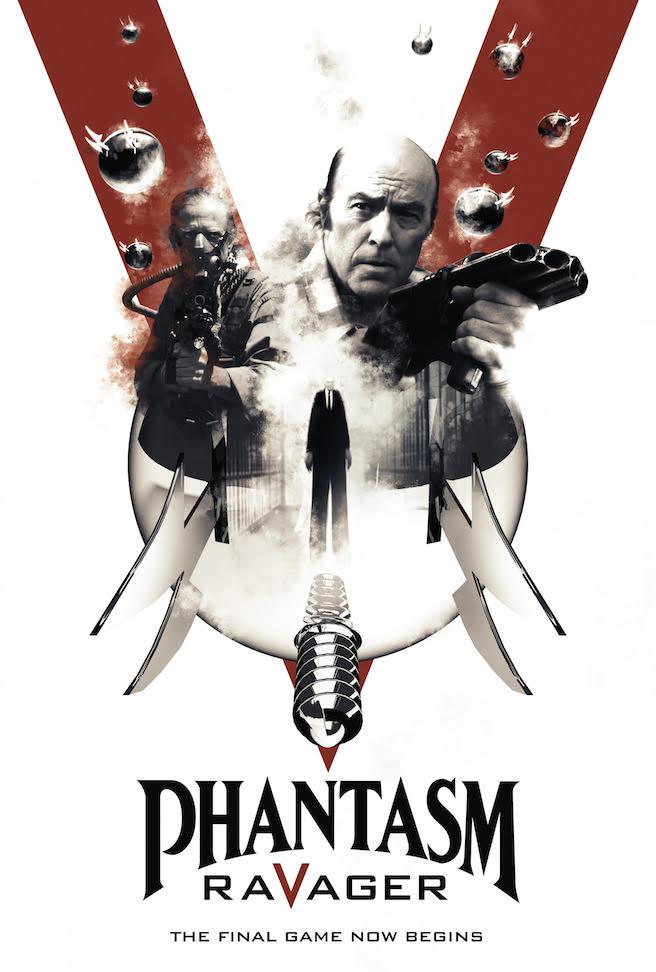
Phantasm: Ravager

phantasm-ravager-poster

Sooner or later the horror movie gods had to deliver this one to the fans. It took George Romero 20 years, but he finally followed up “Day of the Dead” with “Land of the Dead.” While we may have gotten an “Evil Dead” reboot instead of a third sequel to Sam Raimi’s original film, he and Bruce Campbell gave us the next best thing with “Ash vs. Evil Dead.” After giving us one of the most visceral and terrifying horror flicks ever created with “The Texas Chainsaw Massacre,” Tobe Hooper followed it up with a sequel 12 years later which has since developed a cult following. Although the filmmakers behind these movies are always keen to move on to other genres, something always seems to pull them back to horror.

So it only makes sense we would eventually get a fifth “Phantasm” movie in this lifetime, right? Rumors abounded from year to year of how another installment featuring Mike, Reggie and The Tall Man was in pre-production, but it never became a reality. Then in 2014 we got a teaser trailer out of nowhere for “Phantasm: Ravager” which nobody saw coming. Astonishingly enough, this sequel was filmed in secret, and after an equally agonizing wait it has now arrived in theaters and VOD and serves as a conclusion to a franchise which began back in 1979. Yes, these characters and those silver spheres have been with us for a very long time.

Does “Phantasm: Ravager” give us a fitting conclusion to this never ending series? Well, it may depend on the expectations you bring to the theatre. It’s no surprise series creator Don Coscarelli made this one solely for the fans, so those “Phantasm” virgins would be best to check out the previous films or sit through the short film “Phantasm and You” which will bring them up to speed. While we get the usual silver sphere action with hapless victims getting blood sucked out of their heads as Red Cross workers watch on helplessly, we can never be fully certain as to which direction the story will take.

This installment focuses mostly on Reggie (Reggie Bannister), the former ice cream man whom we last saw entering the space gate in “Phantasm: Oblivion” in an effort to save his friend Mike (A. Michael Baldwin) from the clutches of the Tall Man (the late Angus Scrimm). At the start of “Ravager,” Reggie is walking alone in the desert and telling us in a voiceover how he can no longer tell what is real and what is not. Still, he’s got his four-barrel shotgun and, with very little effort, retrieves his Hemicuda and drives on as those silver spheres pursue him with a vengeance.

Next thing we know, Reggie wakes up in a hospital where Mike tells him he is in the early stages of dementia. From there we watch as he switches from one place to another, be it another road trip where he picks up another beautiful lady, the hospital he is confined to or a post-apocalyptic future where The Tall Man reigns supreme. It’s a lot like the series finale of “Star Trek: The Next Generation” where Captain Jean-Luc Picard finds himself traveling back and forth through time, but with Reggie it’s an even bigger battle to discover the reality he belongs in.

“Phantasm: Ravager” is billed as a horror film, but it is really more of a sci-fi action flick as this series has gone from sheer horror to something more supernatural. But more than anything else, the story here deals with aging, something Hollywood movies rarely, if ever, deal with these days. We see Reggie struggle to bring his friends together even as he is seen as a terminal case the doctors are impatiently waiting to see die. Who is the bigger culprit here, The Tall Man or Reggie’s deteriorating mind?

It’s a lot of fun to see Bannister, Baldwin, Bill Thornbury who returns as Jody Pearson and Angus Scrimm return to the roles they have long since become famous for. Bannister in particular is a gas to watch here as not even Reggie’s advancing age keeps him from trying to hit on any beautiful woman he picks up. As for Baldwin and Thornbury, it’s been fascinating to watch them grow up from one “Phantasm” movie to the next. It’s like looking at a photo album, albeit with a lot of blood and mortuaries.

Scrimm’s Tall Man remains one of the scariest characters to appear in any movie, and Scrimm gets a little more to do and say here than he has in previous installments. It’s great Scrimm got another chance to play this iconic character, but “Phantasm: Ravager” is tinged with sadness as he passed away earlier this year at the age of 89. This is the last we will ever see of The Tall Man as there is no earthly way he can ever be replaced by another actor. After all these years, Scrimm remains a frightening presence as he toys with Reggie endlessly and makes you wonder why anyone would dare to fight him when he’s so omnipotent.

An interesting move Coscarelli made here was to step out of the director’s chair and hand the reins over to another. When we first got word of this, many feared it would be a catastrophic mistake, but David Hartman, who has worked behind the scenes on other Coscarelli films like “Bubba Ho-Tep” and “John Dies at the End,” brings a fresh energy to this material, and he clearly relishes working within this franchise and with these actors. As a result, everything in “Phantasm: Ravager” feels more supercharged than I expected.

The “Phantasm” movies have come close to being perfect, but the fans never really complained much about that. Sure, this particular one relies on CGI effects a little too much, but then again the franchise has never had much money to work with (“Phantasm II” had the largest budget with $3 million). Everyone involved with “Ravager” did the best they could with the materials they were given, and like the others it is equipped with an imaginative storyline which keeps us guessing.

If “Phantasm: Ravager” is indeed the last “Phantasm” film of all, it certainly sends the series off with a strong emotional punch. These movies have always been a family affair, and it’s great to see everyone back together for another round with the Ball and the Tall Man. It’s also great to see how this series has been maintained by the same creators from start to finish in age where studios are always desperate to reboot a classic property. For myself, “Phantasm: Ravager” was a blast, and it serves as proof that there’s always a chance for another sequel no matter how long time has passed since the last one.

* * * ½ out of * * * *

Copyright Ben Kenber 2016.

Save

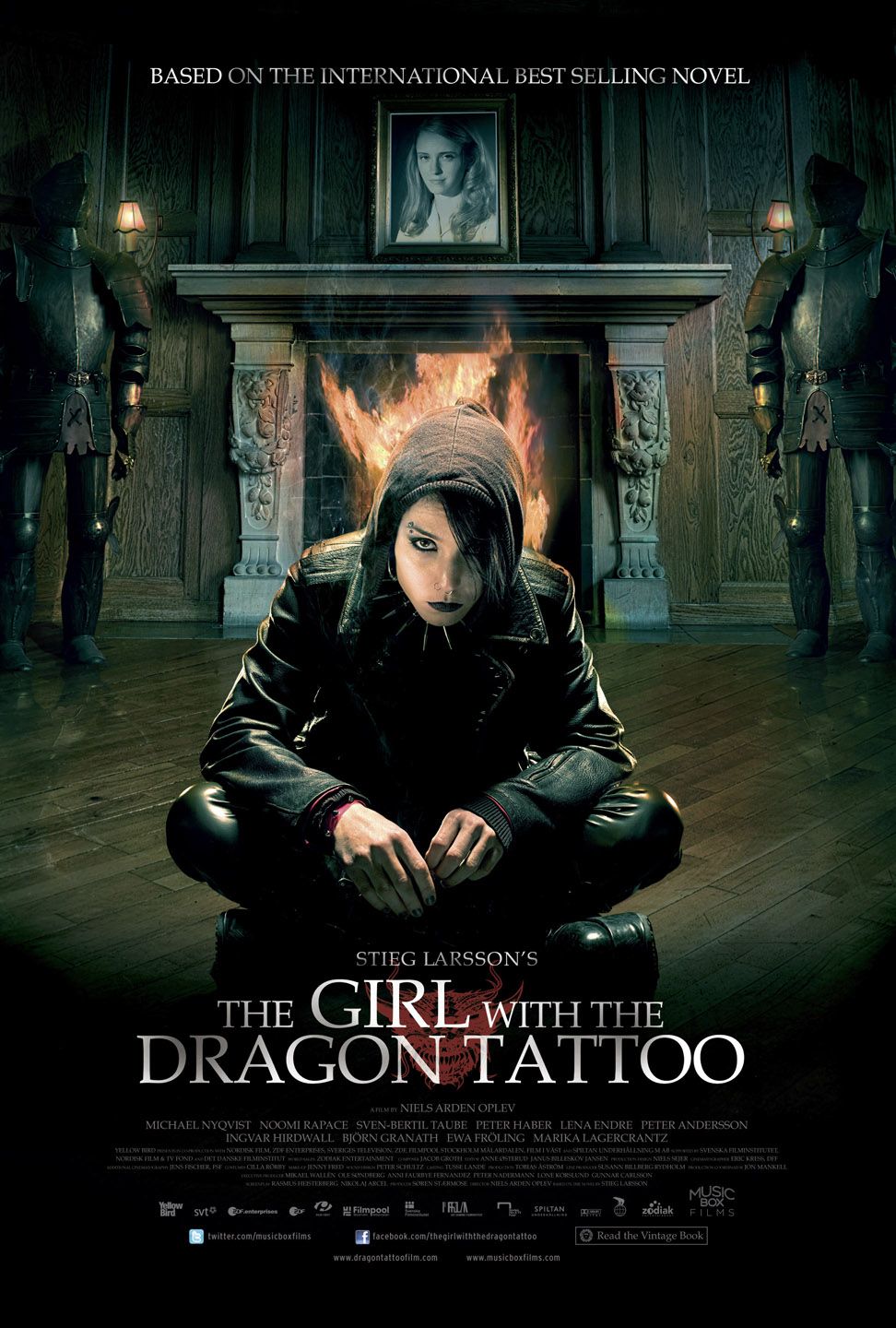
The Girl With The Dragon Tattoo (2009)

tattoo Final 27x40.indd

You look at her from a distance, and all you see is just another punk chick who’s nothing but trouble; born under a bad sign. You’d figure she’s pierced her body in lord only knows how many different places, and the mascara applied to her eyes might make you see her as an intimidating threat. Not once does she try to adjust her antisocial behavior or clothing attire in the workplace, and this is a sign of how unwilling she is to compromise her learned set of values.

But once you get to know her, you will find Lisbeth Salander is not your average punk rock girl. In fact, she’s a brilliant hacker and researcher who knows more about yourself than you could possibly realize. Bo Diddley was right when he said you can’t judge a book by looking at the cover. I mean you could, but she would just kick your ass because a rough upbringing has more than prepared her for the harsh reality of life.

Lisbeth Salander is the heroine of “The Girl with the Dragon Tattoo,” a brilliant mystery/thriller based on the best-selling novel by the late Stieg Larsson. Many have said Noomi Rapace gives a star making performance as Lisbeth, and nothing could be more true. She finds the heart of this incredibly intelligent yet mysterious character whose past is hinted at but never explained until the end, but we come to get enough of a glimpse which helps us understand where she is coming from. Lisbeth sets the bar high in terms of compelling characters (and not just females) you can find in movies from any country.

Right from the start, this film absorbs us in its compelling mystery involving the case of a missing girl which has remained unsolved for 40 years. Mikael Blomkvist (Michael Nyqvist), the publisher of Millennium Magazine, is coming off of a trial where he was wrongfully disgraced, and soon after he is hired by rich man Henrik Vanger (Sven-Bertil Taube) who wants him to look into the disappearance of his great-niece Harriet who was last seen years ago when she was only 16. Henrik believes Harriet was murdered by someone in his family, and it’s a very dysfunctional family filled with those who will fight one other for the whole inheritance without a single thought for anyone else.

Please believe me when I say “The Girl with the Dragon Tattoo” puts so many American movies of this genre to utter shame. Seriously, many of the mystery thrillers I have seen in the past few years are full of plot holes Michael Bay could lead both Autobots and Decepticons through no matter how enormous they are. Instead of being enthralled, we come out of them feeling like they are average at best, but they do allow us to feel smarter than the filmmakers since we spotted all their foolish mistakes.

Compared to all those wannabes, “The Girl with the Dragon Tattoo” has a very well-constructed plot to where if it is at all flawed, we certainly don’t realize it because we are too caught up with what’s unfolding onscreen. But where this movie truly succeeds is as a character piece in how deeply it involves us in the lives of two very different people. The two main characters are well developed and are very complex, something I always look forward to seeing. Lisbeth is a wounded person, damaged by life, and the trust she puts in others is exceedingly rare. These two end up coming together as Lisbeth has been hacking into Mikael’s computer as part of his case, and she ends up giving him some clues which have eluded him. While she is hesitant to get involved with Mikael professionally or emotionally, he points out how she contacted him in a way that is easy to track.

Lisbeth and Mikael are indeed an odd couple, and yet perfectly matched to work on the coldest of cases. They are also coming together at a time where they are in a very isolated state, having been largely misunderstood by just about everyone around them. While many view them negatively, they come to see one another as who they really are. The more they work together, the more they gain each other’s trust. In the large scheme of things, these are two people who do not let others define them.

“The Girl with the Dragon Tattoo” was directed by Niels Arden Oplev, a three-time award-winning director from Denmark. He deserves a lot of credit for keeping us deeply involved in a movie that could have easily overstayed its welcome. Not once did I find myself getting bored or restless while watching it. Oplev balances out the story and the acting to where they are on equal footing and never upstaged by style. Never does he indulge in quirky camera angles or other visual elements which would have taken away from this movie. Some directors just love to show off instead of just trusting what is there, and Oplev has clearly laid his complete trust in the story and the actors cast.

Noomi Rapace brings a powerful life force to Lisbeth Salander, a character destined to become as iconic as Clarice Starling from “The Silence of the Lambs.” Beneath her hard exterior is a person whose trust in others is practically non-existent for reasons which eventually become clear. Rapace more than succeeds in making Lisbeth tough as well as sympathetic. Her performance could easily have been a caricature, but she proves to be far too good of an actress to allow this to happen.

Michael Nyqvist does excellent work as Mikael Blomkvist, showing his strong resolve and utter frustration without ever going overboard in his performance. When he is first shown to the audience, it is as a man who has just been found guilty. We don’t know why at first, so we can only assume he had it coming or perhaps he was framed. We see him walking down the street when his picture comes up on television, pretty much defining him in the eyes of those who do not know him personally. But Nyqvist invests his character with a strong moral code which he never surrenders even when it seems smart for him to do so. We sympathize with Mikael as it always seems the wealthiest of people are more than willing to smash down the individual, especially when said individual is correct in what he or she discovers about them. The truth always seems to come at a heavy price.

Peter Andersson doesn’t even try to hide the hideous slime that consumes his utterly immoral character of Bjurman, a sexually abusive bastard who takes advantage of Lisbeth in the worst way possible. Even worse, he is her new legal guardian who takes charge of her trust fund after her original guardian suffers a stroke. Not to worry though, the pain Bjurman inflicts on Lisbeth comes back at him in a most vicious way, showing us once again what you see on the surface does not even begin to tell you the whole story.

Two sequels based on Stieg Larsson’s follow up novels have already been made, and I eagerly await the opportunity to see them on the big screen. They will have a tough act to follow after “The Girl with the Dragon Tattoo,” but with Rapace and Nyqvist reprising their roles, they will continue one of the more interesting and unusual partnerships you can hope to find in cinematic history.

It will be interesting to see who will be the next idiotic human being who foolishly thinks they have complete control over Lisbeth. Even more interesting will be in what way Lisbeth lets said person know just how wrong they are. Pray for whoever it is.

* * * * out of * * * *

Deepwater Horizon

deepwater-horizon-poster

It appears director Peter Berg and actor Mark Wahlberg are on their way to completing a trilogy of movies which aim to show audiences how Americans stand up and take care of their own during the most trying of times. In 2013 they gave us “Lone Survivor” which dramatized the unsuccessful United States Navy SEALs counter-insurgent mission Operation Red Wings, and before 2016 ends we will get “Patriots Day” which deals with the Boston Marathon bombing and the subsequent terrorist manhunt. But before that we get “Deepwater Horizon” which focuses on the offshore drilling rig of the same name which exploded in 2010 and created the worst oil spill in U.S. history. As you can expect, it is a riveting motion picture which provides audiences with a visceral experience even though we know how the story will end.

Wahlberg portrays Mike Williams, one of the chief rig workers on Deepwater Horizon, and as the movie starts we see him spending precious time with his beautiful wife Felicia (Kate Hudson) and daughter. Before he leaves to go to work for a couple of weeks, Mike’s daughter shows him a science project she is working on which involves poking a hole in the bottom of a Coke can and then stuffing it up with honey. But, of course, it explodes all over the family dinner table as it foreshadows the terrible disaster which is yet to come.

Berg does great work portraying the working environment these oil rig workers endure on a daily basis as their work is always dangerous, and their animosity towards the executives of BP and Halliburton, a company whose name has long since become a four-letter word, is completely understandable. While these workers aim to do their job safely, the execs are eager to increase their profits as the drilling schedule has fallen behind by forty days. Profit always seems to reign supreme over the rights of the workers who might never reach the level of the 1%, and this is further proof of how the 80’s never left us.

The foreshadowing of the explosion becomes a little too much as Berg employs Steve Jablonsky’s music score to an unnecessary degree. Jablonsky’s score booms way too much as we watch the beginnings of this explosion which emanate far below the ocean’s surface. It alerts us way too early that a natural disaster is about to occur, and this could have instead been a time where we could have seen proof of how silence is golden because, as Gary Oldman’s character from “The Professional” said, we like these quiet little moments before the storm, and that’s regardless of whether or not it reminds us of the Ludwig Van Beethoven’s music.

When things do go horrifically bad on the rig, Berg captures it in a way which feels horrific and almost unbearable as he captures the disaster with a lot of handheld footage. When the main pipe goes bust, it’s not like your average disaster movie where things go out of control but in a not so dangerous way. Bodies are flung with full force against metal railings, and it doesn’t take long for the viewer to feel how painful the deaths and injuries on display are. To say what happened here was a natural disaster is an understatement as the chemicals underneath the earth’s surface make their way to the surface to where it feels like planet is having serious revenge on us.

Wahlberg is an actor who can authentically portray a blue collar worker without any movie star swagger. With a role like Mike Williams, he never ever lets his ego get the best of him or tries to show off in some obnoxious way. You may never lose sight of the fact you are watching Mark Wahlberg on the big screen, but he always succeeds in portraying a character who spends his days doing hard work for an honest living. Not many actors of his stature can pull that off these days.

Then we have Kurt Russell, a veteran actor you can never ever go wrong with, who plays Jimmy Harrell, the man who is very serious about ensuring the safety of his workers. The oil company’s profits may suffer, but that is the least of Jimmy’s problems. Russell makes it clear from the get go where Jimmy’s priorities lie, and you never doubt him for a second. Even when Jimmy suffers greatly from the rig’s explosion to where one of his eyes is swollen shut, which quickly reminds us of Russell’s role as Snake Plissken from “Escape From New York,” he is still infinitely determined to ensure the safety of his workers.

Another standout performance to be found in “Deepwater Horizon” comes from Gina Rodriguez who plays Andrea Fleytas, an oil rig worker prepared to do what’s necessary to save lives but is stopped by the men who somehow think they know better. Rodriguez throws herself into the role to where you never doubt her for a second, and it makes you all the angrier when she is admonished by her superiors who are afraid to make decisions under pressure. She certainly knows her way around an oil rig better than her beat up Mustang.

As for Kate Hudson, she does fine work with an underwritten role. As Felicia, she has to be stuck at home and worried sick about her husband and the situation on the rig, so we only get to see so much of her in this movie. However, her role is an important one as she puts a human face on those who have to suffer from a distance. Besides, it is so nice to see Hudson in a good movie after she appeared in the cinematic monstrosity that was “Mother’s Day.”

But the biggest star of “Deepwater Horizon” is Berg as he thrusts into a real life story with gusto and intensity. As a director, he has never been one to give us a decent time at the movies. Whether it’s “The Rundown,” “Lone Survivor” or “The Kingdom,” Berg wants us pinned to our seats and gasping for air. He achieves this once again with “Deepwater Horizon,” and in the process pays tribute to those who lost their lives while doing their jobs. It makes me look forward to his next movie, “Patriots Day,” all the more.

* * * ½ out of * * * *

Lone Survivor

lone-survivor

In a sense, this movie almost shouldn’t work. The title alone flat out tells you only one person will survive the battle we are about to see, and the opening shows doctors working furiously to save that person’s life. From the start, we know how this movie’s going to end even if we haven’t read the book it is based on, so this should kill any suspense it hopes to have right there. But thanks to the tense direction of Peter Berg and a terrific cast, “Lone Survivor” proves to be one of the most visceral war movies I have seen in quite some time.

Like every other movie coming out today, this one is based on a true story. Wahlberg portrays Marcus Luttrell, a United States Navy SEAL who, along with three other Navy SEALS, were dropped off in the mountainous Afghanistan-Pakistan border to conduct a reconnaissance mission on notorious Taliban leader Ahmad Shahd. This particular Taliban leader was said to have close ties to Osama Bin Laden, and we watch as these soldiers keep a very close eye on him.

But during their mission, they are accosted by a group of civilians whom they quickly restrain. Some of the Navy SEALS consider killing them so that their mission can remain a secret, but Marcus manages to convince his fellow soldiers that letting them go is the best option. To kill them would mean standing trial for murder and spending the rest of their lives in prison, and since this has already happened to other soldiers, they agree it is in their best interest to avoid this particular fate. So they let the civilians go and abort their mission, feeling they will be exposed if they stay any longer.

The time these men have to wonder if they made the right choice or not is cut short when they get ambushed by Taliban forces which end up surrounding them on all sides. From there, it is a race for survival as, despite their training, the SEALS find themselves outnumbered and out of communication range with the rest of their unit. From there, “Lone Survivor” becomes quite the blistering experience as you feel everything these soldiers are forced to experience and endure.

Berg starts the movie off with documentary footage of Navy SEAL training which is still considered the toughest military training anyone could endure. It is said 70% of the soldiers who enlist in this training end up dropping out, and from what we see here this is no surprise. I was immediately reminded of Ridley Scott’s “G.I. Jane” which had Demi Moore going through the torturous ritual of becoming a Navy SEAL, but seeing real people go through it here makes it seem all the more brutal.

This opening succeeds in showing us how these soldiers come to form such a close bond with one another, having succeeded in making it to the level of a Navy SEAL. But as this movie continues on, they will soon come face to face with something they are not used to enduring at all: failure.

Berg has proven himself to be a terrific action director with films like “The Rundown” and “The Kingdom,” and he really outdoes himself here. He makes you feel the bullet wounds, the cuts and dark bruises these men are forced to put up with as their chances for survival continue to erode. By the time “Lone Survivor” comes to its inevitable conclusion, I found myself feeling emotionally and physically exhausted by what I had seen. This is a movie which barely lets you come up for air. Even though we know who the lone survivor of the movie’s title will to be, we are still riveted because we still don’t want these soldiers to die.

Berg treats this story with tremendous respect and doesn’t ever try to exploit what these soldiers went through for the sake of entertainment. We get to know these men well enough to where their eventual demise is harrowing to witness. Berg also has quite the cast to help him make this film a reality. In addition to Wahlberg, “Lone Survivor” also stars Taylor Kitsch, Emile Hirsch and Ben Foster as the Navy SEALS, and each actor puts their all into roles which are physically and emotionally draining. Foster is especially a standout as Matthew Axelson who meets his end with sheer defiance.

2013 was a busy year for Wahlberg as he starred in “Broken City,” “Pain & Gain” and “2 Guns” in addition to this. When all is said and done, “Lone Survivor” represents the best work did that year. While watching him, you can tell how deeply he felt about this story just by looking at his eyes. Ever since he blew us away with his performance in “The Basketball Diaries,” Wahlberg has given us one unforgettable performance after another, and he rarely if ever lets us down when he’s onscreen. He has never been the kind of actor who just walks through a role, and I believe him when he talks about the effect playing Marcus Luttrell had on him.

There’s a lot more I would love to tell you about “Lone Survivor,” but I really don’t want to spoil it for those who haven’t read the book this film is based on. As much as I want to tell you this was one of the first really good movies of 2014, it was given a limited release before the end of 2013. Oh well, whether you consider it a 2013 or 2014 film, “Lone Survivor” is certainly one of the most visceral movie going experiences we have seen in a while. For those who like their movies filled with intense emotions, this is a must see.

* * * ½ out of * * * *

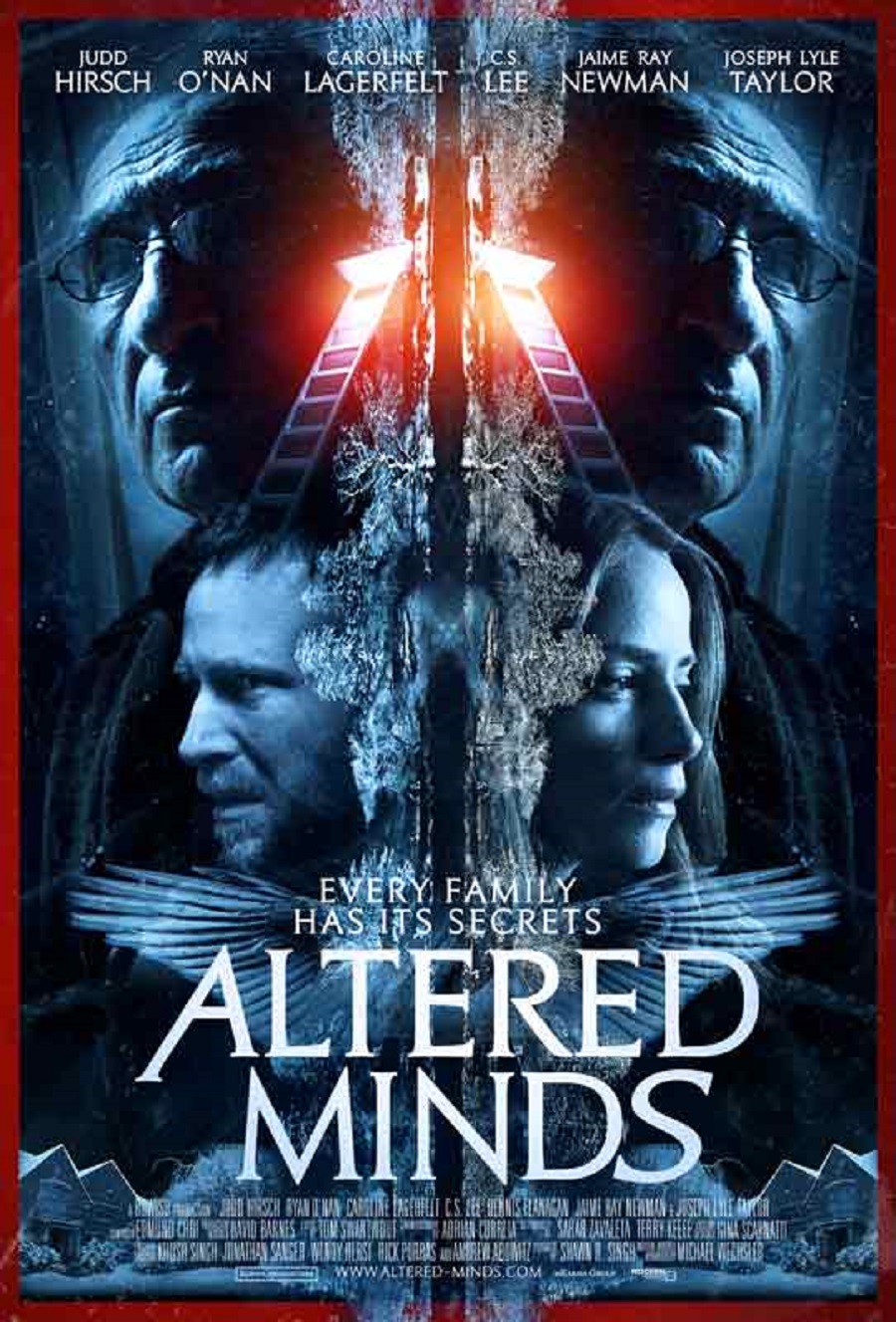
Altered Minds

altered-minds-poster

On the surface, “Altered Minds” looks like your typical “Sixth Sense” psychological thriller as the characters struggle to get to the truth of what’s terrifying them so deeply, but this description doesn’t do it justice. What we have instead is a deeply thought out and well-constructed thriller which features a strong ensemble of actors and, like the films of Alfred Hitchcock, keeps you wondering and guessing all the way to the very end.

“Altered Minds” opens up on a family reunion which takes place in a town just as cold and frozen over as the one Ang Lee took us to in “The Ice Storm.” However, it turns out we are guests at a funeral of sorts as it is the birthday of Dr. Nathaniel Shellner (Judd Hirsch), and most likely his last as he is suffering through the merciless disease that is lung cancer. Nathaniel was once a celebrated psychiatrist who won a Nobel Prize for his work in treating refugees from war zones who have been afflicted by PTSD. He is surrounded by his loving wife Lillian (Caroline Lagerfelt), his biological son Leonard (Joseph Lyle Taylor) and his two adopted children, Harry (C.S. Lee) and Julie (Jaime Ray Newman).

altered-minds-house-with-snow

The only one late to the party is Nathaniel’s third adopted child, Tommy (Ryan O’Nan), a horror novelist who is busy looking for an urn containing the remains of the family dog. But when Tommy finally arrives, there comes to be more on his mind as he accuses his father of performing cruel psychological experiments on him and the other family members. What started out as a loving family reunion soon turns into an occasion where bitter resentments and long lost memories arise to where they can be ignored no longer.

The first thing I want to mention about “Altered Minds” is how good the acting is. We’ve known Judd Hirsch for years as an actor who has played endearing characters in “Ordinary People” and “Independence Day,” not to mention his appearances on the television series “Taxi” and “Dear John.” The role of Dr. Nathaniel Shellner is one he could easily have turned into a two-dimensional adult character, but Hirsch reminds us of what a talented actor he is by making him much more. Throughout this movie, he keeps us guessing as to what’s going on in his mind and presents a humane front as he declares he wants nothing but the best for his children. Some actors would be happy to spell everything out for the audience, but Hirsch is far more interested in giving us a well-rounded character, flaws and all, who keeps you wondering if he has a dark side. How dare anyone forget how great an actor he is.

altered-minds-judd-hirsch

I was also impressed with Ryan O’Nan’s performance as Tommy as he manages to find a balance between appearing insane and being more aware of the reality of things than the others are. Like Hirsch, O’Nan keeps you on edge throughout as he makes Tommy an enigmatic character who may or may not be crazy. His performance helps add to the tension inherent in the story, and he makes everything seem just as unnerving as the movie’s potent and unsettling sound design.

Caroline Lagerfelt is a wonderful presence and plays every scene she’s in just right. C.S. Lee, best known for his work on “Dexter,” gives certain scenes a raw emotional power which is hard to look away from. Jamie Ray Newman makes Julie a wonderfully independent character the others would be smart to rely on when things don’t go their way. Joseph Lyle Taylor is at times a little stiff as Leonard, but he still does solid work in making the character appear more complex than he appears at first.

“Altered Minds” was written and directed by Michael Z. Wechsler, and he said the movie arose from obsessions he could never stop thinking about. Its story definitely has a personal vibe to it, and it does feels like his version of a Stephen King novel. Writing and directing a thriller is always tricky because audiences constantly second guess every move filmmakers make as they are eager to stay one step ahead of the action, and one wrong and foolish step could easily destroy the whole picture. Wechsler, however, keeps us hooked all the way to the end, and it’s hard not to feel as obsessed as the characters are in uncovering any secrets which have been left in the dark for far too long.

It’s also impressive to see what Wechsler was able to accomplish with such a low budget and a very short shooting schedule. A lot of independent movies these days are given ridiculously little time to be made in, and you have to be a bit forgiving if certain elements don’t fall into place because any good movie, let alone any good performance, needs time to be developed to its potential. Many filmmakers these days, however, can only work with the time they are given, and it’s not always enough. Regardless, Wechsler in the time he had managed to put together a very effective thriller which is chilling in its presentation and filled with terrific performances.

There are a lot of movies flying under the radar these days, but “’Altered Minds” is one deserving of your attention. That’s especially the case for you film buffs who like any kind of movie which is especially unnerving and deeply suspenseful. It is written and directed by a filmmaker who sidesteps the easy traps of the genre and delivers us something which keeps us on edge from start to finish. It also allows Judd Hirsch to give one of his best performances in years, and that should be more than enough of a reason to give it a look.

Copyright Ben Kenber 2016

* * * ½ out of * * * *


Mother’s Day

mothers-day-movie-poster

Mother’s Day” is the kind of movie I feared “The Meddler” would be, a formulaic comedy filled with overused stereotypes and cinematic traps filmmakers easily fall victim to. But even though it was directed by Garry Marshall who is well known for overdoing sentimentality in his films, nothing prepared me for how cloying and utterly contrived this movie ended up being. It’s like a network sitcom which never made it pass the pilot stage but somehow got turned into a movie for no discernable reason. Having already laid waste to New Year’s Eve and Valentine’s Day, Marshall shows no hesitation in belittling another holiday, and one with much more meaning than others.

The movie starts, of course, a few days before Mother’s Day which allows us to meet a group of people who at first have little, if any, connection with one another, but we know this is going to change from the get go. There’s single mother Sandy (Jennifer Aniston) who’s raising her two young boys by herself while her ex-husband Henry (Timothy Olyphant) spends time with his new wife Tina (Shay Mitchell) who looks like she has yet to reach the age of 30. Next we have successful book writer Miranda (Julia Roberts) whom we see selling jewelry on television and is dedicated to her career more than anything else. Then there is Kristin (Britt Robertson) who lives with her boyfriend Zack (Jack Whitehall) and their baby girl. Zack is an aspiring comedian who longs to marry Kristin, but she feels not yet ready to commit for reasons which eventually become clear. And let’s not forget Jesse (Kate Hudson), wife to Indian doctor Russell (Aasif Mandvi) who knows her parents will never approve of him or her sister who has since come out as gay.

Oh yeah, there’s also the grieving widower Bradley (Jason Sudeikis) whose wife died while serving in the military overseas, and he is left to raise their daughters on his own. The women at the fitness club he works at are eager to set him up with somebody, but he is hesitant to start dating again. And then he runs into Sandy at the local supermarket and… well, you have a pretty good idea of what happens from there.

What bothered me so much about “Mother’s Day” was how cloying and artificial the whole movie felt. Granted, not every movie can feature down to earth characters in relatable situations like “The Meddler” did, but everything here felt so one-dimensional and done by the numbers. Marshall has directed great movies in the past like “The Flamingo Kid,” “Nothing in Common” and “Pretty Women” which turned Julia Roberts into a movie star, and he’s the same guy who gave us the television classics “Happy Days,” “Laverne & Shirley” and “Mork & Mindy.” I even have good things to say about “The Princess Diaries” which introduced Anne Hathaway to the world. But after all these years, you’d think he would be able to give us a movie filled with more than standard situations and cardboard-cutout characters. I refuse to deride his horrible direction as the result of old age because that’s just cruel, but he has done so much better than this tripe.

It’s a real shame because the cast is great and they do their best with material which is far beneath them. Aniston is wonderful as a single mom, and that’s even though her work here doesn’t compare to her underappreciated performances in “The Good Girl” and “Cake.” Sudeikis has proven, in a way he should not have had to, how he can be a strong actor thanks to his performance in “Race,” and he’s wasted here in a role he is far more believable in than many would expect. Hudson, who has attracted mediocre material ever since her star-making turn in “Almost Famous,” does look very relaxed in her performance which gives us hope she will eventually star in a movie worthy of her talents.

But if there’s anyone in “Mother’s Day” who pulls off a truly emotionally honest performance, let alone a powerful moment, it’s Roberts. The scene where she explains to her daughter why she gave her up for adoption proves to be more heart-rending than what the rest of the movie ever could have promised us, and it reminds us why she remains a beloved movie star after all these years. Never mind how the situation is completely contrived as it is presented here. Roberts plays it with a lot of heart and wins us over regardless of how bad this movie truly is.

It’s a shame to see Mandvi, so great on “The Daily Show,” playing nothing more than an Indian stereotype who just happens to be a doctor. Loni Love plays Kimberly, an African-American who is taking pole dancing classes but fumbles them as she is overweight. Kimberly proves to be as funny a character as any Eddie Murphy played in “Norbit,” and no one should mistake this as a compliment. The more Marshall relies on stereotypes, the more this movie sinks into an abyss of awfulness.

But the actors I felt sorriest for were Margo Martindale and Robert Pine who played Jesse’s parents in the movie. They are presented as a couple of very conservative parents who are about to wake up to just how liberal their daughters are. Of course, they are shocked by the love partners their daughters have chosen to spend their lives with, but that they eventually come to accept their decisions in life as well as their grandchildren comes across as no surprise whatsoever. Martindale in particular is a tremendous actress, so her role here feels like an enormous waste of her time as she is forced to portray a type rather than an actual character.

The more I watched “Mother’s Day,” the more nauseous I became. This is such an emotionally manipulative movie that I couldn’t wait for it to be over. This movie has a running time of two hours, and it became increasingly torturous the longer it goes on. While it may have its heart in the right place, it still feels like a gigantic insult to the intelligence. Surely everyone involved with this crap could have come up with something infinitely better, right?

“Mother’s Day” is meant to give tribute to all the mothers out there, but there are so many other movies out there like this which put this one to shame. Regardless of its intentions, it is inescapably awful and deserving of the derision bound to come its way. If you are going to take your mother to a movie this year, take her to see “The Meddler” instead. Taking her to see “Mother’s Day” won’t seem all that different from taking her to see the camp classic “Mommie Dearest” or Gaspar Noe’s “Irreversible,” and that’s saying a lot.

Copyright Ben Kenber 2016.

½* out of * * * *

Crouching Tiger, Hidden Dragon: Sword of Destiny

crouching-tiger-hidden-dragon-sword-of-destiny-poster

Ang Lee’s “Crouching Tiger, Hidden Dragon” is one of those few movies I can describe as being truly exhilarating. It combined amazing martial arts sequences with a great story filled with compelling characters you were eager to follow along with from start to finish. To simply call it a martial arts movie was not fair as Lee gleefully subverted the genre to give us something completely mesmerizing, and it went on to become one of the most successful foreign films ever made.

So it’s a shame to see its eagerly awaited sequel, “Crouching Tiger, Hidden Dragon: Sword of Destiny” doesn’t come even close to recapturing the spirit of the original. Michelle Yeoh returns as Yu Shu Lien and Yuen Woo-ping, who choreographed the action of the original, steps in as director, but those who loved the original are bound to feel like something is missing. While Woo-ping still delivers some amazing action scenes, he lacks Lee’s poetic touch.

“Sword of Destiny’s” greatest strength is definitely Yeoh who looks fantastic at 53 years old and can still kick ass and do her own stunts like nobody else’s business. She is the only cast member from the original to appear in this sequel, and she makes it almost worth a recommendation as her performance is as powerful and heartfelt as it was before.

The movie takes place 18 years after the events of the original and sees Yu Shu Lien coming out of solitude and heading back to Peking where her lover Li Mui Bai’s legendary sword, the Green Destiny, is being held. However, it doesn’t take long for her to encounter resistance as her carriage is attacked by several warriors. In the time she was away, various clans have wreaked havoc in the martial world in an effort to gain control of it, and many have their eye on stealing the Green Destiny which will allow them to rule it with unimpeachable power.

The Green Destiny was a major focal point of the original as Jen Lu (Zhang Ziyi) stole it in an attempt to engage in the warrior lifestyle she had become envious of. That sword is a focal point in the sequel as well to where I began to wonder if perhaps destroying it instead of keeping it safe and locked up would have made more sense. It certainly would have saved the martial world a lot of trouble. Then again, destroying that sword would also have meant destroying the past, so perhaps that’s why the characters are not eager to obliterate it even for their own safety.

We get a lot of characters thrown at us this time around like Wei-Fang (Harry Shum, Jr.) and Snow Vase (Natasha Liu Bordizzo), both of whom want the sword for their own purposes. There’s also Silent Wolf (Donnie Yen) who faked his own death because he was in love with Yu Shu Lien and preferred a life of solitude as he knew Li Mu Bai was the one she loved more. And then we have Hades Dai (Jason Scott Lee), the West Lotus warlord who learns he must obtain the Green Destiny as it will allow him to rule the Martial World.

With all these characters and their various plot threads, it’s hard to get involved in their individual dramas and they are nowhere as compelling as the ones from the original. Many of the characters we see here feel like typical kind martial arts movies tend rely on. Snow Vase in particular feels like a generic version of Jen Lu, and the latter only appears a footnote in this sequel. They all fight like the best warriors, but the action feels ordinary and less than thrilling because we don’t care that much for them.

Another thing about “Sword of Destiny” is the actors speak in English instead of Mandarin, and this proves to be a big mistake. While there are many who can’t stand subtitles, seeing the dialogue spoken in English makes it seem all the more clichéd and uninspired. It’s like watching the original “Crouching Tiger, Hidden Dragon” dubbed in English; it’s still cool to watch, but everything sounds rather laughable in another language. In Mandarin, there was at least a beauty to the words they otherwise would not have had.

But perhaps “Sword of Destiny’s” biggest sin is its overall look. While the original only used CGI effects to remove the wires which helped the actors to fly all over the place, this movie looks like it bathed in them. As a result, everything looks artificial to where “Sword of Destiny” has the appearance of a video game, and not a very good one at that. In fact, the movie at times looks quite ugly because you can easily tell that what’s on the screen is not at all real. While Lee made collapsing buildings look exciting, Woo-ping is not able to recapture that magic as scenes of warriors crashing through floors of a tower looks inescapably fake and all done on a computer.

Coming out of this sequel, I wondered if “Crouching Tiger, Hidden Dragon” even needed one. The stories of both movies connect, but this one looks like it exists on a different planet. Time will only tell if there is to be a “Crouching Tiger, Hidden Dragon 3,” but “Sword of Destiny” doesn’t make much of a case for one. Yeoh is great as always and Woo-ping does pull off some nice stunts, but this sequel feels uninspired and routine at best. Perhaps it’s time for the Green Destiny to be laid to rest once and for all. Just look at what Harry Potter did with the Elder Wand in the “Deathly Hallows;” problems were solved and the wizarding world was balanced out. It’s that simple.

Copyright Ben Kenber 2016

* * out of * * * *

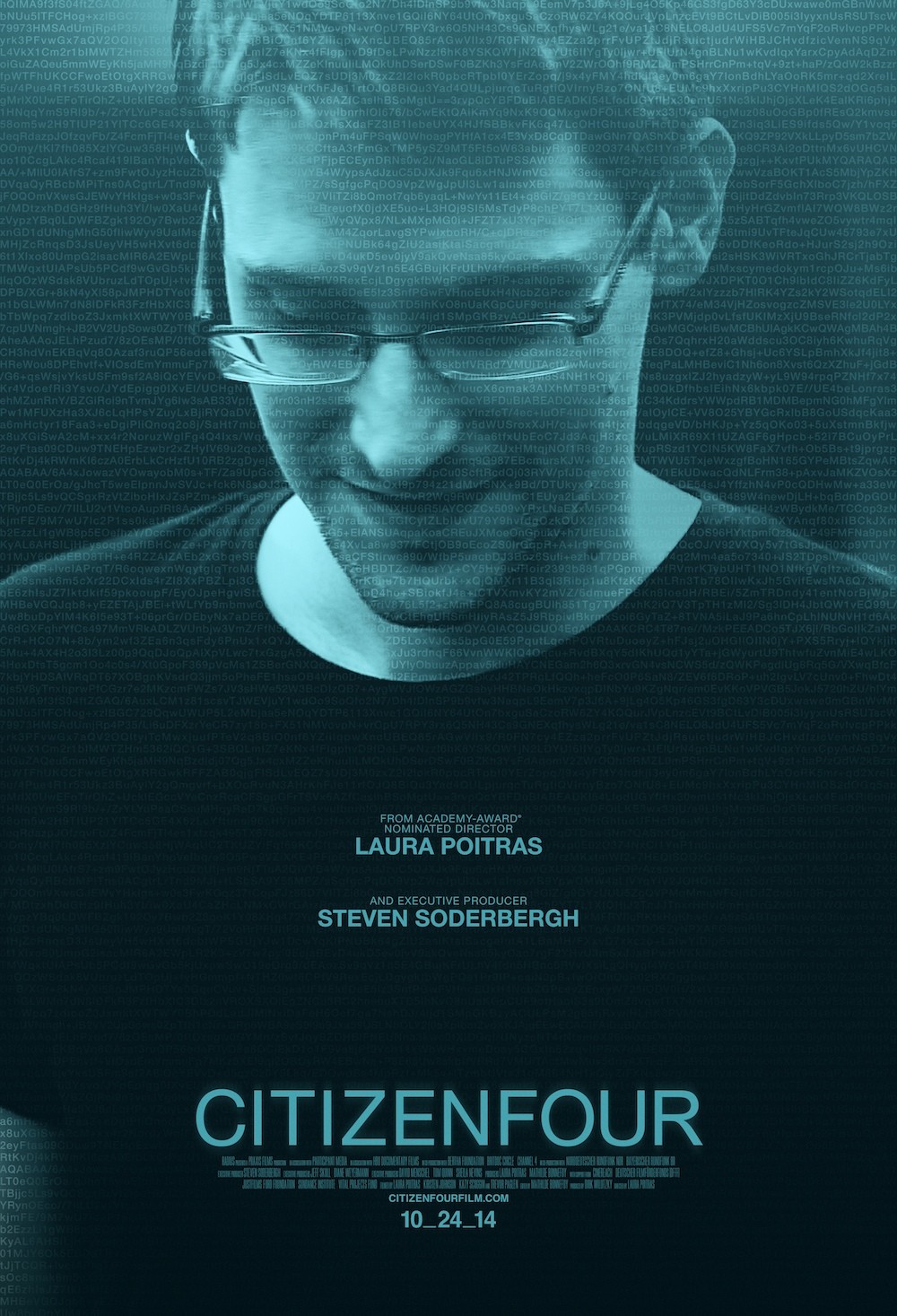
No, I Haven’t Seen It Until Now: Citizenfour

citizenfour-movie-poster

Citizenfour” is a documentary I should have taken the time watch when it first came out in theaters back in 2014. For one reason or another, I just never got the chance to check it out and life got busier for me as it always does. As a result, my view on Edward Snowden, its chief subject, has remained neutral as I never knew what to make of him when the news of his revelations about the National Security Administration’s (NSA) illegal wiretapping were brought to the public. But with Oliver Stone’s “Snowden” now playing in theaters, the time had come to check out “Citizenfour” as it likely provides audiences with the most objective and unbiased view we could ever hope to have about this particular whistleblower.

Technically, “Citizenfour” is a documentary, but it also works as a nail-biting thriller as we watch Snowden and others doing interviews in secret, but we always wonder why the phone keeps ringing and why the fire alarm keeps going off. Is everyone in the hotel room under surveillance? Are there CIA or NSA agents ready to storm it? Might there be a government assassin prepared to take everyone out from a building across the way? In the movie “Strange Days,” Tom Sizemore told Ralph Fiennes the issue isn’t whether you’re paranoid, the issue is whether you’re paranoid enough. These days, that piece of dialogue is an amazing understatement.

This documentary was directed by Laura Poitras who knows all about being under intense government surveillance. She declares “Citizenfour” to be the final part of her post-9/11 trilogy which includes “My Country, My Country” about the U.S. invasion of Iraq, and “The Oath” which focused on Guantanamo and the “war on terror.” Since 2006, she has been placed on a secret watch list by the U.S. government and was constantly interrogated by border agents every time she traveled internationally. It got to where she had no choice but to move to Berlin in an effort to protect her footage from being confiscated. Suffice to say, “Citizenfour” is a documentary which would never have seen the light of day were these secret interviews conducted in America.

The title refers to the name Snowden used when he attempted to make contact with Poitras and journalist Glenn Greenwald. Eventually, the three meet in a Hong Kong hotel room where Snowden tells them, as well as The Guardian’s intelligence reporter Ewen MacAskill, all he knows about the U.S. government’s illegal wiretapping activities, and it is frightening to see just how far it goes.

What’s fascinating about “Citizenfour” is how calm and collected Snowden appears here as he divulges information which will eventually render him a traitor to many and a hero to others. It’s almost like a ticking time bomb as we are viewing his very last hours of anonymity as he will soon be revealed to the world as a whistleblower, and many will manipulate his image any way they can. But in this day and age, when everyone is so hooked on their cell phones and Facebook, aren’t we a little too quick to give up certain parts of our privacy? We have always felt something or somebody keeping an eye on us to where we accept the fact we are being watched, but we reveal more about ourselves now than we ever did in the past.

Poitras deserves a lot of credit for keeping a firm hand on the subject matter here as she gives “Citizenfour” a dark and ominous tone as we know how much Snowden’s revelations will rock the world. She is also aided by the use of Nine Inch Nails’ instrumental music from the “Ghosts” album which provides an electronic hum which keeps getting louder and louder as the truth is revealed and identities will be forever burned in our conscious minds.

By the time “Citizenfour” ends, the cat has been let out of the bag and Snowden finds himself living in Russia along with his girlfriend. The fact Poitras was able to get him back into the documentary before the end credits started rolling feels remarkable in hindsight. At this point, only he and Greenwald can communicate certain bits of information through pieces of paper which they later rip up. The battle to restore privacy has only just begun, and it will be a long time before it will be resolved. Whether it will be resolved fully is another story.

Poitras makes us see the reach of the U.S. government both through her own struggles and former NSA intelligence official William Binney whose own whistleblowing efforts had people bursting through his door with guns. President Barack Obama is shown in footage saying Snowden should have gone through legal channels and share his information legally, but when you take into account how other government whistleblowers have been treated, even he can’t guarantee Snowden can be brought in safely.

What is particularly frightening about “Citizenfour” is how the different parts of government are constantly watching one another to where it feels like trust in one another can seem like a rare commodity. It all brings us back to the “Watchmen” question, who watches the watchers? Everybody is watching each other, and in many ways it doesn’t matter who the President is because the NSA appears to run by their own rules and no government oversight can easily stop them in their tracks.

Opinions on Snowden still differ as some see him as a hero and others as a traitor. “Citizenfour,” however, shows him to be a selfless man eager to right the wrongs made by people who have betrayed the public’s trust. The fact that Poitras was able to get this documentary made let alone released is astounding, and it should be required viewing for all Americans. At the very least, she, Snowden and Greenwald deserve credit for bringing this wiretapping issue to light as there needs to be more discussion about it. We are still feeling the aftereffects of these revelations, and the dominoes keep on falling. While it helps to have all kinds of information to combat those who threaten our livelihood, you eventually have to wonder if it is worth the price.

* * * * out of * * * *

Copyright Ben Kenber 2016.

The Guest

the-guest-movie-poster

I went into “The Guest” knowing almost nothing about it. I was expecting something very artistic and the kind of movie Hollywood studios wouldn’t have the guts to finance these days, but what I got instead was the kind of thriller similar to those from the 1980’s like “The Hitcher.” I kept wondering why the Sundance Next Festival would allow something so formulaic to play at this festival, but when the filmmakers came out after a screening to talk about “The Guest,” it then became clear it was actually meant to be an homage to those thrillers we all grew up on. As a result, I quickly saw the movie in a different light.

But even before this revelation, I had to admit “The Guest” is a thriller which packs a mighty punch and left me on the edge of my seat throughout. It grabs you by the throat and holds you tightly within its grasp, and a lot of that is due to the infinitely charismatic performance by Dan Stevens who portrays the guest of the movie’s title.

“The Guest” starts off with an introduction to the Peterson family who are still grieving over the loss of Caleb who was killed in Afghanistan. Then a man knocks at their door and politely introduces himself as David (Dan Stevens), a friend of Caleb’s from the military, and he is here to fulfill a promise to his fallen comrade. David tells Laura (Sheila Kelley) and her husband Spencer (Leland Orser) he has no wish to overstay his welcome, but they become insistent he stay at their house to where he quickly becomes the best houseguest anyone could ever hope to have as he helps out wherever and whenever he can. But just as in life, we can’t help but think no one can be this nice without being somewhat psychotic.

Some of “The Guest’s” best moments come when David looks out for the Peterson children, Anna (Maika Monroe) and Luke (Brendan Meyer). Luke is having some major problems at school as he is the target of bullies who beat him up at any given opportunity. Now I have seen this scenario played out in many movies, and it used to tug at my emotions in a very strong way. But watching it in “The Guest” gave me that primal beat up the bullies feeling I haven’t felt in the longest time. It doesn’t take a rocket scientist to see David is going to give these jerks a taste of their own medicine, and watching him do so is a perverse thrill.

Anna is less quick to warm up to David even after he goes out of his way to get a keg of beer for her high school friends. From the start she is suspicious of who he really is, and those suspicions are confirmed when a number of strange events start happening around town. Of course, her dad can’t see him doing anything bad and chides his daughter for even thinking such a thing. After all these years, teenagers are still forced to deal with their parents’ hypocrisy, and that’s even with actors like Leland Orser playing the father.

As you can see, “The Guest” travels down the road of familiar genre conventions and delivers them to the audience in a way which feels both potent and fresh. The violence in the movie is more brutal than in others I’ve seen recently, and there are several scenes which shocked me I haven’t been shocked in a while. No character is on safe ground here, and anyone is expendable in a way those actors in “The Expendables” movies ever are. At the same time, the movie has a sharp sense of humor which shows just how much fun its filmmakers were having with the material.

“The Guest” comes to us from director Adam Wingard and writer Simon Barrett, the same two who gave us “You’re Next.” I came out of this movie wondering if they had as much playing around with the slasher genre in “You’re Next” as they did with the thriller genre here. Having interviewed them both the following day for the website We Got This Covered, I can tell you they absolutely did as they talked about combining elements from “The Terminator” and John Carpenter’s “Halloween” to make this movie a reality.

Furthermore, “The Guest” comes equipped with a terrific electronic score courtesy of Steve Moore which recalls the great 80’s electronic film scores like Mark Isham’s “The Hitcher” and the “Halloween” scores of John Carpenter and Alan Howarth, particularly the one they did for “Halloween III: Season of the Witch.” Anyone who knows me best knows how much of a sucker I am for this kind of movie music, and I was digging’ Moore’s score right from the first note as it adds the ominous atmosphere we will be venturing through when David makes his entrance into town.

Seriously, this movie really does belong to Stevens who is best known for playing Matthew Crawley on “Downton Abbey,” the TV show everyone seems to be watching except me. He exudes endless charisma and makes you believe how lethal David can be when you look right into those beautifully steely eyes of his. I’m not kidding when I say he has a stare which can cut through you with a laser from a mile away. Stevens also infuses a number of his scenes with a twisted sense of humor, and this is especially the case when he coolly manipulates Luke’s principal to where he realizes suspending this young man from school might actually be hazardous to his health.

“The Guest” falters a little towards the end as the filmmakers get too enamored of the foolishness of their character’s decisions. It also has one of those horror movie endings which imply how evil can never die, and it feels a little soft compared to what we have seen in other films of its ilk. At the same time, it could mean that Wingard and Barrett will reteam for “The Guest 2,” and it would be fun to see how they would play around with the conventions of a sequel.

Seriously, “No Good Deed” could only dream of being as thrilling as this movie, and it starred Idris Elba for crying out loud. “The Guest” gleefully plays around with all the things we remember from the ultra-violent movies from our past, and I found myself enjoying it a lot even as things got increasingly nasty. Just when I thought I knew how this movie would play out, it quickly shifted gears and took me for a loop.

Now if you’ll excuse me, I have to buy this movie’s soundtrack.

* * * ½ out of * * * *