Ridley Scott’s ‘Alien’ Remains an Exceptionally Intense Experience
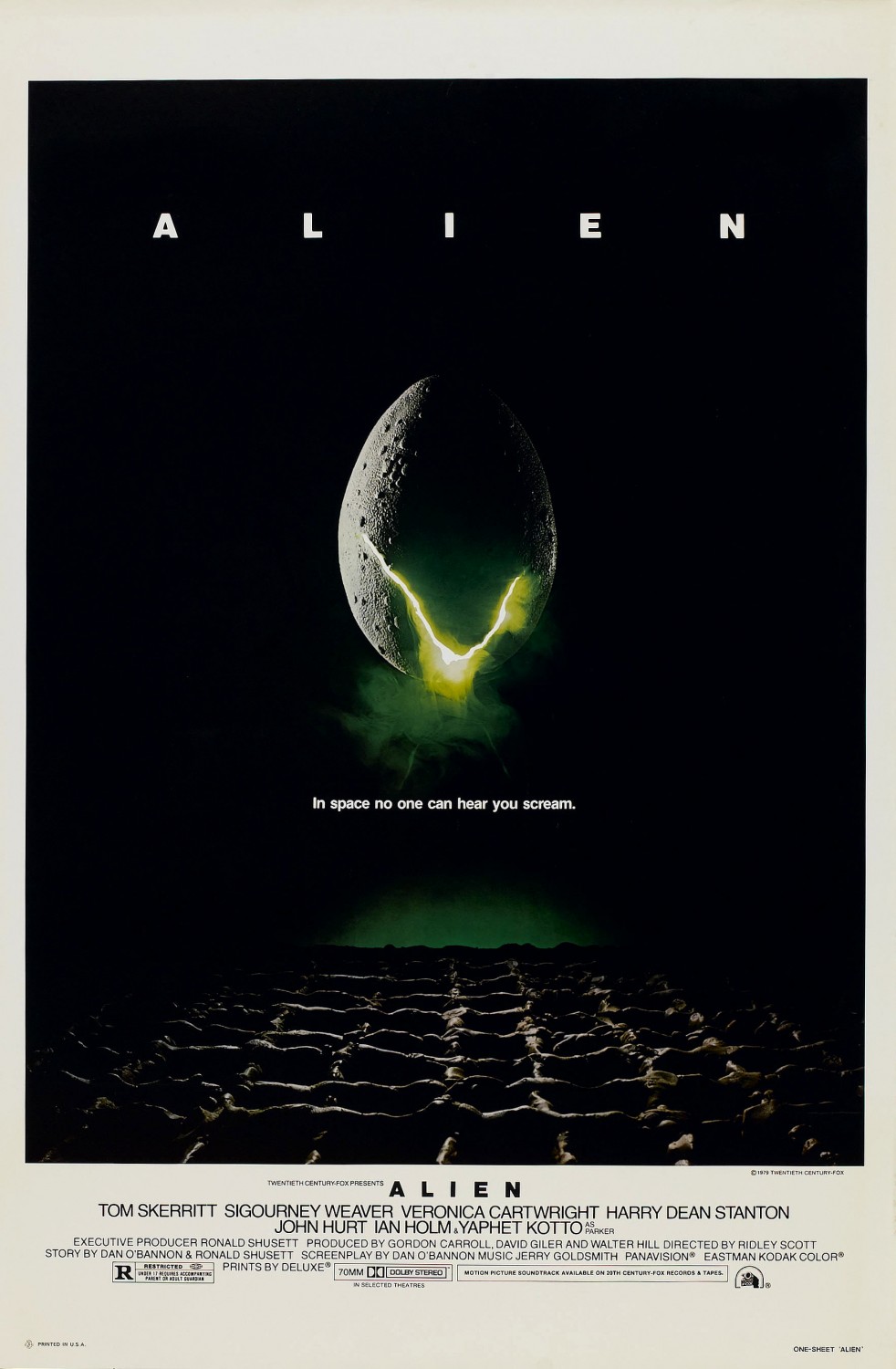
Alien movie poster

In regards to horror movies, “John Carpenter’s The Thing” ranks highest on the list of my all-time favorite movies in general. However, if you were to ask me what I consider to be the scariest movie ever, the first that quickly comes to mind is Ridley Scott’s “Alien.” Now considered a classic haunted house kind of movie, it freaked me out far more than I had expected it to. These days, if I come across someone who hasn’t seen “Alien,” I would be desperate to take the time and watch it with them just to see the look on their face. What may seem like a harmless old science fiction movie still has the power to unnerve and creep up on its audience when they least expect it.

Now when I say that this movie freaked me out more than I expected it to, there are a number of reasons why: I ended up seeing James Cameron’s sequel “Aliens” beforehand, so I already knew Ellen Ripley (played by Sigourney Weaver) was the sole survivor from the original. When I watched “Alien” for the very first time, it was back in the days of VCR’s and VHS tapes, and the one I obtained from my favorite video store was a fairly old copy which showed a bit of wear and tear. When it came to watching it, I got consigned to my parents’ bedroom as they had already called dibs on the big television in the family room which was connected to a “super cool” stereo system. The TV set in their bedroom was tiny by today’s standards. As I remember, it was a 13-inch set which was already on its last legs after years of use. This one didn’t have any surround sound system to enhance the experience, so I just tried to be happy I had a TV to view it on at all.

Having said all this, “Alien” still had my hairs standing on end throughout. Even though I knew who would live and die, the suspense and tension were extreme throughout, and you never ever felt safe on board the spaceship Nostromo. I can still remember hiding my eyes and would be turning the volume down at certain points because my heart threatened to stop beating a few times. Imagine if I had watched it for the first time on a big screen TV with surround system, or better yet, in a movie theater when it originally came out! I wouldn’t have slept for days! Some movies play better on the silver screen than on your television, but “Alien” appears to work on either format with the same degree of success.

There are many different reasons why Scott’s film remains such an effective sci-fi horror classic to this day. For me, it starts with the characters and how down to earth they are. While other outer space movies have characters who revel in the wonder of what’s out there, all the workers on the Nostromo treat their dark habitat as just another office job they take to get by. When we meet up with them, they are on their way back to Earth and just want to be home already. The writers also gave the actors dialogue which was never too heavy on the technobabble and hearing the characters talk about how they deserve full shares for the work they did defines them as blue collar workers. These are not brilliant scientists looking to discover new planets; they’re just people working for the man. The time Scott takes in introducing all these individuals pays off by the time we are given a visceral introduction to the alien of the movie’s title.

Now let’s talk about this alien which was designed by H.R. Geiger, a Swiss surrealist artist. I can’t really compare it to other movie creatures I’ve seen in the slightest because it looks so frighteningly unique in its construction. Its mouth hides an additional set of jaws that lunges out at unsuspecting victims as if they are “faster than a speeding bullet.” Furthermore, there is something quite phallic about that jaw in how it juts out at you without warning or of any thought of the damage it is about to inflict. Its lethal penetration is highly unnerving in how it reminds the viewer of what we all agree constitutes a serious and unconscionable violation to the human body.

But one of Ridley’s most brilliant moves with “Alien” was in not showing the creature fully. We only got glimpses of it throughout the film until the end, and even then we weren’t entirely sure of all that we saw. It was all up to our imaginations to figure out what kind of a threat this creature is. This added immeasurably to the film’s infinite suspense and unending tension. Plus, with the spaceship Nostromo designed to look all dark and shabby with not much light to be found in certain sections, this made it easier for the creature to hide. When it leaped up at the cast member about to meet his maker, it was completely unexpected and defined the jump out of your seat moment for me.

As the movie goes on, we get to an even more frightening aspect; of how corporations can put profits above their workers so coldly. When Ripley discovers the Nostromo crew was made to pick up an alien organism to bring back for further study and that they were expendable, it only further demonstrates just how much alone everyone is on the ship. To realize the company which has employed you couldn’t care less about your existence makes you fully aware of your immediate surroundings, and the instinct to survive becomes stronger than ever. Of course, are cynicism today has us expecting this from any corporation we work with, so we’re more prepared for this than the Nostromo crew was.

A lot of credit also goes to the late Jerry Goldsmith for creating a music score which adds subtly to the action, or at least until the film’s last half hour when the realm of outer space feels even smaller than before. His music touches on the tension inherent in each character without becoming melodramatic, and at times it sounds like invisible ghosts hovering over the unprepared crew waiting to strike. Also, the use of silence in certain scenes makes it even more frightening as we are reminded of how unsettling things can be when our surroundings become far too quiet for comfort.

All of this leads to one of the most intense climaxes in cinema history as we are fully aware of time running out. Just when you think the movie’s over, there’s still another horrendous challenge to overcome. It’s in the movie’s last minute where you can finally breathe a much-needed sigh of relief. Even if you know how of this movie will end, it is still an intensely riveting experience that never lets up for a second. The look in Ripley’s eyes as she makes her way to the escape shuttle perfectly mirrors our own emotions as she is forced into a situation which leaves her with no other options to consider.

I still have very vivid memories of seeing this movie on that unspectacular little television set in my parents’ bedroom while they enjoyed something on Masterpiece Theater with more advanced technology. As the beginning credits began to roll, I was convinced that sitting through this would be a piece of cake. Coincidentally, I also felt the same way about the original version of “The Texas Chainsaw Massacre” when I rented it through Netflix. “Alien” remains one of the most truly terrifying experiences I have ever had watching a movie either on the big screen or the small one. To this day, it remains an effectively scary movie which has lost none of its power. Now if 20th Century Fox had fully realized how all these elements had added to make such a great movie, those hopelessly pathetic “Alien vs. Predator” films might have actually been worth watching.

* * * * out of * * * *


‘Diary of a Wimpy Kid: The Long Haul’ is Too Long Even at 90 Minutes

Diary of a Wimpy Kid The Long Haul poster

With “Diary of a Wimpy Kind: The Long Haul,” I enter this long-running movie franchise a fresh newbie. I have not seen the previous entries, and this will save me the trouble of comparing this one to what came before. This one also has an entirely new cast of actors as the previous cast had other things to do or simply got too old to play the roles they made famous. But if this sequel truly equals its predecessors in terms of quality, I have all the reason in the world to avoid them at all costs.

As you may be able to discern from its title, “The Long Haul” is a road movie as we watch the Heffley family travel in a minivan to visit their grandmother for her 90th birthday. However, young Greg Heffley (Jason Drucker), the hero of this series, has other plans as he and his brother Rodrick (Charlie Wright, who looks a lot like Ezra Miller here) intend to escape their parents’ loving clutches and go to a video game convention where they can redeem their meager social status and become mega-popular in the eyes of their schoolmates.

At this point in my life, I feel like I have seen every road movie ever made, and this made watching “The Long Haul” especially cloying and painfully irritating. This one has shamelessly stolen from all the classics like “National Lampoon’s Vacation,” “Midnight Run,” “Lost in America” and “Tommy Boy” among others to where this feels like a greatest hits collection performed by a cover band that cannot come close to equaling what the original artists pulled off. The filmmakers could have taken this material and made it all their own, but perhaps the studio executives were more interested in making this movie seem as bland and generic as humanly possible.

Seriously, every single cliché from road movies is on display in “The Long Haul.” You have the family staying at a motel which should be condemned and has a pool the kids are excited about swimming in until they discover it is either empty or grossly polluted. There’s also plenty of flatulence jokes, family members getting mud all over them while trying to move their car, parents singing songs their kids can’t stand, a kid vomiting while on an amusement park ride, and there’s a spoof of the “Psycho” shower scene, a classic scene which has been spoofed to death. The only thing missing is Christie Brinkley driving along in her red Ferrari which, while this is a PG-rated movie, would have been a welcome sight.

Over the years, I have come to resent movies about young kids as they fail to represent them realistically and instead present them as types of characters designed to appeal to a certain demographic. At least Greg Heffley, the main character of this series, resembles someone we can relate to as his anxieties remind us of how horrifying it was to be socially ostracized at school. But everyone else here is designed to fill a certain niche, and the actors, as a result, can only do so much with the shallow material they have been given.

If there is one thing I liked about “The Long Haul,” it was Alicia Silverstone who plays the matriarch of the Heffley family, Susan. It’s been a long time since she stole our hearts in “Clueless” and all those Aerosmith music videos, and she remains as appealing as ever even as the screenplay fails her constantly. Ever since her big breakthrough, she hasn’t been seen as much and has been largely relegated to projects which, more often than not, fly under the radar. But seeing her here reminded me of what a wonderful presence she can be in any movie, and that’s even though this one is largely undeserving of her talents.

Directing “The Long Haul” is David Bowers who was a storyboard artist on “Wallace & Gromit: The Curse of the Were-Rabbit” and directed the vastly underrated animated film “Flushed Away.” Rumor has it Bowers wanted to make this “Diary of a Wimpy Kid” sequel into an animated film, and I truly believe it would have been a far more interesting cinematic experience if he had done that instead. The books themselves have a unique cartoon style which I think would lend itself well to a feature film, but as this series has been a live action one for three movies, I imagine studio executives were not about to change anything up.

When all is said and done, “Diary of a Wimpy Kid: The Long Haul” is an endlessly irritating exercise in futility, and I’m not even sure fans of this franchise will find much to enjoy here. I snickered through most of it, and I don’t recall laughing once. Instead, I found myself wondering why the characters’ cell phones never seemed to run out of energy. I mean, there should have at least been one scene where they plugged them into a power source as I find myself recharging mine every other half hour. Also, that slide the kids travel down at the movie’s start is red and, when they come out at the end, suddenly turns blue. Glaring errors like these became far more interesting to me than anything else in this sequel’s 90-minute running time.

Seriously, save your money and binge watch “Freaks & Geeks” instead as it represents a far more entertaining example of growing up a kid. It was a brilliant show, and like all brilliant shows which aired on network television, it lasted only one season.

* out of * * * *

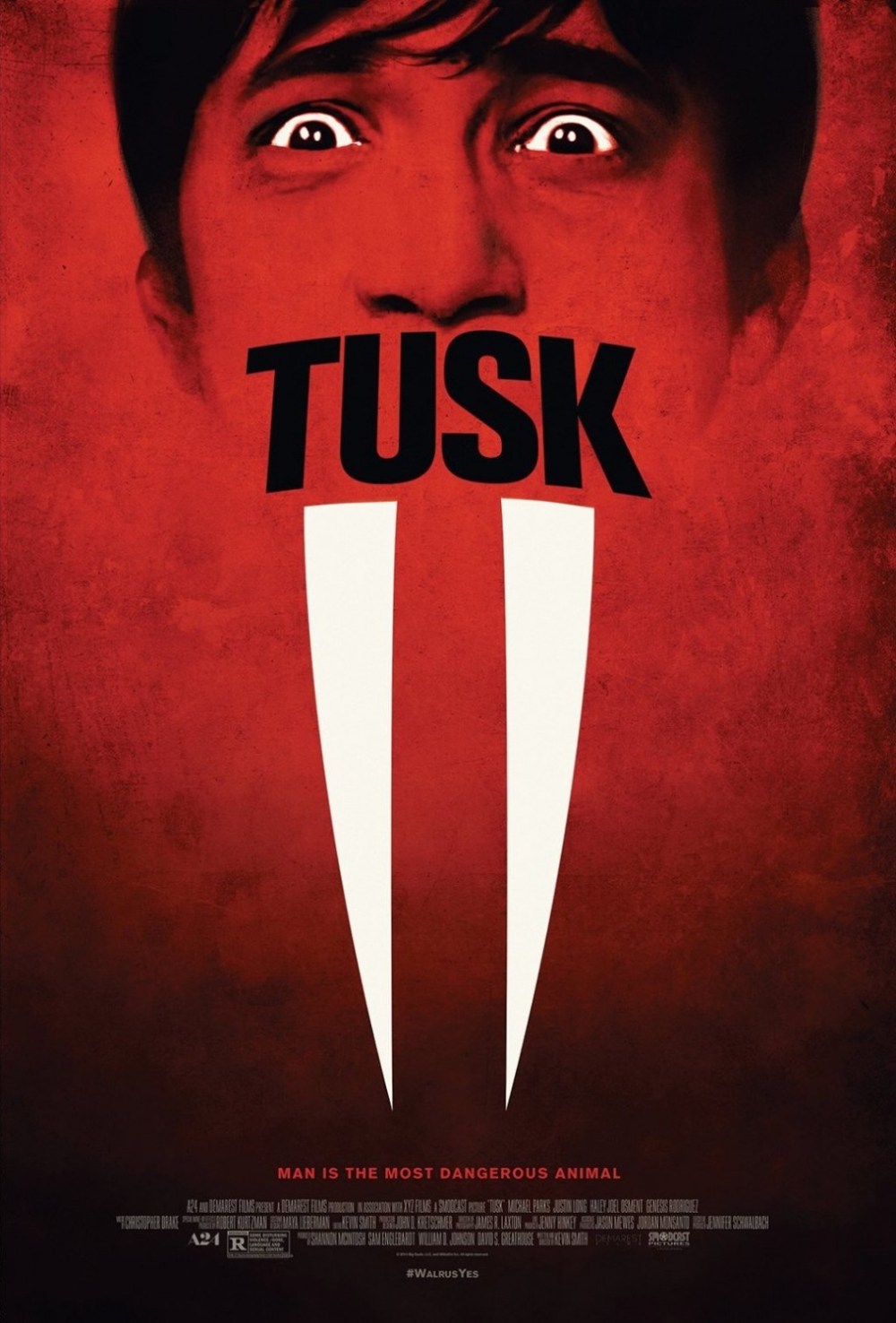
‘Tusk’ Should Not Be Mistaken for a Mainstream Film

Tusk movie poster

To be honest, I’m glad Kevin Smith hasn’t retired from filmmaking (or at least, not yet). I’ve enjoyed all his movies except for “Cop Out,” which I’m sure he doesn’t care for either. When it comes to “Red State,” I found it to be a major leap out of Smith’s safety zone which resulted in his best directorial effort yet. Now we have “Tusk,” his second visit to the horror genre and one of the more original and bizarre movies to come out in a long time. It has its moments of comedy, but it is mostly a serious film dealing with one American’s journey into Canada and of the horrific fate awaiting him there.

Justin Long stars as Wallace Bryton, one of the hosts of a popular podcast called “The Not-See Party” (get it?), and he and his good friend Teddy Craft (Haley Joel Osment) live to have fun at the expense of others. Their latest target is the “Kill Bill Kid” who accidentally sliced off one of his legs with a sword while attempting to perform one of that movie’s famous moves, and Wallace decides he and Teddy should travel to Canada to interview him. Teddy, however, doesn’t like to fly, so Wallace goes over there all by his lonesome.

When Wallace gets to Canada, he discovers the “Kill Bill Kid” has died which leaves him without an interview. Despondent, he stops by a bar where he discovers a handbill from a man who claims to have a lifetime of stories to tell, and he is offering free room and board to those interested in hearing him out. Wallace jumps at the chance to listen to what he has to say and travels out to the man’s house which, like in any other horror movie, is located in the middle of nowhere. It is there he meets Howard Howe (Michael Parks), a wheelchair-bound old man who regales Wallace with tales of his life at sea. One of those tales involves a ship he was on which sank and led to him meeting a walrus who saved him from drowning. Howard came to name the walrus Mr. Tusk, and he still considers Mr. Tusk to be the best companion he ever had.

As Howard continues to talk, Wallace begins to lose consciousness as, like those horny teenagers in “Red State,” he has been drugged and eventually passes out. When Wallace wakes up, he finds himself in the hands of a man intent on turning him into a walrus. We all know what curiosity did to the cat, but Wallace looks to be heading towards a fate far worse than death here.

I don’t think it’s any secret of what happens to Wallace in “Tusk,” and perhaps it is best for those who haven’t seen the movie yet to stop reading this review now. The inspiration for this movie came from “SModcast,” a weekly podcast Smith does with Scott Mosier. On one episode they talked about an ad from a British website where a man was offering free room and board for anyone willing to dress up in a walrus suit and make walrus noises while he throws them fish and crabs to eat. We get to hear some of this episode during “Tusk’s” end credits, and Smith and Mosier are laughing their asses off as they discuss how the movie would play out. Seriously, it got to where I was kind of amazed at how the story evolved from the podcast to this finished movie.

Like “Red State,” “Tusk” is not the kind of horror movie designed to make you jump out of your seat every five minutes. Instead, it is more about people confronted with a terrifying situation which proves to be way beyond their control, and just when you think things can’t get any worse, they do. Robert Kurtzman was the effects artist, so that should give you an idea of just how horrific Wallace’s transformation is. It may not quite equal what Jeff Goldblum went through in “The Fly,” but it does provide the audience with a very unsettling visual.

Long has a tricky role to play as Wallace is a very obnoxious dude who almost doesn’t yet realize just how rude he is to others. His interactions with Canadian residents provide “Tusk” with some of its most amusing moments, and that’s especially the case when he meets a border agent played by Harley Morenstein who doesn’t hesitate to explain the differences between the United States and Canada. You can’t help but feel bad for Wallace even though he’s a bit of a jerk. I like to think this gave Long an interesting arc to play as he goes from being an egotistical prick to a helpless victim who is not exactly deserving of the fate which awaits him.

We do get a few flashbacks which show Wallace hanging out with his girlfriend Allison (Genesis Rodriguez) who is starting to accuse him of being a sellout, and she admits to missing the old Wallace as a result. Wallace, however, is more smitten with the new version of himself and doesn’t want to go back to the way he was. To say that this comes back to haunt Wallace is the understatement of the year.

Rodriguez, I have to say, has some really strong close-ups here where she holds the audience at bay with her emotional conflicts. As much as she loves Wallace, she is not blind to his misdeeds which eventually come to reflect her own. Rodriguez previously appeared in “Identity Thief” and “Casa de mi Padre,” and she looks almost completely unrecognizable here. Gloria Swanson may have told Mr. DeMille in “Sunset Boulevard” that she was ready for her close-up, but she wasn’t as ready as Rodriguez is here.

It’s also great to see Osment here whom we all remember from “The Sixth Sense.” He’s grown up now (deal with it) and gives a multilayered performance here as Teddy. Explaining why is tough because it would be giving away one too many things, but it shows that Osment has entered into an adult acting career with confidence, and I look forward to seeing more of his work in the future.

But let’s be honest, the real reason to see “Tusk” is Michael Parks. His performance as Howard Howe is truly a master class in acting, and he takes what could have been an utterly ridiculous character and turns him into a pitiful and truly haunted soul, not to mention an utterly terrifying one. Seeing him dive right into this role with such a giddy exuberance and spout off classic lines of literature is invigorating, and it quickly reminded me of how annoyed I was that he didn’t get an Oscar nomination for his work in “Red State.”

“Tusk” does, however, fall apart a bit during the second half when we get introduced to a French-Canadian detective named Guy LaPointe. His appearance comes out of nowhere, and it leads to a cameo which goes on for far too long. Now you may or may not know the identity of the actor playing LaPointe, but I’m not going to reveal it here because it honestly took me a minute or two to realize who it was. There is something to be said for an actor who disappears into their part, and this one succeeded in doing so thanks to a nice nose job. Still, the character feels out of place.

It’s best to go into “Tusk” with an open mind, and this especially goes for Kevin Smith fans. Some may say he is traveling through familiar territory here, but I don’t think he is. True, it does have a couple of convenience store clerks (both of whom will be appearing in Smith’s next movie, “Yoga Hosers”) and there are a lot of in-jokes throughout, but here he is exploring the possibility of a man’s humanity surviving a cruel and life altering event.

I also got to say, looking at this movie’s title, that I kept wondering if the Fleetwood Mac song “Tusk” would be featured here. Is it? Well, see the movie to find out.

* * * out of * * * *

‘Red State’ is the Best and Most Unlikely Film from Kevin Smith

Red State movie poster

Red State” is to Kevin Smith as “Unforgiven” was to Clint Eastwood; a game changer in the way we perceive him as an artist. Any shred of Jay and Silent Bob is completely absent here as he probes the horror of an ultra-fundamentalist church whose fear of God prompts a siege of destruction which tests its members as well as those ordered to bring them down. Nothing Smith has done previously will prepare you for what he comes up with in “Red State.” We know he’s been looking to do something other than “Clerks” or those formulaic comedies he has spent far too long apologizing for. With this one, his creativity and passion for moviemaking are completely reinvigorated.

The movie starts off innocently enough with one of Smith’s favorite subjects: young men talking about sex. Three teens named Travis, Jared, and Billy Ray drive out to a remote area and meet up with a woman named Sarah (Melissa Leo) who has promised to make out with each of them. But after a couple of beers, they pass out and wake up to find themselves prisoners of the Five Points Church, a fundamentalist cult led by God-fearing pastor Abin Cooper (Michael Parks) who seeks to punish those who have morally corrupted America whether they be homosexuals or adulterers among other sinners. But when things get out of hand, as they always do, the church is forced to make a last stand as the police and FBI intervene in a showdown destined to have a bad ending.

The Five Points Church is Smith’s not so subtle representation of that church which is known for protesting funerals of homosexuals and dead soldiers. You probably know the church he’s referring to. For those of you who don’t, you can just figure it out on your own. While we see them for the fascist hate mongers they are, you have to wonder what draws anyone to a church with such unrealistic and obscene views. Some are just looking for an answer, and any answer after a while will do to give their life meaning. Whether or not you believe in the beliefs of the Five Points Church or that church is beside the point; what should concern you is there are people out there who do believe in the ridiculously hateful things they have been taught, and they will do anything to defend those values at any cost.

The leader of that church can only dream of being as charismatic as Abin Cooper. Michael Parks performance is nothing short of brilliant as he makes you believe that people can fall under the spell of a religious pervert. Parks was introduced to a whole new generation of fans when he played Texas Ranger Earl McGraw in “From Dusk till Dawn,” “Kill Bill Vol. 1,” and “Grindhouse.” After watching him in “Red State,” you come out wondering why he is not a bigger star. Parks doesn’t just give us a mere impersonation of some maniac preacher. Instead, he gives us an infinitely charismatic portrayal of a deeply religious man who is as seductive as he is dangerous.

With the actors, Smith just lets them loose to do their own thing, and the results are enthralling. Melissa Leo, who deservedly won an Oscar for her performance in “The Fighter,” gives it her all as Cooper’s daughter Sarah. Her emotional conviction in this role is proof of how far Cooper’s influence as a preacher goes, and Leo remains one of the best actresses working today.

Another big standout is John Goodman who plays ATF Special Agent Keenan. Goodman has always been a great actor, but you get the sense after so many years that most people don’t recognize him as such. His work in “Barton Fink” and “The Big Lebowski” should be more than enough to convince you of his greatness. Anyway, he gives some of the film’s best speeches as his character is forced into a situation which goes against his moral values, but it is a situation he cannot simply override. Goodman inhabits this character perfectly, giving him the emotional turmoil and confusion etched all over his face.

Other great performances come from Kerry Bishé as Sarah’s daughter, Cheyenne, and she is ever so intense in her desperation to save the women and children whom she feels will fall victim to the government’s actions for the wrong reasons. Kevin Pollak provides memorable support as Keenan’s right-hand man, Special Agent Brooks. You also have to give credit to the three young actors playing the teens: Michael Angarano, Kyle Gallner, and Nicholas Braun. The roles they are given appear one-dimensional, but they bring more to the material than what is on the page, and they give you a reason to care about what happens to them.

Smith’s movies in the past have dealt with conversations about pop culture, but there’s none of this in “Red State.” He instead exploits certain movie conventions which have us believing we’ve figured the whole story out, and then he pulls out the rug from under us. The violence is truly shocking as characters meet their fates in a way we don’t see coming. This is not your typical good guys versus bad guys story as everyone here is morally flawed in one way or another. The events of David Koresh’s demise in Waco, Texas hang heavily over the proceedings, and no one looks to come out of this a hero.

This movie could have been a simple look at the damage caused by religious perversion, but there are different levels at work here. We see how the church, the government, and the local police react to the violent situation they are all immersed in. Look closely at the end credits; the cast is divided by religion, police, and politics. It becomes about containment by any means necessary. So, when all is said and done, no one’s coming out of this battle in one piece.

Working with his longtime director of photography Dave Klein, Smith finds a unique look for this movie thanks to the RED digital camera. Both are able to get shots which give the material a visceral feel you wouldn’t expect from the director of “Jersey Girl.” The flexibility they find with this device feels inspirational as it allows them to do things they couldn’t do previously.

Smith still seems determined to retire from making movies, and that’s a shame. “Red State” represents a new chapter in his long career which has me begging him to keep on going. It’s not a horror movie in the usual sense of things jumping out at you to give you an easy scare. Instead, it shows horror we find in everyday life. Who knew he would capture it to such powerful effect? In a time when the voices of independent movies appear to be gasping their last breath, Smith shows himself to be the last man standing and gives us a reason why we can’t let movies like his simply fade away.

* * * * out of * * * *


‘Creepshow’ Remains a Benchmark in Horror Anthologies

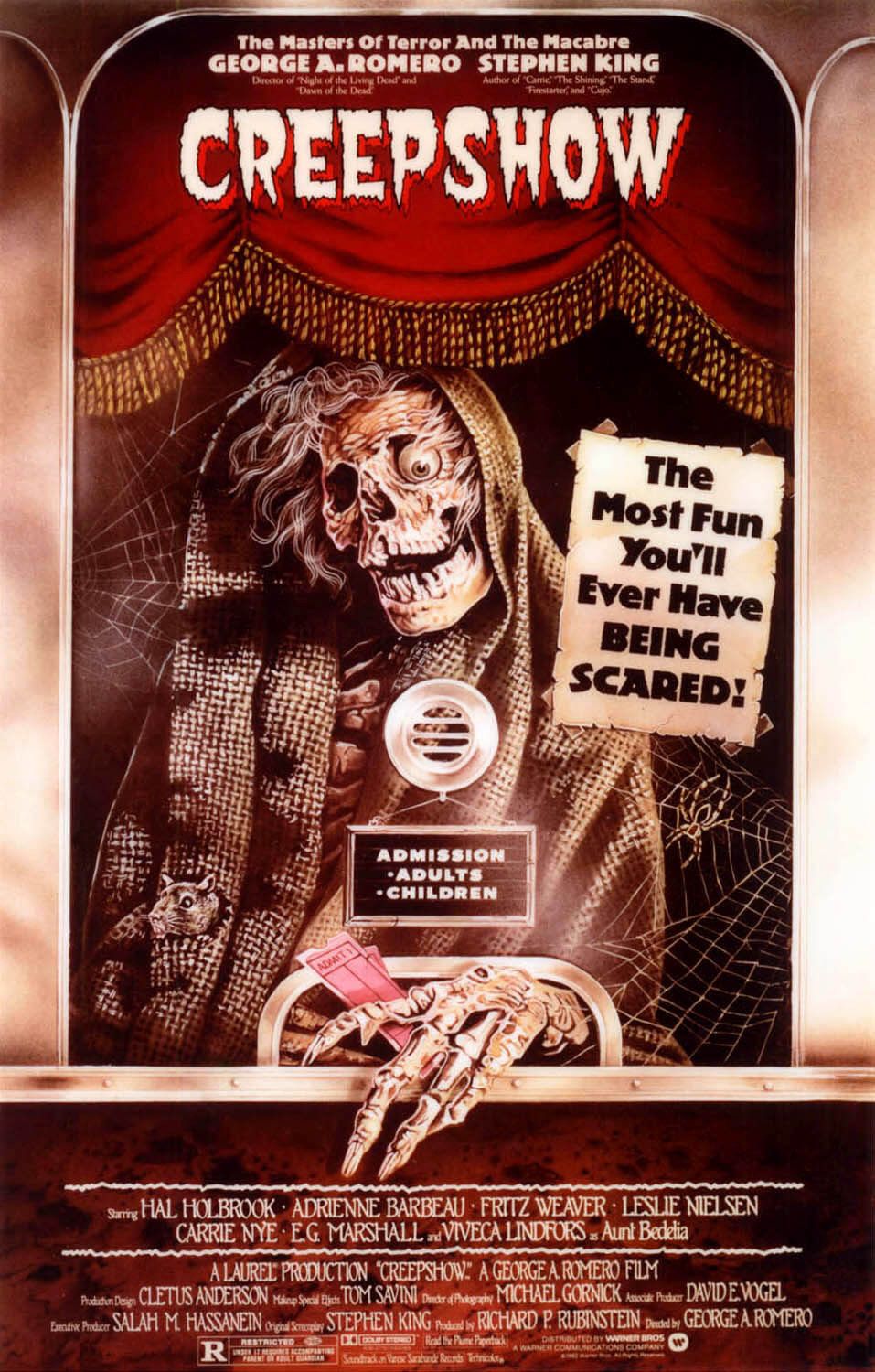
Creepshow movie poster

Ah, “Creepshow!” One of the best horror anthologies to come out of the 1980’s, and it is immensely enjoyable if you’re into this sort of movie. It brings us the combined talents of Stephen King and George Romero as they give homage to the E.C. comics of the 1950’s with five different stories of terror. In some ways, this can be seen as more of a comedy than a horror movie. Granted, it does have its scary moments, and a hand coming out of a grave is always good for a jolt, but it is presented in such an over the top fashion to where you have to thank both King and Romero for not taking the things too seriously.

As I write this review, filmmaker Eli Roth is having a two-week festival of his favorite movies at New Beverly Cinema in Los Angeles. This film was playing on a double bill with “Mother’s Day” which I missed, unfortunately, but it was probably because I was more excited about seeing this one. I vividly remember seeing the trailer for it when I went to see, and cry again at, “E.T.” When the image of The Creep first appeared, my brother responded by saying, “Whoa!”

The trailer was amusing and funny, at least until those cockroaches came in during which I had to cover my eyes. Granted, it would years and years before I would have the stomach, let alone the time, to check this one out. Anthology movies and series like “Masters of Horrors” are always intrigued me because they were filled with so many possibilities. Going from one story to the next, you are eager to see where it takes you. The only downside with anthologies is there is usually a weak story among the whole bunch which can weigh down the whole enterprise, but “Creepshow” doesn’t have this problem and is endlessly enjoyable to sit through.

The movie opens with a prologue where a father (Tom Atkins) berates his young son (Joe King, Stephen King’s son) for reading these “crappy” horror comics. The kick of the scene comes from the son calling out his dad for the hypocrite he is when he points out it’s a lot better than the magazines he reads. I couldn’t help but think this kid’s dad has a wide variety of porno magazines hidden where his wife can’t find them. It’s funny how we see fathers not wanting their kids to read “crap,” and then they sit in a recliner with a can of beer boasting of how God made fathers. Poor schmuck.

“Creepshow” then goes straight into its first episode entitled “Father’s Day,” a story of revenge. The patriarch of a family was murdered for being an annoying prick as he furiously demanded his cake to be brought out to him, and now he’s come back from the dead to get that tasty cake he has long been denied. Of all the stories, I consider it the weakest because “Father’s Day” is very short and threatens to be pointless. It does, however, succeed in defining the look of the movie. The acting is over the top, and there is a fantastic use of colors which dominates the movie and gives it a wonderfully pulpy feel. If Dario Argento had ever created a comic book, I’m sure it would look like this.

The great about “Father’s Day” is it allows us to see Ed Harris in a role where he is loosened up. Harris is a great actor who plays mostly dramatic roles in movies, and one day he will win an Oscar. But here, we see him get his boogie on while dancing to some crappy disco music which somehow sneaked its way into a 1980’s movie. You listen to that music, and you’d figure it would have died a fiery death before the 70’s ended. No such luck.

The next story, “The Lonesome Death of Jordy Verrill,” is both funny and sad. It features King in one of his few acting performances as the title character, a dimwit farmer who discovers a meteor which has crashed into his backyard. Jordy gets excited at the prospect of selling this meteor to the local college for a handsome profit, but when he tries to salvage it, it breaks into two and a liquid quickly seeps into the barren ground of the farm. Soon after, everything it touches starts growing green plant life which cannot be contained. It also grows on anything it touches, including Mr. Verrill himself. Seeing King turn into a bush is frightening and morbidly amusing. King may say he is a better writer than an actor, but you can also say he is a better actor than a director (“Maximum Overdrive” anyone?). In the end, he is perfectly cast as the seemingly brainless farmer, and his performance fits both the story and the film.

After that, we get “Something to Tide You Over,” and this one was my favorite of all the stories in the movie. It stars Leslie Nielsen, before his image was permanently altered by “The Naked Gun” movies, as a millionaire husband who takes his revenge on Harry (Ted Danson), the man having an affair with his wife. The way he lures Danson’s character out to the beach and gets him to bury himself in the sand up to his neck is priceless, and you can say there is a bit of “The Vanishing” here as we have a man willing to do anything to find out the fate of his loved one. Danson’s fate, being stuck in the sand as the tide rushes over him is frightening and unnerving to witness. You feel stuck in the sand with him, and it shows how fiendishly clever both King and Romero are at exploiting what we fear the most in life.

Watching this segment today may seem weird as Nielsen is forever known as Lt. Frank Drebin of “The Naked Gun” movies, and Danson is best known for playing Sam Malone on “Cheers.” Seeing them in a serious, albeit a highly exaggerated, story might be hard, but these actors have their serious chops as well as their comedic ones, and both talents serve them well here. Nielsen is a particular hoot as a man so confident of his deviant plan of revenge, yet quickly haunted by the possibility of his crimes coming back to do him in. Nothing can stay buried forever.

Next, we have “The Crate” which features Hal Holbrook as a Professor at a New England college who is saddled with an eternally inebriated wife (played by Adrienne Barbeau) who constantly embarrasses him and herself in front of anybody who happens to be watching. Holbrook’s character is a coward who doesn’t have the cojones to stand up to his wife, but then a colleague of his and a janitor discover a crate beneath the stairs which has not been opened for decades. It turns out to contain a monster who eats human beings whole. After Henry hears of this, he concocts a plan to lure his abusive wife over to the crate.

Holbrook is great at making you feel sorry for his character even while we berate him for being a wimp and not standing up to his wife. Barbeau gives a one-note performance as a humongous bitch with no real redeeming features whatsoever. In the end, this is not a big criticism because Barbeau is given a one-dimensional character to play. The characters are not meant to be complex in the way they handle themselves, and they are here to represent different types of people who meet their predestined fate.

Then comes the last story of the movie, appropriately titled “They’re Creeping Up on You.” This one I had the hardest time sitting through, and I doubt it will be easy for you either if you have an intense phobia of bugs. E.G. Marshall plays Upson Pratt, a thoughtless and hateful bigot who has no sympathy for anyone other than himself. He gleefully takes delight in the suffering of others and lives in a completely sterile apartment which makes him look like he’s a doctor. But his problem now is with the bugs in his apartment, specifically cockroaches. They keep popping up out of nowhere, and their numbers keep growing and growing…I found myself looking at my shoes a lot during this segment, and it reminded me I need to get a new pair soon.

I remember watching one of those “scariest moments in movies” episodes on the Bravo channel. They featured the cockroach segment from “Creepshow” in it, and it turned out the segment was more of a socially conscious piece than people realized. This is after all a Romero film whose “Dead” movies are loaded with social commentary, and the whole point of the “Creeping” segment was to look at bigotry how what we fear the most we end up empowering. We invite our fears to mess with us, and sometimes they eat us whole. Suffice to say, this is very much an anti-racism piece, and it’s the strongest episode in the movie. Marshall gives a brilliantly zany performance as a man who cannot control the world around him any longer, and who could never really control it in the first place.

Eli Roth had programs for his festival entitled “The Greats of Roth,” and in it he summed up this “criminally underrated” movie perfectly:

“It’s amazing to see how many comic book and graphic novel adaptations today are praised for getting the ‘look’ of the comic perfect, and nobody ever seems to mention this film. This was the first time that Romero was really surrounded with a star-studded cast, and you see Romero, King and Tom Savini all coming together to create one of the most visually spectacular and fun horror films of all time. They set out to recreate the look and feel of the old E.C. Comics and nailed it perfectly.”

“Creepshow” is indeed one of the most deliriously entertaining horror movies ever made, and it is a visually stunning achievement made on what must have been an especially low budget. There were many other movies to come out of this which tried for the same look, but none of them succeeded at it quite like this one did. This is just a fun, fun, fun movie for people who dig this sort of thing, and to see it on the big screen was a real treat. As the movie’s tagline says, it is the most fun you will ever have being scared.

* * * * out of * * * *

WRITER’S NOTE: This review was originally written in 2008.

Save

The Performances Make ‘3 Generations’ Worth a Look

3 Generations movie poster

I prefer to review movies for what they are as opposed to what I wanted them to be, but with “3 Generations,” this proves to be a bit of a challenge. For the most part, I think it is a sweet and thoughtful movie about transgender issues. But yes, it could have dug deeper into an issue many struggle with in life as this one touches on the family dynamics at play when one member decides to transition to another gender. For many, this is a volatile issue with many psychological scars being inflicted on those who do not deserve to be misunderstood, but director Gaby Dellal and her co-writer Nikole Beckwith at times take this story in a comical direction to where it borders on becoming a sitcom. Still, I can’t help but like this movie for what it is as deals with its subject matter in a sympathetic way and features three terrific performances which alone make it worth the price of admission.

Elle Fanning stars as Ramona who is now going by the name Ray because she sees herself as “a boy with tits.” Ray sees herself (excuse me, himself) as a boy trapped in a girl’s body, and he is determined to undergo gender reassignment to correct this. The main obstacle, however, is getting the consent of her parents to go through with it. His mother, Maggie (Naomi Watts), is willing to sign off on the procedure even though her anxiety and concerns over Ray’s decision make her smoke close to a full pack of cigarettes a day. His father, Craig (Tate Donovan), has been out of the picture for so long that Maggie would rather everyone believe he is dead. As for Ray’s grandmother, Dolly (Susan Sarandon), she wonders why he can’t simply be a lesbian like her.

At the center of “3 Generations” is Fanning who gives an excellent and heartwarming performance as Ray, and she fully invests in her character’s commitment to changing his identity into something far more acceptable to himself. Watching her is also a strong reminder of how teenagers are brilliant at seeing straight through their parents’ hypocrisy and bullshit to where they threaten to be more mature than those raising them. Whereas the other characters around him face an intense level of worry and anxiety, Ray knows exactly what he wants and shows zero doubt over what he feels he needs to do, and it represents the bravery I wish I had as a teenager.

You can never go wrong with Watts in anything she appears in, and she inhabits Maggie as your average mother; always wanting the best for her child while constantly worrying about the future. Maggie is almost convinced Ray will come to her one day with a beard on his face saying he made a mistake, but she is also the one closest to him willing to grant his wish to become a boy. Watts makes Maggie’s suffering all the more relatable as she reminds us all of how life is all about suffering, but through it all, we can find a happiness which a lot of times feels out of reach.

Sarandon is a wonderful presence here as Dolly who lives with her lover Frances (Linda Elmond), Maggie and Ray all under the same roof in a big apartment in New York’s West Village. This Oscar-winning actress is always great at playing the veteran mother who has seen it all and approaches her daughter’s problems like the pro she is. At the same time, her scenes tend to get overwhelmed by sitcom-like humor which threatens to take away from this movie more often than not. Still, Sarandon won me over as she always does, and the moments with Elmond remind us of the constant struggles couples go through. And by this, I mean any couple.

“3 Generations” works best when it focuses on Ray and his struggle become the boy he was always meant to be. We see him working out trying to build muscle, and he is determined to switch schools in order to get a fresh start in life once his transition is complete. At times, it focuses a little too much on the adults in this situation, and this is even though their concerns deserve our attention as well. While humor does come in handy in stories like these as they can become painfully too real, the filmmakers go a little overboard especially in a scene where Watts and Sarandon try different ways to treat Ray’s black eye.

Yes, this is a flawed movie that should have been better, but I still found myself liking “3 Generations” quite a bit as the performances are strong, and it has some surprises up its sleeve as it heads towards the finish line where we are reminded of how parents are never, ever perfect human beings. It all leads up to a final scene between a mother and her child which brought a real smile to my face as the constant struggles we face in life can lead to moments of true happiness.

Perhaps the transgender community deserves a strong movie than “3 Generations,” or maybe there are several out there we haven’t bothered to watch yet. All the same, I enjoyed this movie for what it was, and for me, that was enough. Still, it is a little hard to believe a family like this can afford such a big apartment in New York. You know the rents out there are ridiculously expensive, right?

* * * out of * * * *

“3 Generations” was originally given an R rating, but The Weinstein Company managed to succeed in getting the MPAA to give it a PG-13 which makes a lot more sense. This movie is certainly appropriate for teenagers, and this subject matter really shouldn’t be off limits to them. Then again, the MPAA has made many mistakes throughout the years, and it is unlikely this will be their last.

‘Risk’ Invites You into WikiLeaks’ Inner Circle… Somewhat

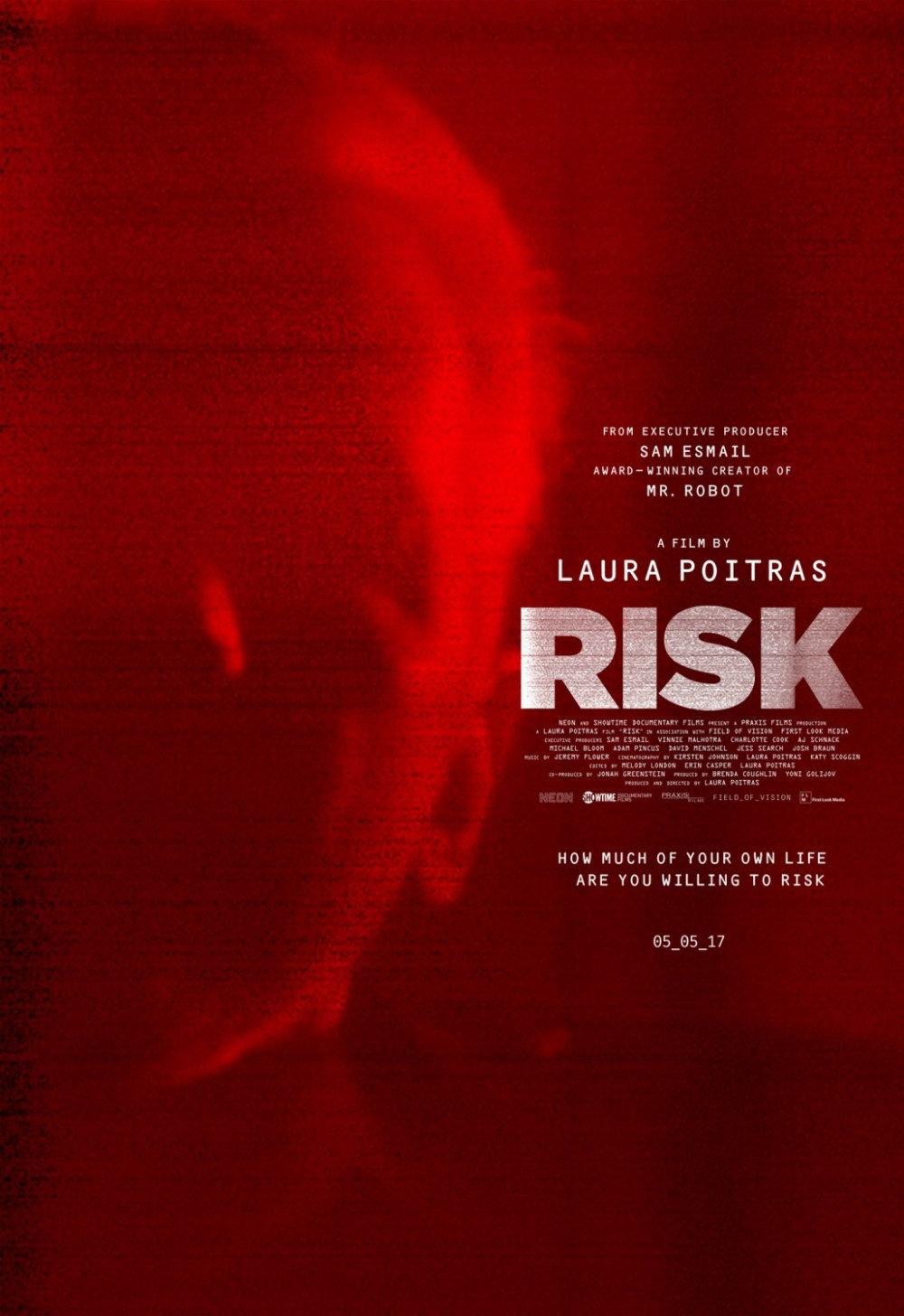
Risk documentary poster

Laura Poitras’ “Risk” is one of those documentaries which had me believing the scenes left on the cutting room floor were as, or perhaps even more, riveting as what ended up on the screen. It offers us a look into WikiLeaks and its creator Julian Assange, and it is a very intimate look which I was never sure we could ever get. What we get is a very compelling look at the inner workings of this organization which thrives on getting to the truth which is more often than not kept away from our prying eyes, and we see how this organization is constantly threatened by its infinitely powerful adversaries and perhaps by Assange himself. Yet at the same time, it feels like there is much more to the story than what we see onscreen.

Poitras filmed this documentary over the course of six years and was granted an astonishing amount of access to WikiLeaks and Assange. It starts off with Assange trying to get in touch with former Secretary of State Hillary Clinton as the security of WikiLeaks has been breached to where Clinton’s emails are about to be revealed to a public eager to sift through them voraciously. Assange has been accused of conspiring with the Russian government to interfere in the 2016 Presidential election, but he is shown here to be very eager to inform Clinton of how her problems are going to be much bigger than his own.

The most introspective moments in “Risk” happen near its start as Assange talks about what drew him to the work he does today. In a talk with Poitras, he says he doesn’t believe in being a martyr as much as he does in those who take risks for the things they care deeply about. The way he sees it, it is far more dangerous to do nothing than it is to do something, and the inaction of many has certainly led people to go against their best interests for no intelligent reason.

As the documentary goes on, however, the focus of it becomes a bit muddled as Poitras admits she is not sure what to make of Assange after a while. We never see her onscreen, but she does provide narration at various points where she admits she can’t ignore the contradictions of Assange’s character and is convinced he doesn’t like her. There is a scene where he and a fellow lawyer retreat to the woods for a private conversation, and at times he urges Poitras to take her camera off of him as he shares something he doesn’t want her to know. Towards the end, she says her friendship with Assange deteriorated to the point where they were constantly yelling at each other. Taking this into account, it makes you wonder just how much access she really had to his world as he remains so close and yet so far away.

One thing which cannot be denied is the size of Assange’s ego as he confronts many obstacles and impediments with a strange confidence even while the odds are stacked against him. We can’t help but laugh at scenes where those who work closest to him exhibit an exasperation as they clearly more aware of the ramifications of his actions more than he ever bothers to. He also manages to keep Poitras and even Lady Gaga at a distance as he is questioned about his intents and of what might happen if WikiLeaks one day comes to a sudden halt.

Assange does address the sexual assault charges in how he feels the U.S. government will exploit them for the sake of turning the American people against them. Still, in her director’s statement, Poitras says there was legal and personal pressure and demands by him and his colleagues to remove scenes which deal with the sexual assault investigations, and this was further complicated by another member of his staff being accused of the same thing. “Risk” does not imply guilt on Assange’s part, but it also doesn’t prove he is innocent either. This, more than anything else, makes me wonder what was left out of the final cut. Assange appears assured that WikiLeaks can never be taken down, but it feels like his inner circle sees the dominoes falling down a lot quicker than he does.

Looking back, “Risk” is really more about Poitras than it is about Assange. We never see her face, but we do get narration from her throughout. On one hand, she has the kind of access so many others can only dream of having, but you feel her growing confusion as she continually wonders if she can ever figure this man out fully. At the end, it seems like she may never know as he becomes more and more remote to where she wonders if she has just been used to further his agenda.

Certainly, no one knows more about risk than Poitras as she has been constantly interrogated and detained by U.S. officials whenever she traveled internationally, but this has not deterred her from reporting on mass surveillance and getting Edward Snowden on camera to discuss what he knows about it. Her previous documentary, “Citizenfour,” quickly became one of the most politically potent films ever made about the power a government can have over its citizens and its quest to silence those who dissent. “Risk” finds her continuing her quest for the truth even as her main subject is at times elusive as the forces surrounding him become more determined to shut him down for good.

I wish the film had been more probing into Assange’s life as he still remains a bit of an enigma, and there will always be a cloud of distrust hanging over him until the day he dies. Still, “Risk” gives us the closest of looks at an organization which continues to expose the things your government doesn’t want you to know about. If you can get past its flaws, it is a compelling watch which will have you contemplating the future of the free press and the first amendment. It ends on an ominous note as the FBI is determined to prosecute anybody and everybody involved with WikiLeaks, and I left the theater wondering how much longer we will have the First Amendment to fall back on. Hopefully, it will never disappear, but with the Trump administration, many unthinkable things have suddenly become possible.

* * * out of * * * *

Birdman or (The Unexpected Virtue of Ignorance)

Birdman movie poster

Will there be a more perfectly executed movie in 2014 than “Birdman?” It’s hard to believe there will as director Alejandro González Iñárritu succeeds in giving us a truly brilliant movie going experience which combines amazing technical aspects with a strong story and actors who give some of the best performances of their career. Your eyes will remain glued to the screen from start to finish as “Birdman” takes you on a cinematic journey we seldom go on, and you will leave the theater feeling mesmerized and in awe of what everyone managed to accomplish with a budget which is a mere fraction of today’s average blockbuster.

I’m always happy to see Michael Keaton in any movie he appears in, and he is crazy brilliant as Riggan Thomson, an actor who became a star after playing the superhero Birdman in a movie trilogy. As we catch up with him, he is now a washed-up actor whose glory days have long since passed him by. In an effort to restart his career and achieve true greatness as an actor, he decides to mount his own production of “What We Talk About When We Talk About Love,” a play which is based on the short stories of Raymond Carver. Riggan has put everything he has into this project and has even mortgaged his home to put up the capital for it. It’s hard not to sense his desperation as this play which he adapted to the stage, produced, directed and stars in threatens to become a total disaster.

Suffice to say, things are not going well as one of the cast members gets seriously injured before previews are set to begin, Riggan is trying to repair his relationship with his family while having an affair with one of the actresses, his daughter has just gotten out of rehab and is working as his assistant, and he has just cast a new actor whose ego is every bit as big as his talent. As his stress level increases, he begins to lose touch with reality and soon finds himself haunted by his most famous character who constantly urges him to take matters into his own hands.

Now many are calling “Birdman” Keaton’s comeback movie, but this is not entirely fair. Keaton never disappeared from the limelight, and while his career may not be as hot as it once was when he appeared in Tim Burton’s “Batman” movies, he remains a standout in each film he appears in whether it’s “The Other Guys” or “Toy Story 3.” But with “Birdman,” Keaton gets a role which is more than worthy of his talents, and he makes the most of this opportunity and then some. As unlikable as Riggan may be when it comes to how he treats others, Keaton makes you empathize with him as he tries to do right by himself as the play’s premiere comes at him sooner than he thinks. It’s a tour de force performance, and hopefully it will bring Keaton the Oscar nomination he should have gotten years ago for “Clean & Sober.”

But the real stars of “Birdman” are Iñárritu and his cinematographer Emmanuel Lubezki who brilliantly succeed in making this movie look as if it was all shot in one take. They make us feel like we are floating along into these characters’ lives as they struggle to make this play the best anyone in New York has ever seen. Even if you think you can spot where and when Iñárritu cuts from one scene to another, the movie still feels remarkably seamless from start to finish. Some filmmakers value the visual aspects of a movie over the acting or vice versa, but Iñárritu manages to balance out both to brilliant effect, and it makes for one heck of a cinematic experience. Heck, you can’t even help but wonder about what the cast and crew went through while making “Birdman” because there’s no way this could have been a walk in the park for anybody.

It’s impossible to think of an actor other than Edward Norton who could play the infinitely egotistical actor Mike Shiner so perfectly. Director Brett Ratner once described Norton as being someone whose mission it was to save a movie and of how this can be your best asset or your worst nightmare. I couldn’t help but think about what Ratner said as I watched Norton burst onto the scene and insinuate his character into a play about to be previewed to an audience. When it comes to method actors, they can take things too literally and Norton shows just how ridiculously far one can go. It’s one of his best performances to date.

I also loved watching Emma Stone who plays Riggan’s daughter, Sam. Stone has been a fiery actress ever since we first saw her, and you can’t take your eyes off of her whenever she’s onscreen. Stone makes Sam into a wonderfully realized character who is trying to stay one step ahead of what has brought her down in the past, and she gives a riveting performance which shows just how far her range as an actress can stretch. While she may not have been able to save “The Amazing Spider-Man 2” (in all fairness, no one could), she is a truly unforgettable presence here.

Other great performances in “Birdman” come from Naomi Watts who plays the amazingly insecure actress Lesley, and I have yet to see her suck in any movie she appears in. Andrea Riseborough, who stole a number of scenes from Tom Cruise in “Oblivion,” is wonderful as Laura, the actress Riggan may or may not have gotten pregnant. Zach Galifianakis takes on an unusual role for him as Riggan’s best friend and producer, Jake, who goes through hell in order to get this play off the ground. And then there’s Amy Ryan who plays Riggan’s ex-wife Sylvia who still has feelings for him even as he continues to do her wrong. Ryan never disappoints, and I love how she finds the good in Riggan when no one else can.

“Birdman” is the kind of movie which makes seeing movies on the big screen a sheer necessity. It challenges the realm of cinema to show what can be accomplished, and it gives us quite the kind of ride movies should be taking us on in a much more frequent way. In a year overwhelmed with tent pole franchises and a barrage of superhero franchises, this movie stands out as brilliantly unique and impossible to dismiss or forget.

* * * * out of * * * *

‘Gone Girl’ is a Deliciously Twisted Masterpiece

Gone Girl movie poster

David Fincher’s “Gone Girl” is a deliciously twisted masterpiece, a shocking and at times darkly comic look at marriage. I had an insanely good time watching it and I can’t wait to see it again, and that’s even if it’s just to watch the audience react so strongly to it. There’s no way you can come out of this movie and say you weren’t the least bit enthralled by the nasty journey Fincher takes us on. Just when you think “Gone Girl” couldn’t get any more twisted, it does. Based on Gillian Flynn’s best-selling novel (she also wrote the screenplay), he succeeds in getting away with a number of things in this movie just as he has with his past work.

“Gone Girl” opens on Nick Dunne (Ben Affleck), a frustrated writer who drops in one morning at the bar he owns (which is literally called “The Bar”) where he talks with his sister Margo (Carrie Coon) about the state of his marriage to Amy (Rosamund Pike). It happens to be their fifth wedding anniversary, and Nick celebrates it with a couple of glasses of bourbon which should give you an idea of how messed up things are between them. But then Nick comes home to find Amy gone and smashed furniture and glass scattered all over the floor, a sure sign something bad happened while he was gone. Suspecting Amy has been kidnapped, Nick calls the police and from there the search is on to find her before she disappears forever.

Now “Gone Girl” is a movie with an insane number of twists which makes it hard to talk about because it’s not worth spoiling any of them. But what I really loved is how it works on a number of different levels. Many movies can be boiled down to one sentence, but not this one. “Gone Girl” is a critique of a marriage that started off passionately but which has since been devoured by bitterness and resentment, and it makes you wonder why we tend to hurt the ones we love most. It takes a number of jabs at social media and people consumed with exploiting the trials and tribulations of others for the sake of ratings while the truth threatens to get lost in all the hoopla. It also serves as an indictment of a society quick to believe what they are told instead of recognizing a person is innocent until proven guilty. But at the heart of the movie is this question; how well do we know the person we choose to spend the rest of our lives with?

We see people reaching out to Nick Dunne in sympathy, but they just as quickly turn on him when evidence suggests he may have murdered his wife. From there, it becomes a constant game of media manipulation as the characters work furiously to get the upper hand on those who have deceived them and to sway public opinion in their favor. We live in a world of sound bites where information comes to us quickly and not always in an accurate manner. By the time we get to the truth, it may already be too late to view it objectively.

Over the years, many have described Ben Affleck as being this horrible actor who never had any business working in movies, but I’ve never agreed with this assessment. Yes, he has given some bad performances in “Pearl Harbor” and “Gigli,” but then again “Gigli” didn’t do anyone any favors. In “Gone Girl,” Affleck succeeds in giving one of his best and most naturalistic performances to date as he gives us a character who is not altogether likable, but who is still a complex individual caught up in a situation beyond his control. Nick is a complicated character who we are quick to make assumptions about, but what we think of him ends up saying more about us. I love how Affleck makes Nick a deeply mercurial character whose motives you can’t help but be suspicious of, and a scene where he sways the public back to his side during an on-camera interview with shows him at his conniving best.

I remember Pike from her early appearance as a Bond woman in “Die Another Day,” and she has gone on to give unforgettable performances in “An Education,” “Barney’s Version” and “The World’s End.” But when it comes to describing her work in “Gone Girl,” a flurry of adjectives cross my mind to where I have to be careful of what I say. What I can say is she is endlessly mesmerizing in a role which has her exploring every single facet of her character to where she surprises us in such an unnerving fashion. It’s a truly fearless performance you won’t soon forget after you leave the theater, and Pike doesn’t hold anything back.

“Gone Girl” also has a great supporting cast, and each actor sinks their teeth into their roles with relish. Kim Dickens is a delight as the cynical and yet slightly mischievous Detective Rhonda Boney, and she is blessed with a lot of great dialogue throughout. Patrick Fugit, almost completely unrecognizable from his “Almost Famous” days, is a snarky delight as Rhonda’s partner Detective Jim Gilpin. Neil Patrick Harris gives a charming and yet enigmatic performance as Desi Collings, Amy’s ex-boyfriend who looks like he can be trusted, but there’s a certain creepiness about him to where you wonder what’s really going on in his head.

Even Tyler Perry shows up in a very non-Medea-like role as Tanner Bolt, a somewhat devious attorney far more interested in winning the most impossible to win cases in court and playing the media like a piano to his clients’ benefit. Knowing how Perry caters mostly to the church going audience, I’ll be interested to see what they make of his time in Fincher’s dark world. I got a kick out of watching Perry here as he keeps his cool even as Nick’s case spins out of control.

You also have Missi Pyle on board as Ellen Abbott, a character clearly designed to remind you of Nancy Grace and of how annoyingly abrasive television hosts like her can be. Acting so entitled to her point of view even if the truth is not in her favor, Pyle makes her into a shameless individual who doesn’t apologize for anything even when she’s proved wrong.

But one supporting performance I really got a huge kick out of in “Gone Girl” was Carrie Coon’s as Margo. Coon is sarcasm incarnate right from the first moment she appears onscreen, and her scenes with Affleck are filled with love and devotion as well as a lot of anger at his foolish mistakes. I’m not too familiar with Coon’s work as she has appeared mostly in television and made a name for herself in various productions of the famed Steppenwolf Theatre Company, but I hope to see more of her in the future. She makes Margo a strong and fiercely independent character in a movie filled with so many morally clueless ones who get away with far too much.

The movie also marks Fincher’s third collaboration with composers Trent Reznor and Atticus Ross, and the two succeed in putting together another unforgettably creepy film score. What’s fascinating about their music here is it starts off sounding nice and inviting, but soon it becomes overcome by discordant sounds which imply there is something seriously disturbing going on in this quiet suburban neighborhood. Just when you think you can pull yourself away from the nasty voyage Fincher is taking you on, Reznor and Ross’ atmospheric score sucks you right back in and refuses to let you go.

Fincher’s “Gone Girl” is definitely a movie for these crazy times we live in now, and it is likely to make many out there think twice about getting married. Heck, even eloping sounds like a bad idea after watching this. But amid this tale of deeply flawed individuals and industry types more interested in their own celebrity than anything else, it makes one wonder whether we can ever really know someone completely. We’d like to think we know everything about our significant other, but can we really? This movie seems to imply we can’t, and Fincher makes you see this is one of the most frightening truths of all.

Fincher is a guy who never plays it safe, and “Gone Girl” is the latest example of that fact. Seriously, this is the most subversive and darkly funny take on marriage since Danny DeVito’s “War of the Roses.” I have not yet read Gillian Flynn’s book, but I really want to now. A woman sitting next to me at the screening confirmed the book is a great read and that she was very satisfied with Fincher’s adaptation of it. I’m fairly certain she is not the only one who feels this way.

* * * * out of * * * *

‘Rachel Getting Married’ is one of Jonathan Demme’s Best Films

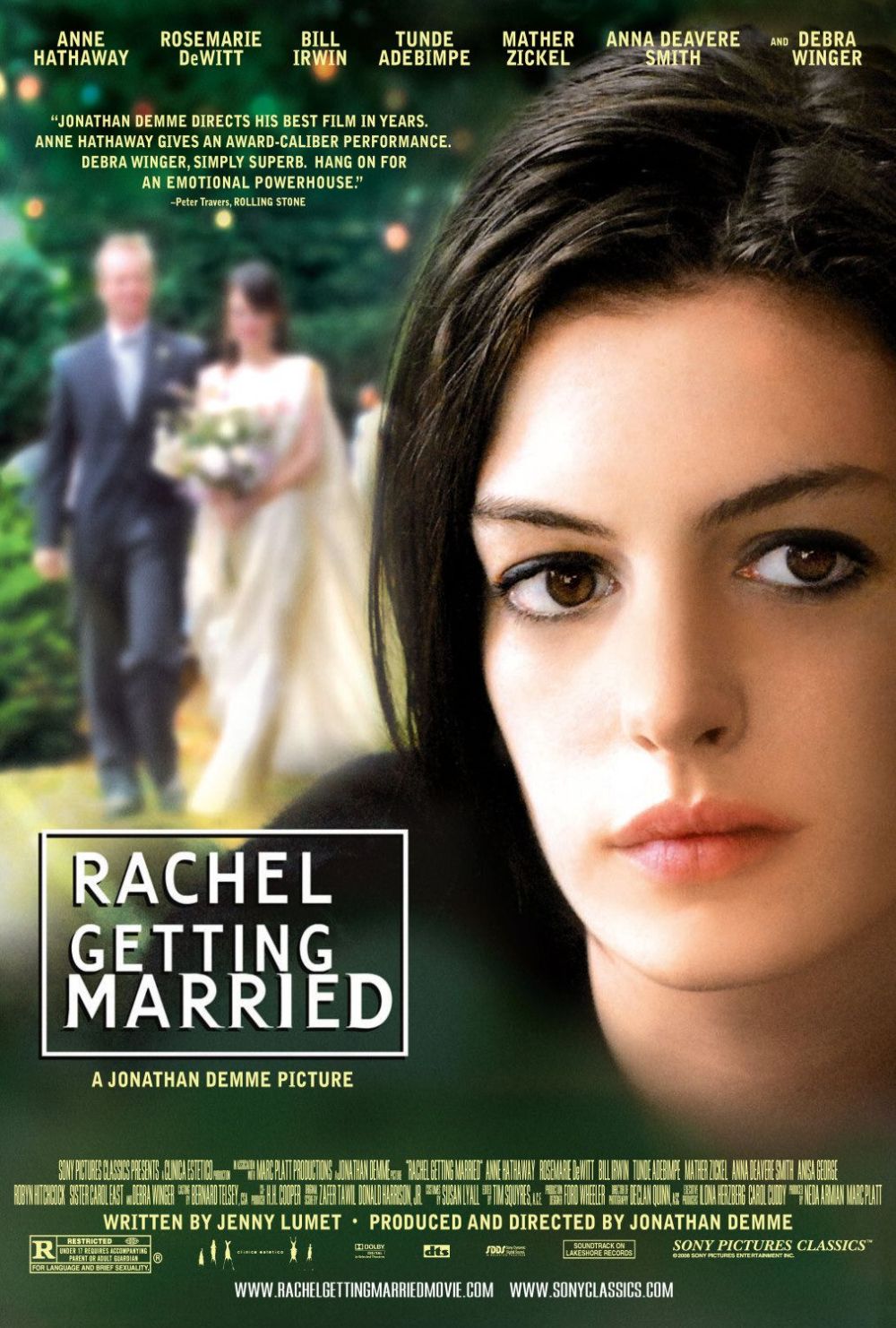
Rachel Getting Married movie poster

One of the many things I have discovered about life is it is really easy to hate someone or be angry at them. As negative an emotion as it is, there is an unmistakable power from it which really makes you feel alive. At the same time, it is much harder to forgive that person for what they have done to you. You get so sick of someone getting the best of you to where you desperately don’t want to look like the fool. But eventually, it should become clear that the one person you really need to forgive most is yourself. This can be much harder than forgiving someone else, but it is necessary as it keeps you from sinking into the hideous swamp of bitterness which can eat you up. But can you forgive yourself when you have done something horrible and can’t you wipe away the cloud hanging over your existence because of what you have done? I would like to believe the answer is yes, but others may disagree.

Rachel Getting Married” is a movie about forgiveness, and the rough road people travel to get to it. It is also a movie about family and togetherness, and the joy of life. It almost moved me to tears the same way “Lars and the Real Girl” did as it deals with the saddest of things while surrounding itself in an atmosphere of love and much-needed togetherness. This is one of Jonathan Demme’s best movies as well as one of the very best of 2008. I really loved “Rachel Getting Married” and found myself wanting to hug all the characters in it. It is a movie of raw emotions, and I love seeing movies with this kind of power more often than not.

Anne Hathaway gives a phenomenal performance as Kym, the wild child of a Connecticut family who gets a vacation break from her current rehabilitation facility to go home for her sister Rachel’s wedding. It doesn’t take long to get an idea of how much of a “bad egg” she appears to be to everyone around her. As she goes into a convenience store to get a Pepsi, the female cashier behind the counter says, “Didn’t I see you on ‘Cops?’”

Kym is a full-blown drug addict and has been for several years, and while her family is happy to have her home, there are also raw emotions simmering just below the surface and waiting to come out into the open. We feel this tension from the very start, and it is illustrated in Hathaway’s face as we see her feeling like the wallflower at a party. While everyone is happy for the bride and groom, she is sullen and lost in a moment she cannot escape from. As the movie goes on, we come to see the reason for her self-destructive behavior and why she acts the way she does. I will not mention what it is here as it might take away from the emotional impact you will experience watching this movie.

This movie feels a lot different from others Demme has made in the past. He filmed the movie with high definition cameras to capture the movie on a more intimate level, and it feels like he really let the actors loose from start to finish. It is handheld camerawork going on here, so this will probably drive those who couldn’t stand all the shaky camerawork in “The Bourne Ultimatum” or “Cloverfield” crazy. While some people may experience motion sickness from this, I had no problem with it as the camerawork helped illustrate the emotionally fragile ground the characters are walking over, and how easily everything could come tumbling down.

What is so great about Demme’s direction is how he makes us feel like we really are attending the wedding along with these characters and sharing in the joys and sorrows of everyone involved. These characters feel so real, and it is so great to see no Hollywood artifice on display here. There have been so many big Hollywood movies dealing with families and marriage, and I find myself increasingly avoiding them. But the actions in “Rachel Getting Married” never felt staged for a second, and I loved that. Everyone in this movie feels like people we know from our own lives, and it connects us all the more strongly to what they go through.

“Rachel Getting Married” also, like all of Demme’s movies, has a very eclectic mix of music in it from the offbeat to the international. His movies don’t just have their own signature look, but their own significant sound. One character makes beautiful use of a Neil Young song as he sings it to another person. The audience I saw this with at Landmark Theaters in West Los Angeles were as silent as the characters onscreen during this moment, and I’ll never forget that.

I also loved how the soon to be married couple is an interracial couple, and no one ever brings this up at all. I guess none of the characters see it as an issue worth addressing. Hallelujah!

The script was by Jenny Lumet, and she gives her characters a vibrancy which elevates it from the couples we usually expect to see in movies like these. Her screenplay does tread familiar scenarios and storylines of the addict trying to go straight, but it finds its own voice and way of saying things to where everything feels fresh and new.

Demme always brings out the best in all the actors he has ever worked. There are many great performances to be had here, not just Hathaway’s. Rosemarie DeWitt plays Rachel, and she is a wonderful and real presence to be had in this movie. She goes from being so happy to seeing her sister Kym to being utterly exasperated and strung out that she is at home. It is clear that Rachel wants Kym to be well, but she constantly worries Kym will ruin the wedding in one way or another. Both Hathaway and DeWitt work really well off of each other as two sisters desperate to connect with one another despite the emotional damage between them. There’s a touching moment where Kym comes back from a rough night, and Rachel washes her clean in the shower as if she is washing her sins down the drain.

I also really liked Bill Irwin as Paul, Kym and Rachel’s dad, who is so happy to see his daughters under one roof, while at the same time harboring scars which will never fully heal. We also have Debra Winger, an actress we don’t see much of these days as the girls’ mother, Abby. She has great scenes with both daughters as she allows us to see beneath her seemingly calm exterior to the distrust she has had for Kym after all this time. The big scene between Hathaway and Wagner where the truth comes to a head is riveting and painfully raw as they each try to come to grips with the tragedy they both had a part in but are hesitant to take full responsibility for.

“Rachel Getting Married” is not just a triumph of acting, but also of writing and direction. All three elements come together to create a powerfully moving film about the flawed and fragile nature of humanity, and of the struggle for forgiveness. The movie has a very improvisatory feel to it and, despite the serious nature of the film, you cannot help but feel everyone had such a great time making it. You feel like you are with these families every step of the way, and you revel in their celebration of two families coming together as one. The reception near the end of the movie is one of ecstatic joy and happiness, even while some have wounds which take them out of the present.

But the person who carries this movie from beginning to end is Hathaway. Many see this as her escape from those “Princess Diaries” movies as she rids herself of the ever so clean image we have had of her. Truth be told, she has been doing this already with “Brokeback Mountain” and “Havoc,” but this should fully complete her transition to becoming an adult actress. All the Oscar talk she has been getting is justified. Kym is not an easily likable character, but Hathaway gives her a heart and soul and makes you care deeply about Kym all the way through. The moments where Hathaway does not say a word, her face does the acting and reveals a very uncomfortable soul trying to fit into a place which was once her home. She does brave and amazing work here, and she proves to be a dramatic force to be reckoned with.

“Rachel Getting Married” further shows how brilliant Demme is in getting to the wounded humanity of all the characters he observes. There is not one moment which feels faked in this movie, and it never really falls victim to any clichés that could easily tear it apart. This is another movie you don’t watch as much as experience, and I am always on the lookout for those. It also kept reminding me of the song “To Forgive” by The Smashing Pumpkins which kept playing in my head throughout:

“Holding back the fool again
Holding back the fool pretends
I forget to forget nothing is important
Holding back the fool again.”

Funny, I thought Billy Corgan was saying “forgive” instead of “forget.”

* * * * out of * * * *