‘Unfaithful’ is More Than Just a Gender Reversal on ‘Fatal Attraction’
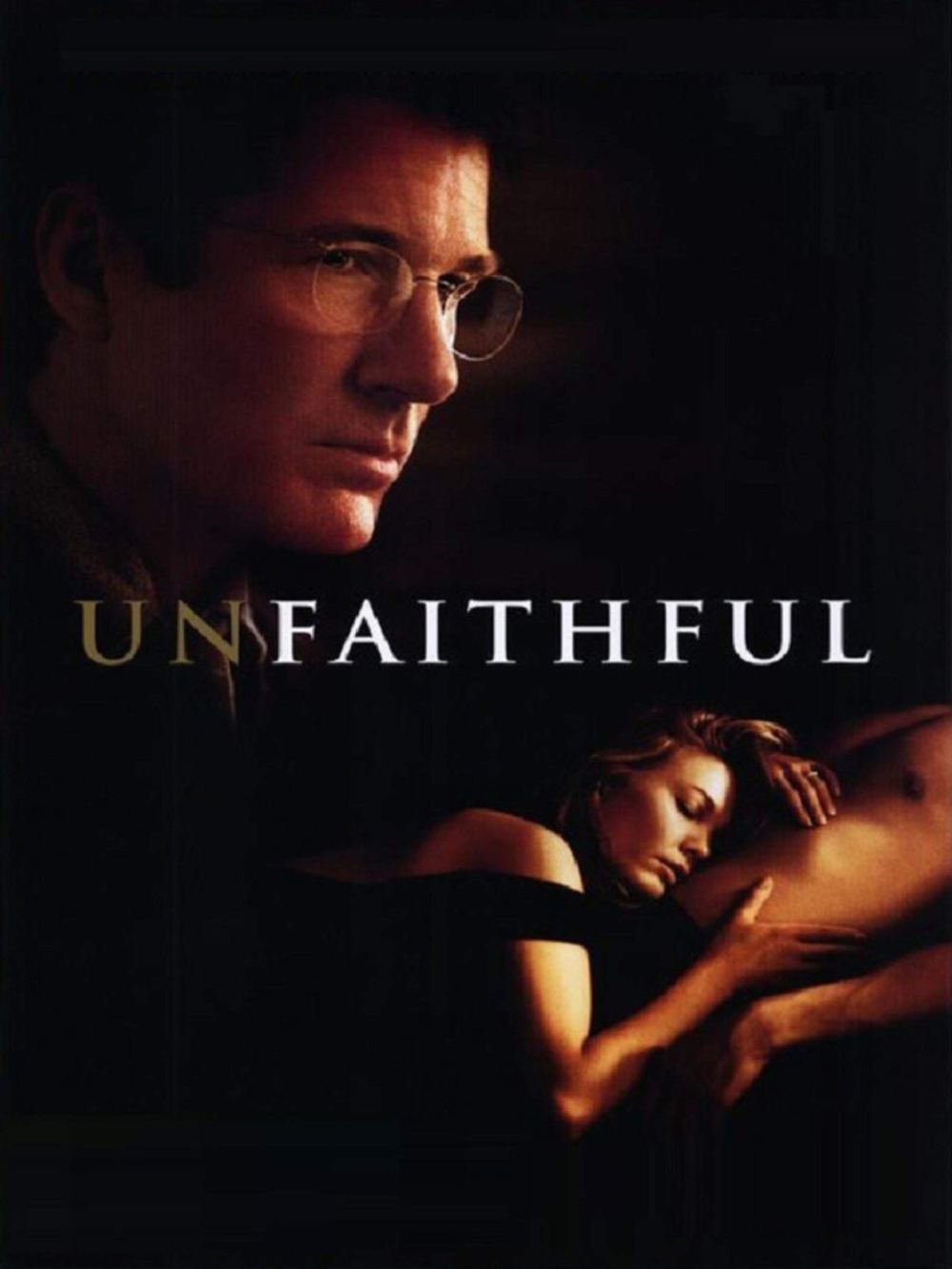
Unfaithful movie poster

Unfaithful” could easily be seen as a gender reversal on “Fatal Attraction” as this time the wife cheats on her husband. Plus, both movies were directed by Adrian Lynne, and “Fatal Attraction” inadvertently created a formula of psychotic attraction which lasted for many years to where we got “Unlawful Entry,” “Single White Female” and “Swimfan” among other movies. “Unfaithful,” however, is not held captive to this formula, and it becomes not so much a thriller as it is a drama with profound conflict. It doesn’t end with an audience pleasing conclusion as it does with ambiguity over how to resolve a situation bound by inescapable moral complications.

The movie stars Diane Lane as Connie Summer, a happily married wife to Edward Summer (Richard Gere) and mother to Charlie (Erik Per Sullivan). On one massively windy day in downtown New York, she accidentally runs into French bookseller Paul Martel (Oliver Martinez) who invites her to his apartment to take care of her painfully scraped knees. This ends up with her meeting Paul again several times before they embark on a passionately sexual relationship which contrasts with the loving but average marriage she has with Edward. But it all ends up becoming an addiction she can’t quite tear herself away from, and the destruction of her marriage becomes more and more imminent as a result.

Unlike the average formulaic thriller which clearly delineates good and bad to where the wicked get the punishment they deserve, “Unfaithful” never lets the viewer off easy. It poses questions to the audience which they might not want to answer, and they linger long after the movie is over. The film was adapted from Claude Chabrol’s 1968 French film “The Unfaithful Wife,” and it doesn’t feel like much was changed in the translation. Connie’s affair ends up creating a ripple effect which severely affects those people she loves the most in life.

Edward is no idiot as he suspects something is up, and the stress and confusion we see on his face gets worse and worse. What he discovers leads him to commit an act of which he never felt capable, and we are left to wonder if he should be punished or forgiven. Lynne never leaves us with any easy answers in “Unfaithful,” and this makes this film all the more compelling.

Lane already had a long and successful acting career before this movie came along, but this is the role which brought her the audience she long deserved, and there is no forgetting her after this. The role of Connie Summer is a great one for any actress, and Lane more than rises to the challenge. While she is cheating on her beloved husband, she still makes her character very sympathetic and brilliantly portrays her conflicting emotions. The scene where she is heading home on the subway after her first sexual tryst with Paul is a marvel of film acting as her face is a stunning portrait of regret and excitement. Seeing Lane experiencing various emotions makes for an unforgettable acting moment which deserves much study for future generations of actors.

Gere, considered by People Magazine to be one of the sexiest men alive, is every bit her equal as Edward. It’s almost weird to see him in this kind of role because we have previously seen him play characters who either cheat on their spouse or run off with someone else’s wife. Here, he plays a loving husband who hasn’t done anything wrong, so this situation provides much confusion for him as well as a pain he hoped never to experience.

As for Oliver Martinez, it’s easy to see why anyone could easily fall for him. He exudes sexiness both in appearance and the way he speaks. But more importantly, he never makes Paul Martel a character with overtly evil intentions. This is not a man who can be easily described as a villain, but one who follows through on his passions regardless of the consequences they may bring about. When he comes face to face with those he has hurt, Paul never flaunts his ego or berates them. The way he sees it, he has done nothing wrong and never intended to wound anyone so deeply.

If “Unfaithful” were directed by anyone else, it would have made the wife more sympathetic and the husband a one-dimensional bastard to where you’d want the wife to cheat on him. But Lynne is far more interested in providing a fascinating portrait of a relationship which is not bad off, but instead one which turns out to be more susceptible to temptation than at first glance. The good guys and bad guys are never easily told apart in this story. There is a darkness in all the characters here, and it’s a darkness they don’t see until it’s much too late.

There was much talk after “Fatal Attraction” of how the original ending was changed to something more audience pleasing, but turning Glenn Close’s character from a wronged person into a psychotic menace who met a deadly end never sat well with many people. It’s as if Lynne has been paying a price for this ending ever since, and “Unfaithful” almost serves as a make up for him taking the easy way out back in 1987. Whatever the case, “Unfaithful” is a compelling drama which allows its actors to shine in ways we have not seen previously. Lane is a revelation here, and her performance, like this movie, is hard to shake.

Of course, “Unfaithful” still leaves the audience with one other burning question much like the one posed in “Fatal Attraction:” Why cheat on your spouse when they are played by Anne Archer or Richard Gere? Well, we may never know.
* * * ½ out of * * * *

‘No Country for Old Men’ was the Best Movie of 2007

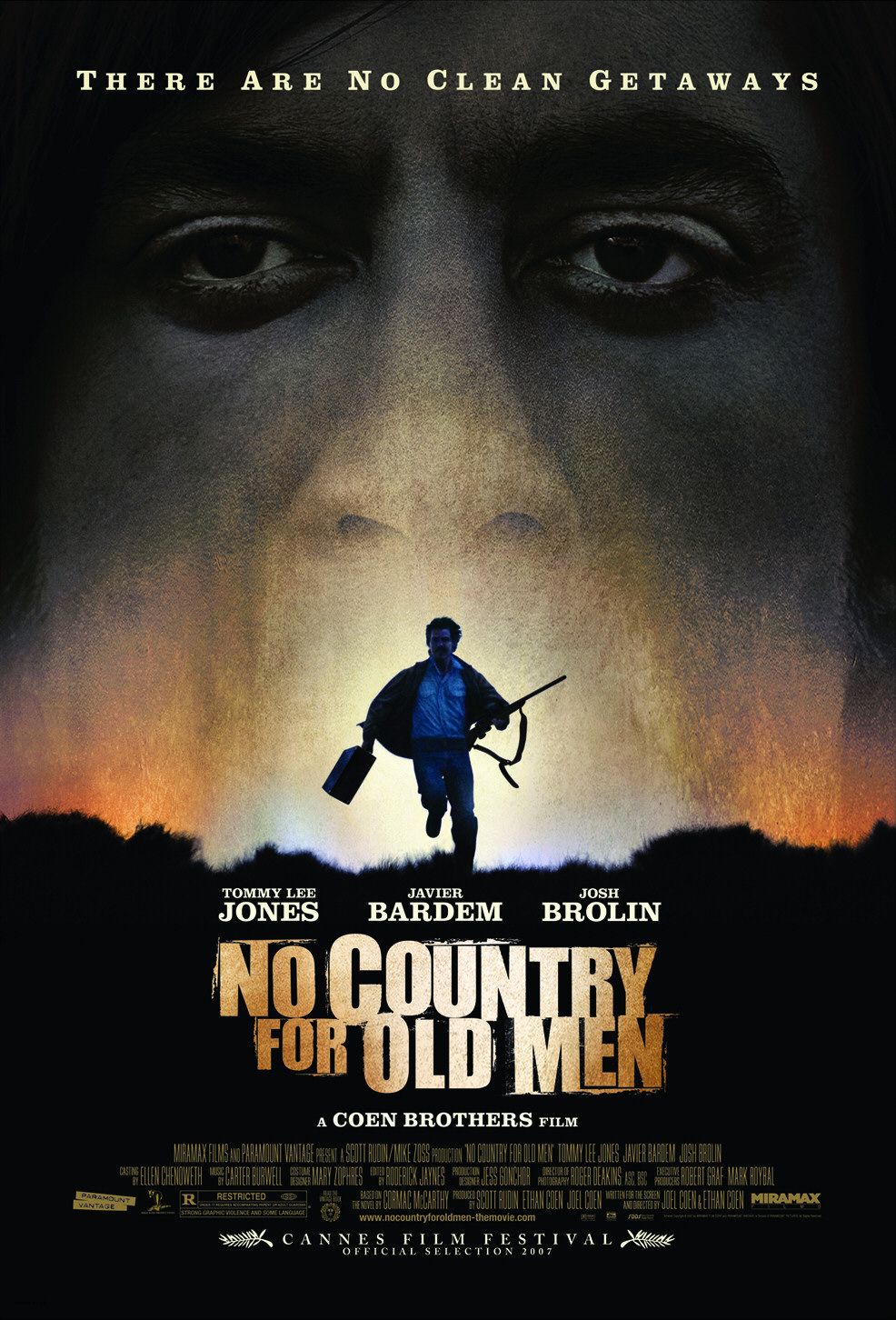
No Country for Old Men poster

WRITER’S NOTE: This review was written back in 2007.

Now this is a great movie!

No Country for Old Man” stands alongside some of Joel and Ethan Coen’s best movies including “Fargo” and “Barton Fink.” Some say it is a return to form for the brothers after their last two movies, “Intolerable Cruelty” and “The Ladykillers,” but they can’t be as bad as people say they are. Even the worst Coen brothers’ movies are far more interesting than most American movies made today. The one thing “No Country for Old Men” proves is they never lost their touch to begin with, and who are we to think that they ever did? I mean really!

This movie is based on the novel by Pulitzer Prize winning author Cormac McCarthy, and he has written a lot of great novels over the years like “All the Pretty Horses.” I have not had the opportunity to read any of his books, but my understanding is they deal with a world where the goodness of human nature is a rarity as the atmosphere is overwhelmed by cruelty. His books have also been described as “unfilmable” by many, but I guess no one told the Coen brothers this (would it have made a difference?).

It all starts off with hunter Llewelyn Moss (Josh Brolin) who stumbles upon a Mexican standoff gone bad where rotting corpses of drug runners and dogs are impossible to ignore (think of the ending of “Reservoir Dogs”). There are also a bunch of trucks laying around, and in them Llewelyn finds the only survivor who begs him for some water. But Llewelyn ends up passively avoiding his pleas as he has no water to give. Instead, he finds among the carnage a big stockpile of heroin and $2 million dollars in cash. He doesn’t bother with the drugs, but he takes the cash and stashes it back at his trailer home where he lives with his wife Carla (Kelly MacDonald).

His conscience, however, keeps him from getting any sleep, so he ends up doing what even he openly says may be “the biggest mistake” he could possibly make. He fills up a bottle of water and heads back to the site to give to that Mexican. Instead, he gets ambushed by a faceless gang who take their shots at him as he escapes away. From then on, the movie is a chase to the finish. But this isn’t simply a chase movie, but a movie where the souls of the characters threaten to be every bit as barren as the desert lands in Texas.

“No Country for Old Men” is one of those movies where everything you hear about it is absolutely true. It has great acting, directing, cinematography and a superb screenplay. There isn’t a single wasted moment in it, and it is certainly one of the most quietly intense movies I have seen in some time. I think it is safe to say the Coen brothers have faithfully adapted Cormac McCarthy’s work while adding their own flavor and dark humor to it, and they drive away at one of his main themes in the book; society getting crueler, and of the end of the world as we know it.

In a sea of great performances, the one man who steals the show here is Javier Bardem who portrays Anton Chigurh, a man who is deeply psychotic but not without principles. From start to finish, Bardem gives us one of the scariest villains in cinematic history whose mere presence forces the characters to immediately fear for their safety. Those other characters who fail to do so are either totally naïve or have no idea who they are talking to.

Josh Brolin is having one heck of a great year right now in the movies. He started 2007 off early on as Dr. Block in “Grindhouse,” then we saw him play a very corrupt cop who runs afoul of Denzel Washington in “American Gangster,” and he is probably in another movie right now which I have yet to see. Safe to say, this is the best performance he has given this year as he is perfectly cast as Llewelyn Moss, a hunter who gets in way over his head.

The other performance worth singling out is Tommy Lee Jones’, and he gives one of his very best ever as Sheriff Ed Tom Bell. His character is really the observer of human nature and the decline of it in this story. Jones was pretty much born to play just about any part of a movie adapted from one of McCarthy’s novels. Like the novelist, he clearly understands the worldly feel of Texas and human nature, and this is echoed in the voiceover he gives at movie’s start.

I am not quite sure what to make of the ending. And what is meant by the title “No Country for Old Men” anyway? Is it a metaphor for how the old way of doing things has long since passed the Sheriff Bell by? That the lessons our elders taught us will soon become insignificant? Or is the painful truth that society has no use for men once they qualify for senior citizen discounts? The Coen brothers are not quick to give us answers, but they do give us much to think about as this is a motion picture which will linger with you long after the end credits have concluded.

“No Country for Old Men” is the best movie I have seen in 2007. As I said, there is not a single wasted moment in it.

* * * * out of * * * *

‘The House That Jack Built: Director’s Cut’ is More Subversive Than Shocking

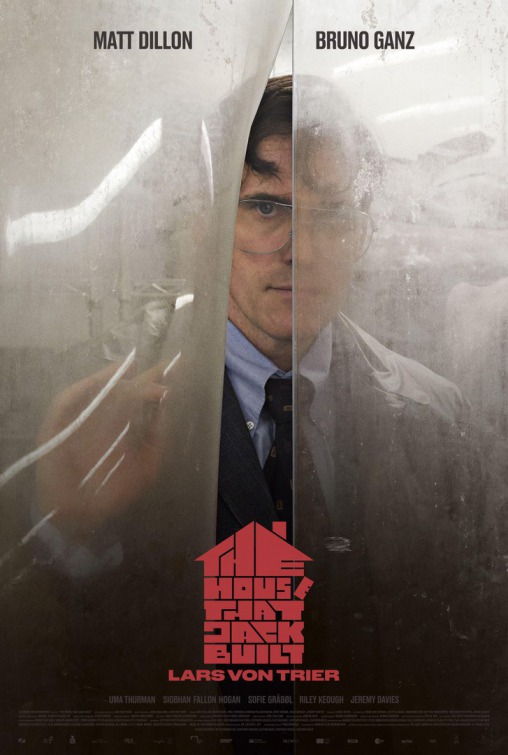
The House That Jack Built poster

“Wanting people to listen, you can’t just tap them on the shoulder anymore. You have to hit them with a sledgehammer, and then you’ll notice you’ve got their strict attention.”

-John Doe from “Seven”

Lars Von Trier loves getting our strict attention too, and he does this yet again with “The House That Jack Built” which stars Matt Dillon as a serial killer. On November 28, 2018, IFC Films presented his director’s cut for one night only, and the advertisements boasted of how over 100 people walked out of it at Cannes, and that those who stayed gave it a 10-minute standing ovation. Give IFC some credit as they have seized upon the film’s controversy to great effect. they are showing Von Trier’s cut before releasing an R-rated version in December, and the advertisements make it clear how this version may not be your cup of tea. As for us proud Von Trier veterans, we know exactly what we are in for. Or do we?

What surprised me most about this cut of “The House That Jack Built,” is that it is nowhere as shocking as I was led to believe. In fact, I found the violence at times rather tame especially compared to the scenes of mutilation in “Antichrist.” This is in many ways the result of many people writing about the movie’s most graphic scenes in scorching detail from one article to the next, but we are also living through a tumultuous time where few things can shock us the way they used to. Or perhaps the images our minds generate will always come across as more shocking than what any filmmaker can put on the silver screen.

The violence shown is extremely brutal and very bloody, and what Jack does with the bodies is just as disturbing. But Von Trier keeps us at a distance from the action to where we are fully in Jack’s mindset, treating his soon to be murdered victims as parts of major work of art. Many may cringe at the images Von Trier thrusts upon us with a twisted glee, but in the end, this is only a movie, not real life.

The movie is constructed of five episodes, each of which shows Jack murdering one or more people and it takes place over 12 years in Washington State. Each murder serves to illustrate Jack’s development as a serial killer, one with a serious case of OCD. And throughout we hear him having a conversation with a man named Verge (played by Bruno Ganz) about the murders he has gotten away with, and their talks take many twist and turns as it leads to a grand finale in one of the darkest places on earth.

The first chapter entitled “1st Incident” has Jack picking up a stranded motorist (played by Uma Thurman) who proceeds to taunt him by saying he might be a serial killer, and it serves to set up an ironic tone which will dominate much of the movie. It’s almost impossible to take things seriously as Von Trier is practically begging us to root for Jack to kill her as she cannot shut her mouth and even goes as far to say where he can bury her body.

Another surprising thing about Von Trier’s serial killer film is that it’s actually quite funny. This is clearly the case in the “2nd Incident” in which Jack attempts to con his way into the home of another woman (played by Siobhan Fallon Hogan, whose expressions are priceless) in a pathetic fashion. He first tries to pass himself off as a policeman, but his explanations for why he doesn’t have a badge on him are just hopeless, and yet he does not give up easily. And thanks to his OCD, he is convinced he has left evidence of her murder to where he keeps going in and out of the house several times.

The violence does become even more brutal and nihilistic as “The House That Jack Built” goes on, and men, women, children and animals are never spared from this wrath. I’m not going to bother going into specific descriptions as, again, the gory details have already been written about in various articles, but I will say this movie is not shock for shock’s sake. If you want that, check out the god-awful “Human Centipede 3.”

Von Trier has said in interviews how he was inspired by “the idea that life is evil and soulless” as well as the rise of Donald Trump. Indeed, many live in anxious uncertainty as the former reality television show host never ceases to give us one headache after another, and seeing him and his cronies (several of whom have since been indicted) threatens to make us apathetic to his inescapable crimes. Jack exists in a world too apathetic to realize the horrible things he is doing to others, and he keeps getting away with murder as a result.

A key scene for me was when Jack corners his girlfriend (played by Riley Keough) who slowly realizes who he really is. She screams for help, and Jack does the same in a mocking fashion. When he opens a window and cries to anyone who can hear how “nobody wants to help,” this helps illustrate just how apathetic the world is to the cries of someone in danger. If there are people willing to help someone, none of them are in a close enough vicinity to do so. If they are, they must have their own problems to deal with.

Another key subject involves art and what constitutes the greatest works of it. Neither Jack or Verge can come to a consensus of what makes great art as Verge believes you cannot have any without love as love, like intimacy, is an art unto itself. Jack, however, sees violence as playing a huge part in art and, he sees the murders he has committed as being more creatively stimulating for him than building a house.

David Bowie’s song “Fame” is played many times throughout, and I kept wondering why. Well, let’s look at the first set of lyrics:

“Fame makes a man take things over

Fame lets him loose, hard to swallow

Fame puts you there where things are hollow (fame)

Fame, it’s not your brain, it’s just the flame

That burns your change to keep you insane (fame).”

Is Von Trier attempting to say something about fame? Perhaps. Jack looks to gain infamy by sending photographs of his corpses to the local newspaper under the name of “Mr. Sophistication,” and they do not go unrecognized by the general public. But whether Jack is a serial killer or a singing star, his life is so cut off from others, and his existence will always be a hollow one. Regardless of how things end up for Jack, any fame he could hope to have will not succeed in making his life different.

There is also a moment where Von Trier features clips of his past movies like “Breaking the Waves,” “Dancer in the Dark,” “Antichrist” and “Melancholia” among others as Jack says the following:

“Some people claim that the atrocities we commit in our fiction are those inner desires which we cannot commit in our controlled civilization, so they’re expressed instead through our art. I don’t agree. I believe Heaven and Hell are one and the same. The soul belongs to Heaven and the body to Hell.”

Is Von Trier explaining how he works or apologizing for the crazy things he has brought to the silver screen? Indeed, the realm of art and fiction are places where we can exorcise our darkest thoughts and angriest emotions, and I for one will always be thankful for this. For the Danish filmmaker, it’s a must as he continues to deal with endless phobias and clinical depression, and he always looks to be exorcising some malady he could do without. But with Jack, he is dealing with a character who is a soulless vessel who can no longer see the line between right and wrong or fact and fiction, so maybe the filmmaker is wondering if he truly has gone too far.

How long have we been watching Matt Dillon onscreen? Have we seen him play a role like this before? If so, none quickly comes to mind. He is in just about every frame of this 155-minute movie, and he gives a frighteningly authentic portrayal of a serial killer at their most banal. Dillon makes Jack into the same kind of killer John Doe described himself as in “Seven” in that he is not special and has never been extraordinary, and it’s fascinating to see the actor refusing any opportunity to chew the scenery as many others would. He mines the role for all its pathos and morbid black humor, and it’s one of the best performances I have seen in a movie this year. Having said that, it is highly unlikely will receive an Oscar nomination. Need I say why?

“The House That Jack Built” will not go down as one of my most favorite Von Trier movies as it does drag on for far too long, but it is as fascinating as any he has previously made. There is much more to this cinematic experience than you will see at its gory surface, and you will ponder the many things Von Trier has dared you to explore on a deeper level.

I am glad Von Trier is still making movies as we need filmmakers willing to push the envelope and unsettle us in an effort to get us to see a bigger truth we too often turn away from. Say what you will of him as a person, but I always look forward to what his movies. As much as he may shock you, he also gets you to think. Right now, there are only so many filmmakers who can do that.

Still, I have a feeling the upcoming R-rated version will be far more shocking. The MPAA will most likely censor the movie’s most graphic moments to where our imaginations may have to spell out what we think we saw. In the process of trying to protect American audiences, this archaic body usually, and thoughtlessly, makes a movie more traumatic than anyone intended it to be. I guess I’ll have to wait and see.

* * * ½ out of * * * *

‘Shoplifters’ is an Emotional Rollercoaster and One of the Best Movies of 2018

Shoplifters movie poster

Hirokazu Kore-eda’s “Shoplifters” is one of the most emotionally resonant movies I have seen in 2018, and it is a real gem in a cinematic year dominated by, big surprise, superhero blockbusters and endless sequels. The hope and warm emotions which emanate from it feel like the kind I have not been witness to on the silver screen in ages, and the movie dares you to ponder what the word family really means. While many see families being bound by blood, “Shoplifters” suggests there is more to it than that.

Things start off with Osamu Shibata (Lilly Franky) arriving at a supermarket in Tokyo, Japan, and we will eventually see how this movie got its name. With him is the young Shota (Jyo Kairi), and they use hand signals with each other to indicate when the coast is clear to take what they want and need. Put aside the fact no parent or adult figure should ever be teaching a child to steal; these two have an effective system which leads to them obtaining the goods they need without going through the checkout line or setting off an array of alarms. More importantly, it shows the strong connection between these two, and it is not one which is easily formed.

Upon arriving home, we see they with several other people in a cramped apartment which was made for two people at best. Among them are Osamu’s wife, Nobuyo (Sakura Ando), who works an unforgiving and low-paying job at a local laundromat, their daughter Aki (Mayu Matsuoka) who performs sex shows for anonymous customers, and grandmother Hatsue Shibata (the late Kirin Kiki who steals every scene she is in) whose residence they all reside in. Everyone here is suffering through an unsteady economy dominated by recession, so these characters are forced to steal items such as food and clothes in order to get by. Yes, Hatsue does have her late husband’s pension to fall back on, but it is never enough to fulfill their needs.

Then on one cold evening as Osamu and Shota are returning after another successful day of shoplifting, they come across Yuri (Miyu Sasaki), a 5-year-old homeless girl sitting all alone by herself. As the temperature decreases rapidly, and you could do a drinking game for every time a character says “it’s cold,” they decide to take her home for the night. With their apartment overcrowded, Nobuyo suggests they return Yuri home, but a visit to her residence reveals her parents are abusive to one another and to Yuri as well. As a result, Osamu and Nobuyo find themselves informally adopting her.

What struck me most about “Shoplifters” is how genuine its emotions feel. From a distance, the description of the plot might make it seem something along the lines of “Three Men and a Baby” or maybe even “Raising Arizona,” both of which featured characters who become parents in unorthodox ways. But Kore-eda is not out to manipulate our emotions for a single second as he lets life unfold before us in a way which feels real and unpredictable. No one appears to be acting here, and every single actor inhabits their roles to where you are seduced into the movie’s wonderful atmosphere with what seems like relative ease.

The affection everyone in the small apartment has for Yuri feels wonderful and hopeful to take in, and her presence has a profound effect on them all. The scene where Nobuyo and Yuri burn the 5-year-old’s clothes in an effort to start fresh in life speaks volumes. The two share scars of past abuse, and Nobuyo cuddles her and says how people show their love for one another through hugs, not violence. If there has been a more genuinely sweet scene in a 2018 movie, I missed it.

As for the others, Osamu and Nobuyo find an intimacy in their relationship which has eluded them for far too long, and Aki yearns to get closer to one of her customers as she can no longer keep him at a distance. Shota slowly begins to bond with Yuri to where he feels comfortable calling her sister, but this later leads him on a journey to find himself in a way which will have inevitable consequences for everyone that we don’t really see coming.

Revealing more of what happens in “Shoplifters” would be criminal, but I can tell you the last half is truly devastating as everything we thought we knew about these characters is turned upside down. One of Kore-eda’s masterstrokes as a writer and director is he never judges the characters, and as a result, neither did I. Even as the local news reports of Yuri’s disappearance, Osamu and Nobuyo justify their actions by saying they did not kidnap her since they never asked for a ransom. It’s a weak defense to be sure, but seeing the connection these characters have with one another deeply moved me to where I actually found myself giving them a pass which I never would have in real life.

With “Shoplifters,” Kore-eda aims to look at what makes a family. While we collectively believe it is blood which makes a family, he wonders if there is more to a family than that. At a key moment, one of the characters says if having a baby automatically makes you a parent. Well that goes without saying, but considering the love and affection these characters grace Yuri with, I had a hard time finding enough of a reason to separate her from them.

Kore-eda was also influenced by the Japanese recession, and he uses this to deal with the declining social statuses many are forced to deal with in the country. Then again, “Shoplifters” could be about any country where greed continues to wreak havoc due to corporations valuing the size of their profits over the rights of the workers who helped get them those profits. We Osamu trying to get whatever work he can, and the work he gets never pays enough. Nobuyo’s job offers her a pathetically low wage, and then later we get a scene where her boss forces her and her co-worker to decide amongst themselves who should get fired when it is determined there is only enough money to keep one of them on the payroll.

“Shoplifters” is a movie which will stay with you long after you have watched it. I was deeply moved by it from start to finish as its humanity really made me appreciate the value of family in a way no other movie has in a long time. We are at a point where there are far too many movies to keep up with, but this is one I highly recommend you check out above others. This one took me for quite the emotional ride and left me fully wringed out by its end, and the experience was one of the most rewarding.

* * * * out of * * * *

Nicolas Roeg’s ‘Track 29’ is Bizarre and Compelling From Start to Finish

Track 29 movie poster

WRITER’S NOTE: This review was written around the time this movie was to be released on DVD by Image Entertainment back in 2012.

Track 29” is one of the strangest movies I’ve seen in a long time, but that’s probably because I am not very familiar with the work of director Nicolas Roeg. This is only the second movie of his I have seen, the last being “The Man Who Fell to Earth,” and it helps to understand his filmmaking method before watching his work. Roeg’s movies are known for their kaleidoscope of images which are typically presented out of chronological order, and it’s left up to the viewer to make sense out of all the craziness they have just witnessed. Learning this helped me understand “Track 29” better as it is one of those WTF movies which willfully defy easy categorization.

This movie came out in 1988, and its DVD release coincides with Gary Oldman’s first ever Oscar nomination for “Tinker Tailor Soldier Spy.” Oldman stars as a British orphan named Martin who has arrived in America to look for his mother. Upon meeting bored housewife Linda Henry (Theresa Russell), Martin is convinced she is his mom and tries to form the bond he has forever longed to have with her. But as the story continues, we wonder if Martin is real or if he’s just a figment of Linda’s imagination as his arrival coincides with her remembering the child she gave up for adoption years before.

The real pleasure of watching “Track 29” today is to witness Oldman at his manic best as he is a firecracker always on the verge of going off. The actor did this movie not long after he received critical raves for “Sid & Nancy” and “Prick Up Your Ears,” and watching all three movies together makes one wonder where he gets all his crazy energy from. Putting this in comparison to the more subdued work he does today as George Smiley or Commissioner Gordon in Christopher Nolan’s “Batman” movies makes one realize how amazingly far his range as an actor goes, and it makes me appreciate his work more than ever before.

Theresa Russell, who remains one of cinema’s most underrated actresses, is equally good as Linda even as she appears to be going over the top from one scene to the next. Throughout “Track 29,” Russell gives her role a strong conviction as she comes to grips with a traumatic moment in her life and a passionless marriage which has gotten to where she knows exactly what will come out of her husband’s mouth before he says it. Actors can look utterly ridiculous when they fall into the trap of playing the clichéd drunk or just running the gamut of emotions, but Russell holds your focus from beginning to end. She has always been one to take risks with each role she takes on, and this one is no exception.

Among the other actors to be found here is Christopher Lloyd who plays a role I never thought I’d see him in: the boring husband. From his roles in “Back to The Future” and “Star Trek III: The Search for Spock,” I’ve come to see Lloyd as anything but boring. But here he is amazingly bland as he takes more interest in his toy train set, which collectors of such things will be slobbering over once they see what he’s put together, than he does in his wife’s problems. Whether his character of Dr. Henry Henry (a rather unfortunate name) is having an affair with Nurse Stein (Sandra Bernhard) or making a passionate speech to the obsessive train car collectors of North Carolina, Lloyd inhabits this character fully and reminds you of what a great actor he can be.

Other excellent performances to be found in “Track 29” come from Colleen Camp as Linda’s friend Arlanda who reacts to her problems with utter bafflement, Sandra Bernhard who gets to indulge gleefully in her character’s brand of S&M, and the great Seymour Cassel as Henry’s boss Dr. Bernard Fairmont who reacts to his colleague’s bizarre behaviors with disdain and utter hilarity.

Roeg gives this movie many unforgettable images which come to illustrate the missing passion and meaning in these characters’ lives as well as the sheer violence hiding just below the surface. Watching it reminded me of “Revolutionary Road” and how Kate Winslet’s character was ever so desperate to escape the suffocating atmosphere of suburbia, but this story is given a more surrealistic quality as Oldman’s character descends into the mindset of a child who, when let loose, destroys things without a care in the world. Everything seems to act as an allusion to Linda’s unconscious desire to destroy the world she inhabits as it becomes her only way to escape it.

Image Entertainment released the DVD version of “Track 29” recently, and this is the best it has probably ever looked. As for extras and special features, this disc is frustratingly scant in those departments. It would have been nice to have a commentary track or at least some interviews with the director and cast to see how they went about making this bizarre motion picture and what their reactions were to it. The only real extras to speak of are a couple of trailers which precede the movie, and they are for the cult classic “Withnail & I,” Neil Jordan’s “Mona Lisa,” and “The Long Good Friday” starring Bob Hoskins. Coincidentally, these are three movies I still need to see.

Despite the lack of special features, “Track 29” is definitely worth a rental for fans of Oldman and to see him at his most emotionally unhinged in a motion picture. It may not reach the critical heights of Roeg’s other works like “Walkabout,” but it’s definitely for those who love films which defy conventional film narration. Lord knows we need movies like these every once in a while as things can’t stay the same forever.

* * * out of * * * *

‘Widows’ is a Fiery Thriller and Not Just Another Heist Movie

Widows movie poster

It’s always cool when a filmmaker sneaks something up on you when you least expect it. On the surface, “Widows” looks like an average heist movie to where I went in thinking it would be another “Ocean’s Eleven,” but I can assure you this is not the case (and we did already have “Ocean’s 8” earlier this year). While this film provides audiences with the requisite action and violence, it cannot be boiled down into one sentence as it deals with themes of class divisions, political corruption and of the lengths many will go to just to make ends meet. What results is a hell of a thriller, and it’s a timely one as the struggles these characters face is all too real in this day and age.

“Widows” starts off with an introduction to the wives before they lose their spouses. Veronica (Viola Davis) shares an especially passionate kiss with her husband Harry Rawlings (Liam Neeson), Linda Perelli (Michelle Rodriguez) haggles with Carlos (Manuel Garcia-Rulfo) over money she needs for her clothing store, Alice Gunner (Elizabeth Debicki) cannot hide the black eye her abusive husband Florek (Jon Bernthal) gave her, and Amanda Nunn (Carrie Coon) is busy with her newborn baby as her significant other Jimmy (Coburn Goss) darts out the door. These scenes are interspersed with these men pulling off a robbery which goes horribly awry and results in their fiery deaths. The editing by Joe Walker is one of the best I have seen in any 2018 movie as he interweaves the different vignettes in a way which feels especially powerful.

From there, the four women attempt to pick up the pieces of their shattered lives as reality comes down hard on them in ways they are not prepared for. Things are especially precarious for Veronica when she is visited by crime boss and aspiring politician Jamal Manning (Brian Tyree Henry) who informs her Harry robbed $2 million dollars from him, and this money was lost in the fire. Jamal demands Veronica pay back this debt sooner rather than later, and the way he holds her dog during this scene will have pet owners gripping their armrests. Following this, Veronica gets together with the other widows to carry out a robbery which will net them the money they need to pay off said debt, and we watch as they take matters into their own hands in a way they never have previously.

I have a confession to make; this is the first movie by filmmaker Steve McQueen I have watched. McQueen has previously given us “Hunger,” “Shame” and “12 Years a Slave” which won the Oscar for Best Picture a couple of years ago. I certainly need to catch up on his work as his flair for filmmaking is clearly on display in “Widows.” Some of the long shots he pulls off here are amazing as the actors are forced to maintain an intensity which is not always easy to do in front of a camera, and it results in highly suspenseful and shocking moments which had the audience I saw it with gasping audibly.

At the center of “Widows” is Viola Davis who has long since proven to be a force of nature. Ever since I first saw her in “Doubt,” she has proven to be a no-nonsense actress and her performances are never less than stunning. As Veronica, she provides the story’s center of gravity as she forces the other women to join with her in a mission no one can easily prepare for, and she does this even as her heart is shattered by a grief she cannot keep inside forever. Even in moments where she doesn’t say a word, Davis makes us see what is going on in her mind without having to spell it out for us. Watching her here, I was reminded of the lethal presence she gave off in the disastrous “Suicide Squad” and of how she would have made a better Joker than Jared Leto.

One actress who really needs to be singled out, however, is Elizabeth Debicki. As Alice, she takes her character from being an abusive pawn for her husband and her equally nasty mother Agnieska (a wickedly good Jacki Weaver) to becoming a person who finds the strength and self-confidence which has eluded her for far too long. She makes Alice’s transition both natural and subtle to where she inhabits the character to where you can never take your eyes off of her.

McQueen and co-writer Gillian Flynn of “Gone Girl” fame adapted this movie from the British miniseries of the same name, one which I’m fairly certain my parents have seen. In this movie’s 129-minute running time, they manage to fit in so many different layers to where “Widows” feels much longer than it already is, but I never lost interest in what unfolded. We get a strong sense of the desperate lives each character leads as they live in a world where no superhero can save them. The two have also moved the story from England to Chicago and, as David Mamet once said, “In Chicago, we love our crooks!”

An interesting subplot which emerges in “Widows” involves a political campaign between Jamal Manning and Jack Mulligan (Colin Farrell), for alderman of a South Side precinct. We already got a glimpse of Jamal’s criminal activities, but Jack is not free of corruption himself. Even worse, his father Tom Mulligan (Robert Duvall, great as always) does nothing to hide his racist attitudes and believes this office is theirs by blood regardless of what the voters end up saying. Farrell is terrific as Jack in showing the shadowy corners he is forced to navigate through in politics. It’s a position he doesn’t want to be in, but he is stuck in the shadow of his incumbent father who is not about to see his son lose the election, and he proves to be as morally compromised, if not more so, as his political adversary.

This also leads to a brilliant scene as McQueen follows Jack as he gets into a car with his associate, and the camera stays outside as we watch them travel from the poor neighborhood he is campaigning in over to the affluent neighborhood where he lives. Is there another scene in a 2018 movie which shows the disparity between the haves and have nots without the use of words? If there is, I haven’t seen it.

Michelle Rodriguez remains as badass as ever, and its great fun watching her hold her own opposite Davis. Cynthia Erivo, who showed us what a great voice she has in “Bad Times as the El Royale,” is furiously good as Belle, a babysitter and beautician constantly running off to the next paying gig as her desperation to keep her head above water keeps her apart from her daughter. And Daniel Kaluuya, who had scored one hell of a breakthrough with “Get Out,” is a devilish delight as Jatemme Manning, a cold as ice psychopath who doesn’t think twice about ending someone’s life, and his presence is enough to frighten the most jaded of filmgoers.

Does “Widows” have plot holes? Perhaps, but I was too caught in the story and performances to really give them any notice. Any questions this movie proved to be refrigerator questions. As for the meaning of that, look to Alfred Hitchcock. This is a thriller which digs deep into the lives of those undone by history and inequity, and it’s hard not to root for them as they take matters into their own hands in a desperate attempt to reach for the life they dreamed of but which is cruelly denied to them. It is full of surprises, many of which I did not seem coming, and McQueen holds us in his cinematic grip from start to finish.

Another thing to take into account about “Widows” is how it deals with the five stages of grief. Getting through them is never easy, but you knew this already. Seeing these characters struggle with their individual grief is not something which draws attention to itself right away, but the ending, which features a character breaking out into a smile she worked hard to get to, shows how one can get to the other side and move on. You could say this only happens in the movies, but this one does not take place in the land of superheroes and comic books. Reality can be harsh, and “Widows” never lets you forget that.

* * * ½ out of * * * *

‘The Girl Who Kicked the Hornet’s Nest’ Provides an Imperfect but Satisfying Finish to the Millennium Trilogy

The Girl Who Kicked The Hornets Nest movie poster

The journey of Lisbeth Salander came to an end (in Sweden anyway) with the release of the third and last film in the Millennium Trilogy, “The Girl Who Kicked the Hornet’s Nest.” Picking up where the last one left off, we watch as Lisbeth (the ever superb Noomi Rapace) slowly recuperates from the injuries inflicted on her by less than caring family members. Soon after, she is forced to stand trial for murders and crimes we all know she did not commit, so Mikael Blomkvist (the late Michael Nyqvist) and his staff at Millennium Magazine work to prove her innocence. Still, Lisbeth’s cold bastard of a father Alexander Zalachenko (Georgi Staykov) vows to silence his daughter for good, and he threatens to expose the corruption he is fully a part of. All the while, Lisbeth’s panzer tank of a half brother Ronald Niedermann (Micke Spreitz) is on the run, laying waste to everything in his path.

Of the three films in this trilogy, “The Girl Who Kicked the Hornet’s Nest” is easily the weakest. This one has more talk than action and, like the second film, it keeps Lisbeth and Mikael apart from each other more than we would like. But if you get past the problematic things about this third movie, there’s still a lot to appreciate. We have traveled along with these characters for two movies now, so it should be clear as to how emotionally invested we are in their collective fates. While society may view them from a distance, we see them for the individuals they are.

At the center of attention is Lisbeth Salander, far and away one of the strongest female heroines in literary history. We see Lisbeth beaten to a pulp, left for dead, and we watch as she endures a slow and painful recovery and seeks a long overdue justice for all the wrongs inflicted on her throughout her lifetime. With this third movie, we see fully why she is such a damaged human being and how she was rendered a victim through false imprisonment and abuse which forever wrecked the trust she could allow herself to put in others. We started this trilogy off by looking at her from a distance, thinking we knew what kind of person she was at first sight. By the end, we saw her as a very complex human being who will no longer be manipulated against her will. Lisbeth no longer cares if you like her. She just wants you to know that if you mess with her, the payback will be vicious as she demolishes you without any remorse.

Watching Noomi Rapace in her last go around as Lisbeth is a never ending thrill. Once she heads into the courtroom, all decked out in full punk regalia with a mohawk to boot, we cheer her on as she spits in the face of a world which has tossed her out like garbage. Those intense glares she shoots off at the prosecutors across the room penetrate right through the silver screen and pin us to our theater seats (which were hopefully comfortable to sit in). Throughout this trilogy, Rapace has walked a fine line with Lisbeth in making her both brilliant and being just one step away from becoming a full-on sociopath. Whatever you make of Lisbeth, Rapace makes us care deeply about this deeply wounded character, and we revel in her persistent abilities to outthink those who wronged her. Seeing those who deluded themselves into thinking they had her under their complete control get their just desserts is immensely satisfying.

But as great as Rapace is here, we shouldn’t forget to mention Michael Nyqvist and his understated work as the relentless reporter Mikael Blomkvist. Instead of making Mikael out to be this heroic figure searching for truth and justice for Lisbeth without fear of reprisal, Nyqvist makes him completely human with all the flaws we like to think we don’t have. Not once in these films do you ever really catch Nyqvist acting this role as much as he inhabits it. Michael gets the audience to be fully invested in this character as Mikael struggles for an end to Lisbeth’s unfair character assassination while risking his own livelihood as well as those who work for him. We root for him on his quest, but we also feel his pain and confusion when these escalating threats threaten to tear his magazine apart.

“The Girl Who Kicked the Hornet’s Nest” also features other strong performances from its supporting cast. Annika Hallin is great as Mikael’s sister Annika who agrees to represent Lisbeth at her trial. This is another strong female character who holds her own with her anti social client and a group of corrupt men who are about to be justifiably obliterated during her very direct cross examination.  Anders Ahlbom exudes the Bjurman-like slime of his character Dr. Peter Teleborian, the man who changed the course of Lisbeth’s life and unforgivably so. Lena Endre also returns as Millennium Magazine editor Erika Berger who acts as the conscience Mikael needs to hear from time to time. Her face a mask of devotion and fear, Endre gives life to another strong female character in a movie full of them.

But yeah, overall this does feel like a weak ending to this film trilogy which was thrust into American movie theaters all in the space of a year. It’s not an utterly frustrating conclusion the way “The Matrix Revolutions” was (I’m still trying to get over that one), but it feels like “The Hornet’s Nest” could have been stronger even if it meant taking liberties with Stieg Larsson’s novels. It also would have been great to have Rapace and Nyqvist share more time onscreen together as their chemistry and tension were among the main reasons “Dragon Tattoo” was so damn good. Plus, the character of Ronald Niedermann is left to wander around the movie without much of a reason to be there, and his need to eliminate his half-sister feels somewhat unmotivated.

Still, “The Girl Who Kicked the Hornet’s Nest” is a very engrossing experience which is anything but boring, and there’s no way fans of this trilogy can pass this one up. The fully developed characters give this film its dramatic power, and we are with them all the way to the end in the hopes of finding some fairness in a world crueler to some more than others.

* * * out of * * * *


‘The Girl Who Played with Fire’ Reminds Us Not to Mess with Lisbeth Salander

The Girl Who Played With Fire poster

Studios are always trying to get sequels out quickly, and they hate keeping the audiences in limbo. As for myself, I have developed a lot of patience throughout the years to where if a filmmaker says it’s going to take time to get things right on a sequel, then I should be able to handle the wait. I find this is a much better prospect than having a sequel, or any other movie, rushed into production without a finished script.

The Girl Who Played with Fire” came to America just mere months after its brilliant predecessor, “The Girl with The Dragon Tattoo,” did. For once, we didn’t have to wait an infinite amount of time for a sequel. Of course, this may have to do with the fact parts 2 and 3 were already filmed and completed by the time the first movie even made it to the United States. Noomi Rapace returns as Stieg Larsson’s female antihero and brilliant computer hacker, Lisbeth Salander. From the moment she walks onto the screen to when the credits roll, Rapace owns this movie without question. Also returning is Michael Nyqvist as Millennium Magazine investigative reporter Mikael Blomkvist, and it’s great to see him back as well.

“The Girl Who Played with Fire” takes place one year after the events of “Dragon Tattoo” with Lisbeth in the Caribbean reviewing her investments and about to return to Sweden after her time abroad. Meanwhile, Mikael is still working at Millennium where a new reporter is on the verge of exposing prostitution and human trafficking, and he has tried to get back in touch with Lisbeth with little to no success. Things then go downhill quickly when Lisbeth is framed for three murders and quickly becomes the subject of a massive manhunt, but Mikael however is convinced of her innocence and stops at nothing to prove it before the police get their hands on her.

Having witnessed the events of “Dragon Tattoo,” we now have a better understanding of Lisbeth and the dark places she is coming from. But throughout “Fire,” we get to dig even deeper into her history along with Mikael as he uncovers more secrets involving her deeply troubled childhood which was filled with endless abuse. It is amazing she didn’t turn into a full-blown sociopath as a result of experiences no one should never have to endure as a child. Any kindness she gives to others is often rebuked as those who know her don’t even try to hide the fact of how she can give off an endlessly cold vibe. As a result, she is a little too late to make amends to them.

Rapace does amazing work in bringing to life all the different dimensions of Lisbeth, and she makes us sympathize and root for her in the face of increasing adversity. She never makes the character easily likable, and heroines rarely get more punk or tougher than Lisbeth does these days. Rapace takes the time to make clear how tough of a front Lisbeth puts up to survive in this world, and yet the actress still allows Lisbeth to exhibit a vulnerability which she can only hide from others for so long.  When giving her apartment keys to a friend so she can live there for a year rent free (the dream of any Los Angeles musician who has broken up with their girlfriend), it becomes more about business than friendship. But the moments she shares with her former guardian who has survived his stroke count for a lot as he is one of the very few people she can easily trust, and who knows what kind of person she is and what she has gone through. Rapace is nothing short of a dynamo throughout the movie’s two-hour running time, and she never lets up.

While the late Michael Nyqvist gets overshadowed by his female co-star, I certainly don’t want to leave him out in the cold. As Mikael Blomkvist, Nyqvist never tries to make his character a typical action hero as he does the opposite and makes this reporter a noble man who remains uncorrupted by powerful people and leads a seemingly ordinary life while continually pursuing a well-hidden truth which can only evade the public eye for so long. The beauty of what Nyqvist does is that you never really catch him acting. He is more about inhabiting his role, so you believe him as this character without him having to emote all over the place.

Other key performances in “Fire” come from Peter Andersson as Bjurman, the sadistic lawyer who abused Salander until she brilliantly turned the tables on him. Andersson still oozes slime as well as fear of the person he thought he had control over (as if). You also have Yasmine Garbi as Mimmi Wu, Lisbeth’s close friend and sometimes girlfriend who does not get taken hostage so easily, and Paolo Roberto co-stars as himself and even gets to kick some ass in a scene or two.

The villains in this sequel are deliciously evil, and your hatred for them is immediate upon their slimy arrival. Georgi Staykov plays one of the key antagonists (I’ll leave his character’s identity for you to discover), and he gives us one of the most callous characters I have seen in a film who has nothing but contempt for everyone, especially his family and children. His affection for human lives other than his own appears to be nonexistent, and he doesn’t even try to hide this.

Another villain, and a seemingly impenetrable one, is Ronald Niedermann (played by Micke Spreitz), a man as big as a panzer tank. This gigantic monolith of a human being has a medical condition known as analgesia, which means he is unable to feel pain, and this makes him a more frightening opponent. Even a stun gun to the groin cannot easily subdue this giant who is loyal to the most evil of people.

Taking over directorial duties from Niels Arden Oplev on this sequel is Daniel Alfredson, brother of “Let The Right One In” director Tomas Alfredson. Daniel does a good job of keeping the tension high between the characters, some who are willing to lay down their own lives in order to make things right. The story is at times a little hard to follow (a second viewing will probably make things clearer), but the pace of the movie never lags. Daniel even captures some great moments which had me jumping out of my seat.

“The Girl Who Played with Fire” is pretty much on a par with “Dragon Tattoo,” but if I had to choose, the first one is still the best. I haven’t read any of Stieg Larsson’s books, but I have been told these movies are quite faithful to the source material. Please don’t let whatever prejudice you have over reading subtitles turn you off from seeing this. Besides, they are much more preferable to the hopelessly bad English dubbing which studios often rely on and which makes even the best movies look ridiculously stupid.

And remember, don’t ever mess with Lisbeth Salander!

* * * ½ out of * * * *


‘Someone’s Watching Me!’ – The Lost John Carpenter Movie


Someones Watching Me Blu ray cover

Someone’s Watching Me!” is often referred to as the lost John Carpenter movie due to its unavailability on video and DVD for many years. It finally got released on DVD in 2007 (Shout Factory later released it on Blu-ray), but while there are some Carpenter movies I still need to catch up on, this may be the only one I haven’t heard of previously. I ended up buying it from a video store which was closing down as I am a huge fan of the director’s work, and I have no excuse for being this far behind on the films he has made.

The movie stars Lauren Hutton as Leigh Michaels, a television director who has just moved to Los Angeles and has set herself up in a luxurious apartment in a high-rise building. But as soon as she starts unpacking her things, a stranger begins stalking her with his telescope and calls to leave threatening messages with that deep, ominous voice stalkers usually speak in. Things continue to get worse from there until she finally decides to take matters into her hands.

Carpenter wrote “Someone’s Watching Me!” back when he was primarily making a living writing screenplays. At that point he had only directed “Dark Star” and “Assault on Precinct 13,” and this movie was completed a few days before he began work on “Halloween.” You can see a lot of “Halloween” in this one as Carpenter gets some great shots of what’s going on behind a character, and the point of view shots really increase the tension as he puts you into Hutton’s shoes to where you feel as menaced as she is. It also shows how brilliant he was in not only creating suspense and tension, but in maintaining them all the way to the end.

This script also shows one of Carpenter’s strengths as a writer as he creates strong female characters which would inhabit all his movies. Hutton is very good as Michaels and I thought she made the character very believable in a way which wasn’t showy. As her anxiety gets increasingly worse, she stands her ground and refuses to move out of her apartment. Michaels is not about to be intimidated by this peeping tom, and you root for her to turn the tables on this guy at any given opportunity.

“Someone’s Watching Me!” also stars Adrienne Barbeau who would later become Carpenter’s wife for a time (this was the first project they worked on together) and starred in “The Fog.” She plays Michaels’ co-worker, Sophie, who is tough as nails and not easily intimidated by anyone around her. Barbeau gives Hutton great support throughout, and it’s great fun watching her steal one scene after another.

The movie also stars David Birney as Paul Winkless, the man Michaels ends up flirting with and falling for. It’s almost surprising Michaels would fall for anyone as she proudly asserts herself as an independent woman right from the start. Birney matches Hutton’s strength and wit throughout, and Carpenter’s direction successfully casts doubt on him as well as everyone else surrounding Michaels throughout.

Charles Cyphers, a member of Carpenter’s repertory company of actors, appears here as police detective Gary Hunt. It threatens to be a thankless part as the character seems brought in just to express disbelief in the protagonist’s fears, but watching Cyphers here makes you see why Carpenter loves working with him. Cyphers gives us a character who might be a cliché, but he imbues him with a worldliness which makes his actions and beliefs understandable. Some actors would just consider this a paycheck role they could just walk through, but Cyphers proves to be the kind of actor who doesn’t fall into such inexcusable laziness.

Carpenter gets to pull off a lot of shots which have long since cemented him a master of horror and suspense. He utilizes different camera moves like shooting handheld or panning back and forth to reveal something just around the corner. The fact this made for TV movie holds up today says a lot about his talent.

Granted, this movie was made back in 1978 when voyeurism seemed like a rarity at best. These days everyone’s a voyeur as technology allow us to peak into those dark corners which we assumed were inaccessible. To discover someone is watching you from afar and that your privacy is a thing of the past is not a hard scenario to believe in this day and age. This ends up making a movie like “Someone’s Watching Me!” scarier than ever before. Even with the constraints of a made for television movie, Carpenter creates a thrilling tale which holds you in its tense grip and never lets you go.

* * * ½ out of * * * *

No, I Haven’t Seen It Until Now: ‘Damien – Omen II’

Damien Omen II poster

Now here’s a sequel which I have avoided watching for far too long. Richard Donner’s “The Omen” was a classic horror movie that dealt with the antichrist coming back to the land of the living in the form of a young boy named Damien. When Damien stared right into the camera at “The Omen’s” conclusion, it was the perfect climax as evil was not vanquished like it is in most movies, and we were left unnerved as nothing could stop him it seemed. As a result, the thought of doing a sequel seemed pointless as there was no way you could top the last scene.

But we all know that things didn’t stop there, and in 1978 we got “Damien: Omen II” which had us catching up with Damien seven years after the events of the original. Like many sequels, it pales in comparison to the original, but it still has its moments which kept me gripped to my seat even though its conclusion was never in doubt.

Damien Thorn (played here by Jonathan Scott-Taylor) has since been adopted by his powerful uncle Richard Thorn (William Holden) and his wife Ann (Lee Grant), and he is one of the top students at a military academy. Whereas Harvey Spencer Stephens, who played Damien in the original “Omen,” portrayed the antichrist as being pretty well aware of who he was in the large scheme of things, Scott-Taylor portrays him as a pre-pubescent boy who has yet to discover the deadly powers he possesses and of what he is destined to do. Still, he does gives off great Kubrickian glares throughout which lets us know he is not one to be messed with.

In some ways “Damien: Omen II” feels like a missed opportunity as the story could have been a beautifully twisted take on the typical coming-of-age movie where we go on a journey with a young character struggling through adolescence to where he finally becomes comfortable with who he is. When Damien finds out he is indeed the Antichrist and runs out of the school in sheer panic, this seemed promising because it felt like the filmmakers were not out to make him the typical one-dimensional villain. However, it didn’t take him long to accept his newfound identity, and soon after he’s like, “Okay that’s cool, I’m an evil mofo. I can live with that.”

It would have been more interesting if Damien would have struggled with this more throughout the movie to where his transition to accepting his true identity would be all the more understandable and terrifying. It could have been like when Anakin Skywalker turned to the dark side in those “Star Wars” prequels, but with better dialogue.

Still, “Damien: Omen II” does have a lot of good things about it, and horror fans will definitely get a huge kick out of the merciless killings displayed in gory detail for their benefit. One lady gets attacked by crows and has her eyes torn out, one guy gets smashed between two train cars, one guy falls into the icy water during a hockey game and is carried away by the current, and a doctor becomes the victim of an elevator accident which outdoes David Warner’s decapitation in the first “Omen.” Watching these killings gives the viewer quite the visceral punch, and if this is what you’re looking for here, you won’t be disappointed.

William Holden is well cast as Richard Thorn, the wealthy industrialist who looks to have all the power in the world. It’s interesting to note Holden turned down the role Gregory Peck had in “The Omen” because he didn’t want to do a movie about the devil, so he must have been kicking himself silly when it came out and was a huge hit. Well, Holden makes up for the missed opportunity by playing a man who thinks he has control over everything but soon finds this couldn’t be further from the truth. He is also paired with the great Lee Grant who plays his wife Ann, someone whose overprotectiveness of Damien becomes very clear as the movie goes on.

It’s also great to see actors like Lance Henriksen, who is great in everything he appears in, as Damien’s commanding officer Sergeant Neff. Like any good leader, Neff knows how to bring out the best in his soldiers, but what he brings out of Damien is something we can’t agree is his best (not that it matters to either of them). “Damien: Omen II” also marked the film debut of the late Meshach Taylor who plays the character with the most memorable and vicious death sequence this sequel has to offer. While it might sound like I’m giving something away, trust me when I say that you will see his demise coming from a mile away. You just won’t be able to guess how he will die.

Of course, this is the kind of horror movie where most of the characters act idiotically. Those who learn that Damien is the Antichrist either get killed off quickly or come across as raving lunatics the main characters are quick to dismiss. Then again, it’s hard to present your evidence to anyone in a rational manner when you’re dealing with something so evil. It’s not like you can just go up to someone and say, “Uh dude? Your son is the devil and you may want to consider killing him. Just saying.”

“Damien: Omen II” was directed by Don Taylor as Donner was busy making “Superman.” Taylor started out in show business as an actor and gave memorable performances in “Stalag 17,” the original “Father of the Bride” and “The Naked City.” As time went on he transitioned to directing and helmed movies such as “Escape from the Planet of the Apes” and “Tom Sawyer.” He had a tough act to follow as “The Omen” was a benchmark in the horror genre, but for the most part he fares well in putting together a sequel which fares better than others of its ilk. There are some good jump scares, some wonderfully gory deaths, and he keeps us watching as Damien throttles through adolescence with a confidence you can’t help but be unsettled by.

But after all these years, it’s safe to say the biggest star of “The Omen” franchise is the late Jerry Goldsmith. He won an Oscar for his score to the first film, and his score for “Damien: Omen II” proves to be every bit as unforgettable as what came before. The chorus of voices singing “Ave Satani” keeps you on edge as his music makes you fully aware something really bad is about to happen. There are few other film scores out there which can you fill you with such dread as this one does.

It’s astonishing I waited so ridiculously long to watch “Damien: Omen II” after having been so enthralled with “The Omen” when I first saw it, but I guess I didn’t want to spoil the experience. But its first sequel proves to be better than many give it credit for, and it eventually proved to be the only good sequel in a franchise which got too big for its own good. “Omen III: The Final Conflict” proved to be anticlimactic despite it starring Sam Neill, “Omen IV: The Awakening” was inescapably awful, “The Omen” remake in 2006 reminded us why shot-for-shot remakes are largely unnecessary, and the A&E television series “Damien” did not fare well critically. At the same time, the ongoing mission to make “The Omen” relevant in this day and age reminds me of what John Carpenter once said in regards to “Halloween’s” Michael Myers, “Evil never dies.”

On top of that, the “Omen” movies remind me of the lyrics from my favorite Iron Maiden song:

“Woe to you, oh earth and sea

For the Devil sends the beast with wrath

Because he knows the time is short

Let him who hath understanding

Reckon the number of the beast

For it is a human number

Its number is six hundred and sixty-six.”

* * * out of * * * *