‘Deep Water’ – Neither Erotic Nor Mysterious Enough For Your Enjoyment

With “Deep Water,” I could not help but feel a certain level of excitement at its arrival. With erotic thrillers, it feels like we have been in a drought of them at our local cinema. Sure, there was the “Fifty Shades of Grey” trilogy, but those movies were far more laughable than they ever were truly entertaining. This one also marks the return of Adrian Lyne to the director’s chair for the first time in 20 years, and he is known for specializing in erotic films such as “9 ½ Weeks,” “Fatal Attraction” and “Unfaithful.” And yes, the trailer in which we get to gaze at Ana de Armas’ lovely body as Ben Affleck gazes at her from a distance proved to be ever so alluring. Oh, I almost forgot to mention, it is based on the novel of the same name by Patricia Highsmith, the same author who wrote “The Talented Mr. Ripley” and “Strangers from a Train?” This should have been the first I pointed out here.

Seriously, all these elements were in place for a great motion picture for us to take in, but despite an interesting start, “Deep Water” ends up faltering long before it ends as secrets are revealed far too soon to where the suspense is completely destroyed for no good reason. Also, the film is nowhere as erotic as you may hope it will be. Moreover, Disney, which bought 20th Century Fox and since renamed it 20th Century Studios, decided to dump it on Hulu as even Mickey Mouse was saying, “Even Minnie wouldn’t show me that much skin!” Well, some only get so lucky,

Ben Affleck and Ana de Armas star as Vic and Melinda Van Allen, a married couple living in the small town of Little Wesley, Louisiana who appear to have it all: an affluent lifestyle, a gorgeous home where they host many parties for their equally affluent friends, a beautiful daughter named Trixie (Grace Jenkins) who keeps telling Alexa to play “Old McDonald Had a Farm” to her mother’s infinite annoyance, and anyone outside of their lifestyle must be looking at them with either envy or tremendous resentment. Their marriage, however, appears to be a loveless one as Melinda seems far more interested in flirting with the many incredibly handsome men around her as Vic looks on, wondering what she is up to. On one hand, Vic seems content with her being with other men as he is willing to accept her for who she is, but the more you look into his eyes, the more you see how frustrated he is with this situation to where he might actually become emotional. This frustration becomes even more pronounced once some of the men Melinda is seen with are found dead. Were they murdered? What’s really going on with this couple?

Lyne tantalizes us with these questions in the first half of “Deep Water” as, while he used to show us a lot of wild sex in his previous films, only hints at what is going on here. Vic may be convinced Melinda is sleeping with other men, but he only sees so much of what she is up to. In the meantime, he tells her potential suitors that he murdered a man who was once her boyfriend. Is he being serious? It’s hard to say as Affleck is quick to remind us what a gifted poker player he can be, and that’s even if he has been banned for life from a casino or two.

Indeed, this film works best when the screenplay does not reveal all its cards to the audience. Affleck seems to revel in getting under the skin of others to where you wonder just how much his character enjoys in doing so. The same goes with de Armas who appears to revel in her husband’s inability to obtain her in the ways a husband can. As Vic and Melinda circle around one another like bloodthirsty sharks, I began to wonder if their continued relationship was strengthened by their endless strife with one another. While divorce might make more sense for these two, the conflicts between them seem to invigorate them to where a normal life is completely out of the question for them. It even reminded of a season six episode of “Homicide: Life on the Street” entitled “Strangled, Not Stirred” in which we see a couple achieve supreme intimacy through murder. I figured things here would go in this direction with these characters, but no such luck.

When “Deep Water” reaches its midway point, it completely implodes as it reveals its cards to where the suspense is killed. In fact, things become increasingly laughable as the story barrels towards a conclusion that is unforgivably abrupt and unsatisfying. Like I said, this one comes from the director of “Fatal Attraction” which had one of the most divisive endings in cinematic history, but at least its ending had a catharsis which it demanded despite what others thought. This one, however, leaves far too many story threads to where I have to wonder if there’s a director’s cut just waiting for us to check out.

In retrospect, “Deep Water” might have been far more interesting if Lyne had focused more on the characters played by Affleck and Tracy Letts who plays Don Wilson. Don is immediately suspicious of Vic, especially after he playfully admits to murder, and seeing these two together in one scene to the next is especially fulfilling as we are watching actors who enjoy not just facing against one another, but are also eager to turn their characters into anything but mere cliches this genre often employs to a detrimental extent.

Considering the talent involved, I could not help but have high expectations for “Deep Water” as it arrives at a time when superhero/comic book movies continue to dominate our local multiplexes to where we wonder if variety is still a thing. Moreover, movies for adults are a thing I have been deprived of for far too long. Even with it going straight to streaming, I figured there was much more in store for the audience. That it falls short of greatness is frustrating as it may be a long time before we get another motion picture of its ilk.

In my research, I did learn this particular Highsmith novel is a favorite of Gillian Flynn’s who deeply admired how it showed the in-your-face warfare between a husband and wife. I believed this novel inspired her to write “Gone Girl” which became a bestseller and was later adapted into the twisted cinematic masterpiece directed by David Fincher. Whether or not “Deep Water” aspired to be on the same level as “Gone Girl,” it came up far too short.

When all is said and done, Lyne’s movie makes me want to pick up a copy of Highsmith’s novel even though I have so many books on my shelf to where it looks like a Jenga piece on the verge of collapsing. I am convinced a great movie can be made out of this novel, but we have yet to see it.

* * out of * * * *

‘The Batman’ – Even Darker and Grittier Than What Came Before

Bruce Wayne and his alter ego of Batman is one of those characters which, much like The Terminator and Leatherface from “The Texas Chainsaw Massacre,” I wish Hollywood would leave alone for a few years. After reaching an exhilarating high with Christopher Nolan’s amazing “Dark Knight” trilogy, the Caped Crusader hit a few speed bumps with “Batman v Superman: Dawn of Justice” and “Justice League” (the theatrical versions did anyway). Even with Ben Affleck donning the Bat suit, neither film could measure up to its predecessors even if they were far better than the ones directed by Joel Schumacher (nothing personal Joel, and rest in peace).

Nevertheless, Warner Brothers and DC Comics still want to keep this iconic character going and going and going like the Energizer Bunny, and now we have Matt Reeves’ “The Batman” which looks to reboot Bob Kane and Bill Finger’s creation yet again. Watching it reminded me of when my dad and I first watched Tim Burton’s “Batman” back in 1989, and I was stunned at how dark it was. Like many, I grew up on reruns of the campy “Batman” TV show which starred Adam West, and I expected Burton to do the same. Wow, was I wrong! It would take until “Batman and Robin” to see the movie franchise return to this campiness, but the less said about that installment, the better.

I bring this up because “The Batman” is much, much darker than what Burton or Nolan previously gave us. In fact, it is almost pitch black, and this shows in Michael Giacchino’s brooding music score which is designed to be nowhere as adventurous as what Danny Elfman or Hans Zimmer gave us. Seriously, the opening scenes had me thinking this film would be as dark as “Alien 3” or “Seven” as Reeves looks to be venturing into David Fincher territory as he gives us a Gotham City forever beset by endless rainstorms and heavy clouds. If there is a scene featuring sunny skies in this film, I may have missed it.

Thankfully, “The Batman” does not waste our time in reminding us of what happened to Bruce Wayne’s parents. Instead, it drops us into his crime-fighting career two years after it started and soon after the Bat Signal has been created to gain his attention and instill fear in Gotham’s nefarious criminals who never know when to stop. Murders have been committed by a man known as the Riddler (played by Paul Dano) who is continually leaving messages for the Batman at every crime scene. Along with Lieutenant James Gordon (Jeffrey Wright), he works to decipher the many puzzles and riddles this serial killer leaves in his tracks, and the answers may remind you of the words you never bothered to think of the last time you played Wordle.

Playing Bruce Wayne/Batman this time around is Robert Pattinson who has given us solid performances in “Good Time,” “The Lighthouse” and “Tenet,” but I have a feeling many still have a bone to pick with him over those darn “Twilight” films. It’s important to understand the context of Pattinson’s Batman as we see him early on when his vigilante career was at its infancy. Whereas the actors who played the Caped Crusader previously reveled in the moment where they told criminals right to their face “I’m Batman,” Pattinson’s intent is to instead say the following, “I’m vengeance!”

While many look at Pattinson as giving a one-note performance here to where his face looks to be frozen in one mood, I found him to be very compelling here as he plays the Caped Crusader as an individual long since consumed by revenge. His Batman is not the one who inspires hope, but one who is determined to make the villains pay in the most painful way possible. As a result, this makes the inclusion of a certain Nirvana song completely understandable as any song by Prince would be so out of place here.

As this movie reaches its furious climax, however, Pattinson shows us how his Batman can and will evolve into the figure of hope he is seen as in movies and comic books. Knowing and seeing this makes his work here all the more fulfilling to take in.

When it comes to certain superhero/comic book movies, some have far too many characters to deal with to where the whole project gets unnecessarily submerged due to excess weight of needless storylines. “The Batman” could have easily fallen into this trap as it features multiple iconic characters and villains throughout. But just as Nolan did, Reeves manages to balance everything out just right even as “The Batman’s” running length is nearly three hours long and contains as many endings and climaxes as “The Lord of the Rings: The Return of the King.”

Colin Farrell is completely unrecognizable here as Oswald “Oz” Cobblepot / Penguin to where even his own kids could not recognize him, and this is one of the highest compliments you can ever give an actor. In his time onscreen, he makes this character his own and disappears ever so deeply into this role in a way any actor would ever want to. I remember watching this movie’s trailer and waiting to see him appear, and now I understand why I didn’t.

As Selina Kyle/Catwoman, Zoe Kravitz gives us the most grounded interpretation of this character yet as she is far more interested in finding her loved ones and seeking revenge than she is in purring at her devious adversaries. I am not going to bother ranking her alongside Michelle Pfeiffer or Anne Hathaway at this time, but she definitely held my attention from start to finish as she is determined to blaze a path of vengeance all her own even as Pattinson’s Batman urges her not to.

Jeffrey Wright, like Gary Oldman before him, succeeds in making James Gordon’s incorruptibility all the more appealing than it might seem at first. Even as Gordon’s fellow Gotham police officers are quick to dismiss Batman as a freak of nature, Wright makes his subtle defense of the Caped Crusader all the more profound. Either that, or he simply making this incorruptible police officer the kind who simply wants to close cases so he can quickly move on to the next.

But when it comes down to it, my favorite performance in “The Batman” comes from Paul Dano as he makes the Riddler a most fearsome villain throughout this film’s elongated running time. We don’t see the actor’s face most of the time as it is bandaged up, and the mask he wears helps to free his consciousness to a gleefully insane level. Even during his penultimate confrontation with Batman, Dano remains a frightening villain as he keeps the Caped Crusader guessing as to what he really knows and doesn’t. It’s a truly inspired performance, and if he is to appear in this film’s sequel, I would certainly welcome it.

Upon entering the theater to watch “The Batman,” my only real expectation from Reeves was for him to make his cinematic interpretation of this iconic character all his own, and he has succeeded in doing so here. He has long since shown what a gifted filmmaker he is with “Cloverfield,” “Let Me In” and two of the recent “Planet of the Apes” movies (“Dawn” and “War”), and he has nowhere to go but up from here.

By the way, while “The Batman” runs almost three hours long, it may run even longer than that depending upon where you watch it. I saw it at my local AMC theater, and it literally had a half hour of commercials and trailers before the feature attraction began.

And one more thing; the Batmobile Pattinson’s Batman drives here is awesome and I would just love to own it. Now this is a car that can go from zero to 60 in less than five seconds unlike my Nissan Sentra!

* * * ½ out of * * * *

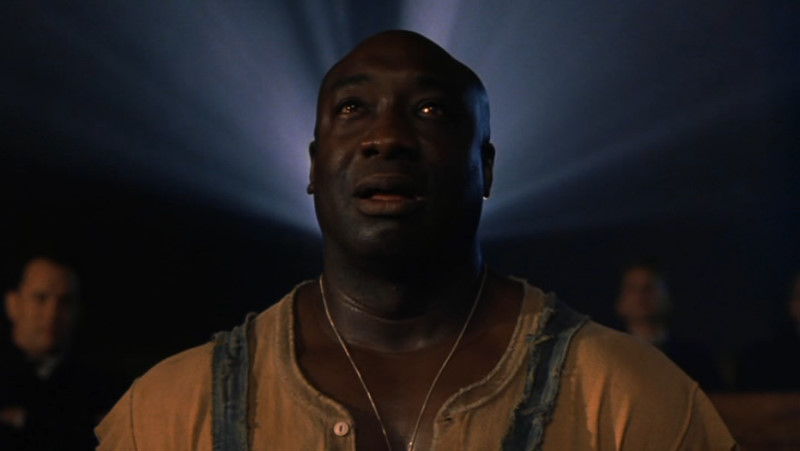
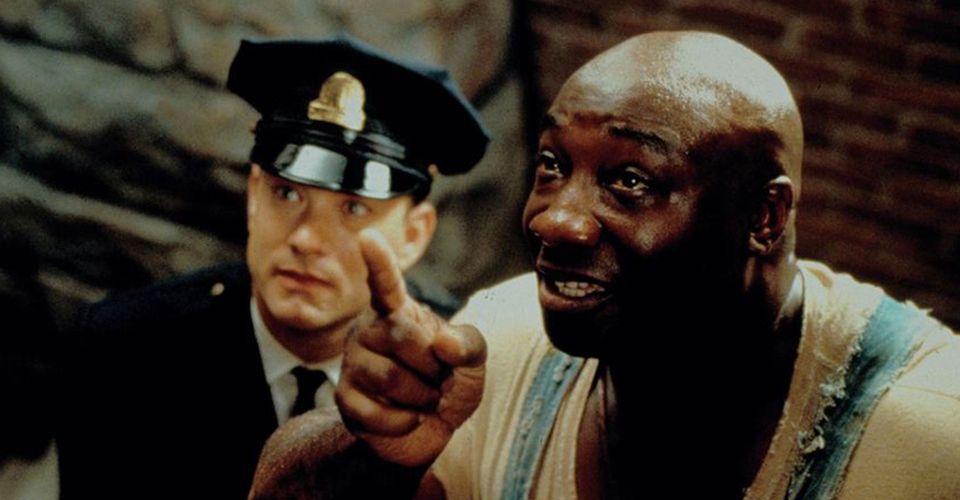
‘The Green Mile’ Movie and 4K/Blu-ray Review

The following review was written by Ultimate Rabbit correspondent, Tony Farinella.

The Green Mile” is a special film that can be watched over and over again, and its impact is still felt.  In today’s trying times where people are still divided, it’s a healthy reminder of the power of being kind to one another. Frank Darabont had previously tackled the world of prison with “The Shawshank Redemption,” which many people consider one of the greatest films of all time.  It has battled for the top spot with “The Godfather” for quite some time on IMDB. While “The Green Mile” is not in the category of “The Shawshank Redemption,” it’s still an incredible film.  It has a running time of over three hours, but with a cast and screenplay as good as the one featured in this film, one does not pay attention to the running time.

The film is set in 1935 and follows Paul Edgecomb (Tom Hanks), a prison guard who overlooks death row inmates.  He’s firm but compassionate. His sidekick is Brutus “Brutal” Howell, played by David Morse. They see eye-to-eye on most things, especially when it comes to the evil and heinous Percy Wetmore (Doug Hutchison), another prison guard with an evil and aggressive side to him because of the fact his aunt is married to the governor.  Even though these inmates are on “The Green Mile,” which is where they walk before they are to be executed, Paul has humanity and kindness in a job that is not easy to navigate.  Even though they are inmates with varying degrees of crimes committed, he sees them as human beings.  This is the strength of Darabont’s film: the heart attached to it.  There is also a good deal of humor in the story as well when the scene calls for it.

Everything changes at the Cold Mountain Penitentiary when they meet a large inmate with an even larger heart in John Coffey, played by Michael Clarke Duncan. He has been convicted of raping and killing two white girls.  Paul and Brutus, however, have a hard time believing he could be capable of such a crime when they see such a gentle and kind soul inside of him.  They also notice he has magical healing powers as well.  In the hands of a lesser filmmaker and lesser source material (the film is based on the novel by Stephen King), this could have been very cheesy and hokey.  Here, the emotion and the heart, as mentioned earlier, are felt very powerfully.  This is a film that makes the audience believe in the goodness of John Coffey and in humanity.

However, it doesn’t shy away from the dark side of the inmates.  Not all of them are great human beings.  Some of them are downright evil and cruel, such as William “Wild Bill” Wharton who is played by Sam Rockwell.   He’s racist, violent, and completely out of control. The film is told in flashback style from the perspective of an older Paul Edgecomb.  It’s a sensitive film that really allows the audience to spend time with all of the characters and get to know them.  The attention to detail shown here is truly remarkable.  Even though the film is filled with happy and sad moments, I tend to think of it more as an uplifting film about life and how fragile it is and how there can be beautiful moments we don’t always believe in at first, but we believe in them when we allow ourselves to really look at what’s happening right in front of us.

“The Green Mile” is now 23 years old, having been released in 1999. The film was nominated for four Academy Awards including Best Picture, Best Supporting Actor, Best Adapted Screenplay, and Best Sound. It did not win any Oscars, but it was another great film released in 1999, a groundbreaking year for cinema.  It’s a feel-good movie, yes, but it’s done in a realistic way that doesn’t insult the audience.  There have been a lot of prison films in Hollywood, but this is one of the better ones because of the acting, writing, and direction.  It’s an emotional film that leaves you with a lot to think about after the credits are done rolling. Now that it’s on 4K, I imagine a lot of people are going to enjoy revisiting this classic.

* * * * out of * * * *

4K/Blu-ray Info: “The Green Mile” is released on a two-disc 4K/Blu-ray combo pack from Warner Brothers Home Entertainment.  It has a running time of 188 minutes.  It is rated R for violence, language, and some sex-related material.  The film also comes with a digital code.

Video Info: The 4K is released on 2160p Ultra High Definition, and it is a massive upgrade over the Blu-ray.  In 4K, the film really stands out with its vibrant colors and imagery. The Blu-ray is released in 1080p High Definition. While the Blu-ray looks good, the 4K simply looks fantastic. I’m really glad Warner Brothers and other studios are looking into their vaults to re-release classic films in 4K.

Audio Info: The 4K comes in the following audio formats: Dolby Atmos-TrueHD: English, Spanish, and French. The Blu-ray has the following audio formats: Dolby TrueHD: English 5.1, Dolby Digital 5.1, and Dolby Digital: English, French, and Spanish.  With 4K releases, I tend to notice the difference in the video more than the audio.  The high dynamic range is where it’s at with 4K.

Special Features:

Commentary by Frank Darabont

Additional Scenes

Walking the Mile: The Making of “The Green Mile” Documentary

Miracle and Mystery: Creating “The Green Mile” Featurette Gallery

Tom Hanks Makeup Tests

Michael Clarke Duncan Screen Test

The Teaser Trailer: A Case Study

Theatrical Trailers

Should You Buy It?

I loved this film even more on 4K.  It’s an amazing upgrade that is worth every penny.  The only downside, which I’ve noticed with a lot of these upgrades, is the fact they are re-releasing the same special features from the Blu-ray.  I really wish if they were going to re-release these, they would add some new special features, even if it’s Zoom interviews with various cast and crew members.  As a film, it’s absolutely perfect to me.  A lot of people see it as a downer, but I see it as a very, very moving and inspirational flick despite some of the subject matter. The performances are great across the board, but the heart and soul of the film is with Michael Clarke Duncan.  There are also solid performances from Harry Dean Stanton, Barry Pepper, James Cromwell, Bonnie Hunt, and Patricia Clarkson.  It’s an all-star cast for an all-star movie.  This is a film which should be a day-one purchase for film lovers.

**Disclaimer** I received a Blu-ray copy of this film from Warner Brothers to review for free.  The opinions and statements in the review are mine and mine alone.

‘Trump Card’ – Yet Another Documentary Shit Sandwich From Dinesh D’Souza

Ah, Dinesh D’Souza, one of my guiltiest of guilty pleasures this side of Corey Feldman’s “Ascension Millennium.” There’s just no stopping you, is there? I couldn’t help but be a bit giddy for your 2020 documentary “Trump Card” as I was eager to watch you try to defend former President Donald Trump a second time after you tried, and utterly failed, to do so with “Death of a Nation.” But unlike that aforementioned documentary, this one did not get a theatrical release and instead went straight to streaming. Now, this may have been in large part due to the Coronavirus pandemic, but after a few films which dealt with Trump (including Michael Moore’s “Fahrenheit 11/9”) failed to catch on at the box office, clearly theatrical exhibitors were uninterested in showing any of the man’s orange face on the silver screen regardless of where they stood on the political spectrum. One thing is for sure though; CinemaScore cannot save you this time around!

Well Dinesh, you waste no time putting your fears on display as you display a famous torture scene from George Orwell’s classic novel “1984” in which Winston Smith is being grilled by a member of the Thought Police for not falling in line with everyone else. In short, you completely fail to understand Orwell’s dystopian and cautionary tale, and of why his novel became so popular again once Trump moved into the White House. Instead, you and your co-directors (wife Debbie D’Souza and Bruce Schooley) direct Stephen Brodie, who plays Winston Smith, to act as if you are telling him, “ACT LIKE YOU ARE IN TREMENDOUS PAIN! SCREAM! OPEN YOUR EYES AS WIDE AS YOU CAN! THAT’S IT!!!”

Oh, and by the way Dinesh, Orwell was a Democratic Socialist. Did you know that?

Anyway, the opening credits of “Trump Card” feature various American monuments and of how, as you see it Dinesh, they would like if the Democratic Party were to move the United States fully into the realm of Socialism. We see the Statue of Liberty getting replaced by a statue of either Karl Marx or Joseph Stalin. Oh no! Mount Rushmore has been recurved to feature Socialist leaders? Stop the presses! Do you really think anyone in America regardless of political affiliation would really allow such changes to ever happen? That would be like belittling the plaque located at the Statue of Liberty which says, “Give me your tired, your poor, your huddled masses yearning to breathe free, The wretched refuse of your teeming shore.” Oh, wait a minute, Stephen Miller, a Trump appointee, did just that. As a lover of America, doesn’t this bother you?

It’s really interesting to watch “Trump Card” a full year after President Joe Biden soundly defeated Trump by several million votes (it’s a fact everybody, Trump lost). Just as you continually do with Abraham Lincoln (played here once again by Don Taylor), you hold the Donald up to a ridiculously high standard to where he comes off looking like the superhero who can defeat socialism as if it were America’s kryptonite. Never mind how the former host of “The Apprentice” got a handout from his dad worth millions of dollars which he squandered, that he was caught on video saying how he loved to “grab women by the pussy,” or that he jumped and ran for cover at a rally when it sounded like a gunshot had just gone off. Remember when did a video in which he posed with a bald American Eagle only to get freaked out when it threatened to attack him. Seriously, even the eagle knew Trump was colluding with Russia.

But as much as you try to hold up Trump to such a God-like level which only the most deluded Evangelicals could ever embrace, you still know how to infuriate me in ways few others can. You must have been begging for participants this time around as you talk with businessman Alan Bender and Imam Mohammad Tawhidi in an effort to lay waste to American politician Ilhan Omar. Never mind how Bender is known for espousing unsubstantiated conspiracy theories or that Tawhidi is a cleric with no mosque to speak off. You, Dinesh, let them hammer away at Ilhan by saying she is controlled by Qataris “through her weakness – money and sex” or describing her as being “ISIS with lipstick.” Instead of debating her politics and views as one should with any other politician, you still prefer character assassination. I mean, heaven forbid you take the time to dig beneath the surface on many issues and people you observe here.

Still, you left me howling with laughter when you entered The Body Shop on Sunset Boulevard and went into a room where you interviewed Larry Sinclair. For those who don’t know, Sinclair has claimed on several occasions that he smoked crack with former President Barrack Obama and later performed oral sex on him. This man also has a criminal record over 25 years long involving fraud and deceit, and a forgery charge which earned him a 16-year jail sentence, but yeah Dinesh, I perfectly understand why you did not include this here. For you, the Obama-Sinclair sex scandal is far bigger and more controversial than the one between Trump and Stormy Daniels. Do you remember when Trump paid Stormy for a night of hot sex where it was revealed he had a mushroom dick? Or how about Stormy being threatened to remain silent about this affair? Oh, and Trump did this while his wife Melania was pregnant with their child. Surely you as a Christian look down on him for this, right?

While watching your films is enjoyable for all the wrong reasons, Dinesh, being in the same room with you is not something I am the least bit interested in. Engaging in a conversation with you is pointless as you are almost as narcissistic as Trump. Admitting defeat is not in your nature even as your theories are constantly proven to be utterly bogus, and rather than listening to the truth of things, you would rather put your hands over your ears and keep telling yourself, “The socialists are coming! The socialists are coming! Don’t you see the lanterns lit up at the old church?!”

As I watched “Trump Card,” I was reminded of an exchange between Jamie Lee Curtis and Kevin Kline in the classic comedy “A Fish Called Wanda” in which she tried to get through to him:

“Now let me correct you on a couple of things, OK? Aristotle was not Belgian. The central message of Buddhism is not ‘every man for himself.’ And the London Underground is not a political movement. Those are all mistakes. I looked them up.”

With that in mind Dinesh, let me see if I can possibly make some things perfectly clear for you:

  • The Me Too Movement was not about abortion or protecting Roe v Wade. It was a social movement meant to give voice to those who have been sexually assaulted and harassed as they have been forced to be silent in a way no one ever should.
  • Antifa is a political movement and has been for decades. It is not a terrorist organization.
  • The Hunter Biden controversy of him allegedly accepting a payment of $3.5 million from the wife of the Mayor of Moscow remains an unsubstantiated accusation, and no concrete criminal evidence regarding this has ever been found.
  • President Abraham Lincoln’s “House Divided” speech was given in 1858, not 1861 as you present it here.  
  • Your conviction on campaign finance laws in no way allowed you to claim yourself to be a political prisoner, especially after you admitted you did wrong.

Dinesh, I have no doubt of the great love you have for America, and this would remain the case even without your nauseating inclusion of several patriotic songs which become increasingly annoying to listen to throughout. But you need to understand and accept that the Republican party under President Lincoln is not the GOP of today. In fact, neither party is what it once was, and in regards to the Republican Party, this is tragic. While you are correct in saying America is more divided than ever before, “Trump Card” does nothing to bring us together in any healthy way. Like before, you are preaching to an audience who foolishly accepts everything you say and do at face value without doing any meaningful research. But will this stop you? Clearly not. It’s sad to see how deluded you are, and there’s no doubt you will continue to keep listening to the voices in your head which continue to spew propaganda no one has any business believing in.

Oh, and by the way Dinesh, socialism has played a big part in America for decades. Public services such as police and fire departments, the United States Postal Service, schools, and libraries are prime examples of this, and none of it has led to communism. Anyway, that’s just something for you to chew on between now and when you unleash your next documentary shit sandwich on us.

ZERO out of * * * *

‘Jackass 3D’ – The Hilariously Insane Stunts Take On Another Dimension

WRITER’S NOTE: This review was written back in 2010 when this film premiered.

I saw “Jackass 3D” on the same day I saw “Paranormal Activity 2.” Believe it or not, these two films have a lot in common. Sure, one is a comedy (and an extraordinarily painful one at that) while the other fits far more comfortably into the horror genre. Still, the differences are only skin deep. Both have you going in and knowing that what you are about to watch will be unsettling and far more disturbing than you can ever guess. You keep waiting for something awful to happen, and you are never sure if you can keep looking at the screen when it does. Long after leaving the theater, I still can’t figure out which one had a more visceral or unsettling impact on me.

“Jackass 3D” arrives at the tenth anniversary of this show which debuted on MTV back in 2000. After watching the stunts performed here and then re-watching them in slow motion, it’s astonishing these guys have survived for as long as they have. I have watched several episodes of the show and remember laughing so damn hard at the insane stunts these guys dared to pull off. For some bizarre reason, however, I have still not got around to watching the first two “Jackass” movies perhaps because I listened a little too much to the warnings of friends, one who told me point blank they contained scenes which no man should ever have to witness. But with the latest one being in 3D, I got sick of listening to my friends warning me and to me listening to them to begin with.

Just about everyone is back for this one: Johnny Knoxville, Bam Margera, Steve-O, Ryan Dunn, Chris Pontius, Ehren McGhehey, Preston Lacy, Dave England, and Jason “Wee Man” Acuña. All are here to prove that, after all these years, their sadomasochistic escapades are still as painful as much as they are fun. It makes me wonder how these guys spend their time when they are not on camera. At least they have a sense of humor about their work.

Basically, “Jackass 3D” is just like the show in that there’s no plot, just randomly placed stunts, some of which are beyond belief. I kept wondering, perhaps even hoping, CGI effects were utilized because man, these stunts looked seriously painful! There’s the High Five which has Knoxville body slamming unsuspecting cast and crew members with a giant plaster hand which gets released at quite a high velocity. Then you have the game of tetherball where the ball is filled with Africanized bees, and nobody lasts long in such a game. We also get to watch Knoxville trying to catch a football and eventually getting slammed to the Astroturf by football player Jared Allen who has at least 20 pounds on Knoxville. And then there are those stunts that need no explanation like the Lamborghini Tooth Pull. Seriously, the title says it all.

With its use of slow motion, this film is a hair-raising reminder of just how exquisitely painful those instant replays from football games can be. Does anyone remember when Tim Krumrie got one of his legs snapped in half during the Super Bowl between the Cincinnati Bengals and the San Francisco 49ers? Watching some of these guys landing on what looks like their necks inadvertently brought this painful memory to my attention quickly even after so many years.

But then there is the Sweatsuit Cocktail and the Poo Cocktail Supreme. Now these really need no explanation, but since I brought them up, I have to tell you the Sweatsuit Cocktail almost literally made me hurl. It involved one of the actors exercising on one of those stationary bikes, and the sweat coming off his body was collected in one of those plastic Dixie cups. Guess what Steve-O did with that cup… Man am I glad I didn’t eat lunch before seeing this!

So, what is different about this particular “Jackass” episode? I guess it’s that everyone is sober this time around. This was done to the benefit of Steve-O who went through some highly publicized substance abuse issues in recent years. When they started making “Jackass 3D,” he had been clean for two years. But seriously, if you were foolish enough to perform any stunts (and please don’t by the way), wouldn’t you want to be the least bit inebriated?

Not to worry though because those warnings of how these stunts are performed by professionals and that you should never attempt them on your own are on display at the beginning and the end of this film. But really, why would you even think of doing any of them? I’m not just talking about the Sweatsuit Cocktail, which I am fairly confident you will not tip the bartender for. Isn’t the whole point of the “Jackass” show and movies is to enjoy watching people do things you know you are never supposed to do? Is there another show you can think of where people like Knoxville get off on such exquisite pain and still have a good laugh about it?

For me, “Jackass 3D” is a mixed bag as there are a lot of insane moments you can’t help but combust in sheer laughter over, and then there are others where you have an immense urge to look away. But laughter does seem to win out for those willing to endure the more painful moments on display here, and there are more of them than you might expect. Movies that make me laugh as hard as this one did can never be easily dismissed.

Actually, the main difference about this particular “Jackass” is the fact it was shot in 3D. This ends up giving the stunts more dimensions than anyone in the cast. Now pay attention: it was not reformatted into 3D; it was actually shot in this format. The effects here are actually very good in putting you right into the action, perhaps closer than you would ever be humanly comfortable. It’s not full of cheap 3D effects where things are just hurled at you on the big screen just because they can be. That is, except for the dildo shot out of a cannon and made to look like it is flying around the world until it smashes into some guy’s head.

I also got to tell you, male full-frontal nudity continues to make a comeback long after Jason Segel unveiled in his throbbing python of love in “Forgetting Sarah Marshall.” It’s not the first thing you would think of to hit a baseball with, but hey, this is “Jackass” for crying out loud! All the same, I probably shouldn’t go into too much detail over the Helicockter as it is as painful as it sounds. Then again, I would prefer it to the model town getting covered by a sudden explosion of excrement.

So anyway, you have been warned. “Jackass 3D” is by no means meant to be watched on a full stomach unless you wanna take bets over who’s going to purge first after your collective visit to the Cheesecake Factory. This one had me laughing like crazy, and I was on the edge of my seat every bit as much when I was watching “Paranormal Activity 2.” Perhaps it was even more terrifying than “Paranormal Activity 2,” but with “Jackass 3D,” no detail is spared and nothing is left to the imagination (not completely anyway).

Once again, you have been warned…

* * * out of * * * *

Underseen Movie: ‘The Rum Diary’ – A Ralph Report Video Vault Selection

WRITER’S NOTE: This review was written back in 2011, long before a certain Hollywood couple’s relationship became toxic and imploded in front of the whole world. Also, Ralph Garman recently featured this film as a Video Vault selection on “The Ralph Report,” and I applaud him for doing so.

Based on the book written by the late Hunter S. Thompson, “The Rum Diary” captures the Gonzo journalist at perhaps his earliest point in life which came to define his style of writing. Johnny Depp plays Jack Kemp, but as he did with his character of Raoul Duke in Terry Gilliam’s “Fear and Loathing in Las Vegas,” he is essentially channeling Thompson here whom he had befriended years ago. It also marks Bruce Robinson’s first directorial effort in 19 years (the last being “Jennifer 8”), and he clearly has not lost his touch.

Kemp is a rootless journalist who has come to Puerto Rico to write for The San Juan Star. Having had his fill of New York and the Eisenhower administration, he longs to escape to a paradise that will not make him feel his age. But as beautiful as Puerto Rico is, there is an ugliness that cuts away at the façade which the other newspaper employees escape from through their use of drugs and alcohol, especially rum. Kemp also comes across American businessman Hal Sanderson (Aaron Eckhart) who wants Kemp to write a favorable report on his latest greedy scheme, and that is to turn Puerto Rico into a paradise for the wealthy. Soon Kemp will have to decide if he wants to use his words to help Sanderson or expose him for the “bastard” he truly is.

No other actor can successfully emulate the brilliant craziness of Thompson like Depp can. Unlike in “Fear and Loathing in Las Vegas,” his Hunter-esque character of Kemp is a little more down to earth. Of course, this is only saying so much. Having been freed, albeit temporarily, from those “Pirates of the Caribbean” movies, he gives one of his best performances in a while as he takes Kemp from the highs of his chemical dependency to showing his more vulnerable side as he falls for Sanderson’s fiancée, Chenault (the ever so beautiful Amber Heard).

“The Rum Diary” also features terrific performances from a perfectly chosen supporting cast. Michael Rispoli is great fun as photojournalist Bob Salas who is the first real friend Kemp makes in Puerto Rico. Richard Jenkins never lets that wig he’s wearing upstage him as newspaper editor Edward J. Lotterman. Aaron Eckhart finds just the right balance in playing Sanderson as he charms everyone around him and yet hints subtlety at the vicious businessman hiding beneath the surface. But it is Giovanni Ribisi who almost steals the show as Moberg, a hygienically challenged religion reporter always under the influence of some sort of narcotic.

Robinson also wrote the screenplay and revels in each of the character’s bizarre eccentricities. These are some of the more unusual characters I have seen in any 2011 movie, and they are the kind which has been missing from movies in general. Things do drag a bit towards the end, and I wish he would have brought more of the same manic energy Gilliam brought to “Fear and Loathing in Las Vegas.” Still, he has managed to make a movie most Hollywood studios rarely, if ever, dare to greenlight these days.

“The Rum Diary” may be a story from the past, but it is a story of rich people displacing native citizens for their own wealthy benefit, something not lost on American audiences these days. The paranoia-filled philosophies of certain characters make the advancement of the Tea Party seem not as big a surprise in hindsight. But as pummeled as Kemp gets, you believe he will get the “bastards” with words, and that his words will bruise his most unforgiving enemies. We all yearn for someone to stick it to the man, and Depp gives us a character who can do just that. Seeing him back in Hunter S. Thompson’s realm is a real treat.

* * * out of * * * *

‘Fantastic Mr. Fox’ is One of Wes Anderson’s Most Inspired Works

WRITER’S NOTE: This review was written in 2009.

After watching “Fantastic Mr. Fox,” I am convinced Wes Anderson should make as many stop-motion animated movies as he possibly can. Nothing against his live action work, but this form of animation seems really suited to Anderson’s unique blend of comedy and dysfunction. While his last film, “The Darjeeling Limited,” was very good, it started to seem like he had been dealing with the same themes once too often. But with the brilliantly made “Fantastic Mr. Fox,” his material is given a freshness which, for a moment, seemed to have escaped him. I wasn’t sure what to expect, but this turned out to be one of the most enjoyable movies I saw in 2009. As a result, any frustration I had over not being able to see “Avatar” (it was a family outing, and it didn’t seem right for my 5-year-old niece) was completely forgiven.

“Fantastic Mr. Fox” is based on a children’s novel written by Roald Dahl whom Anderson considers one of his personal heroes. Dahl is the same man who wrote “Charlie and the Chocolate Factory” and “James and the Giant Peach” among other stories, and his work is characterized by a lack of sentimentality and a lot of dark humor. Judging from “Rushmore” and “The Royal Tenenbaums” with their strong black humor, it’s no wonder Anderson digs Dahl!

The Mr. Fox of the title is a cool and exceedingly clever animal, and we first see him with his wife sneaking into a farm to steal food. They are, however, caught in a trap which has his wife pointing out they should choose a safer form of work. Oh yeah, she also tells him she’s pregnant, and this changes the dynamics of their relationship in a heartbeat. We catch up with these two a couple of years later after they have found a home within a hole in the ground. Mr. Fox is now a newspaper columnist, and he and his wife are parents to a son, the sullen Ash, who constantly feels unappreciated in all he does. Still, Mr. Fox does not like where his family lives and promises to do better by them. Despite the warnings of his lawyer, Badger, he ends up buying a new home in the base of a tree. These new lodgings are also coincidently right near the gigantic farms owned by three ugly looking farmers: Walter Boggis, Nathan Bunce, and Franklin Bean. So, of course, this gets Mr. Fox all excited and back to his usual tricks of stealing food and drink while the rest of the family remains unaware. To quote another fox from a vastly different 2009 movie, “chaos reigns!”

The first thing people will notice about this movie is its “star studded” (what does that term mean anyway?) cast of actors. Voicing Mr. Fox is the most debonair of movie stars right now, George Clooney. With this, “The Men Who Stare at Goats” and “Up in The Air,” I can’t help but wonder when Clooney gets the time to sleep. At this moment, he’s everywhere, and his constant presence would be ever so annoying if he weren’t such a terrific actor. Clooney perfectly captures Mr. Fox’s confidence without ever becoming overly smug, and he exudes the cleverness this character has in getting back at the three farmers.

Meryl Streep, who has also had a busy year with this, “Julie & Julia” and “It’s Complicated,” voices Mrs. Fox. I actually wonder how much sleep she gets as well as Streep always seems to be learning a new accent she has not taken on yet. Streep is the perfect contrast to Clooney’s charmingly reckless nature, and she serves as the conscience Mr. Fox needs to hear out more often. Streep doesn’t do anything incredibly different with her voice like she did for Julia Childs, but its warmth is quite seductive at times.

Anderson has also employed many of his regulars for “Fantastic Mr. Fox” as well. Jason Schwartzman who was featured quite prominently in “Rushmore” and “The Darjeeling Limited” voices Mr. Fox’s son, Ash. Schwartzman perfectly captures the angst Ash feels at never fully winning his dad’s approval, and you feel Ash’s desperation as he goes to dangerous lengths to get any approval. Owen Wilson, who co-wrote “The Royal Tenenbaums” with Anderson, has a cameo voicing Ash’s athletic coach, Skip. You can tell its Wilson right away, and he gives Skip a wonderfully dry voice which gets a good number of laughs whenever he appears. Even Bill Murray, who has had a role in just about all of Anderson’s movies, voices Mr. Fox’s lawyer, Clive Badger, and he always seems to fit in perfectly in Anderson’s cinematic universe. And let us not forget Wallace Wolodarsky who voices the confidence challenged Kylie Sven Opossum who somehow gets sucked into Mr. Fox’s schemes against his better judgment.

Others to be found here are Michael Gambon, the current Dumbledore of the “Harry Potter” movies, who voices one of the farmers hellbent on eliminating the thieving Mr. Fox, Franklin Bean. Eric Chase Anderson, who is responsible for those illustrations of Anderson’s movies when they are given Criterion Collection releases, voices Mrs. Fox’s nephew Kristofferson who is perfect in every way Ash is not. But the most surprising voice here is from the actor who voices Rat, Bean’s security guard. Rat was a French character, so I assumed the actor voicing him was French. Turns out that it was actually Willem Dafoe! That’s right, the same guy who was in that other delightful 2009 movie with a fox, “Antichrist.”

With just about all of animated movies being done with computers and digital effects, it’s refreshing to see other filmmakers go a little retro with the stop-motion animation. The work here is brilliantly done, and I was surprised at how lifelike everything looked. Movies like these must require an exceeding amount of patience to make because they clearly take years to produce. It also fits right in with Anderson’s quirky sense of humor which remains intact a good ten years or so after “Rushmore.”

I also really dug the soundtrack Anderson chose for “Fantastic Mr. Fox.” Each of his movies contain a great selection of music which veers from classic British rock songs to American rock among other genres. With this film, Anderson includes songs from the Beach Boys and Burt Ives which fuel the proceedingas with an undeniable sense of innocence and adventure. It also made me an instant fan of The Bobby Fuller Four whose song “Let Her Dance” plays during one of the most joyful moments this film has. Composing the score is Alexandre Desplat who has composed music for movies like “Firewall” and “The Curious Case of Benjamin Button” among others. I love how Desplat captures the infectious spirit of everything which takes place.

Is this a kid appropriate movie? I think so. It did get a PG rating which seems appropriate. Sure, there are many bottles of alcoholic apple cider and some smoked chickens which might give you the wrong impression of the goings on being displayed, but I really think this movie is harmless. Compare this to the recently released sequel to “Alvin and the Chipmunks” which has not so subtle references to classic movies like “Taxi Driver” and “Silence of the Lambs” among others. This film is not just aimed at kids, but for the whole family as well.

While many will be more likely to view this movie on DVD or Blu-ray (or VHS if it’s still available), ” Fantastic Mr. Fox” really is a fantastic piece of work which deserves a big audience. Anderson, along with co-writer Noah Baumbach (“The Squid & The Whale” and “Margot at the Wedding“), has managed to take his fascination with families that are less than perfect and put them in a context which will not scar your kids for life. It was also cool to see Clooney play a character who, unlike the one he portrayed in “The Men Who Stare at Goats,” was not afraid to dance.

Was it worth not going to see “Avatar” this day and watching this instead? I hate to say it, but yeah.

* * * * out of * * * *

‘Scream 4’ – The More Things Change, The More They Stay The Same

WRITER’S NOTE: This review was written back in 2011.

Honestly, we needed another “Scream” movie. Since the original was released back in 1996 (YIKES!), we have had dozens upon dozens of horror movies thrust upon us. Many of them had an endless number of clear-skinned teenagers and were given PG-13 ratings which, after a while, indicated the horror genre was being watered down too much. Of course, there is the “Saw” franchise which makes the MPAA go nuts with all the copious blood and guts on display, but those plot twists always give me a massive migraine. Horror went at times from being laughingly lame to hardcore bloody, but they could never top what Asian or Japanese movies achieved. However you look at it, we needed Wes Craven and Kevin Williamson more than ever to give us their take on the continually evolving rules of surviving a horror movie.

Each generation has its own ongoing horror franchise(s) along with the occasional “remake” or “reboot.” When I look at movies from decade to decade, I eventually come to see the more things change, the more they stay the same. This is definitely the case with “Scream 4” which, while having a strong level of suspense, also has a weariness about it. In the process of dealing with a new generation of horror fans, this sequel feels no different from ones which preceded it as the old rules still apply when new ones should be installed.

So, the whole gang is back along with Craven, Williamson (sorely missed on “Scream 3”) and composer Marco Beltrami. Neve Campbell returns as Sidney Prescott who arrives back in her hometown of Woodsboro to promote her new self-help book, and she is reunited with her friends Dewey (David Arquette) who is now the Sheriff in this town, and Gayle (Courtney Cox) who has long since gotten married to him and retired from tabloid journalism. Soon after Sidney arrives, the Ghostface killings start up again. You might think this killer would be more imaginative and use another mask instead, but horror sequels are not heavy on originality, are they?

This time though, the focus of the killer’s rage appears to be on Sidney’s cousin, Jill (Emma Roberts), and it also puts her best friends Kirby (Hayden Panettiere) and Olivia (Marielle Jaffe) in the crossfire. Ghostface’s priority targets are usually teenagers, but after a while he (or she) proves to be indiscriminate as adults become easy targets as well. Oh yeah, Jill has an ex-boyfriend named Trevor (Nico Tortorella) who still wants to be a part of her life regardless of the fact she wants nothing to do with him. Does any of this sound familiar?

With “Scream 4,” the chief thing to expect is to expect the unexpected, just like with any Peter Gabriel album. I do have to hand it to Craven and Williamson though because, even after a decade, they still leave us guessing throughout who the real culprit is (or if there is more than one) and of what will happen next. The movie moves along fairly swiftly to where you really have no time to examine the logistics of everything going on. I imagine you could punch a few holes in the plot, but only after you have watched this movie. I also got a huge kick out of the beginning which plays on the reality of what we are seeing on top of the monotony of a franchise which, like Michael Meyers, just won’t die.

But it’s also the inescapable problem with “Scream 4;” we have gotten so used to expecting the unexpected to where while there is tension, the whole thing is not as scary as it used to be. I kept waiting for this sequel to get seriously scary, but it never does. Even the moments designed to make us jump up out of our seats aren’t as effective as they once were. The first “Scream” was more than just a simple satire of the horror genre, but a movie going experience which was more intense than we expected, and it reinvigorated the horror genre at a time where it was not particularly popular. With each installment, the filmmakers gleefully deconstructed horror movies while scaring us out of our wits. But with this fourth film, the enthusiasm and inventiveness are at an all-time low.

It is nice to see Neve Campbell, David Arquette, and Courtney Cox back as their infamous characters. I could not help but expect Campbell to be this Ellen Ripley/Paul Kersey character by now, so used to seeing people and those closest to her get killed off in brutal fashion to where she now desires to bring her own brand of vigilante justice to whatever nemesis chooses to cross the Prescott path. Perhaps Sidney could have used a bit more of this attitude as Campbell looks a bit worn out from all those sharp pointed knives that always get pointed in her general direction. Let’s face it, running from a demented killer is nothing new for her.

Of all the veterans, Cox shines the most as we watch Gale Weathers emerge from being just another desperate housewife to someone who is desperate overcome an unwelcome writer’s block. Seeing Gale get back to her bitchy self is fun to watch. In the other movies you hated her for it, but knowing Gale for this long makes you long for her inevitable return to greedy selfishness. As a result, it gives this sequel much of its bite.

In regards to the newcomers, they are more or less designed to be types, and part of me wished they were given more dimension and depth. Emma Roberts is fun to watch as Jill Roberts, but she gets the show stolen from her by “Heroes” star Hayden Panettiere whose character of Kirby is part tease, part sharp retort, and part movie geek more than she would ever admit. She’s got a lot of sass about her which reminded me of the girls from my high school I couldn’t stand, and of the heart and soul they do have which I never took into account back then.

It’s also nice to see Rory Culkin here, having made a strong impression in “You Can Count on Me,” “Mean Creek” and “Signs.” As Charlie Walker, he represents the chief movie geek Randy Meeks was in the previous “Scream” movies. Charlie is not exactly a geek nor is he exactly one of the cool guys. In the end, he’s kind of in between those crowds like most people I know. Culkin is truly one of the perfect actors to play someone very knowledgeable about movies in general, and he gives this sequel some of its more satirical moments.

But when all is said and done though, I still came out of “Scream 4” feeling rather weary. I didn’t dislike it, and it did keep me interested throughout to where I wasn’t looking at my watch. But in the process of creating a new formula for satirizing horror movies, it ends up getting caught in the clichés of them all. Also, I felt it could have spent more time examining the endless films which came out in the past few years. This franchise was incredibly influential, and we continue to realize this with the passing years.

Still, I am open to seeing a “Scream 5.” Whatever problems this particular sequel has, I believe and hope they can be compensated for in the future. And like I said, we always need movies like “Scream” because the horror genre will constantly be its own worst enemy from one generation to the next. As it was described before, the more things change, the more they stay the same.

* * ½ out of * * * *

The Coen Brothers’ ‘True Grit’ is a Far More Faithful Cinematic Adaptation Than What Came Before

Watching Joel and Ethan Coen’s version of “True Grit,” it suddenly occurred to me I had read the book it was based on back in my sophomore year of high school. I can’t believe I forgot that as I usually remember every book me and my fellow classmates were made, or forced, to read such as “The Diary of Anne Frank,” “To Kill a Mockingbird,” “Of Mice and Men” or “A Day No Pigs Would Die.” This book, which was written by Charles Portis, however, seemed to have escaped my memory of having read it. When I think of the book now, I am reminded of how Mattie Ross, when she saw the body of her murdered father in his coffin, simply told the undertakers, “Put a lid on it.”

Damn! Mattie seemed cold as ice; hell bent on pursuing her father’s killer no matter what and without ever shedding a single tear. But she is also a human being endowed with an undying sense of purpose, determined to find fairness in a world which often seems devoid of it. Now everyone remembers Rooster Cogburn more than any other character in “True Grit” because John “The Duke” Wayne portrayed him in the 1969 movie as it won him his only Oscar. But those who have read this novel know full well it is really about Mattie Ross, not the easiest person to get along with, but hard not to admire. It’s her story more than it ever was Cogburn’s, and the Coen brothers understand this completely in their cinematic adaptation which proves to be very faithful to its source material.

Jeff Bridges, Matt Damon, and Josh Brolin may have top billing, but the weight of “True Grit” rested on the soft shoulders of then 14-year-old newcomer Hailee Steinfeld. Her astonishing performance brings Mattie Ross right off the written pages of Portis’ book and to vivid life. This was not necessarily the case when Kim Darby portrayed her opposite Wayne in 1969. Our sophomore English class watched some, but not all of, the original film, and once we saw Mattie cry in a way she never would have in the novel, we all knew one liberty too many had been taken with the source material. I guess having a character appear stronger willed than one played by The Duke must have seemed unthinkable at the time.

But seriously, Steinfeld is a revelation as Mattie, and the movie would have completely failed were she not as fantastic as she was here. Seeing her stroll into the town with her no-nonsense attitude and wise beyond her years, the actress sells the character perfectly and has us eager to follow her every step as she pursues Tom Chaney before he escapes the hand of justice. Her eyes show a willful determination which I never doubted, and any sadness she shows is somehow restrained. Steinfeld takes a character who is not altogether likable and makes her one of the most compelling characters I saw in any 2010 movie. She doesn’t so much play the character as much as she inhabits the role. Now how many other 14-year-old actors do you know who can pull this feat off?

As the story goes, Mattie tries to procure the services of Rooster Cogburn because she believes he possesses “true grit;” someone who has courage, fearlessness, and guts. As played by Jeff “The Dude” Bridges, who owned the 2010 holiday season with this and “Tron: Legacy,” Rooster is a drunken lout who never appears to be fit for his line of work, but his sense of duty does manage to keep him sane in an increasingly violent world. The relationship he has with Mattie is not one based on kindness, and he would as soon as leave her in the dust than bring her along. But something about Mattie’s dogged determination, illustrated by her riding her horse across a river while keeping her head above water, wins the whiskey loving Marshall over.

I’m not going to bother comparing The Dude and The Duke because frankly I don’t have the energy. Wayne made his mark in one film after another, and Bridges’ performance works so well because he never tries to outdo what Wayne did. Like any smart actor, he makes the character his own, and his Rooster Cogburn threatens to be every bit as inebriated as Val Kilmer was when he played Jim Morrison in Oliver Stone’s “The Doors.” From the start, I was almost afraid Bridges might turn the character into a parody of sorts, and perhaps rely too much on his “Big Lebowski” persona to get him through the day. But this never was the case as Bridges makes his Rooster Cogburn into a wonderfully complex character who, despite his grungy appearance, still knows the Indian territory like the back of his hand.

Also along for the ride is Matt Damon who portrays Texas Ranger LaBeouf. I thought he would stick out like a sore thumb here, but he makes his character a wonderfully engaging one even as he keeps coming and going throughout. Seeing LaBeouf get his ass handed to him by Mattie Ross is a major highlight, only if to see the shocked expression on his face when he realizes he truly got suckered by a 14-year-old.

Josh Brolin, who previously worked with the Coens on “No Country for Old Men,” makes Tom Chaney not just a simple one-dimensional villain as his crime was motivated more out of jealousy and fear than anything else. Even he can’t intimidate Mattie as she has the strong resolve and moral fortitude he seriously lacks, and his life has lost its sense of purpose. Brolin manages to convey all this in the limited time he has onscreen.

Another guy I was happy to see here is Barry Pepper. As “Lucky” Ned Pepper (no relation I’m sure), he gives us a nasty outlaw and a vicious guy who will not allow anyone to undo his authority any more than he appears willing to brush his teeth; man, his teeth look hideous!

The main difference between the 2010 and 1969 movies is in how the wild, wild west is portrayed. The 1969 movie was more about watching Wayne blow away the bad guys just as he had in every other movie he starred in. But the 2010 version portrays the world it inhabits much more realistically, treating violence as a brutal and very vicious thing. This one is more akin to “Unforgiven” than “Rio Bravo.” Violence is a way of life for all these characters, and it defines the way they see the world around them. We also see how it affects their souls as the specter of death hangs over their every move. There’s no attempt to sweeten up the narrative or make it the kind of western many of us grew up watching.

Still, the Coen brothers have succeeded in making one of their most accessible movies to date for the mainstream audiences with “True Grit.” They also managed to do it without compromising themselves as this film sees them getting the widest audience they ever had before. They continue to employ their regular collaborators who never fail them such as cinematographer Roger Deakins, editor Roderick Jaynes, and their longtime composer Carter Burwell who contributes another in a long line of great movie scores.

If there was any problem I had with this “True Grit,” it was in the way it ended. We see one character many years later, and the effect is disorienting. It was the same thing that happened at the start and the end of Frank Darabont’s “The Green Mile,” and it just took me out of the moment. The effect wasn’t too bad in this one, but I was hoping to see the actor who played said character get more of a proper send off.

Remaking a movie like “True Grit” seems like the last thing the Coen brothers would ever do, but I believe them when they say this was never intended to be a remake. They stayed very true to the source material and even made the language Portis scribbled down seem very much alive and sharp witted. Whether or not you value Wayne’s take on Rooster more than Bridges’, you have to give the Coens credit for staying true to a book written back in 1968.

The Academy Awards showered a number of nominations for this film including Best Actor for Bridges and Best Picture. While I was happy to see Steinfeld nominated for Best Supporting Actress, I still think it was a travesty she was not nominated for Best Actress instead. Once again, this movie rested on her shoulders, and she was cast in a role which 15,000 other actors auditioned for. Seriously, Best Actress, not Best Supporting Actress. Her male co-stars were supporting her instead of the other way around.

* * * ½ out of * * * *

Underseen Movie: ‘Fish Tank’ – 2009 Jury Prize Winner at Cannes

Here’s a little British independent feature which came out at the beginning of 2010 in America after being named the Jury Prize Winner at the 2009 Cannes Film Festival. Unfortunately, however, it barely registered in movie theaters, so here’s hoping it finds an audience on physical media and/or cable. “Fish Tank” is a raw and unsentimental character study that pulls no punches in its portrayal of a tough and troubled teenage girl growing up in an East London council estate. It was directed by Andrea Arnold, an actress turned filmmaker who previously directed “Red Road,” and it stars Katie Jarvis as Mia, the teenage girl you may figure is up to no good just by looking at her. There is no Hollywood gloss on display here, and the environment this young woman inhabits feels both real and rundown, just like the other characters who are stuck there with her.

Now council estates are to England what public housing or “the projects” are to cities all over the United States; rundown buildings designed for the economically challenged that carry a stigma of poverty and endless crime. Now whether this is true or not, this is usually the impression people have of these places. It is clear from the start that Mia, along with her mother and younger sister Tyler, have lived in this place for a long time, and it has shaped them into the people they are today. There is seemingly no room for much in the way of respect or gratitude towards neighbors or strangers.

Mia appears to have it the roughest compared as she has been kicked out of school and seemingly wanders around the estate aimlessly. We see her putting up a seriously tough front for some girls whose dancing moves she bluntly criticizes as sucking big time, and this leads to her head-butting a girl in the face which shows how quick she is to defend herself. At home in one of the many far too cramped apartments in the council estate, her mother continually treats her like dirt and appears more interested in partying and getting drunk rather than being a parent. The only real tender moment between them comes at the end of the film, and you will know it when you see it. As for Mia’s younger sister Tyler, she has a vocabulary which Chloe Grace Moretz’s character from “Kick Ass” sound PG rated in comparison.

Being the loner she is, Mia’s only escape is practicing her dance moves in an abandoned apartment near where she lives. This proves to be her only real outlet for the frustration and aggravation which has consumed her life to this point. She is shy in revealing this part of herself to just about anyone as vulnerabilities are easily spotted and exploited for all the humiliation which can be derived from them. No one is ever quick to show any weakness in this kind of environment.

Into this environment enters her mother’s latest boyfriend, Connor, a security guard at a nearby hardware store played by Michael Fassbender. Mia is never quick to warm up to others she doesn’t know well, but she quickly develops an interest in Connor who becomes the father figure she lacks. From the moment we see Mia help him catch a fish in the lake with his bare hands (it’s possible), he inspires her to try new things and open herself up to possibilities which previously seemed beyond her reach.

This leads to a great deal of tension in “Fish Tank” as we cannot help but wonder if this relationship is going to end up crossing any boundaries. There are moments captured where the chemistry between Mia and Connor is so strong, you fear the possible and destructive ways this relationship can go to. Words are not needed to illustrate the bond they have, be it when Mia films Connor with a video camera while he’s getting dressed for work, or when Connor gives Mia a piggy back ride out of the river after she injures herself. Their growing discoveries of one another and what they are capable of is impossible to ignore, and we can see the positives of this even while the negatives are never far off.

Arnold films the movie in a way where nothing feels staged, and every character and location feels authentic to what it must be like in reality. I’m not sure a movie like this could have been filmed any other way and have the same effect. She also captures the suffocating environment of being in these big government buildings which are treated more like dumps for the lowest on the economic ladder. The apartments themselves are ridiculously tiny, and there is no privacy for any family member who has to live there. Places like these must feel like prisons to those who inhabit them, and Arnold captures this mindset clearly to where you feel as helpless as these characters do.

As bleak as “Fish Tank” is though, its ending offers hope that anyone can escape such a confining environment if they have the means and the foresight to change their lives for the better. Some are too far gone to be saved, but Mia still has a chance to move forward, and her relationship with Connor makes this clear to her.

Katie Jarvis who plays Mia in had no real acting experience before she got cast in this movie. It turns out she got an audition after one of the casting assistants saw her arguing with her boyfriend quite loudly outside a train station. Indeed, this role not only requires an actress who comes off as tough, but one who inhabits a role more than play it. While a lot of struggling actors out there may hate the fact Jarvis got one of the luckiest breaks ever, it makes a lot of sense Arnold would cast someone who came from this environment.

The role Jarvis plays is not an easy one to portray. Mia has to be tough yet show just enough vulnerability to let the audience look past the defenses she has built up. She also has to be shy but angry, curious without spelling it out for the audience, and her character needs to evolve from the person we see at the start of the movie. This makes her performance all the more revelatory because you come out thinking she has been acting all her life. She successfully captures all the subtle nuances of Mia to bring out the complexities which makes her more than just any other angry young person. Truly, it’s a daunting role for even the most experienced actor, and Jarvis comes out of the picture looking like a pro.

The other key performance comes from Michael Fassbender as Connor. Fassbender has been in movies like Steve McQueen’s “Hunger,” and he stole a number of scenes in Quentin Tarantino’s “Inglourious Basterds.” As Connor, he comes across as a generous human being, and it’s commendable that he would want to try and be a father figure to someone else’s children. This is something most people would NOT want to do. But her also gives Connor an enigmatic nature which makes him hard to pin down and figure out. Like Mia, you want to more about this guy than what he is telling everyone around him.

The only real problem I had with “Fish Tank” involved one character’s revelation in the last half. It’s hard to talk about it without giving anything away, but it was one of the few times where I have watched a movie and left it begging for more answers. Mysteries which stay after a movie ends can be fascinating, but others are not so lucky. Some movies need and demand closure, and this one could have used more of one. Either that, or I completely missed something…

I meant to see this film when it briefly played in theaters back in January 2010, but I never got around to it. When I did, it was playing at New Beverly Cinema in a double feature with “An Education.” That film featured another breakout performance from Carey Mulligan, another actress who seemingly came out of nowhere. Having seen both, it was clear why the New Beverly put them together; they are both about the same thing. Each is about a young British girl who feels trapped in an environment they desperately want to escape. Just when they think they have found a way out, reality rears its ugly head and takes any possibilities for an exciting life away from them rather cruelly. Still, both women rise above the pain inflicted on them and find a way to move on in spite of what they were forced to endure.

For those of you with a hankering for dramas with raw emotion and non-manufactured realism, “Fish Tank” is definitely a movie I recommend for you to see. As I write this, the Criterion Collection has released a special edition of it on DVD and Blu-ray. It features a digital transfer of the film, some short films by Arnold, and interviews with the actors, one of which is with Fassbender. In a time where the local cinema is getting overrun by blockbuster movies and immortal franchises, movies like this demand to be seen, and this is one of them.

* * * ½ out of * * * *