Jason Reitman, director of “Juno” and “Up in The Air,” started the first night of his movie program at New Beverly Cinema with a double feature of “Ferris Bueller’s Day Off” and “Election.” “Election” was released in 1999 and directed by Alexander Payne who would later go on to give us “About Schmidt” and “Sideways.” Reitman said he considers this film to be the unofficial sequel to “Ferris Bueller’s Day Off” as it answers the question; what ever happened to Ferris after high school? Reflecting on what Edward R. Rooney, Dean of Students, said of how Bueller’s life would be in a ruinous state 20 years from now, “Election” shows this wasn’t far from the truth. Here we see Matthew Broderick, still stuck in high school, as Civics teacher Jim McAllister. There is no escaping the hell that is high school for him this time, and he is confronted with a go-getter named Tracy Flick (Reese Witherspoon) who is running for Student Body President.
Reitman started off talking about how Volkswagen was willing to pay a lot of money for Broderick to drive a VW Bug in “Election,” but Payne was adamantly against it. This was proof, Reitman said, of how this was a director who stuck to his guns and never strayed from his cinematic vision.
Whereas “Ferris Bueller’s Day Off” was John Hughes’ love letter to Chicago, “Election” was Payne’s love letter to Omaha. This city in Nebraska has been the setting for just about every movie Payne has made, and Payne told Jason he loves to shoot in the Midwest of America because of “the wind.”
Before “Election” started, Reitman brought out a special guest to talk about the making of Payne’s movie: Chris Klein. Klein played the well-meaning but hopelessly dim high school football star Paul Metzler. After “Election,” Chris went on to star in “American Pie” and later went against type in John McTiernan’s remake of “Rollerball.” That movie was never mentioned during the Q&A, and probably for a good reason.
“This may sound hokey, but this is what dreams are made of.”
That’s how Klein described being cast in this film, and he ended up being plucked from obscurity as a result. At the time, he was living in Omaha and going to high school. People would never take him seriously when he said his dream was to be a professional actor. You have to wonder what those same people must think of him today.
During pre-production for “Election,” Klein said Payne was scouting out high schools and other locations in Omaha when his high school principal, who was essentially acting as his agent at that point, brought Klein to the director’s attention. While Paul Metzler was a football star, Klein had become the star of the plays and musicals at his school. One day, his teacher was instructed to tell Klein to get some papers which he forgot to bring with him. As he was walking down the hallway, Payne passed by him as he headed in the opposite direction. The next day, Payne called Klein up and asked him to audition and do a cold reading for him. Klein said he actually didn’t know what he was reading for and had he known it was for “Election,” he’s sure he would have blown the entire thing.
Klein said he had not seen any of Payne’s previous films, so the director gave him a copy of “Citizen Ruth” which he ended up watching with his mother. For those not familiar with this particular film, it starred Laura Dern as a glue-sniffing drug addict who ends up becoming pregnant, and she spends the movie deciding whether or not to get an abortion. Keep in mind that Omaha, Nebraska is a very conservative area, so neither Klein nor his mother were adequately prepared for this motion picture. His mother ended up saying, “WHAT IS THIS MOVIE??!! IS THIS REALLY THE GUY YOU ARE ABOUT TO WORK WITH???!!”
“Election” marked the first time Klein had ever been on a film set, and he remarked how he never realized they played music during a scene. Also, when he read the screenplay, he told Payne he didn’t know it was supposed to be funny. Payne responded by saying this was exactly what he wanted. He told Klein his character Paul Metzler was nervous and never comfortable in front of people, and this characterization worked out perfectly for this movie.
For Reitman, Klein’s experience making “Election” reminded him of various panels he has been on with actors from his own movies. Many of them said they had no idea what Reitman was doing until the whole thing was over. Klein described what Reitman pointed out as being very similar to his experience making “Election.” It never occurred to him what kind of film they had made until he went to the premiere and saw it with an audience. Afterward, he exclaimed, “HEY! WE ACTUALLY DID SOMETHING FUNNY!”
Admittedly, having grown up in conservative Omaha for most of his life, Klein said there were several scenes which concerned him. But none concerned him more than when Paul gets a blow job. Reitman, however, pointed out how the blow job is a huge moment for Paul in that it is the first one he has ever gotten. But this is the way Klein saw the whole scene:
“Believe me; I have gotten A LOT of blow jobs! The thing though is none of them were ever put up on the big screen before!”
Reitman remarked how directing an actor, not an actress mind you, to do an orgasm in a film is “really hard.” This was a challenge Reitman faced when he directed Michael Cera in “Juno” in a scene where he was very intimate with the title character. Reitman said Cera is a wonderful guy and a great actor, but getting that expression on his face of the thing we want to experience multiple times throughout our lives proved impossible, so the scene ended up on the cutting room floor. All this talk about blow jobs led Reitman to remark, “This has turned into an amazing Q&A!”
Klein learned many lessons about being on a movie set when making “Election.” Throughout it all, he spent just about every hour on location to where Payne ended up telling him, “Don’t worry, you can go home. We’ll call you when we’re ready for you.”
Another thing which really altered his perception of moviemaking was when the actress originally cast Paul’s sister, Thora Birch, got replaced. As Klein saw it, she was basically fired, and he became very fearful he would be next to go. Payne may have been watching a young actor growing right before his eyes, but Klein described the whole process as him taking it all so seriously so he wouldn’t get fired.
Klein finished by saying working on “Election” was an amazing experience as well as a lucky one, and watching professionals like Matthew Broderick and Reese Witherspoon, both of whom he described as being “very generous” to him and others, made this one of the very best experiences he has ever had. To all this, Reitman remarked, “I’m so glad you two (Klein and Payne) ran into each other at your high school!”
Before the Q&A concluded, Reitman he has since become friendly with Payne as they constantly meet up at film festivals. Payne has been very complimentary on Reitman’s work, and Reitman said this has meant so much to him. Now they text each other on a regular basis, so he had asked Payne if there was one shot in “Election” which best describes the whole movie. Jason read the entire text he received from Payne to the audience:
“The entire movie rests on the one shot of the protagonist washing his genitalia in the shower of that motel room.”
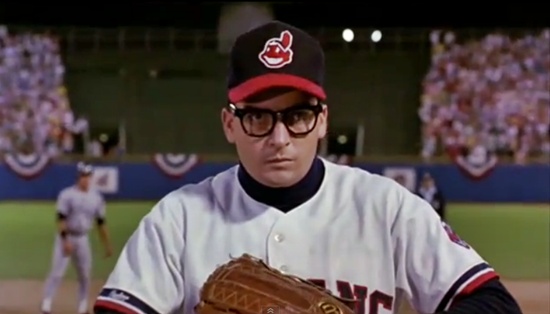
Charlie Sheen is better known these days for his bad reputation than his talents as an actor. His ouster from the CBS show “Two and a Half Men” looked to be the end of him, but he soon bounced back and filmed a plethora of episodes for the FX series “Anger Management.” Still, his bad boy image is impossible for him to shake, and it makes one wonder just how much he is like his character of Ricky Vaughn in “Major League.”
The question of what it was like working with Sheen was brought up when American Cinematheque did a special screening of “Major League” and “Major League II” at the Aero Theatre. Sheen’s role as the Cleveland Indians star pitcher Ricky “Wild Thing” Vaughn remains one of his best and most memorable roles, and his current troubles in the press can’t take away from our pleasure in watching him. Among the guests at this screening were writer/director David S. Ward, Tom Berenger, and Corbin Bernsen, and each described their memories of working with Sheen.
Ward, who wrote and directed the first two “Major League” movies, described Sheen as being the consummate pro on set and said he showed up every day on time.
“He knows his lines, he gives everything, he very seldom goes up on a line, he’s very generous with the actors and they all love to work with him,” Ward said about Sheen. “I can’t say enough about him.”
Ward even remembered a time while making “Major League II” when Sheen had a scene with David Keith who played the overly cocky Jack Parkman. It was a scene where Sheen was pitching to Keith, and it turns out that Keith had lost his contact lenses and was seeing two baseballs instead of the one being thrown to him.
“I was trying to get a shot of him (Keith) hitting a ball that looked like it got in the air enough to get out of the stadium,” Ward said. “Well he (Keith) was seeing two baseballs coming at him, and Charlie threw him 128 pitches. And I said ‘Charlie let’s stop, we can do this tomorrow, we can do this some other day’ and he said ‘no, no, no let’s do this. I’m warmed up, let’s do this.’ 128 pitches, never complained, and it took us that many for Keith to hit one in the air! That’s the way Charlie was. He gave everything, he loves baseball, he loves to play baseball, he’s a terrific baseball player, and he’s got a great arm and throws hard.”
Berenger, who had previously worked with Sheen in Oliver Stone’s “Platoon,” recalled playing ball with him at Santa Monica High School before “Major League” began filming.
“He threw ten pitches, and out of the ten one was a little outside and nine were right on the corners of the strike zone,” Berenger said. “That’s how much control he had, and he was fast too. We went down and did batting practice with the Savannah Cardinals which was a minor league team at the time, and I warmed up one of the pitchers and he threw 94 miles an hour. And I’m guessing Charlie was about 88-89 miles an hour.”
Bernsen ended up telling this story of when Sheen was working on “Major League II.” One day Sheen found out his hotel room had been robbed, and among the items stolen were his wallet, his Walkman (remember those?) which he always had on him, and his gun.
“Charlie had just flown in one of 15 women who had come in during the shoot. Charlie is Charlie, he’s still professional but Charlie is Charlie,” Bernsen said. “I got pretty close with him and I remember him saying, ‘Fuck! I don’t care about my wallet, I don’t care about my Walkman, they took my fucking gun! Whatever happens, I just don’t want that to get out!’”
“So he and his girlfriend and I walked from the hotel across this walkway because he’s got to find another Walkman to do tomorrow’s shoot with because he likes to have his music,” Bernsen continued. “And he’s gonna go into the appliance store to buy a Walkman and always going, ‘I don’t care about the money and I don’t care about the Walkman. Don’t mention the fucking gun!’ And we walk into this department store into the appliance section back in the old days where they had a hundred TVs on the same station. The news was on and as we entered the department, ‘Breaking news: Charlie Sheen was robbed while in town making ‘Major League.’ Among the things stolen was his gun…’ And I just saw him freeze.”
Whether this adds or takes away from all those crazy stories we’ve heard about Charlie Sheen over the years, it also shows him to be far more professional than we give him credit for in general. Sheen’s performance in the “Major League” movies was no fluke, and if Ward and company are serious about making another movie in the future with these characters, they would be incredibly foolish to not include Sheen in it.
The 1989 sports comedy “Major League” got a special screening at the Aero Theatre in Santa Monica, and joining moderator and American Cinematheque program director Grant Moninger for a Q&A was the movie’s writer and director David S. Ward and producer Chris Chesser. This screening brought out many excited fans who consider “Major League” to be the best baseball movie ever made.
Moninger started off by saying that after watching “Major League,” it seemed like the most fun film to make as everyone got to film and play baseball. When he asked Ward what the making of the movie was like, we were surprised by his answer.
“It was one of the most difficult movies to make that I ever had been associated with,” said Ward. “When we started we had one of the hottest summers in 75 years in Milwaukee where we shot the movie. We started out with six weeks of night shooting because we had to work around the (Milwaukee) Brewers schedule at the time, and staying up all night for six weeks just kills you. It was an independent movie at the time, and we didn’t have a lot of money and we didn’t have a lot of anything.”
Regardless of the production difficulties, however, Ward said he did have a great time making “Major League” because of the guys, and he even said that Rene Russo, who played Berenger’s ex-girlfriend Lynn Wells, was one of the guys as well. Ward described the cast as being magnificent and said everybody pulled together to make this movie work. It was just the physical difficulty of making it was hard, and it was something the cast and crew hadn’t planned on dealing with.
Ward went on to describe the “red tag” scene in the locker room in which the players discover whether or not they have been cut from the team. This scene ended up being shot in the basement of a high school which had no windows, and it was already 95 degrees when they began shooting there at four in the morning.
“We had two jerseys for each player, and I remember Tom (Berenger) doing a take and he would sweat through his jersey because it was so hot,” Ward said. “We would take his jersey and give him the other one, and we’d blow dry the one that was sweated through with a hair dryer. Well, it dried it, but it also made it hot. When he sweated through the other one, he had to put on the dry one which was hot!”
When it came to casting “Major League,” Ward said he would only cast people who could play baseball:
“I had actors come in and tell me they played Triple-A ball for the Cardinals, and Chris (Chesser) and I would take them outside and we’d play catch with them, and the Triple-A guy couldn’t throw the ball 15 feet; he never played baseball in his life! People will say anything to get the part, so we just took them outside and we tested them out.”
The cast ended up having two weeks of training before filming began with Steve Yeager who was a former Major League baseball player himself. This was about getting everybody in shape not only to play baseball but also to do basic physical conditioning.
“If you’re not used to playing baseball every day, you don’t realize how many quick starts and stops there are and you can pull muscles and hamstrings,” Ward said. “If an actor gets injured, you can’t shoot with them for a while and your schedule gets screwed up. So, everybody got in shape both physically and baseball-wise and that was a big help.”
Players from other baseball teams were also cast such as Peter Vuckovich who was an All-Star pitcher for the Milwaukee Brewers and Cy Young award winner. Vuckovich played the New York Yankees’ first baseman Haywood, and Chesser remarked he was actually asked to read for the part of the Yankee reliever nicknamed “The Duke.” However, he and Davis found Vuckovich to be “so ugly and so menacing” to where it made more sense to cast him as the player who insults Berenger and hits home runs off of Charlie Sheen. But Chesser also said although Vuckovich looked like he could hit a baseball out of the field, he actually “never hit the ball out of the infield” and never hit a single home run in his entire career.
When it came time to film the climatic game where the Cleveland Indians play against the New York Yankees for the division title, Ward said he and Chesser promoted a night at the stadium to get extras, and 27,000 people showed up. Looking back, the evening was an amazing experience for him and the cast as they had so many cheering people to work with.
“We taught them how to sing ‘Wild Thing,’” said Ward. “We had cameras roaming around all night just picking up people. The girls who came out and danced on the dugout, they just did it! We didn’t ask them to do it, they just got out and did it! I just looked at that and said, thank God!”
Ward added there was a group of about 350 people who came out every night, and he even remembered a couple who had tickets to the Summer Olympics in Seoul that same year. The couple debated whether to travel to Seoul like they planned or stay for the last two days of the movie’s shooting. Ward encouraged them to go to the Olympics, but they ended up staying.
Moninger also asked about the late James Gammon who played head coach Lou Brown, and the mention of the actor’s name got a big applause from the audience. Ward got a bit choked up when talking about Gammon and said he never had any other actor in mind for Lou other than him.
“I was just thrilled to get him, “ Ward said. “He was everything I thought he would be. He’s a great gentleman and a wonderful man. Nothing bothered him. He was a rock of Gibraltar in every way. I remember going to his memorial service and one of the things that was really moving to me is they had his jersey from ‘Major League’ hanging up. He gave so many great performances, and yet the one everyone identifies him with is this one.”
When it came to writing “Major League,” Ward said he was inspired to write about Cleveland as he grew up there. The year this screening took place, every major sports team in Cleveland was pathetic, and Ward remembered it being pretty much the same way when he was deciding on what movie he was going to write next.
“I was thinking that probably the only way the Cleveland Indians would win anything in my lifetime is if I wrote a movie with them winning,” Ward said. “So what kept me going was I just didn’t want to be another Cleveland failure.”
One big question the audience had was why “Major League,” which takes place in Cleveland, wasn’t actually shot there. Ward responded he knew he was going to get into trouble for that.
“The reason we shot it in Milwaukee was that Cleveland is a big union town, and we couldn’t do it independently there,” Ward said. “The other thing was that they hadn’t built the Jacobs Field (which is now the Progressive Field) ballpark yet, so the team was still playing at Cleveland Municipal Stadium. Also, the Browns were playing pre-season games there, and the field had football lines on it. That wouldn’t have looked very good, so it wasn’t feasible to shoot there.”
Another audience member brought up Bob Uecker who played Indians sportscaster Harry Doyle in “Major League” and asked how much of his dialogue was written and improvised. Ward replied he wrote the character of Harry and his lines, but when Uecker was cast he discovered just how incredibly funny he was. What also helped Ward was that Uecker knew a lot of things about baseball players he didn’t, and he felt he would have been an idiot not to let Uecker improvise if he wanted to. When it came to Uecker’s famous line of “just a bit outside,” Ward said he wrote it, but it didn’t sound anywhere as funny in his head as when Uecker said it.
Everyone at the Aero Theatre had a wonderful time hearing all these stories about how “Major League” came to be. After so many years, this movie really holds up as it is hilarious and has a lot of heart. While many of the actors other than Berenger and Bernsen were not able to make it to this screening, we did get a surprise guest with Jo-bu, Pedro Cerrano’s voodoo god doll. Ward and company celebrated the appearance with Jo-bu with some rum, the same kind Eddie Harris (played by Chelcie Ross) stole and took a drink from when nobody was watching. You all remember what happened to him, right?
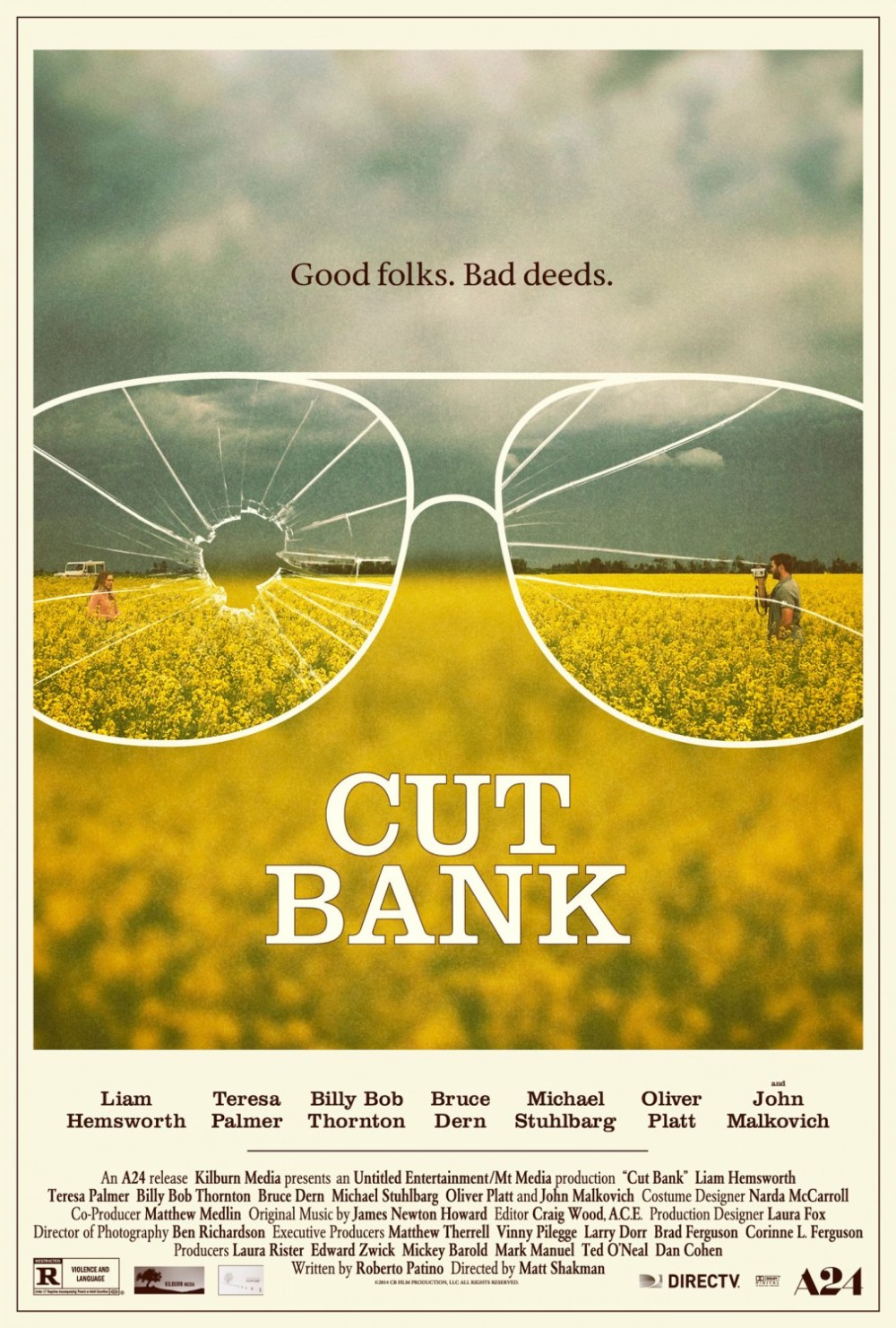
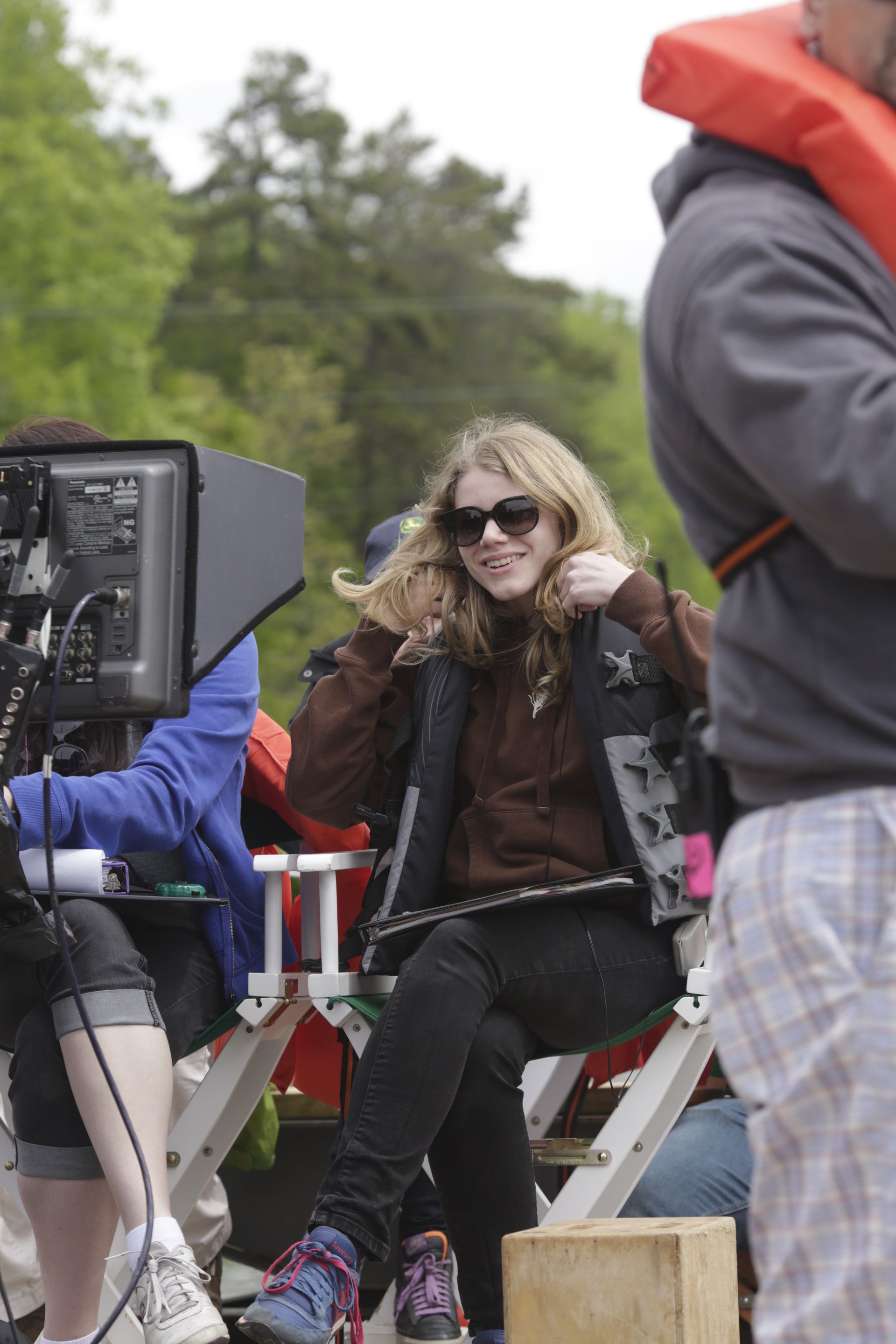
Matt Shakman has had quite the journey through show business so far. He started off as a child actor doing commercials, and he played the role of Graham “J.R.” Lubbock, Jr. in “Just the Ten of Us,” a spin-off of “Growing Pains.” From there he went to Yale University where he studied theater, and while there he directed several plays. Upon arriving in Los Angeles, he founded the Black Dahlia Theatre which American Theatre Magazine later called one of “a dozen young American companies you need to know.” Eventually, this led to him directing television for such shows as “It’s Always Sunny in Philadelphia,” “Mad Men” and “Fargo.” Now, he makes his feature film directorial debut with the thriller “Cut Bank,” a film noir along the lines of “Blood Simple.”
“Cut Bank” stars Liam Hemsworth as Dwayne McLaren, a former high school football star who is desperate to escape his hometown of Cut Bank, Montana. Then one day, while filming a video for his girlfriend, he witnesses the town’s mailman Georgie Wits (Bruce Dern) being shot to death. From there a scheme is uncovered where some people look to get rich very quickly, but it all comes to spiral out of control in horrendous ways. The movie also stars John Malkovich, Billy Bob Thornton and Michael Stuhlbarg.
I got to speak with Shakman over the phone about “Cut Bank,” and he discussed what it was like working with actors like Malkovich, Thornton and Stuhlbarg, how he managed to shoot the movie on 35mm film, and he spoke of how he went from being a child actor to a theater and television director and now a film director.
Ben Kenber: I read you approached this movie as a play more than anything else.
Matt Shakman: Yeah, I tried to cast actors who I’ve always admired and put together kind of like a rep company. In a way, I could imagine doing the movie again and everybody switching parts. They’re all so great and talented and versatile. So yeah, I definitely considered it like I was casting a play.
BK: Of all the actors you cast in this movie, John Malkovich was the first one you went to. What made you start with him?
MS: I’ve been a fan of John Malkovich onstage and onscreen, and he’s a personal hero of mine because he founded Steppenwolf. I’m a theater guy and I founded a small theater in Los Angeles, and I look up to Steppenwolf and the guys who started that. I just thought, here’s a guy who is from Southern Illinois who sort of felt like he knew this world, and yet we haven’t seen him play this small-town guy in a really long time maybe since “Places in the Heart,” and he’s brilliant in that movie. He’s come around to do great but larger than life characters in so many films. So we reached out to him and he really responded to it and he had personal experience with the town of Cut Bank. He actually worked there one summer putting himself through college. He worked on the trail crew at Glacier National Park and knew the town of Cut Bank very well, so he had a strong personal connection to it. He did a beautiful job playing a guy who really feels sort of overwhelmed by his own decency which feels really believable in that small-town world.
BK: Watching “Cut Bank” brings to mind other movies like “Blood Simple” or “Before the Devil Knows Your Dead.” When it came to making this movie, were there any clichés or cinematic tropes you were looking to avoid?
MS: You mentioned some films that I love, “Blood Simple” being one in particular. I think that blend of dark comedy and thriller stakes is something to aspire to, and we tried to do our best in that same kind of world. Also “The Last Picture Show;” the idea of the small town and the guy who wants to get out of it, that’s always been a big inspiration for me. A lot of 70’s crime thrillers were inspirations as well. We went and shot 2 perf, 35mm to give it an extra grainy look so we could evoke some of the Sergio Leone films of the 70’s as well. So, those were just some of the inspirations.
BK: I love that you got to film this movie in 35mm. Was it hard to get the opportunity to shoot in that format?
MS: Definitely. We had to make a lot of sacrifices to be able to pay for it. The cost of doing film had gone up so much because the labs were shutting down everywhere, and you couldn’t get the same deals that you would get before. Kodak was really cutting the price on film to try and keep people shooting film, but we were just on the other side of that curve where they realized uh-oh, nobody’s shooting film anymore so we need to get whatever we can get out of the people who will be using our stock. I love it. I wish I could always shoot on film. It’s really just a much better way to do it.
BK: That’s what I have been hearing from a lot of filmmakers. There are still a lot of things you can capture on film you can’t on digital film.
MS: Yeah, there’s a mystery to film that I think is important, and we were shooting a lot of days here where film has a real advantage. The argument can be made that when you should at night, having something like an Alexa can bring certain advantages in terms of less light needed and more range. But I still think that nothing really touches film.
BK: Among the performances in “Cut Bank,” one which stands out in particular is Michael Stuhlbarg’s as Derby Milton. He had the lead role in the Coen Brothers’ “A Serious Man,” but he’s almost completely unrecognizable here. How did you go about directing him?
MS: Michael’s a genius and a total chameleon, and I’ve been a fan of his ever since I saw him in “The Pillowman” (a play by Martin McDonough) on Broadway. He stole the show there and I think he’s been stealing every show everywhere he does ever since, so I was so thrilled when he agreed to come on board and be a part of “Cut Bank.” I sent him a bunch of references and pictures I had, one of which was a Chuck Close painting, which we both really liked a lot. He sent me a few references as well which inspired him, and we built this guy together through lots of phone conversations and exchanging images. Eventually we came up with what Derby looks like now which involved all sorts of trickery from wigs and fake teeth and contact lenses and coke bottle glasses and fingernails and all that. But he’s a great actor and he’s very thoughtful. He’s very smart and he goes deep into the character, and I thought he did a beautiful job.
BK: Yes, this is a character that could have easily been turned into a stereotype, but Stuhlbarg gives Derby a uniqueness I don’t seen many other actors giving the character.
MS: Definitely. Derby is a really fascinating guy even though he is the antagonist of the film. He’s probably the most reasonable person in the movie and what he ends up doing and the body count that follows him really is unnecessary if people were as reasonable to him as he is to them.
BK: It’s great how you made the town look vast, but at the same time anybody who has lived in a small town like Cut Bank can definitely relate to it feeling like a prison and wanting to break free of it.
MS: Exactly. That kind of modern western feeling of being trapped in this little frontier town with the gates of the port closed, and the idea that anything beyond those gates is terrifying is best to be ignored is what the town has to confront. By the end they are able to turn around and head into an uncertain future, but the whole experience of the film is opening up that town.
BK: What were the biggest challenges of making “Cut Bank?” It takes place in what is said to be one of the coldest places in America, but you actually filmed it in a time of year when it was exceedingly warm.
MS: We shot in Canada and Alberta and in the town of Edmonton, and that’s very close to Calgary where I shot “Fargo.” I’ve been there when it was the coldest part of the year at minus 40, and I’ve been there when it was the hottest day on record, so I’ve seen the full cycle from super cold to super-hot and it has its challenges. Certainly, there are some scenes in the movie, especially in the junkyard trailer where Bruce Dern is, where we were shooting in the middle of really, really hot summer days in a metal tin can covered in black fabric to make it look like it was nighttime. Everybody was sweating. It was pouring off of them. It was miserable and I felt terrible, and you can still see in a couple of shots in the movie how red everybody’s face is when they are in that junkyard trailer. So it did have its challenges like no air-conditioning, and you just kind of roll up your sleeves and do the best you can despite the elements. You’ve got to do what you’ve got to do.
BK: I got a kick out of Bruce Dern’s character here. He’s been around for a long time, but his career has gone up another notch thanks to his work in “Nebraska.” What did Bruce bring to this movie that wasn’t in the script?
MS: He’s a live wire (laughs). I loved Bruce Dern. He’s incredibly alive as a performer. He describes what he’s doing as dancing in a way, and I think he absolutely is truly that, a dancer. He’s playing with it almost like jazz as he goes and that’s wonderful. He’s never going to do the same thing twice. He does throw in some bits of improv as he goes, and a lot of wonderful things ended up in the film that were all of his own devising. He’s a bit of a mercurial, charismatic guy and he has the best stories in the world. He remembers everything that has ever happened in an illustrious way, and it’s incredible to hear. He tells stories about everyone from Hitchcock to Spielberg, etc. He’s in one of my favorites also from the 70’s with “The King of Marvin Gardens.” It’s a pleasure to get to work with somebody who’s a legend like that.
BK: Billy Bob Thornton also stars in the movie, and he’s played a lot of unforgettable small-town characters. What would you say he brought to this movie that wasn’t in the script?
MS: He really does understand this world. He’s from a small southern town which is such a different thing from the prairie town in the film, but it has the same kind of heartbeat. Billy Bob, like Malkovich, is just one of my heroes. He’s a great writer and a great director and a great actor, and I had the pleasure of working with him on “Fargo” as well. He’s just an incredibly good person and very smart, and whenever he had notes we would talk about the script and you knew you were getting notes from an Oscar-winning screenwriter. He always had tremendous things to say and just made everything better.
BK: There is a scene between Liam Hemsworth and Oliver Platt where Liam looks at Oliver and realizes that this is the person he will become like if he throws all his moral values to the wind. Would you say that’s the case?
MS: Yeah, he’s very interested to know what’s the big city is like, and here in the person of Oliver Platt is the big city. I love Oliver Platt. He’s great and he brings this incredible urbanity and charm and intelligence to it. But yeah, he represents the big outside world in all the positives and all the negatives.
BK: James Newton Howard scored this film. How did you manage to get him on board?
MS: Through his generosity. He does these just giant movies like “The Hunger Games” and “Maleficent,” and then “Nightcrawler” which is a smaller movie but certainly a big profile film. Getting him to come and do our tiny little film was entirely because he is just a lovely, generous person. I reached out to him, we had a mutual friend in common, and sent him the script and made my pitch about what the film would be about, and he really liked it and wanted to come on board. He devoted tons of time and energy to it, as much energy as he puts into his other big films, and he really cared and did a lovely job.
BK: “Cut Bank” is being distributed by A24 Films which has become a great company for independent films to get behind. What did A24 bring to this project that other distribution companies might not have brought to it?
MS: God bless A24. Their taste is great and eclectic. They are picking up movies that are very different from each other, but are all really worthy. I was so thrilled when they wanted to release “Cut Bank.” They’re a great group of people who really care. They are very supportive of the movie. They have devoted a lot of energy and great taste to their marketing and ad campaign with the artwork they are doing. They have left no small detail unnoticed. They are really on the ball and I’m really thrilled to be a part of a company that has released everything from “Under the Skin,” “The Spectacular Now,” “Spring Breakers” and “A Most Violent Year.” It’s a really great roster of movies and I’m thrilled to be a part of it.
BK: How much time did you have to shoot “Cut Bank” in?
MS: 27 days for “Cut Bank,” which is fast for a movie that is 93 minutes long, so we were jamming and going quickly. I thought this would be a little more luxurious compared to my TV days as TV is famous for being quick, and I was wrong. Doing an independent film is actually faster than doing TV. We were out there shooting outside of Edmonton and small towns. We were building our entire world from the ground up and going into practical locations which added extra challenges, so time was not a commodity we had a lot of. We had to hustle and go as fast as we could to try and get it all done in time. There was a lot of different locations, there was a lot of night work, and we were shooting at the time of year when the night is the shortest. We only had about four hours of darkness every night so we had to be really careful about how we structured everything, and we ended up shooting all night long in order to have the time to shoot all the night stuff.
BK: Does working that fast help you creatively?
MS: It can. Necessity is the mother of invention. It’s true that when you’re forced to compromise, you sometimes end up with a solution which is better than what you were trying to accomplish to begin with. Everybody bonds together and tries to get everything done. You’ve got a short amount of time so everybody knows it’s game time, and that brings out the best in everybody.
BK: You started out as a child actor. How would you say you evolved from being a child actor to a director?
MS: It was definitely part of my life when I was young, and I had some experience being on the other side of the camera and understood about hitting marks and what the actor’s process was like. But then I left that behind and went off to school and had a normal experience in college and did a lot of theater and found my way to theater directing. My path was more direct from theater to directing plays to directing television and to directing film than really from the acting experience, but I’m really grateful to have had that background and the experience of being an actor because it helps. When speaking to actors, I understand what they are going through and what their process is like.
I want to thank Matt Shakman for taking the time to talk with me about “Cut Bank” and his career. “Cut Bank” is now available to own and rent on DVD, Blu-ray and Digital.
On Thursday, August 16, 2012, Oliver Robins dropped by New Beverly Cinema to talk about the making of “Poltergeist.” Robins played Robbie Freeling, the boy who was terrified of that weird looking tree looming outside his bedroom window. These days Robins works as a filmmaker, but he explained how his time on the set of “Poltergeist” truly inspired him to make movies, and he helped debunk certain myths which continue to surround it years after its release.
Robins came up to the front of the audience after “Poltergeist” finished showing, and he talked about how he grew up at the New Beverly and discovered many movies which he might not have seen otherwise. He also remarked at how Steven Spielberg, who wrote and produced “Poltergeist,” gave him an 8mm camera as a present, and how the camera and the movie inspired him to become a filmmaker.
In talking about how he got cast, Robins said he had no real acting experience beforehand and that his only previous acting job was in a fertilizer commercial. The audition for “Poltergeist” was actually an open call which had hundreds of people coming down to be considered. Robins recalled having to wait for hours before he got inside to talk with the casting directors. When he did, they looked at him as being the true incarnation of Robbie as he talked about how he had lived in a haunted house while in New York.
Spielberg and director Tobe Hooper, however, were concerned because Robins couldn’t really scream, and they ended up getting a coach to help him learn how to. It got to where Robins was practicing his screams in his closet, and the neighbors began to wonder if there was any child abuse going on in his home. When he proved to the filmmakers he could indeed scream, Robins was informed he got the part.
When asked if a bond had formed between him and his fellow cast members, Robins told the audience “Poltergeist” was rushed into production and that there was no time for rehearsal. He did say, however, that JoBeth Williams, who played his mother Diane, really was a mother to him throughout the production.
One scene which really stands out is when Robbie’s father, Steven (played by Craig T. Nelson), teaches him how to count after lightning strikes to determine the distance between it and the sound of thunder. Robins remarked how Nelson was a comedy writer before he became an actor and that he made the set of “Poltergeist” very light-hearted as a result. Robins even remarked how working on the movie allowed him to stay up all night which he loved, and Nelson ended up telling him after one crazy night of filmmaking, “This is just another night in Simi Valley!”
Another famous scene from “Poltergeist” is when the tree comes through the window. Robins explained what ended up being 30 seconds of screen time where he got attacked by the tree ended up taking two weeks to film. Now this was back when digital effects were far from being a reality, so all the effects we see in the movie are real. Robins also pointed out there were several different trees being used for this sequence; one with roots, one where the branches reached out at him, and another which tried to eat him.
Robins described the tree sequence as being the most tedious and complex to film, and that he ended up spending much of the time being covered in molasses. He said being covered in that substance makes your body temperature drop precipitously and that he had to emote in his scenes in order create believability.
Now there is an infamous story on IMDB of how when Robins gets attacked by the toy clown, he got choked for real and yet Hooper and Spielberg thought he was really acting. It was later said that when Robins face began turning purple, the filmmakers rushed over to remove the clown’s hands from around his neck. To this, Robins response was, “Maybe that did happen, but I can’t remember. Maybe I blocked it out of my conscious mind.”
When asked what it was like working with his sisters who were played by Heather O’Rourke and Dominique Dunne, Robins said it was great and that they both felt like real sisters to him. He also remarked at how Hooper and Spielberg were cool to him and other actors about wanting to change their dialogue. As a result, there proved to be a lot of ad-libbing on the set of “Poltergeist.”
There is also this ongoing story of how there were two directors on the set of “Poltergeist.” While Hooper’s name is listed as the film’s director, many believe Spielberg had the most influence. Robins, however, cleared up these rumors once and for all:
“There was only one director on set, and that was Tobe Hooper. Spielberg did write the story, but Hooper was the only one who directed me. It does feel like a Spielberg movie and he did work closely with Hooper on this project. In many ways it was a team effort, but Hooper was the true director of ‘Poltergeist.’”
Robins was also asked what it was like filming the scene between him and Beatrice Straight who plays Dr. Lesh where she tells him what she felt the true nature of ghosts were. He said Straight made him feel like he was really talking with someone who knows about ghosts, and this kept their performances from ever feeling forced.
It was great to hear Oliver Robins talk about the making of “Poltergeist” and to hear him dispel several myths about the 1982 movie. Since making that classic movie, Robins has retired from acting and went on to graduate from USC’s film school to where he has since become a very gifted filmmaker in his own right. His work in the Tobe Hooper-directed movie will continue to stand the test of time.
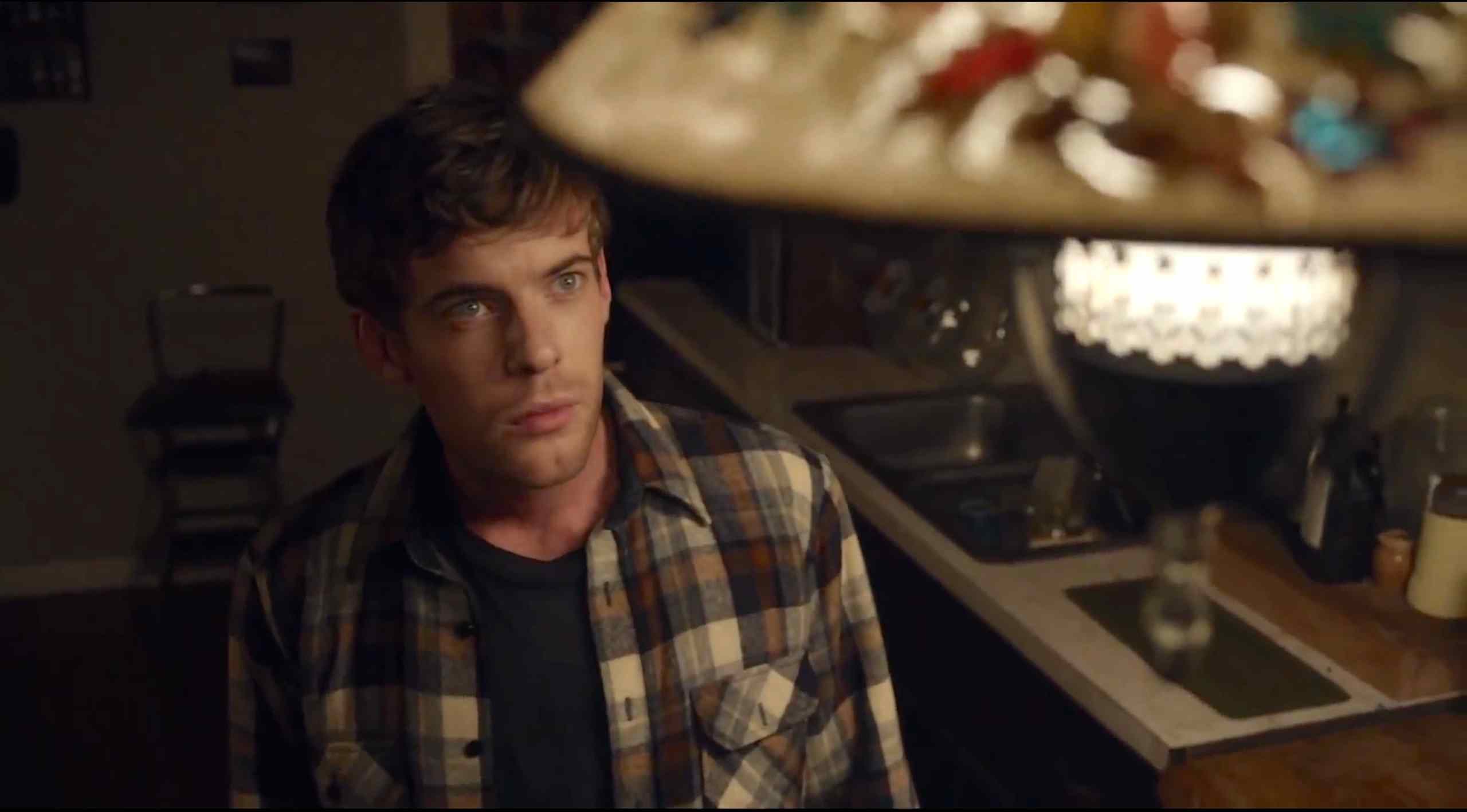
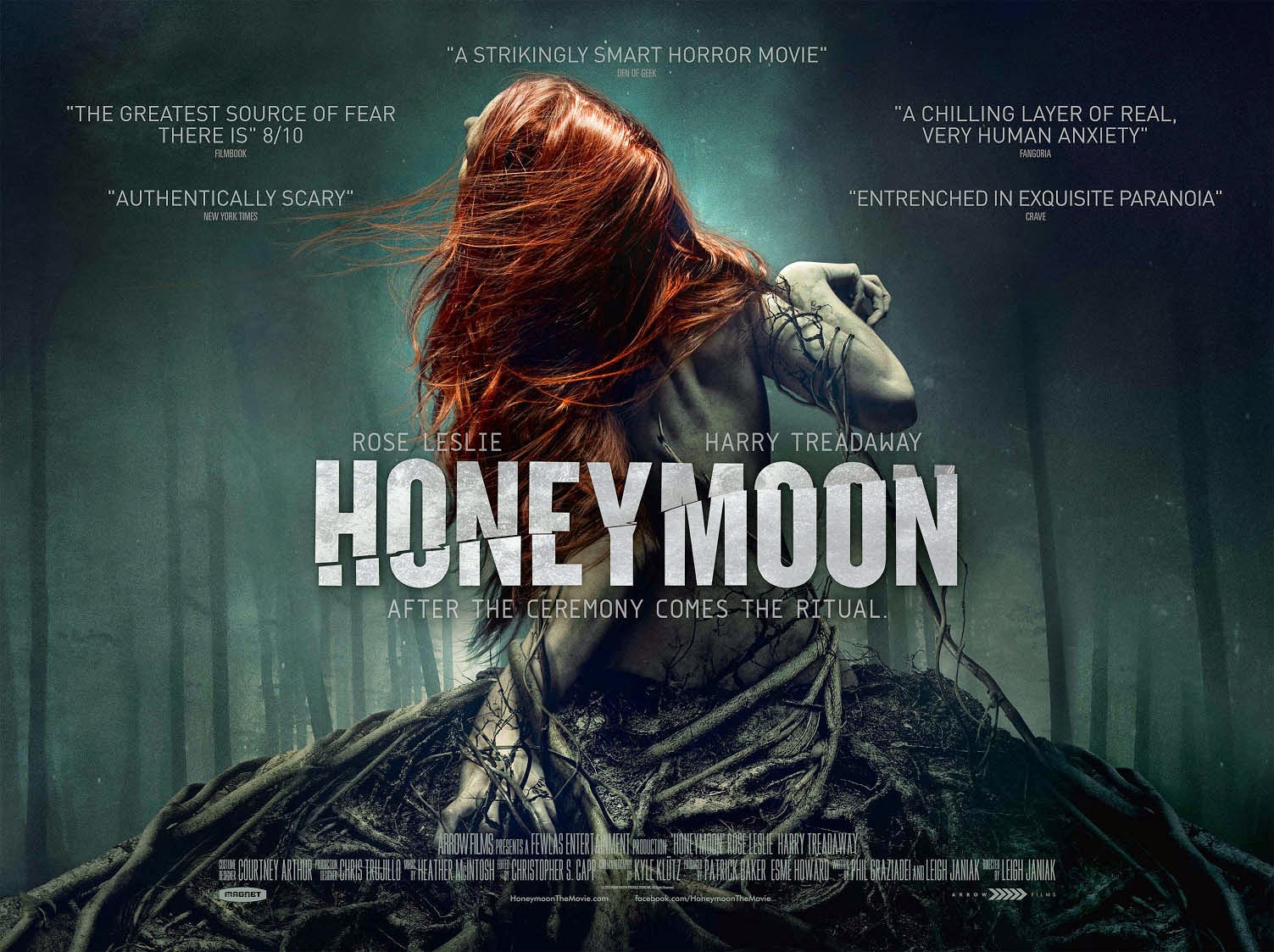
Directed by Leigh Janiak, “Honeymoon” is a taut horror movie which stars Harry Treadaway and Rose Leslie as a newly married couple who spend their honeymoon in a secluded cabin by the lake where things soon become very chaotic. One night he wakes up to find that his wife is not in bed, and he eventually finds her sleepwalking in the woods. She doesn’t remember how she got there, but then strange things begin to happen as she suddenly forgets how to make coffee, burns the food while cooking it, and ends up swimming in the lake despite it being incredibly cold. The husband begins to wonder if this is the same person he just married, and the movie keeps you wondering the same exact thing all the way to the very end.
For me, “Honeymoon” was fascinating because a lot of horror and thriller movies these days have a hard time maintaining such a strong level of tension and suspense. The way I see it, pulling this feat off could not have been the least bit easy for either the director or the actors. I came out of it desperately wanting to know how they succeeded in keeping things tense throughout, and I got my chance at the press day for “Honeymoon” which was held at the Four Seasons Hotel in Los Angeles, California.
Treadaway has appeared in movies like “City of Ember,” “Fish Tank” and “The Lone Ranger,” and people these days probably know him best as Victor Frankenstein on the Showtime series “Penny Dreadful.” I asked him what it was like maintaining the suspense of “Honeymoon” as an actor, and his response showed how much thought he put into his role.
“I think it came from the great script. It came from the fact that it was set up with this foundation of reality and the horror came through,” Treadaway said. “The trickiest parts were the sort of middle ground almost because you kind of have to look at how you can tell that this is a happy relationship, and you kind of see where it’s got to be when it’s at its most horrific. But it’s won or lost probably in the way we see his first reaction to her going sleepwalking. If you buy that or not and if you buy the way that he’s reacting to her certain motor neuron skills slightly going weird or her forgetting certain elements of making coffee, you don’t just flip out straight away and go ‘you’ve lost your mind’ and you don’t ignore it. So, it’s how you work your way through that, and I think that was in the script and that was the fun part, playing with the elements.”
“Honeymoon” is now available to own and rent on DVD, Blu-ray and Digital. For horror fans, it’s a real treat.
With the horror film “Honeymoon,” Leigh Janiak gives us one of the strongest directorial debuts I have seen in a while. It stars Harry Treadaway and Rose Leslie as Paul and Bea, a newlywed couple who spend their honeymoon at a beautiful cabin overlooking the river only to see their new beginning descend into chaos as sinister forces begin to tear them apart. For a first-time filmmaker, Janiak never takes a wrong step as she generates strong levels of suspense and horror and succeeds in maintaining them all the way to the movie’s infinitely creepy conclusion.
Janiak dropped by the Four Seasons Hotel in Los Angeles, California for the “Honeymoon” press day just before the movie was released. She studied creative writing and comparative religion at New York University, and then she later enrolled in a doctoral program at the University of Chicago which dealt with modern Jewish studies with an emphasis on violence and identity in post–World War II Hebrew literature. It was there her interest in movies skyrocketed after she met a group of student filmmakers known as Far Escape Films. As a result, she dropped out of her doctoral studies and moved to Los Angeles to pursue a career making movies.
Many wondered what horror movies inspired “Honeymoon” as well as which ones are her favorites. In regards to inspirations, her answer was a bit of a surprise.
“Well certainly ‘The Invasion of the Body Snatchers’ is the most kind of thematically influential on it,” Janiak said. “‘Rosemary’s Baby’ and ‘The Shining,’ those are kind of my favorite horror films generally. I like grounded horror where you really spend time with the characters and you get to this place of uncomfortableness.”
For myself, I was very interested in finding out how she maintained the suspense throughout “Honeymoon.” I kept waiting for the movie to make a wrong turn which would ruin everything which came before it, but that never happened. For a first time director, she really kept us on the edge of our seats throughout in a way I didn’t expect. I asked her how she managed to accomplish this feat.
“I think that the reason that works is because Harry and Rose’s characters are each transforming in different ways,” Janiak said. “So it was only challenging in so far as knowing that Rose would be on one page for her character internally and Harry is on a completely different one. We have to make them still interacting and keeping these things from one another so we recognize that as an audience we sense the unease. We sense things are going wrong with each of them even though we don’t know what and just making it feel like ‘okay enough. We know something secret is happening.’ It was just about balancing their transformations.”
After the interview ended, I asked Janiak which version of “Invasion of the Body Snatchers” she likes the best. There have been four different cinematic adaptations of Jack Finney’s novel “The Body Snatchers,” the most recent being the 2007 movie “The Invasion,” and she said she enjoyed the first two versions the most but the one with Kevin McCarthy, the 1956 version directed by Don Siegel, is her favorite
Here’s hoping that we get to see many more movies from Leigh Janiak in the near future. “Honeymoon” is now available to own and rent on DVD, Blu-ray and Digital.
PLEASE NOTE: THIS ARTICLE CONTAINS SPOILERS ABOUT THE MOVIE.
Tommy Lee Wallace dropped by New Beverly Cinema on October 30, 2010 to talk about his directorial debut, “Halloween III: Season of the Witch.” This is the Michael Myers-less sequel of the long running franchise and it played as a double feature with “Trick ‘r Treat.” All the “Halloween” movie fans were in for a special treat as Wallace gave us more trivia about the making of it than we ever could have ever expected.
When Wallace was brought up after the movie ended, he admitted his reaction to watching it after so many years was that it resembled one of the strangest and most bizarre movies he had ever seen. The original plan for “Halloween III” was to work from an original screenplay by Nigel Kneale, best known for his work on the “Quatermass” series. What Kneale ended up writing was, as Wallace put it, “brilliant and deeply, darkly grim” and more of a cerebral, intellectual horror movie than your typical slasher fare. But it turned out everyone thought the overall story needed work, and Wallace said he and Carpenter wanted to make it more commercial and scarier for audiences. As a result, Kneale took his name off the movie as he felt the filmmakers would simply butcher all he came up with. Wallace did say that he really liked Kneale’s script and hopes to put it online someday in its entirety for all to see.
While making the movie, Wallace described himself and the crew as being under the gun as it was a low budget affair like most horror movies. Understanding how to do work on the cheap, he said all the “el cheapo” special effects taught him a lot about simplicity which turned out to be a great virtue.
As for Carpenter’s participation, Wallace said Carpenter gave him full autonomy as he himself always expected to have it on all his movies. Joe Dante, the director of “Gremlins” and “Innerspace,” was originally set to helm “Halloween III,” but he later turned it down when something else came up. Having worked on many of Carpenter’s movies, Wallace was originally offered the gig of directing “Halloween II,” but he turned it down as he saw no way to top the original. But upon being offered “Halloween III,” Carpenter and the late Debra Hill told him neither of them wanted to do a direct sequel as Carpenter hated “Halloween II.” With that in mind, Wallace jumped at the chance to direct it.
The only real barrier Wallace had to deal with before accepting the job was getting the blessing of Dino De Laurentis. Wallace had previously written the script for a movie De Laurentis produced called “Amityville II: The Possession,” and he said the one rule everyone needed to remember was “you do not fuck with Dino.” In response to Wallace’s request, De Laurentis begged him not do the film, but Wallace said he was determined to get De Laurentis’ blessing because he would have directed it anyway.
With “Halloween III: Season of the Witch,” Carpenter and Hill wanted to turn the franchise into an anthology of movies about the occasion of Halloween. Looking back, the original was really not about Halloween at all (the original title was “The Babysitter Murders”). But when it came to releasing this particular “Halloween” movie, Wallace said Universal Pictures did not do enough to prepare audiences for it. Sadly, audiences did not want something new. They wanted Michael Myers back and breathing heavy while slashing over stimulated teenagers.
One of the biggest influences on “Halloween III” was the 1956 version of “Invasion of the Body Snatchers” directed by Don Siegel. Like that one, this sequel was meant to be a pod movie and could not be mistaken as something nice. Wallace even wanted to shoot it in Sierra Madre where Siegel’s classic was filmed, but it didn’t look good enough. The production team had driven all over Northern California looking for the perfect small town to film in, and it took forever to find it. Wallace said they were never as lucky as they were with Carpenter’s The Fog.” Also, the town’s name, Santa Mira, is the same as the one used in “Invasion of the Body Snatchers.”
But the big difference between “Invasion of the Body Snatchers” and “Halloween III” is in the way each movie ended. Siegel wanted his film to close on a highway with star Kevin McCarthy screaming frantically, “THEY’RE ALREADY HERE! YOU’RE NEXT! YOU’RE NEXT!” Instead, “Invasion” ended the same way it began, in a police station. All this did was indicate to the audience everything was going to be alright. Wallace said the ending of “Halloween III” was dedicated to Siegel for what he tried to pull off, and it leaves the fate of the world up in the air which makes things far scarier as your mind was forced to imagine what could have happened. Universal Pictures, however, put pressure on Carpenter to change the ending to something more upbeat. When Carpenter asked Wallace if he wanted to change the film’s ambiguous climax, Wallace said he refused to do so and Carpenter defended Wallace’s decision to the studio.
Tom Atkins’ name in the credits as well as his first appearance onscreen generated a huge applause from the audience. When it came to casting “Halloween III,” Wallace said Atkins was already a part of Carpenter’s company of actors, and his performance in “The Fog” served as his audition for the role of Dr. Daniel Challis. Wallace then went on to explain how horror movies can easily be ruined by “pretty boy casting,” and he felt this didn’t need to be the case here. Atkins naturalistic performance is commendable considering much of what he has to deal with is utterly ridiculous. You also have to give him credit for wasting no time in bedding the main female character, Ellie Grimbridge, played by Stacey Nelkin.
Another actor who got a lot of applause was the late Dan O’Herlihy who portrayed the movie’s chief villain, Conal Cochran. Wallace described O’Herlihy as being perfect for the part, and he was always prepared and ready to go. He also said O’Herlihy was a man from the British Isle, Irish and was someone who was never afraid of getting sentimental. O’Herlihy’s performance was a fiendish mix of a friendly persona which is a cover for his grisly nature.
As for Nelkin, the first question from the audience was whether or not her character was a robot throughout the entire movie. Wallace said he honestly didn’t know and figured Cochran’s company was really good at making robots in the first place. Nelkin was a very appealing presence in “Halloween III,” and perhaps Roget Ebert put it best in his one-and-a-half-star review of the movie: “Too bad she plays her last scene without a head.”
Then there’s the movie’s commercial for the Silver Shamrock masks which features one of those annoying jingles which, like any other commercial, you cannot get out of your head. Alan Howarth, who composed the score along with Carpenter, was given credit for doing the jingle and putting it to the tune of “London Bridge” from “My Fair Lady,” but Wallace said it was his idea more than anyone else’s.
As for the voice on the jingle, it is Wallace’s. They were originally going to hire someone else, but when they found out the guy wanted $550, it was quickly determined they couldn’t afford him. Wallace got the job soon after and said he got into the mood by doing the smooth tone of a “stupid radio voice from the 50’s.”
Another audience member asked Wallace if there were any product placements in “Halloween III,” and he said there were not. Truth be told, this wasn’t really the kind of movie which would allow for that, and it was also clarified how no one was ever asked to move the can of Miller Lite closer to the camera.
“Halloween III: Season of the Witch” was designed to be a diatribe against consumerism, and it didn’t turn out to be a very elegant one. The movie cost $2.5 million to make and grossed about $14 million at the box office. While it did make a tiny profit, the sequel was considered a critical and commercial disappointment. Wallace said he fell into an abject depression for months afterwards as he felt he did a shitty job on the sequel and figured he would be consigned to movie hell.
Years later, however, Wallace discovered “Halloween III” had developed a cult following and a new generation of fans. He was stunned to hear a lot of people telling him they watch it every single year, and he said people continue to invite him to speak at annual horror conventions about it. Having been originally released in 1982, audiences have had plenty of time to reflect on the kind of movie it was and reevaluate it critically. While still not a great film by any stretch, it’s much better than its reputation suggests.
Certainly, there are other “Halloween” sequels that are far worse (“Halloween: The Curse of Michael Meyers” is the pits), and the moderator put it best when comparing the third movie to “Halloween: Resurrection:”
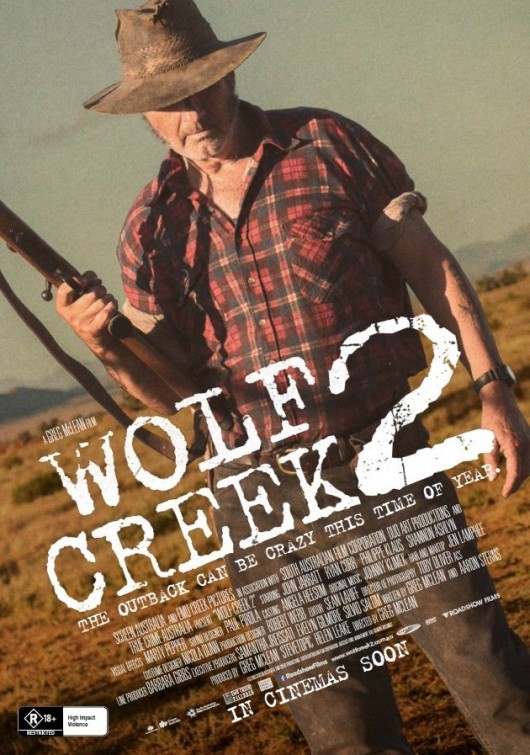
Australian film director Greg McLean returns to the scene of the crime with “Wolf Creek 2,” a movie which, supposedly anyway, is based on actual events. The original “Wolf Creek” came out in 2005 and introduced us to the relentless serial killer Mick Taylor (played by John Jarratt) who captures a group of backpackers and tortures them without any remorse. Now Mick is back to take on another group of tourists who make the mistake of crossing his path and have the serious misfortune of not being from his home country. If you are not a proud Australian and are not fully aware of the country’s rich history, pray you don’t run into Mick.
McLean also directed the killer crocodile horror film “Rogue,” and he is said to be a member of the unofficial “Splat Pack.” This term, which was created by film historian Alan Jones, refers to the modern wave of directors who make brutally violent horror films, and other members include Alexandre Aja, Neil Marshall, Eli Roth, James Wan and Rob Zombie. I spoke with McLean about “Wolf Creek 2” and he talked about how a sadistic psychopath like Mick Taylor can be strangely appealing, how this sequel differs from the original, and he pointed out the differences between making a film in Australia and the United States.
Ben Kenber: This was a terrific sequel, and it was great to see John Jarratt return as Mick Taylor. Mick is one of the most sadistic psychopaths ever put in a movie, and yet there is something about him which is undeniably appealing. Why is he so memorable and why are we drawn to characters like him?
Greg McLean: I think that people are generally fascinated with evil and true crime. A character like Mick Taylor represents a very interesting way of peering into a very, very dark psyche. People are fascinated with the nature of evil, and I think the appeal of a character like Mick Taylor is to really get a chance to examine someone who is completely devoid of any sign of humanity. He’s really incredibly dark and twisted, and he’s very terrifying. I think people who like horror films and thrillers and like being scared enjoy coming face-to-face with really disturbing personalities. There is a long history of really fascinating, evil characters and I think people are intrigued at how their personalities work.
BK: When it came to doing a sequel to “Wolf Creek,” was it something you had planned on doing all along, or did you consider doing it after the original movie was finished?
GM: My plan was always to see if the movie worked and people liked it. If people embraced the character (of Mick Taylor), then there will be a chance for another film. So it was always in my mind to do it, it just took a lot longer to get around to it than I thought it ever would (laughs).
BK: Regarding John Jarratt’s portrayal, did you develop the character with him or was it largely his creation?
GM: Well we obviously did the first film together so we had a background to how to approach the character and a discussion on what the character is about. We had been talking about this particular draft of the screenplay (for “Wolf Creek 2”) for a couple of years, so there were certain things we wanted to explore and certain aspects of the character we wanted to bring up, and we kept evolving it on set. Obviously John makes choices as an actor, and then some of those things are in the script and some are developed in the moment. When we got together, we just kind of jammed and came up with cool things to do.
BK: Since the script was in the development stage for a couple of years, did that make it easier for you to return to the character of Mick Taylor and the original movie’s setting?
GM: It certainly enabled us to mine the thematic ideas that we wouldn’t have had if we didn’t have such a long gestation period. We had a script a couple of years ago and it was good, but it just wasn’t amazing. I realized that there was an element to it that was missing and which was making me not want to pull the trigger on it, and what it didn’t have was a kind of somatic investigation into the character that I thought we needed to have. Then once I locked into that concept, then there was enough new information we revealed about his character that I thought it be worth making the film. We also wanted to make a different genre film. The first film is very much a first-person, true crime, real terror film whereas this one I wanted very much to explore the thriller film, and it’s more of an action film. It has horror elements, but it certainly is a different structure in terms of what kind of film that is.
BK: I agree, it does have a different structure and feels more like a road movie. Speaking of that, how did you manage to pull off the sequence where Mick Taylor launches the big rig truck into Paul Hammersmith’s (played by Ryan Corr) car?
GM: We just found a big hill and dropped the truck off it (laughs). It’s much easier to do stuff like that in Australia than it is in the (United) States. Doing things over there is still a bit of the Wild West. It’s interesting because I’m doing a film right now in Los Angeles and I showed that scene to some people and they were just like going, “Wow! How did you do that?” And there’s a shot after the actual truck hits where the fire is just actually continuing to burn the hillside, and everybody was freaking out about that. I said, “Why is that so weird?” They were just going, “Oh my god, how did you let the hill keep burning?” The restrictions are very intense. Obviously there are rules and regulations here and there are in Australia as well, but they were just fascinated by the idea of just literally destroying a truck and letting it burn a hole in the hill. We had fire brigades in the back, and we were able to just do some really crazy stuff. We also wanted to do it in a very practical way. I love doing CG stuff and we used a lot of CG for the kangaroo sequence, but some things I feel are just better to get onscreen practically because you see the texture of things and the physics of moving in a particular way that’s kind of cool.
BK: Yeah, I think that’s what I liked most about that sequence because it really did look real. In most American films, filmmakers would more likely film a sequence like that with CG.
GM: Yeah, I think that part of that is kind of a budgetary thing as well. When you have a low budget you have to find more practical ways of doing things. Digital effects, if you want them to, can be ultra-photorealistic and necessarily expensive. The other way to do it is to find a location you can do something like that and ask to just do it. For all the driving stuff in that sequence, we just closed down highways and did crazy driving on them for two weeks and got all the shots. It was great fun doing a sequence like that.
BK: Looking at those empty highways reminded me of “The Hitcher” with Rutger Hauer and C. Thomas Howell. You have this great open space, but still there’s something about it which is quite claustrophobic.
GM: Well I think the first movie had a very particular primary feed that it was drawing on, and this film to me was really about the fear of isolation in a desolate place. What most of the fear comes from is the primary idea of that which is quite different from the first film. The first film had a different emphasis which was more about the randomness of violence in the real terror that comes from believing someone is something and then suddenly seeing them transform. This one is really much more about exposing the audience to the real terror which comes from extreme isolation and being pursued by a character that is just relentless.
BK: What elements do you believe a horror movie should have in order for it to be successful?
GM: Two things. One, it needs to be based on a primary universal human fear that touches the psychic pressure point. Number two, the film has to have three, if not more, unique and believably memorable set pieces or things that people will talk about when they leave the cinema for hopefully weeks if not years, and that’s it.
I want to thank Greg McLean for taking the time to talk with me about “Wolf Creek 2.” The movie is now available to own and rent on DVD, Blu-ray and Digital.
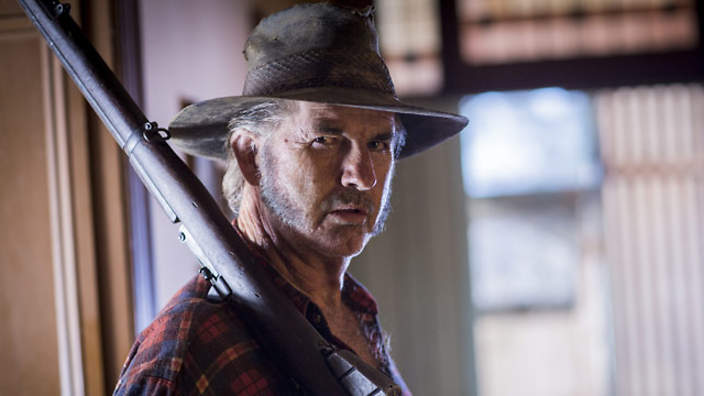
It’s been a long time coming, but Australian actor John Jarratt finally returns to his famous role of serial killer Mick Taylor in “Wolf Creek 2.” When Jarratt first played this role back in the 2005 original, he succeeded in giving us one of the most terrifying psychopaths the world of cinema has ever seen. But at the same time, he also made Mick into one of the most amusing as well, and while watching him in this sequel you can’t help but laugh with him even as he becomes increasingly sadistic. Now he’s back to terrorize a new group of backpackers from other countries who don’t quite share his love for Australia.
I got to talk with Jarratt while he was doing press for “Wolf Creek 2,” and it was a real pleasure chatting with him. The sequel isn’t so much a horror movie as it is a thriller and a road movie, and Jarratt talked about the change in tone between the two movies. In addition, he also discussed how he based Mick Taylor on his father, how method he was in his approach to playing him, and of whether or not movies like this will affect tourism to Australia.
Ben Kenber: Thanks for another great performance as Mick Taylor. It was a lot of fun watching you play him once again.
John Jarratt: Thank you very much.
BK: You’re welcome. There was a long break between “Wolf Creek” and “Wolf Creek 2” (about eight years). Were there any changes for you in the way you portrayed Mick Taylor between the two movies?
JJ: No, not a bit. It was exactly the same. He’s not the kind of guy who has growth.
BK: That’s true. It was said you stayed in character during the making of “Wolf Creek.” Was this also the case on the sequel?
JJ: Not so much because I knew what worked, but you have to stay within the realms of it. You can’t be having a coffee and just fall back into John Jarratt and then some guy says, “Come over here and cut this person’s head off,” you know? So you’ve got to kind of stay in the zone if you know what I mean (laughs).
BK: But it’s not like Daniel Day-Lewis who stays in character 24 hours a day obviously.
JJ: No, I think that’s a bit of a wank, but anyway. With Mick Taylor, I tend to go a little bit method because he’s a psychopath and a serial killer, and it’s a long way from who I am, you know? So I have to work at that. People say you’re a method actor, and I just say I’m a professional actor.
BK: It was said that you based Mick Taylor on your father but that you filled in the evil bits because your father is clearly not evil. When it came to the evil bits, what exactly did you add?
JJ: Well if Mick Taylor wasn’t a psychopath and a serial killer, if he wasn’t bent, and if he was the guy you thought you knew at the hotel at the bar if you met Mick, that’s my dad. But like all serial killers he’s bent and everyone says, “He seems like such a nice guy and he’s a terrific fella. He’s quiet and he was a good neighbor and he’s mutilated 27 people, but…” The hard part for me was to find that part of Mick, that psychopath side, and find a way that he was comfortable with it, you know?
BK: Yeah. It reminds me of when Anthony Hopkins played Hannibal Lecter in “The Silence of the Lambs” where he said he wasn’t so much interested in doing research on serial killers. Instead, he worked on finding the psychopath or the crazy person within himself.
JJ: Yeah.
BK: While the original was a full out horror movie, and one of the scariest and unnerving in recent memory, “Wolf Creek 2” is more of a thriller and a road movie. How did you feel about that shift in tone this time out?
JJ: In a way, sequels are lose, lose affair, you know? If we made it pretty much the same as the first one, you’d all be complaining about that we didn’t go anywhere with it. But if you change a little, then everyone says it’s not like the first one. To me, I thought it was a good movement on the first one. The first one you wait for the monster to come out of the cage which is about halfway through the movie, and it’s the set up that’s scary and then how he becomes (who he is) and everyone freaks out. With the second one we all know who he is, so it’s a waste of time doing that so you get them from the get-go. It’s not unlike the first one much when Mick turns up because, as you may remember in the first one, they (the unlucky tourists) drive my pick up over a cliff and then I chased them in a car and I blow the girl way, and that’s the end of the movie. So there’s a bit of chase in that one, but a hell of a lot more in this one because you get the Mick thing happening from the beginning rather than halfway through.
BK: The scene where Mick Taylor sends that big rig truck rolling down a hill where it crashes into Ryan Corr’s jeep gives “Wolf Creek 2” one of its best action sequences. Were you on the set when it was shot?
JJ: Yeah, I was there. It was fantastic (laughs). The funny thing was that the jeep came down the hill and landed like nothing had happened to it. We didn’t expect that, but it says a lot about the jeep I’ve got to say. Then the big truck comes down and creams it, and it was a great day. They were 20 cameras on it watching the truck come down the hill. In real life it was quite stunning.
BK: I imagine it was. If this was an American production, I bet they would’ve used CGI effects instead, but the fact that you did the real thing makes the sequence all the more thrilling to watch.
JJ: Yeah, it was great. It was like “Mad Max” days, you know? It’s what Aussies do really well.
BK: What would you say you added to this character that wasn’t in the script or which Greg McLean didn’t come up with?
JJ: I don’t think I added anything. He (McLean) was there for the entire film. There was more opportunity for a lot more humor I suppose, but I honestly didn’t add anything. I just knew a hell of a lot more, and I thought Mick was pretty funny in the first one. I think about 90% of this film is Mick as opposed to 50%. I think that’s the difference, I really do, so I didn’t do anything differently except you see even more of what he does. I suppose that’s different.
BK: The black humor in this movie is very clever.
JJ: Yeah, you’ve got to have a laugh. You got to remember that he (Mick) is having a ball and he’s got a great sense of humor. If you met him in a bar you’d think he was a lot of fun; he’s a big barrel of happy-go-lucky and a fun kind of guy. He’s having a ball playing games with these Pommy backpackers, so I think it lends itself to comedy.
BK: A lot of people might look at a movie like this as if it will decrease tourism to Australia, but I think it will increase it because people travel to different countries for a variety of reasons. What effect do you think “Wolf Creek 2” will have on tourism?
JJ: I tend to think that tourism improves with these kinds of films and “Crocodile Dundee” kind of films. If someone gets eaten by a crocodile in the northern territory in Australia, the tourist numbers go up from the publicity it gets. So I don’t think people will be frightened (from travelling there) really.
I want to thank John Jarratt for taking the time to talk with me. “Wolf Creek 2” is now available to own or rent on DVD, Blu-ray and Digital.









 The Ultimate Rabbit