Richard Gere and Joseph Cedar Talk about What Went Into ‘Norman’

Miami Film Festival at Olympia Theater - Opening Night

After all these years, I think Richard Gere is one of the most underappreciated actors working in movies today. Sure, he’s been a movie star for years, having appeared in such classics as “An Officer and a Gentleman” and “Pretty Woman,” but I wonder if people in general see him as more than just another pretty face after all this time. Seriously, he has pulled off a number of unforgettable turns in “Primal Fear,” “Chicago” and “Arbitrage” which had him portraying morally duplicitous characters whom you cannot help but root for. The fact he has never been nominated for an Academy Award is baffling as he has more than earned his place among the best, and it seems like he still has to keep reminding us of how good an actor he is.

The latest example of this is “Norman” in which Gere plays Norman Oppenheimer, a humble New York fixer who lives a lonely life in the margins of power and money. He is a would-be operator who dreams up financial schemes, and he strives to be everyone’s friend as he networks with anyone who can elevate him in society. In the process, he gains the attention of Micha Eshel (Lior Ashkwnazi), an Israeli politician who has yet to fully advance in his career, by buying him a super expensive pair of shoes. When Micha becomes Prime Minister of Israel, he remembers Norman’s generous gift and brings him into his inner circle. This gets Norman to set up the biggest deal of his career, but it all threatens to end in an international crisis no one can walk away from in one piece.
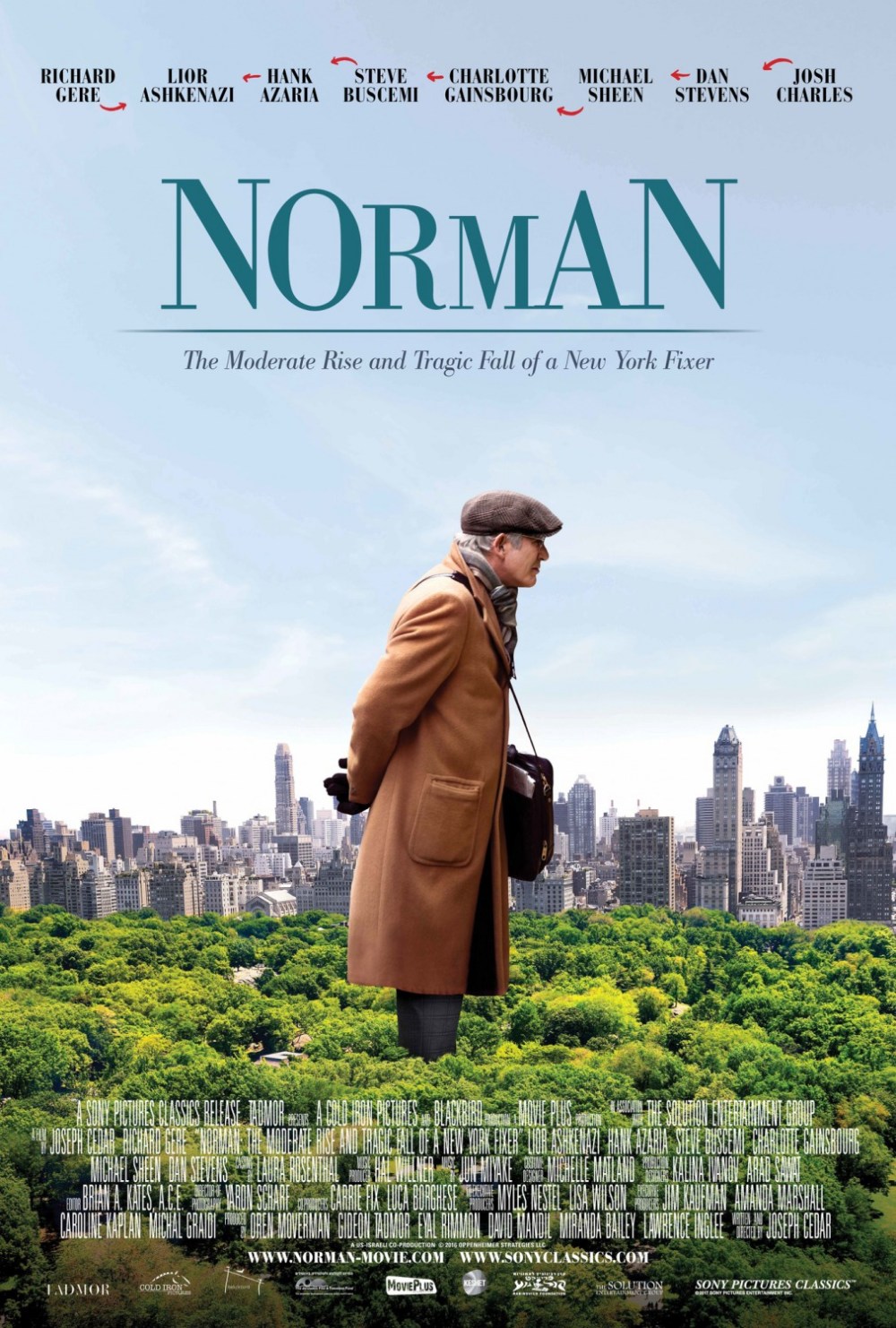
Norman movie poster

“Norman” was directed by Joseph Cedar. His previous films include “Campfire” which earned him Ophir awards for Best Director and Best Screenplay, “Beaufort” which won him the Silver Bear award for Best Director at the Berlin International Film Festival, and “Footnote” which earned an Academy Award nomination for Best Foreign Language Film. “Norman” was inspired by the archetypal tale of the Court Jew which involves a Jew meeting a man with power when his resistance is very low. The Jew gives the man an incredible gift, and the man remembers him when he ends rising in stature. The Jew then becomes a consultant to the man, but when the man becomes subjected to endless antagonism, he has no choice but to get rid of the Jew because the Jew is far too easy to get rid of.

The tale of the Court Jew is one I was not familiar with, and it was fascinating to hear Cedar talk about it when he joined Gere for an interview at the Beverly Wilshire Hotel. Yes, this was the same hotel Gere romanced Julia Roberts in “Pretty Woman,” and the irony of this fact was not lost on any of us. Anyway, Cedar got more specific about this tale with us.

Joseph Cedar: Aside from the type of personality that the Court Jew has to do what a Court Jew does, which is a combination of brilliance because otherwise he is not essential to whoever has power, and a flexibility which allows him to sell out. These are complicated characters that are in the gray area of many moral questions, and it’s part of what allows them to be of influence. But there’s another aspect to it that I think is extremely interesting me. I think all of modern progress is the result of some Court Jew, or at least in Europe. If you look at the great European monuments, none of them would have been possible without that relationship between a king, a duke, a prince or someone in power, and a Jew is able to finance things that the township or the common person, the farmers of whatever area they were in, would have never agreed to do. So rulers needed that function in order to do things that, in retrospect, we are all enjoying right now: art, culture in general, architecture. And then there are some things that are considered negative but are also important: armies, bridges. But it’s a combination of things which are objectively good together with things that are questionable. There are many taxes that Jews convinced their rulers to put up, so those taxes were seen as something bad for the people who have to pay them. But 500 years later, those taxes created beautiful cities.

Ben Kenber: Was there anything specific about the Court Jew tale which you really wanted to get across in this screenplay? It sounds like a tale many other writers are familiar with, and it has been told a number of times, but was there something specific you wanted to address?

Joseph Cedar: I don’t know. It was something I was attracted to in a very sincere way. It’s not that I was looking for this tale.

Richard Gere: Is it the fact that the Court Jew who would be sacrificed in the end and the easiest one to let go?

Joseph Cedar: I think that’s what makes this tale, this journey, this narrative so involving.

Watching Gere as Norman Oppenheimer reminded me of his great work in “Arbitrage,” “Primal Fear” and “Internal Affairs” as he is so good at playing immoral characters who somehow manage to bring you over to their side despite their duplicitous ways. But while Norman is trying to get the upper hand in a way which benefits him, we see he is a desperately lonely man who longs to be accepted by others. Deep down, we want to see Norman succeed, and you can see his lonely desperation in his eyes. This is what I asked Gere about.

Ben Kenber: The thing I love about your performance Richard is we can tell when your character is playing with peoples’ emotions and trying to get what he wants, and then there are other moments where you can see in his eyes that he is being truly honest with others. How challenging is that for you as an actor to pull off?

Richard Gere: Not so hard because he believes it every time. When he’s lying, he believes it. When he’s telling the truth, he believes it. As soon as he starts or if something happens, he has got to fix it. Someone confronts him and he’s got to make it sound like, “Well my wife babysat him…” Whatever the story is, but once he starts it, his fantasy life is so vivid to him that he totally believes it. Totally. So, to him there’s no difference.

Joseph Cedar: I believed you believing it.

Richard Gere: Well that was important.

I want to thank Richard Gere and Joseph Cedar for taking the time to talk with me. “Norman” opens in theaters on April 14, and it is a very good movie worth checking out.

Exclusive Interview with David Krumholtz about ‘The Big Ask’

David Krumholtz

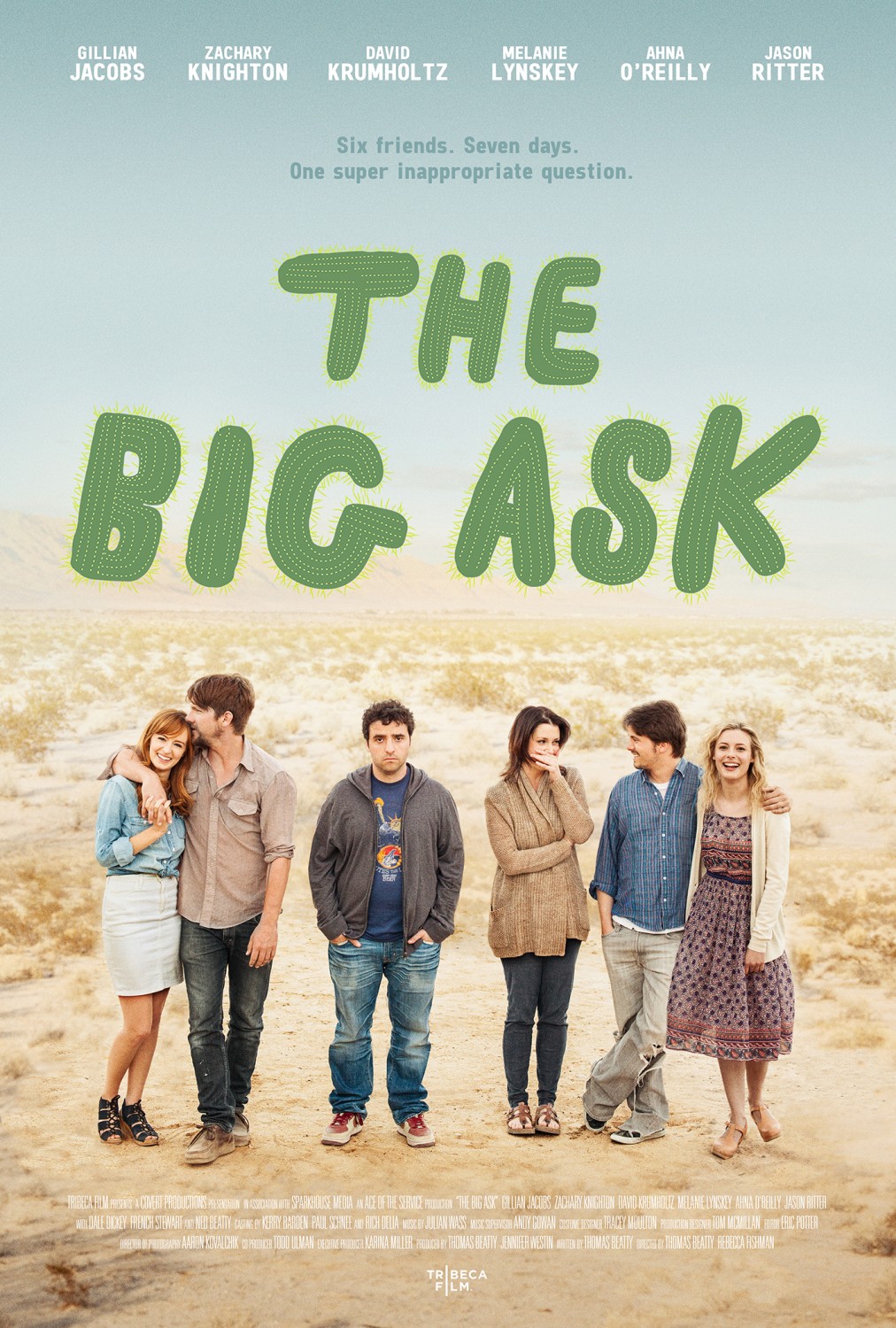
“The Big Ask” is a very well made black comedy which stands out among other indie movies being released at the moment. Its story revolves around three couples who go on a vacation in the desert to help their friend Andrew (David Krumholtz) who has just lost his mother to cancer. But once everyone is there, Andrew tells everyone there’s only one thing which can heal him in his time of sorrow; he needs to sleep with his friends’ girlfriends. It’s an absurd offer which makes everyone eager to jump in their cars and go home, but they stay as they see Andrew is very depressed and needs attention. But the movie has you wondering if they will actually go through with his plan if it means saving him from himself.

I got to speak with David Krumholtz over the phone, and he proved to be a lot of fun to talk to. Krumholtz has appeared in “Harold & Kumar Go to White Castle,” “Serenity,” “The Santa Clause” and “10 Things I Hate About You,” but these days he is best known for playing Charlie Eppes on the CBS show “Numbers.” During my interview with him, he talked about why he didn’t feel the need to do research on his character, what it was like making a movie with two directors instead of one, and he described the town of Twentynine Palms where the movie was shot. Also, he took the time to talk about a new website he is part of called Weather From which allows him to play one of his favorite characters.

The Big Ask movie poster

Ben Kenber: The original title for “The Big Ask” was “Teddy Bears” which one character uses as a nickname for the cactus trees near the home everyone is staying in. Why did the title of the movie change?

David Krumholtz: I really don’t know why. I think Tribeca Films felt the title “Teddy Bears” didn’t really tell you what the film was. I like the title of “The Big Ask,” don’t get me wrong, but the problem is everywhere I go people ask me what I have coming out and I say “The Big Ask,” and they think I’m saying “The Big Ass.” So I keep getting, “You’re in a movie called ‘The Big Ass?’” And I have to explain that now it’s “Ask.” What’s even more awkward is that I show my ass in the movie.

BK: Well “The Big Ask” makes more sense in terms of what the movie is about.

DK: Yeah, I guess so.

BK: When it came to playing this character, did you do any research for this role or did you just work off the script as it was written?

DK: The script was very self-explanatory, and I really didn’t need to do much research because I’ve had an experience somewhat similar to this, obviously not asking my best friends’ girlfriends to have sex with me, but I had had kind of a painful experience in my life that I needed saving from. I needed my best friends to gather around me and to lift me up on their shoulders. I think a lot of people go through that, and it’s very hard to ask for help when you’re feeling helpless because it’s desperate. It’s interesting how people react to other people’s desperation. I had an experience like that, and this script in the way the characters react really rang true for me to what I experienced in my own situation. I didn’t have to do much research because I think I felt like I had been there, done that, so it was an opportunity for me to exercise that demon on film. I think people go through that kind of stuff all the time. Some people keep it quiet, some people handle it in certain ways, other people just scream for help. That’s ultimately what my character is doing in the film because he’s saying help me. But the matter in which he asks for help is ludicrous, and of course the fact that he thinks that there’s nothing wrong with it and that it’s totally normal is also crazy. I love how the film handles the awkwardness of it. These characters are real people, and so the idea is how real people react in this situation. The script was just so grounded in reality and in sort of the silent awkwardness and I thought Thomas Beatty did such a great job at making it feel real, and it’s because he had had an experience like that as well. I think it’s a great crowd movie in the sense of your sitting there kind of sympathizing with this guy who on paper reads like an asshole but you get where he’s coming from, and the big question is will they have sex with him or won’t they. I think it’s a fun movie in that regard.

BK: Yes, definitely. It’s like on the surface they are saying no but there’s a part of them that’s unconsciously considering it, so you can’t help but be riveted by the movie from start to finish for that reason.

DK: Yeah, the movie ends up becoming a reaffirmation of all the characters’ values. The one character of Dave (played by Zachary Knighton) wants to get married and he will stop at nothing to make it happen, and then the circumstance puts a stamp on his conviction to make it happen, to get his girlfriend to say yes. And the opposite is true for Jason Ritter’s character of Owen and Gillian (Jacobs) in that this brings to light the problems they have in their relationship, the communication issues. Their lives sort of unravel as a result of this question that this guy asks and it’s definitely not handled in a collegiate humor way. It’s definitely an adult movie for people who were not sure how to be adults. It’s certainly true of every adult.

BK: This movie is credited to two directors, Thomas Beatty and Rebecca Fishman. What was it like being directed by two directors instead of just one, and did that make things easier or harder?

DK: Well Thomas and Rebecca are husband and wife, and in this circumstance Thomas wrote the script so I think Thomas appreciated what Rebecca brought to it which was a filmic sense: the cinematography element and being in communication with the cameraman. So Thomas didn’t have to concentrate on anything but working with the actors and working on the script, so that in regard it was great. I found that I got more out of Thomas than I would have if he was worried about performance and camerawork the whole time. Rebecca had her own ideas as to what the film was tonally, and there were times when their ideas contradicted one another and there were times where we all agreed on the same thing. It’s tricky especially because they are husband and wife. You definitely don’t want to be the reason they start fighting, and it was a hard movie to make. But their spirit and their earnestness and their enthusiasm for the material really just carried us all through, so it was lovely to have the two of them there together.

BK: What was the most challenging aspect of playing this role for you?

DK: I mean for me, to be honest with you, I think beyond just doing some soul searching with the role, I think the most challenging thing is probably that there wasn’t very much that can be played broad or on the nose about this character. As actors we have an instinct to perform and to push and to show, and the hardest thing for me was I felt like the movie and Andrew only worked if I pulled him back and held back a lot because I’m playing a character that the audience is wondering what’s going on in his head. And more importantly, he’s wondering what’s going on in his head. He’s not even sure what he’s thinking, so it’s really important to pull back my performance and do something really small, and that was the biggest challenge for me. I need to establish a good level of trust with Thomas Beatty about that because I told him, “Look if I’m ever going too big or broad or if I’m too on the nose with my interpretation, pull me back. Let’s go smaller.” This is a movie where the awkward silences are the funniest beats, and so in this case less was more.

BK: The group dynamic between you and the rest of the actors is truly fantastic. Did you all have a lot of time to work things out and rehearse before you started shooting?

DK: No, this is a super low-budget indie so there are no frills and there’s not a lot of rehearsal time… Yeah, we did a couple of read-throughs and we kind of worked out some kinks. The great thing was from the first moment as a cast we all got along beautifully. We all enjoyed each other’s company, we all sort of came from similar places in our lives which we applied to this experience and to this project. So, what helped a lot and what made up for the lack of rehearsal time was that we all just had amazing chemistry as people, and then that did a lot of the work for us onscreen.

BK: The movie was shot in Twentynine Palms. Can you tell us more about this city?

DK: It’s about a half-hour outside of the heart of the Mojave Desert and about an hour past Joshua Tree National Park, so it’s basically the middle of nowhere. There’s a big, big giant army base out there and that’s about it. They were dropping bombs constantly and our little house that we all stayed in would rattle when they would drop a bomb, and sometimes they’d drop a bomb closer to us and it would be like, “Do we need to get the heck out of here?” We were basically in the middle of the desert with bombs being dropped near us and it was really quite a different experience, but for us it was kind of like paradise because it was so immersive. We really didn’t have a choice. We were all trapped in the desert and we really didn’t have a choice but to focus on what we were doing and focus on each other.

BK: Wow, I didn’t see anything resembling an Army base out there so you must have done a great job of hiding it from view in this movie.

DK: It’s actually the biggest army base in America; it’s that big. If you go out on this one road the road ends and if you go off-roading for about 20 minutes, you’ll end up at a giant re-creation of the central market of Baghdad, and it’s in the middle of nowhere dude. There’s no easy access to it, and there’s literally props and fake soap and fake market items. They do drills within that city and it’s meant to mock Baghdad or any major Middle Eastern city, and it’s about a square mile, that’s how huge it is, and you can see it from above from the mountain range. You really can’t get down to it. I’m not even sure how the military has access to it. I guess they have a certain road that leads there that people can’t get to from the other side. But I know Ahna O’Reilly and Jason Ritter went out there one day with a couple of friends and actually got out of the car and walked into it and walked around it while there were no drills happening. Then all of a sudden an alarm went off and the drill was happening and they had to run out of there because the Army started shooting up the place. I actually went out there once but I didn’t get too close because it was just super scary to me and super intimidating. It’s a very trippy place man, Twentynine Palms. If you ended up in Twentynine Palms, there’s a very specific reason.

BK: You also have a website that’s starting up now called “Weather From.” Could you tell us a little more about it?

DK: I’m really, really jazzed about it. Basically my friends came up with the idea to create a weather website that would make you laugh. People get their most up to the moment weather on the Internet and they thought that since it’s become this essential part of everyone’s lives, to check the weather for their town or where they are traveling to or where they are traveling from, why don’t we make them laugh while we are doing it. The idea was to create a bunch of characters and film a bunch of vignettes where the characters told you the weather for your small town, and it kind of went off on tangents. They pushed me to do an old lady character because my friend Ricky, who was involved in it, knew that I had done this character that I based on my grandmother. I said, “Well yeah I’ll do it, but I don’t want to do it in drag. Can we get some prosthetic makeup going?” We actually ended up getting Stephen Prouty’s company which just got nominated for an Academy Award for doing “Bad Grandpa,” so all of a sudden they transformed me into an old Jewish lady that no one, even my family members, were fooled by. Basically, how the site works is you go and you type in your zip code or the name of any city around the world, it hooks up to the National Weather Service so it works like any other weather website except instead of specific forecasts coming up, a video comes up and it’s accurate to your hometown. We did 35 videos for 35 different types of weather, and the videos range from 30 seconds to two minutes long. They are basically just vignettes and it’s me as this old, nasty Jewish woman who has a filthy mouth and is very opinionated and is also a little sexually promiscuous telling you the weather for your hometown and then also going off on tangents of what the weather reminds her of or whatever; everything from her wanting to have sex with Jeff Goldblum to claiming that she was the only survivor of the space shuttle Challenger disaster. She’s a really funny, funny character. We didn’t hold back. She’s very filthy and she’s very real, and it’s hard to imagine that’s me which is really cool. People have been really surprised by it. I think it’s a brilliant concept, and the idea going forward would be that there would be more characters to choose from to give you your weather and there will be more specific types of weather. We only did 35 types of weather as a start, but the weather can get very, very specific with high fronts and low fronts and hurricanes and tornadoes. So hopefully as we go forward we will get the chance to do hundreds of videos potentially.

BK: Yeah, it will be interesting to see how the website evolves as you have started off with a couple things, but I imagine at some point it will have to get a little more specific. That should give you a lot to work with as an actor which is cool.

DK: Yeah, I think so. I think it has endless potential and I’m just happy that they asked me to be a part of it. I’ve been working really hard on promoting it and getting the word out there about it because I love playing that character. It’s so much fun (laughs). She’s such a nasty old woman. I guess she’s a side of me that I didn’t know existed, or maybe I did know and I didn’t want to tell anybody or didn’t want to admit to. But it’s so much fun getting to let her out and I just really want people to see it and enjoy it as much as I enjoyed making it.

BK: What do you hope that people get the most out of watching “The Big Ask?”

DK: Well, I really hope they have a good time laughing at my character’s misfortune, but I hope it makes them reflect a little bit on their own frailty and their own willingness or lack of willingness to ask for help. It’s the kind of movie that I love when I can walk out of the theater and feel like I know what that’s like. I can feel those feelings in my life, and maybe it’s time I ask for what I need regardless of whether or not it hurts people’s feelings because I need it. And if their friends, they’ll understand it’s something that I need. So hopefully someone will walk out of there having popped the question or whatever it is just because they felt inspired to do so.

I want to thank David Krumholtz for taking the time to talk with me. “The Big Ask” is now available to own and rent on DVD, Blu-ray, and Digital.


‘Saw’ and ‘Insidious’ Screenwriter Leigh Whannell on Dealing with Anxiety

Leigh Whannell

Sure, everybody deals with anxiety, but for others it can be a very serious disorder. Anxiety is not the same thing as fear because fear is more of a feeling about something which is realistically dangerous, and it is an appropriate response to a perceived threat. But anxiety is more about anticipating disaster and excessively worrying about everyday things like health, money, relationships with friends and family or troubles at your job. The problem is many of these worries are irrational, and much of what you fear never becomes a reality. Still, it’s not something you can just flip off like a light switch as those who are saddled with this disorder end up suffering from many physical symptoms like fatigue, insomnia, fidgeting, difficulty concentrating, trouble breathing and nausea among other things. They find themselves unable to control their anxiety, and it can seriously affect how they deal with daily life.

I bring this up because I suffer from anxiety, but I typically don’t talk about it much outside of a doctor’s office. There is a stigma attached to mental disorders in general, and many who suffer from them don’t want to admit they have a problem. Explaining this to others is frustrating because not many have a full understanding of what you’re going through, and the advice you are likely to get is “get over it.”

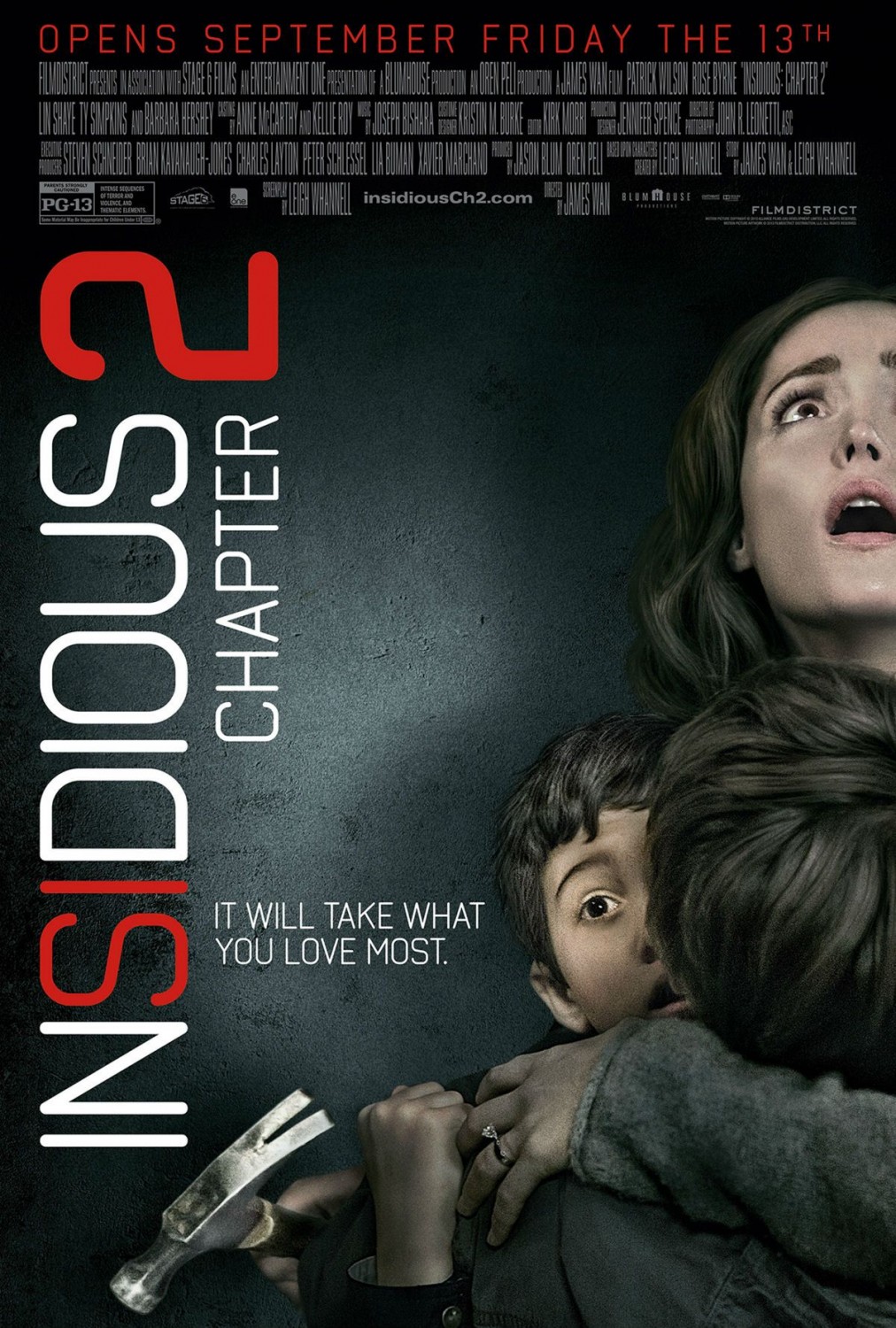
Insidious Chapter 2 poster

So, I had the opportunity to speak with Leigh Whannell, an actor and writer who wrote the screenplays for “Saw,” “Dead Silence” and “Insidious,” all of which were directed by James Wan. Whannell was in Los Angeles for the “Insidious: Chapter 2” press junket, and I was lucky enough to have a 1-on-1 interview with him at the Four Seasons Hotel thanks to the website We Got This Covered. Whannell himself suffers from anxiety as well, and I asked him how he dealt with it and if it influenced his writing in any way. Part of me was worried this might seem like too personal a question, but he was actually very open to talking about it.

Leigh Whannell: When I was in my mid-20’s, I was having these physical symptoms. To me I didn’t think it was anxiety, I thought it was a health problem. I was getting these headaches and heart palpitations, and at that age I was too young to understand psychological problems. Especially in Australia, we don’t really have a big therapy culture in the sense that I don’t know if people really address their problems as much as they do here. So, I was very confused, and when a doctor told me that all these things that are happening are because of anxiety, that was hard. I think the way I dealt with it in the end was to chisel away at the elements of my life that were adding to the stress. I was working in a job I didn’t like very much, and I got out of the job. It was hard because no one wants to be unsure where their next paycheck is coming from, but I knew that if I got out of that job that would help so I did that. In terms of influence, it was very influential in the writing of ‘Saw.’ I look at ‘Saw’ now and I realize that it’s not exactly a critically acclaimed film, but a lot of people would maybe see it as a B-movie. But for me, at the time, I didn’t see it that way. It was so meaningful to me because, even though it’s this thriller, I was looking at this character that was dying, and all these anxieties about death really were an influence. I think it can end up being good therapy in a lot of ways. When you get out your subconscious on paper, it’s like a mental sauna. You sweat out all the dark stuff and I think that ‘Saw’ is very much a product of who I was in my early to mid-20s. I think I had a pretty dark nihilistic worldview, hence the movie ‘Saw’ (laughs).

I told Whannell it was great he was able to channel his anxiety into his work as it proved to be beneficial for his health and career overall. As I walked out of the hotel room, he wished me the best of luck in dealing with it as he deeply understood what anxiety was all about, and he also gave me some good advice to follow:

Leigh Whannell: I think it’s similar to a physical health problem in that you need to take steps like meditation or long walks or days where you don’t have to focus on it. You need to carve out time for yourself.

Since the interview, I have started taking a mindfulness class which is a form of meditation that focuses your mind to be more attentive and aware of what your body is going through. Essentially, it gives your brain a much-needed rest and to not judge the thoughts which keep running through your head on a regular basis. I have also sought treatment through therapy and other methods, and all of it has been largely beneficial. I still have a way to go in dealing with my anxiety, but I can honestly say I have made a lot of progress.

I really want to thank Leigh Whannell for his time and for being so open about what he went through while dealing with overwhelming anxiety. Honestly, it looks like he’s feeling great and doing much better than when he was younger. Hearing him talk about this issue and seeing him looking very healthy certainly gives me a lot of hope.

Exclusive Interview with Ben Ketai about ‘Beneath’

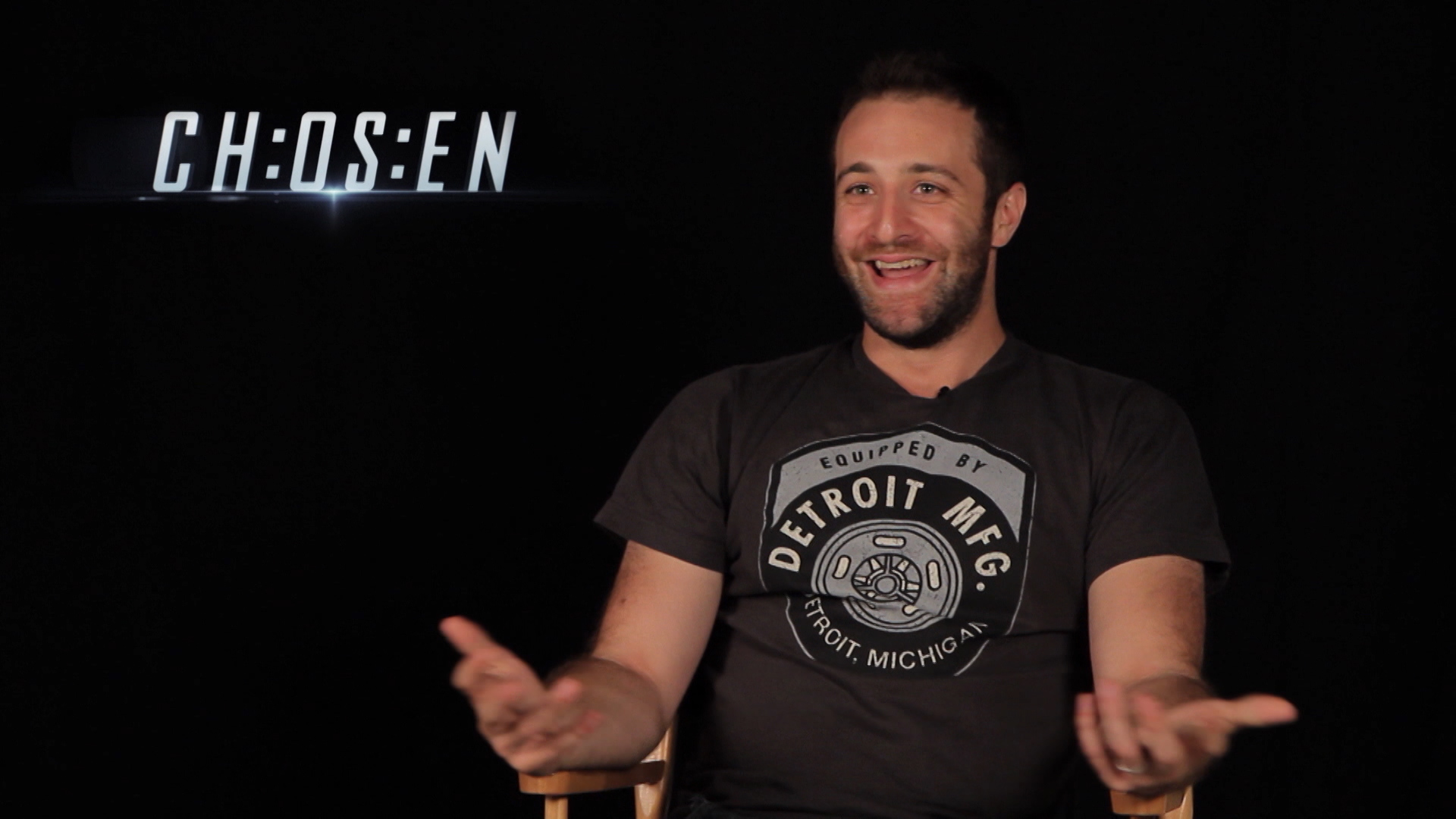
Ben Katei

He has made a place for himself in the horror genre with the “30 Days of Night: Dust to Dust” miniseries and the web series “Chosen.” Now with “Beneath,” Ben Ketai breaks into the feature film realm with a story about a bunch of coal miners who get trapped several hundred feet underground after a catastrophic accident. The movie stars Jeff Fahey as veteran coal miner who spends the last day on the job with his co-workers and his daughter Samantha (Kelly Noonan) when the accident happens, and they have to work together to escape the mine before madness and toxic gasses kill them.

I got to speak with Ketai over the phone, and it was great fun talking with him as he explained what it was like working with Fahey, the challenges of maintaining a strong level of suspense for ninety minutes, and the research he did on coal miners for this movie. “Beneath” might look like your typical horror movie, but in many ways, it isn’t.

Beneath movie poster

Ben Kenber: I thought this movie was very riveting and I like how you managed to keep the suspense up until the very end. How much of a challenge was it to maintain that suspense from start to finish? It could not have been easy.

Ben Ketai: One of the challenges when doing a horror movie like this where you are stuck in one space for the entire film, and I give all the credit to Chris (Valenziano) and Patrick (Doody), the writers, is figuring out how to build a proper level of escalation that keeps the story moving without breaking the suspense until the very, very end. It definitely makes my job much easier when you have a creative group of people like that.

Ben Kenber: This is definitely an interesting story for a horror movie. There have been a lot of stories in the news over the past years of mines collapsing and miners being trapped for an agonizing period of time. Was there a specific event that inspired the story for this film?

Ben Ketai: It was really, for Patrick and Chris, the Chilean coal miners and what they went through was the first seedlings of the idea. And then while they were working on it, I think there were a couple more incidents that came along and so we had a lot of different unfortunate happenings that allowed us to draw inspiration from. A lot the inspiration for the film also comes from just coal miners who haven’t been in collapses, and Chris and Patrick did extensive research while writing the script talking to coal miners and visiting coal mines in West Virginia. We had a recently retired coal miner talk to our cast before production. It was like a little seminar on what it’s like to be a coal miner. There were lots of wonderful sources of inspiration.

Ben Kenber: Where exactly was this movie shot? It looks like a real coal mine, but I came out of it not knowing if it was actually a movie set or not.

Ben Ketai: We actually shot it on a soundstage in Culver City, and pretty much everything you see inside the mine was constructed by our brilliant and very resourceful production designer Michael Barton.

Ben Kenber: At times, I thought it looked so real.

Ben Ketai: I had to remind myself sometimes when we were actually on set. I would start to get claustrophobic, and I had to remind myself that we were on a soundstage and that there was sunlight outside.

Ben Kenber: While watching “Beneath,” I was reminded of a number of other movies like “The Descent” where a group of women went cave dwelling and encountered a bunch of vicious monsters. Was there any movie which inspired you or played through your mind while you were making “Beneath?”

Ben Ketai: We actively tried to avoid “The Descent” and other movies like it because we knew it would draw such strong comparisons just because of the subject matter. But of course we watched “The Descent” and we looked at what works best in that movie, and then also what signifies what that movie is and what that movie looks like it feels like. It sounds too derivative, but while making the movie and immersed in the experience I tried to pull from movies that aren’t actually entirely of the genre. I wanted to try to put something more human to the horror experience. Honestly, one of the movies that my crew and I watched the night before we shot was “Friday Night Lights” simply because it’s a film to me that just does a great job of capturing real camaraderie, and also it has a very piece of life feel to it. That was something that we wanted to bring to a movie like this and to try to make the characters feel like real people that we love and care about, and if we can do that then the horror is going to take care of itself. “The Wrestler” was another movie we watched, and it did such a great job of getting the camera to capture the world of wrestling in such a personal way. I wanted to do that same thing with coal miners and have that same sensation.

Ben Kenber: I’m assuming that you did a lot of research on coal miners and mining accidents, and I imagine that when you have a lack of oxygen down there beneath the earth that you start seeing things that may or may not actually be there. What kind of research did you do in preparation for directing this film?

Ben Ketai: All sorts really. The writers had a great head start obviously and they worked on the script for about a year and a half. When I came onto the project just a couple months out from production, they kind of dumped all the research into my lap and I had to do a crash course and catch up fast with them. We were developing the script through craft and with the actors. We just gathered as much information as we could about what happens to your brain during oxygen deprivation, and not only that but what happens when you were trapped in a coal mine. It’s not just that you are running out of oxygen, but the air itself is becoming toxic. There are always toxic gasses that are leaking into the coal mine, and usually if the mine hasn’t collapsed there is stuff that extracts that from the working environment. When the collapse happens, it basically cuts off their flow of fresh air, and things like methane and poisonous gasses continue to build up. All the crazy things that can happen to you like hallucinations to total personality changes, that was really the most exciting thing to me. We had this great device that creates a real-life thing that could explain away all those supernatural things. We really wanted to make it all ambiguous, and we did.

Ben Kenber: The cast for this movie is really spot on. All the actors look like they have worked in a mine for a long, long time. What was it like casting this film?

Ben Ketai: The casting process on this movie was awesome. It was probably the most enjoyable process that I ever had working on movies because we didn’t have a studio looking over our shoulder and we didn’t have foreign sales companies to answer to. So we really just got to do it the old school way and we just had auditions. We really took our time to figure out who were the best people to embody these characters, and we managed to assemble what I felt was a cast of just all incredibly talented and incredibly realistic people/actors.

Ben Kenber: What was it like working with Jeff Fahey?

Ben Ketai: It was a really, really incredible experience. I’ve always been a fan of his. I was probably 12 years old when I first saw “Lawnmower Man.” I grew up with Jeff Fahey. It’s kind of a dream to get to work with a guy like this, and not only that but he’s got so many years of experience under his belt and so much passion for his craft that working with him is sort of like… You turn him loose in a scene and his energy and his expertise kind of permeates to the rest of the cast. I think it really helped pull everything together. I feel like, as a director, I’m just lucky to be able to put that in front of the camera.

Ben Kenber: Robert Rodriguez once said having less money to work with forces you to be more creative. Was that the case for you on this movie, and did you have to cut any corners to get the shots that you wanted?

Ben Ketai: It definitely forces you to be more creative, and I really actually think in many ways it’s what gives the movie its voice and personality. We had to spend so much money building the set itself because we couldn’t film in a coal mine. There really wasn’t much left for anything else. When I came onto the film as director, my first role was to try to make everything feel as real as possible. Myself and Tim Burton, my cinematographer, we wanted to make it feel like we were down in the coal mine with flashlights and headlamps. So what you actually see onscreen is lit with practical lights. Instead of spending our time and our electric budget on a huge lighting truck like you would get on a big studio movie, we were at Home Depot looking at different kinds of flashlights.

I want to thank Ben Ketai for taking the time to talk with me. “Beneath” is now available to own and rent on DVD, Blu-ray, and Digital.

Exclusive Interview with Jeff Fahey about ‘Beneath’

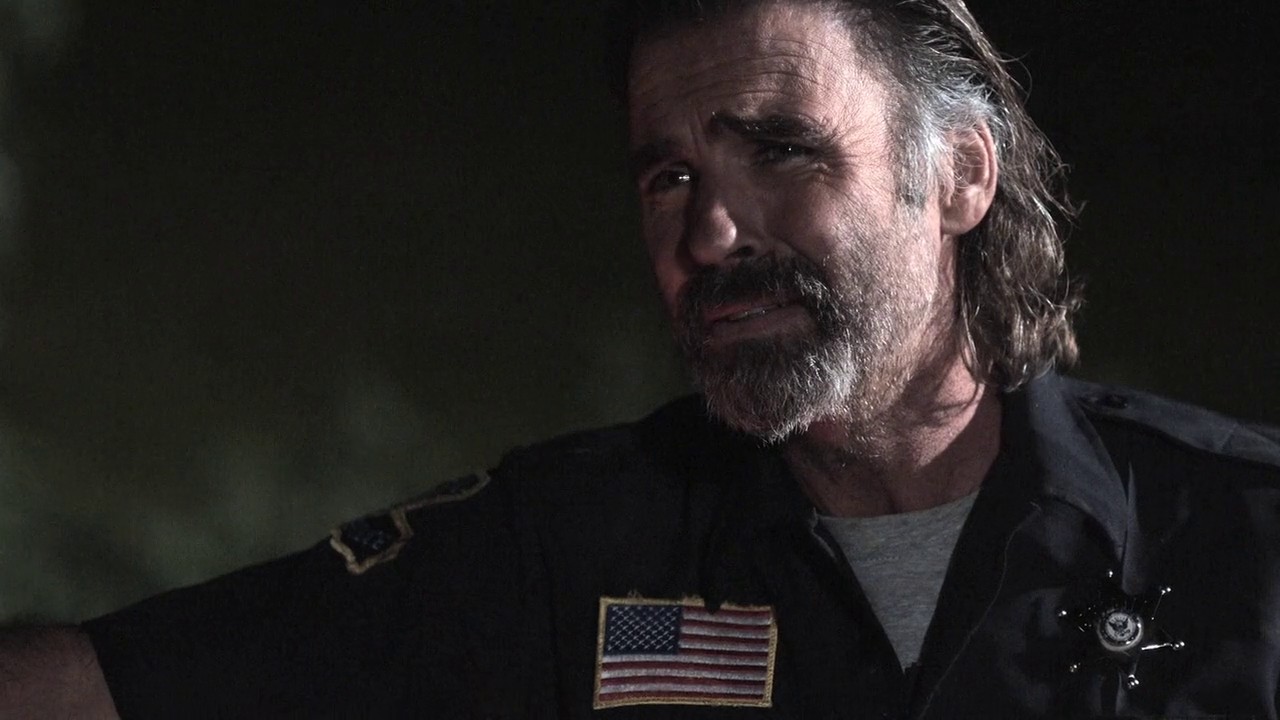
Jeff Fahey photo

Actor Jeff Fahey is one of those actors in Hollywood who has never been lacking for work. Ever since his first major role on the soap opera “One Life to Live,” he has appeared in an endless number of movies like “Silverado,” “Psycho III,” “White Hunter Black Heart” opposite Clint Eastwood, and more recently he has starred in Robert Rodriguez’s “Planet Terror” and “Machete.” On television, he has left his mark on such shows as “Miami Vice,” “The Marshal” and “Under the Dome.” No matter what year it is, Fahey is always busy appearing in something, and it’s always great to see him onscreen.

Fahey’s latest film is “Beneath,” a horror movie from director Ben Ketai which is now available to watch on VOD and will be released in theaters on July 25. In the film, Fahey plays George Marsh, a veteran coal miner who is retiring after many years on the job. But on his last day which has him taking his environmental activist daughter Samantha (Kelly Noonan) on a tour 600 feet below the ground, a disastrous mine collapse traps them and a couple other workers. They wait to be rescued but as time runs out and the air becomes more toxic, each slowly descends into madness and starts turning on one another.

I spoke with Fahey on the phone as he was in Mexico shooting the movie “Texas Rising.”

Beneath movie poster

Ben Kenber: This is a very gripping film where you didn’t know how things were going to turn out, and the suspense was very well maintained from beginning to end. How did this project come to you?

Jeff Fahey: My manager actually had read the script and said, “There’s a film, they are interested in you.” I said what’s the genre and he said, “Well it’s a horror film but…” And I said I’m not interested at the moment but he said, “No I think you ought to read this one.” So, I read it and right away I called them back and I said I’d like to meet with the director and the producers because this is a nice piece. It was the psychological horror, the psychological drama that drew me to it, and it didn’t have the gore that other films of that genre would have. It read more like a short story and a psychological drama, and that’s what attracted me to it. Then when I met Ben, he very clearly showed his vision and what he wanted to do with it. That made it even more interesting.

BK: Yes, the psychological trauma is what really drives the movie I think. On the surface, “Beneath” looks like your typical horror movie but it isn’t.

JF: Yeah, and the performances those other cats brought in… Kelly’s performance was amazing, and she had to carry that film on her shoulders and she pulled it off in aces.

BK: I think all the actors in this movie were perfectly cast because they all look like they have spent a lot of time in the mine.


JF: Yes exactly, and the sets and the production design were top, top quality so you had the sense that you were really in a mine. That was a character in of itself and was equally important as the script and the performers.

BK: The set design was excellent and I really did feel like I was in a mine while watching this movie. Ben said it was shot on a soundstage but it never feels like you are on a soundstage in the slightest.

JF: Yeah.

BK: In regards to your role, did you do any of research before shooting began?

JF: No, this all happened pretty fast. We had a real miner come in and speak with the cast the day before we started shooting for a couple of hours, and then we were on the sets and everybody was getting to know each other while we were filming. That was another thing that made it so easy, that everyone got along so well.

BK: I imagine this movie had a very tight shooting schedule.

JF: Oh yeah.

BK: Was this a role where everything was on the page for you?

JF: Yeah it was there, but then the magic happens when you get with the actors and especially when you get along. So, when you’re on a tight, limited schedule or budget, you spend a lot of time together especially in a film like this where we are all in a cave together. Everybody in between filming the scenes was sitting around talking and getting to know one another or going over the scenes and talking about the scenes and the relationships. That I think helped the fact that it was a tight schedule, and we all had to be together for the duration. That created that group ensemble feeling.

BK: There are scenes where your character has some breathing problems, and they are like a ticking time bomb in this movie. How did you go about acting those scenes?

JF: Well that’s a process. Everybody has a different process and you have a process that you build up and deliver on, but a lot of the coughing I was able to lay in on post-production which I discussed with Ben. I told him I will cough, but I won’t put the full pressure on because at 12 hours a day for three or four weeks would get to you especially with that real dust. So, we were able to lay all the coughing, that heavy, heavy breathing, in post-production. Knowing that we’re able to do some of this in post-production, I didn’t have to hyperventilate 12 hours a day while I was doing the film.

BK: Have you ever been in a movie before which has had a setting that is as claustrophobic as the one in “Beneath?”

JF: I don’t think so, certainly not for the whole duration of the film. I’d have to say no. This would set the stage right now for the most claustrophobic film I’ve touched thus far, and certainly the most dusty. They had to have that real dust blowing around in a confined area hour after hour, but out here you can ride away from it sometimes.

BK: You have had a very strong acting career to where you have gone from project to project with what seems like relative ease. You don’t seem to be lacking for work at all. What’s your secret?

JF: I think it’s no great secret. I think everybody has it. You just go forward and take it project to project and grow a little bit with each one and hopefully understand the interpretation of story and the interpretation of the development of your craft and moving through the industry. But just moving from story to story and group to group, now I’m at the place where the greatest joy along with a good story and the good directors is the relationships working with people you respect and enjoy. That seems to happen more and more. I am with a wonderful group now down here in Mexico doing “Texas Rising.”

BK: One last question, I have to ask you about “Grindhouse.” What was it like filming that one?

JF: Well I love Robert Rodriguez. There were times when Robert will be operating one camera and Quentin (Tarantino) will be operating the other. So, it was fascinating that you got these two world-class filmmakers operating the two cameras while you’re doing a scene. It was fascinating. I’ll be working with Robert again. I just spoke with him the other day. And hopefully I’ll be working with Quentin. It was a great joy to be working with those guys and watching them work.

I want to thank Jeff Fahey for taking the time to talk with me. “Beneath” is now available to own and rent on DVD, Blu-ray, and Digital.

Mad Monster Gives ‘A Nightmare on Elm Street 3’ a Highly Entertaining Anniversary Screening

Dream Warriors Mad Monster Poster

On Monday, August 13, 2012, the Chinese Theatres in Hollywood presented a screening of “A Nightmare on Elm Street 3: Dream Warriors” in honor of its 25th anniversary. This event was put together by Mad Monster, a monthly genre print magazine made by and for the modern monster fan, and they ended up giving us quite a show. They had several giveaways of signed posters and tickets to horror conventions, a costume contest which had the audience cheering loudly for those best dressed, a musician doing an acoustic version of the Dokken theme song “Dream Warriors” and the evening culminated with the appearance of the sequel’s co-stars Rodney Eastman and Jennifer Rubin.

Eastman played Joey Peterson, the mute patient who refuses to speak or sleep after experiencing horrific nightmares. Rubin portrayed Taryn White, a former drug addict who also suffers from nightmares and is harassed by male orderlies at the hospital she is at. Both actors were asked if they were aware of the other “Nightmare” movies before they were cast in this one.

“I was 19 and I came of age during the era of the original slasher movies,” Eastman said. “I had almost given up on acting and this audition came to me out of the blue. I was excited to be a part of it, but it still felt like just another low-budget horror movie. It was not an iconic movie then like it is now.”

As for Rubin, she said, “I knew of the other two ‘Nightmare’ movies, but I did not see either of them before I auditioned for this one.”

Eastman and Rubin were then asked if anything happened during filming; like if any actors fell in love with one another or some other gossipy stuff. Both Eastman and Rubin had the same answer to that question, “No.”

When this sequel was released, it lifted the “Nightmare on Elm Street” franchise out of cult film status and into mainstream commercial success. Eastman and Rubin were asked if they were surprised by this sequel’s success.

“I had done the ‘Never Sleep Again’ documentary, and after that people were jumping out at me from the bushes,” Rubin said. “I had no idea it was for this film.”

“I was blissfully unaware of the world around me back then,” Eastman said. “It’s only in retrospect that I see the impact it has had. I wasn’t stopped in the streets and no one jumped out at me back then.”

Eastman got to reprise his role of Joey in “A Nightmare on Elm Street 4: The Dream Master,” and he was asked by an audience member which he preferred more; being in “Part 3,” or getting killed in his water bed in “Part 4.” Eastman made his answer crystal clear, “I prefer ‘Nightmare 3’ over the water bed death scene. Plus, Patricia Arquette was the hottest girl in that movie.” Then he remembered that Rubin was standing right next to him and quickly added, “I mean Arquette was the sexiest actress on set next to Jennifer here.” Of course, by then, the audience agreed it was a little late for Eastman to find forgiveness.

One audience member asked the two actors if they ever got to meet the members of Dokken. Eastman replied he, unfortunately, didn’t have the pleasure of meeting them, but Rubin ended up telling a funny story regarding the 80’s heavy metal band. “Their mail ended up coming to a house that I was house sitting at the time,” Rubin said. “So, I took the mail to their house, and it turns out there was nobody home.”

When asked what it was like working with Robert Englund, the actor who gave life to Freddy Krueger, Eastman said it was pretty incredible and went on to describe him as one of the smartest, most entertaining and brilliant conversationalists he has ever met. He also added that Englund was a wild man back in the 80’s. Rubin agreed with what Eastman on that, and she also had this to say about another important person in the “Nightmare on Elm Street” franchise, “Wes (Craven) was weird!”

All in all, this was an endlessly entertaining evening for fans of “A Nightmare on Elm Street 3: Dream Warriors.” Granted, the screening of the movie elicited many laughs which were not present when it came out in 1987, and it’s safe to say that certain parts of it have not aged very well. But none of that mattered because everyone came to have a great time at the movies, and that’s what they got.

Poster artwork by Christopher Ott.

Bill Paxton and Jenette Goldstein Look Back at Making ‘Near Dark’

It was a huge shock to learn Bill Paxton just passed away at the age of 61 due to complications following heart surgery. He was an actor who was always working and never seemed to be lacking for jobs in front of or behind the camera. His sudden passing sent shock waves through Hollywood and movie fans everywhere, and we are all mourning the actor who was unforgettable in “Aliens,” “Apollo 13,” and the HBO series “Big Love.” The following article is one I wrote after I attended a screening of vampire movie he was gleefully fantastic in, “Near Dark.”

near-dark-movie-poster

Bill Paxton and Jenette Goldstein stopped by New Beverly Cinema on Thursday, May 6, 2010, to introduce a screening of “Near Dark.” The cult classic was a vampire western horror hybrid made back in 1987 by Kathryn Bigelow, and it was being shown as a double feature with her Oscar-winning triumph, “The Hurt Locker.” It was not a sold-out screening, but this ended up making it all the more intimate for those who showed up. Paxton looked especially happy to be there as he was astonished there was actually a print of this movie still in existence.

When Paxton and Goldstein made “Near Dark,” they were just coming off of James Cameron’s “Aliens.” Paxton played Hudson, the soldier who thought he was so bad ass, and later turned into perhaps the single most annoying coward in cinematic history. Goldstein played Private Jenette Vasquez, one of the fiercest soldiers you could ever hope to meet and who, unlike Hudson, remained just as fierce when things got worse. Bigelow, who would later marry and divorce Cameron, called him to ask if it was okay to use some of his “Aliens” actors for “Near Dark.” Clearly, he said yes, so Paxton and Goldstein, along with Lance Henriksen, got parts in Bigelow’s movie. Paxton even said in one scene from “Near Dark,” the man who ends up sticking his hand out the car and giving him the finger was Cameron himself.

Having gone through what Paxton described as the “baptism of fire” with Cameron on “Aliens,” he, Goldstein and Henriksen formed a strong family unit as a result which made the making of “Near Dark” feel like a homecoming. When someone asked what the difference was in directing styles between Cameron and Bigelow, Paxton said bluntly, “No one else is like Cameron.”

 As for Bigelow, Paxton described her as the prettiest director he has ever worked with. According to him, she absolutely loves actors and encouraged them to come up with stuff for their characters throughout the shoot. Goldstein went on to talk about how the actors did an improvisation on how they would block out the sun in the car while driving around town in broad daylight. They came up with the idea of putting aluminum foil on the windows which blocked out the rays that would have immediately broiled their fragile skin and reflected them away so they could live on to do what they did best, suck the blood out of clueless human beings. The way Paxton saw it, most of “Near Dark” was improvised, and he said it was great to work with a director who was so excited to work with actors.

In regards to Henriksen, Paxton described him as “a guy you could never really read.” Back then, Henriksen had these intense finger nails which he had to cut off as Paxton described it, and Paxton even went on to talk about the time he and Henriksen were driving down the highway and got pulled over by the police. As the police officer was getting out of his patrol car, Paxton said Henriksen looked at him and said, “Should we take this guy out?”

Actually, that led to Paxton telling a story which Henriksen just loves to tell about “Near Dark.” During the times they were shooting at night, Paxton, who was made up in his gory vampire makeup as though half his face was chopped off, kept going up to people driving through town, telling them he had just been in a horrible car accident. This little prank always ended with Henriksen saying, “If you think he looks bad, you should see the other guy!”

Paxton said he saw “Near Dark” as a “Bonnie & Clyde” vampire movie. Tangerine Dream composed the movie’s score which is fantastic, and the movie is filled with other memorable musical selections. There was a great cover of “Fever” by The Cramps which was used in the pivotal bar scene where everything gets turned into a bloodbath. But Paxton said his favorite piece of music used was “Naughty, Naughty” by John Parr as it really sets the scene for when the vampires end up depriving a saloon in the middle of nowhere of its customers and employees. Apparently, Bigelow ended up paying for the rights to the song out of her own pocket.

One audience member asked Paxton and Goldstein if they had any Tim Thomerson stories to tell us. Thomerson played Caleb’s father in “Near Dark,” but he is best known for portraying Jack Deth in “Trancers” and its numerous sequels. Both actors said they had many great stories about Thomerson to tell us but basically summed him up as a great guy to hang out with who did so many great impersonations, his best being of John Wayne forcing himself on Walter Brennan.

In regards to character, Paxton saw his character of Severen as a Billy the Kid kind of vampire, wild and reckless in how he conducted business. He also said “Near Dark” owes a great debt to Anne Rice and her Vampire Chronicles which includes the books “Interview with A Vampire” and “Queen of The Damned.” To get into character, Paxton said he read Rice’s books throughout the shoot.

Goldstein said she saw her character of Diamondback as someone out of the Depression era or “The Postman Always Rings Twice,” someone who got by and survived any which way she could. She was perfectly cast in the role as very few actresses back then were allowed to play tough female characters who didn’t need a man to defend them at all.

Another audience member told Paxton he was a big fan of “Frailty,” his directorial debut from a few years back, and wanted to know if he was planning to direct again. Looking back on “Frailty,” Paxton said he had a great experience making it and would love to direct again if he can ever get out of “this damn show” he’s on (you may have heard of it – “Big Love” on HBO). Currently, he is looking over a few projects he is interested in helming and hopes to work behind the camera again really soon.

It was great to see Paxton and Goldstein come out and speak with the fans. Surprisingly, a large portion of the audience had never seen “Near Dark” before, so neither of them wanted to keep the audience waiting too long to see it on the big screen. “Near Dark” may not have been a big hit when first released, but it has more than earned its cult following especially in light of Bigelow’s deserved Oscar win, something which was a long time coming.

Actually, my favorite moment of the evening happened as Paxton and Goldstein were on their way out of the theater when an audience member brought up the subject of another HBO show, to which Bill replied, “Fuck ‘True Blood!’ We were doing this 20 years ago!”

This remark left us all in utter hysterics.

RIP Bill Paxton.

Exclusive Interview with Kyle Patrick Alvarez about ‘The Stanford Prison Experiment’

kyle-patrick-alvarez-directing-stanford-prison-experiment

Kyle Patrick Alvarez’s “The Stanford Prison Experiment” takes us back to the year 1971 when psychology professor Philip Zimbardo (played in the movie by Billy Crudup) conducted the infamous experiment which had 24 students playing the roles of prisoners and guards in a makeshift prison located in the basement of the school’s psychology building. Things start off well, but the experiment soon goes out of control when the guards become increasingly abusive to the prisoners, and Zimbardo is unwilling to stop their brutality as he is infinitely curious to see what it will produce. Zimbardo was out to test his hypothesis of how the personality traits of prisoners and guards are the chief cause of abusive behavior between them. The experiment was supposed to last fourteen days, but it ended after 6.

What results is one of the most intense moviegoing experiences from the year 2015 as a cast of actors including Ezra Miller, Tye Sheridan, Michael Angarano, and Logan Miller find themselves caught up in the experiment’s grip to where the line between reality and fiction is completely blurred. Whereas previous films have observed this experiment from an academic standpoint, this one observes it from an emotional one.

I got to talk with Kyle while he was in Los Angeles to promote “The Stanford Prison Experiment.” His previous films as writer and director were “C.O.G.” in which a cocky young man travels to Oregon to work on an apple farm, and “Easier with Practice” which tells the tale of a novelist going on a road trip with his younger brother to promote his unpublished novel.

the-stanford-prison-experiment-movie-poster

Ben Kenber: “The Stanford Prison Experiment” is one of the most movies you don’t watch as much as you experience.

Kyle Patrick Alvarez: I’m finding that out, yeah (laughs).

BK: There are only so many movies you can say that about. “Deliverance” is a good example of that.

KPA: I was really humbled. When the movie first played I think the first question at the Q&A was, “Did you feel like this movie was an experiment on the audience?” I was so taken aback by the question not in a negative way, but because no one had seen the movie before. I was actually working so hard to not overburden the audience with the story. We even tempered it down a lot. They were stripping guys by the end of day one. I think by the end it’s supposed to become burdensome to watch, and I embrace it now that that’s the reaction, but I didn’t know that that was going to be the case. So the first time the movie screened I was like. okay, it is playing this way to people and I know I can just embrace that now which is good. I hope not every movie I make is like that, but hopefully the movie earns it and then people appreciate the challenge of the experience of watching it.

BK: I remember hearing about this particular experiment while I was in a psychology class in college, and we even watched a documentary about it as well. The one thing that stood out to me the most was when the prisoners started saying “prisoner 819 did a bad thing,” and they kept saying it over and over. I kept waiting for that moment to come up in this movie.

KPA: Oh yeah. I felt like that was one of the really iconic things that you hear. You can hear it over and over and over again in your head, and I think we even joked at one point that they could release a teaser that was just that over and over again. That was interesting to me. As I read the script I had all these things that seemed larger than life, and when you read about it or saw the footage you’re like oh these things really did happen. The Frankenstein walk, to me, is so bizarre and so odd, yet it’s a real thing. To try to make a film that embodies that sort of spirit was hopefully the aim.

BK: This movie is “based on a true story,” but you didn’t use that phrase at the start of it. I was glad you didn’t because this phrase has long since lost its meaning.

KPA: I kind of fought for that a little bit actually. My whole argument was that marketing is going to say it no matter what. I’m a firm believer that you want the movie to stand on its own regardless of marketing, but at the same time I just don’t know anyone that would go to a movie called The Stanford Prison Experiment and not know anything about it and not know it was based on a true thing. I talked about it when I first got involved in the film that “based on a true story” means nothing anymore. The movie I was using for an example was the one where Eric Bana plays a cop who is hunting demons in New York City (“Deliver Us from Evil”), and the trailer says it was “based on a true story.” There are demons in New York; we know this as fact, right? There are not people who hunt demons in New York. Maybe there’s someone who said he does once, but that doesn’t mean it is based on a true story. So, it just doesn’t mean anything to people anymore and it doesn’t carry any weight or value. I tried to think of some other vernacular it could be. I didn’t want it to be like this is a true story because then that says everything in it is true, which is a lie. As soon as you make a movie on anything, nothing in it is true anymore.

BK: With movies based on real events there are dramatic liberties taken, but with this one it sounds like that wasn’t entirely the case.

KPA: I think we reduced the dramatic liberties quite a bit. I think if you look at a movie, for example, like “Lincoln” which takes voting public record and changes it. I don’t mean to slam the film, I like the film quite a bit, but when they’re voting they change the numbers to make it more suspenseful. I don’t think we took any liberties anywhere near that extreme. Maybe some people who were in the experiment could argue that it wasn’t really that intense or something like that. Others may argue that the intensity comes from putting the camera in their faces or the artistic representation of it. Two of our biggest liberties are when Ezra (Miller) and Brett (Davern) escape the prison. In real life the guy really did take a panel off. He was a guitar player and took the panel off with a sundial, broke the lock and I think they tried to open a door, but a guard was there and admonished them and told them that they had to fix the lock. We added an extra couple hundred feet. When we were doing that we said that we were gonna add this chase sequence because the movie needs to breathe and open up a bit. I thought Tim (Talbott) had done a really good job with that in the script. But then when Phil (Zimbardo) comes around and the other guys, there’s a reason we never see them touch them because they didn’t. That was where we were embellishing a little bit for the sake of the narrative, but we’re not abandoning the fundamentals of what this experiment was about. Those guys did not touch them or physically harass them so we didn’t show that, and having Phil involved was a really good and constant reminder of what those fundamentals are that we shouldn’t change. The ending, when they called it off, actually Phil and Christina kind of said that they needed to call this off and they came up with a plan to do it professionally. For me, you show that and there is an anti-climactic nature to that. I think the emotions are real and that they were being felt, and we just put them in at different times for the ending. I was really interested in making a film that could hold up. If you sit down and watch the documentary “Quiet Rage,” you will go oh, that is actually pretty similar. I didn’t want to make a movie that would replace that or replace “The Lucifer Effect.” I wanted to make a film that would work in tandem with those where it would feel like you could gain something a little more emotional and different than if you just did the academia side.

BK: The actors are all fantastic in the movie and they each give very intense performances. Watching them made me wonder if the movie was an experiment on them.

KPA: In a weird way, I almost wish I had this story to make interviews more exciting about these kids became their characters and I became like Zimbardo. But the truth was I think I was actually overtly aware of that potential, and actually it would have worked so hard against us. If you ask any of the guys, they will say that they had a lot of fun. You only have two options: either go down the path where everyone has fun and everyone gets along, or you gotta push it to go really extreme. I am not a big manipulator. If an actor wants me to manipulate them I will work with that, but on this film it was one of those things where it’s like when the camera’s rolling we’re on, and when it’s off be respectful. Some guys might need more space and might want to stay in character a little bit more, but it never took on the form of the experiment. We did spend two and a half weeks in that hallway, and we were sick of the hallway. We were ready to be done. Sure, some feelings were created, but I told them everyone every day that this is like a soccer game where we all shake hands at the end. So if something is going on that you’re not comfortable with, just say it. I said that probably more to the guards than the prisoners, but once it came down to doing those few physical things in the movie the actors loved it. Nick and Ezra had worked together before so they already respected each other, and they would just run through their scenes and had such a blast. For me, in a weird way we actually worked against that, and I think consequently the actors look back on it very fondly. I also think we got, for the nature of the movie and the tight shooting schedule, better stuff from them because they just felt more invigorated. I would just love to be able to build a career out of actors having good experiences. That’s my favorite party of the process, working with actors. I admire what they do so much because I never could, so it’s honoring that by working to each person. But this is the first time I ever did an ensemble piece and it was a little more about telling them hey this is what it’s going to be like, hey it’s not going to get out of control, guards you are going to follow the script and if you want to push something a little bit more than we’ll talk about it as opposed to unleashing them. There have been previous iterations of this project where that had been the aim where they try to create this potboiler environment where the actors really lose it, but I think what you get with that is more of a machismo quality. I jokingly refer to it as the David Ayer effect. I like his movies so it’s not a slam on them at all, but he’s making testosterone and there’s no doubt about it. I actually was more interested in making the inverse of that. The set was like a frat house, but the aggression was coming from a more complicated place. There wasn’t any actual physical violence. When you look closely at the movie there is no drop of blood other than one or two moments. No one was physically hurt, and so we were really careful to honor that while still creating tension.

BK: One interesting scene is when Ezra Miller’s character gets arrested as part of the experiment. He treats it like it’s no big deal at first, but then the cops slam his head on the car and his mood changes instantly.

KPA: They really did get real cops and they said arrest these guys like they are really criminals. This is something we didn’t have the money to shoot, but they actually took them to the police station and fingerprinted them and booked them and took photos of them and everything. They really put them through this simulation and it really got to them. The cops were really putting paper bags on their heads. Someone criticized the film once saying that they used too much on the nose imagery from Abu Ghraib, specifically referring to the bags. I was like no, no, no, Abu Ghraib just did the same exact thing.

BK: It seems like certain audience members need to be reminded that the Stanford Prison Experiment took place long before Abu Ghraib.

KPA: Oh yeah. It’s one of those stories that’s too bizarre to be true. It’s hard to accept that it was true. I knew there was no way to succeed 100% on this but I tried to work the hardest to make a film that didn’t just always say, “Well it really did happen.” That’s not enough of an answer when you make a movie like this because you have to make the audience feel like it could have happened. I wanted it to be like, “Well I understand why it happened.”

BK: By the time the movie gets to day three, it feels like we have been with these guys for a month.

KPA: Yeah (laughs), that’s how they felt too. They really did not know how many days had passed. They weren’t sleeping which I think was the biggest thing. You can go 36 hours without sleep when you start to legitimately lose your mind, and I think that’s a huge part of what happened.

BK: The Stanford Prison Experiment was supposed to last two weeks, but it ended up being shut down after 6 days. Some have said that it wasn’t because the experiment wasn’t successful, but that it was too successful. Would you say that was the case?

KPA: I think once you talk about success of the experiment you start to bring into the question its true purpose and its ethics. I was really interested in pushing questions of things like that in the movie. At the same time, I didn’t want to fall into the question of, was this okay? People are still arguing the exact same things, so I figured we are never going to solve this. 40 years later people are still arguing whether this experiment succeeded or not or whether it should have never have ever been done in the first place. What we do know now is that the experiment would never be allowed to happen today. It was military financed. Partly because of the experiment, there are so many more checks and balances in place. When I first sat down with Billy (Crudup), one of the things he said was, “How could everyone be so naïve to not realize this would happen?” And I said, “Well of course, they could have because it hadn’t happened yet.” Now it’s easier for us to go, “Well, of course, it would have gone wrong. What were they thinking?” They were doing experiments like this all the time; simulations or recreations. This was just part of what psychologists were doing at the time. This was the time it just really imploded.

BK: That’s a good point. Ever since then we have a better understanding of the power dynamic between prisoners and guards more than ever before.

KPA: Yeah, and that’s why I added a line at the end when Billy is talking to the camera. He says, “There was no sense of precedent. We didn’t know this was going to happen.” I thought that was a really important element.

I want to thank Kyle Patrick Alvarez for taking the time to talk to me. “The Stanford Prison Experiment” is now available to own and rent on DVD, Blu-ray, and Digital.

Exclusive Interview with Andrea Iervolino and Lady Monika Bacardi on ‘In Dubious Battle’

andrea-and-monika-of-ambi

James Franco steps behind the camera once again for his directorial effort, and adaptation of John Steinbeck’s novel “In Dubious Battle.” This movie takes us back to the 1930’s when a group of migratory workers rose up and began a strike against landowners who informed them their pay was being cut from $3 to $1 a day for their work. In addition to directing, Franco also stars as one of strike’s key leaders, Jim Nolan, who struggles to stay true to his idealism of having the courage never to submit or yield. Also, it features a fantastic cast of actors which include Robert Duvall, Vincent D’Onofrio, Bryan Cranston, Ed Harris, Nat Wolff, Selena Gomez, Sam Shepard, Zach Braff and Josh Hutcherson.

I got to speak with the producers of “In Dubious Battle,” Andrea Iervolino and Lady Monika Bacardi, recently at the Redbury Hotel in Hollywood, California. Iervolino is considered one of the most accomplished entrepreneurs in the movie business as he has financed and distributed over 50 films since he was 16 years old. Bacardi is an entrepreneur as well and a successful businesswoman, patron of the arts, philanthropist, and humanitarian. Together, they founded the AMBI Group, a multi-national consortium of vertically integrated film development, production, finance and distribution companies.

in-dubious-battle-movie-poster

Ben Kenber: I thought the movie was really good, and it was surprising to learn that this was one of John Steinbeck’s lesser-known books because, in today’s world, it is so timeless. Is that what really attracted you to producing this movie?

Andrea Iervolino: You know, two years ago, when we decided to produce this movie, we didn’t expect what is now happening in the United States.

Lady Monika Bacardi: A lot of the demonstrations that have happened after the release of the movie. The demonstrations in the film and people fighting for their rights, and now history is repeating itself.

AI: We decided to do this movie because, first of all, we’re big fans of John Steinbeck. He is the best author in American culture, and of course, we love James Franco. When we read the script, me and Monika, we were in two different countries; I was in New York and she was in Monte Carlo. We received the script and we talked for six hours about it.

LMB: And then we decided (to do the movie). It was very fast.

AI: Super-fast. And then we tried to do the maximum we can to promote the movie, and we also went to the Venice Film Festival where it received two awards (for James Franco and Andrea Iervolino). We went to the Toronto Film Festival, the Vail Film Festival, in Capri, etc. So everywhere we went, he received awards for the movie. So, we are proud of the quality in this movie is timeless. We believe today that in 10 years when you watch the movie, for sure a revolution will happen again. A protest will happen again for many individuals so you can think this can be me.

LMB: Yes. When people fight for their rights and they gather together, it’s the hope that they can help them because in their time there were a lot of revolutions that changed things and help the workers get the rights they deserved. So, it’s a message of hope.

BK: It’s interesting how you talk about history repeating itself because it’s a sad fact we can’t seem to escape.

LMB: Yes, it’s sad because we should be learning from history, and the same mistakes should not be made again. There must always be a positive revolution, but unfortunately, we see over and over again that history doesn’t change we make the same mistakes. It repeats itself.

BK: Yes, and that’s why it’s great this movie is being released now. Also, it feels like a miracle this movie got made in today’s world of superhero movies. Was it hard to get the financing for it?

AI: If you do a movie at the right budget, you can do every type of movie you want. The toughest ones to market are the most commercial ones. We believe this movie was made for the right budget and had the right cast, and we believe this movie respects the audience it was meant for.

BK: How much time did you have to shoot this movie in?

AI: The movie was shot in around five weeks.

BK: That sounds like a longer schedule than you like this tend to get these days. Also, it has quite the cast. Was it difficult getting all those actors together?

LMB: James Franco actually has a lot of friends, and he loves John Steinbeck. As a director, he called his friends, and for that reason, this is why he has all the stars together here. He’s a great director and a great actor.

BK: You can tell this is a film people got involved in because of their love and belief in the material, and it really shines through here. Also, you to have been working in the movie business for a while now. How would you say movies have evolved during your time in the business?

AI: You know, I did my first movie was when I was 15, so 14 years ago, I was doing a movie in digital. So, I was the first one in Italy to do a movie in digital because they don’t pay you a lot of money to make your first movie. I financed it by going door to door in my town to collect money, so I was forced to do my movie in digital. But then a few years later I became more powerful because I was the first one with the experience in digital, and I also started to make a movie in Italy with the same technology and distribution point of view, and that was when I was 21. Basically, in my point of view, in the way you can produce a movie there is change, but today I think there are more independent people, young people, with opportunities to produce their movies because the key is that the distribution system has changed. Before you can monetize your movie, you have to go to a local agent to bring your movie to a local cinema or in the local store to someone who can print your DVD, and then you need the agent to go speak with a company. So today, you can run content by yourself. You can do one deal worldwide, and you can add your movie directly to the internet platform. For big managers today, this is a problem because the distribution power is going down, down, down because if you do have good content, you can go for direct distribution, so from who produces and who watches the movie, it is only one step. Before it was 10 or 20 steps which is what managers took advantage of.

LMB: This distribution changed on us.

AI: Yes. And if you think about it, it is like going back. My mentor in Italy, Luciano Martino, he was doing movies in Italy in the 1950’s, 1960’s, and the 1970’s. He was telling me he was producing the movies by himself with his company, and he was going to the cinemas everywhere in Italy to position the movies, and then the movies ran the cinema for six months. So, it was one step production, and today it is again one step. So, it’s like going back. The powers coming back to the producer, not the distribution companies.

LMB: I agree with Andrea always 100%. We cannot speak at the same time, but we have the same opinions on film.

BK: With the changes in distribution, did that help “In Dubious Battle” or take away from it at all?

AI: It actually helped this movie for sure because we were going to go out with the DVD system so we will go out in the principal market, and the same time we will go out in the DVD system. A movie like this cannot make 20 million in one week; it’s too risky. But today, with this new platform, this movie can embrace this distribution concept where you can arrive to your audience and make your audience find the movie all around them without losing your investment.

BK: There is so much money put into advertising movies these days to where it costs more to promote them than to make them.

AI: Yes, sometimes more.

BK: So, it’s nice to see a movie like this can still find its audience while not having a huge budget for advertising.

LMB: Yes, absolutely.

AI: I really believe in three, four or five years, it will become more and more possible to produce a movie with a specific audience because you will know where you can find the audience that likes this movie. Before you needed to spend $10 million dollars in TV advertising in order to get to 300 million people, and in order to reach 3 million people who like your movie.

LMB: (Laughs). It’s absolutely true. Plus, the young people have a different concept that they look a lot of internet, and they go to the movies a lot less than our generation did. It depends on the country, and every country is different

BK: Was there any pressure to modernize this book at all when it came to making this movie?

LMB: We had to keep it as a true story because the message it gives is actually timeless about how history repeats itself. You have to keep it at the time and be true to the book so we cannot change it completely.

AI: Also, the love story component in the movie between Selena Gomez and Nat Wolff and the friendship story between James and Nat, these help the movie be more accessible to young people. Maybe 15, 16 or 18-year-olds, they don’t know or care about John Steinbeck.

LMB: And the love story makes it very human and very touching. It’s about the revolution, but it’s also about the human story and the human aspect.

BK: It almost would have been great to see this movie made in black and white. Was that ever a consideration?

AI: You know, it was in the beginning for about five minutes, but it was too difficult. Black-and-white in a distribution point of view can give you so many limitations. Maybe we can do a black-and-white animation movie someday.

I want to thank Andrea Iervolino and Lady Monika Bacardi for taking the time to talk with me. “In Dubious Battle” premieres in theaters and VOD on February 17, 2017.

Save

Marielle Heller and Bel Powley Discuss ‘The Diary of a Teenage Girl’

Marielle Heller Bel Powley

“The Diary of a Teenage Girl,” based on the graphic novel by Phoebe Gloeckner, follows 15-year-old Minnie Goetze (Bel Powley, in a star-making performance) as she goes on a journey for love and acceptance, and as the movie begins she has already started to experience her sexual awakening. She becomes embroiled in an affair with Monroe Rutherford (Alexander Skarsgard) who also happens to be her mother’s (Kristen Wiig) boyfriend. What results is an honest version of what it’s like to be a teenage girl, and the movie isn’t so much about sex as it is about finding your own self-worth which is very important for young people making their way through this crazy world we all inhabit.

This movie marks the directorial debut of actress and writer Marielle Heller, and I got to talk with her and Bel Powley while they were at The London Hotel in West Hollywood, California. One of the things I remarked about it was how beautiful the movie looked and of how it really transported the audience back to the 70’s. Granted, “The Diary of a Teenage Girl” does take place in San Francisco, California which, after all these years, hasn’t changed much since the 70’s, but director of photography Brandon Trost still did terrific work in bringing us back to a time period which is gone but not forgotten.

the-diary-of-a-teenage-girl

Marielle Heller: I love telling people that the same person who shot this movie also shot movies like “The Interview” and “Neighbors” because they couldn’t be more different in terms of content. But he is a real artist and I think he just did the most incredible job. He was so dedicated to making this film look and feel exactly how we envisioned it which was in some ways like an old Polaroid picture, but not with a hipster grossness on it. We wanted it to be really authentic to the story and to the characters.

Those who know Heller best know that she has been in love with Gloeckner’s graphic novel ever since her sister gave her a copy of it 8 years ago. She spent a long time trying to get the rights to adapt the book into a stage play, and she performed the role of Minnie Goetze herself in an acclaimed off-Broadway production. From there, Heller went on to develop “The Diary of a Teenage Girl” into a screenplay at the Sundance Labs, and the film eventually debuted at the 2015 Sundance Film Festival.

Having spent so many years with Gloeckner’s graphic novel, I asked Heller how her view of it has evolved from when she first read the book to when she began turning it into a movie.

Marielle Heller: The film version of the book had to take on its own new life and really shift and change because the narrative structure of a film has to have a different build than a novel can. You read a book and you put it down and you pick it up and you put it down and it can have a really episodic feel, and a movie has to have a really specific kind of emotional build. I had such reverence for Phoebe’s book. I loved it more than anything I had ever read before, which is sort of a problematic place to start an adaption from. It was too much love, too much reverence, and at some point I had to sort of give myself permission to destroy parts of what I loved too and let go of it and let the reverence go away. Things changed, storylines changed, so that was a big process and luckily Phoebe really understood that because she’s such an artist herself.

Heller also remarked about a conversation she had with Gloeckner during the making of the film:

Marielle Heller: She was like, “You have to do what you have to do for this process. I took my real diaries and I wanted to make them into a piece of art. I didn’t want to write a memoir. I wanted to change them and let them become something new and let them become a book, and so I put them through this big grinder and it came out the other side hopefully with some truth intact. But it was something new, and then you took it and you put it through another kind of meat grinder and out the other end came this other project and it’s something new and hopefully that kernel of truth is still the same.” So it’s been a long process and in some ways I internalized the whole book. I got to know it inside and out and then stopped looking at it and wouldn’t let myself look at it and let the movie just grow into something totally new.

Watching “The Diary of a Teenage Girl” reminded me of my favorite movies which dealt with adolescence and being a teenager like “Pump up the Volume,” “The Breakfast Club” and “Ferris Bueller’s Day Off.” I love movies which take adolescence seriously as so many others treat it like life won’t get any better than when you’re young. I asked Heller and Powley what their favorite teen movies which they felt treated being a teenager honestly were, and their answer pointed out how those movies are missing a particular point of view.

Marielle Heller: I think there are a lot of movies that deal with adolescence in an honest way for boys. I hadn’t really come across ones that really dealt with girls in an honest way which is why I think we wanted to make this movie. I know I really related to movies like “Stand by Me” or “Harold and Maude;” movies that felt like they were, like you said, really respecting the characters and giving adolescents a voice in it. And John Hughes’ movies too like “The Breakfast Club” and “Sixteen Candles.” Movies like that really did give voice to the teenager in a real way. And I guess actually that John Hughes did make movies about girls. “Sixteen Candles” was about being a girl, but we’re a long time from “Sixteen Candles.” We’re due for another one.

Bel Powley: I was a teenager six years ago (laughs), and I don’t think I related to anything. I found it really hard, and I think it honestly made me feel like really isolated and really alone. I think young female characters are presented in such flat, two dimensional ways especially when it came to sex. Like if you did have sex then you were this high school slut, or if you didn’t then you’re either frigid or you’re like this virgin waiting for your Prince Charming. I remember being so excited when “Juno” was coming out, and then it came out and it was like, well no one speaks like that. And also, she’s made to be kind of asexual. It was just so confusing to me, and I honestly didn’t relate to anything until “Girls” (the HBO series), and that was when I was like 19.

Hearing Heller and Powley say that makes you realize how important “The Diary of a Teenage Girl” is in today’s cinematic landscape. For once we have a movie that deals with the life of a teenage girl honestly, and that makes it all the more important for audiences to seek it out in the midst of another overcrowded summer movie season. It is truly one of the best adolescent movies made in recent memory, and it deserves your attention far more than many others in this genre.

“The Diary of a Teenage Girl” is now available to own and rent on DVD, Blu-ray, and Digital.