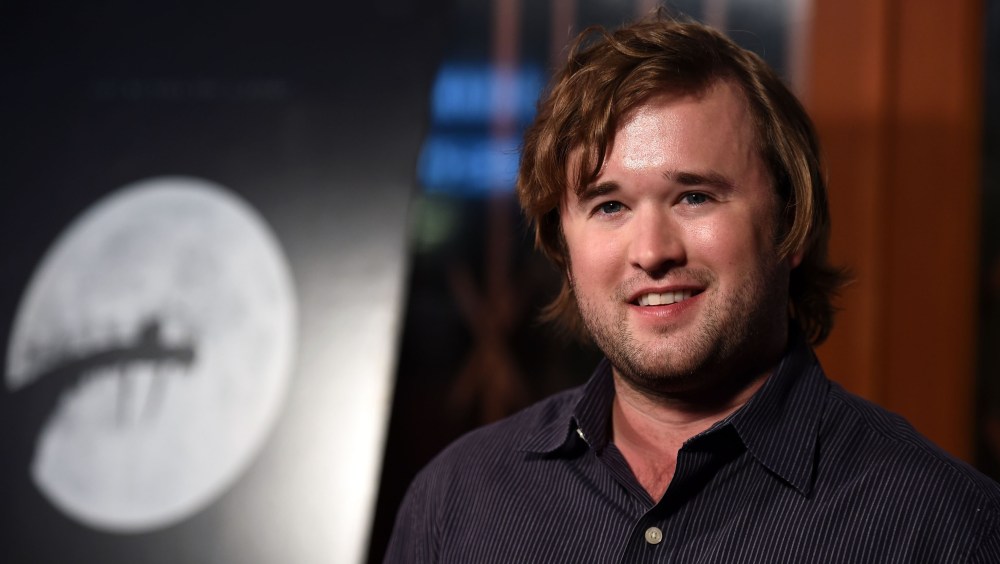
It feels like it has been forever since we have seen Haley Joel Osment in anything. Ever since his unforgettable Oscar-nominated performance as Cole Sear in “The Sixth Sense,” he has gone on to do memorable work in Steven Spielberg’s “A.I.,” “Pay it Forward” and “Secondhand Lions” in which he co-starred with the actor who beat him out for the Best Supporting Actor Oscar, Sir Michael Caine. But after that, he disappeared to where we thought he had become just another child actor who couldn’t make the transition to an adult acting career like Kurt Russell and Jodie Foster did.
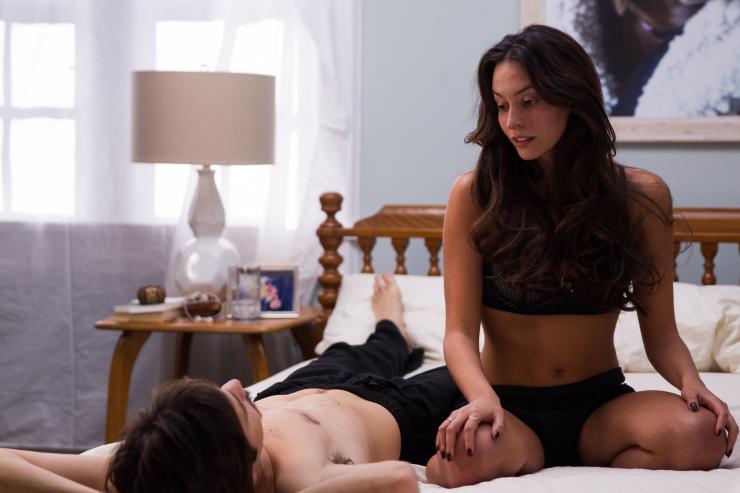
Well, it turns out he was away at New York University studying experimental theater, and this later led to him making his Broadway debut in a revival of David Mamet’s “American Buffalo.” These days he does a lot of voiceover work, he has a recurring role on the Amazon series “Alpha House” and he is starring in Kevin Smith’s latest film “Tusk.” In it, he plays Teddy Craft who, along with his friend Wallace Bryton (Justin Long), hosts a podcast show called “The Not-See Party.” When Wallace suddenly goes missing while he’s in Canada, Teddy and Wallace’s girlfriend Ally Leon (Génesis Rodríguez) travel there to find him, and what they discover is… Well, just see the movie.
Osment looks like he’s having a lot of fun as Teddy, and you really get the sense he is a natural for podcasting. “Tusk” is certainly one of the weirder and more original movies to come out in a while, and he explained what drew him to it.
“The writing was so good,” Osment said of Smith’s screenplay. “The characters were clear and then he (Smith) kind of does this cool thing where, once he got to know us on set, he would just generate material based on just starting to know us more. He wrote that great monologue for Genesis and an extended podcasting scene for me and Justin. He will answer any question you ask him, but his big thing was always saying ‘remember to have fun’ and stuff like that. He isn’t someone saying, ‘Hey, remember to get this part of the character’ or something. He trusts his actors to do that.”
For me, I was very interested in how Osment made the transition to becoming an adult actor. It’s never easy, and Hollywood does have a reputation for chewing up actors and spitting them out. But Osment has come out on the other side looking like a wonderfully down to earth human being, and he remains a terrific actor after all these years. When I asked him how tough his career transition was, his response was simple and to the point.
“As an actor, I feel really lucky because I have been lucky enough to have a lot of experiences on sets and still be relatively young,” Osment said. “It’s fun because your body is kind of your instrument and, if you’re getting old over a period of time and everything, I just remember doing characters as a kid. Now being an adult and having a romantic interest and things like that, the variety is just really exciting so I guess I feel lucky.”
Seriously, it’s great to see Osment keeping busy. I imagine we will see a lot more of him soon, and it will be interesting to see where his career goes from here.
She has left her mark in a number of Telemundo telenovelas as well as in movies like “Identity Thief,” “The Last Stand” and “Casa de mi Padre,” but in Kevin Smith’s “Tusk,” Génesis Rodríguez shows the world just how good of an actress she can be. She plays Ally Leon, the girlfriend of Wallace Bryton (Justin Long), and she tries to make him see what a selfish person he has become thanks to the fame his podcast “The Not-See Party” has brought him. But as much as Ally criticizes his shortcomings, she is reduced to tears when she accepts the fact they come to mirror her own.
“Tusk” has been the subject of a lot of talk ever since Smith announced it as his next project. The idea came about from an episode of “SModcast” where he and co-host Scott Mosier read an ad about a man offering a rent-free situation for a tenant who is willing to dress up as a walrus and make walrus sounds all day long. It makes for one of the more unique movies, and many were eager to find out what exactly drew the actors to be in it.
Rodríguez was at “Tusk’s” press day held at the London Hotel in West Hollywood, California, and she was asked about her initial reaction to Smith’s screenplay.
“Reading the script, I made the big mistake of reading it at midnight,” Rodríguez said with a laugh. “I know, big mistake, so I couldn’t go to sleep. I literally thought about the walrus all night. I started listening to The Beatles and it was just like I went ‘goo goo goo goo joob’ totally. And then afterward I heard the SModcast episode and then I became obsessed with the idea. It was like, okay, this is the kind of movie I want to do. It’s clearly not a remake (laughs) so it’s good to be a part of something so unique and so different and to leave your little mark on such I thought was gonna be, the minute I read it, a cult favorite whether you hate it or love it. It’s that kind of movie. It’s memorable, that’s for sure (laughs).”
For me, the highlight of Rodríguez’s performance was her close-ups in which she confesses to Long her confused emotions which are tearing her apart. It turns out Smith, once he got to know her better, wrote a monologue for her to perform, and she ends up performing it in a truly riveting fashion. Seeing the stream of emotions crossing her face during this close-up held my attention to where everything else around me went completely silent. I was eager to learn how she pulled this monologue and the close ups off, and her answer implied it involved her not knowing one specific thing.
“Thankfully, I didn’t know how close up they were,” Rodríguez said of the cameras. “It kind of freaked me out, but I just let the dialogue guide me to an emotion and I tried to make it as honest as possible. I’ve never had that shot to really show that side of myself in the movies, so I just wanted to do Kevin justice, and he took a chance on writing me that monologue. I hope I did him proud.”
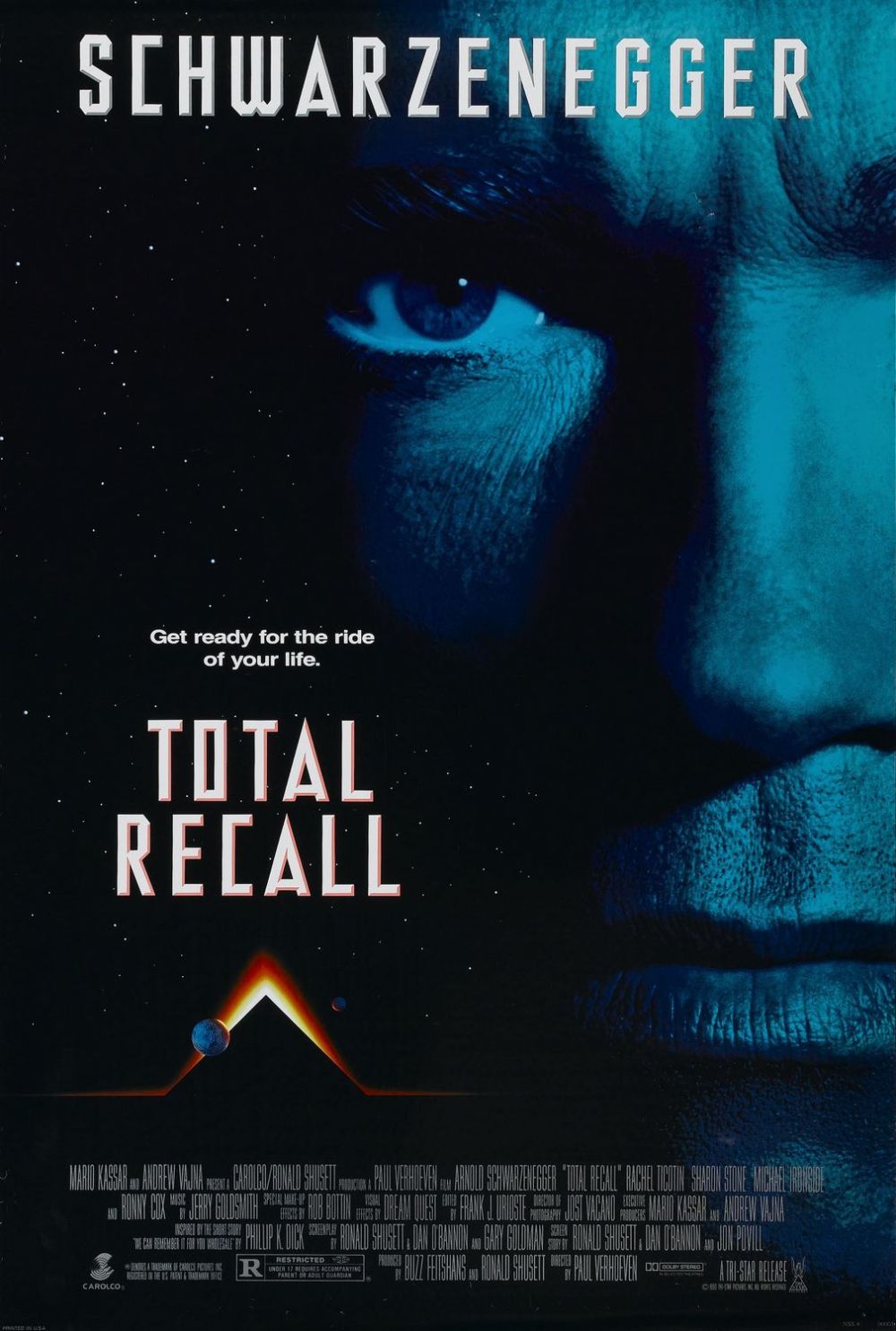
On Friday, August 24, 2012, Dutch filmmaker Paul Verhoeven dropped by the Egyptian Theatre in Hollywood where American Cinematheque screened a 70mm print of his 1990 movie “Total Recall.” Joining Verhoeven for a Q&A after the movie was two of its screenwriters, Ronald Shusett and Gary Goldman. They discussed the rigors of making the movie, and of how the script eventually made its way out of development hell.
As we all know by now, “Total Recall” is loosely based on the Philip K. Dick short story “We Can Remember It for You Wholesale.” Shusett said he and the late Dan O’Bannon, writer of “Dark Star” and “Alien,” bought the rights to the story back in 1974, and they completed their first draft in 1981. From there it was set to be made into a movie, but the project kept falling apart time and time again. Filmmakers like Bruce Beresford and David Cronenberg had worked on it for a long time but eventually pulled out due to creative differences or studios canceling the project because of its enormous budget.
“Everything kept falling through over and over again,” Shusett said. “Sets were built, but then the project kept getting canceled because it was too expensive. Back in 1990, this was considered to be the most expensive movie ever made. I wanted to keep all those sets that were built from being torn down, and I asked one studio executive how I could save them. He responded that I should change the movie’s name to ‘Partial Recall.’”
Verhoeven got involved in “Total Recall” because Arnold Schwarzenegger had picked him to direct after seeing “Robocop.” Schwarzenegger had actually been interested in doing the movie for a long time and had encouraged Carolco Pictures producer Mario Kassar to buy the rights to it from Dino De Laurentis whose film company had gone into bankruptcy. The movie had already gone through many drafts, and it took one specific scene to pique Verhoeven’s interest:
“I came to the scene where Dr. Edgemar (played by Roy Brocksmith) visits Arnold’s character on Mars and tells him that he’s not really here,” Verhoeven said. “In that moment you are not sure if what you’re seeing is real or a dream, and that got me really excited because none of the movies I had made in Europe ever had a scene like that. What Edgemar tells Arnold is that what he is experiencing is not true, so we had to prove it wasn’t true again.”
Working with Carolco Pictures on “Total Recall” was “paradise,” Verhoeven said, as they never forced anything on the filmmaker other than actors they hand-picked to star in their movies. He also said the beauty of Carolco is that they never subjected him or the movie to test screenings. Verhoeven went on to make “Basic Instinct” and “Showgirls” for Carolco, and then the gigantic flop that was “Cutthroat Island” ended up forcing the company into bankruptcy.
Schwarzenegger was set to be the star of “Total Recall” no matter who directed it, and Verhoeven said he was perfectly fine with that. Changes in the story had to be made though as his character was originally an accountant. Verhoeven and the screenwriters ended up changing his profession to that of a construction worker as they all agreed you could not go around Arnold.
Verhoeven also pointed out how having Schwarzenegger in “Total Recall” made the movie “very light” which was great because, as put it, “the straight way of telling the story would not have worked.” This has been further proved by Len Wiseman’s remake of the movie which even Verhoeven admitted “wasn’t good.”
The main problem with adapting any Philip K. Dick story to the silver screen is that they are basically told in two acts, and finding a third act proved to be very difficult.
“I got really scared because there had already been forty drafts written, and we could never seem to figure the third act out,” Verhoeven said. “It eventually came down to Hauser (Schwarzenegger’s secret agent character) always being the bad guy as it gave us somewhere to go.”
One audience member asked Verhoeven how Sharon Stone got cast in “Total Recall:”
“Sharon came in the first day of casting, and after a half hour I was convinced she would be perfect as Lori,” Verhoeven said. “Once we were filming the movie, however, I came to realize what she could do as an actress. After one fight scene where she almost kills Rachel Ticotin’s character and Arnold aims a gun right at her, she quickly changes moods in what seemed like a heartbeat. It was Sharon’s final scene before her character was shot that made me want to choose her for ‘Basic Instinct.’”
Goldman told the audience movies like “The Matrix” and “Inception” wouldn’t have happened without Verhoeven’s pushing the idea of the dream in “Total Recall.” The audience applauded this sentiment loudly, and the movie still holds up well more than twenty years after its release. It’s a shame the producers of the recent remake failed to realize what made the original so good as one of them described Verhoeven’s movie as being “kitsch.” That producer is now eating their own words in the wake of the remake’s critical and commercial disappointment.
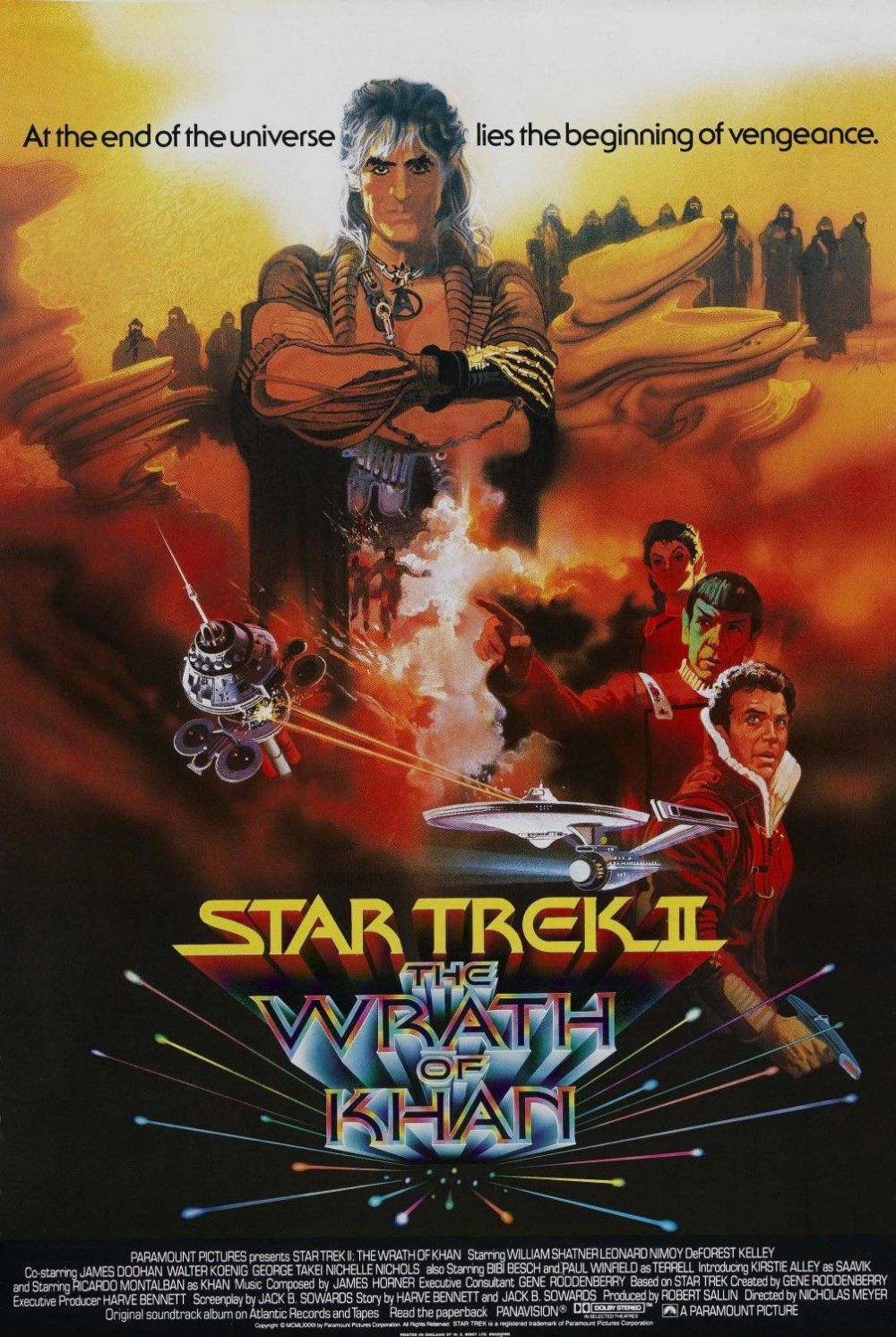
Nicholas Meyer was the guest of honor at New Beverly Cinema on August 12, 2012 where “Star Trek II: The Wrath of Khan” was being shown. This classic sequel was being screened as a double feature with John Carpenter’s “The Thing” as part of the New Beverly’s tribute to movies from the summer of 1982. Meyer thanked the sold-out audience for showing up and admitted it was “preferable to being outside in this weather” where the temperature was inching closer to triple digit territory.
Actually, seeing Meyer appear in person for a screening for “Star Trek II” was a bit of a surprise. Last year, American Cinematheque presented a film program of the first six “Star Trek” movies, but Meyer politely declined to appear for the “Star Trek II” screening because he felt his head would explode if he was asked another question about it. In a sense, you have to be sympathetic to him because this is now a 30-year-old movie, and he has probably been asked every conceivable question about it. Meyer even went out of his way to tell audiences at the start, “I’m sorry if you’ve heard all these stories before. These stories can also be found in my memoir entitled ‘The View from The Bridge: Memories of Star Trek and a Life in Hollywood.’”
Meyer recalled how, after directing “Time After Time,” he wanted to do an adaptation of a Robertson Davies novel and would not consider anything else. But one evening while he was “flipping burgers” in his backyard, Meyer said a friend of his, an executive at Paramount Pictures, encouraged him to meet with producer Harve Bennett about the new “Star Trek” movie. Meyer ended up asking his executive friend, “Is that the show with the man with pointy ears?”
He met with Bennett who had gotten his start as a television producer on shows like “The Mod Squad” and “The Six Million Dollar Man,” and Meyer said they both remain friends to this day. Bennett ended up getting Meyer to watch “Star Trek: The Motion Picture” and episodes of the original “Star Trek” series so he could get familiar with the show and its characters.
Watching the show, Meyer said, “reminded me of something I loved as a kid” but he couldn’t recall what exactly. But it was late one night when he woke up at 4 a.m. in the morning that Meyer suddenly remembered: “Star Trek” reminded him of Captain Horatio Hornblower, a fictional sea captain who sailed the sea during the Napoleonic Wars in novels written by C.S. Forester. Meyer then envisioned this movie as “Captain Hornblower in space,” and from there he said he got a “hard on for doing a space opera.”
Four drafts had already been written for “Star Trek II,” and Bennett told Meyer Paramount was currently waiting on number five. Meyer said he had asked Bennett for the fifth draft and eventually got it after a delay, describing it as being 180 pages long and that he didn’t understand what he was reading. Meyer said he then asked Bennett if he could read the fourth draft, and he said Bennett ended up telling him, “Look kid, you don’t understand, all those previous drafts were just attempts at making a second ‘Star Trek’ movie.”
Meyer said he then suggested to Bennett they get all the previous drafts, read them over and then make a list of things they liked so he could try and weave them into a new script. The only problem was Industrial Light & Magic needed a script in 12 days so they could prepare the special effects for the opening. Meyer said he then asked Bennett, “What opening?”
“Star Trek II” already had a date it was set to arrive in theaters on, and this made writing a new script problematic. Bennett said it would take too much time to make Meyer a deal to get an additional writing credit, and Meyer ended up telling him, “Look, forget about the deal, forget about the writing credit, forget about the money. We don’t work on this new script now, there will be no movie.” Among the ideas kept from the previous drafts were the Genesis Device, Lieutenant Saavik (played by Kirstie Alley), and Captain Kirk as a dad.
When asked about what it was like working with the “Star Trek” actors, Meyer responded, “Have you seen the movie ‘Galaxy Quest?’ That movie was made for me!”
Meyer said the actors were very helpful in terms of crafting the script as they had already inhabited these characters for many years. Much of the talk, however, was on William Shatner whom Meyer described as “a very good actor.” Meyer also said Shatner was “very protective” of Kirk and that he is always the hero and in your face. In directing Shatner, Meyer described him as getting better the more he did a scene because he started getting bored to where he stopped striking an attitude and just became Kirk. This led Meyer to creating excuses to shoot scenes with Shatner over and over again like saying, “The sound’s not right there…”
There was also much talk about the late Ricardo Montalban who played Khan, and Meyer recollected he gave Montalban a copy of “Moby Dick” when they first met to talk about the movie. As an actor, Meyer said Montalban “hit all his marks” perfectly, but that he had to rein the actor in during Khan’s introduction. The character’s opening scene sounded like a rant, Meyer said, when Montalban first performed it, and he ended up taking the actor to the side and told him about a famous piece of acting advice once given by Sir Laurence Olivier:
“You shouldn’t show the audience your top because if you do, then you will have nowhere to go.”
When asked why Kirk and Khan never shared a scene together, Meyer said he didn’t realize this was the case while he was writing the script, and he found it impossible to put them together in a two-shot. Meyer then joked that these characters have Skype and that their conversations had to take place this way. He also answered the question he is most asked when it comes to talking about Montalban, “Yes, that is his real chest.”
Looking back at “Star Trek II: The Wrath of Khan” these days, it does appear to represent one of Hollywood’s first attempts at a franchise reboot as the original, while a commercial success, was not well-received critically. While he probably has answered every conceivable question regarding this movie, it was still great to see Nicholas Meyer at New Beverly Cinema as he has been responsible for some of the very best “Star Trek” movies made so far, and his talent as a writer and director remains strong to this day.
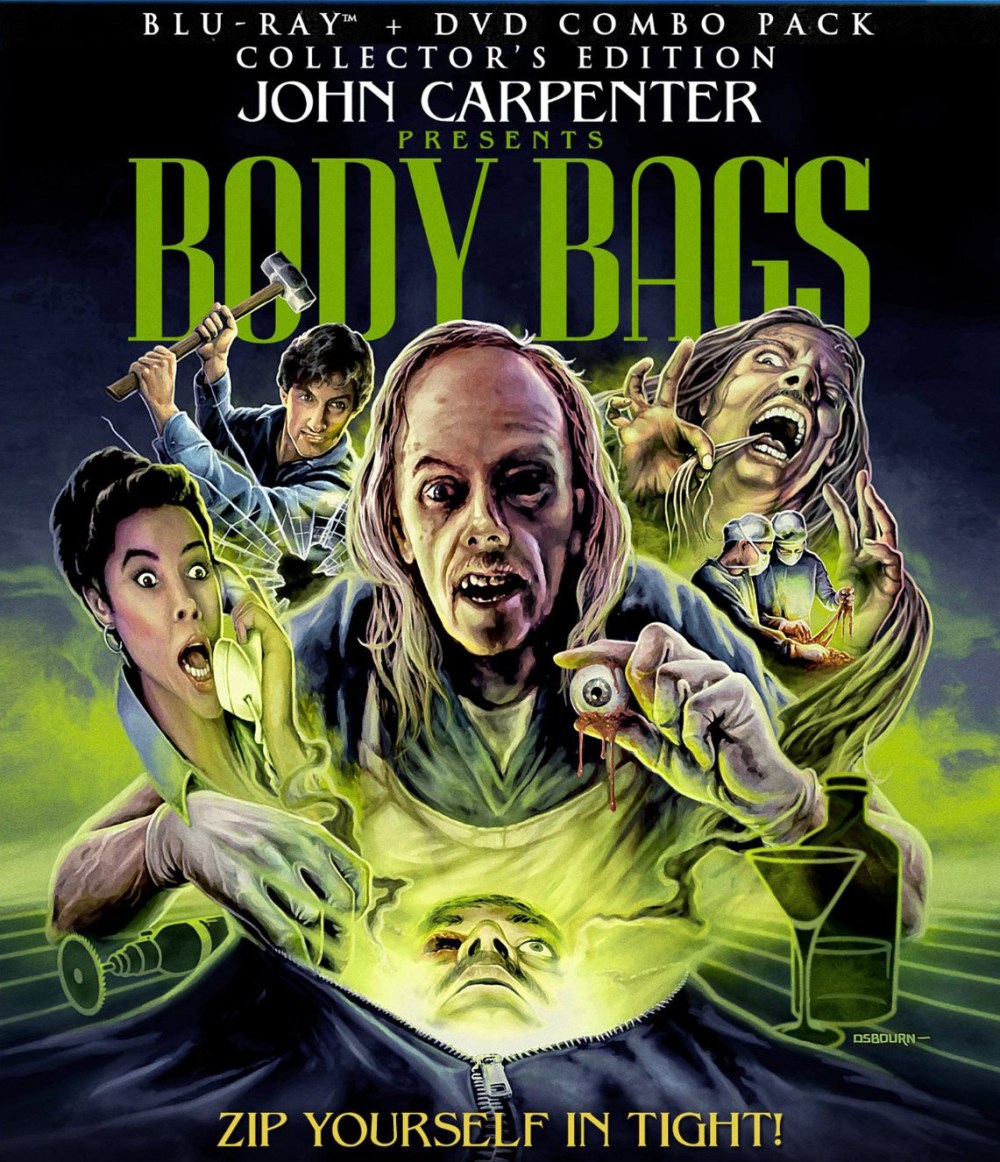
Remember John Carpenter’s “Body Bags?” It was a horror anthology containing three stories: “The Gas Station” which has a female college student working a graveyard shift and getting terrorized by a serial killer, “Hair” about a hair transplant which goes horribly wrong, and “The Eye” where a baseball player loses an eye and gets a new one from a recently executed murderer. Many see it as Showtime’s answer to HBO’s “Tales from the Crypt” as it featured Carpenter as a creepy-looking and deranged coroner who introduces the three stories while drinking formaldehyde as if it were a martini, and it looked like the start of a wickedly demented series. Was it meant to become a series, or was it simply intended to be a single movie? These questions were answered by Sandy King, the producer of “Body Bags” and Carpenter’s wife, when she dropped by Cinefamily which showed 1993 horror anthology as part of its Friday Night Frights series.
King told the audience Showtime originally wanted a 3-story movie and that it was supposed to be a one-shot movie for her and Carpenter. As soon as they were done, they would be off and running to their next project. King remarked how anthology movies were very hard to finance as they were typically not successful at the box office, so bringing one to a cable channel like Showtime made more sense. When it was finished, Showtime then decided they wanted to turn it into a series, but King explained why she and Carpenter decided against it.
“We shot it in California, mostly in Los Angeles, which allowed us to get a lot of the great cameos with Wes Craven, Sam Raimi and Roger Corman,” King said. “Showtime, however, wanted to lower the budget and shoot the series in Canada, and we felt the amount of money they were putting into was not going to be enough to get it right. Plus, shooting in Canada would have made it enormously difficult to get the cameos we got. So, we basically told Showtime thanks, but no thanks.”
“Body Bags” was in many ways a family affair as it involved King and Carpenter working with people they worked with in the past. King had previously worked with Bobby Carradine and Stacey Keach on the Walter Hill western “The Long Riders,” and she had worked with Mark Hamill as well. Peter Jason has appeared in many of Carpenter’s films, and he even used his own car for his appearance in “The Gas Station.” As for the cameos from Craven, Raimi and Corman, she reminded the audience that the horror community is a small and tightly-knit one as everyone knows each other in it.
Carpenter has never seen himself as much of an actor for those who have listened to his various commentary tracks on the movies he has done. After making a Hitchcockian cameo at the beginning of “The Fog,” felt he would be better off behind the camera instead of in front of it. Still, King said she wanted him to play the Coroner in “Body Bags” and that it actually didn’t take much to convince him. She also described Carpenter as an “inner looney” to where he allowed himself to let loose, with the help of Rick Baker’s makeup, on set. Also, Carpenter did not direct himself as the Coroner as King said a friend was brought in to handle his performance and to make sure he hit all his marks. Truth be told, casting him as the Coroner was very inspired.
King said she and Carpenter worked on “Body Bags,” “In the Mouth of Madness” and “Village of the Damned” all in a row. It was originally planned that Carpenter would direct all three stories in “Body Bags,” but as he was already in post-production on “In the Mouth of Madness,” she said Carpenter told her he couldn’t direct all three. To this, she replied, “Okay, we’ll get Tobe.”
The Tobe she was referring to was Tobe Hooper, director of the horror classics “Poltergeist” and the infinitely terrifying “Texas Chainsaw Massacre.” Getting Hooper to direct “The Eye” was a bit tricky as he was very disturbed by the material which had a husband attempting to kill his pregnant wife, but King told him it would be fun and that he could make it work. She also said it was fun to watch Hooper do comedy as he had a cameo at the end with Tom Arnold in which they play two morgue workers who perhaps enjoy their jobs a little too much.
It was great fun to watch “Body Bags” on the big screen and with an audience at Cinefamily, and it was especially nice to see Sandy King drop by and talk about its making and development. She even brought some Shout Factory Blu-rays of Carpenter’s movies to give away, and this writer was lucky enough to win a copy of the one for “Body Bags.” For Carpenter fans, the Blu-ray is a must as it features a great commentary track, a wonderful making-of documentary, and a trailer for the movie as well. It had been out of print for years, and the previous DVD released by Artisan Entertainment gave us a severely edited version which took out a lot of things like Craven’s inspired cameo and some especially gruesome moments. “Body Bags” may not be epic filmmaking, but it sure is a lot of fun for horror fans.
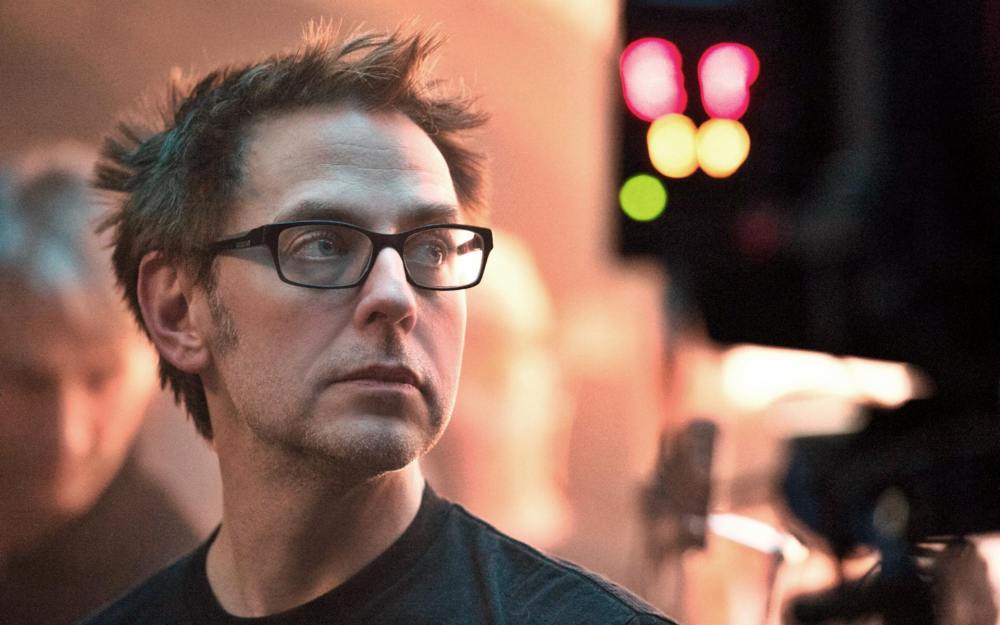
The screening of “Tromeo and Juliet” at New Beverly Cinema brought many people to the theater who were involved in its making. Among them were the movie’s director and co-founder of Troma Entertainment Lloyd Kaufman, actor Will Keenan who played Tromeo, and actors Sean Gunn and Stephen Blackheart among others. But the real star of the evening was filmmaker James Gunn who entertained the devoted audience with many anecdotes about “Tromeo and Juliet’s” making. Best known these days for his films “Slither,” “Super,” for writing the script to the “Dawn of the Dead” remake and most especially for “Guardians of the Galaxy,” “Tromeo and Juliet” was one of his first jobs in the movie business.
“Tromeo and Juliet” is, of course, loosely inspired by William Shakespeare’s classic “Romeo and Juliet,” and Kaufman said he and Troma Entertainment had tried to write the script for three or four years and could not get it right. It was his sister’s best friend who sent Gunn’s resume to Kaufman’s attention, and at that point Gunn had already graduated from Columbia University with an MFA in Writing Fiction. Kaufman, however, noticed something different about him.
“What caught my attention was he vomited onstage, that he was a performance actor who vomited onstage,” Kaufman said about Gunn. “I didn’t know whether he vomited because he was nervous or because it felt it was entertaining or because perhaps he had studied all the work of Terence Malick. But whatever it was, it was sort of like that moment in ‘The Producers’ when Zero Mostel sees his Hitler and says ‘you’re my Hitler!’ James Gunn was ours.”
Gunn said he didn’t actually vomit onstage and that Kaufman may have read someone else’s resume, but it didn’t matter because he got the job.
Keenan said he had not seen “Tromeo and Juliet” in fifteen years before this night and he joked that it looked twenty years old when it first came out. But for Gunn, this was part of the movie’s design.
“When we were doing the movie, I remember that I wanted it to look really dated,” Gunn said. “I used to love ‘Valley Girl’ and I loved looking back at it because it looked so 80’s. And I wanted to make this one look as 90’s as possible (it came out in 1997).”
Gunn recalled writing the first draft for “Tromeo and Juliet” in about a week and a half, and he gave it to Kaufman and assumed he was going to love it. Kaufman, however, found Gunn’s script to be “too filthy,” and this is saying a lot because Troma Entertainment movies usually revel in being filthy. Kaufman said there were about “8 scenes of urination” in the script, and Juliet was originally written to make her first appearance in a porno booth which is where the initial conversations between her and Tromeo would have taken place. Kaufman complained “Shakespeare didn’t have that in mind” when he wrote “Romeo and Juliet.”
There was also a bit said about Jane Jensen who played Juliet. She was not able to attend this screening, but Gunn talked of how he joked around with her throughout shooting. One scene from “Tromeo & Juliet” has her character’s stomach opening up to reveal popcorn and then rats and maggots. Jensen apparently had a near nervous breakdown shooting it as she had a major phobia of the maggots and was screaming her head off as the cameras rolled. Gunn recalls exactly what was going through his head at that moment.
“Wow! Jane’s acting is really good in this scene,” Gunn said. “And then all of a sudden I go ‘holy shit! I think that maybe this is real!’ And then I had that evil filmmaker moment where you go ‘do I keep filming?’”
Gunn ended up reminiscing about a review of “Tromeo and Juliet” he read in Film Threat Magazine, and he felt it captured the movie perfectly.
“They said, ‘I don’t know how to review this film because you can’t win,’” Gunn reminisced. “’If you say that there’s something stupid in here, they (the filmmakers) are going to say yeah, we meant to do that. And if you say there’s something great in here, they’re going to say yeah, we meant to do that.’ And that’s totally true! That is what it is!”
For those of us who have seen “Tromeo and Juliet,” we have to agree the review is really dead on. The movie wallows in bad taste and never apologizes for it, and it becomes all the more entertaining as a result. It was great to see James Gunn at New Beverly Cinema talking about this cult classic because his enthusiasm for this project was contagious. It’s this same enthusiasm which carried over to the movies he worked on from there, and not just “Guardians of the Galaxy.”
While Veronica Cartwright was at New Beverly Cinema to talk about “The Right Stuff,” filmmaker Brian McQuery couldn’t help but ask her a question about another famous movie she starred in, “Alien.” Specifically, he wanted to know more about the “chestburster” scene which is one of the film’s most horrifying moments. The story behind this scene has been told over and over again throughout the years, but Cartwright was still willing to talk and clear up a few things about it.
Legend has it neither Cartwright nor the other actors in “Alien” had any idea of what exactly was going to erupt from John Hurt’s chest. Cartwright, however, said the actors had read the script and knew something was supposed to come out of there. Also, she and Sigourney Weaver had a scene where they were supposed to know what it looked like, but they had no clue what they were going to be talking about. As a result, they visited the studio where the infant alien was being built.
“A few weeks earlier we had gone down and seen the little mockup of that little penis guy with the tail, but it wasn’t working at that point,” Cartwright said of the alien. “It was sort of a gray thing and the artists were saying ‘oh his teeth will be like this and he breathes…’ It was just like a little puppet thing that came out.”
Then came the day when the chestburster scene was shot, and Cartwright described it as though she had just filmed it yesterday.
“We’re all upstairs in the dressing room and they take John (Hurt) down, and for four hours we never saw John. John was having his false chest made,” Cartwright said. “When we were told that we could come down to the set, the entire set was dressed in plastic, everybody’s wearing raincoats, and there were big buckets of this awful stuff that smelled like formaldehyde. It stank and you gagged when you first went in there.”
“So, here’s John packed in this thing, and they had four cameras so that they would get everybody’s reaction,” Cartwright continued. “What happens is that they cut the t-shirt so that the puppeteer could push the thing through, so we all start leaning forward because you’re just fascinated to see what’s going to happen. One of the effects guys told me, ‘oh you’ll be getting a little blood on you,’ and I said, ‘oh okay.’ Not thinking, I leaned right into it. I had a jet pointed at my face, and it just shot me square in the face. It was unbelievable, and then I backed up and (in the dailies, it’s the most hysterical thing) my knees hit the back of a set piece and I flipped upside down to where you can see my cowboy boots sticking up above. I did not expect to get shot with a full blast of blood.
Cartwright pointed out that the scene was done in just one take, and McQuery replied how her reaction looked “really real!” The audience at the New Beverly laughed loudly in agreement with him.
“Years later I worked with that same guy and he said, ‘sorry about that!’ How rude,” Cartwright said.
Looking back, Cartwright described “Alien” as being a very “sweaty” movie because the cast would come on the set in the morning and get covered in glycerin from a pumper. She described this as being “so gross,” but that in the end it was an experience.
While she was primarily at New Beverly Cinema to talk about “The Right Stuff,” the audience was glad McQuery asked Cartwright about the making of Ridley Scott’s classic 1979 film. Just when you think you have heard the definitive story about a classic movie scene, one of its participants comes around to inform you of one or two details you might have missed.
Oscar-winning actress Anne Hathaway stars in “Song One,” a drama where she plays a young archaeologist named Franny. At the movie’s start, her brother Henry (Ben Rosenfield) is hit by a car and goes into a coma, and she flies back to New York to be at his side. In the process of going through Henry’s notebooks, she comes into contact with James Forester (Johnny Flynn), a favorite musician of Henry’s. James has had some success in music but is also a shy and private man suffering from writer’s block. From there a romantic relationship between the two begins, and they soon help each other find their way through the darkest of times.
“Song One” was written and directed by Kate Barker-Froyland who had worked as a director’s assistant on one of Hathaway’s biggest hits, “The Devil Wears Prada.” One of her main intentions with this film was to capture the lively music scene of her Brooklyn neighborhood. Indeed, it is a lot of fun listening to the music as you can tell these musicians are playing and singing out of their love for music as opposed to just chasing a record deal (although I’m fairly certain they wouldn’t mind that either). Watching it made me want to take a vacation to Brooklyn just to see this music scene up close.
I got to speak with Hathaway during a “Song One” roundtable interview held at the SLS Hotel in Beverly Hills, California, and I told her how much I enjoyed watching and hearing the musicians featured in the movie. These were musicians playing with all their heart and soul, and I was curious how she and the filmmakers gathered up so many talented ones for this project. It turns out a lot of that was due to the participation of Jonathan Rice and Jenny Lewis who have had tremendous success together on the music scene, but Hathaway said getting the both of them on board was a little tricky.
Anne Hathaway: My husband (Adam Shulman) and I were friends with Jenny Lewis and Jonathan Rice, and when we initially ready the screenplay back in 2011 we just kind of had one of those like dream musicians for this and we both said them. And then we kind of laughed at our audacity and decided that could never possibly happen because we couldn’t get them, and also they were friends and we would have felt awkward. We were worried about it bordering on being opportunistic, so we spent a while pursuing other avenues trying to come up with better ideas. Then Kate came up with a draft that had focused on the James character and we asked Jonathan if we had hit the right tone with the character. He asked who’s doing the music and we were like half-jokingly, ‘Well you if you want to.’ He was like, ‘Okay let me give it to Jenny,’ and she read it and they were open to the process of meeting Kate, and then they met and they really liked each other. The next morning, we opened up our emails and there was this song (from Jonathan and Jenny) and it was Little Yellow Dress and it was incredible. And then Jonathan Demme, our producer, came out. Jonathan Demme has one of the deepest and most beautiful encyclopedias of music in his head, and to watch him and Jenny and Jonathan just kind of talk music and talk about the sound and who James Forrester was, it was a thing of beauty. From then on they were in the movie, and a lot of the musicians wound up being contacts that they knew. They were so integral to the sound of the film.
To read about “Song One’s” making is to see it was a movie made by friends who brought everything they had to this project. In addition, they brought with them a lot of great music which feels authentic to the locales it takes place in, and it’s the kind of music that fills up your spirits when you’re feeling low.
“Song One” is now available to own and rent on Blu-ray, DVD, and Digital.
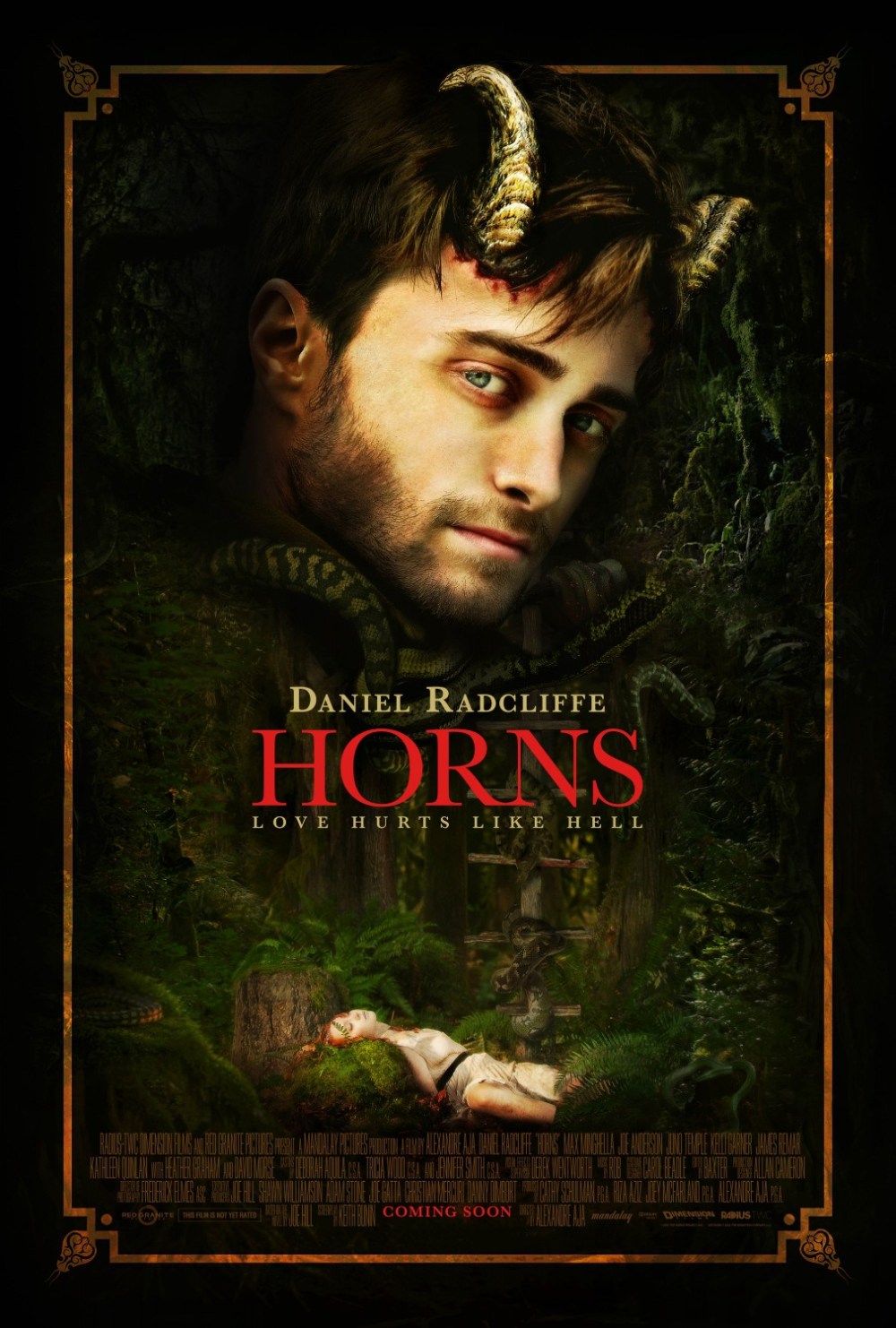
The “Horns” press conference held at the Four Seasons Hotel in Beverly Hills, California proved to be a lot of fun as stars Daniel Radcliffe, Juno Temple and writer Joe Hill, whose book the movie is based on, shared great memories about the making of this dark fantasy. Radcliffe plays Ig Perrish, a young man madly in love with Merrin Williams (Temple) and who will do anything for her. But as the movie opens, we discover Merrin was brutally murdered, and everyone thinks Ig was the one who killed her.
In addition to scenes where we see Ig and Merrin being intimate with one another, we also get to see a flashback where these two lovers first met. This resulted in two younger actors being hired to play these characters: Mitchell Kummen as Ig and Sabrina Carpenter as Merrin, and both look a lot like Radcliffe and Temple. While watching this sequence, I started thinking of the movie “Contact” in which Jodie Foster plays Eleanor Arroway and Jena Malone plays the same character as a young girl. In her commentary track on the “Contact,” Foster said the following:
“I always love watching actors play me, and actually it’s always the reverse; whenever you hire a child actor to play the adult actor, you just ask the adult actor to copy the kid. That’s certainly what Tom Hanks did in ‘Forest Gump,’ and that’s what I tried to do a little bit in this movie.”
That remark stayed with me long after the first time I heard it, and I wondered if Radcliffe or Temple had the same experience with the actors playing the younger versions of themselves in “Horns.” I asked Radcliffe about that, and his answer led to one of the funniest moments of the day.
Daniel Radcliffe: That’s interesting because we didn’t really see a huge amount of what the kids were doing. I was often, when they would be doing stuff, getting made up or de-made up or something would be going on so they would try and time it like that, so I didn’t really get to see a lot of what they were doing. I got to spend quite a lot of time particularly with Mitchell on the movie, and it was funny because Sabrina lives in L.A. now and she’s 13 going on 21. She’s incredibly mature and well above her years, and Mitchell is like I was when I was like 13. He’s a kid from Winnipeg, and he’s like a kid and he’s incredibly sweet. He’s awesome and I just like the fact that… Obviously, Mitch is blond naturally and he’s got much fairer hair than I do, and they dyed his hair on the first day. He went back to his hotel in Vancouver and nobody knew what he was doing, and then one of the girls just happened to say, ‘Oh you look like Harry Potter.’ That just made his day. He was so happy.
So, while Radcliffe didn’t necessarily take anything specifically from Kummen’s performance, he did illustrate how difficult it can be for casting directors to find an actor to play him as a younger person. Still, both Radcliffe and Kummen took the same character and made it their own in this movie. Thanks to their performances, we succeeded in getting the best of both worlds in “Horns.”
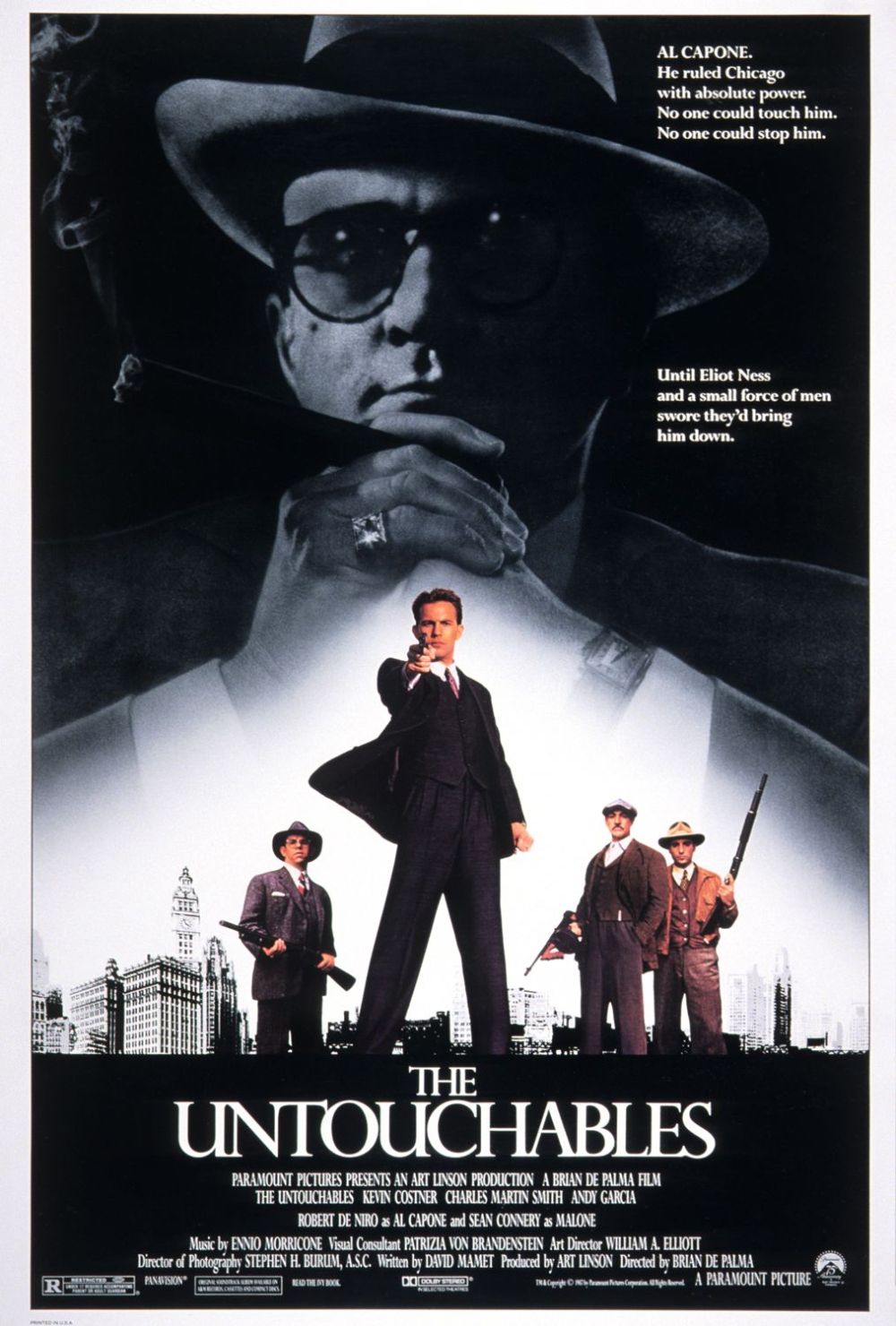
There were more than enough film buffs who filed their tax returns, or applied for an extension, on April 15, 2010, in the nick of time to check out a special screening of Brian De Palma’s 1987 classic “The Untouchables” at the Aero Theatre in Santa Monica. Following the story of how Elliot Ness and his select group of men who worked to bring down infamous crime boss Al Capone on tax evasion charges seemed like the perfect way to celebrate Tax Day. Finally seeing it on the big screen in glorious 70 mm was great after first watching it on VHS years ago.
But I do have to admit though that this movie really screwed me up for a time after I first saw it. It was one of the few times my parents let me watch an R-rated movie with them when they rented it on video. Having seen it reviewed on so many different shows like “At The Movies,” “Sneak Previews” and of course “Siskel & Ebert” (which had both hosts clashing over it passionately) had me excited about watching it eventually, and this was back in the day when I rarely, if ever, went out to the movies. But it was one of the first times where I realized the good guys didn’t always make it to the finish line. To see them get killed off in a most gruesome way was painful for a 12-year-old to take in as I always believed the good guys, those who work for justice would be the ones left standing. Back then, I was starting to learn how unfair the world can be.
Anyway, this evening had a special reason for us to come out other than seeing the film in 70 mm as David Mamet, who wrote the screenplay for “The Untouchables,” was also in attendance to engage in a Q&A. Instantly recognizable in his beret and those huge yellow glasses of his, Mamet had many stories to tell regarding the making of De Palma’s film, writing the script for it and his thoughts on writing and Hollywood in general.
The first question asked was how Mamet got hired to write the script, and he replied that he got the job by default. Apparently, the job was first given to the late playwright Wendy Wasserstein who had won a Pulitzer for “The Heidi Chronicles.” She must have done quite a bit of work on it because Mamet said the Writer’s Guild of America still wanted to give her a credit. But he never hid the fact that what attracted him to writing the script was, as he said, “a lot of money.” The way Mamet described it, writing for someone else is known as “whoring.”
Being one of America’s most acclaimed playwrights and having grown up in Chicago where “The Untouchables” takes place should have made Mamet the most obvious choice for this motion picture. Mamet talked about how he grew up there with gangsters all around him and of how everyone lived and breathed the same air as them. As for the cops, he got to know them better while working as a cab driver. He also went on to say several of his family members kept telling him stories about Capone from time to time.
For years, Chicago has been known to be a city engulfed by corruption, and Mamet did nothing to hide the fact it is full of crooks. He described it as a machine that is run downstate and remarked the mayors occasionally go to jail. He also remembered a saying once told to him when he asked someone in politics what the difference was in running for one office or the other. The politician told him, “the girls get prettier.”
It seems many natives of this city have the same romantic view of Chicago as Mamet did, and he said it best, “In Chicago, we love our crooks!”
A lot of Mamet’s inspiration for “The Untouchables” came from all of Chicago, he said. He tried to include as many famous landmarks such as The Anchors Restaurant and The Lake. Much of downtown Chicago was used to great effect throughout, and I wonder if there has been a movie since which is as superb in the way it brings Prohibition-era Chicago to life.
With De Palma directing “The Untouchables,” Mamet said he just hoped the director would stick to the script he wrote. Looking back, he said De Palma did actually stay true to his script to a certain extent, but that there were moments where he felt aliens had come down and sucked the brains out of those making the film. In terms of differences from his original script, Mamet said they took out the crawl he put at the end of what happened after the Prohibition Era ended and of how gangsters are still with us today. Mamet also said De Palma was the one who added the “cockamamie baby carriage” sequence.
During the making of “The Untouchables,” Mamet said he was never on the set. He was actually quite happy he wasn’t there which was surprising to here as you’d figure any writer would want to be there even if it annoys the hell out of the director. But while most writers want the opportunity to be on a film set, Mamet said he feels better off staying out of the way.
One of the main sources behind the screenplay was Elliot Ness’ autobiography which Ness wrote with Oscar Fraley. When an audience member asked Mamet if he believed what Ness wrote about, Mamet replied quite simply, “I don’t believe anything anymore.”
At its essence, Mamet described “The Untouchables” as a melodrama. Lest people see this as him looking down on the way De Palma shot this now classic movie, he was quick to quote from Stanislavski, “Tragedy is just heightened melodrama.” Looking at the movie as a melodramatic piece actually makes perfect sense as audiences got so swept up in the story to where it affected them more emotionally than they could have anticipated.
Other tidbits Mamet shared included that aside from Robert DeNiro’s method preparation in playing Al Capone, he ended up saying just what was in the script. The line uttered by Sean Connery’s Malone character of “here endeth the lesson” came from the book of common prayers. But the one which really stood out was what Mamet said Connery first told the producers when he came to make this movie, “Broccoli never paid me a dime to play James Bond!” As for “the Chicago way,” Mamet said it was something he just came up with. The philosophy behind it was when you take something, burn it down to the ground and then build it back up again.
Many in the audience were also eager to hear Mamet talk about the art of writing, and he had much to say on the subject. As a dramatist, he said his job is to take out the narration and go with the plot and characters. Watching the plot for him is where the enjoyment comes from. The problem is actors and directors end up wanting to put all the narration back in. They want to spell out everything for the audience, but dramatists make you want to know more about what’s going on. The way Mamet sees it, you just need a plot and an actor to get the ball rolling. A play or a movie cannot start from an ongoing situation. Of course, writing a plot can be very hard. In terms of plots, he views “Wag The Dog” as his “Casablanca” in that it was the easiest plot for him to write. Once he was finished, Barry Levinson started shooting the movie a month later, and the shoot went very quickly. As for all the other plots he has worked on, they were nightmares.
In talking about some of his other projects, Mamet said the coffee’s for closers speech with Alec Baldwin from “Glengarry Glen Ross” might have come from sitting in an office where he once worked. There was also some talk of how he wrote the script for “Ronin,” which was directed by the late John Frankenheimer, and never got credit for it. Mamet said he had always wanted to write something anonymously, and “Ronin” became that something because he was not originally hired to write it. What happened was Robert De Niro pleaded with him to do a rewrite as he felt the script was not up to speed. Mamet said he eventually caved in and rewrote the whole script in a week.
In addition to being a writer, Mamet is also a director of film and stage. When asked about his approach to directing, he said he wants to know what the story is about and how each beat contributes to the action. From there, everything comes together along with some unforeseen difficulties. When asked if movies would ever become an art form again, Mamet said, “Movies were never an art form, they were entertainment. It just evolved into an art form from there, and it’s still evolving in different ways.”
Mamet was up onstage for almost an hour at the Aero Theatre, and it still didn’t feel like he was there long enough. This writer, who grew up a working-class man and went to Kaminsky Park on a regular basis (yes, he is a Cubs fan) was full of anecdotal moments which made us want to learn more. When it comes to “The Untouchables,” he gives all the credit for its success to De Palma as he made all the elements work perfectly. He said almost everything good that happens is an accident, so it’s safe to say “The Untouchables” is a glorious accident and one which invites repeat viewing.
I personally want to thank David Mamet for saying something he once heard from a judge; that being quoted out of context is “the definition of a quote.” This makes writing articles like these so much easier! As for his line about critics being “illiterate swine taking the bread from my children,” I won’t take that one personally. Oh yeah, he also said the lizards in Hollywood will be the last ones to die, and he believes their last words will be, “I want to know more…”