Jenny Slate Makes a Lasting Impression on us in ‘Obvious Child’

Obvious Child Jenny Slate

We all know Jenny Slate from her brief tenure on “Saturday Night Live,” and she has since left an impression on us with “Marcel the Shell with Shoes On” and on episodes of “Parks and Recreation.” But in Gillian Robespierre’sObvious Child,” Slate gives one of the best breakout performances of 2014 which will stay with you long after the movie has ended. As comedian Donna Stern, we watch as her life hits rock bottom after she gets dumped by her boyfriend and fired from her job in rapid succession. Then after a one-night stand with a really nice guy named Max (Jake Lacy), she finds herself dealing with an unplanned pregnancy. She decides to get an abortion, and it all leads up to the best/worst Valentine’s Day she’s ever had.
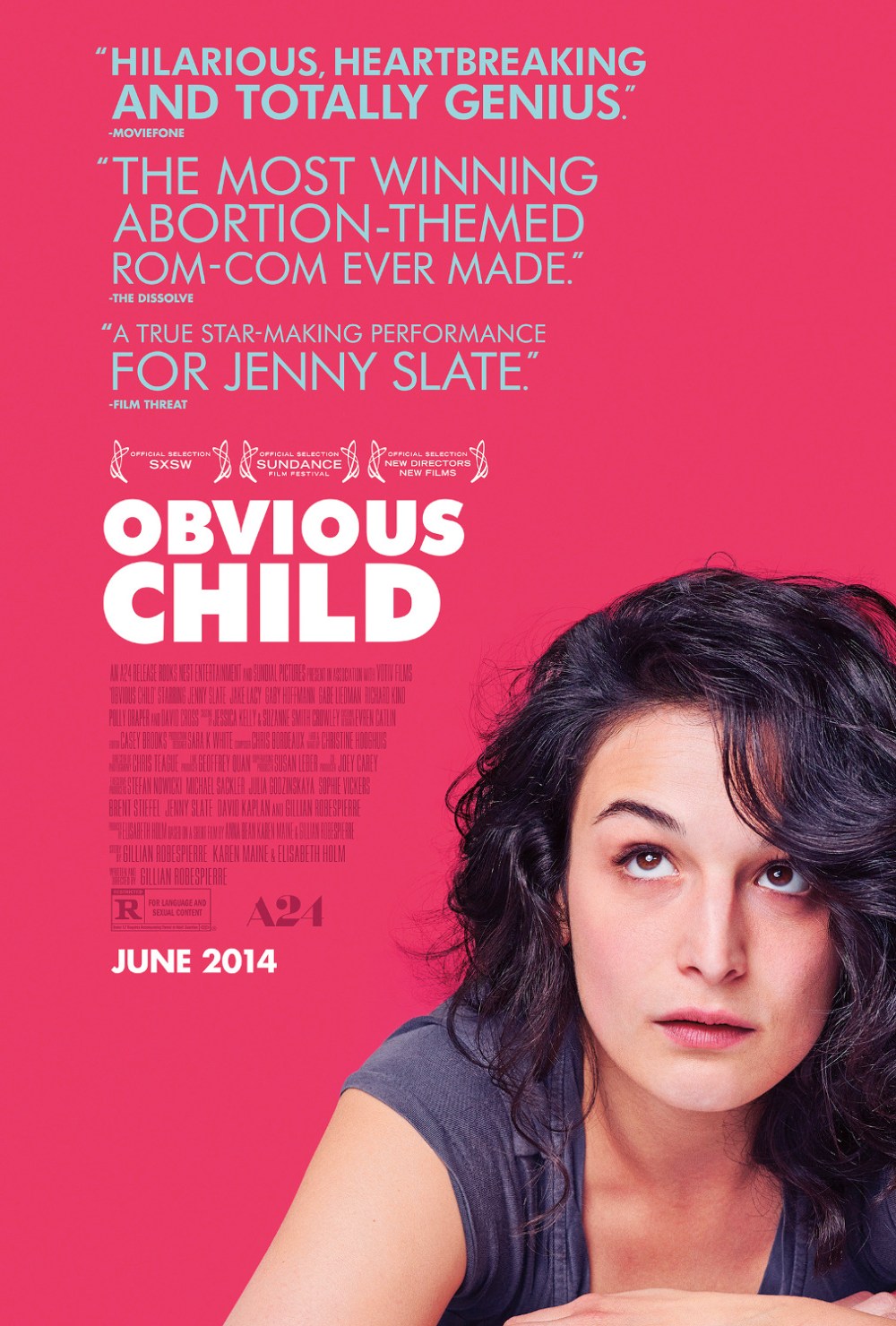
Obvious Child movie poster

I was very excited to meet Slate when she arrived for a roundtable interview at the “Obvious Child” press day held at the Four Seasons Hotel in Los Angeles, California. I told her I came out of the movie wanting to hug her character, and she replied that was great and exactly the way we were supposed to feel (I couldn’t agree more). The movie is advertised as being the first “abortion comedy” ever, but that’s far too simplistic a description. To me, it was about how Donna learns how to empower herself and trust people again after having her heart broken, and Slate felt the same way.

Jenny Slate: It’s not representative of what the film actually does or how it unfolds. I guess, trying to look on the positive side, if people think that’s all that it is when they go and see the film, they will be delighted to see how complex and thoughtful it is and funny. If you think about it as just the story of one woman trying to understand the process of going from passive to active and trying to understand how to make choices you’d think, well why would I try to shy away from that? That’s a human story and I should just tell it.

“Obvious Child” derives its title from the song of the same name by Paul Simon. The discussion about the song led Slate to talk about when she used to ride the subway while she was a college student living in New York. She reminisced about how, when the train went through a tunnel, the window across from her would become a mirror, and this usually happened when she had headphones on.

JS: I remember sophomore year of college I would listen to, on repeat, the “Amelie” soundtrack and just imagine myself as a woman in a movie that was about a woman. It’s pretty interesting that I got to do it. I think a lot of people connected music that way. It makes them feel like they’re in a movie.

In the movie, Slate’s character is a comedian who does a stand-up act at a club in Brooklyn. The way Slate performs Donna’s act, you can’t help but think all her material was improvised, but Slate made it clear those scenes were the result of her collaboration with Robespierre.

JS: Gillian wrote this stand up based off of the style that I perform in; sort of loose storytelling, very instant with the audience, a conversation that’s evolving and not clubby or anything like that. She wrote it, we cut it down, we did some workshopping where I improvised a set based off of what she had written, and she recorded that, rewrote it, and then on the day of the shoot the shooting draft of the film had that stand-up set that we turned into bullet points so that I was not memorized and that it could be natural. You would have the feel of Donna feeling it out, and we talked about it and then I went up and went through these subjects that Gillian had set out and some of them are exact lines of her writing and some of them are lines that came up during it, and she would also call out to me during the shooting and be like, you know, circle back to talking about dirty underwear or whatever. And then I would go back and, during that time of walking backwards, new material would come in. I think if somebody says to me that it’s okay to work and it’s okay to be loose then I go with that. It’s in my nature to be playful and it’s my nature to feel a little bit claustrophobic with the rules, and that’s something I often just have to deal with and work through. You can’t improvise on every job, and you should be good enough at acting that you can say your lines. But for Gillian to say you can be a little looser and for her to be comfortable enough in what she had written to be flexible was an amazing testament to her. We are just a good pair.

One actress who was brought up with much excitement during this interview was Gaby Hoffman who plays Donna’s roommate, Nellie. Hoffman is best known for playing Kevin Costner’s daughter in “Field of Dreams” and for playing Maizy Russell in “Uncle Buck.” The interesting thing is that Slate and Hoffman actually look a lot alike to where you want to see them play sisters in a movie together. As it turns out, Hoffman’s career proved to have a major effect on Slate’s.

JS: I have always wanted to be an actress since I was young and can’t remember anything else. It was my ultimate desire, and she was my age and acting when I was growing up. I used to think I looked like her and was just like, oh I want to be like that girl. And when I got to meet her in my adulthood, I was like totally blown away in general just because I was such a huge fan. After getting past that, the real ultimate moment of just like being totally floored was discovering her personality. She’s very wise, really open and just like really no nonsense. She’s very fearless and I think she sets the bar really high for performance, and I felt that in a good way. I wanted to impress her, and I just think she’s the closest you can get to like a goddess. She’s got that real mythical vibe.

Now many people may say Slate is just playing herself in this movie, but this is the kind of unfair assumption we tend to make about actors in general. We may think we know an actor from reading about them in magazines or seeing them on the countless talk shows on television, but while Slate is a stand-up comedian like Donna, she was quick to point out the differences between herself and her character. Most importantly, she does not expound endlessly on her personal life like Donna does.

JS: I don’t do it. It just never seems right to me, but I’m not Donna. I know my boundaries and I think, although my standup is about like being horny and diarrhea and things like that, I still feel like it’s paired with really nice manners. I think the cornerstone of having nice manners is to have an equal exchange. Someone says how are you, and I say fine how are you, and Donna does not understand boundaries and limits at the beginning of the film. For me, I get it. My relationships are precious and I don’t talk about my husband on stage unless it’s something flattering. But even if it was something flattering that was going to embarrass him, I wouldn’t do it because there’s just too much to talk about.

Seriously, Jenny Slate’s performance in “Obvious Child” is one of the best and most moving I saw in 2014, and it’s a must see even for those who, like me, are not fans of romantic comedies. Regardless of how you feel about the Valentine’s Day Donna ends up having, it’s a lot better than the one Slate told us about from her past.

JS: I had a really bad Valentine’s Day one year because I had a really shitty boyfriend who forgot that it was Valentine’s Day, and he gave me his digital camera in a sock. Wow, thanks! Such a bummer, the worst present ever. That’s like a present that a baby would give to somebody. I never wanted a digital camera in general. I don’t care, I don’t like technology. I just wanted some fucking chocolate. Look around you! There’s hearts everywhere! Fucking get it right! Dammit! My husband is so good at Valentine’s Day. He rules at it. No socks.

Ultimate Rabbit Exclusive Interview: Bryan Fogel Talks about ‘Icarus’

Bryan Fogel Icarus photo

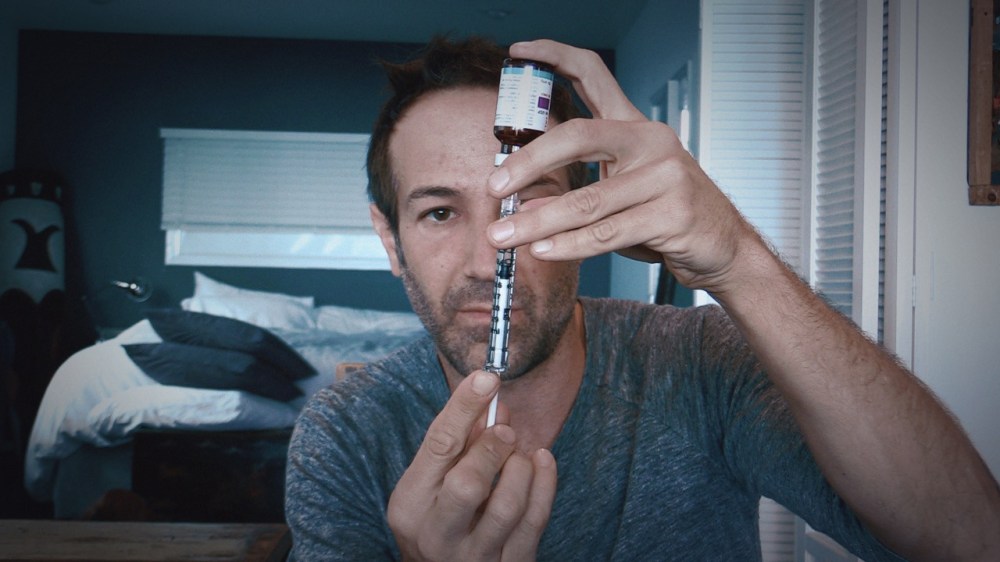
Actor, writer and filmmaker Bryan Fogel first came to the world’s attention with “Jewtopia,” a play he co-wrote and starred in which went on to become one of the longest running shows in off-Broadway and Los Angeles history as it was seen by over a million viewers. Now he is set to reach an even larger audience with his documentary “Icarus” which will debut on Netflix on August 4.

Icarus documentary poster

“Icarus” follows Fogel as he went on a mission to investigate doping in sports. Like Morgan Spurlock in “Super Size Me,” he becomes the main experiment of his own documentary as he dopes himself with performance enhancing drugs to observe the changes they have on his body, and to see if he can avoid detection from anti-doping officials. By doing so, he aims to prove the current process of testing athletes for performance enhancing drugs does not work in the slightest.

During this process, Fogel comes to meet Dr. Grigory Rodchenkov, a pillar of Russia’s “anti-doping” program who aids the filmmaker in avoiding doping detection through various processes which include being injected with various substances as well as collecting daily urine samples which will be smuggled from one country to another. But as Fogel becomes closer with Rodchenkov, he soon discovers the Russian is at the center of his country’s state-sponsored Olympic doping program. From there, “Icarus” goes in a different direction as it delves deep into Russia’s program and discovers the illegal activities go all the way up to the country’s highest chain of command which includes Vladimir Putin. The deeper this documentary goes, the more aware we become of how truth can be an easy casualty as others die under mysterious circumstances.

I had the opportunity to speak with Fogel about “Icarus” while he was in Los Angeles to promote it. He spoke about the documentary’s evolution from being a simple exploration into sports anti-doping programs to becoming a geopolitical thriller where witnesses are forced to go into hiding. Also, he spoke of how Lance Armstrong’s admission of using performance enhancing drugs was merely a needle in the haystack as many athletes were utilizing the same chemicals and threw him under the bus to save their own careers.

Check out the interview below.

Gillian Robespierre Sets the Record Straight about ‘Obvious Child’

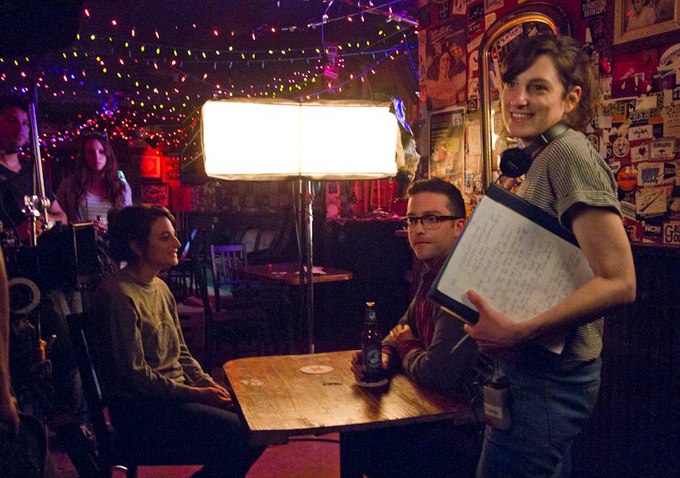
Obvious Child Gillian on set

Obvious Child” marks the feature film directorial debut of Gillian Robespierre, and it is one of the most assured directorial debuts I have seen in some time. It tells the story of aspiring stand-up comedian Donna Stern (Jenny Slate in a star making performance) whose life has just hit rock bottom. As the movie starts, she gets dumped by her boyfriend, fired from her job, and then finds herself pregnant after a one-night stand. Suffice to say, this is not the best of times for her. But at the same time, what happens from there results in one of the best romantic comedies you could ever hope to see.

Obvious Child movie poster

Now since Donna decides to get an abortion, “Obvious Child” has been labeled by many as the first ever “abortion comedy.” But while Robespierre is glad this has given her movie far more attention than she ever expected, she does not share this point of view. During an interview at the Four Seasons Hotel in Los Angeles, she made this very clear.

Gillian Robespierre: That’s not why we made this movie, to be called an abortion comedy, because we don’t think it is. I don’t think abortions are funny or hilarious, and I think that shorthand leads to believe we’ve been flippant or glib with the topic. We wanted to accomplish a couple of things with making this movie, and one was making a romantic comedy that was very entertaining, had a lot of romance, had a really funny leading lady, and had somebody who was recognizable onscreen who felt like she could be you or your sister or your best friend. And her parents were recognizable and her best friends were recognizable in a genre that sometimes doesn’t seem relatable. That’s what we wanted to do and really wanted to show. And we wanted to take some stigma away from abortion at the same time and show a procedure that was not full of regret and shame. Donna doesn’t put it on herself and her friends and the characters around her don’t put it on her either. That’s simply all we wanted to accomplish.

Indeed, the movie is really about how Donna picks herself up from her depressed state, comes to empower herself, and eventually learns to trust other people again after getting her heart shattered. This allows Robespierre to find humor in the more serious moments, and at the same time she succeeds in keeping things both human and intimate. These days it seems incredibly difficult to make a movie with such down to earth characters, but she pulls this off with what seems like relative ease.

GR: I think when we talk sometimes even in one sentence, offstage or on stage in a movie or in real life, sometimes we write comedy and tragedy in one beat. I think we’re just trying to take that sort of natural tone that we have and put it on the screen and cut out all the fat that movies and romantic comedies have and have the tone just be very realistic. Donna is a naturally funny character so in one beat she’ll be saying something very self-deprecating, and in the next second she’ll be saying something very sweet and heartfelt. I think that’s just how we interact with each other. To me, it’s just a realistic portrayal of how modern people speak to each other.

When it came to the movie’s title, Robespierre admitted it came from the song of the same name by Paul Simon. She explained why she chose it.

GR: I don’t think Donna is a child or an obvious child. I think Donna is somebody who’s not ready for what the late 20’s is giving her, and she thought she would be someplace else,” Robespierre said. “She didn’t know that the late 20’s is just as hard as her early 20’s, and she’s just trying to figure out how to be confident in where her voice is on and offstage. She’s just trying to figure out how to take over this passivity that seems to be a running narrative in her life, and I think she’s mature and thoughtful, and I think she’s doing something that needs to be done.

The fact Robespierre chose the title of a Paul Simon song for her movie made me wonder if the lyrics played a big part in her decision.

GR: I’m a rhythm girl. I do know the lyrics to the song, I’ve read the liner notes, and I think that determines the feel of the song. It’s not just like drum and bass, it’s obviously Paul Simon’s beautiful poetry that he’s written. But I just liked it for nostalgic reasons and I’m a sucker for nostalgia. I listened to that song a lot when I was little in my car looking out the window, making up my little movie ideas; ‘Oh look at that tree, I feel like I’m in a movie.’

Of course, with this movie being a comedy, you come out of it wondering how many of its scenes were improvised instead of scripted. When you have a strong comedic talent heading your cast, we are quick to believe the director had no choice but to let their main star rewrite the screenplay themselves. But to hear Robespierre say it, the job of a director is to work with people instead of for them.

GR: I think filmmaking makes me really excited about being a filmmaker, and wanting to do this in the first place is that you get the chance to collaborate with a lot of smart, creative, intelligent actors, cinematographers, and editors. Every step of the way is collaboration, and what Jenny and I found in each other was a tone of how we like to speak with one another, and a comfortability of where our parameters are. I was very comfortable with letting Jenny go because she knows Donna just as well as I do, and we were really on the same page. So if a word didn’t feel true and if a sentence would have been funnier this way, I was very malleable. I have an ego, but it’s a different kind of ego.

“Obvious Child” started off as a short film Robespierre made, and it made me wonder about the differences between making a short as opposed to a feature length movie. Her immediate response was time and money as she never had enough of either, but she did go into more detail about what she had to deal with this time around.

GR: We had a crew of 30 people which was very new for me. The short was just four or five people all from film school. This was a real movie set where my producer Elizabeth (Holm) and I worked really hard to hire a crew. We were a boss and paid thirty people, and there’s something really exciting about that and really scary about that. To be somebody’s employer comes with, I think, a lot of heaviness and respect for the people who work for you and who were coming in every day and bringing in so much of themselves to their roles whether it’s Jenny coming in every day focused, but also the crafty person and the DP and the gaffer. Everybody was full-fucking focused.

Still, with “Obvious Child” dealing with the divisive issue of abortion, people can’t help but think pro-life supporters have been giving the filmmakers and actors a lot of grief. Robespierre responded she hasn’t personally received any feedback from any pro-life groups, and she again reiterated her movie is not an abortion comedy. In my opinion, I liked how it dealt with abortion in an intelligent and refreshing manner. Movies like “Juno” and “Knocked Up,” both which I loved, sidestep abortion in favor of dealing with unplanned pregnancies in another way. But in this post Roe vs. Wade world, it’s surprising we haven’t had more movies like “Obvious Child.” But while it may seem like a revolutionary movie, Robespierre made it clear she wasn’t out to reinvent the wheel.

GR: There’s room for other storytellers out there. I think just because one movie is tackling unplanned pregnancy that ends in childbirth, that’s a real narrative and that’s a story that happens. We’re tackling it in a different way but also making it a comedy using a genre that we love which is the romantic comedy. I was just watching “Knocked Up” last night, it was on TBS, and I laughed my head off.

“Obvious Child” was, in my opinion, one of the ten best movies of 2014. While Jenny Slate is getting the praise she deserves for her performance, the movie’s success is really thanks to Gillian Robespierre whose work here bodes well for the great future she has ahead of her. In a sea of independent films which constantly get lost in the shuffle of all the superhero blockbusters being unleashed on us, it’s great to see a movie like this get the attention it deserves.

Image, poster and featurette courtesy of A24.


Jeremy Licht Reflects on the Making of ‘Twilight Zone: The Movie’

Twilight Zone Movie Jeremy Licht

Grauman’s Chinese in Hollywood had a special screening of “Twilight Zone: The Movie” in honor of its 30th anniversary, and the screening was put together by Mad Monster. Before fans got to watch the movie in its pristine digital presentation, there was a Q&A with one of the movie’s stars, Jeremy Licht. Perhaps best known for his work as a child actor on television shows like “The Hogan Family,” Licht was very happy to share his memories of making this film.

Twilight Zone The Movie poster

Licht appears in the movie’s third segment, “It’s a Good Life,” in which he plays Anthony, a young boy who is suddenly befriended by schoolteacher Helen Foley (Kathleen Quinlan). But when Anthony takes Helen home to meet his “family,” she ends up meeting a group of people who live in sheer horror of Anthony as he lives to terrify them if he suspects they disapprove of him.

The movie is the theatrical version of Rod Serling’s classic television series “The Twilight Zone,” and it is essentially an anthology of four different films by four directors. Licht described the audition process for it as being “really interesting” and that he was not hired until after the filmmakers started shooting the first couple of segments.

“I auditioned a couple of times and knew it was starting to get close, and it was really exciting,” Licht said of the process. “On the second audition that I had, Joe Dante was in there (who directed “It’s a Good Life”). It wasn’t often that I got star struck, but I was kind of in awe of him because of what he had done. He had made ‘Piranha’ which I’m sure you all know more than I do.”

Of course, it’s impossible not to talk about “Twilight Zone: The Movie” without mentioning the tragic accident which still casts a heavy shadow over it. During the filming of the first segment, “Time Out” directed by John Landis, a helicopter crashed and killed actor Vic Morrow and two child actors, Myca Dinh Le and Renee Shin-Yi Chen. Licht got the news about the accident a week after his second audition.

“I figured that was it. That was the end of it and they were going to shelve the film,” Licht said. “About six months later, I ended up getting a call from my agent that they were actually back in production and that they had wrapped up that segment (“Time Out”), and to come back and for a third audition. I went back in, and at this point I knew it (the material) back and forth, and I walked in and there was Steven Spielberg. He had just come off of ‘E.T.’ and it was really an amazing audition. By the time I had gotten home from that audition there was an offer. It was extremely exciting time for me and for my family and we accepted the offer, and we wound up on the Warner Brothers soundstage in Burbank within a week and we spent three months in principal photography.”

“It’s a Good Life” was a remake of the classic “Twilight Zone” episode of the same name, but Licht said he never watched it until after filming was complete. It also turns out Bill Mumy, who played Anthony in the original episode, makes a cameo appearance as a restaurant patron who intervenes when his friend starts pushing Licht’s character around.

But unlike the original television episode, Dante ended up taking “It’s a Good Life” in a different direction as it was more cartoony. Licht went on to describe Dante as a very “hands-on” director as well as a “big kid,” and that this movie was “his playground.”

“Working with a director like him truly was a treat,” Licht said of Dante. “He was really into letting the actors find what they were looking for. Obviously it was over the top; he was looking for that. He was looking for that cartoonish, extremely uncomfortable feel which I think we certainly accomplished.”

In terms of what was the most rewarding thing about doing “Twilight Zone: The Movie,” Licht replied it was being part of a film which has a huge following. The television series was always unpredictable in how you never knew what direction it would take from episode to episode, and it made fans wonder what the movie was going to be like. Having acted mostly on television and in several “movies of the week,” Licht also came to discover how fortunate he was to play Anthony in this film.

“It’s very rare as a kid, let alone at 13, to be asked to lead or be one of the principals in a film or play a character where nothing is what you think it is,” Licht said. “It’s rare to have that kind of a script, to have something like that come to you, let alone be asked by Joe Dante or Steven Spielberg to be in it. I was pretty honored and pretty humbled, and I am to this day really.”

As for the question Licht gets asked the most about “Twilight Zone: The Movie,” he said it was if the cast really had to eat those peanut butter covered hamburgers.

“I read the script and I thought, ‘Wow, that is really vile! I can’t imagine doing that,’” Licht said of this unusual meal. “The day that we shot it, they actually brought in McDonald’s hamburgers and basically we tried it. First of all, if you’re peanut butter person, it’s really not bad. The problem is, good luck saying your lines with a mouthful of peanut butter!”

Licht retired from acting in the 1990’s although he did appear in a short film in 2009 called “The Closer.” These days, he has his own financial planning company called JL Capital Management which has turned out to be very successful. For a former child actor, he has done very well for himself, and he has not allowed himself to be swallowed whole by the kind of vices which have destroyed so many lives. When asked why some child actors easily transition to an adult career while others don’t, Licht sounded very level-headed in his explanation.

“When I was doing it, there were paparazzi but nothing like things are now where every moment is recorded and every stumble that you take is magnified,” Licht said. “I’ve seen it all. I’ve had friends that have had very successful careers, and sadly I’ve had friends that have fallen. I grew up with good people around me and I still do surround myself with good people. My folks are important and my family is really important. I got into the business very young, but not necessarily at the urging of my family. I wasn’t supporting my family. It (acting) was a hobby that sort of took off. My parents said to me the whole time, ‘If you stop liking this or you become unpleasant to be around, you’re out. You’re gone because this is not what that’s for.’”

“I think a degree of it is luck, I think a degree of it is also upbringing and family, but I think a lot of it is luck,” Licht continued. “It’s like any of your lives growing up, but under a big microscope. I’m sure that we’ve all had times in our life, if you can imagine if cameras were on you, when you stumble the hardest, and how can you recover from that? You can recover privately, but when everybody’s watching you and judging you it’s a tough deal.”

We keep hearing stories day after day of child actors going bad, but we never hear enough about the ones who don’t. Licht is one of those former child actors who has done very well for themselves, and it would be great to hear more about people like him instead of getting all these random updates on others who don’t have the same support.

Mad Monster Celebrates 30th Anniversary of ‘Jaws 3-D’ with Guests

Jaws 3D Mad Monster poster

Okay, “Jaws 3-D” is not a great movie (I’m being generous here), but I couldn’t pass up the opportunity to see it on the big screen where it was being shown in 3D. I had seen it on television so many times and kept wondering if the experience of watching it with the extra dimension would make it more exciting. Mad Monster put together the 30th anniversary screening for this much-maligned sequel together at TCL Chinese Theatres in Hollywood back in 2013, and they presented fans with a beautiful DCP 3D print to watch. I have a hard time believing the 3D effects looked as good in 1983 as they did that evening.

In addition, Mad Monster also brought along guests who were involved in the making of “Jaws 3-D:” director Joe Alves, screenwriter Carl Gottlieb and producer Rupert Hitzig. All three were eager to talk about the making of this sequel, but they never did discuss how it was received when it was released 30 years ago.

The original plan for the third “Jaws” movie was to make it into a spoof to be called “Jaws 3, People 0.” Plans for this, however, fell through due to conflicts with Universal Studios, and this led to David Brown and Richard Zanuck resigning from the studio. Alves remarked how the pre-production on “Jaws 3-D” showed how smart Hollywood executives are. Of course, he said this with a bit of sarcasm.

“They really didn’t want to make ‘Jaws,’ and we fought to get that made. They tried to stop it four times,” Alves said of the executives. “’Jaws 2,’ after they fired the first director, they closed it down and Verna Fields (who won the Best Editing Oscar for “Jaws”) and I had to convince Ned Tanen (then President of Universal Studios) that we should go ahead and make it. And then here comes the third one, and they think so much of their biggest movie that they title it ‘Jaws 3, People 0’ which means they are making fun of their most successful film.”

Fields, who later became Vice President of Universal Studios, contacted Alves and told him, since Brown and Zanuck left, the rights to “Jaws” were sold to Alan Landsburg, a television producer best known for “That’s Incredible,” and he was making a mess of everything. Fields asked Alves to talk with Landsburg, which he did, and Landsburg offered him the chance to produce the sequel. But having worked 100 days as a Second Unit Director on “Jaws 2,” Alves was far more interested in directing it. But the conversation became very interesting when Landsburg told Alves of what his plans were for this sequel.

“I said you have to think about making a big shark,” Alves told Landsburg. “And he said, ‘oh no, no, no, no, no. I just want to use real sharks from what I have from ‘That’s Incredible’ and mechanical people.’ So that’s how great the thinking was when this production started.”

Alves then went to visit various aquatic parks for research, and he came across an underwater exhibit which was in 3D. He thought it was great and loved the depth of the technology being used. After exiting the exhibit, he started to think about the possibilities of filming “Jaws 3” in 3D.

“With ‘Jaws 3-D,’ you accomplish two things,” Alves said. “You take the onus off the third because there were very few thirds back then; I think ‘Rocky III’ was the only one at the time. And then you introduce a fresh look at it (the franchise). I went home and did a shark drawing in 3D and I took it to Landsburg and to Sid Sheinberg, and he looked at it and said, ‘Can I have this?’ I said ‘Sid, you’re President. You can have whatever you want! I just got to show it to Lew Wasserman first.’ I got the directing job and that’s how it started.”

Gottlieb had written the screenplays for the previous two “Jaws” movies, but he originally was not brought on board to write the third. The original script was credited to the late, great Richard Matheson whom Gottlieb said he great respect for, but at the same time he found his script to be “problematic” at best. As a result, the studio called him to see if he could help them out once again.

“When Joe (Alves) and Rupert came on, they all agreed on me,” Gottlieb said. “I had done the other two under difficult circumstances, and they said, ‘Can you do it again?’ So off I went to Florida and looked at Sea world, surveyed the situation and thought, yes I can do the script.”

Once everything was ready to go, the cast and crew proceeded to Orlando, Florida to film “Jaws 3-D,” and Gottlieb said the only food down there was “deep fried, refried or just fried.” Making the movie proved to be challenging not only because they were filming in 3D, but also due to the fact they were dealing with water and a big shark. Alves described the process of working with 3D to the audience.

“We worked with one film and not two cameras,” Alves said. “You take and split 35mm film one way that you have a proportion that is really difficult to compose. A shark is very difficult to get out into the audience because it has a dorsal fin. If you cut the dorsal fin off, you could float it right into the audience. You could take a snake through it, but as soon as something hits that frame it jumps back. So, the shark could come out as far as the dorsal fin and that was it.”

Hitzig went into further detail about the complexities of working with 3D back in 1983.

“This film was so different because we were so awed by the concept of 3D, but you only see in 3D those frames that work; you don’t see the ones that don’t work,” Hitzig said. “Now there is a point of convergence, and the two lenses of the camera have to be put into convergence. So if I’m focusing on you and you’re in vertical in the back, then I’m focused on you but you’re gonna be two images in the back. Joe had to watch out that there were no verticals in the back because they were going to be too strong. So we go to the motel room in Orlando and we would be watching the movie and going ‘that shot is beautiful’ and ‘oh no!’ Our eyes would go cross eyed or walleyed and we ducked to the floor. Nobody was looking at the performances. So, after the third week, I put a sign in the motel room that said ‘just when you thought it was safe to open your eyes – Jaws 3-D!’”

Now its 30 years later, and 3D has come back to life thanks to new technologies which have made it far more effective than ever before. Then again, not everyone is a big fan of 3D and many are tiring of seeing every other movie with the extra dimension. Gottlieb shared with us his thoughts on 3D.

“I haven’t seen it (‘Jaws 3-D’) in 30 years and I’m looking forward to it,” Gottlieb said. “Every 3D movie is an experience, and sometimes I like to see them twice; once in 3D to have the stuff whizzing by, and a second time flat so that I can enjoy the story and the performances and everything else without the distractions of shooting for effects.”

Before the screening of “Jaws 3-D” began, Hitzig wanted to remind the audience of something.

“Remember that its 30 years ago,” Hitzig said. “We didn’t have CGI, we didn’t have video editing and everything was cut on film which was a problem with 3D. I remember in the very beginning, Sid Sheinberg said, ‘If you can get the shark to come through the screen and land in the audience’s lap, we’ll all be rich. So try and get that shark (which was so huge) through that little screen.’ Instead of CGI, we had to composite on videotape and then go back to 3D which was almost an impossible technical stunt. It’s not an apology, it’s just a realization of what you’re going to see.”

Alves also remarked on a conversation he once had with film critic Gene Shalit.

“I had talked to him on ‘Jaws 2,’ and he wanted to know what we were doing on the third one,” Alves said of Shalit. “I was showing him the 3D stuff and was saying, ‘If it was a snake I could get it into the audience.’ A couple of years later I happened to be working on another movie and I saw Gene and he yelled over, ‘It should have been a snake!’”

Gottlieb left us with one last technology note.

“This script was typed on a typewriter. Fingers on keys, an IBM electric, clickety-clack, clickety-clack.”

Well, “Jaws 3-D” will never go down as one of the finest motion pictures ever made, but watching it reminded us of how much better it is than “Jaws: The Revenge.” Plus, seeing it in 3D made the experience more fun than without it, and this is saying a lot because these days 3D isn’t worth the extra money. The film may not have been a critical success, but it still did turn a profit at the box office and people have not forgotten about it. Big thanks to Joe Alves, Carl Gottlieb and Rupert Hitzig for taking the time to talk about their experience making “Jaws 3-D.”

‘The Little Hours’ Cast and Director Talk About Making This Satirical Comedy

The Little Hours poster

From its trailer, I figured “The Little Hours” would be a spoof of all the religious movies we grew up watching. But actually, it is a straightforward comedy which instead looks to satirize a culture we assumed was wholly religious, but was actually a lot looser and fun than history books ever made it out to be.

Based on the first tale of the third day from “The Decameron,” it stars Dave Franco as Massetto, a young servant who flees from his master after he is found out to be having an affair with his wife. Massetto is taken under the wing of Father Tommasso (John C. Reilly) who agrees to hide him and pass him off to the residents as a deaf-mute to avoid detection. But among the residents are a trio of medieval nuns, Alessandra (Alison Brie), Fernanda (Aubrey Plaza) and Ginevra (Kate Micucci), who think nothing of berating a pleasant laborer, chafing at their given duties, and also spying on one another. When they become aware of Massetto, a wealth of sexual repression becomes awakened along with a dose of substance abuse and wicked revelry, and he wonders how long he can keep this act up before giving in to temptation.

The Little Hours Jeff Baena

“The Little Hours” was written and directed by Jeff Baena whose previous credits were “Life after Beth” and “Joshy,” and he was joined at the movie’s Los Angeles press day by actors Dave Franco, Aubrey Plaza, Alison Brie and Molly Shannon. Baena explained how, while he was studying filmmaking at NYU, he also earned enough credits to get a minor in Medieval and Renaissance Studies. This is where he learned about “The Decameron,” a collection of short stories written by Giovanni Boccaccio in the 14th century. The stories dealt with life lessons and love, and I asked Baena why he chose to make a movie out of one particular story from it.

Jeff Baena: I wasn’t expecting something as funny and bawdy coming from a source material that is almost 700 years old. So, when I read it, it just read to me as something so human and just highlighted how similar we are to these people even though obviously the context is completely different. I was just drawn to how amazingly easy it is to connect to this thing and find our commonalities and also highlighting differences and showing how much we’ve changed despite that. All that stuff was really interesting to me.

I was also interested in learning from Baena about how he conceived this movie. Like I said, I thought this would be a religious spoof after watching the trailer, but “The Little Hours” proves to be much more than that. I was curious to see how this story evolved for him as he went about turning it into a movie.

Jeff Baena: I just wanted to achieve something similar to what “The Decameron” does itself which is funny. It’s a humanist book, so more than anything I just wanted to get the tone of that silliness but also the historicity which is a sort of strange balance, and then highlight all these actors who I love being in this world and then finding a way to make it adjustable for people to digest.

The Little Hours Dave and Aubrey

“The Little Hours” takes place in the year 1347 and was shot in Tuscany, Italy. As a result, it was tempting to believe the actors did a lot of research in preparation for filming. But in talking with Franco, he explained why this didn’t end up being your average period film.

Dave Franco: I kept asking Jeff what kind of research I could do and what research I should be doing, and he told me not to overthink it. He said it is not about knowing about the time period or how they talked or what activities they were doing there anything like that. It was more about the human connection. Even though the movie is set in the 14th century, it’s just about the relationships and we want you to talk in your own natural cadence. We don’t want you having to talk flowerily language. So yeah, it was just about connecting to one another.

The Little Hours Nuns

Both Alison Brie and Aubrey Plaza play nuns who are not at the convent for religious reasons as much as they are for some form of persecution. Many have asked the actresses what it was like wearing the nun costumes, and they replied they were heavy and itchy. But being an actor myself, I was more interested in how these costumes influenced their performances and if it changed the way they thought about their characters. Actors spend a lot of time preparing a role, and the costume is like the finishing touch or the missing puzzle piece which completes everything.

Aubrey Plaza: Yeah. Nun habits can feel really depressing. They are like really weighing you down literally, and only having just your face exposed is really hard. So, I think psychologically it helped get us all into character because we were totally de-sexualized, we couldn’t use our bodies, and we just felt after 10 hours of that we were all kind of like, “Can we get this fucking thing off?” Because it’s a drag.

Alison Brie: I feel like it made the character. The costume, the habit, is very oppressive and I found myself to be very depressed while wearing it, and my character’s in that same mental state a lot of the movie. So, it definitely helped and it did sort of change the way I went about performing in the movie because I’m a very physical person, and I think that that is one of my biggest tools that I use often. It’s like the tool I always reach for first in the bag. So, to have that kind of physicality taken away from you and also any sexuality robbed from you and to have just this small part of your face exposed, it was an interesting challenge in minimalism and in conveying ideas with as little movement as possible sometimes.

The Little Hours Molly Shannon poster

Then there was Molly Shannon who plays Sister Marea, easily the nicest and kindest character to be found in “The Little Hours.” When it comes to Shannon, we all know her best from “Saturday Night Live,” where she created Mary Katherine Gallagher, the awkward and unpopular Catholic schoolgirl prone to severe mood swings. Last year, I got to attend a special screening of “Superstar” which starred Shannon as MKG, and she spoke of how she went to Catholic school as a child and the experiences she had which to came to inform the creation of that character. I asked Shannon if MKG or her Catholic school experiences came to inform her performance as Sister Marea in “The Little Hours.”

Molly Shannon: That’s interesting. No, I wouldn’t say so much Mary Katherine Gallagher, but we did have a nun when I was in grade school named Sister Rosemary and she seemed really unhappy to me. She was fascinating because she seemed kind of miserable. She was young and she had a beautiful face. She was my first-grade teacher and she would take the hall pass and go, “Do you want to smell it?” Meaning like she wanted to hit you with it. I used to go pray at her convent after school to get extra credit, and I would just kind of study her and I was like wow, this is so weird. This young girl lives in this clean house. And then she left the convent and was seen on this golf course with a miniskirt like whooping it up with one of my schoolmates’ fathers and I was like, “Yay, she’s free! She got out!” I think about her in that little golf cart and I’m like, “Wow!” I could see she wanted to escape. She seemed unhappy. I think I always liked to study characters. I would study people. So, I think maybe I thought more of her.

While “The Little Hours” might seem crude on the surface, it is truly one of this year’s more original and subversively wicked comedies. It also shows how the 14th century was nowhere as stolid as we all have been led to believe, and it serves as a highly entertaining showcase for Baena and his super-talented cast. It opens in theaters on June 30, so be sure to check it out!

Stills, posters and trailers courtesy of Gunpowder & Sky

Jeff Baena photo courtesy of Getty Images


John Carpenter Revisits ‘The Thing’ at the Aero Theatre

John Carpenter Dummy Magazine photo

“Escape Artist: A Tribute to John Carpenter” was held a few years ago by American Cinematheque at the Aero Theater. In addition to being treated to a double feature of “The Thing,” which is widely regarded as his best film, and “The Fog,” the writer, director and composer also showed up in between both films to give us more insight on their making and took questions from the audience. Even though these movies are now twenty to thirty years old, they still resonate deeply for movie fans today. This was proven true by the fact these screenings were sold out and packed with Carpenter’s biggest fans.

While “The Thing” was not a big hit upon its release, it has since developed a huge cult following and been critically re-evaluated as the masterpiece it always was. Eighty percent of the audience had probably seen this movie several dozen times, but they still jumped during its most shocking moments.

The Thing movie poster

After the movie ended, Carpenter came to the stage and was met with a standing ovation and thunderous applause. He thanked them for coming on out to see this movie when they could have just watched it at home. One fan in turn thanked him for coming on out to visit with us as he has millions of fans all over the world, and yet he chose to hang out with us.

Today, as the emcee pointed out, many are surprised “The Thing” was not a big hit when released back in 1982. Carpenter put it all the more bluntly:

“It tanked! 1982 was supposed to be the summer of love. It was the summer of ‘E.T.’ and it was the summer of freedom and hope, and ‘The Thing’ was about as bleak a movie as any that could have been released that year. People hated it for that, and all the sci-fi fans out there absolutely hated it and trashed it when it first came out.”

As Carpenter pointed out to actor and friend Kurt Russell on the movie’s DVD commentary, “We came out two weeks after ‘E.T.’ And while there’s was all warm and cuddly, ours was ugly and hideous.” Universal Pictures, which released both movies that summer, attempted to make it the summer of extra-terrestrials, but the timing did not work at all in Carpenter’s favor and it later cost him the job of directing the Stephen King adaptation, “Firestarter.”

One fan pointed out how “The Thing” was unique in a sense as it is one of the few Carpenter movies he did not compose the score for. While the score does have the Carpenter sound, it was actually composed by Ennio Morricone. Carpenter said Morricone is one of the greatest film composers ever, and he did point out there is one synthesizer piece of music which was not composed by Morricone. Now he wouldn’t say who composed it, but it’s safe to say he did, and in association with Alan Howarth.

Another fan pointed out several of Carpenter’s movies have been remade like “Assault on Precinct 13,” “The Fog” and “Halloween,” and a remake of “Escape From New York” is in the works. This fan said he found remakes blasphemous, and to this Carpenter replied, “I actually find it flattering. They also have to pay me a lot of money when they do that.”

Dean Cundey, director of photography on “The Thing,” worked on several of Carpenter’s movies including “Halloween.” Carpenter has not worked with Cundey for some time now, and one man asked why and if there had been a falling out between them. Carpenter replied they have not fallen out, and he recently caught up with Cundey at a movie shoot in Canada. Carpenter did, however, point out why they haven’t worked together for a while, “Dean wanted to be a director. And when you have a director on a movie, and a director of photography who wants to be a director, that’s just not going to work out.”

Everyone who knows Carpenter knows he is a big fan of westerns, and he recently recorded a commentary track for the special edition release of “Rio Bravo.” Many wonder why he still hasn’t directed a western of his own, and Carpenter replied he honestly didn’t know but that he came close several times. The closest was when he wrote the script for “El Diablo” which was made into a cable movie that earned him a Cable Ace Award. If you look closely, all of his movies do have western elements to them. The closest he has ever gotten to making a western is “Vampires” with James Woods.

Many also wondered, and it was asked, what future projects he has on tap and of what his current passions are. His reply was, “Current passions? I’m playing Ninja Gaiden, I just got Metal Gear Solid 4 for PlayStation 3… No seriously, I have a couple of things I’m looking at doing, so we’ll see what happens.”

Before he left, he did have some things to say about “The Fog,” “I have heard that the print for this movie is not in the greatest shape, and that it is pretty faded. But keep in mind that when we made this movie, we made it for only $1 million dollars, so please be kind.”

Exclusive Interview with Sean Combs on ‘Can’t Stop Won’t Stop: A Bad Boy Story’

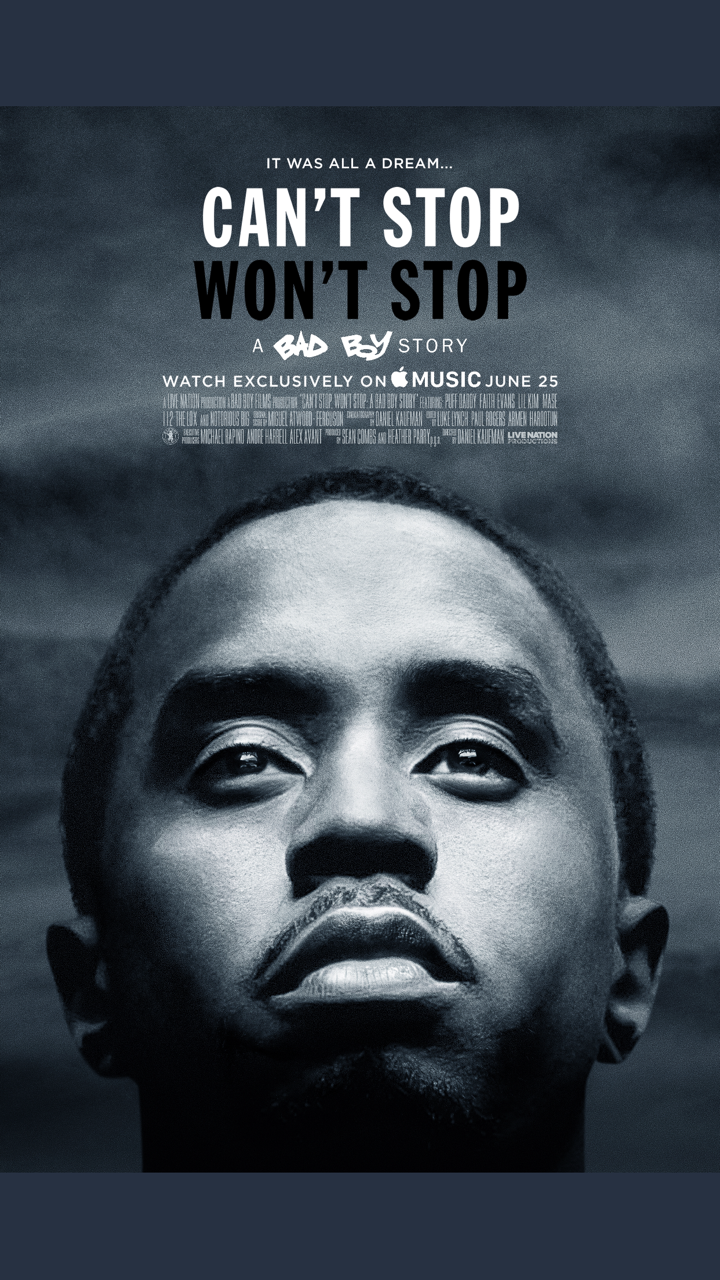
Sean Combs, a.k.a. Puff Daddy, is many things in life: a rapper, mogul, actor and businessman whose strong work ethic came about when he was a young boy. Following his time as an intern at Uptown Records, he came to form his own label, Bad Boys, which became a highly influential foundation for hip-hop and developed the careers of many artists including the late Notorious B.I.G. Combs’ image in the media, however, has been constantly pigeonholed into something which is not altogether true, and with the documentary “Can’t Stop Won’t Stop: A Bad Boy Story,” he looks to correct this so the world at large can see him for who he really is.

Directed by Daniel Kaufman, “Can’t Stop Won’t Stop” shows Combs at his most open and vulnerable as we learn how he became a millionaire at the young age of 19 and learned to navigate the real of corporate business. We come to see how the Bad Boy family he helped bring about filled his need for a family as he felt he never really had one before, and discusses how his world was forever shattered when the Notorious B.I.G. was murdered. We also see Combs get a Vitamin B12 shot right in the butt, and if this doesn’t show open he is willing to be on camera, then I am not sure what will.

“Can’t Stop Won’t Stop” also documents the Bad Boy artists reuniting for a 20th anniversary concert at the Barclay Center in New York which was put together in a mere three weeks, an insanely short schedule for any show to be assembled in. Among the artists, some of whom have not performed live for years, include Lil’ Kim, Mase, Faith Evans and Mario Williams among others.

I was lucky enough to speak with Combs while he was in Los Angeles, and we talked about how challenging it was for him to let go of the control he has over his image for this documentary. In addition, he also discussed the fun he had in sending up his own image in “Get Him to the Greek” and, in echoing what Nina Simone once said about being free means having no fear, admits to the place he finds himself being the most fearless in.

Please check out the interview above. “Can’t Stop Won’t Stop: A Bad Boy Story” opens in Los Angeles and New York on June 23, and it will be shown exclusively on Apple Music starting on June 25.

Can't Stop Won't Stop documentary poster

Exclusive Interview with Tim Smit on His Directorial Debut, ‘Kill Switch’

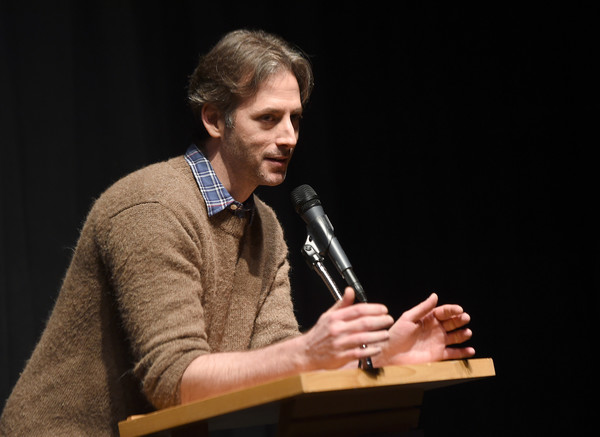
Tim Smit photo

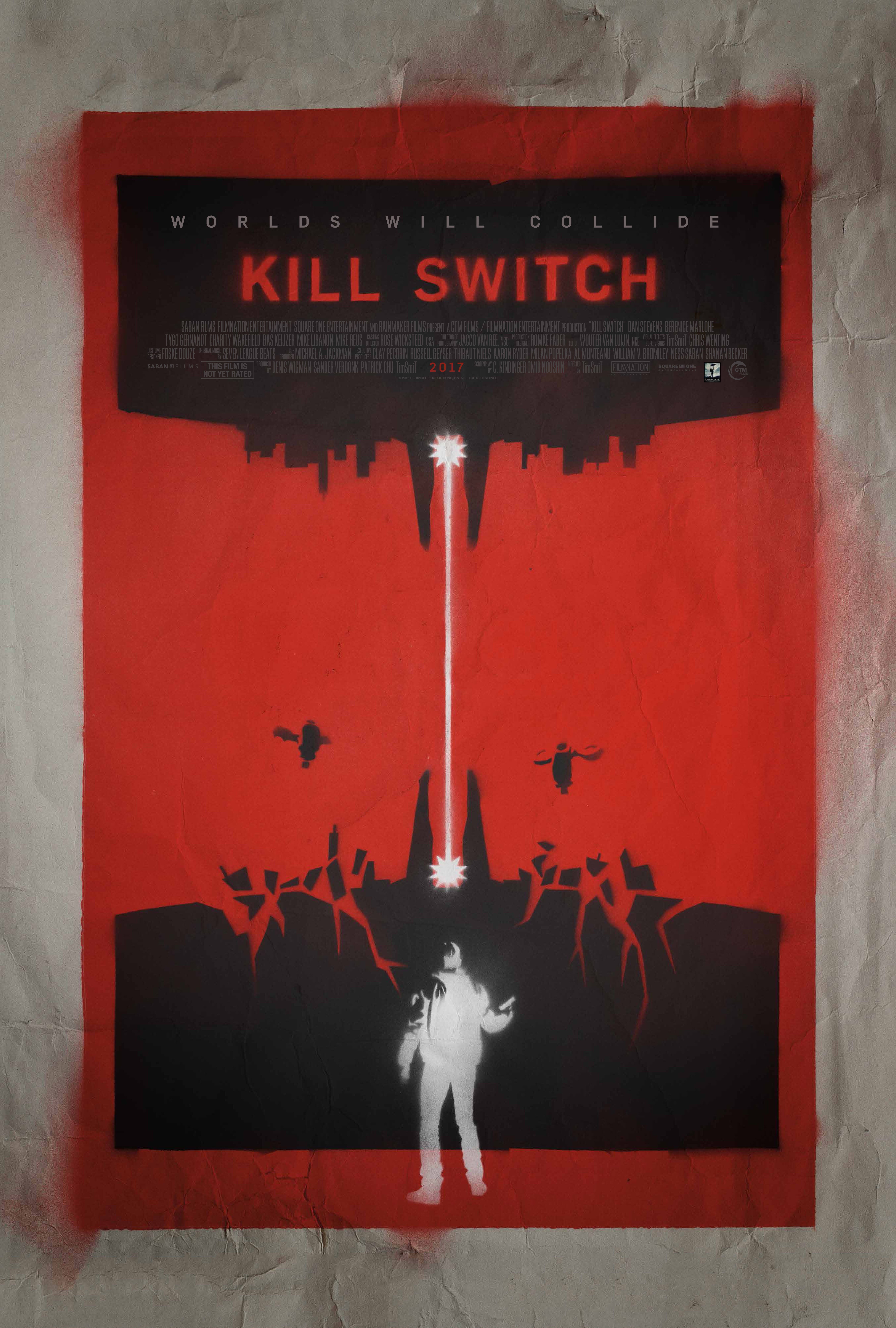
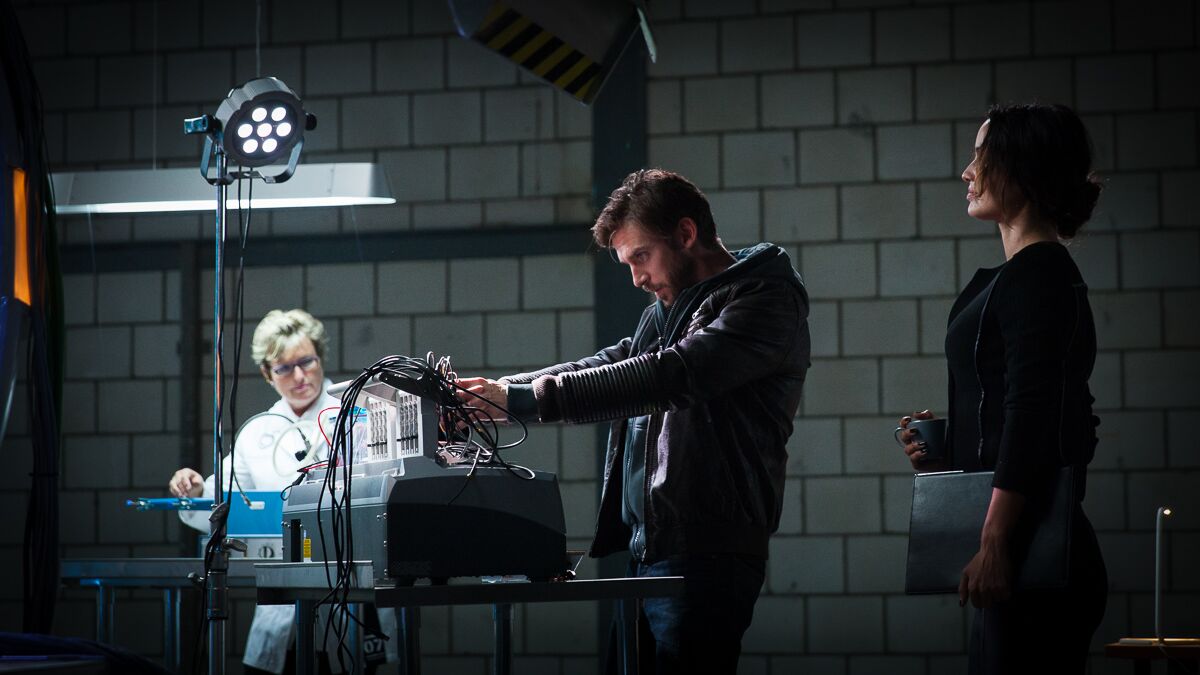
Acclaimed writer, director and visual effects artist Tim Smit makes his feature film directorial debut with “Kill Switch.” Based on his short film “What’s in The Box?” which gathered a large audience on YouTube, it stars Dan Stevens as physicist and NASA pilot Will Porter who is recruited by Alterplex, a power company which has built an enormous tower designed to harness unlimited quantum energy. The company’s vice-president, Abby (Bérénice Marlohe), informs Will a mirror universe has been created solely to drain energy from, and he is sent into it with a device called a “Redivider” which will balance the power between the two universes. But as you can imagine, nothing goes quite as planned as the mirror universe proves to more than anyone thought it could be as Will finds himself on the run from drones, soldiers, and people he is no longer sure he can trust.

“Kill Switch” takes place in a future version of our world, and it is largely a POV movie as we see much of the action from Will’s eyes as he struggles to say alive in an especially hostile universe. I talked with Smit about the movie’s origins, how the story evolved from a short into a feature film, and of how he was able to create a visual effects heavy movie in just 18 days and on a small budget.

Kill Switch poster

Ben Kenber: I really like the way this movie is set up because you are thrown into this story to where you cannot help but be gripped by everything going on. You’re not sure what is happening and, like Dan Steven’s character, you are desperate to find out. When conceiving “Kill Switch,” did you know how the story was going to end, or did you just start off with the idea and went from there?

Tim Smit: We knew that, when I did the short a couple of years ago, the box was going to be used as sort of a kill switch for destroying a parallel universe meant for energy harvesting. But we never really knew the full arc of the story before we hired the writers to get involved, so it took a while to get to the point we ended up with. It was interesting and a very steep learning curve for me to work on this as a conceptual arc as a writer and also as a director, and of course the visual effects too. It wasn’t fairly clear, but we got there as we developed the kill switch idea.

BK: The screenwriters you hired for this project, Charlie Kindinger and Omid Nooshin, what would you say they brought to this story which wasn’t in your short film?

TS: What they did is they fleshed out the characters much more than we already had in the original short. But they also wrote the dialogue and they did the screenwriting of the story. It was a difficult movie to write because of the whole POV aspect. It’s difficult to tell a story through POV. Also, we did have, for that reason, to introduce the whole flashback storyline to help us with that, and to help provide a rest for the audience so that they do not get POV tired. So, they focused on that the feeding of information so the audience knew enough to keep going with the movie, and they were more associated with that than the base idea.

BK: I did watch the short “What’s in The Box?” which led to the “Kill Switch” feature film, and the whole idea of the parallel universe is something which has been explored in science fiction constantly such as the “Dark Mirror” episode of the original “Star Trek” series. What inspirations did you draw from when putting together the short and the feature film?

TS: So, the main inspiration behind it was a couple of things actually. Visually it was inspired by a couple of video games because this was always meant to be sort of an homage to video gaming, and we used various inspirations like “Half-Life,” “Halo” and games like that. From a physics standpoint, the idea for the parallel world came from the concept of Schrödinger’s cat, a thought concept where you got a box and in it is a cat with a poison. If you keep the box closed, you don’t know if the cat survived because the poison still has a chance to kill the cat. You only know the cat is dead when you open the box. So, this is kind of like the idea for the initial mystery where you’ve got this black box and you don’t know yet what it is and you don’t know what it does, but it triggers you to go along and see what it ends up doing. So, the whole idea of Schrödinger’s cat was the main inspiration behind the short and the box as a MacGuffin.

Kill Switch POV still

BK: The POV shots reminded me a lot of Kathryn Bigelow’s “Strange Days” which also had them. When you put those shots together, did you have a set of rules you wanted your collaborators to follow during shooting?

TS: Yeah, we did a couple of things, some of them worked better than others, which we wanted to explore. One of them was, most of the time, we wanted to see the other actors. As a rule of thumb, we wanted Will Porter to be running behind the other characters so you can actually see what’s happening. So that was something we took into consideration while we filmed this because you are kind of used to the main character taking the lead, but in this case, he’s following them because otherwise it would be difficult to see them. It’s a very simple thing you have to keep in mind, and that was one of the rules we followed.

Kill Switch Dan Stevens

BK: Did Dan Stevens have to do any camerawork himself for the POV scenes?

TS: No. Obviously I would’ve loved to have used him, but we just didn’t have the budget for him for all the days. So, we just hired him on some of the days where he would be the voice, and of course on the days where we would shoot conventional scenes. Our DOP was basically the character, and then Dan came in later and did the ADR for the character.

BK: The special effects are actually pretty good for a low-budget movie like this. We see objects like train cars falling out of the sky. Did you set any rules for yourself as to what kind of objects and vehicles could fall into the echo universe?

TS: So, we focused initially on metallic objects just because that made it easier to create for us. The idea was that this parallel world is being arched for energy, but somehow the original world is fighting back as the universe is trying to balance itself out, and it does so by pulling over objects from the original universe into this echo universe. The rule of thumb was the first thing to be pulled over was small metal objects for various reasons, but you can figure out in physics that there are only four main forces, and one of them is electromagnetic. It is not inconceivable that something like metal will react first or that something else will react to metal first. It made easier for us to make these objects fall down. It’s harder to do entire buildings or something like water. It was a compromise, but I felt it worked from the basic physics ideas as well. We see this boat falling from the sky, it’s not metaphorical.

BK: The whole idea of an echo universe is interesting because the characters say there is not supposed to be any organic life in it, but we can see from the start there is.

TS: Yes, that’s what I like about the movie as well. It’s not as fleshed out as it should be, but the idea is that this company didn’t care. They were just interested in creating this echo universe, and they are telling us that it’ll be fine and there will be no organic life, but they don’t care. They just care about the energy, and of course they didn’t expect it to be that intense or of the rebellion that arrives. But I kind of like that idea of what are your priorities as a company. These huge oil companies are pretty much going across the line, and that’s what drew me to this story as well. That was something I could really personalize.

Kill Switch Berenice

BK: Dan Stevens has a very challenging role because he wasn’t on set too much, but he still had to get to the emotion of what is characters going through. Also, Bérénice Marlohe has a wonderfully intimate presence throughout the film. How did you come to cast both these actors?

TS: It was amazing to work with these two. The great thing about Bérénice and Dan is that they are both so interested in science fiction, and they are both really interested in broadening their own horizons and trying to do something new. It’s an experiment, this film. Let’s be honest, you don’t see a POV movie every day. It’s an attempt to do something new especially with a director that’s also doing all of the effects. It was an experiment on multiple levels, and they were committed and went for it, and that’s what I really appreciated about them. It was a very difficult movie especially for Bérénice because she was acting against I camera where there is no reaction, and most of the enemies are CG. It was very demanding for her to do, but she gave it her best and gave it everything she had. We had 18 days to do everything.

BK: 18 days? That’s very impressive especially for a science fiction movie.

TS: It was something I underestimated when I started working on this. I was experienced as a visual effects artist, but I wasn’t experienced as a character director. You would think shooting this movie, even though it was 18 days, would’ve given you a whole set of problems and obstacles to get over, which we had. But even after it was all done, that’s when the real challenge started. You would think that after having a number of years of the effects experience that it would be easier, but it was actually the other way around. It was very difficult for me to combine the directorial duties and the effects duties at one point. You can get so involved in the technical part that you get sort of a tunnel vision and you still have to be the director. There is the reason why the director is separate from the visual effects department because that makes the movie better.

Kill Switch vessel

BK: “Kill Switch” takes place in a future which seems not too distant from our own. We never get an exact date of the time the movie takes place in. Was that intentional on your part?

TS: Yeah, actually it was, but sometimes in the movie you do see the date on the newscasts, but it was never deliberately mentioned. I felt, in my mind, the movie was in the near future, but the concepts we are introducing we do not have access to in the near future. The problem with going further into the future is your design and your world view changes, and the budget doesn’t allow that. If you really want to know which year it was, it was actually 2043. So, it was further into the future, but not that far. It was a budget reason.

BK: You studied natural sciences as a student. Did those studies inform the science of this movie?

TS: Yeah, the studies did help. A lot of people wonder why I studied natural sciences if you wanted to be a filmmaker, but the way you were trained as a scientist really does help in making movies. There’s a certain amount of problem solving that you are used to which is really helpful as a director, and the visual effects that I did, they tend to be of a physical origin. With physics, you are trying to explain or describe the real world. With visual effects, you are kind of doing the opposite. You are using formulas to create a fake or, at least, a realistic looking fake world. To me, that is really fascinating and the physics background helped in doing that.

I want to thank Tim Smit for taking the time to talk with me. “Kill Switch” is now playing nationwide at the following theaters:

Laemmle Monica Film Center, Los Angeles

Cinema Village, New York

AMC Rio, Washington, D.C.

AMC Methuen, Boston

AMC Southfield, Detroit

AMC Arizona Center, Phoenix

AMC West Oaks, Orlando

AMC Ritz Center, Philadelphia

AMC Woodridge, Chicago

AMC Town Center, Kansas City

Poster, stills and trailer courtesy of Saban Films.

Click here to visit the movie’s website.

Jennifer Grey and Jason Reitman Revisit ‘Ferris Bueller’s Day Off’ at New Beverly Cinema

Ferris Bueller Jennifer Grey

On Friday, February 19, 2010, Jason Reitman began his program of movies at New Beverly Cinema in Los Angeles. The first double feature of his program was “Ferris Bueller’s Day Off” and “Election,” great movies dealing with high school and teenagers in an intelligent way and which starred Matthew Broderick. “Ferris Bueller’s Day Off” was one of John Hughes classic films from the 1980’s which everyone has seen at least nine times. Reitman remembered wanting to see it with his dad when it first came out, but his father, Ivan Reitman of “Ghostbusters” fame, was busy shooting “Legal Eagles” and couldn’t get away from the set. They ended up going to the movies later, but instead they watched “Big Trouble in Little China,” John Carpenter’s ode to martial arts movies which was not as successful, but later become a beloved cult film.

Ferris Bueller's Day Off poster

Reitman said he considers “Ferris Bueller’s Day Off” to be Hughes’ love letter to Chicago. Indeed, Chicago does look very beautiful as shown here. These days, it’s rare to see it without snow covering it. Richard Belzer has a brilliant quote when he played John Munch on “Homicide: Life on the Street,” “Chicago has two seasons, winter and St. Patrick’s Day.”

Reitman saw Ferris Bueller as the guy who knows everyone is dying from a terminal disease. Knowing this, he lived every day as if it were his last. He then went on to say “Ferris Bueller’s Day Off” is a movie about people dying, and the last moment of joy anyone has comes at the end of the parade when Broderick is out shaking his bod to The Beatles’ version of “Twist and Shout.” The acclaimed director was serious about this and even said, “If you came out of this movie happy, THEN YOU MISSED THE ENTIRE POINT!”

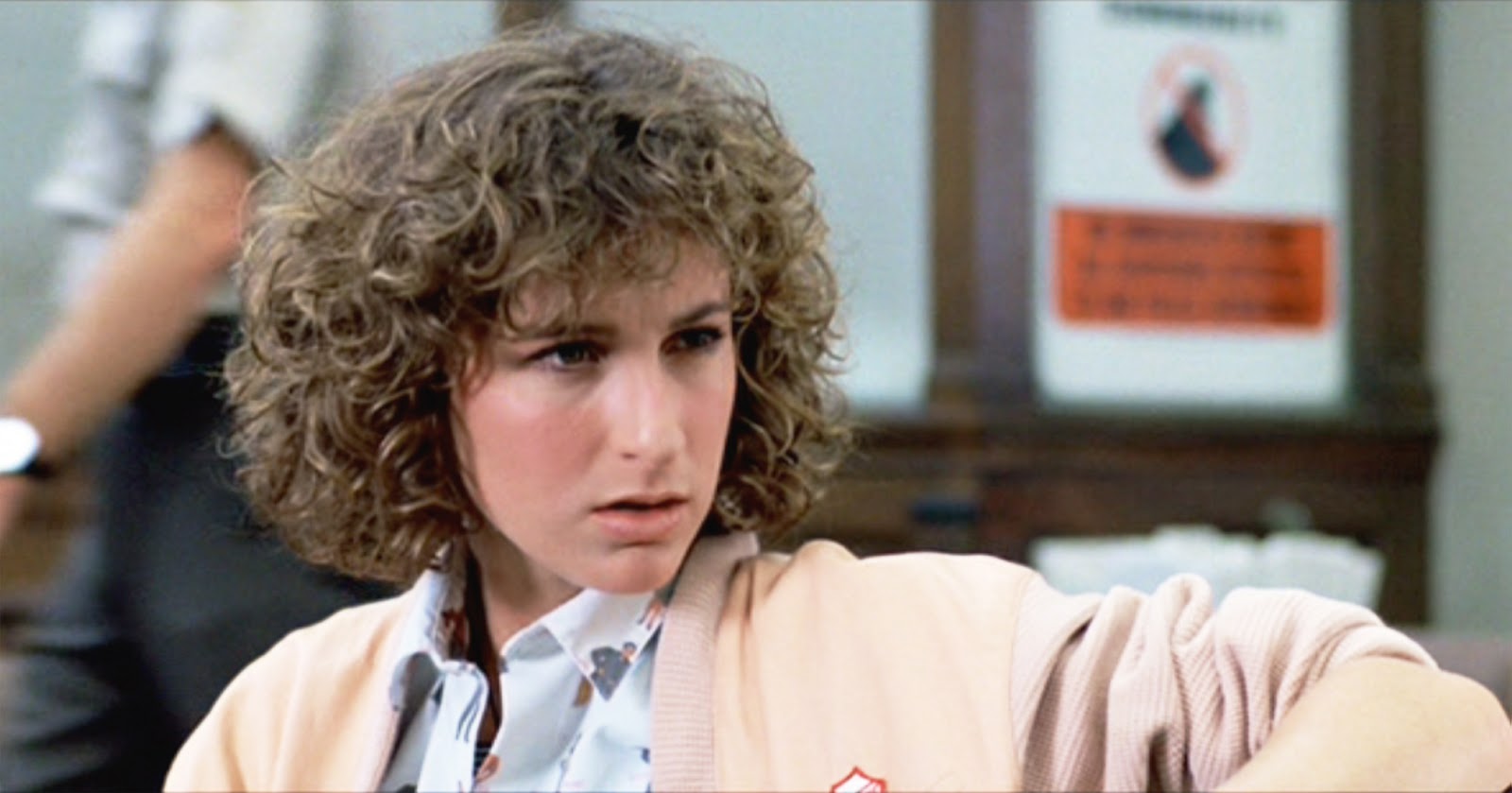
Before the movie began, Reitman brought out a special guest, Jennifer Grey. She played Jeanie Bueller, Ferris’ largely unpleasant and infinitely resentful little sister. Grey would go on to become a big star when she starred in “Dirty Dancing” opposite the late Patrick Swayze. Reitman said he asked Grey to come just this morning, and she was very gracious to appear at such short notice.

Grey warned Reitman upfront she smoked a lot of pot during the movie’s making, so she doesn’t remember a lot of it. However, during her brief time with Reitman, she did remember quite a bit, so maybe all the smoking helped.

One of the big revelations was that Grey admitted was never really a big fan of Hughes before she got cast. She had just seen “Pretty in Pink” which he wrote the screenplay for but didn’t direct, and she declared she didn’t get it. As a result, Grey went into the audition not really caring if she got the part or not. She didn’t even try to hide her attitude towards Hughes when talking to him about how she didn’t really care for his films. It was this attitude which got her cast as the bitchy little sister of Broderick’s iconic character.

Another big revelation we learned was Hughes and Broderick were always at odds with one another, and the tension between them was always high. Broderick found it very hard acting to the camera, one of the signature devices of this movie. Grey also said Broderick was “very slow” in putting a performance together, and this was certainly the case when he played Ferris. It got to where Hughes was constantly waiting for Broderick to start giving him what he wanted, and there were points where Grey said Hughes leaned over to her and said, “Is he ready now? Is he warmed up? Is he gonna give us ‘Brighton Beach Memoirs?!’”

Still, Grey recalled her experience of making “Ferris Bueller’s Day Off” as being “heaven on earth,” and she felt very safe with Hughes as a director to where she never felt self-conscious about anything she did. She admitted she loved every single experience she had making this classic, and she even developed a big crush on Hughes, describing him as being a “Baby Huey.”

Reitman asked how Charlie Sheen got cast as the drug addict who befriends Jeanie Bueller while waiting at the police station. Grey explained she was the one who got Sheen involved as she had just done “Red Dawn” with him. There was actually a lot of improvisation during the police station scene, and Grey said the moment where Jeanie says some people call her Shawna was born out of that.

One of the questions really burning on Reitman’s mind was what it was like for Grey when she worked with “her brother.” Broderick and Grey were actually dating for a time during this movie’s making, and she replied the only time you see her character and Ferris together in the same room is at the very beginning and right near the end.

Before the movie started, Grey finished by saying Hughes did such a great job in capturing the voice of the time and of teenagers in general. She pointed out what we all came to see, that Hughes very much understood the gravitas of being a teenager and of how difficult and frustrating those years can be.

It was great to see Grey come out for this special screening of one of the best and most entertaining movies of the 1980’s. Reitman went on to say we all must be wondering what became of Ferris Bueller after he graduated from high school. There was always talk of a sequel which would show Ferris as a burned-out executive of some corporation, and a day off from this kind of job is always welcome no matter what day of the week it is. What did Reitman think? For that, he said to check out Alexander Payne’s “Election.”