The Stars of ‘Repo Man’ Drop By New Beverly Cinema

Repo Man poster

More than 30 years after its release, Alex Cox’s cult classic “Repo Man” still holds up with its truly authentic punk attitude and black humor. This was proven to be the case when a special screening of the movie was held at the New Beverly Cinema which brought out many fans eager to see some of the actors who starred in it. Among them was the great character actor Harry Dean Stanton who plays Bud, the Mr. Miyagi or Yoda to Emilio Estevez’s Otto. Also there was Tracey Walter who played the philosopher of mechanics, Miller, Olivia Barash who played Otto’s would-be girlfriend, Leila, and Del Zamora as Lagarto, one of the Rodriguez brothers.

“Repo Man” is so defiantly punk and proudly refuses to fit into the realm of regular mainstream entertainment. Never politically correct, it delves into a highly exaggerated, not to mention intense, depiction of the life of a repossession agent. Watching it makes you realize there are not enough movies like this these playing at the local multiplex. We need something to balance out all these watered-down blockbusters which comes to us like McDonald’s Happy Meals from the world of corporate cinema. This movie was actually intended to be a UCLA student film, but somehow it managed to become something much bigger.

The actors came out immediately after the end credits concluded, and they looked really happy to be at the New Beverly. Stanton, however, looked like he was three sheets to the wind and occasionally spoke about things not really related to “Repo Man.” At one point he even asked, “Can I smoke in here?” The other actors sympathetically told him they weren’t sure the theater would allow him to smoke. “We can’t smoke in here?” Stanton said, “That’s fucking nonsense!” The crowd couldn’t help but laugh as Stanton looked like he was perfectly prepared to keep smoking for the rest of his days.

Stanton said he couldn’t remember exactly how he got involved in “Repo Man,” and added this lack of memory up to being one of his “senile” moments. Walter, however, said he got his role after having previously worked with producer Michael Nesmith on “Timerider.” Barash said she was originally encouraged not to do the movie on the advice of her agents as they didn’t know the people involved in it very well, and they thought it might be dangerous for her to even go to the audition. But Barash was and still is a huge punk rock fan, and she got immediately sold on “Repo Man” upon seeing that bands like Black Flag were going to be involved. She even told us Iggy Pop, who composed the movie’s theme song, was her neighbor in the apartment building she lived in back then.

Zamora didn’t say exactly how he got cast, but he did remember how Cox got Nesmith involved as a producer. Simply put, Nesmith’s car had gotten repossessed, so he could relate to those car owners who were not paying up on what they bought. Zamora also talked about how Cox got both Stanton and Estevez involved in “Repo Man.” Basically, Cox caught up with Estevez and told him Stanton was already connected to the movie even though he wasn’t at that point, and then he went to Stanton and told him Estevez was connected to the film even though he wasn’t. Suffice to say, both actors did become involved.

Stanton then went on to say he and Cox didn’t always get along. During the shooting of “Repo Man,” Cox got so sick and tired of Stanton telling the actors what to do and threatened to fire him on the spot. To this Stanton replied, “Kiss my ass! Fire me so I can get paid!” Later on, Stanton asked Zamora to let Cox, whom Zamora is still in touch with, know he’s not mad at him anymore and that he would welcome him as an honored guest the next time he saw him.

“Repo Man” also had an abundance of generic food and drink items on display, and the audience couldn’t help but laugh at just how openly generic they all were. Product placements are usually reserved for big budget movies which are more likely to be bland and inoffensive. Zamora said they really had no money so they did talk with companies who were willing to do product placements in the movie. And then they read the script… What they ended up using was a generic brand from Ralphs Supermarket, one of the most dominant of supermarket chains in Southern California today. Of course, had “Repo Man” been made today, Ralphs might not have been as inclined to be involved.

In the end, Zamora and Walter said the art directors did the majority of the work and succeeded in creating the world of the movie which was very convincing despite the low budget. Then Stanton spoke up again and asked who Zamora played in “Repo Man,” and Zamora told him he played Lagarto, one of the Rodriguez brothers, to which Stanton replied, “How many brothers were there?”

 Speaking of the Rodriguez brothers, Stanton’s character of Bud has this intense confrontation where he wields a baseball bat which he threatens to bash the brothers with. Stanton said Cox gave him a rubber bat to use, but he wanted to work with a real one instead, and this led to a fight between the two of them. Zamora remembered this moment on set and said Stanton was under control, but Stanton, who was starting to remember more of the filming, made it bluntly clear he was really crazy and didn’t have any idea of what he was doing.

Walter was asked about his famous “shrimp monologue” scene, and he said it was originally meant to be just an audition piece. It was never intended to be in the film, but Walter fought for it. Indeed, it makes for one of the most memorable moments in “Repo Man” as his character of Miller describes the way he sees things:

“A lot o’ people don’t realize what’s really going on. They view life as a bunch o’ unconnected incidents ‘n things. They don’t realize that there’s this, like, lattice o’ coincidence that lays on top o’ everything. Give you an example; show you what I mean: suppose you’re thinkin’ about a plate o’ shrimp. Suddenly someone’ll say, like, plate, or shrimp, or plate o’ shrimp out of the blue, no explanation. No point in lookin’ for one, either. It’s all part of a cosmic unconsciousness.”

To this day, Walter says that every once in a while he runs into someone who utters one of his signature lines from “Repo Man” like, “John Wayne was a fag!” But of course, the real signature line of “Repo Man” belongs to Stanton’s character of Bud who says, “The life of a repo man is always intense.”

One audience member asked the actors if they still talk to Estevez after all these years. Zamora and Walter said Estevez still works, but more as a producer and director these days because that’s where his passion lies. Estevez still acts occasionally, but it apparently doesn’t interest him as much as it used to.

Wrapping up the evening, the actors were asked if they knew they were making something special during the filming of “Repo Man.” Some of them believed they were, but Stanton bluntly said, “I didn’t give a shit if it was special while making it.” Despite his apparent demeanor and not being able to remember his entire experience on this particular movie, Stanton still had us laughing hysterically. Not once did he try to ruin the fans’ appreciation of “Repo Man.” Whether he realizes it or not, no one could have played Bud better than him.

Many were in agreement when Stanton said both “Repo Man” and “Sid & Nancy” were truly the peak of Cox’s directing career. We haven’t heard as much from him since then, but Barash said he just finished making a quasi-sequel called “Repo Chick” which she has a cameo in it. However, this has not stopped Universal Pictures from sending Cox cease and desist letters as they insist only they have sequel rights to “Repo Man.” Still, Cox has been showing it at festivals, so it looks like nothing is going to stop him.

Before everyone got up and applauded, another audience member asked a question which brought to mind one of Bud’s great lines from “Repo Man,” “Is there any good place around here to get sushi and not pay?” Stanton left us with his best answer of the evening, “That’s where we’re going right now.”


William Friedkin and Guests on Making ‘To Live and Die in L.A.’

To Live and Die in LA

Director William Friedkin declared “To Live and Die in L.A.” to be one of his personal favorites of his career when he dropped by the Aero Theatre in Santa Monica. The film was being shown as part of American Cinematheque’s tribute to him, and it played as a double feature with “The French Connection.” But while Friedkin was scheduled to be there, he brought along two of the movie’s stars as surprise guests: William Petersen who played Secret Service Agent Richard Chance, and Darlanne Fluegel who portrayed his “girlfriend” and informant Ruth Lanier.

With “To Live and Die in L.A.,“ Friedkin worked with casting director Bob Weiner who had also worked on “The French Connection.” With this film, Friedkin didn’t want any stars and could only consider no-name actors as the budget was only $6 million. In a sense though, casting unknown actors was a plus for this film as the characters they play walk a thin line between good and evil, and having recognizable stars might affect how this came across.

Known these days for “C.S.I.,” it was a shock to realize that “To Live and Die in L.A.” was Petersen’s first lead role in a movie (he previously had a small role in Michael Mann’s “Thief“). Weiner discovered the actor when he was playing the lead in a Canadian production of “A Streetcar Named Desire.” Petersen said he hadn’t done any movies nor did he have an agent at the time. All he knew about Friedkin was the films he directed, and they met in New York to do a scene together. But Petersen didn’t ever get around to finishing when Friedkin interrupted him to say, “That’s good enough for me. You got the part!”

From there, Petersen said he didn’t know what to do. Excited as he was for the opportunity, he was already scheduled to be in another play soon and wasn’t sure how to go about negotiating with Friedkin or the studio. It didn’t even occur to him he would be making $400 a week! So, he ended up talking with John Malkovich, who knew him from Steppenwolf, to get advice on what to do. Later, Petersen went back to Friedkin saying he wouldn’t be able to play Richard Chance due to his prior theatrical commitment. To this, Friedkin told him, “No problem. We’ll wait for you.”

Now how cool was that?! Seriously, how many other directors, let alone movie studios, would wait on an actor who is not even an established name yet? Considering the sheer charisma Petersen exudes onscreen just from one look on his face, it makes perfect sense why Friedkin waited on him before he started production.

Although he was used to doing theater more than film, Petersen said he found making “To Live and Die in L.A.” a “freeing, fun experience” and thought all movies would be exactly like it. This, of course, got a good dose of laughter from the audience as we know they are not. Despite the long hours on set, Petersen was never tired at day’s end.

In researching his role, Petersen worked with Gerald Petievich, the former Secret Service Agent who wrote the book this movie is based on, and with criminals including actual counterfeiters. This led Friedkin to tell the audience how Petievich ended up getting a counterfeiter paroled from jail just so he could create the fake money they needed. Friedkin even admitted he passed so many fake bills to where he concluded the government’s money was worthless and only paper. Some kids of the special effects supervisor were not as lucky as they ended up taking some of the fake money to buy candy, and a Treasury Agent got called on them in ten minutes flat.

Fluegel was shocked about getting a part in “To Live and Die In LA,” and she created one of the film’s most unforgettable characters. She said working with Petersen was “so easy,” and they both agreed there never was a moment between them which didn’t feel real. We always hear these stories about how actors don’t like doing sex scenes and how awkward they can get, but Fluegel said they were actually easy to do. She also made it clear neither of them actually had sex onscreen even though it looked like they did. When they worked together, everything always flowed perfectly.

But one great behind the scenes story Petersen told was when they were at the airport and Chance was chasing down John Turturro’s character of Carl Cody. This had Petersen jumping on top of the moving walkway while in pursuit, but in rehearsing it, security came over and told him and Friedkin it was against safety regulations and didn’t want him to do that again. Petersen, however, was insistent as it was easier for him to jump on top, and it worked better for the scene. So, when security was out of hearing range, Friedkin told Petersen to jump on top anyway when he said action, and that after he said cut, Friedkin would yell at him not do it again, making it look like he didn’t forget what security said previously. Once again, Friedkin does movies his way regardless of the warnings others throw at him.

Like several of William Friedkin’s movies which came out after his heyday with “The French Connection” and “The Exorcist,” “To Live and Die in L.A.” was not a big hit when first released. It was only after its debut on video and DVD when it gained a cult following which has gotten bigger and bigger over time. Seeing it on the big screen was a blast, and it deserves to be ranked alongside the best movies of Friedkin’s career. Besides, this is much more preferable to watching him pick his feet in Poughkeepsie.

Exclusive Interview with Lake Bell and Ed Helms about ‘I Do… Until I Don’t’

I Do Until I Don't poster

Lake Bell made a name for herself as an actress in television on “Boston Legal” as well as in movies like “It’s Complicated” and “No Strings Attached.” In 2013, she made her feature film directorial debut with “In a World…” and it showed her to be as talented behind the camera as she is in front on it. She now returns to the director’s chair with the comedy “I Do… Until I Don’t” which she also wrote and stars in as Alice. The story revolves around three couples who are at various points in their relationships, and they end up becoming subjects for a documentary directed by the highly regarded, yet hopelessly pretentious, filmmaker Vivian (played by Dolly Wells). What follows is a well-acted, written and directed movie which looks at marriage and asks if it is an institution worth preserving or instead worthy of a reboot.

Bell was joined by actor Ed Helms at the “I Do… Until I Don’t” press day held at the London Hotel in West Hollywood, California. Helms plays Alice’s husband, Noah. As the movie opens, the two of them have been married for 10 years, and they begin to wonder if boredom has become an overriding factor in their relationship as they discuss the possibility of having children. Just when you think you know where their relationship is heading, things end up taking an unpredictable turn.

I spoke with Bell about how the screenplay seemed to come together organically and how it evolved from when she started writing it to where she finished it. With Helms, we discussed how wonderfully he and the other actors worked with one another as their chemistry onscreen is never in doubt.

Check out the interview below, and be sure to check out “I Do… Until I Don’t” when it arrives in theaters on September 1, 2017.

Edgar Wright and Quentin Tarantino Look Back at ‘Dirty Harry’

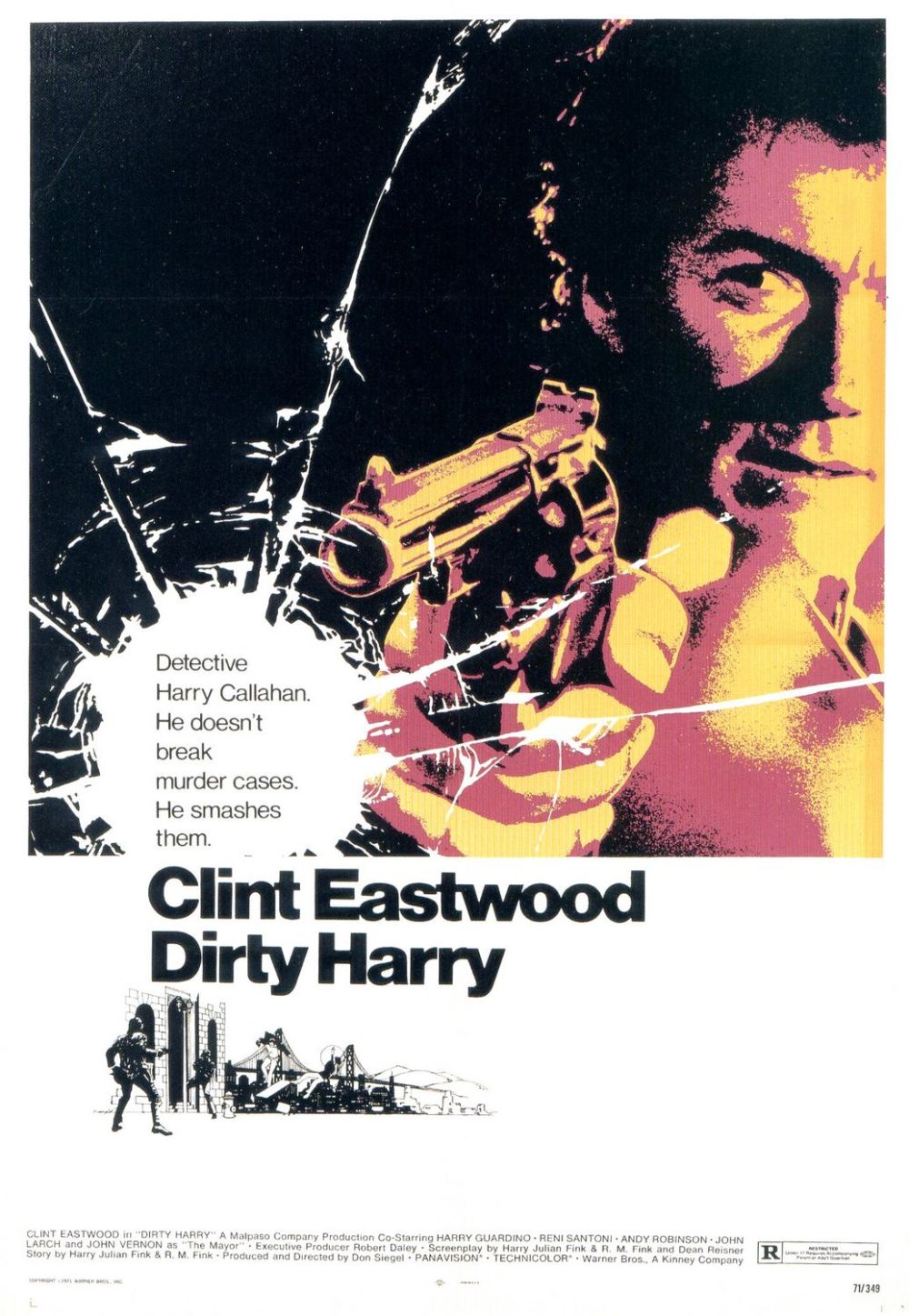
Dirty Harry poster

Of all the movies Edgar Wright selected for The Wright Stuff II Film Festival at New Beverly Cinema, “Dirty Harry” is the one he has watched the most. Wright screened a nice print of the 1971 classic along with another movie called “The Super Cops,” and joining him to talk about it was filmmaker Quentin Tarantino.

They started off riffing on trivia about how the original title for “Dirty Harry” was “Dead Right,” and how it was first going to star Frank Sinatra who later pulled out when the 44-magnum ended up injuring his wrist. It also turned out the late Irvin Kershner, who directed “The Empire Strikes Back,” was the first choice to direct the movie (Don Siegel eventually took the job). Tarantino and Wright also talked about how actor Albert Popwell played a different black stereotype in each “Dirty Harry” film except for “The Dead Pool,” and they both wished he played the mayor in that one.

For Wright, what he loved about “Dirty Harry” was the grittiness of its main character and the atmosphere of San Francisco. On the DVD for “Hot Fuzz,” Wright did a location tour where the film was made, and he even checked out the deli where Eastwood was filmed eating a hot dog when the bank robbery took place. As for the film’s score by Lalo Schifrin, he declared it his all-time favorite saying it marked the birth of “acid jazz.”

But much of the treasure trove of information came from Tarantino who said he first saw “Dirty Harry” when he was five or six years old, and he described it as a “political lightning rod” upon its release. Apparently, it got a lot of crap thrown at it by liberal critics who didn’t want a police fascist solution as well as from right wingers who got freaked out by Scorpio and the ills of society.

The way Tarantino viewed it, however, “Dirty Harry” does have a solid agenda. When Andy Robinson played Charles “Scorpio” Davis, there had never been a villain like him before in movies and, the term serial killer had not really been coined yet. The agenda was for there to be new laws for new crimes, and “Dirty Harry” was screaming for those new laws. Scorpio was not your average villain, and that he got such a kick out of his crimes was easy to see. There was no cure in store for such a psychotic character like this one.

Both Tarantino and Wright agreed “Dirty Harry” really holds up after 40 years. Much of this is due to its sequels treating the iconic character more as a superhero than a regular human being.  With “Magnum Force,” Tarantino felt it was made more for critics of the first movie than its audience as it preached against its predecessor and the character itself by having Harry go after those taking the law into their own hands. This was the same deal with the other sequels, but “Sudden Impact” is the lone exception. Wright remarked at how, along with John Carpenter’s “Halloween,” “Dirty Harry” has one of cinema’s most perfect endings which was eventually ruined by sequels.

They also talked about Siegel who had already been around for a long time before he directed “Dirty Harry.” Siegel was a B-movie genre director from the 1950’s and a Hollywood craftsman who eventually became an auteur. For the most part, Harry Callahan represented the quintessential character of his films; the cop who takes the law into his own hands. Even after directing the 1971 classic, Siegel would continue to have a long and healthy career in films, eventually reuniting with Eastwood on “Escape from Alcatraz.”

Tarantino also described “Dirty Harry” as the single most ripped off and imitated action movie of the 1970’s. He even gave a list of every single movie which stole from it: “McQ,” “Newman’s Law,” “Nightstick,” and everything from Cannon Films. The similar thing about the ripoffs was they lost all the political subtext which made “Dirty Harry” such a strong film. It became all about going after some big drug dealer or crime syndicate, and there was nothing political about that. When it came to 1970’s movies, the only others which were stolen from as much were the ones starring Bruce Lee.

“Dirty Harry” apparently also boasts the first homosexual date in cinema history as seen through Scorpio’s scope rifle. Tarantino said it was the first instance of unforced male sexuality in movies, and he still remembers the audience laughing at this scene when he first saw it. Back then he thought the audience wanted this couple killed, pointing out how they were not as enlightened as we are today, and that they were culpable for their “sinister intentions.”

Hearing these two great filmmakers talk about this Don Siegel/Clint Eastwood classic made for one of the most interesting evenings I have ever spent at New Beverly Cinema. A new generation of audiences will look at “Dirty Harry” differently and may see it as tame compared to plethora of serial killer movies we see today. With the popularity of “The Silence of the Lambs” and the “Saw” movies among others, serial killers have long been the norm in American cinema, so the accomplishments of the 1971 classic threaten to seem diluted as a result.

Thanks to Edgar Wright and Quentin Tarantino, we are reminded of “Dirty Harry’s” place in cinematic history and how it opened doors not just for Eastwood, who made the transition from westerns to other films, but for so many other movies as well for better and for worse.

John Carpenter Looks Back at ‘Escape From New York’ and ‘Escape From LA’

John Carpenter Escape From New York photo

“Escape Artist: A Tribute to John Carpenter” continued with the exploits of Snake Plissken in the double feature of “Escape From New York” and “Escape from LA” at the Aero Theater in Santa Monica. These films featured some of the collaborations between Carpenter and Kurt Russell who first worked together on “Elvis.” They quickly became great friends and went on to work together on several other films including these two and “Big Trouble in Little China.”

The emcee warned us that the print of “Escape From New York” was pretty faded as it was an original print and the only one American Cinematheque could get their hands on. This was being generous as it looked like it had been slaughtered by countless film projectors, and the color was faded to where everything looked pink. It is astonishing it didn’t break apart in the projector. Still, the fans still enjoyed watching the film, one which they have seen hundreds of times before. They laughed when “1997 NOW” came up and when Lee Van Cleef speaks into this enormous cell phone no one would have today, let alone in 1997.

After “Escape From New York” ended, Carpenter came to the stage and was greeted with another thunderous standing ovation. Carpenter quickly acknowledged the crowd by saying, “Thank you for coming out to see the movie tonight, but I got to tell you this is the worst fucking print. My fucking God! There’s no color in it!” The audience laughed loudly as they were in complete agreement.

Escape from New York poster

The discussion started off with a question about the genesis of the project. Carpenter talked about writing the script back in the early 1970’s when there was a great sense of cynicism in America about our President and in response to the hostage crisis in Iran. He also admitted he was inspired by two of his favorite movies back then, “Dirty Harry” and “Death Wish.” Those two movies involved men driven to the brink emotionally and who took it upon themselves to wreak vengeance on those who wronged them. Like those characters, Snake Plissken gets the job done, and this brought a lot of satisfaction to audiences as nobody in the real world seemed to be accomplishing anything.

Carpenter said he initially wanted Clint Eastwood to play Snake Plissken. For one reason or another, it did not work out. He also said he had shopped this screenplay around to several studios which rejected it outright, but fortunately he had a multiple picture deal with Avco Embassy which had produced “The Fog.” Ironically, they wanted Charles Bronson for the title role. Somehow, everything came together when Russell got cast as Snake Plissken, and he portrayed the character as an asexual human being who cares about nothing more than staying alive. In the process, he created one of the most memorable anti-heroes ever seen in a movie.

Carpenter also talked about Lee Van Cleef, a favorite actor of his from Sergio Leone westerns, who played Police Commissioner Bob Hauk. Lee had seriously injured his knee during the filming of another movie and had never gotten it fixed, and as a result he was in constant pain while making “Escape from New York.”

With a budget of only $5 million dollars, “Escape From New York” needed to be filmed as quickly as possible. Carpenter said the rule of low budget filmmaking was to shoot as little film as possible and to make it as long as you can. In fact, there is actually only one real shot of New York in the entire movie which features the Statue of Liberty, and it pans from there and dissolves into a set in Los Angeles. A lot of what you see of New York in the movie are actually models and matte paintings done by artists from Roger Corman’s New World Pictures, among them James Cameron. Much of the movie was filmed in downtown St. Louis which had had a huge fire that destroyed several city blocks. The city let Carpenter and his crew film there in triple digit temperatures, and they even shut the power down for them when they filmed at night.

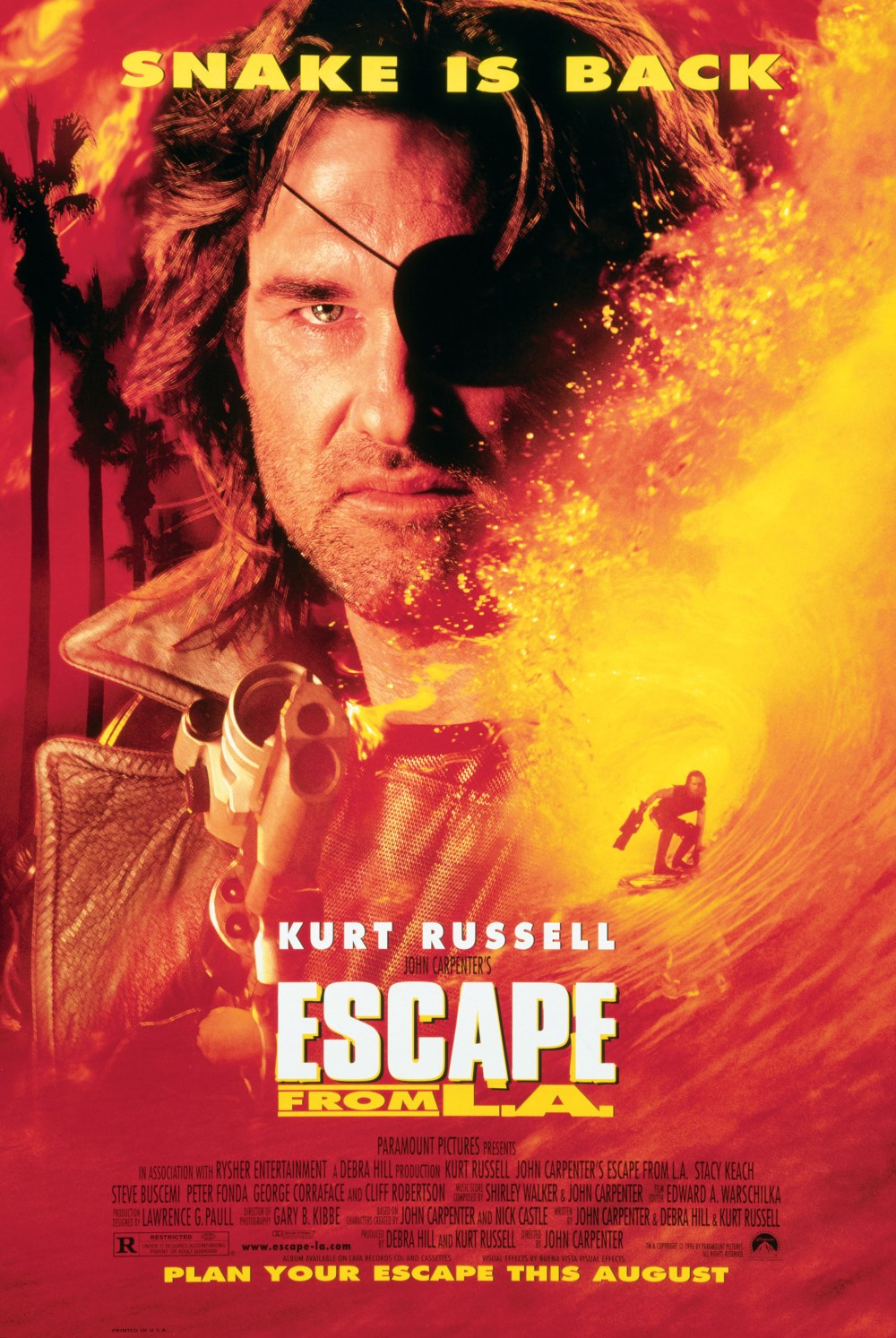
Escape from LA movie poster

When it came to making “Escape from LA,” Carpenter had a budget of around $50 million to work with. But while he and Russell had more time and money, Carpenter said he had the hardest time writing the screenplay for it because he felt that everything he was writing was “bullshit.” What got him to revisit Snake Plissken was that Russell was so keen on playing the character again, and they solved their script problem by moving the action to Los Angeles which was in a constant state of denial with all the earthquakes and natural disasters occurring there. They simply took the same scenario of the original movie and updated it to reflect the current state of the city while filming.

“Escape From New York” may have had only one real New York shot in the entire movie, but all of “Escape from LA” was filmed in Los Angeles. The sequel was shot over a period of one hundred and three nights, and Carpenter said he found filming at night to be very “soul draining” as it changes the way you see things and the darkness infects you in a very unhealthy way.

One audience member brought up how at one point it looked like Carpenter and Russell might do a third movie called, “Escape from Earth.” This never panned out because “Escape from LA” unfortunately bombed at the box office. There was also supposed to be a video game based on the movies, but the company involved with it ended up going back to the past by resurrecting Pac-Man. There was even talk of a television series which would act as a prequel to the movies and even an anime movie chronicling the further adventures of Snake Plissken, but neither of those projects became a reality. Despite the box office failure of “Escape from LA,” there are still many people out there who are intent on continuing the exploits of their favorite antihero.

These days, Carpenter said he is content to sit at home and watch the NBA Finals or play video games. He told the audience he had just finished playing “Ninja Gaiden 2” and would be moving on to “Metal Gear Solid 4” next. It doesn’t seem like he is in a big hurry to make another movie, but this could change if the studios pay him a lot of money. Carpenter feels the movie business keeps changing on him, and he does not appear to be as enthusiastic about making films as he once was.

Carpenter closed out the evening by saying he had to go meet with his drug dealer. Before he left, the moderator gave him a gift saying Carpenter had given so much to us that he wanted to give something back. This something was the “Escape from New York” board game which is, apparently, the most complicated board game ever.

After the discussion ended, he did take some time outside the theater to sign autographs and pose for pictures with fans who still see him as a big inspiration. If you look at movies of recent years, you will see Carpenter’s influence over many of them both in their visuals and the music. To this day, he remains one of the important directors of the sci-fi and horror genre, and his cult following remains as strong as ever.

As the evening wore on, many came back inside to watch “Escape from LA.” The print was in much better condition, but this didn’t stop it from breaking down during the movie’s last seconds. For those who know how this sequel ends, it only seemed comically appropriate as Snake shut down… Well, you know.

Denny Tedesco and Company Look Back at ‘The Wrecking Crew’

The Wrecking Crew poster

The Wrecking Crew” joins the company of great documentaries like “Standing in the Shadows of Motown” and “20 Feet from Stardom” as it puts the spotlight on a group of musicians who have been in the background for far too long. The title refers to studio and session musicians based in Los Angeles, California who played anonymously on many famous records back in the 1960’s. During a decade dominated by The Beach Boys, The Mamas & The Papas and The Monkees among others, they were the ones who recorded the music we came to love so much.

“The Wrecking Crew” was directed by Denny Tedesco whose father, Tommy Tedesco, was a legendary guitarist who played with this group of unsung musicians. Tedesco started filming this documentary back in 1996 when he discovered his father was diagnosed with terminal cancer as he wanted to get as much of his father’s musical history on film for the record. From there, it became a celebration of musicians whose work resulted in the creation of many great songs. In addition, Tedesco succeeded in getting many interviews from stars like Cher, Nancy Sinatra, Mickey Dolenz, Glen Campbell and Dick Clark who shared their memories of The Wrecking Crew and of what they brought to the world of music.

A press day for “The Wrecking Crew” was held at The Professional Drum Shop in Hollywood, California, a famous location where George Harrison once bought a pair of drums for Ringo Starr. Joining Tedesco was The Wrecking Crew’s drummer Hal Blaine who came up with the group’s name, and its keyboard player Don Randi. While the documentary started playing at film festivals in 2008, it did not receive a theatrical release until 2015 due to the incredibly difficulty of licensing music for its inclusion here. I asked Tedesco how the documentary evolved from when he started shooting it in 1996 to when he finally got a rough cut together.

Denny Tedesco: Format wise, we started shooting in film, 16mm, because I wanted to be a filmmaker. My wife Susie and myself, she’s a commercial producer, had better access to the film cameras, but we also liked the idea of film. But years later I started to go to video out of necessity, and I realized that was much easier because now what I missed with film is a lot of great interviews. With film, you’ve got to have a whole film crew. When we started cutting I knew the beginning, I knew the middle and I knew the end, but when the first 30 minutes of the film were cut another director saw it and said, “Why are you cutting it like this?” And I said, “What do you mean?” Because I wasn’t gonna be part of this film at all. I was the director and I wanted to keep myself out of it. He said, “You’re crazy not to be a part of this. You have access that none of us have. What you’re cutting, we couldn’t do this. You should go the other way.” And that’s when I decided that I would try and introduce the film as myself and that this is the reason why I started the film; my dad’s passing away and I said this is the story of my father and his extended family, The Wrecking Crew, and that’s how I introduce all of these guys.

Tedesco, Blaine and Randi said all the musicians originally came from jazz backgrounds, but that they eventually found themselves playing rock and roll music as they could make more of a living this way. We get to meet each of these musicians, and one who stands out in particular is Carol Kaye not because she is the only female member of The Wrecking Crew, but because she is a truly gifted bass player. Randi himself described Carol as being very innovative and that she has a great ear for music, and she gave us all a respect for the bass guitar we should have today.

Hal Blaine: I have to make mention right here about Berry Gordy who was actually a neighbor of mine. We used to laugh at the limo that used to pick up this little, tiny child to take him to school every day. Eventually there were people out there saying they did all the Motown records, and we knew that they didn’t. We knew that we had done a couple, three maybe, but there were some people who claimed they did all of them. They will be nameless at this point. Berry Gordy, not very long ago, did an interview and mentioned the fact that the very first hits came out of his garage where he had a little studio, and then he became Twentieth Century Fox’s head of musical engineering. We did the first few (songs) like “Baby Love” and a couple of things and it was an amazing time, and I was shocked to hear Berry Gordy actually do this. Not coming clean, but just to clear up things.

Randi also shared a sobering story about The Funk Brothers, Detroit based musicians who performed the backing music to the majority of Motown recordings from 1959 until 1972 when the company moved to Los Angeles.

Don Randi: When we all went into the Musicians Hall of Fame in Nashville, The Funk Brothers were there and The Wrecking Crew was there. We all went in at the same time and I sat with The Funk Brothers and they had me crying because there weren’t no contracts and they didn’t get the residuals. These guys are old and they don’t have that… Those guys worked their butts off for Berry, and when they first came out on the first date I did for them they went to pay us with cash, and I said, “Wait a second, we don’t do this.” And they said, “Well that’s the way we do it in Detroit. We pay cash.”

Well, hopefully all these musicians will get the respect they deserve when audiences watch “The Wrecking Crew.” It is a great celebration of the music we grew up on and of the artists who created it in the first place. While this documentary might look like it is riding the coattails of similar ones, it stands on its own and sheds a light on a piece of musical history we all need to know more about.

Danny Tedesco: All these other docs, thank God they came out. Thank God they laid the ground work and thank God they were successful. And I’m so happy because there is always another story. I tell people there’s so much information out there. You could interview your parents and you would get a great story and they should. There’s so much knowledge out there and I’m so glad that these different musicians… I’m lucky that I got them in their youth. If I had to do this documentary today, forget it. A lot of guys are gone and memories are maybe not as sharp.

The Wrecking Crew” is now available to own and rent on DVD, Blu-ray, and Digital.

Ben and Josh Safdie Discuss the Making of ‘Heaven Knows What’

Heaven Knows What movie poster

Heaven Knows What” is a movie which takes us into a landscape alien to many of us: the world of a drug addict. Arielle Holmes stars in a riveting performance as Harley, a homeless addict on the streets of New York who has two passionate yet volatile loves in her life: her boyfriend Ilya and heroin. We watch as they struggle to survive one day after another on the mean streets of New York, struggling with addiction and each other as Harley attempts to prove her love to Ilya in the most passionate and dangerous way possible.

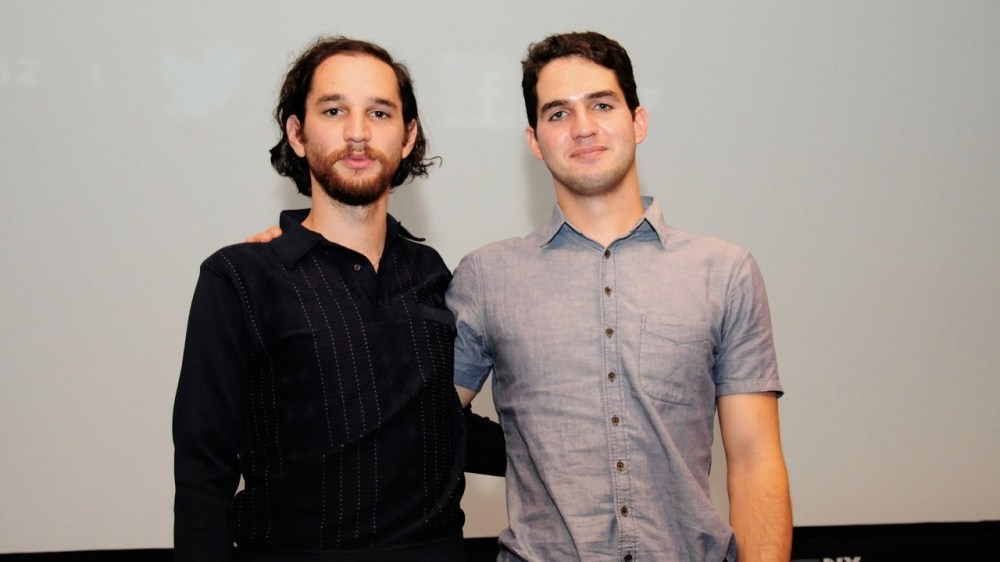
The movie was directed by brother filmmakers Josh and Ben Safdie whose previous credits include the comedy drama “Daddy Longlegs,” the documentary “Lenny Cooke,” and the crime-drama “Good Time” starring Robert Pattinson. I got to speak with them while they were in Los Angeles, and they described the various elements behind this movie’s making in great detail.

“Heaven Knows What” is based on the memoir “Mad Love in New York City” written by Holmes. I was eager to read it after watching the movie, but it hasn’t been published yet. Josh explained why.

Ben and Josh Safdie photo

Josh Safdie: She has a few publishers who want to do it, but she’s like rethinking about how she wants to release it now that she’s done these two other movies and is now in the responsible world.

Ben Safdie: There’s a beautiful rawness to it. If you were to read the pages, it really feels like you were right there sitting next to her all the time and it’s beautiful. That kind of immediacy is also what really attracted me to it because first you hear about, oh, homeless person addicted to drugs. We’ve heard that story a million times. How do you tell that story in a new and different way? Her voice was that new way.

I came into this movie not knowing anything about its backstory, and I honestly thought Holmes was a highly trained actress as her performance is brilliant and mesmerizing. This, however, is not the case as she is not all that far removed from the addict we see on screen. She was a homeless addict for years but has managed to get herself cleaned up, and her performance in “Heaven Knows What” has earned her attention from many who want to make her a star. Both Josh and Ben described what it was like working with her.

JS: Her performance is incredible. You have to remember when you live on the street you’re performing on an everyday level. Whether you’re hustling this person or trying to get this thing out of that person, it’s a performance and a performative life. She was also moonlighting as a dominatrix where she literally was performing as a different character.

BS: One of the most difficult performances you can give is as yourself because you need to be able to understand what makes you tick and then be able to put that out there without any inhibition. And then that’s how you build other performances because if you can get at your core in its ugliest form, or whatever its form, you can build from there.

JS: Acting is just painting your personality a different color. I really was amazed. When I watch the movie now, as I get more and more distance from it just in terms of just having filmed it with a sense of making it, I watch Ari’s performance and I’m really in shock about it. It would take like six or seven takes to get the performative level because it would often start out with her enthusiasm level and how enthused she was to do the scene. Sometimes she was really in it and she would give us this incredible performance. Other times it would take 12 takes to get it out of her. It’s really a beautiful performance from her. And the guy, Caleb (Landry Jones, who plays Ilya), is an actor in Hollywood movies. That’s like the craziest performance because people don’t even realize that it’s a performance and they learn his real story that he is a Texan and that he was in “X-Men: First Class,” he was in “Contraband,” he was in “Antiviral,” he lives in Los Angeles. This is not him at all. Maybe there are traces of him in Ilia, but no, that’s not him.

What’s fascinating about “Heaven Knows What” is how it combines fiction with a raw cinema verite. It’s essentially a fictionalized version of true events, and yet it feels like we’re watching real life unfold right before our eyes. I asked the directors what it was like balancing out the fictional elements with the real-life ones while making this movie.

BS: I think it was about putting them in a blender and not knowing where that line was because that was the only way to make it successful. We made a documentary before this, and that was a documentary. That was a real person and we were trying to tell his real story, but in order to tell his story most effectively we had to use techniques from fiction filmmaking, reenactment and changing the timeline. We were fictionalizing reality there to get the point across. So here we are making a fiction film with a kind of documentary base, and again we had to employ the same kind of tools. You have to make things up to really get at the true emotional core of things. (Werner) Herzog says it’s like the ecstatic truth once you get there.

The movie also features a brilliant electronic score which serves to illustrate just how alien the world drug addicts inhabit is to the rest of us. Along with movies like “The Guest,” “It Follows” and “Ex Machina,” electronic film scores are making a big comeback. Josh and Ben talked about the movie’s composers and why they chose that kind of music.

JS: There’s a bunch of things that are happening in music in the movie. For the most part, we feature the work of Isao Tomita and his renditions of Debussy. We really wanted to have a romantic score, but this movie is like a time squared, nighttime vibe. It’s like electrified and it’s kind of seedy, and it’s an alien landscape almost. We like to say the movie takes place on Mars which is where an addict’s brain goes in a weird way. Debussy music is some of the most romantic music ever composed, but when it’s done through this Japanese mind from the 70’s it’s different. It’s reinterpreted. It’s no longer really romantic but it has its core in romanticism.

BS: There’s other music that we use throughout the movie. There’s some original music by Paul Grimstad in the hospital sequence, and then there’s Ariel Pink who’s a Los Angeles guy who wrote a song for the movie called “I Need a Minute.” It’s electrified as well, and he wanted it to be a love song to the locked bathroom, being able to lock your own bathroom and needing another minute while people are banging on the door.

Watching “Heaven Knows What” brings to mind movies like “Kids” and “Requiem for a Dream” which dealt with lifestyles which were unnerving and at times horrifying to witness. We want to look away and these films dare us to, but in the end we can’t avoid the reality of what people do to each other and themselves.

“Heaven Knows What” is now available to own and rent on DVD, Blu-ray and Digital.

William Friedkin Discusses the Creation of ‘The French Connection’ Car Chase

The French Connection car chase

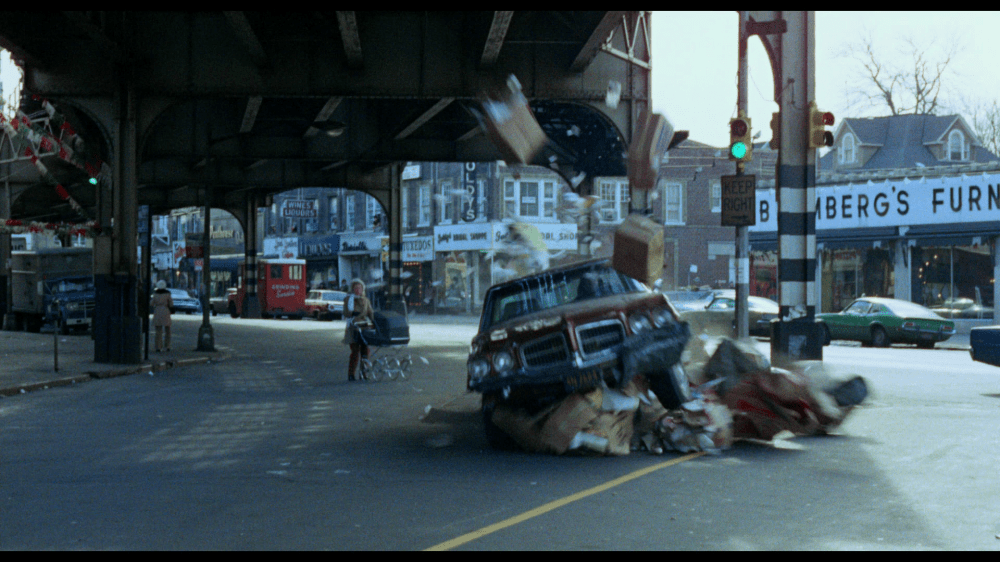
William Friedkin’s “The French Connection” was shown as part of American Cinematheque’s tribute to him, and he went into great detail about how the famous car chase came together. It is still one of the best car chases in cinema alongside “Bullitt,” and it’s the kind Hollywood doesn’t dare do anymore.

The French Connection movie poster

Actually, it turns out there was never a car chase in the original script for “The French Connection,” but Friedkin felt it needed one as this was a police procedural, and the audience would need a temporary release from it. Also, Friedkin didn’t do any storyboards to prepare for it. In fact, he has never done storyboards for any of his movies because he feels he has to see it in his mind. The shots captured on film come together from what he sees at the time, and he doesn’t even use a second unit to shoot any footage. All that you see on screen in “The French Connection” comes from life as it happened in front of Friedkin.

In coming up with the chase, he and some crew members walked down 50 blocks of New York streets to figure out how it would work best. As Friedkin kept walking, he suddenly felt the subway under his feet. Now logistically, he couldn’t do a car chase with a subway as it was underground, but it made him wonder if there were any elevated trains left in New York. The production team ended up finding one in Brooklyn, so Friedkin went to the Transit Authority to get their cooperation in pulling this chase off.

The first thing to figure out was how fast the trains could go. Friedkin said if they went over 100 mph, they couldn’t do the chase as it would be impossible for Popeye Doyle to follow the train by car. The train supervisor he talked to said the trains go at 50 mph, so what seemed impractical suddenly became possible. Not only did Friedkin want to have a car chase the train, he also wanted to crash the train for the chase’s climax. But the train supervisor said it would be too difficult because they had never had an elevated train crash or even heisted. Having heard all this did not deter Friedkin, and he planned to steal the scene if the transit authority’s cooperation was not going to be granted.

As Friedkin and his crew headed for the exit, the train supervisor suddenly said, “Wait a second. I told you it would be difficult. I never said it would be impossible!” He told Friedkin that if he were to help him with this, then he would need $40,000 and a one-way ticket to Jamaica. His reasoning was if the movie was to be done Friedkin’s way, he would be fired, and retiring to Jamaica was always in the back of his mind. Sure enough, the supervisor was fired, and he moved to Jamaica like he said he would, so it’s safe to say he lucked out.

In filming the chase, the shots were picked up just as they happened in real life. There’s no way they would ever be able to film a chase like this today without prior approval from the city, but Friedkin and his crew were young and reckless, and they unleashed mayhem New York never saw coming. There were not supposed to be any accidents while filming it, but there ended up being many of them which forced the crew to fix the car after each take. I’m pretty sure they ended up using more than one as a result. Friedkin ended up saying they did a number of things he would never even think about doing today, and that they were very fortunate no one got hurt.

Taking all this information into account, this car chase feels even more thrilling than when I first saw it. The way it was filmed was completely insane, and the fact they pulled it off at all was a miracle. When Gene Hackman finally brings the 1971 Pontiac LeMans he is driving to a complete stop, the sold-out audience at the Aero Theatre applauded loudly which shows how powerful the sequence remains today. “The French Connection,” like many of Friedkin’s movies, has deservedly stood the test of time.

Eli Roth Explores the Home Invasion Genre with ‘Knock Knock’

Knock Konck movie poster

It has been eight years since “Hostel: Part II,” and the phrase “directed by Eli Roth” has been largely absent as the horror filmmaker has focused more on producing and acting, but 2015 saw him return to the director’s chair with a vengeance. First, he gave us the cannibal horror film “The Green Inferno” which saw its release delayed for a couple of years, and he quickly followed it up with the home invasion thriller “Knock Knock.” Keanu Reeves stars as Evan Webber, an architect and happily married husband and father whose family leaves him alone at home one weekend so he can work on his latest project. But Evan soon makes the biggest mistake of his life when he lets two young women into his home after they claim to be lost, and they come to play a number of psychosexual games which have him begging for his life.

Roth was at the Four Seasons Hotel in Los Angeles, California to do a press conference on “Knock Knock,” and he was very verbose in discussing what motivated him to make this film. Now whereas his previous movies “Cabin Fever,” “Hostel” and “The Green Inferno” featured young adults heading out of their comfort zones and into the world for a dose of excitement and danger, “Knock Knock” is very different in that it rarely strays from Evan’s comfort zone which is his home. I asked Roth if this scenario presented any new challenges for him as a writer, and his answer was far more descriptive than I expected.

Eli Roth: No, I mean I liked the idea. Obviously I was very interested, probably because I grew up in Massachusetts with that kind of over sheltered, over-privileged and overeducated upper middle-class kid image that yearns for that life experience. In “Cabin Fever” they want irresponsible partying and drinking and drugs, in “Hostel” they want sex they think they can’t find, and in “The Green Inferno” they want validation through this vanity act and they want Twitter followers and it all comes back to bite them in the ass, literally in “Green Inferno.” But with this one, it is about what happens when you let that force into your life that you’re suddenly like, oh my God there’s a crazy person in my house. What have I done? You realize that, because you’re smart, that’s actually what makes you vulnerable. You think well I know how to handle this situation because I’m a smart person and look how well I’ve done so far, and then you drop your guard and then maybe there is some situation where someone’s in your home for whatever reason and you realize, oh my God, this person could take my stuff. There are my alarm codes and they could just really unravel me, and they could do it in such a short amount of time. And then Nicolas (Lopez) and I decided to add the social media aspect. We also were interested in the generational difference in sexuality. Girls in their teens or their 20’s, they must be so much crazier because of internet pornography. There is this grass is always greener mentality and looking at the way teenagers sexualize themselves on Instagram for likes and follows, we’re looking at some people like, in the cast and crew, their young sisters that are 15 or 16 and looking at their friends. You can’t tell in your 40’s if that girl is 16 or 36, and I’m playing on that difference of the sexuality in generations. Now nothing is private anymore, so when we were writing it we just thought about all of the things about modern fears. I wrote “Cabin Fever” when I was 22, I wrote “Hostel” when I was 32, and I wrote “Knock Knock” when I was 42, so they are all very much written about my fears at those ages.

Well, whether he is directing a movie or just producing or acting in one, Roth is certainly not a filmmaker you should ever call lazy. He remains as prolific as ever, and he has a large number of projects he is working on. Among them is “Meg,” an adaptation of Steve Alten’s science fiction novel about an ancient 60-foot long shark which terrorizes a small coastal town. Some critics have described the book as the “Moby Dick” of killer shark novels, so it will be interesting to see Roth’s take on it.

Knock Knock” is now available to own and rent on DVD, Blu-ray, and Digital.

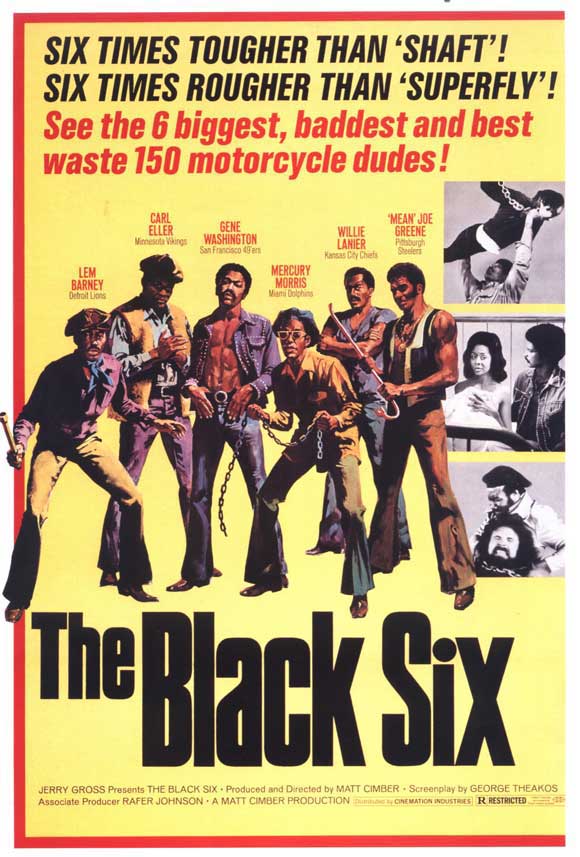
Matt Cimber Discusses ‘The Black Six’ at New Beverly Cinema

The Black Six movie poster

On February 22, 2011, the Grindhouse Film Festival presented their answer to Black History Month with the blaxploitation classic “The Black Six.” This took place at New Beverly Cinema, and the organizers of the festival, Eric Caidin and Brian Quinn, had this to say, “As white guys, we find this an important part of black culture.”

Joining them was the director of “The Black Six,” Matt Cimber. He announced to the audience this was the first time he has seen the movie in 40 years, and he said he “suffered through it.” The film is best known for starring football players who were at their peak: Gene Washington, Mean Joe Greene (his name generated the biggest applause), Mercury Morris, Lem Barney, Willie Lanier, and Carl Eller. Cimber’s agent at the time told him he could put together a bunch of football players if he could put together a movie. The only catch was there could be no drugs, no swearing, and no naked women.

Cimber said all the guys were game and that he wrote a good script for them to work with. When he started as filmmaker, he was encouraged by a friend to make “black films” because the thought was most people didn’t understand black people. It was fun making “black pictures” for him because there was a lot of great talent in the black community, and many actors weren’t really getting hired.

“The Black Six” also had actual members of the Hell’s Angels in it, and they had to be paid at the end of each day in cash. But there was an even bigger problem: they didn’t like blacks. However, it turned out they were also big NFL fans, and everyone ended up getting along great. The film crew had to work hard though to keep the Hell’s Angels quiet during takes. One of them ended up driving his motorcycle through a hotel!

This film had a budget of $90,000, but each of the NFL players got $10,000 each. Cimber ended up being forced to cut corners wherever he could. The lady playing the farm owner was actually the one who owned the farm they filmed at, and that’s why she’s in the film. Triumph also gave the production some motorcycles to work with although the players said they looked like “little toys.”

The movie came out in 1974 long before the days of VHS, DVD, or any other kind of home entertainment. Back then, if you didn’t get your movie into theaters, you didn’t get your money back and you were dead. When it opened on Broadway in New York, many other movies were opening at the same time, but Cimber proudly said this was the only one with a line around the block.

Matt Cimber went from “The Black Six” to create a “varied” resume which was the result of him never focusing on just one idea or one thing. He also created and directed the successful TV series “GLOW: Gorgeous Ladies of Wrestling” which was a satire of the sport (Quentin Tarantino is said to be a big fan of it). While his work may not cry out for an Oscar, he has had a strong career which has lasted several decades and shows no signs of stopping anytime soon.