Jonathan Glazer’s “Under the Skin” is, in a word, hypnotic. Shot in a clinical fashion which would have made Stanley Kubrick proud, it puts us in the shoes of a nameless and mysterious young woman, played by Scarlett Johansson, who spends her days driving around Scotland and seducing lonely men for what seems like a night of much needed sex. But we eventually discover she is not of this world as she lures these oblivious men to a dark void where their bodies are sucked into a deep dark abyss of liquid. From there, their bodies are consumed and sent off to a bright red light which I can assume represents the alien world she originates from. But while she may seem like an evil parasite, her travels on Earth result in her going through a process of self-discovery she was never meant to experience, and it leads to an endlessly fascinating motion picture which has stayed with me ever since I first watched it in 2014.
I was amazed at how Glazer almost fashioned this as a silent film. There is dialogue here, but not much of it. Johansson doesn’t speak until she finds a lonely male walking the streets all by his lonesome, and it is then that she shows us just how good her Scottish accent really is. It is also surprising to learn that most of the characters we see here are portrayed by non-actors who more or less improvised their dialogue. This gives “Under the Skin” a down to earth feel which helps to make Johansson’s character (we never do learn her name) seem all the more out of her element.
Visually, the movie has a strange beauty in its depiction of darkness and light, and there’s a scene in particular where we see what happens to the bodies of the men Johansson seduces which proves to be both eerily beautiful and simultaneously shocking. While many people might look at Glazer as if he is just totally ripping off Kubrick, he really has given this whole movie a unique feel as I still find it hard to compare it to others of its genre.
“Under the Skin” may end up frustrating a lot of viewers as it does not provide much in the way of answers. Glazer has opted to leave a lot of what we see to our imaginations, and I am always excited when a filmmaker challenges his audience to think about what they are seeing. Not every image we see necessarily deserves a straightforward explanation, and we live in a time when people are desperate for others to give them a definitive answer without thinking critically about what just took place.
Johansson is mesmerizing to watch from start to finish. Her character is a very tricky one to play as she has to come off as emotionally cold, but she eventually finds herself in a state of self-discovery where she experiences a number of things for the very first time. This is where she really could have gone overboard with moments which could have screamed out, “nominate me for an Oscar!” But her performance here ranks among her finest to date, and her reactions to experiences her character is put through are enthralling to witness.
Another thing which really stands out is the amazingly original music score composed by Mica Levi, better known by her stage name of Micachu. She composes mostly experimental music, and her soundscapes and bizarre musical design perfectly meshes with Glazer’s haunting visuals. I haven’t heard a film score quite this unique since Jonny Greenwood worked his musical magic on Paul Thomas Anderson’s “There Will Be Blood.” I did not even hesitate to buy the soundtrack once I left the theater.
Glazer burst onto the scene with his feature film debut “Sexy Beast” in which Ben Kingsley gave us one of the most frightening, and unhappy, gangsters on the planet, but he was absent from cinema since his follow-up film “Birth.” It turns out he started working on his adaptation of “Under the Skin” back in 2004, and it took him a decade to get his vision onto the silver screen. It was great to have him back behind the camera as he has an amazing visual style which just sucked me right in.
“Under the Skin” is filled with so many haunting images which have stayed with me for a long, long time. The black void where Johansson’s character lures her male victims to, the white void where she dresses in another person’s clothes, a man racing his motorcycle through a lot of hazardous weather at an alarming speed, Johansson’s character reacting to the piece of cake she has just eaten, etc. This film absorbed me in a way few other movies did back in 2014, and it was great to see something so cinematically daring as. The fact it got made feels like a miracle.
Yes, it did prove to be divisive among moviegoers who were easily bored by its languid pace, and perhaps they were instead yearning for the latest bombastic action spectacle from Michael Bay. Regardless, I’m really glad that “Under the Skin” has provoked such passionate responses because it takes chances and doesn’t conform to the Hollywood norm which filmmakers cannot always escape from. It provides one of the more unique experiences I have had at the movies, and it was great to see Jonathan Glazer back behind the camera after a surprisingly long hiatus.
Besides, Scarlett Johansson, Black Widow herself, stars in this, and she is currently the highest paid actor working in movies. Shouldn’t that be enough of a reason to watch this striking piece of cinema?
Upon seeing how the filmmakers gleefully manipulated the Universal Pictures logo to make it look like something out of an old Atari or Nintendo game in addition to scoring the fanfare with the prehistoric techno music we knew these games to have, I knew I was in for a very entertaining time at the movies. I always get a kick out of people messing around with the studio logos we see at the beginning of every motion picture. It is an immediate sign of how we are about to see something different from the usual Hollywood fare, something we do not get enough of. Perhaps if audiences embraced more movies like these, we wouldn’t have to deal with all these remakes and reboots!
“Scott Pilgrim vs. The World” was without a doubt the most fun I had watching a movie in a theater back in 2010. It is also another inspired masterpiece from director Edgar Wright who has previously given us the giddy cult classics “Shaun Of The Dead” and “Hot Fuzz.” Based on the comic book series by Bryan Lee O’Malley, it is really an ode to all things video games and a collage of the visual audio effects from them, and they are combined with a story featuring characters who are anything but boring. It is also beautifully shot, perfectly cast, very well written, and extremely well directed. In case you are wondering, yes, I love this movie, and I love it just as much 10 years after its release.
The Scott Pilgrim of the movie’s title is a 22-year-old man child who plays bass guitar with his friends for the rock band Sex Bob-omb. Finally rebounding from a devastatingly painful break up a year ago, he has started dating a 17-year old girl named Knives who is still in high school. Scott’s friends, including his gay roommate Wallace, tell him ever so bluntly he has lost his mind and assume he is trying to rebound with someone they consider to be his “fake girlfriend.” But then he gets a glimpse of the new girl in town, the mysterious raven-haired Ramona Flowers, and he is hopelessly smitten on sight and becomes intent on asking her out.
However, there is a catch; if Scott is going to be in a relationship with Ramona, he will have to defeat her seven evil exes. Indeed, Scott does get an email warning him of this, but he ends up deleting it quickly after declaring it as “boring.” As Arnold Schwarzenegger would say, big mistake! When Scott and his friends perform at a battle of the band’s competition, he is suddenly met by the first evil ex of the bunch, Matthew Patel. Other exes include those with mystical powers, a former skateboarder who has since become an actor, and another bass player who has developed telekinetic powers thanks to his Vegan diet. Let the battles begin!
Basically, the movie treats Scott’s life as though it were one old school game with dated graphics, and we watch him take on each ex (note, not all of them are men) as if he were in a real life Mortal Kombat tournament but without all the blood and guts. That’s the thing; there is no real gore to be found here as was the case in Edgar Wright’s previous two films. I bring this up because I gave my sister in law the DVD for “Hot Fuzz,” and she was horrified at the sight of Timothy Dalton’s face being impaled on a tiny replica of the Big Ben tower.
Scott defends himself pretty well, but he is also dealt a harsh beating without suffering any broken bones. It sounds cool when you think you can take a licking without a shattered collarbone or worst, but he does feel pain, so this side effect of taking on those people who were at other times equally enamored by Ramona is unavoidable. In defeating the exes, he will capture Ramona’s heart and become the first boyfriend of hers who is far from evil. He will also end up inheriting a boatload of coins after delivering the final blow.
I do have to say, however, it sucks he has no time to collect the coins or have some big gym bag to put them in. The amount spilled would have set him up in the local video arcade for life!
What I loved about “Scott Pilgrim vs. The World” is how endlessly inventive it is in its visuals and the scenarios Wright comes up with, and it integrates all these images from video games deeply engraved in our minds to make us feel like kids again. There is one shot in particular which defies easy description, but it had me laughing harder than anything else I had seen in 2010 to the point where I got seriously light-headed. I’m pretty sure you’ll know it when you see it.
Now the pitfall of having such great visuals is other elements like acting and the screenplay might fail to get the same attention. But Wright, along with Michael Bacall, has written a script containing characters who, while flawed, I came to care about deeply. Unlike all those characters from those Pac Man or Super Mario Brothers games we played at home or, in my case, at a friend’s house, these are not just one-dimensional beings with one simple goal in mind. Scott doesn’t just have to defeat the league of evil exes, he also has to develop a strong self-respect before he can move on with his life in Canada.
Leading the cast here is Michael Cera who plays Scott, and he gives one of his best performance here. He was dealing with a backlash back then because many assumed he was just playing the same character in every movie he was in; an awkward young man who isn’t sure how to feel or act about anything due to a deep fear of embarrassment. But Scott is not really the same sort of character Cera has been portraying. Sure, there is a good dose of awkwardness when we first see him talking to Ramona, but he’s about to give up on getting her to go out with him.
It’s also important to note that Scott is not always a likable character. At times he is caught red-handed in being very dishonest with his friends, and he doesn’t always take their feelings into consideration. The major triumph of Cera’s performance is he still makes you root for Scott in spite of some of his selfish actions.
Playing the beautiful Ramona is Mary Elizabeth Winstead, and I cannot think of another actress who has looked so incredibly gorgeous with dyed hair. Winstead has appeared as John McClane’s daughter, Lucy, who proved to be just as tough as her dad in “Live Free or Die Hard,” she showed off a fantastic set of vocal pipes in Quentin Tarantino’s “Death Proof” (one of the two movies in “Grindhouse”), and she was a force to be reckoned with in “10 Cloverfield Lane.” Winstead makes Ramona look tough and intimidating on the outside, but she also allows us to see the wounded person underneath that cold defensive exterior of hers. Ramona may look mean, but she is a wounded soul. Then again, who wouldn’t be after having endured seven failed relationships?
There is also a dynamic scene stealer to be found here, and it is Kieran Culkin who plays Scott’s roommate, Wallace Wells. Shamelessly stealing men from Scott’s little sister while texting gossip on his phone like it is second nature, Culkin gets to bring the same biting wit of his which he used to great effect in “Igby Goes Down.” He is a fiendish delight in every scene he is in.
As for the exes, each actor imbues their characters with the specific traits and powers they come equipped with, and they succeed in making each one totally unique from the other. Brandon Routh gets to really let loose here in a way he never got to in “Superman Returns” as Todd Ingram, the Vegan ex with telekinetic powers. Witnessing his expected demise brings about one of the funniest moments as Scott finds this rival bass player’s kryptonite. Jason Schwartzman is also excellent as a slick theater manager who uses his charms on anyone and everyone around him, and he is a slimy delight as a record company exec who earns your trust only to break it when you’re not looking.
What else is there to say about “Scott Pilgrim vs. The World?” Plenty! The director of photography on this splendid picture was Bill Pope, the same man who did wonders for many of Sam Raimi’s films as well as “The Matrix” trilogy. His style perfectly matches up with Wright’s sensibility, and the way he sets up certain shots is amazingly brilliant. Furthermore, I have to applaud artists like Beck and Nigel Godrich for giving Sex Bob-Omb some kick ass music for them to play. In movies like these, I expect the bands to get stuck with some lame music which is geared more to sell a soundtrack than fit in with the overall story. That’s not the case here, thank goodness.
There are also inspired turns from Anna Kendrick (“Up In The Air”) as Scott’s sister Stacey, Alison Pine whose character of Kim Pine shows a bitter and stony expression, and Aubrey Plaza whose heavy stares and sarcastic state of mind as Julie Powers is a sight to behold.
I was depressed to see “Scott Pilgrim vs. The World” bomb back in 2010. I could not believe it had such a lousy opening weekend, and I was miffed that audiences were more eager to see the god-awful comedy “Vampires Suck” snag the number one spot at the box office instead of this one. Over the years though, it has become a cult hit, and Wright did manage to score a big hit with “Baby Driver.” Regardless of its initial reception, this movie has proven to have a long shelf life, and I invite you to watch it if you have not already. Besides, in this time of an endless global pandemic, this one will take your mind off of it for a couple of hours.
WRITER’S NOTE: This interview took place back in 2014.
“Pawn Sacrifice,” the movie about Bobby Fischer’s quest to beat the Russians in the game of chess, proves to be another cinematic triumph for both Edward Zwick and Tobey Maguire. Another person who deserves credit for this movie’s critical success is Steven Knight who wrote the screenplay. Knight’s previous writing credits include David Cronenberg’s “Eastern Promises,” Stephen Frears’ “Dirty Pretty Things” and John Crowley’s “Closed Circuit,” and he wrote and directed “Hummingbird” which starred Jason Statham. He also wrote and directed “Locke” which featured Tom Hardy in what proved to be one of the most underrated movies of 2014.
I got to sit in on an interview with Knight while he was in Los Angeles, California at the Four Seasons Hotel to promote “Pawn Sacrifice,” and it was really nice to talk with him again after having interviewed him about “Locke” for the website We Got This Covered. His screenplay showed how well researched he was in Bobby Fischer and the world championship games he ended up playing against the Soviet chess grandmaster Boris Spassky.
Ben Kenber:I read that when you found out Tobey Maguire was going to be playing Bobby Fischer in this movie that it made it easier for you to write the script.
Steven Knight:Yeah, well it was Tobey who came to me with the idea, so from the outset it was always going to be Tobey playing Bobby. That really helped because this is about a battle being fought with the face if you like. It’s the intensity of the movement, and Tobey has got that intensity so much.
BK:Boris Spassky (played by Liev Schreiber) is an interesting character as presented in this movie. This could have easily become a good guy/bad guy story, but the movie avoids that thank goodness.
SK:Yeah because that wasn’t the case. If anything, Bobby was the bad guy. He was the one with the unreasonable demands. He was the one everyone chased around for reasons that we know. But Boris was a decent person, and when he applauds at the end of game six you realize that this is a man who knows how to lose and have the dignity. If there’s any message about this Cold War, it’s that when two human beings can overcome that conflict.
BK:It’s almost scary to think about how Bobby would’ve handled fame if he were to become famous in this day and age because there would have been nowhere for him to hide.
SK:No, definitely not. If he came along today, he would get the best agent and he would get the best lawyers. They would come to him. He wouldn’t choose. They would get him than make a fortune.
BK:The last image of the movie, when Bobby Fischer wins and gets what he wants, has haunted me ever since because it’s all downhill for him from there. It’s sad to see that he’s not able to enjoy the success he earned.
SK:Yeah, and the image that’s always in my mind was he’s been running away and he’s hit a brick wall, and now they are gonna get him.
BK:It’s interesting that the movie ends there instead of following Bobby and observing what happened to him afterwards. It could almost make for a good sequel.
SK:It would make for an odd sequel (laughs).
Thanks to Steven Knight for taking the time to talk about what went into his screenplay for “Pawn Sacrifice,” and I look forward to what he has in store for us next. The movie is now available to own and rent on DVD, Blu-ray and Digital.
WRITER’S NOTE: This interview took place back in 2014. This is worth noting especially when the director mentions a particular individual who has become far too famous for his or anyone else’s good.
Edward Zwick has remained one of Hollywood’s best and perhaps most underappreciated directors as he has given us such great motion pictures like “Glory,” “The Last Samurai,” “Blood Diamond” and “Legends of the Fall.” With “Pawn Sacrifice,” he takes us back to the Cold War when American chess prodigy Bobby Fischer (Tobey Maguire) took on the Soviet Empire and its chess grandmaster Boris Spassky (Liev Schreiber) in a 21-game competition in an effort to end the Soviet’s domination of the game. But as Bobby contemplates which moves he could make on the chess board, he also has to deal with his mental illness and paranoia which may descend him into a realm of madness he won’t be able to escape from.
Zwick sat down for an interview at the Four Seasons Hotel in Los Angeles, California to talk about “Pawn Sacrifice,” working with Maguire and the genius of Bobby Fischer. As the interview went on, it focused more on the subject of fame and how crushing it can be. Bobby was really one of the first people who had to endure a type of fame which followed him all around the world, and we eventually saw what this attention did to him.
What’s up Hollywood reporter Izumi Hasegawa brought up the fact that, while this movie takes place back in 1972, it deals with celebrity in a way which feels very relevant to what’s going on today. We see artists like Miley Cyrus gaining notoriety for doing things which Hannah Montana would never do, and Zwick really made clear why we remain so deeply interested in famous people and the effect fame has on them.
Edward Zwick: We’re fascinated by the darker sides. We are fascinated when they reveal themselves in a way that is vulnerable or fragile or they have some sort of failures. I think we seize on that, and this was the very beginning of that. The person to ask about that too would be Tobey (Maguire) because he has had to deal with a share of it as an iconic superhero. I think that people of extraordinary ambition and single-mindedness reach a place that, at the same time, makes them more vulnerable to that glare. And as they try to retire from that glare and they turn inward, there is often this weird reaction and I’ve seen it with a lot of people I have worked with and it’s hard to describe. Most people who become artists to begin with, or who aspire to greatness, there’s often some vulnerability at the base that gets exposed, I think.
“Pawn Sacrifice” was released in a year which has seen documentaries made on the lives of Amy Winehouse, Kurt Cobain and Nina Simone; three brilliant artists whose lives were tragically destroyed because they couldn’t handle the pressures of fame which was thrust upon them. Since Bobby never had to deal with his likeness being plastered all over the internet, it’s tempting to say he got off easy, but this was not the case. Like those three, Bobby didn’t and couldn’t deal very well with fame as it isolated him more and more from the rest of humanity, and I remarked to Zwick how watching Maguire portray the chess prodigy here made me wonder how he would have dealt with fame in this day and age.
Edward Zwick: I think it would have been insufferable. Even the reason he disappeared even then was in some sense a reaction to that kind of scrutiny. It’s become so barbaric. I look at Donald Trump right now and I see someone who is now being considered in the political arena as legitimate who is famous for being famous. Not for his policies, good or bad, but because it is so important now in the culture to be famous or to be known, and he is now transitioning into this most serious realm. We’ve almost reached that height of absurdity.
What Zwick said rings absolutely true as our obsession with celebrities keeps getting bigger and bigger to where we are more likely to know who won the latest season of “American Idol” than the name of our current governor. This makes “Pawn Sacrifice” all the more important to watch, and it is now available to own and rent on DVD, Blu-ray and Digital.
BE SURE TO ALSO CHECK OUT THE EXCLUSIVE INTERVIEW I HAD WITH EDWARD ZWICK WHICH I DID FOR THE WEBSITE WE GOT THIS COVERED DOWN BELOW
WRITER’S NOTE: This interview took place back in 2014.
Ever since he made his cinematic breakthrough in the Coen brothers’ “A Serious Man,” actor Michael Stuhlbarg has presented us with an array of characters he completely disappears into in movies like “Men in Black 3,” “Lincoln,” “Seven Psychopaths,” “Blue Jasmine,” “Cut Bank” and “Steve Jobs.” In “Pawn Sacrifice,” the Julliard trained actor portrays Paul Marshall, the manager and attorney to chess prodigy Bobby Fischer (played by Tobey Maguire). Bobby proves to be a hard man to get control of, and Stuhlbarg makes you see how exhausting it was for Paul as he was determined not to lose his most famous client even as the chess genius descended into madness
Stuhlbarg was at the Four Seasons Hotel in Los Angeles, California for the “Pawn Sacrifice” press day, and he talked in depth about he prepared to play a character who is based on a real-life person. Always a daunting task for any actor, Stuhlbarg appeared to handle this task with what seems like relative ease.
Ben Kenber:Your character of Paul Marshall reminded me a bit of Paul Giamatti’s character of Jerry Heller in “Straight Outta Compton” as both men are managers and forced to manage their clients under increasingly difficult circumstances. In your research, did you look a lot at different managers and how they worked with their clients?
Michael Stuhlbarg:Not so much. I stuck primarily with who Mr. Marshall was. It seemed to be enough. And also, particularly with what the script was asking of the dramatic situation, I just sort of threw myself into it and sort of said how can I get him into the next room if I need to get him there. And how can I please him as much as I can? Because it behooves all of us that he gets where he needs to go and he gets what he asks for. I tried to reason with him and just sort of placed myself in that dramatic context, so that was the dramatic result.
BK:Like Edward G. Robinson (whom he plays “Trumbo”), your character is based on a real-life person, but it’s a person most people don’t know as well as Bobby Fischer. Did this make your job as an actor harder or easier?
MS: The job is the same either way. I imagine I didn’t have to necessarily push myself to behave too much like Paul Marshall because not too many people, I believe, out there would have known him or perhaps fewer people would have known someone like him, Bobby Fischer or Edward G. Robinson. So I didn’t worry about that too much, but on the flipside of that is I tried to get as much video on him as I could so that I knew who he was, and I could listen to his rhythms and hear where he came from and try to embody it is truthfully as I could. At the same time, I was trying to be truthful to the situation.
BK:As an actor, would you say it’s more like working from the inside out or the outside in?
MS:I guess it has to be a marriage of both honestly. You ask questions enough about what you would do in a particular situation that a character finds himself in and you go from there. If he wore a particular pair of glasses which Paul did, it’s then let’s put on those glasses and how does it make me behave. Does it make me behave differently? Perhaps it does. Perhaps I hold my head a little differently. There are the outside influences that will change the way I behave, and there are questions that I could ask that he may have had to ask in his life that may also change me internally. So, I guess it’s always kind of a combination of the two for me.
Like the best character actors working in movies today, Michael Stuhlbarg shows no signs of slowing down as he has a number of projects coming up. It will be fascinating to see which role he will bring to life next.
“Pawn Sacrifice” is now available to own and rent on DVD, Blu-ray and Digital.
PLEASE CHECK OUT THE VIDEO INTERVIEW I DID WITH STUHLBARG WHICH I DID FOR WE GOT THIS COVERED DOWN BELOW:
WRITER’S NOTE: This interview took place back in 2014.
Tobey Maguire brings his usual coiled intensity to the role of American chess prodigy Bobby Fischer in “Pawn Sacrifice.” Directed by Edward Zwick, the movie takes us back to the days of the Cold War where Russia and America were constantly facing down one another. Having become a master at chess at such an early age, Bobby eventually becomes determined to beat the Soviet Empire at the game as they have dominated it for decades. This puts Bobby in the crosshairs of Soviet chess grandmaster Boris Spassky (played by Liev Schreiber), and they come to face each other in what became known as the “Match of the Century,” a 21-game competition held in Iceland back in 1972.
Maguire dropped by the Four Seasons Hotel in Los Angeles, California to talk about his experience making “Pawn Sacrifice” and playing a real-life person. In addition to being an accomplished actor and producer, he is also known for being quite the poker player as he has played in various tournaments throughout the years and has won a lot of money. Front Row Features Managing Editor Angela Dawson asked him if he was able to utilize his knowledge of poker in this role.
Tobey Maguire: I think it doesn’t hurt. I mean it’s very different, and I think Bobby himself hated games if there was any element of chance. When he was six years old he would play some other games, but where there was any element of chance, whether it was cards or dice or something like that, he would get really frustrated because his skill would maybe gain him an advantage but then the chance element might take that advantage away. He almost felt that was unfair, so he no longer played games that have any element of chance and only wanted to play a strictly skilled based game which is essentially chess. He had all of the control and it was all skill, and the communication is very pure. He loved that there was this framework and essentially this pure communication with the person he was playing with. There’s no kind of manipulation or something else that could happen. It was like a safe place to communicate purely. But I also think it doesn’t hurt that I’ve played games and sort of battled with people over boards and across felt tables.
Looking at both games, it seems like there’s a similarity between them because both games require a lot of mental energy as you constantly second guess your moves and the moves you think your opponent will make. Whether you are about to move a chess piece or put down a poker bet, there’s a lot to consider beforehand as a player has to be actively concerned about making a wrong move that will have them suffering a loss they could have avoided. I brought this up to Maguire who sees similarities between the games, but he was also quick to describe how they are different from one another.
Tobey Maguire: Yeah, although with cards you’re acting on current, partial information. You have cards that I don’t see, so I’m then kind of mostly looking at your historical behaviors as it relates to betting and less on tics and moves and stuff. I think that there’s way too much put on so-called tells of poker. I think it’s much more about patterns of betting. I think that’s much more reliable than behavioral tells. I do think it’s a huge differential because in chess there is no hidden information. On a chessboard all the information is right in front of you. There is nothing hidden. The only thing you are guessing or second-guessing is really in your preparation. Bobby Fischer was extremely consistent and would play the same opening move over and over and over and over and over and over again. He actually went and I believe, although I don’t have the proof of this but based on people I talk to, that he basically studied variations that he hadn’t played before and ended up using a different opening move in game six that was very unusual for Bobby. It’s possible that he was doing what you’re talking about, kind of not counting on but anticipating that they would not have prepared to open with that. So, in that way, that’s a comparison that I could draw in relation to what you asked.
Maguire is riveting as always in “Pawn Sacrifice,” and the movie is now available to watch on DVD, Blu-ray and Digital.
You can also check out my video interview with Tobey Maguire below which I conducted for We Got This Covered.
WRITER’S NOTE: I wrote this review back in 2012 when this limited edition of the soundtrack was released. This edition has since sold out, but it can be found on websites such as eBay, Amazon and Discogs. Of course, this edition does not come at a cheap price, so be sure to do your research. I am presenting this review here out of respect for the great Ennio Morricone who passed away on July 6, 2020 at the age of 91 years old.
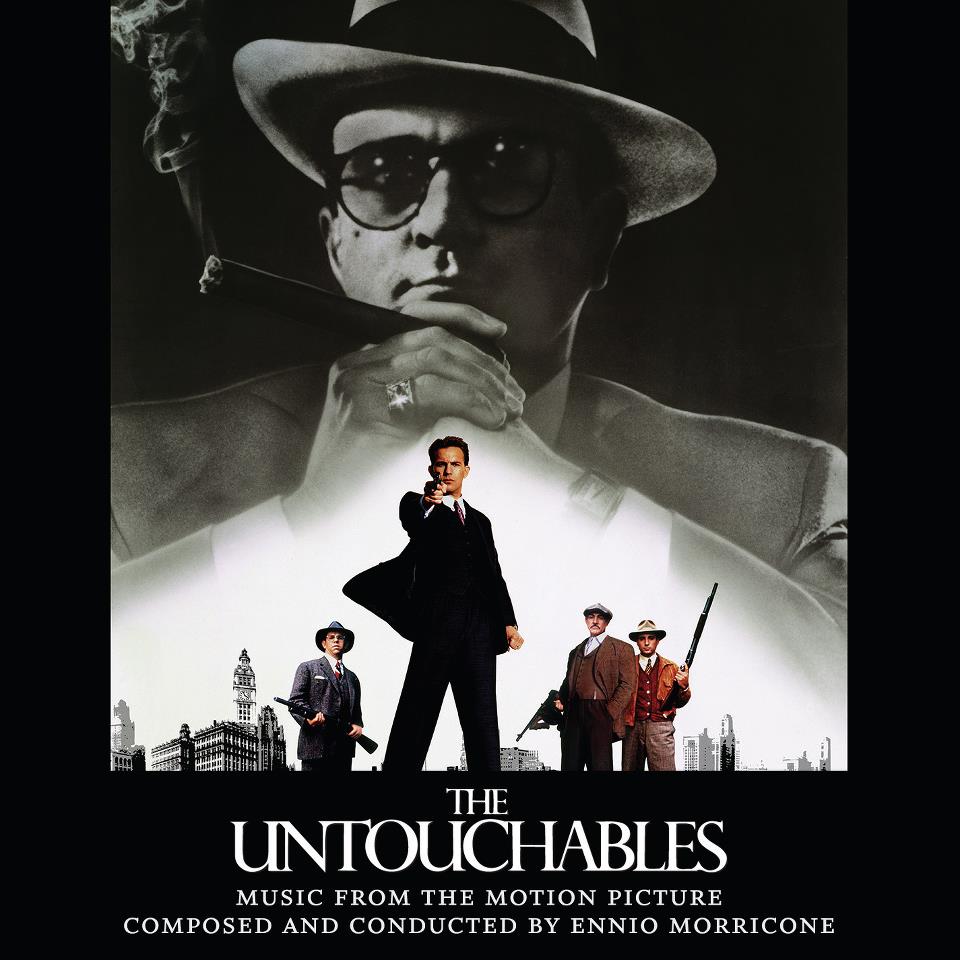
Ennio Morricone’s film score for Brian DePalma’s “The Untouchables” remains one of my favorites of his from the 1980’s. It covers the gamut of musical themes from victory to tragedy, and it captures the corruptness of the city our heroic characters played by Kevin Costner, Sean Connery, Andy Garcia and Charles Martin Smith have to fight against. Now, La La Land Records has put together a long-awaited remastered edition of this soundtrack which has Morricone’s music sounding better than ever. It features two discs, has over two hours of music and contains an informative booklet written by Jeff Bond, all of which makes for a release fans of Morricone will be pleased to add to their collection.
The first disc contains the original motion picture score for “The Untouchables,” and the tracks are sequenced in the order in which they appeared. This was not the case when the original soundtrack was released in 1987. That version started with the movie’s end title for some odd reason. There’s still no beating “The Strength of the Righteous” which gets the movie off to a thrilling start, and it’s one of those pieces of film music I never get sick of listening to. “Al Capone” perfectly illustrates the obscene wealth and greedy nature of a man who is more than willing to use violent means to achieve his goals.
Listening to this soundtrack for “The Untouchables” also reminded me of how beautiful Morricone’s music is. He captures the idyllic home life of Elliot Ness (played by Kevin Costner) and his family so well to where it makes you wonder if your own family life can ever compare. Other tracks like “Four Friends” help to elevate the tragedies the main characters suffer. I remember watching “The Untouchables” when it came out on VHS, and it was the first film I saw where the heroes do not make it to the end with a pulse. This shocked and saddened me, and Morricone’s “Four Friends” emphasizes not only the loss of life but of what that life meant to those who remember him dearly. Some of my other favorite tracks include “Waiting at the Border” which has Ness and company waiting in Canada for the arrival of Capone’s liquor shipment, and I love how the track starts soft and continues to build dramatically throughout. There’s “Courthouse Chase” which adds a lot to the big action scene between Ness and Frank Nitti (played by Billy Drago). The end title of “The Untouchables” is also one of those thrilling pieces of music as it celebrates the victory of those characters who scored one for justice, and listening to it always raises my spirits.
There is also no forgetting Morricone’s masterpiece of this score which is “Machine Gun Lullaby,” and it shows his brilliance in how he escalates the suspense and tension of certain scenes in DePalma’s movie. The first disc also contains tracks of Morricone’s which were not used, most of which are short transitional cues. The second disc contains the remastered version of the original soundtrack release from A&M Records, and the order of the tracks remains the same. Hearing it again might seem redundant for those who spent an hour listening to the first disc, but some still hold the original release of “The Untouchables” as sacred so it is here for them to enjoy with a better sound quality than ever before. The second disc also has several bonus tracks which include different versions of “Machine Gun Lullaby” and “On The Rooftops” among others. There’s also the “Love Theme from The Untouchables” which is sung by Randy Edelman and did not make it into the movie.
Jeff Bond, who has written informative booklets for many special edition soundtrack releases, writes us another great one for this release of “The Untouchables” which is entitled “The Strength of the Righteous and the Triumph of the Police.” Most of Bond’s booklets are usually written in two halves; one half details the making of a movie, and the other half details how its soundtrack came together. With “The Untouchables,” however, Bond is more interested in focusing on Morricone and the working relationship he had with DePalma. Bond even takes the time to write about every single track on each disc and the specific instruments which stand out and help to define certain characters and scenes.
“The Untouchables” actually marked the first collaboration between Morricone and DePalma, and the composer came to work with DePalma again on “Casualties of War” and “Mission to Mars.” In the booklet, Bond quotes from an interview with Morricone in which he describes DePalma as being “a great film director” and “wonderful to work with.”
“At a human level, too, he is a wonderful person, even if he gives the appearance of being a very reserved sort,” Morricone said of DePalma. “Behind that gruff exterior is a very kind soul.”
Morricone has still never won an Oscar for any of his scores, but he did deservedly receive one for lifetime achievement in 2007. Then again, he does not need one to prove to the world what a prolific film composer he is, and his output of work over the decades is amazing. “The Untouchables” remains one of my favorite film scores of his and it takes listeners through a wave of different emotions, some sad and others which make you happy and fulfilled.
La La Land Records has limited this special edition of “The Untouchables” to only 3500 copies, so be sure to get yours soon before it sells out. They have once again put together a great release of a truly unforgettable film score.
ADDITIONAL WRITER’S NOTE: Morricone finally won the Best Original Score Oscar which had long eluded him in 2016 for his work on Quentin Tarantino’s “The Hateful Eight.” To say this was deserved is to point out the bleeding obvious.
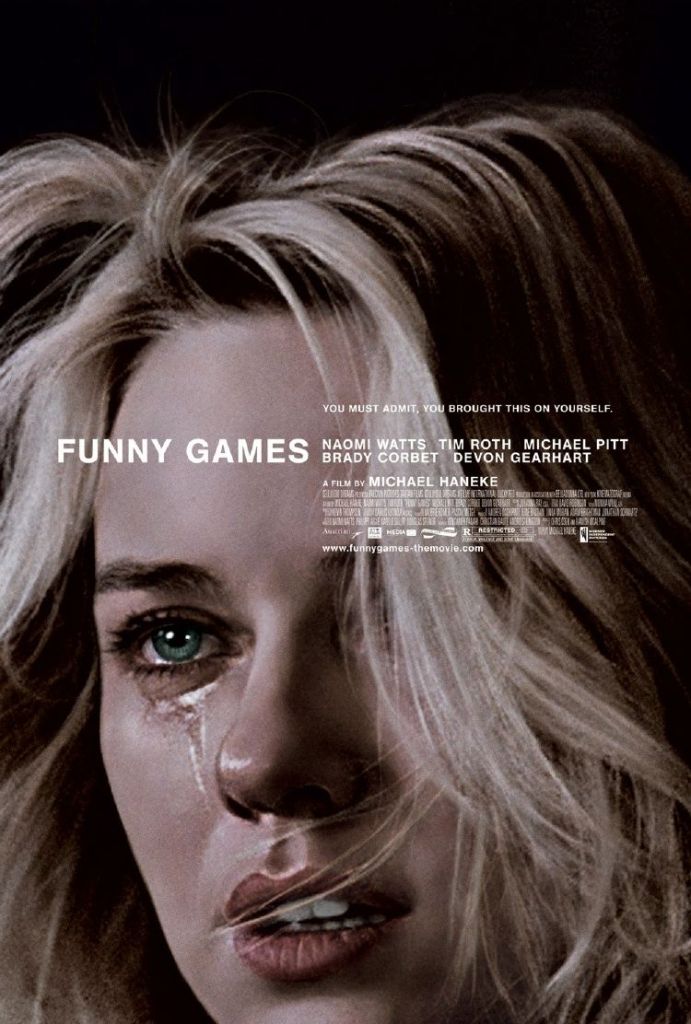
There is no in between with a film like this. You will either like or hate it with a fervent passion. Reviews for “Funny Games” have gone all over the place from praise to vicious hatred. Some will describe it as a completely immoral piece of work which revels in what it despises. Others will look at as very strong suspense film which does not hide from the ugly reality of violence. After seeing this film, I can’t help but think this is what director Michael Haneke wanted. Alfred Hitchcock was once quoted as saying, “I love playing the audience like a piano.” So does Haneke.
Truth be told, Haneke must be reveling in getting us into such an emotional state as he did the same exact thing in the past. “Funny Games” is a shot-for-shot remake of his original suspense thriller of the same name from 1997. I actually did not realize it was a remake until around the time it arrived in theaters. But since this is a virtual duplication of another film, I’m not sure how necessary it will be to see the original.
Haneke wanted to remake “Funny Games” for an American audience because he felt it was in essence an American story in which he sees its citizens being giddily in love with violence onscreen and in the media. While there is something rather condescending about him thinking this, he does have a point. Every once in a while, we need a film which reminds us of the brutality of violence. While we may fiend for gun battles on the big screen, violence in real life is scary and something we should be eager to avoid. “Funny Games” was the first ironically titled and truly polarizing movie of 2008. It is anything but entertaining, and in the end, it is not meant to be. Some movies are made to be experienced, and this is one of them.
“Funny Games” revolves around the married couple of Ann and George Farber (Naomi Watts and Tim Roth) whom we first see driving down the highway with their son Georgie (Devon Gearhart) and their sailboat in tow. When they finally arrive at their destination, they are met by two young men, Paul (William Pitt) and Peter (Brady Corbet), both of whom look like well-bred preppies equipped with very nice manners. Brady’s character comes to borrow eggs to give which Watts gives him kindly. But on the way out, he accidentally drops them and won’t leave until he gets some more. Soon, both husband and wife are trying to throw these two guys out, and then the two show their true intentions when they take a golf club and smash one of George’s kneecaps.
With the family held hostage, Paul and Peter reveal their heinous plan; they bet that in 12 hours, the whole family will be dead. From there, it becomes a game of survival for the family as the games these two force them to play get increasingly dangerous. One of the major criticisms I have heard leveled at the killers is they have no motive. Sometimes not knowing why people do the things they do makes things much scarier. When “Silence of The Lambs” was first released in theaters, we were never told why Hannibal Lecter was a cannibal. But here, these two evil schmucks do have a motive which is senseless and viciously cold: they are torturing this family for the thrill of it and for what one of them calls “the importance of entertainment.” The director has given us two psychos whose motives, as he puts it are not “easily explained by societal factors.” They look to enjoy the power they have over this helpless family.
This phenomenon of people getting a high off of violence and torture feels like it is growing at a horrifying rate. There have been movies like “Henry – Portrait of A Serial Killer” and “Menace 2 Society” that have moments where the characters commit violent acts which have been intentionally or unintentionally videotaped. We later see these same characters watching their hideous acts over and over. There was an episode of “Homicide: Life on The Street” which featured a scene with one man filming his friend as he goes over to a nearby bus stop and shoots an old lady to death. No reason is given, other than the fact they find the visual so incredibly entertaining.
Like those characters, Paul and Peter are utterly repellent individuals. But the thing is, you should be repelled at what these guys are doing. They are without morals, and the rules of society are nonexistent to them which makes them all the more threatening and dangerous. The comfortable conventions of the normal suspense thriller are thrown out here. If they are employed here, then it is only for us to see them overturned when we least expect them to be. Unlike other Hollywood thrillers, the violence here feels much more real than you would expect it to be.
Another interesting thing is while this is technically an ultra-violent movie, there is actually not a lot of violence shown onscreen. Most of the violence is committed offscreen, making it all the more terrifying. There’s another moment where Ann is forced to disrobe completely, but you never see her from below the neck. It’s a moment where Haneke dares you to wonder why the camera isn’t showing us more here. You may end up hating him for that, but you cannot deny your mind went down to that dark and dirty place.
Like “Cache,” Haneke likes to film shots in long takes. This succeeds in trapping the viewer in with this family as we wait to see if they can escape their fate. One shot lasts a good five minutes or so as Ann desperately tries to break free of the tape which binds her hands behind her back. There are a lot of static shots here which are free of overly clever camera moves, and they suck us in to the action while generating strong suspense. There are points where we are not sure when these two psychos threaten to strike next.
Haneke goes even further by having Paul break the fourth wall between the characters and the audience watching this movie. Many found this device to be annoying, but I wasn’t bothered by it because it made the movie seem even creepier than it already was. It probably would have been an unnecessary device had it been overused, but the director uses it sparingly and to a powerful effect.
There is also a moment a rewind of events is employed. It is as brilliant a move as it is done to completely frustrate the viewer as it completely eschews the formula of movies like these. Haneke doesn’t hesitate to subvert our expectations, and trap us into a reaction we cannot hide.
Whatever you think of the movie, there is no denying the superb work done by the cast here. Tim Roth does strong work, and I can’t remember the last actor who made the pain of broken bones feel so vivid. I also don’t want to forget Devon Gearhart who plays Georgie Jr. as he has a very unenviable role as a child caught up in the worst of situations. He is asked to do things we would rather not see a child actor do, and he makes his sheer terror seem all the more horrifyingly real.
Michael Pitt makes Paul into such a cleverly cold character to where some have compared Paul to Alex in “A Clockwork Orange.” This is a young actor who has made a strong impression in movies like “The Dreamers” and “Bully” among others. He excels in roles like this which play on his charm to an incredibly unsympathetic effect. Brady Corbett plays the seemingly Peter, and he also has done memorable work in “Thirteen” and “Mysterious Skin.”
But in the end, this movie really belongs to Naomi Watts who has long since proven to be one of the bravest actresses working today. She has portrayed characters so naked in their vulnerabilities onscreen to where I constantly wonder how she gets through these roles without having a nervous breakdown. Her performance in “Funny Games” is no exception as she puts herself in situations so difficult to make seem real, but she succeeds here in making us believe just how terrifying her ordeal is.
“Funny Games” is one of those movies which make me want to ready everyone’s reaction to it. Like I said, this is without a doubt a very polarizing motion picture which people will either admire or despise. The again, if many did not have a negative reaction, then Haneke would have failed in his mission to completely unnerve us. No, it is not an enjoyable movie, but it is an experience which cannot easily be ignored as you walk out of the theater. It is a thought-provoking as it in no way allows for a neutral opinion. For my money, it is a very strong exercise in suspense which never lets up throughout its two-hour running time.
While it is not the most disturbing movie I have ever watched in a theater (“Requiem for A Dream” takes the cake there), it sure does come close. The violence presented here is of a real kind, and it does not offer the typical feeling of escapist entertainment. The best advice I can give you is if you don’t want to subject yourself to a very disturbing cinematic experience, then don’t see “Funny Games.” You have been warned, so take the R-rating seriously.
When I went to see “MacGruber” at Grauman’s Chinese Theater in Hollywood back in 2010, I actually saw Jason Sudeikis while standing in line to buy a ticket. His impersonation of Joe Biden is a still a big hit with fans of the show, and he seemed like a very down to earth guy as he blended in with the crowd and talked with others.
Anyway, enough about him. Let’s get on with my review of this particular SNL sketch turned movie called “MacGruber.” About a decade before this one, movies from the long running comedy show were being released all the time, and many proved to be nowhere as funny as the sketches which inspired them. “The Ladies Man,” “Superstar,” or “A Night at the Roxbury” appeared to underwhelm audiences, and I wondered why none of them could come close to matching up with “Wayne’s World” or “The Blues Brothers.”
Now keep in mind, those movies were based on sketches which lasted 3 to 5 minutes on the average SNL episode. With “MacGruber,” we have a movie based on a sketch which typically lasts for a minute at most. We all know from watching this obvious spoof of “MacGyver” that they all end in the same way, with MacGruber failing to diffuse the bomb and it going off, blowing him and his whole team to smithereens. So therein lies the fascination of this movie; Can MacGruber keep himself from blowing up and killing everyone around him for more than a minute? Can he sustain a full-length motion picture when he can barely sustain himself in every control room known to man?
Well, it turns out he can and for around 99 minutes. Before it was released, “MacGruber” was bursting all over with reviews calling it the best SNL movie since “Wayne’s World.” I find this praise to be completely justified as it is consistently hilarious and filled with moments which had me laughing harder than anything I saw in the remake of “A Nightmare on Elm Street,” and that was supposed to be horrific and serious. But while the jinx on SNL movies finally came to an end with “MacGruber,” this same jinx has unfortunately not been broken at the box office. It ended up grossing only $9.3 million worldwide against a budget of $10 million, but it has since become a cult classic. Trust me, “MacGruber” is great fun and contains many gut-busting laughs, and it deserved a much bigger audience than it initially got back in 2010.
Like “Hot Shots Part Deux,” the movie opens with MacGruber (Will Forte) living a post-Rambo type existence in a monastery where he finds peace from all things explosive. But Col. Jim Faith (the late Powers Boothe) brings him back into service when it is discovered his old nemesis, Dieter Von Cunth (Val Kilmer gone wild), has acquired the X-5 nuclear missile and threatens to use it on a highly valuable target primed for utter destruction. Dieter also turns out to be the same man responsible for killing MacGruber’s fiancé, Casey (Maya Rudolph). To say this is all personal for MacGruber is pointing out the obvious. But seriously, what doesn’t this Inspector Clouseau of bomb experts not take personally? If you piss him off, please make sure he doesn’t memorize your license plate.
Forte never does quite convinces us that MacGruber is this great war hero, but that is part of the joke. He does, however, more than make us believe this character he has won more than a dozen purple hearts (how he earned all those is another story). No longer constricted by the dreaded FCC on network television, Forte really lets it loose here, getting away with stuff which would have had NBC and Lorne Michaels drop kicking him out of 30 Rockefeller Plaza if he pulled this off on live television. He also co-wrote the script, and he takes advantage of every opportunity for his character to make a supreme ass of himself while still remaining one you want to root for.
Plus, Forte does sex scenes here like no one else does in movies today, and I am certain no one has tried to match his acting in bed ever since.
Ryan Phillippe co-stars as MacGruber’s right hand man, Lt. Dixon Piper, a dedicated soldier who is of course infinitely brighter than him, and this causes a lot of violent resentment between the two of them. Phillippe does great work in playing the straight man to Forte’s idiotic lunatic. Had he tried to outdo Forte in terms of getting laughs, this pairing never would have worked. Lord knows MacGruber needs a partner, but he would never admit this unless he became incredibly desperate (and he does, so watch out). He also perfects that stony stare you get from some NFL star turned actor, and his funniest moments come when he reacts honestly to just how stupid this Miata-driving explosive expert truly is. Other actors would have overplayed this role, but Phillippe doesn’t thank goodness.
Kristin Wiig reprises her role as MacGruber’s assistant, Vicki St. Elmo. She is great as always, and MacGruber keeps stupidly putting her in such thoughtless situations where her life is in constant mortal danger. The scene in the coffee shop where she is disguised as MacGruber is nothing short of hilarious as she shivers in utter terror, having no clue what to do if things go bad. Still, you want to see Vicki get together with this clueless idiot because giving up this line of work for her music doesn’t make much sense, and this is especially the case when you listen to the songs she wrote.
Then you have Val Kilmer on board as the evil Dieter Von Cunth , and he gets to act all unhinged and crazy in a way he has not for some time. We know the only way MacGruber can defeat Cunth is through sheer luck, and Kilmer’s rubs in his character’s smug intelligence which he has in spades over this heroic douche bag. This represented a comeback for the actor, but it was sadly cut short due to his continuing battle against throat cancer.
“MacGruber” was directed by Jorma Taccone, one third of the Lonely Island comedy troupe which is responsible for all the “SNL Digital Shorts.” I was also surprised to learn he is actually the son of Tony Taccone, the former Artistic Director of Berkeley Repertory Theater. If you are ever in Northern California, be sure to check out a show there as they continue to challenge their audiences as much as entertain them. Anyway, Jorma keeps the proceedings going at a good pace, and he never lets the movie drag during its running time. While he doesn’t do anything groundbreaking with this movie or its formula driven plot, he does succeed in making this kind of satire feel fresh again. This genre has been so burnt out that we’re lucky if anything works as well as it does here.
The audience I saw “MacGruber” with at Grauman’s Chinese treated the whole thing like a rock concert, cheering when the title character first appeared on screen. It was a great crowd to experience this movie with, so it was surprising and depressing it got such a lackluster reception during its opening weekend. Even with competition from “Robin Hood,” “Iron Man 2,” and even “Shrek Forever After,” I figured it would still make a sizable dent at the box office. Still, it did eventually find its audience years later.
“MacGruber” is by no means a classic, and it is far from original, but it is certainly above average for this kind of movie. Saying it is the best SNL movie in years is faint praise. If you’re looking for a terrific comedy which emanated from the classic late-night show, then this is one you should check out. Even if you never laughed much at the skit on SNL, this movie will give you several belly laughs which we all live for. Just be sure not to eat any celery before you see it.
I did not become aware of Alfred Hitchcock’s “Psycho” until its first sequel, “Psycho II,” was released back in 1983, 23 years after the original. Of course, I didn’t watch this sequel at the time as I was just a kid, but I do remember its movie trailers and the title cracking up on the big screen as it played before the feature presentation of “Return of the Jedi.” This image really freaked me out, and it was just as well I didn’t see the classic film which inspired it until many years later. When I rented and watched it on VHS with my older brother, we did not see what the big deal was as we had long since been spoiled by the “Friday the 13th” and “Nightmare on Elm Street” movies with all the blood and gore a hormonal teenager could ever want or endure.
Well, it turns out watching it once was not nearly enough. Whether or not you think “Psycho” is Hitchcock’s best movie ever, it is often the one he is remembered best for making. After 60 years, it remains a great study of how a director can maintain suspense throughout the entire running time of a movie, and of a master playing the audience all the way up to the last frame. This becomes even more apparent when you watch it for a second and third time. Hitchcock puts you into the mindset of Marion Crane as she drives out of town after embezzling some money, and then he completely changes the dynamic of the story once Norman Bates arrives.
With “Psycho” now at its 60th Anniversary, we have another chance to go behind the scenes to see how this horror classic was made. It also represents another opportunity for Universal Pictures to release a new digital edition of the movie so they can fleece a few more dollars from our wallets. There has already been a Blu-ray release which made it look exquisite, and there has got to be a 4K Ultra HD version at some point. Anyway, looking back at the history of this classic proved to be one of the most interesting research projects I have taken on in years as there is much to be said about what went on behind the scenes.
“Psycho” originated as a novel written by Robert Bloch which itself was based on Wisconsin serial killer Ed Gein, a man whose horrific exploits would inspire many horror movies to come. Hitchcock acquired the film rights through his agent for $9,000, and he chose to film it after two projects he was working on for Paramount Pictures, “Flamingo Feather” and “No Bail for The Judge,” fell through. But Paramount did not want to help Hitchcock out on this one either as they were quoted as saying they found Bloch’s novel “too repulsive” and “impossible for films.” The executives refused to finance the production, and they even went as far as telling Hitchcock their soundstages were unavailable because they were being used for other projects. Of course, this proved to be a bold-faced lie as their production schedule was already in a slump at the time.
Undaunted, Hitchcock was still determined to bring “Psycho” to the silver screen, and he even offered to defer his normal director’s fee of $250,000 in exchange for 60% ownership of the movie’s negative. Still, executives would not grant him the financing he desired, so he continued to go through several different cost-cutting measures before getting a budget of no more than $1 million to make the movie his own way. Hitchcock had planned to make the film fast and cheap anyway, and he employed the crew members of his television series “Alfred Hitchcock Presents” who were already skilled at doing the same. He also succeeded in casting proven stars Janet Leigh and Anthony Perkins at a quarter of their usual salaries.
Bringing down the budget also meant shooting the film in black and white, but this was fine with Hitchcock as he wanted to film it that way as to make the shower scene come across as less gory, and he was also a big fan of “Les Diabolique” which was also shot in black and white.
Like “Psycho,” “Les Diabolique” was remade many years later. Unlike the originals, both were filmed in color. Even more unlike the originals, they received mercilessly scathing reviews upon their separate releases.
In filming “Psycho,” Hitchcock started off by making it as objective an experience as possible, and we feel what Marion goes through as the voices in her head fill her with guilt and doubt over what she has done. To help emphasize this effect, Hitchcock shot much of the movie with 50 mm lenses on 35 mm cameras. By doing this, the camera was said to mimic normal human vision. As a result, you are not just watching the movie, you are experiencing it. This even goes on after Marion has gone and the story turns its focus to Norman Bates. When he pushes her car into a nearby swamp, you share in his anxiety when it does not completely sink. That’s the thing; like Norman, you want the car to sink, and it makes one feel like a voyeur just as Hitchcock intended.
Then, of course, you have the famous shower scene, and after all these years it remains one of the most talked about and heavily dissected moments in cinema history. I am sure you all know the details regarding it: it was shot over six days from 77 different camera angles, and the scene features around 50 cuts in the three minutes which it lasts. Not much is shown as you never see the knife penetrating Marion’s flesh, and there is no gore other than the blood (chocolate syrup was used) going down the drain along with the water. Indeed, it is what you do not see which makes the scene feel so violent. Like Spielberg later did with “Jaws,” Hitchcock dared the audience to use their imagination in regards to what they thought they saw here. This is one of many reasons why this scene has stood the test of time, and it was also the first time a director killed off his leading lady in the middle of a movie. Back in 1960, audience members could not help but wonder where things could possibly go from there, and shower curtain sales have never been the same since.
I also cannot go on without mentioning the infamous score composed by the great Bernard Herrmann, and it remains one of the scariest pieces of music ever applied to a motion picture. Throughout his career, Hermann proved brilliant in composing film scores which really captured the psychology of the characters. This proves to be as true about “Psycho’s” score as it was with Hermann’s work on “Cape Fear” and “Taxi Driver.” It was a surprise to learn how this score almost didn’t come about as Herrmann balked at Hitchcock’s request to take the job on a reduced salary. Somehow though, Herrmann agreed to the terms and ended up writing music for a string orchestra as opposed to a full symphony which would have included brass and woodwind instruments. This is now clearly seen as a masterstroke on his part as the screeching of violins captures the sheer terror which overtakes Marion and the audience during the infamous shower scene.
Although “Psycho” is now recognized today as a classic, it actually received mixed reviews upon its release. Some admired the buildup of tension, but others questioned the psychological elements as being less effective. It even made one critic, C. A. Lejeune, so offended to where she walked out of the movie before it was even over, and she soon after resigned from her position as film critic for The Observer. Looks like Norman’s mother did not just claim victims onscreen!
When you look at the history of cinema, it is important to keep in mind how movies we see these days as classic were not necessarily treated this way upon their original release. It is over the passing of time where movies get re-evaluated or seen in a different light, and none can ever truly be perfect (although some do come very close to it). “Psycho” was a game changer as it came about during the Motion Picture Production Code which was heavy in its censorship of violence and sex in American films. With “Psycho,” Hitchcock flirted with showing nudity as well as gore, and this later opened up doors for filmmakers to exploit these elements with far more detail. Without “Psycho,” there may never have been a “Halloween” which by itself inadvertently sparked a whole wave of slasher movies. And without “Halloween,” there certainly would not have been a “Friday the 13th” as Jason Voorhees, like Norman Bates, also had serious mommy issues.
The cultural impact of “Psycho” lasts on to this very day. There are only so many movies which could have a sequel made to it several decades later. “Psycho III” followed a few years later, and a prequel came about because some just thought it would be a good idea to show how Norman Bates got to be the shy psycho we know him to be. There was even a failed television pilot called “Bates Motel” which starred Bud Cort as Alex West, an asylum inmate who befriends Norman and later inherits the motel and the house where mother lived (Anthony Perkins wanted nothing to do with that one). It also inspired a shot-for-shot remake by Gus Van Sant which seemed almost every bit as odd as Norman himself. The only purpose of it seemed to be proof of how remakes will never be able to recapture what made the original so good. But if they make money, the studios will clearly not mind the critical bashing even if it proves to be justified.
Television would later take another shot at the “Psycho” franchise with another version of “Bates Motel,” and this one starred Freddie Highmore as Norman Bates and Vera Farmiga as his mother. This version ended up lasting five seasons and proved to be very compelling as our fascination with the dark side of human nature is always stronger than we ever bother to realize. While some may have said enough already with “Psycho,” this show proved there was more life to it than we cared to initially realized.
Even today, you cannot hear screeching violins and not think of “Psycho.” Filmmakers reference it today like Wes Craven did in “Scream,” and there are dozens of movies out there which have done the same. That shower scene has been spoofed lord only knows how many times, my favorite being on “The Simpsons” where Maggie ended up attacking Homer with a mallet after watching one Itchy & Scratchy cartoon. Another great one came about during one of Billy Crystal’s Oscar montages where he was in the shower and ends up getting accosted by Kevin Spacey who plays his “American Beauty” character of Lester Burnham. Turns out it was not the same shower Marion got stabbed in, but instead the one where Lester often experienced the highlight of his day.
Leigh never looked at taking showers the same way again, and it would be ages before she ever took one. Perkins would forever be typecast in roles similar to Norman Bates, but he said he would still have done “Psycho” even if he knew this would be the case. Many filmmakers (Brian DePalma especially) have tried to use the tricks Hitchcock employed in this and his other films to varying degrees of success. Still, there is no topping what Hitchcock did with this classic 1960 movie, and it remains the one so many other suspense and horror movies are judged by. Hitchcock’s powers of manipulation remain very hard to duplicate after all these years, and this illustrates what he meant when he was quoted as saying, “I enjoy playing the audience like a piano.”




 The Ultimate Rabbit