William Friedkin Discusses the Creation of ‘The French Connection’ Car Chase
The French Connection car chase

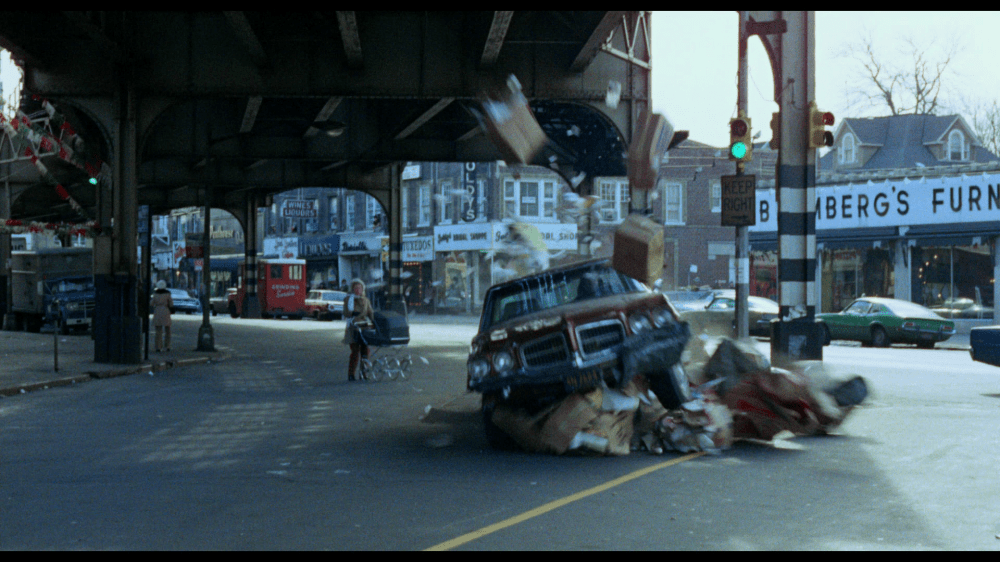
William Friedkin’s “The French Connection” was shown as part of American Cinematheque’s tribute to him, and he went into great detail about how the famous car chase came together. It is still one of the best car chases in cinema alongside “Bullitt,” and it’s the kind Hollywood doesn’t dare do anymore.

The French Connection movie poster

Actually, it turns out there was never a car chase in the original script for “The French Connection,” but Friedkin felt it needed one as this was a police procedural, and the audience would need a temporary release from it. Also, Friedkin didn’t do any storyboards to prepare for it. In fact, he has never done storyboards for any of his movies because he feels he has to see it in his mind. The shots captured on film come together from what he sees at the time, and he doesn’t even use a second unit to shoot any footage. All that you see on screen in “The French Connection” comes from life as it happened in front of Friedkin.

In coming up with the chase, he and some crew members walked down 50 blocks of New York streets to figure out how it would work best. As Friedkin kept walking, he suddenly felt the subway under his feet. Now logistically, he couldn’t do a car chase with a subway as it was underground, but it made him wonder if there were any elevated trains left in New York. The production team ended up finding one in Brooklyn, so Friedkin went to the Transit Authority to get their cooperation in pulling this chase off.

The first thing to figure out was how fast the trains could go. Friedkin said if they went over 100 mph, they couldn’t do the chase as it would be impossible for Popeye Doyle to follow the train by car. The train supervisor he talked to said the trains go at 50 mph, so what seemed impractical suddenly became possible. Not only did Friedkin want to have a car chase the train, he also wanted to crash the train for the chase’s climax. But the train supervisor said it would be too difficult because they had never had an elevated train crash or even heisted. Having heard all this did not deter Friedkin, and he planned to steal the scene if the transit authority’s cooperation was not going to be granted.

As Friedkin and his crew headed for the exit, the train supervisor suddenly said, “Wait a second. I told you it would be difficult. I never said it would be impossible!” He told Friedkin that if he were to help him with this, then he would need $40,000 and a one-way ticket to Jamaica. His reasoning was if the movie was to be done Friedkin’s way, he would be fired, and retiring to Jamaica was always in the back of his mind. Sure enough, the supervisor was fired, and he moved to Jamaica like he said he would, so it’s safe to say he lucked out.

In filming the chase, the shots were picked up just as they happened in real life. There’s no way they would ever be able to film a chase like this today without prior approval from the city, but Friedkin and his crew were young and reckless, and they unleashed mayhem New York never saw coming. There were not supposed to be any accidents while filming it, but there ended up being many of them which forced the crew to fix the car after each take. I’m pretty sure they ended up using more than one as a result. Friedkin ended up saying they did a number of things he would never even think about doing today, and that they were very fortunate no one got hurt.

Taking all this information into account, this car chase feels even more thrilling than when I first saw it. The way it was filmed was completely insane, and the fact they pulled it off at all was a miracle. When Gene Hackman finally brings the 1971 Pontiac LeMans he is driving to a complete stop, the sold-out audience at the Aero Theatre applauded loudly which shows how powerful the sequence remains today. “The French Connection,” like many of Friedkin’s movies, has deservedly stood the test of time.
‘Full Tilt Boogie,’ the ‘From Dusk Till Dawn’ Documentary, Screens at New Beverly Cinema

full-tilt-boogie-poster

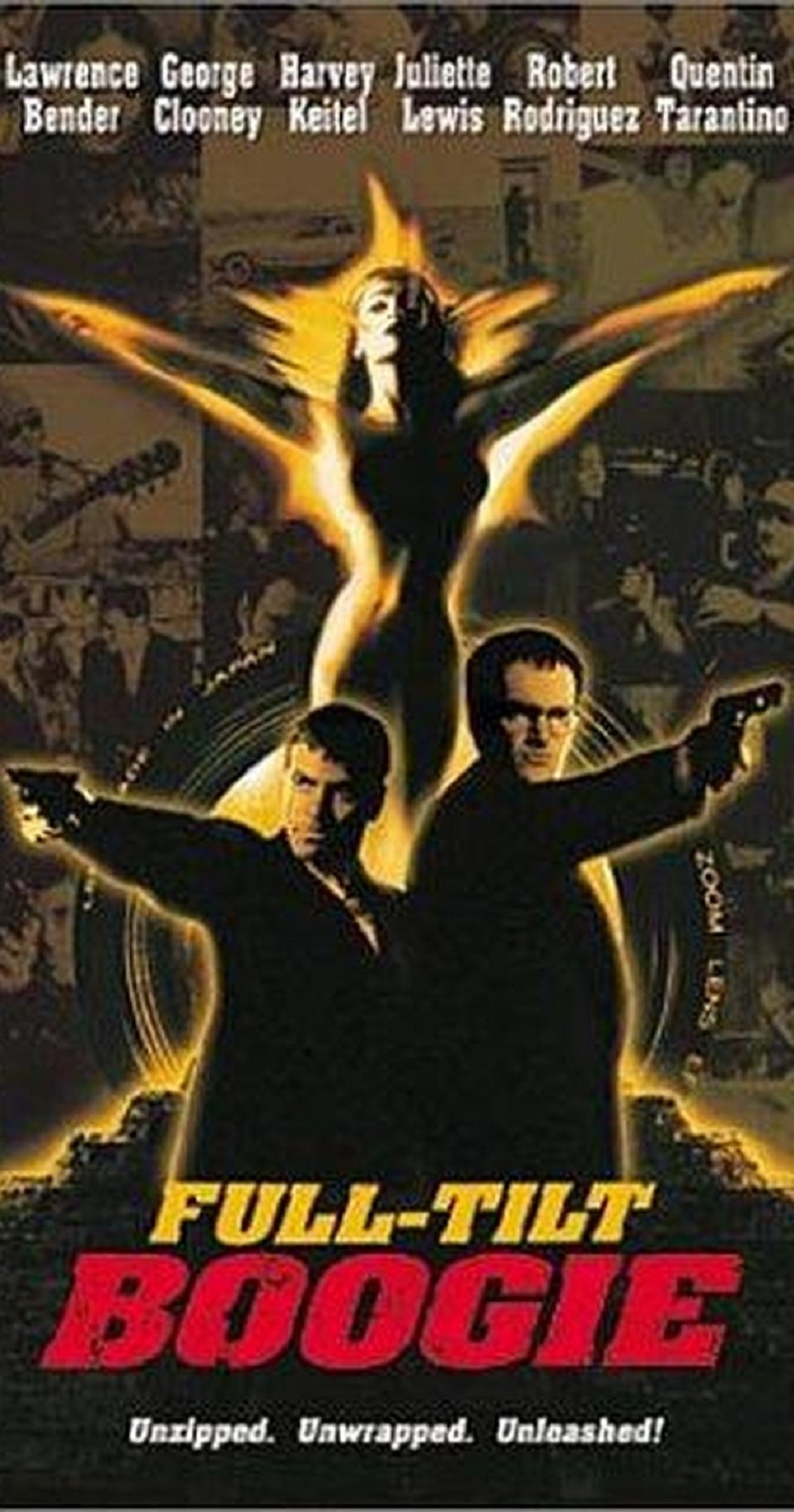
After a double feature of William Friedkin’s “To Live and Die in L.A.” and “Rampage,” which is not currently available on DVD, the audience members at New Beverly Cinema were in for a special midnight treat as the theater held a screening for the 20-year-old documentary “Full Tilt Boogie.” Directed by Sarah Kelly, it chronicles the making of Robert Rodriguez’s action horror cult classic “From Dusk till Dawn” which starred George Clooney and Quentin Tarantino as outlaw brothers who, along with a vacationing family, end up at a rowdy Mexican bar which turns out to be infested with vampires. The documentary introduces us to those people who worked behind the scenes on the movie, of why they want to be a part of show business, the fun they have when the cameras are not rolling, and of the complicated relationship between movie studios and unions.

Introducing this screening of “Full Tilt Boogie” was Kelly, and she was joined by her producer and friend Rana Joy Glickman. The emcee who welcomed them remarked about how cool it was this documentary was playing at the New Beverly and that it was sharing a marquee with Friedkin’s “Cruising.” To this, the emcee said about Kelly, “Whoa! She scored good!”

Kelly welcomed all the “insomniacs” who came out to see her documentary and explained how it became a reality.

“The reason this movie came about was that Robert Rodriguez and Quentin were about to start shooting ‘From Dusk till Dawn,’ and it was an $18-million-dollar independent movie and the unions were pissed,” Kelly said. “They were like, ‘What do you mean? No, you have to go union.’ And so, there was a big threat of a strike, and Quentin thought it would be cool to document it.”

“I had worked for him on a little movie called ‘Pulp Fiction’ and a couple of other movies he was involved with,” Kelly continued, “and he knew that I was studying to be a director so he gave me a shot. At the time, I was taking a break from production and I was working part-time in a law firm and I was like, ‘So is this for real? Should I quit my job?’ And he said, ‘Uh, quit your job yesterday.’ So, I did. We wrangled our little, tiny, hardcore crew and we started shooting, by the way, on 16mm film. Nobody shoots documentaries on 16mm film anymore, but we did. The union threat kind of turned into a cold war and I asked Quentin if we could keep shooting and just do a love letter to the crew. I pitched it as kind of like ‘Hearts of Darkness’ (Eleanor Coppola’s documentary on ‘Apocalypse Now’), but not that dark. Quentin said, ‘Yeah, that’s really fucking cool!’”

As for Glickman, she claimed to have hundreds of stories to tell about the documentary and “From Dusk till Dawn,” but she chose to tell only this one.

“When we finished ‘Full Tilt Boogie’ we were just so pleased that we finished and we got to make the posters for the film, not the one that Harvey Weinstein had selected,” Glickman said. “Our favorite poster is Sarah’s design, and it was Ken (Bondy), the craft service guy on ‘From Dusk till Dawn,’ standing there with a tray of lattes and it said, ‘From the maker of coffee on Pulp Fiction, we bring you Full Tilt Boogie.’”

Kelly responded, “That’s a great poster, right?”

“Full Tilt Boogie” may not be the masterpiece “Hearts of Darkness: A Filmmaker’s Apocalypse” is, but it’s still a very entertaining documentary which takes you behind the scenes of a movie’s production in a way few others do. We get to see the challenges crew members constantly face on a movie set, and we also get to take in the fun they have outside of it as well. For these people, this is a job done out of love and far more preferable than working a 9 to 5 job which has them sitting at a desk all day. Kelly certainly did create a love letter to these crew members, and we revel in the festivities they have from one day to the next.

Thanks to Sarah Kelly and Rana Joy Glickman for taking the time to come out, and at such a late hour, to talk about “Full Tilt Boogie” at New Beverly Cinema.

from-dusk-till-dawn-poster

Tracy Letts Looks Back on ‘Bug’ at New Beverly Cinema

Tracy Letts photo

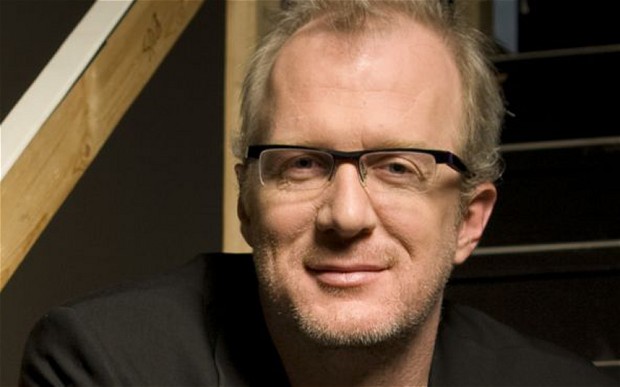
New Beverly Cinema concluded their month long tribute to Oscar winning filmmaker William Friedkin with a double feature of “Bug” and “Killer Joe,” movies which allowed him to escape the pressures of big budget filmmaking by going the indie route. Both were based on plays written by Pulitzer Prize-winning playwright Tracy Letts who also adapted them to the big screen, and he was the guest of honor at the New Beverly for this final night of Friedkin. Following “Bug,” he participated in a Q&A with Brian J. Quinn, host of the Grindhouse Film Festival. Quinn’s first question was how Letts first came up with “Bug,” and Letts took us back in time to when the play was first conceived and of how Michael Shannon was involved.

Bug movie poster

“Where it came from is what I’m puzzling about myself right now,” Letts said. “I had written ‘Killer Joe’ in 91, it got produced in 93, and that production wound up going to the UK. The Gate Theatre in Notting Hill (where it was put up) asked us for another show. The group for ‘Killer Joe’ were interested in working again, so I wrote quickly and I wrote the role of Peter for Mike (Shannon). Mike had played Chris in my production of ‘Killer Joe’ and was such a great actor. We took it to the Gate Theatre and the play wasn’t worked out. It took a long time and a lot of productions for me to work out some of the problems with it, but Mike played Peter not only in the London production but in the subsequent production in Chicago where I continued to work on it. And then the play went to the Barrow Street Theatre in New York in 2005, and Mike had been with the play for a number of years at that point.”

“Bill Friedkin saw the play in New York and he called me out of the blue,” Letts continued. “I had never met him or spoken to him and I thought it was a prank actually, but he had seen the show. He actually said, ‘I don’t actually think this is a movie. I just wanted to tell you that I am a fan of your writing and I think it’s great.’ And he called the next day and said, ‘Maybe it is a movie. Why don’t you come out here to LA and talk to me’ So I flew to Los Angeles and I met Bill at his home for the first time. He said, ‘I think it is a film. The more I think about it, it seems very cinematic to me.’ I said I would love to work with Bill Friedkin but it’s a claustrophobic piece. It doesn’t really make a lot of sense to open it up and have these disturbed people out in the world. And he said, ‘First, do no harm. I love the play and I have a way to make the play cinematic, so let’s work on the screenplay.’ And we did.”

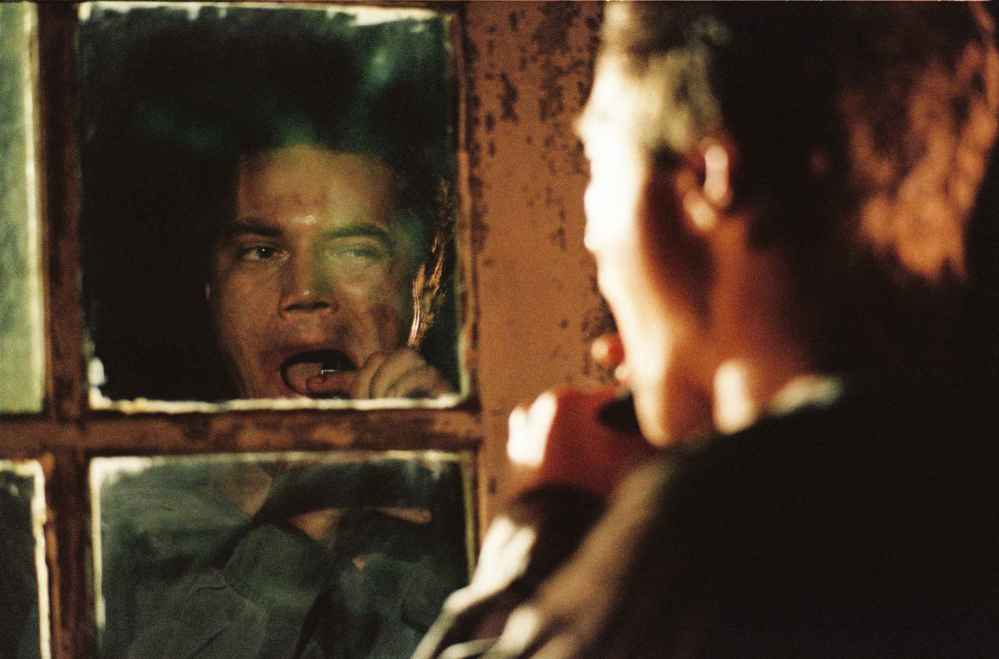
Bug Michael Shannon and his teeth

Now while Shannon is well known these days for his work in movies like “99 Homes” and “Man of Steel,” he still had yet to make his big cinematic breakthrough. That would come a few years later in Sam Mendes’ “Revolutionary Road” which earned him an Oscar nomination for Best Supporting Actor, but there was no forgetting who he was after watching “Bug.” Of course, getting the actor cast in the movie was a challenge, but Letts explained how Friedkin championed for him.

“Billy fought really hard for him,” Letts said. “The people who were financing the film had no interest in using Mike, but Billy just insisted. He had seen Mike do the play live, he knew how powerful Mike was in the role, and he knew the role was written for Mike. And Billy actually had a lot of experience casting a lot of unknowns in movies: William L. Petersen in ‘To Live and Die in LA’ was his first big break, Linda Blair and Jason Miller in ‘The Exorcist.” I’m really glad he did (fight for Mike) because among the many pleasures of the film is the fact that Mike’s extraordinary stage performance was preserved on film. The freak out scene where he’s flopping and having a seizure on the bed, he used to do that on stage eight times a week.”

“Bug” was not a big hit when it arrived in movie theaters back in 2007. Part of this was due to competition from summer blockbusters, but it was also the result of what Letts called a terrible marketing campaign. While “Bug” looks like a horror movie, it is at its heart a psychological thriller and a character study. Still, studio executives in their infinite wisdom were convinced they knew what they were doing.

“Lionsgate decided that they were going to do a big opening and they were gonna just try and lure the kids into it like it was ‘Saw’ or ‘Hostel,’” Letts said. “They opened us up on 1,600 screens and they opened it in the summer opposite ‘Pirates of the Caribbean: At World’s End’ on Memorial Day weekend. Billy had begged them not to do this. We said please don’t open this movie on 1,600 screens. We said this was a terrible mistake; we should open it small and let it build its audience. But they just insisted and ran these terrible trailers on TV with the announcer going, ‘They live in your blood. They feed on your brain.’ So the horror movie kids came in and they hated it, and the people who would have enjoyed the movie didn’t come because they thought it wasn’t their cup of tea. So it just died a terrible death unfortunately.”

Letts also talked about Friedkin and of how he makes a movie. Because this was a low budget feature, its shooting schedule was very short and Friedkin was in no position to be like Stanley Kubrick or David Fincher and do 70 takes of the same scene. Letts also took the time to demystify Friedkin’s reputation.

“Billy shoots quick,” Letts said of Friedkin. “He starts work early in the morning at four o’clock, he’s done and goes home. He brags about the fact that he only shoots one take. That’s not quite true. He will shoot something else if light falls into the shot. Mike used to ask him for another take and Billy said, ‘What, you got stock in Eastman Kodak?’”

Bug Ashley Judd

“Bug” proved to be an emotionally raw cinematic experience and is almost as unnerving as Darren Aronofsky’s “Requiem for a Dream.” Both Shannon and Ashley Judd give some of their best performances ever, and Friedkin succeeds in stretching this play beyond its claustrophobic staging to give us something which slams us back into our seats and never lets us go for a second. It was a real treat for the New Beverly audience to have Tracy Letts come down and talk with us. In his heart he still feels like a Chicago theatre guy more than anything else, but along with Friedkin he made a pair of movies which fearlessly went against what was mainstream, and we need movies to go against the grain every once in a while.

Bug movie poster 2

Copyright Ben Kenber 2016.


Save