Peter Benchley’s novel “Jaws” is much darker in tone as the main characters come across as unhappy and have harsh tempers which constantly get the best of them. There are also a number of subplots that bring out the negative sides of each character throughout. When it came to turning “Jaws” into a movie, Spielberg worked with different screenwriters to make the characters more likable, and he eliminated many of the novel’s subplots. In the process, he changed much of the story to where the movie focused on the terror the shark wreaks on the helpless townspeople and tourists, and on the last act where Brody, Hooper and Quint go on a hunt to destroy it.
The movie has the married couple of Martin and Ellen Brody more or less settled on Amity Island, and Ellen seems to be happier than Martin about their relocation from New York City to their current residence as her husband has a big fear of the water. Benchley’s novel, however, has them at odds with one another to where they argue most of the time, and it is Ellen who is more dissatisfied with the move to Amity Island as she misses her former life in the city.
One major subplot which did not transfer over to the movie is when Ellen Brody has an affair with marine biologist Matt Hooper (played by Richard Dreyfuss). It turns out she used to date Matt’s older brother and being with Matt vividly reminds her of the life she used to have. While Spielberg’s film portrays Matt and Martin as being friends, Benchley’s novel has them becoming enemies as Martin struggles with getting older along with his envy of Hooper who represents the man he used to be.
Quint, who was unforgettably portrayed by Robert Shaw, is described much differently and barely speaks at all. Suffice to say, his speech about being on board the USS Indianapolis when it sank is not in the book. Even Quint’s death is different as, instead of him being eaten by the shark after it jumps on board the Orca, he gets his foot caught in a rope attached to the great white and drowns after he is pulled underwater.
As for Hooper, who survived his ordeal in the shark cage in the Spielberg movie, he is killed off in the book as well. Perhaps it is karmic justice as Benchley portrays him as an obnoxious man who Martin almost chokes to death at one point.
Another subplot which did not carry over from the book is when Mayor Vaughn is found to be seriously in debt to the mafia, hence his strong need to keep the beaches of Amity open despite the shark attack. Spielberg’s movie, however, has him resisting Martin’s urges to close the beaches as Amity Island is seriously dependent on tourist dollars during the summer for its very existence.
When it comes to the ending of “Jaws,” Martin Brody does not kill the shark by shooting a bullet into the air tank stuck in its mouth which causes it to explode. In the book, he is helplessly stuck in the water after the Orca sinks, and the shark heads straight for him. In the process of Brody accepting his fate, the shark ends up passing away just mere inches away from him. After battling these men for several days while having barrels stuck in it and suffering from blood loss, the shark just gives in and dies which makes for a rather anti-climactic ending.
Many of the changes came about because Spielberg set out to make an audience pleasing movie, and he didn’t want the main characters battling one another as they battled the shark. But for those who have seen the movie hundreds of times, it is worth reading the book as Peter Benchley uses the shark as a metaphor for Martin Brody’s realization of his mortality and how it comes to affect his actions on the job and in his marriage.
Despite its differences, Benchley’s novel remains a riveting tale of suspense and terror worth reading while you sit on the beach and getting a nice suntan.
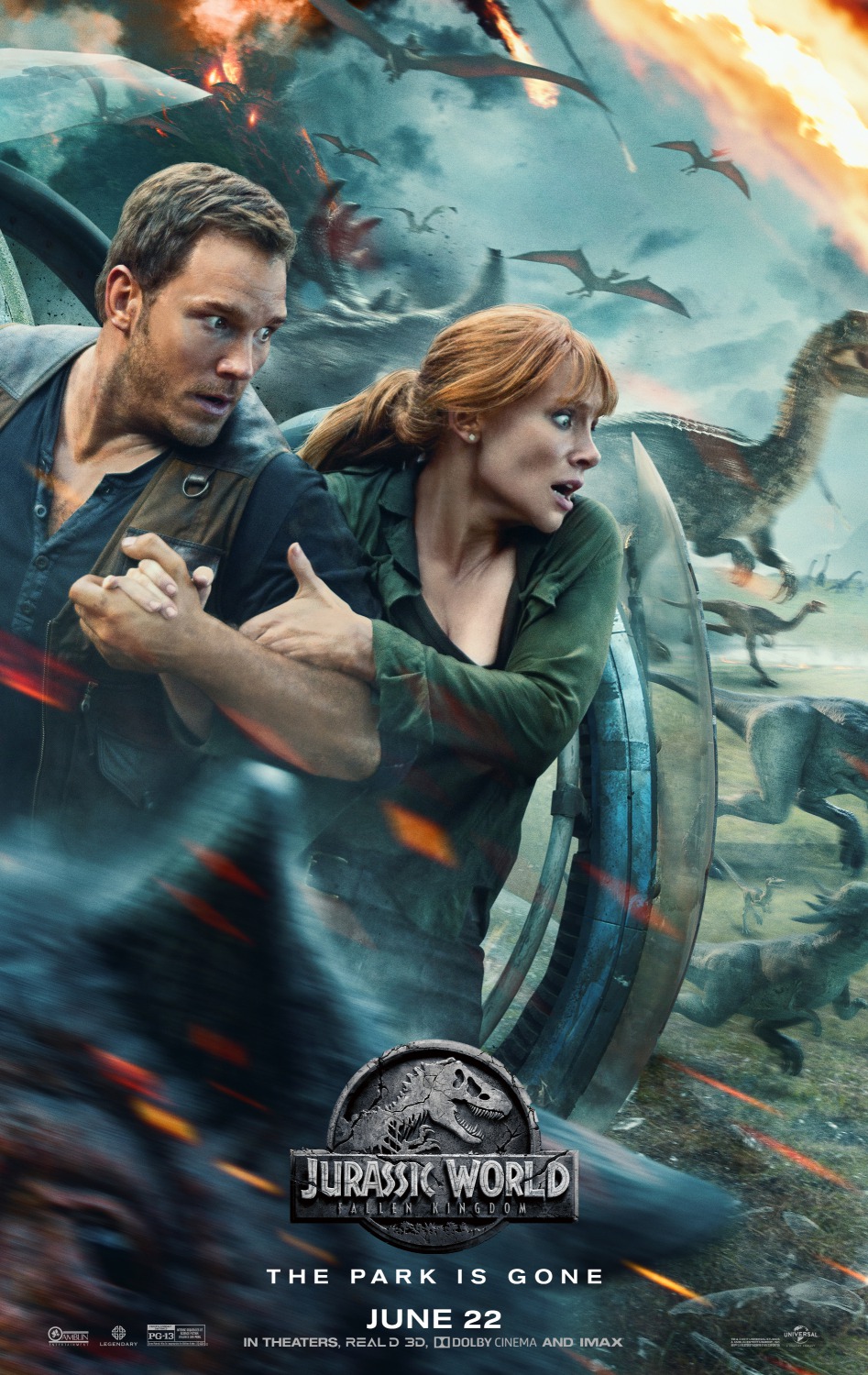
Remember the scene in “The Lost World: Jurassic Park” where John Hammond told Ian Malcolm they were not going to make the same mistakes, and Malcolm quickly replied they were going to be making new ones? Well, “Jurassic World: Fallen Kingdom” doesn’t make new mistakes and instead repeats the old ones as the humans once again try to save the once extinct species in way we have all seen before. Yes, the visual effects are fantastic, but everything else feels astonishingly banal as nothing new is brought to the franchise. As for the storyline, it simply shows history repeating itself, something we see happen in the real world more often than not.
Three years have passed since the events of “Jurassic World,” and the theme park has been left in ruins. Now an active volcano threatens to destroy what’s left of the dinosaurs, and those in the government debate whether it is worth the trouble to save the species from becoming extinct again. Ian Malcolm (Jeff Goldblum) argues it would be best for the volcano to destroy the dinosaurs as he sees this as nature’s way of correcting the mistake Hammond made in cloning them years ago. Meanwhile, Claire Dearing (Bryce Dallas Howard) has formed the Dinosaur Protection Group in an effort to save them. When the U.S. senators do not come through for her, she finds a savior in Sir Benjamin Lockwood (James Cromwell), Hammond’s partner in developing the technology to clone dinosaurs, who is intent on moving the dinosaurs to an island where they will have zero interaction with humans. Of course, this also means she will have to acquire the services of her ex-boyfriend, Owen Grady (Chris Pratt), in the effort to rescue them.
Okay, the “Jurassic” movies have never been heavy on complex characters as the attention is focused mostly on the dinosaurs. The reasoning is understandable, but I have grown weary of letting the filmmakers get away with weak characterizations which are always upstaged by the special effects. Howard and Pratt are fun to watch in anything the appear in, but their talents are wasted as their characters are relegated to the romantic will-they-or-won’t-they scenario which will all know will end with them kissing passionately as they can only fight their intense feelings of love for so long.
The screenplay by Colin Trevorrow and Derek Connolly proves to be “Fallen Kingdom’s” biggest stumbling block as it takes the story of “The Lost World” and follows it to the letter to where the twists and turns the story takes are not the least bit surprising. As I’m sure you have derived from the trailers, the plans to move the dinosaurs to another island are thwarted by a team of mercenaries led by Ken Wheatley (Ted Levine) and Lockwood’s slimy right-hand man Eli Mills (Rafe Spall) who looks to sell the dinosaurs to the highest bidders. You would think after all these movies humans would realize they can never fully control what they have created, but when dollar signs are involved, common sense and morality always take a backseat to greed.
Actually, some characters here had interesting potential which the filmmakers really could have built on. Eli Mills, thanks in large part to Rafe Spall, wins the audience over as he does Claire when he tells her of the plan to save the dinosaurs, but he is later revealed to be a slimy bastard as he looks to profit off them instead. Spall has described Eli as being a victim of high ambitions and of allowing himself to believe he is doing the right thing. He has been entrusted with securing the financial future of the Lockwood estate, and he feels this is the only way he can do it. Still, the character eventually becomes a one-dimensional baddie whom the audience is made to hate, and it got to where I kept waiting for him to say, “Hey look at me! I’m dino-meat!”
The same goes with Gunnar Eversol who is played by Toby Jones. Gunnar is the auctioneer who sells off the dinosaurs, and Jones has compared him to a rogue arms dealer who is morally neutral about the work he is doing. This could have made for an especially fascinating character, but alas, Jones is given only so much to do here as Gunnar is designed to be an appetizer for the “Jurassic” franchise’s newest dinosaur, the Indoraptor. Considering how morally neutral Gunnar is, it would have made more sense for him to take his fate as though he saw it coming instead of screaming like he doesn’t deserve it.
B.D. Wong returns again as Dr. Henry Wu, the chief geneticist of the Jurassic theme parks. Wong plays Henry as a man whose love for science is as big as his own ego, and he is a welcome presence in this deeply flawed sequel. But like the other characters, Henry is given short-shrift to where he just ends up acting like a one-dimensional jerk.
There are some new characters added to the mix such as Dr. Zia Rodriguez, a Marine veteran and a paleo veterinarian, played by Daniella Pineda. Pineda makes Zia into a quirky presence throughout, but the character feels half-realized never fully human. As for Justice Smith, his character of hacker and systems analyst Franklin Webb is this sequel’s most annoying as runs all over the place screaming as if we couldn’t already tell how unprepared he is to be around dinosaurs. I kept wanting to slap Franklin in the face and tell him to grow a pair as his whining made this sequel even more frustrating than it already was.
It is great to see Jeff Goldblum back as Ian Malcolm, one of the most popular and fascinating characters in the “Jurassic” franchise, but his appearance here is a mere cameo as he serves to bookend “Fallen Kingdom.” This is a real shame as the speeches he gives offers us a glimpse at what this sequel could have been: a look at humankind’s abuse of various powers, and at the possibility of if and how humanity and dinosaurs can co-exist. As he makes clear how Jurassic World is no longer the name of a theme park, but of the times humanity now lives in, we are reminded of the opportunities this sequel lost out on exploring.
And yes, there is the little child character named Maisie Lockwood played by Isabella Sermon who constantly sees through the deceptions of the adults and manages to outwit the dinosaurs chasing her. Of course, seeing her being smarter than the adults quickly becomes exasperating, and that’s even though this kind of character serves to remind adults of why they need to listen to children more often. Remember the child from Terry Gilliam’s “Time Bandits” who told his parents “don’t touch it, it’s evil” and they did anyway? Well, you get the picture.
I couldn’t help but walk into “Jurassic World: Fallen Kingdom” with high expectations as it was directed by J.A. Bayona, the Spanish film director who gave us “The Orphanage,” “The Impossible” and “A Monster Calls.” “The Impossible” had an especially profound impact on me as he depicted the devastation of 2004 Indian Ocean tsunami in a way to where I felt I experienced and survived it along with the characters. I guess I was hoping he would bring that same cinematic power to this long-running franchise, but his efforts do little to improve this sequel’s poor story and screenplay.
For what it’s worth, Bayona does give us some memorable moments. The scene where the characters observe one of the vegan dinosaurs crying out to be rescued as the volcano lays waste to Isla Nublar is truly heartbreaking, and the moment where the Indoraptor stalks the helpless Maisie in a sequence which evokes “Nosferatu” as the dinosaur stretches his creepy claws out is wonderfully chilling. I also loved how Bayona started this movie off in near silence as it opens in an underwater environment. It is times like this where I am reminded of how silence is golden, and I was hoping he would use it to his advantage. But as many sequels go, this one is noisy as hell and is at times undone by Michael Giacchino’s overambitious score.
“Jurassic World: Fallen Kingdom” is not this franchise’s worst installment (“Jurassic Park III” still holds that honor), but it is pretty close. “Jurassic World” managed to do the impossible which was bring back much of the awe and wonder from Spielberg’s 1993 classic, but this one finds those things sorely missing to where I wondered if there was ever enough of a reason to make another sequel other than money. What we get here is the same old thing, and the results are depressing as its storyline points out how humans will keep making the same mistakes over and over again as they refuse to learn from history. It left me wondering who would be better off here, the humans or the dinosaurs. As I left the theater, I kept thinking about what Ellen Ripley said in “Aliens:”
“You know, Burke, I don’t know which species is worse. You don’t see them fucking each other over for a goddamn percentage.”
Ripley had a really good point there, and this line was also proof of how James Cameron could come up with good dialogue when he put his mind to it.
I still vividly remember when “Jurassic Park” came out in 1993. I was in high school back then, and many of my friends got to see it before I did. Their reactions always stayed with me as they described how thrilling a movie it was. One guy kept holding his arm intensely and kept saying, “It steamed the glass!” I would later find out what he meant when I saw the movie a few days later, and it was quite the thrill ride as well as groundbreaking in terms of special effects. Steven Spielberg delivered us the kind of blockbuster he had been delivering to us since he made “Jaws” all those years ago, one which is thrilling and fills you with wonder and awe.
It was later followed by “The Lost World: Jurassic Park” which was more of the same but fun if you could get past the fact that Spielberg pretty much directed in on auto pilot. As for “Jurassic Park III,” a better title for it was “300 special effects in search of a screenplay.” Now we have “Jurassic World,” the latest sequel in this franchise which arrives over a decade after the previous installment. While there’s little chance in recapturing the wonder of the original, this sequel still proves to be a fun time at the movies.
Intended as a direct sequel to “Jurassic Park,” “Jurassic World “shows us how the island of Isla Nublar has long since become an infinitely popular theme park. John Hammond’s dream is now a reality, and guests are treated to a variety of shows and rides which depict these once extinct creatures in all their incredible glory. But now tourists have long since gotten used to dinosaurs being brought back from extinction, and now they want something more intense and scary. As a character notes, the park’s attendance level spikes when a new dinosaur is unveiled, and this makes the park operators create one which ends up scaring not just the children but their parents as well. And just as before, the results prove to be disastrous as the road to hell is always paved with good intentions and a misguided quest for profit.
What I liked most about “Jurassic World” is how its screenplay acknowledges how tired and worn out people are by watching dinosaurs in this day and age. This is exactly how I felt after watching “Jurassic Park III” as what was once thrilling and magic had since become depressingly routine. As a result, the script has a subversive feel as it ponders our need for the same level excitement we had in the past, and of how desperate we are to relive or top it. Now on one hand this sequel has a lot of things going for it as the filmmakers explore the desires of both the public and the corporate world which continues to be blinded by dollar signs at the expense of everything else. This wouldn’t be a theme park without a Starbucks or a Jimmy Buffet Margaritaville Restaurant in it, and both are on display here. Heck, even Buffet makes a cameo carrying a couple of margaritas, but when the dinosaurs start wreaking havoc, it’s clear he won’t have time to look for his lost shaker of salt.
On the other hand, the movie has its characters making incredibly dumb decisions which will have audience members scratching their heads in disbelief. Then again, this wouldn’t be much of a movie if everyone used their common sense on a regular basis. Those of you who have watched “Jurassic Park” over a thousand times will be instantly reminded of famous dialogue like when Ian Malcolm talked about how scientists were so preoccupied with whether or not they could create dinosaurs to where they never stopped to think if they should. Then there’s Ellie Sattler who made it clear to Hammond he will never have control because that’s the illusion he was trying to avoid.
Then again, the one line which stands out most is when Hammond said how he “spared no expense.” When we get our first glimpse of what has become of Isla Nublar, we are reminded of what Hammond said as it has accommodations your local Motel 6 can only dream of offering guests. They may leave the light on for you, but they can’t give you amazing vistas or prehistoric creatures to look at.
Actually, one of the best moments in “Jurassic World” comes from B.D. Wong who reprises his role of Dr. Henry Wu from the first movie. When asked why he and the other scientists created the new dinosaur, Indominus Rex, Henry responds, “Monster is a relative term. To a canary, a cat is a monster. We’re just used to being the cat.”
In terms of the human element, “Jurassic World” does suffer a bit. Then again, these movies have never been about complex characters as much as they have been about dinosaurs. Still, one of the best things about this long-awaited sequel is Chris Pratt who lends his “Guardians of the Galaxy” charisma to his role as Owen Grady, a former military officer and velociraptor trainer. Pratt adds the heroic element this movie demands, and his comedic skills are put to good use.
Another terrific performance comes from Bryce Dallas Howard as the park’s operations manager, Claire Dearing. It’s great to watch Howard take Claire from being a work obsessed park employee to a badass heroine who ventures out into the danger zone to save her two nephews before they become the dinosaurs’ main course.
It’s also a kick to see Vincent D’Onofrio here as the antagonist Vic Hoskins, head of security operations for InGen. The actor manages to take what could have been a simple one-dimensional villain and makes him a lot more interesting. You can see in his eyes how he has a secret plan for the dinosaurs which has yet to be revealed to our heroes. Of course, we all know how D’Onofrio’s character is going to die, and it is not pretty.
Spielberg once again stayed in the executive producer’s chair for this sequel, and the director is Colin Trevorrow who is a very lucky filmmaker as he went from directing a movie with a budget of $750,000 (“Safety Not Guaranteed”) to this $150 million summer blockbuster. While he is not able to fully recapture the wonder of “Jurassic Park,” he makes “Jurassic World” a solid piece of summer entertainment which brings out the kid in you. Trevorrow also creates moments which will have the audience cheering loudly, showing he is more than capable of giving us the kind of crowd pleasing movie we expect in the summertime.
“Jurassic World,” like “Mad Max: Fury Road,” was stuck in development hell for years before it finally came to fruition. For the most part it was worth the wait as it comes with a stronger story and screenplay than the last two “Jurassic” movies could ever hope to have. There’s plenty of great dinosaur fights, tourists getting terrified, and there are characters here worth rooting for. All in all, it does what a summer movie should do which is entertain you from beginning to end.
Of course, when you look more closely at the story, it illustrates how history keeps repeating itself when dollar signs get in the way. Once again humans deluded themselves into thinking they could control dinosaurs, and nature finds a way to prove them wrong. With “Jurassic World: Fallen Kingdom” about to be released, I imagine we will watch humans again trying to tame these prehistoric creatures, and their efforts will prove to be largely futile. Oh well, hopefully we’ll get another entertaining sequel in the process.
2008 was a year more memorable for those who died as opposed to the movies which were released. We lost Heath Ledger, Brad Renfro, George Carlin, and Paul Newman among many others, and their individual deaths spread through the news like an uncontrollable wildfire. Their passing left a big mark on us all. When we look back at this year, I think people will remember where they were upon learning of their deaths more than anything else. Many of us will remember where we were when we got the news that Ledger died, but they will not remember how much money they wasted on “Righteous Kill,” the second movie featuring Al Pacino and Robert De Niro sharing the screen at the same time.
2008 did pale in comparison to 2007 which saw a wealth of great movies released. Many said this was a horrible year for movies as high expectations ruined some of the big summer tent pole franchises, and that there were too many remakes being made. The way I see it, 2008 had a lot of really good movies, but not a lot of great ones. There was a big drought of good ones worth seeing at one point in this year, and I started to wonder if I would have enough of them to create a top ten list. If it were not for all those Oscar hopefuls released towards the year’s end, I am certain I would have come up short.
So, let us commence with this fine list, if I do say so myself, of the ten best movies of 2008:
I had to put these two together for various reasons. Of course, the most obvious being Kate Winslet starred in both movies and was brilliant and devastating in her separate roles. Also, these were movies with stories about relationships laden with secrets, unbearable pressures, and deeply wounded feelings. Both were devoid of happy endings and of stories which were designed to be neatly wrapped up. Each one also dealt with the passing of time and how it destroys the characters’ hopes and dreams.
“The Reader” looked at the secret relationship between Winslet’s character and a young man, and of the repercussions from it which end up lasting a lifetime. There is so much they want to say to one another but can’t, as it will doom them to punishments they cannot bear to endure.
Speaking of escape, it is what the characters in “Revolutionary Road” end up yearning for, and the movie is brilliant in how it shows us characters who think they know what they want but have no realistic way of getting it. Each movie deals with characters who are trapped in situations they want to be free from but can never be, and of feelings just beneath the surface but never verbalized until too late.
Both Stephen Daldry and Sam Mendes direct their films with great confidence, and they don’t just get great performances from their entire cast, but they also capture the look and setting of the era their stories take place in perfectly. All the elements come together so strongly to where we are completely drawn in to the emotional state of each film, and we cannot leave either of them without being totally shaken at what we just witnessed.
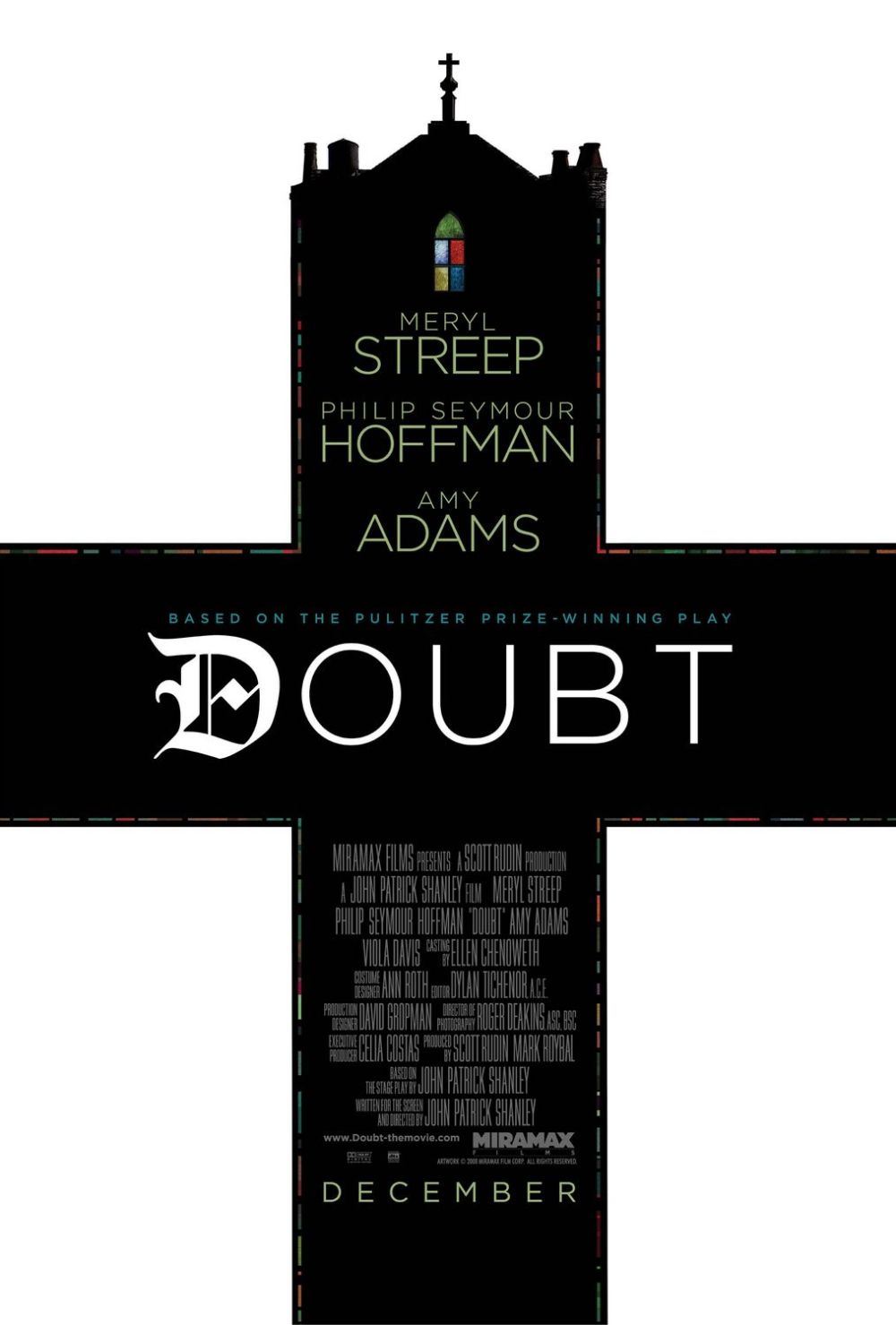
Looking back, I wondered if I was actually reviewing the play more than I was John Patrick Shanley’s movie of his Pulitzer Prize winning work. But the fact is Shanley brilliantly captures the mood and feel of the time this movie takes place in, and it contains one great performance after another. Meryl Streep personifies the teacher you hated so much in elementary school, Philip Seymour Hoffman perfectly captures the friendly priest we want to trust but are not sure we can, and Amy Adams illustrates the anxiety and confusion of the one person caught in the middle of everything. Don’t forget Viola Davis who, in less than 20 minutes, gives a galvanizing performance as a woman more worried about what her husband will do to their child more than the possibility of her child being molested by a priest who has been so kind to him. Long after its Broadway debut, “Doubt” still proves to be one of the most thought provoking plays ever, and it lost none of its power in its adaptation to the silver screen.
This is the best Woody Allen movie I have seen in a LONG time. Woody’s meditation on the ways of love could have gone over subjects he has long since pondered over to an exhausting extent, but this is not the case here. “Vicky Cristina Barcelona” is a lovely and wonderfully character driven piece filled with many great performances, the best being Penelope Cruz’s as Javier Bardem’s ex-wife. Cruz is a firecracker every time she appears on screen, and she gives one of the most unpredictable performances I have seen in a while. Just when I was ready to write Allen off completely, he comes back to surprise me with something funny, lovely and deeply moving.
One day, I will be as sexy as Javier Bardem. Just you wait!
Danny Boyle, one of the most versatile film directors working today, gave us a most exhilarating movie which dealt with lives rooted in crime, poverty and desperation, and yet he made it all so uplifting. It is a love story like many we have seen before, but this one is done with such freshness and vitality to where I felt like I was seeing something new and utterly original. Boyle also reminds us of how “Who Wants to Be A Millionaire” was so exciting before ABC pimped it out excessively on their prime-time schedule. “Slumdog Millionaire” was pure excitement from beginning to end, and it was a movie with a lot of heart.
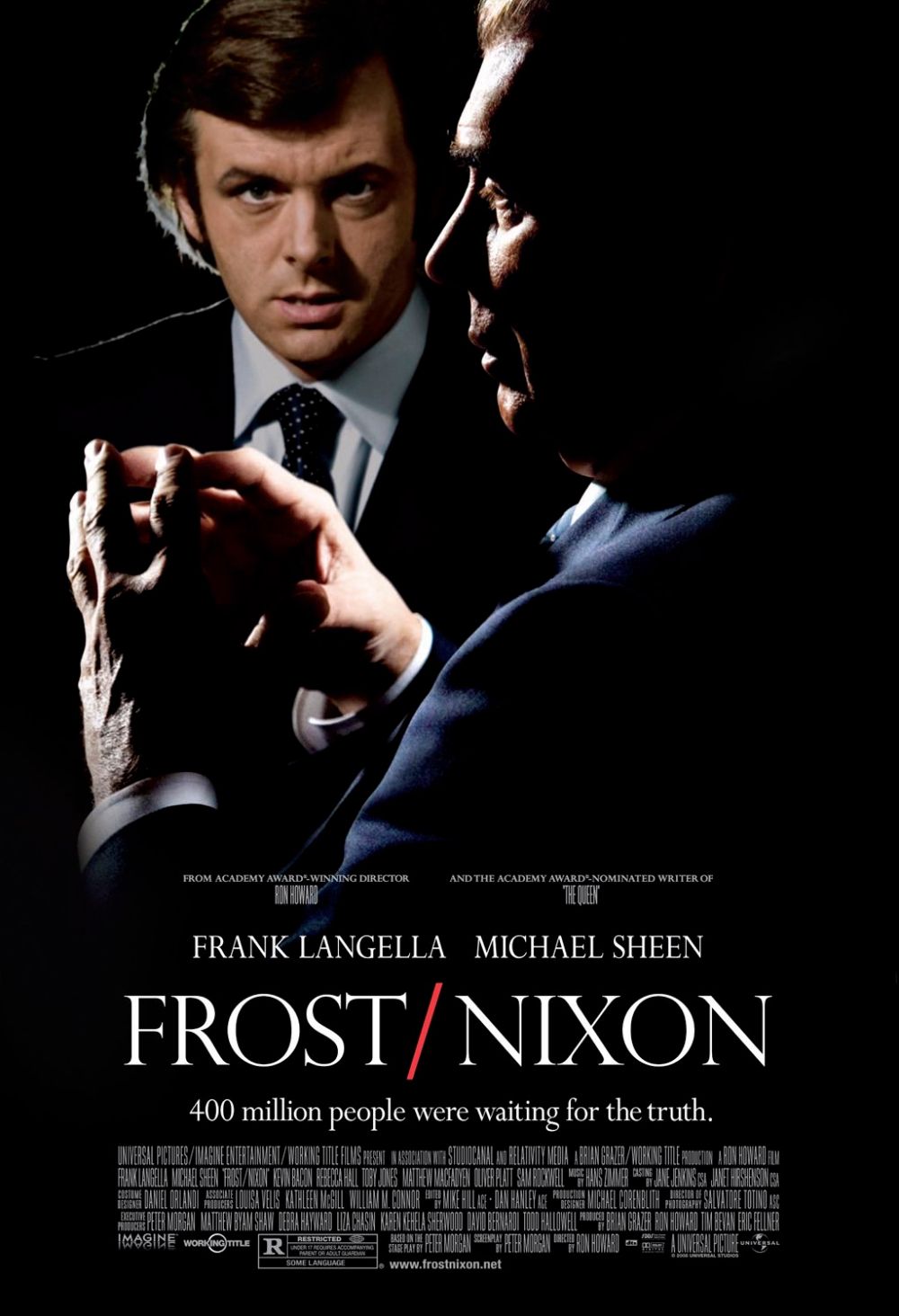
Ron Howard turns in one of the best directorial efforts of his career with this adaptation of Peter Morgan’s acclaimed stage play, “Frost/Nixon,” which dealt with the infamous interview between former President Richard Nixon and TV personality David Frost. Despite us all knowing the outcome of this interview, Howard still sustains a genuine tension between these two personalities, one being larger than life. Howard also has the fortune of working with the same two actors from the original stage production, Frank Langella and Michael Sheen. Langella’s performance is utterly riveting in how he gets to the heart of Nixon without descending into some form of mimicry or impersonation. You may think a movie dealing with two people having an interview would be anything but exciting, but when Langella and Sheen are staring each other down, they both give us one of the most exciting moments to be found in any film in 2008. Just as he did with “Apollo 13,” Howard amazes you in how he can make something so familiar seem so incredibly exciting and intense.
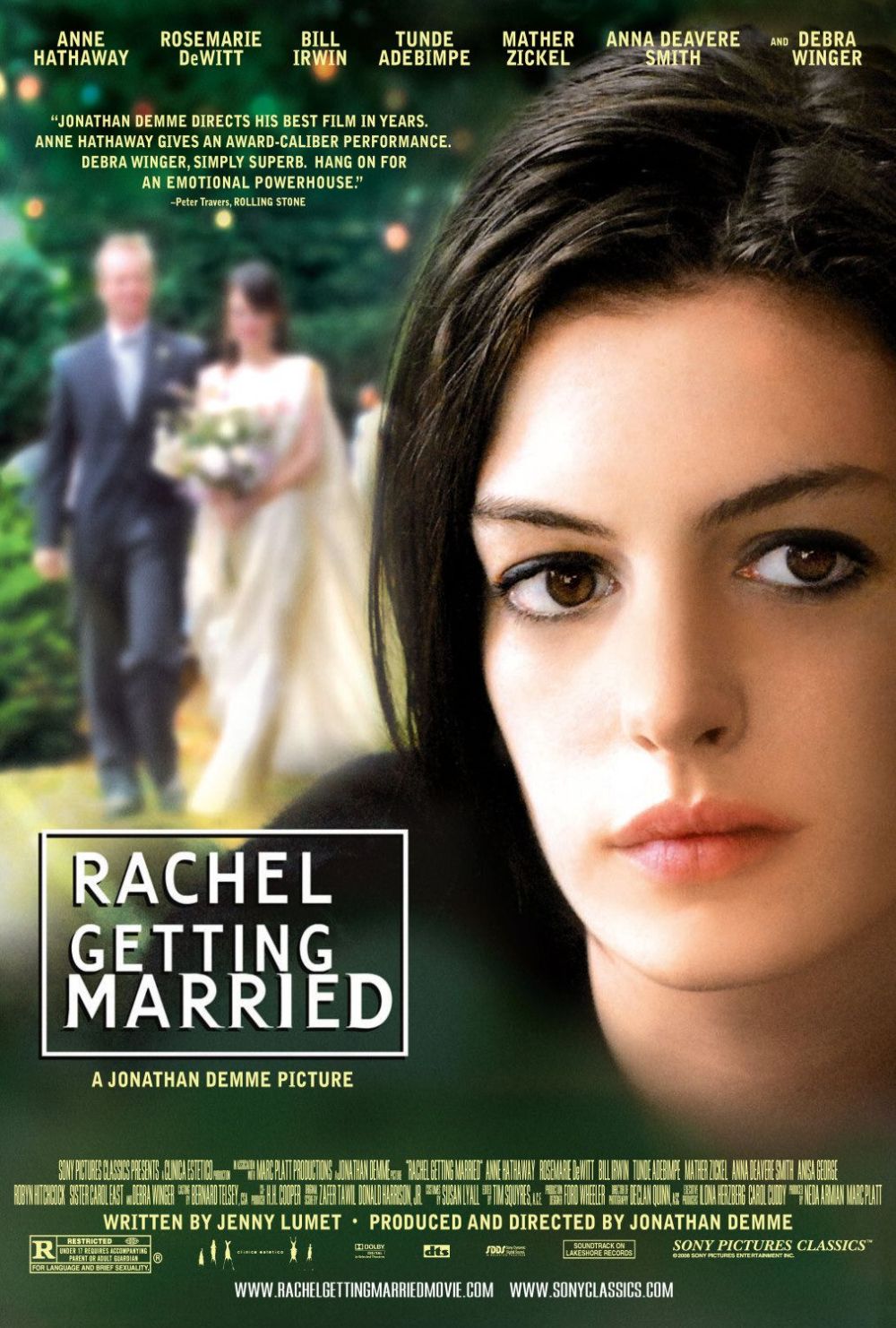
Jonathan Demme’s “Rachel Getting Married” had a huge effect on me with its raw emotion, and I loved how he made us feel like we were in the same room with all these characters. When the movie ended, it felt like we had shared some time with great friends, and Demme, from a screenplay written by Jenny Lumet, gives us a wealth of characters who are anything but typical clichés. Anne Hathaway is a revelation here as Kym, the problem child of the family who is taking a break from rehab to attend her sister’s wedding. Kym is not the easiest person to like or trust, but Hathaway makes us completely empathize with her as she tries to move on from a tragic past which has long since defined her in the eyes of everyone. Great performances also come from Bill Irwin who is so wonderful as Kym’s father, Rosemarie DeWitt, and the seldom seen Debra Winger who shares a very intense scene with Hathaway towards the movie’s end. I really liked this one a lot, and it almost moved me to tears.
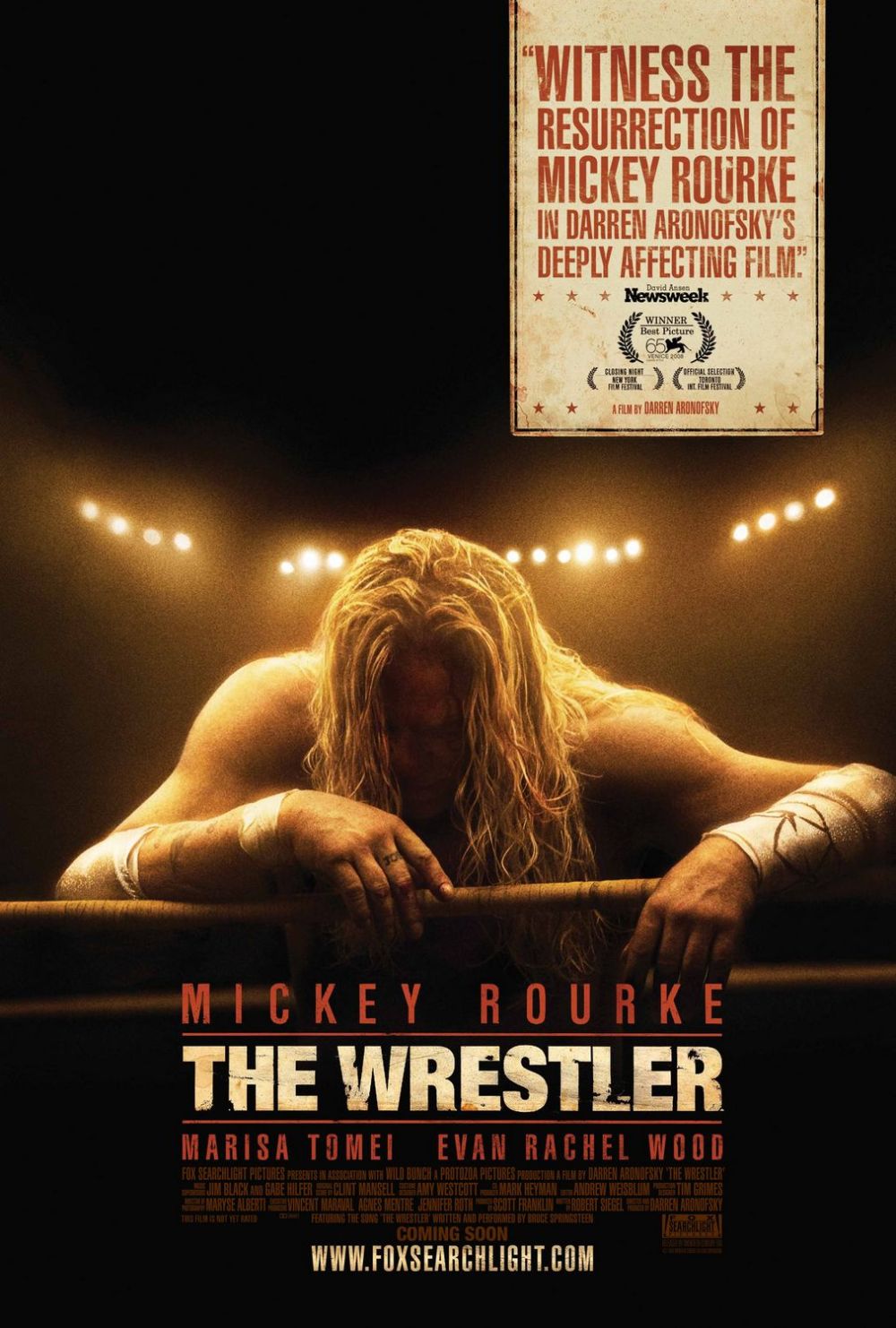
Darren Aronofsky’s “The Wrestler” has grown on me so much since I saw it. While it may be best known as the movie in which Mickey Rourke gave one hell of a comeback performance, this movie works brilliantly on so many levels. To limit its success to just Rourke’s performance would not be fair to what Aronofsky has accomplished as he surrounds all the characters in the bleakness of the urban environment they are stuck in, and he makes you feel their endless struggles to keep a roof over their heads and food on the table. “The Wrestler” succeeds because Aronofsky’s vision in making it was so precise and focused, and he never sugarcoats the realities of its desperate characters. Rourke more than deserved the Oscar for Best Actor, which in the end went to Sean Penn for “Milk.” Furthermore, the movie has great performances from Marisa Tomei and Evan Rachel Wood as those closest to Rourke’s character, and who look past his faded fame to see the wounded man underneath. The more I look at “The Wrestler,” the more amazed and thrilled I am by it.
Tomas Alfredson’s film of a friendship between a lonely boy and a vampire was so absorbing on an atmospheric level, and it surprised me to no end. What looks like an average horror movie turns out to actually be a sweet love story with a good deal of blood in it. Widely described as the “anti-Twilight,” “Let the Right One In” gives a strong sense of freshness to the vampire genre which back in the early 2000’s was overflowing with too many movies. The performances given by Kåre Hedebrant as Oskar and Lina Leandersson as Eli are pitch perfect, and despite the circumstances surrounding their improbable relationship, I found myself not wanting to see them separated from one another.
Pixar does it once again and makes another cinematic masterpiece which puts so many other movies to shame. With “Wall-E,” director Andrew Stanton took some big risks by leaving a good portion of the movie free of dialogue, and this allowed us to take in the amazing visuals of planet Earth which has long since become completely inhospitable. Plus, it is also one of the best romantic movies to come out of Hollywood in ages. The relationship between Wall-E and his iPod-like crush Eve is so much fun to watch, and the two of them coming together gives the movie a strong sense of feeling which really draws us into the story. The fact these two are machines quickly becomes irrelevant, especially when you compare them to the humans they meet in a spaceship who have long since become imprisoned by their laziness and gluttony.
I gave the DVD of this movie to my mom as a Christmas present, and she said you could do an entire thesis on it. Nothing could be truer as it is such a brilliant achievement which dazzles us not just on a visual level, but also with its story which is the basis from which all Pixar movies originate. “Wall-E” is the kind of movie I want to see more often, a film which appeals equally to kids and adults as this is not always what Hollywood is quick to put out.
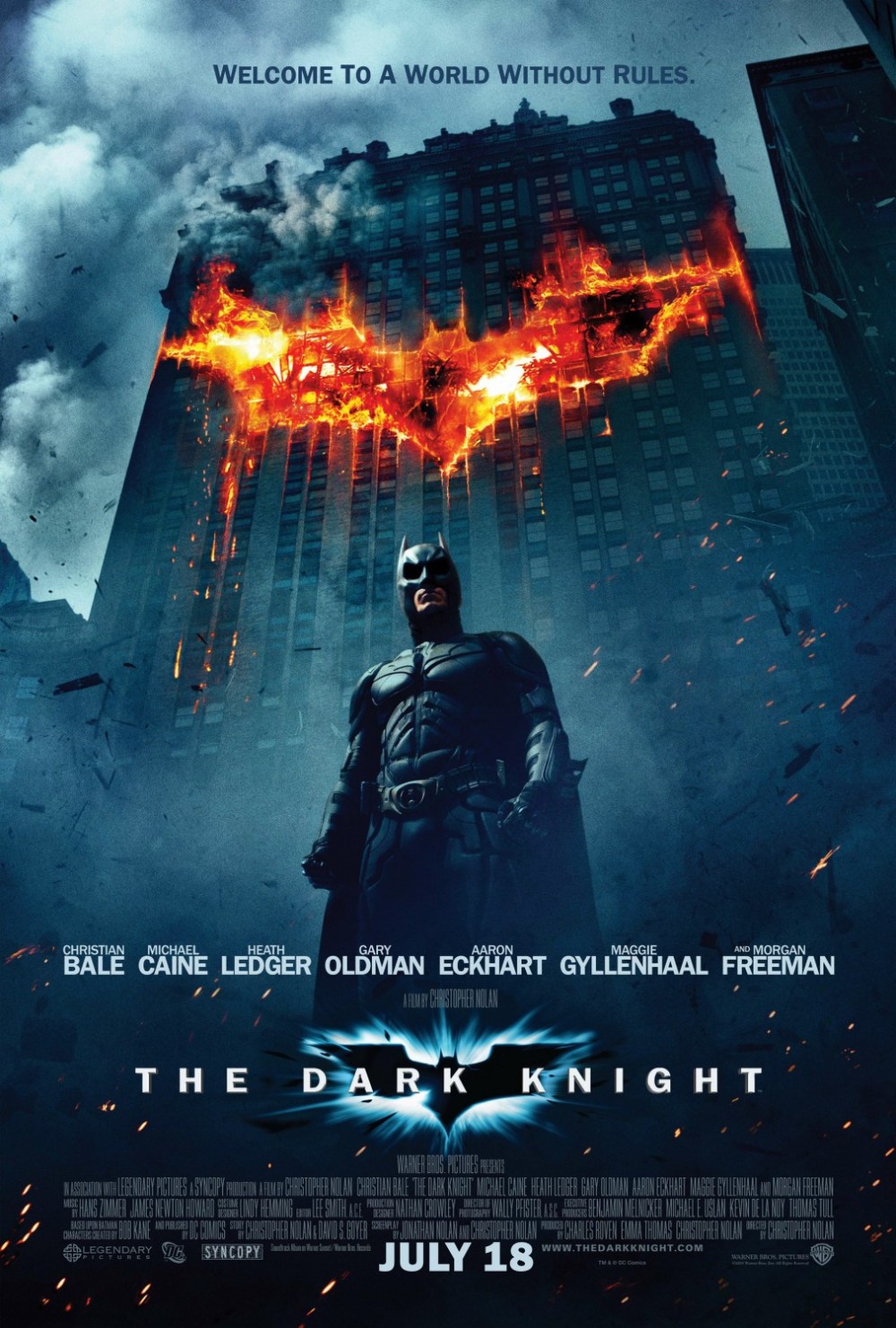
The biggest movie of 2008 was also its best. I was blown away with not just what Christopher Nolan accomplished, but of what he got away with in a big budget Hollywood blockbuster. “The Dark Knight” is not just an action movie, but a tragedy on such an epic scale. Many call it the “Empire Strikes Back” of the Batman series, and this is a very apt description. Many will point to this movie’s amazing success as the result of the untimely death of Heath Ledger whose performance as the Joker all but blows away what Jack Nicholson accomplished in Tim Burton’s “Batman,” but the sheer brilliance of the movie is not limited to the late actor’s insanely brilliant work. Each performance in the movie is excellent, and Christian Bale now effectively owns the role of the Caped Crusader in a way no one has before.
Aaron Eckhart also gives a great performance as Harvey “Two-Face” Dent, one which threatened to be the most underrated of 2008. The “white knight” becomes such a tragic figure of revenge, and we come to pity him more than we despise him. The movie is also aided greatly by the always reliable Michael Caine and Morgan Freeman. Everyone does excellent work here, and there is not a single weak performance to be found.
Whereas the other “Batman” movies, the Joel Schumacher ones in particular, were stories about the good guys against the bad guys, “The Dark Knight” is a fascinating look at how the line between right and wrong can be easily blurred. Harvey’s line of how you either die a hero or you live long enough to see yourself become the villain perfectly personifies the dilemmas for every character here. To capture the Joker, Bruce Wayne may end up becoming the very thing he is fighting against. I can’t think of many other summer blockbusters which would ask such questions or be as dark. “The Dark Knight” took a lot of risks, and it more than deserved its huge success. It set the bar very high for future comic book movies, and they will need all the luck they can get to top this one.
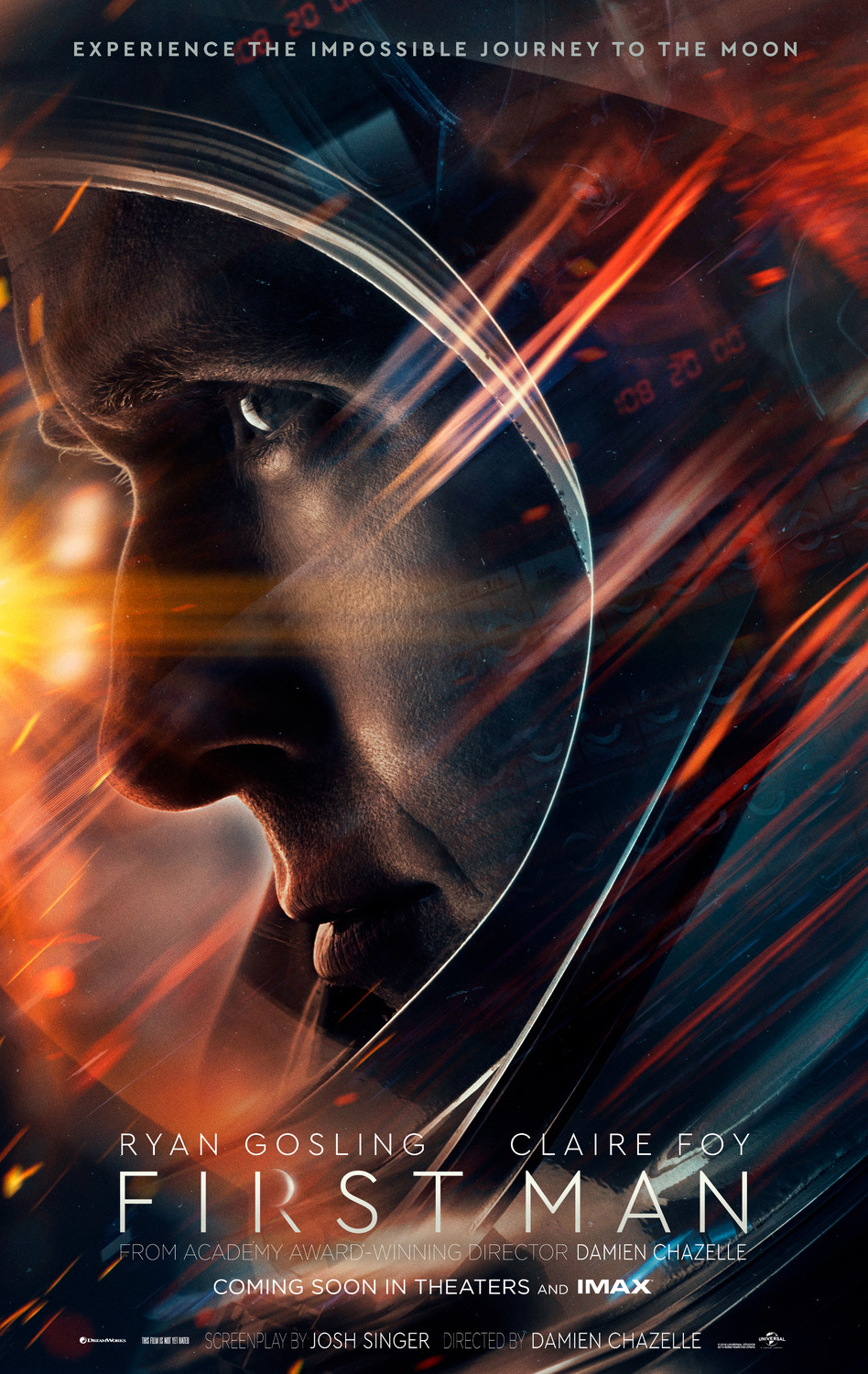
After getting all musical with “Whiplash” and “La La Land,” Oscar winning director Damien Chazelle now travels into outer space with “First Man.” Based on the book of the same name by James R. Hansen, it stars Ryan Gosling as Neil Armstrong, the first man ever to set foot on the moon, and it depicts the years leading up to his mission aboard Apollo 11. With this movie, Chazelle appears to be stepping outside his comfort zone as “First Man” does not look at all like a musical, and it represents his first directorial effort where he is working from a screenplay he did not write.
From the outset, this trailer looks amazing as the visuals it shows us are stunning, and this makes me believe the filmmakers really did their research here as this is not a story you can portray without any realism. Seeing Armstrong travel into the atmosphere and beyond is exhilarating, and the moment where the hatch is closed on the Apollo 11 capsule as the crew are left alone in darkness with only their thoughts and the sound of their own breathing is enough to illustrate their isolation. While those who watched breathlessly on July 20, 1969 when Armstrong made that “one small step for man” and felt very much a part of this amazing mission, I imagine he felt like one of the loneliest people in the universe even with the eyes of the world on him.
At the same time, I wonder how “First Man” will compare to other films which have captured an astronaut’s journey into outer space in unforgettable ways. The first film which comes to my mind is Ron Howard’s “Apollo 13,” still his best work to date. Howard took the events of this particular space mission which we all knew the outcome of, and he turned it into a most riveting cinematic experience that had me on the edge of my seat throughout. Furthermore, Howard filmed his actors working in a reduced gravity aircraft to realistically depict the weightlessness astronauts experience in outer space. Did Chazelle do the same? Well, we will eventually find out.
Then there is “The Right Stuff,” Philip Kaufman’s cinematic adaptation of the late Tom Wolfe’s non-fiction novel about the test pilots chosen to be part of Project Mercury, the first manned spaceflight in America. I still have vivid memories of seeing this movie as a kid when it came out back in 1983, and the scene where the capsule containing John Glenn (played by Ed Harris) descended into the atmosphere like a meteor remains forever burned into my consciousness. Can Chazelle match the attention Kaufman paid to even smallest historical details?
And let us never forget Alfonso Cuarón’s “Gravity” in which he made us see the real perils of being in outer space to where James Cameron had to admit someone made a truly realistic film on this subject before he did. For those who watched this Oscar-winning film and remembered its opening titles which exposed us to certain facts about outer space, we could not walk out of the theater and say we did not know what it is like to be up there.
So, while this trailer shows us how “First Man” looks to be very promising, I wonder if can stand up to those three movies as each set the bar high for filmmakers in capturing the reality of outer space and space travel. Well, we will all find out if it does when it is released on October 12, 2018.
I have not been as excited for a movie trailer as I have been for this one. Sure, there were the ones for various “Star Wars” movies, particularly “The Force Awakens,” which got me all excited, but this one feels especially thrilling. It is a direct sequel to one of the scariest horror movies ever made, and it dares to retcon a franchise which has seen a large deal of retconning throughout a number of sequels. Plus, with the director of “Pineapple Express,” “Joe” and “All the Real Girls” at the helm, I cannot help but anticipate something more than just another dumb horror sequel. I am of course talking about David Gordon Green’s upcoming “Halloween,” and after a week filled with teasers, the first full trailer was released, and damn it looks awesome!
Unlike “Halloween H2O: 20 Years Later” which was a direct sequel to 1981’s “Halloween II,” this “Halloween” serves as a direct sequel to John Carpenter’s original 1978 film. The trailer indicates that, instead of disappearing even after being shot six times by Dr. Loomis, Michael Myers was in fact captured and has been imprisoned in an asylum ever since. Gone is the implication of Laurie Strode actually being Michael’s sister, and this is made perfectly clear by Allyson, Laurie’s granddaughter, who is played by Andi Matichak. There’s no battle this time between brother and sister, but instead between a survivor who has no choice but to believe in the boogeyman, and a man who, as Dr. Loomis once said, isn’t even remotely human.
Right from the trailer’s first frame, I already love the look of this “Halloween” as the visuals are stark and ominous. I was taken aback at the production values on display here as horror movies in general are made on very low budgets to where the filmmakers are forced to cut more corners than they would ever want to. But here it looks like everyone at Blumhouse Productions and the filmmakers have crafted a true horror film where the shadows prove to be as ominous as ever, and we all remember how easily Michael can disappear into them.
In several interviews, the filmmakers behind this “Halloween” have said this film will ignore the continuity of the sequels, but that it will allude to them in one way or another. The scene in which the two reporters, both whom we see attempting to interview Michael, are stuck a deserted gas station and are stalked by him quickly reminded me of similar scene from “Halloween 4: The Return of Michael Myers.” When Michael approaches the female reporter while she is in a bathroom stall, it brought to my mind of when Ken Foree tried to explain why he wasn’t finished dropping the kids in the pool in Rob Zombie’s “Halloween.” It will be interesting to see what other allusions Green and company have in store with us in a few months.
After the first poster for the movie was released, many complained about how Michael Myers’ mask looked way too similar to the one used in Rob Zombie’s “Halloween” and “Halloween II.” Seeing it in the trailer here, it doesn’t look the least bit similar, and it instead looks very much like the one Nick Castle donned all those years ago. Many of the “Halloween” sequels had Michael wearing a different mask in each one, and it made me miss the original as it had an infinitely creepy look none of the others could match. But seeing Michael put on this particular mask once again had my excitement levels going through the roof.
And of course, it is so great to see Jamie Lee Curtis back in her star-making role as Laurie Strode. While Curtis portrayed Laurie as a barely functioning alcoholic in “Halloween H20,” she looks to play this character here as a survivor whose scars are more apparent on her psyche than on her body. As Laurie tells a police officer, played by Will Patton, how she always hopes Michael will escape again so she can have a chance to kill him, we see her shooting guns at various targets to where we can believe she has been practicing her aim for a very, very, very long time. Curtis is always a fantastic presence in any movie she stars in, and to see her make Laurie Strode into a true badass here has me looking forward to this “Halloween” movie even more.
I also have to say how much I loved this trailer’s last image of a young boy asking his babysitter to shut his closet door. Boy does this bring back memories of when we were young and believed there was a monster hiding in our closets. As we get older, we stop believing in monsters as real life proves to be far more terrifying, but in this scene certain characters are shocked to see there is one inside this particular closet. Whether or not you believe in monsters, we are once again reminded of how the boogeyman is real and that evil never dies.
Ever since learning David Gordon Green was working with Danny McBride on a new “Halloween” screenplay, I have been super excited about this project. Having Jamie Lee Curtis come back as Laurie Strode makes me even happier, and I have to applaud Jason Blum for managing to bring John Carpenter himself back to this franchise for the first time since “Halloween III: Season of the Witch” as securing Carpenter’s involvement could not have been easy. Carpenter serves as executive producer, and he will also be scoring the film along with his son, Cody Carpenter (YAY!). Furthermore, Carpenter made it clear how this addition to the “Halloween” franchise will bring Michael Myers back to his original roots as he always saw this character as not a real person, but instead as an almost supernatural force and the embodiment of evil. With all these talented people involved, I cannot help but have huge expectations for this upcoming horror film, and the trailer makes it seem like this endeavor will be worth the wait.
I also have to say I am glad this one isn’t titled “Michael vs Laurie” as it would have cheapened what we see here. Granted, this movie is to contain the final confrontation between these two, and I would hate to see it end when they both realize they have mothers named Martha.
“Halloween” is set to be released on October 19, 2018, a date which cannot come soon enough. Please check out the trailer below and be sure to subscribe to our YouTube channel if you haven’t already.
WRITER’S NOTE: This review was written back in 2008.
Well, it’s not incredible, but it’s still pretty good. “The Incredible Hulk” is not so much a sequel as it is a reboot. Ang Lee’s “Hulk” was not the movie Marvel Comics fans were waiting for, and the backlash against it was pretty severe. This was a shame because Lee’s movie was not at all bad, but I came of it knowing it would get a lukewarm response from audiences because it was more of a character driven piece which the summer movie season typically relegates to arthouse cinemas. But with this action-packed blockbuster, fans will likely get more of what they were looking for the first time around.
“The Incredible Hulk” thankfully sprints past this particular superhero’s origins by doing a quick recap of Dr. Bruce Banner’s accident which turned him into the ferociously mad and enormous beast who tears through all of his clothing with the exception of his underwear (very convenient for a PG-13 rating). We catch up with Dr. Banner, now played by Edward Norton, in Brazil where he has successfully managed to control his anger for over 130 days. While working a menial job at a bottling plant, he continues to look for a cure which will keep him from turning green and becoming super pissed. As a result, Banner is one of the few people on this planet determined not to go green in order to save the environment. But despite all the breathing exercises he does to control his anger, we all know he will soon find it’s not easy to keep from being green.
This Hulk movie is a lot more action packed than the previous one as it starts up quickly and never lets the pace go slack. Directing this superhero reboot is Louis Leterrier who directed “The Transporter 2” and “Unleashed.” He clearly likes the hyperkinetic style of filmmaking and it shows throughout. The direction is not necessarily outstanding and Leterrier doesn’t seem to quite have a style of his own yet, but he gets the job done and he keeps the film entertaining from start to finish.
The cast is different as well, with nobody but Stan Lee and Lou Ferrigno, doing their mandatory cameos, returning from Lee’s film. Norton is in some ways a better fit for Bruce Banner than Eric Bana was, and a lot more animated too. He may not physically look like someone who could become the Hulk, but that’s the point. Norton also did an uncredited rewrite of the script, but the Writer’s Guild of America denied him credit (Zak Penn gets story and screenplay credit). As always, Norton reminds us why he is one of the best actors of his generation, and he comes across as an ordinary joe thrust into circumstances beyond his control.
Liv Tyler takes over the role of Dr. Betty Ross from Jennifer Connelly, and while she doesn’t have much of an acting range, she is always a nice presence to have in any film (not just as eye candy mind you). She holds up well next to Norton as they both work to find a way to stop him from becoming the Hulk again. William Hurt plays her father, Gen. Thaddeus ‘Thunderbolt’ Ross, and he is always an interesting actor to watch. All the same, I have to admit that I liked Sam Elliott better in this role when he played it in Lee’s version. Elliott comes across better as an army general than Hurt does, and he was one of the best things about the previous film.
But the best addition to “The Incredible Hulk” is Tim Roth as Emil Blonsky, chief nemesis to Dr. Banner and his angry alter-ego. After playing a wuss of a man in the highly disturbing remake of “Funny Games,” Roth is in bad ass mode as a soldier who wants to take the Hulk down, but soon finds himself wanting his power. In the film, Emil ends up getting injected, by choice mind you, with the same stuff Banner got injected with. It’s enough to give him the power to overcome the most serious of injuries, but he soon finds that he wants more of that power which leads him to become the Abomination. Roth’s character is actually one of the more complex and most realized characters in the movie.
Roth’s performance here is a reminder of what a strong presence he is and watching him here should help ease the memories of the torture he endured in “Funny Games.” How refreshing it would have been to see he Abomination take out those two young cads who tortured that family. Of course, Michael Haneke would just rewind back from Abomination’s victory to intentionally frustrate the audience.
If there is anything lacking in “The Incredible Hulk,” it is not as strong on character development. One of the strengths of “Hulk” was the attention it paid to its characters and how they really drove the movie. I know Marvel Studios didn’t want to get too caught up with this in this reboot, but it would have been nice to see more character work here to keep this from being just an average action movie. In the end, this was a movie made to please the fans who felt let down by what they saw in 2003.
I wish I could say that I loved this incarnation of the Hulk, but it didn’t quite reach the heights I wanted it to. But it still was a lot of fun and kept me entertained from start to finish. It is a flawed film, but we do get to see Hulk smash in a way we didn’t get to see as much of previously. That was probably the best thing about this film, seeing Hulk smash stuff up. Using two halves of a police car to take out stupid humans makes for great action. All the same, it could have been better.
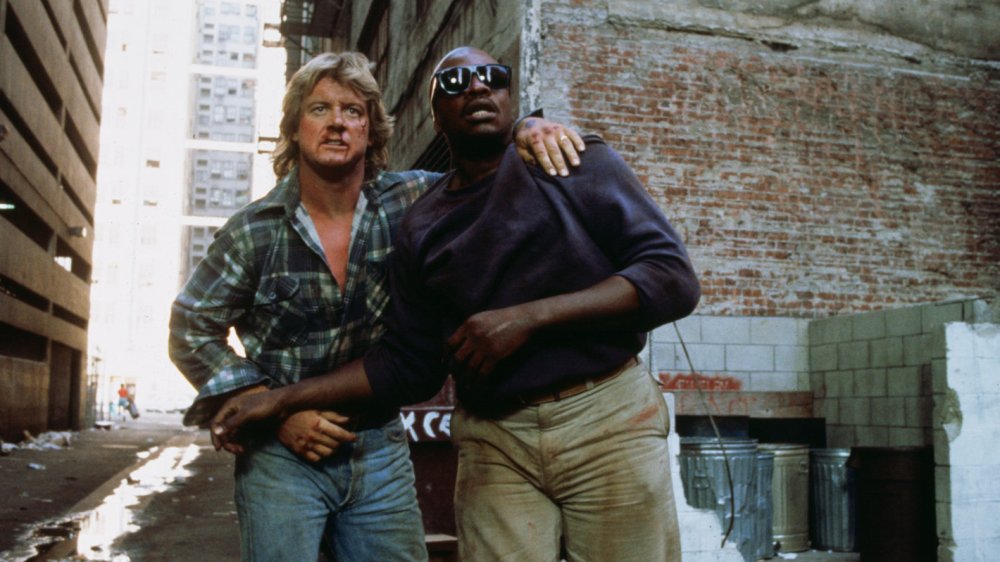
While at New Beverly Cinema for a screening of “They Live” on June 10, 2012, Roddy Piper spent some time talking about how he, director John Carpenter and co-star Keith David staged the alley fight in the movie. At five and a half minutes, it remains one of the longest fight scenes in cinema history.
Piper said that while Carpenter asked him many questions in preparation for “They Live,” the director also made him watch “The Quiet Man” which starred John Wayne and Maureen O’Hara. Aside from its beautiful photography of the Irish countryside, the movie also had one of the longest fight scenes ever filmed. Carpenter was determined to make an even longer fight scene, and to that, Piper said, “Okey dokey.”
Another reason Carpenter asked him so many questions, Piper said, was because “he was trying to figure out whom to put with me.” Keith David ended up being his co-star, and Piper described him as a “220-pound dancer” and of how “he is like Mike Tyson and doesn’t know it.” He also went on to describe David as a “great and wonderful man” and that he “kept laughing at all my mistakes.”
Piper did have a hand in choreographing the fight, and much of the rehearsal between him and David took place in Carpenter’s backyard. He taught David how to throw and take a punch, but knowing how punches on camera can appear faked, Piper eventually told him:
“Listen Keith, just hit me. From here and down (pointing to below his neck and above his waist) just hit me and go as far as you can.”
Piper said David had no problem doing that.
In filming the fight, Piper said he and David worked on three sections of it, and that they took it as far as they could. The day after that, they worked on the close ups for the scene. Rumor has it that it took three weeks of rehearsal to get the choreography of the fight just right. The audience was shocked however to hear that, even with the fight lasting almost six minutes, five minutes were actually taken out of it.
“They Live” also inspired a parody on “South Park” in which Timmy and Jimmy duke it out in a shot-for-shot remake of Piper and David’s fight. Upon learning this particular “South Park” episode featured “little crippled kids” fighting, Piper said he felt so bad about it and refused to watch it for about ten years. What changed his attitude regarding the episode was when he was at an autograph convention a few years ago:
“There was a beautiful little kid in a wheelchair that came up and told me about it, and he was laughing his ass off! Then I watched it and, oh baby Jesus put the hat on, one got hit in the crouch and another with a wheelchair! So you know if he likes it then I like it too! I just didn’t want to offend him.”
Piper did talk about how “They Live” is on the verge of being remade, and this did not please any fans in the sold-out audience at New Beverly Cinema. Apparently the remake will not have a fight scene in it. While some were disappointed to hear this, it’s probably just as well. After watching Piper and David pummel each other with such raw power, it seems impossible to top what they did today.
It was a huge shock to hear of the sudden passing of “Rowdy” Roddy Piper who died on July 31, 2015 from a heart attack at the age of 61. Many of us remember him from his wrestling days with the World Wrestling Federation (WWF, now WWE) where he battled Hulk Hogan and Mr. T in the ring, and for also making Cyndi Lauper’s life (in her music videos anyway) a living hell.
But for me, I’m always going to remember him best for his performance in John Carpenter’s “They Live” in which he played a nameless drifter who discovers that the earth has been taken over by aliens disguised as rich people. While he may have seemed an unusual choice for a movie role, Carpenter said he cast Piper because he had life written all over his face, and that’s a quality that not enough people in Hollywood pay attention to these days.
The following is an article I wrote after I attended a special screening of one of Carpenter’s best movies.
Former wrestler and actor Roddy Piper visited New Beverly Cinema on June 10, 2012 to talk about his role in John Carpenter’s “They Live.” Once the film ended, Piper made his way to the front and leapt onstage and yelled out for all to hear:
“I HAVE COME HERE TO CHEW BUBBLE GUM AND KICK ASS!!! AND I AM ALL OUT OF BUBBLE GUM!!!”
This screening was put together by the horror convention Days of The Dead, and moderating the Q&A was Brian W. Collins from the website Horror Movie a Day. During the time he spent with the audience, Piper looked so incredibly happy to be there.
When Brian asked him how he got cast in “They Live,” Piper said he was doing Wrestlemania III and got asked out to dinner by Carpenter afterwards. Piper had, as he said, “been on the road since he was 15 years old,” and he admitted to the audience he “had no idea of who John Carpenter was.” But once he realized he was a movie director offering him the lead role in a motion picture, Piper was eager to work with him.
In talking about filming the destruction of the shantytown, Piper pointed out how many people in that scene were actually homeless and not your average Hollywood extras. He also said the filmmakers had to pay two gangs off so that, when they left at night, the trailers would still be there in the morning. Piper said he also knew the president of each gang, and that really helped.
Then there was the discussion about the “bubble gum” line which Brian heard was improvised by Piper. Piper confirmed it was his idea and jokingly described it as “lame,” and it came about when Carpenter told him just before the cameras started rolling:
“Roddy, you know you’re going into a bank, you got bullets on, you got a shotgun, you got sunglasses. You gotta say something because you’re not robbing it. Action!”
Piper said the line, and then Carpenter yelled cut and immediately said, “Lunch!”
One audience member asked Piper if he did his own stunts in “They Live,” and he admitted he did all of them except for when Meg Foster pushes him out the window. Piper, however, also said if it was the last shot of the movie, then they would’ve let him do it. Speaking of Foster, he confessed he did indeed trip out over her eyes because they are so beautiful. Looking back, he marveled at how she brings you right in with those eyes.
We never do learn Piper’s character’s real name, and he is called Nada in the end credits which in Spanish means nothing. In describing Nada, Piper said, “You don’t know where he came from, you don’t know why he’s doing what he’s doing, you don’t know why he’s wearing a wedding ring. You know nothing about him.” Carpenter told him the thought behind this was if you don’t know anything about him, it makes him more intriguing to where you want to watch more.
Piper ended the evening by speaking profoundly about his role:
“Nada is you, he is every one of you, not blue collar or white collar. He’s you and that’s why you know nothing about him because it depends on if it’s you, then that’s what’s about him. He’s supposed to represent everybody, not just America, but everybody in the world. And that’s kind of why you as an audience fill in the nothing with whatever ethics and morals you’re fighting for at the time.”
Upon hearing of Piper’s death, Carpenter said he was “devastated to hear the news of my friend Roddy Piper’s passing today. He was a great wrestler, a masterful entertainer and a good friend.”
WRITER’S NOTE: This review was written back in 2014. I am posting it here out of respect for Stephen Hawking who just passed away in March 2018 at the age of 76. Once diagnosed with ALS, he was expected to live only a few years more, but he succeeded in living on despite what the disease did to his body, and he lived one hell of a life. RIP Stephen.
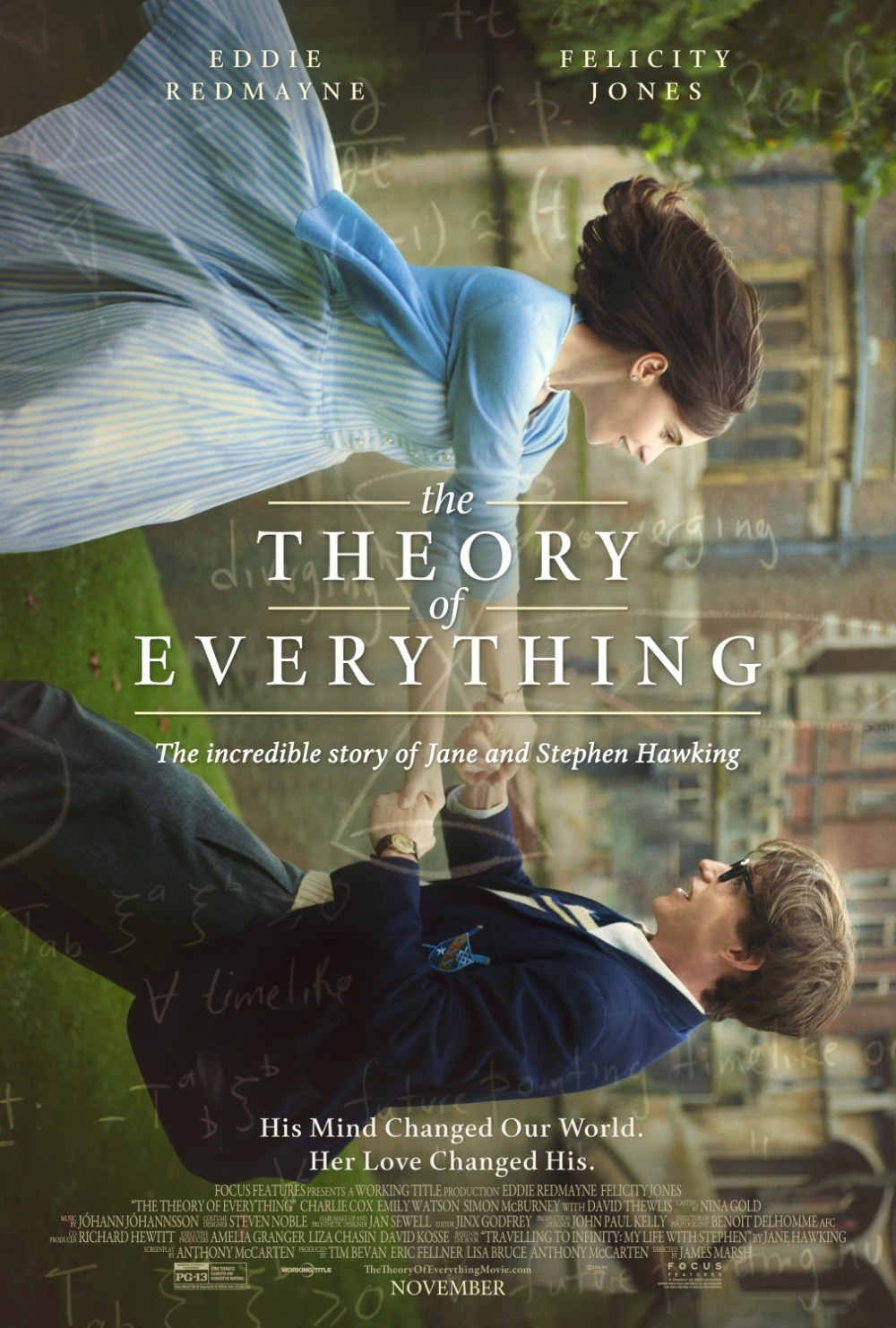
It is shocking to see Stephen Hawking, as played by Eddie Redmayne, riding around recklessly on his bicycle at the beginning of “The Theory of Everything.” We have long since gotten used to seeing him in his motorized wheelchair as ALS robbed him years ago of the ability to move around on his own, and we all know the sound of his computerized voice which has provided us with an insight to his brilliant mind and allowed him to provide lyrics to Pink Floyd songs. But this movie reminds us he was not always like this, and that there was someone in particular who saved his life in more ways than one.
“The Theory of Everything” is based on the memoir “Travelling to Infinity: My Life with Stephen” which was written by his first wife, Jane Wilde Hawking, and it focuses on their courtship which took place during their time as students at Cambridge University. Stephen looks like a perfectly dressed nerd who has the appearance of someone destined never to have any luck with women, and yet he still manages to catch the eye of the beautiful Jane (may we all be this lucky). At first it looks like an ill-suited coupling as Stephen is a student of physics while Jane’s main studies are in romantic languages. She believes in God, but Stephen’s love of science appears to imply he does not. We watch as they come to love and understand how the other thinks, and the way it is presented to us is both lovely and very believable.
But of course, we all know what will happen to Stephen eventually, and it is shown here in excruciating detail as he suddenly trips and falls down right on his head (ouch). Upon discovering he has ALS and told he has only a couple of years to live, Stephen finds himself shying away from everyone around him including fellow students, professors and even Jane as he desperately doesn’t want to be a pity case for anyone. But Jane has fallen deeply in love with Stephen, and she is not about to give up on him because there is too much to lose.
It’s hard not to think of movies like “A Beautiful Mind” while watching “The Theory of Everything” as both feature strong female characters determined to save their afflicted husbands from the diseases which appear all but fatal. For a time, it looks like this film will be no different in the way it portrays the strained relationship Stephen and Jane as they sacrifice so much to make things work between them. But as the movie goes on, it defies conventions and shows us a relationship which does suffer, but any impediments thrown into their path do nothing to tear apart the infinite respect they have for one another.
The eyes of the world are on Eddie Redmayne right now who as his performance here is utterly astonishing. I would love to ask about how he went about portraying Stephen’s bodily deterioration because he achieves doing so in a way which feels painfully real, and it’s amazing what he’s able to convey when Stephen is no longer able to communicate vocally (at least, until he gets that computerized voice). We always talk about how certain performances are more about imitation when it comes to playing characters based on real people, but Redmayne inhabits Stephen to such an amazing effect to where I found it impossible to label his performance as being one of mere imitation. Even as ALS continues to ravage his body, Redmayne makes the case for why Stephen remains such a respected individual to this very day as well as one who continues to fight the odds.
And let’s not forget the fantastic performance by Felicity Jones who portrays Jane Hawking as the lovely and strong-willed woman she is. While it may look like she has the easier role to play, Jones has an equally challenging role as she shows the unending struggles and sacrifices Jane went through to keep Stephen alive. It’s painful to watch Jane as she uses an alphabet sign to communicate with Stephen after his tracheotomy, and Jones makes you feel her pain as she wonders if she has suddenly taken too much away from him.
“The Theory of Everything” was directed by James Marsh who previously made “Man on Wire,” the Oscar-winning documentary about Philippe Petit’s tightrope walk between the two World Trade Center buildings in New York. Marsh does excellent work in keeping all his actors in check to where they never go for scene-hogging moments of an embarrassingly dramatic nature. Truthfully, it is the ordinary moments of these characters lives which are the most fascinating to watch, and Marsh succeeds in taking us back in time to a most romantic period in these couple’s lives.
The other great thing is how Marsh and screenwriter Anthony McCarten, who spent ten years trying to get this movie made, refused to let the audience look at Stephen Hawking as if he’s a complete invalid. Despite the damage ALS has done to his body, Stephen still managed to live a full life which has included two wives and three children, and it didn’t stop him from doing his work which eventually led to the publication of his novel “A Brief History of Time.” Heck, he even got to guest star opposite Data on “Star Trek: The Next Generation.” What more could someone ask for?
“The Theory of Everything,” is by no means a movie which falls victim to conventions or clichés. It presents us with a marvelous story about two people who come to love one another for their thoughts and minds, and of how their love helped them through various struggles which would have worn anyone else out in less than a year. It also contains some of the best performances of 2014 from Redmayne and Jones who are as brave as they are daring. Portraying real-life people onscreen is always a challenge, but they both took roles based on very well-known individuals and succeeded in making them their own.
Seriously, “The Theory of Everything” is one of the best movies of 2014 that I have seen and it is deserving of many of the accolades it has received.












 The Ultimate Rabbit