‘Pale Rider’ Movie and 4K Review
The following review was written by Ultimate Rabbit correspondent, Tony Farinella.

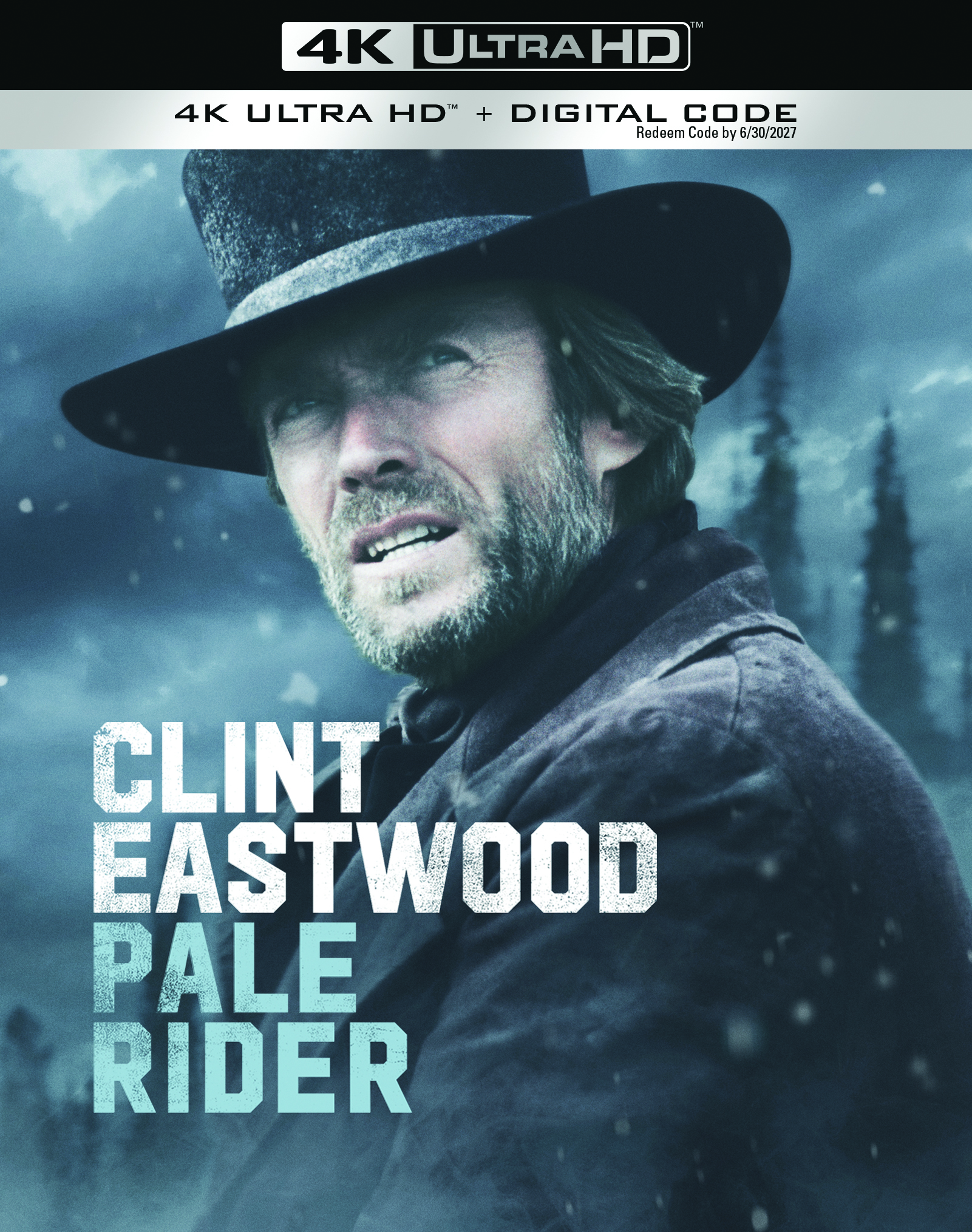
Clint Eastwood is synonymous with the Hollywood western in American cinema. For my money, the westerns of Eastwood are far superior than those of John Wayne. There is a subtlety and nuance to his films and his performances. While not all of them are Hollywood classics, they are a great example of old-school craftsmanship, especially when he’s behind the camera.  He is behind the camera for “Pale Rider,” which is celebrating its 40th anniversary with this 4K release.  It is a film I have not seen before, but after watching it for the first time, I fell in love with it immediately.

Our film is set in LaHood, California in Carbon Canyon, which is being run by an malevolent banker and a crooked marshal. The banker is named Coy LaHood, played by Richard Dysart. Since he doesn’t have the legal rights to kick the miners out of their homes, he uses violence and intimidation in an attempt to gain complete control of the land. This doesn’t sit right with Hull Barret, played by Michael Moriarty, as he’s trying to take care of his fiancée Sarah (Carrie Snodgress) and her daughter Megan (Sydney Penny). However, he’s finding little to no support in his battle against LaHood.
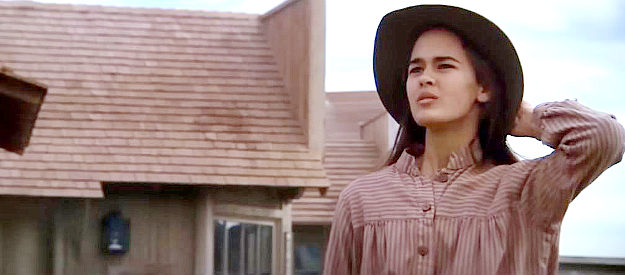
Megan’s prayers for peace are answered by a man known as the Preacher, played by Eastwood. He’s a mysterious and shadowy figure who shows up to save Hull after he’s attacked by four of LaHood’s men. Megan was having a hard time seeing the silver lining in much of anything after her father left, her grandfather passed away, and her dog was killed.  LaHood has brought nothing but mayhem and destruction to Carbon Canyon.  The Preacher, however, is not only giving Megan hope, but he’s also giving hope and faith to everyone in Carbon Canyon. They are not going to be kicked out of their homes, and they will not be bought off.

Westerns are often hit or miss with me as a film critic. When they are done with interesting characters, beautiful cinematography and focus on the quiet introspective moments, they connect with me and I’m completely absorbed.  One of my favorite Westerns of all time is “Unforgiven,” which was also directed by Eastwood. It deals with the aftermath of the violence and the effect it has on those who have inflicted it on others. “Pale Rider” is about the people of Carbon Canyon and how they are trying to exist, survive, and live while under the thumb of LaHood.   Eastwood, in many ways, is a supporting character in his own film.  I imagine this was by design. When he does appear on screen, everything he does is thoughtful and understated. He has a terrific scene with Sydney Penny where he describes why they can’t be together romantically. It’s delicate and, in the hands of any other filmmaker, it would have been awkward and out of place.
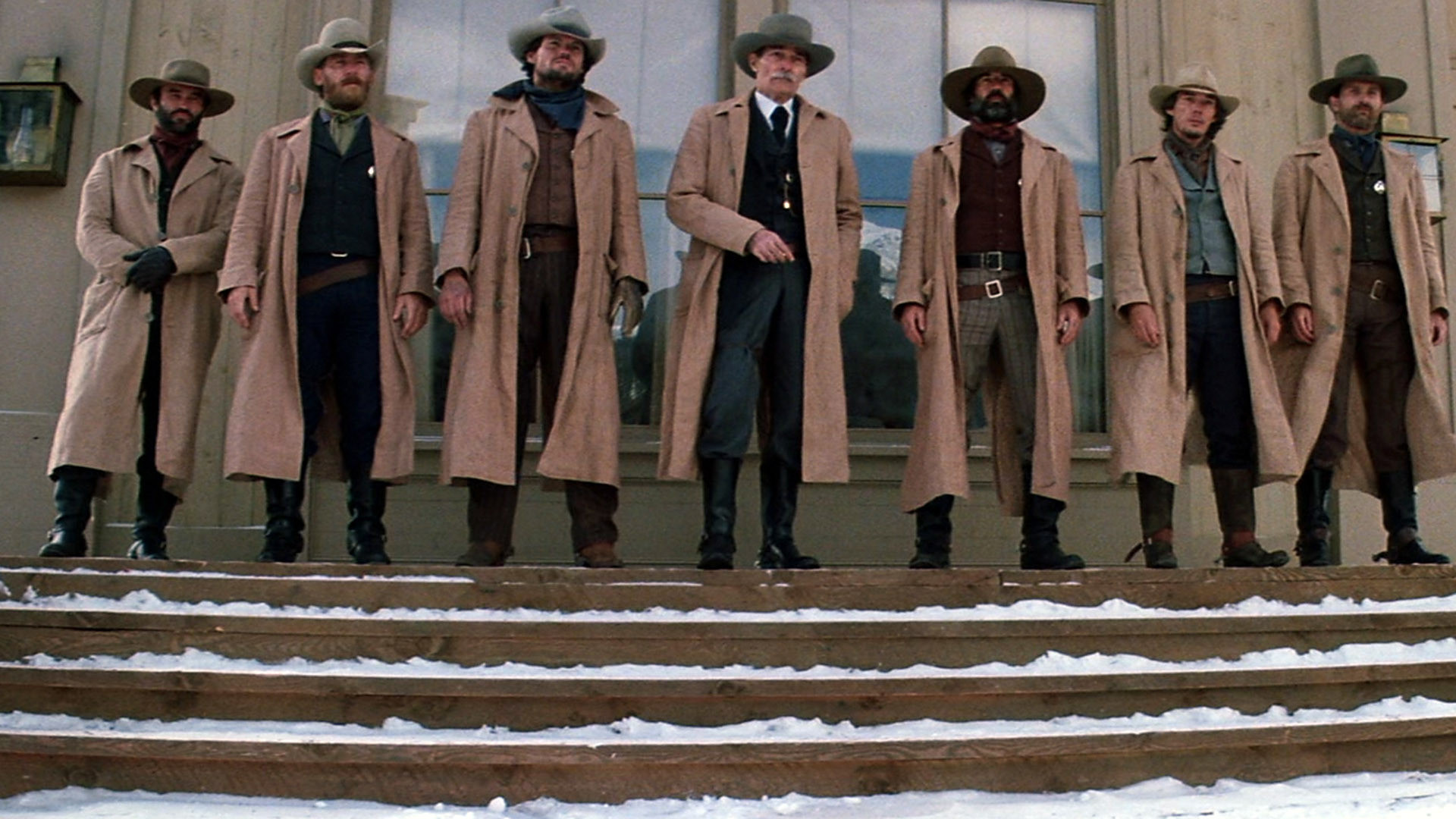
It all leads to the big shootout between the Preacher and LaHood’s men along with Stockburn, the Marshal, played by John Russell.  The shootout scene is impactful because Eastwood is a patient director and he takes his time in building up to the grand finale.  At the end of the day, movies are simple—introduce us to characters we are invested in, set the stage, let the actors do their work, and get out of the way. Eastwood is one of the best in the business at doing that as a director, which is one of many reasons why he’s a Hollywood legend.

I’d also like to mention the work of Chris Penn in the film as LaHood’s son, Josh. Even though Sean Penn is more well-known and established as an actor, his brother Chris was a terrific character actor who really knew how to play a slimy and underhanded villain. I’ve always been a big fan of his work.  Michael Moriarty plays a good man who is trying to do the right thing while simultaneously trying to maintain his manhood at the same time.  In many ways, even though Eastwood receives top billing, he’s the lead in the film when it comes to screen time. Carrie Snodgress and Sydney Penny bring vulnerability, strength, and warmth to their performances. This is a terrific cast.
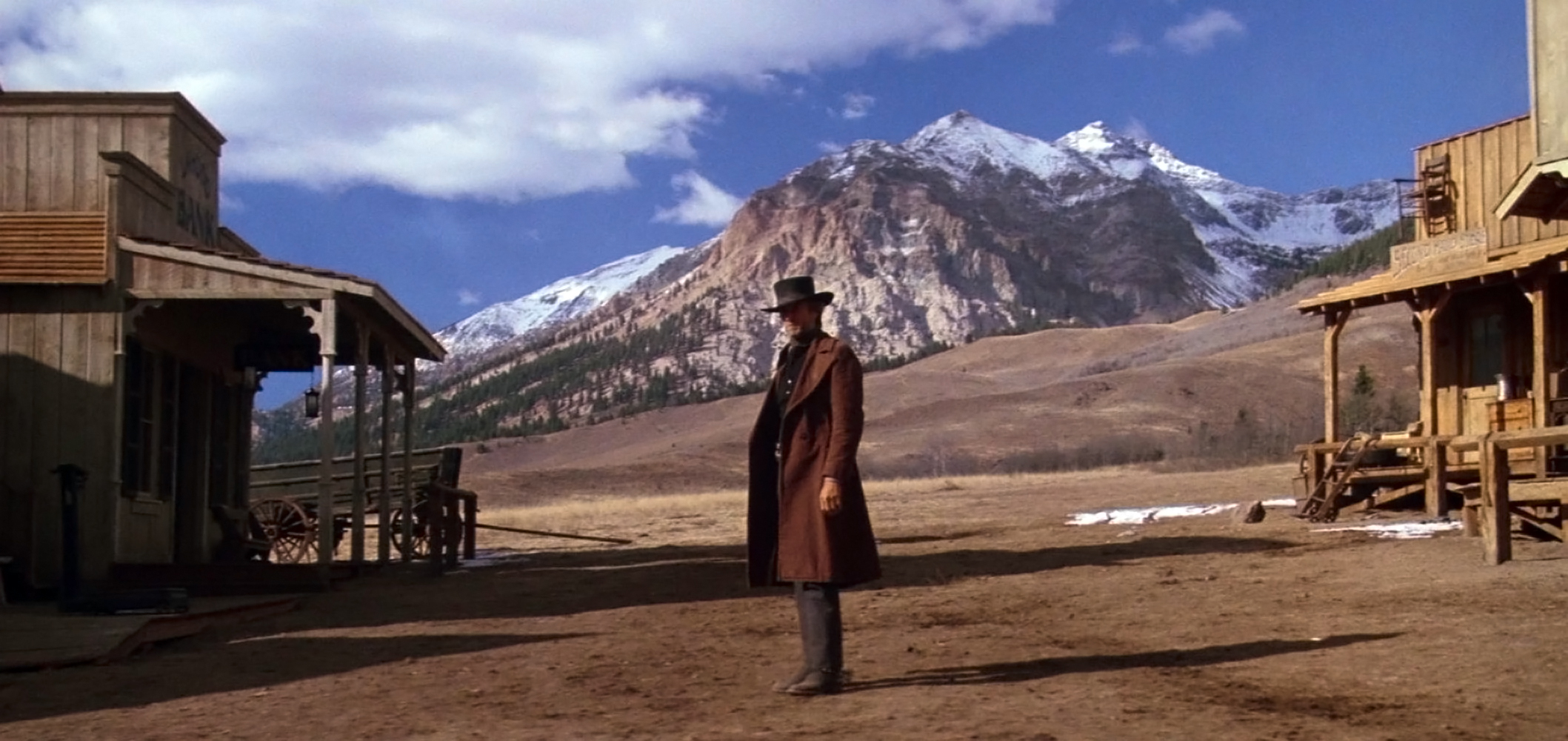
From start to finish, I was utterly engrossed in “Pale Rider,” and I couldn’t take my eyes off the screen. There is a sense of mystery surrounding the Preacher character, and it is what keeps the story moving in a unique and captivating way.  I like to be kept on my toes. Overall, this is the kind of movie I love as a moviegoer.  The acting, from top-to-bottom, is phenomenal, the scenery is gorgeous, and the story is simple yet powerful. This is another in a long line of classic films from the great Clint Eastwood. The great thing about his filmography is there are still films of his I haven’t seen. He’s the gift that keeps on giving.

* * * ½ out of * * * *

4K Info: “Pale Rider” is being released on a single disc 4K from Warner Brothers Home Entertainment. The release comes with a beautiful slipcover and a digital copy as well.  There is a steelbook version of the film available for purchase if you are interested in steelbooks over slipcovers. I prefer slipcovers myself. The film has a running time of 116 minutes and is rated R.

4K Video Info: “Pale Rider” comes with a jaw-dropping 4K HDR transfer. The film looks magnificent. Westerns, in particular, are always a welcome addition to 4K.  The landscapes are enthralling to look at and the colors are lively and vivid.

4K Audio Info: The Dolby Atmos track is out of this world as it is peaceful during the quieter moments in the film but it comes to life during the action sequences. Subtitles are included in English, Spanish and French.

Special Features:

The Diary of Sydney Penny: Lessons from the Set – NEW

Painting the Preacher: Bruce Surtees and Pale Rider – NEW

Clint Eastwood: A Cinematic Legacy – Reinventing Westerns

Eastwood Directs: The Untold Story

The Eastwood Factor

Should You Buy It?

HELL YES! “Pale Rider” is a great film.  It was almost a perfect film, and I was very close to giving it four stars. In the end, I decided to give it three and a half stars, but when it comes to owning the 4K, it’s a no brainer.  There are also new special features on this disc! So many physical media collectors often complain about the lack of new special features, but there are two new special features on this 4K disc. In total, there are over three hours of special features here! Clint Eastwood and Warner Brothers have a special relationship, and this is one of their finest films.  The audio and visual aspects of the 4K are magnificent.  This is one of my favorite 4K releases of 2025 so far, and I can’t wait to watch “Dirty Harry” and “The Outlaw Josey Wales” on 4K from Warner Brothers. They hit a home run with this release, and you owe it to yourself to add this film to your collection. This one comes highly recommended.

**Disclaimer** I received a copy of this film from Warner Brothers to review for free.  The opinions and statements in the review are mine and mine alone.

No, I Haven’t Seen It Until Now: Akira Kurosawa’s ‘Ran’

I pride myself on having a vast knowledge of movies. While my many of my friends stumble across a movie they don’t recognize, I am usually quick to name it even if I have never watched it before. Everyone is amazed at how I could know such things. Still, when it comes to older movies and the great filmmakers who ever lived, there are still many I need to catch up on.

One of those filmmakers I really need to catch up on is Akira Kurosawa who is considered by many to one of the greatest of all time. Until I saw “Ran,”, the only movie of his I had previously watched was “The Seven Samurai” which really is one of greatest movies ever made. Of course, I got exposed to the American remake, “The Magnificent Seven,” beforehand, but anyway.

“Ran” was the very last movie Kurosawa made on such an epic scale, and as amazing as it looked when it was first released, this is even more the case more than 30 years later. Kurosawa clearly had the power to request literally thousands of extras, and it is easy to see well-dressed studio executives looking at him to where, had he made this movie today, would have asked him:

“Can’t you just add all these people in with CGI? Wouldn’t it be easier and cheaper just to hire like 50 guys instead of 1200?”

If they didn’t ask them that, they would obviously come up with the obvious solution:

“We’ll solve it in post!”

Looking at the title and scenes from the movie trailer, I figured the title “Ran” meant the main characters were running from certain doom throughout like it was a big chase. This should show you what I know about the Japanese language, and that is not much. “Ran” actually means “revolt” or “chaos,” and Kurosawa’s movie is filled with so much of both to where this is ends up being a cinematic experience both physically and emotionally draining.

Kurosawa based the story on the legends of the daimyo Mori Motonari and of how he had three sons who were intensely loyal to him. This led him to look at the story a little differently and say the following:

“When I read that three arrows together are invincible, that’s not true. I started doubting, and that’s when I started thinking: the house was prosperous and the sons were courageous. What if this fascinating man had bad sons?”

Of course, anyone familiar with William Shakespeare will say that “Ran” is heavily influenced by the tragedy of “King Lear.” Indeed, the story very much resembles that of “King Lear” as we watch a powerful leader abdicate his throne, and he ends up being betrayed by his own blood in the process.

The powerful leader at the center of “Ran” is Hidetora, leader of the Ichimonji clan. The story starts with Hidetora abdicating his throne to his three sons Taro, Jiro, and Saburo. The majority of the power is given to Taro who is his eldest son, and Jiro and Saburo are ordered by their father to support him no matter what. Saburo, however, does not agree with Hidetora’s decision to disperse all of his powers, reminding him how his kingdom came about through his own treachery and massacre of others. Hidetora starts acting all uppity as if he’s a superstar celebrity who is not used to hearing the word “no” much, and he banishes Saburo from the clan as well as his servant Tango who speaks in Saburo’s defense. It’s amazing what breaking three arrows together can do to a man’s ego.

From there, it is a vicious downfall for Hidetora as he is banished from his kingdom ever so coldly. Many characters here profess to believe in a god, be it Buddha or someone else, and they pray for their assistance in this little world which is quickly collapsing. If there is a god watching over them, he, or she, is blind to their sufferings or deaf to their endless prayers. Hence, this is quite a bleak movie from a thematic and visual standpoint.

After watching “Ran,” I was compelled to learn more about it. While researching the movie more deeply, It turns out “King Lear” never really entered Kurosawa’s mind until he was deep into pre-production. Along the way, he did incorporate different elements of the play into it, and he had this to say about Shakespeare’s classic tragedy:

“What has always troubled me about ‘King Lear’ is that Shakespeare gives his characters no past. … In Ran, I have tried to give Lear a history.”

Now this is what gives Hidetora, among others characters, such gravity throughout the nearly three-hour running time. He was not a leader who earned his kingdom through family succession, but through the pillaging of villages and murdering those who were against them. Perhaps he would like to forget this, but his power and family are forever stained by his deeds, and he is reminded of this in the most painful of ways.

With this in mind, it is no wonder two of Hidetora’s three sons end up turning against him. What his legacy has taught them is you can’t get anywhere in life without beating the crap out of the other guy and stealing everything he and his followers have. Only Saburo is fearless and selfless in telling him this and of pointing out the fact he will always be seen as a killer. Saburo at least cares enough to tell him this instead of just sucking up to him like his brothers do. Some people hear the word “yes” once too often when they need some others say “no” every once in a while.

As we see Hidetora losing his mind and in a state of disbelief, I was reminded of Will Munny, Clint Eastwood character from “Unforgiven.” Both these characters become sick, and in their feverish state they become haunted by the lives they ended ever so coldly. They have tried to convince themselves they are not the same people they once were, and Hidetora appears to develop amnesia in an effort to block his mind of his past deeds. But nightmares abound in his sleep reminding him of the price he has yet to pay. You could even compare this character to Anakin Skywalker who becomes the very thing he fought against in “Star Wars Episode III: Revenge of the Sith.” In the process of trying to prevent the love of his life from dying, he gives up everything he believes in. Hidetora believes that by passing the leadership duties to his oldest son his clan will continue to prosper. The more we fear of something bad happening, the more likely that bad thing will happen.

Taking this into account makes me realize one of the most important elements in the Kurosawa movies I have seen; they are very dependent on the depth of their characters as much as they are on spectacle. Granted, this is only the second movie of his I have seen, but it feels like just enough to understand why his cinematic works made such a strong impression on Steven Spielberg and George Lucas (“The Hidden Fortress” is said to have been a huge influence on “Star Wars”). Most movies today are just about spectacle, and the characters are usually a distant second to it. But it is this focus on character which makes “Ran” so involving and gives its epic scope much more meaning.

But let’s talk about the spectacle of “Ran” which is incredible to say the least. One of the key sequences is the horrific massacre which takes place at the third castle where Hidetora takes refuge. What really struck me was how Kurosawa put Tōru Takemitsu’s music score over the sounds of violence perpetrated by his sons as it gives what is being presented to us with far more emotional power. Takemitsu’s music further illustrates the immense tragedy tearing this powerful clan apart which leaves Hidetora in an endless state of shock. Without the music, it would still be a cinematic high mark of capturing battle on celluloid, but it would not have the same effect.

The bloodbath of the massacre is made all the more vivid by Kurosawa as “Ran” was made long before the advent of CGI effects. With this sequence, Kurosawa brilliantly captures the ugliness and viciousness of war, and of the cruel nature which dominates these characters’ humanity.

All the acting is nothing short of excellent from as the entire cast invests each of their characters with various complexities which allow them to surprise us in unexpected ways. Hidetora is played by Tatsuya Nakadai, and he immerses himself completely into playing a man whose own pride and self-righteousness proves to be his undoing. Without saying a word in the last half of the massacre, Hidetora communicates his utter regret of his thoughtless decision making which has led to the decimation of what he once had. Nakadai makes Hidetora’s eventual descent into madness all the more vivid, and his performance never ever descends into camp.

I also loved Mieko Harada’s performance as Lady Kaede, Kurosawa’s version of Lady Macbeth. Through her deceitful ways, viciousness and endless manipulation, she always seems to get her way and turn the men around her into quivering jelly. Harada’s moments onscreen are among my favorites as she exploits the fears of the men around her and seduces them despite their mistrust of her. Never let it be said that Kurosawa ever writes weak roles for women because it certainly isn’t the case here. Lady Kaede wants to maintain her high status in the clan, and she is ruthless in how she pursues it.

You could say they don’t make movies like “Ran” anymore, but it did come out in a time when they weren’t being made much. For many, it serves as the culmination of all his talents, of what he has accomplished in his career, and of all the struggle and tears he shed while making this movie. During the making of “Ran,” Kurosawa’s wife passed away. By the time he got around to shooting the movie after working on the script for ten years, he was almost completely blind. Regardless of these setbacks, nothing stopped him from making this movie.

Years after its release, “Ran” stands as one of the classic movies from one of the best filmmakers ever. No one can or should doubt the heart and soul Kurosawa put into it for years and years, and getting to see it on the silver screen was a real treat. When all is said and done, the silver screen is where this movie belongs.

* * * * out of * * * *