‘Challengers’ Movie and Blu-ray Review

The following review was written by Ultimate Rabbit correspondent, Tony Farinella.

Challengers” is a film I went into with high expectations.  Even though I’m not a tennis fan, it looked very promising based on its director, young cast and premise.  I thought it would be a stylish and entertaining film that would be one of my favorites of 2024. This brings me to my next point, which is the worst kept secret in film criticism: MOST film critics do read reviews before they watch a movie.  Now, I didn’t read full-length reviews of “Challengers,” but I did look at its score on Rotten Tomatoes. I know certain film critics like to go into films completely blind, but I do believe they are more excited for certain films than others based on word-of-mouth. With that being said, I was very excited and eager to check this one out.

“Challengers” has a nonlinear plot, so it goes back and forth over a decade of time.  It follows three tennis players: Tashi Donaldson (Zendaya), Patrick Zweig (Josh O’Connor) and Art Donaldson (Mike Faist). Art and Patrick have been friends since their school days, but their friendship is put to the test when Tashi, a talented but extremely competitive tennis player, comes between them.  They have a tennis match where the winner will get Tashi’s phone number.  Patrick ends up winning the tennis match, but it doesn’t take long for him to self-destruct and blow it with Tashi.

This is where Art comes in and sees an opportunity to be there for Tashi, especially after she suffers a career-ending injury.  Patrick is supremely talented on the tennis court and also incredibly cocky, which makes him his own worst enemy. Art is a very good tennis player, but he seems to lack the killer instinct necessary to survive on the court. He’s a nice guy, which isn’t a bad thing, but oftentimes his insecurity shows up on the tennis court.  Tashi, in present day, is his coach and is pushing him to be the best and find that next gear he needs to succeed. In many ways, she is living through him after her dream came to an end because of her injury.

All three lives come together once again when Tashi enters Art into a Challenger tournament to prepare him for a potential Career Grand Slam if he’s able to obtain one more US Open Tournament victory.  In the Challenger event, he finds himself facing off against his former best friend, Patrick Zweig, who is now broke, busted and disgusted as he’s living out of his car.  Patrick relishes the chance to beat his former best friend and also possibly win back Tashi.  Tashi and Art are now wealthy, married and have a child. It feels like their relationship, however, will always be based on how well he does on the tennis court.

As I’m writing this review and remembering the film, I’m very surprised it didn’t win me over.  There are a few problems with the film, and the first one is the cast.  While all three of the young actors are aesthetically pleasing, I don’t feel like they were portraying characters I found interesting, layered or complex.  Yes, they are unlikable, but that’s OK in the movies.  There have been many unlikable characters throughout the history of cinema, but these characters are just plain boring.  I didn’t care about their love triangle or drama. It felt forced and unnecessary.  I also found the acting to be very wooden and cold.  They are playing cold characters, but the acting didn’t really sizzle on screen.  I didn’t feel as though the three of them had any chemistry together.

Another problem is the use of music.  Yes, the soundtrack features music by Atticus Ross and Trent Reznor, but the music is overdone here.  It takes away from the film, as it’s one song after another after another. I didn’t need an onslaught of music in this movie. They could have sprinkled the music in here and there throughout when it was truly needed.  It’s overkill. 

“Challengers” is also directed by Luca Guadagnino, a supremely talented director whose previous works include “Call Me By Your Name,” the “Suspiria” remake, and “Bones and All.”  Much like the music, the style is overdone in this movie.  It’s style over substance.

There is no doubt that “Challengers” is a good-looking film with good-looking people.  It needed a lot more from the script and its actors. It also needed the director to step back a little and let the film breathe without throwing so much at us at once, whether it was visual tricks or the music.  This felt like an A24 film on steroids. Now, I’m a fan of A24 films, but their best films are the ones where they have a healthy balance of style, substance, human emotion, and powerful acting.  At the end of the day, I didn’t care who won the big match or who ended up with the girl. These are pretty people with self-induced problems, and I didn’t enjoy spending time with them in the world created by Guadagnino.

* * out of * * * *

Blu-Ray Info: “Challengers” is released on a single-disc Blu-ray from Warner Brothers Home Entertainment. It has a running time of 131 minutes and is rated R for language throughout, some sexual content and graphic nudity. The film comes with a digital code as well.

Video Info:  This is a sharp looking Blu-ray, but it’s baffling this film didn’t get a 4K release. It looks good on Blu-ray, but it would have been eye-popping on 4K. This was a real missed opportunity.

Audio Info:  The Dolby Atmos track really thumps during the moments in the film where the music takes over. It sounds good and powerful. I’m always happy when a Blu-ray or a 4K has a solid Dolby Atmos track.

Special Features: None

Should You Buy It?

“Challengers” only gets a Blu-ray and DVD release from Warner Brothers, and it also comes without any special features, which is truly baffling.  As stated previously, this film should have been given a 4K release on day one.  I’m not quite sure why they didn’t go in such an obvious direction.  The film itself has been well-received by critics and most audiences, but it didn’t quite click with me.  I found it to be very shallow, and it was also way too long.  I can’t recommend you purchase this Blu-ray because of the movie itself, and also because there are no special features.  “Challengers” would have been a better movie with a better cast, a sharper script, and a better editor. As it stands, it is watchable, but I found it to be incredibly forgettable when it was over.  I’d pass on this one. If you did enjoy the film in theaters, I’d also wait for a possible 4K release at some point, perhaps from the Criterion Collection.

**Disclaimer** I received a copy of this film from Warner Brothers to review for free.  The opinions and statements in the review are mine and mine alone.

‘Moneyball’ – One of the Best Baseball Movies Ever

WRITER’S NOTE: This movie review was written in 2012. I present it now as the latest baseball season has now begun.

Moneyball” is, for my money, the best baseball movie since “Bull Durham” as, like Ron Shelton’s 1988 classic, it takes a very unique look at this American pastime and the players who inhabit it. Whereas most baseball movies are about rising to the occasion and winning the big game, this one is more interested in the mechanics and statistics as the characters, all based on real life people, work to see if the current state of this sport can be improved. This is not about winning mind you, but of recapturing a love for the game which has long since passed so many people by.

Brad Pitt stars as Billy Beane, general manager of the Oakland Athletics (a.k.a. the Oakland A’s) who has just witnessed his team’s tough postseason lost to the New York Yankees. In its aftermath, he watches as the team’s key players of Johnny Damon, Jason Giambi and Jason Isringhausen leave for more lucrative deals with other more desirable franchises. From there, the team’s management becomes obsessed about finding the best players to fill their spots. What stands in their way, however, is they have a budget of $40 million to work with which, in any other case, would sound like a lot, but it’s pitiful compared to the Yankees’ overall budget of $100 million.

While visiting a coach from a rival team, Beane comes across Peter Brand (Jonah Hill), a Yale economics graduate who has new and radical ideas of how to assess a baseball player’s value. After hearing Brand’s theories, Beane hires him to join the Oakland A’s, and they both put his unusual theories to the test. This quickly upsets the team’s scouts who cannot, and do not, want to see the validity of these chances being taken. Regardless of the objections, Beane is insistent everyone go in this new direction. But as “Moneyball” goes on, it becomes clear that Beane is not just doing this because of a lack of money, but to find a new way to fall in love with baseball as it ended up betrayed him years before he became a manager.

There are a number of things at work in this film; the need to change the game, the disadvantage some teams have compared to others, and the demons that keep fighting certain baseball players who continue playing this game even when they are long past their prime. In flashbacks, we discover how Beane was an exceptional baseball player in high school, and that scouts for the big teams were serious about signing him up for the major leagues before he could even consider college. His baseball playing career, however, turned out to be a stunning disappointment, and it is this failure which haunts him to this day.

Brad Pitt gives one of his best performances ever as Billy Beane, and he finds a balance to where he inhabits the character more than acts. He draws us emotionally into this movie even more than some might expect, and he brings a realism to Beane which makes his acting never less than compelling.

Jonah Hill, best known for “Superbad,” “Funny People” and “Get Him to The Greek” among other films, gets to go against type here with this dramatic role. He does an excellent job of playing Brand as so fresh-faced to this job and becomes our eyes to the realities of baseball which many people may not be aware of. Seeing Hill imbue Brand with a strong intelligence and a big heart proves he has a lot more to offer than just hilarious performances in comedy movies, and it marks an important change of pace for him as a result.

Another great performance comes from Philip Seymour Hoffman as Art Howe. You never catch Hoffman acting as he portrays Howe as an individual being worn down by endless contract negotiations and is constantly questioning the control he has over his own team. Howe is adamant that he is the one to manage the players above everyone else, but he eventually finds he does not have the energy for a prolonged argument with Beane or Brand as they have their own plans. It is the weariness of Howe which Hoffman so perfectly captures, and he remains one of the best actors working today.

“Moneyball” is based on Michael Lewis’ non-fiction novel of the same name, and it has been adapted by two of Hollywood’s best screenwriters: Steven Zaillian and Aaron Sorkin. Neither of them ever tries to spell out everything for the audience because they are smart enough to give them enough information to where we can all come to very understandable conclusions. And on top of everything, their dialogue remains as brilliant as ever.

In a year which has seen more remakes or recycled ideas as opposed to anything resembling originality, “Moneyball” succeeds in giving us a story which feels so fresh and highly innovative. In dramatizing real-life events, the movie makes you want to see people go against the grain because it does not help to keep things the same as they have always been. It also makes us remember what is so great about the game of baseball in a time where headlines about steroids and other performance enhancing drugs and the constant abuse of them make it all seem like a sick joke. Surely there is plenty of innocence left to this American pastime, right?

* * * * out of * * * *

Out of Print Cult Classic RAD Finally Gets An Official Home Video Release

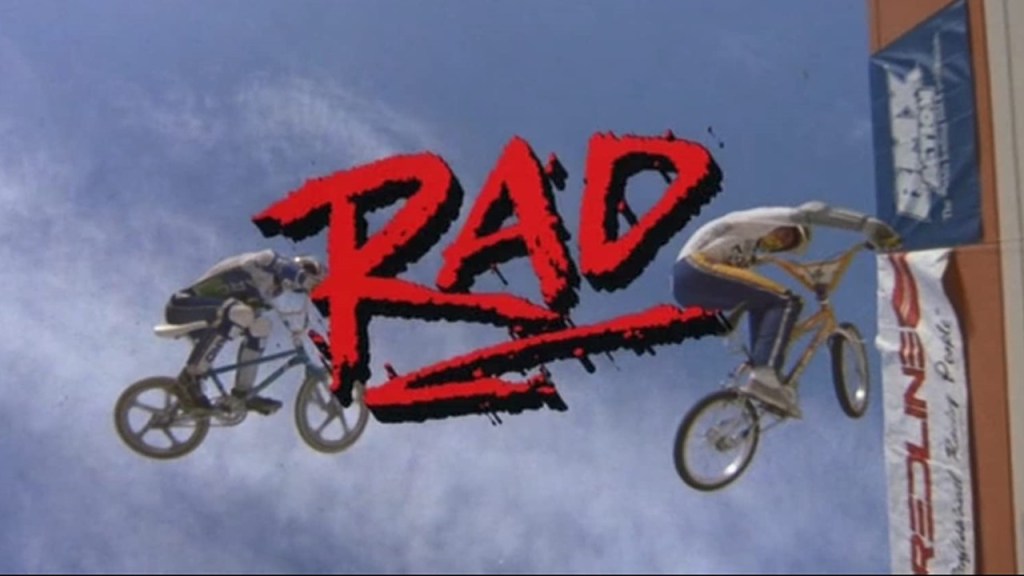
Anybody remember the 1986 sports movie “RAD?” If you were a BMX fan or a bicycle fan in general back in the 1980’s, you certainly do. Directed by the late Hal Needham, it stars Bill Allen as Cru Jones, a highly talented BMX racer who looks to compete in the Helltrack race. If he is victorious, he will become famous, win $100,000 dollars and get a new Chevrolet Corvette. The only thing is, his mother expects him to take his SATs to get into college, and it is on the same day as the race. Will he defy his mother and race, or will he take the test? Oh, come on, you already know the answer!

“RAD” got the kind reception many of Needham’s films did back in the 1980’s: the critics hated it, and it is one of those rare movies on Rotten Tomatoes to have a 0% rating. Nevertheless, it has long since gained a cult following which remains strong to this very day. And at the very least, it is a far better motion picture than Needham’s previous effort, “Cannonball Run II.”

While it was released on VHS and laserdisc and became a top-rental for two years after it was unleashed in theaters, “RAD” has long been out of print and never been made available on DVD. Who owned the rights to it? Hard to say. Some say Talia Shire, who plays Cru’s mother, had the rights, but this was never confirmed. The only way to find the movie was to look on websites like eBay where the VHS tape is being sold for quite a bit of money.

So, it was to my utter shock today when I discovered that “RAD” is now finally getting an official home video release nearly 35 years after it debuted. Vinegar Syndrome will be releasing the film exclusively on their website in the Blu-ray and 4K Ultra HD formats, and it comes with a plethora of special features which include the following:

• Newly scanned & restored in 4k from 35mm original camera negative

• Limited Edition 3D Lenticular (front) and Holographic (back) Slipcover

• Brand new commentary track with actress Talia Shire and Robert Schwartzman

• Brand new video interview with writer/co-producer Sam Bernard

• Multiple archival video interviews with the cast and crew

• Archival group commentary featuring multiple cast and crew

• Extensive behind-the-scenes stills and promo material

• Reversible cover artwork

• SDH English subtitles

Vinegar Syndrome has made it clear this special edition release is strictly limited, and they will not be repressing it in any format once it sells out. You can pre-order it now for $29.95 and it will be shipped out during the website’s Halfway to Black Friday Sale which takes place from May 22 to May 25. Trust me, this special edition release will sell out sooner than you think.

“RAD” may not be a major artistic achievement in cinematic history, but it still is a lot of fun to watch. The stunts are very impressive, and this film was made long before the advent of CGI, so nothing is faked here. Plus, you get to see Lori Loughlin, who plays Cru’s girlfriend Christian, at her most beautiful and long before she bribed the college admissions committee at USC to accept her two daughters. Ray Walston makes an appearance here, and there is even a great bicycle montage done to Real Life’s “Send Me an Angel.” What more could you ask for in an 80’s movie?

To pre-order this special release of “RAD,” click here.

Chadwick Boseman on Playing Baseball Great Jackie Robinson in ’42’

42-fp-0292

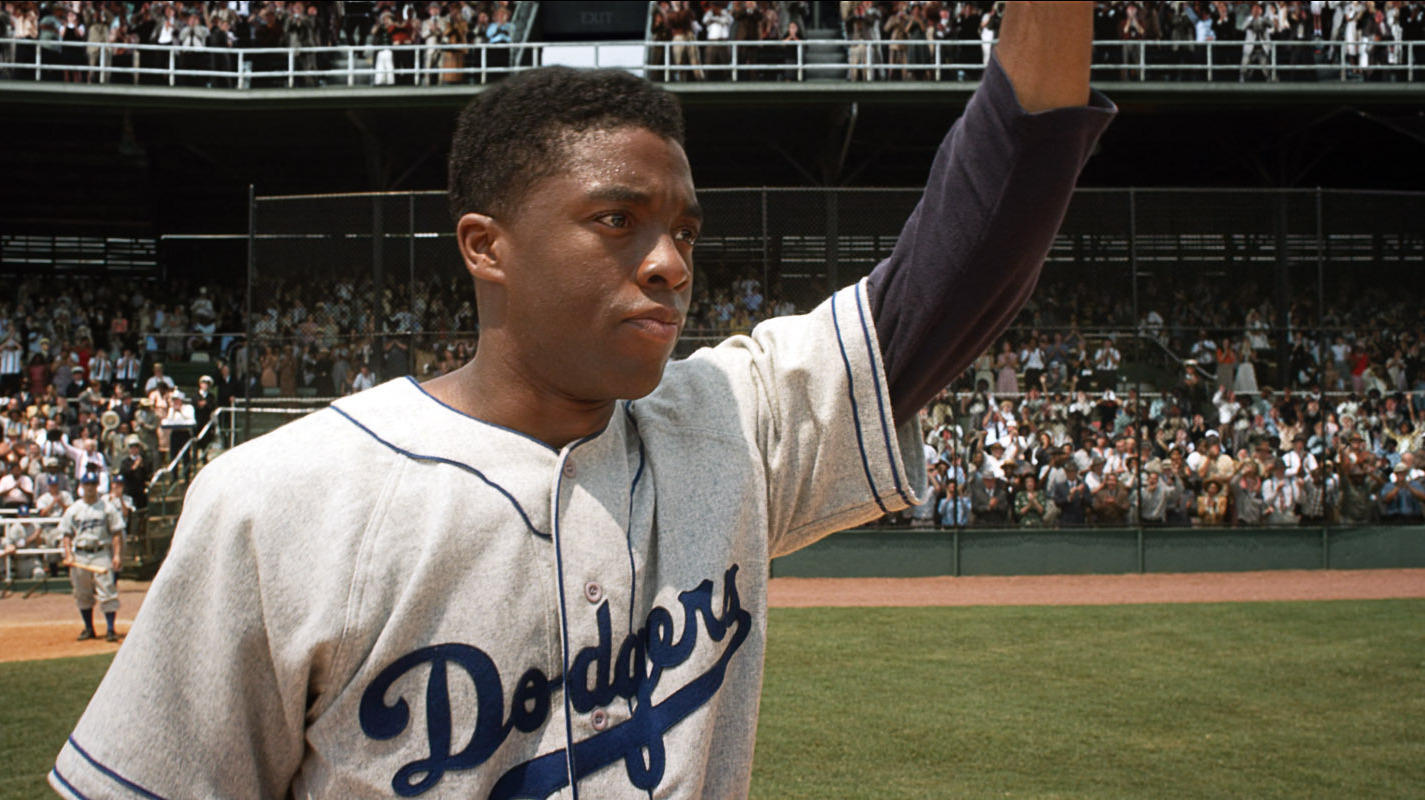
Before he took on the title role in “Black Panther,” Chadwick Boseman had the honor of portraying baseball great Jackie Robinson in “42.” With Hollywood being the way it is, you would expect to see studio executives insisting on a getting a big time movie star to portray the famous baseball legend, but writer/director Brian Helgeland got away with casting Boseman back when he was relatively unknown to audiences at large. An actor and playwright by training, Boseman started to burn into our collective consciousness with this performance.

Filmmakers and actors over the years like Spike Lee and Denzel Washington have tried and tried to bring the story of Robinson to the big screen but with no success. It took Helgeland, who won an Oscar for co-writing the screenplay to “L.A. Confidential,” to finally succeed in making such a film a reality. The burning question is how did Boseman get the role of Robinson over so many others? There must have been thousands upon thousands of actors desperate to play the legendary ballplayer, and there is something very inspiring about a lesser known actor beating out a bunch of big-name stars for this opportunity. Boseman, during an interview with Julie Miller of Vanity Fair, explained how he got cast.

“I had left L.A. for a few months, and I was directing a play Off Broadway in the East Village,” Boseman told Miller. “I came back to Los Angeles for a visit and was supposed to go back to New York on a Friday, and my agent said, ‘No, they want to see you for 42. For the Jackie Robinson film.’ I met with 42 director Brian Helgeland, and I knew that I would love to work with him. He’s an Oscar winner and a great writer but also, the way that he works, you know sometimes that you can vibe with a person and that you will work well together.”

“The additional meeting was great. A lot of it was just talking about the role and project and why he wanted to do it,” Boseman continued. “I left thinking that it was a great audition but didn’t necessarily know if I would get it. The next week, they called me back in again, and I could tell that he was trying to show me to somebody else. They were taping it and saying stuff like ‘What else might they want to see?’ I realized at that point that I was Brian’s choice, so I was just trying to prove it.”

Before “42” came along, Boseman had been working a lot in television and appeared on shows like “ER,” “Law & Order” and “CSI: NY.” Eventually, he started starring in movies such as “The Express” among others. Surprisingly though, Boseman did not originally set out to be an actor. A graduate of Howard University and the British American Dramatic Academy at Oxford, he saw his career heading in a different direction.

“When I started in theater and film, I thought I would be a director,” Boseman said. “The only reason that I started acting was because I felt like I needed to understand what the actors were doing and their process so that I could better guide them. During the course of that, I caught the acting bug. But once I finished my acting training, I still was thinking I would be a writer/director. I don’t really think I focused on acting until I came to L.A. in 2008. That’s when it got serious for me.”

As a kid, Boseman played Little League baseball for a time, but he was more serious about playing basketball after a while. When it comes to sports movies, most directors prefer actors to have some sort of experience in baseball or whatever sport their film is about. It looks like Boseman had just about enough experience to show he could play Robinson, but he still had to go through a lot of baseball training in order to prepare for the role before the cameras started rolling. He related his training regimen to Eric Alt of Athlon Sports as well as the challenges he faced during pre-production.

“All the coaches I worked with concentrated on the way he did things,” Boseman told Alt. “They studied his swing, and I studied his swing on my own. We would tape batting practice and they would film me base running, and then every two or three weeks they would take his footage and split-screen it with mine and give it to me and let me compare. We did that for almost five months.”

“The fielding was much more difficult than the batting,” Boseman continued. “I’m a natural athlete, so I have the hand-eye coordination to hit the ball. But the fielding? The footwork? Understanding where to throw the ball from, depending on where you receive it? I just wish there was more of it in the movie because I worked so hard on it! (laughs) When I saw the movie I was like, ‘Man, that’s all? That’s it?'”

The cast and crew of “42” also had a great asset in having the participation of Jackie’s widow, Rachel Robinson. It turns out Rachel was very much involved in looking over different drafts of the screenplay, and it gave the film a genuine legitimacy it might otherwise not have had. Boseman told Miller he began his preparation for the role by talking to Rachel.

“When you’re trying to tackle a hurricane, or something larger than life, I knew that the first thing I had to do was talk to her,” Boseman said. “She gave me some books. She sat me down on the couch and told me about their relationship and the rules that they set for themselves to get through the experience. That was a great start, because you are meeting someone who is still connected to him and you get a sense of him when you meet her. You see what kind of a man could actually stand by her. Who is this guy that she would fall for?”

“In some sense, you got the sense of the edges of him, like the two of them were a puzzle. She is one piece and his piece is not here, but I can feel the edges from her,” Boseman continued. “She started the journey, definitely. She showed up on set. And she challenged me by asking me why I should play him. That’s a good place to start because you have to start with yourself.”

While Chadwick Boseman must have felt a great deal of pressure in bringing the legendary Jackie Robinson to life in “42,” he did deliver a terrific performance which had audiences applauding loudly when the credits come up. Acting may not have been Boseman’s first choice as a profession, but it is certainly working out for him in a great way.

SOURCES:

Julie Miller, “42 Star Chadwick Boseman on Playing Jackie Robinson, Copying His Baseball Moves, and Being Stood Up by the President,” Vanity Fair, April 12, 2013.

Eric Alt, “A Chat with Chadwick Boseman, Star of Jackie Robinson Biopic ’42,’” Athlon Sports, April 19, 2013.

Corbin Bernsen on Stepping Up to the Plate in ‘Major League’

Major League Corbin Bernsen

WRITER’S NOTE: This article was originally written back in 2012.

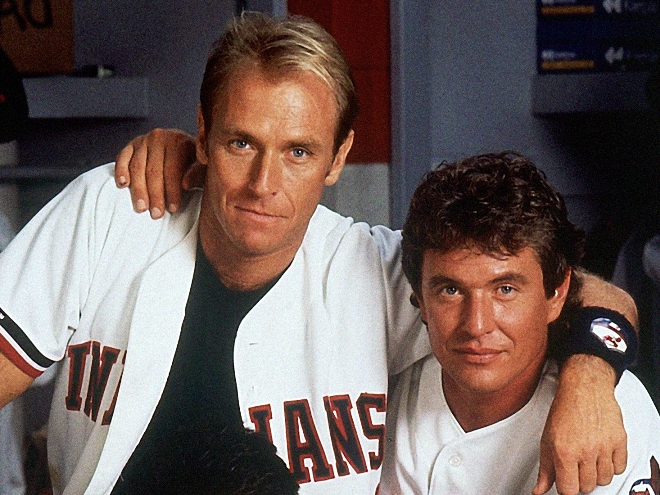
Corbin Bernsen’s role as Cleveland Indians third baseman Roger Dorn in “Major League” marked a big breakthrough for the actor who at that point was best known for playing divorce lawyer Arnie Becker on “L.A. Law.” The actor was one of the guests who attended a reunion screening of “Major League” at the Aero Theatre in Santa Monica which brought out fans who were excited to see it on the big screen.

“Major League’s” writer and director David S. Ward talked said he only casted people who could play baseball, and he talked about how Bernsen had been a ballplayer for a long time. Bernsen played with the Hollywood Stars baseball league, and he also played in many MTV celebrity “Rock N’ Jock” softball games as well.

The movie was shot in Milwaukee, Wisconsin, and one day had the filmmakers inviting 27,000 residents to portray Indians fans at the baseball stadium there. Grant Moninger, programmer for American Cinematheque and moderator of the “Major League” Q&A, asked Bernsen what it was like to play baseball in front of all those people.

Corbin Bernsen: The night that all those people were there was just one of the most exciting times in my life. You’re wearing the real uniform on a real field, and you’re playing it. I was a pretty good fielder in my day but I wasn’t much of a hitter. That last setup where I get the single and then Dennis (Haysbert) comes in and hits the home run to get me on base, I remember David saying, “I need you to hit the ball somewhere in left field preferably between shortstop and 2nd base.” And I’m thinking, you’re gonna be lucky if I just hit the ball man! I’m not a hitter. But he wants it directly there and it’s got to be a line drive at a certain height and all that. I kept thinking he’s going to fire me because I can’t do this, and the balls are coming in and I kept swinging and missing and swinging and missing and I finally, with all these people there, connect with one and the ball takes off and this fucker is flying to the wall! I’m standing there and I see David and he’s saying “RUN! RUN! RUN!”

Bernsen went on to say he still sees a lot of stuff on the internet about “Major League” which say “great movie, one of the best baseball movies, but Corbin Bernsen sucks and he can’t play baseball.” He ended up getting a hold of some guy from Philadelphia who had been dissing him and told the guy, “Hey! I’m not supposed to be able to play baseball in the movie you a-hole!” From there, Bernsen even challenged him to a throw off from centerfield every year and told the guy, “I will stand in Philadelphia on your field on the warning track and I will throw a fucking line drive to second base a-hole and then you shut up!” That guy from Philadelphia never took Bernsen up on this challenge.

To our surprise, it turns out Bernsen was actually not the original choice to play Roger Dorn in “Major League,” and he only got the part after the actor cast before him, whose name he couldn’t remember, ended up dropping out. Getting cast, Bernsen said, was one of the luckiest things which ever happened to him, and he was thrilled to be in it. He also made clear why he feels the movie holds up so well, and it is because of Ward’s excellent script.

CB: When you read a solid script, that’s like a blueprint that’s just gold. I would urge everyone, if you’re interested in film, to read the script for “Major League.” Everything that’s supposed to happen in a story happens on the exact page it’s supposed to happen on. Yeah, it’s a funny little comedy baseball movie, but I just think it’s one of the most solid scripts that I have ever read. Clean, lean and to the point. That’s all David Ward.


Tom Berenger Reflects on the Making of ‘Major League’

Major League Tom Berenger

WRITER’S NOTE: This article was originally written in 2012 when this screening took place.

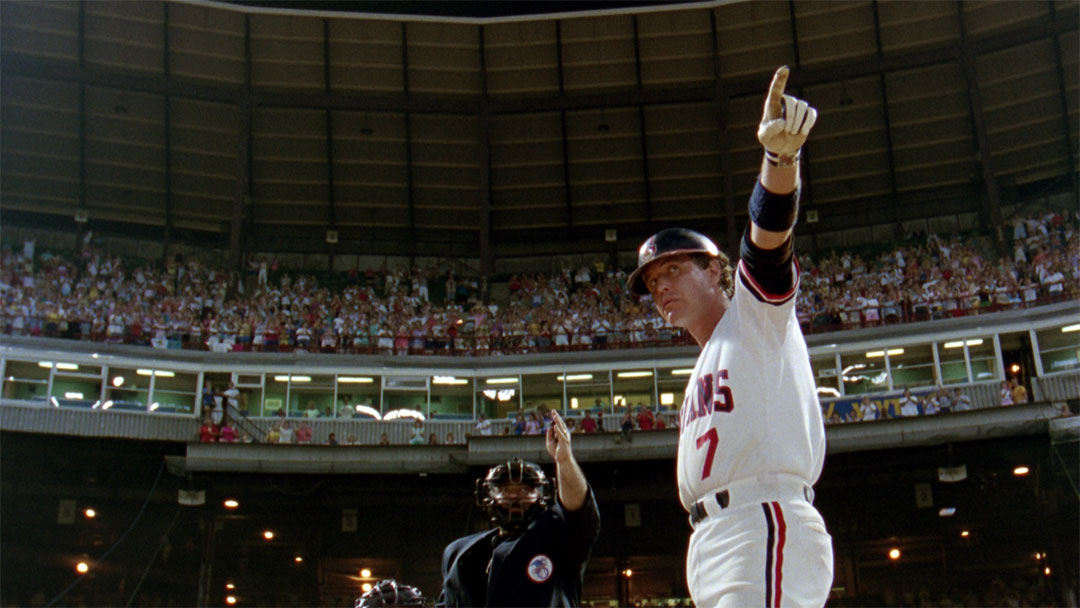
Among the guests at a recent reunion screening of “Major League” at the Aero Theatre was actor Tom Berenger who played veteran baseball catcher Jake Taylor. It is still one of Berenger’s best known roles as we watch his character go through another baseball season which may very well be his last while trying to win back his ex-girlfriend Lynn Wells (Renee Russo in her film debut). And like his fellow co-stars, Berenger proved to the filmmakers he could play baseball.

Berenger did have some experience playing little league when he was growing up, and he played some more ball after that but never professionally. “Major League’s” writer and director, David S. Ward, also said “you could watch Tom swing a bat and you could tell he could play baseball.” Berenger said he played on third base and left field, but “Major League” had him taking the catcher position for the first time ever. What made the difference in preparing for this role was who he had to work with.

Tom Berenger: I had a great teacher which was (Steve) Yeager who had been a catcher for the Dodgers. Besides being a great player, he was also a great teacher which is important, and he worked with Charlie (Sheen) and I and we started probably six weeks before the other guys came in.

Berenger even talked about how he got Yeager and some of the cast to come back to his hometown in South Carolina so they could practice there. His thought was that practicing at Pepperdine University near Malibu with the “dry air” and “breeze coming off of the ocean” was “a little deceiving” as real ballplayers deal with more humid conditions.

TB: We raised a little team so we could do infield practice and drills and things like that, and it was all these guys who were on softball leagues that had once played baseball. They loved it. It was great. I had a friend that was head of maintenance for the public schools, and he got us a field at one of the high schools that was totally blocked off. It was just screened by Palmetto trees, Live Oaks and stuff. He gave us the key to the gate to get in and he brought all his equipment out there and he recut the field, he redid the mound, he gave us a pitching machine so I could practice pop-ups and we could do batting practice.

Berenger said this worked out great for everyone there because they all were forced to deal with humidity, and it was this same humidity which the cast and crew faced in Milwaukee, Wisconsin where “Major League” was filmed. The movie was shot in 1988 during the hottest summer in Wisconsin since 1938, and he remembered it being brutal to work during the day as a result. While the training done in South Carolina certainly prepared many for day shooting, Berenger looked more forward to working nights when it was cooler.

Watching the movie again had Berenger getting nostalgic for the old Cleveland as it appears in the movie’s opening credits, and it is one of the few parts of the movie which was actually shot there.

TB: I’m looking at it and I’m going wow, look at that industrial town. That’s what we used to be. And that makes me a little sad, you know? Chicago and Cleveland and Pittsburgh and Bethlehem and Allentown; all those towns were like that and they’re not there anymore, and I find that really sad because I think they were the backbone of this country.

“Major League” still holds a place in all our hearts thanks to its humor and deeply felt moments which have stayed with us long after the end credits are done. Even Berenger admitted the movie still has a profound effect on him more than 20 years after its release.

TB: I have to say that I just love this film. I cry at the end every time I watch it. It’s a comedy but it’s got so much heart and great writing and direction.

Exclusive Interview with Dragan Bjelogrlic about ‘See You in Montevideo’

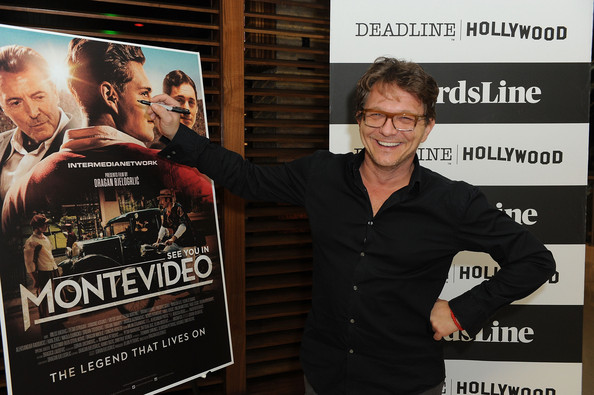
Dragan Bjelogrlic photo

See You in Montevideo” was the Serbian entry in the Best Foreign Language Film for the 87th Academy Awards, and it is a sequel to “Montevideo: Taste of a Dream.” It takes us back in time to the first World Cup which was held in Montevideo, Uruguay and follows the national soccer team of Yugoslavia. These players have never been outside of their home country before, and everyone else views them as outsiders to where many of their competitors treat them with utter disdain. However, they eventually win people over thanks to their youthful enthusiasm and their love of soccer. But as the games go on, we see how their love of soccer threatens to be crushed by corrupt forces beyond their control.

Both “Montevideo: Taste of a Dream” and “See You in Montevideo” were directed by the same director, Dragan Bjelogrlic. In addition to being a filmmaker, he is also an actor who is considered by many in his country to be a “Serbian Robert Redford” as he is typically cast in roles where he plays a charismatic criminal like Čika Kure in “The Wounds.”

Bjelogrlic was in Los Angeles for a screening of “See You in Montevideo” at the Landmark Theatres back in 2015, and I was lucky enough to spend a few minutes with him afterwards to talk about it.

See You in Montevideo poster

Ben Kenber: This was a wonderful movie. I have to apologize because I haven’t seen the first movie yet.

Dragan Bjelogrlic: Oh no, no. I prefer people who have not watched the first movie because my whole idea was to make a totally independent second movie and totally independent story which is the global story. When we decided to make two movies about the same subject, I organized all of that and I said to my producer, “What do you think? Maybe I’ll make the first movie and then get something else to make the second movie.” But after the success of the first movie he said, “No, no! You must! Just forget about the first movie and try to make something else.” So I like spectators who didn’t watch the first movie (laughs). No really! And you’re right, (if you have) watched the first movie you will feel more comfortable.

BK: That’s a good point because this movie does feel like it stands on its own. I also found it fascinating how the movie chronicles the love of the sport and how it gets corrupted by greed and politics towards the end. How did you go about researching all this project?

DB: I read a lot of articles and a lot of books which were made about soccer. It’s the most popular sport. And there were a lot of journalists that wrote about it, and people didn’t read it back then. There were some people who were aware of what things were going on. There was the enthusiastic period where they were pioneers, and the people who created it first were very enthusiastic and it was good. The first World Cup was very good, but when 100,000 people come it’s some big plan. Okay let’s make some compromise, but it’s really very sad. We are witnesses now.

BK: Regarding the actors who played the soccer players, did you want real soccer players cast or were you just comfortable casting actors whether they had soccer experience or not?

DB: They are actors. At the beginning some of them were students and some of them were actors, but I try to combine actors and athletes. Thanks to God, we Serbs are good at both (laughs). We had a lot to choose from so it was not a difficult choice. That’s something which was not such a big problem. The only problem was the bind. Like somebody said, “Oh people in Uruguay, they will not like this.” It was a problem for me, but they find this fact that the policeman gave back the ball and somebody covered that. I said aha, this could be a subject. Who knows in which kind of sports football will be developed? That’s something which was my idea.

BK: In the process of turning this true story into a movie, did you have to take any dramatic license with the facts at any time?

DB: No. We just followed the facts and we tried to be precise with all facts especially with the match between Yugoslavia and Uruguay. What has happened? Who got the first goal? Who was the referee who canceled the first goal? It’s all the facts you can find in articles. There is my concession that the facts are facts.

BK: What’s up next for you?

DB: I don’t know. I have a lot of opportunities. My main job is as an actor, that’s my main profession. I like to act a little. This may be comfortable for me, but it’s not necessary for me to direct. If I find something which I feel (strongly about), I will direct.

Big thanks to Dragan Bjelogrlic for taking the time to talk with me. “See You in Montevideo” is now available to own and rent on DVD, Blu-ray and Digital.

Why ‘Bull Durham’ Remains My Favorite Sports Movie

Bull Durham movie poster

This was one of the few R-rated movies my parents let me see long before I turned 17. Of course, I was already sneaking into R-rated movies before I reached that age. I’d buy a ticket to “Ghost” and instead walk into the theater showing “Marked for Death.” I guess my mom and dad decided, since I was watching all these movie review shows like “Siskel & Ebert” and “Sneak Previews,” and I had seen this movie’s trailer numerous times on the Movietime Channel (long before it turned into E! Entertainment Television), that the damage to my fragile little mind had already been done. Then again, it’s not like they were exposing my brother and I to “The Texas Chainsaw Massacre.” Had they done so, it would have scarred us for life!

When I first saw “Bull Durham” on VHS, I was already very used to the Hollywood sports movie formula where the hero suffers a crushing defeat and has to build themselves back up again to an audience-pleasing finish. When I was younger, I was far more comfortable knowing how a movie would end, and I wanted them all to end the same way. It feels like this with today’s generation of audiences as they thrive on repetition in stories and of the good guys beating the villains we are led to believe good will always triumph over evil. When you’re young, you have yet to learn that in reality the bad guys get away with a lot before anyone notices, especially if they have corporate and/or political connections.

“Bull Durham,” however, forever changed the way I looked at sports movies in general. It didn’t always have to be about training montages and the build up to the big game. Instead, it was about the reality of the game itself, and of the various personalities inhabiting it. Whether or not the characters get their big moment at the end, their victories and accomplishments were never about coming out on top or being the best. The real victory came from struggling through one important stage in your life, and surviving long enough to get to the next. Or, in other words, closing one chapter in your life and moving on to the future.

Most baseball movies focus on the major leagues, but what makes “Bull Durham” especially unique is it is about the minor leagues. Writer and director Ron Shelton based this film on his own experiences in the minors which he played in for several years, and he shows it to be a much looser environment and one which is far more fun and carefree. The baseball stadium may be smaller, but the connection between the players and the fans is more intimate and not engulfed in corporate greed or network contracts. Still, all these players see getting to the majors, which they refer to as “the show,” as their holy grail, the one thing they feel destined to get to at some point. The sad thing is, many of them will never make it there.

“Bull Durham” focuses on three characters throughout: Crash “the player to be named later” Davis played by Kevin Costner, Ebby Calvin “Nuke” LaLoosh played by Tim Robbins, and Annie Savoy played by Susan Sarandon. LaLoosh is the star pitcher of the Durham Bulls and is about to make his professional debut. When he does, he ends up, as Millie (the incredibly cute Jenny Robertson) says, pitching the same way he makes love, “All over the place.”

Hence, veteran catcher Crash is brought in to teach LaLoosh how he can control his pitching, and to get him prepped for the major leagues. During this time, the two of them will meet the high priestess of baseball, Annie Savoy. Her church is the one of baseball, and she hooks with one guy a season to help them with their playing and to expand their mind. This player also gets to share her bed with her, and considering just how amazingly hot Sarandon is in this role, it looks very foolish to even consider turning her down.

At the age of 14, I may not have understood all of what “Bull Durham” was about, but it was not a movie as disposable as a McDonald’s Happy Meal. Shelton offers us a closer look into the world of baseball than I could have expected to see back in 1988. The intimate details of the minor leagues make it very unique among other films of its genre. You also get to learn the importance of the relationship between the pitcher and the catcher, and of how one better not cross the other if he is looking to win.

Aside from the main players, the other team members are individualized to where you can tell one from the other. There’s the one player who swears by the bible and wants all his fellow teammates to follow in his righteous path. Then you have another who uses a necklace with a cross to bless his baseball bat, and who later needs a live rooster to take the curse off his glove. Crash Davis also shows an alternative way to get a rainout which results in one of the movie’s funniest moments.

Kevin Costner was perfectly cast as a veteran baseball player, and he also had the athletic ability to hit a ball right out of the park during filming. In “Bull Durham,” Costner gives us a man knowledgeable of the majors and the minors, and through his eyes he shows us the yearning he has to get back to “the show” as he was there once for 20 days, the greatest days of his life. You can only imagine how much he is working to get back there, but it seems more like a mirage that gets further and further away from him as time marches on.

Looking back at Tim Robbins’ performance, it is clearer to me now he had the toughest role to play in “Bull Durham.” Throughout, he has to take LaLoosh from being a wild and crazy guy on and off the baseball to someone more mature and ready to enter the majors. Robbins makes the transition look seamless, and it was the first indication of the brilliant actor we now see him as today. Seeing him again in “Bull Durham” after all these years is a kick because he is so loose and fancy free.

But seriously, the most memorable performance comes from Susan Sarandon as Annie Savoy. To say Sarandon is sizzling hot remains an understatement as she captivates the audience in the same way she reels in Robbins and Costner. With this character, Shelton gave us one of the most original female characters ever seen on the silver screen. Annie is a strong female, and Sarandon succeeds in making Annie this and more. It may almost sound ridiculous to have a character believing in the “church of baseball” when you look at it on the page, but once Sarandon utters those words which start off “Bull Durham,” you never doubt that she fully believes in it for a second. After all these years, it is still a travesty she didn’t receive an Oscar nomination for her performance.

But the real star of “Bull Durham” is Shelton, and he sees a lot of Crash Davis in himself. After this film came out, he became the go to guy for writing sports movies. You never get a “Rocky” like movie from him, and the characters he creates are rich, complex, and they always have such fantastic dialogue coming out of their mouths. This great talent of his led him on to make “White Man Can’t Jump” where Woody Harrelson and Wesley Snipes were as brilliant at hustling on the basketball courts as they were at verbal sparring with each other and their opponents, “Tin Cup” which left me thinking Costner and him should make as many movies together as possible, and “Cobb” with Tommy Lee Jones which may very well be the definitive anti-sports biopic of all time.

Incidentally, the commentary track he did for the DVD remains one of my all-time favorites. Throughout the movie, he strips away the mythology of other baseball movies to give us an idea of what the game is really like. I also loved how he talked about the fight to get Robbins cast even though the studio didn’t view him as a big enough star. The way they saw it, the audience would never believe Sarandon would ever fall for a guy like him. This led Shelton to bring up how he is godfather to one of their sons.

Shelton also pays great respect to the other actors like the late Trey Wilson who is so good here as the coach, and to Robert Wuhl whom he cast despite him giving the worst audition of any actor he had ever seen. He also lays bare how much he loves making movies and how much he hates the business.

Shelton may have never made it to the majors, but his experiences allowed him to give us “Bull Durham,” one of the funniest and most irresistibly sexy films of all time. I still see it as my all time favorite sports movie, and I don’t care how much more acclaim “Rocky” and “Raging Bull” have over it/ Besides, where else will you find a movie about minor league baseball? Oh yeah, there’s “Major League: Back to The Minors,” but who’s in a hurry to see that?

* * * * out of * * * *


Witness Mickey Rourke’s Career Resurrection in ‘The Wrestler’

untitled

The Wrestler” is kind of a cross between “Rocky” and “Raging Bull” in that it deals with a man looking to continue making a name for himself long after his five minutes of fame, and who seems to be more at home in the ring than outside of it. Darren Aronofsky films this movie with a rough edge, and he doesn’t hide away from the harsh reality Randy “The Ram” Robinson, played by Mickey Rourke, and the rest of the characters inhabit. It also marks another in a long line of movies with characters hanging on by a little thread to their financial existence.

After one of his more vicious fights involving staple guns and barbed wire among other things (there is no flinching on the details here), Randy suffers a serious heart attack and later finds himself waking up in a hospital bed after an emergency bypass surgery. The doctor tells him that to wrestle again will kill him, and he is forced into retirement and ends up finding work at the deli counter of a local supermarket for whatever hours he can get. Despite his fame and the attention he gets in his trailer park home from the kids who live there, Randy’s life is a lonely one, and he has practically no close personal connections to lean on.

What goes on from there might seem predictable, but this is not your typical redemption story with everything turning rosy at the end. As his mortality looms over him heavily, Randy tries to get closer to those around him with limited success. Marisa Tomei gives a great performance here as Cassidy, a stripper who is very friendly to Randy while working at her club. Like Randy, she is also past her prime in her profession, and she doesn’t draw the big numbers like she used to. The two of them are relics of the 80’s, and their happiest days have been trapped in that time which was brought to an end by the advent of Kurt Cobain and Grunge which all but vanquished the days of long haired heavy metal icons. Ironically, as perfect as they seem together, it is their individual professions which keep them apart. The rules they are sworn to follow are also the ones they struggle with, and in the end these rules define who they are.

Years after her Oscar win for “My Cousin Vinny,” Marisa Tomei remains of the more vastly underrated actresses working today. Since her win, she has given great performances in movies like “In the Bedroom” and “Before the Devil Knows You’re Dead.” She continues to make leaps forward as an actress, and yet she remains at the fringes of fame. Perhaps she feels more comfortable doing independent films as they give her the best roles. All the same, part of me wishes she would get more respect because it doesn’t feel like she ever gets enough of it.

Evan Rachel Wood also co-stars as Randy’s long estranged daughter, Stephanie. They share some of the movie’s most emotionally raw and poignant moments together as Randy tries desperately to salvage any sort of connection he may have left with Stephanie. They share a nice walk together at the New Jersey shoreline where they reminisce about memories long gone, and Randy apologizes for not being there for her at all. Wood’s role is largely a reactive one, and she meets Rourke every step of the way when onscreen with him. Long after her emotionally searing performance in “Thirteen,” she is still not afraid of delving into the raw emotions held on to by the characters she plays.

Aronofsky is still best known for the mother of all anti-drug movies, “Requiem for a Dream” which was filmed with so many extreme camera moves and quick edits to where we were left with whiplash as we exited the theater. “The Wrestler,” however, does not have any of those flourishes. Instead, Aronofsky shoots the movie in a simple hand-held fashion and in 16mm to capture the rough and tumble realm these wrestlers exist in, and he makes you feel all the devastating hits, cuts and bruises these men are made to endure in the ring and when they are thrown outside of it as well. Like Paul Thomas Anderson, Aronofsky makes you experience the movie instead of just watching it passively.

I also loved how Aronofsky captured the camaraderie between these fellow wrestlers when they get together. We see them sharing the moves they will use with one another, and they always have the outcome figured out long in advance. We see the doctors attend to all the inflicted, let alone self-inflicted cuts, they get in the ring, and he makes you feel all the cuts which have long since torn away at their once perfect bodies. Aronofsky has never done things the clean way, and his work in “The Wrestler” continues this tradition unapologetically.

“The Wrestler” is not Aronofsky’s best movie (“Requiem for a Dream” still holds that title), but it is further proof of how he is one of the most exciting filmmakers working in this day and age. Some may have lost sight of this with “The Fountain,” but they shouldn’t after watching this. But in the end, this movie is really all about Rourke and how he and Randy interweave with one another to where you cannot tell if he is just acting or if he is just being the character.

Rourke makes you feel his character’s pain, both physical and emotional, throughout the movie. There is never a moment in this film where he fakes an emotion, and this is a performance coming straight from the heart. With his heartbreaking confession to his daughter, he takes what could have been a clichéd scene and fills it with pure emotion. It’s almost like he the actor is apologizing for not being better as an actor, and for squandering his potential with a lot of crap movies. Rourke has earned my forgiveness ever since he played Marv in “Sin City,” and his performance in “The Wrestler” completes what is a well-deserved comeback.

For those of you who have read my review of Clint Eastwood’s “Gran Torino,” you’ll remember how I talked about how certain parts need an actor whose face and body show a rough and tumble history, and that they have suffered through life’s most intense challenges. Rourke is not the pretty boy he used to be, but this makes him perfect for this role other than the fact he can still be a brilliant actor. Rourke sells the fact his character has a massive heart attack and that his body has been badly beaten (Rourke did briefly take up boxing when his acting career was almost gone). He sells how Randy now wears a hearing aid and glasses to read most things given to him. He also sells the fact he is deserving of another chance as a lead actor, and he knows he better not screw things up this time around.

“The Wrestler” is one of the most exhilarating and exhausting character pieces I have seen in some time. The movie is nothing short of a great triumph for its lead actor and its director, and it is topped off by a great theme song from Bruce Springsteen himself (who else could have done it?). In 2008, it was hard to think of another performance which could have been even more brilliant than Heath Ledger’s in “The Dark Knight,” but Rourke manages to top him here, and that was no easy feat.

* * * * out of * * * *

Ultimate Rabbit Exclusive Interview: Bryan Fogel Talks about ‘Icarus’

Bryan Fogel Icarus photo

Actor, writer and filmmaker Bryan Fogel first came to the world’s attention with “Jewtopia,” a play he co-wrote and starred in which went on to become one of the longest running shows in off-Broadway and Los Angeles history as it was seen by over a million viewers. Now he is set to reach an even larger audience with his documentary “Icarus” which will debut on Netflix on August 4.

Icarus documentary poster

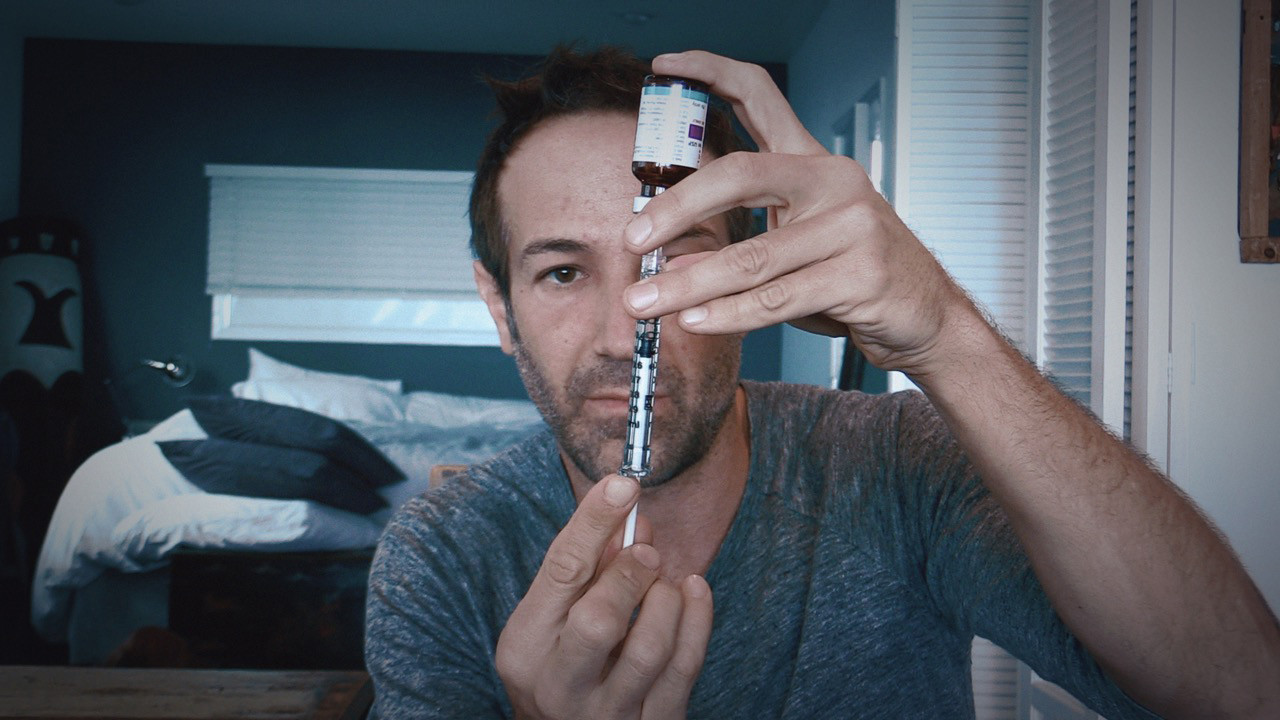
“Icarus” follows Fogel as he went on a mission to investigate doping in sports. Like Morgan Spurlock in “Super Size Me,” he becomes the main experiment of his own documentary as he dopes himself with performance enhancing drugs to observe the changes they have on his body, and to see if he can avoid detection from anti-doping officials. By doing so, he aims to prove the current process of testing athletes for performance enhancing drugs does not work in the slightest.

During this process, Fogel comes to meet Dr. Grigory Rodchenkov, a pillar of Russia’s “anti-doping” program who aids the filmmaker in avoiding doping detection through various processes which include being injected with various substances as well as collecting daily urine samples which will be smuggled from one country to another. But as Fogel becomes closer with Rodchenkov, he soon discovers the Russian is at the center of his country’s state-sponsored Olympic doping program. From there, “Icarus” goes in a different direction as it delves deep into Russia’s program and discovers the illegal activities go all the way up to the country’s highest chain of command which includes Vladimir Putin. The deeper this documentary goes, the more aware we become of how truth can be an easy casualty as others die under mysterious circumstances.

I had the opportunity to speak with Fogel about “Icarus” while he was in Los Angeles to promote it. He spoke about the documentary’s evolution from being a simple exploration into sports anti-doping programs to becoming a geopolitical thriller where witnesses are forced to go into hiding. Also, he spoke of how Lance Armstrong’s admission of using performance enhancing drugs was merely a needle in the haystack as many athletes were utilizing the same chemicals and threw him under the bus to save their own careers.

Check out the interview below.