‘Blazing Saddles’ Movie and 4K Review
The following review was written by Ultimate Rabbit correspondent, Tony Farinella.

When it comes to comedy, it’s all a matter of opinion. Comedy, even more than film criticism, is subjective.  For example, I’m not an Adam Sandler fan and I find his films terribly unfunny, but there is a reason why his films keep getting released by studios. There is really no right or wrong when it comes to comedy.  With “Blazing Saddles,” I heard all of the praise surrounding it and how some critics considered it one of the funniest films of all time.  While watching the film for the first time, I understood what they were going for and what they were looking to achieve.  It wasn’t as though the film went over my head or I didn’t understand the style of comedy they were putting on screen.  I just never laughed.

My first issue with “Blazing Saddles” was its lack of plot.  It seems this is mostly a movie filled with random gags and one-liners that are intended to make the audience laugh.  They throw everything but the kitchen sink at us. It must be said the film is filled with the N-word along with other racial and homophobic slurs.  I understand this film was made in 1974, which was fifty years ago, but it’s still uncomfortable to watch.  The film is not funny and the jokes don’t land.  There is a way to be offensive and also be funny, but this movie did not accomplish that goal.  With comedy, you can go almost anywhere if you know what you’re doing.  We have seen films that pushed the comedic envelope in the past, but they have been done in a smart and clever way.  This is just flat-out lazy.

The plot involves a railroad being built through the town of Rock Ridge, a railroad that will make a corrupt politician a lot of money if he is able to force the residents out of their town. One way he is hoping to do this is by having a black sheriff named Bart (Cleavon Little) come in and make some of the local residents uncomfortable. The sheriff is called Black Bart.  Subtlety is not this film’s strong suit.  Bart’s deputy is played by Gene Wilder. Even though they are hoping to get the locals out of Rock Ridge, they end up staying and fighting for their town. Bart must also deal with Lili Von Shtüpp, played by Madeline Kahn, who is looking to find a way to sink her teeth into him.

“Blazing Saddles” features performances from Mel Brooks, Alex Karras and Richard Collier, to name a few.  However, no one can save this movie from its awful screenplay and bad jokes.  It is unwatchable from start-to-finish.  It took every ounce of strength in my body to not only watch this movie, but to finish watching it.  I absolutely hated it in a way I haven’t hated a movie in a very long time. I understand they were trying to make a film that would be a satire on Westerns and how certain demographics view African Americans. It shows how they are exploiting African Americans because the money men are only focused on the bottom line. I know what the message was and what they were trying to do in this film. I just didn’t find it funny.

In the end, “Blazing Saddles” is considered a comedy classic and one of the funniest films of all-time.  I wouldn’t be doing this film any justice if I didn’t acknowledge its reputation and its three Oscar nominations.  It has clearly reasoned with a lot of people.  With this being its 50th anniversary, I know a lot of people are very excited about this 4K release. One of the worst things you can do as a critic is to say a movie should not be watched by anyone, and if anyone likes this movie, they are a moron.  I would never dream of doing that.  I acknowledge the reputation of “Blazing Saddles,” but I simply shrug my shoulders and say, “This was not, at all, my kind of comedy.”  As stated previously, comedy is subjective. If you love the film, you will love the 4K.

ZERO out of * * * *

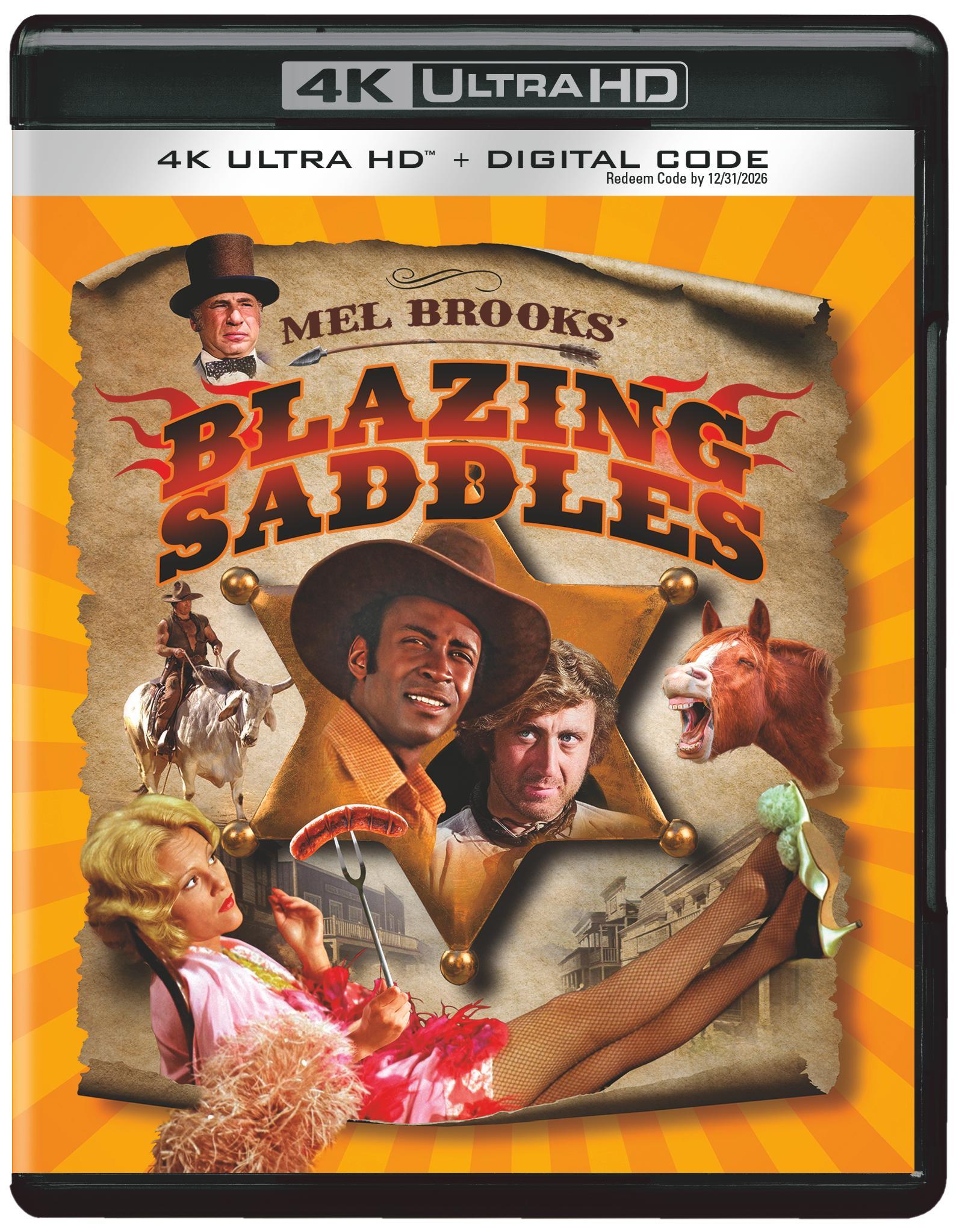
4K Info: “Blazing Saddles” is released on a single 4K disc from Warner Brothers Home Entertainment. It also comes with a digital copy of the film.  It has a running time of 93 minutes and is rated R. You can purchase either the 4K slipcover or the 4K steelbook.

4K Video: The 4K HDR transfer from Warner Brothers is fantastic and looks terrific.  Westerns, when done right, can look great on 4K. This is a visual feast for the eyes, and I imagine fans of the film will be quite pleased with this 4K transfer.

4K Audio: The Dolby Atmos track is also right on cue, as it’s a strong audio mix throughout the film that hits all the right notes.

Special Features:

Inappropriate Inspiration: The Blazing Saddles Effect

Scene-Specific Commentary by Mel Brooks

Blaze of Glory: Mel Brooks’ Wild, Wild West

Back in the Saddle

Additional Scenes

Should You Buy It?

I imagine some readers might call me too sensitive or say the film went over my head. I’m a huge fan of standup comedy, and I believe just about anything in the world is fodder for comedy when it’s done right. I understood exactly what Mel Brooks was going for in this movie, and I know that one of its writers was Richard Pryor.  It is my job to give my honest assessment of this film, and I thought it was painfully unfunny and wanted to turn it off after twenty minutes.  Because I was reviewing it, I felt obligated to watch the entire film. If this style of comedy is not for you, you won’t find a whole lot to laugh about in “Blazing Saddles.” If you enjoy the film and it fits into your comedic sensibilities, you will be very happy with it.  This is another top-notch 4K release from Warner Brothers.  They are doing a great job with releasing 4K’s from their massive library.  Overall, if you loved this film, buy it. If you haven’t seen it before, I’d recommend watching it and seeing how you respond to it.

**Disclaimer** I received a copy of this film from Warner Brothers to review for free.  The opinions and statements in the review are mine and mine alone.

‘The Substance’ – A Gloriously Bold WTF Movie

It has been an hour now since I witnessed Coralie Fargeat’s “The Substance,” and I am absolutely convinced I will not see a more bug fuck crazy motion picture in 2024. It combines the extreme body horror of David Cronenberg’s films (“The Fly” in particular), the graphic effects of John Carpenter’s “The Thing,” and the brutal satire of “Network” to create a truly unforgettable motion picture which serves as a middle finger to unrealistic beauty standards, and also a reflection of our own internal biases which we don’t always face up to.

Demi Moore, in what may very well be her finest performance ever, stars as Elisabeth Sparkle, an Oscar winning actress who is currently hosting an aerobics show on television. It is also her birthday, her 50th to be exact, and while everyone is quick to wish her well, her boss Harvey (Dennis Quaid) is out to fire her as he sees her as being too old in a business which is constantly looking for young blood on an endless basis. In the process, what should be the happiest day of the year for her is now the worst ever as she is instantly rendered irrelevant in the eyes of many, and she barely survives a truly horrific car crash which would have killed anyone else.

Salvation, however, just might be coming her way when she is encouraged by a doctor to try a black-market serum which is simply called The Substance. It looks a lot like the one Herbert West used to awaken dead corpses in “Re-Animator,” and a sexy male voice, which sounds like it is about to say “I really am as sexy as I sound” tells her this serum will create a “younger, more beautiful, more perfect” counterpart of herself. This counterpart ends up emerging from a huge slit in her back in a style reminiscent of “Videodrome,” and while the situation might seem normal, we know this will eventually descend into an inferno no one could ever see coming.

The counterpart is Sue, and she is played ever so unforgettably by Margaret Qualley. Sue ends up auditioning for the job Elisabeth was fired from, gets hired for it, and she becomes a huge sensation in what seems like no time at all. Fargeat really takes the time to show off Sue’s alluring body and curves as she conducts her workout television show as if she is giving pointers on how to have great sex with your lover.

“The Substance” does take its time building up its characters and the serum both become a slave to, but it is all worth it as gives audiences much to enjoy before Fargeat rips the rug out from right underneath us and sends us all in a downward spiral Nine Inch Nails would have loved to make an album out of.

One term which stands out in this film is “respect the balance,” but it eventually becomes clear that Sue cannot as the demands on her become increasingly strenuous to where she uses more of the “stabilizer fluid” from Elisabeth than she has any right to. As a result, Elisabeth starts to see some startling deformations on her body which alarms her to a terrifying extent.

This is where the body horror of “The Substance” comes into full focus as Elisabeth realizes she needs to stop taking the serum, but losing Sue’s infinite success in a business which has pushed her coldly to the side becomes too terrifying to endure. As the story continues, it all becomes incredibly grotesque to where we as an audience become inescapably horrified than she is at the horrors none of us could ever be prepared for. How bad does it get? Well, let me put it this way; there is a track on Raffertie’s wonderfully propulsive soundtrack entitled “Golem.” Need I say more? Well, it’s safe to say this serum will not exactly be “my precious.”

There were a number of other movies I was reminded of while watching “The Substance.” The first was “Requiem for a Dream” in which we watch addicts struggle to obtain the American Dream by any means necessary only to find a pathway to a hell of their own making. Watching Sue continually drain stabilizer fluid out of Elisabeth reminded me of Jared Leto’s abscessed vein in “Requiem for a Dream” in which he injected heroin into. The abscessed veins in both movies are truly horrifying sights to see, and do not promise a better future for either character.

I am also reminded of David Cronenberg’s remake of “The Fly” while watching this film as body parts falling off the human body here have not been as mortifying as watching Jeff Goldblum’s ear fall off in front of Geena Davis. Sitting in a large audience while watching “The Substance,” there was no denying the strong reactions to t characters lose various body parts as it all kept leading to a horrific conclusion much like the one in Brian De Palma’s adaptation of “Carrie.”

Is this really Demi Moore’s finest hour? It may very well be, but this might imply that all her work before this doesn’t measure up, and that’s just insulting. I think she deserved more credit than she got for her work in “A Few Good Men,” and her performance in “G.I. Jane” is one I will never ever forget. In “The Substance,” she is perfectly cast as an actress whom many will be foolishly quick to say is past her prime as it says more about them than it ever will about her. She fully invests herself into the character of Elisabeth Sparkle, and she looks as fabulous as she ever has in the process.

But moreover, Moore has an unforgettable scene in which we see her preparing to go out on a date with an old school friend, only to hate what she sees in the mirror. Watching her violently wipe the makeup off her face reveals a self-hatred we have all experienced at one point in our crazy lives, and the effect this has on her is quite profound thanks to Moore.

Margaret Qualley makes Sue into more than a sex symbol of her time. Instead, she makes her into a person who is instantly gifted a stardom many others spend their lives striving for while the odds remain as astronomical as ever. Seeing her handle this newfound fame is something she makes all the more palpable throughout even as Sue descends into a hell of her own making which results in one of the bloodiest climaxes ever seen in a motion picture.

Just when you think “The Substance” cannot get crazier or bloodier than it already has, you are thrillingly proved wrong in epic fashion. But while I thought this film would descend into the same cinematic chaos which would leave forever psychologically scarred as “Requiem for a Dream” did, Fargeat gives the proceedings a good deal of satirical humor which helps to soften the blow. In fact, it makes everything all the more insidiously fun as we come to see this story will have an inevitably dark ending.

While we are at, I do have to single out Dennis Quaid’s unabashedly shameless performance as Harvey, the producer who heartlessly casts Elisabeth aside and hires Sue because she is ever so young. Quaid is truly sublime and hateful as he takes this heartless character and makes even more heartless than he already is. Seeing him gorge on an endless number of shrimps at the movie’s start is enough to make you see how selfish and thoughtless this guy is, and it is presented us in truly disgusting detail. Basically, he is as slimy as the shrimp he eats, but you all can see this even before he eats the last one on his plate.

“The Substance” is not a cinematic experience I will ever forget, and it is one of the best movies of 2024. In the process of giving us such an insane film, Fargeat gives a huge middle finger to those who continue to hold beauty standards to an obscene and unrealistic standard even this period of the Me Too and Time’s Up movements. It offered up an insanely good time, and watching it with a large audience made it all the more thrilling. If there is any movie out right now which invites you to see and experience it on the big screen, it’s this one.

* * * * out of * * * *

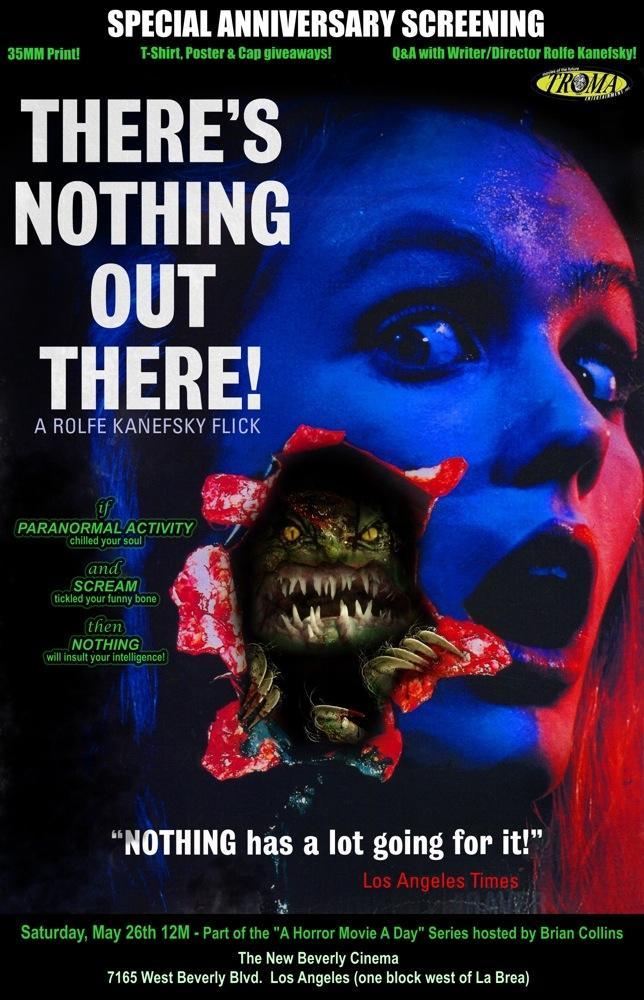
Rolfe Kanefsky On His Horror Movie Satire ‘There’s Nothing Out There’

WRITER’S NOTE: This article is about a screening which took place in 2012.

Writer and director Rolfe Kanefsky appeared at New Beverly Cinema where Brian Collins of the Horror Movie a Day website presented a special midnight screening of his directorial debut, “There’s Nothing Out There.” Joining him for this screening were two of the film’s crew members, still photographer Dave Shelton and assistant director Michael Berily. It tells the story of a group of teenagers, one of them a horror movie fan, spending spring break at a cabin in the woods, and it pre-dates Wes Craven’s “Scream” in making fun of the clichés horror movies always deal with.

Kanefsky spoke with audiences about what got him into movie making, and of what spurred the idea for this particular film of his:

Role Kanefsky: I’ve wanted to make movies since I was four years old. As I got older, I watched every horror movie that was ever made which got me to thinking about why people keep making the same mistakes in this genre over and over again. I wrote the script when I was in high school, but no one really liked it.

Kanefsky then went to college where he wrote several scripts, but then he came back to the one he wrote for “There’s Nothing Out There” after he graduated. It was 1988 when he started looking for the money to make it, and he was able to get a few private investors to help him out. He even told the audience his parents helped by selling their house, and after that he had a budget of around $150,000. One audience member asked him if his parents ever got to buy their house back with the profits and he responded:

Rolfe Kanefsky: You don’t get into movies to make money. You get into them because you love to make them.

When asked about the house used in the film, Kanefsky said a friend of his from college found it for him. It was located right near the border of New York and New Jersey, and he described what it was like filming in and around the house:

Rolfe Kanefsky: It was owned by two women who were a couple, and one of them was a sound artist which came in very handy for us. We did, however, have to use three different houses for the interior, and this forced us to cheat certain shots so that everything matched up in the end.

When it came to specific influences, Kanefsky looked mostly to 1950’s monster films, and he made several nods to them throughout. But he was also looking to make fun of the overused clichés in horror movies like the one where a cat jumps out at characters from nowhere, and of how one person warns of the danger ahead while everyone else ignores their advice. Kanefsky did, however, make one thing very clear to us:

Rolfe Kanefsky: It was never my intention to mock the (horror) genre, but instead the lazy filmmaking that has overwhelmed it.

One unique thing about “There’s Nothing Out There,” when compared to other horror movies of the time, is that what’s stalking the characters is not a deranged serial killer, but instead a monster from another planet. Keep in mind, this film was made long before the advent of CGI effects, so there was a lot of puppeteering involved in bringing this creature to life. Kanefsky was specific in what he was looking for:

Rolfe Kanefsky: I didn’t want a guy in a suit for the creature because I wanted to do something different. The way I saw it, the creature was half alligator and half octopus. I also intentionally made it a dumb creature, and you can tell it was not the smartest as there was a big learning curve going on with it. We ended up having to use crowbars just to move its tentacles around.

Kanefsky then invited his fellow crew members to share their experiences of making “There’s Nothing Out There.” Dave Shelton still has very vivid memories of how it all started:

Dave Shelton: I was working at Nickelodeon at the time and there weren’t many things being shot in New Jersey back then. When I met with Rolfe and he talked about his script, I knew right away what his vision was. He also said that no one is getting paid to make this movie and knew it was going to be good as a result. We got a lot of family and friends to be extras in the movie and we improvised a lot of stuff. Not everything worked, but we did the best with what we had. This was such a fun project to be a part of.

Michael Berily was originally hired to be the second assistant director on the set, but things changed for him very quickly:

Michael Berily: The first AD left three days into shooting, so I took over and spent a lot of time yelling and screaming at people because I didn’t know what I was doing. Still, it was an incredible experience working on it, especially when it came to raising the money. Rolfe was very ambitious then as he does a lot of set ups in one day.

Kanefsky attributed his working style of numerous set-ups a day, far more than what most Hollywood productions are able to accomplish, as he and his crew had a twenty-four-day shooting schedule. He has since made over twenty movies since “There’s Nothing Out There,” and to date it still has the longest shooting schedule of any movie he has made.

Horror Movie A Day’s screening of “There’s Nothing Out There” at New Beverly Cinema was certainly a historic one as it marked the first time a 35mm print of the movie had been shown in twenty years. Kanefsky said there were a number of reasons why this was the case:

Rolfe Kanefsky: When we showed it to studios and critics, they were all ambivalent about supporting it because they saw it as too funny to be scary and too scary to be funny. The movie ended up getting a small theatrical release back in 1992, and we managed to get some good reviews from newspapers like the Los Angeles Times. After that it began building up more and more of an audience through midnight screenings… and then the L.A. Riots (following the Rodney King verdicts) happened, and that destroyed us because no one went to the movies for a long time after that.

Kanefsky has attributed its ongoing success to cable and video and now sees this movie as an underground film which people found over the years. The studio which released “There’s Nothing Out There” never really got behind it, he said, and it really found its audience through word of mouth.

Before the evening ended, audience members asked Kanefsky if there would ever be a sequel or a Blu-ray release:

Rolfe Kanefsky: Blu-ray? Maybe, but right now it doesn’t make financial sense to do that and neither does the sequel. We do have the capabilities and original elements to remaster the movie in high definition, but the special edition DVD hasn’t sold enough copies to justify us doing that.

He does however have a title for the sequel:

Rolfe Kanefsky: There’s Still Nothing Out There.’ The tagline for it is, ‘if you were afraid of nothing before, its back!’

Well, hopefully we will get to see a Blu-ray release and a sequel become a reality. There is no doubt “There’s Nothing Out There” was a passion project for Kanefsky and his crew when they made it, and it is clear everyone involved in it worked really hard to make it a reality. That people are still talking about it twenty years later makes it a triumphant motion picture which survived in a marketplace where many other horror movies get swept under the rug, never ever making it to the silver screen.

Exclusive Interview with Ashley Rickards about ‘A Haunted House 2’

I got to attend the press day for “A Haunted House 2” back in 2014. This satirical horror comedy sequel was released one year after the original, and it catches up with Malcolm Johnson (Marlon Wayans) as he moves into a new home with his girlfriend Megan (Jamie Pressly) and her two children, Becky (Ashley Rickards) and Wyatt (Steele Stebbins). As you can imagine, Malcolm and company are soon met by a bizarre series of paranormal events, and the sequel goes out of its way to spoof such horror hits as “The Conjuring,” “Sinister,” “Paranormal Activity” and “Annabelle” among others.

In addition to speaking with Marlon Wayans and Jamie Pressly, I also did get to sit down with Ashley Rickards to talk about her role as Becky. For various reasons, this interview was not published at the time of this film’s release, but I present to you now after rediscovering all these years later.

Rickards is best known for playing Jenna Hamilton on the MTV comedy-drama series “Awkward,” and as the troubled Samantha Walker on “One Tree Hill.” She graduated from high school at the age of 15, and is currently a member of MENSA. In addition, she also published a book entitled “A Guide to Getting it Together Once and For All” which we did talk a bit about during this interview (although she did have a different title for it back then), and she helped to launch the Project Futures Somaly Mam Foundation which works to prevent and end human trafficking and sexual slavery in Southeast Asia.

Please check out my interview with Ashley Rickards down below, and you can also watch the interviews I conducted with Marlon Wayans and Jamie Pressly which I did for We Got This Covered.

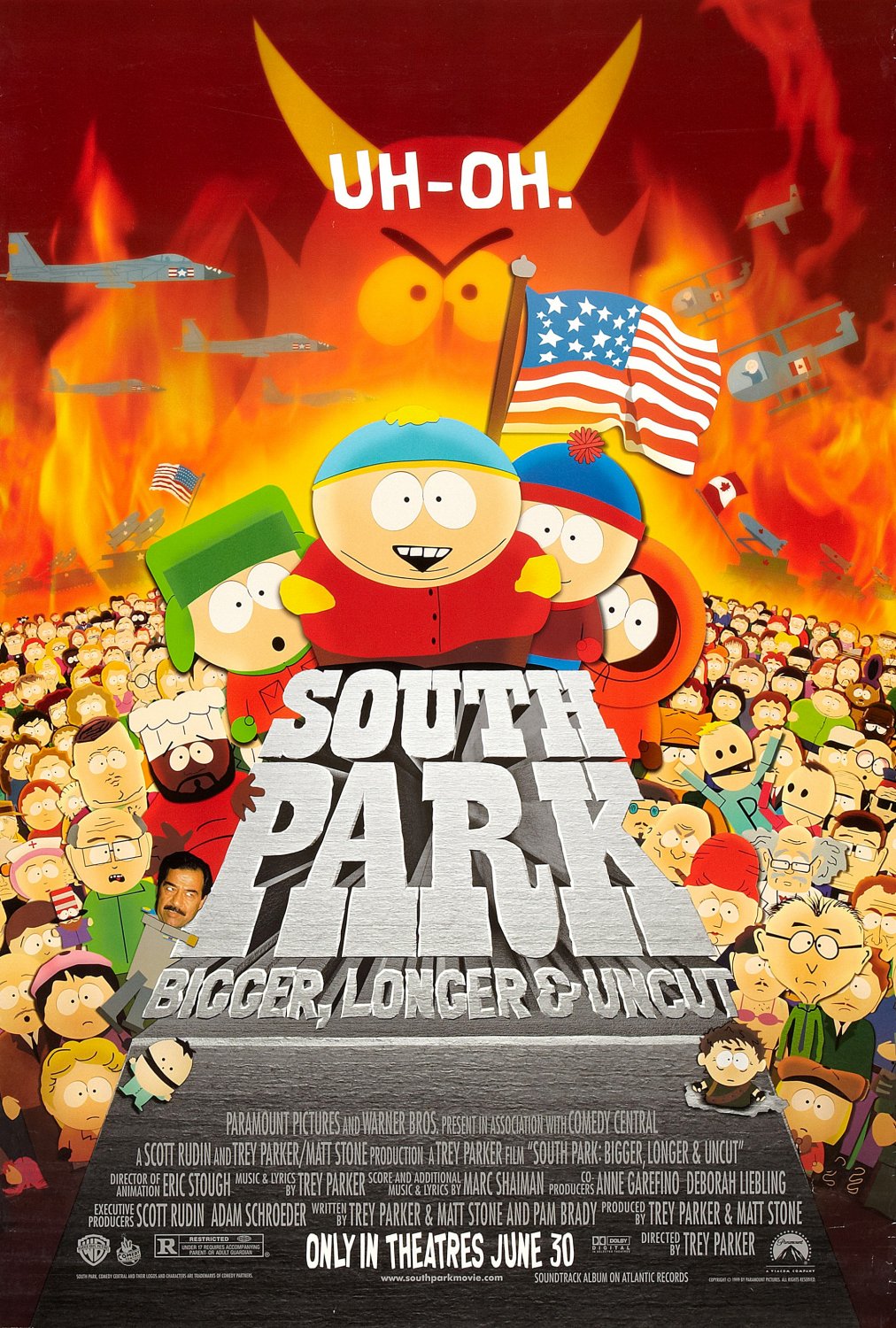
‘South Park: Bigger, Longer & Uncut’ – One of the Best Musicals Ever!

Walt Disney Pictures has released many classic animated movies over the years, but none of them compare to the sheer anarchic lunacy of Trey Parker and Matt Stone’s “South Park: Bigger, Longer, & Uncut.” While “Beauty and the Beast, “Aladdin” and “The Lion King” have given us songs not easily forgotten, so many other Disney animated musicals have only stayed in our minds for so long before they are easily forgotten, and they only dream of being as tuneful as this 1999 animated musical. It takes advantage of its big screen format to mercilessly satirize the MPAA (or the MPA as it is known as these days), hypocrisy, and of various musicals we all grew up with.

One does not have to be a fan of “South Park” to enjoy this movie. The characters of Stan, Cartman, Kenny and Kyle are introduced to the audience in wonderful fashion through the opening song “Mountain Town,” and they go off to the local movie theater for the opening day premiere of “Asses of Fire,” a Canadian film starring their favorite comedy duo of Terrence and Phillip. They are, however, denied admission as the movie has been rated R by the ever-reliable MPAA. But instead of paying for a PG-13 movie and sneaking into “Asses of Fire,” they pay a homeless guy to be their adult guardian. It sure saves on the anxiety of getting caught and kicked out of the theater by that one usher who actually bothers to follow the rules.

All four of them love “Asses Of Fire,” and this movie could be seen as the way parents view “South Park” on Comedy Central. The song “Uncle Fucka” ends up outdoing anything Parker and Stone ever did on the show. Hilariously profane without setting any limits for decency’s sake, it sets off this powder keg of a musical in an unforgettably hilarious style. Stan, Cartman, Eric, and Kenny brag of how cool they are for seeing Terrence and Phillip on the silver screen, and they gleefully spout off the vulgar profanity from the film to the shock and delight of their fellow classmates.

But it does not take long for their parents to discover what their kids been up to, and they end up doing what just about any loving parent would do; blame someone other than themselves. Parental hypocrisy is one of the big targets of “South Park: Bigger, Longer & Uncut” as the parents here all refuse to take any sort of responsibility for their children’s behavior. Instead, they launch an all-out war against Canada as Terrence and Phillip originated from the country, and also because, you know, why not?

Kids are far more of aware of hypocrisy when it confronts them, and in many ways this movie is seen through the eyes of a child. Their parents’ intention to obliterate a country just because a comedy duo inadvertently taught kids some utterly hideous words is completely ridiculous, but so was George W. Bush’s invasion of Iraq. The media, movies and music are such easy targets even though they are emotional outlets, and those in power are quick to criticize them and suggest legislation to limit what they seem as their immoral influence for no good reason other than to put the more conservative population of America (a.k.a. white people) at ease.

Kenny also gets a bigger part than he ever had in the television show as he, of course, dies and ends up going to hell. When he arrives, he meets Satan who is far more vulnerable and sensitive than various depictions of him in popular culture have led us to believe. But the bigger problem though is Satan’s boyfriend who is none other than Saddam Hussein as he is shown to have died years before he actually did in real life. Saddam treats Satan like crap while Satan begs for him to be an affectionate partner in all things love. Satan also does his “Little Mermaid” number of how he yearns to be “up there” on Earth and above ground. Where else can one find Satan be more kind hearted than Saddam Hussein, let alone groups of parents?

This movie also satirizes those most famous of Broadway musicals such as “Les Miserables” on top of all those Walt Disney animated musicals we were raised on. In the process, both Parker and Stone, along with composer and lyricist Marc Shaiman, created the best musical Hollywood has seen in years. The songs are brilliant and insidiously, let alone gleefully, inspired as they stay with you long after you have finished watching this particular animated classic.

Seriously, after watching “South Park: Bigger, Longer & Uncut,” who can forget songs like “Blame Canada,” which should have won the Best Original Song Oscar over “You’ll Be in My Heart,” or “What Would Brian Boitano Do?” For me, however, the real showstopper here is “Uncle Fucka” in which Parker, Stone and Shaiman deign to portray from their critics’ point of view of how the critics view the show “South Park” as opposed to the rational way any other decent human being would. Perhaps it might be easy to say that the music and songs here are brilliant because of the uninhibited profanity on display, but each song gets at a deeper meaning beneath its shamelessly filthy lyrics.

The other great thing about this “South Park” movie is how it is proof Parker and Stone did not sell out. They could have made this into a PG-13 comedy and would have made three times more money in the process, but they both resisted Paramount Pictures urging to tone things down and succeeded in taking the show beyond the stifling confines of television. Seeing them stick to their guns is highly commendable, but perhaps it should not be seen as a surprise as they go after everything and everyone, and the show no hesitation in biting the hand that feeds them (Comedy Central).

All these years later, “South Park: Bigger, Longer & Uncut” remains uproarious as ever. The MPAA (a.k.a. the MPA) remains an overly conservative bunch of hypocrites who give NC-17 ratings to movies for all the wrong reasons, and parents continue to blame others for the ills of their children and society. Thankfully, this is not a motion picture that can be easily relegated to the Disney vault for an “anniversary release” twenty years into the future. Trey Parker and Matt Stone still fight the good fight, and the big screen version of their brilliant television show became a brilliant musical, which later led to others like “Team America” and the Broadway smash “The Book of Mormon.”

Like Kenny, “South Park: Bigger, Longer & Uncut’s” legacy will never die. But, like Kenny, if it ever does die, it will eventually be resurrected sooner than we think.

* * * * out of * * * *

Interview with the Cast and Director of ‘The Menu’

The Menu” is an inspired black comedy featuring an incredibly talented cast of actors who play characters invited to a remote island where celebrity chef, Julian Slowik, is preparing quite the cuisine for them. As the night goes on, however, the guests come to see that Chef Slowik’s intentions are anything but gracious as he looks to punish those who cannot take enough time to taste the food they are eating. In this day and age when we are too busy shoving food into our mouths as life moves by fast, this motion picture reminds you of the importance of savoring every bite.

I got to sit in on a press conference for “The Menu” which was moderated by Rolling Stone magazine’s senior editor, David Fear. It featured actors Nicholas Hoult, Anya Taylor-Joy, John Leguizamo, Aimee Carrero, Judith Light and Hong Chau, and they were joined by then movie’s director, Mark Mylod, who is best known for helming episodes of “Succession” and “Shameless.”

When it comes to black comedies, I always wonder how they are conceived and put together. Making a comedy movie is hard enough, but putting a black comedy has got to be even harder as you are trying to get the audience to laugh as things no one would laugh at in real life. On top of that, this movie could be described as many different things such as, as Fear put it, “a broad social satire, it’s a Grand Guignol horror film, it’s a very dry comedy, and it’s a high tragedy.” Taking all this into account, one has to wonder how Mylod managed to find the right balance for everything.

Mark Mylod:   First of all, instinctive in reading the script, I think one of the things that drew us all to the project was that lovely mashup of tones that I think as quite a small target to hit. But we were all attracted to how specific that was. And then I think for me it was the few days or the week that we spent doing our version of rehearsals, which was basically to sit together or in smaller groups in a room and just talk about issues that interested us in the script and in our story and about our characters. And in doing so, it was perhaps less about what we were actually saying and more about us all tuning in by osmosis, perhaps unconsciously to get on the same level. I think it’s a Sydney Pollack quote about everybody making the same movie, so that by the time we were on set, we all tuned in together and we continued to do so with the huge benefit of shooting the film almost entirely chronologically.

One of my favorite performances in “The Menu” comes from Hong Chau who portrays the right-hand person to celebrity chef Julian Slowik (played by Ralph Fiennes), Elsa. Considering how the screenplay only gives her so much to work with, I couldn’t help but wonder how Chau managed to give us such a fascinating character in the process. Her answer to this helps illuminate the way she creates a character.

Hong Chau: I signed on not really being able to picture what the final product would look like. That was exciting to me, because I was curious to see how it would turn out and I knew that the people involved were great collaborators to take that leap of faith with. I was a huge fan of Succession and I knew that Mark (Mylod) would be able to take these characters who are unlikable for so many reasons, and somehow weave together a story where you cared about what happened, not necessarily to them, but cared about the situation. It was just surprising that I felt even some sort of heartbreak for some of the characters, and that’s just a special gift that Mark has.

Another big question I had was for John Leguizamo who plays a movie star who is washed-up, past his prime and, most importantly, has no name. This movie star could be any we know from when we were growing up or from today’s world which is filled with an endless variety of actors playing superheroes and comic-book characters. Leguizamo wrote a book back in 2007 entitled “Pimps, Hos, Playa Hatas, and All the Rest of My Hollywood Friends: My Life,” and he was more than honest about the many actors and movie stars he has worked with. When it came to his nameless character, I had to wonder which actor/movie star he based him on.

John Leguizamo: I’m not being typecast here, so because I’m not washed up and I’m not an action star, so I’m not a washed-up action star. But I’ve worked with a lot of action stars who became washed up and I modeled it after one person in particular who was a bit of an a-hole and a bully. Okay, Steven Seagal. I modeled after Steven Seagal because I did a movie with him and in rehearsals, he knocked me out and he didn’t care.

The movie Leguizamo is referring to is “Executive Decision,” an action film from 1996 directed by Stuart Baird. Leguizamo played US Army Special Forces officer, Captain Carlos “Rat” Lopez, and Seagal played his superior, Lieutenant Colonel Austin Travis. There are many stories about what happened behind the scenes on “Executive Decision,” and they all describe how Seagal slammed Leguizamo against a wall when he laughed at him for taking himself far too seriously.

John Leguizamo: (Seagal) hit me with an elbow in my solar plexus and knocked me against the wall, because I was laughing at him. I forgot to mention that part. I was a bit of a dick then. Sorry, I had to give that fact. So that’s who I was modeling after. I’d seen these privileged guys, and these guys who come into a room with so much narcissism and self, it’s like they suck the oxygen out of the room because they want all the attention and everything’s got to be on them, otherwise they turn negative. So that’s what I was trying to create, because it doesn’t naturally come to me.

And when it comes to these characters in general, what I admired most was how each actor inhabited them. These characters could have been portrayed broadly, but they were not which I thought was great. When it came to character descriptions, one of my favorites came from actress Judith Light who played Anne, a longtime fan of Chef Slowik’s who often visits his restaurant along with her husband Richard (played by Reed Birney).

Judith Light: When you watch a woman who has lived her life giving up her soul and herself in order to have the privilege that she so desperately wants, and begins to realize through the course of the film is that you think it’s one way and it’s not that way. It turns into something else and you begin to see that she wakes up as she realizes that her life is not what she wanted it to be. She’s not who she wants to be and she’s not living the way that she wants to live. And so, there is this bubbling, this cauldron that’s underneath all the time within the dynamic. And where that begins to shift and play out is in relation to Anya’s character. You begin to see that there’s a uniting of these two women in a very simple-I think maybe we say three words to each other in the entire film-but you can see the process of what’s happening within the heart and soul of this person. You don’t really see it until things begin to unfold in the most powerful, painful kinds of ways. So, between the two of us, between Reed and myself, I felt a very special and deep kind of rehearsal. Mark was saying in the beginning we all had these rehearsals with each other, and we improvised something between the two of us that was so moving and poignant and powerful because you know you walk into a restaurant and you see those two people. They’re not talking to each other; they never talk to each other. And you say to your partner, “I’m never going to be that person. I’m never going to be the person in that relationship.” And there you are, and one day you wake up and there you are and you are that person. And so, we were discovering all those things all of the time. So, Mark really gave us the depth and the breadth within the creativity of those rehearsals, and being on the set as well, our reactions to other people that really illuminated, and you begin to see this character; you see her transformation over time.

“The Menu” comes to us courtesy of Searchlight Pictures, and it opens in theaters on November 18, 2022. I highly recommend you check it out!

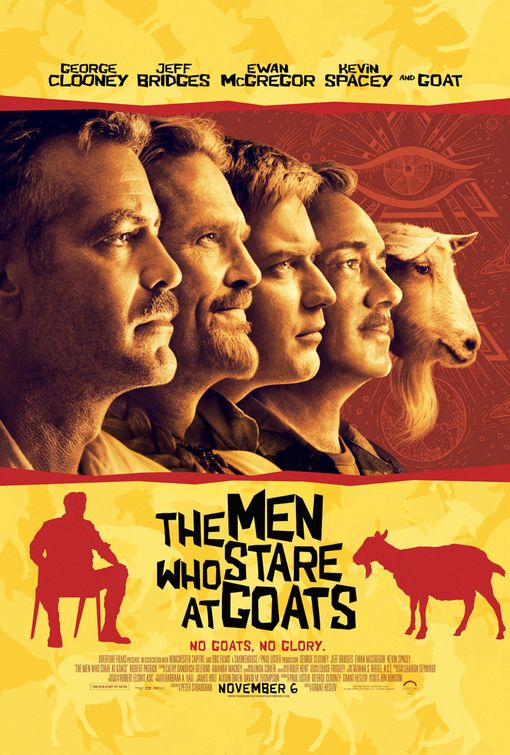
Underseen Movie: ‘The Men Who Stare at Goats’ – A Highly Unusual War Movie

WRITER’S NOTE: This review was written in 2009.

“More of this is true than you would believe.”

You know something? It’s really nice to see a movie use a phrase other than “based on a true story” or “inspired by true events.” Those descriptions have all but lost their meaning because even if what we are seeing actually did happen, it has all been watered down into a formulaic feel-good movie we have seen over and over again to where we want to gag. Even worse, we keep getting suckered into seeing them even when we should know better. Either that, or there’s nothing better to watch. But this year has proven to be great as filmmakers have worked hard to subvert those worthless phrases with movies like “The Informant.” That Steven Soderbergh film made it very clear how it was based on actual events but that certain parts had been fictionalized, and it ended by saying:

“So there!”

Now we have “The Men Who Stare at Goats” which opens with the sentence at the top of this review. The story behind this one is so bizarre to where it’s almost impossible to believe any of what we are watching could ever have happened. All the same, it appears a good portion of these happenings did take place, and it makes for what is truly one of the more unique war movies I have seen in a while. The film is based on a non-fiction book by Jon Ronson which looked at how US military forces used psychic powers against their enemies. They look at New Age concepts as well as paranormal activities to achieve these goals, and of how they worked to use these methods to their advantage. The movie takes place during the Iraq war, but not to worry, the filmmakers is not trying to shove any politics down your throat (not consciously anyway).

Ronson serves as the inspiration for Bob Wilton, an investigative journalist played by Ewan McGregor. Bob’s wife has just left him for his editor and, of course, he is depressed and decides he needs to do something more important with his life in the hopes he can win her back. As a result, he travels to Kuwait to do firsthand reporting of the Iraq War, with hopes of finding someone who can get him across the border. Bob ends up having a chance meeting with a Special Forces operator named Lyn Cassady (George Clooney) who was in the military, but now runs a dance studio. Lyn reveals to Bob he was part of an American unit that was trained to be psychic spies or, as he eventually calls them, “Jedi warriors.” From there, Bob learns everything about this special unit which sounds like something out of a science fiction novel.

I love the irony of all the talk about “Jedi warriors” here, especially since McGregor played one in the “Star Wars” prequels.

Anyway, “The Men Who Stare at Goats” is really a cross between a war movie and a road movie as Lyn and Bob traverse the sandy dunes of the Middle East to where not everything is as it appears. This film is also a mix of comedy and drama the same way “Three Kings,” another war movie which starred Clooney, was. While the tone is largely uneven, especially towards the end, this was definitely an inspired film which kept me entertained throughout and proved to be quite unpredictable.

McGregor is playing the main character here, but let’s face it, Clooney steals the show right out from under his feet. His performance as Lyn Cassady is truly one of his most surprising and inspired. Despite how ridiculous Lyn may seem, Clooney plays him straight and never appears to be self-conscious. Seeing Clooney trying to burst clouds with his mind, and trying to reach into his enemy’s mind by staring right at them has the actor going through emotions ranging from serious to funny to downright tragic. Having gone from playing dramatic roles in movies like “Syriana” to “Michael Clayton,” Clooney once again shows he is really good at comedy and never has to strive hard for a laugh.

I don’t want to take away from McGregor though, who pulls off a convincing American accent. In many ways, his role is more of a reactionary one as he is subjected to conditions one is never fully prepared for. Bob is bewildered at what Lyn is telling him, and yet he still wants to journey further and further into Lyn’s head. I also have to give McGregor a lot of credit because he could have made it look like he was consciously aware of all those “Star Wars” references, but he never did.

But one of the great delights is watching Jeff Bridges channel his inner-dude-ness from “The Big Lebowski” into his role of Bill Django, a military leader who, after being wounded in Vietnam, has a New Age vision of combat he wants to develop. This leads him to study concepts which he incorporates into a special unit called the New Earth Army. Bill becomes a teacher of using non-lethal techniques to gain advantage over the enemy, and his training techniques are unorthodox to say the least. Bridges plays the character broadly, but not too broadly. As funny as Bridges is, he infuses Django with a disappointment which threatens to render him useless to those around him, and with a deep sense of fear and tragedy as his techniques are misused or taken advantage of by those who seek to profit from them.

Having been in London doing tons of theater, it seemed like it would require a herculean effort to bring Kevin Spacey back to the big screen. Seeing him here is a kick as he plays the real antagonist of the film, Larry Hooper. Larry is basically the Darth Vader to Bill’s Obi Wan Kenobi and Lyn’s Luke Skywalker as he takes the non-lethal methods of the New Earth Army and ends up using them for more lethal purposes. Larry ends up doing this not so much out of greed as he does resentment since Django does not consider him in the same light as Lyn. His actions bring about the downfall of the New Earth Army, and he turns all these abilities they developed into something far more insidious. From there, you will see why the movie and the book it is based on has the title it does.

Spacey has great fun as he channels the inner smugness which has enveloped Larry over time. While his role is a little more serious than the others, he still has great moments of comedy which remind us of what a talented actor he is as he balances out the serious and comedic aspects of Larry without tilting too much in one direction.

“The Men Who Stare at Goats” was directed by Grant Heslov, Clooney’s business partner on many films. He has his work cut out for him here as he must find a balance between the humorous and dramatic aspects of the story. Granted, Heslov doesn’t always succeed but he creates a most unusual war movie, and it is all the more entertaining as a result. Even more telling is the way he portrays the Iraqi people in certain scenes. They are not shown as gun toting terrorists, and he captures the look of their helplessness in having to deal with a military occupation they did not ask for.

Like I said, there’s no serious politicizing of the Iraq war in this movie, so don’t feel like you are walking into some sort of trap. Like “The Hurt Locker,” it merely focuses on what those Americans in Iraq were doing in the midst of the chaos, albeit in a more comical way. “The Men Who Stare at Goats” seems almost far too bizarre to be real, but a part of you just might want it to be real. One thing’s for sure, you will never look at “Barney and Friends” in the same way ever again, assuming you ever watched it in the first place (c’mon! Don’t deny it!).

* * * ½ out of * * * *

Underseen Movie: ‘MacGruber’ – The Best SNL Movie in Years

MacGruber movie poster final high resolution

When I went to see “MacGruber” at Grauman’s Chinese Theater in Hollywood back in 2010, I actually saw Jason Sudeikis while standing in line to buy a ticket. His impersonation of Joe Biden is a still a big hit with fans of the show, and he seemed like a very down to earth guy as he blended in with the crowd and talked with others.

Anyway, enough about him. Let’s get on with my review of this particular SNL sketch turned movie called “MacGruber.” About a decade before this one, movies from the long running comedy show were being released all the time, and many proved to be nowhere as funny as the sketches which inspired them. “The Ladies Man,” “Superstar,” or “A Night at the Roxbury” appeared to underwhelm audiences, and I wondered why none of them could come close to matching up with “Wayne’s World” or “The Blues Brothers.”

Now keep in mind, those movies were based on sketches which lasted 3 to 5 minutes on the average SNL episode. With “MacGruber,” we have a movie based on a sketch which typically lasts for a minute at most. We all know from watching this obvious spoof of “MacGyver” that they all end in the same way, with MacGruber failing to diffuse the bomb and it going off, blowing him and his whole team to smithereens. So therein lies the fascination of this movie; Can MacGruber keep himself from blowing up and killing everyone around him for more than a minute? Can he sustain a full-length motion picture when he can barely sustain himself in every control room known to man?

Well, it turns out he can and for around 99 minutes. Before it was released, “MacGruber” was bursting all over with reviews calling it the best SNL movie since “Wayne’s World.” I find this praise to be completely justified as it is consistently hilarious and filled with moments which had me laughing harder than anything I saw in the remake of “A Nightmare on Elm Street,” and that was supposed to be horrific and serious. But while the jinx on SNL movies finally came to an end with “MacGruber,” this same jinx has unfortunately not been broken at the box office. It ended up grossing only $9.3 million worldwide against a budget of $10 million, but it has since become a cult classic. Trust me, “MacGruber” is great fun and contains many gut-busting laughs, and it deserved a much bigger audience than it initially got back in 2010.

Like “Hot Shots Part Deux,” the movie opens with MacGruber (Will Forte) living a post-Rambo type existence in a monastery where he finds peace from all things explosive. But Col. Jim Faith (the late Powers Boothe) brings him back into service when it is discovered his old nemesis, Dieter Von Cunth (Val Kilmer gone wild), has acquired the X-5 nuclear missile and threatens to use it on a highly valuable target primed for utter destruction. Dieter also turns out to be the same man responsible for killing MacGruber’s fiancé, Casey (Maya Rudolph). To say this is all personal for MacGruber is pointing out the obvious. But seriously, what doesn’t this Inspector Clouseau of bomb experts not take personally? If you piss him off, please make sure he doesn’t memorize your license plate.

Forte never does quite convinces us that MacGruber is this great war hero, but that is part of the joke. He does, however, more than make us believe this character he has won more than a dozen purple hearts (how he earned all those is another story). No longer constricted by the dreaded FCC on network television, Forte really lets it loose here, getting away with stuff which would have had NBC and Lorne Michaels drop kicking him out of 30 Rockefeller Plaza if he pulled this off on live television. He also co-wrote the script, and he takes advantage of every opportunity for his character to make a supreme ass of himself while still remaining one you want to root for.

Plus, Forte does sex scenes here like no one else does in movies today, and I am certain no one has tried to match his acting in bed ever since.

Ryan Phillippe co-stars as MacGruber’s right hand man, Lt. Dixon Piper, a dedicated soldier who is of course infinitely brighter than him, and this causes a lot of violent resentment between the two of them. Phillippe does great work in playing the straight man to Forte’s idiotic lunatic. Had he tried to outdo Forte in terms of getting laughs, this pairing never would have worked. Lord knows MacGruber needs a partner, but he would never admit this unless he became incredibly desperate (and he does, so watch out). He also perfects that stony stare you get from some NFL star turned actor, and his funniest moments come when he reacts honestly to just how stupid this Miata-driving explosive expert truly is. Other actors would have overplayed this role, but Phillippe doesn’t thank goodness.

Kristin Wiig reprises her role as MacGruber’s assistant, Vicki St. Elmo. She is great as always, and MacGruber keeps stupidly putting her in such thoughtless situations where her life is in constant mortal danger. The scene in the coffee shop where she is disguised as MacGruber is nothing short of hilarious as she shivers in utter terror, having no clue what to do if things go bad. Still, you want to see Vicki get together with this clueless idiot because giving up this line of work for her music doesn’t make much sense, and this is especially the case when you listen to the songs she wrote.

Then you have Val Kilmer on board as the evil Dieter Von Cunth , and he gets to act all unhinged and crazy in a way he has not for some time. We know the only way MacGruber can defeat Cunth is through sheer luck, and Kilmer’s rubs in his character’s smug intelligence which he has in spades over this heroic douche bag. This represented a comeback for the actor, but it was sadly cut short due to his continuing battle against throat cancer.

“MacGruber” was directed by Jorma Taccone, one third of the Lonely Island comedy troupe which is responsible for all the “SNL Digital Shorts.” I was also surprised to learn he is actually the son of Tony Taccone, the former Artistic Director of Berkeley Repertory Theater. If you are ever in Northern California, be sure to check out a show there as they continue to challenge their audiences as much as entertain them. Anyway, Jorma keeps the proceedings going at a good pace, and he never lets the movie drag during its running time. While he doesn’t do anything groundbreaking with this movie or its formula driven plot, he does succeed in making this kind of satire feel fresh again. This genre has been so burnt out that we’re lucky if anything works as well as it does here.

The audience I saw “MacGruber” with at Grauman’s Chinese treated the whole thing like a rock concert, cheering when the title character first appeared on screen. It was a great crowd to experience this movie with, so it was surprising and depressing it got such a lackluster reception during its opening weekend. Even with competition from “Robin Hood,” “Iron Man 2,” and even “Shrek Forever After,” I figured it would still make a sizable dent at the box office. Still, it did eventually find its audience years later.

“MacGruber” is by no means a classic, and it is far from original, but it is certainly above average for this kind of movie. Saying it is the best SNL movie in years is faint praise. If you’re looking for a terrific comedy which emanated from the classic late-night show, then this is one you should check out. Even if you never laughed much at the skit on SNL, this movie will give you several belly laughs which we all live for. Just be sure not to eat any celery before you see it.

* * * ½ out of * * * *

Exclusive Interview with Barry Crimmins and Bobcat Goldthwait about ‘Call Me Lucky’

It was very sad to learn Barry Crimmins passed away on February 28, 2018 at the age of 64. Crimmins was diagnosed with cancer only a month earlier, but the disease spread through his body very rapidly. He was an American stand-up comedian, a political activist and satirist, a writer and a comedy club owner, and his comedy predated that of the late Bill Hicks. He brought the comedy scene in Boston to a new level of prominence after forming the city’s two clubs, The Ding Ho and Stitches. He has long since earned the respect of fellow comics like Bobcat Goldthwait, Steven Wright, Paula Poundstone, Kevin Meaney and many, many others who continue to sing his praises, But the thing is, I was only just getting to know him just a few years ago.

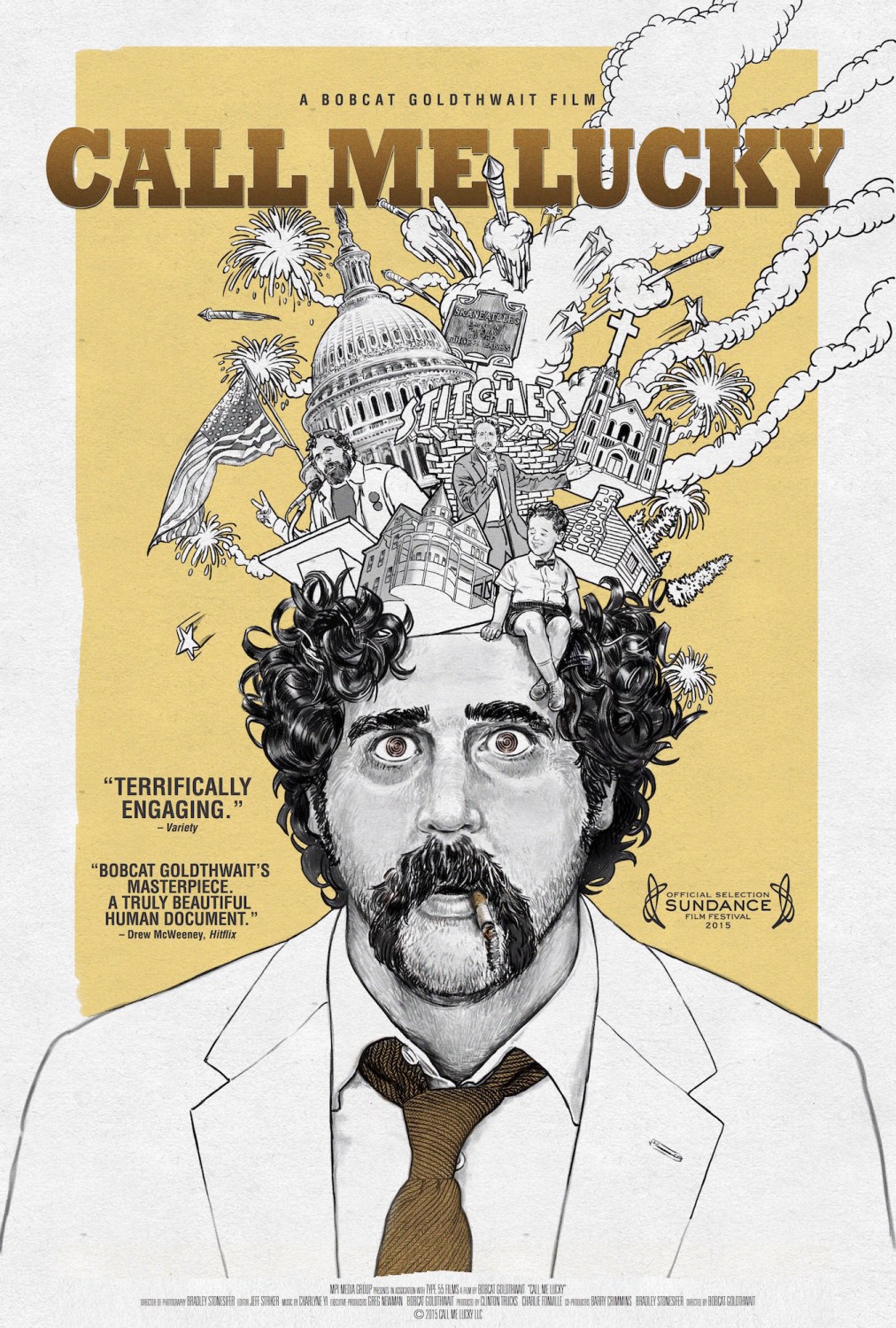
Call Me Lucky poster

Despite Crimmins having done so much work, many people today, myself included, had never heard of him before. This changed in 2015 with Goldthwait’s acclaimed documentary “Call Me Lucky” which chronicled Crimmins’ beginnings as a comic in New York to his work in the present as a political activist. The documentary also reveals how Crimmins was a victim of sexual abuse as a child, and we even see him revisit the scene of his abuse in an effort to come to terms with what he went through. For years, he was an anti-pedophilia activist, and he went out of his way to expose pedophiles on the internet in the 1990’s before turning his evidence over to the FBI. In 1995, he testified before Congress about the need to enforce child pornography laws more than ever before.

In 2017, Crimmins married Helen Lysen, a photographer and font designer, and she was with him when he passed away peacefully. She shared the news of his death and wrote, “He would want everyone to know that he cared deeply about mankind and wants you to carry on the good fight. Peace.” Indeed, his death is a real loss as we need voices like his as the political climate we are currently dealing with in America continues to grow more volatile as days go by.

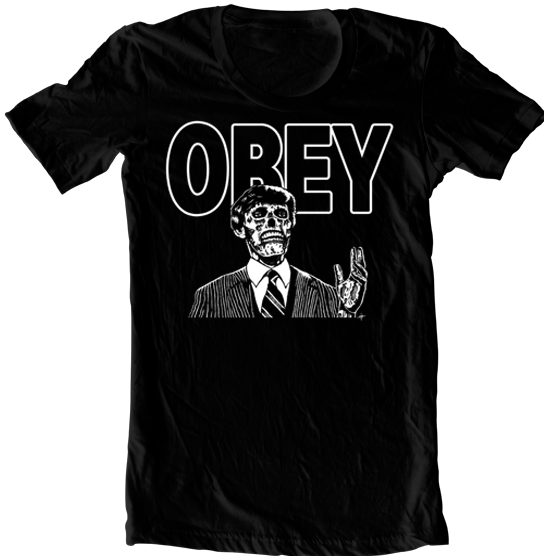
I was fortunate to talk with Crimmins and Goldthwait while they were doing press for “Call Me Lucky” a few years ago. To this interview, I wore one of my “They Live” t-shirts as I figured Crimmins was a fan of John Carpenter’s 1988 cult classic which remains one of the most politically subversive movies ever made. It turns out he had not seen it, but Goldthwait certainly did, and I hope he got Crimmins to check it out before he passed away. I am certain he would have enjoyed it immensely.

They Live Obey t-shirt

Please check out my exclusive interview with Crimmins and Goldthwait above. “Call Me Lucky” is now available to own and rent on DVD, Blu-ray and Digital.

Rest in Peace Barry.

‘The Little Hours’ Cast and Director Talk About Making This Satirical Comedy

The Little Hours poster

From its trailer, I figured “The Little Hours” would be a spoof of all the religious movies we grew up watching. But actually, it is a straightforward comedy which instead looks to satirize a culture we assumed was wholly religious, but was actually a lot looser and fun than history books ever made it out to be.

Based on the first tale of the third day from “The Decameron,” it stars Dave Franco as Massetto, a young servant who flees from his master after he is found out to be having an affair with his wife. Massetto is taken under the wing of Father Tommasso (John C. Reilly) who agrees to hide him and pass him off to the residents as a deaf-mute to avoid detection. But among the residents are a trio of medieval nuns, Alessandra (Alison Brie), Fernanda (Aubrey Plaza) and Ginevra (Kate Micucci), who think nothing of berating a pleasant laborer, chafing at their given duties, and also spying on one another. When they become aware of Massetto, a wealth of sexual repression becomes awakened along with a dose of substance abuse and wicked revelry, and he wonders how long he can keep this act up before giving in to temptation.

The Little Hours Jeff Baena

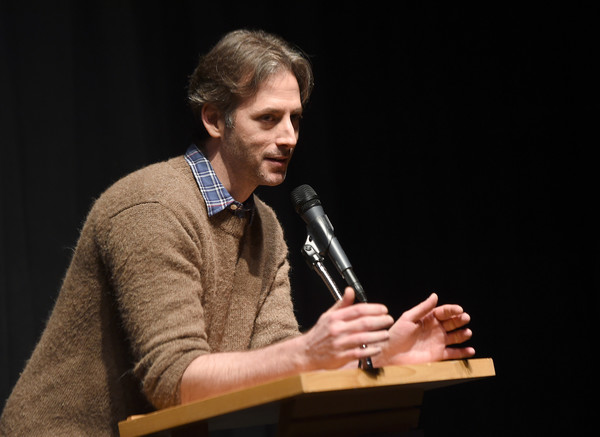
“The Little Hours” was written and directed by Jeff Baena whose previous credits were “Life after Beth” and “Joshy,” and he was joined at the movie’s Los Angeles press day by actors Dave Franco, Aubrey Plaza, Alison Brie and Molly Shannon. Baena explained how, while he was studying filmmaking at NYU, he also earned enough credits to get a minor in Medieval and Renaissance Studies. This is where he learned about “The Decameron,” a collection of short stories written by Giovanni Boccaccio in the 14th century. The stories dealt with life lessons and love, and I asked Baena why he chose to make a movie out of one particular story from it.

Jeff Baena: I wasn’t expecting something as funny and bawdy coming from a source material that is almost 700 years old. So, when I read it, it just read to me as something so human and just highlighted how similar we are to these people even though obviously the context is completely different. I was just drawn to how amazingly easy it is to connect to this thing and find our commonalities and also highlighting differences and showing how much we’ve changed despite that. All that stuff was really interesting to me.

I was also interested in learning from Baena about how he conceived this movie. Like I said, I thought this would be a religious spoof after watching the trailer, but “The Little Hours” proves to be much more than that. I was curious to see how this story evolved for him as he went about turning it into a movie.

Jeff Baena: I just wanted to achieve something similar to what “The Decameron” does itself which is funny. It’s a humanist book, so more than anything I just wanted to get the tone of that silliness but also the historicity which is a sort of strange balance, and then highlight all these actors who I love being in this world and then finding a way to make it adjustable for people to digest.

The Little Hours Dave and Aubrey

“The Little Hours” takes place in the year 1347 and was shot in Tuscany, Italy. As a result, it was tempting to believe the actors did a lot of research in preparation for filming. But in talking with Franco, he explained why this didn’t end up being your average period film.

Dave Franco: I kept asking Jeff what kind of research I could do and what research I should be doing, and he told me not to overthink it. He said it is not about knowing about the time period or how they talked or what activities they were doing there anything like that. It was more about the human connection. Even though the movie is set in the 14th century, it’s just about the relationships and we want you to talk in your own natural cadence. We don’t want you having to talk flowerily language. So yeah, it was just about connecting to one another.

The Little Hours Nuns

Both Alison Brie and Aubrey Plaza play nuns who are not at the convent for religious reasons as much as they are for some form of persecution. Many have asked the actresses what it was like wearing the nun costumes, and they replied they were heavy and itchy. But being an actor myself, I was more interested in how these costumes influenced their performances and if it changed the way they thought about their characters. Actors spend a lot of time preparing a role, and the costume is like the finishing touch or the missing puzzle piece which completes everything.

Aubrey Plaza: Yeah. Nun habits can feel really depressing. They are like really weighing you down literally, and only having just your face exposed is really hard. So, I think psychologically it helped get us all into character because we were totally de-sexualized, we couldn’t use our bodies, and we just felt after 10 hours of that we were all kind of like, “Can we get this fucking thing off?” Because it’s a drag.

Alison Brie: I feel like it made the character. The costume, the habit, is very oppressive and I found myself to be very depressed while wearing it, and my character’s in that same mental state a lot of the movie. So, it definitely helped and it did sort of change the way I went about performing in the movie because I’m a very physical person, and I think that that is one of my biggest tools that I use often. It’s like the tool I always reach for first in the bag. So, to have that kind of physicality taken away from you and also any sexuality robbed from you and to have just this small part of your face exposed, it was an interesting challenge in minimalism and in conveying ideas with as little movement as possible sometimes.

The Little Hours Molly Shannon poster

Then there was Molly Shannon who plays Sister Marea, easily the nicest and kindest character to be found in “The Little Hours.” When it comes to Shannon, we all know her best from “Saturday Night Live,” where she created Mary Katherine Gallagher, the awkward and unpopular Catholic schoolgirl prone to severe mood swings. Last year, I got to attend a special screening of “Superstar” which starred Shannon as MKG, and she spoke of how she went to Catholic school as a child and the experiences she had which to came to inform the creation of that character. I asked Shannon if MKG or her Catholic school experiences came to inform her performance as Sister Marea in “The Little Hours.”

Molly Shannon: That’s interesting. No, I wouldn’t say so much Mary Katherine Gallagher, but we did have a nun when I was in grade school named Sister Rosemary and she seemed really unhappy to me. She was fascinating because she seemed kind of miserable. She was young and she had a beautiful face. She was my first-grade teacher and she would take the hall pass and go, “Do you want to smell it?” Meaning like she wanted to hit you with it. I used to go pray at her convent after school to get extra credit, and I would just kind of study her and I was like wow, this is so weird. This young girl lives in this clean house. And then she left the convent and was seen on this golf course with a miniskirt like whooping it up with one of my schoolmates’ fathers and I was like, “Yay, she’s free! She got out!” I think about her in that little golf cart and I’m like, “Wow!” I could see she wanted to escape. She seemed unhappy. I think I always liked to study characters. I would study people. So, I think maybe I thought more of her.

While “The Little Hours” might seem crude on the surface, it is truly one of this year’s more original and subversively wicked comedies. It also shows how the 14th century was nowhere as stolid as we all have been led to believe, and it serves as a highly entertaining showcase for Baena and his super-talented cast. It opens in theaters on June 30, so be sure to check it out!

Stills, posters and trailers courtesy of Gunpowder & Sky

Jeff Baena photo courtesy of Getty Images