The following review was written by Ultimate Rabbit correspondent, Tony Farinella.
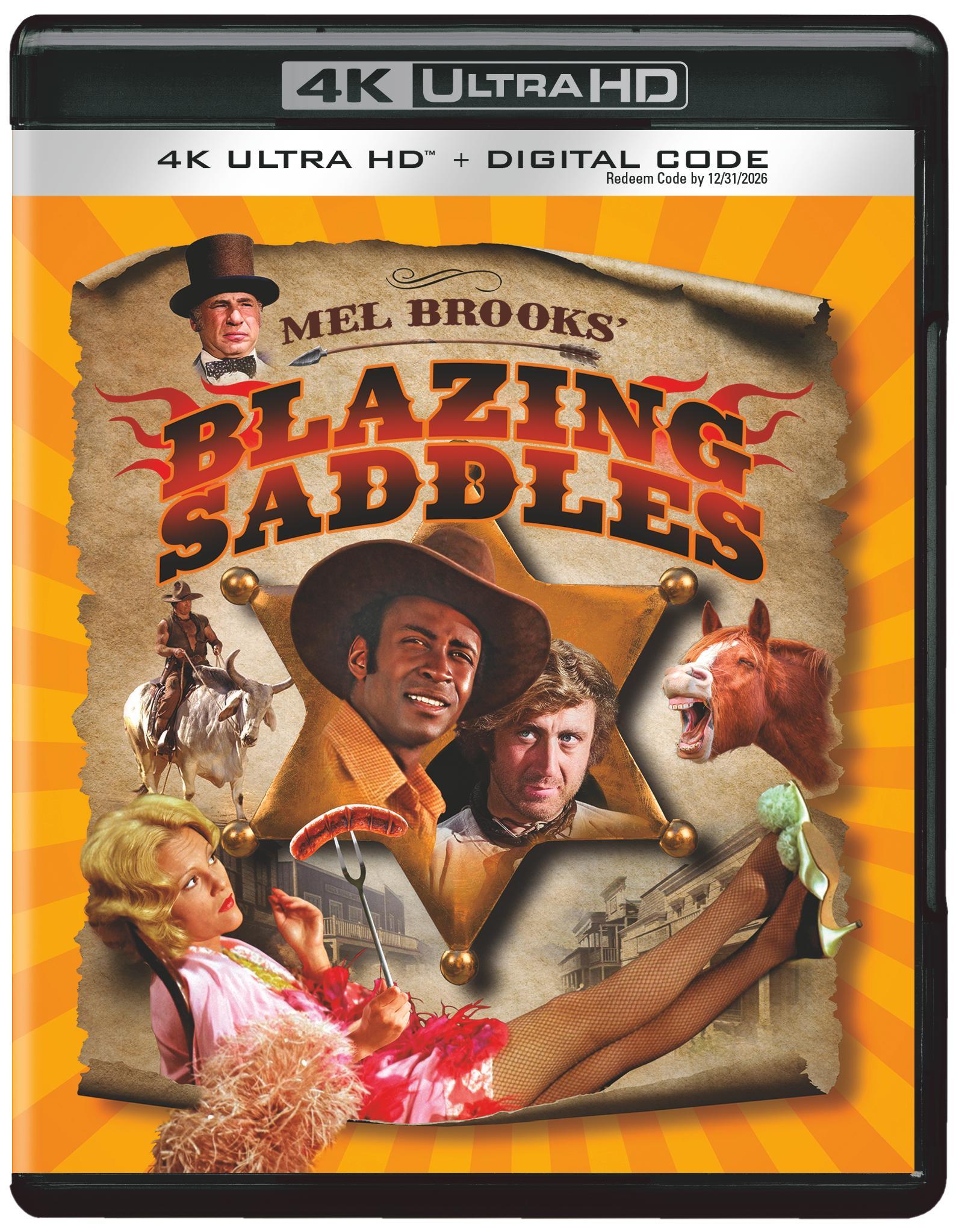
When it comes to comedy, it’s all a matter of opinion. Comedy, even more than film criticism, is subjective. For example, I’m not an Adam Sandler fan and I find his films terribly unfunny, but there is a reason why his films keep getting released by studios. There is really no right or wrong when it comes to comedy. With “Blazing Saddles,” I heard all of the praise surrounding it and how some critics considered it one of the funniest films of all time. While watching the film for the first time, I understood what they were going for and what they were looking to achieve. It wasn’t as though the film went over my head or I didn’t understand the style of comedy they were putting on screen. I just never laughed.
My first issue with “Blazing Saddles” was its lack of plot. It seems this is mostly a movie filled with random gags and one-liners that are intended to make the audience laugh. They throw everything but the kitchen sink at us. It must be said the film is filled with the N-word along with other racial and homophobic slurs. I understand this film was made in 1974, which was fifty years ago, but it’s still uncomfortable to watch. The film is not funny and the jokes don’t land. There is a way to be offensive and also be funny, but this movie did not accomplish that goal. With comedy, you can go almost anywhere if you know what you’re doing. We have seen films that pushed the comedic envelope in the past, but they have been done in a smart and clever way. This is just flat-out lazy.
The plot involves a railroad being built through the town of Rock Ridge, a railroad that will make a corrupt politician a lot of money if he is able to force the residents out of their town. One way he is hoping to do this is by having a black sheriff named Bart (Cleavon Little) come in and make some of the local residents uncomfortable. The sheriff is called Black Bart. Subtlety is not this film’s strong suit. Bart’s deputy is played by Gene Wilder. Even though they are hoping to get the locals out of Rock Ridge, they end up staying and fighting for their town. Bart must also deal with Lili Von Shtüpp, played by Madeline Kahn, who is looking to find a way to sink her teeth into him.
“Blazing Saddles” features performances from Mel Brooks, Alex Karras and Richard Collier, to name a few. However, no one can save this movie from its awful screenplay and bad jokes. It is unwatchable from start-to-finish. It took every ounce of strength in my body to not only watch this movie, but to finish watching it. I absolutely hated it in a way I haven’t hated a movie in a very long time. I understand they were trying to make a film that would be a satire on Westerns and how certain demographics view African Americans. It shows how they are exploiting African Americans because the money men are only focused on the bottom line. I know what the message was and what they were trying to do in this film. I just didn’t find it funny.
In the end, “Blazing Saddles” is considered a comedy classic and one of the funniest films of all-time. I wouldn’t be doing this film any justice if I didn’t acknowledge its reputation and its three Oscar nominations. It has clearly reasoned with a lot of people. With this being its 50th anniversary, I know a lot of people are very excited about this 4K release. One of the worst things you can do as a critic is to say a movie should not be watched by anyone, and if anyone likes this movie, they are a moron. I would never dream of doing that. I acknowledge the reputation of “Blazing Saddles,” but I simply shrug my shoulders and say, “This was not, at all, my kind of comedy.” As stated previously, comedy is subjective. If you love the film, you will love the 4K.
ZERO out of * * * *
4K Info: “Blazing Saddles” is released on a single 4K disc from Warner Brothers Home Entertainment. It also comes with a digital copy of the film. It has a running time of 93 minutes and is rated R. You can purchase either the 4K slipcover or the 4K steelbook.
4K Video: The 4K HDR transfer from Warner Brothers is fantastic and looks terrific. Westerns, when done right, can look great on 4K. This is a visual feast for the eyes, and I imagine fans of the film will be quite pleased with this 4K transfer.
4K Audio: The Dolby Atmos track is also right on cue, as it’s a strong audio mix throughout the film that hits all the right notes.
Special Features:
Inappropriate Inspiration: The Blazing Saddles Effect
Scene-Specific Commentary by Mel Brooks
Blaze of Glory: Mel Brooks’ Wild, Wild West
Back in the Saddle
Additional Scenes
Should You Buy It?
I imagine some readers might call me too sensitive or say the film went over my head. I’m a huge fan of standup comedy, and I believe just about anything in the world is fodder for comedy when it’s done right. I understood exactly what Mel Brooks was going for in this movie, and I know that one of its writers was Richard Pryor. It is my job to give my honest assessment of this film, and I thought it was painfully unfunny and wanted to turn it off after twenty minutes. Because I was reviewing it, I felt obligated to watch the entire film. If this style of comedy is not for you, you won’t find a whole lot to laugh about in “Blazing Saddles.” If you enjoy the film and it fits into your comedic sensibilities, you will be very happy with it. This is another top-notch 4K release from Warner Brothers. They are doing a great job with releasing 4K’s from their massive library. Overall, if you loved this film, buy it. If you haven’t seen it before, I’d recommend watching it and seeing how you respond to it.
**Disclaimer** I received a copy of this film from Warner Brothers to review for free. The opinions and statements in the review are mine and mine alone.
The following review was written by Ultimate Rabbit correspondent, Tony Farinella.
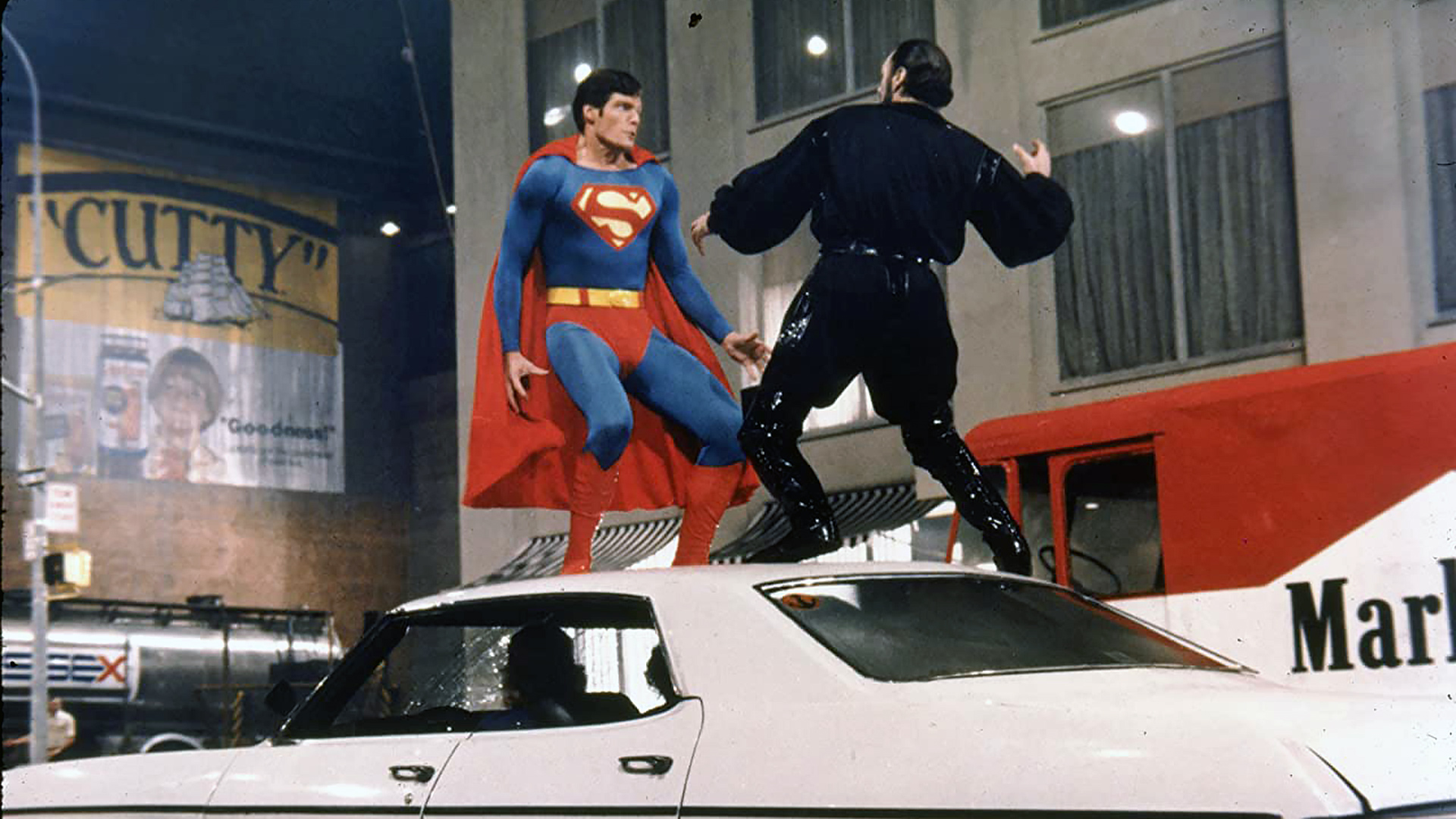
The idea of being a superhero is something which appeals to people all across the world. They want the chance to start out as an ordinary individual and transform themselves into something special and magical. 1978’s “Superman” is a perfect example of this, especially with its leading man, Christopher Reeve. It’s an iconic role and performance which continues to stand the test of time. It also achieved the rare feat of being both a financial and critical success. When that happens in Hollywood, everyone is pleased as punch. It’s the magic formula Hollywood is always trying to achieve as they want to do quality work which is meaningful to an audience while also making a lot of money.
There are so many things which make “Superman” great. Of course, as mentioned previously, you have the tremendous performance by the late, great Christopher Reeve. However, you also need a really, really effective villain, and it’s hard to find a better Hollywood villain than the legendary Gene Hackman as Lex Luthor. He oozes with charisma, personality, and you love to root against him. As far as the supporting cast, it is filled with some of the greatest working actors and actresses in Hollywood history, such as Marlon Brando, Margot Kidder, Glenn Ford, Jackie Cooper, Terence Stamp, Ned Beatty, Jack O’Halloran, Maria Schell and Sarah Douglas.
It also doesn’t hurt when you have a director like Richard Donner behind the camera as well. He knows how to pace the film, allow his actors room to breathe, and he is also respectful of the source material. There was also the magnificent score by the iconic John Williams. When you have all of the right pieces in place like Donner did such as the script, the actors and the budget, you have to stay on track and basically not screw it up. He was just the right man for this big budget affair. During its release, it had the highest budget for a film at the time, coming in at $55 million. It’s funny to hear that number now, considering how much budgets have increased in Hollywood since then.
What speaks to me about the first “Superman” film is the idea of having a double life and people not knowing who you really are. During the day you are Clark Kent, a mild-mannered reporter, but you also have the ability to be Superman. It shows we all have something special inside of us. It is up to us to really find that, harness it, and use it for good. Superman is your all-American, clean cut, good guy. He’s very likable and effortlessly charming. On paper, this idea might sound ludicrous, but because the filmmakers took it seriously and had the right actors and participants involved, they really had lightning in a bottle. Even to this day, the film holds up incredibly well. When you see the special effects, they were really ahead of their time and they helped pave the way for a lot of the effects we see today, only they are now taken up a notch. Most importantly, this film has a big heart and a big soul attached to it. This is why the film is beloved by so many.
With this tremendous release from Warner Brothers Home Entertainment, we are also treated to “Superman II” in two different versions. We get the original theatrical cut by Richard Lester and the Richard Donner Cut on 4K. To this day, people still debate which version they like better and which is more worth watching. If you ask me, it’s best to watch both versions. I see things in Donner’s film I like more than in Lester’s and vice versa, but overall, I felt like Lester’s version was a much more polished, easy to follow, and complete film. Donner’s version is flawed with moments of greatness, and it deserves to be seen. Thanks to this set, you can watch both versions, which, as stated previously, I highly encourage you to do as I love a good film discussion. Film is subjective and there is really no right or wrong answer.
In “Superman II,” Mario Puzo is back once along with fellow screenwriters, David and Leslie Newman, again with a really good story, and this is a great thing for the audience. All three really know how to flesh out a story and create unique and interesting characters. It doesn’t hurt when you have actors like Beatty, Kidder and Hackman completely invested in the material. While not as good as the first one, and it’s rare for a sequel to be as good as its predecessor, it’s still a very, very good movie. There is some great humor here, and even in a superhero movie where the stakes are high and we are in a fictional world, some levity is very much appreciated! Sometimes it is nice to have a different vision and a new voice in a franchise while also staying true to what made the first film successful. Richard Lester was not put in an ideal situation, but he made it work, and you have to give him credit for that.
By “Superman III,” it seemed like the magic was starting to disappear, and they totally shifted the focus of the franchise into a campy, goofy and comedic realm which really rubbed audiences the wrong way. I understand they were going for something different, and they brought in Richard Pryor, but the script, the jokes and the material are just really, really bad. There is no denying that Pryor is a funny man with great comedic timing, but his abilities didn’t lend themselves to this film franchise. Overall, “Superman III” was doomed because of behind-the-scenes issues, script issues, and a film in search of the right tone. The filmmakers seemed to have lost the plot all together as well as their love for the character and the franchise. When a franchise has success, many times it is how the filmmakers handle that success which defines how it will carry on and continue. It is clear they didn’t know how to handle success here.
It didn’t get any better with “Superman IV: The Quest for Peace.” It was so poorly made and received that they didn’t make another Superman film until 2006. As is often the case with sequels, they went cheap. Even though Hackman returns and Kidder receives more screen time, this film was dead on arrival. The plot is incoherent, messy, and just plain dumb. It was a cash-grab sequel, and when you are focused on money over quality work, you end up with “Superman IV: The Quest for Peace.” It’s a very frustrating film and incredibly hard to follow. As you can see with the “Superman” franchise, you have the law of diminishing returns.
4K Info: The “Superman” 5-Film Collection 1978-1987 is in a terrific box set with all the films getting their own individual dual 4K case which also includes a Blu-ray version of the them. I was really happy they didn’t stack the discs in the set here, as that is always a pet peeve of mine. I was also very happy they gave each film its day in court with artwork and its own individual dual case. “Superman” was previously released on 4K, but this is the first time the other four films have been released in this format. You also a digital code for all of the films as well.
Video Info: If you already own the first “Superman” 4K, please know they have not added anything new to it here. It’s the same “Superman” 4K that had been released in its standalone edition. That being said, it’s hard not to be stunned and blown away by the beautiful Dolby Vision look of the original film. I had not previously owned the first “Superman” film, so I had no qualms about there not being anything new here. It’s just something to keep in mind for those who already own it on 4K. Overall, this is far and away the best these five films have ever looked on home video. They look sharp, clean and free of grain or mess. They have cleaned these films up very, very nicely. I was very impressed with these transfers. Warner Brothers has really been knocking it out of the park with their releases this year during their 100-year anniversary celebration, and this “Superman” box set is no exception.
Audio Info: We are treated to Dolby Atmos on all five films which is fantastic news! I am a huge fan of Dolby Atmos, and the sound is such a vital part of these films. The audio sounds crystal clear, concise, and it comes in at just the right pitch without being too loud or in-your-face. I’m always happy when I can leave it on one volume setting and still get the same impact throughout. That was the case with all five films. They also all come with subtitles in French, English and Spanish as well.
Special Features:
“Superman: The Movie” Special Features:
Commentary by Ilya Salkind and Pierre Spangler
The Making of Superman – vintage featurette
Superman and the Mole-Men – vintage featurette
Super-Rabbit – 1943 WB cartoon
Snafuperman – 1944 WB cartoon
Stupor Duck – 1956 WB cartoon
TV Spot
Teaser Trailer
Theatrical Trailer
‘Superman II” Special Features:
Commentary by Ilya Salkind and Pierre Spengler
The Making of “Superman II” – 1980 TV Special
Superman’s Soufflé – Deleted Scene
First Flight
Fleischer Studios’ Superman vintage cartoons:
Superman
The Mechanical Monster
Billion Dollar Limited
The Arctic Giant
The Bulleteers
The Magnetic Telescope
Electric Earthquake
Volcano
Terror on the Midway
Theatrical Trailer
“Superman II: The Richard Donner Cut” Special Features:
Commentary by Richard Donner and Tom Mankiewicz
Introduction by Richard Donner – featurette
Superman II: Restoring the Vision – featurette
Deleted Scenes
Lex and Ms. Teschmacher Head North
Lex and Ms. Teschmacher Head South
The Villains Enter the Fortress
He’s All Yours, Boys
Clarke and Jimmy
Lex’s Gateway
Famous Studios vintage cartoons:
Japoteurs
Showdown
Eleventh Hour
Destruction, Inc.
The Mummy Strikes
Jungle Drums
The Underground World
Secret Agent
“Superman III” Special Features:
Commentary by Ilya Salkind and Pierre Spengler
The Making of “Superman III” – 1983 TV Special
Deleted Scenes:
Save My Baby
To the Rescue
Making Up
Going to See the Boss
Hatching the Plan
The Con
Rooftop Ski
Boss Wants This to Go
Superman Honored
Gus’ Speech
Hanging Up on Brad
Theatrical Trailer
“Superman IV: The Quest for Peace” Special Features:
Commentary by Mark Rosenthal
Superman 50th Anniversary Special – 1988 TV Special
Deleted Scenes:
Clark’s Morning
Jeremy’s Letter
Superman’s Visit
Nuclear Man’s Prototype
Metropolis After Hours
Lex Ponders
Flying Sequence (Extended Scene)
Battle in Smallville
Battle in the U.S.S.R.
Nuclear Arms Race
Superman’s Sickness
Red Alert
By My Side
Lark and Lacy Say Goodbye
No Borders
Theatrical Trailer
Should You Buy It?
Last time I checked, this set is going for about $90, which is a great price for five films. Granted, you are really paying for “Superman,” “Superman II” and “Superman II: The Richard Donner Cut,” so you need to own all of the Christopher Reeve “Superman” films if you are a completist like myself. I’ve heard a lot of people in the film community complain about some of the special features from other releases not being included on this set but they are included in the other Blu-ray releases. This did not bother me as there are still plenty of special features to shift through here. I’m happy they included the Blu-ray discs for all of the films and didn’t just include the 4K’s. The good films in this franchise leave me with a warm and fuzzy feeling. When films make me feel this way and put a smile on my face, I’m a happy camper. There is also something to enjoy about the total and complete absurdity of the bad films as well. If you have a sense of humor and come in with the right mindset, you can enjoy them on the level of they are aiming at. All the films come with Dolby Atmos tracks, which is a great perk. My one minor nitpick is the fact that not all these films include Dolby Vision except for the first one. However, in 2023, when physical media is hard to come by in stores but very much appreciated by us hardcore film historians and lovers, I don’t want to be too overly critical or negative over the little things. Warner Brothers and other studios are really going all out to preserve important pieces of cinematic history. We shouldn’t look a gift horse in the mouth. This set comes highly recommended, and I enjoyed revisiting these films in 4K. It gave me a whole new appreciation for these films, Christopher Reeve’s performance, and the intense feelings of happiness and joy the first two (three if you are counting the Richard Donner cut) films brought to me. You can’t put a price tag on that. This set comes highly recommended!
* * * ½ out of * * * *
**Disclaimer** I received a copy of this film from Warner Brothers to review for free. The opinions and statements in the review are mine and mine alone.
I remember when I first watched David Lynch’s film “Lost Highway” back in 1997. I saw it at a small theater in Newport Beach where the screen ratio was off by a bit, and the opening credits did not fit onto the silver screen as a result. I left the theater feeling a bit cold as I was not sure what to make of What I saw, and the ending seemed so absurdly abrupt to where I wonder if Lynch and co-writer Barry Gifford had simply run out of ideas and went down a rabbit hole they could not dig themselves out of. The way I saw it, this film was easily upstaged by its soundtrack which proved to be one of my favorites from the 1990’s with its music by Angelo Badalamenti, Nine Inch Nails. Barry Adamson, Smashing Pumpkins and Marilyn Manson.
A few days later, however, I found myself thinking about “Lost Highway” a lot to where I could not put it out of my head. I could not figure out why initially, but then I found the answer in a review of the movie I read in Video Watchdog. I cannot remember the critic’s name, but they wrote it’s not about how the film affects you while you watch it, but how it affects you after you have watched it. I could not agree with this more, and it made me watch “Lost Highway” again, but this time in a THX approved theater with better sights and sound.
I have since revisited “Lost Highway” again and again over the years, and I revisited it yet again at the Nuart Theatre which presented this Lynch cult classic in a 4K restoration personally supervised by the director. While it may not seem as brilliant as “Blue Velvet” or “Mulholland Drive,” it remains one of my favorite films of Lynch’s as it presents us with a puzzle of a story which might be easier to solve than at first glance.
We are introduced to the married couple of saxophonist Fred Madison (Bill Pullman) and his wife, Renee who live in the Hollywood Hills. Their marriage looks to be a cold one, lacking in passion. When it comes down it, Fred is far more able to get orgasms out of his saxophone solos than with Renee, and he becomes suspicious that she might be seeing someone behind his back.
Things get more unsettling for them when they discover someone has been leaving videotapes for them on their doorstep. The first one features a view of the outside of their house, but the second goes even further as it shows footage of them asleep in their bed. They call the police, but they are of little help in finding out who filmed them. Next thing you know, Fred finds and views another videotape which shows him hovering over Renee’s dismembered body, and from there he finds himself on death row for her murder.
Lynch has described “Lost Highway” as being a “psychogenic fugue,” a rare psychiatric phenomenon characterized by reversible amnesia for one’s identity. Others have compared the film to a Möbius strip, a non-orientable strip which one cannot consistently distinguish clockwise and counterclockwise turns. Both of these make sense as the beginning may very well be the end, and the end may very well be the beginning.
This is even further enhanced by Lynch saying he was partially inspired by the O.J. Simpson murder trial which came to dominate the early 1990’s. Indeed, I can see this inspiration all throughout “Lost Highway” as Simpson has not, nor will he ever, admit to committing any murders. For all we know, Simpson may still not know what he did as he has long since blacked it out of his mind. The same goes with Fred Madison as he cannot believe it when a certain video implies he murdered his wife in a most horrible way, but this doesn’t stop a jury of his peers from finding him guilty and putting him on death row.
There is a scene where the police visit Fred and Renee at their home after they received the second video, and Renee talks about how Fred hates video cameras and doesn’t want them in the house. His explanation is as follows:
“I like to remember things my own way.How I remembered them. Not necessarily the way they happened.”
I have come to refer to this dialogue as the Dinesh D’Souza line as he continues to sell anyone and everyone on a narrative which just isn’t the least bit true. But regardless of how you view this film, one thing should remain clear: videotapes do not lie. Just look at what Detective Mike Kellerman (played by Reed Diamond) said in one episode of “Homicide – Life on the Street:”
“Videotape, it’s the perfect witness. It can’t change its testimony, and it can’t forget what somebody looks like.”
Indeed, “Lost Highway” is all about Fred Madison trying to escape the truth of what he did or, perhaps, what everyone thinks he did. As a result, he goes through a rather grotesque transformation which ends up turning him into a young auto mechanic named Pete Dayton (played by Balthazar Getty), and he gets released from prison. But as he now experiences life as a free man, he comes to meet the gangster Mr. Eddy’s mistress, Alice Wakefield. The only thing is, she looks a lot like Fred’s late wife, Renee. Of course, a lot of that has to do with the fact Patricia Arquette is playing Alice as well as Renee.
“Lost Highway” has long since become one of my favorite David Lynch films, and while “Blue Velvet” and “Mulholland Drive” are regarded more highly, this one is so much fun to view again and again. The whole thing is a complex puzzle, and I am convinced I can still solve its mysteries in ways I cannot with Lynch’s other works. I am not even going to try and make sense of “Inland Empire.”
With Pullman’s character of Fred, he is trying to stay ahead many steps of his darkest memories and actions, assuming they are true. But the deeper he digs into his psyche to escape an especially harsh reality, the more memories and familiar faces keep coming up. I like how Pullman plays Fred as a suspicious man who finds himself caught up in a situation he does not understand but which leaves him with the worst headaches imaginable.
Patricia Arquette is a marvel here as both Renee and Alice as she opens herself up, literally and figuratively speaking. It’s great to watch her go from portraying a scared wife to a dominant seductress who holds Pete very tightly within her grasp. Seriously, watching this Oscar winning actress here should serve as reminder of just how much stronger women are than men, especially when men are led by certain parts of their bodies other than their brains.
Who could have known this would have been Robert Blake’s last performance ever in a motion picture before the whole… Well, you know. Still, his work here as the Mystery Man is wonderfully chilling as he clearly took joy in crafting a character unlike any he played previously. When he glares at you, there is no escape, and seeing him without eyebrows makes his presence all the more unnerving. It’s an original performance which people never give enough credit to.
There are many moments from “Lost Highway” which will forever stay with me like when Fred Madison walks into the darkness of his home and re-emerges as someone much different, Robert Loggia who, as Mr. Eddy, unleashes his rage at an ignorant motorist for tailgating him, seeing Alice and Pete have sex in front of a car’s headlights, and the final scene where a character transforms in a hideously angry fashion. All of them are aided by the haunting musical soundscapes created by Angelo Badalamenti and Trent Reznor, the cinematography of Peter Deming, and the strange appearances pf both Richard Pryor and Gary Busey which had me wondering if Lynch was using dream logic in the same way Darren Aronofsky did in “Mother.”
“Lost Highway” provided me with one of the most unique experiences I have ever had. It left me at odds upon the beginning of its end credits, but it stayed with me from there on out, and I constantly find myself returning to it and its awesome soundtrack. This truly is an art picture as it can be interpreted in many ways, and I know I will come back to it again before I know it. Just remember one thing, Dick Laurent is dead.
WRITER’S NOTE: This article was originally written back in 2011 when this screening took place.
Edgar Wright continued his film festival he named The Wright Stuff II at New Beverly Cinema with “Animal House,” and joining him for this screening was special guest John Landis who directed it and succeeded in making what Wright called the first “adult gross out comedy ever.” Landis said director Todd Phillips had already made three movies where he did several shot for shot steals from “Animal House,” and even Wright had to admit he may have subconsciously stolen the taking coat gag for “Scott Pilgrim Vs. The World” from it as well.
“Animal House” was Landis’ third film, and he made it soon after finishing “Kentucky Fried Movie.” However, he was not the first choice to direct as it was initially offered to John Schlesinger (“Midnight Cowboy”), then later to Richard Fleischer (“20,000 Leagues Under the Sea”) and Mike Nichols (“The Graduate”) who all turned it down. Landis said they all passed on it saying, “Are you fucking kidding me?”
Landis was drawn to this project by what he called “a very smart script” written by Doug Kenney, Harold Ramis and Chris Miller. Landis gave a lot of the credit to Kenney who had come to this from the Harvard Lampoon where he was described as being “consistently brilliant.” Kenney wrote scripts called “Laser Orgy Girls” and “Charles Manson In High School,” but then he did “High School Yearbook” which eventually evolved into “Animal House.” The thought was there were so many off-color elements to where it made more sense to set it in college.
“Animal House” marked the film debut of many young actors who would soon become big stars in their own right. It was John Belushi’s first movie, and he was already an established star thanks to “Saturday Night Live.” Tom Hulce was doing the play “Equis” on Broadway when cast, and Bruce McGill was discovered doing Shakespeare’s “Richard III.” As for Karen Allen, she originally drove her friend to audition for it, but she never planned to audition herself. But Landis took one look and told her, “First off, you just lost a friend. Second, we want you in the movie!”
Others from “Saturday Night Live” were considered, but Lorne Michaels was getting pissed about losing more of his cast. While Landis got Belushi despite a crazy schedule which had him available for only three days a week, Michaels refused to let Dan Aykroyd be in it. Then there was Chevy Chase, the show’s first breakout star, who was getting offered everything and decided to do “Foul Play” with Goldie Hawn instead.
The only veterans in “Animal House” were Tim Matheson who started off as a child actor, and Donald Sutherland who was already a big star. All of Sutherland’s scenes were shot in two days, and he was offered $35,000 plus gross points. Sutherland, however, instead took an offer of a flat $50,000 which turned out later to be a mistake as the movie made over $140 million. Everyone else was paid scale except for Belushi, and the horse got $150,000. This led Landis to admit, “I got paid less than the horse!”
The late John Vernon who played Dean Wormer was talked about quite a bit. Vernon played his role so deadly straight, and Landis said Vernon got exactly what the movie was all about. Vernon was also the only one involved with “Animal House” who knew it would be a success as Landis remarked at how he said, “No one realizes what an important movie this will be.”
“Animal House” had a budget of $2.1 million, was shot in 32 days and averaged about 43 setups each day of shooting. Landis said the studio left them alone during the making of it, but they later complained about certain things. They did not like the actors who were chosen and even said, “Why’d you hire John Vernon?! He’s a television actor, a villain in a Clint Eastwood movie!”
The studio also voiced concern over the scene where some of the characters visit a black bar. They feared, Landis quoted them as saying, that “black people will riot” and would “tear up the screen.” But Landis and the producers were adamant of how the scene was told from a white person’s perspective and that it was meant to be subjective. Landis even got Richard Pryor’s take on it, and Pryor said, “I think it’s funny and white people are crazy!”
Studio executives also had an issue with the girls never being shown going home after the party. This led one of them to ask, “How do we know those girls weren’t raped?”
Test screening “Animal House” was an interesting story. The filmmakers took it to Denver where it had audiences screaming with laughter. Landis even taped the audience’s reaction and played it for Belushi over the phone. As a result, Belushi jumped at the chance to attend another screening of it in Atlanta where it ended up being shown to a bunch of what Landis called “drunken booksellers” who sat in stone cold silence throughout. Landis said Belushi came out of it saying the movie needed to be recut, but he was told to shut up by the producers who reminded him he wasn’t around for the Denver preview.
In the end, audiences found “Animal House” to be extremely funny and filled with many laugh-out loud moments, and that’s even if not everybody got the Belushi erection joke. That there was a sold-out audience at the New Beverly is proof of how it continues to stand the test of time. Landis thanked everyone for coming out and said the movie will soon be debuting on Blu-ray, and that all the grain which was taken out while being remastered has been put right back in.
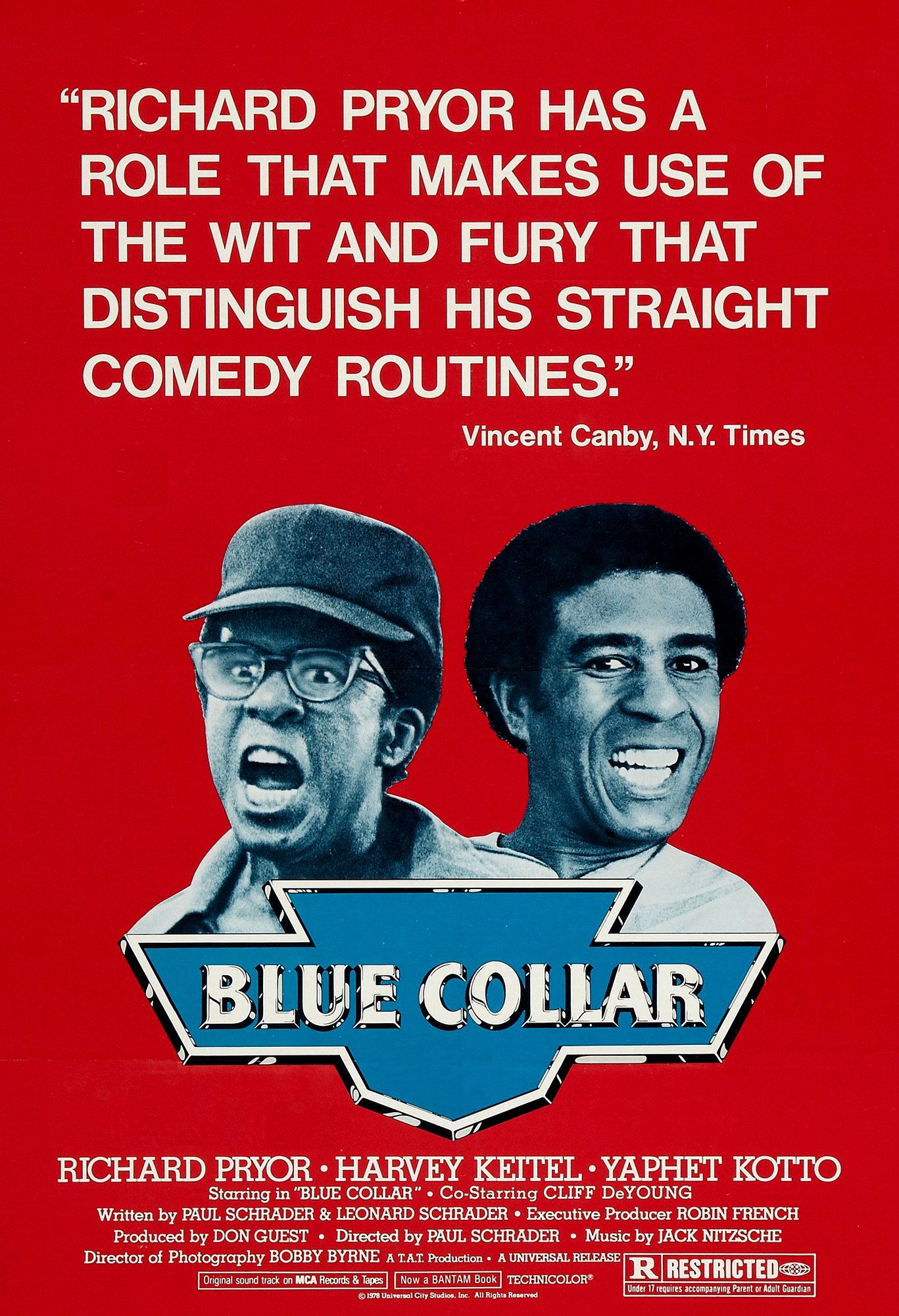
Even though it was made back in 1978, “Blue Collar” doesn’t feel at all dated thematically. Dealing with crooked unions and frustrations with a job that never pays you enough is something many of us still deal with in this day and age. Watching it more than 30 years after its initial release makes me wonder how much, if any, progress has been made for any American workers.
Richard Pryor, Harvey Keitel and Yaphet Kotto star as a trio of Detroit auto workers who work hard at their jobs but never get much respect for what they do. They get crap thrown at them by their superiors, and the union doesn’t seem all that interested in helping them. The divisions between the blue and white collar workers are heavily pronounced, and tensions and bitterness are always at an all-time high.
Pryor’s character of Zeke Brown feels especially disrespected and is never afraid to hide his frustrations from the union or anyone else who pisses him off. Even worse, Zeke gets a visit from the IRS informing him of back taxes he can’t even afford to pay. Keitel’s character of Jerry Bartowski works at a gas station as well as the auto factory, but barely make ends meet and can’t even afford braces for his daughter who desperately needs them. Then there’s Kotto’s character of Smokey James, a man who served time in prison and is well aware of how the class structure is designed to keep everyone where they are so the powerful people can stay powerful. But even he has his breaking point, and he’s finally reaching it after all this time.
Fed up with the union’s incompetence, the three men rob the union of the money they keep in their not very well hidden vault. The robbery is sloppily handled, but they make out with the safe which has only a few hundred dollars, but it also contains a ledger which shows how seriously corrupt the union is. On top of being involved in an illegal loan lending operation, the ledger also shows their ties with organized crime syndicates. With this information, they decide to blackmail the crooked union into giving them tons of cash which will take care of all their financial problems. Their plan, however, soon exposes their naïve nature as the union quickly resorts to methods which can never be mistaken as legal.
What will happen from there will tear friendships apart and leave them paranoid of one another and of those they can’t trust. “Blue Collar” works as a critique of those unions which poorly represent their workers, and it is also a brilliant character piece and a thriller where lives hang in the balance as the powers that be aren’t about to be comprised by anyone, especially those in the lower class.
“Blue Collar” was Schrader’s directorial debut, and it’s a remarkably impressive one. He vividly captures the hard-working atmosphere these men inhabit and is aided by a tough as nails blues song for the movie’s main title which was performed by the late Captain Beefheart. There are moments in the “Hard Workin’ Man” song where all the other instruments disappear except for a deep thundering metal boom which hints at the anger and frustration slowly boiling to the surface for these characters. The environment they work in is harsh and unforgiving, and while they value what they do, no one above them seems to as they are considered to be easily disposable.
This was one of Pryor’s few dramatic roles, but it’s not bereft of his humor. Considering his work as a comedian and a social satirist, he is perfectly cast here and infuses the Zeke with humor and a wounded soul which will never fully be mended. Pryor really shows an acting range most dramatic actors only dream of having.
In fact, that’s the sad thing about watching Pryor in this film; he really was one of the lost dramatic actors of our time as he never got to play many serious roles which were deserving of his talent. We all know him to be one of the best comedians ever, and he did star in some very funny movies. Still, he got stuck in a lot of crappy ones which never utilized his talents fully, and it is an enormous loss he never got to do more dramatic work.
Keitel gives another great performance in a career filled with them, and he always inhabits his characters more than play them. Jerry Bartowski is a strong guy on the surface, but seeing him become completely unraveled after the robbery allows Keitel to expose the character’s vulnerabilities of which there are plenty. There are moments where he doesn’t utter a word and yet you can see on his face what is racing through his anxiety-ridden mind. Bartowski may see himself as his own man who answers to no one, but he soon finds there is a limit to the choices he has when it comes to keeping his head above water.
Kotto, who has since become one of the most undervalued actors working today, has constantly been cast as an unforgettable imposing presence in every film he has appeared in. Whether it’s as Parker in “Alien,” Special Agent Mosley in “Midnight Run” or as Al Giardello on the brilliant “Homicide: Life on the Street,” he never fails in giving us a character who feels larger than life. “Blue Collar” is no exception as he portrays someone wise about the world around him, but not wise enough to know when he and his pals are digging a hole too deep for them to climb out of. His character’s fate feels the most tragic as a result, and the last scene he has is amazing in its power.
With Schrader’s movies, a common theme runs through them of the emasculated male wanting to make a difference in a society he sees as corrupt and in need of saving. Be it Robert De Niro as Travis Bickle in “Taxi Driver,” Willem Dafoe as John LeTour in “Light Sleeper” or even Nick Nolte as Wade Whitehouse from “Affliction,” Schrader deals fearlessly with characters whose hold on sanity we see constantly erode. Now with the three leads in “Blue Collar,” each of them are pushed to the limit as they slowly realize the trouble they have brought upon themselves. Watching it destroy their friendship, which brings about a strong mistrust between them, is as fascinating as it is painful to witness.
I’m not sure how many people out there are aware of “Blue Collar,” but it is one of those movies from the 70’s deserving of a big audience from one generation to the next. Watching it today is even more bittersweet as those auto factories in Michigan where the movie was shot no longer exist. It was tough for the people who worked there back then, but imagine what it must be like for them now. The movie ends in a freeze frame which brilliantly encapsulates how the union and those in power continue to stay on top of the working man. After all these years, it doesn’t feel like much has changed, but anyone and everyone out there is welcome to prove me wrong.
“Blazing Saddles” is one of Mel Brooks’ funniest comedies and one which invites repeat viewings as there are always jokes still waiting to be discovered. It acts as a satire of the western genre as well as the racism which was obscured by Hollywood’s creation of myths regarding the American West. But as funny as it is, it also offers the viewer a moving story about a black sheriff who manages to win over a town on the verge of being taken over by murderers and thieves. It also gleefully breaks the rules to where places and people are added that were never really part of the American West in the first place.
The wonderful Harvey Korman plays Hedley Lamarr, the State Attorney General who wants to get his hands on the town of Rock Ridge where the land is worth millions. His attempts to frighten the people out of their town includes getting cowboys to ride in and shoot their guns, creating a havoc which makes everyone living there fearful and anxious. But when that doesn’t work, Lamarr comes up with what he believes is an ingenious idea; he hires a black man to become the new Sheriff of Rock Ridge with the belief his “mere presence” will scare everyone out of there. Of course, things do not go as planned.
Looking back at “Blazing Saddles” all these years later, it still stands up mainly because Brooks is not out to make the actors simply go for the joke. Instead they play many scenes straight instead of trying to be funny, and this makes the humor work even more than it already does. With a satire like this, it helps to have characters you care about regardless of how ridiculous their actions may be. Most movie satires and spoofs these days keep forgetting this as they are more persistent in selling the joke to the audience instead of giving the story any real substance.
The late Cleavon Little portrays Bart who becomes the Sheriff and immediately meets resistance to his presence because of the color of his skin. Regardless of how infinitely intelligent and cool he is compared to the idiotic residents of Rock Ridge, he has to work real hard to win them over. Little has so many inspired moments in the movie like when he sings a Cole Porter song instead of the “Camptown Races” which the racist cowboys assume blacks sing all the time.
Many may accuse “Blazing Saddles” of playing up black stereotypes in order to get easy laughs, but they completely miss the point. Brooks and his team of writers, which included Richard Pryor, turn those stereotypes upside down and expose them for the falsehoods they have always been. Seeing the residents of Rock Ridge overzealous reactions to Bart’s behavior, such as him saying “excuse me while I whip this out” when he takes out his written speech, are indicative of their overt racism more than anything else. Seeing them act so stupidly out of fear and sheer ignorance gives the movie some of its most side-splitting moments.
Another memorable performance comes from the great Gene Wilder who plays Jim, a.k.a. The Waco Kid, the fastest gun in the world. While Wilder is best remembered at times for playing neurotic characters, he is as cool as can be in this film. Seeing him play it so cool in moments where his precision with a pistol is stupidly questioned by others who don’t know him is so much fun to take in. His character is a riff on the one Dean Martin played in “Rio Bravo,” and Wilder is such a blast to watch throughout.
“Blazing Saddles” also provided the late Madeline Khan with one of her most famous roles, the German singer Lili von Shtupp whose name is inexplicably censored on the movie’s television version. She is endlessly brilliant in her rendition of the song “I’m Tired,” and it makes for one of the most unforgettable comic performances ever captured on film.
There are many unforgettably hysterical scenes throughout “Blazing Saddles” which stand up to repeat viewings. The campfire scene is as obscene as it is gut-bustlingly hilarious, and you may find yourself laughing harder than you ever have before. Brooks himself plays a couple of parts like the severely lacking in intelligence Gov. William J. Le Petomane and an Indian Chief who, for some bizarre reason, speaks Yiddish. Other actors like the great Slim Pickens and Burton Gilliam have us gasping with laughter just by looking at the befuddled expressions on their faces.
Along with a great music score by John Morris and beautiful cinematography by Joseph F. Biroc, “Blazing Saddles” has more than earned its place on the list of greatest comedies ever made. There is tremendous delight in watching Brooks throw caution and logic to the wind as he throws in the unexpected like Count Basie and his orchestra performing in the desert while Bart rides by, or having Nazis sign up for Lamar’s final battle at Rock Ridge. It doesn’t matter if it makes sense or because you just want the laughs to keep on coming (and they do). With a comedy like this, you can never be sure what will happen next!
By the way, be sure to watch “Blazing Saddles” in the widescreen version. Brooks shot the movie in Panavision scope, and it has never ever translated well to the realm of pan-and-scan.






 The Ultimate Rabbit