The Cast of ‘The Lazarus Effect’ Talks about Life After Death
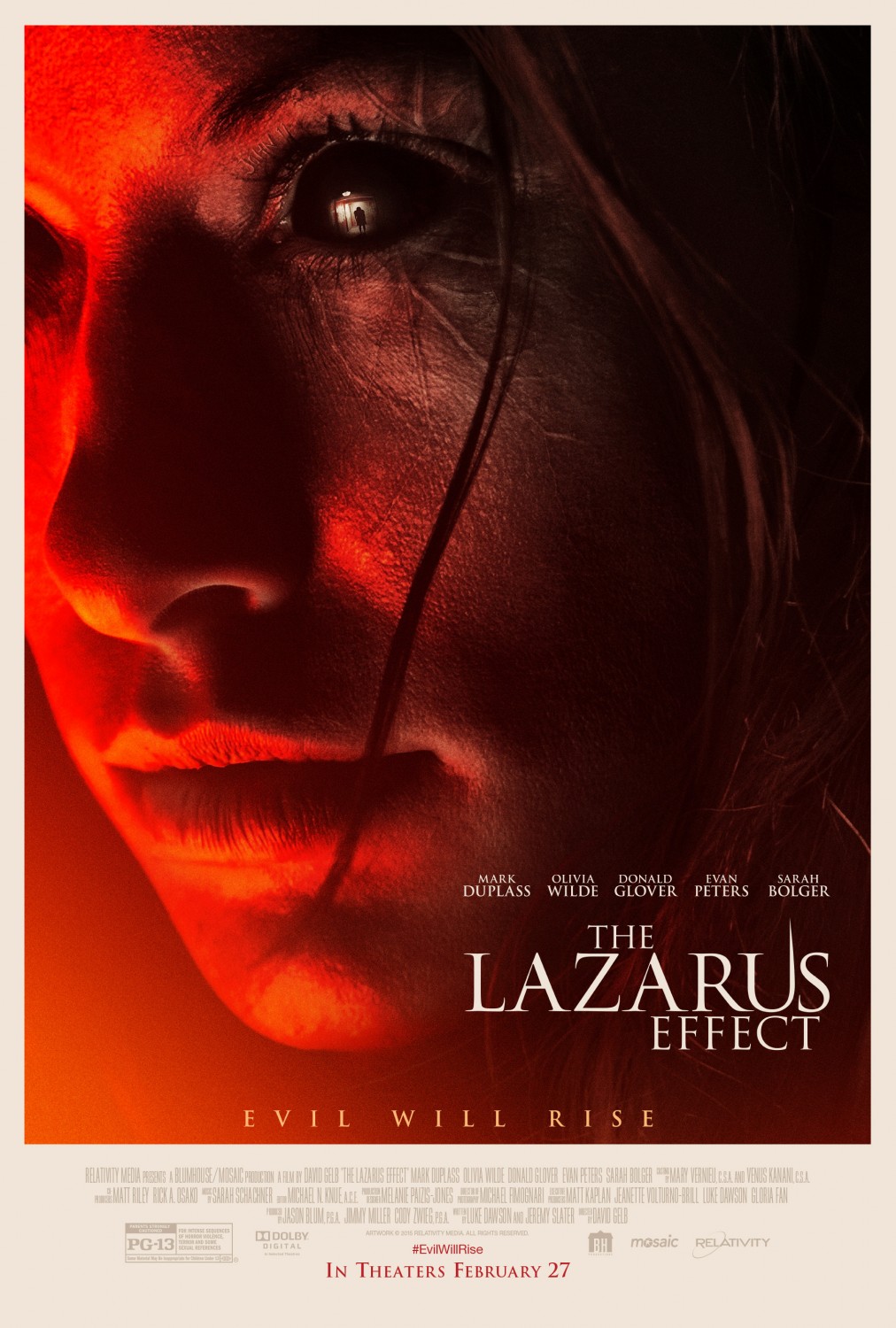
WRITER’S NOTE: This article was originally written back in 2015.

The supernatural horror film “The Lazarus Effect” takes a cue from movies like “Frankenstein” and “Re-Animator” as it features a group of scientists who are intent on bringing the dead back to life. It stars Olivia Wilde and Mark Duplass as Zoe and Frank, a couple of medical professionals who have found a way to resurrect the deceased through the use of a serum they have named Lazarus. But during one experiment, Zoe suddenly gets electrocuted and dies, and Frank, in desperation, gives her the serum which successfully returns her to the land of the living. But in the process, Frank comes to discover that Zoe has developed some incredible abilities which makes him wonder if she brought something truly evil back from the dead with her.

One plot point in “The Lazarus Effect” concerns a nightmare Zoe keeps having where she is trapped in a burning house, and there is a door ahead of her which seems to have a raging fire waiting to burst out from behind it. Even more unsettling is that she also sees a pair of hands at the bottom of the door struggling to escape whatever fiery fate is coming their way. This nightmare gets a new meaning once Zoe is resurrected.

This nightmare reminding me of Joel Schumacher’s film “Flatliners” which starred Keifer Sutherland, Julia Roberts and Kevin Bacon as medical students who are very eager to discover what happens after you die. Each is made to die for a minute or two before they are resuscitated, and their afterlife proves to be a realm where they are tortured for the grievous and painful sins they committed in the past. Seeing that “The Lazarus Effect” kind of deals with the same thing, it made me wonder why these movies deal with the high psychic price to pay once we leave this mortal coil.

I got to ask the cast of “The Lazarus Effect” this during the film’s press conference held at the Four Seasons Hotel in Los Angeles, California. To first to provide an answer was Donald Glover who plays the lab assistant, Niko. Best known for playing Troy Barnes on the cult television comedy “Community,” Glover said that death remains the one thing we don’t know about.

Donald Glover: I feel like we kind of live right now in a time where humans feel like we know everything now especially when we just pick up the phones and happily answer and people feel like everything is done. It’s like, “We did it guys! We have internet.” It was cool talking to Olivia (Wilde) and Mark (Duplass) about how people are actually doing research, and I was reading articles about doctors actually bringing people back to life. There was a New York cab driver who was like dead for, I think like, a while (laughs). They just brought him back, and now they are doing studies on post-death and stuff like that. This is why I really like this film. It felt special because there’s realness and people really don’t even understand what we are after that (death). I think it’s scary because we just don’t know it especially when we’re being told all the time we know everything.

Duplass followed up on Glover’s response by saying it reminded him of something he read about movies like “The Lazarus Effect.” In the process, he also elaborated on how the approach to this resurrection movie differed from others like it.

Mark Duplass: When a movie examines this type of subject matter, usually it’s either in the future or everyone is wearing some sort of like leathery, shiny black suits, and it’s kind of like not human (laughs). So, we all loved this idea, and that’s part of the reason David (Gelb, the director) cast a lot of us because maybe we’re more on the naturalistic side of performances, that we’re just so normal looking and normal acting research students going through this very un-normal thing. It was just exciting.

Indeed, death is something many of us do not want to think about, but the question of what happens to us when we pass away continues to linger in our minds. “The Lazarus Effect” is not meant to give a definitive answer to that, but along with “Flatliners,” it makes you want to make peace with all the bad things you did in your life before it is too late.

“The Lazarus Effect” is available on physical media and streaming platforms.
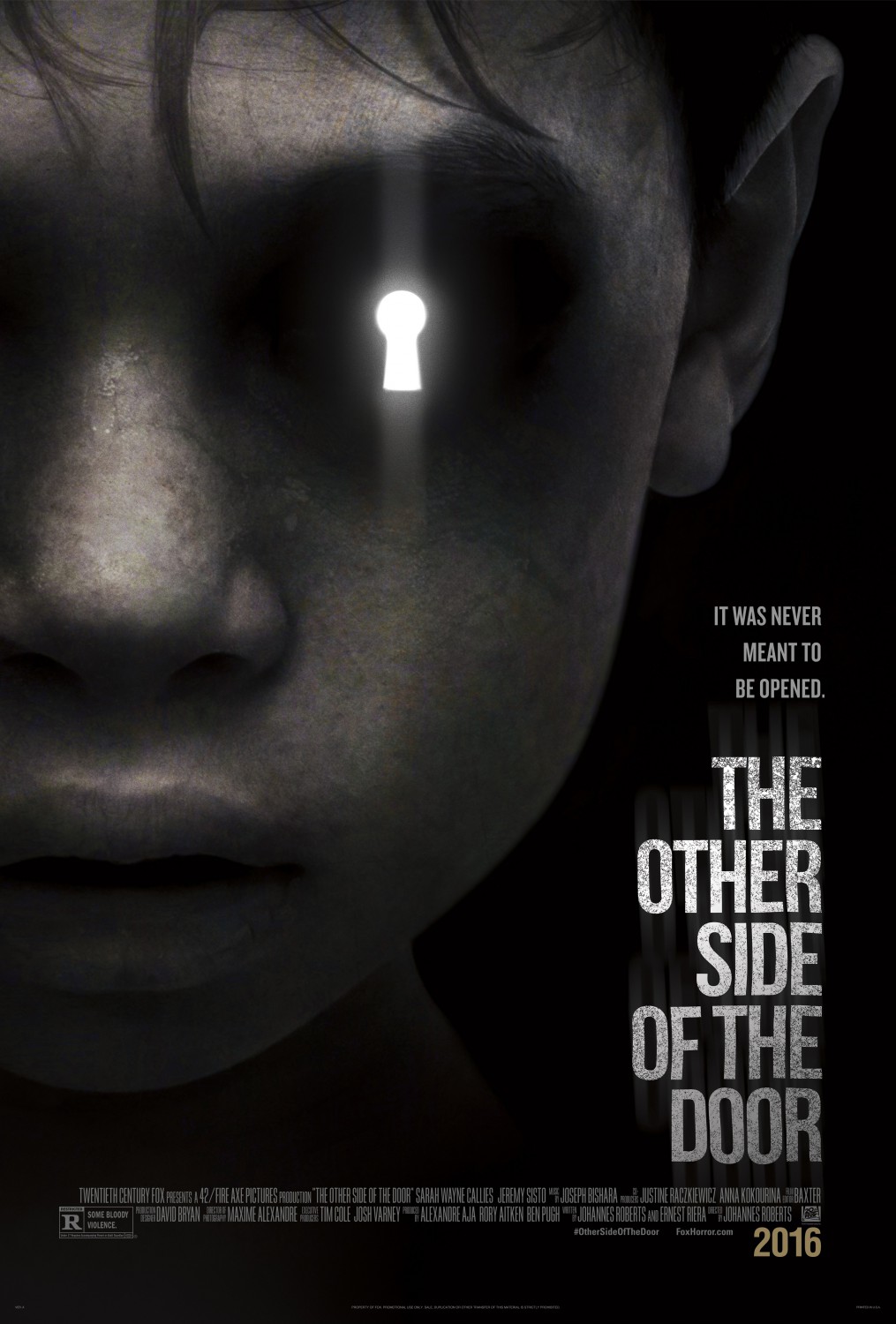
The Other Side Of The Door

The Other Side of the Door movie poster

The Other Side of the Door” is a lot like last year’s “The Lazarus Effect,” another movie dealing with the resurrection of the dead. Both movies have up and coming directors at the helm and a cast of talented actors eager to dig deep into the material. But while each movie gets off to a solid start to where we are utterly enthralled, they get weighed down by clichés and an inescapable familiarity which turns them into utter disappointments. What starts off as promising eventually becomes something stale and unoriginal, and “The Other Side of the Door” quickly becomes the kind of movie we have seen one too many times.

We are introduced to Maria (Sarah Wayne Callies) and Michael (Jeremy Sisto), a loving American couple who decide to set up roots in India. But their joy of living in a foreign country is forever destroyed when their son Oliver (Logan Creran) is killed in a tragic car accident, and Maria cannot find a way to ease the pain of such a devastating loss. Their housekeeper Piki (Suchitra Pillai-Malik), however, tells Maria of a way she can say a last farewell to Oliver, and it involves spreading his ashes on the stairs of an ancient temple which is said to be close to the underworld, and she has to close the temple’s door and spend the night there. Eventually, Maria hears Oliver’s voice on the other side of the door and gets to talk to him one last time.

There’s a little catch to this plan though; Piki tells Maria that she cannot under any circumstances open the door during this conversation. You don’t even need to guess what happens next. Maria does indeed open the door, and in the process creates an unbalance between the worlds of the living and the dead. As a result, Oliver is brought back to the living as a ghost, and a horrific god gets unleashed who will soon wreak havoc on Maria and her family.

Like I said, this movie gets off to a promising start as it takes the themes of death and resurrection and applies mystical powers to them in a way I haven’t seen before. Usually in this genre the dead are buried in a sacred Indian ground or brought back to life with some amazing potion, but “The Other Side of the Door” takes a slightly different approach as it deals with mysticism. This helps to make it stand out from other movies of its type, but unfortunately it becomes bogged down by a familiarity which renders it average at best. In these movies the dead come back, and they are never the same as when they were alive. You know the drill.

It’s a shame because the actors cast here do terrific work in creating a believable couple trying to get through the worst thing any parent could ever live through. The real standout here is Sarah Wayne Callies who plays Maria as she makes her character’s pain and vulnerabilities all the more palpable. Best known for her work on “Prison Break” and “The Walking Dead,” she gives a really strong performance which is emotionally raw to where you cannot help but feel for her even as she makes big mistakes. Callies makes this movie worth watching as she almost makes you forget about what’s wrong with it.

“The Other Side of the Door” also benefits from the presence of Jeremy Sisto who plays Maria’s husband, Michael, as he makes him the kind of loving spouse anyone would be lucky to have. Like Callies, he brings a strong human presence to this movie as Michael does what he can to rescue Maria from her infinitely deep depression. Whereas most movies would have had this character acting like an ineffectual buffoon, Sisto makes Michael a believably decent human being who is trying to do the best he can.

But after the movie’s first act which has Oliver’s ghost begging for his mother to read him Rudyard Kipling’s “The Jungle Book,” it descends into “Pet Sematary” and “The Lazarus Effect” territory as the resurrected dead end up terrorizing those who loved them the most. Director Johannes Roberts, who previously directed the critically acclaimed thriller “F” and the sci-fi horror film “Storage 24,” does give us a number of undeniably creepy moments, but even he is unable to transcend this material which is all too familiar to horror movie fans.

When “The Other Side of the Door” reaches its conclusion, it ends on an ambiguous note like many horror movies do, but it just makes the whole movie feel more routine than it already is. All these movies about bringing the dead back to life always have the most innocent characters coming back as something purely evil, and they are filled with others who constantly stare at the protagonists as if to say, “You really screwed up and we’re not going to let you forget it.” It’s a shame because the movie had a lot of promise and some terrific performances, but in the end it just feels like the same old thing and becomes much less frightening as a result. Better luck next time.

Copyright Ben Kenber 2016

* * out of * * * *

Please feel free to check out the interviews I did with the cast and director of this film down below. These interviews were done for the website We Got This Covered.